Tashilhunpo Monastery
1. Introduction
Located in Shigatse City, Tibet Autonomous Region, China, Tashilhunpo Monastery is one of the important monasteries of the Gelugpa (Yellow Hat) school of Tibetan Buddhism. Founded in 1447 by Gedun Drupa, the 1st Dalai Lama, it later became the seat of successive Panchen Lamas. Covering an area of 150,000 square meters, the monastery complex includes 57 monks' quarters and a total of 3,600 halls and rooms. Its architecture blends traditional Tibetan architectural features with Buddhist characteristics, holding significant religious and political importance. Tashilhunpo Monastery is not only a center of Tibetan Buddhist culture but also a major pilgrimage site for Tibetan Buddhist followers. It houses a vast collection of precious Buddhist artifacts and scriptures. The architectural style integrates Tibetan and Han Chinese elements, showcasing unique artistic value. As a UNESCO World Heritage Site, Tashilhunpo Monastery has profound influence in the fields of religion, history, and culture.
2. Layout and Orientation
2.1 Geographic Location
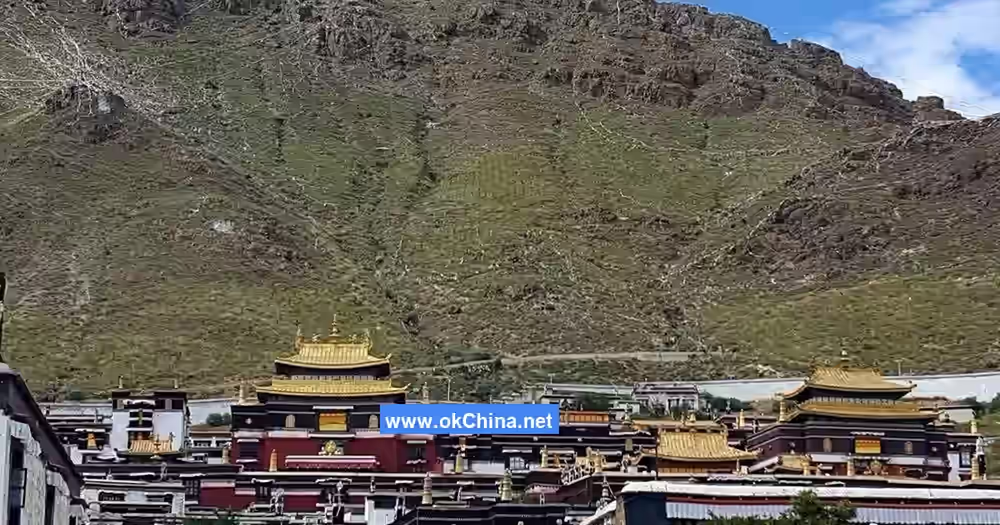
Tashilhunpo Monastery is situated at the foot of Mount Niseri, south of Shigatse City, Tibet Autonomous Region. Its Tibetan name means "Heap of Glory" or "All fortune and happiness gathered here".
2.2 Architectural Layout
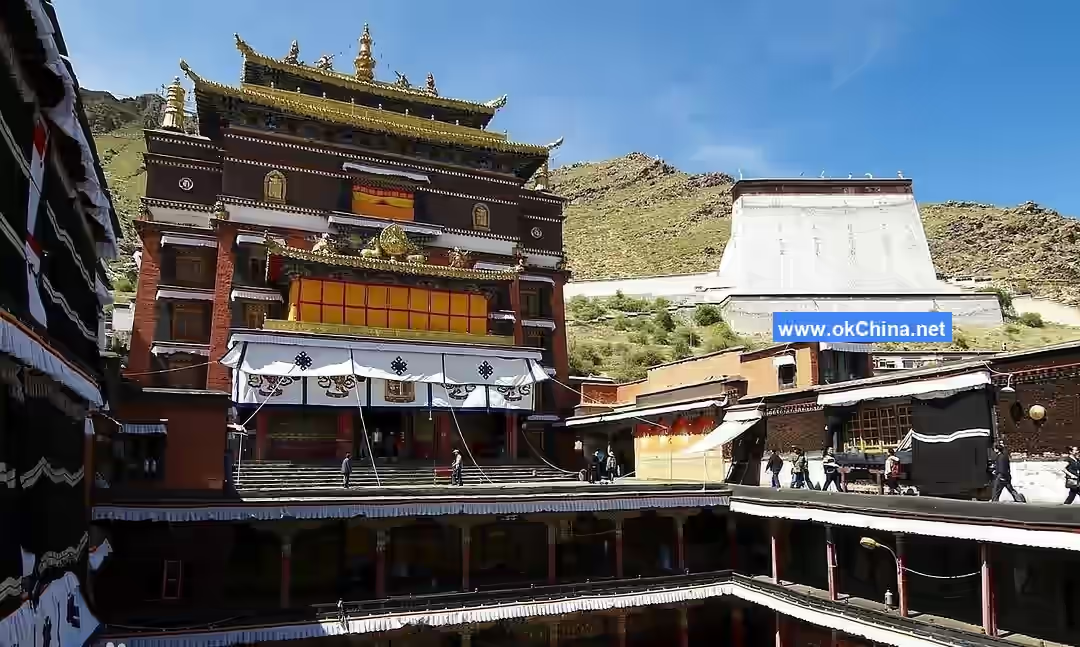
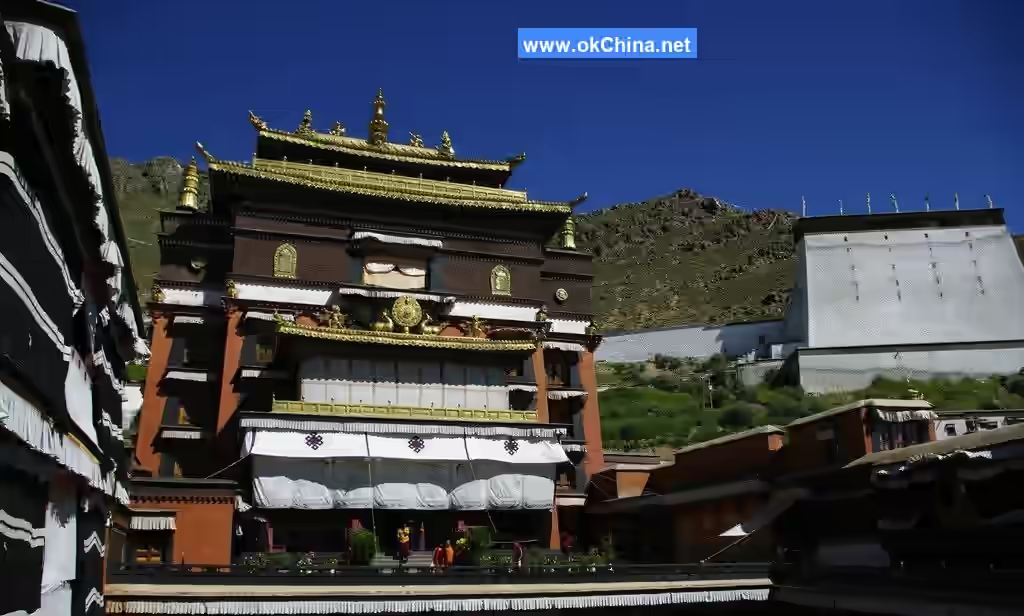
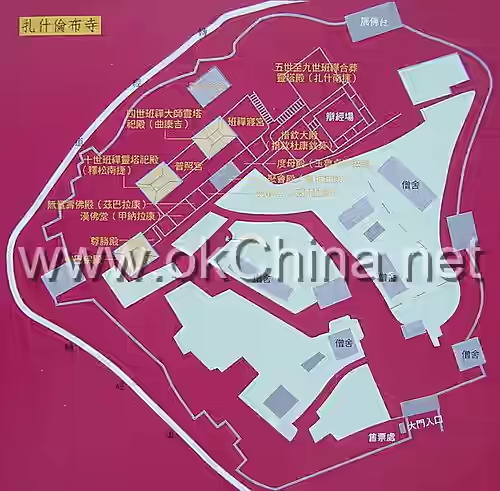
As the administrative center of the Gelugpa school of Tibetan Buddhism, Tashilhunpo Monastery's architecture blends traditional Tibetan features with Buddhist characteristics, fully displaying its religious essence. The entire monastery covers 150,000 square meters, with 57 monks' quarters and a total of 3,600 halls and rooms, densely arranged. Built along the mountain slope, the monastery is surrounded by winding palace walls, which, together with its solemn temples, constitute the sacred source of Tashilhunpo. The entire complex faces south, with Buddhist halls sequentially connected along the mountain terrain. The main and auxiliary structures are arranged in a staggered yet harmonious and symmetrical manner. The hall architecture of Tashilhunpo Monastery highlights religious and ethnic characteristics while emphasizing cultural depth.
Within Tashilhunpo, the Great Chanting Hall (Tsogchen) is one of the earliest structures coexisting with the monastery and serves as the main venue for monks' meditation and scripture recitation. The hall covers over 600 square meters. Its interior walls are densely carved with thousands of niches housing statues of Tathagata Buddha, heavenly kings, arhats, various flying apsaras, and bodhisattvas. Forty-eight redwood pillars support the massive beams, from which hang numerous prayer flags that gently flutter with the cool breeze from outside. At the center of the hall stands the throne used by the Panchen Lama for delivering teachings, which has remained there for centuries.
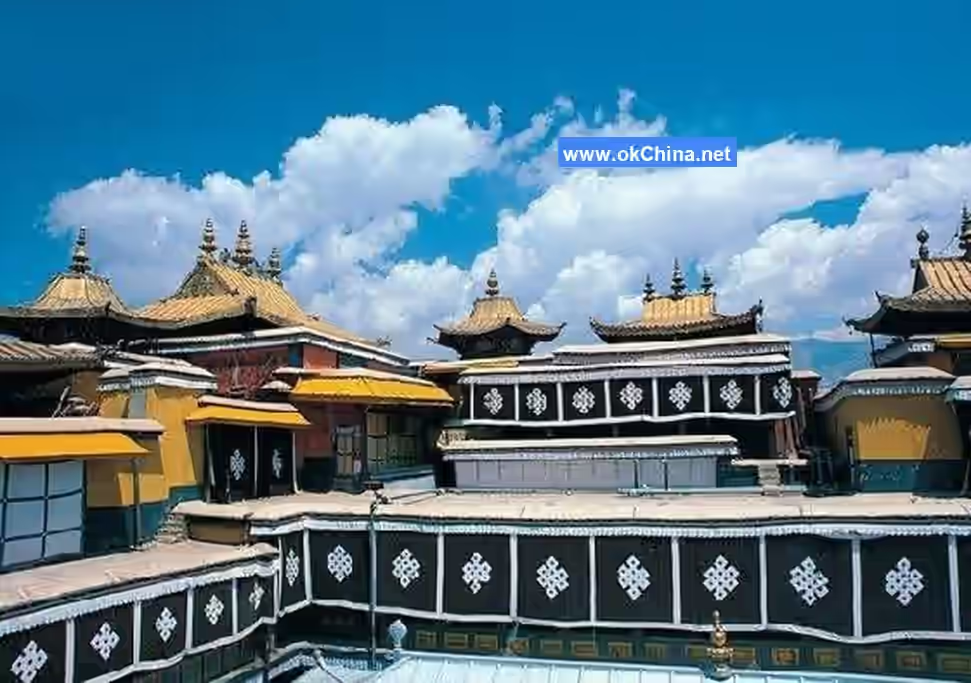
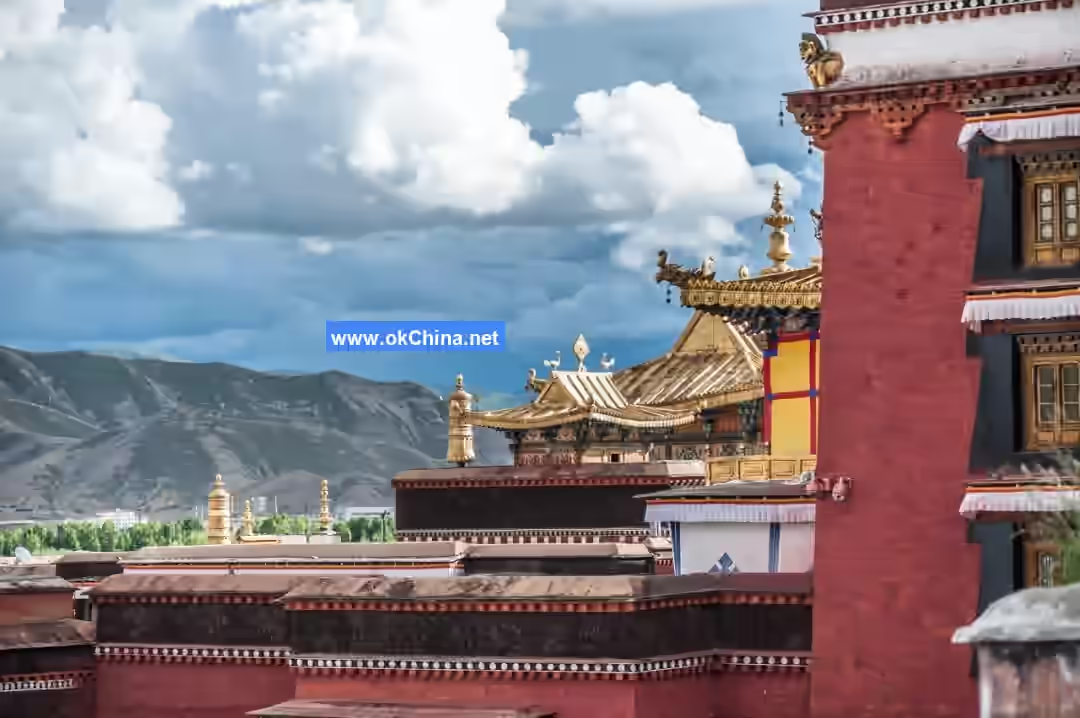
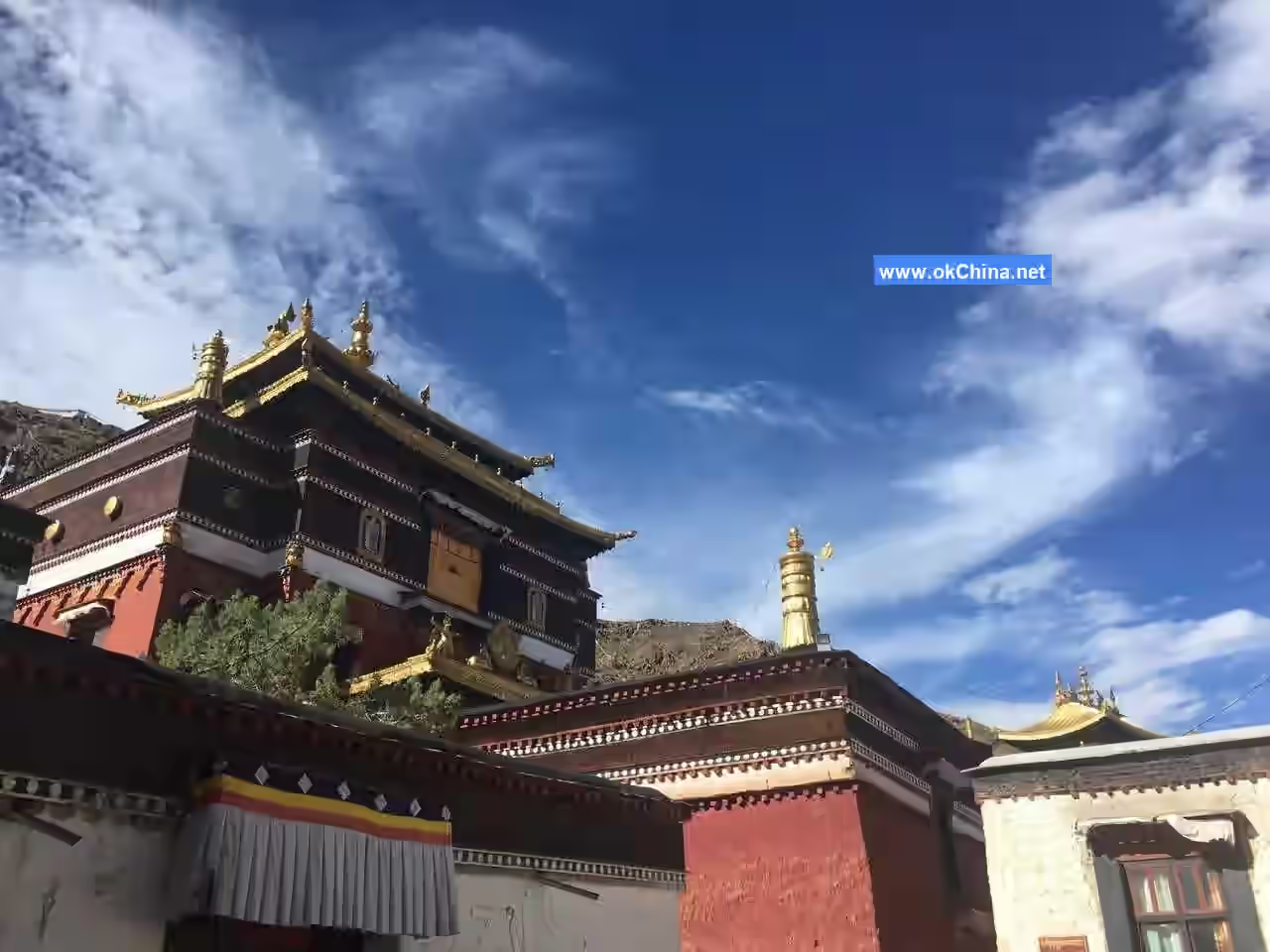
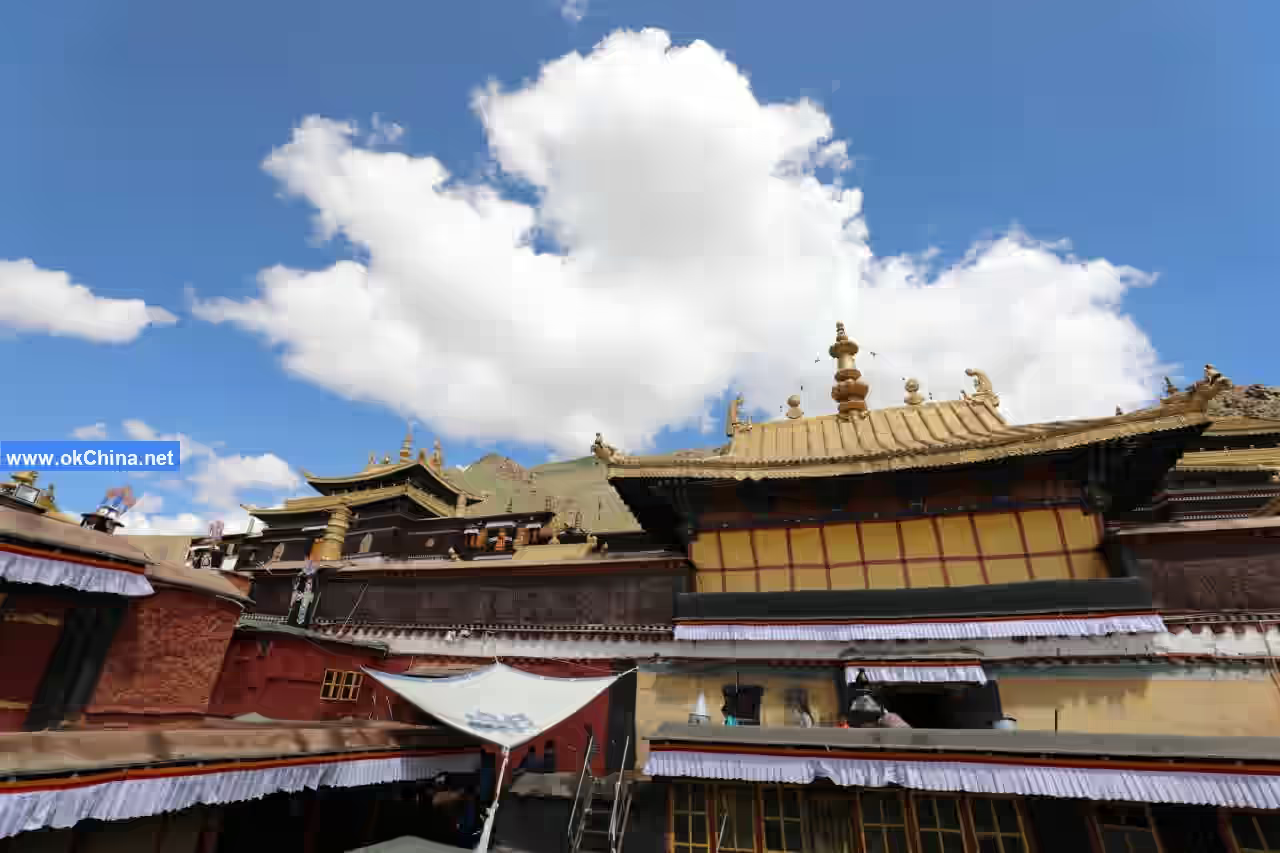
To the left of the Great Chanting Hall is a large Buddha Hall. Inside, an 11-meter-high statue of Maitreya Buddha sits prominently as the most striking feature. To the right of the Buddha Hall is a two-meter-high copper statue of White Tara. The floor of the hall is paved with schist stone unique to snowy mountains. The roofs of the Great Chanting Hall and the Buddha Hall are designed in the traditional Tibetan palace style, incorporating features of Han Chinese palace eaves and bracket sets (dougong). The roof tiles are covered with gleaming gilded gold.
Within Tashilhunpo Monastery, there is a hall specifically dedicated to housing gifts bestowed by Qing Dynasty emperors, known as the Jiana Lakhang (Chinese Temple). The hall is exquisitely furnished and houses various Buddhist artifacts, imperial edicts, seals of appointment, and jewelry gifted by emperors to successive Panchen Lamas. Adjacent to the Chinese Temple is a smaller side hall where, during the Ming and Qing dynasties, imperial envoys held secret meetings with the Panchen Lama during investiture ceremonies. The hall preserves many imperial edicts and large portraits. On the main wall hangs a portrait of Emperor Qianlong wearing monastic robes and turning the Dharma wheel, with the memorial tablet used during the imperial investiture ceremony placed below.
3. Main Structures
3.1 Jamba Buddha Hall (Maitreya Hall)
The Jamba Buddha Hall is one of the more grandiose structures in Tashilhunpo Monastery, famous for housing a nearly 30-meter-high giant copper statue of Maitreya Buddha (Jamba). The hall is divided into five levels: the Lotus Throne Hall, Chest Hall, Face Hall, and Crown Hall. Climbing from the main hall to the top requires ascending 105 wooden steps. The walls are constructed from neatly fitted stone slabs. The base covers 862 square meters, tapering gradually with each level. The first two floors have encircling corridors, with a large, majestic copper lion cast at each of the four corners on every level. The Jamba Buddha statue, facing south, gazes serenely over the entire hall from the first to the fifth floor. It stands 26.2 meters tall, with shoulders 11.5 meters wide and ears 2.2 meters long. The statue alone is adorned with 32 diamonds between the eyebrows and over 1,400 pearls, amber pieces, corals, and turquoise. Harmonious in structure and elegant in form, it is a rare masterpiece among giant sculptures. The statue took four years to complete, consuming 6,700 taels of gold and over 230,000 jin of copper. The face is inlaid with various precious gems. As Maitreya Buddha presides over future life and death, he holds a revered position in the hearts of Tibetans.
3.2 Shisong Namgyel
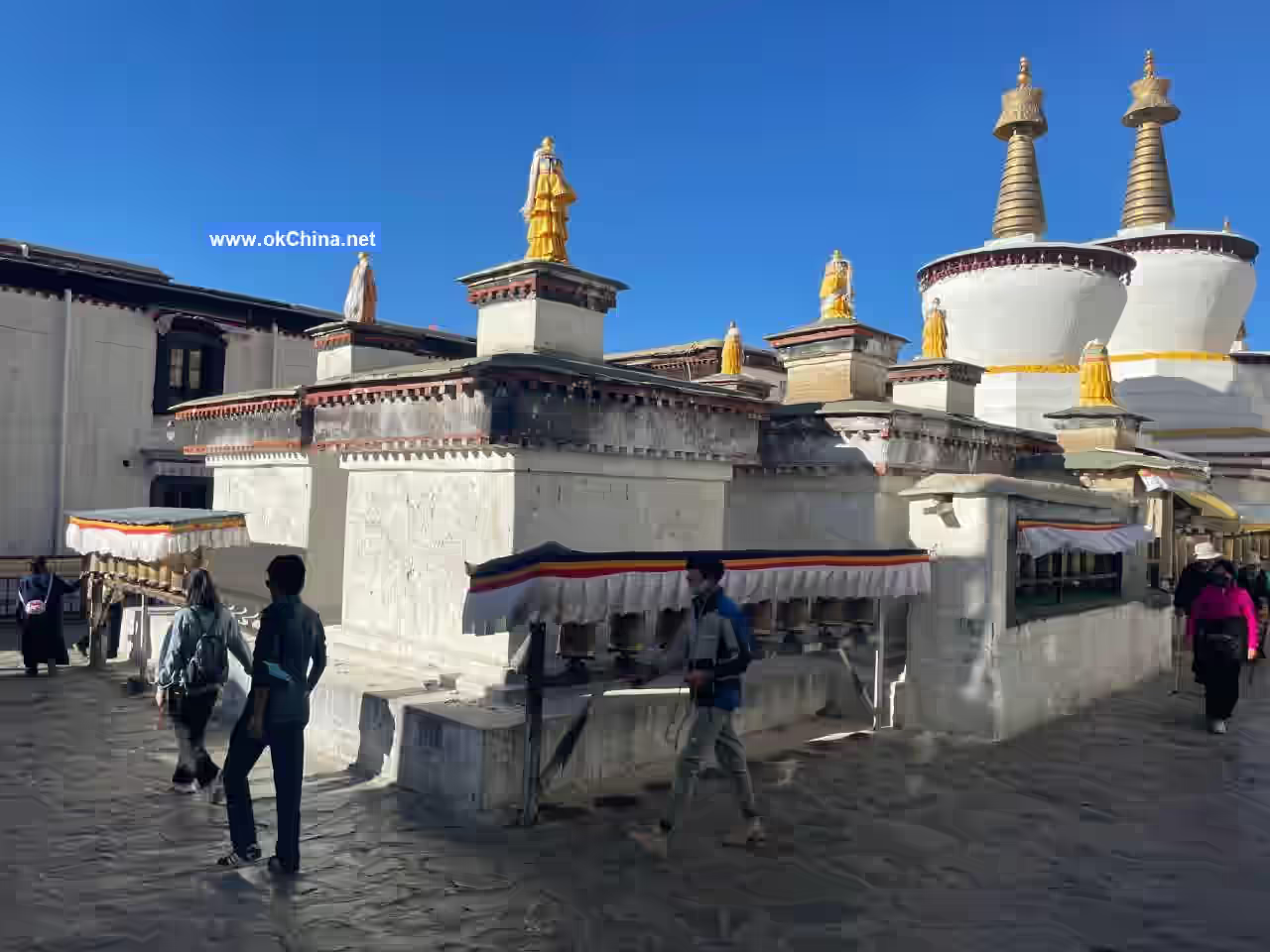
The Shisong Namgyel Hall covers a total area of 1,933 square meters and stands 35.25 meters high. Unlike other stupa halls, its construction uses a reinforced concrete frame structure with granite walls 1.83 meters thick, capable of withstanding earthquakes up to magnitude 8. The overall theme is Tibetan religious style, drawing on architectural features from various historical periods. The main hall is composed of red and brown hues. The stupa top combines Tibetan roof and religious pagoda forms, gilded with gold and silver. The entire stupa is 11.55 meters high, its surface covered in gold and silver. The stupa has three tiers: the lower tier contains agricultural and pastoral products from Tibet along with various precious jades and gems; the middle tier holds Buddhist scriptures and writings of the Gelugpa school, as well as study notes and insights from successive Panchen Lamas, including ancient palm-leaf manuscripts and gold-lettered scriptures; the uppermost tier enshrines sacred Buddha statues, with the preserved body of the 10th Panchen Lama at the center, surrounded by various religious offerings. The stupa of the 10th Panchen Lama covers 253 square meters, stands 11.55 meters tall, is wrapped in gold leaf, and studded with jewels. It uses 868 gemstones, 6,794 jewels of 24 types, one large meteorite, 13 gold amulets, and 445 pieces of amber.
3.3 Tashi Namgyel
The "Tashi Namgyel" Stupa Hall, housing the joint burial stupa of the 5th to the 9th Panchen Lamas, is the largest structure in Tashilhunpo Monastery, covering 2,000 square meters. The hall is grand and magnificent. Its bottom two floors feature a Tibetan-style corridor structure, with a towering stupa rising from the center. The overall design still employs traditional Tibetan architecture, with red walls and white windows as the main structure. The Tibetan-style corridors, built of brick and stone, set off the nobility of the stupa hall they surround. Inside the stupa hall stands a 33.17-meter-high stupa, wrapped in gilded silver and inlaid with countless jewels, carved with numerous Buddha images. The stupa contains five sandalwood caskets holding the remains of the 5th to the 9th Panchen Lamas. The vast hall's walls are covered with murals depicting the lives and achievements of these Panchen Lamas.
3.4 Tara Hall
Also known as Jamba Khang, the Tara Hall primarily enshrines the Tibetan Buddhist bodhisattva Tara. The architecture retains strong Tibetan ethnic characteristics. The hall structure is compact and towering, with a roof gilded in the Buddhist mandala style. The hall contains a Buddhist stupa.
3.5 Chokhang Shar
Chokhang Shar is the stupa hall of the 4th Panchen Lama. As Tashilhunpo Monastery was built under the personal supervision of the 4th Panchen Lama, his stupa hall holds a high status. The architecture of the stupa hall blends Han Chinese and Tibetan palace features. Its foundation and walls are constructed in traditional Tibetan style, with vermilion walls accented by white doors and windows, adorned below the windows with white satin ribbons that flutter beautifully in the wind, giving the hall a distinct ethnic character. The roof is built in the traditional Han Chinese palace style, with flying eaves and bracket sets (dougong) highlighting the hall's nobility and grandeur. A Tibetan-style pagoda spire rises from the center of the golden-covered roof. Initially, when Tashilhunpo was built, the 4th Panchen Lama's stupa hall was small, only one story high. Later, successive Panchen Lamas continuously expanded and renovated it, gradually increasing it to four stories. The expansion of the scale increased devotees' reverence for the 4th Panchen Lama, leading to a continuous stream of donated treasures. Inside the hall stands an 11-meter-high offering stupa adorned with gold, silver, and jewels of dazzling colors. Looking up inside the spacious hall, one sees numerous prayer flags hanging from above, Buddha statues lining the walls, and butter lamps interspersed among them, making the hall glow with the light reflecting off the treasures and creating a solemn atmosphere.
3.6 Tsogchen Hall (Great Chanting Hall)
The Tsogchen Hall (Great Chanting Hall) is located at the center of the monastery complex. It is nine bays wide and seven bays deep, supported by forty-eight pillars, making it one of the oldest structures in the monastery. It can accommodate 3,800 monks. At its center is the Sakyamuni Buddha Hall, which enshrines a gilded statue of Sakyamuni Buddha.### 3.7 Gyana Lhakhang The Gyana Lhakhang, meaning the Han Chinese Buddha Hall, is unique and not found in other monasteries in Tibet. Located west of the Fourth Panchen Lama's Stupa Hall, it was built by the Seventh Panchen Lama, Tenpai Nyima, during the Qianlong era of the Qing Dynasty. A special room within the hall enshrines the original portrait of Emperor Qianlong, before which stands a tablet inscribed with "Long Live Emperor Daoguang Ten Thousand Years." The side hall of the Gyana Lhakhang served as the reception room for meetings between the Qing Dynasty's Amban (Resident Commissioner) in Tibet and the Panchen Lama. It is said that in the past, whenever an imperial edict arrived, the Amban would read it aloud in this hall, after which the Panchen Lama would receive the decree and then converse with the Amban in the meeting hall. The exhibition hall also treasures precious items bestowed by the Qing imperial family to successive Panchen Lamas, such as golden and jade books and seals, along with various gifts including ancient Buddha statues from the Sui and Tang dynasties, nine bronze Buddha statues from the Tang Dynasty, a naked female Tara statue from the Yuan Dynasty, ancient porcelain from the Yongle period of the Ming Dynasty, as well as rare palm-leaf manuscripts, jade Ruyi scepters, and textiles from the Yuan and Ming dynasties.
3.8 Thangka Display Platform
The Thangka Display Platform is located at the easternmost end of the Tashilhunpo Monastery. It was founded by the First Dalai Lama, Gendun Drup, and has a history of over 500 years.
4. Historical Development
4.1 The 11th Year of the Ming Zhengtong Era (1446)
Gendun Drup, the eighth disciple of Tsongkhapa and the First Dalai Lama, commissioned craftsmen from Tibet and Nepal to create a 2.7-meter-high gilded copper statue of Sakyamuni in Shigatse, in memory of his late teacher, Sherab Sengge.
4.2 The 12th Year of the Ming Zhengtong Era (1447)
In September, to house the gilded copper statue of Sakyamuni, construction of the monastery began under the leadership of Gendun of the Gelug (Yellow Hat) school of Tibetan Buddhism. In the same year, the construction of the Tsogchen Hall (the Great Assembly Hall) commenced.
4.3 The 3rd Year of the Ming Tianshun Era (1459)
The Tsogchen Hall (the Great Assembly Hall) was completed.
4.4 The 5th Year of the Ming Tianshun Era (1461)
A large Buddha hall was expanded to the left of the Great Assembly Hall, and the Tara Hall was built in the same year.
4.5 The 28th Year of the Ming Wanli Era (1600)
Lobsang Chökyi Gyaltsen assumed the position of the 16th abbot of Tashilhunpo Monastery. Emulating the Jokhang Temple, he established the Great Prayer Festival at Tashilhunpo Monastery. He also oversaw the large-scale production of Buddha statues, construction of Buddha halls, and building of new monks' quarters, leading to a major expansion of the monastery.
4.6 The 20th Year of the Ming Yongli Era (1666)
The Chukang Shar (Eastern Residence) was completed. The construction of this stupa used 2,700 taels of gold, 33,000 taels of silver, 39,000 kilograms of copper, over 9,000 feet of silk, and countless pearls and gemstones.
4.7 The 52nd Year of the Qing Kangxi Era (1713)
It became the permanent residence of successive Panchen Lamas.
4.8 The 30th Year of the Qing Guangxu Era (1904)
The first robe-changing ceremony for the Maitreya Buddha statue was held.
4.9 The 3rd Year of the Republic of China (1914)
The Maitreya Buddha Hall was completed.
4.10 1957
The second robe-changing ceremony for the Maitreya Buddha statue was held.
4.11 1982
The 10th Panchen Lama, Choekyi Gyaltsen, requested permission from the central government to build a joint stupa and memorial hall. The central government promptly approved and allocated 7.8 million yuan, along with 108.85 kg of gold, 1,000 kg of silver, 665 kg of mercury, 5,638 kg of copper sheeting, 1,099 cubic meters of timber, 11.8 tons of steel, 1,105.67 tons of cement, and 71,782 pieces of stone.
4.12 1984
In April, construction of the stupa and memorial hall began.
4.13 1985
Tashilhunpo Monastery held the third robe-changing ceremony for the Maitreya Buddha statue.
4.14 1988
In December, the stupa and memorial hall were completed.
4.15 1989
On January 30, then Premier of the State Council Li Peng signed the "Decision to Build the Stupa and Memorial Hall for the 10th Panchen Lama, Choekyi Gyaltsen, at Tashilhunpo Monastery in Shigatse."
4.16 1990
On September 20, the formal groundbreaking ceremony for the stupa and memorial hall was held.
4.17 1993
The stupa and memorial hall for the 10th Panchen Lama were completed and consecrated. The central government used 614 kg of gold, 275 kg of silver, over 200 gemstones, and spent more than 64 million yuan.
4.18 2008
In April, the state and the Tibet Autonomous Region invested 118 million yuan to carry out large-scale repairs on the main halls of Tashilhunpo Monastery.
4.19 Since 2011
The Tibet Autonomous Region has innovated temple management, focusing on improving public services for temples. Efforts include providing roads, electricity, water, communications, and radio and television access to temples, addressing practical difficulties in the lives of monks and nuns.
5. History and Culture
5.1 Organizational Structure
Gelug monasteries have strict and well-established organizational systems, stipulating that all major monastery affairs must be decided by a council of several executive monks, with no individual allowed to monopolize monastery governance.
5.1.1 Changes in Organizational Structure
In the 18th century, two theocratic local regimes emerged in Tibet: one was the Ganden Phodrang government led by the Dalai Lama; the other was the Panchen Lama's Council (known as the Khenchung), led by the Panchen Lama. Both were directly under the leadership of the Qing government.
The supreme leader of the Panchen Lama's Council was the Panchen Lama, who held overall authority over the political and religious affairs of Tsang (Western Tibet). Below him were the two chief administrators, the Dzasa Lamas, who governed on behalf of the Panchen Lama. The Panchen Lama and the Dzasa Lamas of the Khenchung were also the highest leaders of Tashilhunpo Monastery, with senior monk officials of the Khenchung serving as ex officio members of the monastery's Laji council. Starting in the 1960s, democratic reforms were implemented in Tibet. Following the proposal of the 10th Panchen Lama, major monasteries in Tibet established Democratic Management Committees to oversee monastery affairs. The chairperson and vice-chairperson of the Democratic Management Committee are democratically elected by all monks of the monastery, typically for a three-year term. The committee has subordinate groups responsible for cultural relics, religious affairs, finance, security, and production, managing the monastery's political and religious affairs.
5.1.2 Three-Tier Organization
Tashilhunpo Monastery has a three-tier organizational structure. The most basic unit is the Mitsen (household group). Larger Mitsen are also called Khangtsen (regional houses), divided according to the monks' hometown regions. A Mitsen typically has about 100 monks, with the most senior monk serving as the elder and an executive committee managing general affairs.
Several Mitsen form a Dratsang (college). Each Dratsang has its own Buddha hall, monks, and subordinate land, pastures, and property, possessing a certain degree of independence. Dratsangs are divided into exoteric (Sutra) and esoteric (Tantra) colleges. At Tashilhunpo, the Tösam Ling, Shartsé, and Gyikang are exoteric Dratsangs studying sutra texts, while the Ngapa Dratsang is a tantric college.
The head of a Dratsang is called a Khenpo in Tibetan. Generally, a Khenpo must be a lama who has obtained the Geshe degree and is appointed by the Tibetan local government. The Khenpo is in charge of the Dratsang's administration, religious affairs, and finances, serving a three-year term. After stepping down, they remain in the Dratsang, enjoy certain honors, and may be promoted based on seniority. Assisting the Khenpo is one Lachang Changdzo (assistant manager), along with several Changyön who manage the Dratsang's property, receive patrons, and handle external relations. There is also one Gekö (commonly known as the Iron Staff Lama), responsible for maintaining discipline among the monks, punishing those who break precepts, and resolving disputes. Additionally, there is an Umdze (chant leader) responsible for leading scripture recitations and a Shunglenpa in charge of monks' studies, debates, and degree examinations.
The highest-level institution managing the entire monastery is the Laji (council), composed of a chief member and several other members. Under it are several monk officials responsible for the monastery's estates, property, and finances, along with two Gekö and one Umdze.
5.2 Related Figures
5.2.1 Gendun Drup
Historical records state that Gendun Drup, the founder of Tashilhunpo Monastery, was from Sakya in Tsang and was the first to spread the Gelug school to Tsang. His father died when he was seven, and at fifteen, he became a disciple of Drubpa Sherab. In the 13th year of the Ming Yongle era (1415), he first met Master Tsongkhapa at Trashi Dokar and later became a disciple of Tsongkhapa at Ganden Monastery in Lhasa, becoming one of Tsongkhapa's most capable disciples. After Tsongkhapa's parinirvana, Gendun Drup returned to Tsang. In the 11th year of the Ming Zhengtong era (1446), to commemorate his late teacher Sherab Sengge, Gendun Drup commissioned craftsmen from Tibet and Nepal to create a 2.7-meter-high gilded copper statue of Sakyamuni in Shigatse. To house this statue, with the support of the Phagmodrupa regime, Gendun Drup began building the monastery in September of the 12th year of the Zhengtong era (1447). After 12 years, the statue was placed in the monastery's pure chamber. Upon the completion of Tashilhunpo Monastery, Gendun Drup became its first abbot. He served for 25 years, gaining great fame and many disciples. At its peak, Tashilhunpo Monastery housed over 5,000 monks, becoming the largest Gelug monastery in Tsang.
5.2.2 Lobsang Chökyi Gyaltsen
The Fourth Panchen Lama, Lobsang Chökyi Gyaltsen, was the key figure in establishing the Panchen incarnation lineage and solidifying the foundation for successive Panchen Lamas in Tsang. Since his time, all Panchen Lamas of Tashilhunpo Monastery, except the Eighth Panchen Lama who died at 27 due to health reasons, have been religious leaders with significant achievements in both Buddhism and politics.
5.2.3 Lobsang Yeshe
The Fifth Panchen Lama, Lobsang Yeshe, was a disciple of the Fifth Dalai Lama. He presided over the identification and ordination of the Sixth Dalai Lama, as well as the arrival and enthronement of the Seventh Dalai Lama. In the 52nd year of the Qing Kangxi era (1713), Emperor Kangxi bestowed upon him the title "Panchen Erdeni," granting him a golden seal and golden book, and also posthumously honored previous Panchen Lamas. From then on, the Panchen Lama's status became equal to that of the Dalai Lama, with his political and religious authority in Tsang particularly strengthened.#### 5.2.4 The Sixth Panchen Lama The Sixth Panchen Lama was a highly politically astute senior monk. In the 39th year of the Qianlong reign of the Qing Dynasty (1774), when the British East India Company went to war with Bhutan, the King of Bhutan requested the Sixth Panchen Lama to mediate. The British Governor-General of India sent representatives to Tashilhunpo Monastery to meet with the Sixth Panchen Lama, making various unreasonable demands, all of which the Sixth Panchen Lama firmly refused.
5.2.5 The Seventh Panchen Lama
During his tenure at Tashilhunpo Monastery, the Seventh Panchen Lama experienced the reigns of four Qing emperors and worked alongside 76 Qing Ambans and Assistant Ambans stationed in Tibet. He consistently maintained that Tibet belonged to the central government of the Qing Dynasty and was an inseparable part of Chinese territory, earning him great trust from the imperial court.
5.2.6 The Ninth Panchen Lama
The Ninth Panchen Lama was an outstanding leader in modern Tibetan history who opposed imperialist aggression. In his early years, he joined forces with the Thirteenth Dalai Lama in the struggle against British aggression, and in his later years, he actively engaged in the fight against Japanese invasion. "As for the firearms at the Office of the Propagator, except for those used by the guard team and staff for self-defense, the rest shall be offered to the central government to collectively address the national crisis..." This is from the will written by the Ninth Panchen Lama before his passing.
5.2.7 Chökyi Gyaltsen
Chökyi Gyaltsen, the Tenth Panchen Lama and Vice Chairman of the National People's Congress, is a well-known Buddhist leader who made significant contributions to safeguarding national unity and promoting ethnic solidarity.
5.3 Cultural Activities
Every year from the 14th to the 16th of the fifth month in the Tibetan calendar, numerous farmers and herders from various regions of Tsang gather in Shigatse to participate in the Buddha Unveiling Festival.
From September 12 to 13, 2018, Tashilhunpo Monastery, the traditional seat of successive Panchen Lamas, held the traditional "Simochenpo" Cham Dance Festival.
Comments
Post a Comment