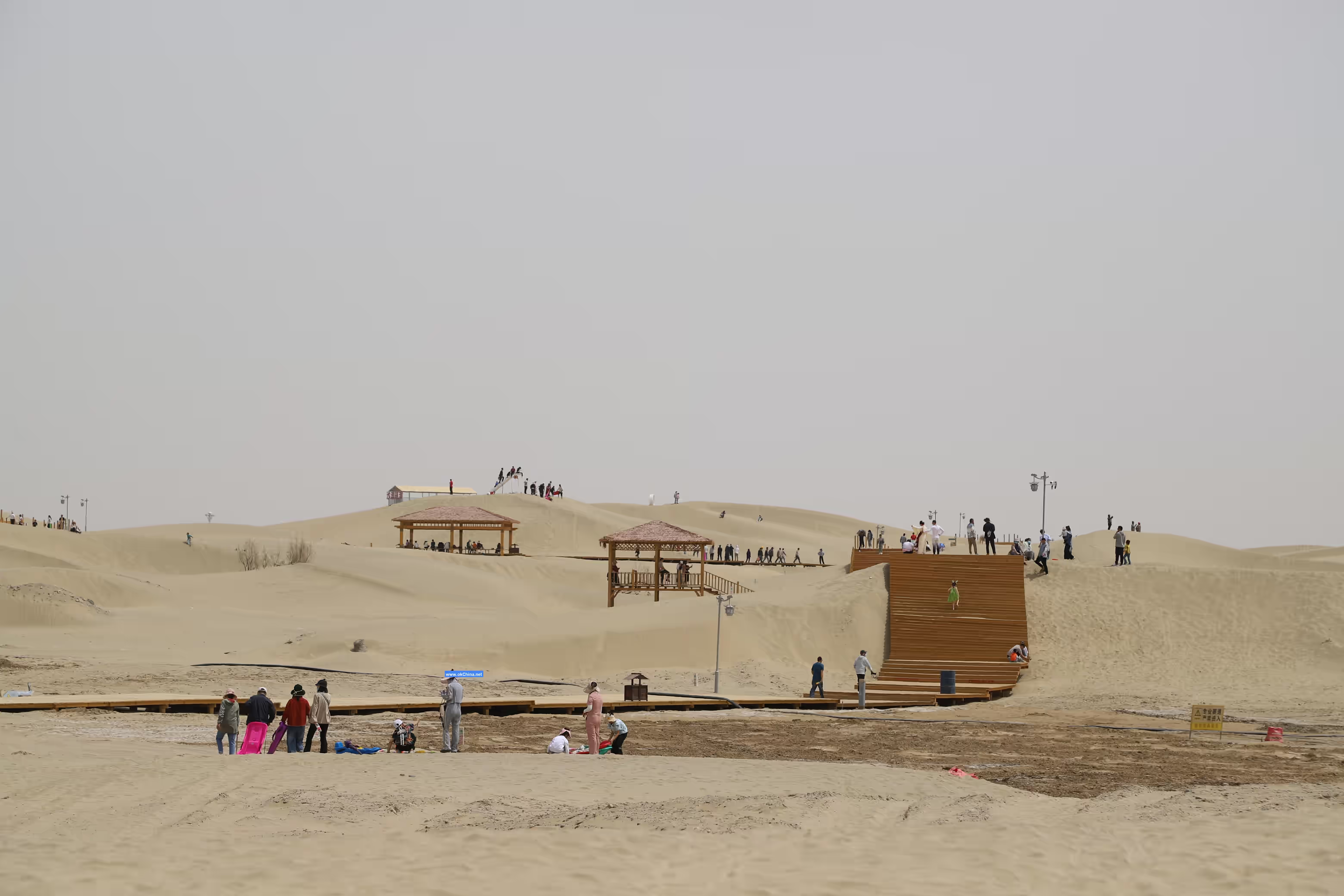
Taklimakan • 359th Brigade Cultural Tourism Area in Alar City, Xinjiang Production and Construction Corps
1. Introduction
The Taklimakan • 359th Brigade Cultural Tourism Area is located in Alar City of the First Division of the Xinjiang Production and Construction Corps. It consists of the 359th Brigade Cultural Tourism Area and the Taklimakan Desert Gate Scenic Area, connecting the red culture of land reclamation with the natural desert landscape. Visitors can statically explore sites such as the 359th Brigade Land Reclamation Memorial Hall, the Land Reclamation Culture Park, and the Shanghai Educated Youth Memorial Forest, or dynamically experience the "359th Brigade is a Model" live-action performance base. Additionally, they can visit the Desert Gate Scenic Area to enjoy various desert activities.
Development History
- In 2007, Shanghai educated youths Yang Haihan, Yang Yongqing, and others, with the wish of "leaving a green shade for Xinjiang," self-funded the construction of the "Shanghai Educated Youth Memorial Forest."
- On September 26, 2009, the 359th Brigade Land Reclamation Memorial Hall was completed and opened.
- In 2013, the development of the Desert Gate Scenic Area began.
- In 2020, the "Shanghai Educated Youth Memorial Forest" was upgraded and transformed into the "Shanghai Educated Youth Park."
2. Location and Layout
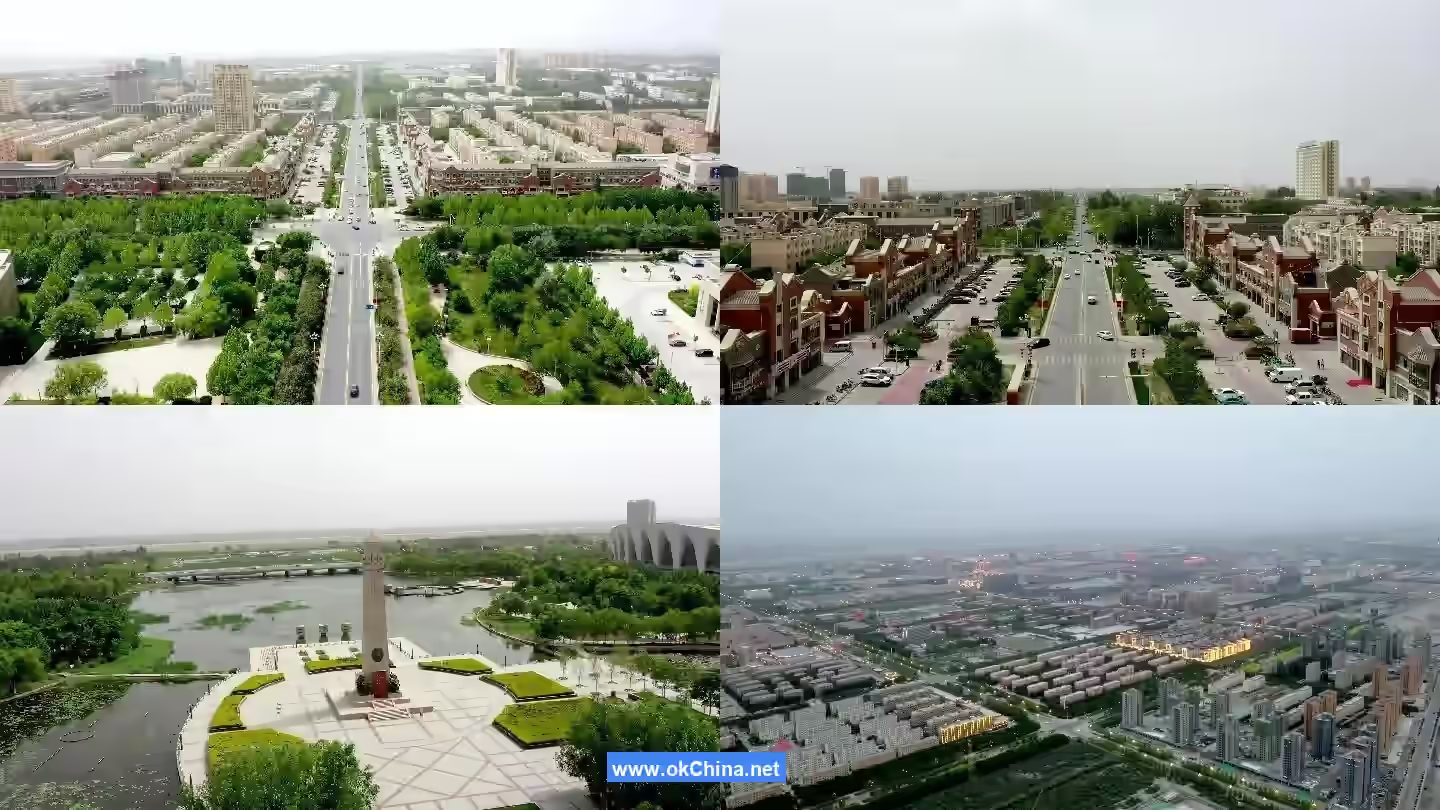
The Taklimakan • 359th Brigade Cultural Tourism Area is located in Alar City of the First Division of the Xinjiang Production and Construction Corps, covering an area of 11.98 square kilometers.
Alar City has a warm temperate extreme continental arid desert climate. The extreme maximum temperature is 35°C (with the Shajingzi Reclamation Area experiencing a maximum of 40°C every 5–10 years), and the extreme minimum temperature is -28°C (with the Fourth Regiment Reclamation Area recording a minimum of -33.2°C). The annual solar radiation in the reclamation area ranges from 133.7 to 146.3 kilocalories per square centimeter. The average annual sunshine duration is 2,556.3 to 2,991.8 hours, with a sunshine rate of 58.69%. The reclamation area receives scarce rainfall, little snow in winter, and experiences intense surface evaporation. The average annual precipitation is 40.1 to 82.5 millimeters, while the average annual evaporation is 1,876.6 to 2,558.9 millimeters.
3. Key Scenic Areas
359th Brigade Land Reclamation Memorial Hall
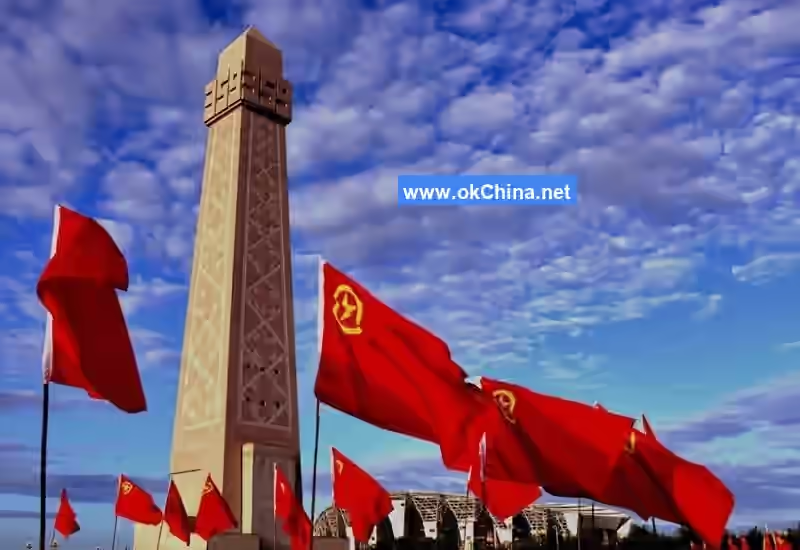
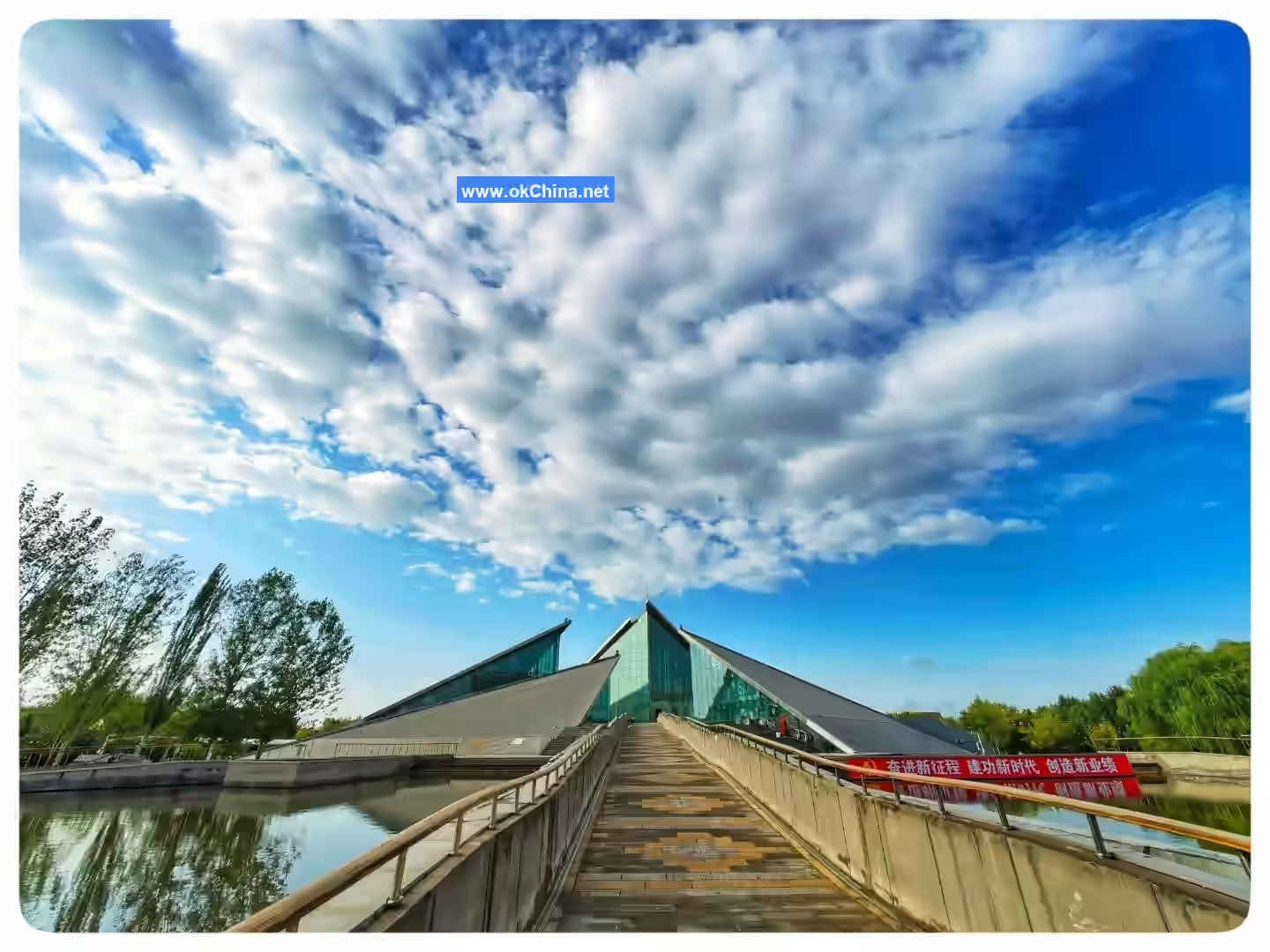
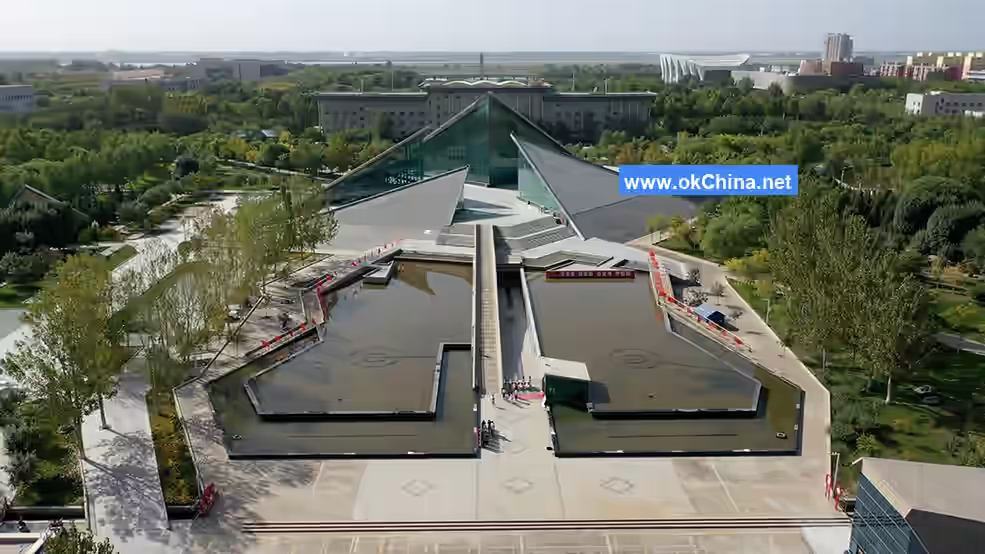
The 359th Brigade Land Reclamation Memorial Hall is shaped like four inverted plowshares, which together create an image of a seed sprouting and breaking through the soil, symbolizing the rooting and growth of the Corps spirit. The 359th Brigade was the unit led by General Wang Zhen during the Great Production Movement in Nanniwan, achieving remarkable military feats and later stationed in Alar after the liberation of Xinjiang. The memorial hall was built to commemorate this legendary unit. It covers an area of 35,000 square meters, with an exhibition area of 7,000 square meters. It houses over 11,200 collections, including 9,500 cultural relics (sets), and displays 1,188 cultural relics (sets). Centered around the three themes of "inheriting history, promoting spirit, and showcasing achievements," the memorial hall narrates the glorious journey of the 359th Brigade through nine exhibition halls. Since its opening in September 2009, it has received over 4.4 million visitors. The hall has been honored with national titles such as "National Third-Level Museum," "National Patriotic Education Demonstration Base," and "National Research and Education Base."
During the revolutionary war era, the 359th Brigade responded to the call of the Party Central Committee. The Great Production Movement in Nanniwan made them a model of hard work and self-reliance. With guns in one hand and hoes in the other, the soldiers transformed the desolate Nanniwan into a "good Jiangnan of Northern Shaanxi," achieving self-sufficiency in grain and laying a solid material foundation for the victory of the Anti-Japanese War. This indomitable and pioneering spirit became a precious spiritual treasure of the Chinese nation and is deeply embedded in every inch of the Taklimakan • 359th Brigade Cultural Tourism Area.
Later, the 359th Brigade embarked on the great journey to Xinjiang. They traversed vast deserts, overcame unimaginable hardships, and planted the Five-Star Red Flag on the frontier of the motherland. In the vast yet relatively barren land of Xinjiang, they continued to uphold the Nanniwan spirit, reclaiming land, guarding borders, building water conservancy projects, cultivating farmland, and constructing towns, making immortal contributions to the stability, development, and prosperity of Xinjiang. From the banks of the Tarim River to the edge of the Taklimakan Desert, their hard work and heroic defense are evident everywhere. They composed magnificent hymns and built enduring historical monuments with their youth, blood, and even lives.
"359th Brigade is a Model" Live-Action Performance Base
The "359th Brigade is a Model" Live-Action Performance Base is one of the core areas of the Taklimakan • 359th Brigade Cultural Tourism Area, a national 5A-level tourist attraction. The live-action performance "359th Brigade is a Model" is the first open-air live-action performance in Xinjiang. The performance fully explores the rich red resources of the division and city, integrating various artistic forms such as film, drama, recitation, and music. It vividly recreates war scenes, embodying the Corps spirit, the spirit of the Euphrates poplar, and the spirit of the veterans. The performance promotes the glorious tradition of the 359th Brigade, with the theme of the division and city always striving to be a model. It tells the stories of the 359th Brigade veterans from 1949 to 1960. The immersive performance format and realistic experience provide visitors with a spiritual baptism and profound impact.
Shanghai Educated Youth Cultural Park
The Shanghai Educated Youth Cultural Park is located near the Tarim River Bridge at the southeastern entrance of the city, upgraded and transformed from the original Shanghai Educated Youth Forest. Built in accordance with the wishes of the honorable group of Shanghai educated youths, the park aims to revisit history, awaken memories, and recreate the scenes of Shanghai educated youths responding to the national call, embracing the lofty ambition of "going to the countryside, going to the frontier, going to where the motherland needs them most." They contributed to the construction, development, and cultural dissemination of the Corps, showcasing the magnificent history of land reclamation and border defense, as well as stories of joy and sorrow. The park uniquely embodies the culture of land reclamation, red culture, and educated youth culture.
Land Reclamation Culture Park
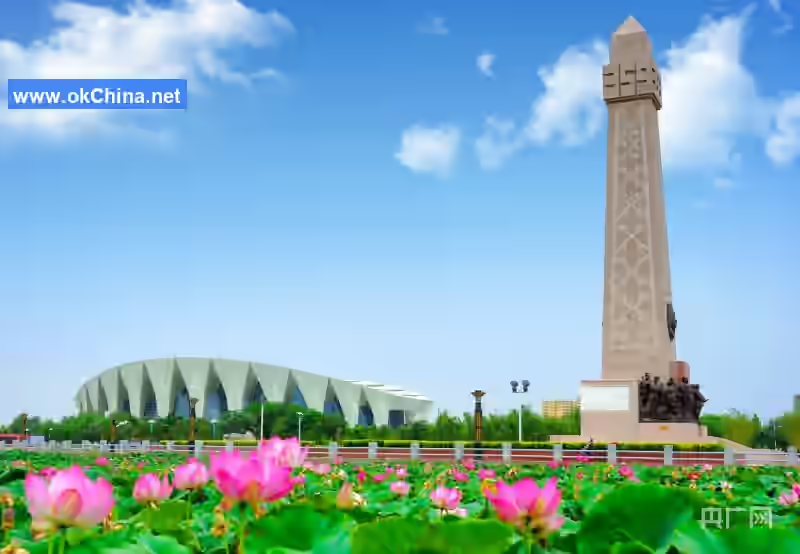
The Land Reclamation Culture Park is located in the center of Alar City, serving as a green leisure destination. Within the park, miniature landscapes of the three major reservoirs of the First Agricultural Division (now the First Division) and the Tarim River have been built to commemorate the contributions of the veteran reclamation soldiers to Alar City and enrich the cultural connotation of land reclamation. The excavated soil was ingeniously piled into continuous hills, unexpectedly creating a harmonious landscape of greenery and coexistence between humans and nature. When night falls, the park's large musical fountain and waterfall dance to激昂的音乐, with colorful lights intertwining and changing, creating a breathtaking spectacle. It is an excellent place for citizens and tourists to relax, entertain, and cool off.
Taklimakan Desert Gate Scenic Area
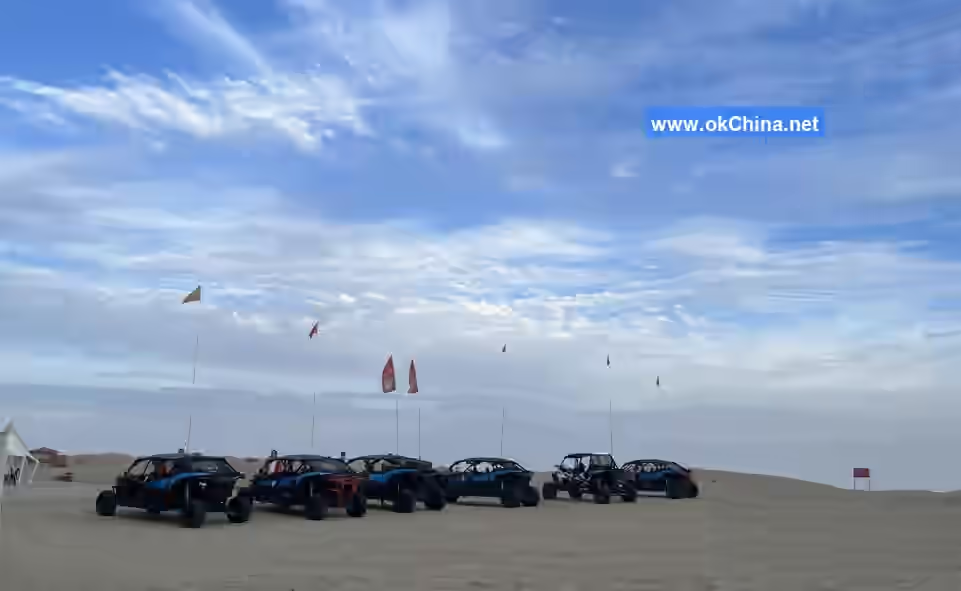
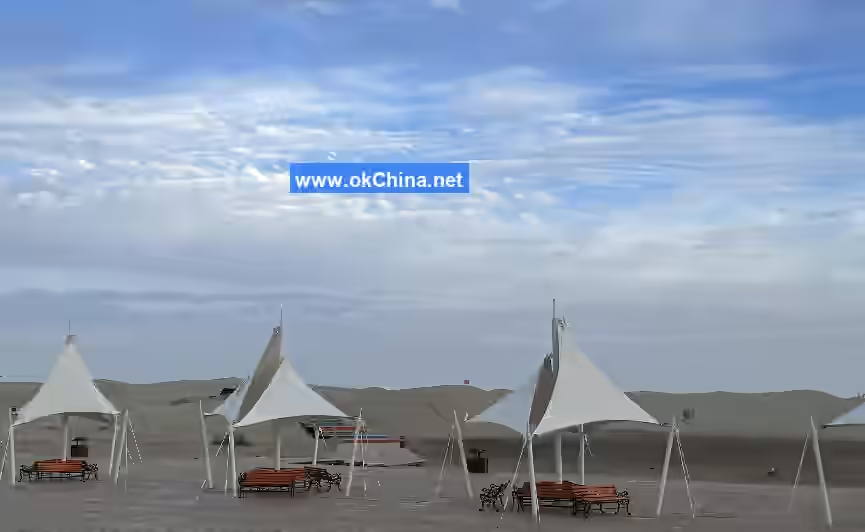
The Desert Gate Scenic Area is located on the northern edge of the Taklimakan Desert and the southern bank of the Tarim River, covering an area of 4.3 square kilometers. It is divided into seven major zones: Visitor Service Area, Sand Conservation Area, Desert Resort Area, RV Camping Area, Racing Theme Area, Cultural Expansion Area, Sports Expansion Area, and Sand Burial Culture Area. It offers 14 tourism experience projects: Desert Off-Road Challenge, Desert RV Experience, Laser Bonfire Music Evening, Desert Sports Expansion, Desert Kite Show, Sand Therapy, CS Live-Action Show, Parent-Child Tree Planting, etc. The area features infrastructure such as car obstacle tracks, desert off-road rally tracks, motorcycle obstacle tracks, car straight-line acceleration tracks, go-kart tracks, RV campsites, and train-themed restaurants. It has become a nationally renowned comprehensive professional competition base, a national elite sports event base, and an off-road training base of the China Motorcycle and Automobile Sports Federation.
As an important backdrop and unique landscape of the tourism area, the Taklimakan Desert is awe-inspiring for its vastness and mystery. As the world's second-largest shifting desert, it resembles a golden ocean with undulating sand dunes stretching endlessly. Standing at the edge of the desert and gazing into the distance, visitors can see the distant sand dunes shimmering with enchanting light under the sun, their elegant and smooth lines outlining a magnificent and grand picture.
Venturing deep into the desert, visitors can experience its unique charm. Riding in professional desert off-road vehicles, they can traverse the sand dunes, feeling the thrill and excitement of an accelerated heartbeat. When the vehicle climbs to the top of a high dune, overlooking the surroundings, the vast desert scenery unfolds before their eyes, evoking a sense of reverence for nature. Hiking in the desert is another way to get close to it. Walking on the fine, soft yellow sand feels like having an intimate conversation with the desert. Along the way, visitors can admire unique desert plants, such as the resilient saxaul trees and tamarisks, which survive in harsh environments, adding a touch of vitality and greenery to the monotonous desert. Desert camping is a challenging and fun activity. As night falls, visitors, guided by professionals, set up tents and light bonfires in the desert. Sitting around the bonfire and looking up at the starry sky, the brilliant Milky Way spans the horizon, with twinkling stars creating an intoxicating view. Here, visitors can escape the hustle and bustle of the city and fully enjoy the tranquility and beauty of nature. At the same time, they can savor delicious desert barbecues and share the joys and insights of the journey with their companions.
The desert sunrise and sunset are not-to-be-missed spectacles. In the early morning, as the first rays of sunlight fall on the sand dunes, the entire desert turns golden, with light and shadow变幻无穷 on the dunes, creating a dreamlike scene. In the evening, the afterglow of the sunset dyes the sky and desert orange-red, with the绚丽多彩的晚霞 and连绵的沙丘 complementing each other, forming a天然画卷 of breathtaking beauty. At this moment, visitors can sit quietly on the sand dunes,感受着沙漠的宁静与祥和, and cherish these fleeting moments of beauty.
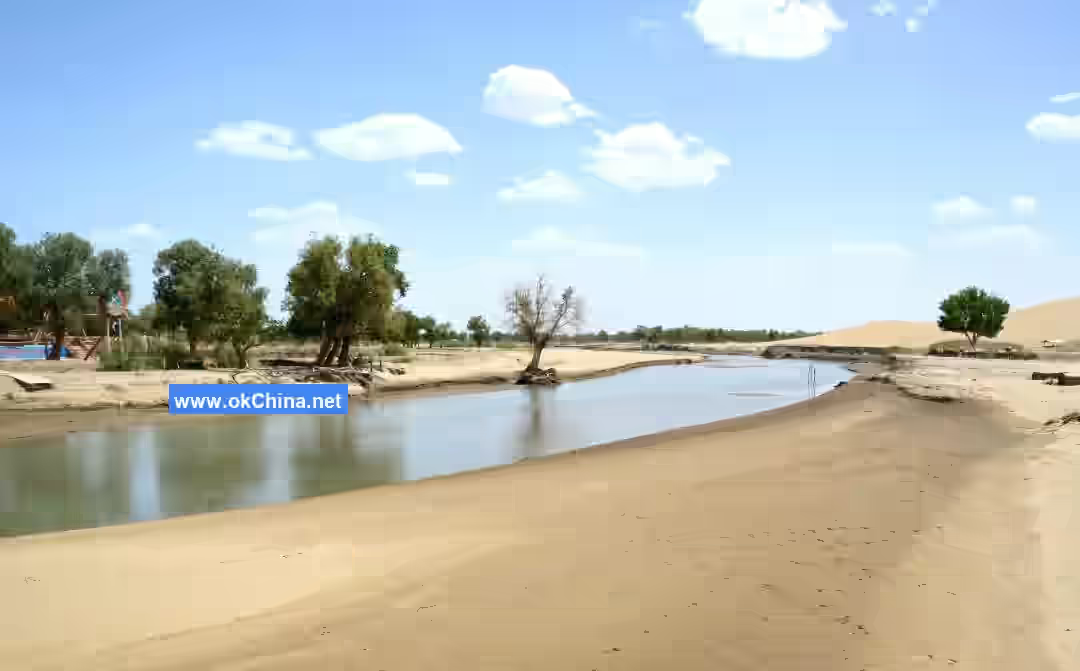
Tarim RiverFlowing alongside the Taklamakan Desert, the Tarim River is the life source of this land. It resembles a winding jade belt, traversing the desert and nourishing the lands on both banks. The river surges forward ceaselessly, its clear waters reflecting the sky, sand dunes, and green trees along the shore, creating a unique and wondrous scene where waterland and desert intertwine.
Strolling along the banks of the Tarim River, the lush poplar forests on both sides are refreshing and delightful. The poplar, known as the "hero tree of the desert," thrives and multiplies in the Tarim River basin with its tenacious vitality. Some stand tall and straight, while others are graceful and elegant. Their golden leaves shimmer brilliantly under the sunlight, interweaving with the azure sky and emerald river to form a picturesque landscape. Especially in autumn, the leaves of the poplar forests turn a radiant gold, as if nature has overturned its palette across the entire Tarim River basin, creating a dazzling and breathtaking array of colors. Visitors can freely take photos here to capture those beautiful moments, or they can board a sightseeing boat and glide slowly along the river, admiring the poplar scenery on both banks while experiencing the gentle tranquility of the Tarim River.
Moreover, the Tarim River basin serves as a habitat for numerous wild animals. Elegant swans dance gracefully on the water, flocks of wild ducks play and forage, and occasionally, rare birds such as egrets and gray cranes can be spotted. These vibrant creatures add boundless vitality and energy to the Tarim River, allowing visitors to appreciate the wonders and harmony of nature while enjoying the scenic views.
IV. Cultural Resources
The Taklamakan · 359th Brigade Cultural Tourism Area integrates resources such as red tourism, large-scale agricultural sightseeing, and desert sports leisure. It serves as a highland for red cultural heritage in southern Xinjiang and an important landmark for the division and city. The predecessor of the 359th Brigade was the Red Sixth Army Corps, one of the three main forces of the Chinese Workers' and Peasants' Red Army during the Agrarian Revolutionary War. During the War of Resistance Against Japan, it became the renowned 359th Brigade of the 120th Division of the Eighth Route Army. In the Liberation War, it was reorganized into the 5th Infantry Division of the 2nd Army of the 1st Corps of the First Field Army of the People's Liberation Army. In 1950, it advanced into Xinjiang to liberate the region. In June 1953, under the order of Chairman Mao Zedong, it was collectively reorganized into the 1st Agricultural Construction Division of the Xinjiang Military Region. In 1954, it was incorporated into the Xinjiang Production and Construction Corps. The phrase "Born at Jinggangshan, grew in Nanniwan, fought across thousands of miles, and settled to cultivate at Tianshan" vividly summarizes the growth and development history of this heroic unit that achieved countless military merits. Centered around the 359th Brigade Reclamation Memorial Hall, the tourism area showcases the red culture of the Corps' reclamation and border defense. It is an ideal venue for patriotic education, a window to understand the achievements of Alar City and the Corps' construction, and an important red tourism base for the Xinjiang Production and Construction Corps.
Honors Received
- In 2010, the 359th Brigade Reclamation Memorial Hall was designated as the Corps' Patriotic Education Base and the Corps' Anti-Corruption Education Base.
- In December 2020, the 359th Brigade Reclamation Memorial Hall was awarded the title of "National Study Travel Base."
- In January 2021, the 359th Brigade Reclamation Memorial Hall was rated as a National Third-Class Museum.
- On May 11, 2021, the Taklamakan · 359th Brigade Cultural Tourism Area was designated as a National AAAAA Tourist Attraction by the Ministry of Culture and Tourism of the People's Republic of China.
- In November 2021, the Taklamakan Desert Gate Scenic Area was awarded the title of National Sports Tourism Demonstration Base.
- In May 2023, the 359th Brigade Reclamation Memorial Hall was recognized as a National Civilized Tourism Demonstration Unit.
Management Units
Desert Gate Scenic Area, 359th Brigade Model Scenic Area
Alar City Tajinglian Scenic Area Operation Co., Ltd. was established on July 1, 2024, as a subsidiary of Xinjiang Tarim Cultural Tourism Group Co., Ltd., with a registered capital of 2 million yuan. Currently, the company operates the National 5A Tourist Attraction Taklamakan · 359th Brigade Cultural Tourism Area (including the Desert Gate Scenic Area and the 359th Brigade Model Scenic Area) and the National 4A Tourist Attraction Sleeping Poplar Valley Scenic Area.
359th Brigade Reclamation Memorial Hall
The 359th Brigade Reclamation Memorial Hall is a fully funded public institution with 6 permanent staff members under institutional establishment and 24 long-term contract employees.
Comments
Post a Comment