

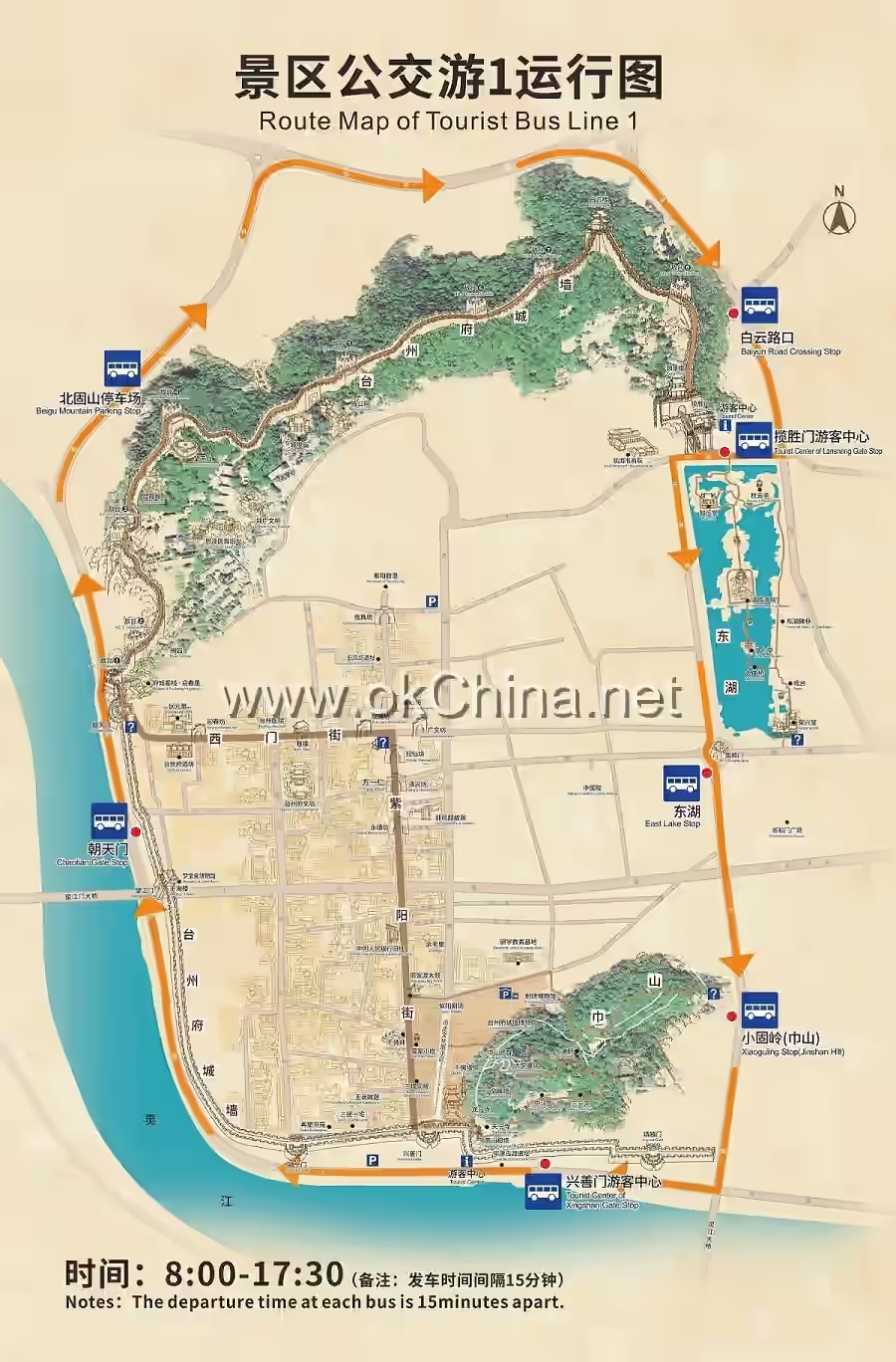
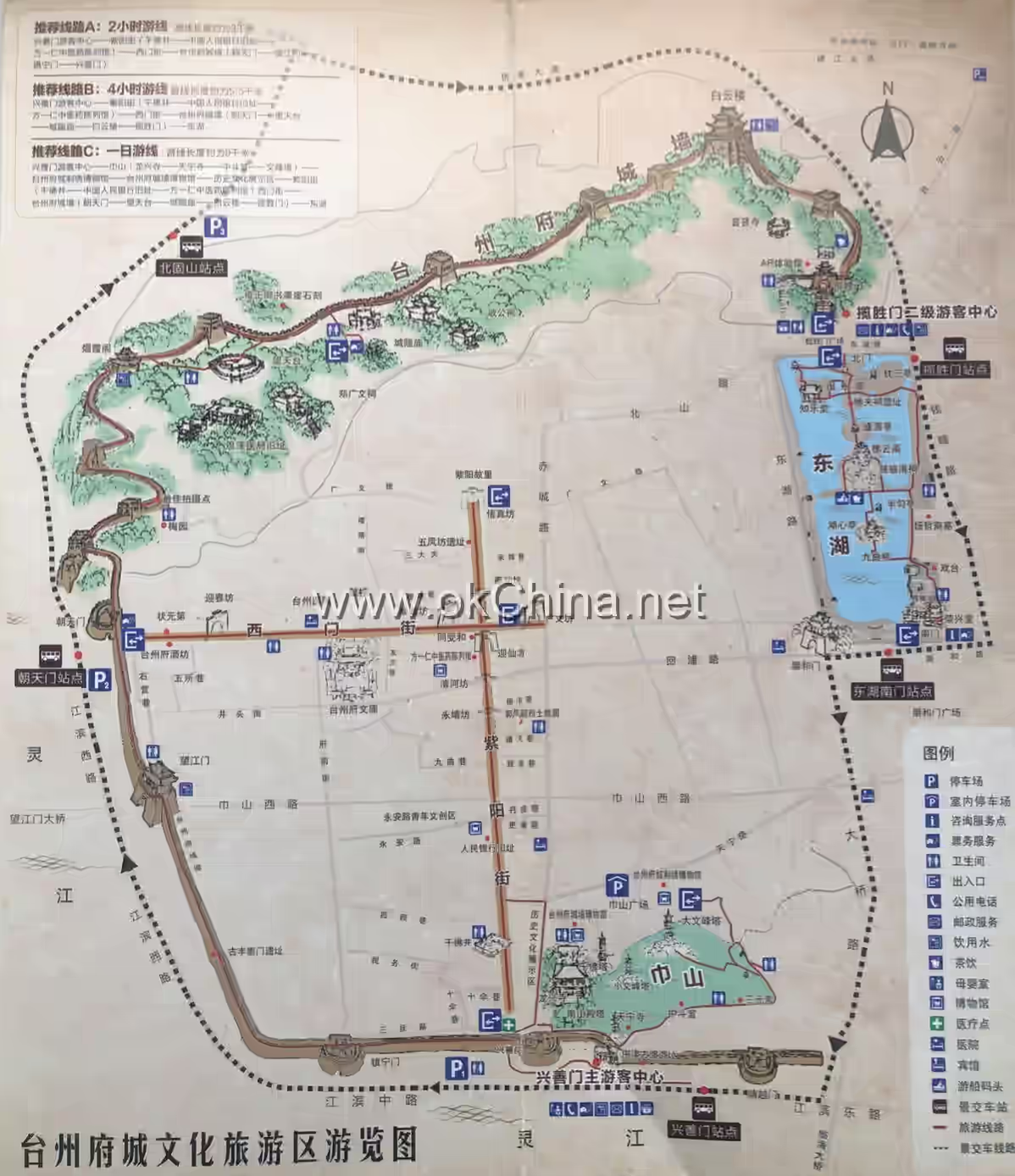
Taizhou Prefectural City Cultural Tourism Area
1. Introduction
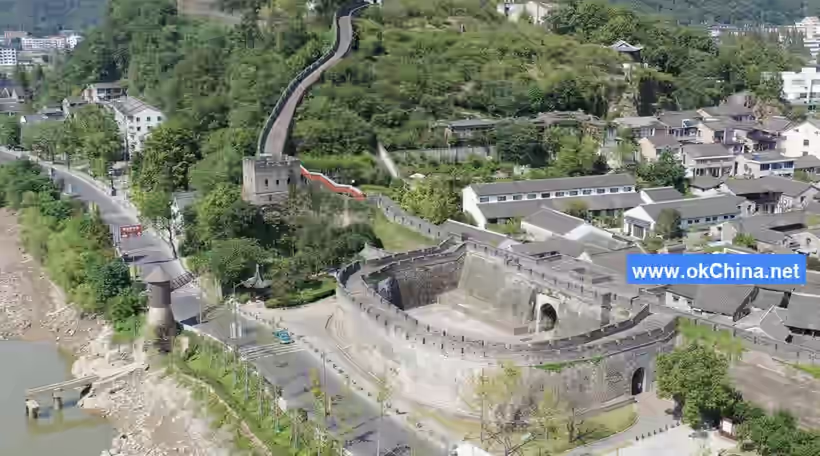
The Taizhou Prefectural City Cultural Tourism Area is located in the urban area of Linhai City, a county-level city administered by Taizhou City, Zhejiang Province. It served as the seat of the Taizhou prefectural government after Taizhou was established in the fifth year of the Wude era (622 AD) during the Tang Dynasty. The tourism area covers a total area of 3.12 square kilometers, with main attractions including the Taizhou Prefectural City Wall (Jiangnan Great Wall), Ziyang Ancient Street, Jinshan Pagoda Shadows, Donghu Lake Night Moon, and Longxing Temple. Among these, the Taizhou Prefectural City Wall is the largest and best-preserved example of ancient coastal and city defense engineering in the middle and lower reaches of the Yangtze River. Both the city wall and the Jinshan Pagoda Group are National Key Cultural Relics Protection Units; Ziyang Street is also a Famous Chinese Historical and Cultural Street.
2. Main Attractions
2.1 Taizhou Prefectural City Wall
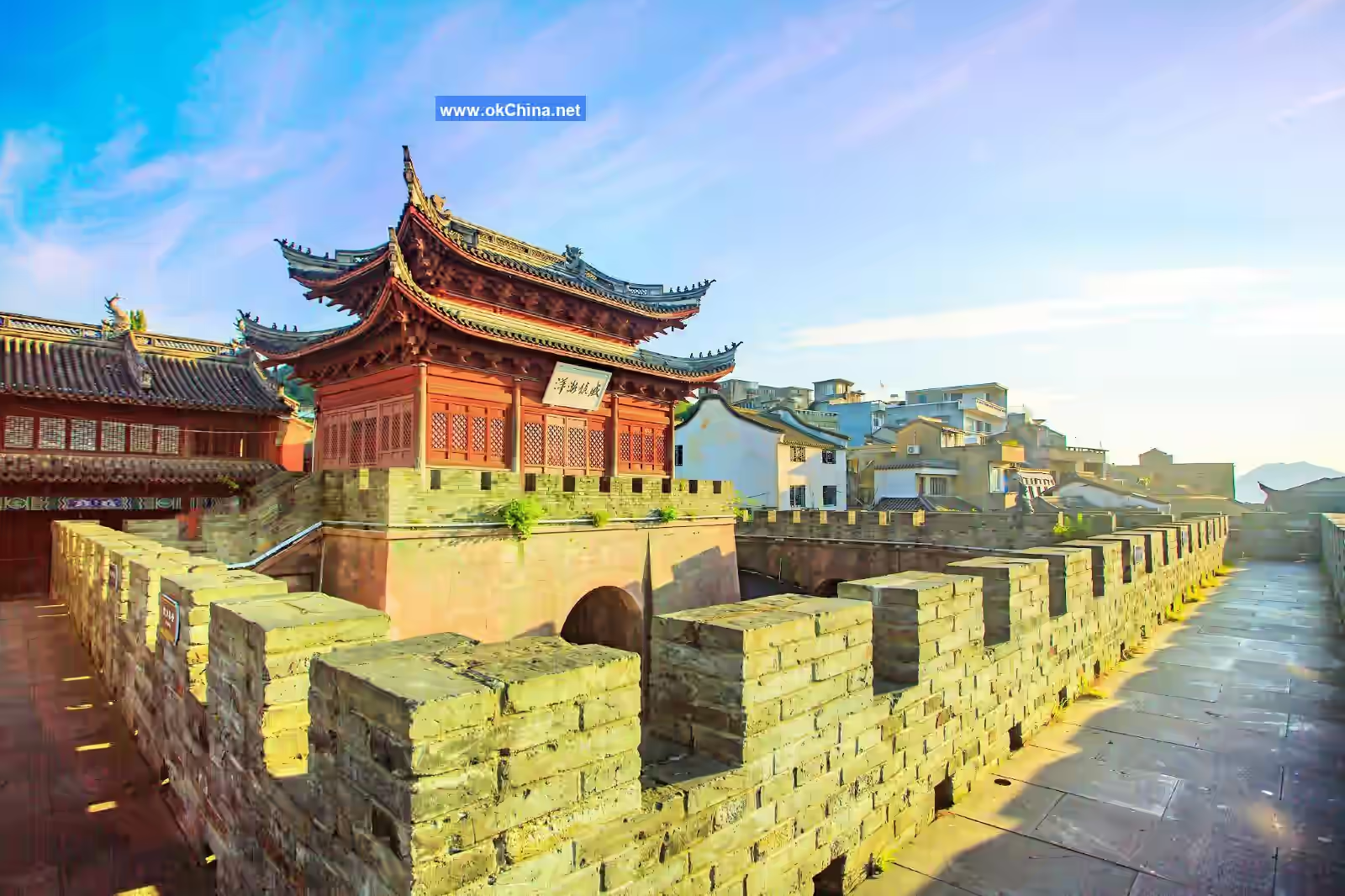
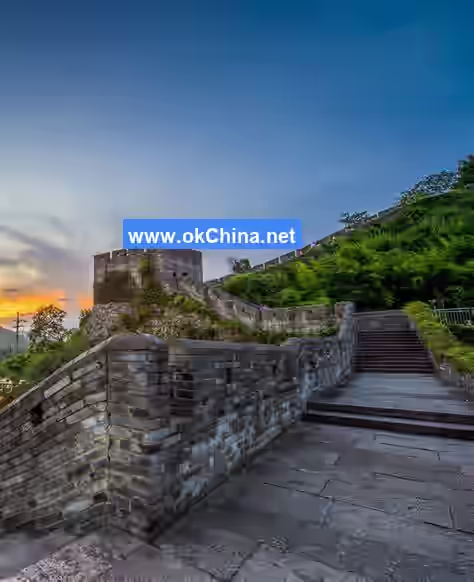
The Taizhou Prefectural City Wall, also known as the Jiangnan Great Wall, is the core attraction of the Taizhou Prefectural City Cultural Tourism Area. Its initial construction began during the Eastern Jin Dynasty, with expansions in the Tang, finalization in the Song, and improvements during the Ming and Qing dynasties. It served dual functions of military defense and flood control and has a history of over 1,600 years. The wall originally measured 6,280 meters in length, with 4,730 meters remaining today. It still retains eight double-layer hollow watchtowers created by the Ming Dynasty hero Qi Jiguang. The wall was listed as a National Key Cultural Relics Protection Unit in 2001 and was included in China's Tentative List for World Heritage in 2012 as part of the "City Walls of the Ming and Qing Dynasties." Luo Zhewen, former honorary president of the Great Wall Society and head of the Chinese Ancient Architecture Expert Group, praised it as the "model" and "blueprint" for the northern Ming Great Wall. It is part of a National Historical and Cultural City and has been included in the World Heritage Tentative List.
2.1.1 Historical Evolution
In the first year of the Yuanxing era (402 AD) of the Eastern Jin Dynasty, Prefect Xin Jing built a citadel on Dagushan in Linhai to resist Sun En, forming the initial structure of the Taizhou Prefectural City Wall.
In the early Tang Dynasty, Linhai was elevated to a prefectural seat, leading to an expansion of the city walls.
At the end of the Tang Dynasty, when Taizhou surrendered to the Song, the battlements were dismantled as a gesture of sincerity.
During the reign of Emperor Zhenzong of the Northern Song Dynasty, the city wall was completely restored to its original state. After reconstruction, it gradually formed a "nine-gate" system, including seven gates in the outer city—Zhenning, Xingshan, Fengtai, Kuocang, Chonghe, Jingyue, and Chaotian—and two gates in the citadel—Shunzheng and Yanqing.
During the Qingli era of the Northern Song Dynasty, heavy rains caused floods that destroyed the Taizhou Prefectural City Wall. Prefect Peng Siyu repaired it, making it "higher and as solid as before." This restoration project encased the original rammed earth wall with blue bricks to enhance stability and rigidity. The southwestern section facing the water was built with stone slabs. Later, Taizhou Prefect Qian Xuan "reinforced the battlements, built stone platforms, and constructed a large embankment to defend against it," significantly strengthening the wall's ability to withstand floods from the Lingjiang River. Additionally, due to the terrain of Linhai city being lower in the east and higher in the west, streams from Beigu Mountain converged in the low-lying eastern part of the city, often turning it into a waterlogged area during rainfall (the water body before Donghu Lake was expanded), making it nearly uninhabitable and impassable. Therefore, in the fourth year of the Xining era (1071 AD), Prefect Qian Xuan, based on years of data on mountain flood volume and flow direction, utilized the natural geographical features to relocate the eastern wall westward to the west of Donghu Lake. He also expanded the original Donghu Lake, straightened its shoreline, and dredged the waterway connecting Donghu Lake and the Lingjiang River. This not only eliminated the threat of waterlogging but also added a wide natural moat to the east of Linhai city. Thus, the layout of the Linhai city wall was largely finalized.
In the early years of the Yuan Dynasty, many city walls were destroyed due to governance needs, but the Taizhou Prefectural City Wall survived thanks to its完善的 flood control system.
During the Ming Dynasty, China's southeastern coast was frequently attacked and plundered by Japanese pirates (Wokou). Although the Linhai city wall could withstand floods, it was unable to resist pirate raids, often resulting in heavy losses. In the thirty-second year of the Jiajing era, after suffering repeated plundering and heavy losses from Japanese pirates, significant funds were spent that year to strengthen the defense system of the Linhai city wall. In the thirty-sixth year of the Jiajing era, Qi Jiguang was stationed in Taizhou to resist the Japanese pirates and further improved the defensive capabilities of the Linhai city wall based on military defense characteristics.
In the fifteenth year of the Shunzhi era (1658 AD) of the Qing Dynasty, another round of wall construction took place, increasing the height of the wall, reducing the number of battlements, and forming a relatively完善 defense system with strong flood control capabilities.
2.1.2 Cultural Relics and Remains
The Taizhou Prefectural City Wall consists of the wall body, gates, gate towers, barbicans, moats, moat bridges, watchtowers, horse faces (mamian), battlements, and parapets. In terms of function and military defense importance, it can generally be divided into basic defense units and core defense units. Basic defense units mainly refer to the wall body and moat; core defense units mainly refer to gates, gate towers, barbicans, watchtowers, and horse faces.
Wall Body
The Taizhou Prefectural City Wall is approximately 6,280 meters long, with a height of 7 meters and 7 gates. The wall is wider at the base and narrower at the top,呈梯形. The outer top is equipped with battlements, the inner side is built with parapets, and the wall body also features protruding horse faces at intervals. The Taizhou Prefectural City Wall is a rammed earth wall encased with city bricks. The lowest layer of the rammed earth is brown-gray soil, which is the hardest, followed by a 20-30 cm cushion layer of purplish-red soil, a third layer of yellow soil, and a surface layer of black soil. The construction method involved mixing earth evenly with glutinous rice or clay, then compacting it. After natural drying, it became extremely hard, greatly improving the wall's stiffness and strength.
Gates
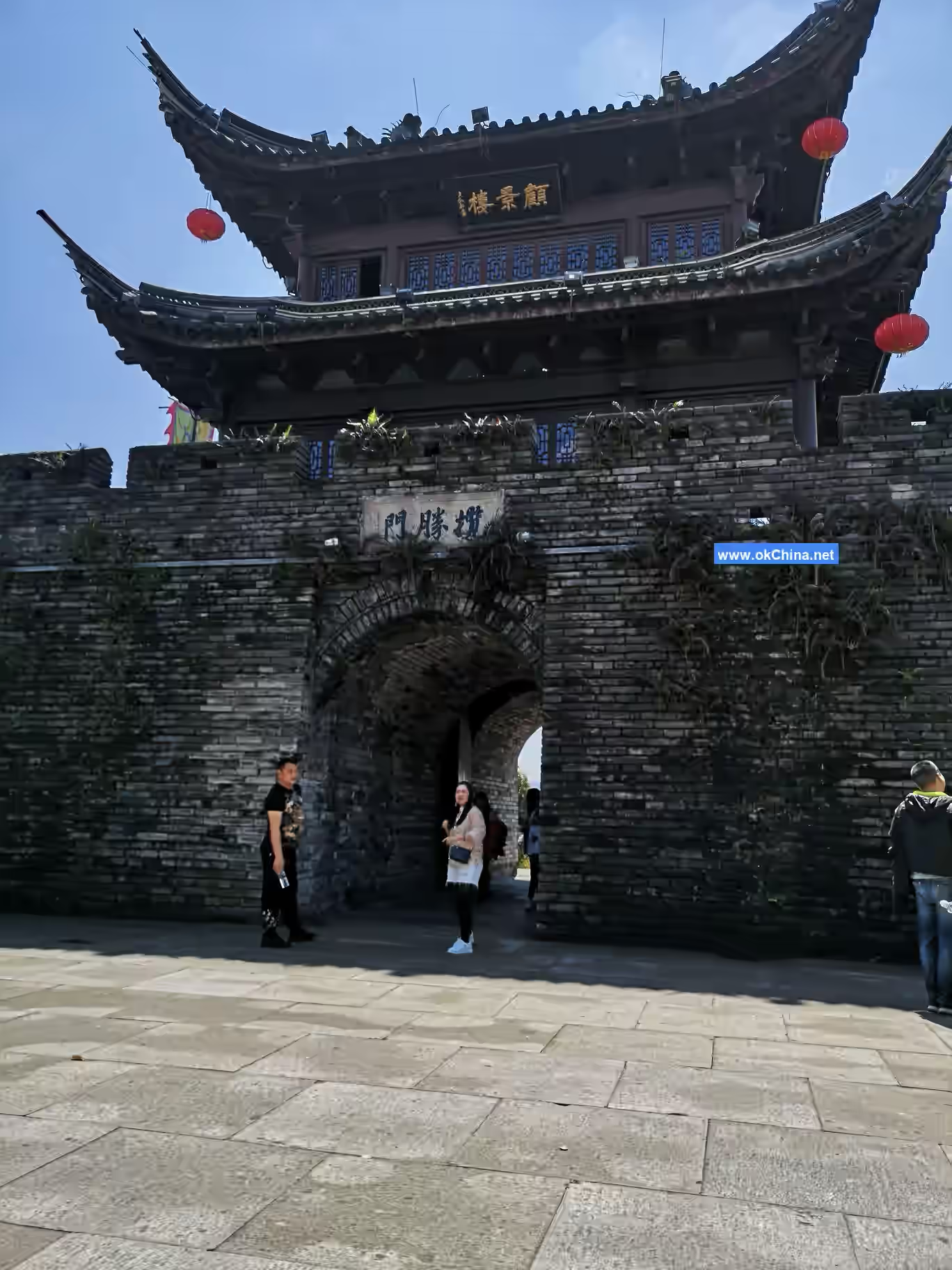
The Taizhou Prefectural City Wall originally had 7 gates: Chonghe Gate on the east; Xingshan Gate and Zhenning Gate on the south; Jingyue Gate on the southeast; Fengtai Gate on the southwest; and Kuocang Gate and Chaotian Gate on the west. Among them, Jingyue, Xingshan, Zhenning, and Chaotian on the southwest were the main riverside gates. Before the establishment of the riverside barbicans in 1712 (the fifty-first year of the Kangxi era), they had to defend not only against enemy fire attacks and撞击 from siege weapons but also against floods, water, and moisture. Therefore, the gates not only adopted arched gateways but also designed gate leaves higher than the top of the gate opening. The inner walls on both sides of the gate were widened outward from the gate pivot to 2.2 meters, with a depth increase of 0.4 meters each, facilitating transportation and creating a rectangular "skylight"-like space above. These skylights measure approximately 4.3 to 5.1 meters in length and 2.2 to 2.65 meters in width, making them quite unique. This is a孤例 not found in other Ming and Qing city walls, and its function remains undetermined.
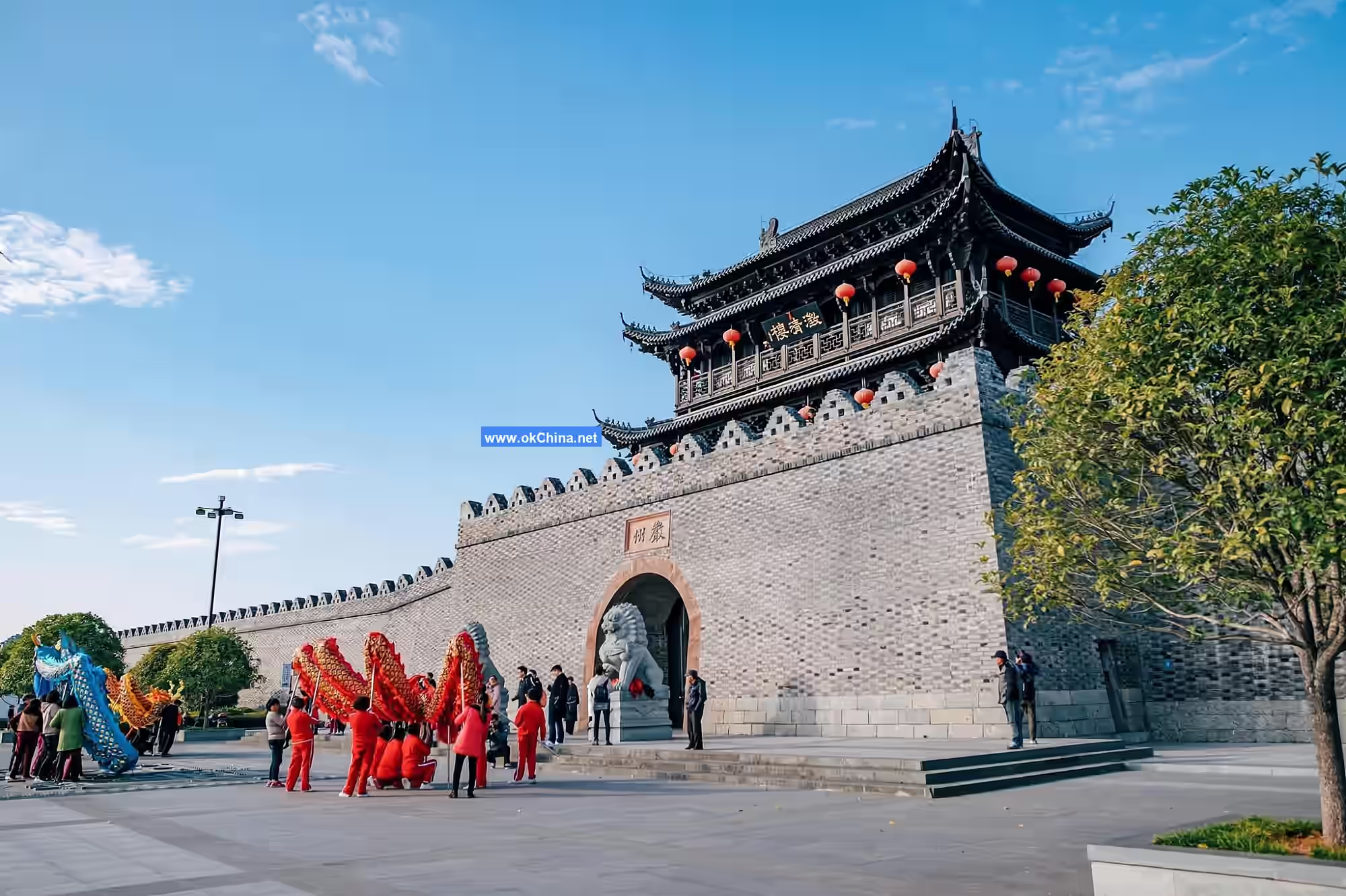
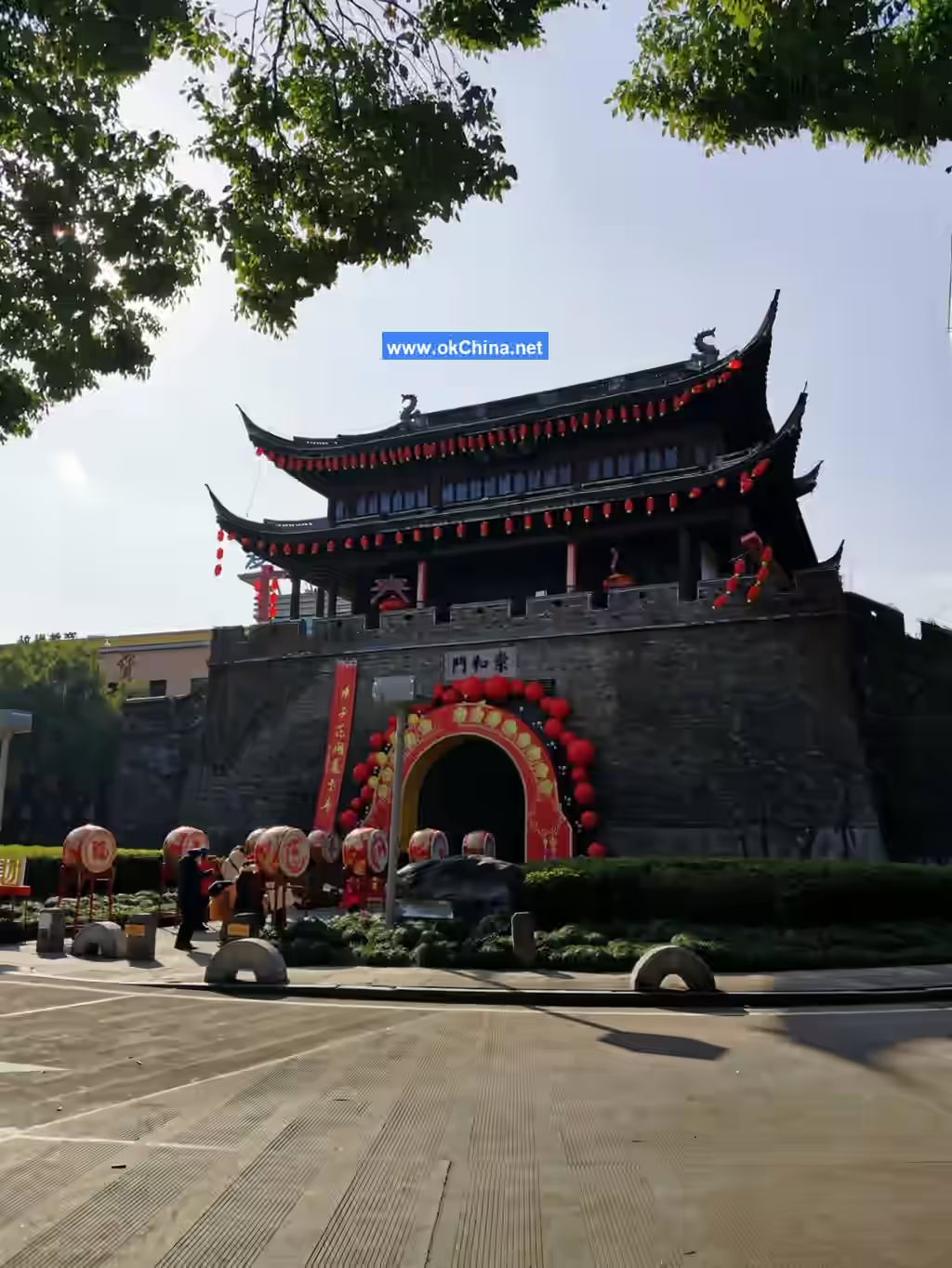
After 1984, the local government of Taizhou opened a new Wangjiang Gate in the middle section of the western wall, built a new Beigu Gate outside the original Beigu Gate north of Longgu Mountain near the City God Temple, and rebuilt Chonghe Gate on the site of the original Chonghe Gate. The opening of Wangjiang Gate made it a scenic spot for viewing the river, and a tower was built atop the gate.
Gate Towers
Towers were built above the gates for defense and observation. From the late Eastern Han Dynasty to the Sui Dynasty, they were often multi-story buildings of two or three stories. From the Tang to the Yuan Dynasty, gate towers were single-story. In the early Ming Dynasty, there were seven gate towers on the Taizhou Prefectural City Wall: Huifeng (Chonghe Gate), Chaoran (Xingshan Gate), Shenxiu (Zhenning Gate), Jingyue (Jingyue Gate), Xiabiao (Fengtai Gate), Jixian (Kuocang Gate), and Xinggong (Chaotian Gate), all rich in寓意.
Chonghe Gate – Huifeng Tower Located at the正东 of the city, near Donghu Lake, connected to the moat, with a crescent city and a drawbridge, commonly known as "Drawbridge Head." The name Chonghe Gate derives from the wall's建筑高大雄伟,匀称适当. Huifeng Tower is named for the beauty of the ancient city's landscape and the practical benefits of building the city for the common people. This represents the harmony of heaven and earth, creating a scene of breathtaking beauty.
Jingyue Gate – Jingyue Tower Located at the southeast of the city, near Jinshan Mountain and the Lingjiang River. The重复叠用 of the gate and tower names Jingyue emphasizes building the city to resist enemies, protect the homeland, and allow the people to live a peaceful life.
Xingshan Gate – Chaoran Tower Located slightly east of south in the city, also near Jinshan Mountain to the east and bordering the Lingjiang River to the south. Xingshan Gate is named because of its proximity to Jinshan Mountain, which has many temples. The善事 of Buddhism and Taoism inspired people to do good deeds and avoid evil, leading to the盛行慈善 in the city. Chaoran Tower is close to Jinshan Mountain and the Lingjiang River. The landscape of the ancient city is超然寻常, so beautiful that it should be protected. The tower, being atop the gate, is advantageous for viewing the scenery of Jinshan Mountain and the Lingjiang River, hence the name Chaoran.
Zhenning Gate – Shenxiu Tower Located at the正南 of the city, bordering the Lingjiang River to the south and通往州治 to the north, commonly known as "Great South Gate." Zhenning Gate signifies镇定而宁静, meaning to provide the people with a宁静安定的家园. The name Shenxiu Tower寄托 a wish here, hoping to build the homeland of Lucheng (Deer City) into a神奇而秀美 place that inspires神往.
Fengtai Gate – Xiabiao Tower Located at the southwest corner of the city, with two sides close to the Lingjiang River. The name Fengtai Gate comes from感受 the abundant products of Taizhou and Linhai, the安宁 of people's lives, and祝福年丰人寿,生活安康. The name Xiabiao Tower标志着 the life of Lucheng's people is as colorful and infinitely beautiful as the clouds.
Kuocang Gate – Jixian Tower Located at the正西 of the city, facing the Lingjiang River. Kuocang Gate is named after Kuocang Mountain, the highest peak in southeastern Zhejiang. Jixian Tower is based on legends that many immortals lived on Kuocang Mountain, where they refined elixirs, practiced arts, and achieved enlightenment to ascend to heaven. The人文景观 and natural风光 of Kuocang Mountain are奇异秀美, inspiring遐想 and向往.
Chaotian Gate – Xinggong Tower Located at the northwest corner of the city, bordering the Lingjiang River to the west and leaning against Longgu Mountain to the north, it is a天然雄关, commonly known as "West Gate." Chaotian Gate凭借 the natural险 of Longgu Mountain,雄伟壮美. Naming the gate Chaotian makes the wall appear even more有气魄有活力. The name Xinggong Tower is for兴盛公益事业,造福古城老百姓,让老百姓永远铭记在心.
**Horse Faces (Mamian)**Mamian refers to the protruding platforms on city walls, allowing defending soldiers to engage enemies from three sides. Their spacing is designed based on the effective range of bows and arrows, typically between 100 and 120 meters. The Taizhou Prefecture Wall features numerous enemy towers, with nine along the riverfront alone, providing enhanced defense against pirate raids from the eastern coast and the Ling River. The design of most mamian is similar to those in other cities, but due to frequent erosion by the Ling River, six mamian along the riverside section are designed with curved or sloped surfaces, some even half-square and half-curved, to reduce the impact of river currents and strengthen flood control. The original number of mamian on the Taizhou Prefecture Wall is unknown because the eastern section has been destroyed. The surviving mamian are located between Zhenning Gate and Chaotian Gate.
Details of the six curved mamian are as follows:
The first mamian is 153.75 meters west of Zhenning Gate, protruding 6.16 meters, with an outer width of 4.2 meters and an inner width of 7.5 meters. The upstream side is curved.
The second mamian is 223.5 meters from the first, protruding 6.4 meters, with an outer width of 6.6 meters and an inner width of 9 meters. The upstream side is sloped.
The third mamian is 178.15 meters from the second, protruding 4.6 meters, with an inner width of 3.4 meters. The outer end and upstream side merge into a single curved surface.
The fourth mamian is 56.3 meters from the third, protruding 4.4 meters, with an inner width of 5.2 meters. The outer end and upstream side are also curved.
The fifth mamian is 74.8 meters from the fourth, protruding 6.1 meters, with an outer width of 4.4 meters and an inner width of 6.4 meters. The upstream side is sloped.
The sixth mamian is 101.68 meters from the fifth, with an inner width of 7.6 meters. It protrudes 8.2 meters downstream and 6.45 meters upstream, with a sloped outer end 6.7 meters wide.
The unique design of these six mamian highlights the distinctiveness of the Taizhou Prefecture Wall, serving both military and flood control purposes—a feature absent in other ancient cities, especially those in northern China. It is hailed as "a remarkable creation, rare nationwide."
Enemy Towers
During the Jiajing period of the Ming Dynasty, Qi Jiguang constructed 13 double-layer hollow enemy towers on the city wall to defend against pirates. These towers spanned both sides of the wall, offering ample interior space for garrisoning troops, shelter from rain and cold, and facilitating lookout, defense, and communication. This design, introduced by Qi Jiguang and others when they were stationed in the northern frontier, greatly influenced the construction of the Ming Great Wall in the north, enhancing defensive capabilities and creating iconic wall landscapes. Qi Jiguang’s innovation of hollow enemy towers represents a significant advancement in military architecture, marking a major breakthrough in the history of military fortifications and city defense in ancient China.
Barbican Entrances
Barbican entrances were designed to encircle and eliminate enemies attacking the city gates. The four main riverside gates of the Taizhou Prefecture Wall—Xingshan Gate, Zhenning Gate, Jingyue Gate, and Chaotian Gate—all feature single barbican entrances, mostly semicircular in shape. Only Zhenning Gate has a design between semicircular and square, with three additional flood-control walls on the west side inside the barbican. It has two gates with an inner-large, outer-small and inner-high, outer-low structure, similar to the other three gates.
Moat
The moat of Taizhou Prefecture City utilizes the natural Ling River. The southwestern sides rely on the river for defense, while the eastern side is protected by the artificially excavated East Lake. The northern side, backed by mountains, integrates the wall with the terrain, reducing construction efforts while enhancing defense. It is affectionately called the "Badaling of the South." The moat is equipped with defensive bridges, and a pontoon bridge is set up at the western entrance for easy access and trade.
Inscribed Bricks
The Taizhou Prefecture Wall began to be clad with bricks and stones in the fifth year of the Qingli period of the Northern Song Dynasty (1045 AD) and underwent repeated repairs until the last major renovation in the tenth year of the Tongzhi period of the Qing Dynasty. The bricks from various dynasties vary in length, thickness, and type, all handmade using molds.
The inscribed bricks feature both intaglio and relief characters, including seven types of kiln workers, five types of kilns, four auspicious phrases, twelve origins, twenty-one surnames, one chronological record, and five patterns—totaling sixty types of inscriptions. These bricks provide rich historical information about the construction and repairs over the dynasties, offering valuable material for further research into the architectural history, geographical evolution, military setup, brick production sites, and script development of the Taizhou Prefecture Wall.
2.1.3 Cultural Relic Value
Research Value
Most surviving ancient city walls today were built or rebuilt during the Ming and Qing dynasties. The Taizhou Prefecture Wall, however, is considered a relic from the Northern Song Dynasty, giving it unique research value due to its long history.
Cultural Value
The Taizhou Prefecture Wall advanced China’s city defense architecture through technical and formal innovations, improving both flood control and military functions. It coexists with the 1,600-year-old Linhai Ancient City, aligning with traditional feng shui principles and reflecting adaptive construction and planning practices. The wall’s development and evolution showcase the planning philosophy of prefectural-level cities in feudal China, representing a significant example in the history of urban planning and defensive architecture in ancient East Asia. It also preserves many traditional urban landscapes and customs of southern China.
2.2 Ziyang Ancient Street
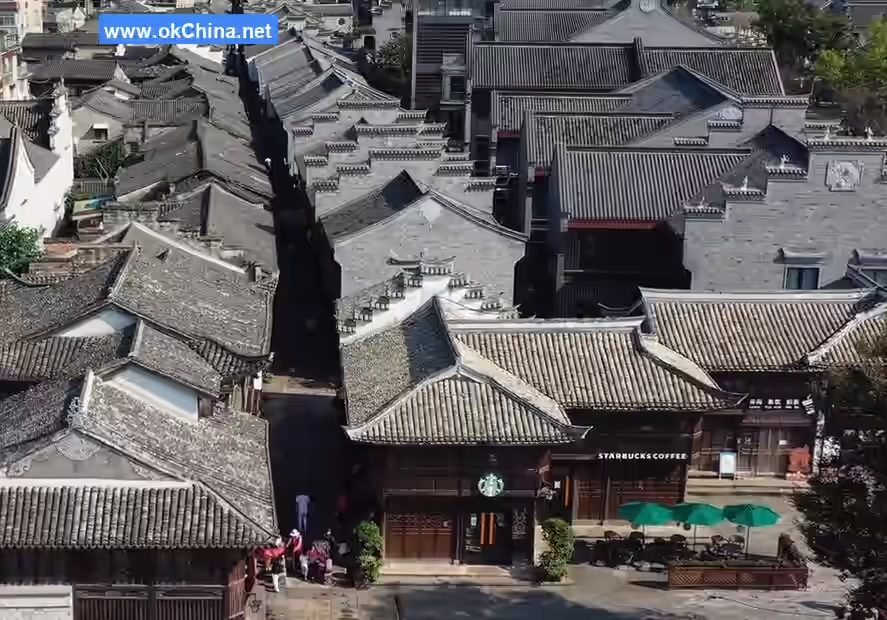
Ziyang Ancient Street, the foremost historical street in Linhai City, is the cultural lifeline of the millennium-old Linhai Ancient City, stretching 1,081 meters in length. Its layout took shape during the Tang and Song dynasties, making it the most prosperous commercial district in the history of Taizhou Prefecture City and one of the relatively well-preserved historical streets in China. As a microcosm of the ancient city’s legacy, Ziyang Street symbolizes the historical and cultural city. Paved with uneven and cracked bluestone slabs, the street retains numerous former residences of notable figures, as well as houses and shops from the Song, Ming, and Qing dynasties, with traces of time and history clearly visible. In 2013, the street was awarded the "China Habitat Environment Example Award" by the Ministry of Housing and Urban-Rural Development.
Origin of the Street Name
Ziyang Zhenren, originally named Zhang Boduan, styled Shuping and known as Ziyang, was the founder of the Southern School of Taoism and revered as its progenitor. Born in Tiantai, Zhejiang (present-day Linhai City, Zhejiang Province), he was well-read from a young age, proficient in Taoist, Confucian, and Buddhist classics, and knowledgeable in medicine, astronomy, geography, and other fields—a true polymath.
Early in his career, Zhang served as a government clerk but later renounced fame and fortune after realizing the emptiness of worldly pursuits. He burned official documents and devoted himself to Taoist cultivation. In the second year of the Xining period (1069 AD), he traveled to Chengdu with Lu Shen and received teachings on the secrets of alchemy at Tianhui Temple. In the eighth year of Xining (1075 AD), he authored Wuzhen Pian, expounding on internal alchemy and advocating the dual cultivation of nature and life. His work integrated Confucian, Buddhist, and Taoist thought, proposing the idea that "though teachings are divided into three, the Tao is one," which became the core philosophy of the Southern School of Taoism.
Ziyang Zhenren’s influence extended beyond Taoism, as he was revered under this title, closely associated with the spread of the Southern School. His places of practice were widespread; for example, Ziyang County in Shaanxi was named after him, meaning "purple air from the east, sunlight shining everywhere." Similarly, Ziyang Ancient Street in Linhai, Zhejiang, was named in his honor, becoming a cultural symbol of Taizhou Prefecture City.
2.3 East Lake
In the fourth year of the Xining period of the Northern Song Dynasty (1071 AD), Taizhou Prefect Qian Xuan’s stone reinforcement of the city wall caused flooding, leading to the excavation and creation of a lake, which was later developed into a garden. Since the Song Dynasty, East Lake has been dredged and repaired repeatedly, especially during the 18th year of the Kangxi period (1676 AD) and the 10th year of the Tongzhi period (1871 AD) of the Qing Dynasty. After renovations by Taizhou Prefects Bao Futai and Liu Ao, the lake achieved considerable scale, becoming the foremost garden in Taizhou.
Named for its proximity to the eastern side of the Taizhou Prefecture Wall, the lake originally formed at the confluence of several streams from Baiyun and Shangong in the north of the city. In 1071 AD, Prefect Qian Xuan excavated it into a lake. Divided into Front Lake and Back Lake, it features islets and structures like the Floating Cup Pavilion and Gongle Hall at its center. In the fifth year of the Qiandao period (1169 AD), Prefect Xiang Jun restored the old watercourse and built three sluice gates to connect with the river. During the Ming Dynasty, a small channel ran along the city wall south to Jiaoli Bridge, linking with the Ling River. It was dredged and blocked several times during the Chongzhen period and was abandoned by the late Kangxi period of the Qing Dynasty. During the Kangxi period, the Mid-Lake Pavilion, Floating Cup Pavilion, Wanyue Pavilion, and Qiaoyun Tower were rebuilt. In front stood the Hushan Temple, and behind it was the Qiaofu Pavilion. In the 47th year of Kangxi (1708 AD), after a typhoon, Prefect Zhang Lianyuan donated funds to rebuild the Qixi Temple and Qiaoyun Tower.
2.4 Jinshan
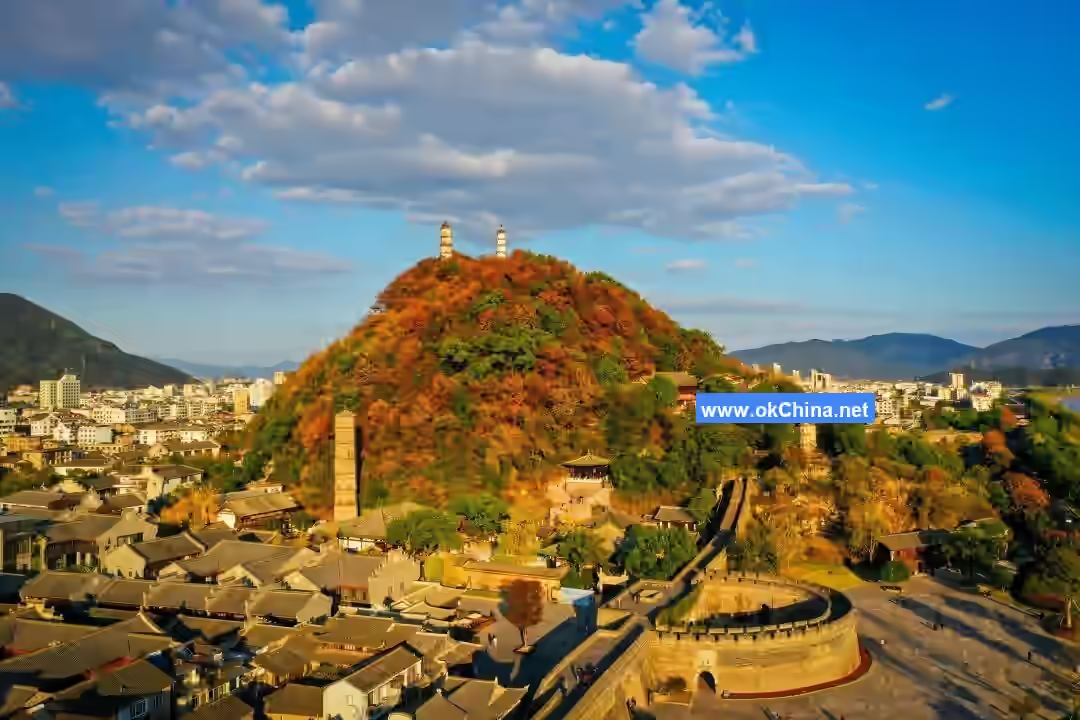
Jinshan, also known as Jinzi Mountain, is located southeast of the old city wall in Linhai City, Taizhou, Zhejiang Province. Connected to Xiaogu Mountain, it stands over 100 meters high, bordered by streets on three sides and the Ling River to the south. The mountain features East Peak and West Peak at its summit, about 50–60 meters apart, resembling an ancient headscarf, hence its name.
The twin pagodas on Jinshan were first built during the Tang Dynasty and recorded in the Southern Song Dynasty. Also called Wenfeng Pagodas, the larger pagoda is hollow and climbable, while the smaller one is solid. Huaxu Cave, located beneath the West Peak Pagoda, is said to be the dwelling place of the ancient Taoist Huaxuzi. At the western foot of Jinshan stand Nanshan Hall Pagoda and Thousand Buddha Pagoda. Nanshan Hall Pagoda was built in memory of Marshal Zhang Xun of the Tang Dynasty, while Thousand Buddha Pagoda is the only surviving Yuan Dynasty pagoda in Taizhou, named for the Buddha images carved on it. The pagoda group on Jinshan, including Nanshan Hall Pagoda, Thousand Buddha Pagoda, and the twin peaks’ pagodas, forms a unique landscape. Jinshan also boasts numerous other attractions, such as Huaxu Cave, Immortal Bed, Immortal Bridge, Nanshan Hall, and Duhua Pavilion. Temples and palaces like Douluo Temple, Sanyuan Palace, and Yang Jiemin’s Ancestral Hall are also located here.
2.5 Longxing TempleLongxing Temple is located at the western foot of Jinshan Mountain within Linhai City. It was first built in 705 AD, the first year of the Shenlong era during the Tang Dynasty, and was initially named "Shenlong Temple." In 706 AD, its name was changed to "Zhongxing." In 709 AD, it was renamed "Longxing." In 738 AD, it was changed again to "Kaiyuan." The archway at the entrance of Longxing Temple bears the inscription "Shenlong Ancient Temple," which reflects this history. Counting back, Longxing Temple has a history of nearly 1,300 years. The temple was destroyed during the War of Resistance against Japan, leaving only the Thousand Buddha Pagoda, which dates back to the Tang Dynasty. This pagoda is now a provincial-level cultural relic protection unit.
3. Folk Culture
3.1 Linhai Cidiao
Linhai Cidiao, also known as "Talented Scholar Tune" or "Crane Tune," is popular in Linhai City, Zhejiang Province, and its surrounding areas, with a history of over three hundred years. The "Haiyan Melody," which emerged during the Southern Song Dynasty, was refined by Yang Zi in the early Yuan Dynasty and continued to develop. By the mid-Ming Dynasty, it flourished in regions such as Jiaxing, Wenzhou, and Taizhou, eventually evolving into Linhai Cidiao by the late Ming Dynasty.
Linhai Cidiao features over forty musical modes, including "Male Mode," "Female Mode," and "Peaceful Mode." Its melodies emphasize rhythm, elegance, and grace, with a melodious and captivating quality. When performed, the singing is natural, smooth, and expressive, adhering to the principles of "clear articulation, rounded tones, elegant sound, and steady rhythm," with "every phrase full of spirit and every word skillfully delivered." Linhai Cidiao is typically performed during traditional folk festivals or agricultural off-seasons. All performers are male, with high-pitched voices singing female roles and deep voices singing florid tunes. The dialogue is delivered in the official dialect of Taizhou Prefecture. During performances, the female role player controls the clappers, while other actors must play multiple instruments. Dressed in long gowns, the performers sit in a circle, playing string and wind instruments while singing.
The repertoire of Linhai Cidiao is largely drawn from historical and folk tales, focusing on themes such as praising loyal historical figures, condemning treachery, and celebrating faithful love. Traditional preserved works include over thirty pieces such as "Three Kingdoms," "Water Margin," "Diaochan Worships the Moon," and "Broken Bridge," all characterized by ornate language and elegant style. "Great Celebration of Longevity" is a typical piece in Linhai Cidiao, comprising twelve musical modes and holding significant historical and cultural research value.
3.2 Huangsha Lion Dance
Lion dance, also known as "lion lantern dance" or simply "lion dance," is often performed during festive occasions and celebrations. In the hearts of the Chinese people, the lion is an auspicious creature symbolizing good fortune and happiness. Thus, lion dance activities embody the people’s wishes to ward off disasters, eliminate harm, and seek blessings. The lion dance has a long history, with its precursor, the "xiangren," recorded in the "Book of Han: Records of Rites and Music." Vivid descriptions of lion dances can also be found in Tang and Song poetry and prose. Existing lion dances are divided into two main categories: Southern Lion and Northern Lion. The Southern Lion emphasizes martial arts skills and displays a vigorous and fierce demeanor, while the Northern Lion is charmingly naive and often focuses on playful performances. Depending on the materials and methods used to make the lion props, lion dances vary widely across regions, each with its unique charm.
The "Huangsha Lion Dance" originated during the Northern Song Dynasty and is primarily practiced in the Huangshayang area of Baishuiyang Town, located in the northwestern mountainous region of Linhai City, Zhejiang Province. The local customs here are bold and straightforward, with a long-standing tradition of martial arts and lion dance.
The most distinctive feature of this traditional performing art is its skillful integration of exquisite folk martial arts with traditional lion dance performances, blending dance and martial arts into one. It can perform playful rolls and movements on the ground as well as various amusing actions on elevated platforms. During performances, actors leap and tumble on Eight Immortals tables while executing acrobatic moves such as "passing through halls," "table somersaults," "descending climbs," "hanging from table legs," and "human pyramids." Table jumping is one of the most challenging aspects of the performance. Over forty tables are stacked in a trapezoidal formation, with the highest stack reaching about 32 feet, composed of nine layers. The pinnacle of the act involves a performer moving across the four upturned legs of the topmost table, barefoot and displaying incredible skill.
The Huangsha Lion Dance combines martial arts and dance, entertaining both gods and people with a balance of strength and grace. It carries unique local cultural characteristics and embodies the people’s aspirations for a better life. From New Year’s Eve to the second day of the second lunar month, performers travel from village to village to showcase their art. The people of Huangshayang, the central area of the Huangsha Lion Dance, and its surrounding regions hope for favorable weather, abundant harvests, prosperity, and peace. They look to the lion dance to bring them good fortune, ward off disasters, and celebrate festivals with joy and excitement.
Comments
Post a Comment