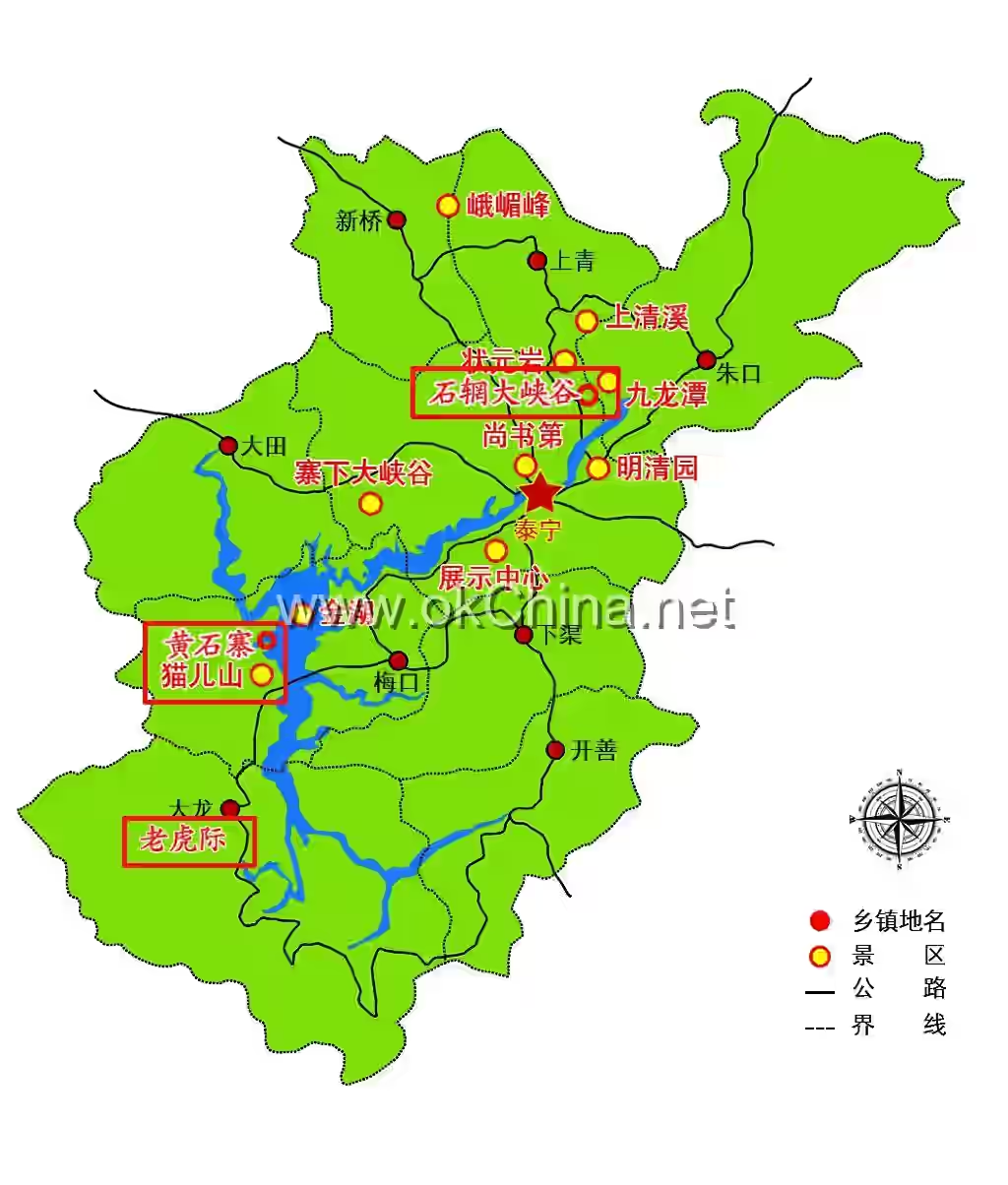
Taining Scenic Tourist Area, Sanming City
1. Introduction
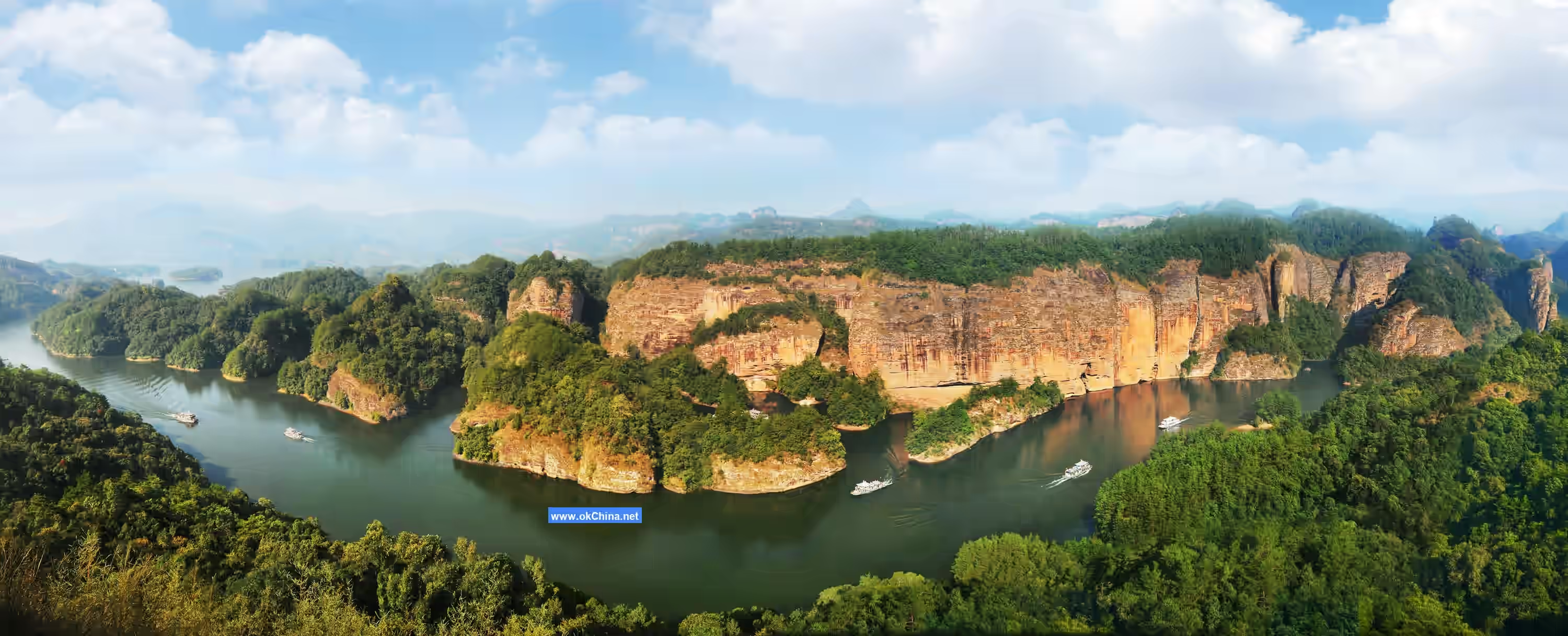
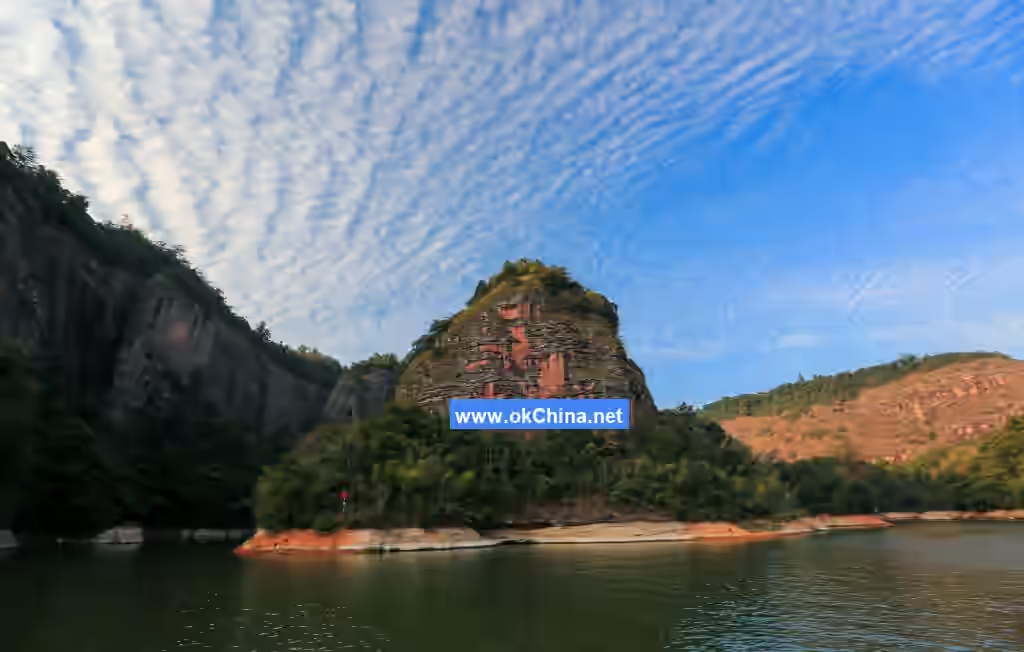
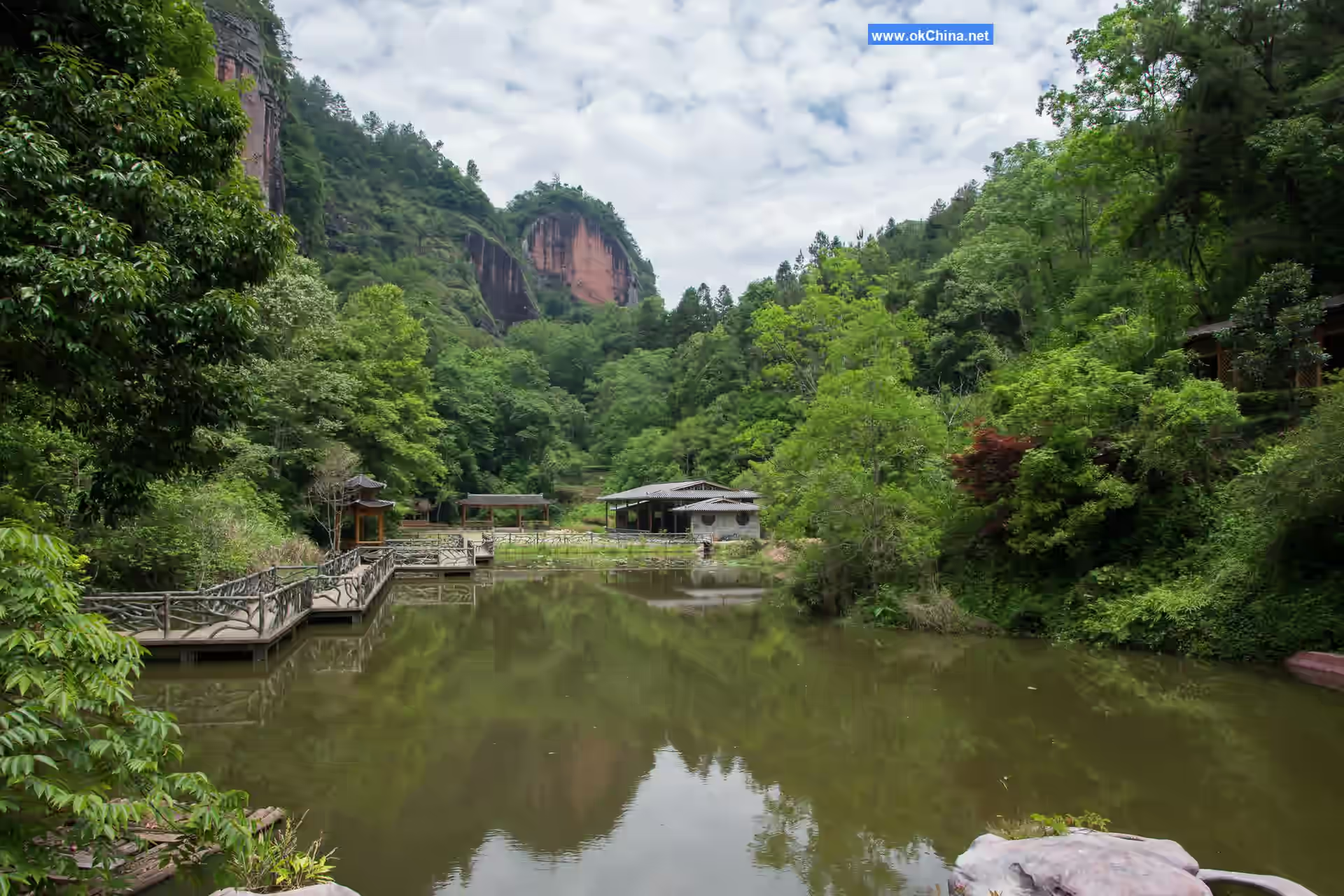
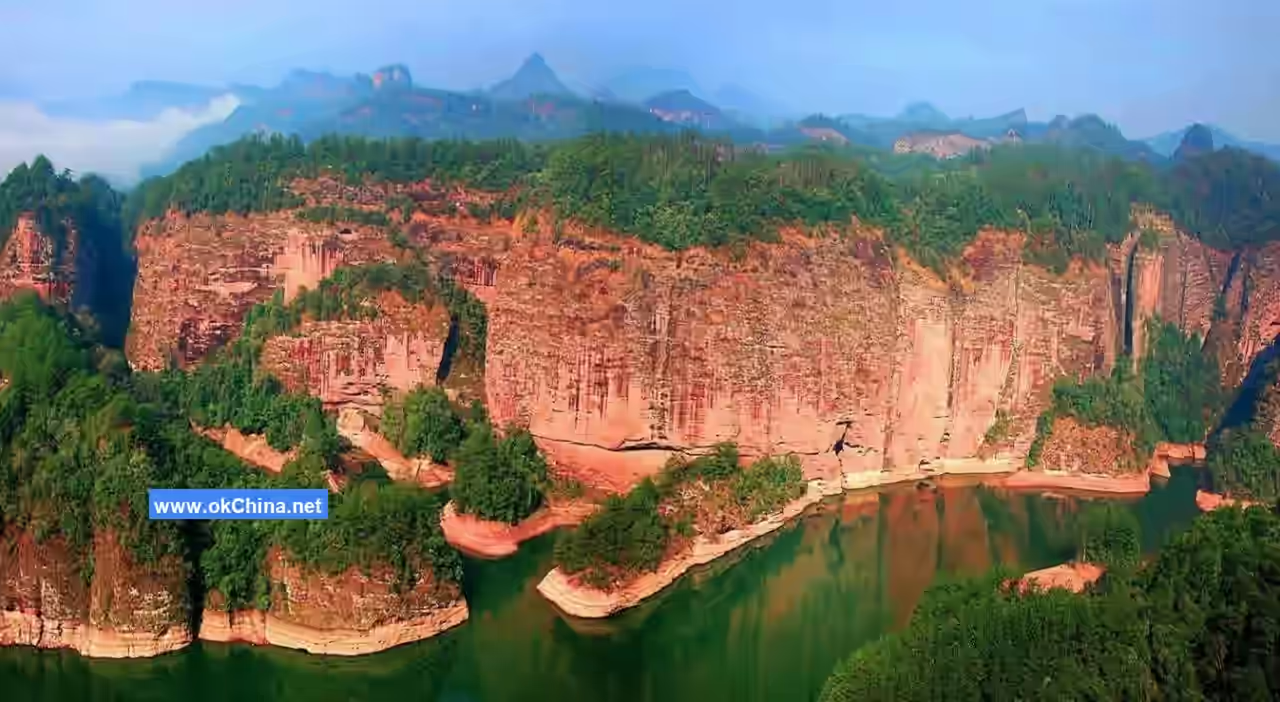
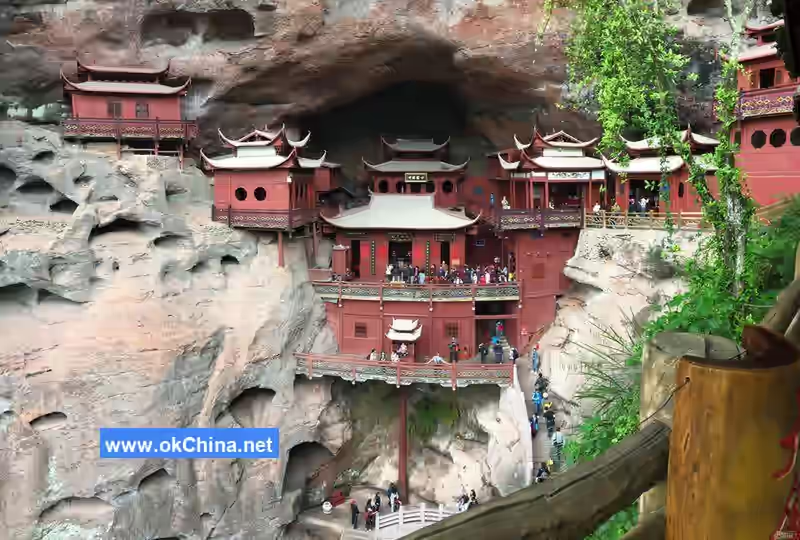
The Taining Scenic Tourist Area is located in Taining County, Sanming City, Fujian Province. It comprises scenic spots such as Taining Golden Lake, the Ancient Town, and the Geopark Museum. Among these, the Golden Lake Scenic Area is an important component of the World Natural Heritage site and the Global Geopark. It represents a perfect combination of crimson mountains and emerald waters. Spectacular wonders like the Ganlu Rock Temple, the Narrow Water Skyline, the Mysterious Maze Valley, the Buddha Statue Carved by Nature, and the natural cliff inscriptions, along with numerous cultural landscapes such as ancient temples, fishing villages, mountain fortresses, ancient tombs, and passes embedded along the shores, create a breathtaking and rare aquatic Danxia (red sandstone) landscape in China. It is hailed as the "Number One Lake and Mountain Under Heaven." Within Taining Ancient Town, the nationally protected site, the Shangshu Mansion (Minister's Residence), is the most exquisite and well-preserved treasure of Ming Dynasty residential architecture in the Jiangnan region of China. Arranged along a large north-south passageway are the South Gate Tower, the North Ceremonial Hall, five main buildings facing east, and auxiliary structures like the study, side rooms, stables, and a rear garden. Built in the traditional Taining "Three Halls and Nine Buildings" layout, it is grand in scale, rigorous in layout, ingenious in conception, and superb in craftsmanship. Walking through the Shangshu Mansion is like traversing 400 years in an hour, unraveling the mystery of its owner's rapid promotion through 14 ranks in a decade.
In 2011, the Taining Scenic Tourist Area was officially recognized as a National AAAAA Tourist Attraction by the Ministry of Culture and Tourism of the People's Republic of China.
2. Geographical Environment
2.1 Location
Located in Taining County, Sanming City, Fujian Province.
2.2 Climate
Taining County experiences a mid-subtropical monsoon humid climate with four distinct seasons, ample sunshine, and abundant rainfall. The annual average temperature is 17°C, with a frost-free period of about 300 days. The average annual precipitation is 1775 mm. The rainy season spans from March to June, with the heaviest and most concentrated rainfall occurring in May and June. The average relative humidity is 84%, and the average annual sunshine duration is 1738.7 hours. Snowfall averages 4.3 days per year. The area belongs to the province's abundant water and humid zone.
3. Main Attractions
3.1 Jiulongtan (Nine Dragon Pool)
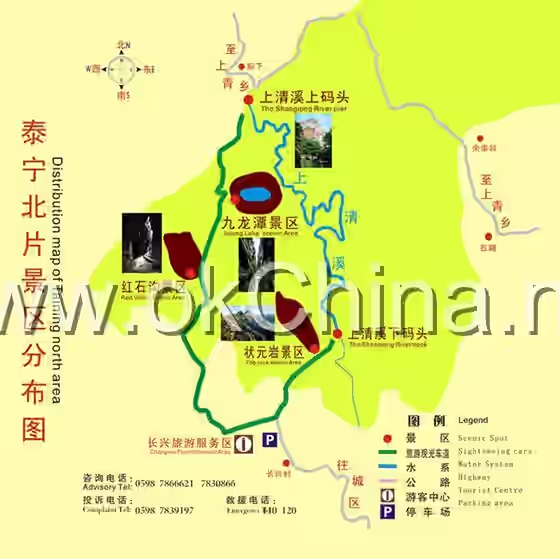
The Jiulongtan Scenic Area is located in the northern core zone of the World Natural Heritage site and Global Geopark in Taining County, Fujian Province. It is approximately 15 kilometers from Taining County town, about 19 kilometers from Taining Railway Station, and 14 kilometers from the Taining Expressway toll station. It neighbors attractions like Shangqingxi, Hongshigou, and Zhuangyuanyan. It derives its name from the nine winding, dragon-like mountain streams that converge into the pool.
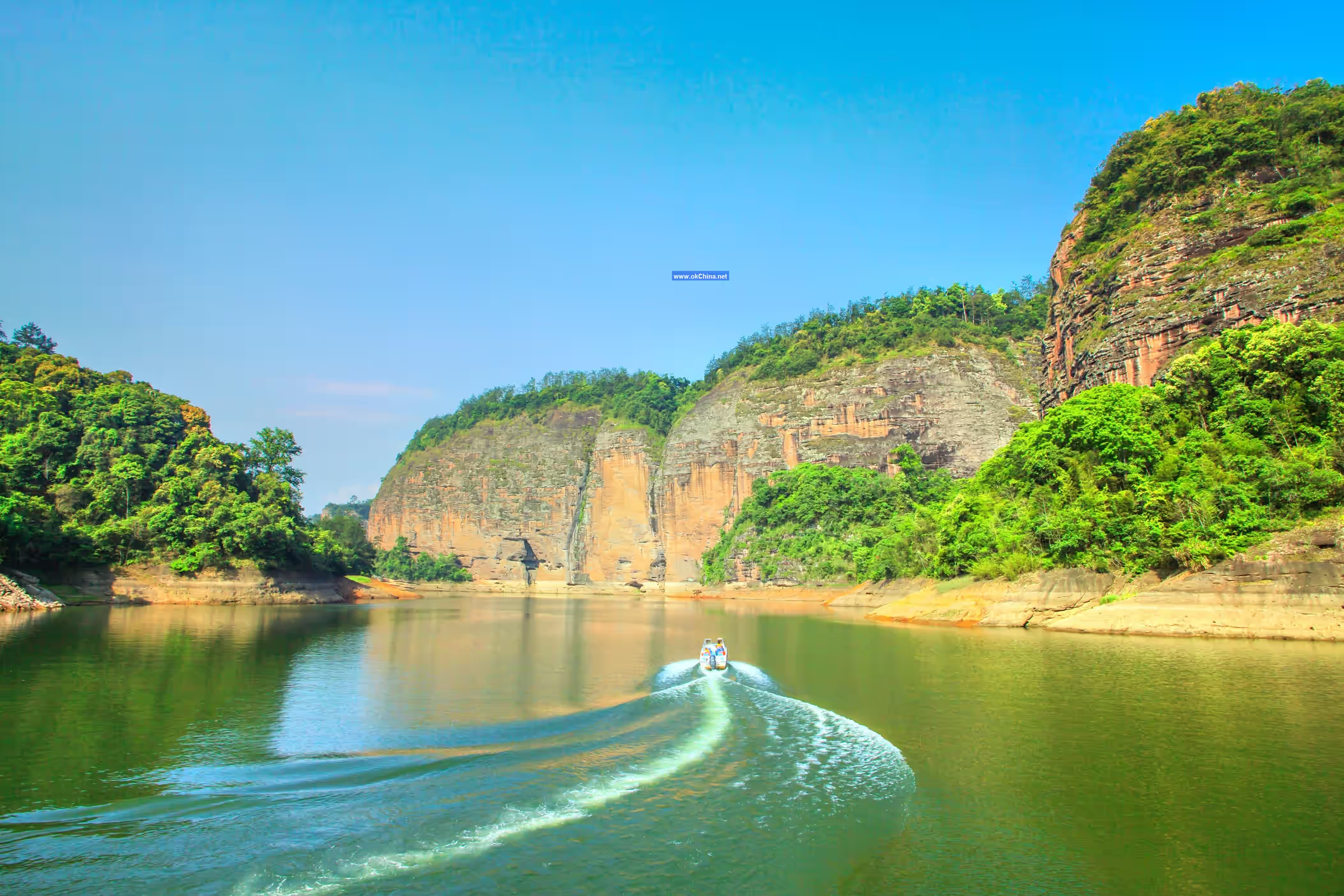
Jiulongtan forms the densest and most complex cluster of Danxia canyons in China. It is a typical area showcasing the youthful development stage of Danxia landforms in Taining, integrating diverse features of lakes, streams, mountains, valleys, rocks, peaks, and gullies. It is acclaimed as the "Miniature Gem of Taining's Danxia Landscape." The scenic area covers 15 square kilometers, with a water surface of 100 acres and a reservoir capacity of 360,000 cubic meters. A 5-kilometer-long deep canyon, along with deep water line valleys and slot canyons, converge to form a clear pool, with the widest part over 100 meters and the narrowest less than 2 meters. The area is densely dotted with Danxia peak clusters and forests, crisscrossed by canyons, and features unique rock troughs and caves.
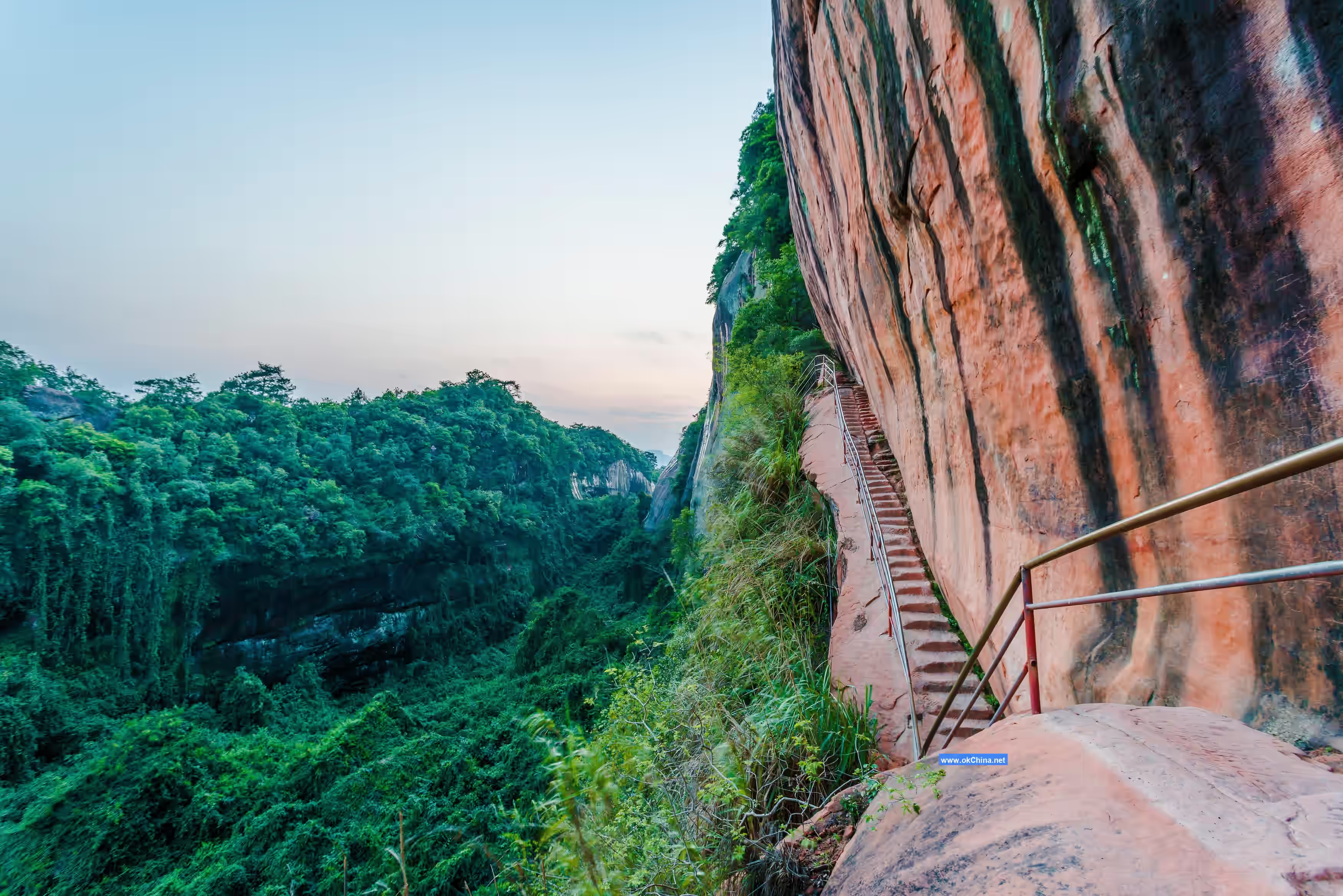
Boating on the pool, visitors gaze upon picturesque valleys, streams, vegetation, and clear waters. Passing through China's most beautiful, longest, narrowest, and majestic "Narrow Water Skyline" and the deep underwater "Dragon Cave," the journey reveals a new scene with each turn, blending clarity, tranquility, wonder, and wilderness. It offers a unique experience of connecting with mountains, water, fresh air, and one's inner self, fostering an intimate joy within nature. Along the 3200-meter-long waterside mountain trail, one can climb the sky ladder for a panoramic view of boundless scenery, or stroll along the waterside boardwalk, harmonizing with boatmen's folk songs as if in a secluded paradise, feeling refreshed and utterly carefree.
The scenic area combines Danxia landscapes with water scenery, fully expressing the意境 (artistic conception) of pristine mountains and waters and the elegant beauty of the nine dragons. Jiulongtan features over twenty main water and land attractions. Water attractions include: Narrow Water Skyline, Jiulong Cave (Nine Dragon Cave), Holy Elephant Welcoming Guests, Jade Dragon Rock, Curling Dragon Gorge, Fairy Drying Gauze Cliff, Rhinoceros Gazing at the Moon, Yinglong Gorge, Danxia Precipice, Buddha Hidden in Turtle's Belly, Gorilla Gazing at the Pool, Secluded Valley Water Lane, Rock of a Hundred Lips Expressing Seven Emotions, Dragon Tail Gorge, etc. Land attractions include: Jiulong Great Red Cliff, Orchid Valley, Azure Cloud Sky Ladder, Cyclobalanopsis Community, Early Danxia Peak Cluster, Southern Wild Jujube, Immortal Peach Mountain, Human Face Rock, Ancient Plank Path and Platform, "工"-shaped Maze Pool, Rock Wave Painting Wall, Three Elephants Drawing Water, Leaping Dragon Valley, Illusion of Turtle and Dragon, Guiyi Pavilion, Cycle of Life, Heart-Cleansing Pool, Waterside Gallery, Pavilion in the Air, Hidden Dragon Cave, Jiulongtang Temple, Root Embracing Stone, Wind-Moved Stone, Crocodile Stone, etc.
The Jiulongtan Scenic Area is also a paradise for flora and fauna. Located in a subtropical monsoon humid climate with distinct seasons, ample sunshine, and abundant rainfall, it is home to various precious tree species such as yew, nanmu, Ormosia henryi, and camphor trees, as well as valuable medicinal herbs like fleeceflower root, Amomum villosum, eucommia bark, and cork tree bark. Animals like pangolins, silver pheasants, hill partridges, and serows also inhabit the area, presenting Jiulongtan's marvelous realm where "beauty lies in nature, wonder lies in the primitive."
3.2 Shangshu Mansion (Minister's Residence)
Located in the center of Taining County town, it is one of the nationally protected cultural relics. It was the residence of Li Chunye, a Jinshi (successful candidate in the imperial examination) in the 44th year of the Wanli era (1616) of the Ming Dynasty, who later served as Assistant Minister of the Capital Garrison, Tutor to the Crown Prince, and Minister of War during the Tianqi era. Covering an area of over 4,000 square meters (87 meters north-south, 52 meters east-west), the main complex consists of five principal buildings and eight auxiliary buildings, arranged in a row behind five gateways. Besides halls, courtyards, and corridors, it contains over 120 rooms, all constructed of brick, stone, and wood.
The passageways, courtyards, corridors, and patios are paved with granite slabs. The halls have square brick floors, and the patios feature stone pillar flower stands and stone water vats. The passageway in front of the courtyards has north and south entrances, with a Ceremonial Hall and Reception Hall at the northern end. The passageway features five gate towers with horizontal stone plaques inscribed with characters such as "Shangshu Di" (Minister's Residence), "Zhu Guo Shao Bao" (Pillar of the State, Junior Guardian), "Si Shi Yi Pin" (Four Generations of the First Rank), "Li Men" (Gate of Propriety), "Yi Lu" (Path of Righteousness), "Ye Fu Xing Chen" (Robes Brushing the Stars), "Yi Guang Ri Yue" (Reflecting the Sun and Moon), and "Du Jian" (Metropolitan Inspector). The Shangshu Mansion's architectural layout is rigorous and rational, holding high value for the study of Ming Dynasty architecture.
3.3 Zhaixia Grand Canyon
This scenic area lies on the geological fault zone stretching from Shaowu, Fujian to Heyuan, Guangdong. It is a youthful Danxia landform canyon landscape formed and developed against the backdrop of a rift basin dating back approximately 65 million years. It is deep, long, and serene, with colorful Danxia cliffs, featuring奇险峻秀 (wonder, peril, steepness, and elegance). The canyon is densely vegetated, with vines clinging to rocks and trees, and murmuring streams, creating a scene reminiscent of a secluded paradise.
Main geological features include Danxia caves, slot canyons, line valleys, red cliffs, stone walls, isolated peaks, stone pillars, collapse deposits, landslide-dammed lakes, through caves, tabular cross-bedding, erratic boulders, and stalactites. Key attractions include: Ask-the-Sky Rock, Three Immortals Rock, Pray-to-Heaven Gorge, Leaning-on-Sky Sword, Buddha's Foot Rock, Golden Turtle Climbing the Wall, Sky Vault Rock, Emerald Bamboo Lake, Cloud Cliff Ridge, Golden Dragon Line Valley Cluster, Golden Turtle Temple Cascading Waterfall, Line Waterfall, China's No.1 Vine, Thousand-Year King of Cryptomeria, Thousand-Vine Wall, etc.
The Zhaixia Grand Canyon Scenic Area is a key planned attraction within the proposed Golden Lake area of the China Taining Global Geopark. It was a focal site for expert inspection and evaluation during Taining's application for World Heritage status. Located in Jixi Village at the border of Shancheng Town and Datian Township, it is 16 kilometers from the county town, covering an area of about 2 square kilometers. It is named for its resemblance to a giant dragon lying coiled.
3.4 Jinxi New Lake (Golden Lake)
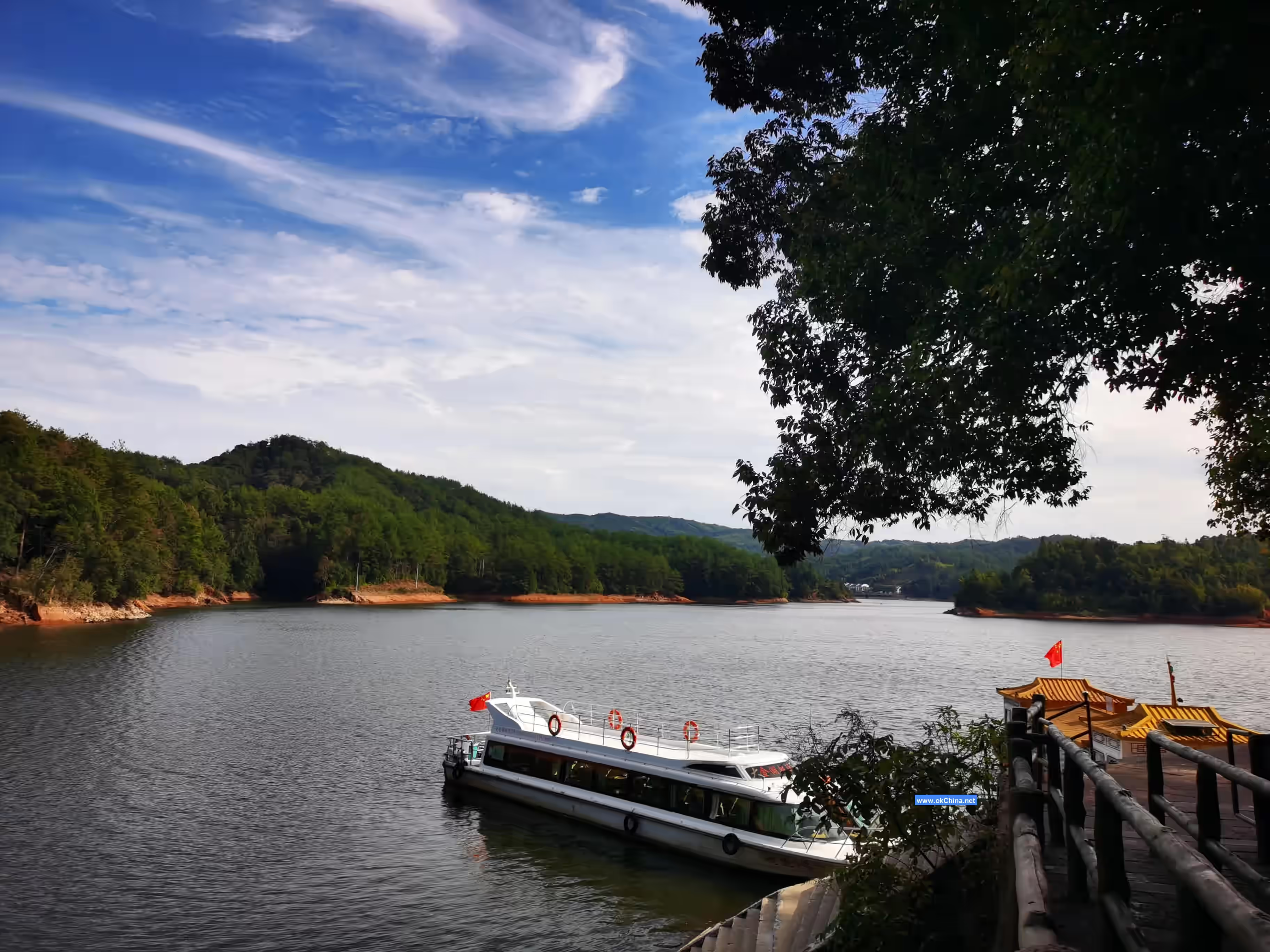
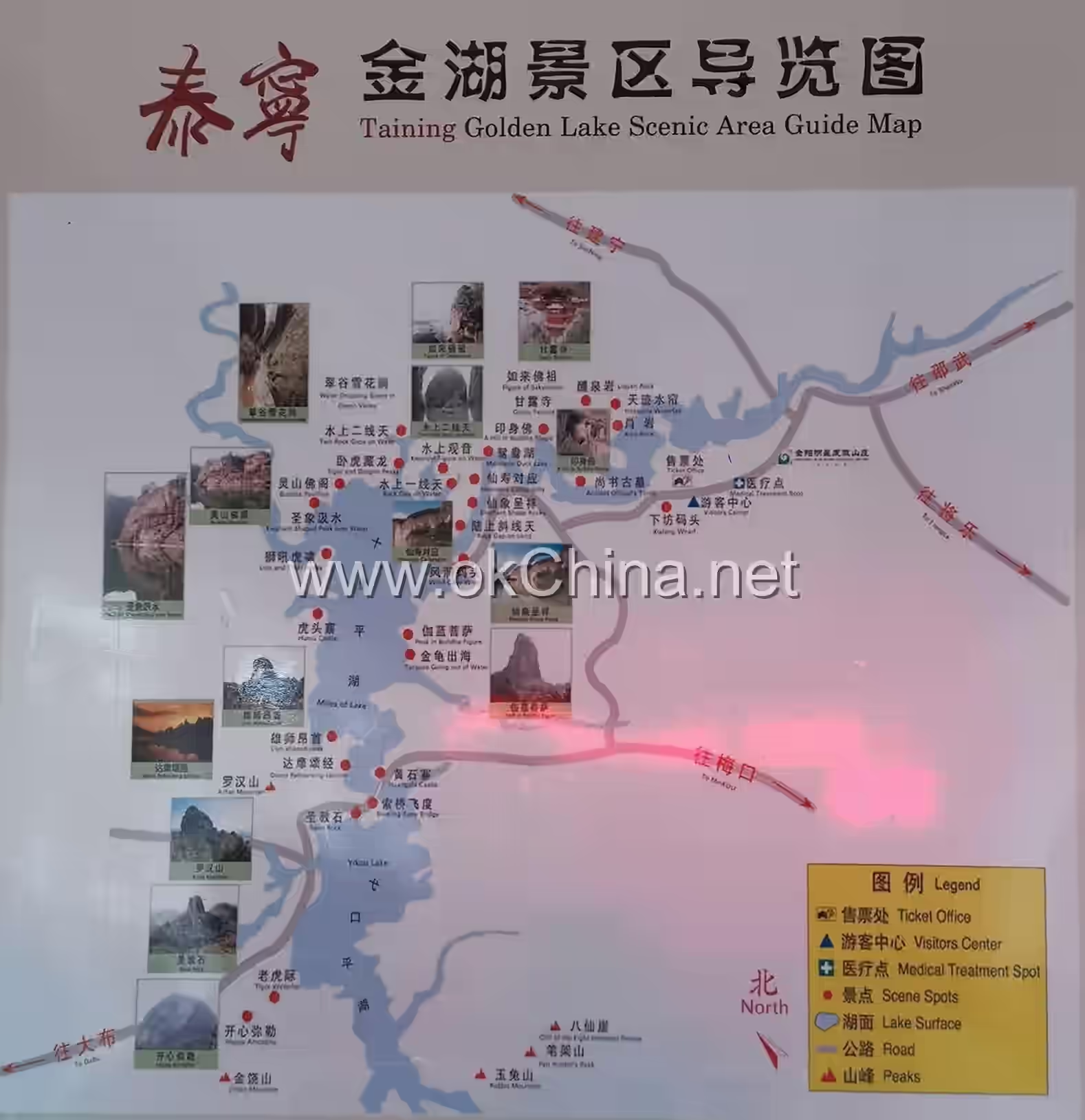
Golden Lake is the abbreviated name for Jinxi New Lake, located within Taining County at the southern end of the Wuyi Mountains. Jinxi (Golden Stream) is a major tributary of the Futunxi River, which is part of the upper Min River system. It is named for the gold dust contained in its riverbed sand. In 1980, the Chitan Hydropower Station with an installed capacity of 100,000 kilowatts was completed and operational. Its dam, 78 meters high and 253 meters long, intercepted the Jinxi River, creating an upstream artificial lake over 60 kilometers long, with a surface area of more than 50,000 acres and a storage capacity of 870 million cubic meters.
3.5 Taining Dajinhu (Great Golden Lake)
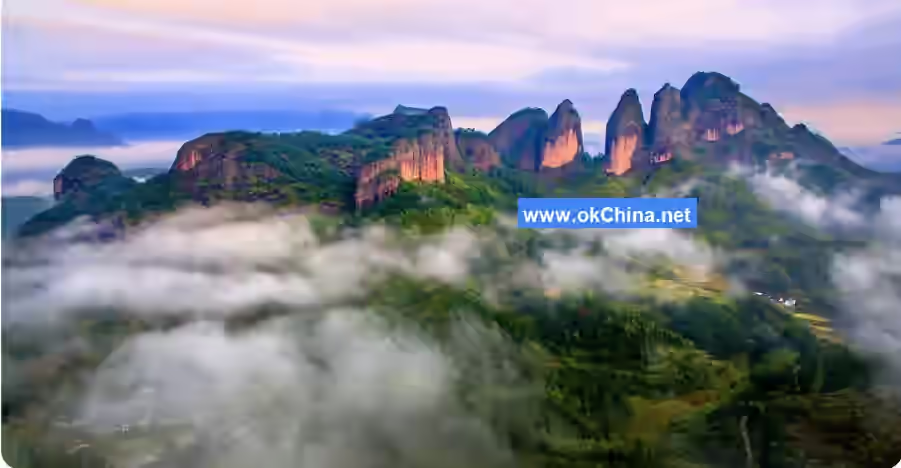
The Dajinhu Geopark primarily features Danxia landform landscapes, complemented by granite landforms and cultural landscapes. The spatial distribution of Danxia landforms extends from Tianchengyan in Longhu Town in the north, southwest through Shangqingxi and Taining County town to Dushushan and Jiziding, then turns south to Mao'er Mountain, Longwangyan (Dragon King Rock), and Baxianya (Dayading) reaching Long'an Township. Four red basins are distributed in sequence: Shangqingxi, Jinhu (Golden Lake), Longwangyan, and Baxianyan.
On a plane, they form an approximate "人"-shaped distribution pattern, 34 kilometers long northeast-southwest and 29 kilometers long north-south, with a total area of 215.2 square kilometers. The terrain generally rises gradually from northeast to southwest. The line from Jiziding, Longwangyan to Dayading forms the highest elevation zone of Dajinhu's Danxia landforms, with Baxianya (Dayading) being the highest peak at 907.6 meters above sea level. This zone is also where peak and pillar landforms are most developed and typical, and where attractions are most concentrated.
Granite landform landscapes are found southwest of the Danxia area, and cultural landscapes are located in the central part. The geopark can be broadly divided into 5 scenic areas (namely Shangqingxi Scenic Area, Taining Ancient Town Tourist Area, Jinhu Scenic Area, Longwangyan – Baxianya Scenic Area, and Jinnaoshan Scenic Area), comprising 11 sub-areas, 13 scenic groups, and 160 scenic spots.
3.6 Global Geopark
The Taining Global Geopark is centered on typical youthful Danxia landforms and also contains various other geological遗迹 (relics) such as volcanic rocks, granite, and tectonic landforms. It is a comprehensive geopark integrating scientific research,科普教育 (popular science education), sightseeing, and leisure度假 (vacationing).
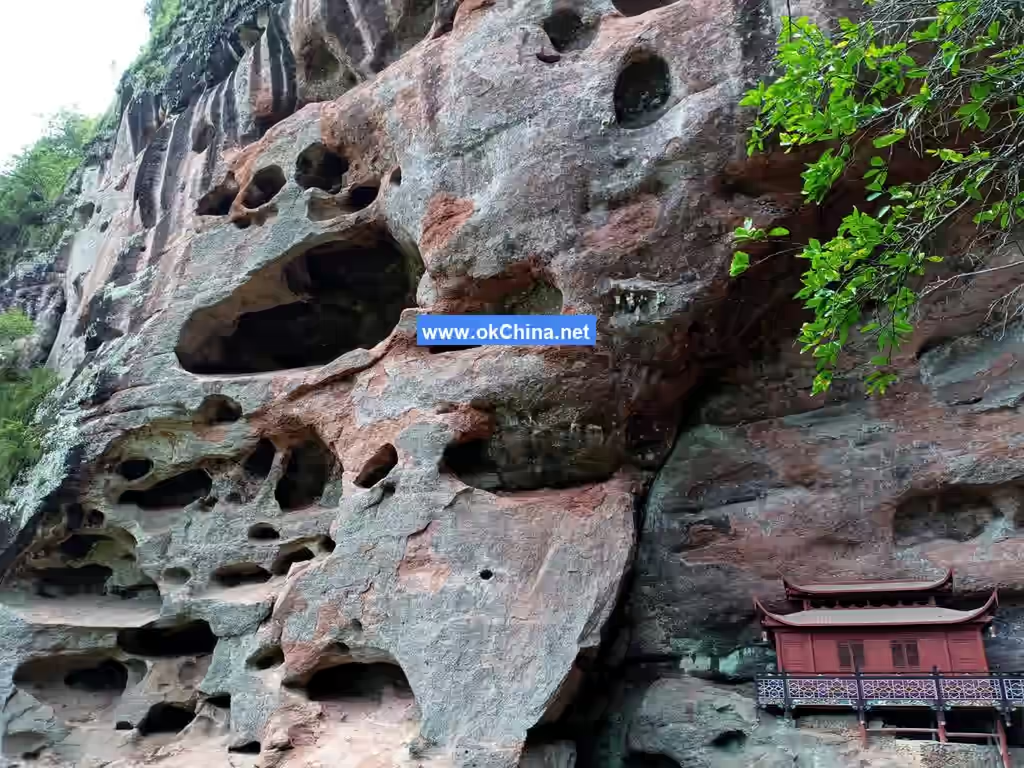
Within the Taining Geopark, the sheer number of Danxia caves, the scale of cave clusters, the peculiarity of cave shapes and combinations, and the rarity of their观赏性 (aesthetic appeal) are such that it can be called a "Danxia Cave Museum." Large caves can accommodate a thousand people, while small ones are less than an inch wide. They resemble human figures, objects, animals, and birds with奇绝 (extraordinarily unique) shapes. Countless wondrous caves are镶嵌 (inlaid) within the red cliffs, either stacked in layers or clustered together, creating a magnificent spectacle.The integration of water landscapes of varying widths and dynamics with Danxia landforms and a favorable ecological environment creates the wonder of "Danxia on Water." The lake is broad with shimmering blue waves, where mountains stand within the lake and the lake nestles among the mountains. Streams meander through canyons, and drifting along them feels like navigating through a painting. The ponds are tranquil, with Danxia formations towering above, evoking a sense of a hidden paradise.
3.7 Taining Ancient Town
Taining Ancient Town is located in Taining County. Within the town, the Shangshudi Ancient Architectural Complex is a nationally protected key cultural relic. This complex encompasses over 12,700 square meters of buildings from various periods spanning more than 500 years, from the early Ming Dynasty to the late Qing Dynasty. It integrates official residences, folk houses, ancestral halls, auxiliary rooms for production and daily life, shops, and ancient streets and alleys, boasting a grand scale, rational layout, and exquisite craftsmanship.
Entering Shangshudi gives a sense of an unattainable noble mansion, while stepping into Shidetang evokes the warmth and harmony of a large family. In the Li Clan Ancestral Hall, one immerses in the joyous atmosphere of an ancient opera stage, and in the private living rooms, a feeling of comfort and tranquility arises. In the Buddhist hall where the elderly chant sutras, the lingering scent of incense creates an ethereal, transcendent sensation... The entire Shangshudi Ancient Architectural Complex, from its overall structure to its details, serves as a historical witness, an architectural masterpiece, and a cultural heritage of immense artistic value. It is regarded as one of the most typical and complete examples of ancient residential architecture in northwestern Fujian, southeastern Jiangxi, and even the broader Jiangnan region.
3.8 Shangqing Stream
Shangqing Stream is located in the northeastern part of Taining, upstream of Jinhu Lake, approximately 22 kilometers from the county town. Its name derives from Taoism, where "Shangqing" is one of the "Three Pure Realms" (Taiqing, Shangqing, and Yuqing) and later came to broadly signify a "fairyland." The most profound experience of drifting along Shangqing Stream is the feeling of entering an earthly paradise, evoking a sense of transcendence and detachment from the mundane world.
Shangqing Stream is hidden among remote mountains and secluded valleys, blending the waters of Guilin's Li River, the mountains of Wuyishan, the landscapes of Zhangjiajie, the colors of Jiuzhaigou, and the perilousness of the Three Gorges into a single gorge. Drifting downstream on a raft, the stream winds through layered crimson rocks and emerald peaks, with numerous bends, rushing shoals, and narrow gorges. It twists and turns endlessly, where the sky seems oppressed by the mountains and the water pleads with the rocks for passage, creating a world of repeated mountains and waters that feels like a separate realm. The stream alternates between rushing rapids, where the water barely reaches the knees, and still, deep pools of unfathomable depth. Wide sections are flat but no more than 10 meters across, while narrow stretches resemble alleys, less than 2 meters wide, with a slit of sky overhead, barely allowing a single raft to pass. As people traverse, their voices echo through the empty valleys. Both banks are sparsely populated, with dense forests maintaining a primitive state for dozens of miles around. Rare flowers and exotic grasses bloom year-round, emitting subtle fragrances, while wild ducks, mandarin ducks, egrets, and eagles are commonly seen soaring over the forests or playing in the water. Even more remarkable is that every scenic spot can transform into different scenes and意境 from various angles and distances, each vividly lifelike.
The wildness, seclusion, wonder, and charm of Shangqing Stream constitute a rare, millennia-old, primitive ecological gorge and meandering stream spectacle seldom seen in the world today.
3.9 Mao'er Mountain
Mao'er Mountain National Forest Park is located in Taining County, Sanming City, Fujian Province, bordering the Shili Pinghu scenic area of Jinhu Lake. It is a shining pearl along the Dajinhu tourism route. The park covers an area of 2,560 hectares, with main scenic areas including Jinmao Mountain, Heming Mountain, Huangjia Lake, and Pinghu.
Mao'er Mountain National Forest Park is rich in tourism resources. Its lush green forest vegetation, relatively abundant species, uniquely charming peaks, rocks, waterfalls, and springs, and various captivating cultural landscapes make it a place with diverse and highly viewable scenery. First, there are the emerald forests and lush vegetation. The park's forest vegetation is luxuriant, with a coverage rate of 90% within the scenic area. Species resources are abundant; according to preliminary reports of the Mao'er Mountain plant list, there are over 360 species of various wild plants and rare trees from 102 families. Among them, more than ten species are nationally protected, including metasequoia, Chinese yew, long-leaved locust, Ostrya japonica, and red tea trees (the rarest being several dozen red tea trees). The nearly 2,500 acres of verdant forest form a crucial part of the park's landscape and are one of the foundational and defining characteristics of the forest park. Second, there are the perilous peaks and rocks, and the奇异 caves and gorges.
3.10 Emei Peak
Emei Peak is located within Xinjiao Township in northern Taining County, 24 kilometers from the county town. It belongs to the southwestern foothills of the middle section of the Wuyi Mountains. The main peak of Emei Peak stands at 1,714 meters above sea level, making it the seventh highest peak in Fujian Province. In 2000, it was approved as a provincial-level nature reserve by the provincial government, covering an area of over 2,700 hectares. It is named for its resemblance to Sichuan's Mount Emei.
Ancient trees and old vines, exotic flowers and rare grasses, sheer cliffs and perilous peaks, shrublands and grasslands, birds and beasts, the chirping of insects and cicadas, and flowing clouds and mist—this is the portrait of Emei Peak.
3.11 Zhuangyuan Rock
The Zhuangyuan Rock scenic area is situated in Changxing Village on the northern outskirts of Taining County, 11.7 kilometers from the urban area, closely adjacent to Shangqing Stream. According to county records, during the Qingyuan period of the Southern Song Dynasty, the young Zou Yinglong studied here (he achieved the top score in the imperial examination, Zhuangyuan, in the second year of Qingyuan at the age of 25). Later generations referred to his study site as Zhuangyuan Rock. Half a kilometer from Zhuangyuan Rock lies Pipa Rock, where the Ming Dynasty Taoist immortal Xing Dexing practiced cultivation.
The landscape of this area features crimson cliffs and overhanging rocks, dense forests and奇异 trees, secluded gorges and奇异 caves, cascading waterfalls and flowing springs, presenting危险 yet beautiful scenery, along with numerous rare birds and animals. From a cultural perspective, it is imbued with profound Confucian and Taoist cultures. As the study site of the renowned official Zou Yinglong, the mountains and waters of Zhuangyuan Rock bear deep imprints of Confucian culture, giving rise to many legends. It is regarded by later generations as a sacred place inspiring diligent study.
3.12 Taining Geological Museum Garden
The Geological Museum Garden is located within the Baizhu Garden on Hubin Road in the county town, covering an area of 120 mu with a total investment of 5.5 million yuan. It was a key project for the "World Heritage Application" inspection. The garden consists of four sections: a service center, a management center, an exhibition area, and landscaping within the garden. The service center includes a parking lot, an entrance gate with a windmill, a Danxia stone ticket booth, giant stone imitation-wood steps, a Geological Celebrities Avenue, a circular Seven-Star Platform, stone inscriptions of geological celebrities, and an Octagonal Grand Fan Platform. The management center comprises offices, reception rooms, archives, storage rooms, etc. The exhibition area includes a multimedia presentation hall and a geological heritage exhibition hall. The landscaping within the garden encompasses leisure pathways, rest platforms, water landscapes, and other features.
4. History and Culture
Taining Ancient Town boasts a long history, renowned as a "Han and Tang Dynasty ancient town, a Song and Ming Dynasty city." It once witnessed the glorious era of "two Zhuangyuan across the river, four Jinshi from one family, and nine Juren from one alley." Historical figures such as Zhu Xi, Yang Shi, and Li Gang once traveled its landscapes, studied, and lectured here. The county houses the nationally protected key cultural relic, the "Shangshudi Architectural Complex," which is the most well-preserved treasure of Ming Dynasty residential architecture in the Jiangnan region of China.
The locally flavored opera genre, Meilin Opera, was awarded the title "First Troupe Under Heaven" by the Ministry of Culture. Taining is also an old revolutionary base and one of the 21 Central Soviet counties. Within the town, there are revolutionary historical sites such as the former residences of Zhou Enlai and Zhu De, Red Army Street, and the former site of the Eastern Army headquarters. Its rich cultural heritage makes it an excellent destination for visitors seeking ancient traces and追溯 history.
Comments
Post a Comment