Mount Taimu
1. Introduction
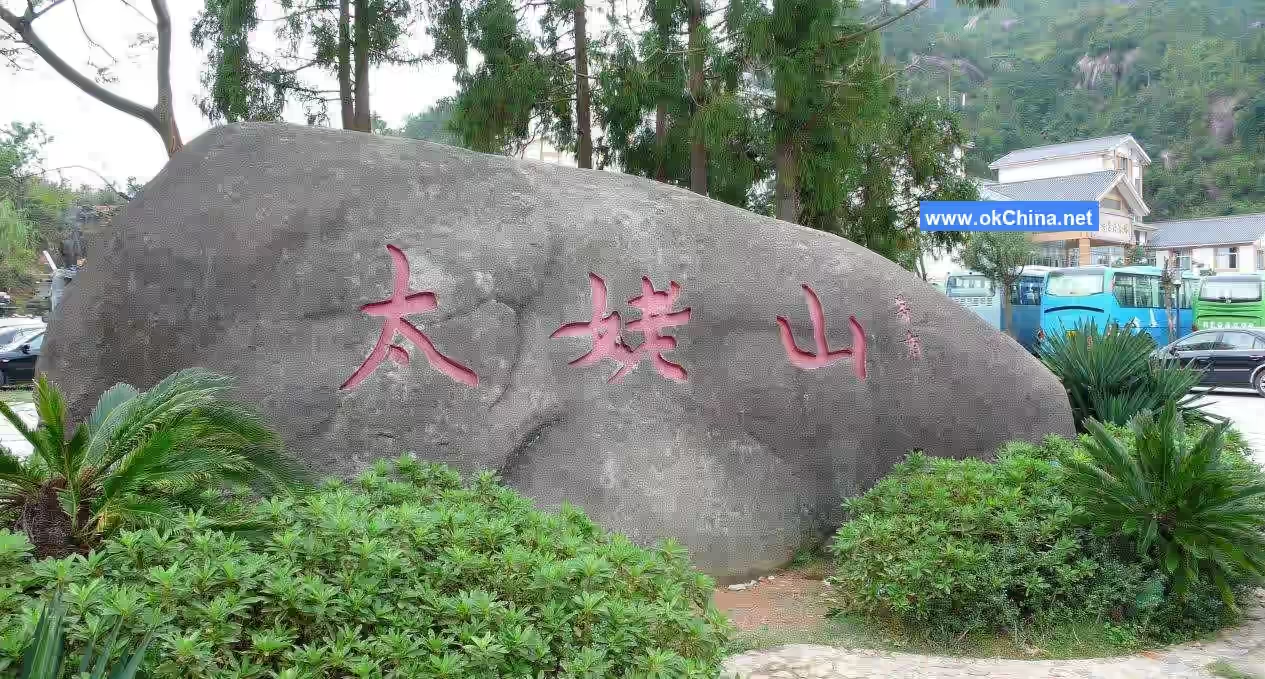
Mount Taimu, formerly known as Mount Cai, was called Mount Taimu during the Han Dynasty. During the reign of Emperor Wu of Han, the character "mu" (母, mother) was changed to "mu" (姥, elderly woman), thus renaming it Mount Taimu. It is located in the southern part of Fuding City, Fujian Province, belonging to the Taimu Mountain Range in northeastern Fujian. It refers to the mountainous area centered on Fuding Peak in Taimu Town (formerly Qinyu Town), 45 kilometers south of Fuding City's urban area. This area is also the core zone of the Mount Taimu Scenic Area, a national-level scenic area situated directly south of Fuding City, near approximately 120 degrees east longitude and 27 degrees north latitude. It stands majestically on the coast of the East China Sea, with three sides facing the sea and one side backed by mountains. Its main peak has an elevation of 917.3 meters.
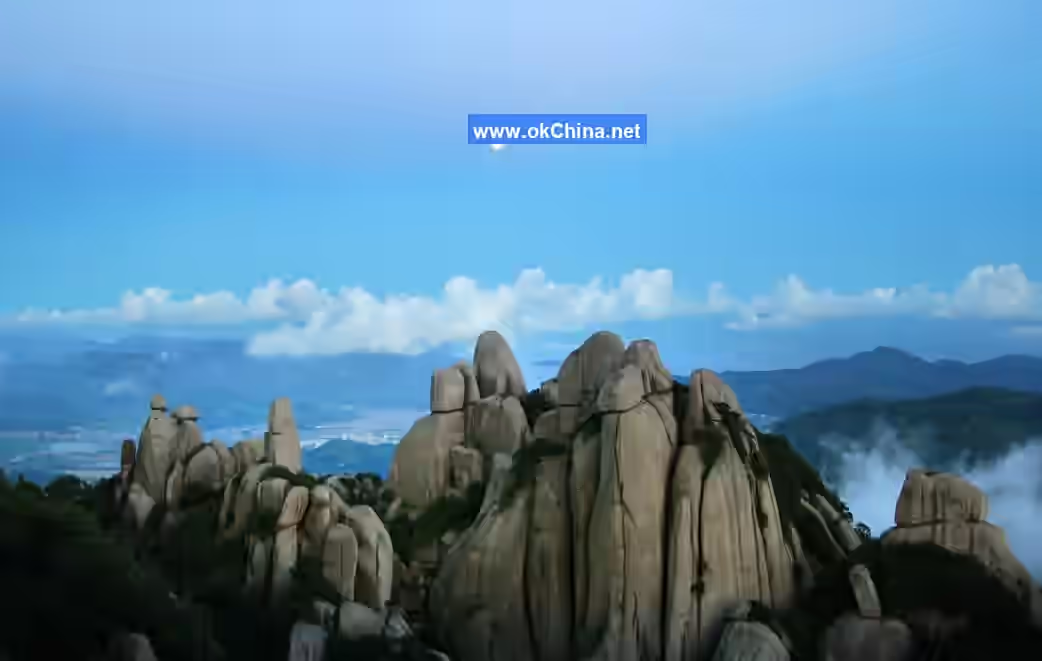
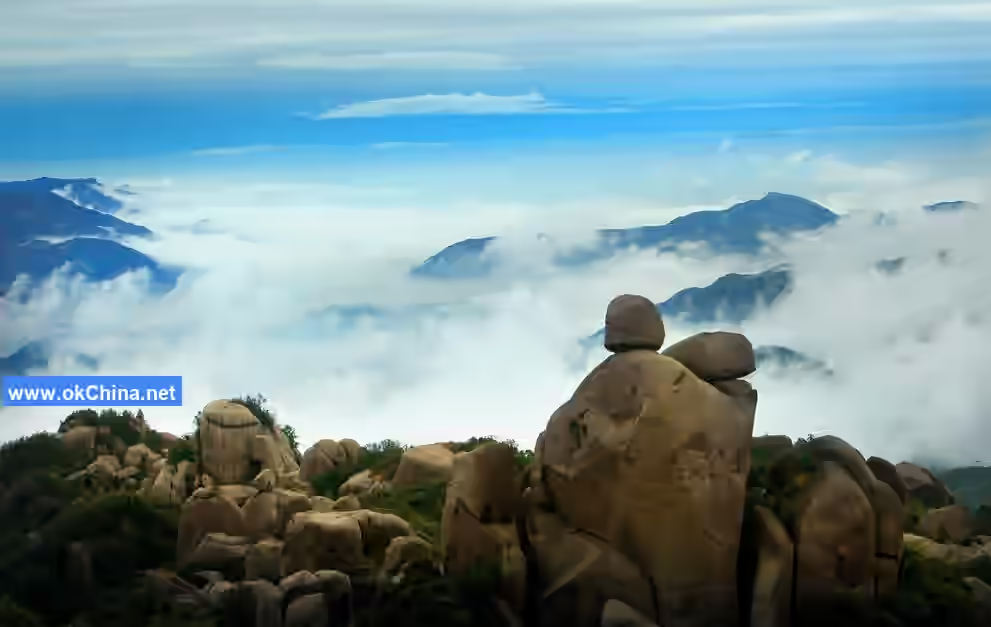
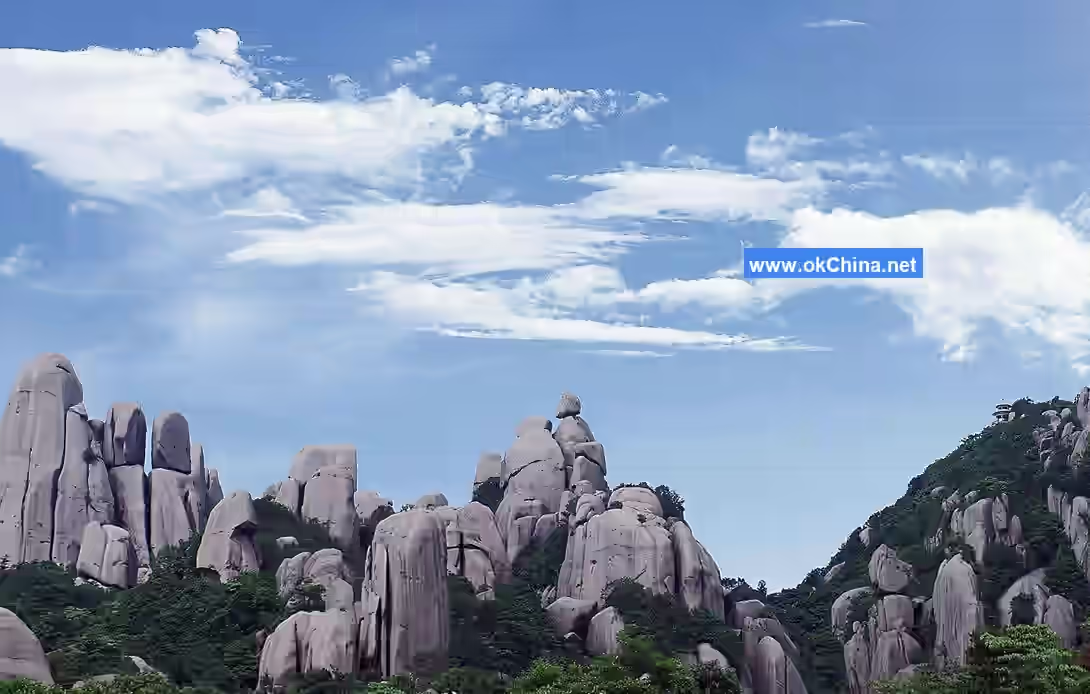
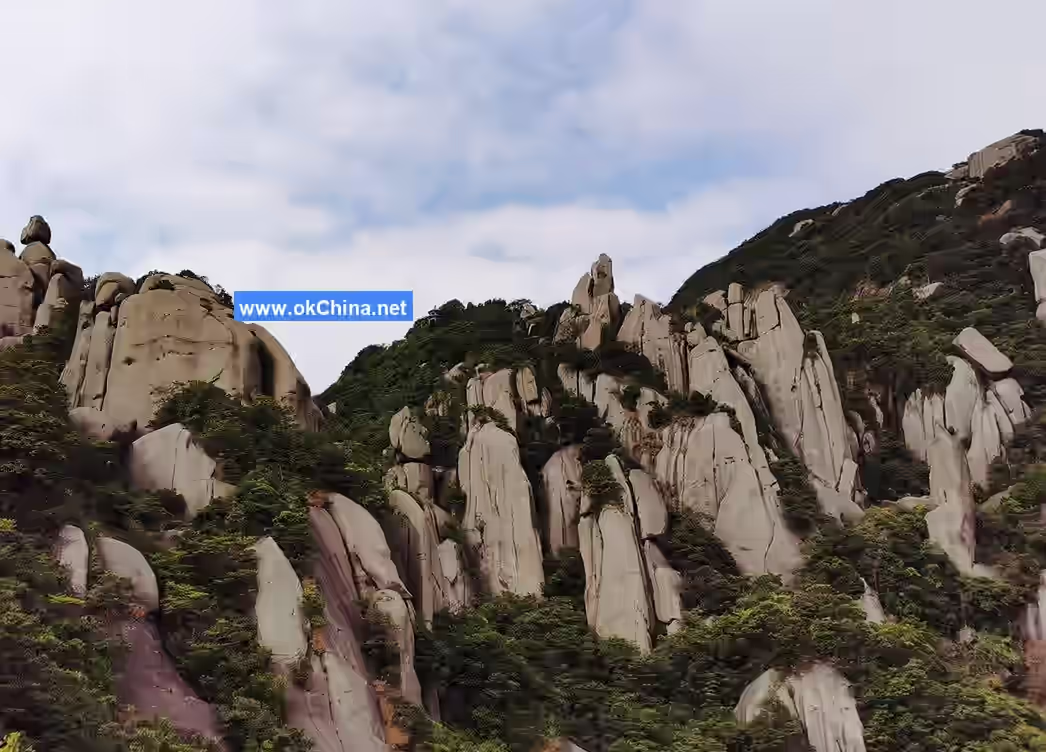
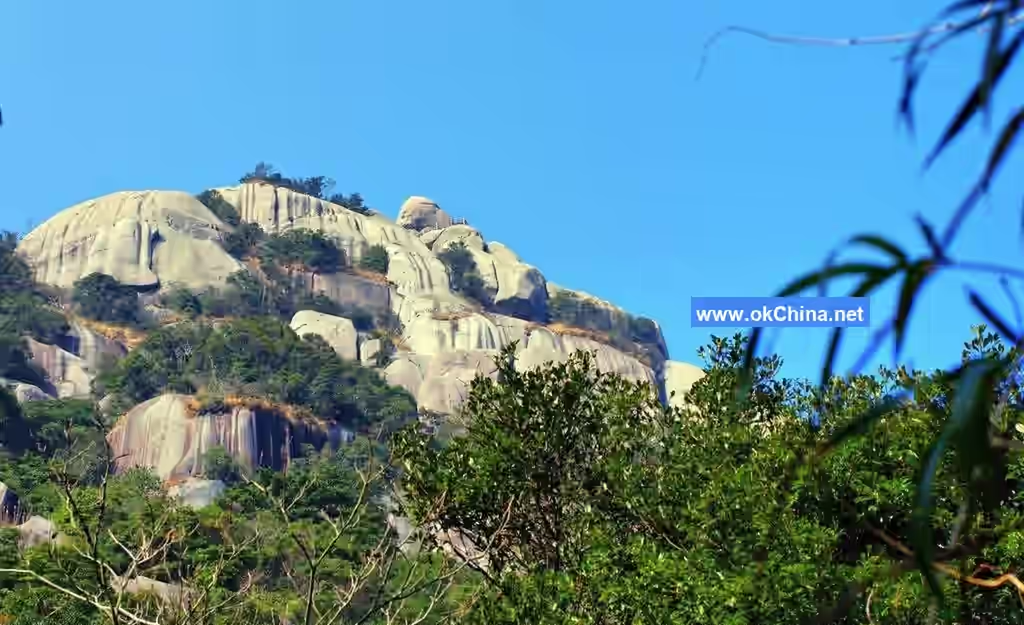
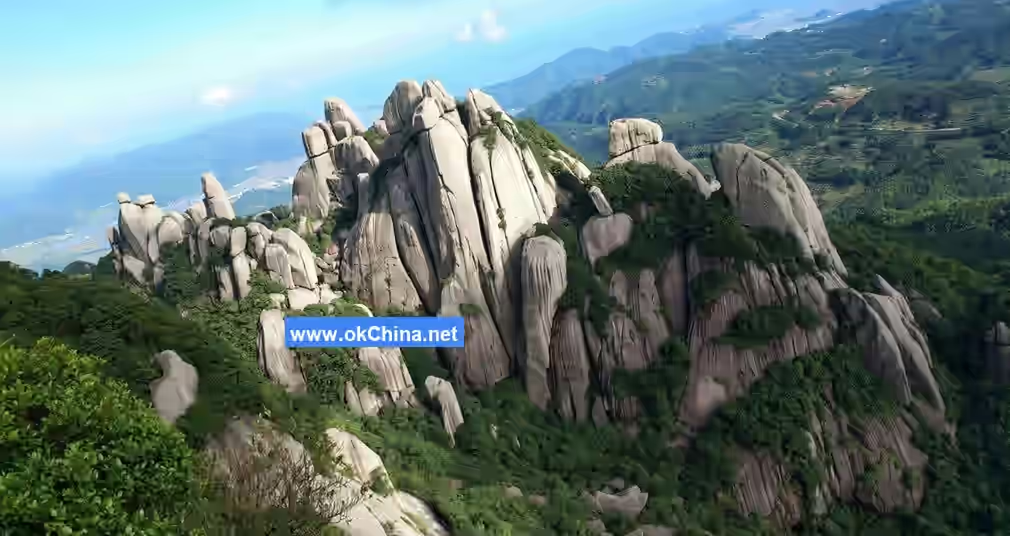
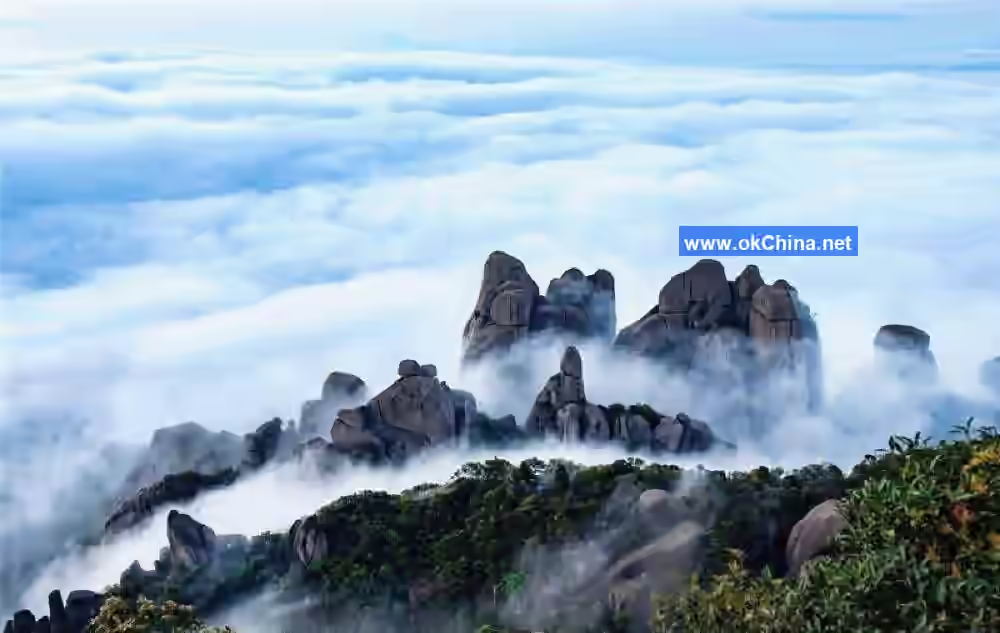
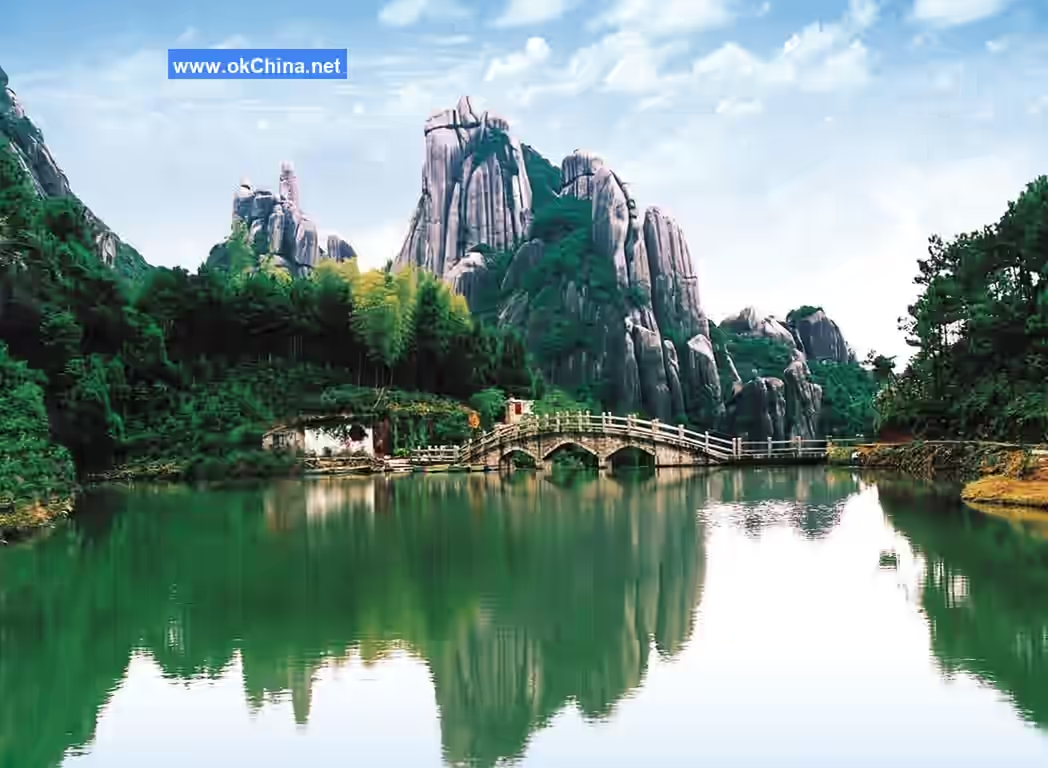
Mount Taimu is the origin of Fuding tea tree varieties. For example, the Fuding Big White Tea and Fuding Big Bud Tea, transplanted from Mount Taimu, are both listed as national-level fine tea tree varieties. The Mount Taimu Mountain Scenic Area, developed with Mount Taimu at its core, represents the essence of the Mount Taimu Scenic Area. Covering an area of 24.6 square kilometers, the mountain boasts imposing, elegant, and magnificent terrain, featuring 54 peaks, 45 peculiar rocks and strange stones, over 100 caves, and more than 360 scenic spots in total. Mount Taimu is renowned worldwide for its four unique features: perilous peaks, strange rocks, secluded caves, and mystical mist. Its fantastically carved rocks exhibit myriad forms, combining vivid shapes with spirit. Within the mountain are 360 wondrous scenes and 108 caves, some resembling humans or objects, showcasing nature's uncanny craftsmanship. Within an area of 92 square kilometers, it uniquely integrates mountains, sea, rivers, and islands, blending natural and human landscapes—a rarity among China's famous mountains and rivers. Hence, it enjoys the reputation of "Fairyland on the Sea" and is called "the most beautiful mountain by the sea in China."
2. Geographical Environment
2.1 Location and Territory
The Mount Taimu Scenic Area is located within Fuding City on the border of Fujian and Zhejiang provinces. It is 118 kilometers north of Wenzhou and 200 kilometers south of Fuzhou. The G15 Shenyang-Haikou Expressway and the Wenzhou-Fuzhou Railway pass by its foothills, providing convenient transportation. Mount Taimu is a scenic tourist destination characterized by granite peak forest caves, integrating mountain, sea, river, island, and cultural landscapes. The viewing area is 92.02 square kilometers, with a protected area of 200 square kilometers.
2.2 Climatic Features
Facing the East China Sea, Mount Taimu has an annual average temperature of 13.6°C. Located on the southeastern coast, it experiences a mid-subtropical maritime monsoon climate. It exhibits various climatic characteristics, including mountain climate and basin/valley climate. Spring and summer combine warmth and rain, while autumn and winter offer favorable light and temperature conditions. It has ample sunlight, abundant heat, plentiful rainfall, no intense summer heat, and no severe winter cold. It is suitable for tourism and recuperation year-round, making it an ideal destination for travel, vacation, and summer retreats.
2.3 Topography and Geomorphology
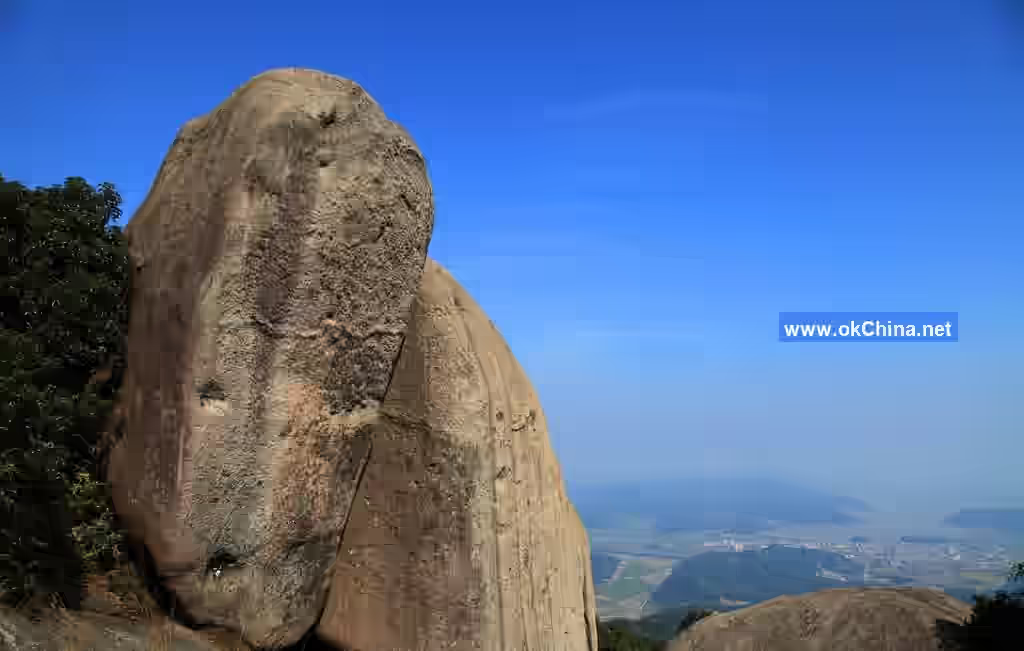
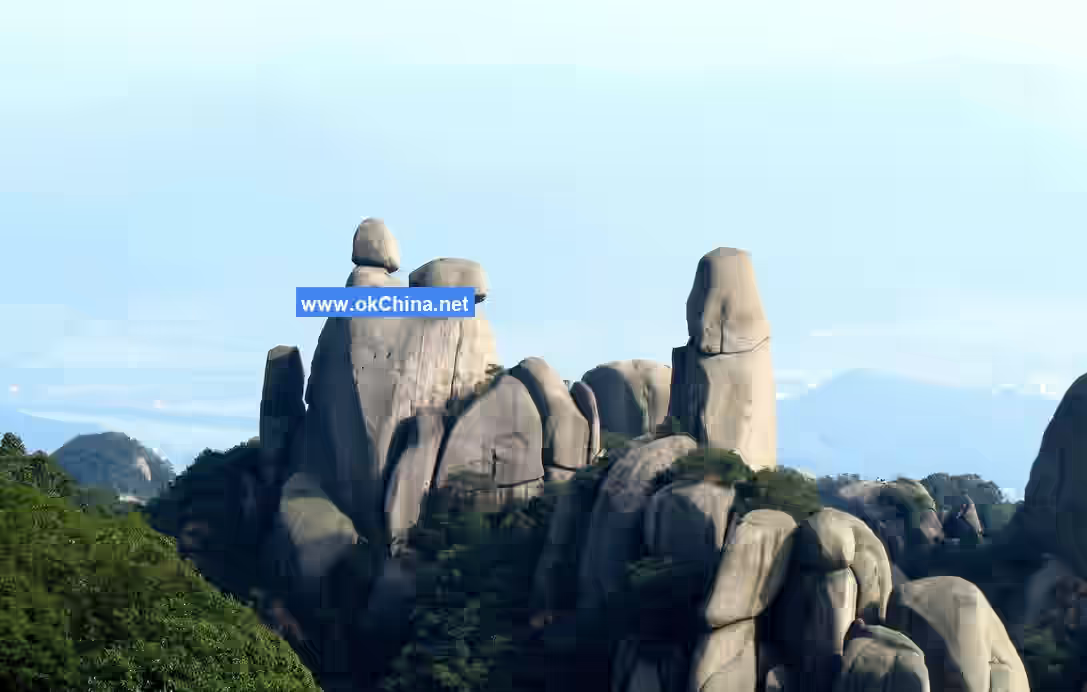
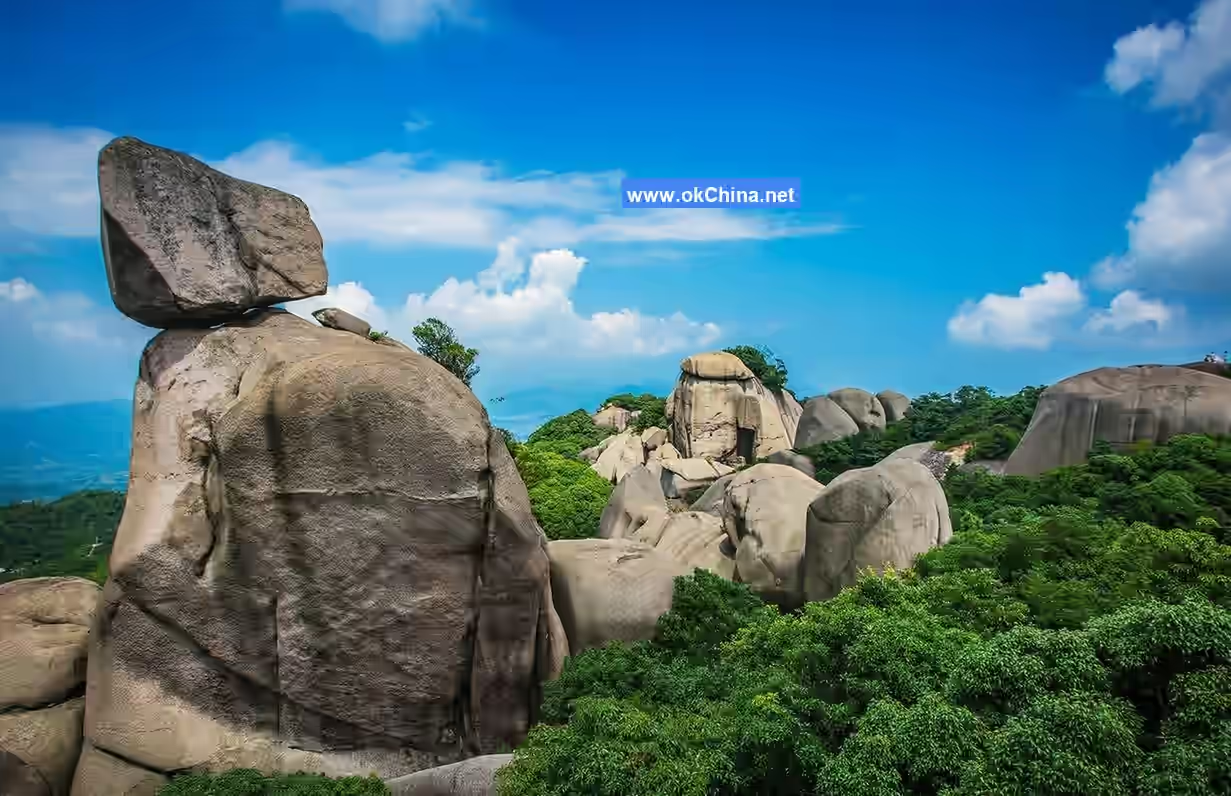
Mount Taimu belongs to the low mountain and hilly region of the southeastern coast. It developed from Late Yanshanian deep-source, shallow A-type miarolitic alkali-feldspar granite, forming a peak cluster composed of dome-shaped peaks, wall-shaped peaks, fortress-shaped peaks, columnar peaks, and cluster peaks, along with stone eggs (residual corestones) superimposed on the tops of stone fortresses and pillars, collectively constituting a peak cluster-stone egg landform. It represents a granite mountain landform in its early mature stage. Its development and evolution are related to lithology, structure, and particularly humid climatic conditions, contrasting sharply with granite landforms in glacial or desert environments. This type of heritage holds significant scientific and popular science value for research in granite petrology, geomorphology, and neotectonics.
Another characteristic of Mount Taimu is its numerous caves, which fall into two main categories: corridor-fissure type and collapse-accumulation type. Corridor-fissure caves are essentially line valleys or alley valleys with rock blocks piled above. These caves are characterized by length, depth, and narrowness, with some having steep walls and others intersecting intricately. The corridor-fissure type cave is a relatively unique form of granite cave.
3. Resource Status
The mountainous area abounds in tea, edible fungi, four-season pomelos, taro, late-ripening lychees, konjac, late-ripening longans, oil plums, seedless persimmons, chestnuts, etc. The surrounding region is rich in marine delicacies such as large yellow croaker, grouper, prawns, pearl clams, Erdu clams, and razor clams.
4. Main Attractions
4.1 Mountain Scenic Area
The Mount Taimu Mountain area is the main scenic zone of the Mount Taimu Scenic Area, covering 24.6 square kilometers. It is famous for its strange rocks, unique caves, perilous peaks, and frequent mist. Peaks are mostly concentrated between 500 and 1000 meters in height, featuring interlacing ridges, deep valleys, steep cliffs, and numerous caves. The mountain hosts many rare flowers and trees, such as valley orchids, cloud mist grass, sensitive plants, love bean trees, five-color azaleas, and Green Snow Bud tea, adding further charm to the landscape. There are 360 rock formations within the mountain. From the main peak, one can overlook the East China Sea, seeing nearby islands and the bay at the mountain's foot.
4.2 Archipelago Scenic Area
The Archipelago Scenic Area is located in the Fuyao Islands, including 13 islands such as Dayu Mountain, Xiaoyu Mountain, and Yuanyang Island. The main island, Yushan Island, covers 28.8 square kilometers, strategically positioned on the maritime route between Fujian and Zhejiang, often called "Little Taiwan." The island boasts enchanting scenery, hailed as the "Fairyland of the East China Sea." Main attractions include over 20 sites like Ambassador Sandbar, Tianhu Lake, and Bright Moon Pool.
4.3 Seaside Scenic Area
The Seaside Scenic Area includes sites like Qingchuan Bay and Big and Small Yundang, totaling 8 square kilometers. A boat tour allows visitors to appreciate the changing beauty of sea and sky during sunrise, moonset, and under various conditions like wind, rain, clear weather, mist, dawn, and dusk.
4.4 Guoxing Temple Scenic Area
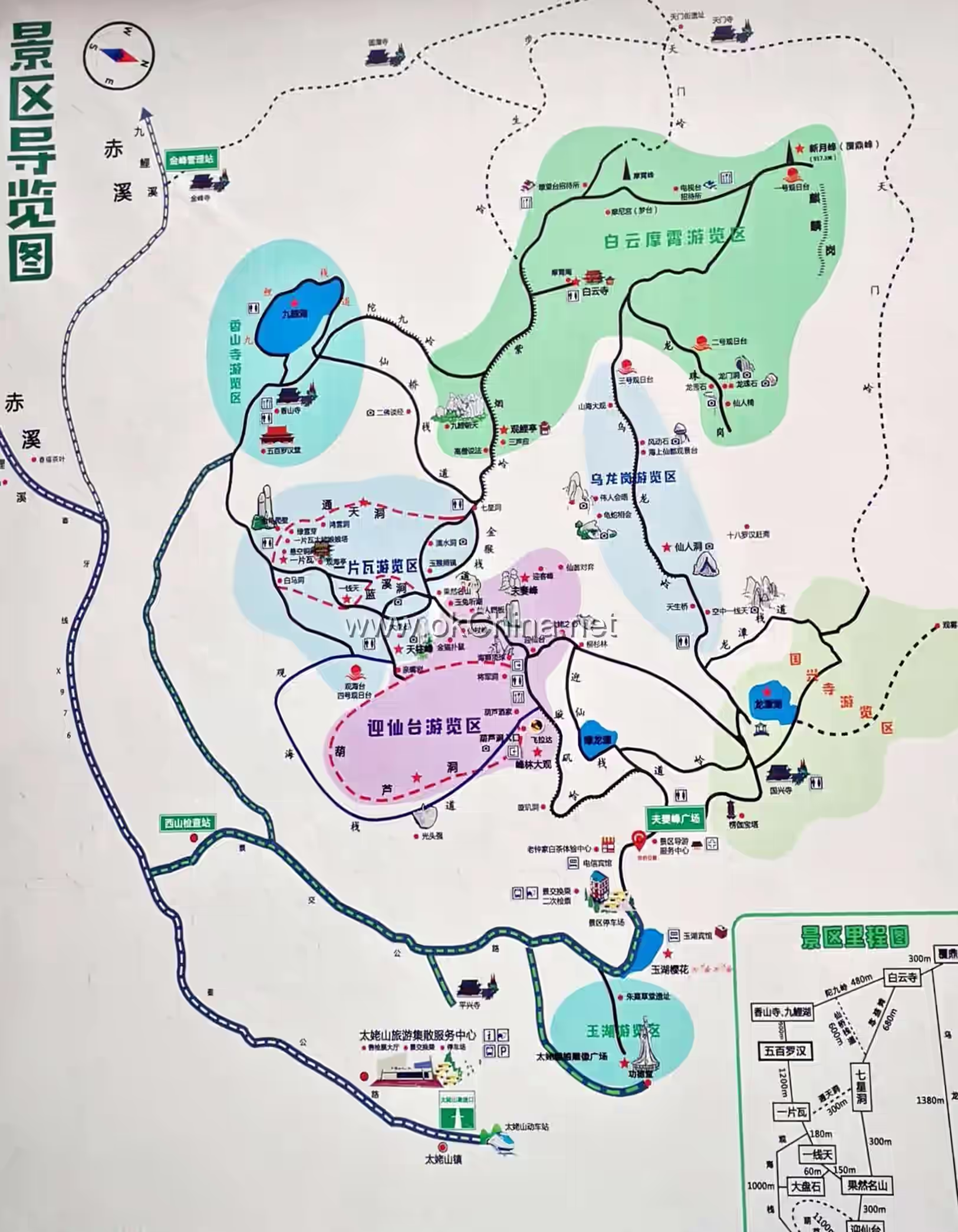
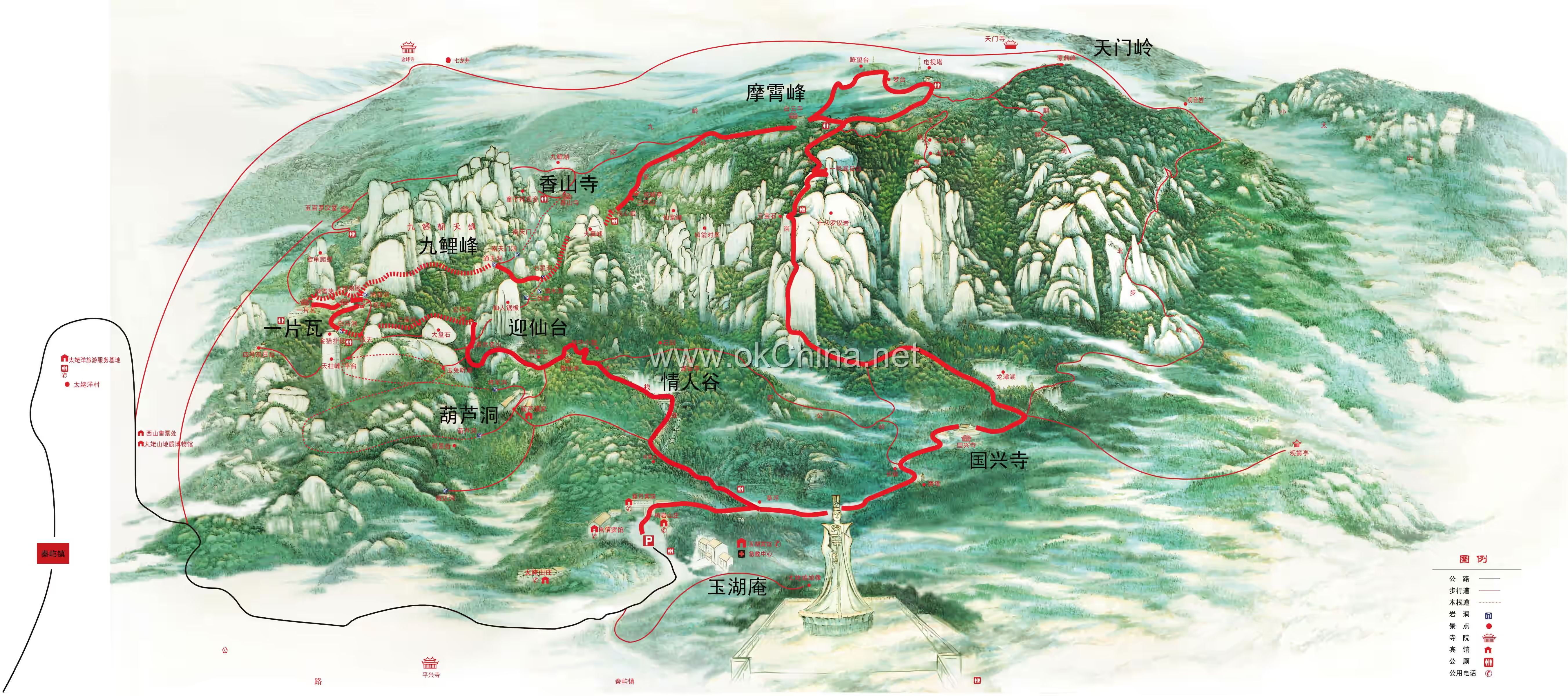
The Guoxing Temple Scenic Area is located in the core zone of the Mount Taimu Scenic Area. From the scenic square, one can look up at the landmark Husband-and-Wife Peak and the spectacular peak forest of Eighteen Arhats Rock. A few steps along the right-side walking path leads to the unique Tang Dynasty seven-story, octagonal, solid stone pagoda—the Lengjia Pagoda—and the ruins of Guoxing Temple built during the Tang Qianfu era. Behind the temple is Longtan Lake. Passing through the green corridor leads to Changsa Ridge. At Yongcui Pavilion, one can view the Husband-and-Wife Peak up close, gaze at the Yuanbao Stone, pause to admire the cliff inscription "No Vulgar Stones on Taimu" and the Wave Rock. Not far away is Liushan Flat, above which is Yingxian Terrace. The Husband-and-Wife Peak is the iconic landscape of Mount Taimu. Water erosion has created a fissure in this peak, and two stone eggs of different heights at the top resemble a man and a woman embracing.
4.5 Statue Scenic Area
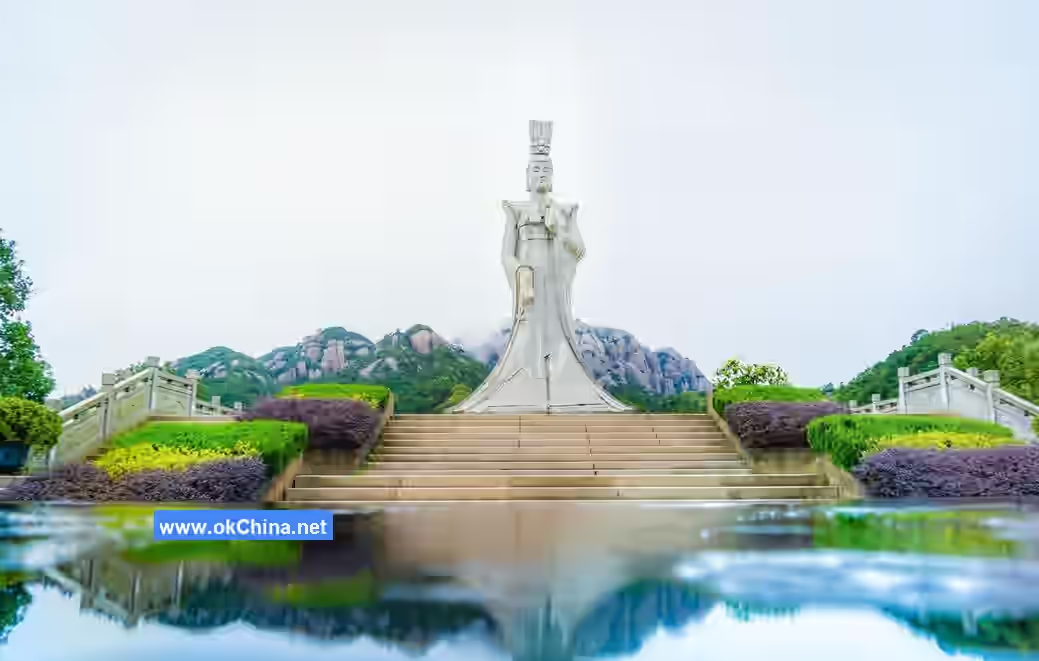
To the left of the Statue of Lady Taimu is Black Dragon Ridge, to the right is Tiger Head Ridge. It overlooks the Fuyao Islands in the East China Sea to the front and backs against Moxiao Peak. The statue is composed of 288 granite blocks, stacked 18 layers high, standing 20.88 meters tall (including the base). The number of platforms and steps subtly correspond to the Taoist-revered number "nine." The statue's design incorporates both square and circular elements, with square predominating. It absorbs the elegant and slender features of Northern Wei Dynasty grotto statues, incorporates some of the fullness of faces from the High Tang period, and also draws simplicity and conciseness from Han Dynasty tomb figurines.
4.6 Yingxian Terrace Scenic Area
The Yingxian Terrace Scenic Area is located behind Sagong Ridge. Mount Taimu is called "Fairyland on the Sea" because legend says the immortals of the East China Sea gather here annually. Yingxian Terrace is where Lady Taimu welcomed the immortals, and its elevation is precisely 666 meters. Yingxian Terrace is the best spot to appreciate Mount Taimu's scenery, surrounded by various figurative landscapes. Facing the Nine Carp Peak direction are sights like the Husband-and-Wife Peak, Welcoming Immortal Peak, and Immortal Sawing Board. To the right, towards Black Dragon Ridge, are scenes like Immortal Elders Playing Chess, Turtle and Snake Meeting, Golden Dog Gazing at Banyan, and Stone Guanyin. To the left, towards Gourd Cave, are Golden Cat Pouncing on Mouse, King Zheng Reviewing Troops, Jade Rabbit Listening to Tides, Crouching Monkey Gazing at Sea, and Kylin Roaring. Behind the small stone gate are Seven Star Cave and Purple Mist Ridge above; to the left are Blue Stream Gully, One-Line Sky, and One Tile; below are Gourd Cave and General's Cave.
4.7 Gourd Cave Scenic Area
The Gourd Cave Scenic Area is situated at the hub of Mount Taimu's walking paths, connecting Yingxian Terrace, Nine Carp Peak, and One Tile. This area has numerous caves, the most distinctive being the Gourd Cave, known as the "playground within a cave," followed by the interconnected General's Cave. Upon exiting General's Cave, one can look back to admire the amusing Kissing Rock. Exiting General's Cave leads to the V-shaped Dragon Whisker Ridge, where at the bottom one can view the over-40-meter-tall Sky Pillar Peak. Two mountain paths lead to Big Flat Stone and Sea Viewing Platform.
4.8 One Tile Scenic Area
The One Tile Scenic Area is located in the southwest of Mount Taimu, a serene and secluded retreat. Passing through the One-Line Sky Cave, which only allows one person to pass sideways, and through White Horse Cave, one reaches One Tile. Here are landscape clusters including Golden Turtle Climbing Wall, Golden Rooster Crowing at Dawn, Taimu Relic Pagoda, Taimu Holy Hall, and Hongxue Cave. Ascending through Tongtian Cave leads directly to South Heaven Gate. Descending past the white marble Five Hundred Arhats Hall leads to Xiangshan Temple.
4.9 Xiangshan Temple Scenic Area
The Xiangshan Temple Scenic Area lies in the valley below Nine Carp Peak. It gets its name from the subtle fragrance that wafts when orchids bloom. It can be reached via One Tile or directly by taking the Xiangshan Temple road after entering the mountain gate. Xiangshan Temple was first built in the Ming Dynasty. In front of the Main Hall is the Rhinoceros Gazing at the Moon Stone, inscribed with a couplet by Weng Tonghe. The Arhats in the Five Hundred Arhats Hall are all carved from Burmese white marble. The Nine Carp Lake is small and exquisite, ideal for photography. Bat Cave houses thousands of bats and contains spring water and marine fossil shells. Green Dragon Valley is 300 meters long, featuring many strange rocks and caves yet to be developed. From Tuojiu Ridge, one can reach Purple Mist Ridge directly. At the end, on the edge of a cliff, is the Yufeng Bridge, spanning a deep ravine, offering a close view of the Nine Carp Facing Heaven spectacle. Passing through South Heaven Gate Cave leads directly to South Heaven Gate.
4.10 Nine Carp Stream Scenic Area
Nine Carp Stream, also called Chixi Stream, is 25.86 kilometers long, with thirteen tributaries meandering through the ridges of Mount Taimu. Over twenty scenic spots are distributed along the rocks. The stream banks feature undulating green hills, lush trees, and林立 (towering) strange rocks. In the middle is Nine Carp Lake. Surrounding areas also include beauties like Little Jade Maiden Peak, "Welcoming Immortal Boat," "Immortal Child Gazing at the Sun," and "Guanyin Sitting on Lotus." From the upstream Nine Carp Village to the downstream Dutou Village, there are sixteen shoals and two waterfalls. One waterfall is in front of Jiangyang Village upstream, called Xikou Waterfall, where water plunges from a 60-meter-high cliff. The other waterfall is below Lianhua Peak, named Longting Waterfall, with a drop of 120 meters, splitting into two streams forming a "人" (human) character shape.
4.11 Nine Carp Peak Scenic AreaKnown for its towering and rugged peaks, it integrates peaks, rocks, and caves, embodying the most distinctive features of Mount Taimu. One can start from Yingxiantai, pass by the Yunbiao Stone, traverse the Sanfuyao (where "civil officials dismount their sedan chairs and military officials get off their horses"), and then proceed through the perpetually dripping Dishui Cave to reach the South Heavenly Gate. Alternatively, one can go through Yipianwa and Tongtian Cave, or from Xiangshan Temple through the South Heavenly Gate Cave directly to the South Heavenly Gate. Passing through the Seven-Star Cave leads to Ziyan Ridge. Ziyan Ridge features sights such as Heartbreak Rock, Jiang Taigong Fishing, Collarless Suit, and Pumpkin Peak. Nearby, there is the Guanli Pavilion, offering a close-up view of the Nine Carp Peak and the Two Buddhas Discussing Scriptures Stone. Further up lies Moxiao Peak and Baiyun Temple.
4.12 Moxiao Peak Scenic Area
This is the best spot in Mount Taimu for climbing high and gazing afar. Moxiao Peak, also known as New Moon Peak, has facilities like an observation deck and a television relay station at its summit, where one can stay overnight to admire the moon and watch the sunrise. Below the peak lies the Baiyun Chan Temple (Moxiao Nunnery) built during the reign of Emperor Xuanzong of Tang, the earliest surviving Manichaean site in China known as Moni Palace, as well as sights like Beauty Presenting Flowers and Stone Boat. Around Baiyun Chan Temple, there are cliff inscriptions such as "The Number One Mountain Under Heaven" attributed to Dongfang Shuo, along with sights like Flowing Rice Cave and Golden Toad Holding Coin Tree. Next to Moxiao Peak is Fuding Peak, the highest peak of Mount Taimu, which features a Sunrise Viewing Platform.
4.13 Black Dragon Ridge Scenic Area
This area connects Baiyun Temple and Guoxing Temple. Visitors can climb atop the heads of the Eighteen Arhats, stroll along the back of the Sunning Dragon, weave through scenery admired by other tourists, and also enjoy sights such as Great Leaders Meeting, Avanti Courting, Beauty Bathing, Elephant and Divine Bird, and Black Dragon Gate. Beside Black Dragon Ridge, there is also Dragon Pearl Ridge, featuring sights like Maitreya Exposing His Belly, Dragon Gate Cave, Dragon Pearl, Kylin Ridge, and Hanging Golden Bell.
4.14 Rock Caves
Mount Taimu is a peak forest mountain composed of granite, dotted with over a hundred rock caves. Famous ones include Gourd Cave, General Cave, One-Line Sky, Dishui Cave, Seven-Star Cave, Yipianwa, Rhinoceros Cave, White Horse Cave, Hongxue Cave, Bat Cave, Fucheng Cave, Weituo Cave, Lotus Cave, and Longtan Cave, among others. Some caves are interconnected or nested within one another; some offer views of the sea and sunrise from inside; some feature continuous rock formations; some contain hidden springs or visible waterfalls; and some even grow exotic flowers and rare plants. Gourd Cave and General Cave are located in the Gourd Cave scenic area. Gourd Cave resembles a gourd, with spacious chambers capable of accommodating a thousand people, covering an area of 2,000 square meters, and is praised as a "Shangri-La." Inside the cave grow famous flowers like Konggu Orchid and Feng Orchid. General Cave is named for three rocks on its ceiling that resemble a general's shoe, hat, and sword. It consists of over a dozen interconnected caves, collectively known as "General's Eighteen Caves." It is 977 meters long with four entrances. Inside, there are seven halls, thirteen courtyards, and scenic spots like "Three-Line Sky," "Echo Cave," and "Listening to Springs in the Cave." "Three-Line Sky" is formed by two huge rocks with a crack at the top, creating three lines of blue sky. General Cave also grows plants like Schima superba, Machilus thunbergii, Castanopsis, green bamboo, and red and white azaleas, as well as ancient vines over a thousand years old. To its east lies One-Line Sky, another marvelous rock cave, 200 meters long and 60 meters high, with steep walls and a narrow opening at the top. The path inside varies in height, width, and narrowness, winding and spiraling. "Echo Cave" is a narrow, dark passage that twists and turns, ascending and descending. "Listening to Springs in the Cave" is 160 meters long, with underground springs murmuring like jade pendants, hence ancients called it Shuyu Cave. Passing through "Listening to Springs in the Cave," one enters "Flowing Water Bend," 130 meters long, where light penetrates from the cave ceiling and one can quench their thirst.
4.15 Lengcheng Ancient Fortress
Lengcheng Ancient Fortress is located at the eastern foot of Mount Taimu and is a mountain village. It features a fortress with a circumference of 1,127 meters, a height of 5.6 meters, and a thickness of 4.6 meters. It has three gates: east, south, and west, with the north side leaning against a cliff. Inside the fortress, there is an east-west street paved with cobblestones, running alongside a clear stream. On both sides of the street, residential houses and alleys are arranged in a staggered manner, with elegant architecture and simple rural customs. The fortress is well-preserved. Inside, there are also historical sites such as the Song Dynasty Sizhou Buddha Stone House, Sanguan Hall, Houxian Palace, and Shi Jixiang Shrine. The Song Dynasty Stone House is located inside the east gate, with its Sumeru base carved with patterns of figures, birds, and beasts. During the Southern Song Dynasty, Lengcheng was a gathering place for literati. Historian Zheng Qiao and Neo-Confucian scholar Zhu Xi both lectured and taught disciples here. Zhu Xi also founded the "Stone Lake Academy" (originally named Stone Lake Temple) here and wrote the couplet for its gate: "The stream flows with stones as pillars; the lake reflects the moon as a deep pool." The site still exists today. His distinguished disciple Yang Ji was born here and later became the Governor of Hunan.
5. Historical Evolution
5.1 Naming
Mount Taimu was formerly called Cai Mountain. According to the "Records of Mount Taimu," during the time of the Yellow Emperor, the Daoist immortal Rong Chengzi once resided here and practiced alchemy. Today, the stone well, stone tripod, and stone mortar used for alchemy remain under the stone peaks. According to Wang Lie's "Record of the Peach of Immortality" from the Han Dynasty, during the time of Emperor Yao, an old woman grew indigo here and later became an immortal, hence the mountain was named Mount Taimu (Mother Mountain). According to the "General Records of Fujian," Emperor Wu of Han ordered Dongfang Shuo to confer titles upon famous mountains under heaven. Mount Taimu was listed as the foremost of the thirty-six famous mountains, with the character "母" (mother) changed to "姥" (mu), and it was enfeoffed as the deity of the Western Sacred Mountain. Thus, it was renamed Mount Taimu.
5.2 Historical Development
Mount Taimu has a long history. According to the "Records of Mount Taimu" citing the "Records of Li Mu," as early as the time of the Yellow Emperor, Rong Chengzi practiced alchemy on Mount Taimu. To this day, the stone well, stone tools, and stone tripod used for alchemy remain. During the Han Dynasty, Emperor Wu sent Dongfang Shuo to confer titles upon famous mountains under heaven. Mount Taimu was enfeoffed as the foremost of the thirty-six famous mountains, and the inscription "The Number One Mountain Under Heaven" was carved on the cliff. The Tang Dynasty marked its peak period. Emperor Xuanzong of Tang bestowed the inscription "Stupa of Emperor Yao's Enfeoffment of Taimu," and Emperor Ming of Tang, Li Longji, decreed the construction of Xingguo Temple, along with Baiyun Temple, Yandong Nunnery, Yuhu Nunnery, and Lingfeng Temple, gradually making it one of the centers for Daoist and Buddhist activities. During the Song Dynasty, it became a sacred site for teaching and transmitting knowledge. The mountain contains cliff inscriptions from the Song, Yuan, and Ming dynasties.
In the 21st year of the Republic of China (1932), the first Red Guard unit in Fuding County was established on Mount Taimu. The following year, the first County Committee of the Communist Party of China in Fuding was established here, making it one of the revolutionary bases in eastern Fujian. In the 1970s, the Mount Taimu Scenic Area Preparatory Office was established. In the 1980s, it was renamed the Mount Taimu Scenic Area Management Office, later changed to a management area directly under the Fuding County Government.
In 1985, the Department of Geography at Nanjing University completed the "Survey Report on Tourism Resources of Mount Taimu Scenic Area," and the Fujian Geological School completed the "Investigation and Demonstration of Geology and Geomorphology of Mount Taimu." In September, Shanghai Tongji University was commissioned to formulate the overall plan. The planned area is 100 square kilometers, characterized as a comprehensive, multifunctional scenic area integrating the granite peak forest caves of Mount Taimu with mountain, sea (island), river, and cultural landscapes.
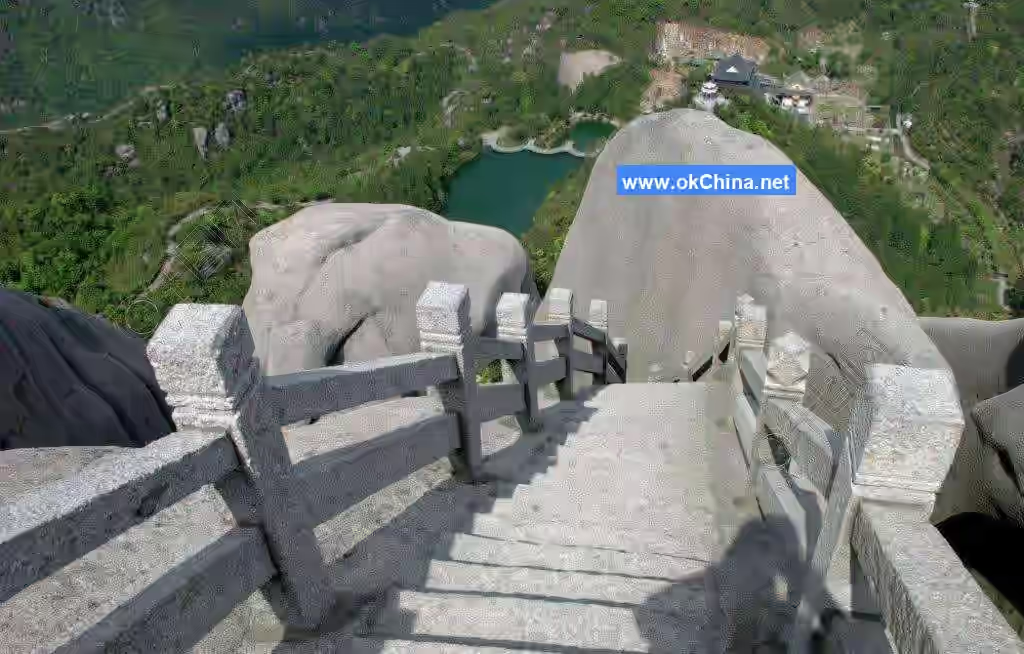
In 1988, construction began in the scenic area, mainly involving building and expanding roads to facilitate transportation and promote development. In 1980, a simple road from Qinyu to Mount Taimu was built, 13 kilometers long. In 1986, this simple road was reconstructed, extending it by 1 kilometer, and the pedestrian paths with yellow mud surfaces in the scenic area were repaired and expanded. In 1987, the 5-kilometer-long yellow mud path from the highway entrance to Bat Cave, Fanshan Temple, and Xiandu Bridge to Baiyun Temple Ridge was widened and rebuilt into stone step paths measuring 1.6×0.6×0.8 meters. Additionally, a 100-meter-long safety railing was installed at the dangerous section of Xianqiao. In 1987 and 1988, the tourist paths in Gourd Cave, One-Line Sky Cave, and White Horse Cave were repaired, and the 6-kilometer-long main tourist road in the scenic area was widened and rebuilt. In the same year, Sunrise Viewing Platforms No. 1 and No. 2 were constructed on Dragon Pearl Ridge and Wolong Ridge, respectively, using granite masonry to harmonize with the surrounding peaks and rocks. In 1988, the management area repaired the passage from General's Eighteen Caves to Gourd Cave, 1,700 meters long, improving the originally rugged and waterlogged path. Additionally, viewing platforms and sea-viewing platforms were built, the Lengqie Pagoda from the Tang Dynasty was restored, and a 12-kilometer high-voltage power line was installed. The Xiangshan Reservoir with a capacity of 60,000 cubic meters and the water diversion project for the Gourd Cave scenic area were completed, solving the water and electricity issues in the scenic area. New facilities such as Taimu Hotel, Taimu Mountain Villa, Meiyan Mountain Villa, and parking lots were constructed. Forest firebreaks, forest fire lookout towers, and green corridors were established within the scenic area, with vegetation coverage in the mountain scenic area exceeding 95% of the suitable forest land.
On October 11, 2013, the National Tourism Administration awarded Mount Taimu Tourist Scenic Area and nine other scenic areas the title of National 5A-level Tourist Attractions.
Comments
Post a Comment