
Taihu Lake
1. Introduction
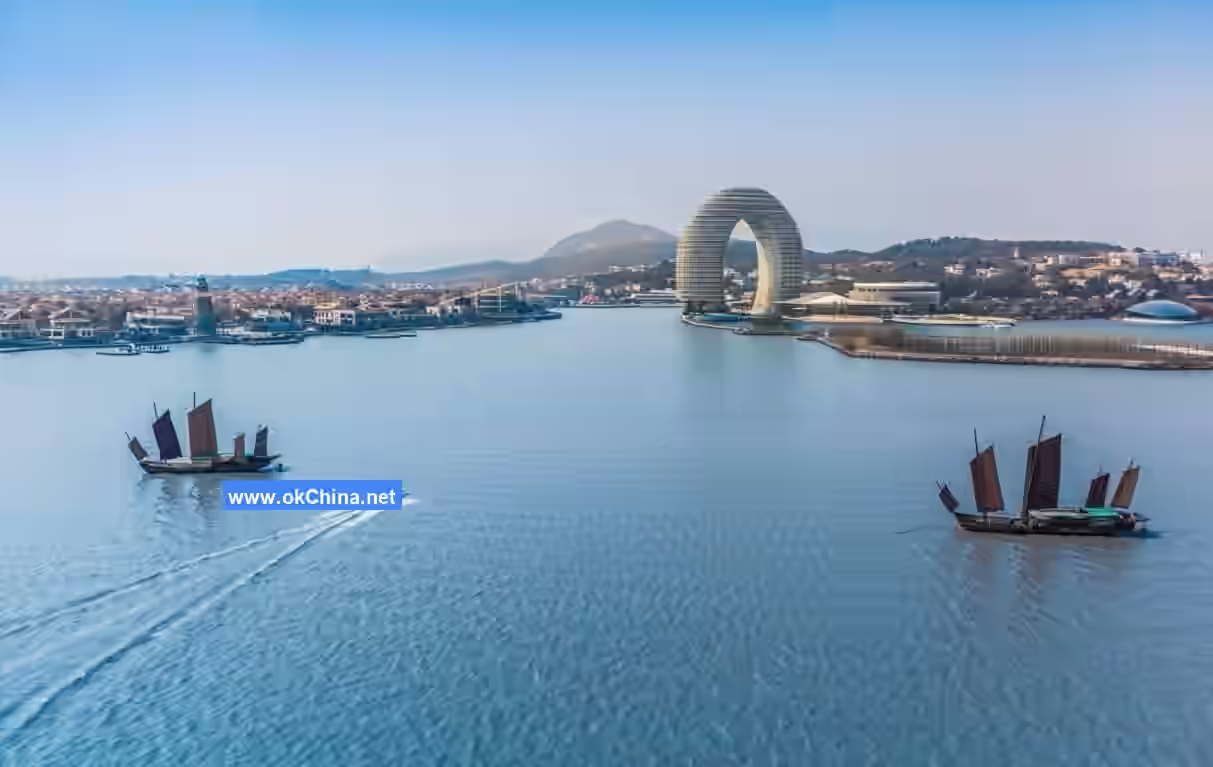
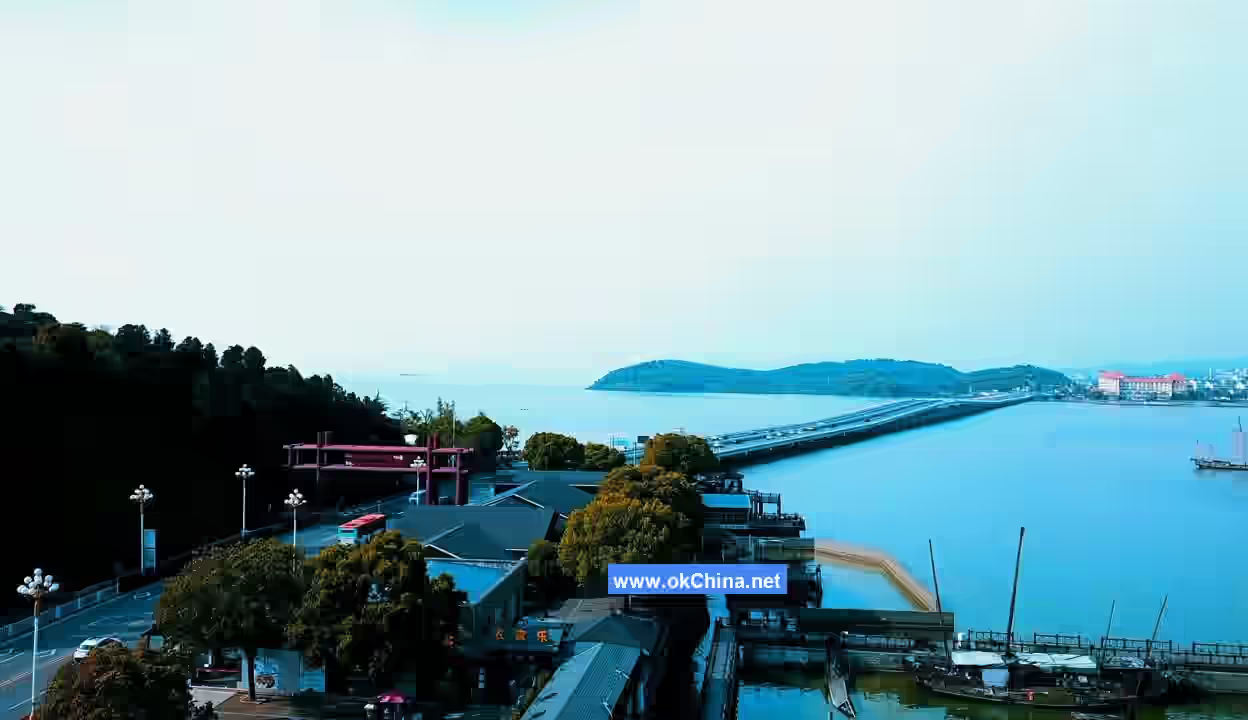
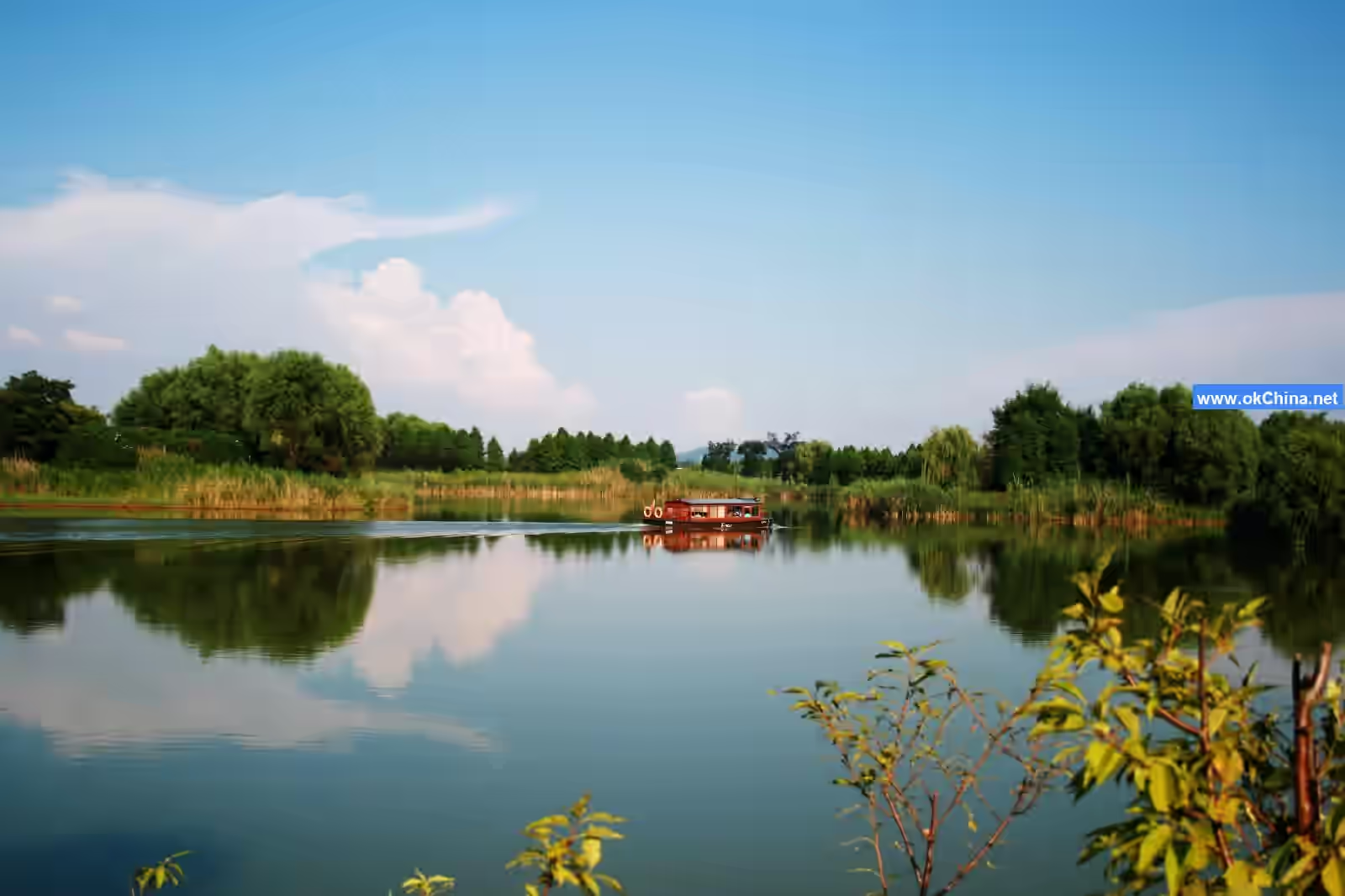
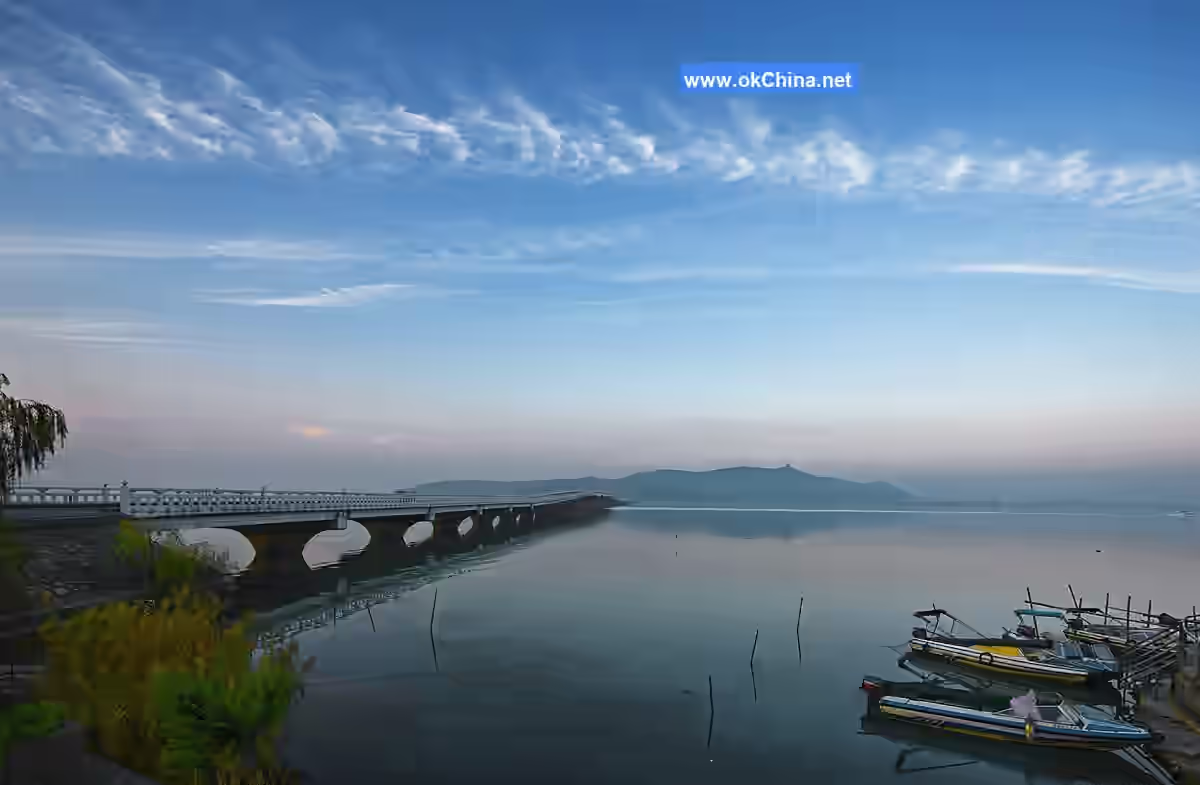
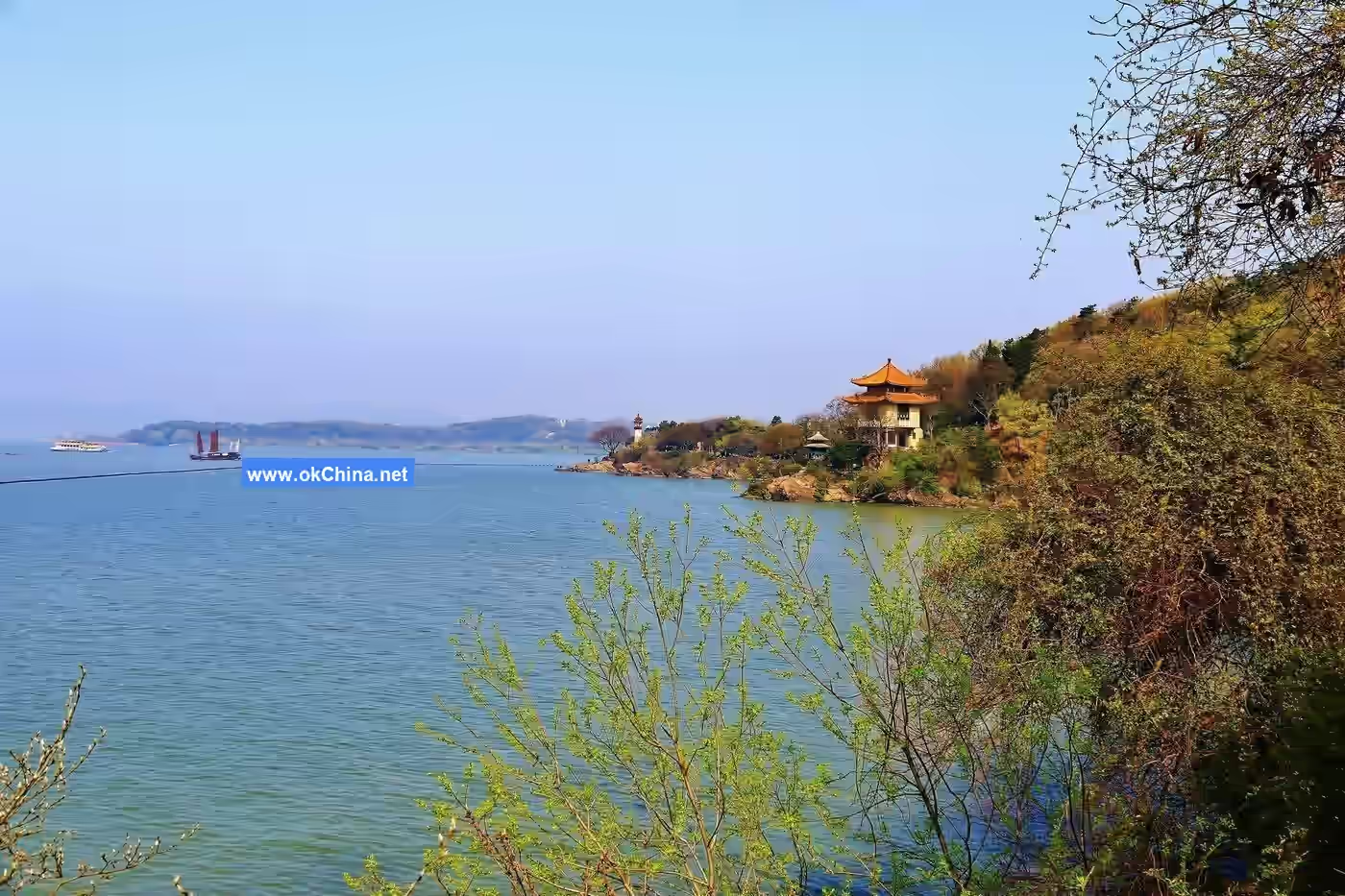
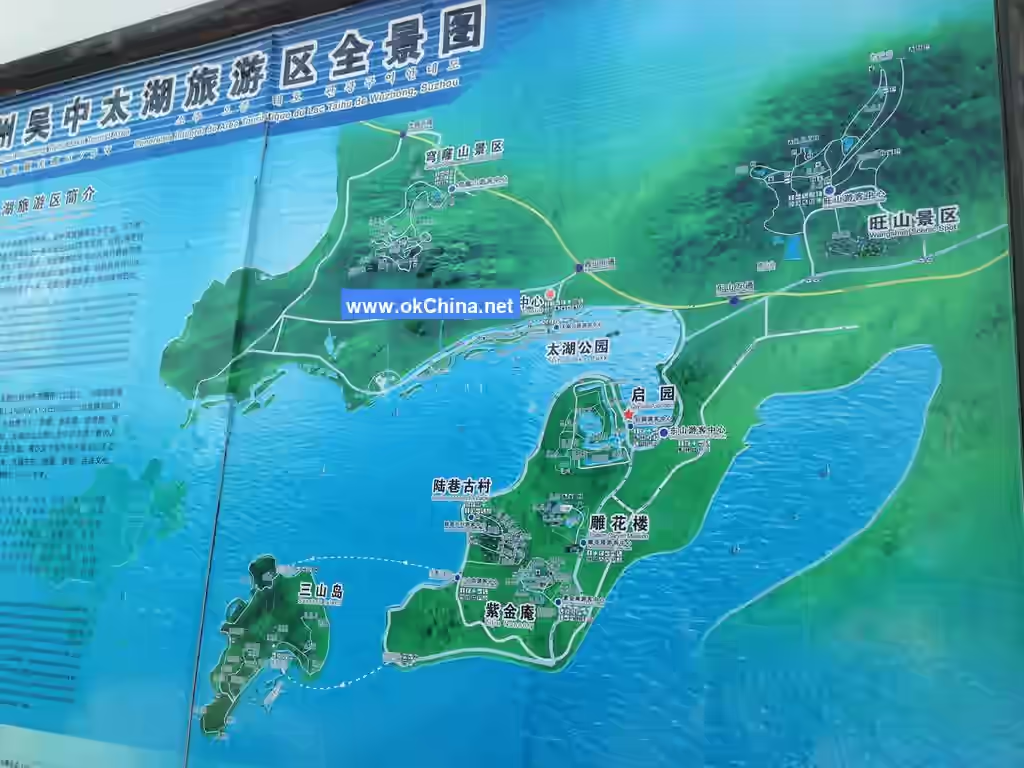
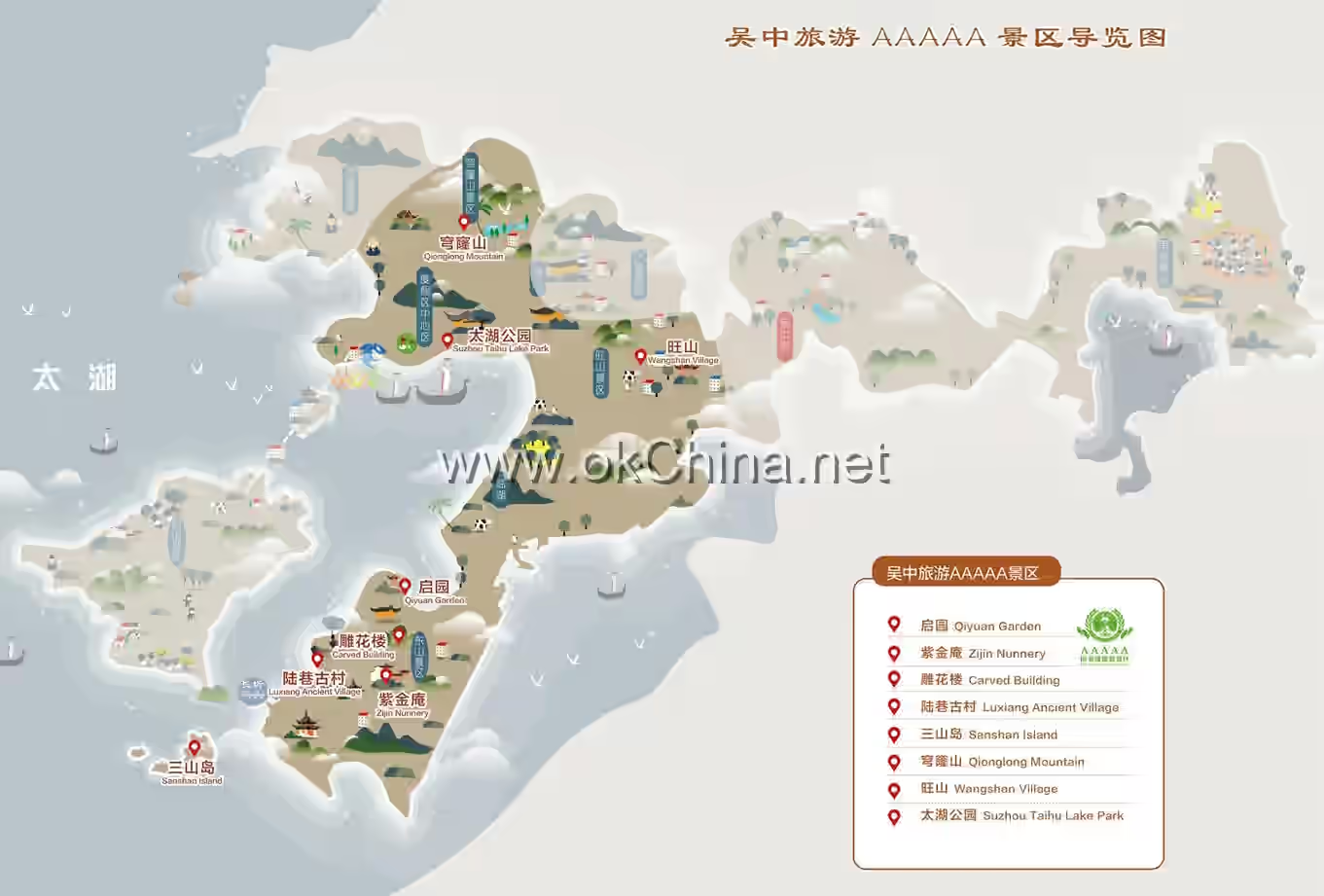
The Suzhou Taihu Lake Tourist Area, located in the southwest of Suzhou City, Jiangsu Province, consists of three major scenic areas—Dongshan Scenic Area, Qionglongshan Scenic Area, and Wangshan Scenic Area—comprising seven attractions (Qiyuan Garden, Carved Mansion, Zijin Nunnery, Luxiang Ancient Village, Sanshan Island, Qionglong Mountain, and Wangshan). Centered around Taihu Lake, the tourist area encompasses ancient Taihu towns and villages, Taihu hills, and natural Taihu settlements. It includes the Dongshan Scenic Area, known as the "Hometown of Chinese Biluochun Tea"; the Qionglongshan Scenic Area, hailed as the "Number One Wisdom Mountain in the World"; the Wangshan Scenic Area, celebrated as the "Most Beautiful Mountain Village in Suzhou"; the Taihu Lakeside National Wetland Park; and surrounding attractions such as Taihu Park, Xishan Scenic Area, and Guangfu Scenic Area, totaling eight scenic spots. It is China's first comprehensive Taihu-themed 5A-level tourist area, linking Taihu ancient towns, Jiangnan hills, ecological natural villages, and peninsulas along the Taihu Lake narrative.
2. Geographical Environment
2.1 Location and Boundaries
The Suzhou Taihu Lake Tourist Area is situated in the southwest of Suzhou, along the shores of Taihu Lake, and is composed of three major scenic areas: Dongshan, Qionglongshan, and Wangshan. The Qionglongshan Scenic Area covers approximately 10.5 square kilometers, the Wangshan Scenic Area about 6 square kilometers, and the Dongshan Scenic Area around 3 square kilometers.
2.2 Xishan Scenic Area
2.2.1 Topography and Landforms
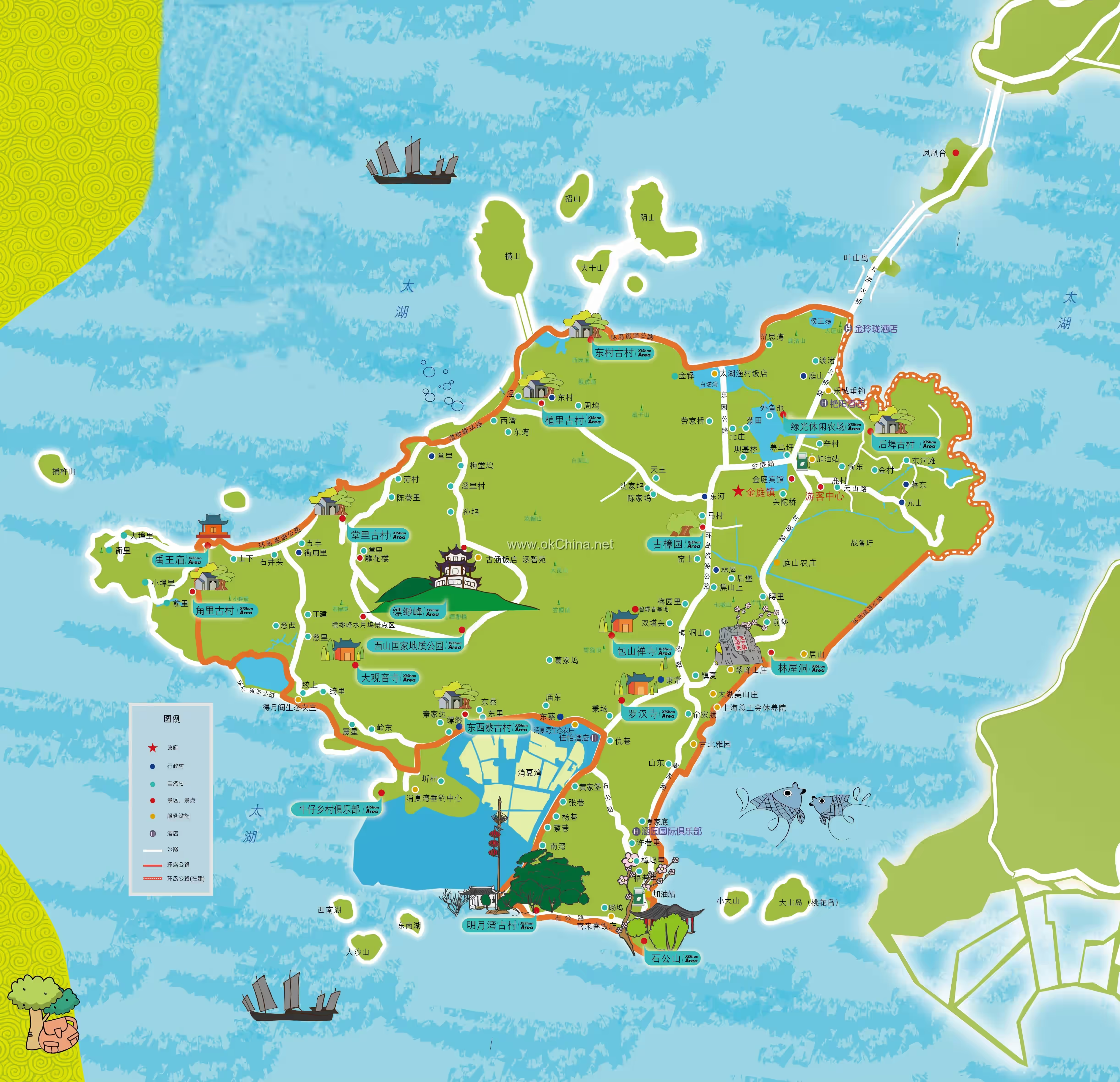
The eastern part of the Suzhou Taihu Lake Tourist Area is predominantly plains, consisting of water-network plains and low-lying polder plains. The western part features low mountains and hills, which are extensions of the Tianmu Mountains from western Zhejiang, forming "island"-like distributions within Taihu Lake and along the lakeside towns. The highest peak in the area is Qionglong Mountain, with its main peak, Limao Peak, reaching an elevation of 341.7 meters.
2.2.2 Climate Type
The Suzhou Taihu Lake Tourist Area lies on the northern edge of the central subtropical zone, characterized by a transitional monsoon climate. Influenced by the regulating effects of the ocean and Taihu Lake's water body, the area experiences distinct four seasons, a pleasant climate, abundant rainfall, and ample sunshine throughout the year. The average annual temperature is 15.8°C (with a maximum of 35°C and a minimum of -3°C), and the frost-free period lasts about 230 days.
3. Scenic Spots and Attractions
3.1 Major Scenic Areas
The Suzhou Taihu Lake Tourist Area consists of three major scenic areas—Dongshan Scenic Area, Qionglongshan Scenic Area, and Wangshan Scenic Area—comprising seven attractions (Qiyuan Garden, Carved Mansion, Zijin Nunnery, Luxiang Ancient Village, Sanshan Island, Qionglong Mountain, and Wangshan).
3.1.1 Dongshan Scenic Area
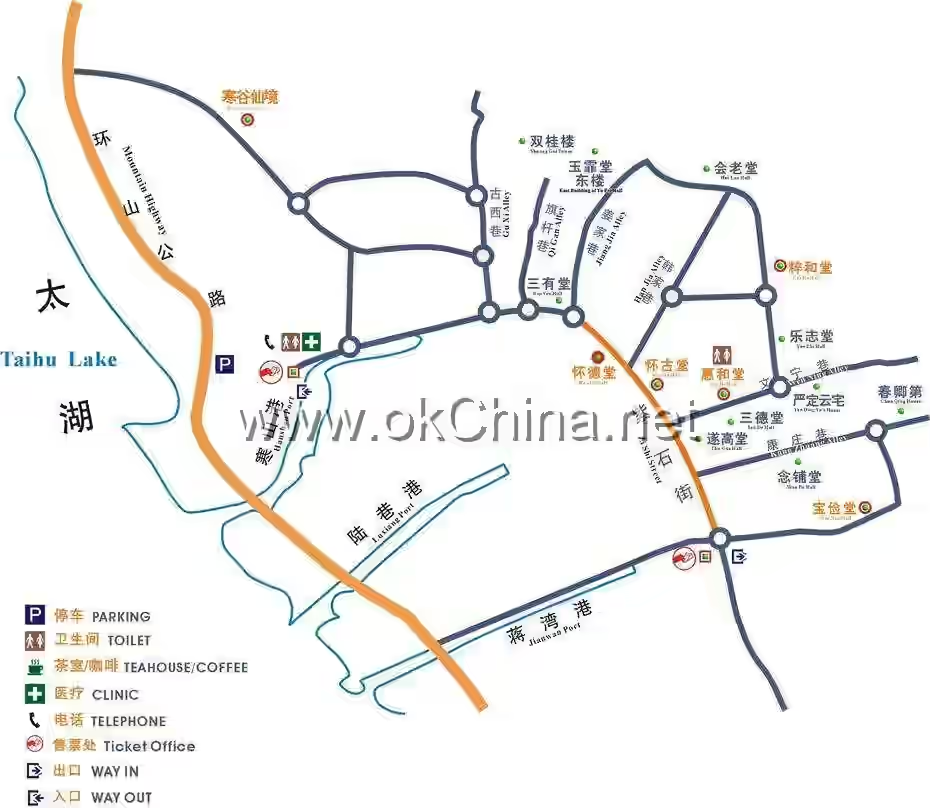
Luxiang Ancient Village is located on the shores of Taihu Lake, nestled in a mountain valley, backed by Moli Peak and facing Taihu Lake. To the east lies Hangu Mountain, and to the west is Jianhu Island, with a distant view of Dongting West Mountain. Surrounded by mountains and water, the village boasts picturesque scenery. Formed during the Southern Song Dynasty, Luxiang Ancient Village historically contained 72 large-scale Ming and Qing architectural halls, of which about 30 remain relatively intact today. It is renowned as the "Hometown of Ming Dynasty Prime Minister Wang Ao," the "Former Residence of Song Dynasty Minister of Revenue Ye Mengde," and for its three memorial archways commemorating "Jieyuan, Huiyuan, and Tanhua" (top scholars in imperial examinations). It is an excellent destination for exploring the ancient charm of Taihu Lake and is recognized as a Chinese Historical and Cultural Village, a National Agricultural Tourism Demonstration Site, and a National 5A-level Tourist Attraction.
Zijin Nunnery is located in Ximao Valley in the central part of Dongshan and has a history of over 1,400 years. On the left and right walls of the main hall are sixteen painted clay statues of Arhats, believed to be the work of the renowned Southern Song folk sculptors Lei Chao and his wife, dating back over 800 years. The sculptures are particularly famous for the "Three Treasures": the "Wise Eyes," "Sutra Canopy," and "Floral Canopy." It is said that "there are two and a half halls of Arhats in the world," and the Arhat Hall of Zijin Nunnery is one of them. Behind the hall is the Jingyin Hall, built with nanmu wood. In front of the hall, golden osmanthus blooms and magnolia fragrance fills the air, while outside, pine and bamboo flourish, and peach and plum trees compete in beauty, truly embodying the poetic description by Qing Dynasty poet Gu Chao: "Among the secluded places in the mountains, this residence takes precedence. Deep green bamboo brings no summer heat, and the clear pond holds a small piece of heaven." In 2006, Zijin Nunnery was designated as a National Key Cultural Relics Protection Unit, becoming a destination for appreciating ancient sculptural art.
Dongshan Carved Mansion, also known as Chunzai Lou, is a National 5A-level tourist attraction built in 1922 as the residence of Jin Xizhi, a wealthy Dongshan merchant known as the "King of Shanghai Cotton Yarn." Chunzai Lou combines Chinese and Western architectural styles, with Chinese elements predominating. Its main structures include a screen wall, a brick-carved gate tower, front and rear buildings, auxiliary rooms, and a garden. The mansion features a total of 3,854 carvings. Known for its "carvings everywhere, engravings everywhere," it is celebrated as a "Famous Ancient Jiangnan Building" for integrating brick, wood, stone, and metal carving arts. It is a classic masterpiece of the "Xiangshan Bang Traditional Architectural Construction Techniques," recognized as a National Intangible Cultural Heritage. In May 2006, Chunzai Lou was announced by the State Council as a National Key Cultural Relics Protection Unit.
Qiyuan Garden, commonly known as "Xijia Garden," was built by the wealthy Dongshan merchant Xi Qisun to commemorate his ancestor Xi Qiyu, who once welcomed Emperor Kangxi here. Qiyuan Garden is a landscape garden built against the mountain and beside the water. The entire garden features a balanced and harmonious composition of四面厅 (four-sided hall),复廊 (double corridor), Mirror Lake, rockeries, and new pavilions. Qiyuan Garden primarily showcases Republican-era halls, pavilions, corridors, boats, studios, flower paths, and winding bridges. It incorporates the artistic characteristics of Suzhou gardens—small, exquisite, winding, and secluded—while also embodying the grandeur of connecting to seventy-two peaks and the vast expanse of thirty-six thousand hectares of water. The "Three Treasures" within the garden are the "Liu Yi Well," the ancient bayberry tree, and the "Imperial Dock of Emperor Kangxi."
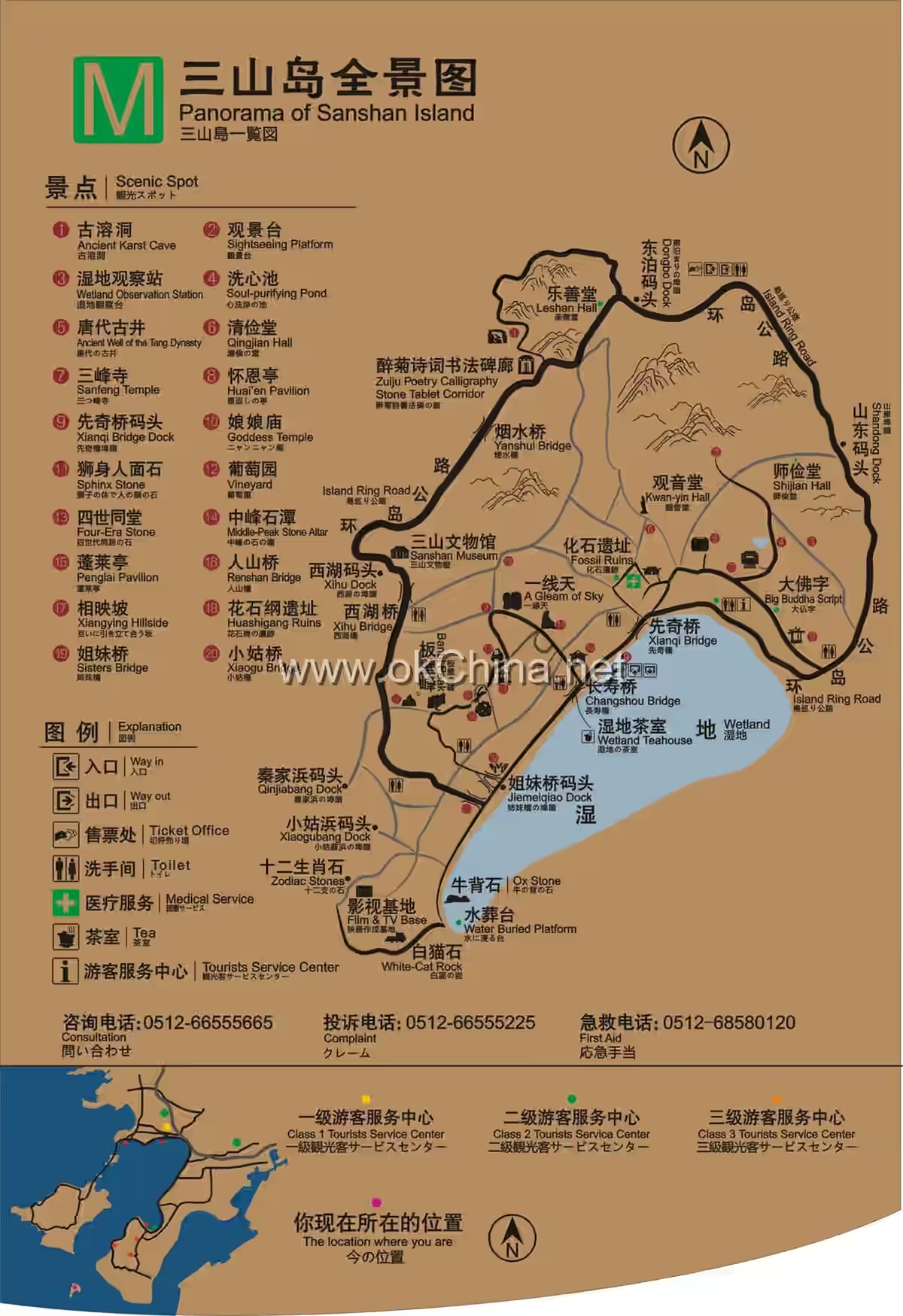
Sanshan Island is located in Taihu Lake, named for its three connected peaks, and preserves traces of tribal life from over ten thousand years ago during the Paleolithic Age. There is a local saying in Suzhou: "Sanshan Island existed before the ancient city of Suzhou." The island features Tang Dynasty stone Buddhas, Ming Dynasty ancient bridges, as well as natural sights like Yixiantian (One-Line Sky), Four-Generation Stone, Banbi Peak, Huashigang Ruins, Niubei Stone, Zodiac Stones, and Lishu Mountain. Visiting the island feels like entering a dreamlike fairyland, historically known as "Little Penglai." Island villagers cultivate flowers and plants in every household and create盆景 (penjing) displays, recreating the意境 (artistic conception) described by Tao Yuanming: "Picking chrysanthemums by the eastern fence, I leisurely gaze upon the southern mountain."
3.1.2 Qionglongshan Scenic Area
Qionglong Mountain is a famous mountain in Suzhou. Its main peak, "Limao Peak," stands at 341.7 meters above sea level, making it the highest among the mountains along the eastern shore of Taihu Lake, earning it the reputation as the "Peak of Wuzhong." Legend has it that the ancient military strategist Sun Wu隐居 (secluded) here and wrote "The Art of War: Thirteen Chapters." Emperor Qianlong of the Qing Dynasty climbed the mountain six times, leaving behind numerous little-known anecdotes. Western Han minister Zhu Maichen once cut firewood and studied here, while the anti-Jin general Han Shizong and his subordinates gathered here to enjoy the scenery and the moon. Qionglong Mountain boasts abundant natural resources. The 612-acre provincial-level natural reserve, Maopengwu, is a "natural botanical museum," and Qionglong Mountain is also the largest "natural forest oxygen bar" in the Suzhou region. The main peak, Limao Peak, at 341.7 meters, is often called the "First Peak of Wuzhong." Simultaneously, it is the largest and highest mountain along the entire eastern shore of Taihu Lake, thus被称为 (referred to as) the "First Mountain of Suzhou." It is among the first batch of National Forest Parks and a National Science Education Base. Qionglong Mountain is not only historically rich and scenically beautiful but also features numerous cultural attractions, including Shangzhen Taoist Temple, Wanghu Garden, Sun Wu Garden, and Ningbang Temple.
3.1.3 Wangshan Scenic Area
The Wangshan Scenic Area is located about 6 kilometers southwest of Suzhou City, surrounded by mountains on three sides. With its gentle mountains and soft waters, outstanding people, and favorable geography, it possesses a unique ecological environment, rich natural resources, and a long history of cultural landscapes. Wangshan Village is a National Key Village for Rural Tourism. Within the Wangshan Scenic Area, there are numerous打卡地 (check-in spots) and attractions, such as the "Jiulongtan (Nine Dragon Pool)" from the九龙传说 (Nine Dragon Legend), the千年古刹 (millennium-old temple) "Baohua Temple," the picturesque "Xishi Pond," the ancient charm and禅茶文化 (Zen tea culture) of "Aidai Ridge," and "Wangshan Meets the Louvre." The area has also introduced creative cultural and experiential projects like Wangsen Chocolate Art, Hidden Gentleman Pottery, and oil painting.
3.1.4 Taihu Lakeside National Wetland Park
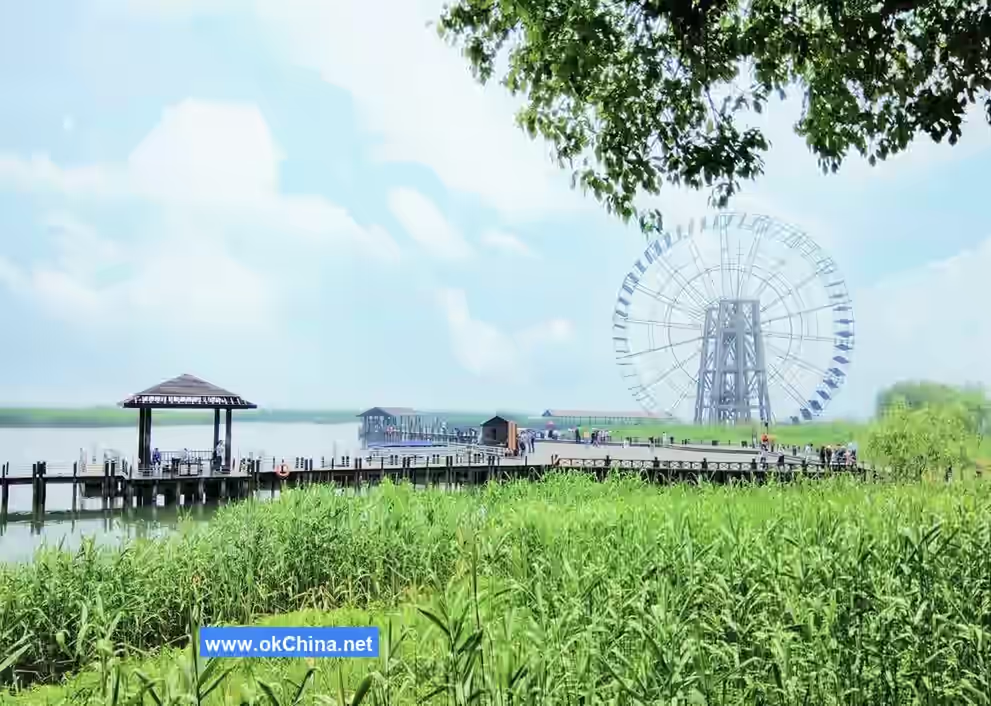
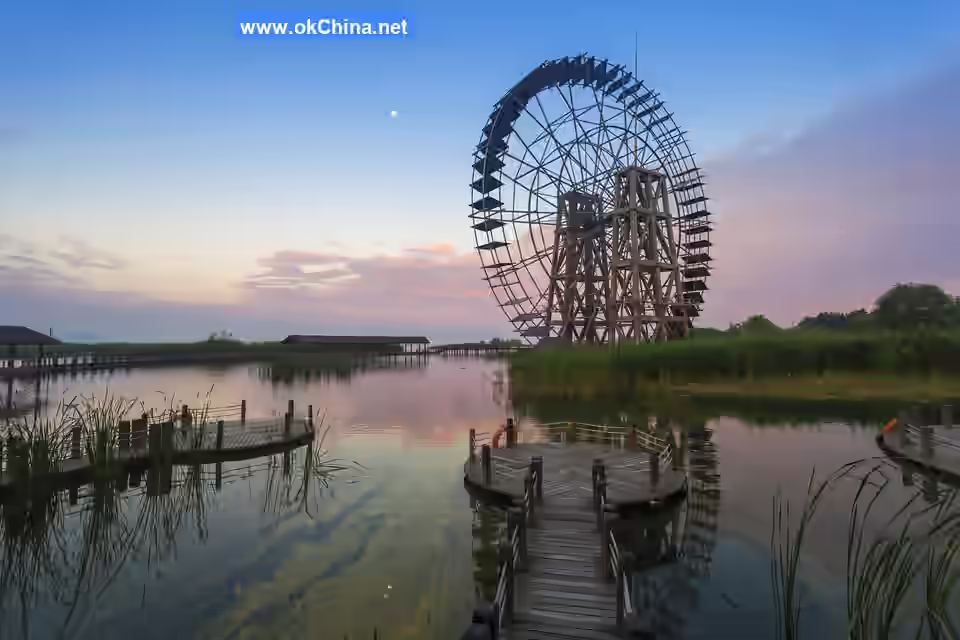
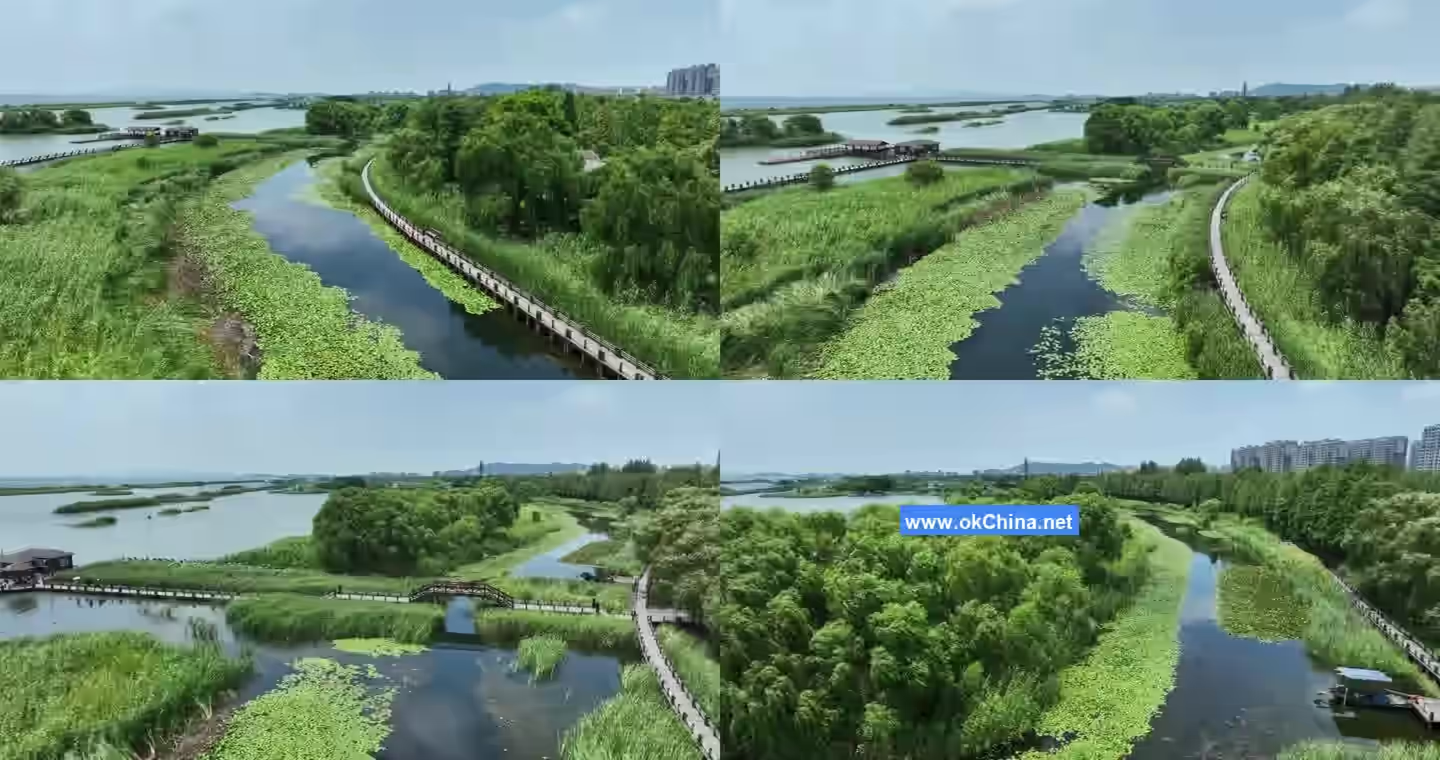
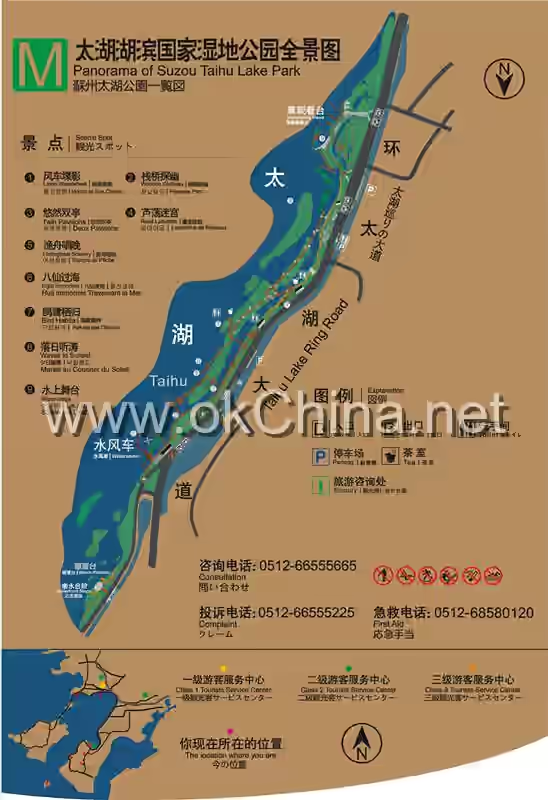
The Suzhou Taihu Lakeside National Wetland Park is a supporting park for the Taihu Lake Tourist Center, located in the central area of the环太湖景观大道 (Taihu Lake Scenic Belt). It stretches 2 kilometers from the waterwheel entrance of the Taihu Lake Scenic Belt in the east to Taihu Xintiandi in the west. The Taihu Tourist Center covers an area of approximately 119.5 acres. Taihu Park mainly consists of eight scenic spots: "Exploring the Secluded Plank Bridge," "Reed Marsh Maze," "Leisurely Double Pavilion," "Windmill and Rampart Shadows," "Eight Immortals Crossing the Sea," "Gulls and Egrets Returning to Roost," "Fishing Boats Singing in the Evening," and "Listening to Waves at Sunset."
3.2 Main Attractions
3.2.1 Mirror Lake Tower
Mirror Lake Tower is the main building of Qiyuan Garden, surrounded by trees, offering a tranquil and pleasant environment. The roof of Mirror Lake Tower features a double-eave hip-and-gable design, with two stories and upturned eaves and corners, giving a very agile feel. The entire building is exquisitely carved and uniquely designed, constructed over several years by over 300 Xiangshan帮 (Xiangshan school) craftsmen commissioned by Mr. Xi Qisun. Due to its proximity to the lake, where湖风 (lake winds) are strong, prolonged exposure could damage the wooden structure. Therefore, the roof of Mirror Lake Tower was cleverly designed in an镂空状 (openwork style) to protect the building.
The name "Mirror Lake" originates from Fan Chengda's poem "Sheshan Fangchuan": "The path across the lake heart is flat as a mirror, yet the storms on land are perilous." In the calm lake water,游鱼 (swimming fish) shimmer, and around the池 (pond),太湖石 (Taihu Lake stones)—one of the四大名石 (four famous stones)—are piled. Taihu stone is a naturally formed ornamental stone, historically used in imperial gardens for landscaping. The灵透 (ethereal and translucent) Taihu stone best embodies the beauty of皱 (wrinkles),漏 (holes),瘦 (slenderness), and透 (penetrability).
3.2.2 Imperial Dock
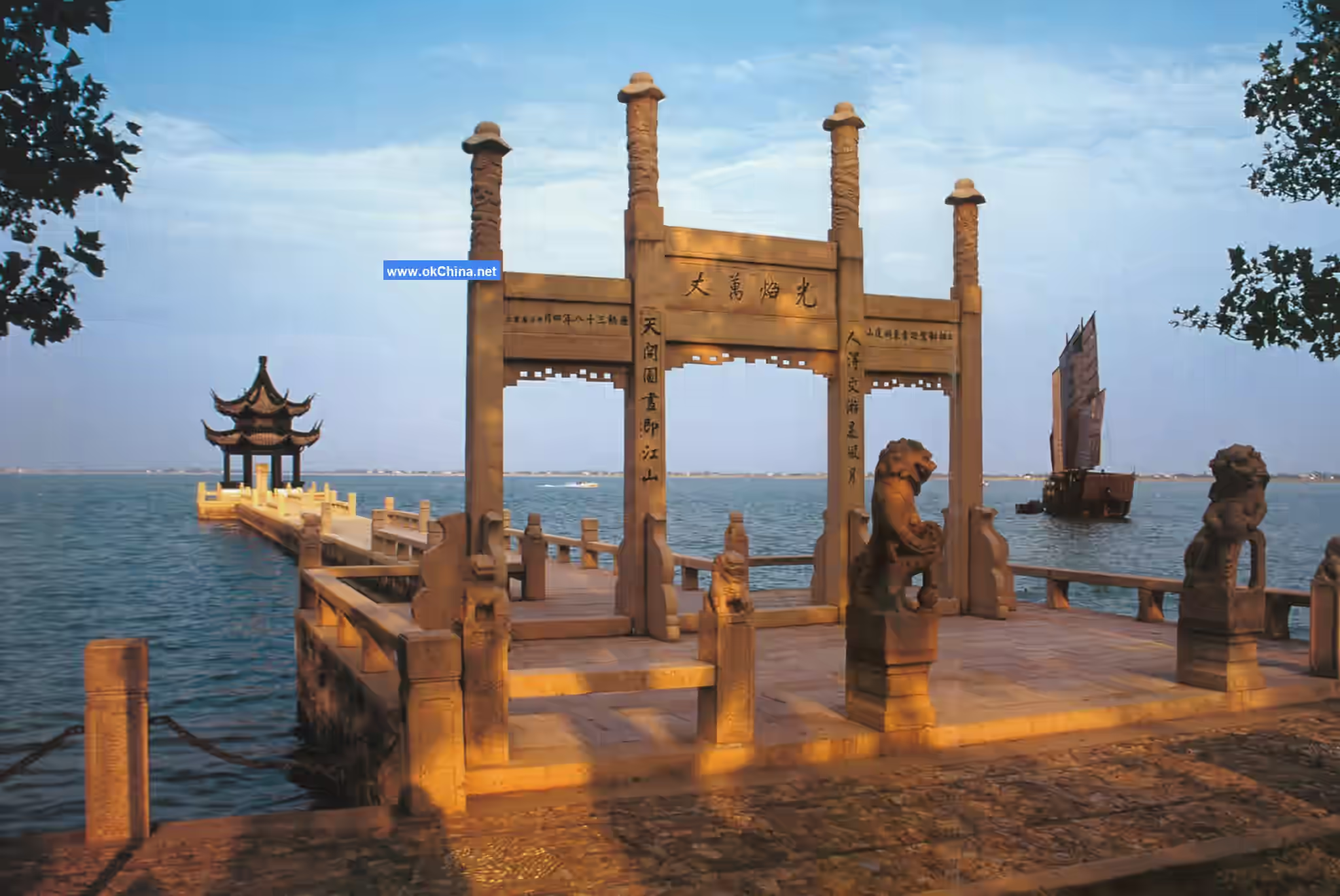
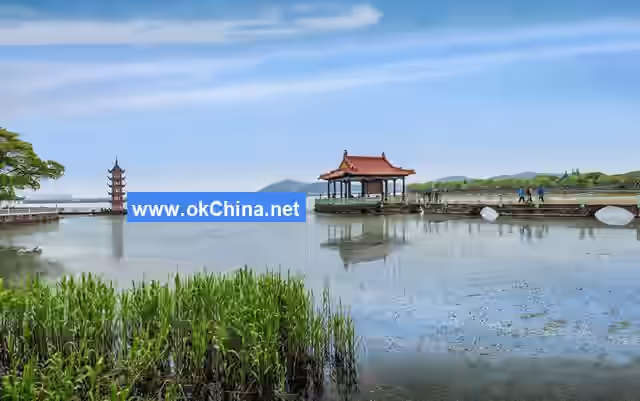
The Imperial Dock is where Emperor Kangxi disembarked from his boat. At the end of the plank walkway stands a重檐八面攒尖亭 (double-eave octagonal pavilion)屹立 (standing majestically) on the water, with a solemn design and imposing presence. Inside the亭 (pavilion), a stone tablet is inscribed with the three large characters "御码头 (Imperial Dock)" handwritten by Liu Yong. In the 38th year of Kangxi's reign (1699), the owner of Qiyuan Garden, Xi Qiyu, welcomed Emperor Kangxi as he disembarked here. Over centuries of风雨 (vicissitudes), most of the original artifacts of the "Imperial Dock" have been lost. Above the center of the pavilion hangs a plaque inscribed with the two characters "虫二," which is actually a字谜 (character riddle) posed by Emperor Kangxi, with the谜面 (clue) meaning "无边风月 (boundless breeze and moonlight)."
3.2.3 Rongchun HallRongchun Hall served as the reception hall for the host. The name "Rongchun" originates from the phrase "spring light is harmonious and warm" (春光融融) in the "Ode to the Epang Palace" by the Tang dynasty poet Du Mu. "Rongchun" conveys a sense of harmony, joy, and warmth. These two words not only celebrate the natural scenery but also express a longing for family happiness, reflecting Mr. Xi Qisun's wishes for family harmony and bliss at that time. Rongchun Hall is a Qing-style wooden hall. Compared to Ming-style architecture, its carvings are more intricate and ornate. For example, the doors are carved with the "Twenty-Four Filial Exemplars," the hall beams are engraved with galloping horses and swift deer, and even the column capitals are adorned with black gauze hat wings. These features collectively indicate that the host family was a typical scholarly and official lineage.
3.2.4 Jianhu Hall
Jianhu Hall faces south and is topped with a hanging mountain roof with upturned corners. The hanging mountain style is a common form in traditional Chinese wooden architecture, frequently used in residences, gardens, and temples. This style features a roof with only front and back slopes, and the ends of the roof overhang beyond the gable walls, hence the name "hanging mountain." Outside Jianhu Hall, a pair of bronze cranes stand respectfully on either side. Inside the hall, a statue of Emperor Kangxi is placed in the center. Exhibition cases on both sides of the statue display historical materials about Kangxi's personal visits to this site.
3.2.5 Jingyin Hall
Jingyin Hall was built in the 26th year of the Qianlong reign of the Qing dynasty (1761). Its main structural components are made of high-quality nanmu wood, commonly known as the "Nanmu Hall." It was formerly a place where monks entertained distinguished guests. On the main ridge beam inside Jingyin Hall, there is an exquisite color painting, a representative work of the Qing dynasty. In front of the hall, there is a small courtyard. On the gate tower of this courtyard, four large brick-carved characters, "Fragrant Forest, Flower Rain" (香林花雨), are inscribed. Legend has it that these were personally written and presented to Zijin Nunnery by Wen Zhengming, one of the Four Great Talents of the Wu School during the Ming dynasty.
3.2.6 Qingchuan Pavilion
The mural "Hanshan Asks Shide" painted on the wall of Qingchuan Pavilion was created in October 1998 by Mr. Ya Ming, the former president of the Jiangsu Provincial Artists Association. The subject of this mural consists of figures and dialogue. The figures depicted are Hanshan and Shide, who are said to be two eminent monks of the Tang dynasty known for their eccentric behavior and extraordinary speech. They are also popularly known as the "Two Immortals of Harmony and Union" (和合二仙). It is said that during traditional wedding ceremonies, their festive portraits were hung in the hall, symbolizing the couple's eternal harmony. The famous Hanshan Temple is also said to be named after Hanshan.
3.2.7 The Arhat Hall of Zijin Nunnery
The Arhat Hall of Zijin Nunnery was rebuilt during the Zhenyuan period of the Tang dynasty and has been renovated throughout successive dynasties, with the last major restoration occurring during the Qianlong reign of the Qing dynasty. Inside the main Arhat Hall, on the lotus throne at the central altar, three main Buddhas are enshrined, commonly known as the "Horizontal Three Buddhas of the Three Ages." In the center is Sakyamuni Buddha. To his left is the Medicine Buddha of the Eastern Pure Lapis Lazuli World, who dispels disasters and prolongs life. To his right is Amitabha Buddha of the Western Pure Land. These three statues are collectively referred to as "Sakyamuni of the Three Ages."
3.2.8 Zhuangyuan Mansion
Zhuangyuan Mansion, also known as Shi Pan's Zhuangyuan Mansion. Shi Pan, courtesy name Zongming, was a native of Jinta Village, Dongshan, Suzhou, and achieved the title of Zhuangyuan (top scholar) in the Jichou imperial examination of the 4th year of the Zhengtong reign of Emperor Yingzong of the Ming dynasty. Built during the Ming dynasty, Zhuangyuan Mansion has a history of over 560 years. The "Three Victories" color painting on the main hall beam, the "official hat" carving on the east side of the main beam, the bluestone basin-style column bases in the main hall, and the single 6.9-meter-long bluestone slab under the threshold all retain the architectural style of the early Ming period. In the late Qing dynasty, the mansion was purchased by Jin Yechuan, the grandfather of Mr. Jin Xizhi, the original owner of the Carved Flower Building, thus becoming the ancestral home of the Jin family.
3.2.9 Zhongfeng Stone Pond
Zhongfeng Stone Pond is named after its location at Zhongfeng Xing Mountain on Sanshan Island. The pond is clear to the bottom, with water lilies floating on the surface, reflecting a stone statue of Guanyin. Above the statue, atop the mountain peak, a massive rock emerges from the lush forest. One end of this rock rests on the cliff, while the other extends into the air over the peak tip. Its natural stacking creates a marvelous shape resembling a crouching tiger or a reclining lion.
3.2.10 Banbi Peak
"Banbi Peak" has a crown resembling five fingers side by side, thrusting into the clouds. Its cliff is steep and shaped like a board, hence the name. The stone peak is crisscrossed with textures, mottled with moss, and covered with vines, situated within a mountain col. Banbi Peak is about 20 meters long, over 10 meters high, and 1-2 meters thick. It is a fault cliff formed by nearly east-west trending fractures and silicification. There are also legends that it is a stone remnant left from the quarrying of the "Huashi Gang" during the Northern Song dynasty, or that it is an unfinished "Huashi Gang" stone that was never transported away. Banbi Peak is now a protected site for the origin of Taihu Lake stones and a landmark landscape of Sanshan Island.
3.2.11 Niangniang Temple
Niangniang Temple, also known as Wu Fei Shrine. The temple was initially built during the Tang dynasty, said to commemorate Shengyu, the beloved daughter of King Helü of Wu during the Spring and Autumn period. It was rebuilt during the Jiajing reign of the Ming dynasty. After subsequent damage, its main hall of three bays was restored in 2005. The temple is surrounded by yellow walls. The column bases on both the inner and outer walls are carved from bluestone. The temple roof is a hip-and-gable style with upturned eaves and corners, presenting a majestic appearance.
3.2.12 Baohua Temple
Baohua Temple was first built in the 2nd year of the Tianjian era of the Liang dynasty during the Southern Dynasties (503 AD), having a history of over 1500 years. According to the "Yaofeng Zhi," in the 2nd year of Tianjian, a monk from Tianzhu (India) named Hanhan尊者 passed by Yaofeng Mountain. Seeing the unique mountain formation with its spreading ridges—three on the left and four on the right—resembling a blooming lotus, he stayed here to teach. A local man named Wu Guang donated his residence to Hanhan尊者. Over the centuries, Baohua Temple experienced several rises and declines, and its ancient relics have vanished. In 2000, with approval from relevant higher authorities, Wangshan Village rebuilt the temple halls, restored the Buddha statues, and reconstructed this ancient temple on the original site of the relocated Baohua Temple.
3.2.13 Nine-Dragon Pond
Nine-Dragon Pond consists of upper, middle, and lower levels, forming a natural reservoir composed of spring water and rainwater, with a storage capacity of about 10,000 cubic meters. During the rainy season, spring water and rainwater converge and flow down. When the water level in the upper reservoir reaches a certain height, water automatically spouts from nine dragon heads into the middle reservoir, creating the scene of "nine dragons playing with water," hence the name. Nine-Dragon Pond integrates three functions: sightseeing, irrigation, and forest fire prevention. It irrigates surrounding tea plantations, serves as an important water source for forest fire prevention, and plays a crucial role in maintaining the regional water balance. Therefore, it has been rated as a national-level water conservancy scenic area.
3.2.14 Ningbang Temple
Ningbang Temple was first built during the Liang dynasty, originally named "Haiyun Chan Monastery." It was rebuilt in the 12th year of the Shaoxing reign of the Southern Song dynasty (1142). After the anti-Jin hero Yue Fei was murdered by Qin Hui, another famous anti-Jin general, Han Shizhong, disillusioned with the court's corruption and the dominance of treacherous officials, retired to the Canglang Pavilion in Suzhou. Six of his subordinates also came to Suzhou and secluded themselves in meditation on Qionglong Mountain. Although they left the court, they still hoped for national peace and stability. Therefore, they renamed "Haiyun Chan Monastery" as "Ningbang Temple" (Temple of Peaceful State).
3.2.15 Shangzhen Taoist Temple
Shangzhen Taoist Temple was first built during the early Chuping era of the Eastern Han dynasty, with a history of about 2000 years. During the Tongzhi reign of the Qing dynasty, the temple reached its peak, boasting 5048 rooms capable of accommodating ten thousand people, making it the Taoist center of the Jiangnan region. Emperor Qianlong would travel via the imperial road to Shangzhen Temple each time to pray for longevity and national prosperity and people's peace. The plaque bearing the name "Shangzhen Temple" is inscribed with Emperor Qianlong's own calligraphy.
3.2.16 Imperial Stele Pavilion
The Imperial Stele Pavilion is the highest point of Sanmao Peak and an excellent spot to overlook the lake and mountain scenery of Qionglong Mountain. Standing here, one can take in the vast expanse of Taihu Lake and its seventy-two peaks. Emperor Qianlong would come here to enjoy the scenery each time he visited Shangzhen Temple, leaving behind many calligraphic works.
4. Cultural Activities
4.1 Biluochun Tea Culture Tourism Festival
The Biluochun Tea Culture Festival is held annually from March to April. Biluochun tea is one of China's top ten famous teas. The area around Taihu Lake in Wuzhong is the main production region. The craftsmanship of Biluochun tea is listed in the second batch of Jiangsu Province's Intangible Cultural Heritage. During the festival, a unique opening ceremony is held. The Wuzhong Tourism Promotion Group travels to major tourist source markets across the country to conduct special spring tourism promotion conferences for the Wuzhong Taihu Lake area. On-site presentations showcase the tourism resources and culture of the Suzhou Wuzhong Taihu Lake Scenic Area, introducing various themed tours centered on Biluochun tea, such as landscape tours, picking tours, spring outing tours, and cultural tours. The scenic area also launches various promotional activities to attract citizens to engage in tourism activities by Taihu Lake, such as cycling, hiking, and picking, while enjoying new tea and local farmhouse cuisine.
4.2 The Art of War Culture Tourism Festival
Qionglong Mountain in the Suzhou Wuzhong Taihu Lake Scenic Area is known as the "World's First Wisdom Mountain" due to its association with "The Art of War." The Art of War Culture Tourism Festival is one of the main tourism festivals promoted by the scenic area. During the month-long festival, activities such as the International Symposium on The Art of War, the World Women's Go Tournament, the ancestor worship ceremony by Sun Tzu's descendants, and the grand celebration ceremony of the cultural tourism festival attract visitors from around the world.
4.3 China Taihu Lake Fishing Commencement Festival
The Suzhou Wuzhong Taihu Lake Scenic Area holds the grand "China Taihu Lake Fishing Commencement Festival" annually in late summer and early autumn. This festival is a multi-domain, comprehensive event integrating culture, commerce, and tourism. During the festival, in addition to the splendid opening ceremony activities, the scenic area leverages the occasion to launch the over-month-long "Taihu Golden Autumn Tourism Month" event, introducing a series of characteristic Taihu Lake autumn scenery tours, which are highly favored by tourists.
Comments
Post a Comment