Baquan Gorge
1. Introduction
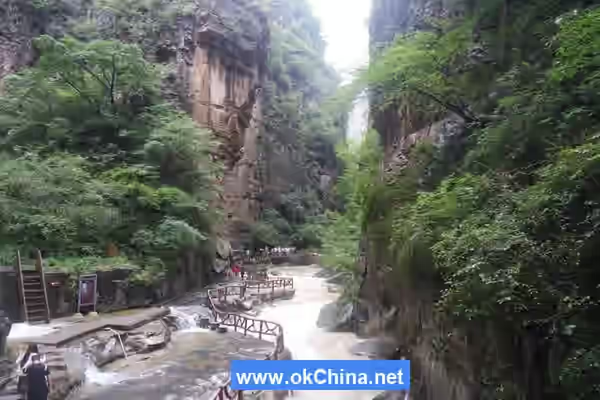
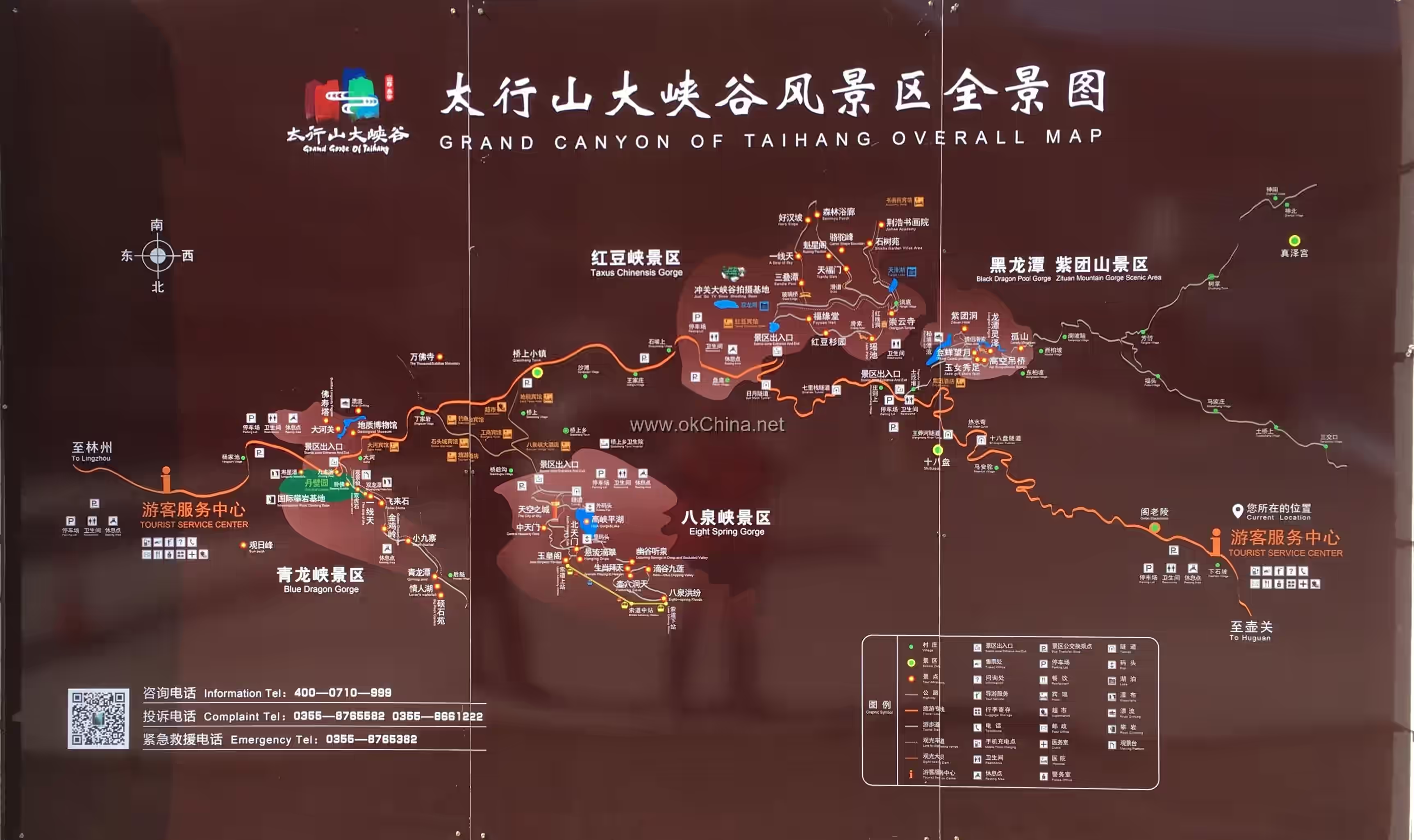
The Baquan Gorge Scenic Area is located in the Grand Canyon Town, Huguan County, Changzhi City, Shanxi Province. Originally named "Eight Streams Water," it derives its current name from the eight springs originating from the same location within the gorge. The scenic area comprises four main touring zones: the Gate Tower Landscape, the Gorge Landscape, the Cableway Landscape, and the Trail Landscape, featuring 36 primary attractions. The Taihang Mountain Baquan Gorge stretches from the ancient bridge of Qiaoshang Village in the south to the Shizi River bank in the north, reaching the Tinao Mountain Range in the east and connecting to the Shihemu Mountain Ridge in the west. Known as the "Foremost Majestic Gorge of the Taihang Mountains," it lies prominently in the middle section of the Taihang Mountain Grand Canyon, covering an area of 24.11 square kilometers. Its lowest elevation is over 600 meters, its highest elevation over 1,400 meters, with a maximum drop of approximately 1,100 meters. It has been honored with numerous titles including "National AAAAA Tourist Attraction, National Forest Park, National Geological Park, and One of China's Ten Most Beautiful Canyons," and is acclaimed as a "World-Class Premium Tourism Resource" and the "Foremost Majestic Gorge of the Taihang Mountains." In January 2020, the Baquan Gorge Scenic Area was rated as a National AAAAA Tourist Attraction by the Ministry of Culture and Tourism.
2. Geographical Environment
2.1 Location and Territory
The Baquan Gorge Scenic Area is located in the Grand Canyon Town, Huguan County, Changzhi City, Shanxi Province, with a total area of 170 square kilometers.
2.2 Topography and Landforms
The Taihang Mountain Baquan Gorge extends from the ancient bridge of Qiaoshang Village in the south to the Shizi River bank in the north, backed by the Tinao Mountain Range in the east and connected to the Shihemu Mountain Ridge in the west, covering a total area of 24.11 square kilometers. Dominating the middle section of the Taihang Mountain Grand Canyon, its lowest elevation is over 600 meters, its highest elevation over 1,400 meters, with a maximum drop of approximately 1,100 meters.
3. Main Attractions
3.1 Baquan Gorge Main Gate
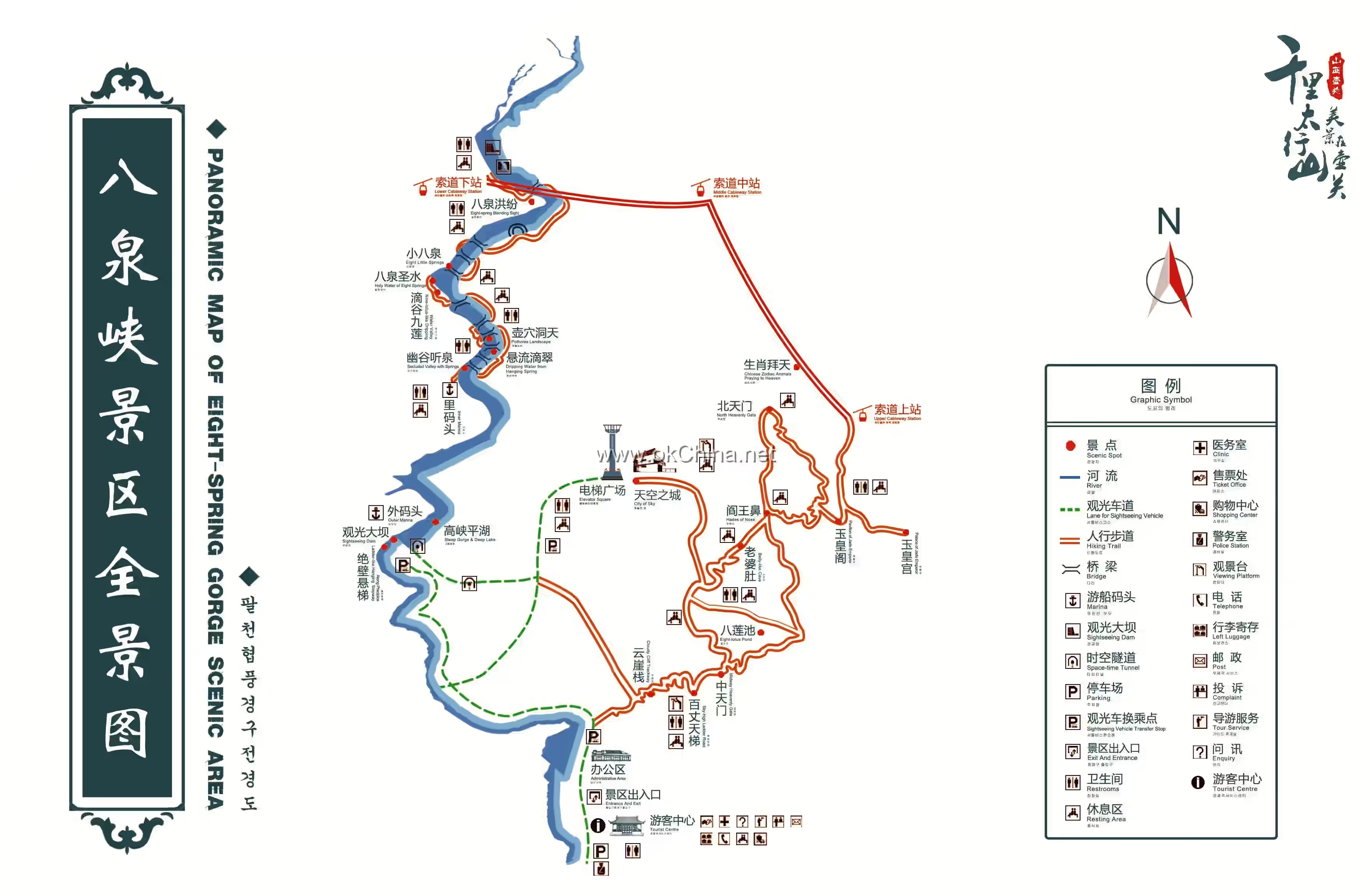
The architectural style of the Baquan Gorge Main Gate incorporates elements such as a flat roof, dougong brackets, painted beams, vermilion pillars, painted ceilings, and blue-purple murals. Based on the Chinese character "八" (eight) from "Baquan," the gate features large pillars arranged in a slanted "八" shape, symbolizing the gorge shining alongside the sun and moon, coexisting with heaven and earth. The four-tiered staircase consists of 34 steps, implying a steady ascent. Its outward appearance forms the character "八," echoing the peaks flanking the gorge behind it. The three large characters "八泉峡" (Baquan Gorge) inscribed on the gate were written by Mr. Ren Farong, former President of the Chinese Taoist Association and a calligrapher, during his visit to the gorge.
3.2 Time-Space Tunnel
The Time-Space Tunnel leads to the reservoir dam dock. Designed as a single lane and running north-south, it is 760 meters long. Outside the tunnel lies modern bustle, while inside resides ancient simplicity; outside is traffic and noise, inside is tranquility and elegance; outside offers vast skies and open land, inside presents a slit of sky and a tunnel view; outside is land, inside is a water town. It can be described as two different eras, two different worlds.
3.3 Sightseeing Dam
The Sightseeing Dam is 70 meters long and 69 meters high, a trapezoidal gravity dam with a base width of 67 meters and a crest width of 5 meters. The reservoir area stretches over 2,500 meters, with a capacity of 2.0599 million cubic meters. The reservoir's widest point exceeds 60 meters, its narrowest about 20 meters, its deepest depth over 60 meters, with an average depth of over 20 meters. It serves major functions including power generation, residential drinking water supply, and tourism development. Inside the dam is the boat boarding dock, from where visitors can cruise on emerald waves and view the majestic gorge. Outside the dam's base is an excellent vantage point to admire the "silver waterfall hanging on the mountain" and also the starting point for thrilling rafting.
3.4 Cliff-Hanging Ladder
Built against the cliff face, the Cliff-Hanging Ladder is a distinctive steel-structured walkway. It is 240 meters long, 1.5 meters wide, and 60 meters above the ground, consisting of 357 steps. Constructed based on the triangular stability principle using inclined and horizontal pillars, it is topped with a protective netting. It winds up from the base of the cliff, connecting the valley floor below to the dam above.
3.5 Sightseeing Elevator
Built vertically against the mountain, the Sightseeing Elevator operates at a height of 208 meters, featuring three semi-exposed sightseeing elevators running side-by-side yet independently. Each elevator carries 21 passengers and operates at a speed of 4 meters per second. A three-story suspended transparent observation deck is built atop the elevator, decorated with transparent glass on all sides and the bottom. This hundred-zhang (ancient unit, approx. 333 meters) cliffside open-air elevator and the multi-level transparent "Sky City" observation deck were successfully certified by the World Record Association on November 17, 2015, for three world records: "World's Highest Fully Open-Air Sightseeing Elevator with Through-Door Design and Fastest Operating Speed" and "World's Highest Multi-Level Transparent Cliffside Elevator Observation Deck."
3.6 Great Man Peak
Located on the eastern cliff near the "Six Mu Di" (Six Mu Land) natural village of Hougou Village, the Great Man Peak is a miraculous pictographic mountain peak landscape. A viewing platform built on the west bank of the river valley outside the "Six Mu Di" village offers the best vantage point to view the Great Man Peak. The ideal time to admire it is at sunrise. First, the pre-dawn light and clouds gradually appear around the peak until the sun bursts forth from its summit, radiating brilliance, presenting a spectacle where the great man seems to shine alongside the sun.
3.7 Cloud Cliff Plank Walk
The Cloud Cliff Plank Walk is a tourist route composed of 3,880 steps and over 5,000 meters of cliffside plank walkway. Because it hangs on the cliff and seems to drift among the clouds, it is named the Cloud Cliff Plank Walk. It starts from the Baquan Cloud Ladder in the south, connects to the Sightseeing Elevator in the north, links to the "Heavenly Village" above, and joins the Dayaowa below. Intertwining and crisscrossing, it traverses the entire Tinao Mountain scenic area, forming a large circular network. Its winding route passes through the South Heaven Gate, Central Heaven Gate, and North Heaven Gate, featuring landscapes along the way such as the Dragon Palace Cave, Pearl Waterfall, Eight Lotus Ponds, Lotus Platform, King of Hell's Nose, Twelve Zodiac Ridge, Jade Emperor Pavilion, Screen Wall Fairyland, and Heavenly Lion Watch.
3.8 High Gorge and Calm Lake
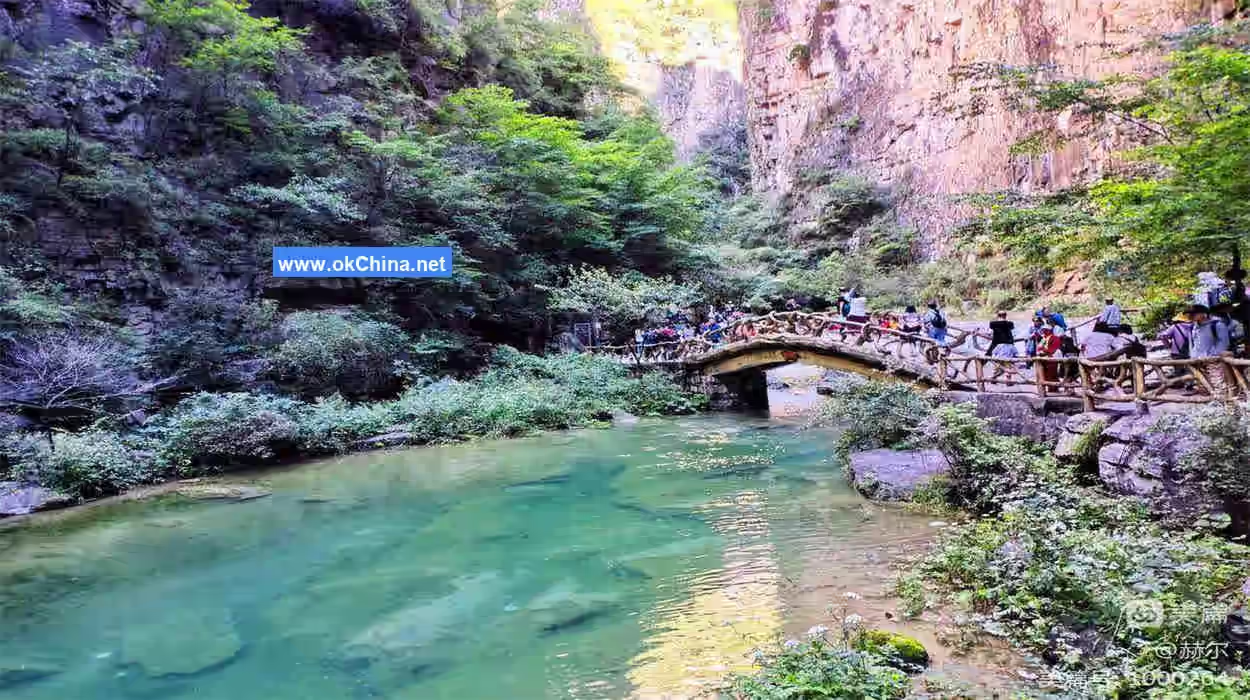
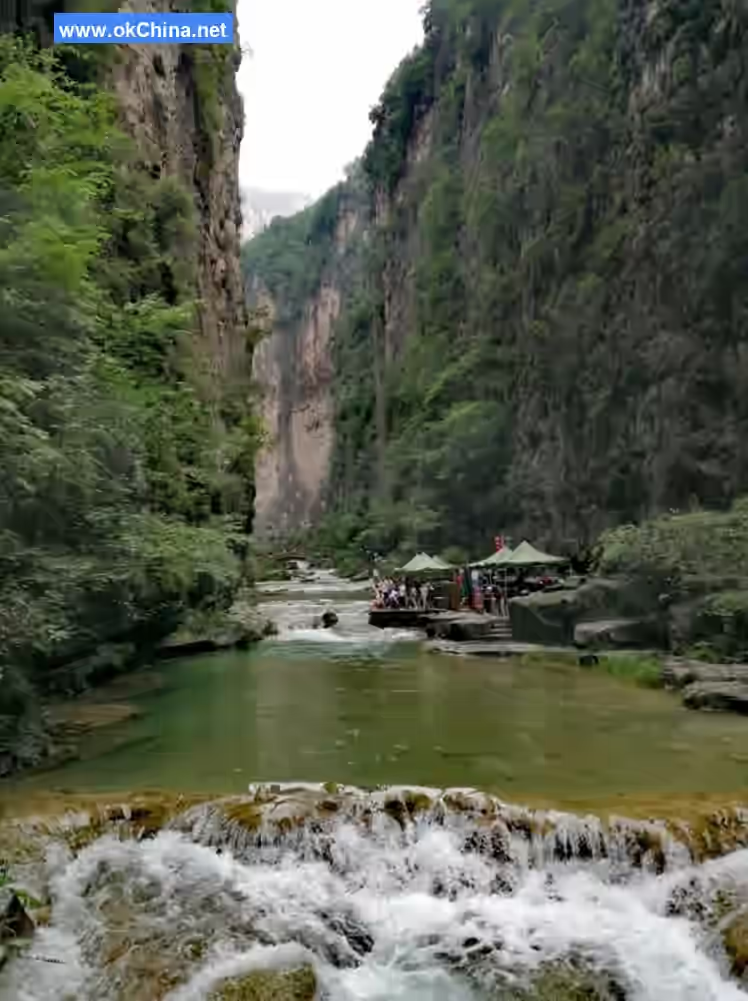
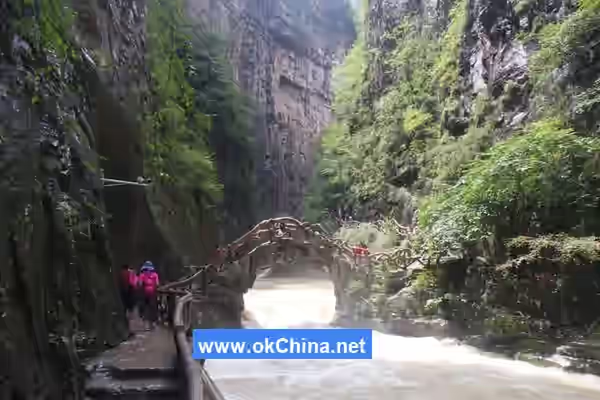
The High Gorge and Calm Lake stretches three kilometers long with a depth of over 60 meters. The lake water is rich in various minerals including calcium, magnesium, zinc, selenium, iodine, strontium, and copper. The lakebed is abundant with aquatic plants like waterweeds and algae, creating varying shades of color, and the water body is emerald green. It is the first landscape encountered on the waterway tour within the Baquan Gorge Scenic Area.
3.9 Hanging Stream and Dripping Emerald
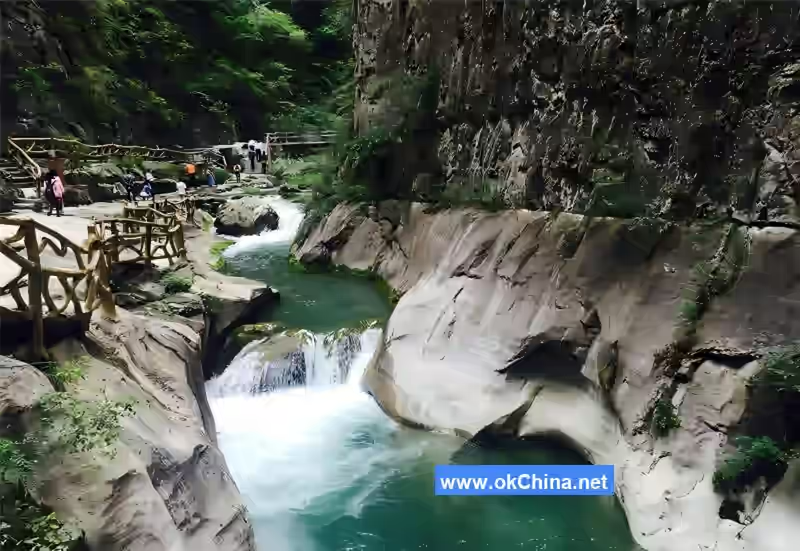
Spring water converges from high ground into streams, and eight jade-chain-like streams cascade down the rocks, their sound resembling a solo pipa echoing in the valley bottom, clear and melodious. The formation of this landscape is filled with wonder: the spring water continuously erodes the rock, breaking it into gravel, which is then ground into fine sand. The sand gradually accumulates, eventually forming new rock. This cyclical natural phenomenon showcases the incredible craftsmanship and endless charm of nature, inspiring awe.
3.10 Grains Dripping into Nine Lotuses
Named because a small stream of spring water from above the cliff drips down like grains of rice into a lotus-shaped pool.
3.11 Pothole Cave Heaven
Pothole Cave Heaven is formed by swift currents and eddies carrying gravel that erode the riverbed, creating concave pit-like shapes. They are concentrated below steep waterfalls and on rapidly flowing sections with steep gradients. After hundreds of millions of years of erosion by mountain spring water, these locally continuous, arc-shaped cave heaven landscapes were formed.
3.12 Little Baquan Spring
Little Baquan Spring is formed as water seeps down through the upper permeable carbonate rock layer until it meets the impermeable shale layer. The seepage is obstructed, gathers atop the shale, and migrates to emerge as a spring on the valley wall. Hanging on the valley wall, the Little Baquan Spring has a modest but constant flow year-round. The spring mouth is covered with moss, and the water is crystal clear, constituting a beautiful spring landscape.
3.13 Baquan Convergence
Baquan Convergence is the endpoint of the trail along the Baquan Gorge floor and also the place where visitors "seek the roots and trace the source." The suddenly open space resembles a paradise, where mountains, valleys, springs, rocks, and lush vegetation together form a miniature canyon scene.
3.14 Jade Emperor Square
Located on the high peak of the western foothills of Tinao Mountain at an altitude of 1,529 meters, the Jade Emperor Square houses the Jade Emperor Pavilion and Jade Emperor Palace. The Jade Emperor Pavilion is an octagonal, double-eaved, cross-hip-and-gable roof structure with three stories, colored in red and white. It stands 17.5 meters tall, with an outer diameter of 10 meters and an inner diameter of 6 meters. Designed according to traditional cultural concepts, it integrates Taoist culture into architectural art. Vermilion symbolizes sacredness and celebration; the octagon represents all directions; the three stories signify the three realms of heaven, earth, and humanity. The first story extends outward with a corridor platform, bordered by stone railings. Inside the pavilion are shrines, altars, and statues of deities. A staircase leads to the second story. The second-story pavilion has glass panels on all eight sides between the pillars, making it transparent all around. Outside is a 2-meter-wide corridor with wooden guardrails for sightseeing from the top.
3.15 North Heaven Gate
The North Heaven Gate is a natural threshold. Because it resembles a giant gate standing atop a peak and faces the South Heaven Gate from north to south, it is named the "North Heaven Gate." The arch is 22 meters high with a span of 25 meters. It is a remnant of an ancient karst cave that was uplifted by tectonic forces, exposed to the surface, and weathered and eroded. Open from north to south and naturally formed, it is indistinguishable from man-made architecture, truly a natural wonder.
3.16 Zodiac Worshipping Heaven
Zodiac Worshipping Heaven is a landscape opposite the North Heaven Gate. A cluster of dense pictographic stones distributed along the mountain ridge and cliffs closely resembles the "Twelve Zodiac Animals" in traditional Chinese folklore, hence also named Zodiac Ridge. Standing at the North Heaven Gate and gazing northward, the peak resembling an eagle watching the gorge is the "Zodiac Worshipping Heaven" landscape. The zodiac animals on the opposite ridge are each vivid and lifelike, imbuing the steadfast mountains with spirit.
3.17 King of Hell's Nose
This place is called the King of Hell's Nose mainly because the terrain was originally extremely perilous; passersby could easily fall into the deep ravine and lose their lives. There is also a folk saying, "The King of Hell's nose cannot be touched," hence the name.
3.18 Maitreya Buddha's Belly
This spot is named because the round, protruding rock resembles a big, capacious belly, vividly likened to Maitreya Buddha's belly. Maitreya Buddha, one of the Eight Great Bodhisattvas in Chinese Buddhism, is the successor to Sakyamuni Buddha and will be the fifth Buddha in the Bhadrakalpa (Auspicious Aeon), often revered as the Honored Buddha Maitreya Who Will Descend in the Future. As the saying goes: "A big belly can contain all things difficult to contain in the world. An open mouth laughs at all people laughable in the world."### 3.19 Eight Lotus Pools The Eight Lotus Pools are formed by the water from the upstream Pearl Waterfall cascading down steps into mountain hollows, gathering into a total of eight pools. Viewed from the distant walkway, the eight elegant pools and overlapping waterfalls spray jade and pour silver, resembling a silver ribbon stringing together eight emerald beads from top to bottom, or like eight continuously blooming lotuses floating amidst the green mountains and clear waters, creating a marvelous landscape of interconnected heavenly pools, hence the name "Eight Lotus Pools."
3.20 Middle Heavenly Gate
The Middle Heavenly Gate of "Eight Springs Fairyland" is a three-arched stone structure in the style of a ceremonial gateway. It stands 5 meters high and 4 meters wide, with the central arch higher than the side ones, constructed using arched stone blocks and masonry. The stone material matches the color of the mountain rocks, and its overhanging eaves resemble wild geese descending among the mountains.
3.21 Hundred-Zhang Heavenly Ladder
The steepness of the Hundred-Zhang Heavenly Ladder rivals that of Mount Hua. Before the ladder was built, it served as a passage for local villagers to ascend and descend the mountain. Due to its sheer, cliff-like steepness, the Hundred-Zhang Heavenly Ladder is a must-pass route for visitors seeking to experience climbing heights and challenge their limits. Climbing amidst the clouds and enjoying the canyon scenery, with breathtaking views at every turn, adds even more color to the Heavenly Ladder.
3.22 Cloud Cliff Walkway
The Cloud Cliff Walkway is a tourist route consisting of 3,880 steps and over 5,000 meters of cliffside walkway. Because it hangs on the cliffside and seems to float among the clouds, it is named "Cloud Cliff Walkway." Starting from the Eight Springs Cloud Ladder in the south and connecting to the sightseeing elevator in the north, it links upward to the "Heavenly Village" and downward to the elevator plaza. Interconnected and spanning the area, it forms a larger tourist sightseeing belt.
Comments
Post a Comment