Taierzhuang Ancient Town
1. Introduction
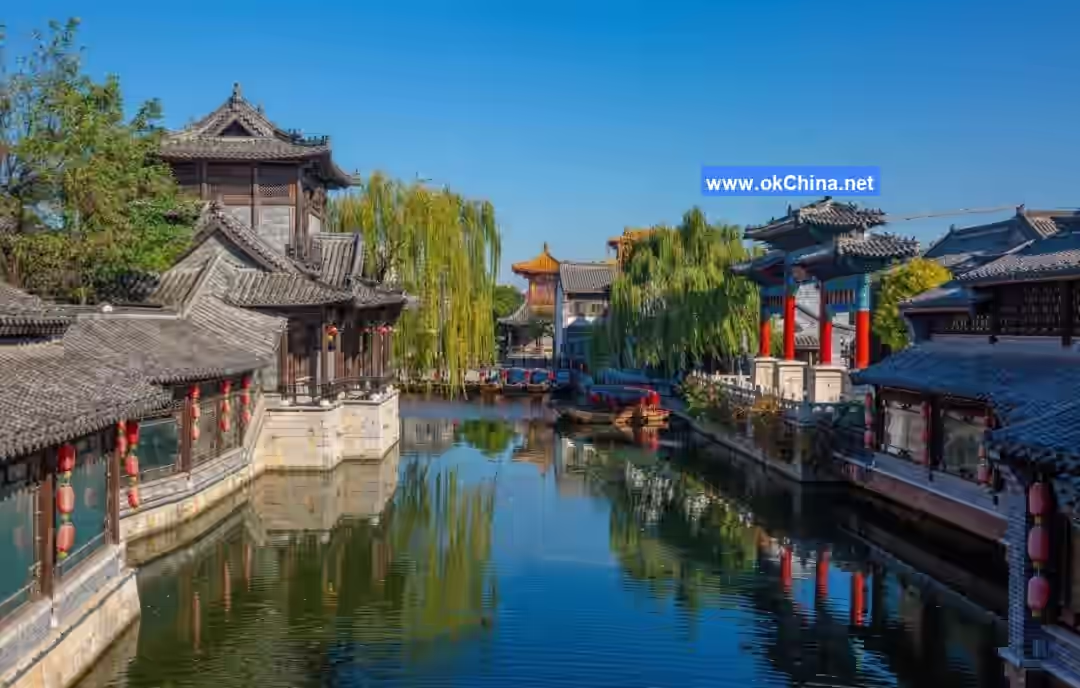
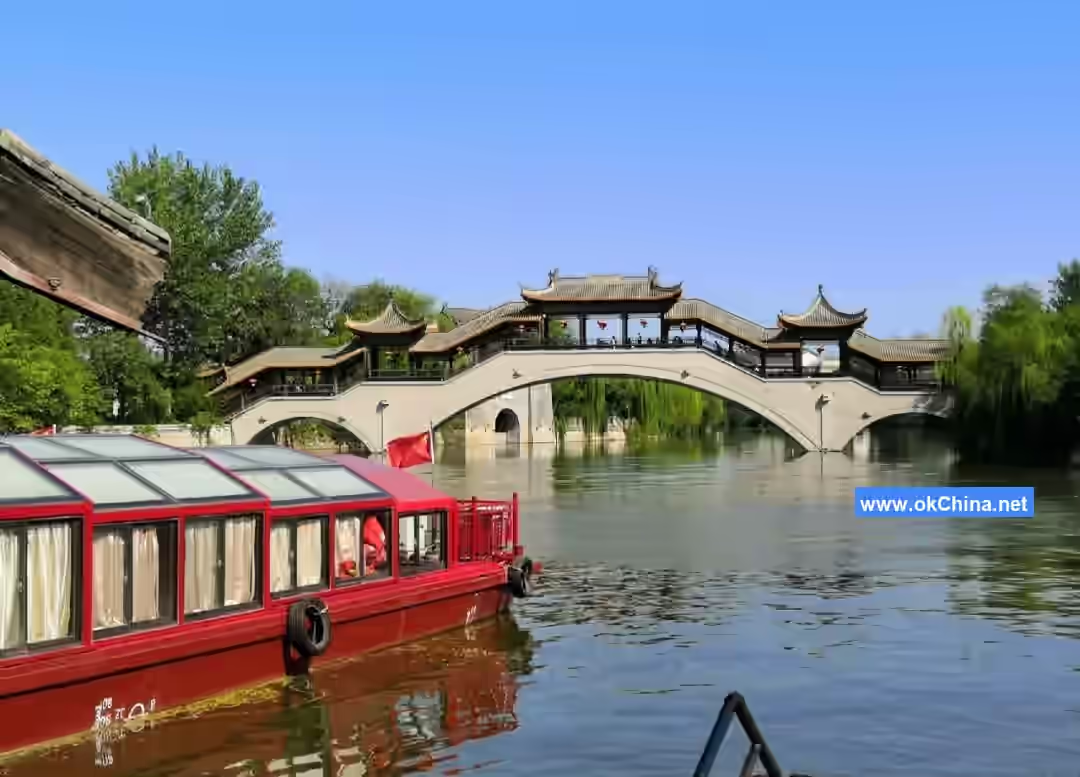
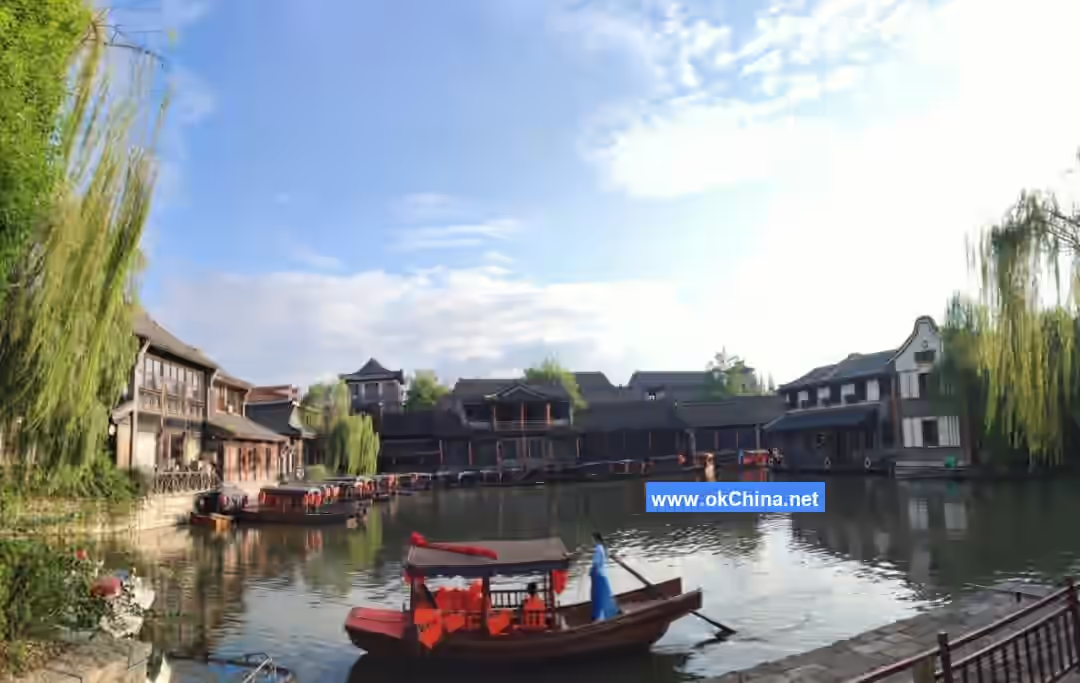
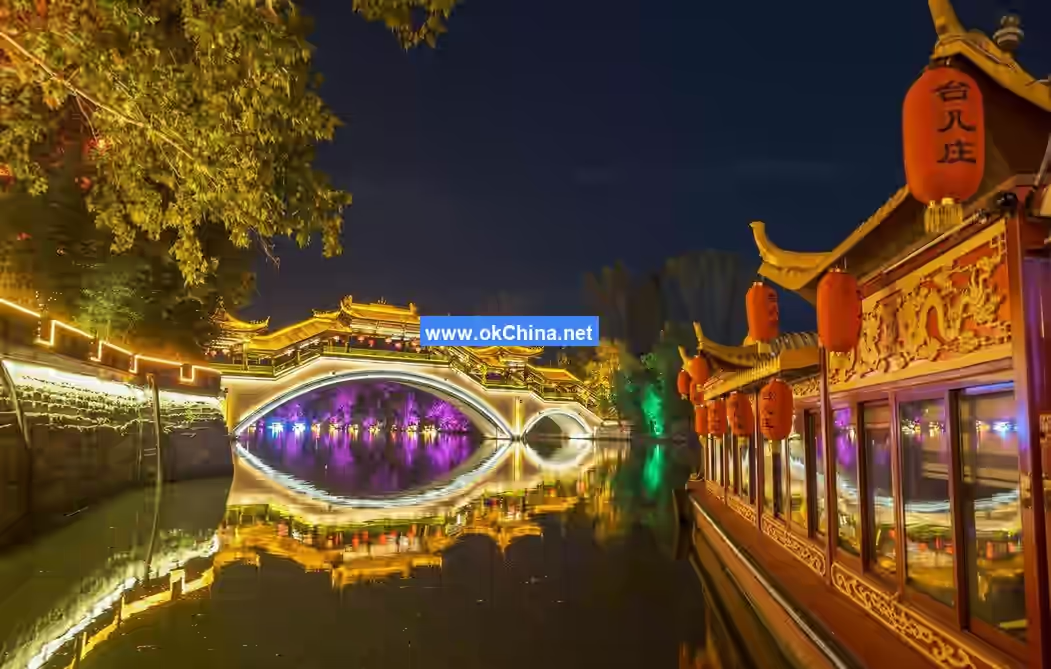
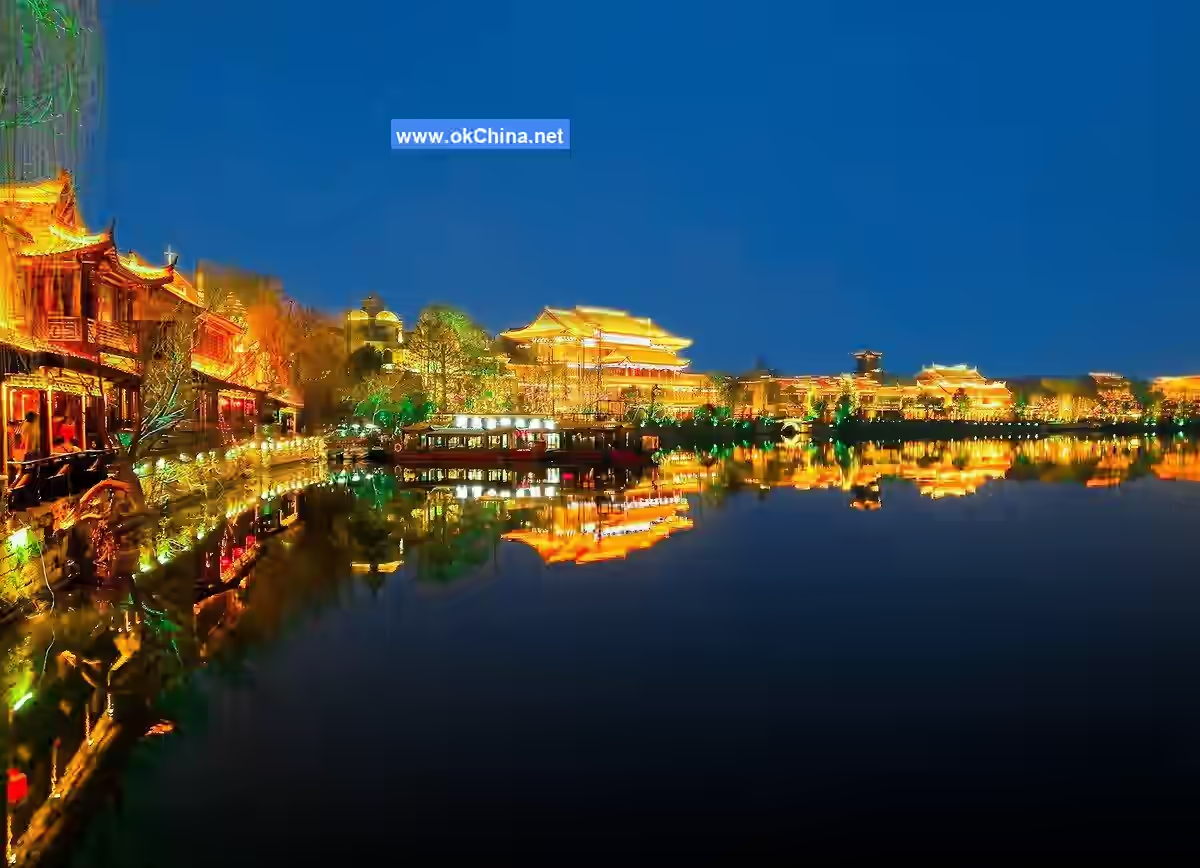
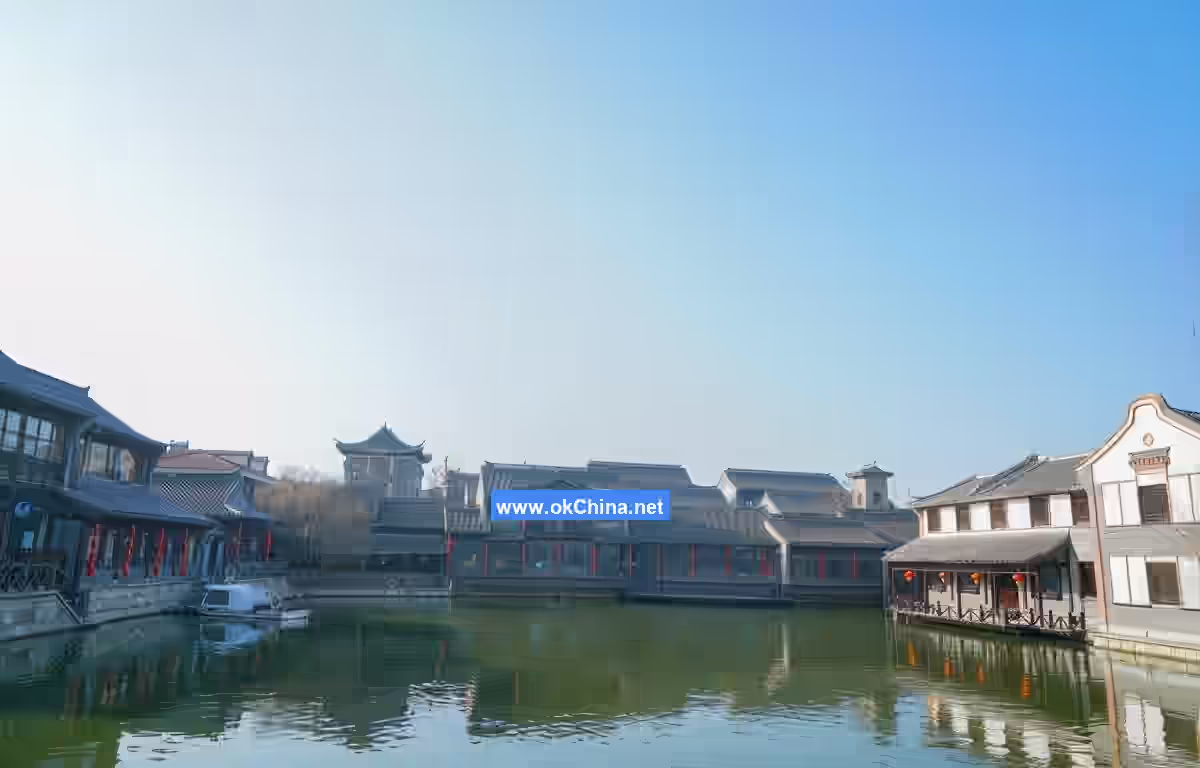
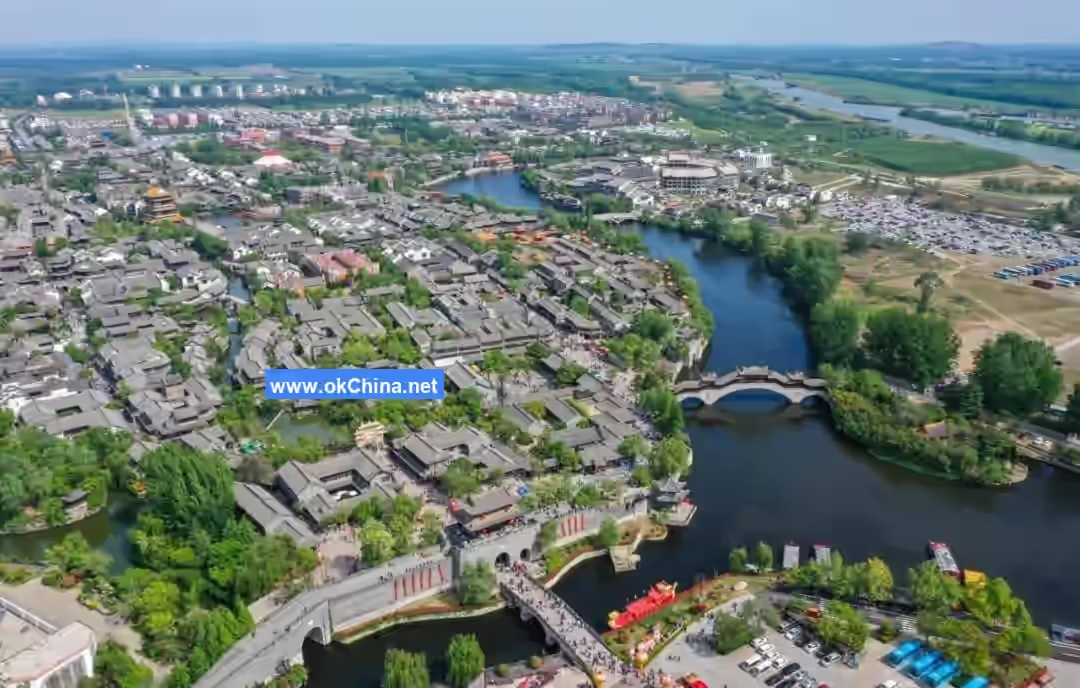
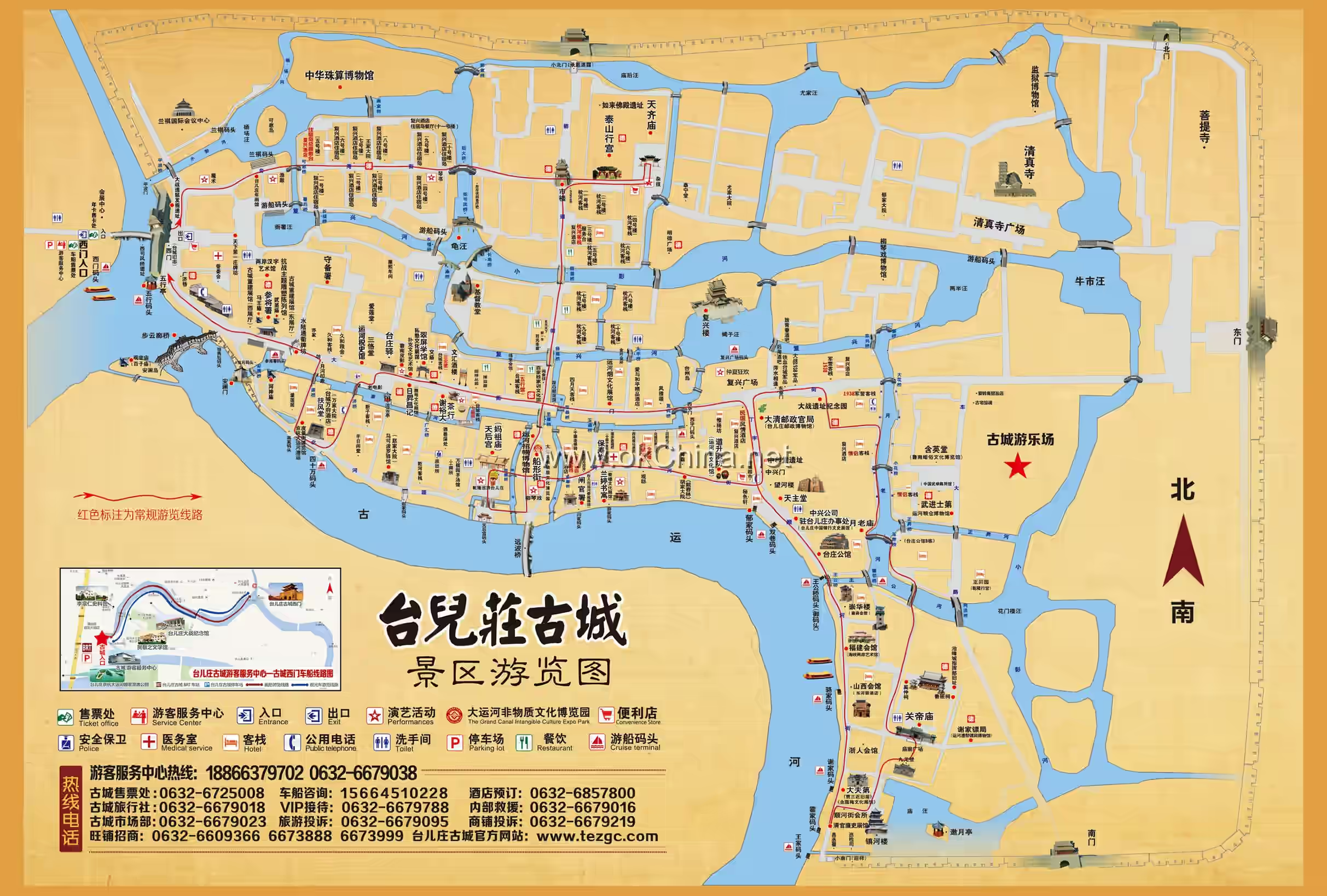
Taierzhuang Ancient Town, located at the central point of the Beijing-Hangzhou Grand Canal, sits in Taierzhuang District, Zaozhuang City, Shandong Province, at the junction of Shandong, Jiangsu, Henan, and Anhui provinces. The ancient town originated in the Qin and Han dynasties, developed during the Tang and Song dynasties, and flourished in the Ming and Qing dynasties. It is known as the "Number One Village under Heaven" (bestowed by Emperor Qianlong of the Qing Dynasty). Covering an area of 2 square kilometers, it comprises 11 functional zones, 8 major scenic areas, and 29 scenic spots, making it the largest ancient town in China.
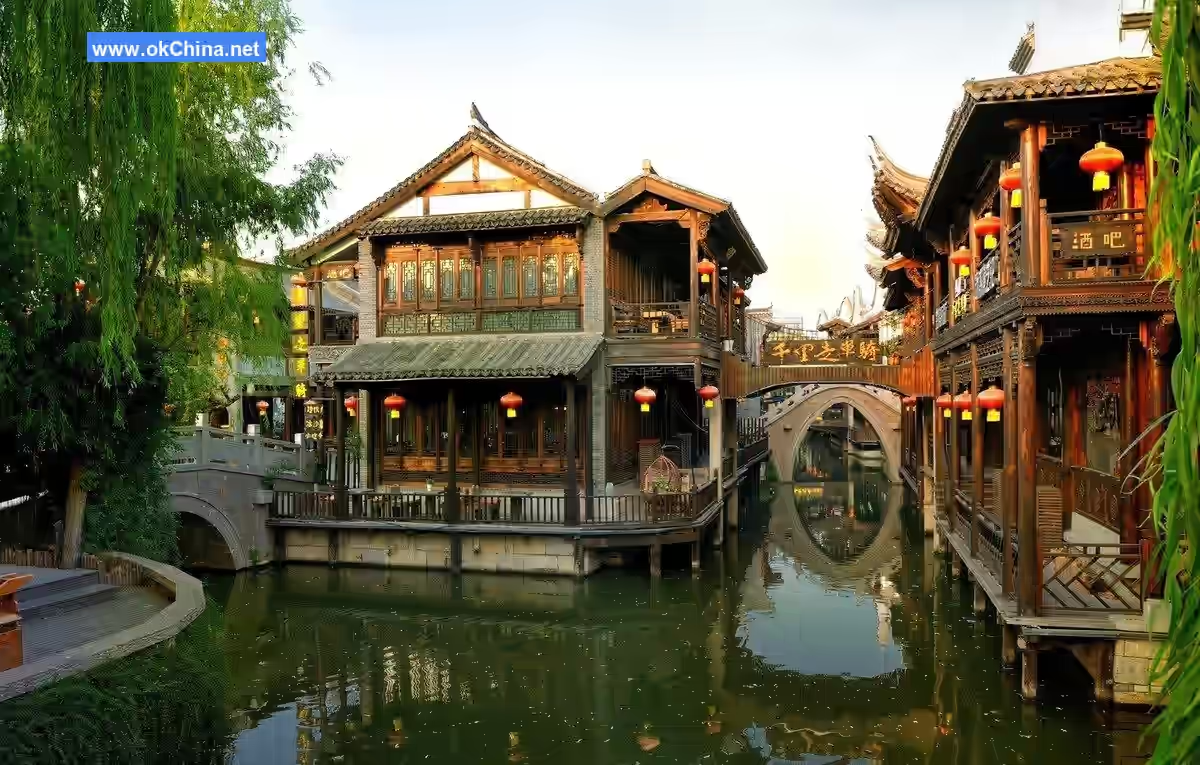
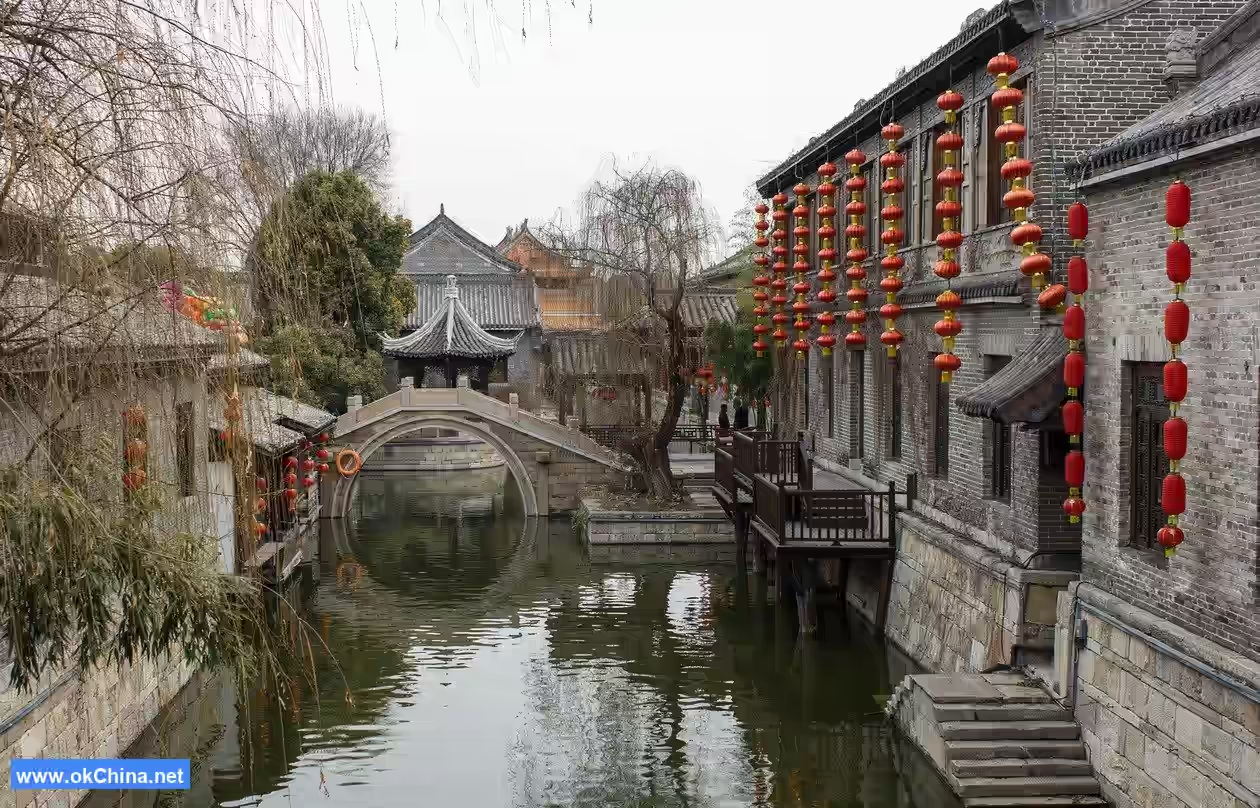
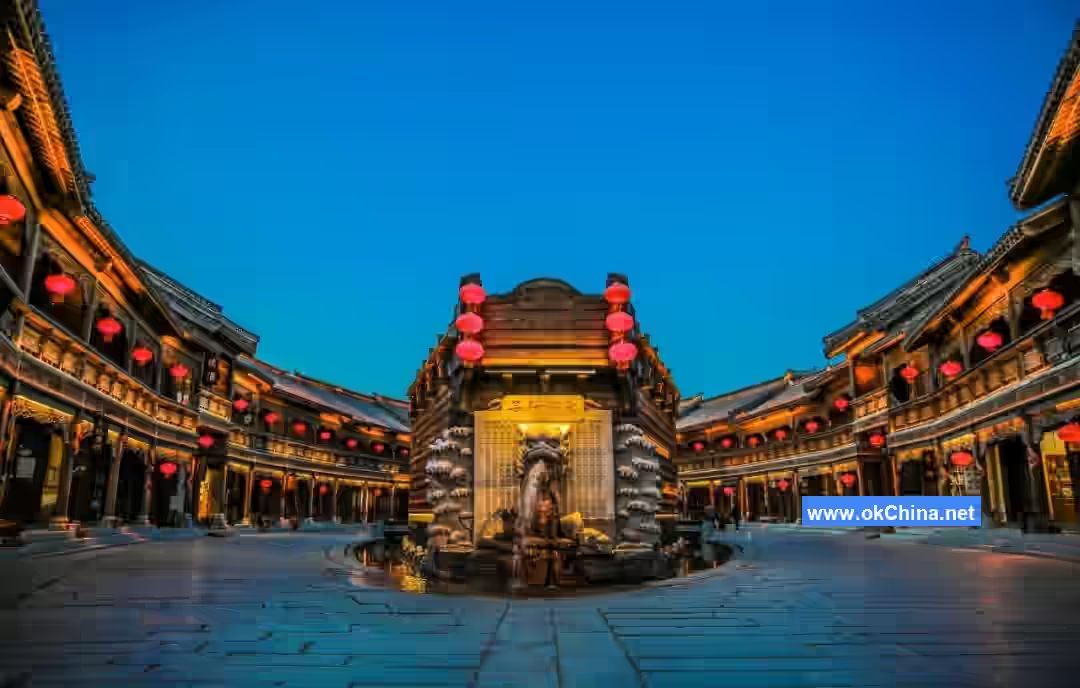
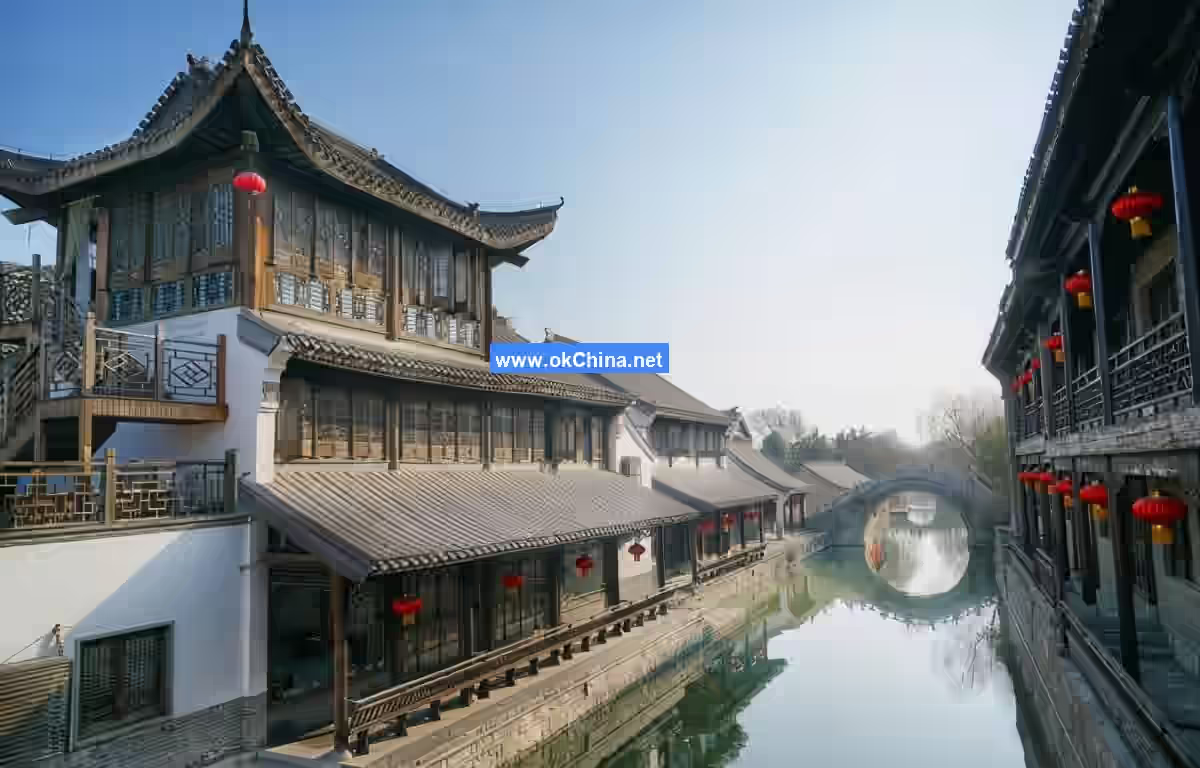
Taierzhuang Ancient Town features eight architectural styles: Northern Courtyard Houses, Hui-style Architecture, Waterside Architecture, Southern Fujian Architecture, European-style Architecture, Religious Architecture, Lingnan Architecture, and Southern Shandong Folk Dwellings. Within the town, there are ancient waterways, ancient docks, the Ancient Chinese Water City, the Taierzhuang Battle Memorial Hall, and a Cross-Strait Exchange Base. Along with Warsaw, the capital of Poland, it is one of only two cities in the world rebuilt as a UNESCO World Heritage site after being destroyed by artillery fire during World War II.
Taierzhuang Ancient Town is a National AAAAA Tourist Attraction, acclaimed as "China's Most Beautiful Water Town." It has been described by the World Tourism Organization as the "Living Ancient Canal" and the "Only Remaining Heritage Village of the Beijing-Hangzhou Canal."
2. Geographical Environment
2.1 Location and Territory
Taierzhuang Ancient Town is situated in the southeast of Zaozhuang City, Shandong Province, at the central point of the Beijing-Hangzhou Grand Canal, at coordinates 34°32′28.24″N latitude and 117°47′14.00″E longitude. It covers an area of 2 square kilometers.
2.2 Climate and Hydrology
2.2.1 Climate
Taierzhuang Ancient Town has a temperate monsoon climate, significantly influenced and moderated by the ocean. It features four distinct seasons, abundant sunshine, rich heat resources, and a long frost-free period. The annual average temperature is 14°C, with an average annual precipitation of 794 mm. The average annual sunshine duration is 2182.3 hours, and the frost-free period is long. The prevailing wind direction throughout the year is northeast, with an average wind speed of 2.3 meters per second.
2.2.2 Hydrology
Taierzhuang Ancient Town has over 10 rivers and more than 10 ponds, with a total water area of 21.7 hectares and a total water system length of 22 Chinese miles (approximately 11 km). The Beijing-Hangzhou Grand Canal runs through it, connecting northward to Zhaoyang Lake, Dushan Lake, and Nanyang Lake, collectively known as the South Four Lakes.
3. Important Attractions
3.1 Taierzhuang Battle Memorial Hall
The Taierzhuang Battle Memorial Hall is located in the southwestern suburbs of Taierzhuang District, Zaozhuang City, Shandong Province. It was built to commemorate the famous Battle of Taierzhuang in the early stages of the War of Resistance against Japan. Funded by the Taierzhuang District People's Government, it was completed in 1992 and officially opened to the public on April 8, 1993. After expansion, it now covers an area of 96 mu (approximately 6.4 hectares) with a building area of 12,000 square meters.
The memorial hall consists of a monument, exhibition halls, a film and television hall, a panorama hall, a war correspondent hall, a tomb for unknown heroes, a national defense education park, and also includes temporary exhibition halls, a multifunctional lecture hall, and a red-themed library. It displays over 2,000 cultural relics, photographs, and historical materials. Through the organic combination of historical artifacts, pictures, documents, and various auxiliary display methods, it panoramically recreates the heroic deeds of patriotic soldiers who served their country during the Battle of Taierzhuang.
3.2 Ancient Town Scenic Area
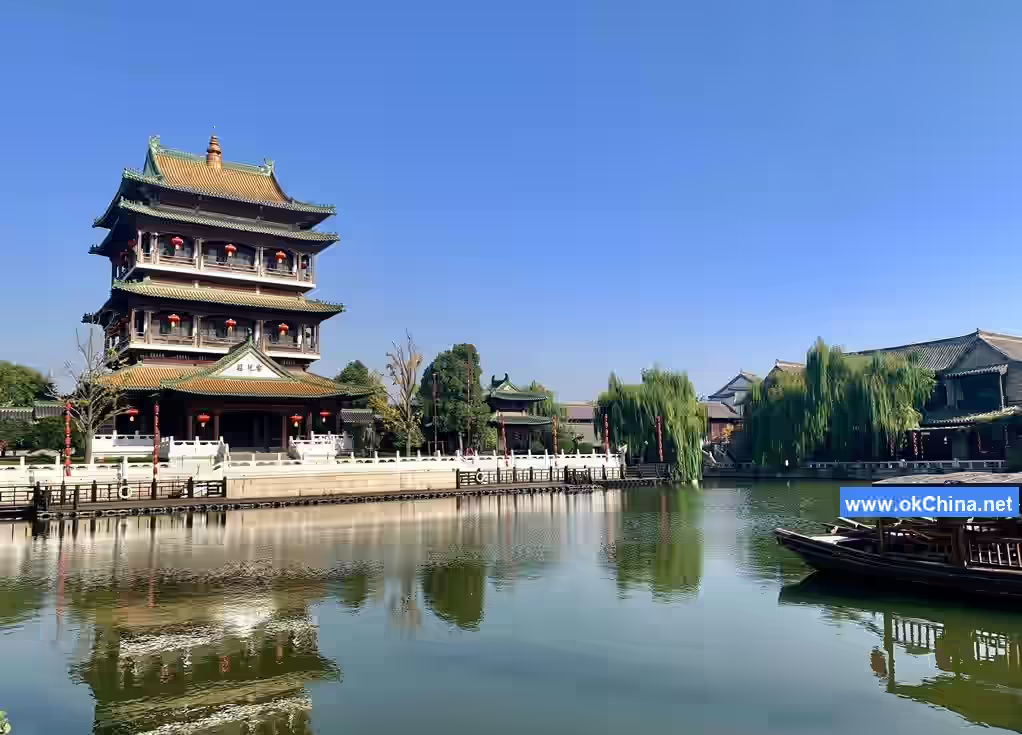
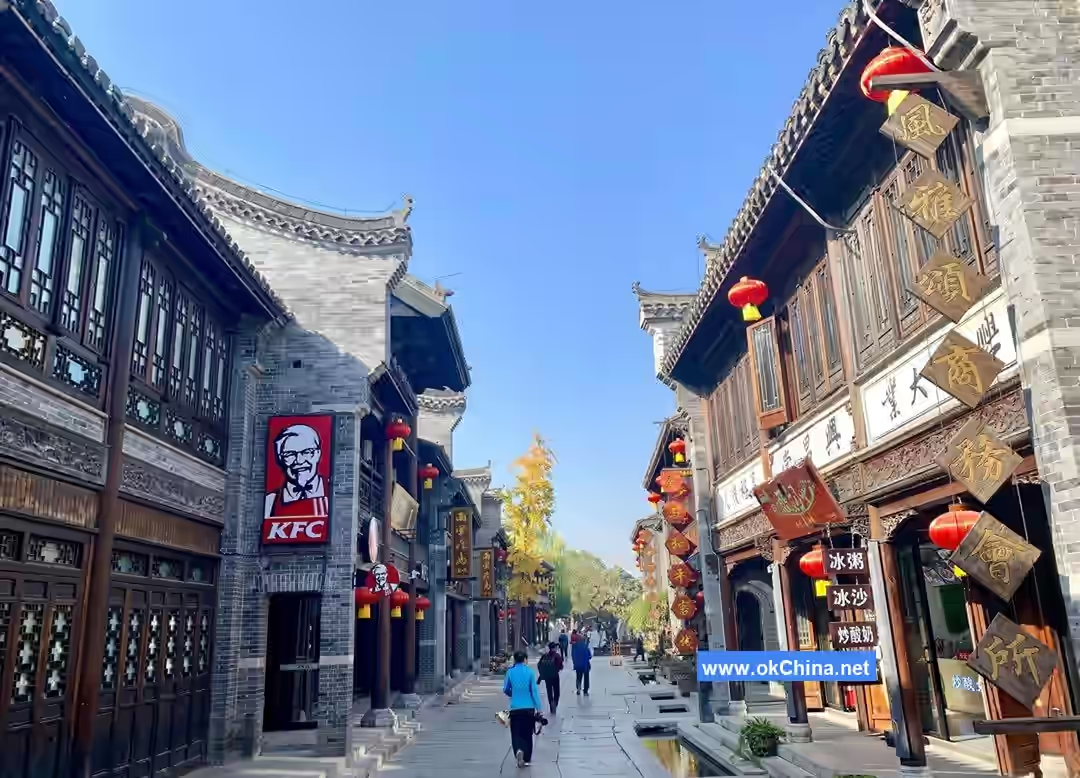
The ancient town's framework uses the canal as its cultural axis, designing eight major scenic areas: the Guandi Temple Scenic Area, the West Gate Anlan Scenic Area, the Boat Trackers' Village Scenic Area, the "Canal Market Street" Scenic Area, the Banqiao-Huamenlou Scenic Area, the Water Street Commercial Market Scenic Area, the Mosque-Jiulongkou Scenic Area, and the Wetland Park. These correspond to the eight famous scenes of the Canal Ancient Town: "Nine Waters Converging," "Old Chronicles of Taicheng," "Green Shades of the Earth Village," "Jade Floating on Temple Pond," "Willow Bank with a Lying Rainbow," "Ancient Cypress Gazing at the Moon," "Canal Market Street," and "Magnificent Pavilion Over Waves." The planning and construction include 29 scenic spots such as the Assistant Commander's Office, Taishan Temporary Palace, and Lanling Academy. It organically integrates eight architectural styles—Northern Courtyard Houses, Southern Shandong Folk Dwellings, Hui-style Architecture, Waterside Architecture, Southern Fujian Architecture, European-style Architecture, Religious Architecture, and Hakka Architecture—constructing Prosperity Street mainly in Hui-style, Dingzi Street mainly in European style, water streets and alleys mainly in waterside style, and the Guandi Temple Scenic Area mainly featuring Shanxi merchant residences.
3.2.1 Old Chronicles of the Ancient Town Scenic Area
Covering an area of 38,155 square meters with a building area of 30,295 square meters, it accounts for about one-tenth of the core area of the ancient town's first phase. It mainly includes Ming and Qing dynasty buildings of various styles such as the Assistant Commander's Office, Tianhou Palace, Cuiping Academy, Taizhuang Post Station, Rishengchang Firm, Wenhui Restaurant, Xieyuda Tea House, Fufeng Hall, Tianshui Hall, Sanke Hall, Southern Shandong Folk Dwellings, Southern Fujian Folk Dwellings, Jiuhe Inn, and Waterside Shops.
3.2.2 Anlan Gate Scenic Area
Main attractions include Anlan Island, the original site of the West Gate, the Taierzhuang History and Culture Museum, the Water Gate, the Taierzhuang Battle Temporary Command Post at the West Gate Bridge, Buyun Bridge, Guanyin Hall, and the Reversed-Seat Guanyin Hall.
3.2.3 Guandi Temple Scenic Area
Main attractions include Temple Pond, Monk's Tomb, Guandi Temple, the Battle Merits Square, Jinlong Dawang Temple, the Small South Gate, the County Grain Transport Culture Museum, Wang Dexing Hao, various ancient canal docks, and leisure dining venues like Hutian Garden.
3.2.4 Boat Trackers' Village Scenic Area
Main attractions include Jiulong Temple, Chastity Archway, Xinglong Bridge, the "Boat Trackers' Village" Folk Courtyard, the South Mosque, Altar, Ancient Sluice Gate, "Earth Garden," and a hot spring resort hotel.
3.2.5 North City River Scenic Area
A city wetland park characterized by various wetland plants typical of Jiangbei water towns. It consists of nine interconnected ponds linked to the moat. Main attractions include characteristic wetland landscapes like Lotus Marsh, Water Lily Pond, Reed Marsh, Orchid Islet, Iris Marsh, Water Chestnut Field, Cattail Beach, and Rice Fragrance Marsh, as well as shore attractions and service areas like Peach Blossom Cove, Willow Bank, Apricot Blossom Ferry, Metasequoia Embankment, Zhunti Pavilion, Qingliang Nunnery, Youjiabu, Zhongzheng Gate, and Taishan Temporary Palace.
3.2.6 Huamenlou Scenic Area
A leisure scenic area featuring traditional garden landscapes of ponds like Banqiao Pond and Huamenlou. Main attractions include Banqiao Bridge, Huamenlou, Wanshui Bridge, Lanling Academy, Taierzhuang Water Culture and Art Museum, the former site of Lanling County Government, the Battle Shell Mark Wall viewing point, and the Huamenlou-Xiaoshicha Water Market Street.
3.2.7 Canal Market Street Scenic Area
A scenic area characterized by leisure and canal landscape sightseeing. Main attractions include Tianhou Palace and its Opera Stage Square, Caoyun Square, Hu Family Courtyard, Yu Family Dock, Taierzhuang Lock Ruins Park, Shuangxiang Dock, Wanggongqiao Dock, "Taishantang" Private School, Taierzhuang Grand Canal History and Culture Exhibition Hall, Zhonghe Hall, Dehexiang, and the Battle Ruins Park.
3.2.8 Water Market Street Scenic Area
A scenic area themed around traditional commercial street shopping. Main attractions include Wan Family Courtyard, Zhao Family Courtyard, Wu Family Draft Bank, commercial streets like Xinhe Street and Wanglou Street, Tianhou Palace Dock, Fuxing Tower, and Xiao Jianzhou.
3.3 Other Attractions
3.3.1 Zhizun Bridge
This bridge was rebuilt on the old foundation of an original ancient bridge. When inquiring about the old bridge's name, no one could recall it. Standing on the bridge, one can see nine surrounding bridges, and the river beneath connects five water streets.
3.3.2 Ancient Town Memorial Archway
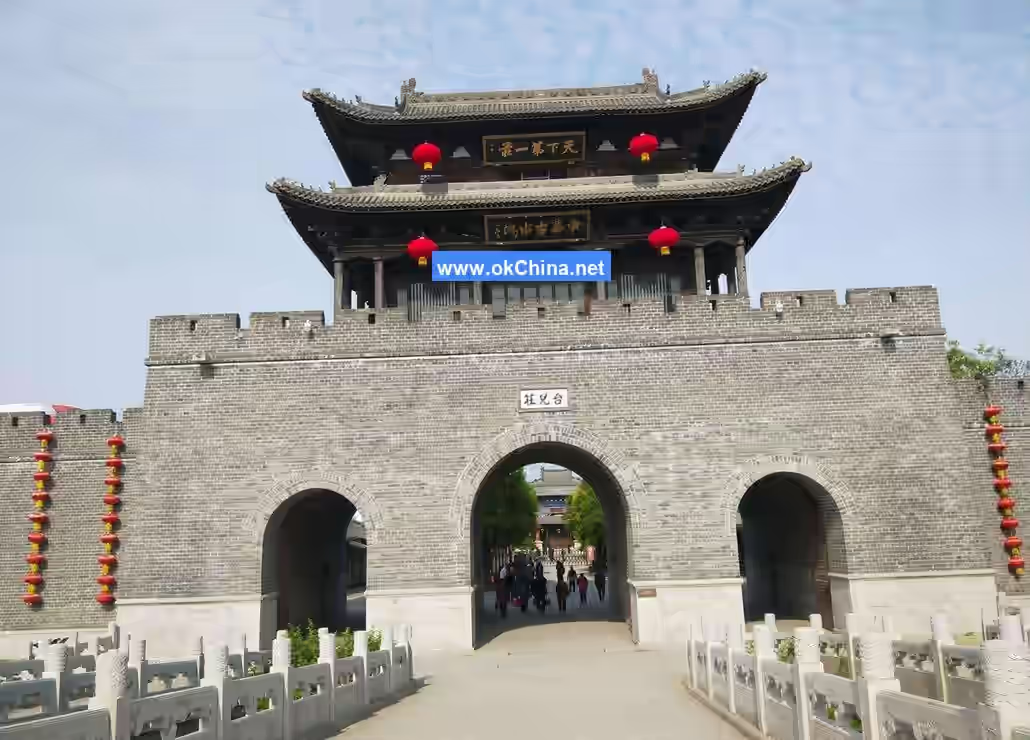
The ancient town memorial archway is the "Land and Water Thoroughfare" archway of Taierzhuang, witnessing the town's past prosperity. This street was called Yamen Street. In 1947, the Kuomintang troops stationed here changed Yamen Street to Prosperity Street, a name continued after the founding of the People's Republic. During the reconstruction of the ancient town, the old name Yamen Street was restored.
3.3.3 Jiuhe Inn
Jiuhe Inn is a Hui-style building with white walls, black tiles, and horse-head gables. It was built in the 30th year of the Kangxi reign of the Qing Dynasty (1691) by Hu Wenguang, a Huizhou merchant. The reconstructed Jiuhe Inn covers an area of 2,415 square meters with a building area of 3,554 square meters and is used as a budget hotel. Many shops and dwellings within the ancient town share this style, bearing witness to the entrepreneurial history of Huizhou merchants in Taierzhuang.
3.3.4 Assistant Commander's Office Hall
The Assistant Commander's Office, commonly known as the Big Yamen, was first built in the 22nd year of the Kangxi reign of the Qing Dynasty (1683). It served as the office of a third-rank assistant commander in the Qing Dynasty. The assistant commander led 600 troops and was responsible for the engineering protection and grain transport security of a 220 Chinese-mile (approximately 110 km) section of the canal. In January 1937, the Nationalist Government established the Taierzhuang Branch of the Shandong Yixian County Police Bureau here. In early 1938, it became the arsenal of Shen Honglie, Deputy Commander of the 3rd Group Army. This arsenal played a role in the Battle of Taierzhuang. It now serves as the "Taierzhuang Ancient Town Reconstruction Museum."
3.3.5 Guanghui Bridge
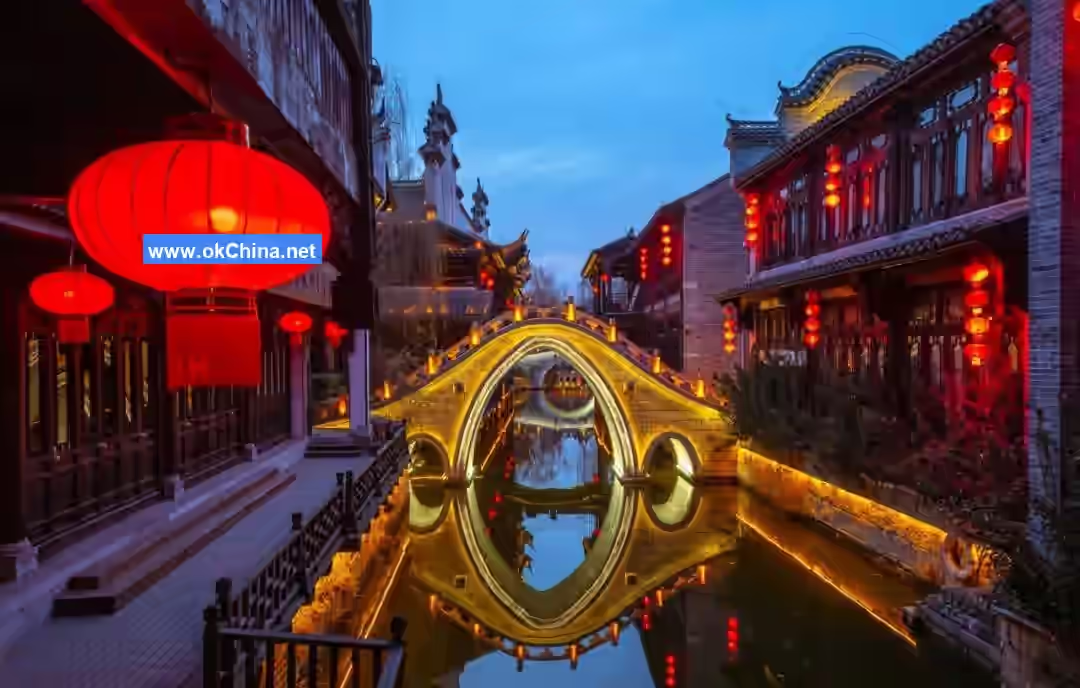
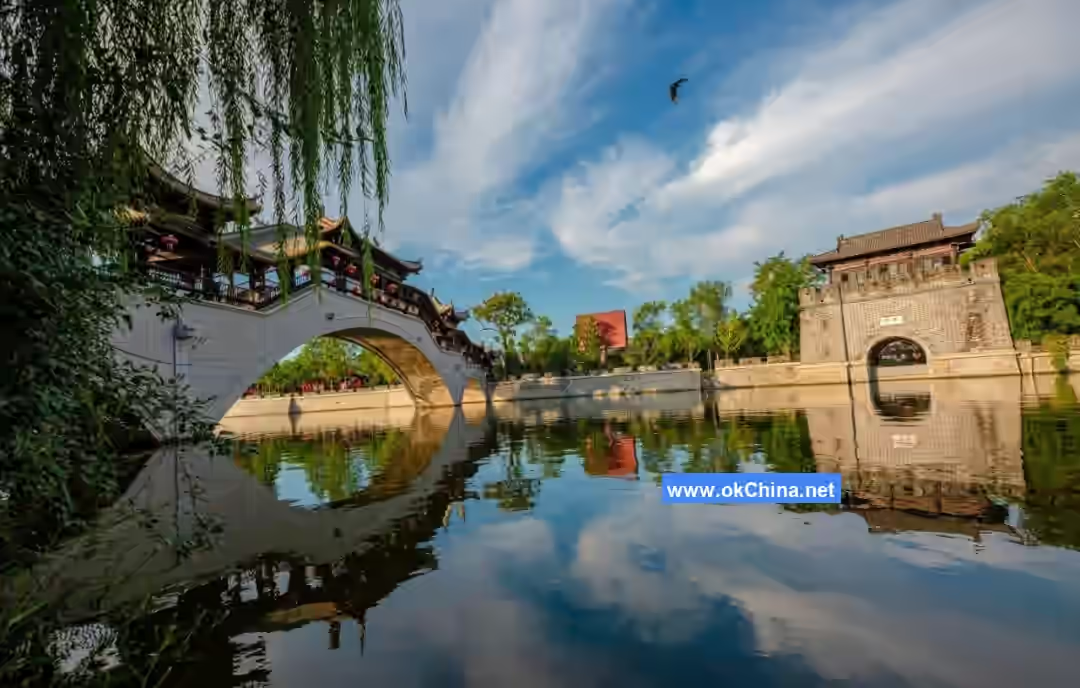
Commonly known as the "Arch Bridge," it is a single-arch full-ring granite stone arch bridge. Built in the 5th year of the Shunzhi reign of the Qing Dynasty (1648) with funding from the Zhao family, the bridge is 11.5 meters long, 3 meters high, with a span of 5.7 meters and a deck width of 2.96 meters. It was destroyed in the war in 1938 and later replaced by a simple stone slab bridge for pedestrian use. The current stone arch bridge was reconstructed on the original site. The name "Guanghui Bridge" carries the meaning of "gathering merchants from all directions."#### 3.3.6 Shuangli Guild Hall The red brick architectural style of Southern Fujianese dwellings is one of the eight major architectural styles within the ancient city scenic area of Taierzhuang. The Shuangli Guild Hall is a typical representative of the Southern Fujianese residential architectural style. This style has three main characteristics: first, the use of red bricks and red tiles, creating a vibrant and flamboyant appearance; second, the extensive use of stone, with windows being stone-framed; third, the main roof ridge of Southern Fujianese houses is either a saddle ridge or a swallowtail ridge, both featuring an elegant curve that dips in the middle and rises slightly at the ends, symbolizing soaring success and prosperity. A typical Southern Fujianese house has a three-bay frontage, known as "three bays starting." Along the central axis are, in order, the entrance hall, the courtyard (sky well), and the main hall. There is one room on each side of both the front and rear halls, and corridors run along the sides of the courtyard. If it is a five-bay house, two additional swallowtail ridges are added to the roof, resembling two pairs of wings, one large and one small, in flight. Swallowtail eaves are rarely used in residential architecture across most of China. The presence of Southern Fujianese architecture like the Shuangli Guild Hall in Taierzhuang fully embodies the city's cultural characteristic of integrating northern and southern influences.
3.3.7 Fufeng Hall
Fufeng Hall is a typical example of Shanxi-style architecture, built by the Wan family whose ancestral home was in Fufeng, Shanxi. After arriving in Taierzhuang, the Wan family amassed great wealth by leveraging the prosperity of the Grand Canal's grain transport, becoming one of the four major families of Taierzhuang. They then constructed the largest residential compound in Taierzhuang, known as the Wan Family Compound. The reconstructed compound is also called the Wanfu Hotel, a five-star hotel integrating accommodation, dining, and conference facilities. Fufeng Hall is based on the siheyuan (courtyard house) structure, utilizing a post-and-lintel timber frame with blue bricks and tiles. It features tall buildings and deep courtyards, thick walls and wide foundations, with exquisite design and carvings. The complex comprises over 60 rooms, including siheyuan courtyards, connecting courtyards, and side-and-main compound combinations. The entire structure fully showcases the ancient Chinese philosophical and architectural concepts of "favorable timing, geographical advantage, and human harmony."
3.3.8 Tianhou Palace
Tianhou Palace is the abbreviated name for the Palace of the Heavenly Empress. It was originally built during the Yongzheng reign period of the Qing Dynasty to worship the sea goddess Lin Mo. In 1938, the palace was destroyed in the flames of the Battle of Taierzhuang. The reconstructed Tianhou Palace today is the one with the highest quality standards among similar structures in mainland China. It has a total floor area of 1,508 square meters, laid out as a two-courtyard complex. It consists of the main hall, left and right wing-rooms, bell and drum towers, and other structures. The building features ridge decorations with hollow gray-molded "Two Dragons Playing with a Pearl," exhibiting smooth and flowing lines. It is adorned with exquisite wood carvings, painted details, carved beams, and painted rafters, presenting a resplendent and magnificent sight.
3.3.9 Ancient Mosque
The Taierzhuang Ancient Mosque, commonly known as the North Grand Mosque, is located about 200 meters southwest of the Zhongzheng Gate. It was built in 1742 (the seventh year of the Qianlong reign of the Qing Dynasty) under the direction of Imam Li Zhonghe. It is a nationally protected cultural heritage site. The mosque occupies an area of approximately 3,333 square meters, with a building area of over 800 square meters. It contains 25 prayer halls, 5 lecture halls, 6 ablution rooms, as well as auxiliary rooms, side rooms, and a gate tower. Inside the mosque, verdant cypress trees stand tall, full of vitality. In the late Qing Dynasty, it was renovated into a southern gate tower, and the mosque's signboard was changed to "Huijiaotang" (Islamic Church). In 1937, Ma Huating raised funds for repairs. During the Battle of Taierzhuang, the mosque was a key point of contention between Chinese and Japanese forces. It once served as a command post for the invading Japanese troops. To recapture the mosque, a grueling seesaw battle lasted for seven days and nights, with the defending officers and soldiers paying a huge sacrifice. When the Japanese forces retreated in defeat, they set fire to the halls and buildings within the mosque. Upon its recovery, the ancient mosque lay in ruins, with crumbling walls and debris. In 1942, Ma Huating again raised funds to rebuild the mosque, adding a 28-meter-high, four-story Moon-Viewing Tower. In 1985, the state allocated 50,000 yuan, and the Hui community raised an additional 30,000 yuan to rebuild the prayer hall according to its original appearance, renovate the courtyard, gate tower, etc., and restore the mosque's old inscribed plaque. The bullet marks on the ancient wall west of the lecture hall were removed in 1988 by the Museum of the Chinese Revolution and taken into the museum's collection as permanent historical testimony.
4. Cultural Resources
4.1 Naming
There are many legends about the origin of the name "Taierzhuang." The most widely circulated story in Taierzhuang involves Emperor Qianlong's tour of the area and an incident at a private school in the city called Cuiping School. Legend has it that this school once produced a child prodigy. One year, Emperor Qianlong was passing through Taierzhuang when he heard the sound of suona horns. Upon inquiry, he learned that a family was holding a wedding celebration. Emperor Qianlong decided to join in the festivities and sent someone to deliver three copper coins and a congratulatory couplet. The couplet only had the first line, which read: "Three copper coins to congratulate; if you dislike them as too few, do not accept; accepting shows love for wealth." The host family, upon seeing this first line, was at a loss. Refusing the three coins would imply嫌弃 (disdain) for the Emperor's gift as too little—a crime of deceiving the sovereign. Accepting them would earn them the bad reputation of being "wealth-loving." Just as many learned scholars were worrying over this, a child studying at the private school ran over, took up a brush, and wrote the second line: "A thatched cottage to receive guests; if you disdain poverty, do not come; coming shows love for food." Emperor Qianlong, upon seeing this couplet, braved the bad reputation of being "food-loving" and hurried over, asking who had composed such a clever second line. The host family called out the child, who was only ten years old. Emperor Qianlong was greatly pleased and immediately appointed him to a seventh-rank official position. This child, having won honor for his clan in front of the Emperor, was then carried by everyone through the town in a celebratory parade. Because of this event, outsiders referred to this town as "Tai'er Zhuang" (Carrying-the-Child Village), which later evolved into Taierzhuang.
4.2 Historical Evolution
4.2.1 Origins of the Ancient City
During the pre-Qin period, the area belonged to states such as Xu and Biyang, and was a region contested by the powerful states of Wu, Yue, Lu, Song, Qi, and Chu. Archaeological evidence confirms that the ancient city of Biyang, dating back over two thousand years, was an ancient water city. It was listed as a National Key Cultural Relics Protection Unit in 2006. During the Qin, Han, Wei, and Jin periods, the areas north and south of the canal belonged to Fuyang and Lanling counties respectively. Following the Yongjia southward migration, Fuyang County was merged into Lü County, later renamed Shouzhang County. After the Eastern Wei period, the former territory of Fuyang came under the jurisdiction of Cheng County. From the Sui Dynasty onward, Cheng County merged with Lanling County, later called Lanling County, Yizhou, and Yi County.
During the Tang Dynasty, the Tai clan established a village here, called Taijiazhuang (Tai Family Village). The Zhunti Pavilion, located outside the north gate, was built in the mid to late Tang Dynasty and is the oldest verifiable structure in Taierzhuang.
During the Northern Song Dynasty, figures like Di Qing and Su Shi successively oversaw large-scale development of the Liguo iron mines in Xuzhou (ancient Pengcheng). The Zha River adjacent to Taierzhuang began to serve the function of transporting iron ore, henceforth being called the Peng River, commonly known as the Iron Transport River, New River, or Central Ditch.
During the Wanli period of the Ming Dynasty, when the Beijing-Hangzhou Grand Canal was diverted away from the Yellow River to pass through Taierzhuang, it utilized the Peng River for grain transport.
In the Yuan Dynasty, an earthen enclosure was first built. Structures like the Sanhuang Temple and Xuandi Temple were constructed within, gradually forming a market town known as "Taijiazhuang Market."
By the late Ming Dynasty, Taijiazhuang had 2,000 households. The name "Taierzhuang" first appeared in records on a canal defense stele erected in 1639 (the 12th year of the Chongzhen reign) at Huanglinzhuang southeast of Taierzhuang by the Yangzhou Circuit.
Due to the shifting course of the Yellow River, during the Yuan and Ming dynasties, the Beijing-Hangzhou Grand Canal once utilized a section of the Yellow River from Xuzhou to Huai'an for transport. However, frequent flooding of the Yellow River often disrupted grain transport, leading to proposals for "opening the Jia River to divert the river's force" and the plan to open the Jia River to aid transport. Weng Dali first proposed opening the Jia River in 1570. The proposal was officially approved in 1600, and trial operations began the following year under the direction of Liu Dongxing. After 1610, the Jia River completely replaced the Yellow River route, becoming the nation's economic lifeline and golden waterway.
Historically, the water level of the canal section downstream from Taierzhuang was 21 meters lower than the water level at the mouth of Weishan Lake, resulting in a large drop, rapid flow, with water primarily sourced from Weishan Lake. When the Jia River was opened, eight ship locks were installed to regulate the water flow. Among them, the Taizhuang Lock, located on the southern canal of Taierzhuang, was the first lock that northbound tribute grain ships from Jiangsu passed through when entering Shandong. The establishment of the Taizhuang Lock concentrated large flows of people and goods, providing opportunities for commercial trade. This spurred the rapid socio-economic rise of Taierzhuang, which developed into a strategic stronghold guarding southern Shandong and protecting Xuzhou, as well as a bustling land-and-water port connecting north and south, where merchants gathered.
Taierzhuang was originally the seat of Wangmu Shang She in Qipeng Township of Yi County. In 1604 (the 34th year of the Wanli reign), based on the needs for defense, maintenance, and management of the Beijing-Hangzhou Grand Canal section at Taierzhuang, the then Director-General of River Administration Cao Shipin petitioned to establish postal stations, deploy patrols, increase river officials, and set up public offices along the Taierzhuang canal section. Taierzhuang began to become a regional central city. During the Ming and Qing dynasties, five levels of canal management agencies were successively established along this river section: the General River Administration Ministry Court, the Dongyan Circuit, the Jia River Office, the Yi Garrison, and the Taizhuang Lock. Military institutions stationed in Taierzhuang included the Taizhuang Patrol and Inspection Office, the Yizhou Town Standard Front Battalion (later changed to Taizhuang Battalion), and the Taizhuang Lock Garrison. Officials of various ranks, including a third-rank Regional Commander, fifth-rank Battalion Commander, sixth-rank Subprefectural Magistrate, seventh-rank Company Commander, eighth-rank Assistant County Magistrate, eighth-rank Extraordinary Battalion Commander, and ninth-rank Patrol and Inspection Commissioner, were all stationed here.
In 1647 (the fourth year of the Shunzhi reign of the Qing Dynasty), construction of the Taierzhuang earthen city wall began, completed the following year. The city was built alongside the canal, measuring 1.1 kilometers from east to west and 1 kilometer from north to south. In 1857 (the seventh year of the Xianfeng reign), brick walls were newly built on the old foundations. The new city wall had an earthen base, with walls 4 meters high topped with battlements. The walls sloped inward from the base upwards, with rammed earth inside the brick walls, nearly 3 meters wide at the top. There were six city gates: the East Gate called Yangsheng, the West Gate called Taicheng Jiuzhi, the North Gate called Zhongzheng, the Small North Gate called Chengen Zhanlu, the South Gate called Huidi Ji, and the Small South Gate called Yingxiang. The East, West, South, and North gates each had a two-story gate tower, about 7 meters high, with a watchtower above and a passage below wide enough for large carts. The moat was 9 meters from the outer wall, 10 meters wide, 2 meters deep, with a circumference of 5.7 kilometers. On the eve of the Battle of Taierzhuang, the ancient city contained 8 streets, 13 docks, 437 alley entrances, 5,000 households, and 20,000 rooms.
In 1938, during the War of Resistance Against Japan, the ancient city was reduced to ruins due to the Battle of Taierzhuang.#### 4.2.2 Battle of Taierzhuang In the spring of 1938 (the 27th year of the Republic of China), the Japanese Itagaki Division advanced southward from the Jiaozhou-Jinan Railway, pressing directly on Linyi, while the Isogai Division moved along the Taierzhuang-Zaozhuang branch line, aiming to swiftly capture Taierzhuang to facilitate the connection between Xuzhou and the Tianjin-Pukou Railway. Li Zongren, commander-in-chief of the Fifth War Zone stationed in Xuzhou, deployed Sun Lianzhong's forces to defend Taierzhuang and Tang Enbo's forces to strike the enemy's rear in northern Yi County. A large-scale and fierce battle unfolded across the vast southern Shandong region, with Taierzhuang at its core. Lasting over a month and annihilating more than ten thousand enemy troops, this battle marked the first time since Japan's full-scale invasion of China that Chinese forces repelled the elite main forces of the Japanese army on the battlefield. It was another significant victory for the Chinese military in the early stages of the War of Resistance Against Japan, following the victory at Pingxingguan, and a brilliant achievement of the second cooperation between the Kuomintang and the Communist Party. Mao Zedong mentioned the victory at Taierzhuang multiple times in On Protracted War, and Zhou Enlai remarked in his radio address "Strive for Greater New Victories": "Therefore, although this victory occurred in one locality, its significance impacts the entire war situation, the whole nation, the enemy, and the world."
Starting from April 22, 1938 (the 27th year of the Republic of China), the Battle of Taierzhuang entered its second phase, which concluded on May 14 of the same year. During this period, the 60th Army of the National Revolutionary Army fought bitterly in Taierzhuang for nearly a month, buying precious time for hundreds of thousands of Chinese troops to swiftly break out of the enemy's encirclement.
4.2.3 Ancient City Reconstruction
From May 22 to 24, 2006, the Zaozhuang Municipal People's Government participated in the Beijing-Hangzhou Grand Canal Protection and World Heritage Application Seminar held in Hangzhou. Members of the delegation and representatives from 18 cities across six provinces (municipalities) along the canal adopted the Hangzhou Declaration on the Protection and World Heritage Application of the Beijing-Hangzhou Grand Canal during the meeting.
On April 8, 2008, during the event commemorating the 70th anniversary of the victory in the Battle of Taierzhuang, the Zaozhuang Municipal People's Government officially announced the commencement of the Taierzhuang Ancient City reconstruction project. Subsequently, specialized agencies were established for the rescue and preservation of the ancient city, initiating preliminary material collection and organization efforts. Comprehensive and in-depth surveys were conducted on the ancient city's streets, lanes, docks, revetments, and buildings. All existing historical relics and old structures were photographed and preserved by category, thoroughly identifying eight major architectural styles including European, Huizhou, Northern Chinese, Jiangsu-Zhejiang, Shanxi-Shaanxi, Guangdong, Guangxi, and Fujian styles. Systematic photographic and textual documentation was compiled. Special attention was given to investigating temples such as Taishan Xinggong, Wenchang Pavilion, New Guandi Temple, Sanguan Temple, Yuhuang Pavilion, Dawang Temple, Longwang Temple, Lüzu Temple, Old Guandi Temple, Huoshen Temple, Zhunti Pavilion, Dongyue Tianqi Temple, Tiefo Temple, Cang Temple, Eighteen Arhats Temple, North and South Mosques, Gao Temple, Bazha Temple, and Jiulong Temple. Detailed information on their locations, architectural styles, artistic features, and layouts was gathered, with some architectural floor plans drawn. Through methods such as excerpting from books, online collection, on-site photography, and door-to-door collection, over 500 reference images for ancient city construction—including water streets and alleys, ancient streets and lanes, ancient residences, ancient bridges, pleasure boats, memorial archways, and ancient lanterns—were collected and organized, along with more than 20,000 words of textual materials. Over 20 related drawings of the ancient city's water systems, land use, demolition, power supply, heating, and water supply were also compiled, printed, and bound into volumes, providing a basis and reference for the restoration and construction of the canal ancient city.
4.3 Cultural Activities
4.3.1 Taifeng Music Season
The "Taifeng Music Season" is held annually from July to August in Taierzhuang Ancient City. During the event, numerous singers are invited to perform. With a folk guitar, warm lighting, and heartfelt singers, popular folk songs set the tone for the music season. Following this, bands, Chinese-style DJs, and MCs take turns on stage, delivering moving songs and electronic music revelry for the audience.
4.3.2 Spring Festival Temple Fair
Since 2012, Taierzhuang Ancient City has hosted the Spring Festival Temple Fair every January 1st. During the temple fair, intangible cultural heritage performances and folk exhibitions are staged daily, offering visitors a grand feast of folk art and entertainment.
Comments
Post a Comment