Sun Yat-sen Mausoleum
1. Introduction
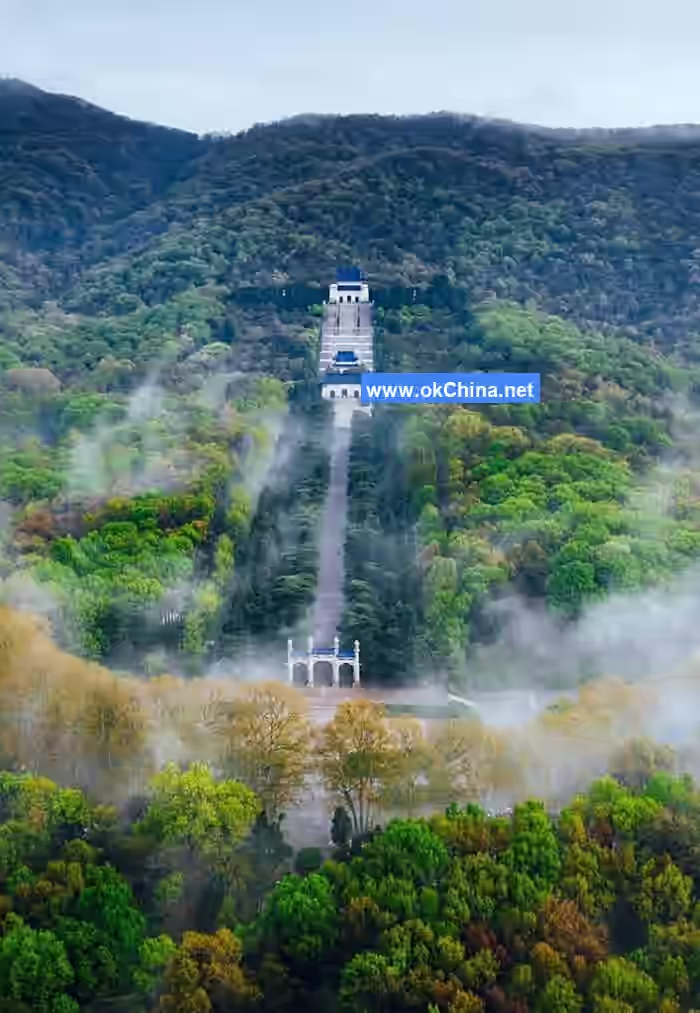
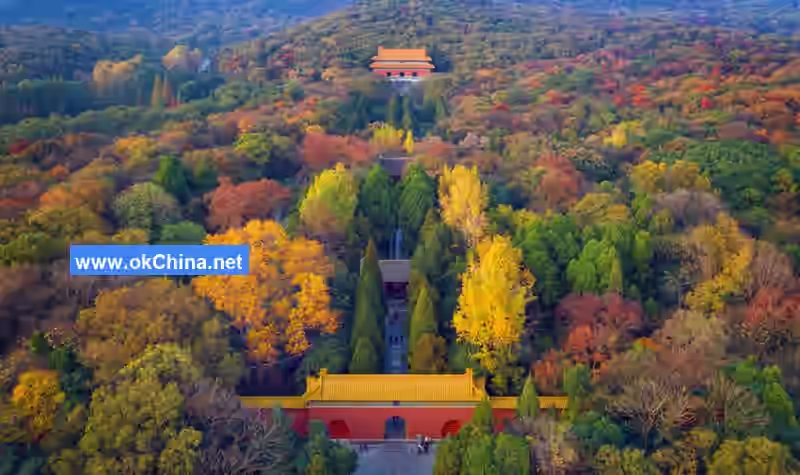
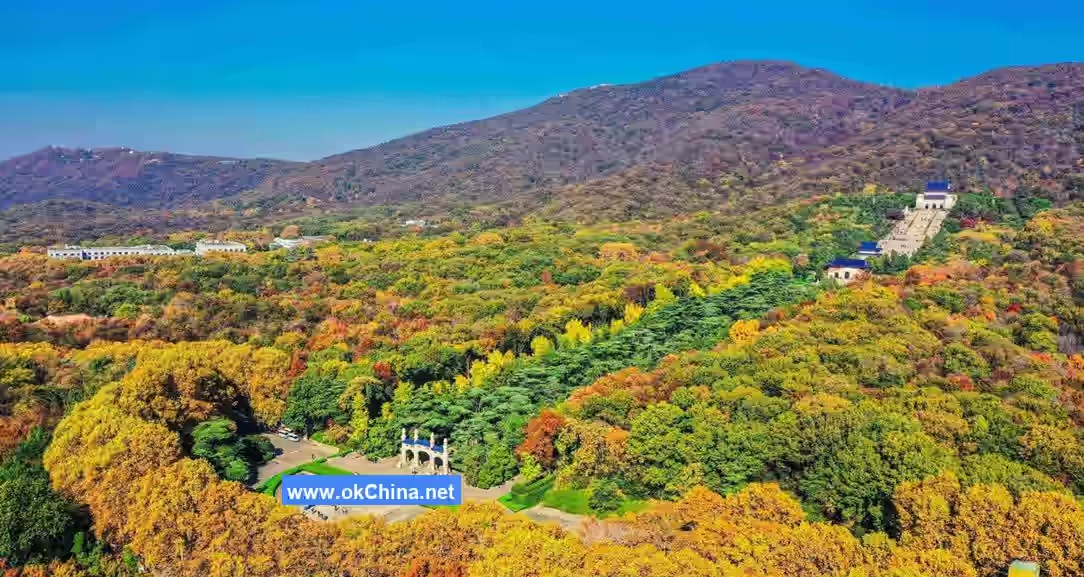
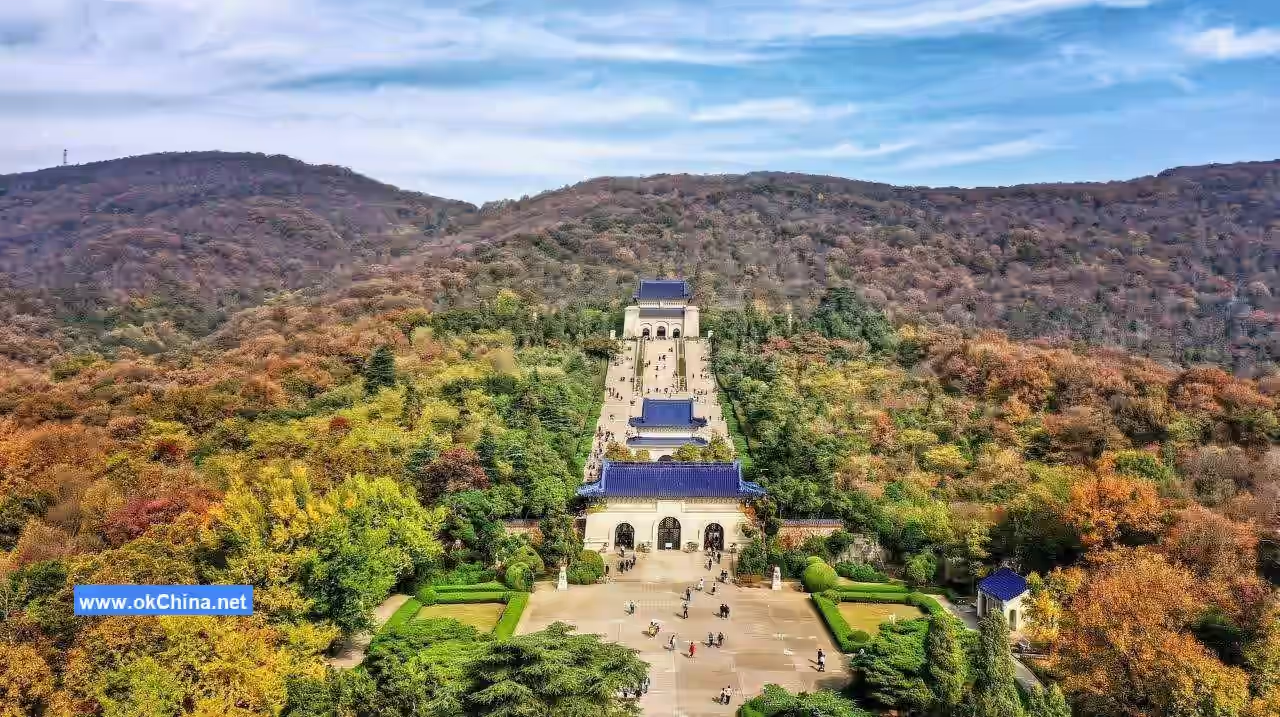
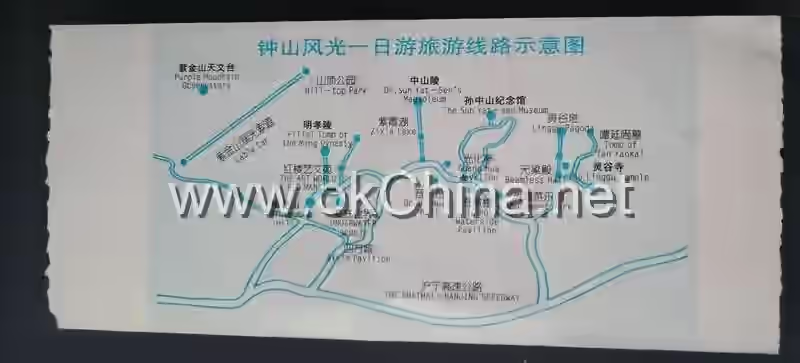
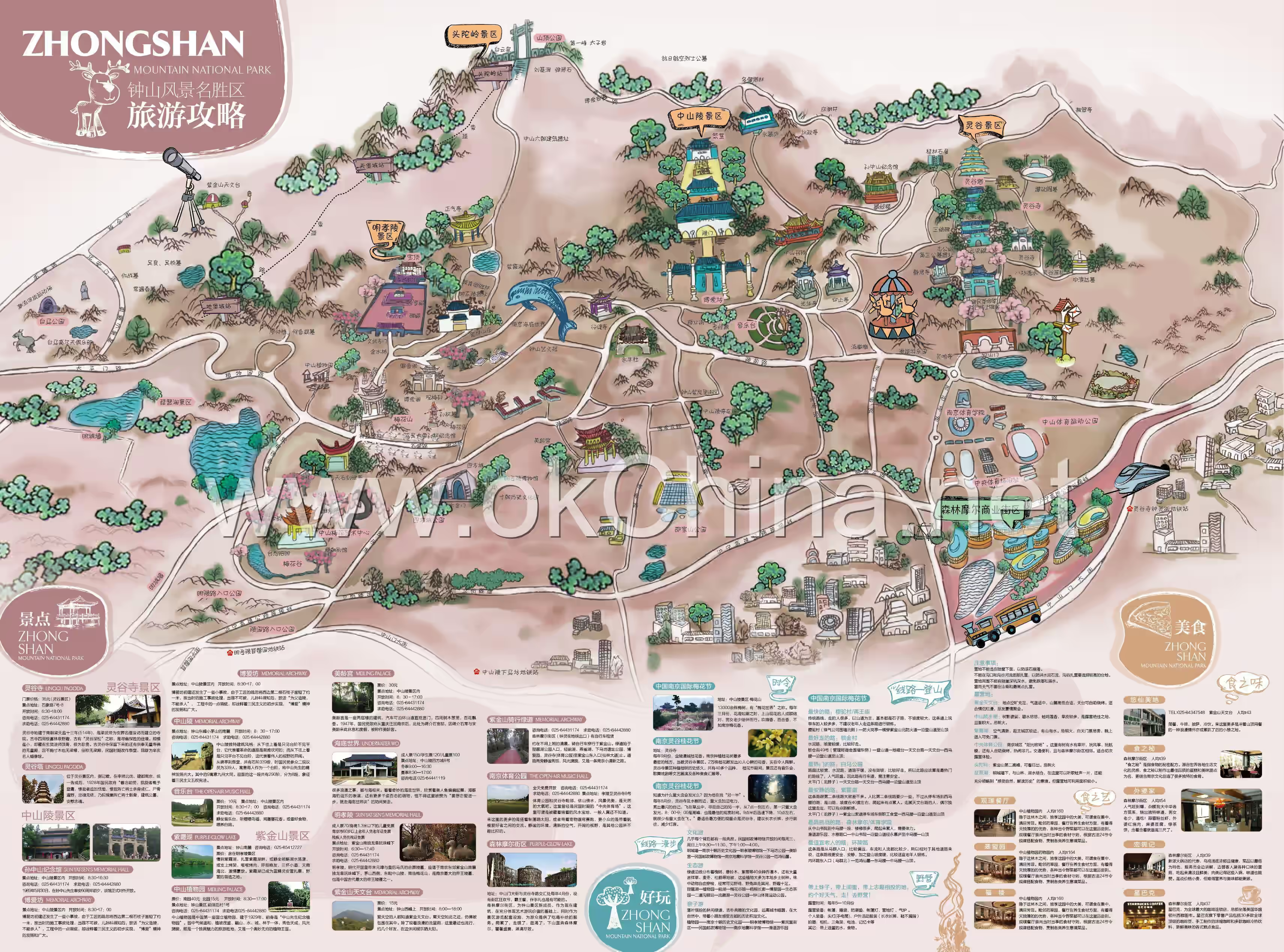
The Sun Yat-sen Mausoleum Scenic Area is located on the north side of Zijin Mountain Road within the Zhongshan (Purple Mountain) Scenic Area, at the southern foot of Zijin Mountain in the eastern part of Nanjing City, Jiangsu Province (bordering the Linggu Scenic Area to the east and the Ming Xiaoling Mausoleum Scenic Area to the west). Its core attraction, the Sun Yat-sen Mausoleum, was initially constructed in the 15th year of the Republic of China (1926). In 2004, it was planned and developed as the Sun Yat-sen Mausoleum Scenic Area under the Master Plan of the Zhongshan Scenic Area, forming a major component of the Zhongshan Mausoleum Scenic Zone, the principal region of the Zhongshan Scenic Area. Centered around the Sun Yat-sen Mausoleum, which is situated at the southern foot of Zhongmao Peak on Zhongshan Mountain, the scenic area is the tomb of Dr. Sun Yat-sen, the great forerunner of the democratic revolution. The mausoleum's architectural layout follows a central axis of symmetry. Spanning a horizontal distance of 700 meters with a 70-meter elevation difference from the memorial archway, tomb passage, mausoleum gate, and stele pavilion to the sacrificial hall and burial chamber, it features 392 stone steps and 10 platforms. Constructed entirely of white granite and reinforced concrete and roofed with blue glazed tiles, it is acclaimed as "the First Mausoleum in Modern Chinese Architectural History." The Sun Yat-sen Mausoleum Scenic Area covers a total area of 3.22 square kilometers, encompassing the mausoleum itself and other related attractions within its vicinity, including the Music Terrace, Xiaojing Ding (Filial Piety Tripod), Yangzhi Pavilion, Liuhui Pavilion, Xingjian Pavilion, Guanghua Pavilion, the Sun Yat-sen Memorial Hall, and the Zijin Mountain Adventure Park. In 2007, the Sun Yat-sen Mausoleum Scenic Area was rated as a National AAAAA Tourist Attraction by the Chinese Ministry of Culture and Tourism (as part of the Zhongshan Scenic Area—Zhongshan Mausoleum Scenic Zone). Along with the Ming Xiaoling Mausoleum Scenic Area and the Linggu Scenic Area, it constitutes one of the three core scenic zones of the Zhongshan Scenic Area.
2. Geographical Location
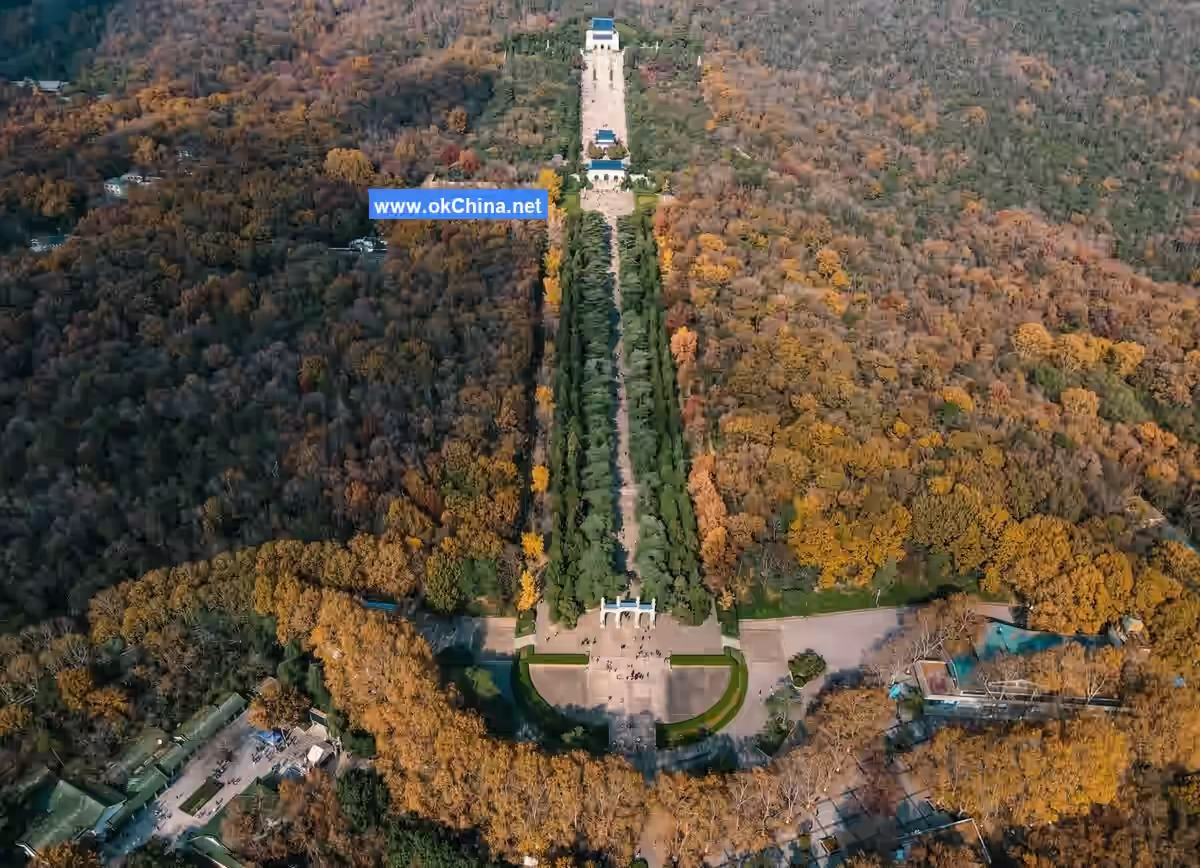
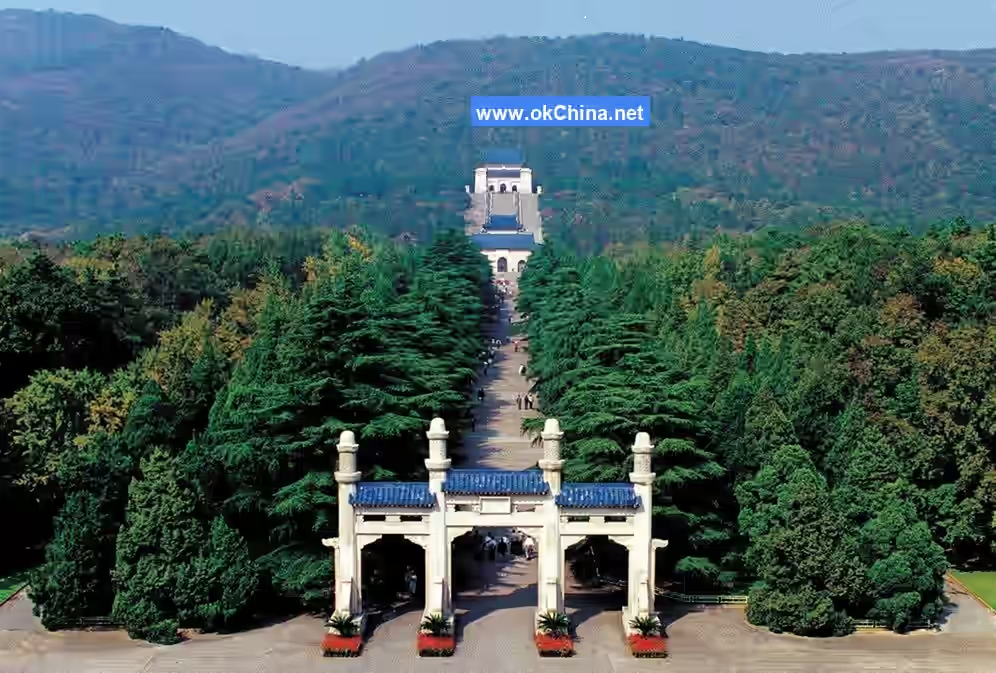
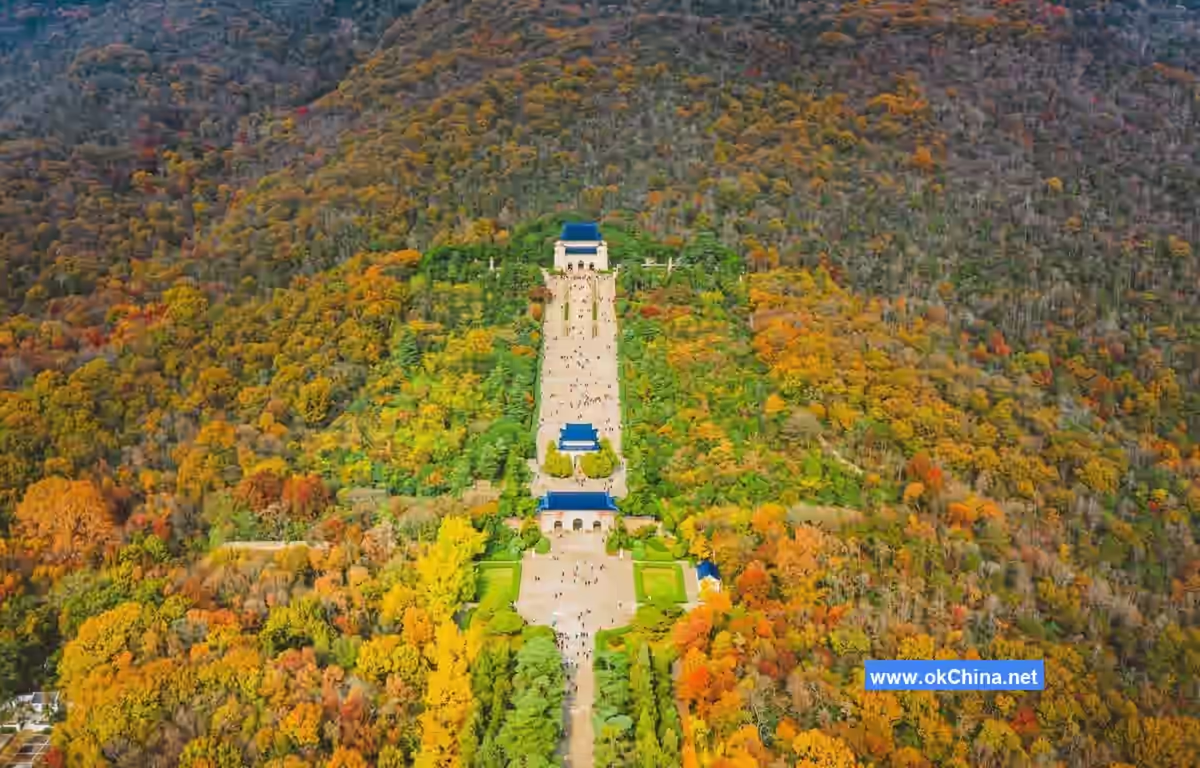
The Sun Yat-sen Mausoleum Scenic Area is located on the north side of Zijin Mountain Road within the Zhongshan (Purple Mountain) Scenic Area, at the southern foot of Zijin Mountain in the eastern part of Nanjing City, Jiangsu Province (bordering the Linggu Scenic Area to the east and the Ming Xiaoling Mausoleum Scenic Area to the west). The mausoleum faces open flatland to the front and is backed by green ridges. It neighbors Linggu Temple to the east and the Ming Xiaoling Mausoleum to the west. The entire architectural complex is built along the mountain's contours, gradually ascending from south to north along a central axis. Main structures, including the Bo'ai Archway, tomb passage, mausoleum gate, stone steps, stele pavilion, sacrificial hall, and burial chamber, are aligned on this central axis, reflecting the style of traditional Chinese architecture. Viewed from above, it resembles a "Liberty Bell" lying flat on a green carpet. The architecture of the Sun Yat-sen Mausoleum blends the essence of ancient Chinese and Western architectural styles, achieving solemnity, simplicity, and a unique, innovative character.
3. Historical Development
3.1 Sun Yat-sen
Sun Yat-sen (November 12, 1866 – March 12, 1925), original name Sun Wen, courtesy names Zaizhi, Rixin, and Yixian, also known as Dixiang and using the alias Zhongshan Qiao, was a great national hero, a great patriot, and the great pioneer of the Chinese democratic revolution [1]. He was the founder of the Republic of China and the Kuomintang (Chinese Nationalist Party), the advocate of the Three Principles of the People (Sanmin Zhuyi), and the creator of the "Five-Power Constitution." He was the first to raise the banner of thorough anti-imperialism and anti-feudalism, "initiating the republic and ending two thousand years of feudal monarchy." [2] Sun Yat-sen was born on November 12, 1866, in Cuiheng Village, Xiangshan County (present-day Zhongshan City), Guangzhou Prefecture, Guangdong Province. He originally studied medicine in Hong Kong and became a practitioner of Western medicine. Witnessing the danger of the Chinese nation being carved up by Western powers, Sun decided to abandon his "career of healing individuals" for the "cause of healing the nation." Initially influenced by Zheng Guanying's reformist ideas, he later recognized the corruption of the Qing government and resolved to overthrow the Qing dynasty and establish a democratic republic. [3-4] [44] On November 24, 1894, Sun Yat-sen founded the Revive China Society (Xingzhonghui) in Honolulu [4]. In 1905 (the 31st year of the Guangxu reign), he established the Chinese Revolutionary Alliance (Tongmenghui). On October 10, 1911 (the 3rd year of the Xuantong reign), revolutionaries within the New Army secretly coordinated and decided to launch an uprising that evening. After the Xinhai Revolution, he was elected as the Provisional President of the Republic of China (serving from January 1, 1912, to April 1, 1912). Sun Yat-sen passed away in Beijing on March 12, 1925, due to cancer. On June 1, 1929, in accordance with his last wishes, he was interred at the Sun Yat-sen Mausoleum on Zijin Mountain in Nanjing. In 1940, the Nationalist Government issued a nationwide order honoring him as the "Father of the Republic of China."
3.2 The Passing of Dr. Sun
At 9:30 AM on March 12, 1925, Dr. Sun Yat-sen passed away at the Tieshizi Hutong headquarters in Beiping (present-day Beijing) due to gallbladder cancer, plunging the nation into grief. The day before his death, Sun proposed preserving his body following Lenin's example and requested burial in Nanjing. On his deathbed, he said to Soong Ching-ling, Wang Jingwei, and others: "After I die, I can be buried at the foot of Zijin Mountain in Nanjing. Because Nanjing is where the provisional government was established, we must not forget the Xinhai Revolution."
3.3 Funeral Preparations
On April 4, 1925, the Kuomintang Central Executive Committee members in Beiping began preparations for the burial, appointing Zhang Jingjiang, Wang Jingwei, Lin Sen, Yu Youren, Dai Chuanxian, Yang Shukan, Shao Lizi, T.V. Soong, H.H. Kung, Ye Chucang, Lin Huanting, and Chen Qubing—12 individuals in total—as members of the Funeral Preparations Committee responsible for Sun Yat-sen's burial affairs.
3.4 Site Selection for the Mausoleum
As early as the first year of the Republic of China (1912), when Sun Yat-sen served as Provisional President in Nanjing, he visited Zijin Mountain several times. On March 10, 1912, after resigning from the provisional presidency, Sun went hunting on Zijin Mountain with Hu Hanmin and others. Seeing the site backed by green mountains and facing open flatland with majestic grandeur, he smiled and said to those around him: "When I pass away someday, I wish to ask the citizens for this handful of earth to place my remains."
3.5 Subsequent Chronology
Republican Era January 15, 1926 (15th year of the Republic): Groundbreaking ceremony for the Sun Yat-sen Mausoleum on Zijin Mountain (Zhongshan). June 1, 1929 (18th year of the Republic): Completion of the Sun Yat-sen Mausoleum and the holding of the "Feng'an" (Interment) Ceremony. Following the ceremony, the Nationalist Government officially established the Premier's Mausoleum Management Committee as the daily administrative body for the mausoleum. 1935 (24th year of the Republic): The Chinese Buddhist Association constructed the Scripture Repository (Cangjing Lou) east of the Sun Yat-sen Mausoleum to house Sun Yat-sen's belongings and precious historical materials from the Interment Ceremony. 1937 (26th year of the Republic): After the fall of Nanjing, the Premier's Mausoleum Management Committee, as a permanent institution of the Nationalist Government, also relocated to Chongqing. August 27, 1945 (34th year of the Republic): Following China's victory in the War of Resistance Against Japan, the Premier's Mausoleum Management Committee returned to Nanjing. May 5, 1946 (35th year of the Republic): The Nationalist Government held a grand ceremony at the Sun Yat-sen Mausoleum to mark the return of the capital to Nanjing.
People's Republic of China Era April 24, 1949: Units led by Liu Zhicheng of the 105th Division, 35th Army of the Second Field Army of the People's Liberation Army entered and stationed at the Sun Yat-sen Mausoleum area. On May 10 of the same year, the Nanjing People's Government was established. The Government Administration Council of the Central People's Government placed the Sun Yat-sen Mausoleum area under the custodianship of the General Office of the Nanjing Municipal People's Government. 1951: Establishment of the Sun Yat-sen Mausoleum Management Committee. December 1952: Establishment of the Nanjing Municipal Gardens Management Office at the Sun Yat-sen Mausoleum, directly subordinate to the Nanjing Municipal People's Government. February 23, 1953: Chairman Mao Zedong, while on an inspection tour of the Yangtze River in the south, paid a visit to the Sun Yat-sen Mausoleum. 1985: The Sun Yat-sen Memorial Hall was newly established within the Sun Yat-sen Mausoleum Scenic Area. 1993: The Sun Yat-sen Mausoleum (the tomb area within the scenic area) began charging an admission fee. November 12, 2010: The Sun Yat-sen Mausoleum (the tomb area within the scenic area) resumed free admission after 17 years.
4. Architectural Style
4.1 Architectural Features
The various structures of the Sun Yat-sen Mausoleum achieve excellent results in terms of form composition, color application, material expression, and detail treatment. Buildings such as the Music Terrace, Guanghua Pavilion, Liuhui Pavilion, Yangzhi Pavilion, Scripture Repository, Xingjian Pavilion, Yongfeng She, Yongmu Lu, and the Sun Yat-sen Academy encircle the tomb like stars around the moon, forming the main landscape of the scenic area. The harmonious and unified color scheme further enhances the solemn atmosphere. The complex possesses profound symbolism and grand imposingness, with each structure being a masterpiece by renowned architects, holding extremely high artistic value and acclaimed as "the First Mausoleum in Modern Chinese Architectural History."
4.2 Architectural Layout
The buildings of the Sun Yat-sen Mausoleum are symmetrically arranged along a north-south central axis on the gentle southern slope of Zhongmao Mountain. Viewed from above, the mausoleum resembles a reclining "Liberty Bell," symbolizing the "wooden clapper awakening the world." The Xiaojing Ding (Filial Piety Tripod) at the mountain's base represents the bell's tip, the semicircular plaza forms the bell's arched top, and the dome of the burial chamber at the mausoleum's peak resembles a round bell clapper. This embodies the meaning of "arousing the masses to build the republic."
5. Main Attractions
5.1 Sun Yat-sen Mausoleum Scenic Area
5.1.1 Plaza
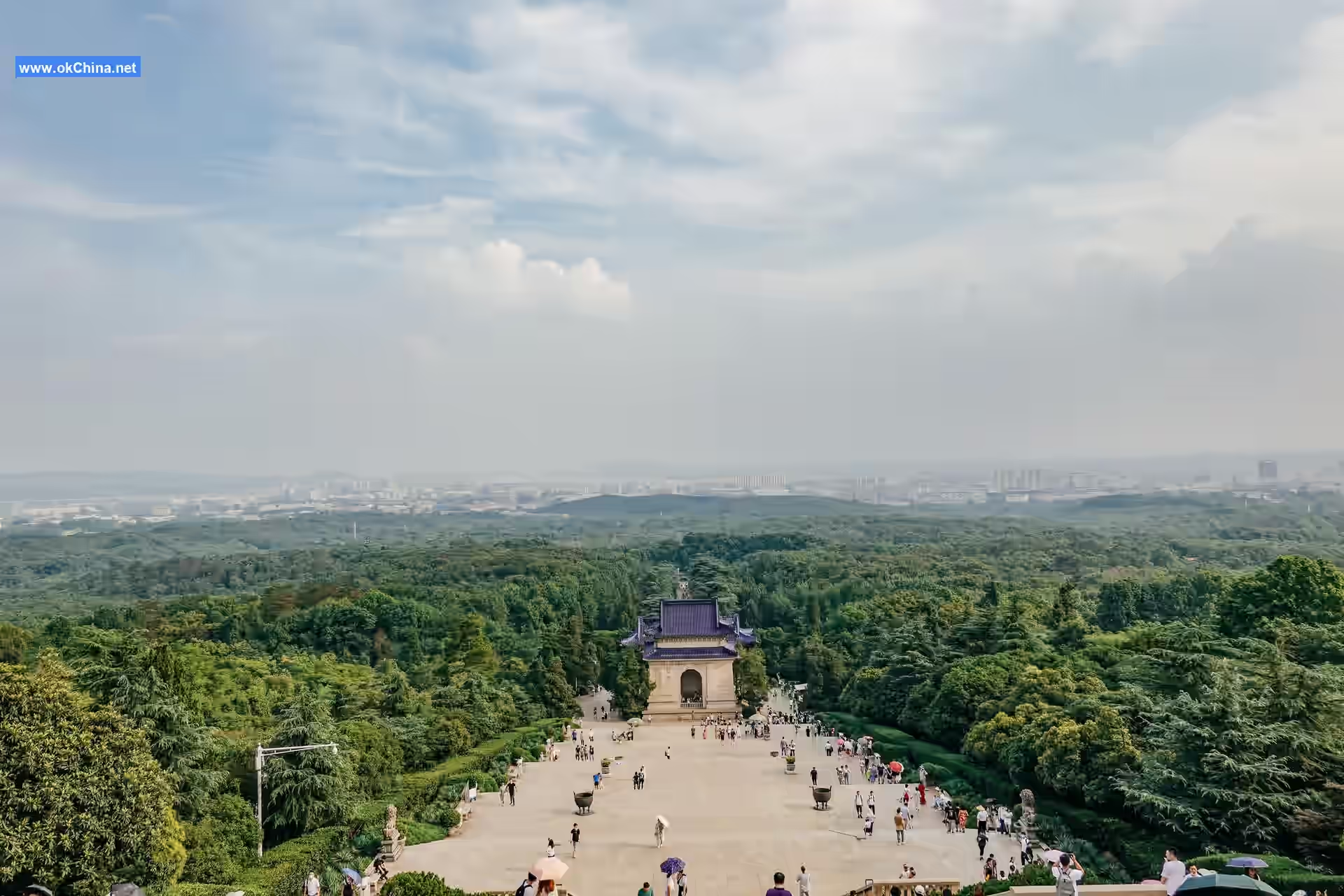
The plaza is located directly south of the Sun Yat-sen Mausoleum, with a semicircular plan. Plane trees are planted along its southern edge, forming a large curved screen. From east to west across the plaza, six rectangular flower beds are arranged in an arc. The flower beds at the eastern and western ends are planted with large boxwoods, while the four central beds contain cedars. The sides of the plaza connect to the Mausoleum Avenue. Heading west leads to the Ming Xiaoling Mausoleum, and east leads directly to Linggu Temple. North of the plaza is a semicircular concrete platform bordered by flower beds, with steps in the middle. Connected to it is also a rectangular platform, approximately 12 meters long. Steps are also set on its south, east, and west sides. From these three sets of steps, one can enter the memorial archway (Bo'ai Archway).
5.1.2 Xiaojing Ding (Filial Piety Tripod)
The Xiaojing Ding is located directly south of the Sun Yat-sen Mausoleum. In 1929, after Dr. Sun Yat-sen's coffin was interred at the mausoleum, Dai Jitao and all the students of National Sun Yat-sen University decided to donate funds to cast a bronze tripod to be placed in front of the Sun Yat-sen Mausoleum, expressing their reverence and remembrance for Dr. Sun.
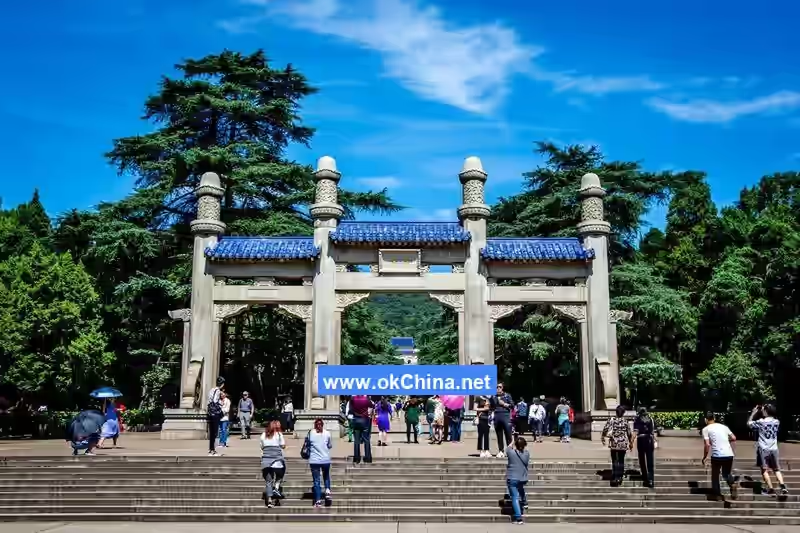
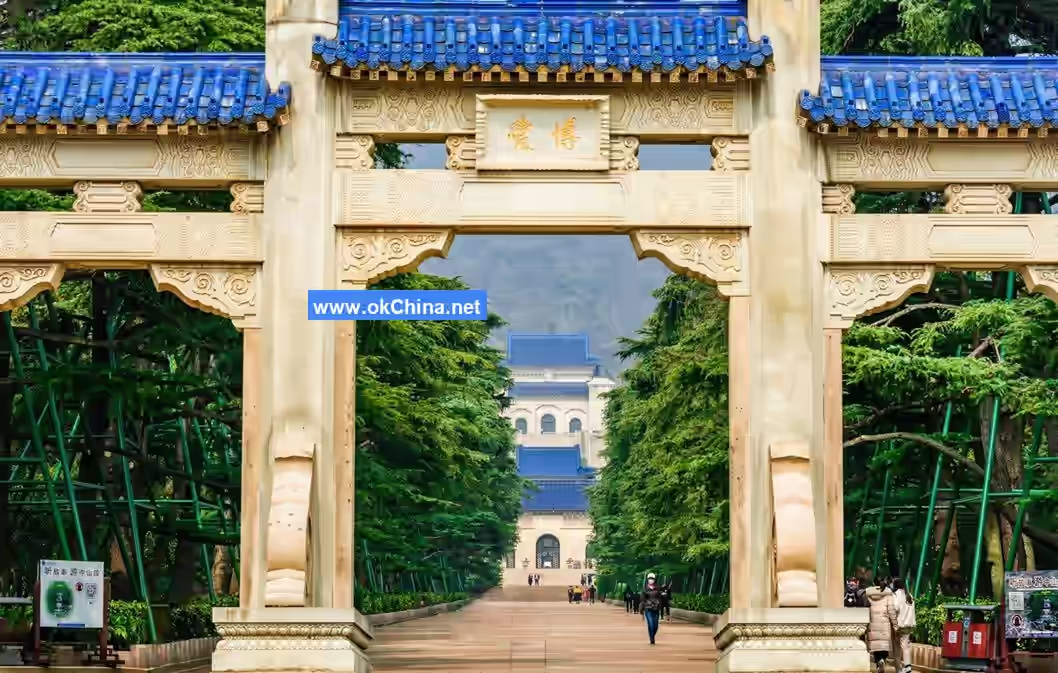
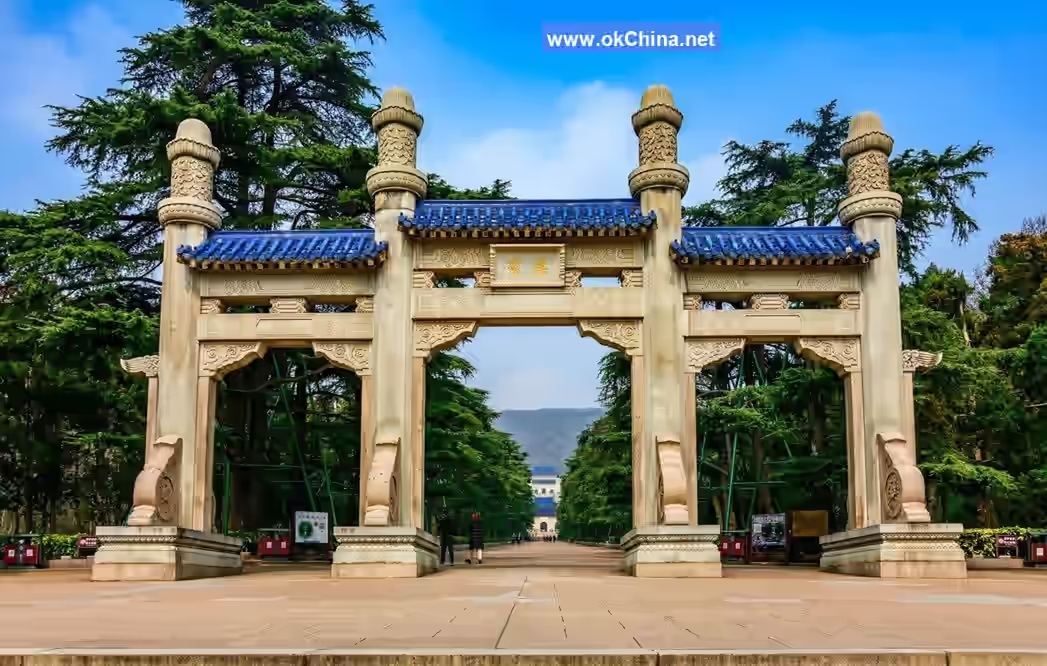
5.1.3 Bo'ai ArchwayThe Universal Love Archway is a granite memorial archway at the entrance of the mausoleum, featuring two golden characters "Bo Ai" (Universal Love) inscribed by Sun Yat-sen. Built in the 19th year of the Republic of China (1930), it is a three-gate archway with a height of 11 meters and a width of 17.3 meters. Constructed with four pillars and six horizontal beams interconnected, it embodies a strong traditional Chinese style. The archway adopts a traditional wooden structure form and is built with massive Fujian granite. The top of the archway is covered with blue glazed tiles. At the base of the four stone pillars, drum-shaped stones are clamped both in front and behind, and the pillar foundations rest on large rectangular stone pedestals. The archway is carved with lotus petals, clouds, and ancient architectural painted patterns.
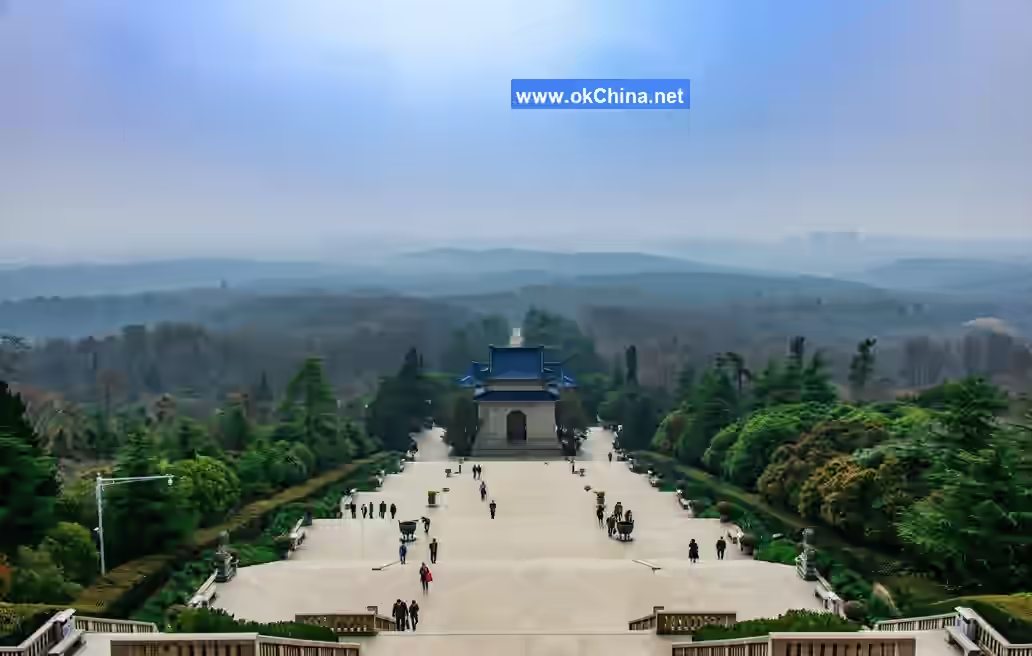
5.1.4 The Sacred Way
Located behind the archway, the Sacred Way is approximately 480 meters long and 40 meters wide. It is divided into three paths: the central path, about 12 meters wide, is paved with reinforced concrete, while the left and right paths, each 4.2 meters wide, are asphalt-paved. Between the central path and the side paths, five pairs of rectangular green belts, each about 9 meters wide, are symmetrically arranged from south to north, planted with two rows of cedars and four rows of junipers. On the eastern and western sides of the Sacred Way, there are lawns planted with trees such as ginkgo and red maple. The central and side paths run parallel to each other, ascending gently along the hillside.
5.1.5 The Mausoleum Gate
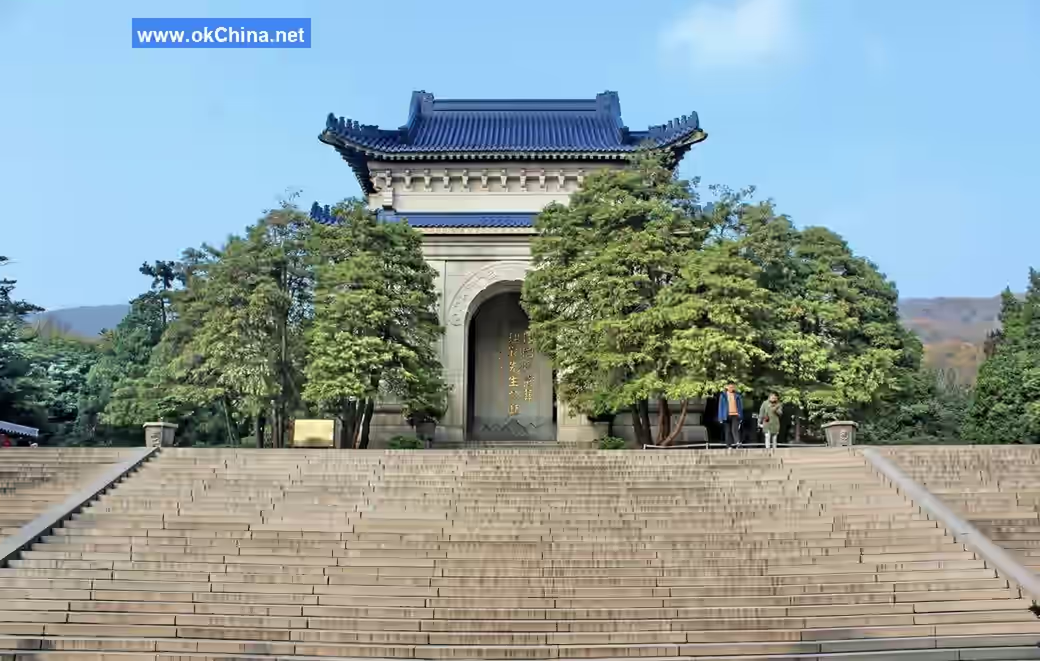
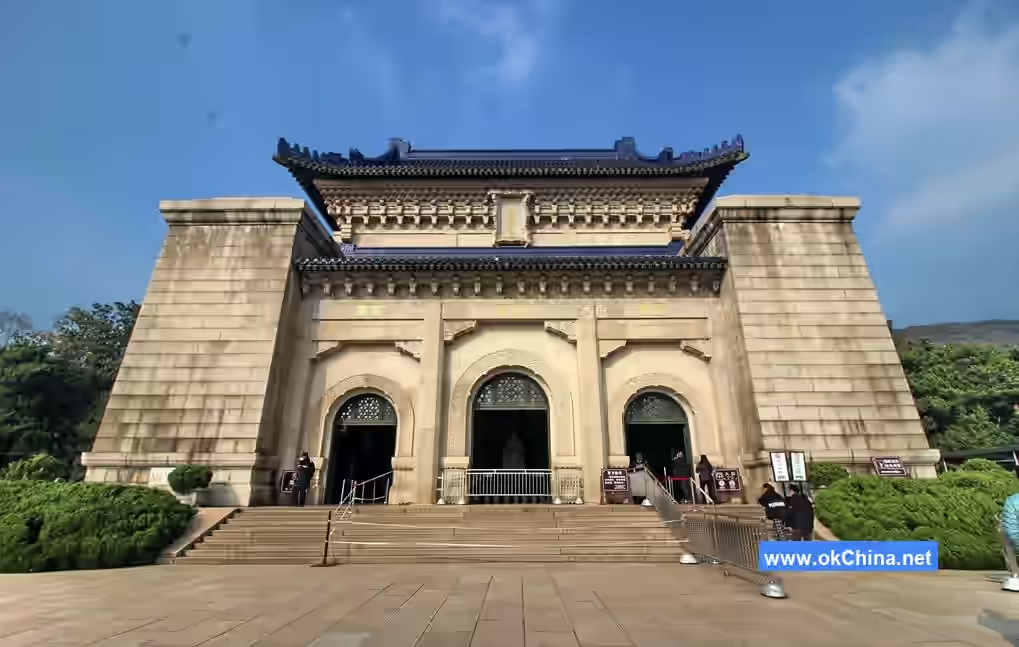
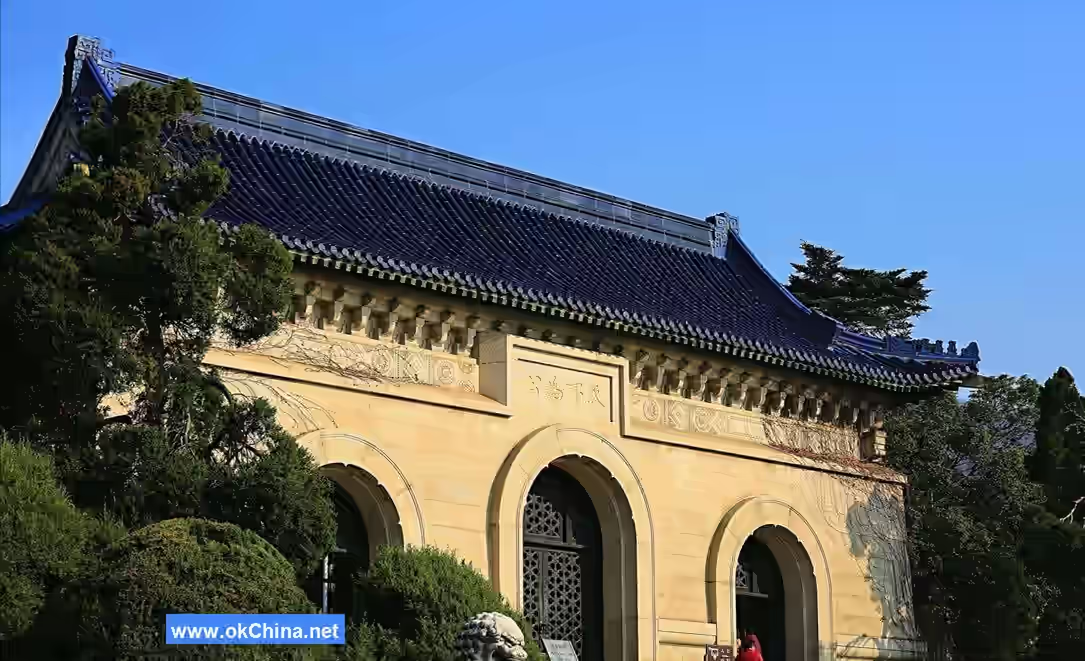
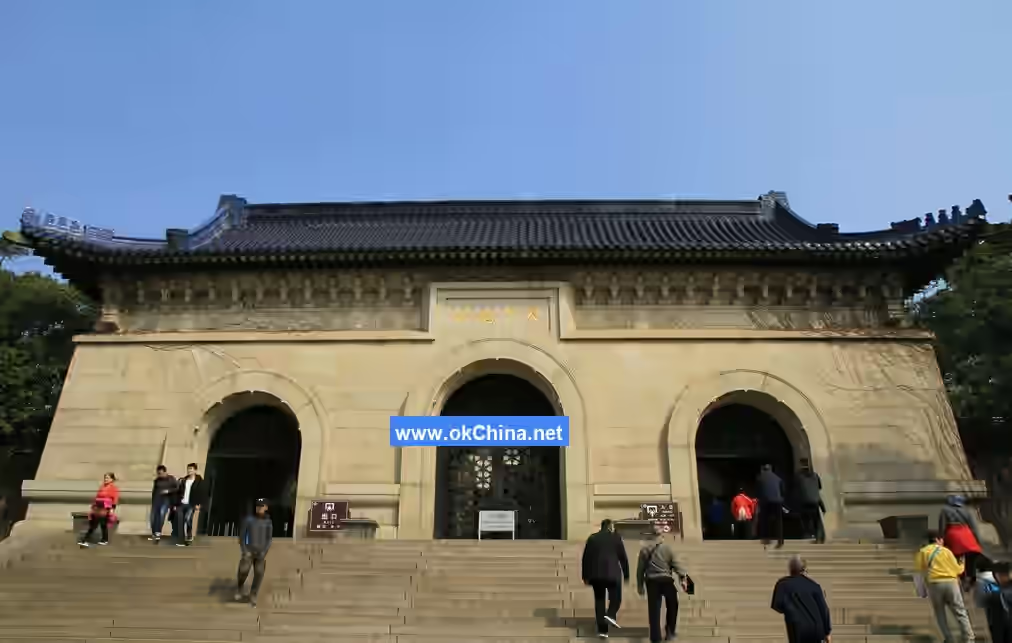
The Mausoleum Gate is located at the end of the Sacred Way and serves as the main entrance to the Sun Yat-sen Mausoleum. In front of the gate is a large cement platform, with 20 steps leading from the platform to the gate. The gate faces south and has a rectangular plan, 27 meters wide, 16.5 meters high, and 8.8 meters deep, all constructed with Fujian granite. The roof is a single-eave hip-and-gable style, covered with blue glazed tiles. There are three arched entrances, each fitted with double-leaf antique bronze doors with plum blossom lattice patterns. Above the central southern door is a stone plaque inscribed with "天下为公" (The World Belongs to the People), selected from Sun Yat-sen's handwriting. On the eastern and western sides in front of the gate, there is a pair of white marble lions, each about 3 meters high. Behind the gate, on both the eastern and western sides, two precious fir trees gifted by Japanese friends are planted.
5.1.6 The Stele Pavilion
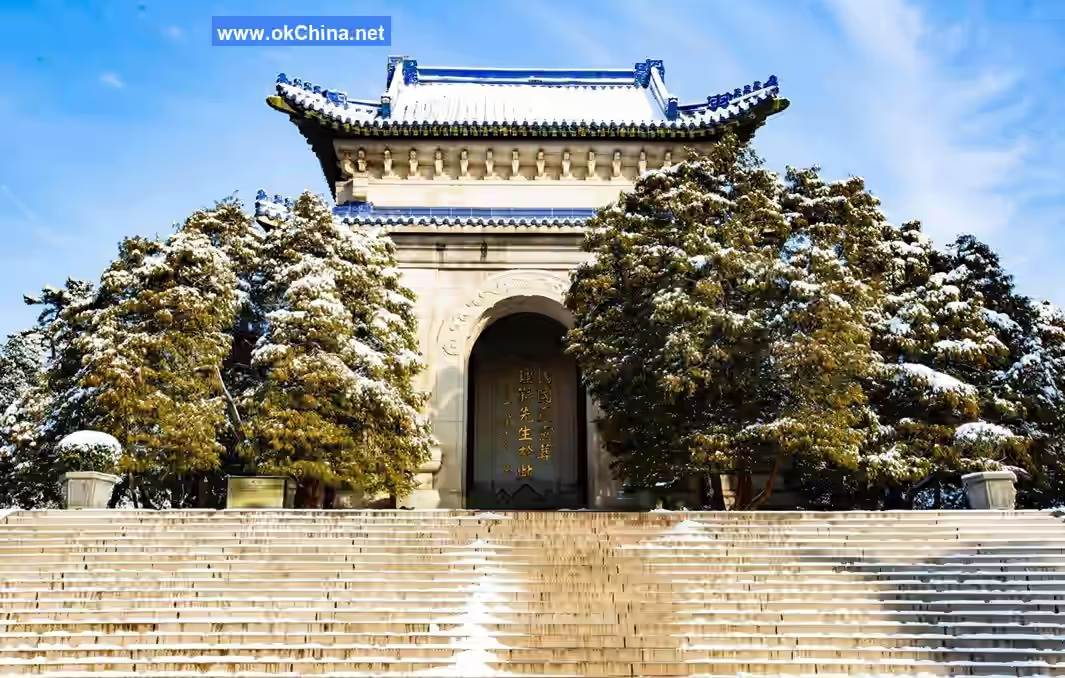
Located behind the Mausoleum Gate, the Stele Pavilion is a square structure with sides measuring 12 meters and a height of about 17 meters. Built with granite, the pavilion features a double-eave roof covered with blue glazed tiles. Each of the four sides has an arched doorway, but the northern arch is barred with stone railings and is not passable. Inside the pavilion stands a stele carved from Fujian granite. The stele bears three lines of gilded characters in regular script, written by Tan Yankai: "中华民国十八年六月一日中国国民党葬总理孙先生于此" (On June 1, the 18th year of the Republic of China, the Kuomintang buried Premier Sun Yat-sen here). The top of the stele features the Kuomintang party emblem on both sides. The top and base of the pavilion are carved with patterns and designs. The top is surrounded by colorful clouds, while the base is encircled by giant waves, with simple and plain lines designed by Lü Yanzhi himself.
5.1.7 The Stone Steps
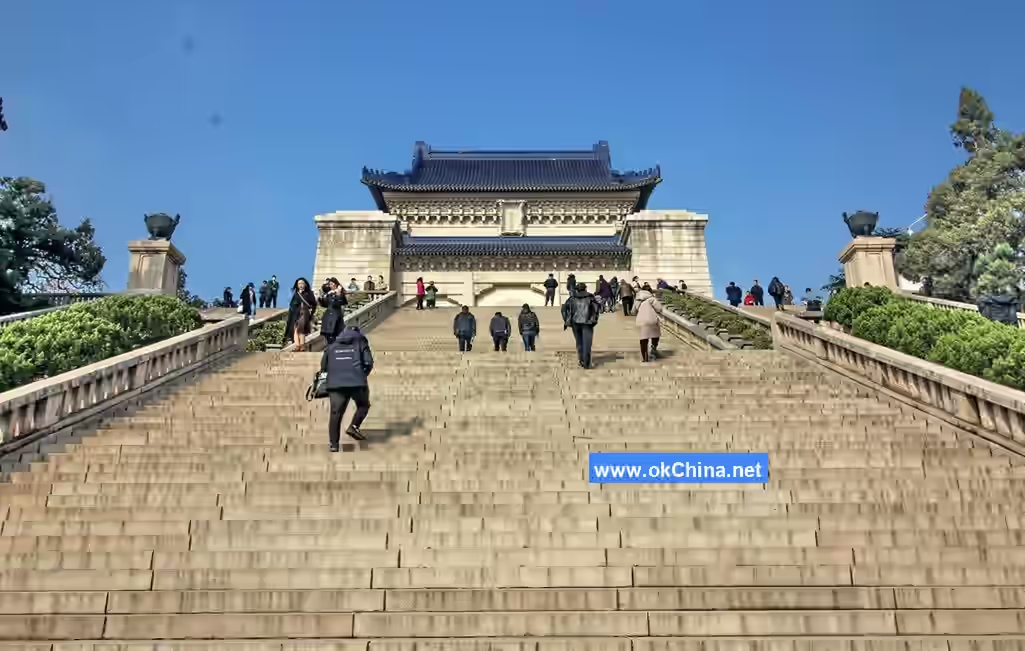
From the Universal Love Archway to the Sacrificial Hall, there are 392 stone steps across 8 platforms, with a total elevation difference of 73 meters. The 392 steps symbolize the 392 million people of China at that time. The steps are paved with Suzhou granite. The highest platform features two ornamental columns, behind which is the Sacrificial Hall.
5.1.8 The Sacrificial Hall
The Sacrificial Hall is the main structure of the Sun Yat-sen Mausoleum, situated at the highest peak of the mountain. It blends Chinese and Western architectural styles, drawing on the characteristics of traditional Chinese mausoleum layouts with a symmetrical arrangement along the central axis. Instead of the traditional yellow glazed tiles and red walls of imperial mausoleums, it features a blue roof and gray-white walls. The southern side of the hall has three arched doors with lattice-patterned purple copper double leaves. The lintels are inscribed with "民主" (Democracy), "民权" (Civil Rights), and "民生" (People's Livelihood). The central door is embedded with a vertical plaque inscribed by Sun Yat-sen: "天地正气" (The Righteous Spirit of Heaven and Earth). In the center of the hall, a 4.6-meter-high seated statue of Sun Yat-sen, carved from Italian white marble by sculptor Paul Landowski in Paris, France, is enshrined. The hall is surrounded by reliefs depicting Sun Yat-sen's revolutionary deeds. The eastern and western walls are inscribed with Sun Yat-sen's handwritten works, "The Fundamentals of National Reconstruction," and "The Last Testament of the Premier," written by Hu Hanmin and others. The dome is painted with a large Kuomintang party emblem. Behind the hall are two tomb doors. The front doors are made of copper, with frames of black marble, and bear a horizontal plaque inscribed by Sun Yat-sen: "浩气长存" (The Noble Spirit Endures Forever). The inner door is a single-leaf copper door inscribed with "孙中山之墓" (Tomb of Sun Yat-sen).
5.1.9 The Burial Chamber
Entering the door leads to the circular Burial Chamber of Eternal Noble Spirit, with a diameter of 18 meters and a height of 11 meters. The chamber is located at an altitude of 165 meters, 700 meters horizontally from the starting point, with an elevation difference of 73 meters. The ceiling is inlaid with colored mosaics forming the Kuomintang party emblem, and the floor is paved with white marble. In the center is a rectangular tomb pit, above which lies a white marble reclining statue of Sun Yat-sen, carved by Czech sculptor Bohumil Kafka based on the appearance of the deceased. Below lies Sun Yat-sen's remains, placed in an American-made copper coffin. The tomb pit is 4 meters in diameter and 5 meters deep, sealed with reinforced concrete. Visitors can walk around the circular chamber and look down at the reclining statue through the white marble railings.
5.2 Other Structures in the Mausoleum Area
5.2.1 The Music Stage
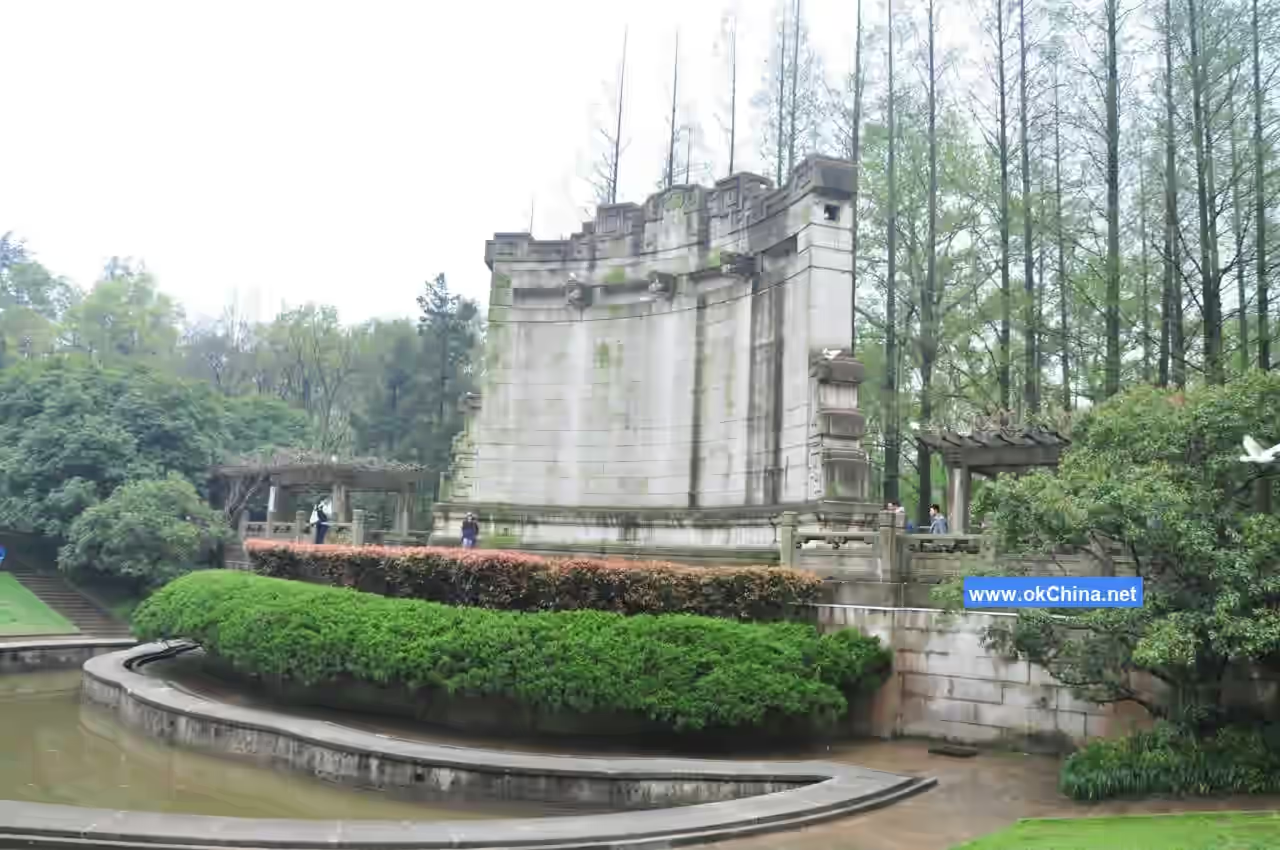
The Music Stage is located south of the Sun Yat-sen Mausoleum Square. Built between the 21st and 22nd years of the Republic of China (1932–1933) at a cost of 95,000 yuan, it covers an area of approximately 4,200 square meters, with a stage area of nearly 250 square meters, designed by Guan Songsheng and Yang Tingbao. The Music Stage is a complementary project of the Sun Yat-sen Mausoleum, primarily used for musical performances and assembly speeches during commemorative ceremonies for Sun Yat-sen. Its architectural style blends Chinese and Western elements, fully incorporating the characteristics of ancient Greek architecture in terms of natural environment utilization, layout, and facade design, while adopting the expressive forms of classical Chinese gardens in Jiangnan for details such as the screen wall and music platform. Behind the stage is a large curved screen wall, 11.3 meters high and 16.7 meters wide, which functions to gather sound. In front of the stage is a crescent-shaped lotus pond. Ahead of the pond, a fan-shaped audience seating area is built along the slope, accommodating over 3,000 spectators. On December 2, 2017, the Music Stage was listed among the "Chinese Architectural Heritage of the 20th Century."
5.2.2 The Guanghua Pavilion
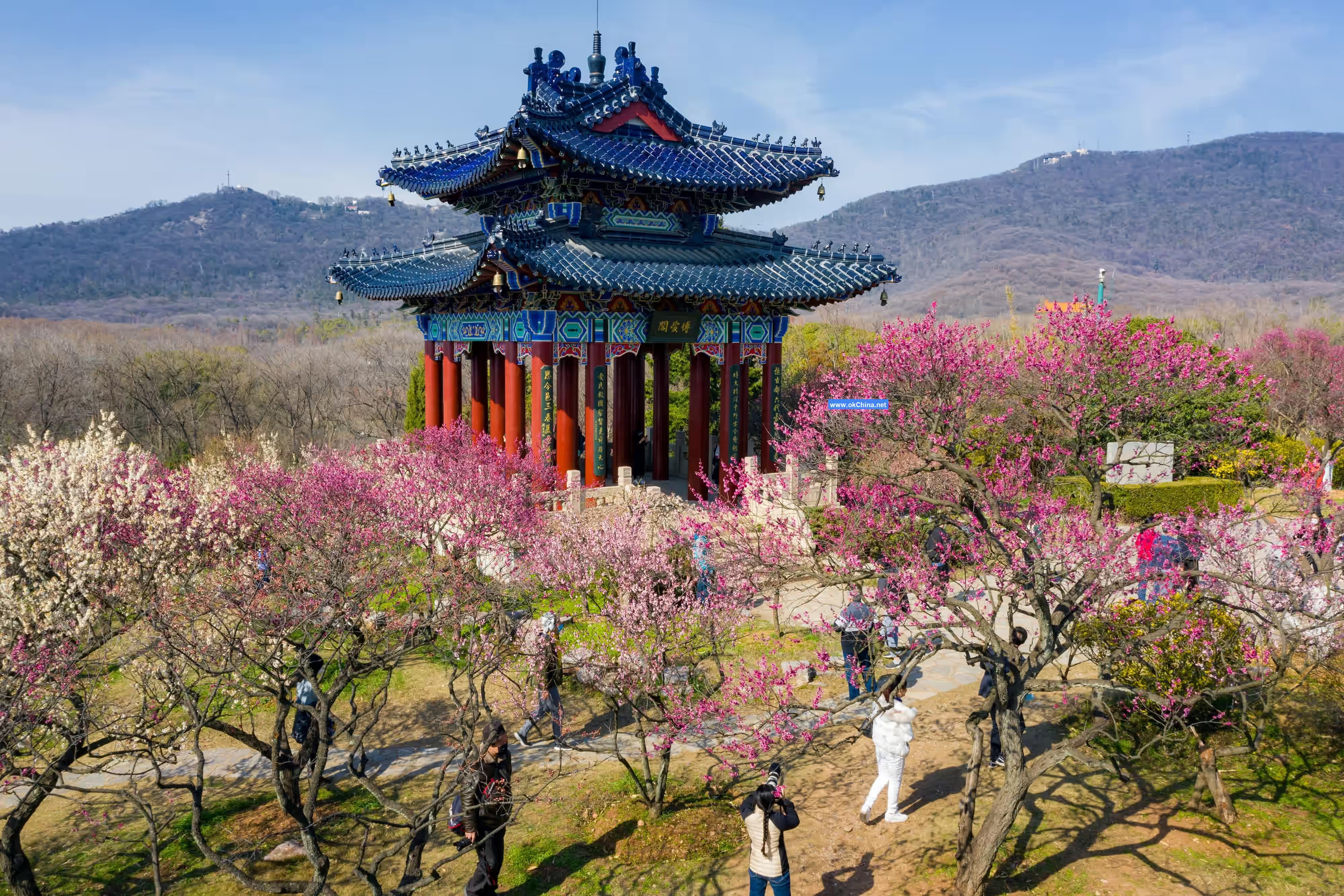
The Guanghua Pavilion is one of the commemorative structures of the Sun Yat-sen Mausoleum, located on a small hill east of the mausoleum. Built between the 20th and 23rd years of the Republic of China (1931–1934), it was designed by architect Liu Dunzhen and constructed by the Fujian Jiang Yuancheng Stone Factory, funded by donations from overseas Chinese during Sun Yat-sen's funeral ceremony. All components of the Guanghua Pavilion, including the roof ridges, roof surface, eaves, brackets, beams, pillars, corbels, and caisson ceilings, were meticulously carved from large stones by craftsmen. In 1994, the Sun Yat-sen Mausoleum Scenic Area underwent a comprehensive restoration of the Guanghua Pavilion, constructing a new cement walkway and planting plum blossoms, osmanthus, and thousand-head cypresses around the pavilion. To the south of the pavilion is a gourd-shaped pond, adorned with lake stones, rockeries, weeping willows, peach blossoms, camellias, and a lawn connecting the pavilion and the pond.
5.2.3 The Xingjian Pavilion
The Xingjian Pavilion is located by the roadside in the southwestern corner of the Sun Yat-sen Mausoleum, at the junction of the Mausoleum Avenue and Mingling Road, providing a resting spot for visitors paying homage. Donated by the Guangzhou Municipal Government and designed by architect Zhao Shen, the pavilion was constructed by the Wang Jingji Construction Factory in the 20th year of the Republic of China (1931) and completed in the summer of the 22nd year (1933). The name "Xingjian" originates from the Book of Changes: "As heaven maintains vigor through movement, a gentleman should constantly strive for self-perfection; as earth's condition is receptive devotion, a gentleman should hold the outer world with broad virtue." The Xingjian Pavilion is square, with sides measuring 9.3 meters and a height of 12 meters, featuring a double-eave pyramidal roof covered with blue glazed tiles. Each corner of the pavilion has four pillars, totaling 16 pillars, all painted red. Originally, the beams, lintels, caisson ceilings, and corbels were wooden structures adorned with detailed paintings, but in the 1970s, they were replaced with cement structures. Surrounding the pavilion are cement railings, 40 centimeters high, providing seating for visitors.
5.2.4 The Classic of Filial Piety Tripod
The Classic of Filial Piety Tripod is located at the southern end of the Sun Yat-sen Mausoleum Square. After Sun Yat-sen's burial, Dai Jitao and the faculty and students of Sun Yat-sen University jointly donated a bronze tripod, entrusting the mausoleum administration with its design and construction. Inside the tripod is a hexagonal bronze stele inscribed with the full text of the Classic of Filial Piety, handwritten by Dai Jitao's mother, Madame Huang, hence the name. The tripod is approximately 4.25 meters high, with a belly diameter of 1.21 meters and a weight of about 10,000 jin (5,000 kg). The bronze tripod is circular in appearance, with three legs and two handles, composed of three sections that can be disassembled. One side of the tripod is cast with the characters "智、仁、勇" (Wisdom, Benevolence, Courage). Designed by Zhang Pusen, the tripod was cast by the Jinling Arsenal (predecessor of today's Nanjing Chenguang Machinery Factory) in the 21st year of the Republic of China (1932) and completed in the autumn of the 22nd year (1933), costing 13,000 yuan.
5.2.5 The Liuhui Pavilion
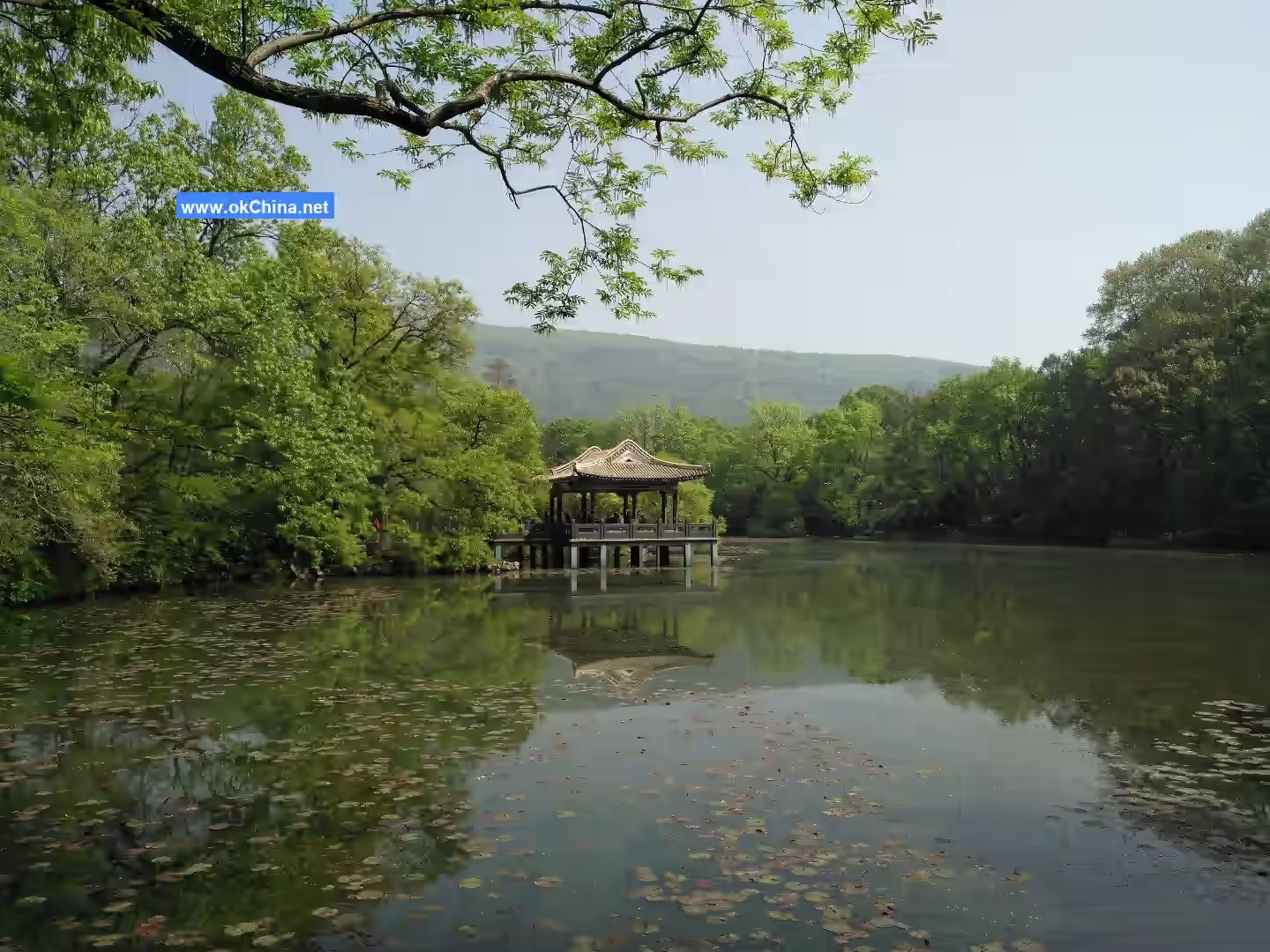
The Liuhui Pavilion, also known as the Waterside Pavilion, is one of the commemorative structures of the Sun Yat-sen Mausoleum. Built in the winter of 1932, it was funded by the Central Military Academy and designed by mausoleum engineer Gu Wenyu. The pavilion is surrounded by water on three sides and connected to the land by stone steps on one side. It has a rectangular plan, 13 meters long and 9 meters wide, surrounded by blue railings about one meter high. The roof is a rolled-shed style covered with white glazed tiles; the pillars are painted blue; the eaves are painted white with blue patterns; and the beams and corbels are adorned with colorful paintings. The floor is inlaid with small red octagonal tiles. The entire pavilion is surrounded by water on three sides, with only the southern side connected to the embankment by stone steps. The three regular script characters "流徽榭" (Liuhui Pavilion) were inscribed by Marshal Xu Xiangqian, a graduate of the first class of the Whampoa Military Academy.
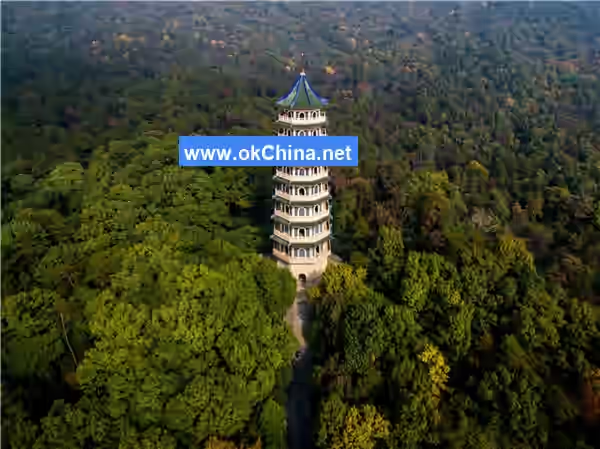
5.2.6 The Sutra DepositoryThe Sutra Repository, also known as the Sun Yat-sen Memorial Hall, is located in the vast forest between the Sun Yat-sen Mausoleum and the Linggu Temple. It was initiated for fundraising by the Chinese Buddhist Association in November 1934 and completed in October the following year. This building was specifically constructed to house Sun Yat-sen’s belongings and consists of three parts: the main building, monks’ quarters, and a stele corridor. The main building is a palace-style structure that also resembles a temple, with three floors. Behind the building is a corridor-style structure measuring 125 meters in length, with walls inlaid with 138 bluestone steles donated by General Feng Yuxiang from Songshan Mountain in Henan. These steles are engraved with the full text of the "Three Principles of the People," comprising sixteen lectures and totaling 155,000 characters.
5.2.7 Yangzhi Pavilion
Yangzhi Pavilion is situated on Meiling Ridge in Erdaogou, between the Sun Yat-sen Mausoleum and the Linggu Temple. Among all the commemorative buildings at the Sun Yat-sen Mausoleum, Yangzhi Pavilion is the only one funded by an individual. The donor, Ye Gongchuo, named the pavilion "Yangzhi Pavilion" to express his admiration for Sun Yat-sen. The term "Yangzhi" originates from the Book of Songs·Xiaoya: "High mountains I look up to; great roads I walk along." Yangzhi Pavilion is square in shape with a four-corner pyramidal roof covered with blue glazed tiles. The pavilion has a side length of 5 meters and a height of approximately 6.7 meters. The interior features a polished stone floor, and the steps are inlaid with Suzhou Jinshan stone. Columns, beams, railings, and other components are all constructed of reinforced concrete and adorned with colored paintings. The inscription "Yangzhi Pavilion" on the pavilion’s lintel was personally written by Ye Gongchuo. Yangzhi Pavilion was also designed by architect Liu Dunzhen and constructed by the Taofuji Construction Company, completed in the autumn of 1932. In August 1968, Ye Gongchuo passed away, and his ashes were buried on the west side of Yangzhi Pavilion.
5.2.8 Sun Yat-sen Memorial Hall
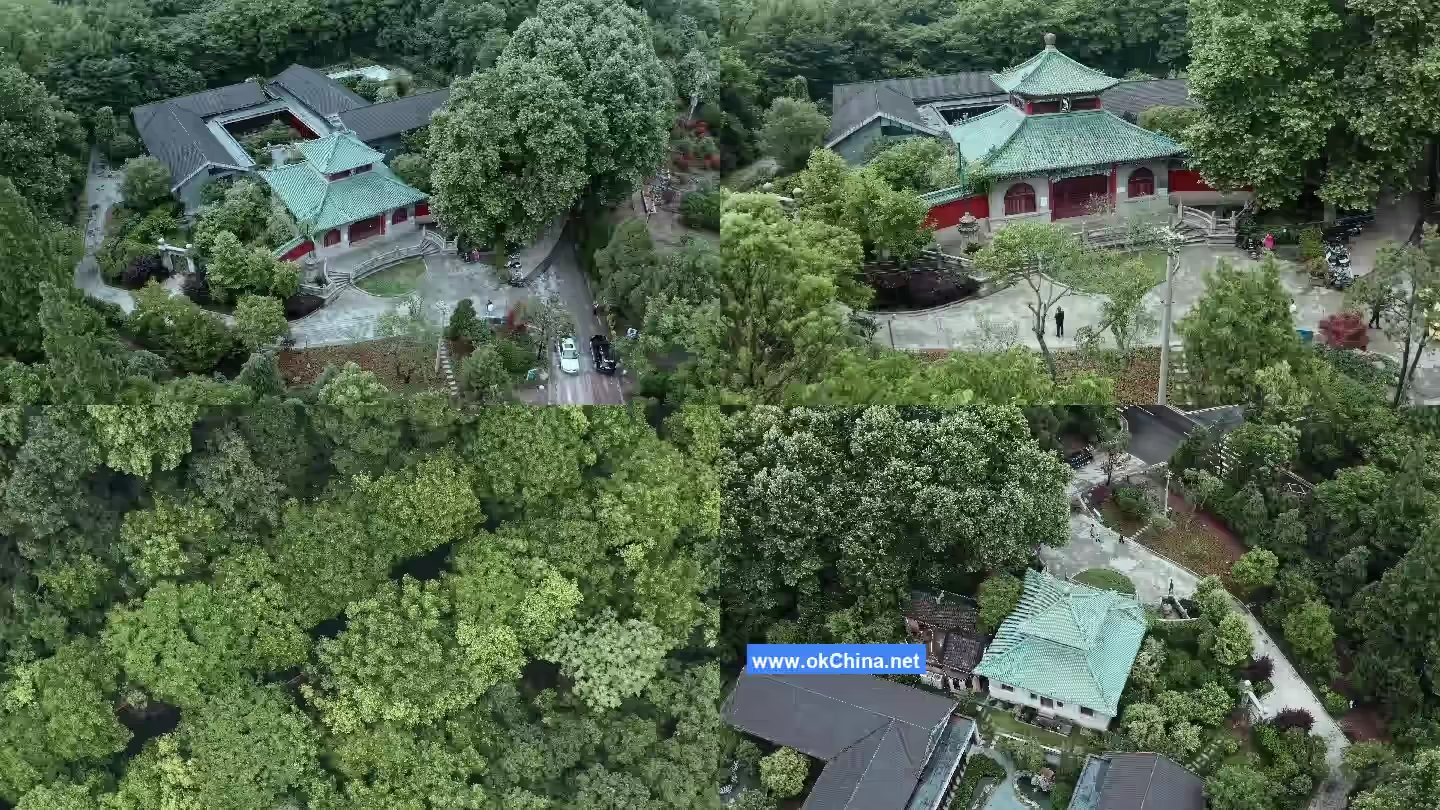
The Sun Yat-sen Memorial Hall consists of the Sutra Repository, the "Three Principles of the People" stone stele corridor, and monks’ quarters, covering an area of over 9,500 square meters. Located in the dense forest between the Sun Yat-sen Mausoleum and the Linggu Temple, it is a classical building modeled after a Qing Dynasty lamasery. Designed by the renowned architect Lu Shusen and completed in the winter of 1936, it is one of the many commemorative buildings in the Sun Yat-sen Mausoleum complex. The main building of the Sun Yat-sen Memorial Hall stands 20.8 meters tall, with a roof covered in green glazed tiles and ridges adorned with yellow glazed tiles. The central ridge features a purple copper canopy with a revolving wheel, and the beams, columns, and lintels are decorated with colored paintings. The hall houses Sun Yat-sen’s classic works and precious historical materials such as photos from his funeral. In the center of the square in front of the hall, a flower bed holds a 2.6-meter-tall bronze statue of Sun Yat-sen. Behind the hall is a 125-meter-long stele corridor engraved with the full text of Sun Yat-sen’s "Three Principles of the People." The Sun Yat-sen Memorial Hall now serves as a research and practice education base for primary and secondary school students in Nanjing, a Jiangsu Provincial Patriotic Education Base, a Jiangsu Provincial Outstanding School Moral Education Base, a National Youth Civilization Unit, a National Primary and Secondary School Patriotic Education Base, a Chinese Overseas Chinese Federation Patriotic Education Base, and a Kuomintang Revolutionary Committee Member Education Base.
5.2.9 Meiling Palace
Meiling Palace is the villa where Chiang Kai-shek and his wife, Soong Mei-ling, stayed. Its official name is the "National Government Chairman’s Official Residence," and it is renowned as the "Finest Villa in the Far East." The main structure of Meiling Palace is a three-story, double-eaved palace-style building with a mountain-shaped roof covered in green glazed tiles. The glazed tiles on the eaves are carved with over 1,000 phoenixes, making it the only example of its kind in China. The entire building is magnificent, with luxurious interior decorations featuring xuanzi colored paintings. Particularly unique are the blue-background skylark and qionghua flower patterns, which were created by the meticulous brush painter Chen Zhifo. The surrounding area is lush with trees and fragrant with blooming flowers year-round. Cars can drive directly to the palace gate. The ground floor houses reception rooms and secretarial offices, while the second floor features a living room and lounge on the west side, and the bedrooms of Chiang Kai-shek and Soong Mei-ling on the east side.
6. Cultural Activities
6.1 Cultural History
6.1.1 The Origin of "天下为公" (The World Belongs to All) on the Mausoleum Gate
According to the interpretation by the Eastern Han Dynasty Confucian scholar Zheng Xuan, the character "公" (gong) in "天下为公" means "共" (gong), or "shared." Thus, "天下为公" means that the world belongs to all people. For Sun Yat-sen, "天下为公" carried deeper and broader implications. In his Three Principles of the People, Sun Yat-sen stated, "The true Three Principles of the People is the Great Harmony World that Confucius hoped for." The "Great Harmony" world that Confucius yearned for refers to the ideal society described in the Book of Rites·Liyun: "When the Great Way prevails, the world belongs to all." The inscription "天下为公" on the gate of the Sun Yat-sen Mausoleum is taken from Sun Yat-sen’s calligraphic gift of the Liyun Datong Chapter to Mr. Yang Shukan.
6.1.2 The Reason Why the Sun Yat-sen Mausoleum Lacks an Epitaph
On March 18, 1926, the 32nd meeting of the Sun Yat-sen Mausoleum Preparatory Committee resolved that "the necessary inscriptions for the Premier’s Mausoleum shall be assigned as follows: Mr. Wang Jingwei shall compose the stele inscription, Mr. Hu Hannian shall compose the epitaph, Mr. Wu Zhihui shall compose the biography, and Mr. Zhang Jingjiang shall compose the record." In 1928, the minutes of the 55th meeting of the Preparatory Committee indicated that after two years of deliberation, the committee carefully reconsidered and concluded that "given the greatness of the Premier, no epitaph or biographical text could encompass everything, so it is better not to use one."
6.1.3 The Reason for Using "榭" (Xie) in the Name "流徽榭" (Liuhui Xie)
Shuowen Jiezi (Analytical Dictionary of Characters), Volume 6, Mu Bu (Wood Radical), records: "榭 (xie), a platform with a house. Derived from the character 木 (mu) with the phonetic component 䠶 (she). Pronounced as 'ci ye qie'." The character 䠶 resembles a person drawing a bow, so in ancient times, "xie" originally referred to a wooden house for storing weapons or military training. Later, it also came to mean a high earthen platform or a waterside hall without walls. China’s earliest and most systematic monograph on garden construction, Yuan Ye (The Craft of Gardens), states: "Xie means to borrow. It borrows from the scenery to achieve its form, whether by the water’s edge or among flowers, and its design adapts to the surroundings." The author, Ji Cheng, believed that a xie is a type of garden leisure building that excels by leveraging the surrounding scenery. In 1932, the management department of the Sun Yat-sen Mausoleum built a dam and embankment here, creating a reservoir named Liuhui Lake. Due to the combination of mountains and water in this location, it was named Liuhui Xie under the guidance of designer Gu Wenyu.
6.2 Scenic Area Activities
In March 2019, the Sun Yat-sen Memorial Hall in the Sun Yat-sen Mausoleum scenic area organized the public welfare tree-planting activity "‘Planting’ Hands Together, Building a Beautiful Zhongshan."
In May 2019, the Music Terrace in the Sun Yat-sen Mausoleum scenic area hosted the "Romantic Wisteria, Spring Music Festival" Zhongshan Holiday Concert.
In August 2019, the Sun Yat-sen Mausoleum scenic area organized an activity for cross-strait university students to jointly trace Sun Yat-sen’s footsteps in Nanjing.
In October 2022, the tea plantation in the Sun Yat-sen Mausoleum scenic area conducted a tea culture research activity.
Comments
Post a Comment