Harbin Sun Island Scenic Area
1. Introduction
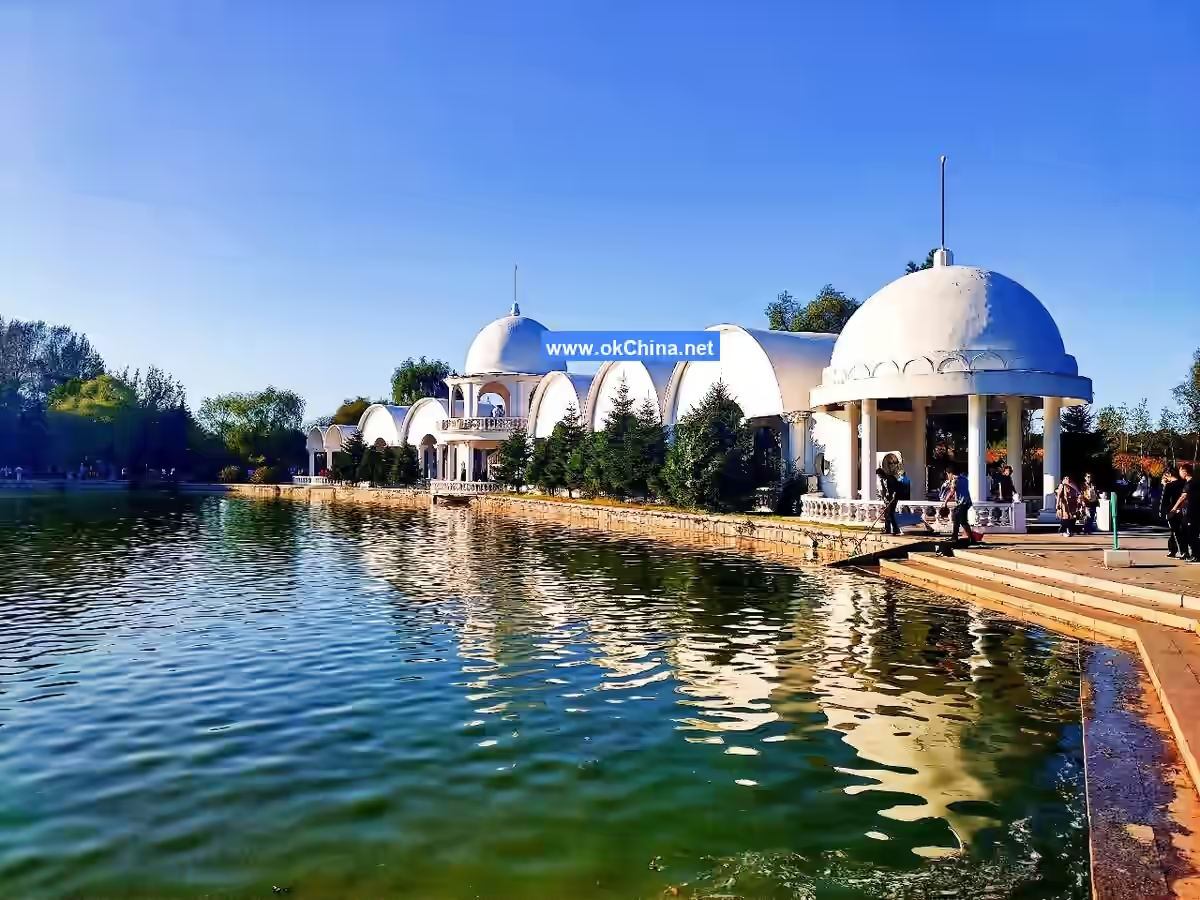
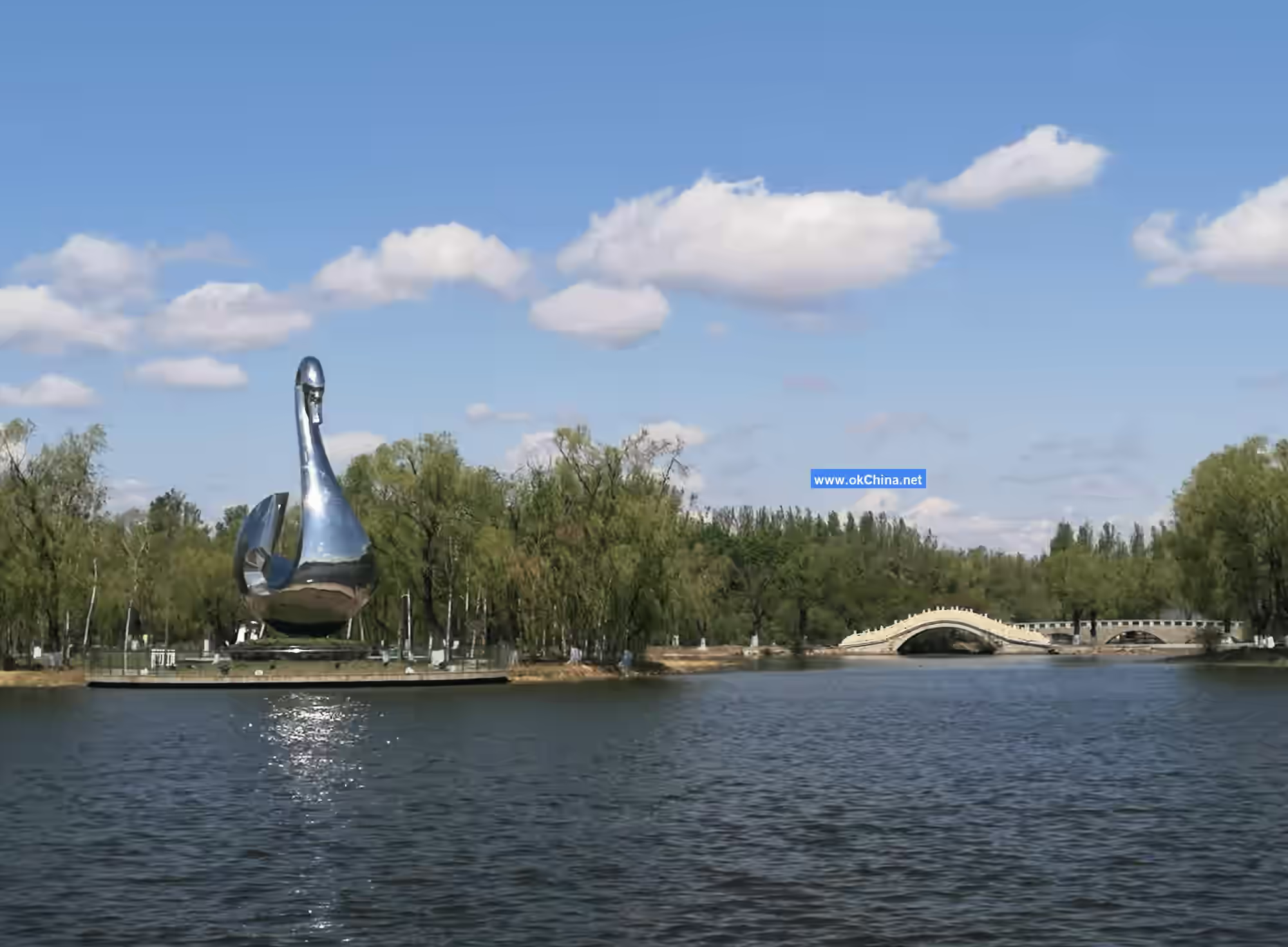
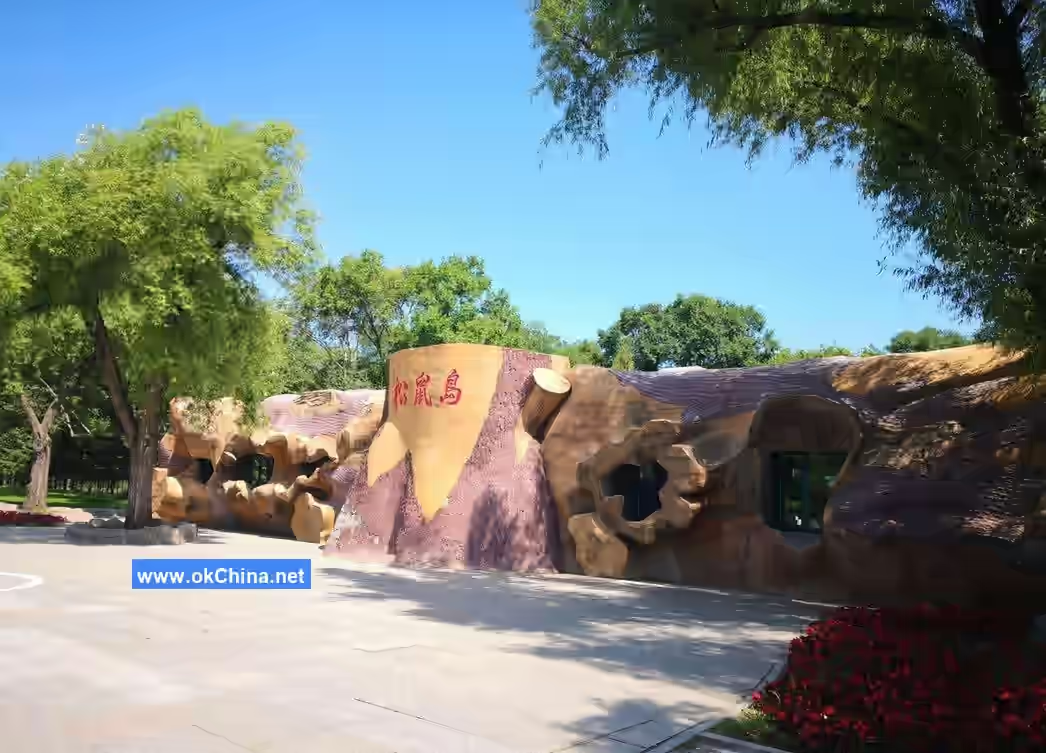
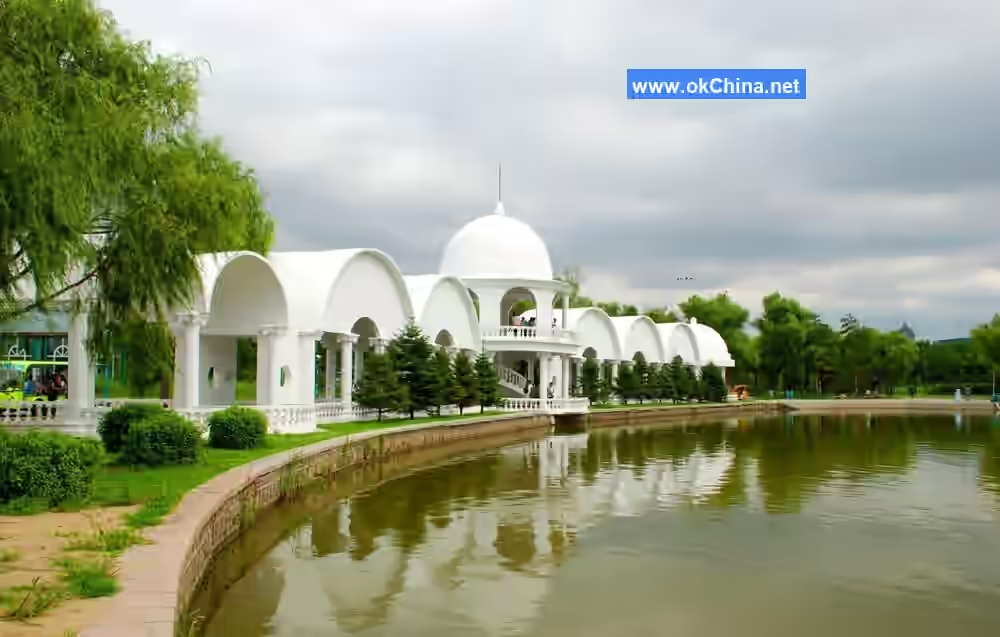
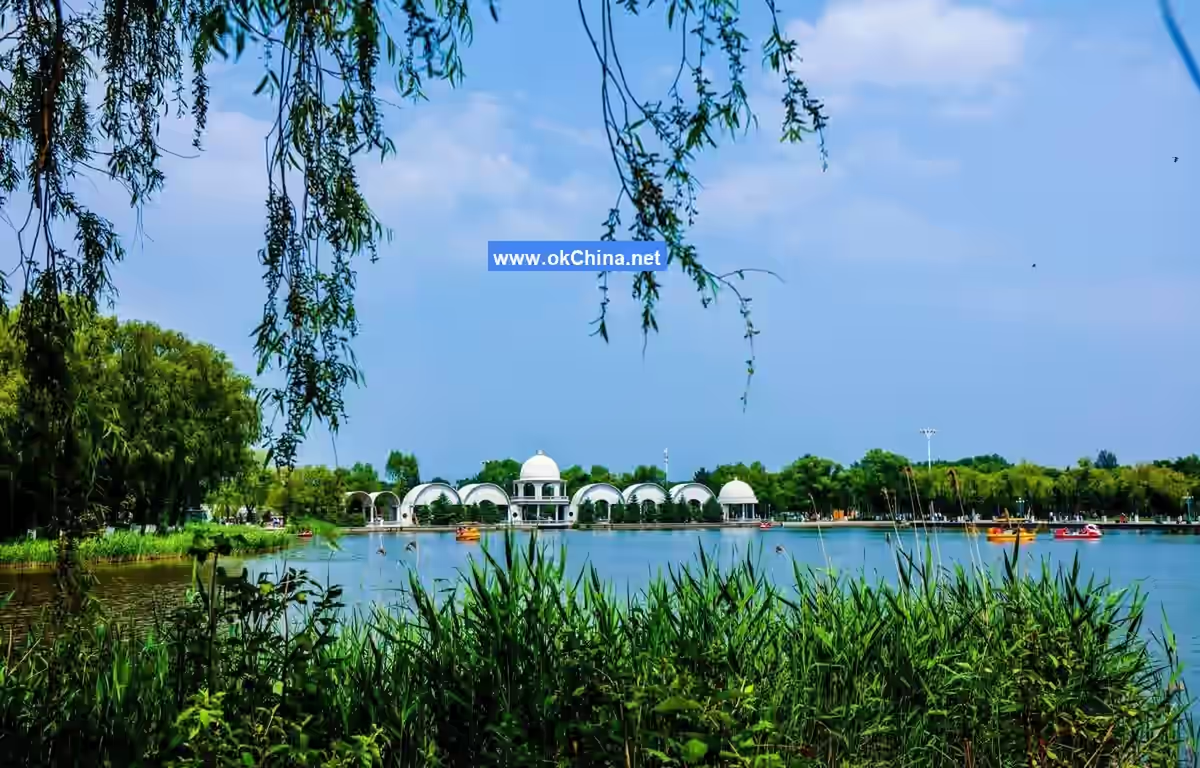
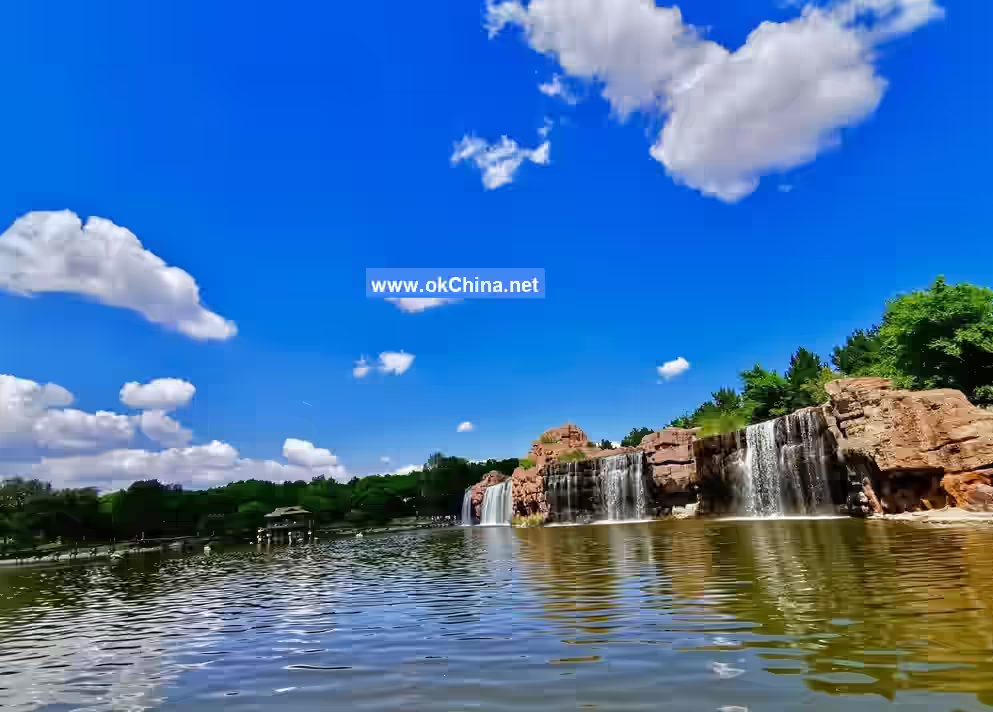
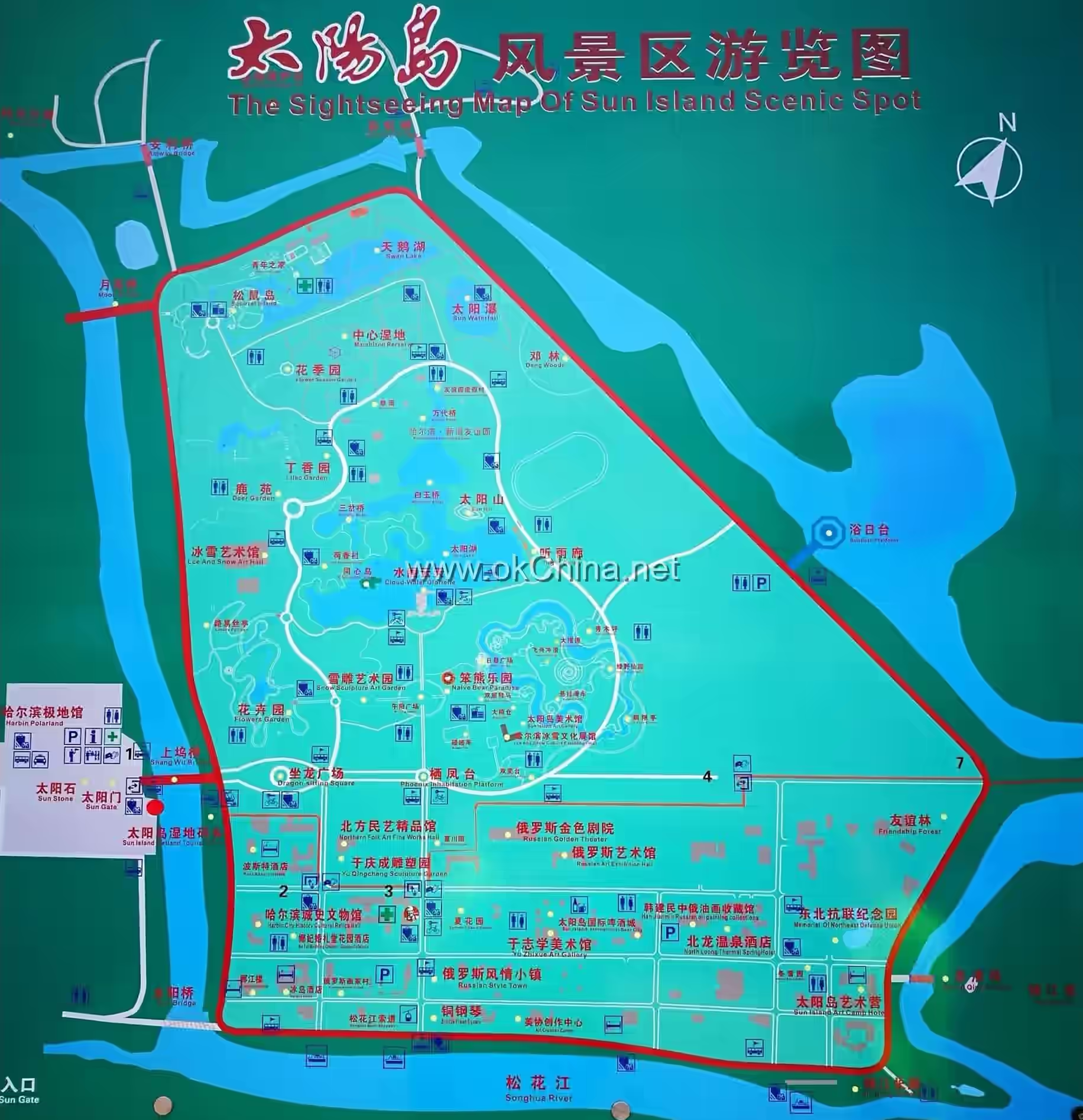
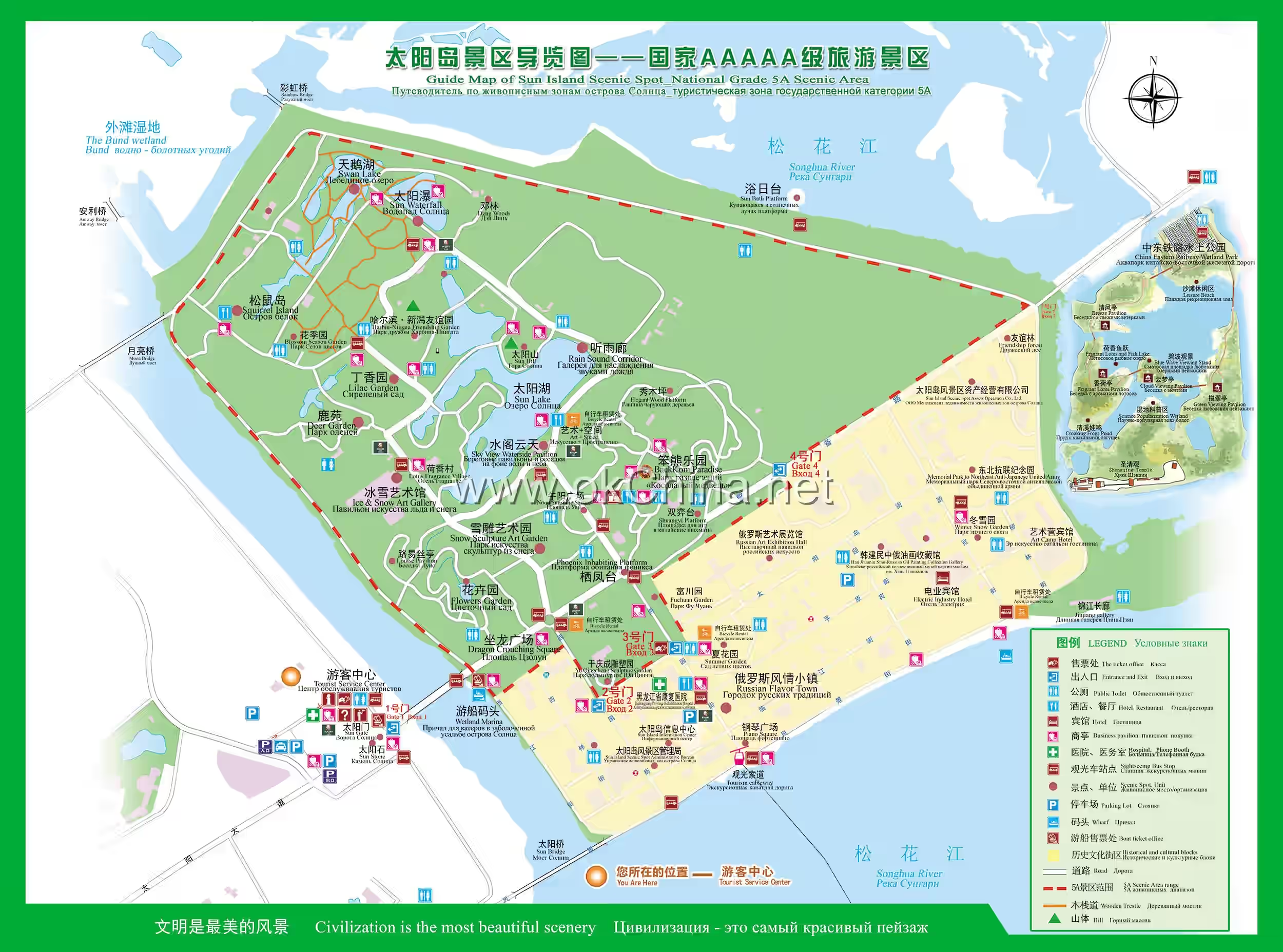
Harbin Sun Island Scenic Area, originally known as Harbin Sun Island Park, is a tourist attraction located in Songbei District, Harbin City, Heilongjiang Province. The planned area of the scenic area is 38 square kilometers. The Harbin Sun Island Scenic Area was established in 1958. It is the earliest park constructed within the Sun Island scenic area after the founding of the People's Republic of China. Relying on Sun Island, the scenic area focuses on enhancing attractions such as Shuige Yuntian (Water Pavilion in the Clouds), Qifeng Terrace, Zuolong Square, Squirrel Island, Clumsy Bear Paradise, Snow Sculpture Art Garden, Ice and Snow Art Gallery, Russian Style Town, and the Northeast Anti-Japanese Allied Forces Memorial Garden. It has created a multifunctional scenic area integrating resources like ice and snow culture and folk culture. On May 8, 2007, Harbin Sun Island Park was approved by the National Tourism Administration of the People's Republic of China as a National AAAAA-level Tourist Attraction. It became the first National 5A-level tourist attraction in Harbin City and Heilongjiang Province.
2. History of the Scenic Area
In 1958, Harbin City began constructing Sun Island Park on the north side of the Jingbei Road within the Sun Island embankment. The initial area was 115 hectares, making it the earliest cultural and leisure park built on Sun Island after the founding of the People's Republic of China. In 1980, the Sun Island Scenic Area successively built its first batch of attractions, including Shuige Yuntian, Sun Lake, and Sun Hill. In June 2001, the Ice and Snow Art Gallery of the Sun Island Scenic Area opened to the public. In 2003, Harbin City launched a large-scale three-year renovation and transformation project for Sun Island. Prior to this renovation, the government relocated over 400 households and 64 units from the island, truly turning the Sun Island Scenic Area into a dedicated tourism and leisure zone. On January 28, 2005, the Northern Folk Art Treasures Museum in the Sun Island Scenic Area officially opened. In 2019, the Sun Island Scenic Area constructed six greenways with a total length of 25 kilometers. On May 18, 2024, the "Squirrel Island" in the Sun Island Scenic Area opened to welcome visitors.
3. Geographical Environment
3.1 Location and Territory
Harbin Sun Island Scenic Area is located in Sun Island Subdistrict, Songbei District, Harbin City, Heilongjiang Province. It sits on the north bank of the Songhua River, between the Jiangnan District and Songbei District.
3.2 Topography and Landforms
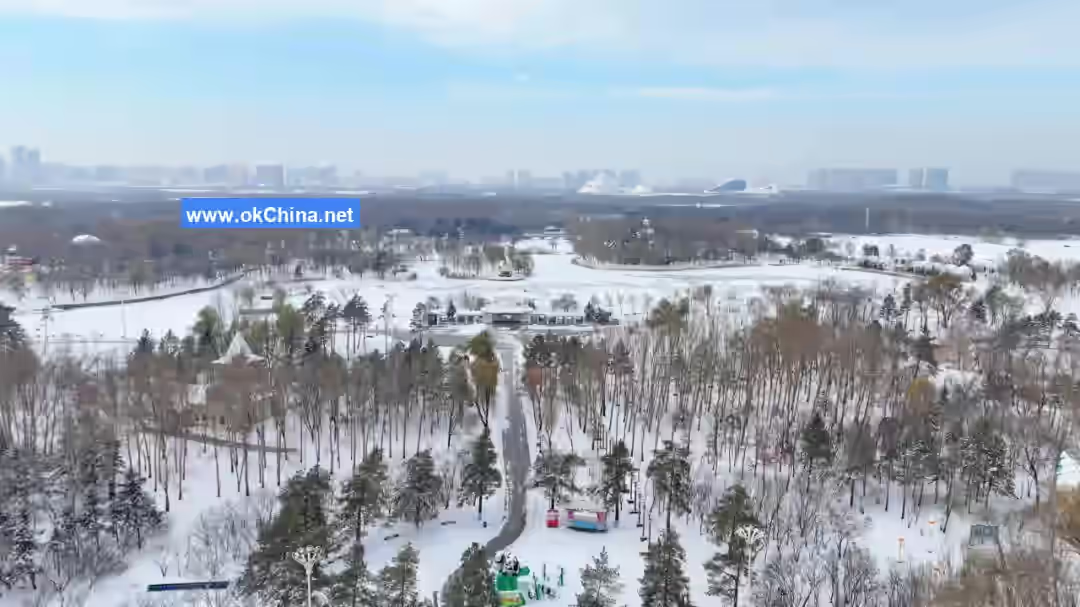
The Harbin Sun Island Scenic Area belongs to a river floodplain. Due to prolonged periods of low water levels, it is often covered by vast wetland grasslands, exhibiting landform types such as floodplains, marshes, gentle slopes, ridges, and inter-ridge depressions.
3.3 Climate Characteristics
The Songbei District, where the Harbin Sun Island Scenic Area is located, has a mid-temperate continental monsoon climate with four distinct seasons. Winters are cold, long, and dry; summers are short, cool, and pleasant; springs are windy with little rain; and autumns have mostly clear and fine weather. The annual average temperature is 4.2°C. January is the coldest month with an average temperature of -18.3°C and an extreme minimum of -38.1°C. July is the hottest month with an average temperature of 23°C and an extreme maximum of 39.2°C. The annual average frost-free period is 146 days, with a maximum frozen soil depth of 2.05 meters. The multi-year average precipitation is 569.1 mm, with significant differences in precipitation across the four seasons. The peak precipitation months are typically concentrated in July, August, and September.
4. Main Attractions
4.1 Sun Stone
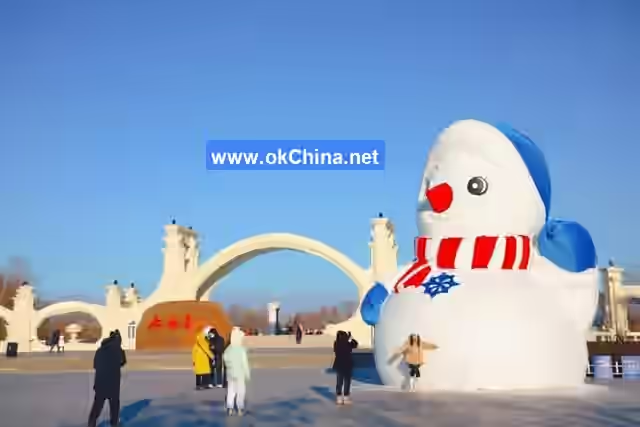
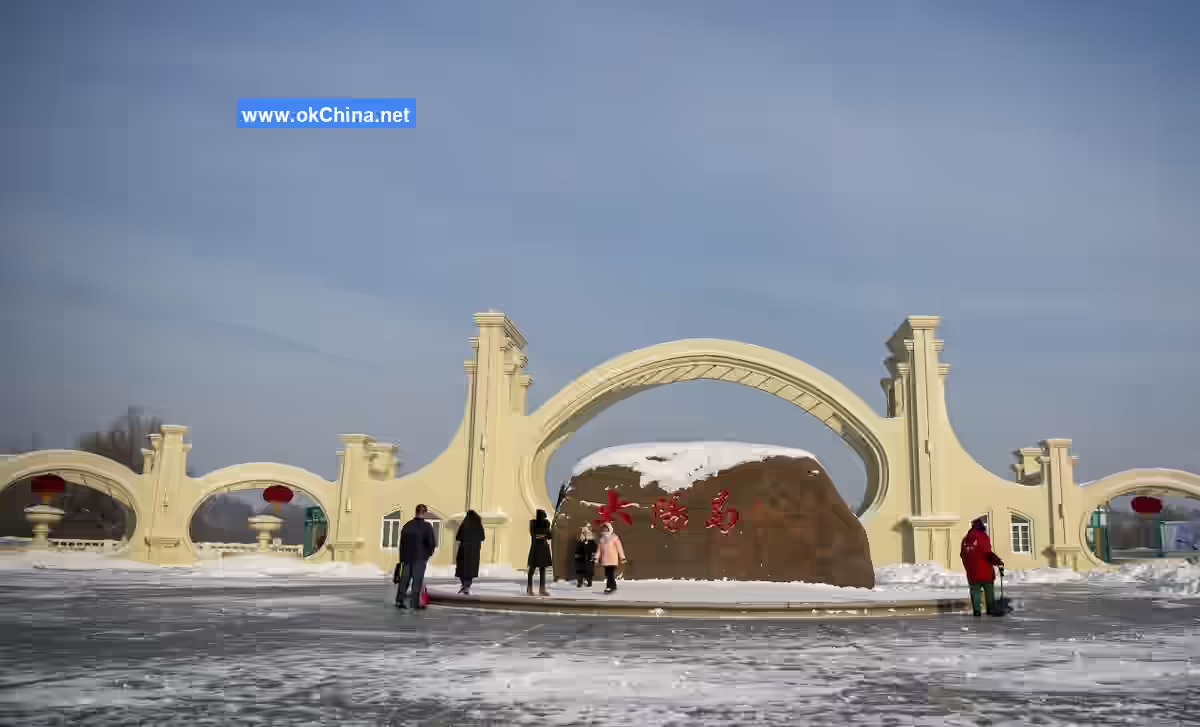
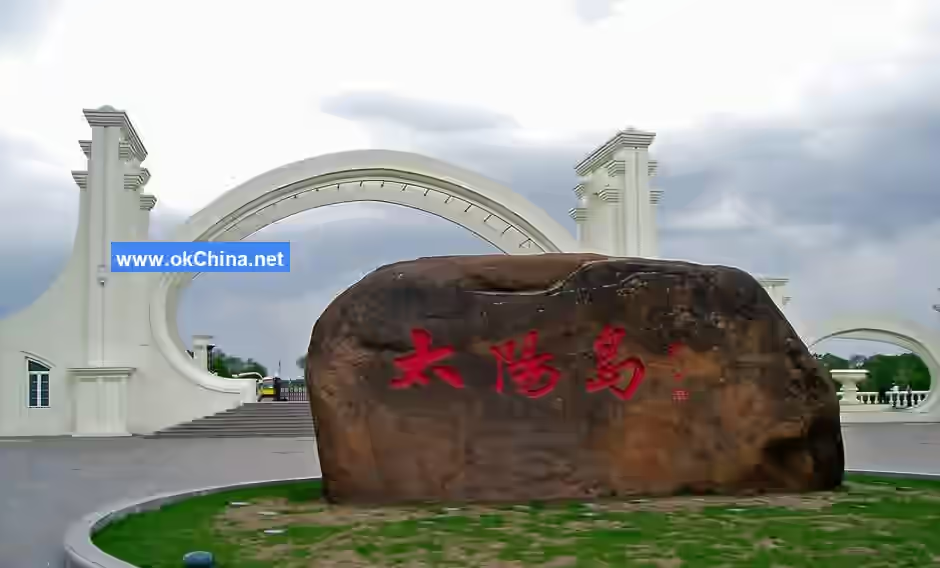
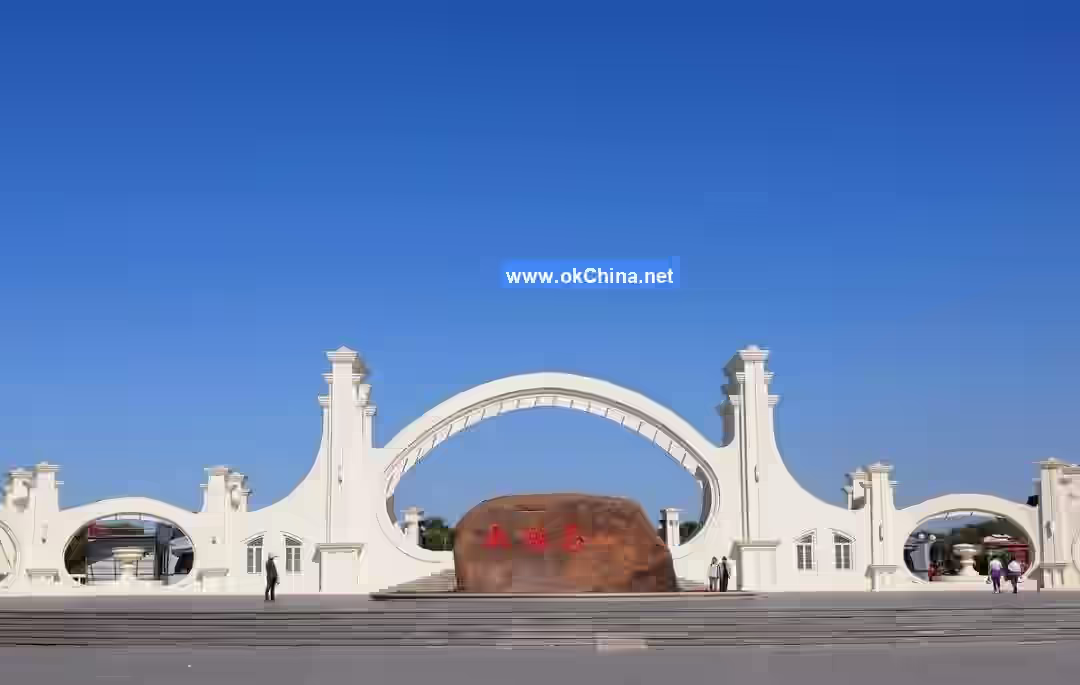
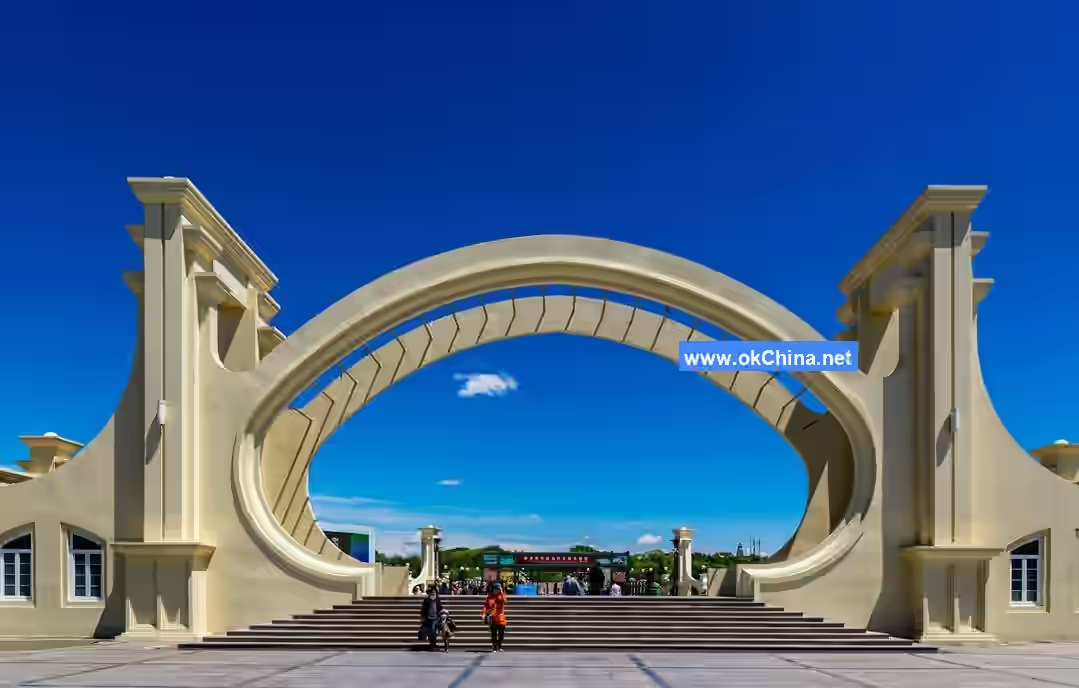
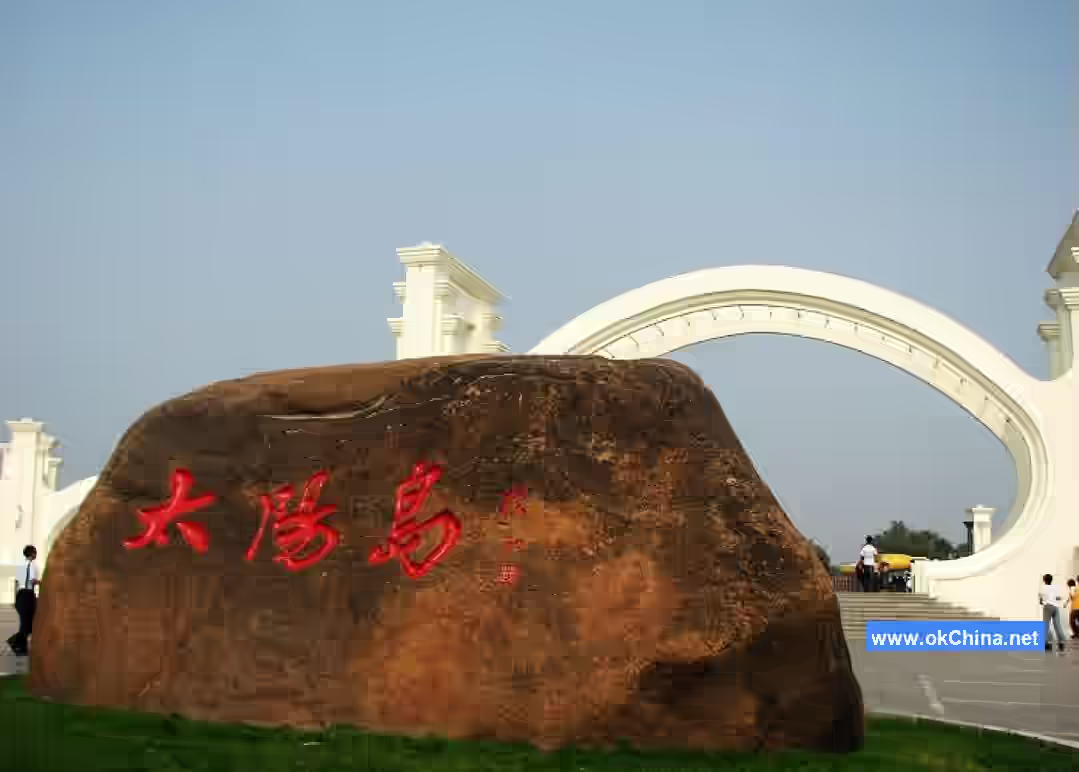
In 2003, the "Sun Stone" was erected within a giant arch structure. Shaped like a mango, it is 7.5 meters long and weighs 150 tons. It bears the three characters "太阳岛" (Sun Island), which were reproduced from the masthead calligraphy written by Mr. Zhao Puchu in 1984 for the Sun Island literary supplement of the Harbin Daily.
4.2 Sun Gate
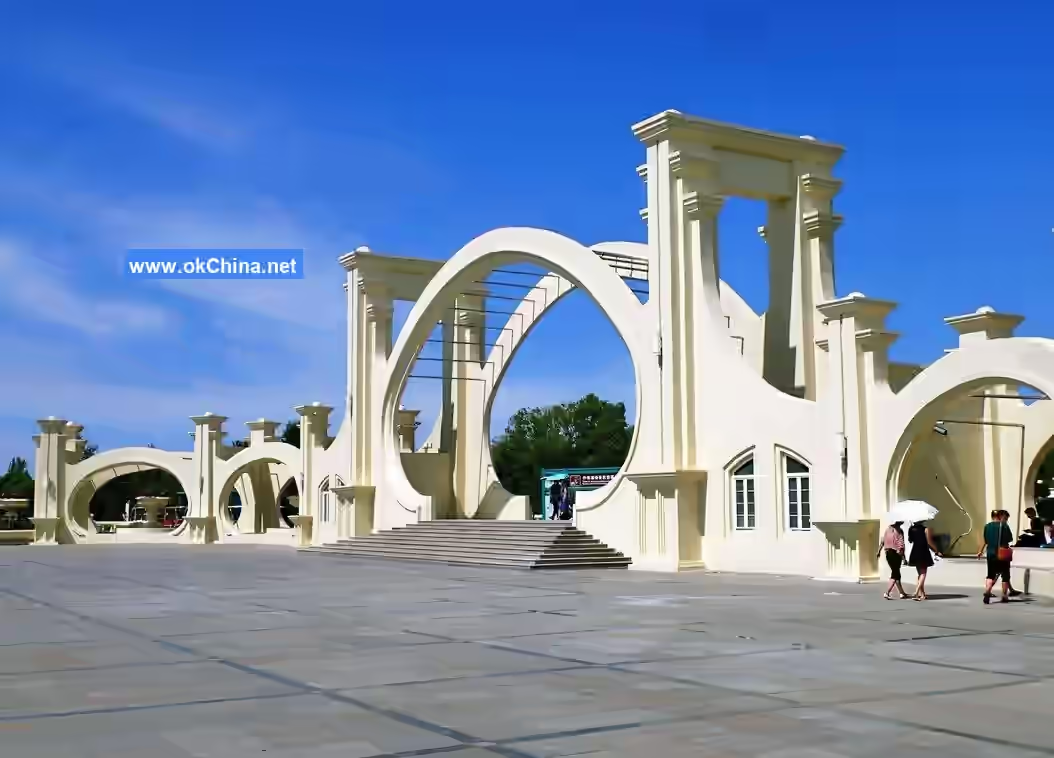
The Sun Gate is the main entrance to Sun Island, facing west and located at the head of the Jinshui Bridge. The total width of the Sun Gate is 68 meters, with its two ends curving towards the Sun Stone. The central entrance is 12.03 meters high. The rising curves beside the gate resemble the undulating white waves of the Songhua River, supporting the rising sun. Four sculptures stand within the four small archways on either side. Underfoot is a simulated map of Harbin's urban streets. The Sun Gate is precisely the window connecting Sun Island to the world.
4.3 Zuolong Square
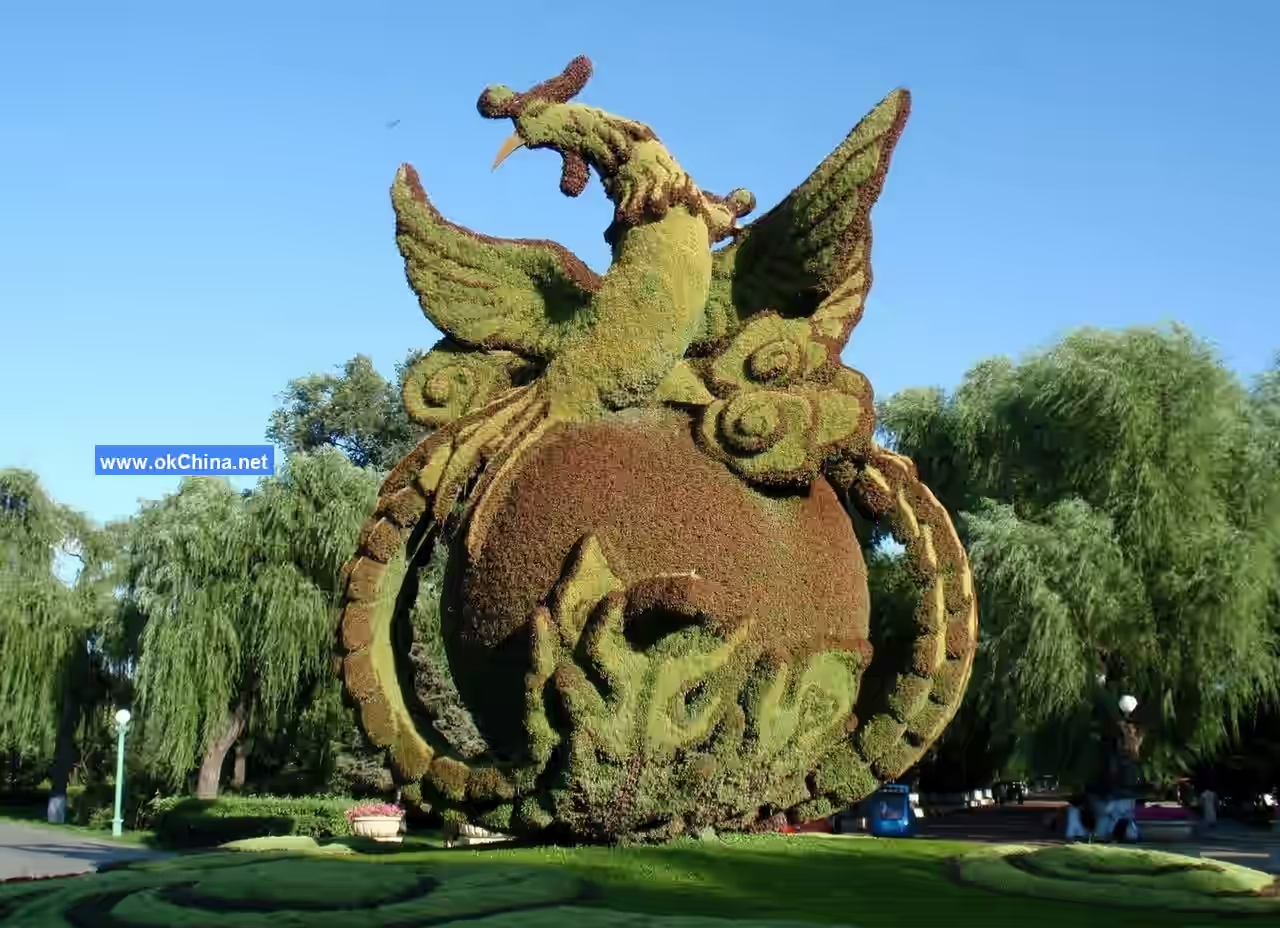
The center of the square features a large three-dimensional five-color grass flower bed in the shape of a sitting dragon, standing 6 meters high and covering 60 square meters. Its prototype is the Jin Dynasty "Bronze Sitting Dragon," which is a symbol of Heilongjiang Province's cultural relics and tourism.### 4.1 Northern Folk Art Treasures Museum The Northern Folk Art Treasures Museum is a three-story building housing over 2,000 artistic treasures known for their unique style.
4.4 Yu Qingcheng Sculpture Garden
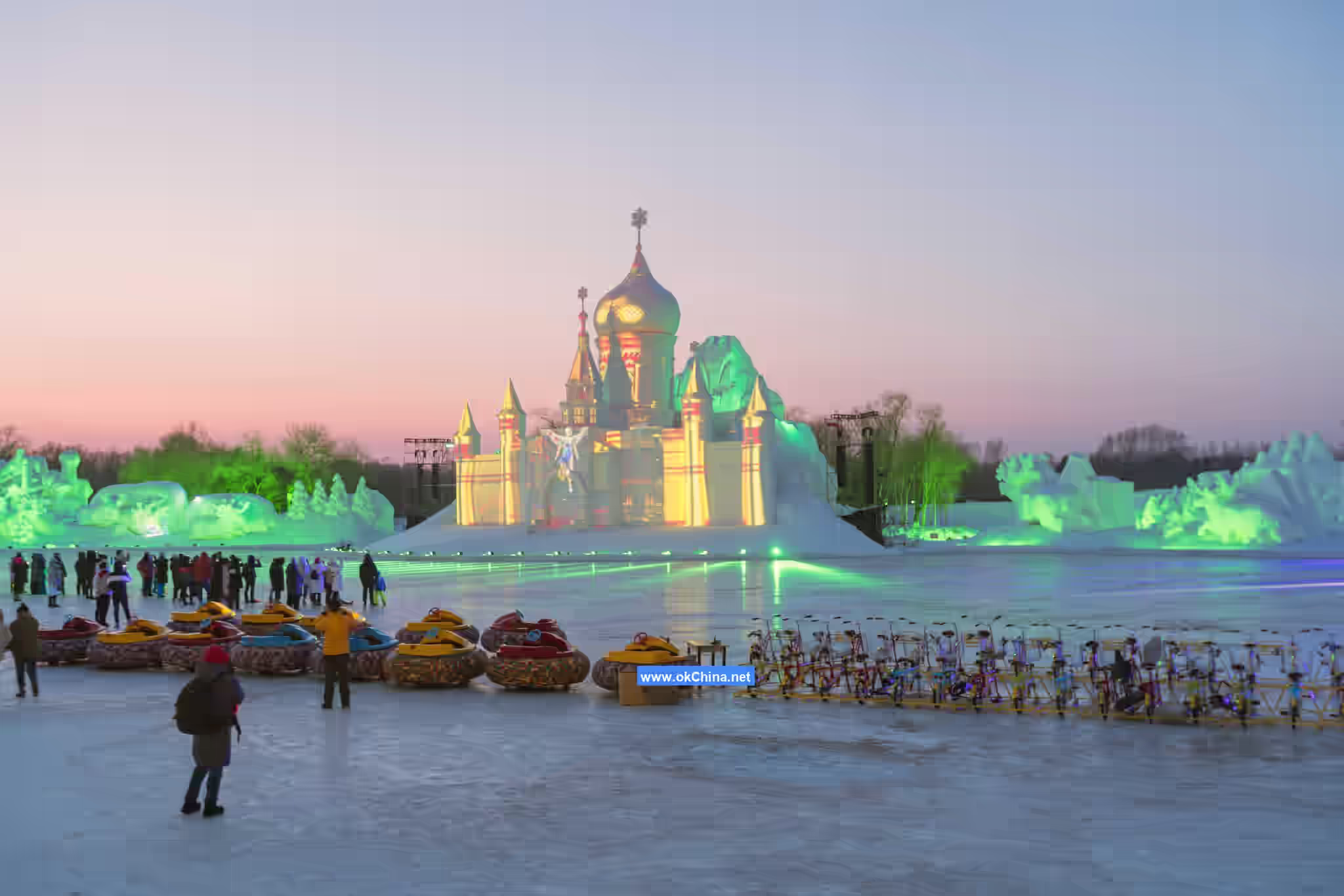
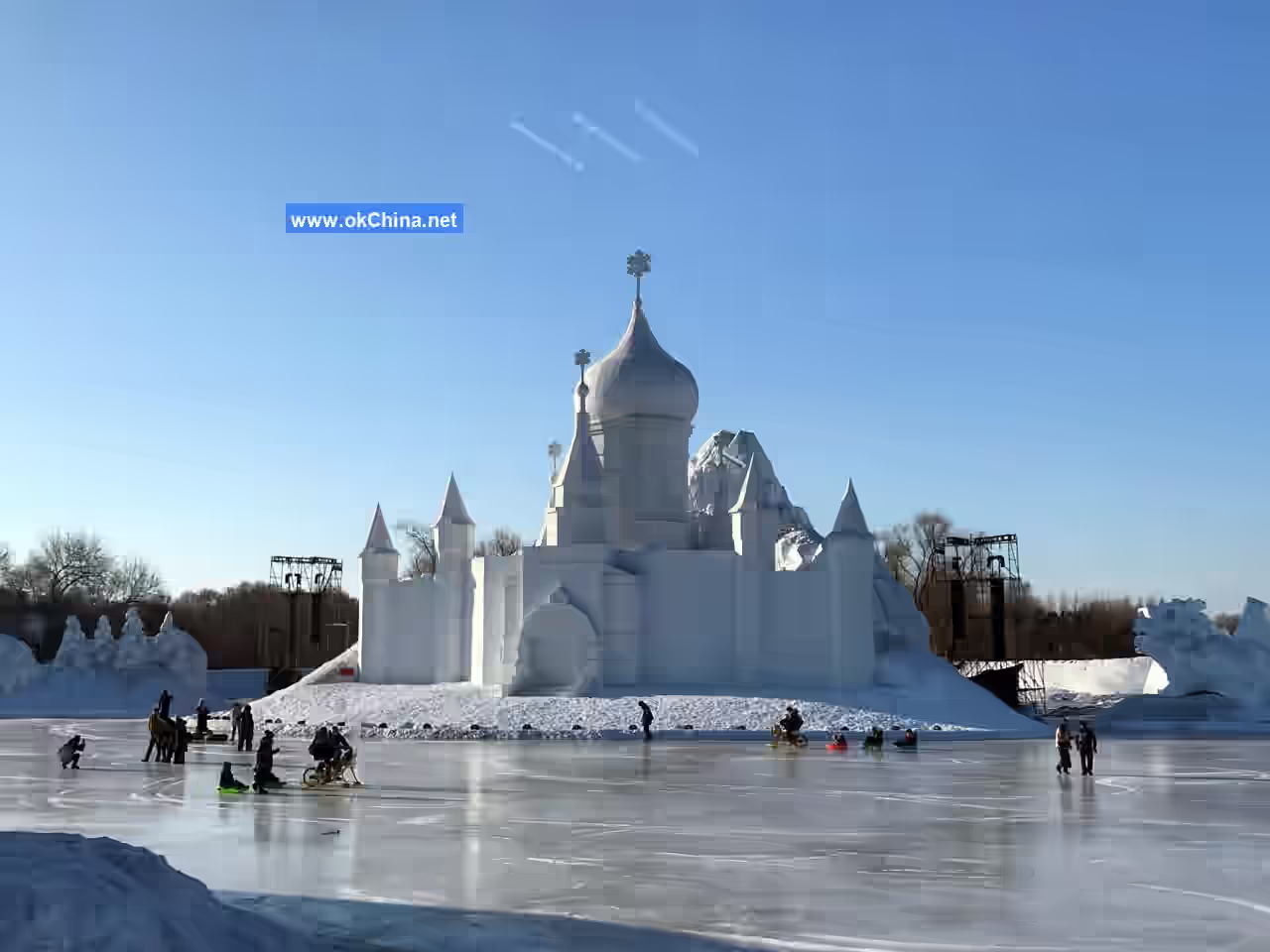
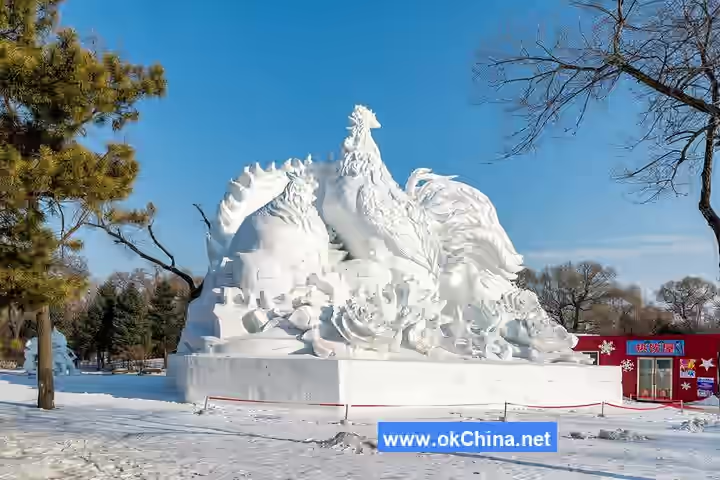
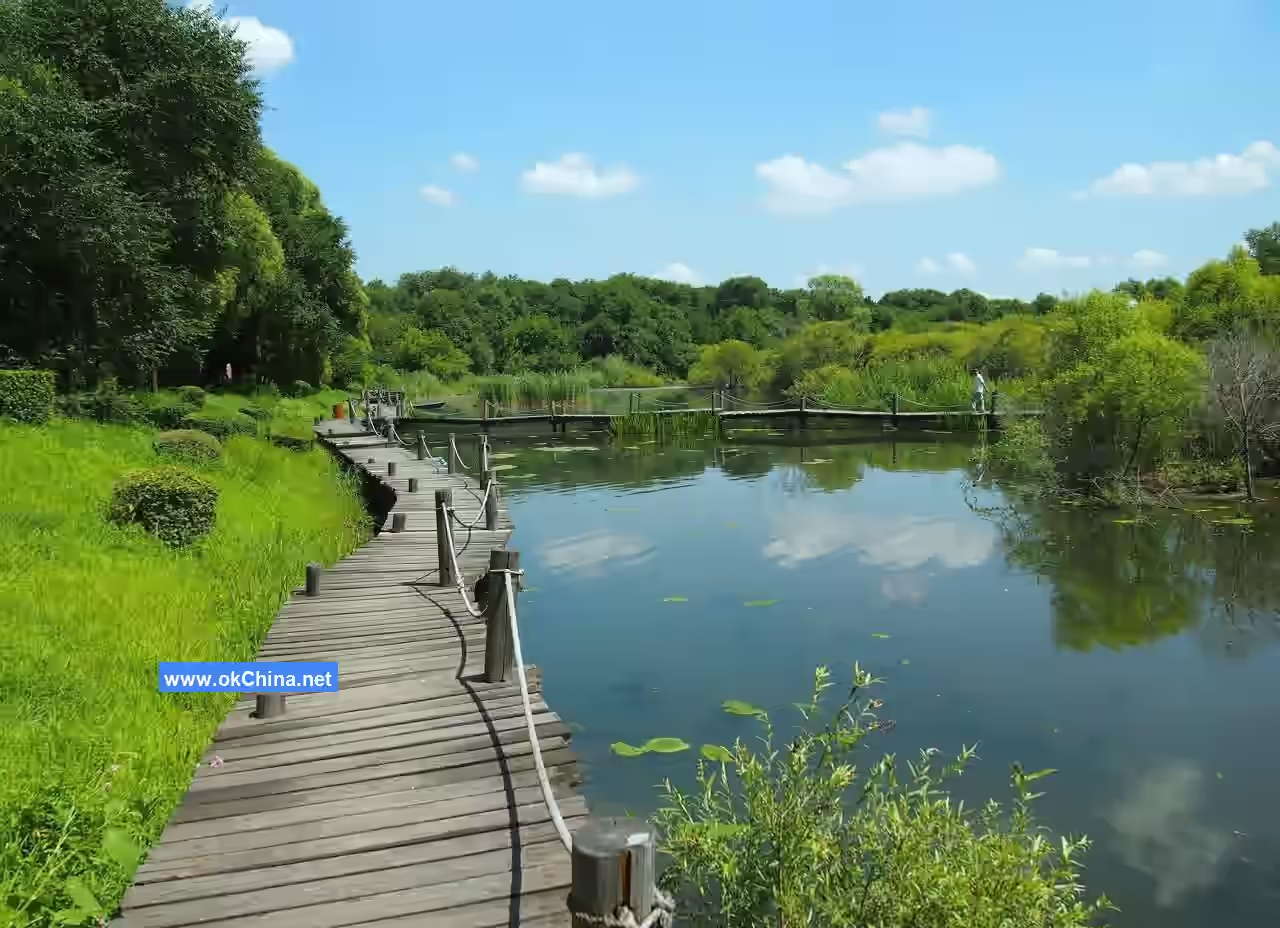
The Yu Qingcheng Sculpture Garden covers an area of over 7,000 square meters and contains nearly 20 sculptures in 8 groups, all classic works by Mr. Yu Qingcheng. The characteristic of Mr. Yu's works is "thorough simplicity and absolute exaggeration." Bathing Sun Terrace A viewing platform on the eastern side of the Sun Island embankment, named for the idea of bathing in sunlight and ascending the platform to enjoy the view. The Bathing Sun Terrace Square covers approximately 4 hectares. It is planted with precious tree species native to the north, such as the Tilia mandshurica (known as the bodhi tree) and Xanthoceras sorbifolium. Its main function is to provide visitors with a place for sightseeing and releasing captive animals. At the entrance to the Bathing Sun Terrace stand two exquisitely carved granite tripod cauldrons—the Tian Ding (Heavenly Cauldrons)—engraved with sun, cloud, and thunder patterns. Their three-legged, double-eared造型 is reminiscent of the bronze culture of China's Shang and Zhou periods.### 4.1 Snow Sculpture Art Garden The Sun Island Snow Sculpture Art Garden covers an area of over 3,000 square meters. It was completed in the summer of 2004, featuring the main sculpture "Leisurely Shepherd's Song" from the 15th Snow Sculpture Expo in 2002 as its centerpiece.### 4.1 Squirrel Island Sun Island's Squirrel Island covers an area of approximately 24,000 square meters and consists of three small islands connected by wooden imitation boardwalks. The island is home to over 2,000 adorable Eurasian red squirrels and wild baby chipmunks. The Eurasian red squirrel, also known as the common red squirrel, is a lively, active, and clever type of squirrel. They are omnivorous, typically feeding on hard seeds like sunflower seeds and corn kernels, and have the habit of storing food for winter.
4.5 Clumsy Bear Paradise
Sun Island's Clumsy Bear Paradise is located within the ecological forest area of the Sun Island Scenic Area. It is a park integrating sightseeing, leisure, amusement experiences, and餐饮 services. Its main operations include amusement rides, the Sun Island Style Street餐饮 street, and commercial service sales. It currently has 22 sets of amusement equipment. Visitors can choose single-ride tickets for each attraction or opt for discounted套票 to enjoy all rides.
4.6 Water Tour Boats
The Sun Island water tour boat service began in 2011, averaging 3,000 to 4,000 voyages per year. It operates normally during the May Day holiday to welcome visitors. Currently, there are 9 tour boats of various sizes, with the largest having a passenger capacity of 300. This water leisure tourism route, meticulously created by Harbin Sun Island Assets Company, connects沿岸 cityscapes and tourist attractions along the river (the boats do not stop at景点; sightseeing is done from the boat). Taking a boat ride allows visitors to quickly enjoy the beautiful scenery of the Songhua River in Harbin. Through the development and utilization of the navigable Songhua River, the route connects the following sights: Sun Island Pier—天体Bathing Beach—Highway Bridge—Qunli Outer滩Wetland—Jiuzhan Park—Stalin Park—Flood Control Memorial Tower—Binzhou Railway Bridge—Sun Island Riverside Scenery.
4.7 Ice and Snow Art Gallery
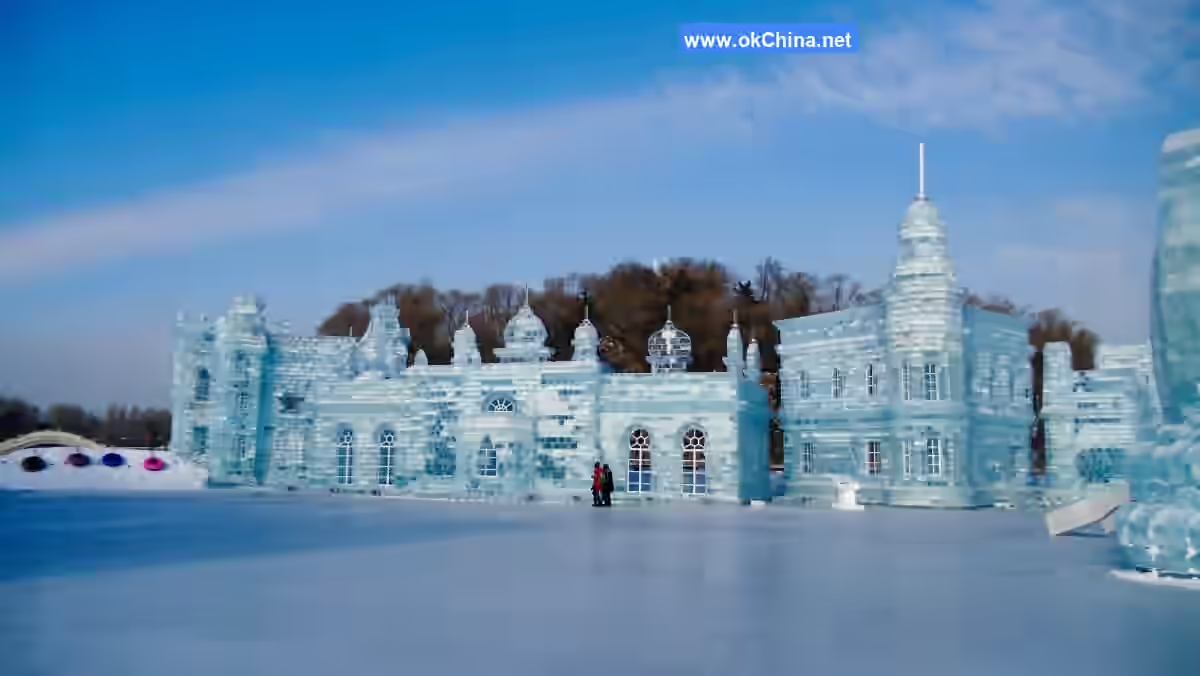
The Sun Island Ice and Snow Art Gallery is不受室外气温影响, allowing visitors to appreciate ice and snow art year-round. The gallery is located within the Harbin Sun Island Snow Expo scenic area. It has a clear height of 7 meters, covers nearly 5,000 square meters, and汇集了over 100 ice and snow sculptures. All works are made using materials such as natural ice from the Songhua River, artificial snow, and artificial colored ice. Ice and snow artisans skillfully employ various高超技艺, supplemented by lighting and stage illumination art, to create a magical ice and snow fairy-tale world inside the gallery. The overall design of the Sun Island Ice and Snow Art Gallery follows the storyline "Clumsy Bear Travels the World Challenging Extreme Cold," based on the IP images of Sun Island's mascots, Little Clumsy Bear and Show-off Mouse. The main path is 200 meters long, and the total观赏线路is 800 meters. The gallery is equipped with 6 snow-making machines which, when activated, can produce 3 cubic meters of artificial snow daily. Unlike snow cannons, which produce small snow particles by spraying water through high-pressure nozzles into the air, these machines create small snowflakes, making them极具特色. The gallery features nine major ice and snow theme zones, including the Arctic Scenery Zone, European Culture Zone, International Music Culture Zone, Antarctic Ice Peaks Zone,海底World Zone, Mount Everest Base Camp Zone, Premium Ice Sculpture Competition Zone, Entertainment Activities Zone, and祈福Zone.
4.8 Russian Style Town
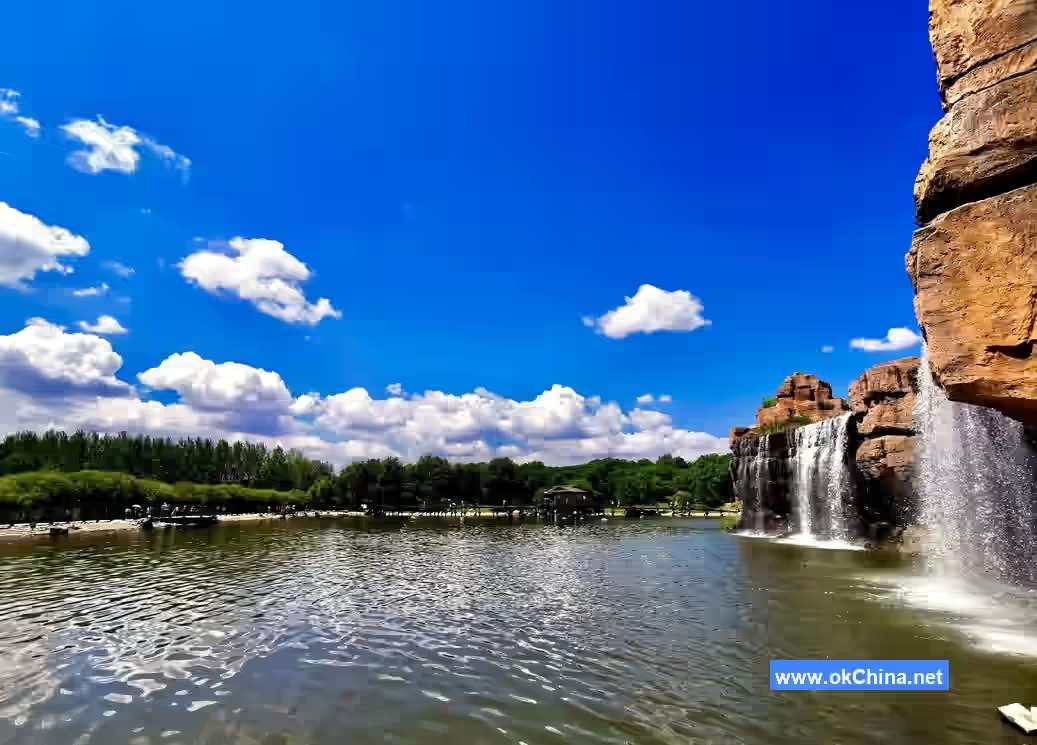
The Sun Island Russian Style Town is positioned as an exhibition scenic area showcasing the生活场景of Russian侨民culture. It is a标志性brand of Sun Island's cultural tourism. The town features 18 provincial-level cultural heritage buildings in Heilongjiang, encompassing various styles from the 15th to 19th centuries, including Renaissance, Baroque, Eclecticism, and Art Nouveau. The wooden architectural characteristics of Russian乡村folk buildings are prominent. They differ from ancient Chinese and Japanese wooden architecture and also from traditional Western European timber framing. They are constructed by horizontally stacking整根原木to form load-bearing walls, with the characteristic feature being the preserved痕迹of interlocking log corners, known in Chinese folk architecture as "木刻楞" (mùkèléng). The Sun Island Russian Town is divided into four exhibition areas: first, the Centennial Town Preface Area, showcasing百年建筑and historical culture; second, the Russian Folk Culture Display Area, including exhibitions on the history of the Chinese Eastern Railway, Russian folk customs and children's趣展, and the Russian大列巴(Bread) Museum; third, the Russian Art and Culture Exhibition Area, where one can appreciate Russian油画, ballet, music, literature, chess, amber craftsmanship, and other arts and culture; and fourth, the Exotic Style Commercial Service Area.### 4.9 Northeast Anti-Japanese United Forces Memorial Park The Northeast Anti-Japanese United Forces Memorial Park was built to commemorate the Northeast Anti-Japanese United Forces and has now become the largest education and memorial base for the War of Resistance Against Japan in Northeast China. The entire park is situated along the embankment beside the water. A 60-meter-long giant relief symbolizes the 60th anniversary of the victory of the Chinese People's War of Resistance Against Japan. The 14 evergreen pines within the relief represent the 14 arduous years during which the Northeast Anti-Japanese United Forces resisted the Japanese invaders. In the grassy area, a cavalry composed of anti-Japanese soldiers and 11 majestic horses symbolizes the 11 main forces of the Northeast Anti-Japanese United Forces. The park's inscription records the glorious history of the Northeast Anti-Japanese United Forces' arduous and bloody struggle. In July 2005, to commemorate the heroic deeds of the Northeast Anti-Japanese United Forces in resisting the Japanese invaders and to promote the spirit of patriotism, the Anti-Japanese United Forces Themed Memorial Park was constructed following the directives of provincial and municipal leaders and the suggestions of veteran comrades from the United Forces. Covering an area of approximately 36,000 square meters, the Northeast Anti-Japanese United Forces Memorial Park centers around sculptures of anti-Japanese soldiers, a lake, and grassland. Its expressive style differs from the traditionally solemn and dignified memorial models. Through thematic sculptures, anti-Japanese camps, undulating terrain, towering trees, winding streams, and massive rocks, it recreates the anti-Japanese battlefields amidst the white mountains and black waters. Under the blue sky, the thematic sculptures, anti-Japanese camps, and massive rocks form a historical tableau of the combat life of the United Forces, vividly showcasing the fighting image and spirit of resistance of the Northeast Anti-Japanese United Forces.
5. Cultural Activities
5.1 Human History
Origin of the Name
Old Man Yang Rongsen, who lived on Sun Island for over 90 years, created a manuscript titled "A Brief History of Sun Island" during his lifetime, recording three name changes: initially called "Sun Beach," later referred to as "Sun Beacon," and finally named "Sun Island." The book "Sun Island—Unknown Century-Old Stories" records that during the mid-Qing Dynasty, Sun Beach was formed by years of flooding and silt deposition from the Songhua River. The sand grains on the beach were clean and large, coming in white and yellow varieties, with a translucent quality. In summer, the sand surface was scorching hot, "unfit for people by day, uninhabited by frogs at night." Moreover, because the sand grains shimmered brilliantly under sunlight, it was metaphorically called "the sun on the water." During the fishing season, fishermen would gather their boats along the shore when hauling in their nets, referring to this place as "Sun Beach." "Sun Beacon" was a term used by Chinese and Russian sailors navigating the river. In the late years of the Guangxu reign of the Qing Dynasty, the upstream route from Harbin to Fuyu was opened. The first upstream "beacon" (navigation mark) was erected on Sun Beach, standing tall and highly conspicuous. Sailors often swam or rowed sampans here for wild bathing, calling it "Sun Beach Beacon," later abbreviated to "Sun Beacon." "Sun Island" is the name given by tourists and has been passed down to this day. Russians who came to construct the Chinese Eastern Railway discovered this ideal sandy beach on the north bank of the Songhua River and built scattered villas, naming it "Sun Island." Records indicate that the island was first officially marked with a Russian name on the "Complete Map of Harbin City" published by the Chinese Eastern Railway Administration in 1923. The Russian name directly translates to "sunny island" in Chinese. On June 30, 1925, the "Binjiang Times" published an article titled "Abundant Spring Scenery on Sun Island," showing that the name was already in use by then. There are many other versions regarding the origin of the name "Sun Island." One popular account is that the area around Sun Island was abundant in bream, one of the "Three Flowers and Five Luos" fish of the Songhua River. The local Manchu people called it "taiyaon" (pronounced "tai yao en"), which sounds similar to "taiyang" (sun) in Chinese. Over time, this became customary, and people added "island" to the end, broadly referring to this group of islands. Of course, there are also legends such as the name deriving from "Grandfather Sun" living on the island, but these are rather unconvincing and likely just a beautiful allegory.
5.2 Main Activities
On May 20, 2023, the "For Love, Walk with Brilliance" 2023 China·Harbin "Sports Lottery Cup" Sun Island Hiking Competition was held. On the afternoon of July 8, 2023, a celebration ceremony for Harbin's successful bid to host the 9th Asian Winter Games in 2025, themed "Meet in Harbin, Dream of the Asian Winter Games," was grandly held at the Sun Stone Square in the Sun Island Scenic Area. Local Snacks The "Sun Island Style Street" in the central area of the island offers a variety of traditional Harbin street foods, including electric-grilled skewers, grilled squid, grilled cold noodles, fried yogurt, cold skin noodles, jianbing guozi (savory crepes), stinky tofu, spicy hot pot, and fruit salads.
Comments
Post a Comment