The Summer Palace
1. Introduction
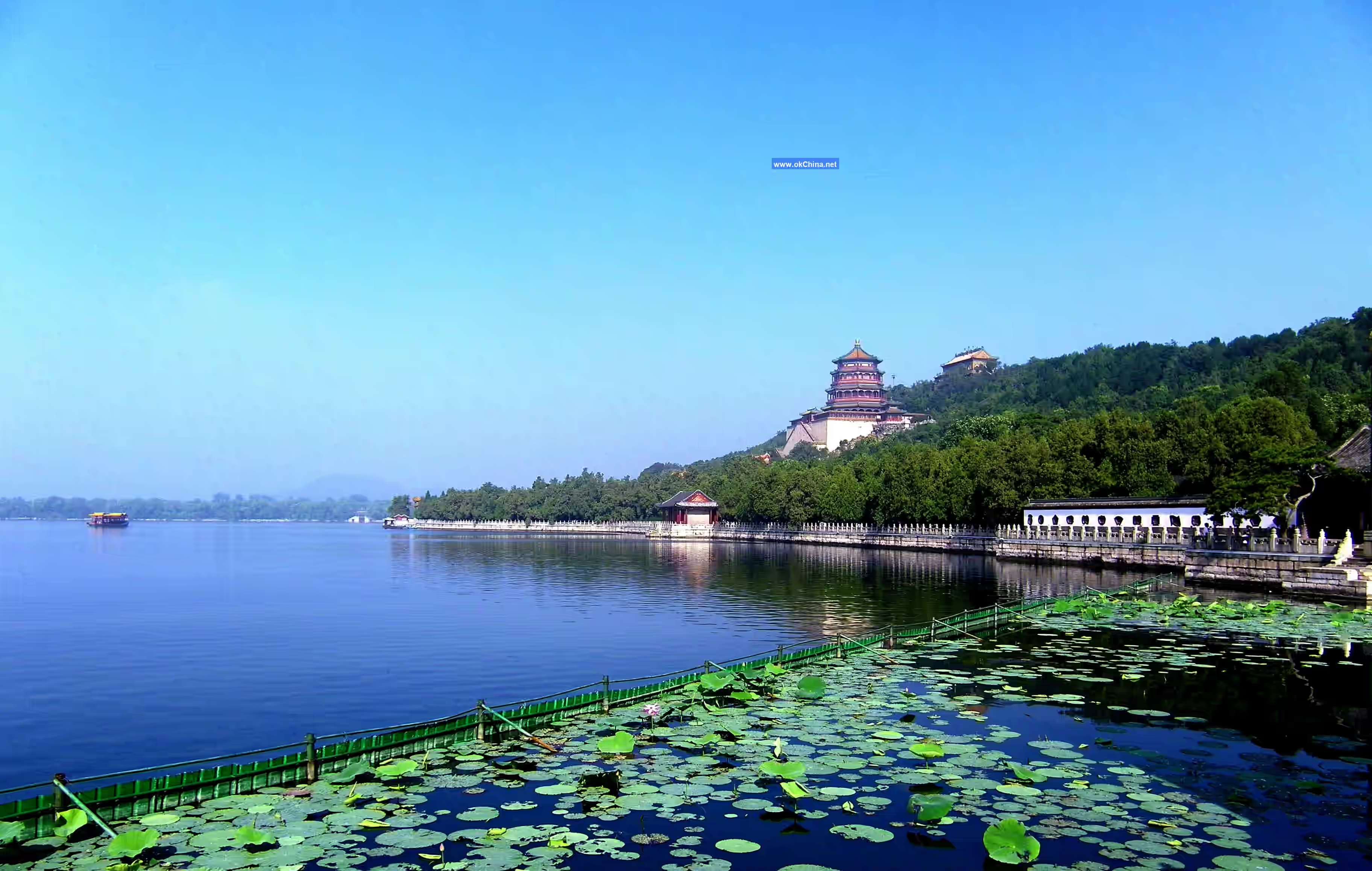
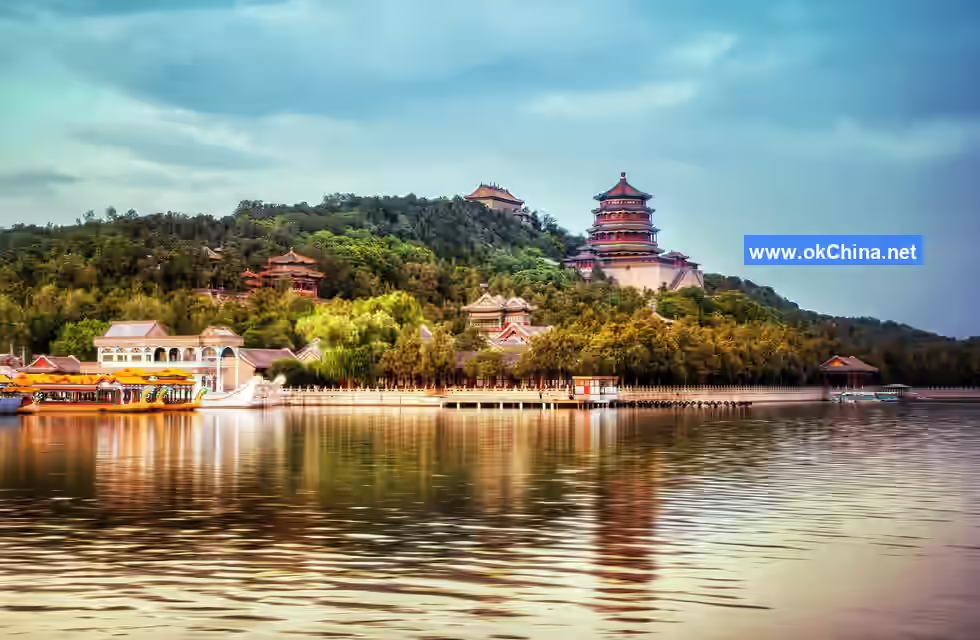
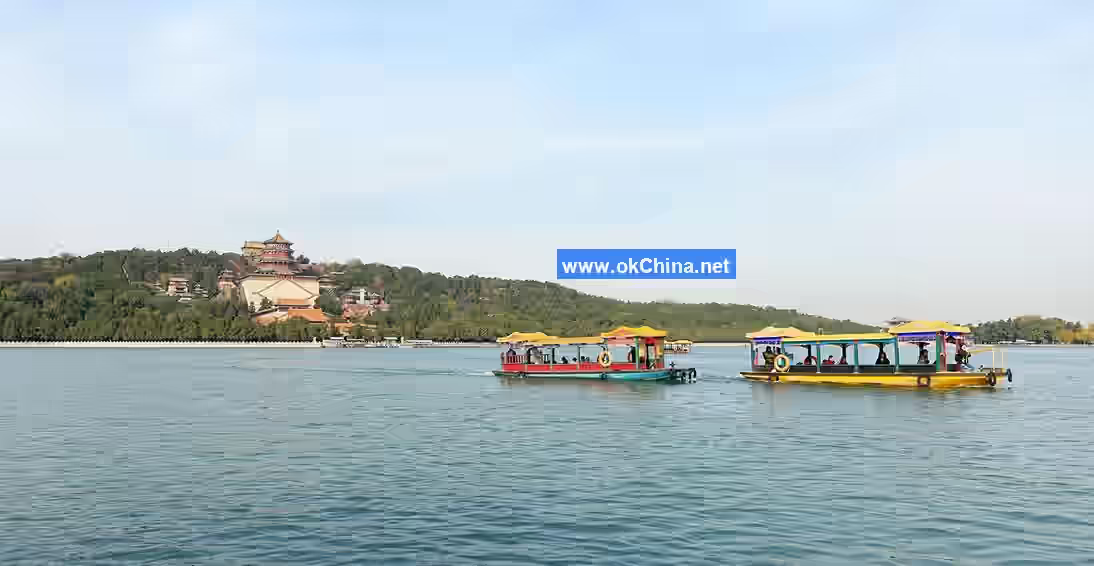
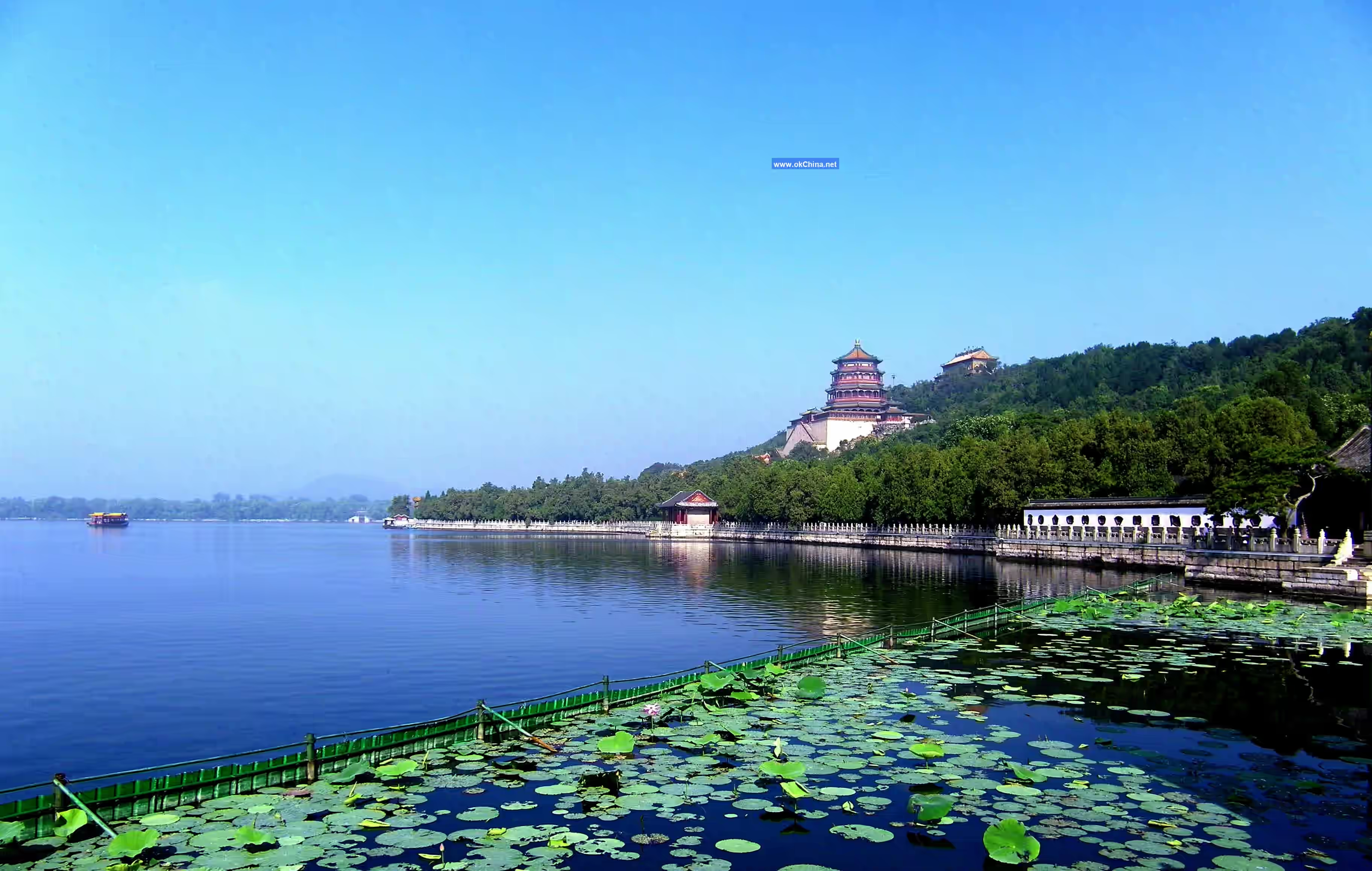
The Summer Palace, a former imperial garden from the Qing Dynasty of China, originally known as the Garden of Clear Ripples, is located in the western suburbs of Beijing, 15 kilometers from the city center. The entire garden covers an area of 3.009 square kilometers (with the UNESCO World Heritage site area being 2.97 square kilometers), about three-quarters of which is water. It is adjacent to the Old Summer Palace (Yuanmingyuan). Built on the foundation of Kunming Lake and Longevity Hill, and modeled after the West Lake in Hangzhou, it incorporates design techniques from Jiangnan gardens. It is a large-scale landscape garden and the most well-preserved imperial palace garden, often hailed as the "Museum of Imperial Gardens."
Before Emperor Qianlong ascended the throne, four large imperial gardens were built in the western suburbs of Beijing. In the 15th year of Qianlong's reign (1750), to honor his mother, Empress Dowager Chongqing, Emperor Qianlong spent 4.48 million taels of silver to renovate the area into the Garden of Clear Ripples, forming a 20-kilometer-long imperial garden district stretching from present-day Tsinghua Garden to Fragrant Hills. In the 10th year of Xianfeng's reign (1860), the Garden of Clear Ripples was burned down by the Anglo-French Allied Forces. It was rebuilt in the 14th year of Guangxu's reign (1888) and renamed the Summer Palace, serving as a summer retreat. In the 26th year of Guangxu's reign (1900), the Summer Palace was again damaged by the Eight-Nation Alliance, and its treasures were looted. After the fall of the Qing Dynasty, the garden suffered further damage during the Warlord Era and under Kuomintang rule.
On March 4, 1961, the Summer Palace was listed among the first batch of Major Historical and Cultural Sites Protected at the National Level. Alongside the Chengde Mountain Resort, the Humble Administrator's Garden, and the Lingering Garden, it is known as one of China's Four Great Gardens. In November 1998, it was inscribed on the UNESCO World Heritage List. On May 8, 2007, it was officially approved as a National 5A Tourist Attraction by the China National Tourism Administration. In 2009, it was recognized by the China World Records Association as the largest existing imperial garden in China.
2. Historical Evolution
Originally, there was a hill called Weng Hill in the northwestern suburbs of Beijing, a remnant of the Yanshan Mountain range, with a lake at its foot known as Qili Pond, Dabo Lake, Wengshan Pond, or West Lake. In the first year of Zhenyuan of the Jin Dynasty (1153), Emperor Wanyan Liang of the Jin Dynasty established the Jinshan Travel Palace here. After the Yuan Dynasty established its capital in Beijing, to meet the water needs of grain transport, the hydrologist Guo Shoujing developed upstream water sources, diverting spring water from Shenshan in Baifu Village, Changping, and other streams along the way into the lake, increasing its water volume and turning it into a reservoir for palace use and grain transport. In the seventh year of Hongzhi of the Ming Dynasty (1494), Luo Shi, the wet nurse of Emperor Hongzhi, built the Yuanjing Temple in front of Weng Hill, which later fell into ruin. Subsequently, gardens around Weng Hill gradually increased. Emperor Wuzong built a travel palace by the lake, called "Haoshan Garden," as a royal garden. Both Emperor Wuzong and Emperor Shenzong enjoyed boating and recreation here. During the reign of Emperor Xizong, the eunuch Wei Zhongxian seized Haoshan Garden for himself.
In the early years of the Qianlong era of the Qing Dynasty, the number of gardens in the Haidian area of Beijing's western suburbs increased, leading to a growing demand for water. Apart from the relatively small Wanquan River system, most of the water for these gardens came from the springs of Yuquan Mountain, which flowed into West Lake and had been the source of the Tonghui River since the Ming Dynasty. In the 15th year of Qianlong's reign (1750), to prepare for the 60th birthday of Empress Dowager Chongqing (Empress Xiaoshengxian), Emperor Qianlong ordered the expansion of West Lake under the pretext of managing the water system west of Beijing. He intercepted water from the Western Hills, Yuquan Mountain, and Shou'an Mountain, and excavated Gaoshui Lake and Yangshui Lake west of West Lake, using these three lakes as reservoirs to ensure water supply for the imperial gardens and irrigation for surrounding farmland. Inspired by the story of Emperor Wu of Han digging Kunming Pool to train his navy, Emperor Qianlong renamed West Lake as Kunming Lake. The excavated soil was used to build up Weng Hill to the north of the lake, which was then renamed Longevity Hill.
The Garden of Clear Ripples was completed in the 29th year of Qianlong's reign (1764), costing over 4.8 million taels of silver. Inspired by the ancient Chinese myth of the "Three Immortal Mountains in the Sea," three small islands—South Lake Island, Tuancheng Island, and Zaojian Hall Island—were built in Kunming Lake and the adjacent lakes to symbolize Penglai, Fangzhang, and Yingzhou, the three mythical mountains. The overall planning of the Garden of Clear Ripples was modeled after Hangzhou's West Lake, while also extensively imitating Jiangnan gardens and scenic landscapes, such as Phoenix Mound imitating Taihu Lake, Jingming Tower imitating Yueyang Tower, Wangchan Pavilion imitating Yellow Crane Tower, Houxi Lake Market Street imitating Suzhou's water streets, and Xisuo Market Street imitating Yangzhou's Twenty-Four Bridges. The main structure in the garden was the Great Temple of Gratitude and Longevity, along with a 700-meter-long corridor, whose architecture and decorative paintings are highly artistic and valuable, alongside numerous other recreational buildings. The Garden of Clear Ripples had very few administrative or residential buildings, and Emperor Qianlong visited the garden only for day trips, never staying overnight.
At its peak, the Summer Palace was vast, covering an area of 2.97 square kilometers, primarily consisting of Longevity Hill and Kunming Lake, with water accounting for three-quarters (approximately 220 hectares). The garden's architecture centered around the Tower of Buddhist Incense, featuring over a hundred scenic buildings, more than 20 courtyards of varying sizes, 3,555 ancient structures covering over 70,000 square meters, and more than 3,000 buildings in various forms, including pavilions, terraces, towers, and corridors. Representative structures include the Tower of Buddhist Incense, the Long Corridor, the Marble Boat, Suzhou Street, the Seventeen-Arch Bridge, the Garden of Harmonious Interests, and the Grand Theater. There are also over 1,600 ancient and famous trees.
After the Daoguang era of the Qing Dynasty, due to the weakening of national power, the imperial court announced the removal of furnishings from the Three Hills, and the Garden of Clear Ripples gradually fell into disrepair. In the 10th year of Xianfeng's reign (1860), the Garden of Clear Ripples was burned down by the Anglo-French Allied Forces. From the 10th to the 21st year of Guangxu's reign (1884–1895), on the orders of Emperor Guangxu, the Garden of Clear Ripples was rebuilt as a retreat for Empress Dowager Cixi. Due to limited funds, efforts were concentrated on restoring the buildings on the front hill, and a wall was added around Kunming Lake. It was renamed the Summer Palace and served as a detached palace. In the 26th year of Guangxu's reign (1900), the garden's buildings and cultural relics were damaged by the Eight-Nation Alliance. Repairs were carried out in the 28th year of Guangxu's reign (1902). Although the Summer Palace largely restored the landscape of the Garden of Clear Ripples, the quality of many structures declined. Many tall buildings were reduced in height and scale due to budget constraints. For example, the Wenchang Pavilion was reduced from three stories to two, and the Hall of Joyful Longevity was changed from double eaves to single eaves. Some buildings were heightened, such as the Grand Theater. Suzhou Street, once burned down, was never restored. Due to Empress Dowager Cixi's preference for Suzhou-style painted decorations, many buildings and corridors were repainted from Hexi-style to Suzhou-style, altering the original appearance of the Garden of Clear Ripples in detail.
On December 25, 1911, Puyi abdicated, and the Summer Palace remained his private property, managed by the Qing Imperial Household Department. As royal funds dwindled year by year, the Qing court's financial resources dried up. To subsidize the garden's finances, on January 14, 1914, the Qing Imperial Household Department opened the Summer Palace to ticketed visitors. In April, the Ministry of Foreign Affairs, the Ministry of Internal Affairs, the Metropolitan Police Headquarters, and the Qing Imperial Household Department agreed on a plan to "combine open visitation with fundraising," proposing the "Trial Charter for Ticketing at the Summer Palace and Other Places." It was decided that ticketing would officially begin on May 6.
On July 1, 1928, the Ministry of Internal Affairs of the Nanjing Nationalist Government took over the Summer Palace, officially turning this imperial garden into a public park. In 1930, a museum was established to display imperial artifacts. In 1934, to avoid the ravages of war, the ancient artifacts of the Summer Palace were relocated to the south. On July 31, 1937, after the Marco Polo Bridge Incident, Japanese troops entered the garden, and it remained closed for over four months. During the puppet regime, to create an illusion of peace, only a few buildings, such as the Long Corridor and Yishou Hall, were repaired and painted, while over a hundred ancient structures in need of repair were neglected. Propaganda promoting "Sino-Japanese friendship" was widespread. The garden accepted cherry trees gifted by Japan, salvaged and repaired the Yonghe Wheel—a gift from Japan to Empress Dowager Cixi that had sunk to the bottom of the lake—and displayed it under the cherry trees. Imperial rickshaws, thrones, desks, fans, and other items were either gifted or "loaned" to Japan. In August 1945, even on the eve of Japan's surrender, copper items such as tables from the Bronze Pavilion and bronze vats and incense burners from the halls were sent to Tianjin to supply the Japanese military for making weapons. Fortunately, the copper items had not yet been shipped overseas when Japan surrendered. By the end of the puppet regime, currency began to depreciate, and after the victory in the War of Resistance, inflation soared, leaving the park's finances in dire straits and management in difficulty. By the end of 1948, the Summer Palace was desolate, with ancient buildings in disrepair, cultural relics damaged, and plants withered. Structures like the Revolving Archive, the Painting Tour, and the Fuhua Pavilion were closed to visitors due to the risk of collapse.
In November 1948, during the Pingjin Campaign of the Chinese Civil War, the People's Liberation Army (PLA) completed the encirclement of Beijing and Tianjin. In December, Fu Zuoyi's "North China Headquarters" troops entered the Summer Palace, building bunkers and digging trenches on the back hill and outside the North Palace Gate for defense. On December 12, PLA vanguard forces reached Nanhe Bridge, only a few hundred meters from the North Palace Gate. Following the Chinese Communist Party's policy of protecting cultural relics, the PLA bypassed the garden and advanced toward Shijingshan, forcing the defending troops to retreat without a fight. Thus, the Summer Palace was spared from the ravages of war and liberated before Beijing.
In 1949, Beiping was renamed Beijing and designated as the capital of the People's Republic of China. As the largest imperial garden in the country and the largest park in the capital, the Summer Palace received attention from central and municipal leaders under the Chinese Communist Party and the Central People's Government's policy of protecting cultural relics, along with special policy support. After the founding ceremony, Nie Rongzhen appealed to major administrative regions for donations to repair the Summer Palace. The Northeast People's Government and the military-administrative committees of the Southwest, Northwest, and Southeast regions donated materials such as timber, cement, tung oil, fir poles, hemp, cloth, gold, and pigments, which were converted into funds for the garden's restoration. Meanwhile, Dong Biwu, Chairman of the North China People's Government, allocated 150,000 catties of millet for the Summer Palace's repairs. The Beijing Municipal People's Government also provided financial support as much as possible.
Starting in 1950, the Summer Palace underwent its first comprehensive renovation since the 32nd year of Guangxu's reign (1906).In 1954, the renovation and painting of the main central structure, the Tower of Buddhist Incense, were completed. In 1959, the restoration and painting of ancient buildings in the front hill and front lake areas, primarily the Long Corridor, were finished. In 1962, the renovation and painting of areas such as the Garden of Harmonious Pleasures were completed, bringing the ancient architecture of the entire garden largely back to its appearance during Empress Dowager Cixi's major renovation of the Summer Palace. Concurrently, comprehensive efforts were made to enhance green maintenance, increase the planting of flowers and trees, and preserve the garden's botanical characteristics of spring blossoms, summer lotuses, autumn foliage, and winter pines. The garden's sanitation was thoroughly overhauled, eliminating the old practice of burying garbage on hillsides within the garden. Accumulated waste was cleared, and patriotic health campaigns were launched, making the entire garden's cleanliness, as described by Zaitao, the seventh younger brother of Emperor Guangxu, "even cleaner than when Empress Dowager Cixi resided in the garden."
During the early stages of the "Cultural Revolution," the Summer Palace suffered damage and was renamed "People's Park." In 1971, as domestic and international circumstances changed, the Summer Palace resumed its original name on May 17. On October 1, a National Day garden party was held, and Premier Zhou Enlai hosted a state banquet at the Hall of Listening to Orioles to entertain Prince Norodom Sihanouk. As part of "Ping Pong Diplomacy," a large garden party was organized in November for the "Asian-African Table Tennis Friendship Invitational Tournament." Additionally, garden parties were held annually on May Day and National Day, and the restoration and painting of ancient buildings at the Summer Palace began to resume.
In 1972, the Communist Party Committee of the Summer Palace was established. On May 1 of the same year, following Premier Zhou Enlai's instructions, the display of cultural relics in the halls was restored. Efforts also began to remove coatings from the Suzhou-style colored paintings on ancient buildings, gradually restore plaques and couplets, and resume flower cultivation. Combined with inventory and asset verification work, comprehensive measures were taken to strengthen the management of cultural relics. In the 1980s, the restoration of ancient buildings adhered to the principle of combining scientific preservation with rational use, enriching park activities. The park utilized some foreign investment to restore the long-abandoned complex of courtyards known as the East Eight Lodges, repurposing this group of ancillary ancient buildings into the Royal Garden Hotel. Key construction projects were also carried out in three scenic areas: the Jade Belt Bridge on the West Dyke, the Two Dragon Sluice on the East Dyke, and the Phoenix Mound and Embroidery Chair Bridge on the South Dyke.
In 1984, the Garden of Virtue and Harmony (commonly known as the Grand Theater Stage) underwent renovation and painting. Wax figures of Empress Dowager Cixi and Emperor Guangxu, along with related cultural relics, were displayed inside the hall. Ceremonial guards were arranged in the courtyard, and staff dressed in Qing Dynasty attire provided explanations and guided tours. It officially opened on September 10 of the same year. In 1986, the restoration of Suzhou Street (also known as the Shopping Street) began. Based on thorough research of historical materials, on-site surveys of ruins, and extensive consultation with experts, the project adhered to the principle of "no addition, no reduction, no relocation, no adjustment, no expansion, no contraction." The restored area covers a construction area of 2,870 square meters, comprising 232 rooms, 19 decorated archways and gateways, 4 pavilions, 3 sets of festooned gates, 7 various bridges, and 12 sections of corridors. It officially opened on September 15, 1990.
3. Orientation and Layout
3.1 Architectural Layout
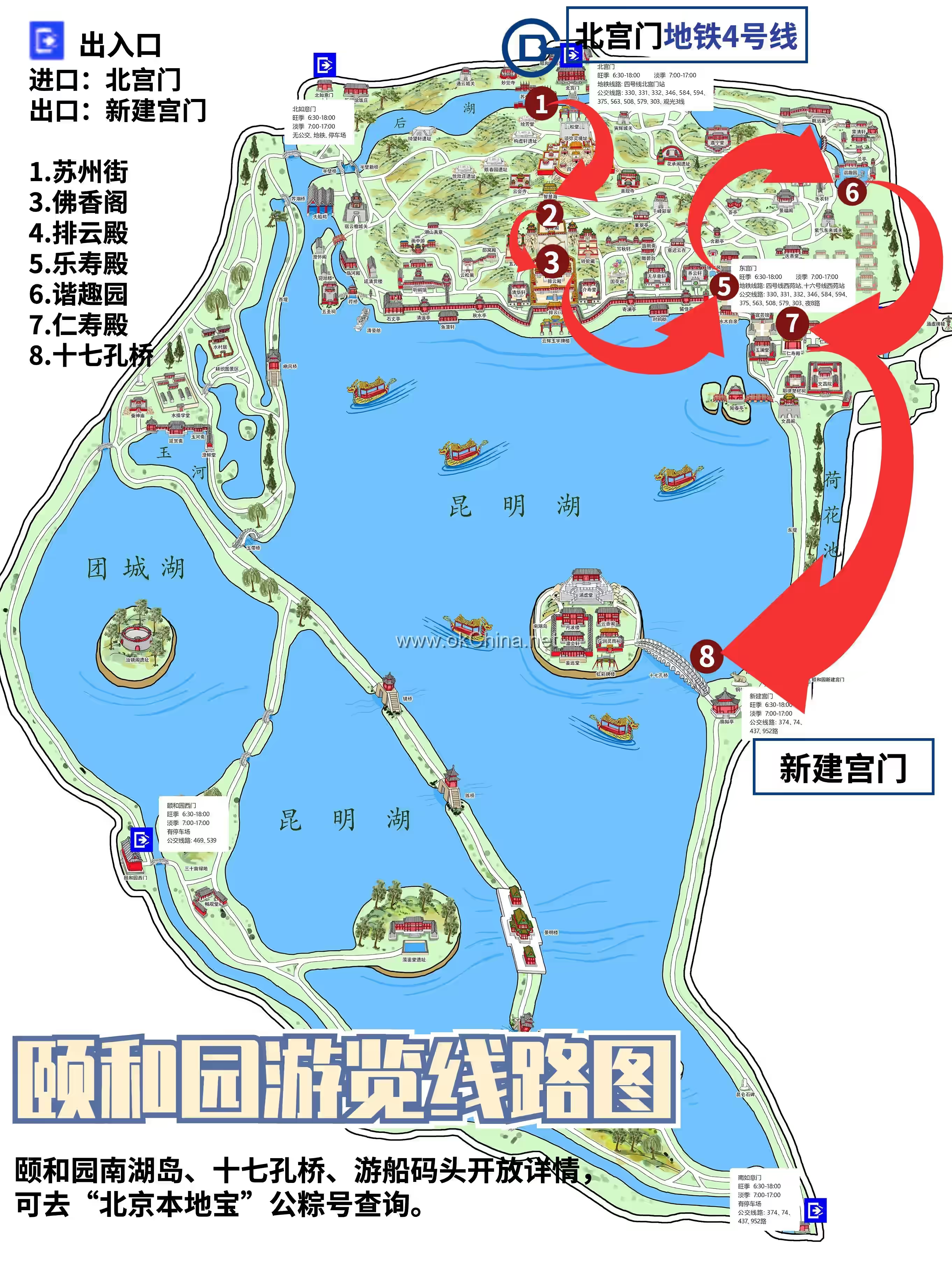
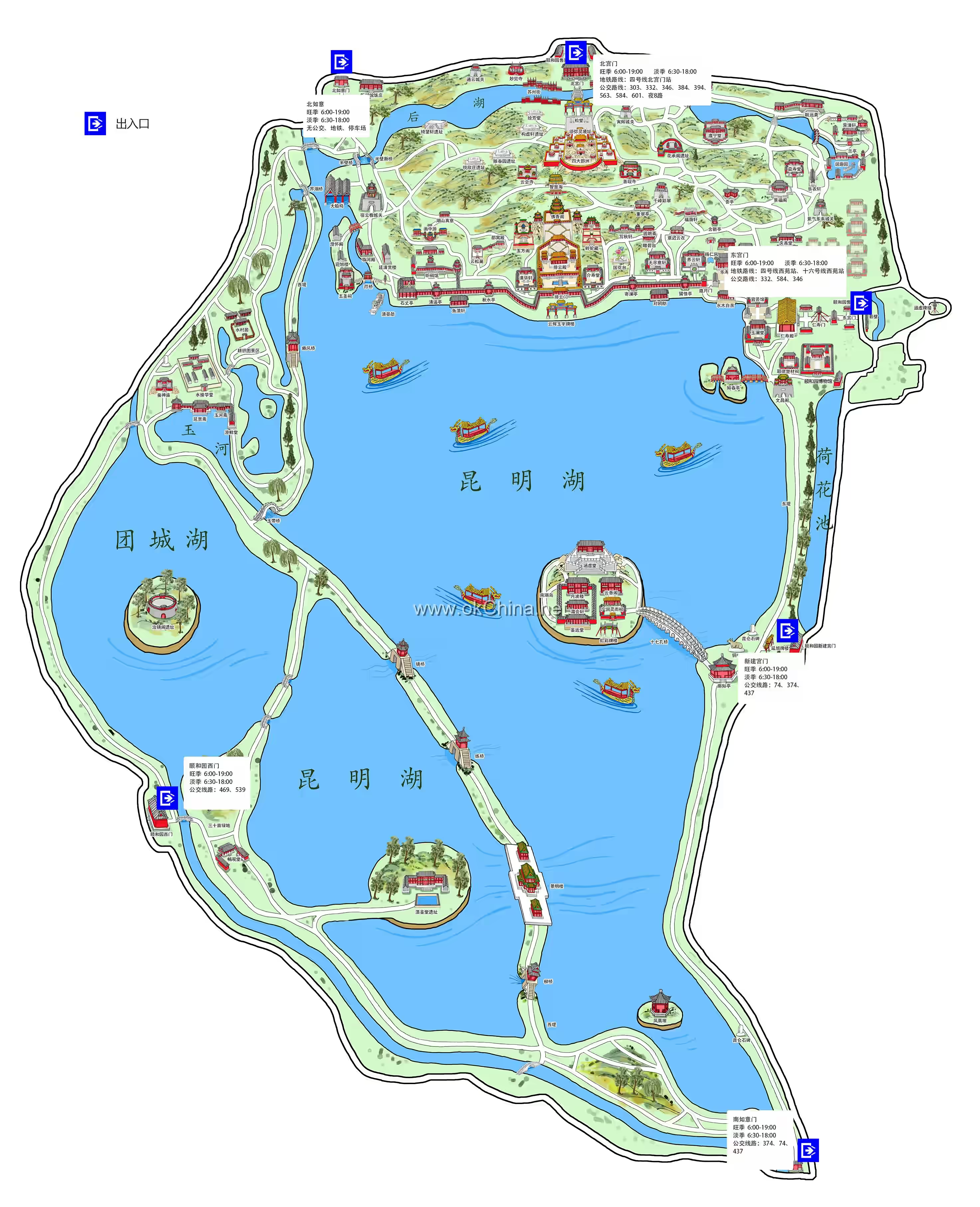
The Summer Palace covers an area of 3.009 square kilometers (with the UNESCO World Heritage site area being 2.97 square kilometers), about three-quarters of which is water. It mainly consists of Longevity Hill and Kunming Lake. There are over 3,000 palace and garden buildings in various forms, which can be broadly divided into three sections: administrative, residential, and recreational.
The administrative area, centered around the Hall of Benevolence and Longevity, was where Empress Dowager Cixi and Emperor Guangxu held court, conducted political affairs, and received foreign guests. Behind the Hall of Benevolence and Longevity are three large courtyard complexes: the Hall of Joyful Longevity, the Hall of Jade Ripples, and the Lodge of Propriety and Weaving, which served as the residences for Empress Dowager Cixi, Emperor Guangxu, and the imperial consorts, respectively. To the east of the Lodge of Propriety and Weaving is the Grand Theater Building of the Garden of Virtue and Harmony, one of the three major theater buildings of the Qing Dynasty.
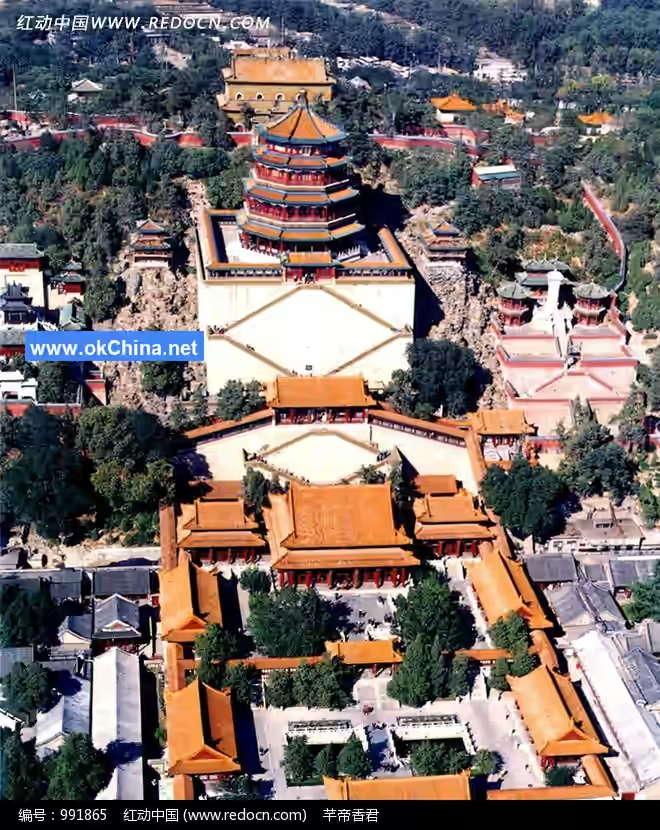
From the Sea of Wisdom at the summit of Longevity Hill downward, the Tower of Buddhist Incense, the Hall of Virtuous Brilliance, the Hall of Dispelling Clouds, the Gate of Dispelling Clouds, and the Cloud-Dispelling and Jade-Embellished Arch form a distinct central axis. At the foot of the hill lies the "Long Corridor," stretching over 700 meters. The beams of the corridor are adorned with more than 8,000 colored paintings, earning it the title of the "World's First Corridor." In front of the corridor is Kunming Lake. The West Dyke of Kunming Lake was modeled after the Su Causeway of West Lake.
The back hill and back lake of Longevity Hill are densely wooded, featuring Tibetan-style temples and the ancient shopping street along Suzhou Creek. At the eastern end of the back lake is the Garden of Harmonious Pleasures, modeled after the Jichang Garden in Wuxi. Compact and exquisite, it is known as the "Garden Within a Garden."
4. Main Attractions
4.1 Suzhou Street
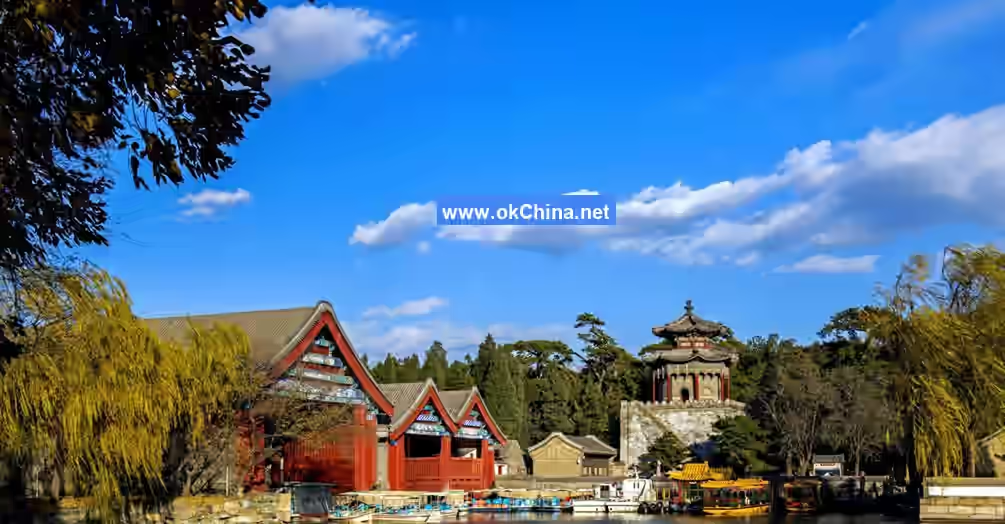
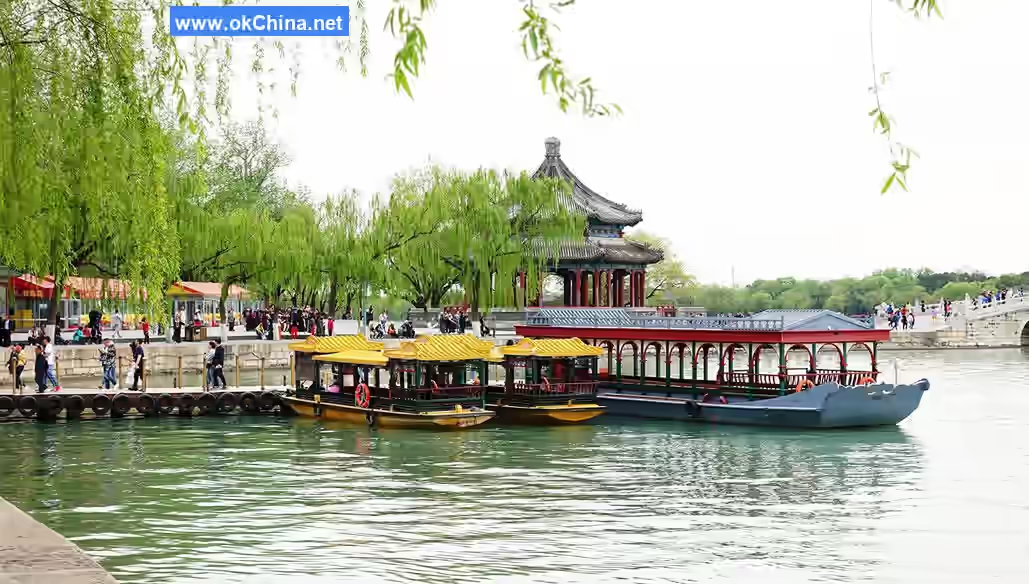
Suzhou Street, also known as the "Shopping Street," is built along both banks of the back lake in imitation of Jiangnan water towns. During the Qingyi Garden period, the banks were lined with various shops, such as jade and antique stores, silk shops, pastry shops, teahouses, and gold and silver jewelry stores. The shop assistants were dressed as eunuchs and palace maids. The shops would "open for business" when the emperor toured. Dozens of shops along the back lake were burned down by foreign powers in the tenth year of the Xianfeng reign (1860) and were reconstructed in 1986.
4.2 Longevity Hill
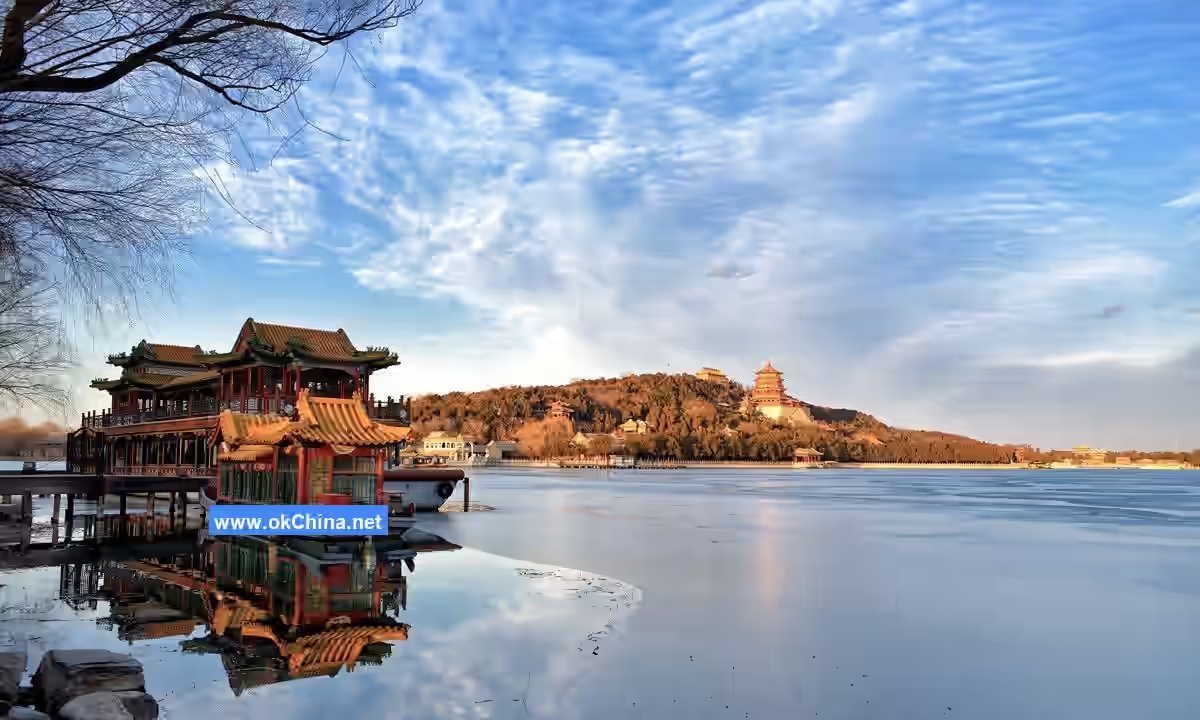
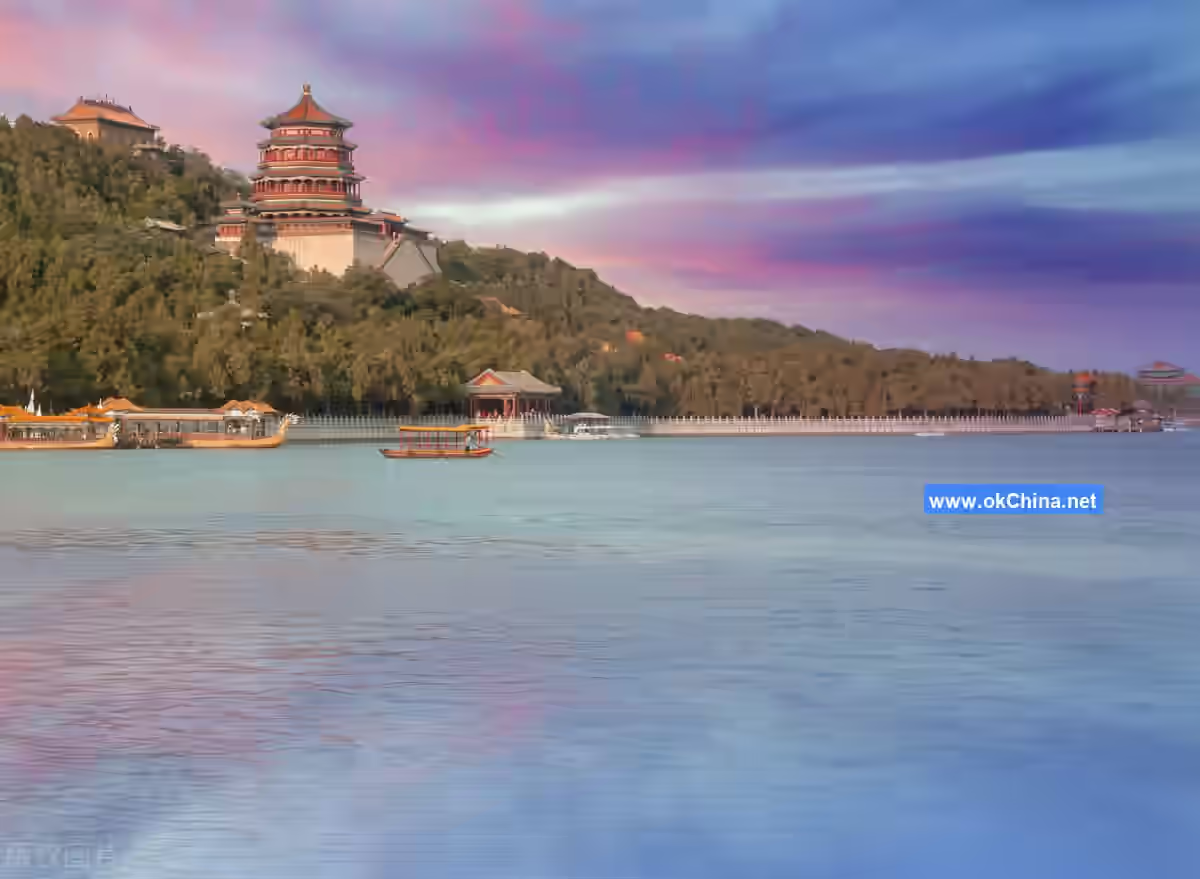
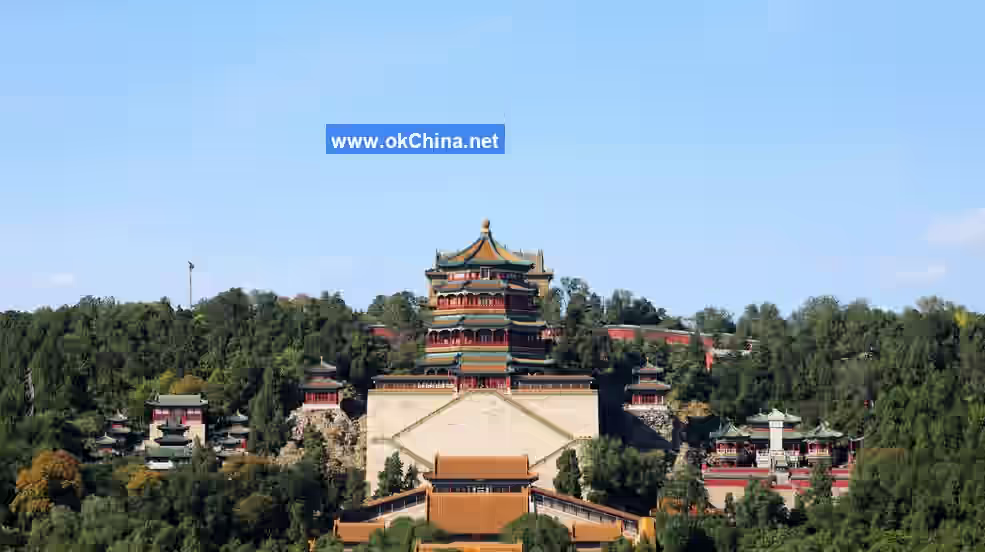
Longevity Hill is a branch of the Yanshan Mountains, standing 58.59 meters high. The architectural complex is built along the slopes. The front hill of Longevity Hill centers around the Tower of Buddhist Incense, an octagonal, three-story structure with four layers of eaves, forming a massive main architectural group. From the "Cloud-Dispelling and Jade-Embellished" archway at the foot of the hill, through the Gate of Dispelling Clouds, the Second Palace Gate, the Hall of Dispelling Clouds, the Hall of Virtuous Brilliance, and the Tower of Buddhist Incense, up to the Sea of Wisdom at the summit, a central axis rises layer by layer. To the east are the "Revolving Archive" and the stone stele inscribed with "Longevity Hill and Kunming Lake." To the west are the Pavilion of the Five Directions and the bronze Baoyun Pavilion. The back hill features Tibetan Buddhist architecture and the colorful glazed Duobao Pagoda. On the hill are structures such as the Pavilion of Great Happiness, the Pavilion of Double Greenness, the Pavilion of Inscribed Autumn, and the Pavilion of Painting Stroll. At the central location, a large and richly varied central architectural group was constructed. This group includes the main buildings of the garden—the Hall of Dispelling Clouds, where emperors and empresses held ceremonies and court meetings, and the Buddhist temple, the Tower of Buddhist Incense. Complementing the vertical axis of the central architectural group is the "Long Corridor," which runs horizontally along the northern shore of the lake, winding from east to west at the foot of the hill.
4.3 Four Great Regions
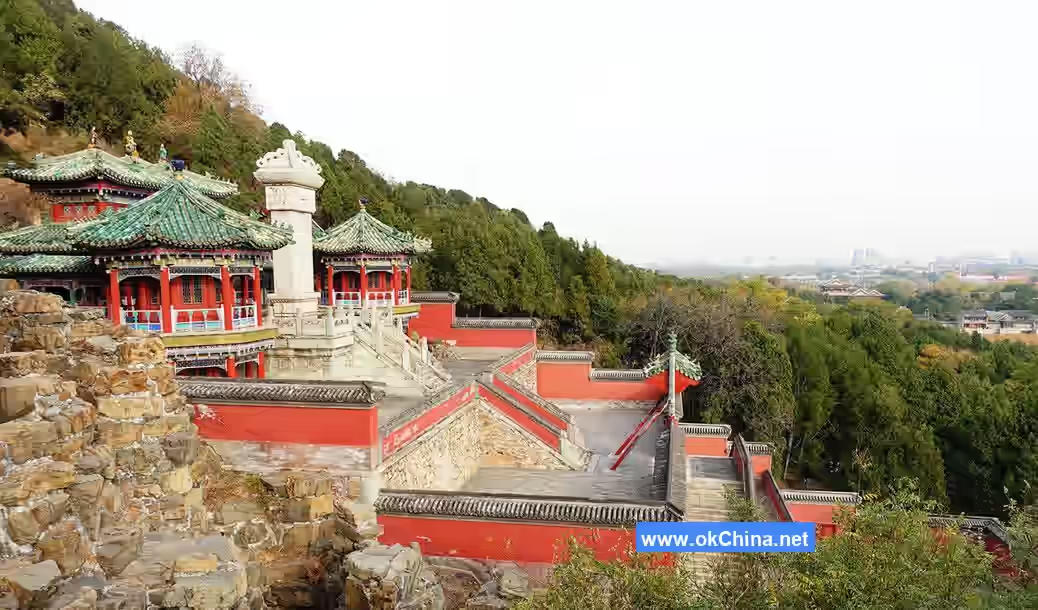
Located in the central part of the back hill of Longevity Hill, the Four Great Regions is a Han-Tibetan style architectural complex covering an area of 20,000 square meters. It was built following the natural contours of the hill. In front is the Sumeru Spiritual Realm (now a platform), flanked by 3-meter-high sutra pillars, and behind is the main temple building, the Pavilion of the Fragrant Cliff Sect Seal. Surrounding it are the Four Great Regions symbolizing the Buddhist world—Purvavideha in the east, Aparagodaniya in the west, Jambudvipa in the south, and Uttarakuru in the north—and the Eight Small Regions constructed in the form of various towers and platforms. To the south, southwest, northeast, and northwest are four lama stupas in red, white, black, and green, representing the "Four Wisdoms" of Buddhist scriptures. The stupas feature thirteen layers of ring-shaped "chakras," symbolizing the "Thirteen Heavens" in Buddhist texts. The stupas are uniquely shaped, dignified, and aesthetically pleasing. Between the Four Great Regions and the Eight Small Regions are two uneven platform halls, one representing the Moon Terrace and the other the Sun Terrace, symbolizing the sun and moon encircling the Buddha.
4.4 Sea of Wisdom
The Sea of Wisdom is a religious structure at the highest point of Longevity Hill. It is a beamless Buddhist hall entirely constructed of brick and stone, formed by arch structures. The exterior is decorated entirely with exquisite yellow and green glazed tiles, with a small amount of purple and blue glazed tiles used for the roof. Particularly notable are the thousands of glazed Buddha statues embedded in the outer walls. The term "Sea of Wisdom" is a Buddhist expression, originally meant to praise the Buddha's wisdom as vast as the sea and the boundless nature of Buddhist teachings. Although the structure closely resembles wooden architecture, it actually contains no wooden components. It is entirely built with stone bricks and arches, with no beams or purlins for support, hence it is called the "Beamless Hall." Additionally, because it enshrines the Amitayus Buddha, it is also known as the "Hall of Infinite Longevity."
4.5 Tower of Buddhist Incense
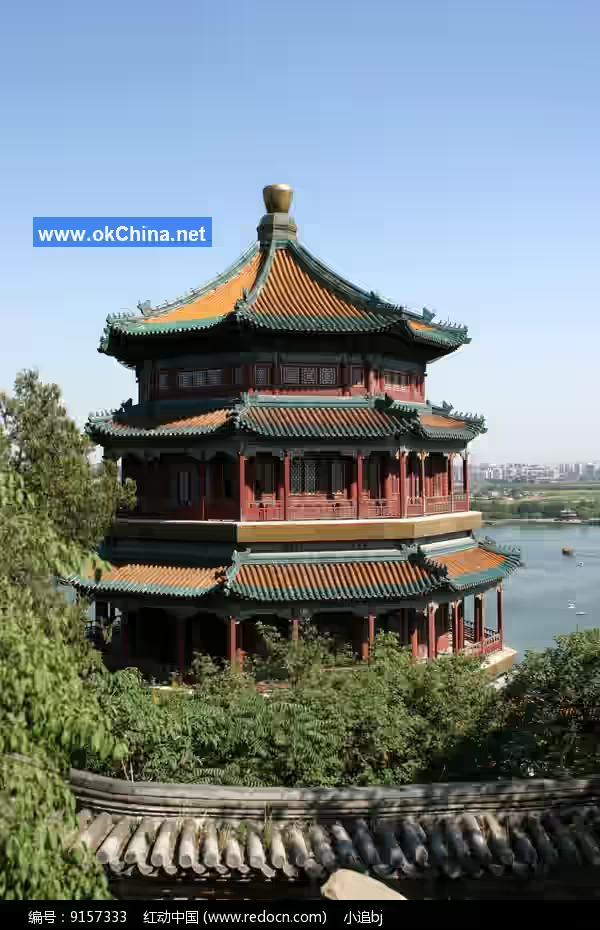
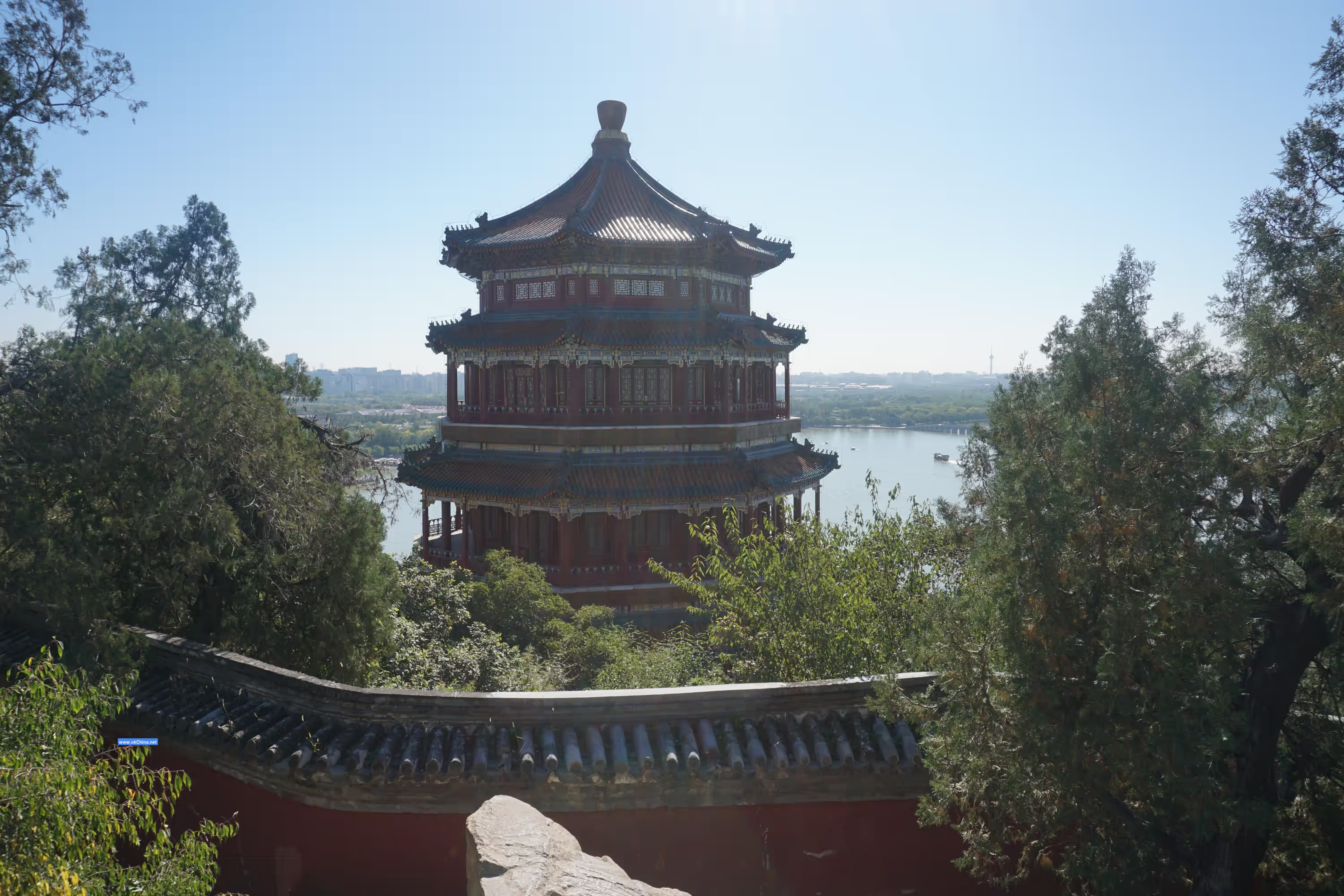
The Tower of Buddhist Incense is located on the mountainside at the center of the front hill of Longevity Hill, built on a 21-meter-high square platform. It is an octagonal, three-story structure with four layers of eaves, standing 41 meters tall. Inside the tower are eight massive ironwood pillars supporting the structure, making it a masterpiece of classical architecture with complex construction. The original tower was burned down by the Anglo-French Allied Forces in the tenth year of the Xianfeng reign (1860). It was reconstructed in the seventeenth year of the Guangxu reign (1891) at a cost of 780,000 taels of silver and completed in the twentieth year of the Guangxu reign (1894), representing the largest project in the Summer Palace. The tower enshrines the "Welcoming Buddha," where the imperial family would burn incense.
4.6 Baoyun Pavilion
The Baoyun Pavilion (Bronze Pavilion) is one of the most exquisitely crafted and largest surviving bronze castings in China. Built during the Qianlong reign, it stands on a 4-meter-high white marble pedestal in the courtyard of the Pavilion of the Five Directions, west of the Tower of Buddhist Incense. It is 7.5 meters tall and weighs 207 tons. All four sides feature rhombus-patterned lattice windows. Although made of bronze, it is entirely modeled after wooden frame structures. It has doors on the east, south, and west sides, each consisting of four lattice doors, while the north side has eight lattice windows. Both the doors and windows have rhombus-patterned lattice cores, and the curtain frames above also feature lattice cores, all of which are double-layered.
4.7 Hall of Dispelling Clouds
The Hall of Dispelling Clouds is located at the center of the front hill of Longevity Hill. Originally built by Emperor Qianlong for his mother's 60th birthday as the Temple of Great Gratitude for Longevity, it was renamed the Hall of Dispelling Clouds by Empress Dowager Cixi during reconstruction. It served as the place where Empress Dowager Cixi resided in the garden and received court congratulations on her birthdays. The term "Dispelling Clouds" is derived from a poem by Guo Pu: "Immortals part the clouds and emerge, revealing golden and silver terraces," metaphorically depicting a scene where immortals are about to appear amidst mist-shrouded jade palaces. From a distance, the Hall of Dispelling Clouds, along with the archway, the Gate of Dispelling Clouds, the Golden Water Bridge, and the Second Palace Gate, forms a straight line rising layer by layer. This group of buildings is the most magnificent architectural complex in the Summer Palace.
4.8 Long Corridor
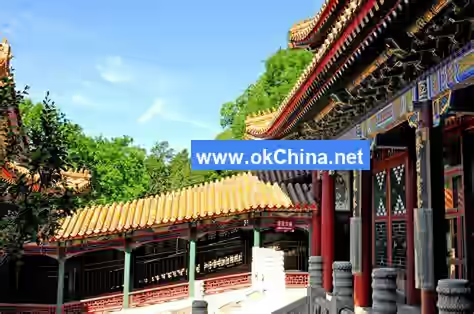
The Long Corridor is situated at the southern foot of Longevity Hill, facing Kunming Lake to the south and backed by Longevity Hill to the north. It stretches from the Moon-Inviting Gate in the east to the Stone Man Pavilion in the west, with a total length of 728 meters and 273 sections. It is the longest covered corridor in Chinese gardens and was recognized as the world's longest corridor in 1992, earning a place in the Guinness World Records. Each beam of the corridor is adorned with colored paintings, totaling over 14,000 images. The content includes landscapes, flowers, birds, fish, insects, figures, and historical allusions. The figure paintings are all derived from Chinese classical literary works.### 4.9 Kunming Lake
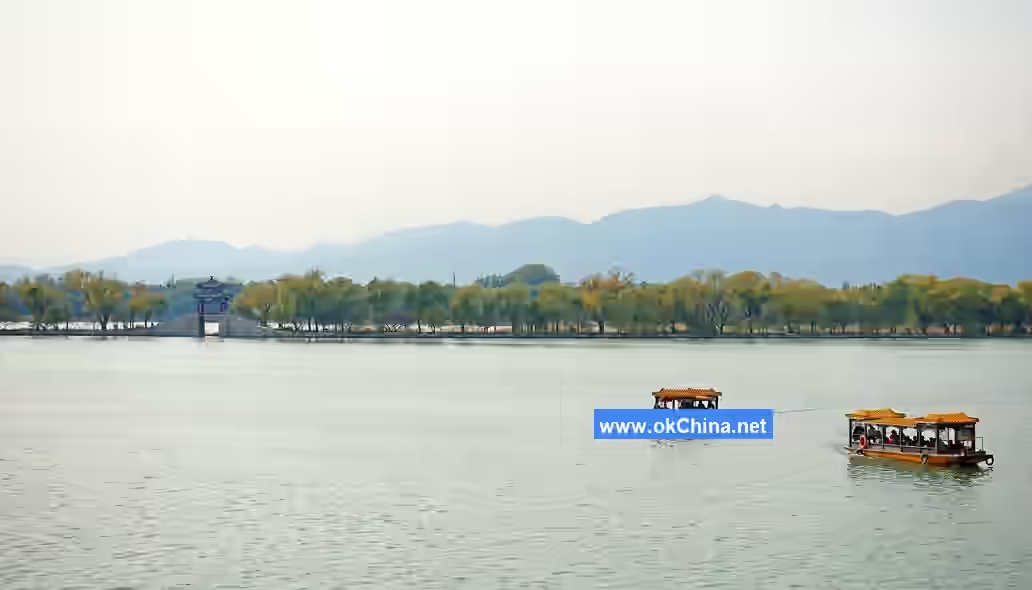
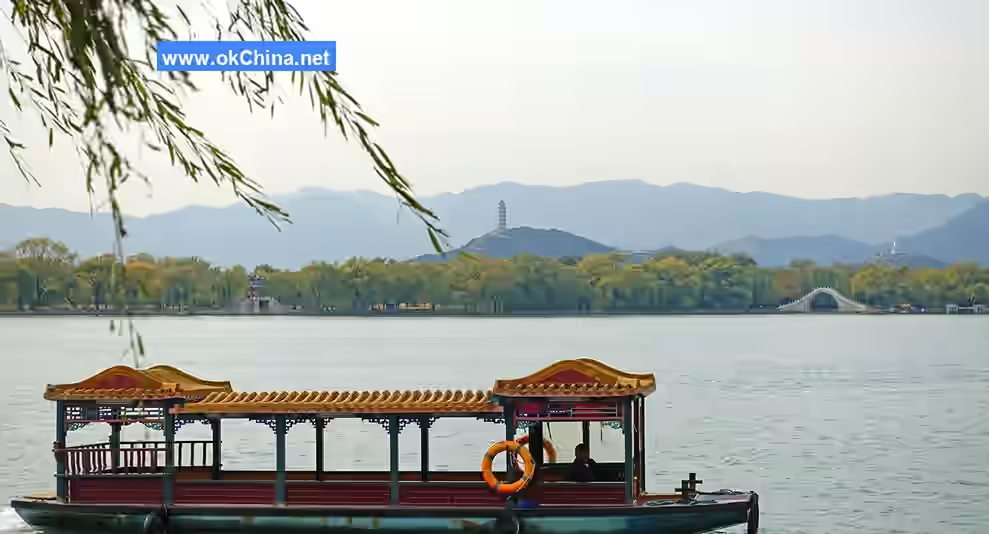
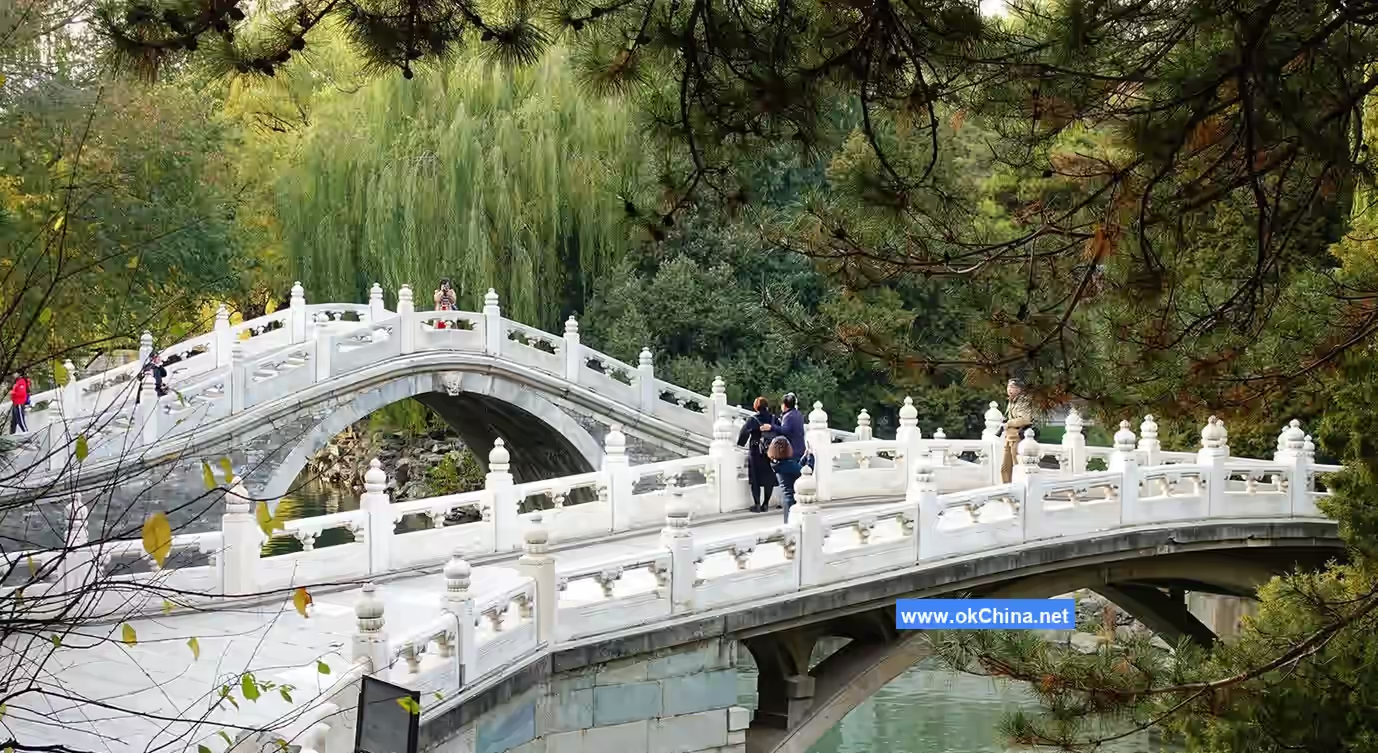
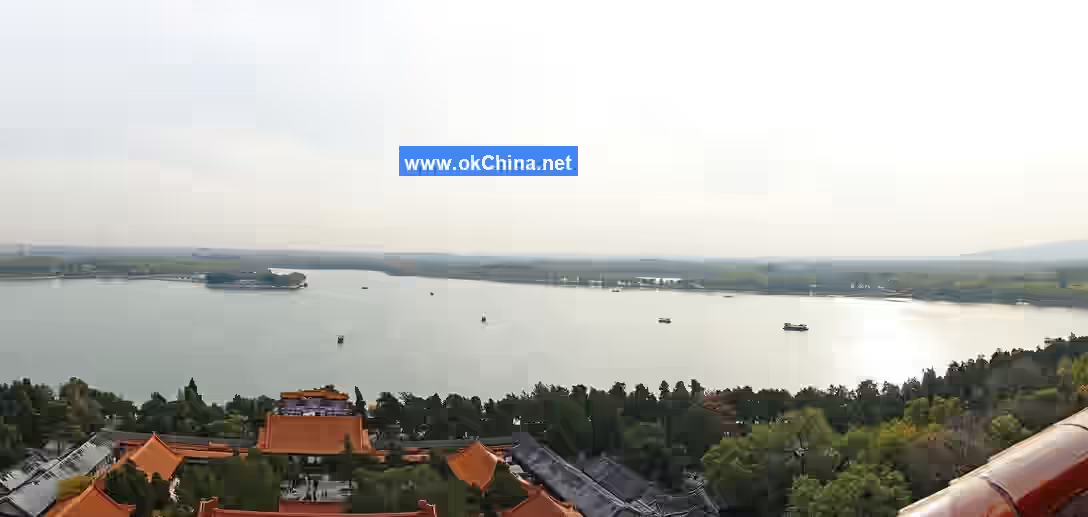
Kunming Lake is the largest lake among the royal gardens of the Qing Dynasty. A long embankment, the West Dyke, winds from the northwest to the south across the lake. The West Dyke and its branch dikes divide the lake surface into three water areas of varying sizes, each with a central island. These three islands stand in a tripod-like formation on the lake, symbolizing the three mythical mountains of the East Sea from ancient Chinese legend—Penglai, Fangzhang, and Yingzhou. The West Dyke and its six bridges were consciously modeled after the Su Causeway and its "Six Bridges" of West Lake in Hangzhou. The area around the West Dyke features clear waves and weeping willows, offering expansive natural scenery. The beautiful silhouette of the Jade Spring Hill, located several miles outside the garden, and the shadow of the Jade Peak Pagoda atop the hill seem to push through the gates, ingeniously incorporated as part of the garden's landscape.
4.10 Wandering in a Painting
Wandering in a Painting is a group of scenic buildings located in the western part of Longevity Hill. Built against the mountain slope, it features a two-story pavilion at the front, flanked by two towers named "Love of Mountains" and "Borrowing Autumn." Behind the pavilion stands a stone memorial archway, and behind that is the "Clarity Pavilion." Climbing corridors connect the buildings. Situated on the mountainside, the towers, pavilions, and corridors are constructed at different elevations. Amidst the green hills and verdant cypresses, a cluster of buildings is nestled, covered with glazed tiles in red, yellow, blue, and green.
4.11 Hall of Listening to Orioles
The Hall of Listening to Orioles was originally built by Emperor Qianlong for his mother. It contains a two-story theater stage. Its name derives from the ancient practice of using the song of the oriole bird as a metaphor for beautiful and melodious music. Before the completion of the Grand Theater Building in the Garden of Virtue and Harmony, Empress Dowager Cixi often watched operas and held banquets here. It was burned down by the Anglo-French Allied Forces in 1860 (the 10th year of the Xianfeng reign) and was rebuilt during the Guangxu reign. The Hall of Listening to Orioles Restaurant is a famous restaurant specializing in imperial court cuisine.
4.12 Garden of Harmonious Interests
Located at the eastern foot of Longevity Hill, the Garden of Harmonious Interests is an independent garden-within-a-garden, featuring the style of southern Chinese gardens. During the Qingyi Garden period, it was named "Huishan Garden," modeled after the Jichang Garden at Huishan in Wuxi. After renovation in 1811 (the 16th year of the Jiaqing reign), it was renamed "Garden of Harmonious Interests," inspired by the phrase "using the tranquil pleasures beyond worldly affairs to harmonize the inner balance of the heart" and Emperor Qianlong's poetic line, "A single pavilion, a single path, is enough to harmonize wondrous delights." The garden contains thirteen structures including pavilions, terraces, halls, and waterside pavilions, all connected by a hundred sections of covered walkways and five bridges of different styles. In the southeast corner of the garden, there is a stone bridge. The stone archway at the bridgehead bears the inscription "Zhiyu Qiao" (Knowing Fish Bridge), written by Emperor Qianlong, alluding to the debate between Zhuangzi and Huizi at the Hao River about knowing the happiness of fish.
4.13 Hall of Joyful Longevity
The Hall of Joyful Longevity is the main building in the residential area of the Summer Palace. Originally built in 1750 (the 15th year of the Qianlong reign), it was destroyed in 1860 and rebuilt in 1887 (the 13th year of the Guangxu reign). Facing Kunming Lake to the front and backed by Longevity Hill, with the Hall of Benevolence and Longevity to the east and the Long Corridor to the west, it occupies the best location in the garden for residence and recreation. In front of the hall is the dock where Empress Dowager Cixi boarded boats. The horizontal plaque "Hall of Joyful Longevity," with gold characters on a black background, was inscribed by Emperor Guangxu. The courtyard displays bronze deer, cranes, and vases, symbolizing "peace throughout the land." The courtyard is planted with flowers such as magnolia, Chinese flowering crabapple, and peony, filling the garden with famous blooms to signify "wealth and honor in the jade hall."
4.14 Hall of Jade Ripples
The Hall of Jade Ripples was first built during the Qianlong period and renovated during the Guangxu period. During the Qingyi Garden era, it served as Emperor Qianlong's library, elegantly furnished. In the Summer Palace period, it became the bedchamber of Empress Dowager Longyu, wife of Emperor Guangxu. Due to the change in function and the occupant's status, the furnishings underwent significant alterations. After ancient architecture restoration in 1979, only furniture was displayed inside. In 1992, based on archival records of the Qingyi Garden period, furnishings were arranged, and over a hundred cultural relics are now displayed throughout the courtyard complex.
4.15 Grand Theater Building
The Grand Theater Building is located within the Garden of Virtue and Harmony. Together with the Qingyin Pavilion at the Chengde Mountain Resort and the Changyin Pavilion within the Forbidden City, it is known as one of the three great theater stages of the Qing Dynasty. The Grand Theater Building in the Garden of Virtue and Harmony was built for Empress Dowager Cixi's 60th birthday, exclusively for her opera viewing. Standing 21 meters high, it is second only to the tallest Tower of Buddhist Incense in the Summer Palace. The theater building has three stories, with a two-story backstage dressing area. The ceiling has seven "skylights" (trapdoors), and the floor contains "trapdoors." Beneath the stage are a well and five square pools. During performances of mythological or ghost operas, characters could descend from "heaven," emerge from the "earth," or water could be brought onto the stage.
4.16 Hall of Jade Ripples
The Hall of Jade Ripples is built on the southwestern shore of Kunming Lake, near the Hall of Benevolence and Longevity. It is a courtyard-style complex with buildings on three sides. The main hall, Hall of Jade Ripples, faces south. The eastern side hall is the Chamber of Rosy Clouds, and the western side hall is the Lotus Fragrance Pavilion. The eastern hall leads to the Hall of Benevolence and Longevity, the western hall leads to the lakeside dock, and the back door of the main hall directly faces the Hall of Jade Ripples. The rear eaves and the two side halls are enclosed by brick walls, isolating them from the outside world, making it an important historical site in the Summer Palace. In 1898 (the 24th year of the Guangxu reign), after Empress Dowager Cixi launched a palace coup, she imprisoned the reformist Emperor Guangxu here, which served as his bedchamber.
4.17 Hall of Benevolence and Longevity
The Hall of Benevolence and Longevity (named the Hall of Diligent Government during the Qingyi Garden period) served as the place where the emperor held court and conducted state affairs during both the Qianlong and Guangxu historical periods. The main layout of its furnishings was largely the same, following the specific arrangement style of imperial palaces. However, the specific items differed; the furnishings during the Summer Palace period were much more luxurious than during the Qingyi Garden period. Currently, the central part of the hall's furnishings maintains their original appearance from the Guangxu period, while other furnishings have changed slightly. Cultural relics, books, and furniture originally in the hall are partly exhibited within, with the majority stored in the cultural relics repository.
4.18 East Palace Gate
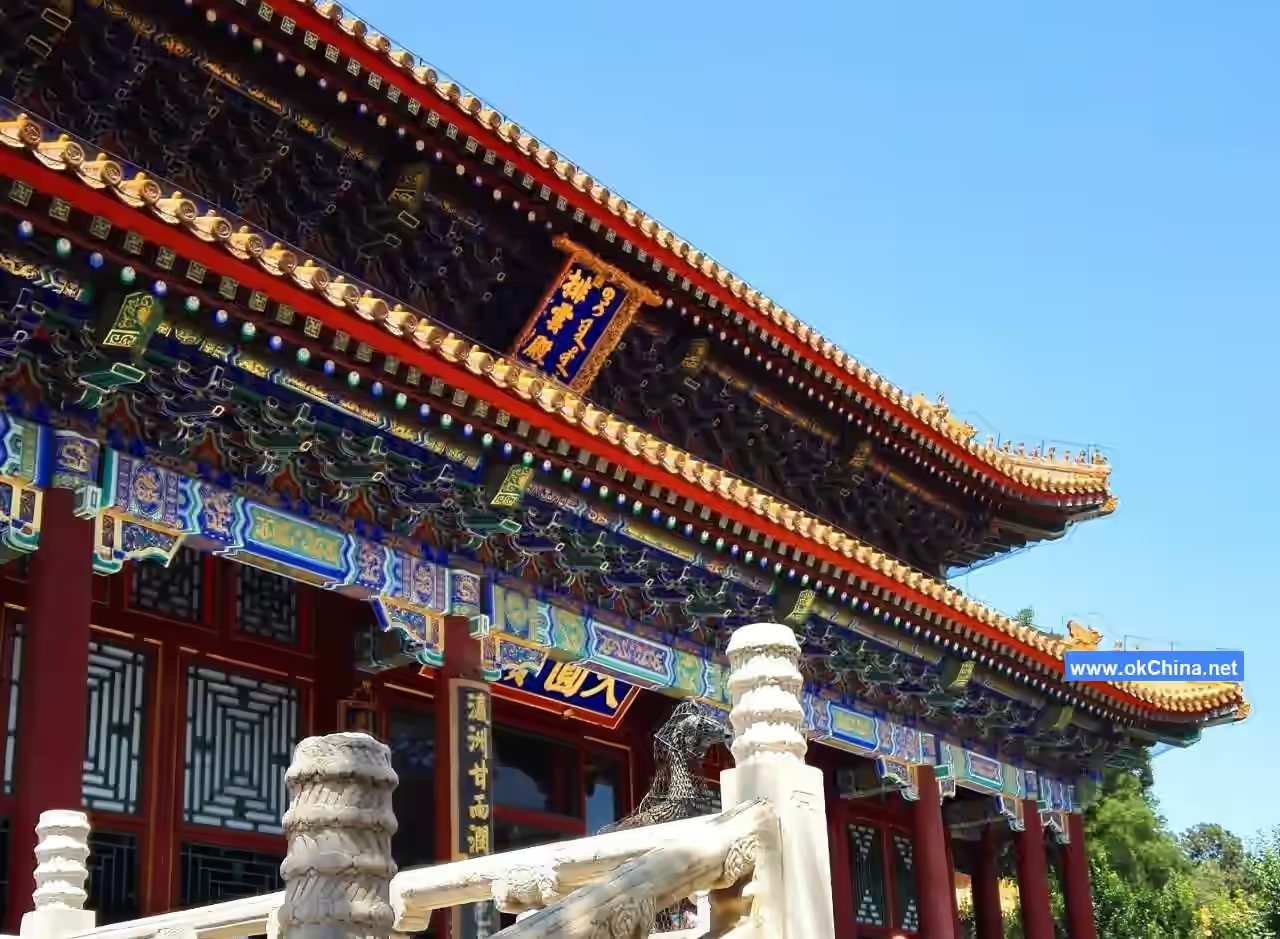
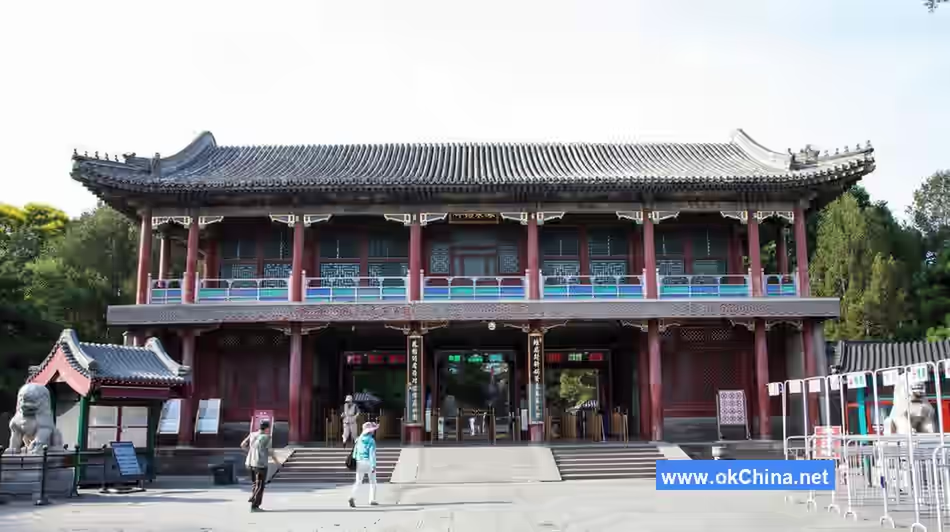
The lintel and eaves of the East Palace Gate are entirely painted with colorful and splendid patterns. The six vermilion doors are studded with neat rows of yellow door nails. Under the central eave hangs a large plaque with gold characters on a blue background, inscribed with the three characters "Yi He Yuan" (Summer Palace), personally written by Emperor Guangxu. The cloud and dragon stone carving on the imperial pathway in front of the gate depicts two dragons playing with a pearl. It was carved during the Qianlong era and moved from the ruins of the Old Summer Palace (Anyou Palace). It symbolizes imperial dignity. The East Palace Gate was exclusively used by Qing emperors and empresses. The Hall of Benevolence and Longevity is located inside the Summer Palace's main gate, the East Palace Gate.
4.19 Marble Boat
The Marble Boat, commonly known as the Stone Boat, is located by the lakeside at the western end of the Long Corridor. It is a large stone vessel, symbolizing "clear seas and tranquil rivers" (peace and prosperity). It is the only building in the Summer Palace with Western architectural influences. Its predecessor was the life-releasing platform of the Yuanjing Temple from the Ming Dynasty. When Emperor Qianlong built the Qingyi Garden, he converted the platform into a boat and renamed it the "Stone Boat." The Marble Boat is 36 meters long, constructed from carved and stacked marble. A two-story cabin is built on the hull. The boat's floor is paved with patterned bricks, the windows are made of colored glass, and the top is decorated with brick carvings. When it rains, water falling on the roof drains through four hollow pillars at the corners and is discharged into the lake from four dragon-head spouts on the hull.
4.20 Wenchang Gallery
Located east of the Wenchang Pavilion within the Summer Palace, the Wenchang Gallery is the largest and highest-grade cultural relics exhibition hall among Chinese classical gardens. The gallery houses six thematic exhibition halls, displaying thousands of exquisite cultural relics from the Summer Palace collection, dating from the Shang and Zhou dynasties down to the late Qing Dynasty. The categories include bronze ware, jade ware, porcelain, gold and silver ware, bamboo, wood, ivory, and horn carvings, lacquerware, furniture, calligraphy and painting, ancient books, cloisonné, clocks and watches, and miscellaneous items, covering many categories of Chinese handed-down cultural relics. Due to the specific imperial environment of the Summer Palace, these artworks represent the highest craftsmanship of their time, with many treasures considered national treasures even then. The gallery also exhibits some articles of daily use from the Qing imperial court, closely related to the lives of emperors and empresses. They possess outstanding historical value and are the most authentic material evidence of Chinese imperial culture.
4.21 Wenchang Pavilion
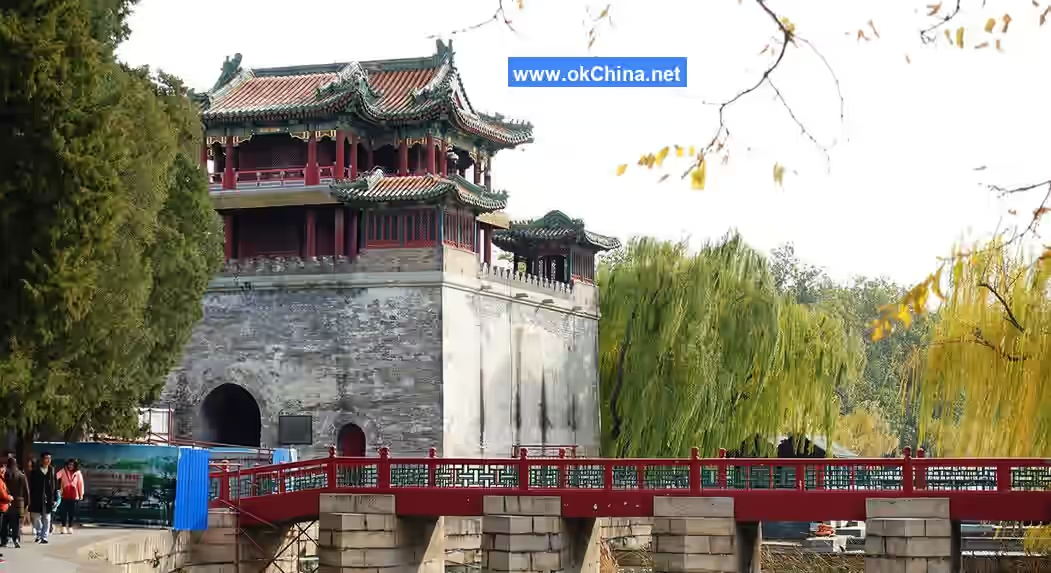
The Wenchang Pavilion is the largest among the six fortress gates (Purple Air from the East Fortress Gate, Lodge of Cloudy Perches Fortress Gate, Yin Hui Fortress Gate, Tong Yun Fortress Gate, Thousand Peaks in Variegated Hues Fortress Gate, and Wenchang Pavilion Fortress Gate) within the Summer Palace. It was first built in 1750 (the 15th year of the Qianlong reign), burned down by the Anglo-French Allied Forces in 1860, and rebuilt during the Guangxu reign. The main pavilion has two stories, housing bronze statues of the Wenchang deity, attendant boys, and a bronze te (mythical beast). The Wenchang Pavilion, together with the Lodge of Cloudy Perches on the west side of Kunming Lake which enshrines the military saint, symbolizes "civil and military assistance" to the throne.
4.22 Bronze Ox
The Bronze Ox is located on the eastern shore of Kunming Lake, north of the eastern end of the Seventeen-Arch Bridge. It was placed there to suppress floods. Cast in bronze in 1755 (the 20th year of the Qianlong reign), it is called the "Golden Ox."
4.23 Seventeen-Arch Bridge
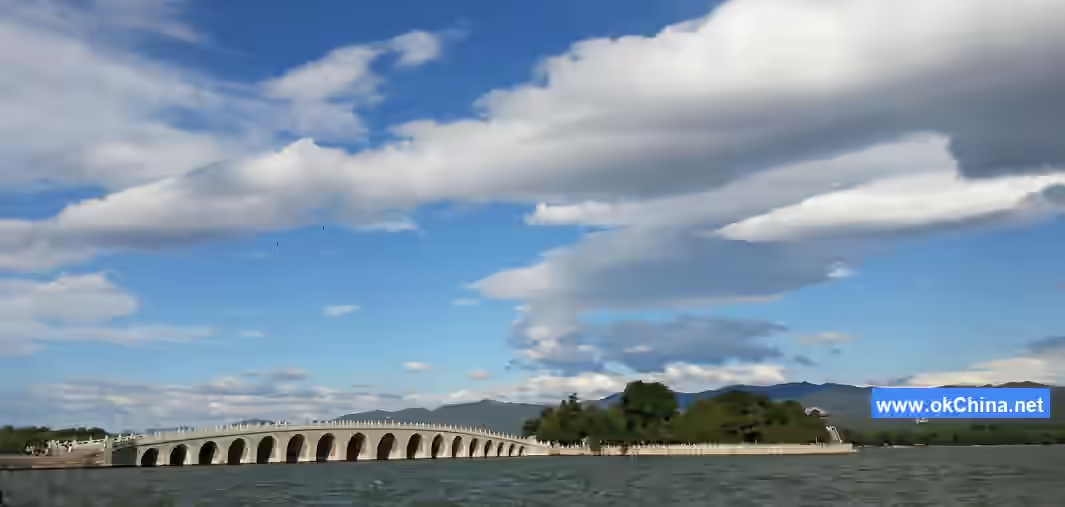
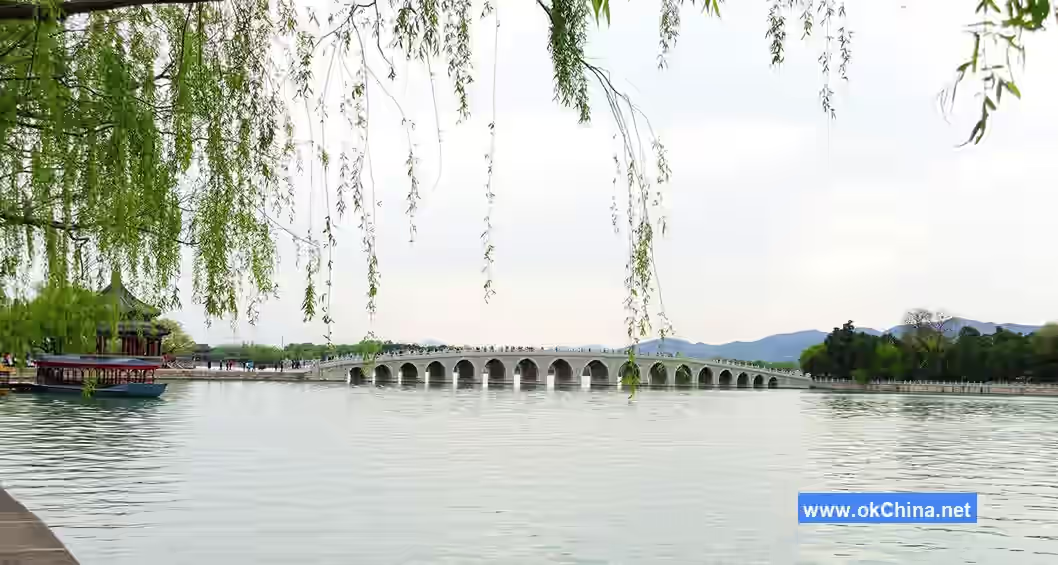
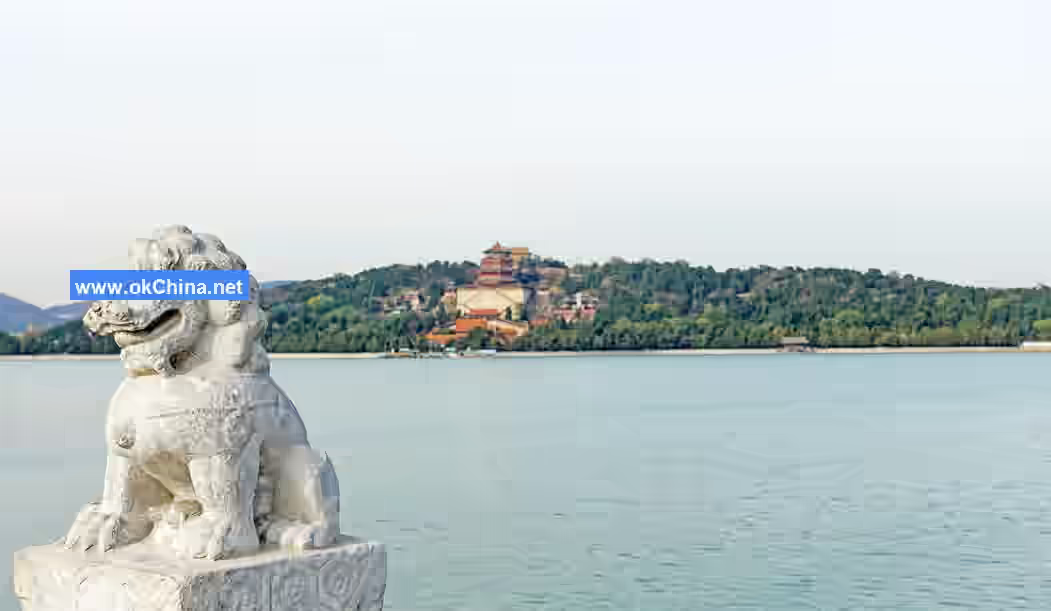
The Seventeen-Arch Bridge spans Kunming Lake, situated between the East Dyke and South Lake Island, connecting the dyke and the island. It is the largest stone bridge in the garden. The stone bridge is 8 meters wide and 150 meters long, consisting of seventeen arches. The railings on both sides of the bridge are carved with over 500 stone lions of varying sizes and different postures.
5. Cultural Relics Collection
During the Qingyi Garden period, Emperor Qianlong collected numerous cultural artifacts and curios, including many bronzes from the Shang and Zhou dynasties, porcelain, jade, calligraphy, and paintings from the Tang, Song, Yuan, and Ming dynasties. The recorded furnishings at that time amounted to over 40,000 items. The Imperial Household Department of the Qing court specifically established "Furnishings Registers" for archival management. After the Opium Wars, due to the declining national strength of the Qing Dynasty, furnishings in the Qingyi Garden were reduced. By 1855 (the 5th year of the Xianfeng reign), the actual number of furnishings was 37,583 items. In 1860 (the 10th year of the Xianfeng reign), five large imperial gardens in the northwestern suburbs of Beijing, including the Qingyi Garden, were brutally looted and burned by the Anglo-French Allied Forces. According to the registers compiled after the looting, only 530 items remained in the Qingyi Garden, most of which were damaged and incomplete.
In 1900, when the Eight-Nation Alliance invaded Beijing, the Summer Palace suffered another catastrophe, and its collection of cultural relics was again destroyed and looted. In 1902, Empress Dowager Cixi once again repaired the Summer Palace and vigorously replenished the furnishings within the garden.After the founding of the People's Republic of China, the Summer Palace housed a collection of over 40,000 cultural relics, covering categories such as bronze ware, jade, porcelain, woodenware, lacquerware, calligraphy and painting, ancient books, enamel, clocks, bamboo ware, musical instruments, root carvings, and miscellaneous items. These relics encompass nearly all categories of Chinese cultural heritage passed down through generations, including numerous foreign artifacts. In terms of value, there are over 20,000 national-level cultural relics, including national treasures such as the Guo Xuan Gong Zi Bai Ding (a bronze tripod), the Three Sacrificial Zun (a ritual wine vessel), and the Kesi Long Scroll of Buddha Image.
6. Value and Significance
6.1 Artistic Value
The Summer Palace boasts outstanding achievements in garden design and artistic value. Originally named the Garden of Clear Ripples on Longevity Hill, it was the last of the "Three Hills and Five Gardens" built in the royal garden area of the northwestern suburbs of Beijing during the Qing Dynasty. Its completion filled and enriched the landscape of pavilions and terraces spanning dozens of miles from the Garden of Everlasting Spring and the Old Summer Palace to the Garden of Tranquility and Brightness at Jade Spring Hill and the Garden of Tranquility and Pleasure at Fragrant Hill, ultimately completing the construction of an unprecedented grand royal garden landscape group in Chinese history. In terms of layout, among the "Three Hills and Five Gardens," the Garden of Clear Ripples was the only one that primarily featured the transformation of natural water bodies, effectively becoming the compositional center of the "Three Hills and Five Gardens." The central axis formed by the Tower of Buddhist Incense on Longevity Hill, the main buildings within the garden, and the scenic spots on the lake extended east to the Old Summer Palace and west to the Garden of Tranquility and Brightness. Through meticulous planning, roughly equal spatial distances were designed. The realization of the overall scale of the "Three Hills and Five Gardens," marked by the completion of the Garden of Clear Ripples, reflected the peak of the Qing Dynasty’s comprehensive national strength in royal garden construction a century after its establishment. It stands as one of the few peaks of prosperity in Chinese feudal society and one of the remarkable achievements in the construction of capitals, palaces, and gardens under imperial rule.
6.2 Architectural Value
The architectural value of the Summer Palace is among the most significant in China. The surviving Qing Dynasty archives contain complete engineering records of the Summer Palace’s construction, documenting the progress reports submitted every five days from the end of the 16th year of the Guangxu reign (1890) to the 20th year (1894). These reports were organized into six monthly installments based on the lunar calendar: the 1st to the 5th, the 6th to the 10th, the 11th to the 15th, the 16th to the 20th, the 21st to the 25th, and the 26th to the 30th (or 29th). The work content was clearly listed by building name. For specific buildings, the records detail every step from excavation to final painting, including processes, techniques, and materials. They also reflect details such as changes in building names, work stoppages during the rainy season, and breaks around the Spring Festival, as well as clear documentation of contracted construction companies. In addition to the engineering records, the archives include information on funding amounts and sources, material prices, transportation costs, and daily wages for different types of labor, all recorded in account books. Architectural drawings and engineering accounts created by the Yangshi Lei and Suanfang Gao families of the Qing Dynasty, scattered across the First Historical Archives of China, the National Library of China, and various university libraries and archives, vividly and comprehensively reflect the planning, design processes, and numerical measurements related to the Summer Palace’s construction. It can thus be concluded that the Summer Palace is a vast ancient garden complex completed using traditional Chinese planning and design procedures, architectural forms, building materials, craftsmanship techniques, large-scale project management systems, and artisan organizations. All of this was accomplished within a span of nearly ten years, from the 12th year of the Guangxu reign (1886) to the 20th year (1894), with engineering records extending into early 1895. The Summer Palace retains 66,759.9 square meters of ancient buildings from that period. Including buildings demolished or collapsed during the Republic of China era and auxiliary structures outside the scenic area, the total building area is no less than 70,000 square meters, nearly half the building area of the Forbidden City, which was constructed over more than 400 years during the Ming and Qing dynasties. Achieving such a scale of construction within a decade is rare in the history of ancient Chinese garden architecture.
6.3 Later Influence
The Summer Palace is a masterpiece that integrates the artistic essence of gardens from northern and southern China over thousands of years, exerting a significant influence on the culture of Eastern garden art.
Comments
Post a Comment