Stone Forest
1. Introduction
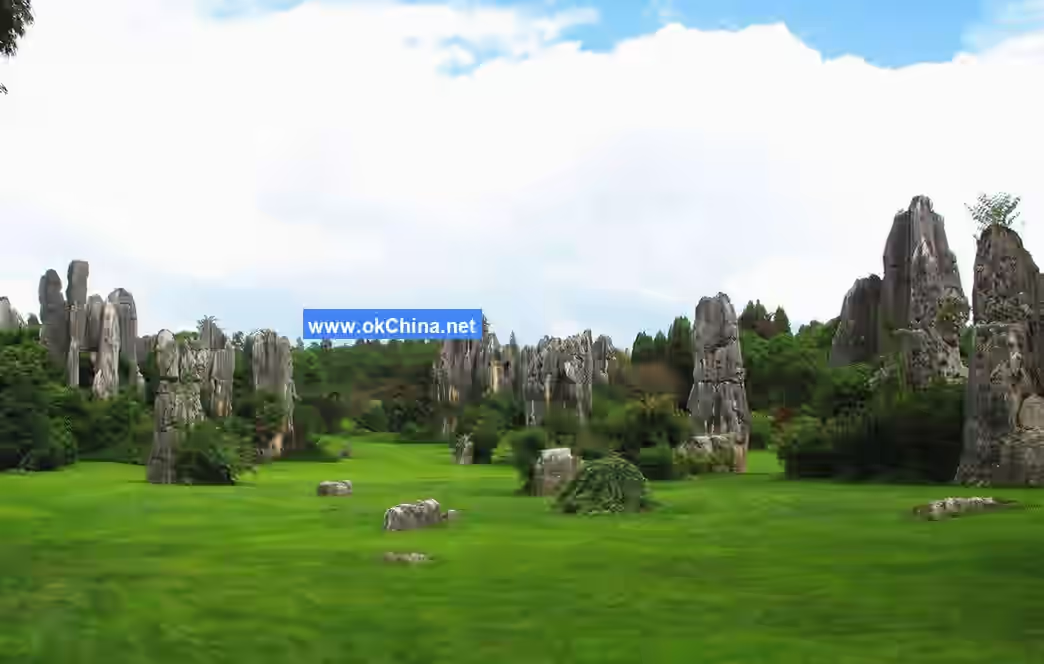
The Stone Forest Scenic Area of Kunming City, also known as the Yunnan Stone Forest, is located within Shilin Yi Autonomous County, Kunming City, Yunnan Province. The karst landform area of the Stone Forest covers over 1,100 square kilometers, with a protected area of 350 square kilometers. It is a national 5A-level scenic area.
The Stone Forest Scenic Area of Kunming City primarily features karst topography and belongs to a subtropical low-latitude plateau mountain monsoon climate, characterized by spring-like weather throughout the year and distinct dry and wet seasons. The main river in the area is the Ba River, and there are more than 80 natural lakes, including Long Lake and Moon Lake. Nine underground rivers have been discovered. Within the scenic area, there are 87 species of ferns belonging to 41 genera and 21 families, as well as 990 species of seed plants belonging to 574 genera and 51 families. There are 185 species of vertebrates, including 42 species of mammals. The area is one of the main habitats for the IUCN-listed (1988) endangered species, the Lady Amherst's pheasant. The development of the scenic area began as early as the Wanli period of the Ming Dynasty when the local magistrate Wang Liang developed Zhiyun Cave. In the 28th year of the Republic of China (1939), the Lunan County Government promulgated the "Measures for the Protection of Stone Forest Scenic Spots," marking the first use of administrative regulations to protect the Stone Forest landscape. After the founding of the People's Republic of China, the Stone Forest Scenic Area entered the tourism service industry on April 1, 1978. On November 8, 1982, the State Council approved the Stone Forest Scenic Area as a national-level scenic area. In 1986, Naigu Stone Forest, Zhiyun Cave, and Dadie Waterfall were fully completed and opened to the public. Famous attractions include the Greater and Lesser Stone Forests, Long Lake, Dadie Waterfall, Guishan National Forest Park, and Naigu Stone Forest.
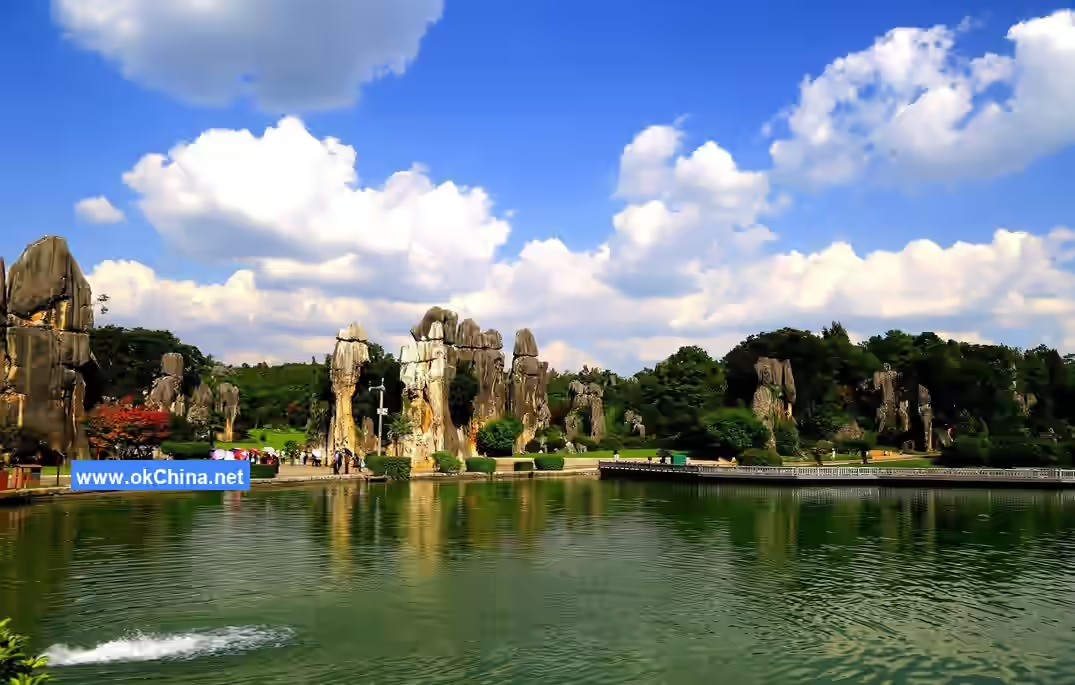
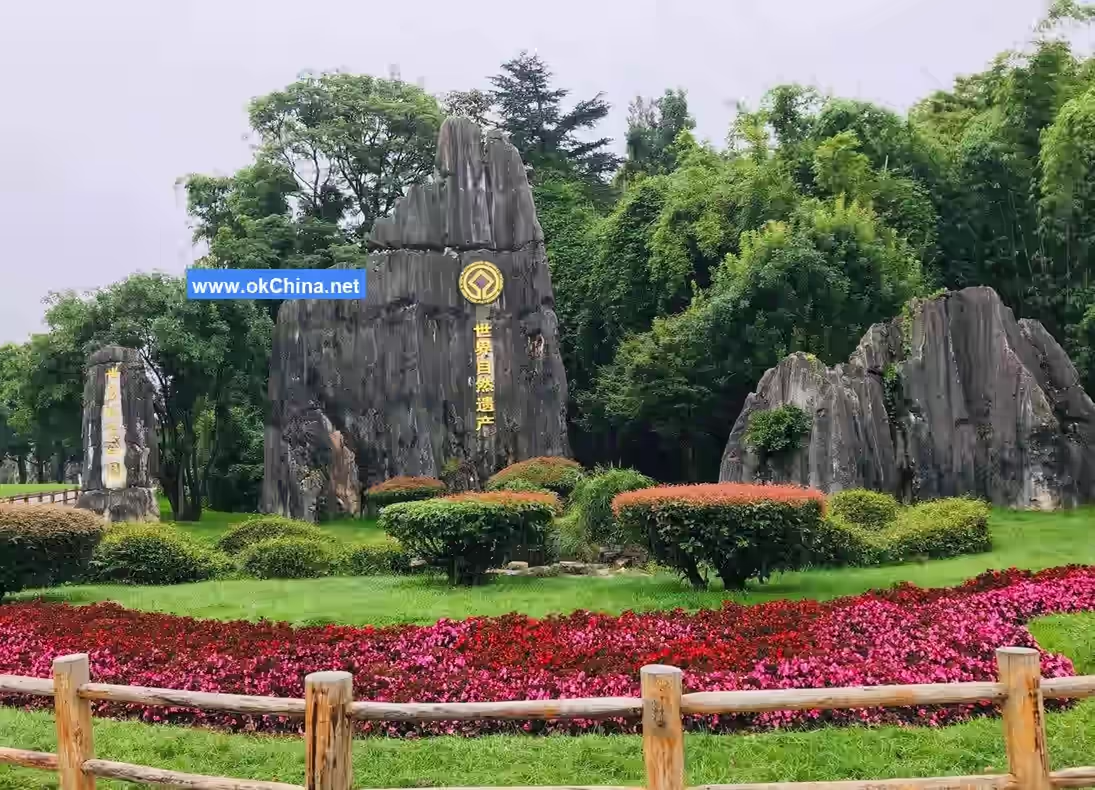
The Stone Forest Scenic Area is renowned worldwide for its majestic, peculiar, perilous, elegant, and serene landscape features, earning the reputation of "the First Wonder under Heaven." It is one of the world's most famous karst landform tourist destinations and has been called a "natural museum of sculptural landforms" by international karst research experts. In 2004, it was awarded the title of one of the first "Global Geoparks." In 2007, it received the title of one of the first "National AAAAA Tourist Attractions." In the same year, it was inscribed on the UNESCO World Heritage List.
2. Geographical Environment
2.1 Location and Territory
The Stone Forest Scenic Area is located within Shilin Yi Autonomous County, Kunming City, Yunnan Province, approximately 78 kilometers from the provincial capital, Kunming. It lies between 103°11′ to 103°29′ east longitude and 24°40′ to 24°56′ north latitude. The scenic area covers 350 square kilometers.
2.2 Topography and Landforms
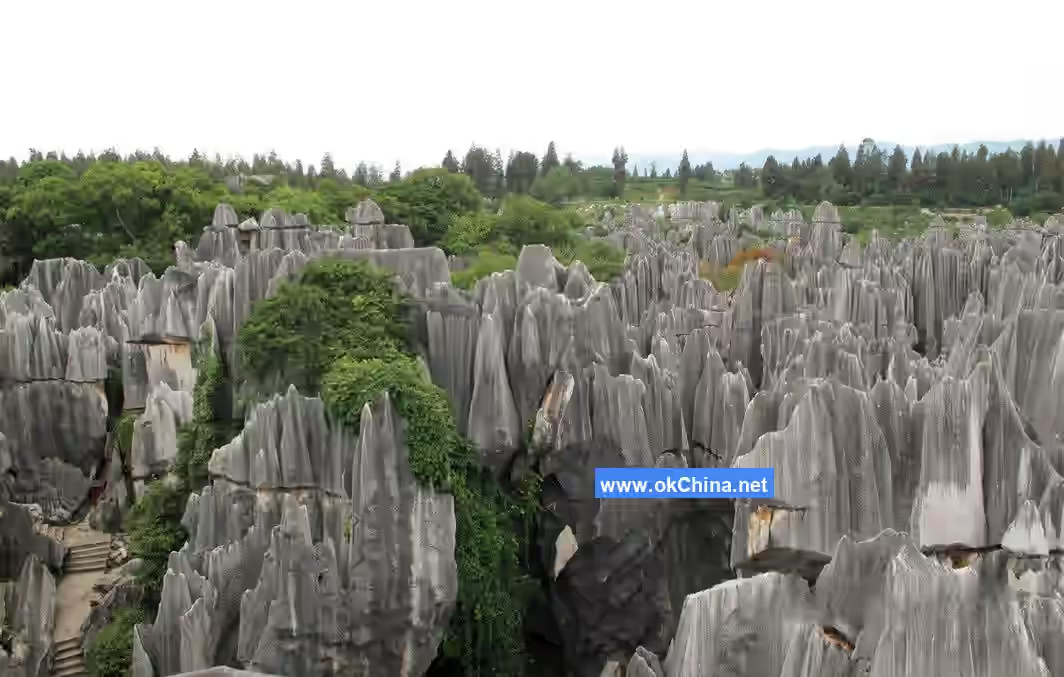
The Stone Forest Scenic Area is situated in the southern part of the eastern Yunnan karst region on the Yunnan-Guizhou Plateau. The plateau features gentle undulations and slight erosion, with elevations ranging from 1,700 to 1,950 meters, and some mountains and peaks exceeding 2,200 meters. The Greater Stone Forest area has an elevation of about 1,750 meters, while the Naigu Stone Forest area is around 1,820 meters. The terrain is generally higher in the northeast and lower in the southwest, and higher in the east and lower in the west. The main body of the Stone Forest area is located in the karst region between the Jiupan Mountain and Dafo Mountain. Karst landforms are the most typical feature of the 350-square-kilometer Stone Forest Scenic Area, encompassing a variety of diverse and uniquely shaped karst landscapes. Surface karst features mainly include stone forests, solution hill depressions, stone teeth fields, karst planation surfaces, peak cluster depressions, solution lakes, karst springs, natural bridges, and solution basins. Subsurface karst features mainly include solution caves and cave deposits, underground rivers, and subterranean flow systems.
Among these, the stone forest is the most important and typical karst landform type in the area. Stone forests are widely distributed across various terrains such as mountaintops, ridges, slopes, and depressions. Controlled by stratigraphy and structure, the stone forests exhibit a nearly north-south zonal distribution. The total area of concentrated stone forests is approximately 45 square kilometers, with the rest scattered in clusters.
2.3 Formation Process
The formation of the Stone Forest in the Kunming Stone Forest Scenic Area underwent a long and complex geological evolution. During the Early Permian period 270 million years ago, the Stone Forest area was a marine environment where hundreds of meters of limestone were deposited on the seabed. Around 260 million years ago, tectonic movements uplifted the Stone Forest area into land, causing the limestone to compress and fracture. Located at the edge of a humid and hot ancient coastline, dissolution formed the earliest stone forests. Approximately 250 million years ago, large-scale volcanic eruptions buried these early stone forests under volcanic rock (basalt). Throughout the long Mesozoic to early Cenozoic eras, the Stone Forest area remained in a state of denudation and planation. After nearly 200 million years of burial, by the end of the Mesozoic era 65 million years ago, most of the volcanic rock had been eroded away, exposing the early stone forests once again. The Early Himalayan orogeny around 60 million years ago caused the Stone Forest area to tilt and uplift, transforming it into an inland intermontane lake environment—the ancient Lunan Lake. Parts of the stone forests were again covered by lake sediments. Since the Late Tertiary period, the Stone Forest area has continued to uplift, evolving towards the modern plateau valley environment. Under continuous, phased uplift processes and varying geographical and climatic conditions, the stone forest landforms have undergone evolution involving inheritance, replacement, and superposition. Older stone forests gradually disappeared while new ones continuously formed. Over the past 20 million years, the ancient lakes vanished, and the Stone Forest area gradually evolved into a plateau basin, concurrently developing the latest phase of stone forests.
2.4 Climate
The climate of the Stone Forest Scenic Area belongs to a subtropical low-latitude plateau mountain monsoon climate, characterized by no severe cold in winter, no intense heat in summer, spring-like weather year-round, and distinct dry and wet seasons. The rainy season lasts from summer to autumn, while the dry season spans winter to spring. In the basin and gentle hill areas within the region at altitudes of 1,600–1,800 meters, the average annual temperature is 14.8–15.9°C, equivalent to a northern subtropical climate. In mountainous and semi-mountainous areas at altitudes of 1,800–2,150 meters, the average annual temperature is 12.8–14.7°C, equivalent to a temperate climate. At the main peak of Laoguishan Mountain above 2,150 meters, the average annual temperature is below 12.7°C, equivalent to a mid-temperate climate. March is the month with the maximum solar radiation, averaging 14.17 kcal/cm², while November is the minimum month, averaging 8.27 kcal/cm². The average annual sunshine duration is 2,318 hours. The prevailing wind direction year-round is southwest, with the secondary prevailing direction being south. The average wind speed is 3.13 m/s. Precipitation within the area is uneven, with annual rainfall between 800–850 mm, increasing towards the eastern or western mountains.
3. Important Attractions
3.1 Stone Forest Scenic Area
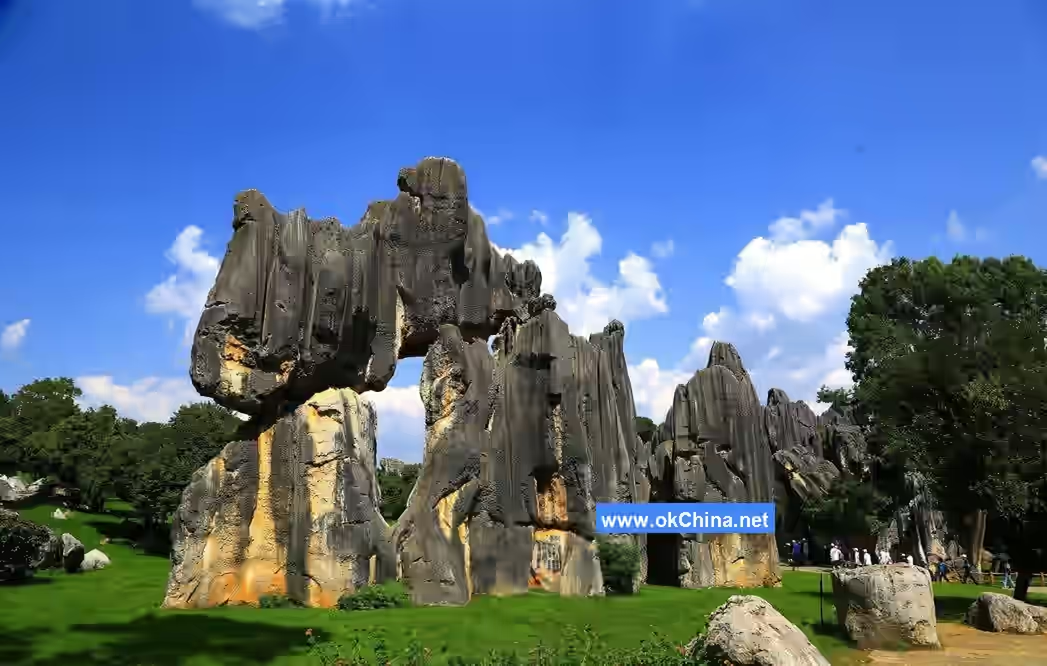
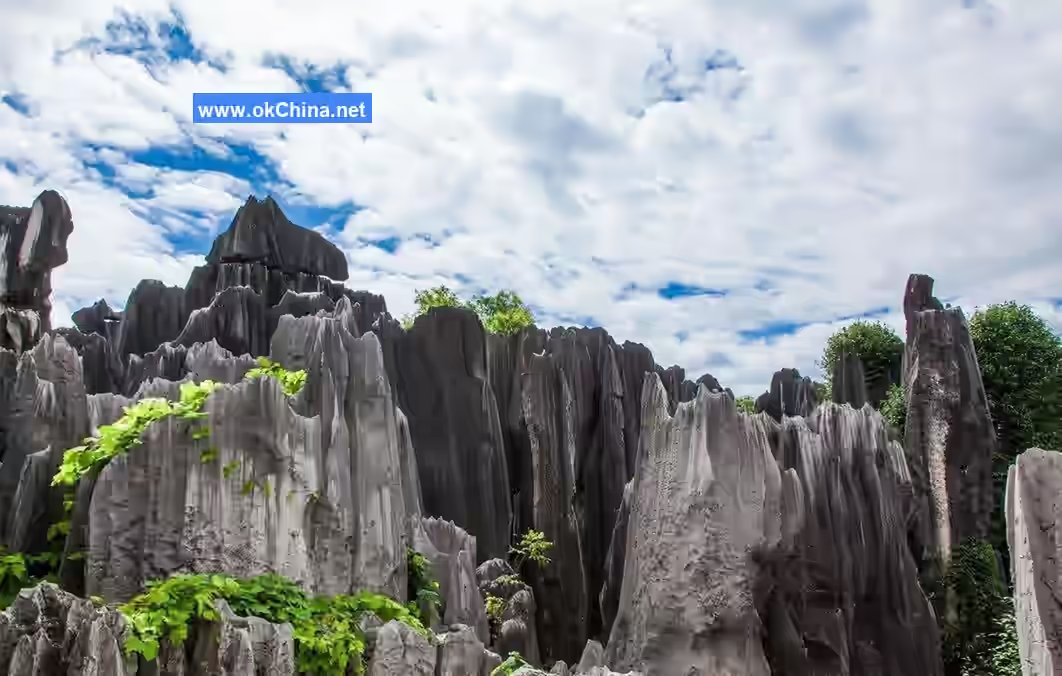
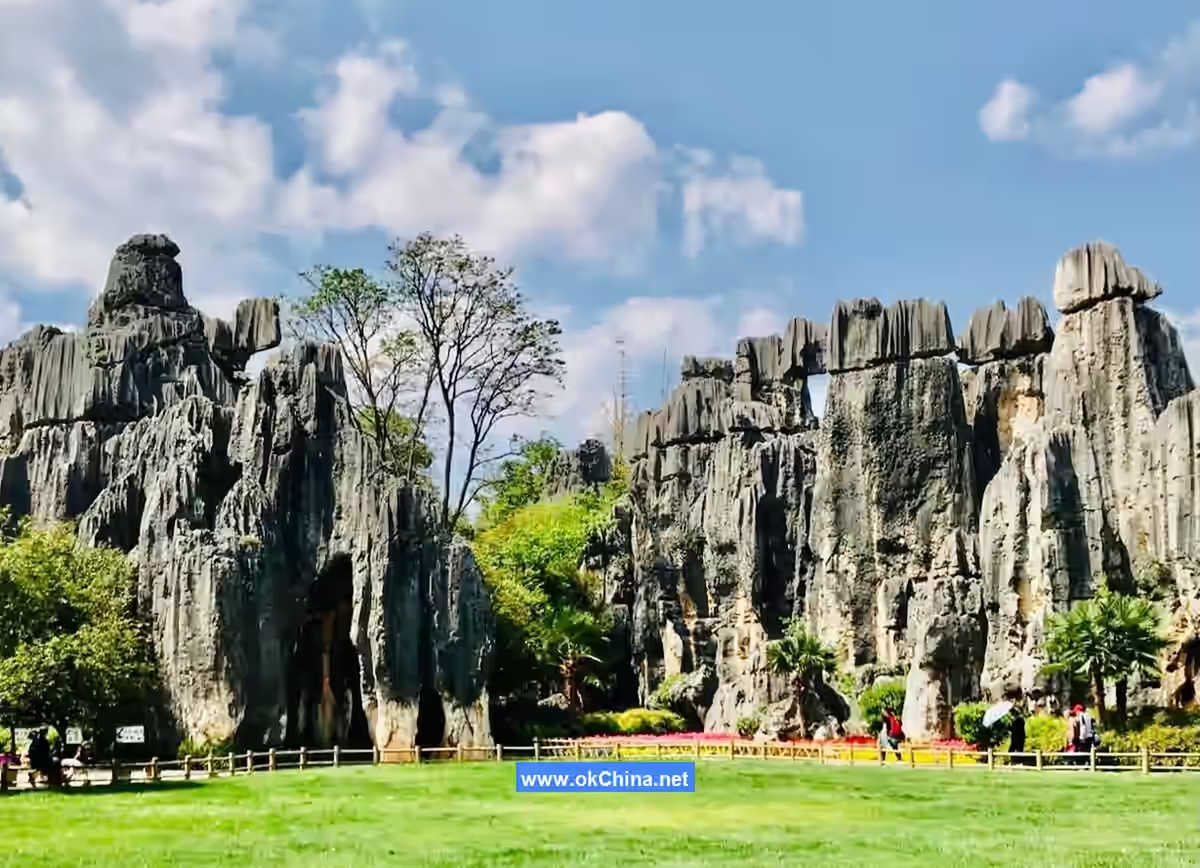
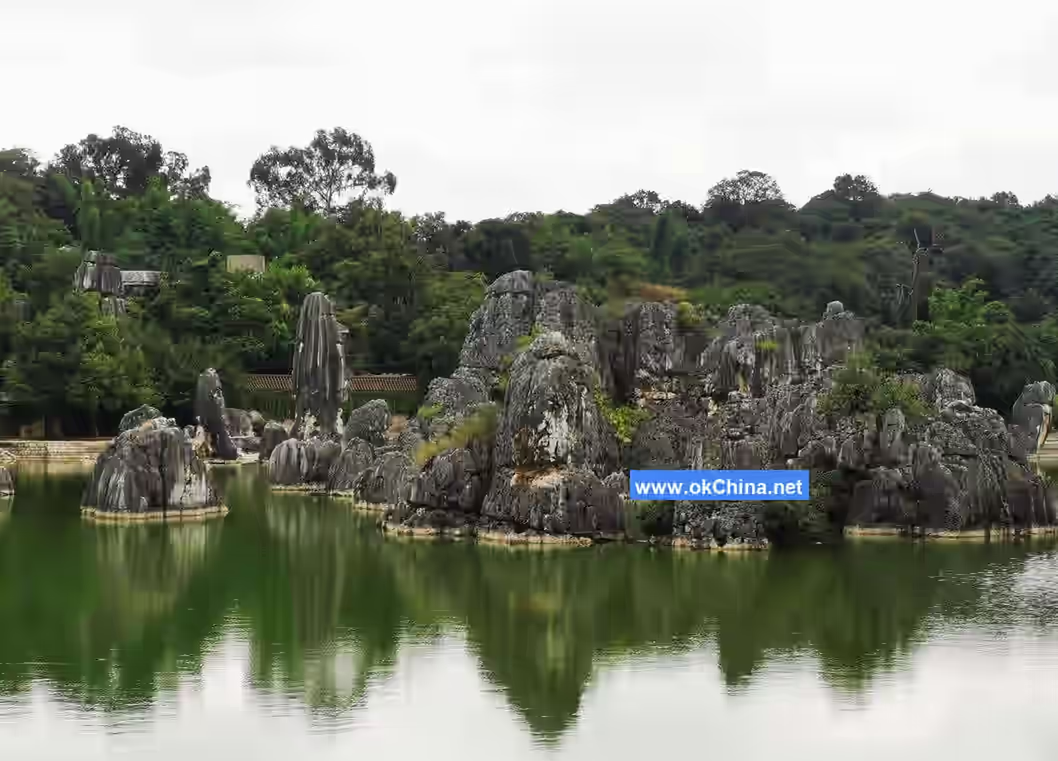
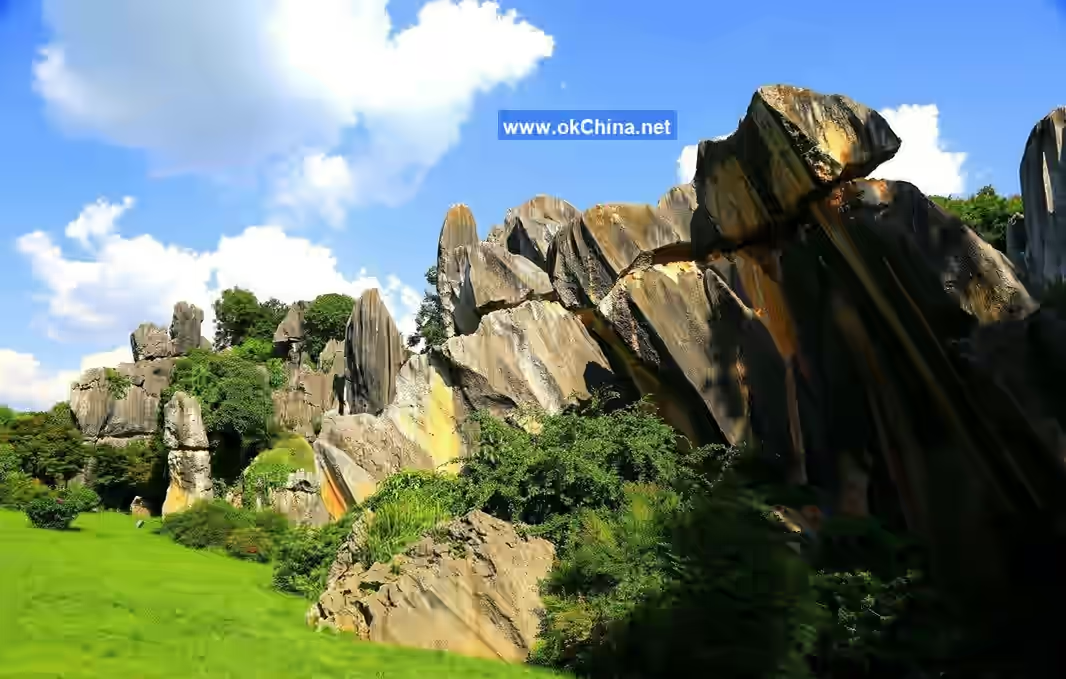
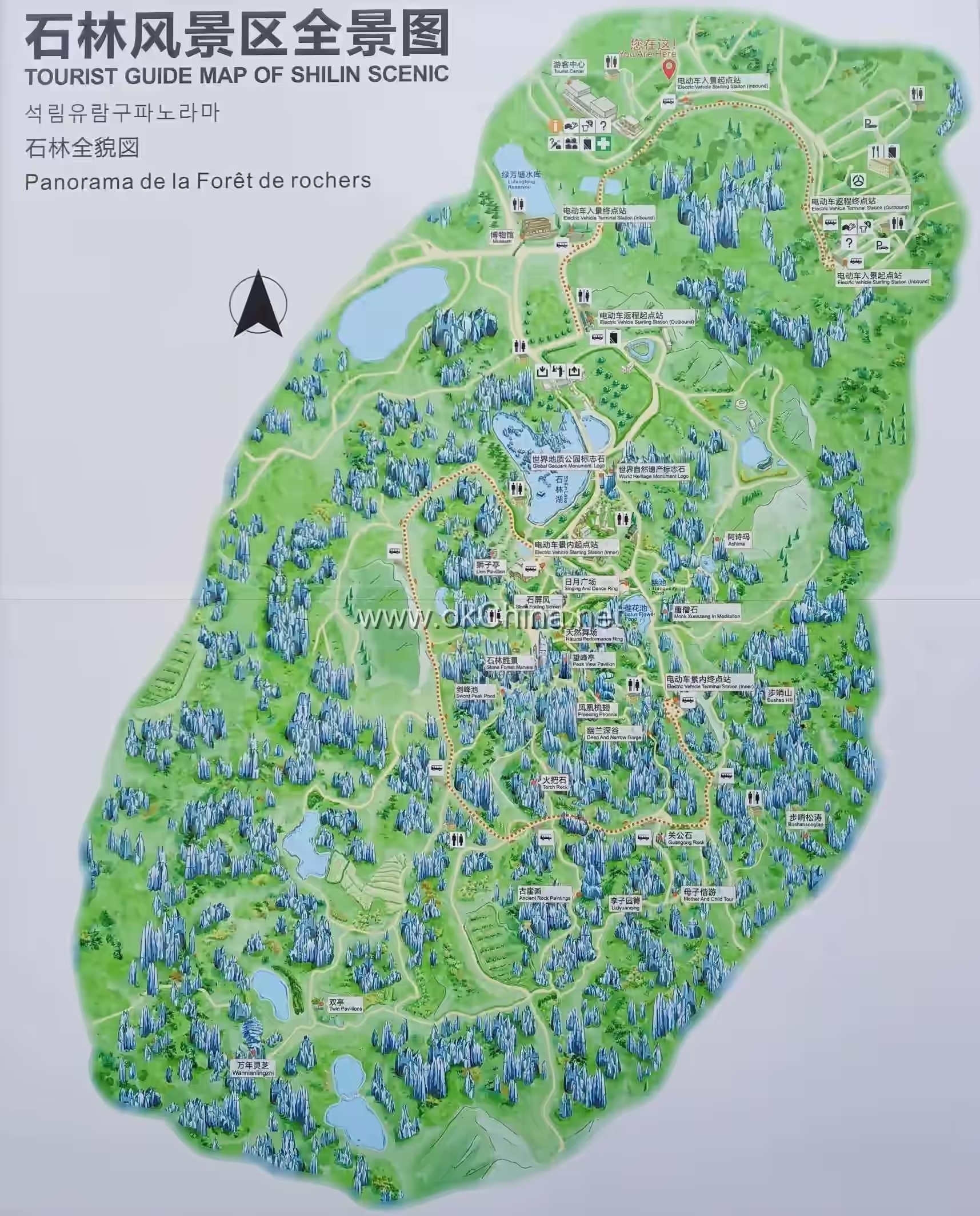
The Stone Forest Scenic Area is a typical concentrated region of pure limestone sword-like karst. The main rock bodies are light gray pure limestone and Maokou Formation dolomitic limestone. Within the five sections of Greater Stone Forest, Lesser Stone Forest, Bushao Mountain, Liziyuan Qing, and Wannian Lingzhi, various stone peaks are distributed in shapes resembling swords, columns, towers, mushrooms, balanced forms, and irregular forms.
3.2 Greater Stone Forest
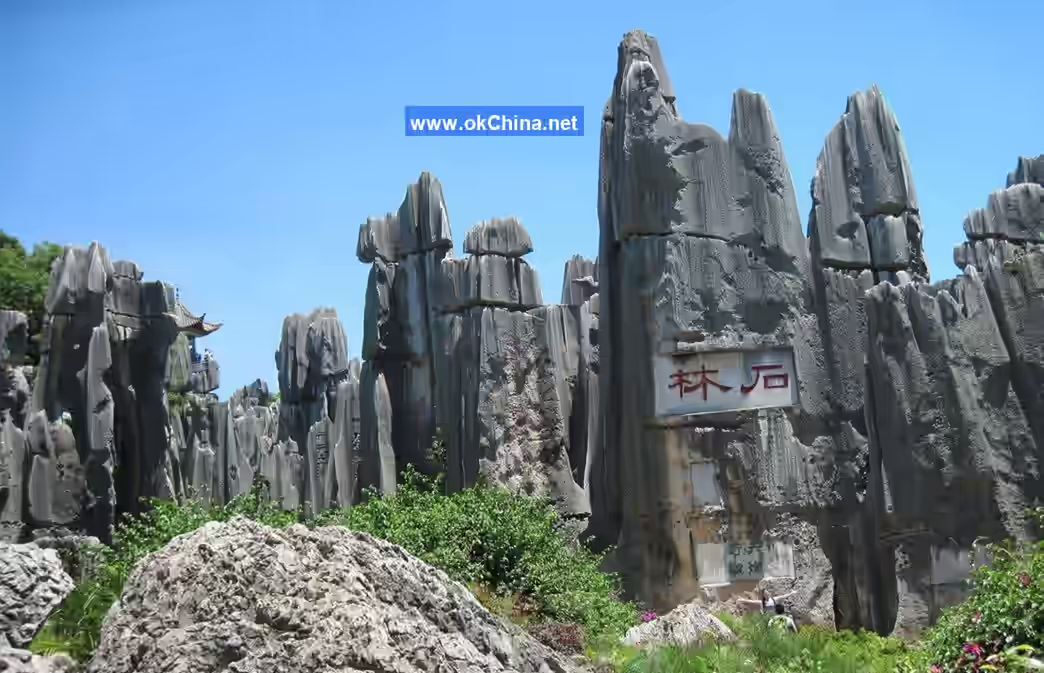
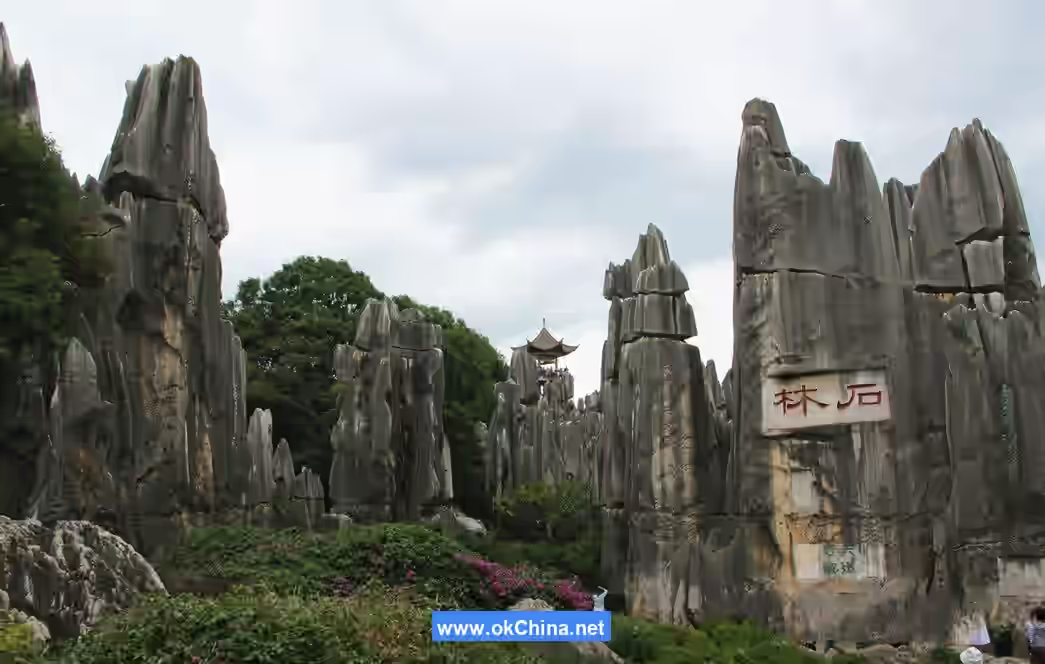
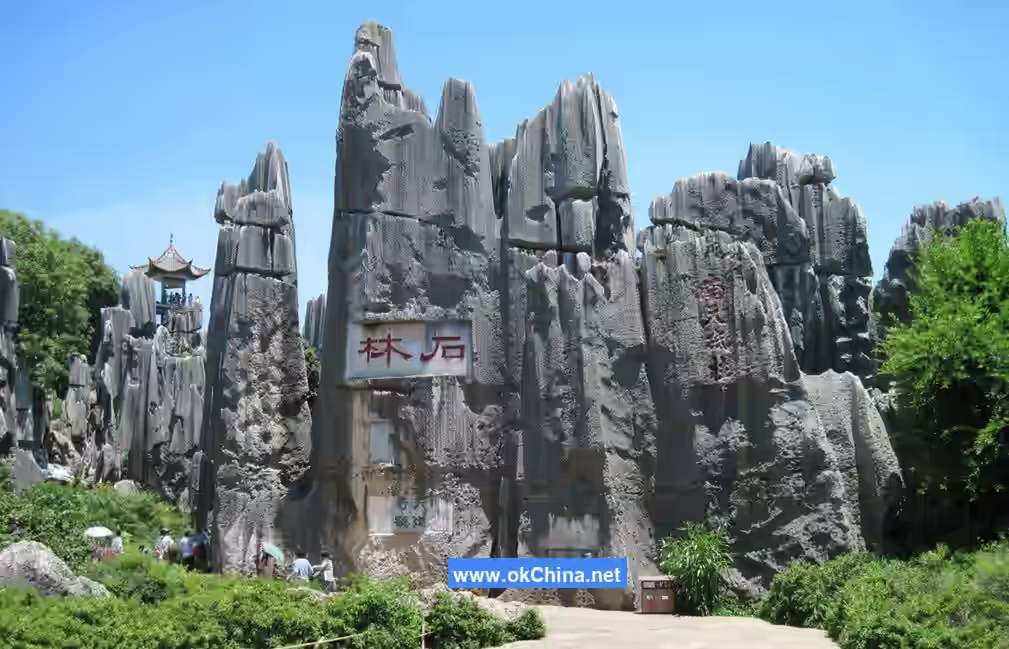
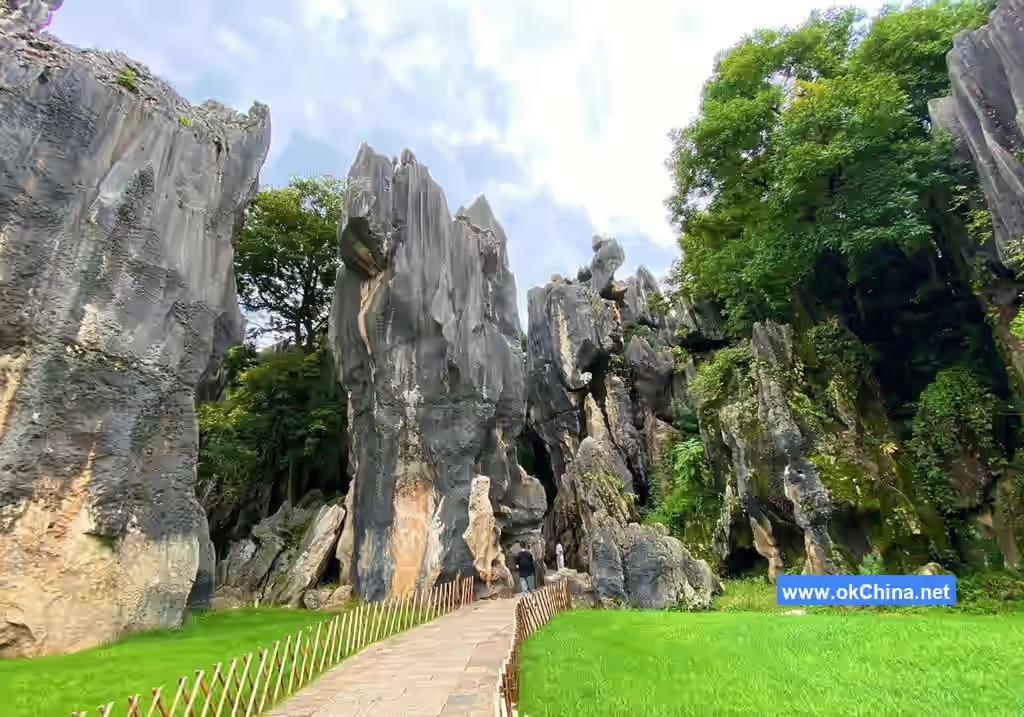
The Greater Stone Forest is located 10 kilometers north of Shilin County town. The entire scenic area consists of densely packed stone peaks, resembling a stone basin. The stone forests here stand upright and abrupt, with smooth lines and a faint bluish-gray hue. The tallest independent rock columns exceed 40 meters in height. Typical scenic spots include "Lotus Peak," "Sword Peak Pond," "A Thousand Jun Hanging by a Hair," and "Extremely Narrow Passage." The most famous is undoubtedly the "Stone Forest Wonderland" where Long Yun inscribed the words "Stone Forest." The Stone Forest Wonderland is a representative attraction of the Stone Forest Scenic Area and the essential passageway leading to all directions of the Stone Forest maze. It comprises Wangfeng Pavilion, Stone Forest Cliff Carvings, lawns, and green trees. Below Wangfeng Pavilion lies an open, flat area surrounded by stone peaks. In front of the stone peaks on the right, there is a flat area about 1 meter high covered with lush grass. The stone peaks exhibit a myriad of forms and bear many inscribed carvings. The characters "石林" (Stone Forest) were inscribed in 1931 during an inspection by Long Yun, then Chairman of the Yunnan Provincial Government, and written by Zhou Zhongyue.
3.3 Lesser Stone Forest
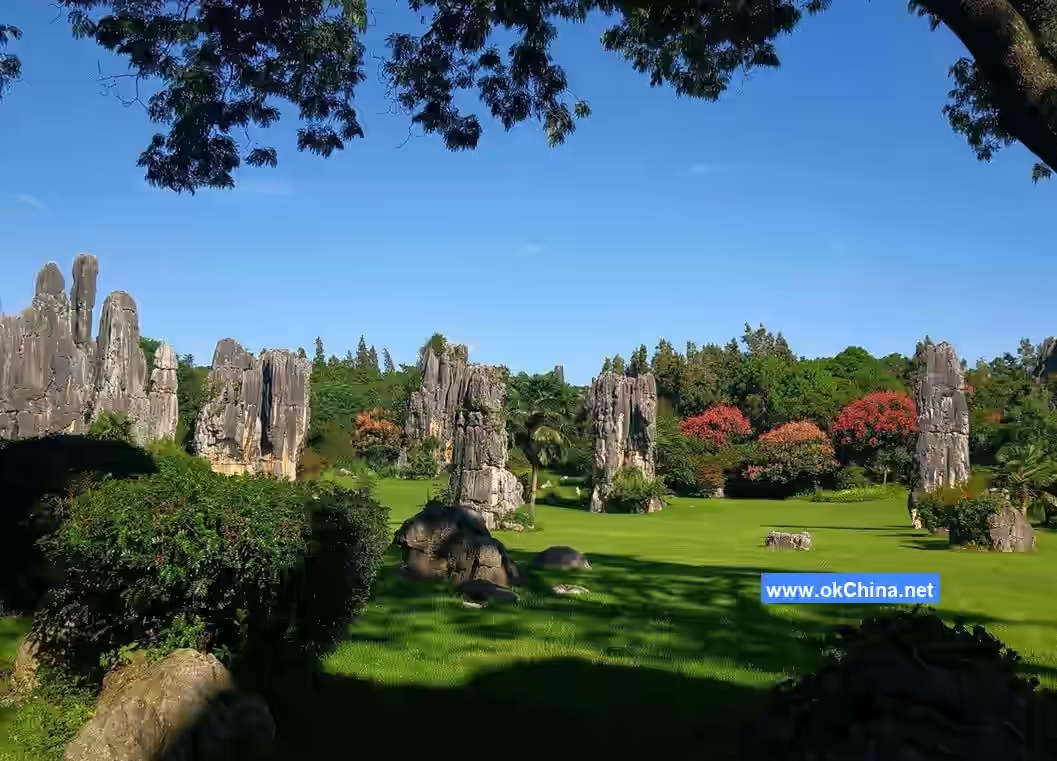
The Lesser Stone Forest is located northeast of the Greater Stone Forest, 10 kilometers north of Shilin County town. It is the location of the Ashima Stone, the goddess of the Sani people. The Lesser Stone Forest is sparse, elegant, and beautiful. Thick, solid stone walls, like screens, divide the Lesser Stone Forest into several garden-like sections. Within the Lesser Stone Forest, the beautiful and graceful Ashima stands quietly among the sparse and elegant stone peaks. The wild stone forest constantly changes, with sharp rocks juxtaposed against dense greenery, creating a delicate and exquisite scene. In the Lesser Stone Forest, Ashima is an independent stone peak beside the Jade Bird Pond. Viewed from the side, it resembles a graceful young maiden, embodying the spirit of Ashima. Ashima is a young woman from Sani mythology who defied authority, disdained wealth, endured hardships, and persistently pursued true love. "Tang Monk Journeying West" is located at the entrance of the back gate of the Lesser Stone Forest, at the foot of Bushao Mountain. A stone peak about 3 meters high resembles a venerable monk, with a dignified monk's hat and a meditative posture, strikingly similar to the Tang Monk.
3.4 Bushao Mountain
Bushao Mountain is located east of the Greater Stone Forest and south of the Lesser Stone Forest, bounded by the East Ring Forest Road of the scenic area, exhibiting a north-south zonal distribution. Geomorphologically, it belongs to the eastern slope platform of the Greater Stone Forest solution depression. It is named after Zhao Fa, the leader of the Stone Forest Yi people's militia in the late Qing Dynasty, who stationed troops here and set up sentry posts to patrol the mountain. The mountaintop has an elevation of 1,796.7 meters, nearly 50 meters higher than the Wangfeng Pavilion in the Greater Stone Forest, making it the highest point in the Stone Forest Scenic Area. Climbing the mountain offers distant views of forested seas and pine waves, with pillars and rocks rising irregularly. Walking through the mountain, one encounters outstanding stone forests and rows of sword-like peaks. The area features many columnar stone forests and unique landscapes such as "Bushao Five Stone Gates" and "Bushao Pine Waves." Attractions include fossils of giant gastropods, coral fossils, and other marine organisms, recording the vibrant underwater world of the Stone Forest area 270 million years ago.
3.5 Liziyuan QingLiziyuanqing, also known as Liziqing, is located to the south of the Major Stone Forest and separated by the South Ring Forest Road within the scenic area. The area forms an east-west oriented rectangle and is a typical stone forest depression. At the center of the depression stand sword-like peak clusters, surrounded by isolated stone pillars and a karst plain. At the edges, basalt from 250 million years ago and red clastic sedimentary rocks from 50 million years ago are exposed, showcasing the multiple cycles of burial and re-exposure during the Stone Forest's development and evolution. Across dozens of square kilometers of wild hills and mounds in Liziyuanqing, peculiar pillars and rocks are scattered, clustered, rising, and falling, maintaining their natural appearance. On a cliff within the jungle about 300 meters southeast of the Ring Forest Road, there is an ancient rock painting depicting unrestrained and bold images of humans, animals, objects, stars, and the moon.
3.6 Wannian Lingzhi (Ten-Thousand-Year-Old Ganoderma)
Adjacent to the Bimu Pond near Liziyuanqing, tall gray mushroom-shaped and pagoda-shaped stone peaks are distributed in clusters, creating a spectacular sight. Atop the stone mountain stands a stone peak about 15 meters high, wider at the top and narrower at the base, resembling a giant Ganoderma lucidum (Lingzhi), hence its name. At sunset, standing atop the Lingzhi Mountain offers a delightful feeling of "overlooking all smaller mountains."
3.7 Qifeng Cave (Wonder Wind Cave)
Located about 8 kilometers northeast of Liziqing Stone Forest, Qifeng Cave is an inconspicuous small fissure, 30 cm long and 6 cm wide, beneath a stone peak shaped like a torch. It is a peculiar cave that "breathes." The cave itself is not large, with a diameter of about 1 meter. During the rainy season, the cave emits sounds like an old ox panting. From August to November each year, after the earth has absorbed sufficient rainwater, the cave exhales roaring cold winds, causing weeds and dust to swirl and dance. Although the sound of flowing water can be heard, not a single drop is visible. After a few minutes of calm, it inhales, drawing grass and flowers toward the cave entrance. This cycle of exhalation and inhalation repeats, forming a breathing geological wonder.
3.8 Shilin Zhiyun Cave
Shilin Zhiyun Cave is located in a large limestone mountain, 6 kilometers northwest of the Major and Minor Stone Forests, on the east side of the Anshi Highway. The cave is 400 meters long, 3 to 15 meters wide, and 5 to 30 meters high, shaped like a "Y." Two sections of the cave are connected by a low, narrow cave entrance. Inside, there are numerous speleothems such as stalactites, stalagmites, and stone columns, displaying diverse and splendid forms. Since the Ming Dynasty, it has been called a "Fairyland Scenic Spot" and holds the top position among the Eight Scenes of Stone Forest under the name "Stone Cave Fairy Traces."
3.9 Changhu Scenic Area (Long Lake Scenic Area)
The Changhu Scenic Area is located in Weize Village, Changhu Town, about 25 kilometers from the Major and Minor Stone Forests scenic area, nestled among mountains at an altitude of 1,907 meters. The lake's surface shape resembles a slender maiden and is the legendary hometown of Ashima in folklore. Because the lake is hidden among green hills and ridges, it was rarely visited by tourists in the past and is thus also called the "Hidden Lake." Main attractions include Dushishan Mountain, Dajianshan Mountain, Erjianshan Mountain, Sanjianshan Mountain, Mopanshan Mountain, Penglai Island, Yuanhu Lake, etc., covering an area of 3.94 square kilometers. Changhu is a karst lake, supplied by groundwater, with a perimeter of 5 kilometers, a width of 300 meters, and an average depth of 24 meters. The water is clear and unpolluted. Surrounded by green mountains, the forest coverage rate exceeds 95%. There are small islands in the lake, and the lakeshore is forested primarily with Yunnan pines. The terrain is gentle, with many small lakes nearby. The air is fresh and clean, and the environment is tranquil and beautiful.
3.10 Naigu Stone Forest Scenic Area
The Naigu Stone Forest Scenic Area is located 8 kilometers north of the Major and Minor Stone Forests scenic area, 17 kilometers from Shilin County town. The Kangxi-era "Luliang Zhouzhi" records: "Shimen Peak, forty li west along the place named Shimen Shao." The area was named "Heisongyan" (Black Pine Rock) because it resembled a lush pine forest when viewed from above. Since "black" is called "naigu" in the local Yi language, it is also called Naigu Stone Forest. The Naigu Stone Forest scenic area covers about 10 square kilometers and borders the Shilin Taiwan Farmers' Entrepreneurship Park. The stones in Naigu Stone Forest mostly resemble castles, pagodas, and mushrooms. Besides blade-ridge and sword-shaped stone pillars similar to those in the Major and Minor Stone Forests, there are also many spire-shaped stone pillars. Their upper parts are separated, but their bases are connected, forming stone walls, stone cities, and stone arrays. The stone peaks are black, distinctly different from the bluish-gray stones of the Stone Forest scenic area. This scenic area is more expansive than the Stone Forest area, possessing a desolate, rugged, and archaic beauty. At the entrance lies Baiyun Lake, as calm as a mirror, with clear water and abundant fish.
3.11 Dadieshui Scenic Area (Great Waterfall Scenic Area)
The Dadieshui Scenic Area is located southwest of Shilin County town, 27 kilometers from the Major and Minor Stone Forests scenic area, within Banqiao Town, Shilin County. The Dadieshui Scenic Area includes numerous attractions such as Dadieshui, Xiaodieshui, Xianren Cave, Baige Garden, Banpu Garden, Qingshui River, etc. The Xiaodieshui Waterfall has a drop of over 20 meters and a width of about 10 meters. Water falls into a pool, splashing spray, and within the pool lies a "Giant Fish Rock." About 1.5 kilometers west from Xiaodieshui Waterfall, the Bajiang River plunges from a cliff. The river channel's fracture and transverse cutting form the Dadieshui Waterfall. With a drop of 92 meters, 18 meters higher than Guizhou's Huangguoshu Waterfall, and a width that can reach over 60 meters during the rainy season, it is the largest waterfall in Yunnan Province and the first waterfall of the Pearl River. The waterfall resembles collapsing mist and falling clouds, majestic and powerful, with water mist creating rainbows in the sunlight.
3.12 Guishan National Forest Park
Guishan National Forest Park is located within Shilin County. It was originally named "Laoguishan" (Old Turtle Mountain) because its majestic, perilous, and beautiful mountain ridges resembled the raised back of a giant sea turtle. Later, the pronunciation was transliterated to "Laoguishan." The northeastern part of Guishan has gentle terrain, while the southwestern sides feature steep mountain bodies, sheer cliffs, and integrated forest peaks. The mountain mass is rounded and towers into the clouds, with a peak altitude of 2,601 meters. It stretches 14 kilometers north-south, 10 kilometers wide, covering a total area of 3,206 hectares, and is part of the Yunling Mountain Range extension. The Guishan area widely features typical karst topography formed from ancient soluble carbonate sedimentary rocks and limestone development. Unique landscape features include peculiar peaks, karst caves, and sinkholes. Caiyunbi (Colorful Cloud Wall) and Motianyan (Skyscraping Cliff) appear and disappear within the forest sea. Guishan has a forest coverage of 80%, hosting diverse forest vegetation. In spring and midsummer, wildflowers such as clover, coleus, Yunnan purple grass, Dendrobium, and gentian bloom in competition. The Guishan forest ecological environment is excellent, with main wildlife including pangolins, masked palm civets, and muntjacs.
3.13 China Shilin Karst Geological Museum
The museum has a total floor area of 42,000 square meters and is divided into eleven parts: "seven zones, one city, two halls, one building," constructed in two phases. The first-phase project includes three main exhibition halls, divided into seven thematic exhibition areas, including the Karst Evolution and Cave Stones Exhibition Area, Earth's Biological Development History Exhibition Area, Earth's Crust Composition and Resources Exhibition Area, etc. The second-phase project includes the Stone Culture Trade City, Comprehensive Hall, and Science and Education Hall. The museum collects and displays nearly ten thousand pieces of collections and exhibits, including hundreds of national treasure-level exhibits.
4. Cultural Resources
4.1 Ethnic Culture
The Yi people are also the earliest indigenous inhabitants of Shilin, possessing a long history and culture. As early as the Paleolithic Age, their ancestors lived and multiplied along both banks of the Bajiang River. With the collapse of the chieftain system in the Ming Dynasty and the increase of immigrant populations, the assimilation and integration between the Yi people and other ethnic groups intensified. By the Qing Dynasty, Yi branches such as the Sani, Heiyi, Baiyi, Yiqin, Axi, and Ayizi had formed. The Shilin area is primarily the settlement of the Sani, a branch of the Yi people. They preserve the Yi epic "Ashima." Sani people, both men and women, are skilled in singing and dancing, as well as spinning, weaving, and embroidery. The attire of Sani girls differs significantly from that of other Yi groups. They wear colorful round floral hats, tie small aprons around their waists, wear long pants, and dress in exceptionally bright clothing. Their presence is ubiquitous throughout the Shilin scenic area. Every year on the 24th day of the sixth lunar month during the Torch Festival, nearby Yi people gather in Shilin to hold grand celebrations, including competitions like bullfighting and wrestling. In the evening, there is a torch gathering, showcasing Yi customs.
4.2 Ashima CultureThe Sani people of the Yi ethnic group, who have lived for generations in the Stone Forest area, have developed a distinctive ethnic culture represented by "Ashima." "Ashima" is a narrative epic passed down among the Sani people, a branch of the Yi ethnic group in Shilin Yi Autonomous County, Yunnan Province. It uses oral poetic language to narrate or sing the story of Ashima. The story tells of a beautiful girl named Ashima from Azhuodi, who was in love with Ahei. Unexpectedly, Azhi, the son of the wealthy and powerful Rebulaba, took a liking to Ashima. After being rejected by her, the enraged Rebulaba kidnapped Ashima. Ahei rushed to rescue her, but Ashima was swept away by a flood and turned into a stone peak, remaining in the Stone Forest. This story reveals the human ideal that light will eventually replace darkness, goodness and beauty will overcome ugliness, and freedom will triumph over oppression and confinement. The original form of "Ashima" was created in the Sani Yi language and is mainly circulated in the Sani communities of Shilin Yi Autonomous County, Yunnan Province. It is sung in five-character lines, employing techniques such as foreshadowing, exaggeration, irony, as well as skills like homophony, anadiplosis, zeugma, and metaphor, achieving a perfect unity of content and form. As a narrative poem, it can be narrated or sung, with tunes such as "Joyful Tune," "Elderly Tune," and "Sorrowful Tune," performed or recited on various occasions like weddings, sacrifices, and funerals. Since its Chinese compiled version was published in relevant journals in the early 1950s, "Ashima" has been translated into multiple languages, including English, French, German, Spanish, Russian, Japanese, and Korean, spreading overseas. Domestically, "Ashima" has been adapted into films, Peking opera, Yunnan opera, opera, dance drama, and Sani opera, performed across the country. China's first color widescreen stereophonic musical film, "Ashima," won the Best Dance Film award at the First International Music Festival in Santander, Spain, in 1982.
4.3 Literary Creations
Poetic works about the Stone Forest Scenic Area have been historically recorded since the Wanli era of the Ming Dynasty. On February 9, 1614 (the 42nd year of the Wanli reign), Wang Liang, the magistrate of Lunan, erected a stele for the newly discovered Zhiyun Cave and inscribed a poem on it. The poem reads: "A hundred-foot cliff spews stone mushrooms, the cave gate shrouded in clouds for how long; never allowing the dusty to enter, the frosty chill of June delays the sun's arrival." In 1660 (the 17th year of the Shunzhi reign), local scholar Xu Weiqi visited the Stone Forest and composed "The Song of the Stone Forest." In 1705 (the 44th year of the Kangxi reign of the Qing Dynasty), Jin Tingxian, a native of Guangning in Fengtian who served as the magistrate of Lunan, visited Zhiyun Cave and wrote "Stone Cave Immortal Traces." In the spring of 1931 (the 20th year of the Republic of China), Long Yun, then Chairman of the Yunnan Provincial Government, visited the Stone Forest at Lizijing and inscribed the words "Stone Forest," greatly enhancing its reputation. Subsequently, many provincial dignitaries and those aspiring to cultural refinement visited the Stone Forest and left behind poetic works. From the 1950s to the 1990s, the number of visitors to the Stone Forest gradually increased, including domestic and foreign heads of state as well as renowned domestic writers and poets. Touched by the beauty of the Stone Forest, they often composed impromptu poems. These works were later collected and compiled by Wang Fujing and Huang Jianming in "Selected Poems of the Stone Forest," featuring notable authors such as Zhu Ziqing, Wang Li, Zhao Puchu, Wu Han, He Jingzhi, Gao Shiqi, and Liu Shahe.
Comments
Post a Comment