Star Lake Scenic Area
1. Introduction
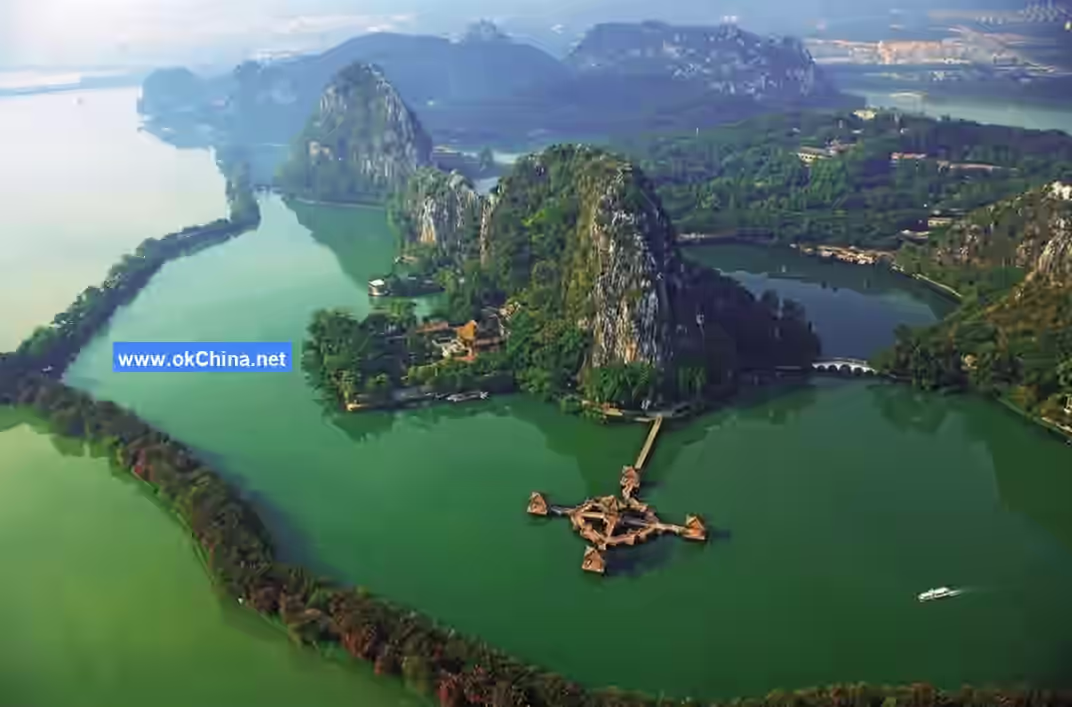
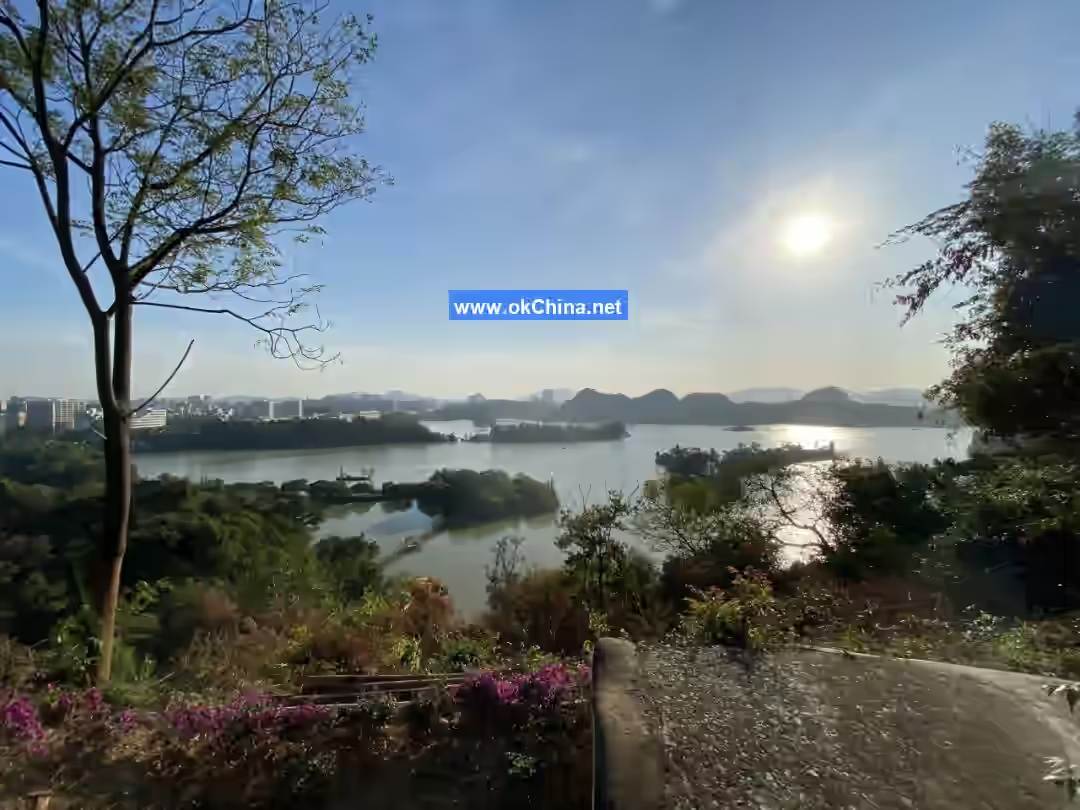
Star Lake Scenic Area is located in Zhaoqing City, Guangdong Province. Approved by the State Council in 1982 as one of the first batch of National Key Scenic Areas, it is divided into two sections: Seven Star Crags and Dinghu Mountain, with a total area of 19.527 square kilometers. It has long been a window to the outside world and a tourism calling card for Guangdong. The Seven Star Crags section includes the Seven Star Crags, Star Lake National Wetland Park, and Star Lake Greenway. The Dinghu Mountain section features Dinghu Mountain.
2. Geographical Environment
2.1 Geographical Location
Zhaoqing Star Lake Scenic Area is located in Zhaoqing City, Guangdong Province. It is backed by the Beiling Mountains to the north, borders the Xijiang River to the south, and is approximately 100 kilometers east of Guangzhou City, offering convenient water and land transportation. This scenic area consists of two major scenic zones: Seven Star Crags and Dinghu Mountain, covering a total area of 20.61 square kilometers. The Seven Star Crags scenic zone is located 4 kilometers north of Zhaoqing City's northern suburbs. The Dinghu Mountain scenic zone is located 18 kilometers northeast of Zhaoqing City's northeastern suburbs.
2.2 Climatic Characteristics
Zhaoqing City is situated in the central-western part of Guangdong Province, south of the Tropic of Cancer. Climatically, it belongs to the South Asian tropical monsoon humid climate zone, characterized by abundant rainfall and moderate temperatures, with an annual average temperature of 22.1°C. Heavy snow is rare in winter, and extreme heat is uncommon in summer. The year features slightly hot summers and occasionally cold winters. The annual average temperature is 22.2°C, with July being the hottest month (average 28.8°C, extreme maximum 38.7°C) and January being the coldest (average 13.7°C, extreme minimum -1.0°C). The daily temperature range is not large. September offers crisp autumn weather, ideal for outings.
3. Main Attractions
3.1 Seven Star Crags Scenic Zone
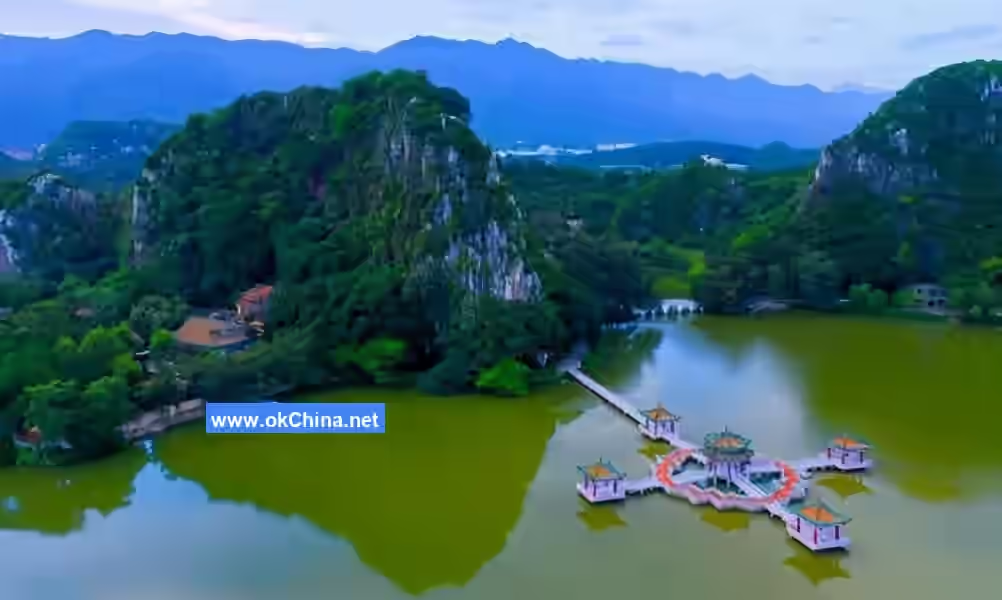
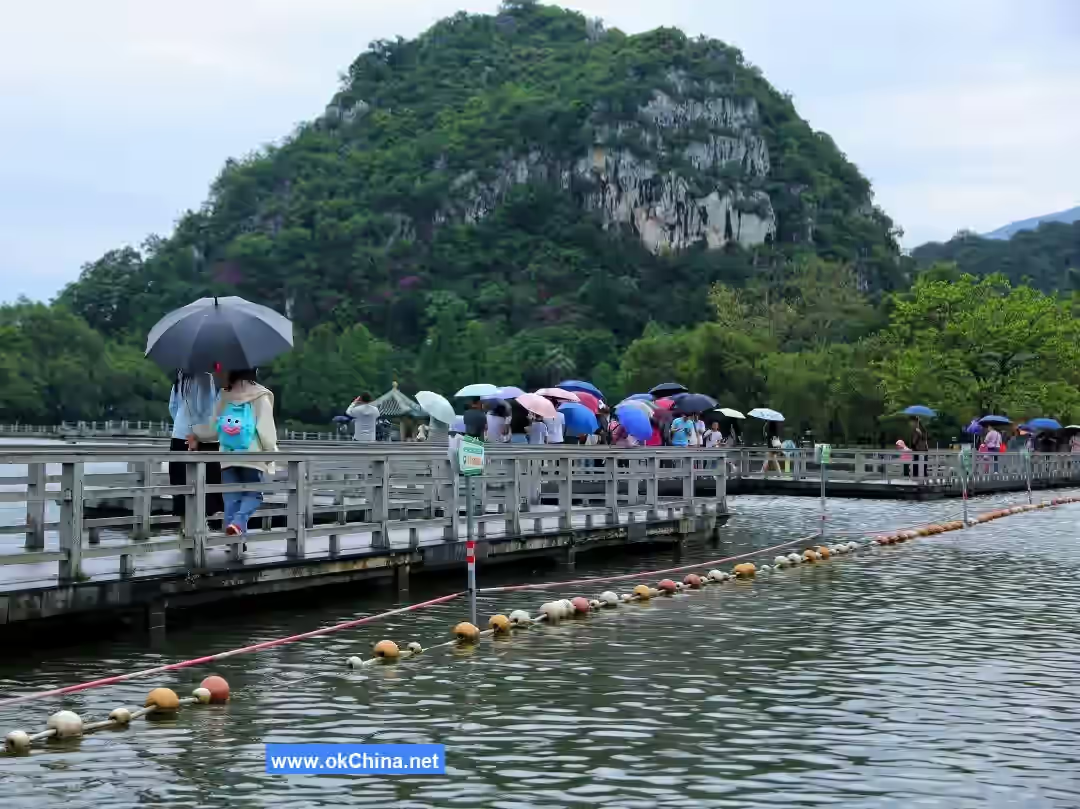
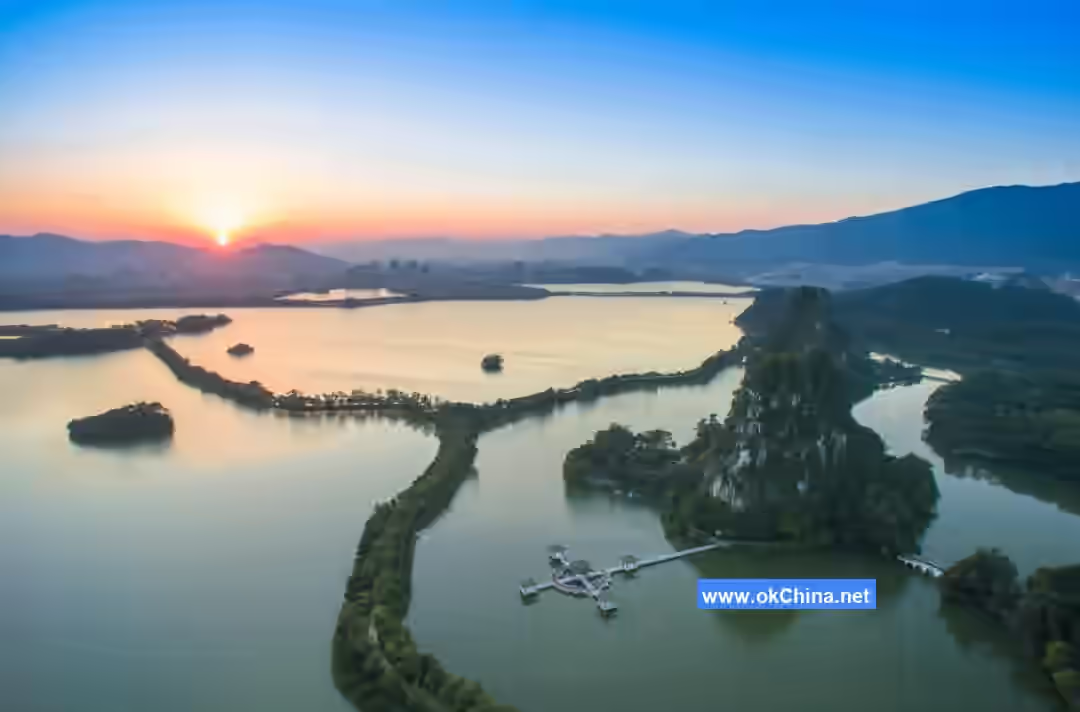
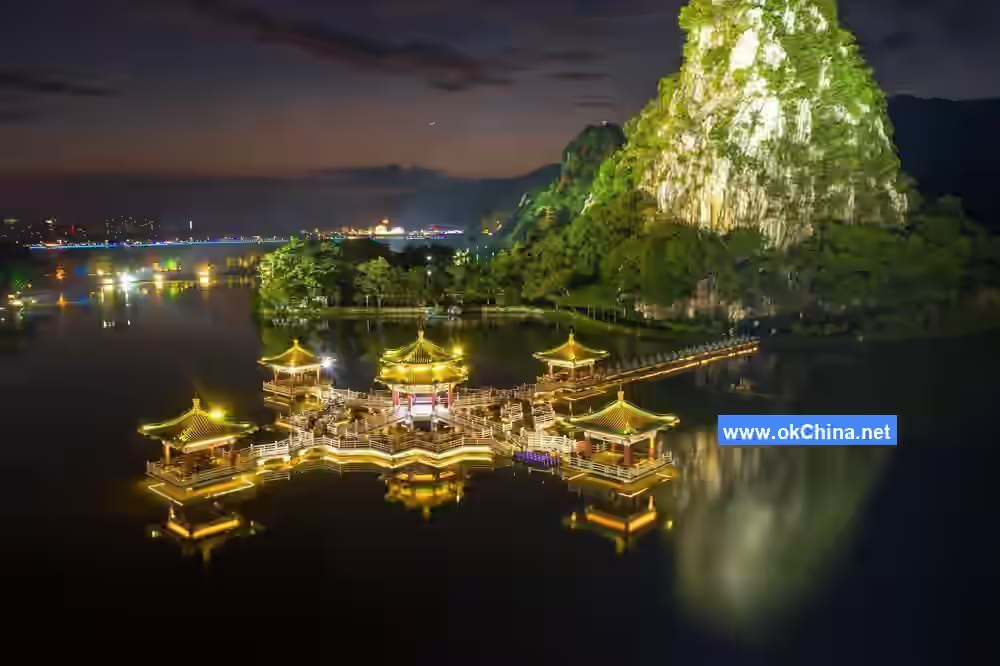
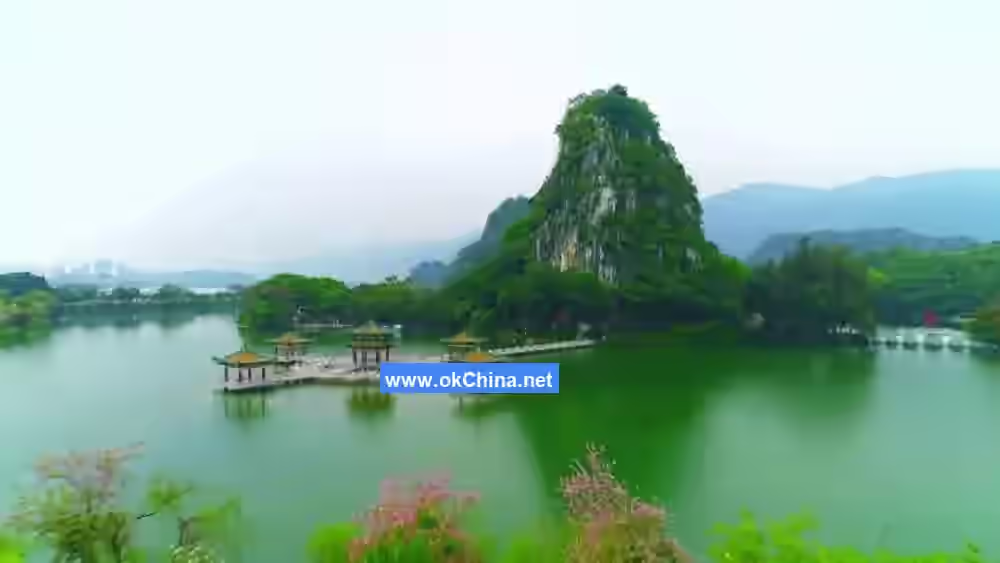
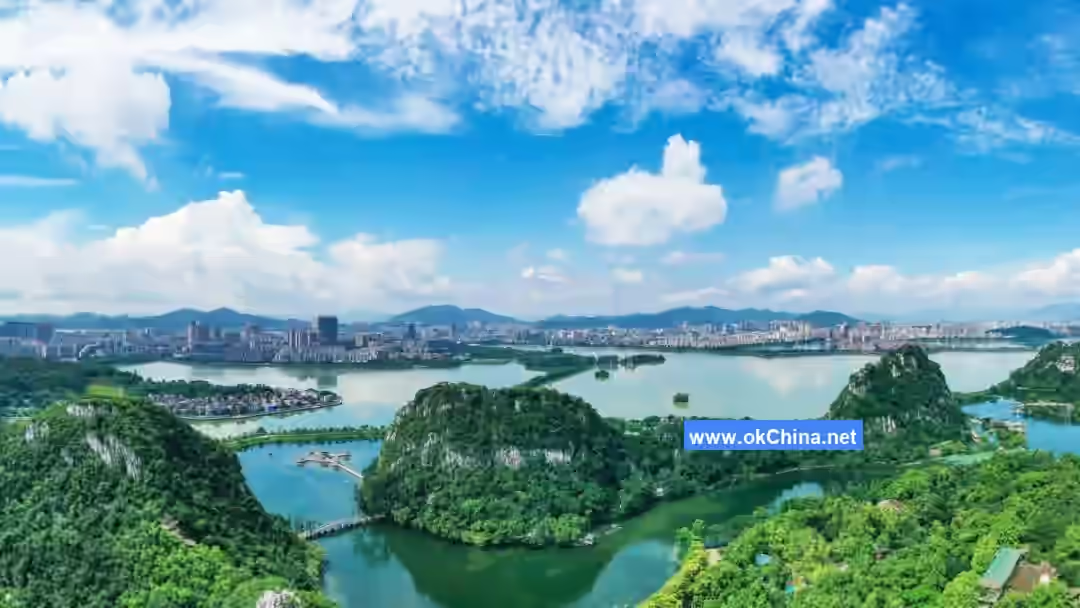
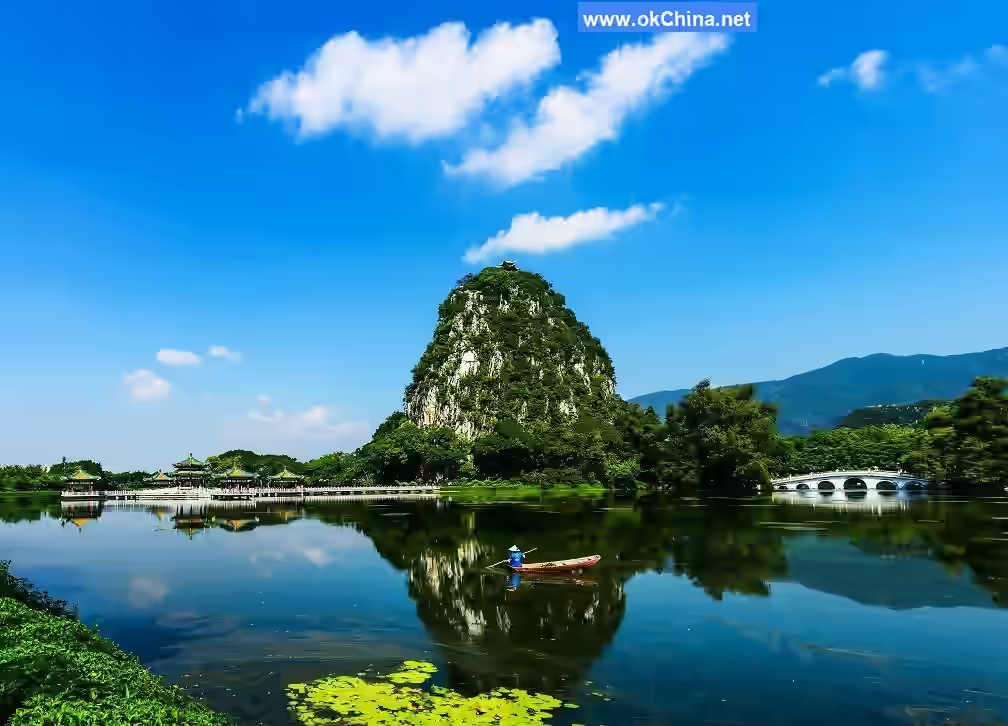
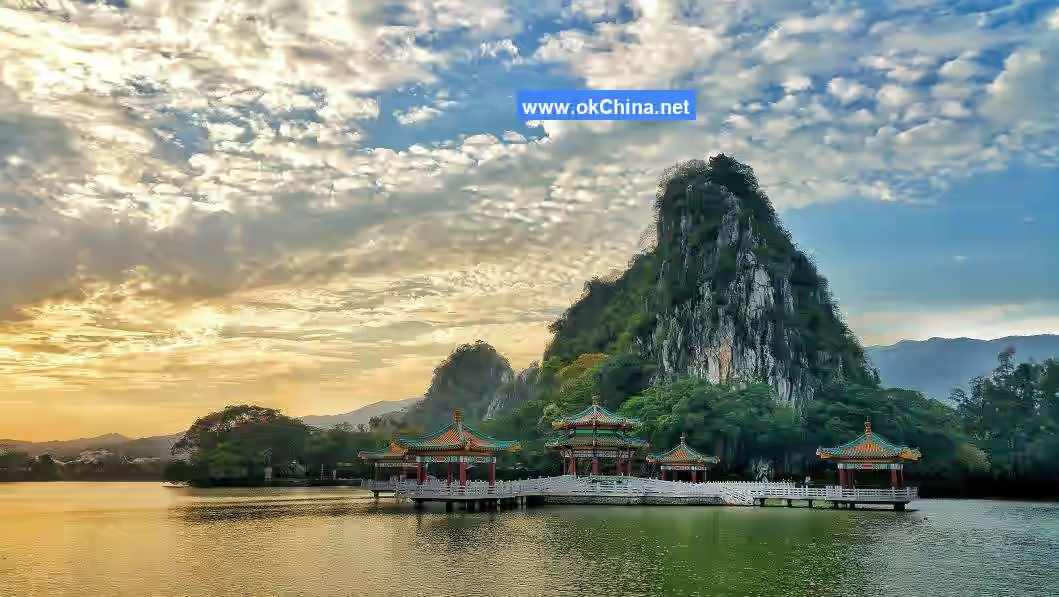
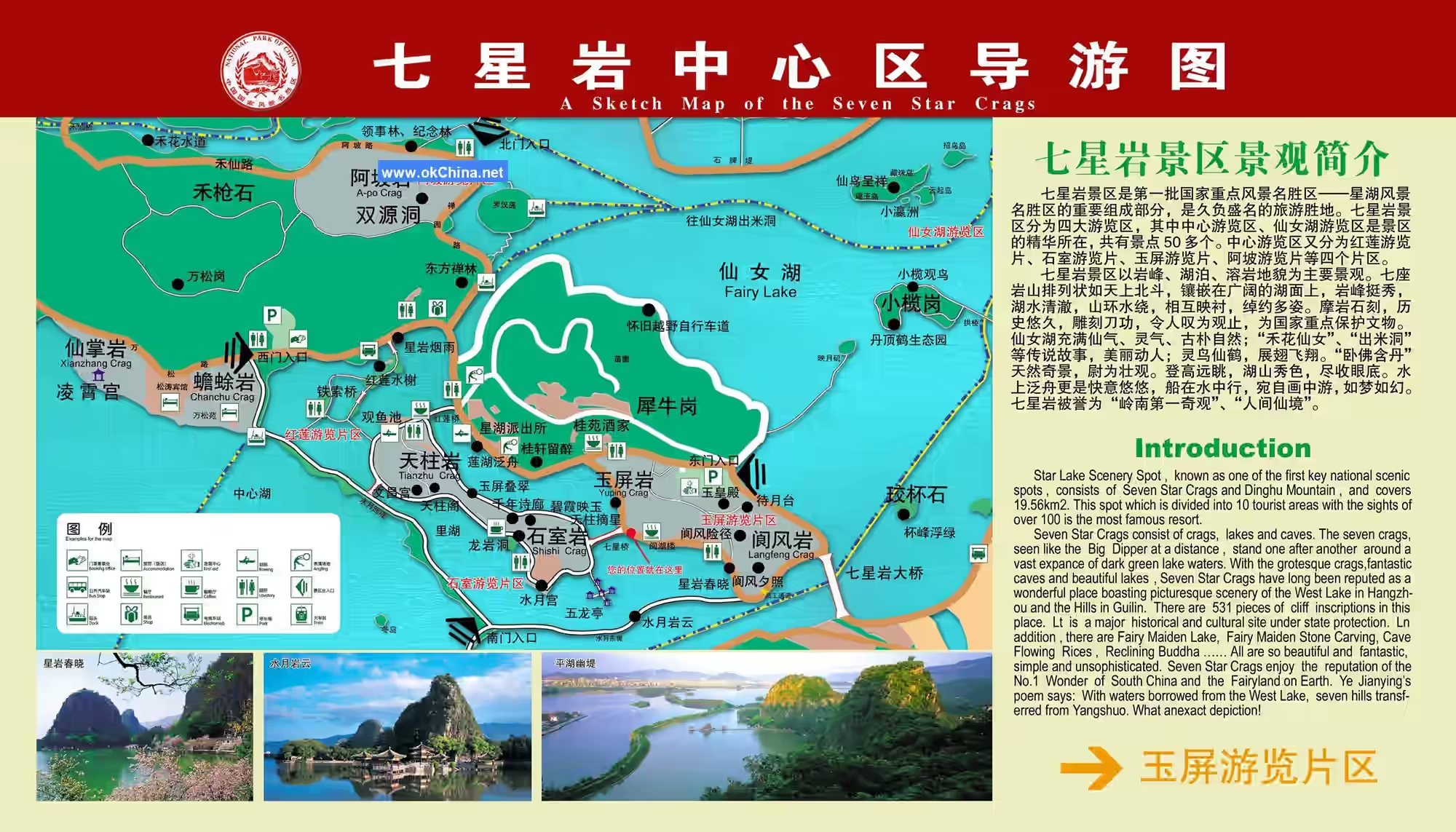
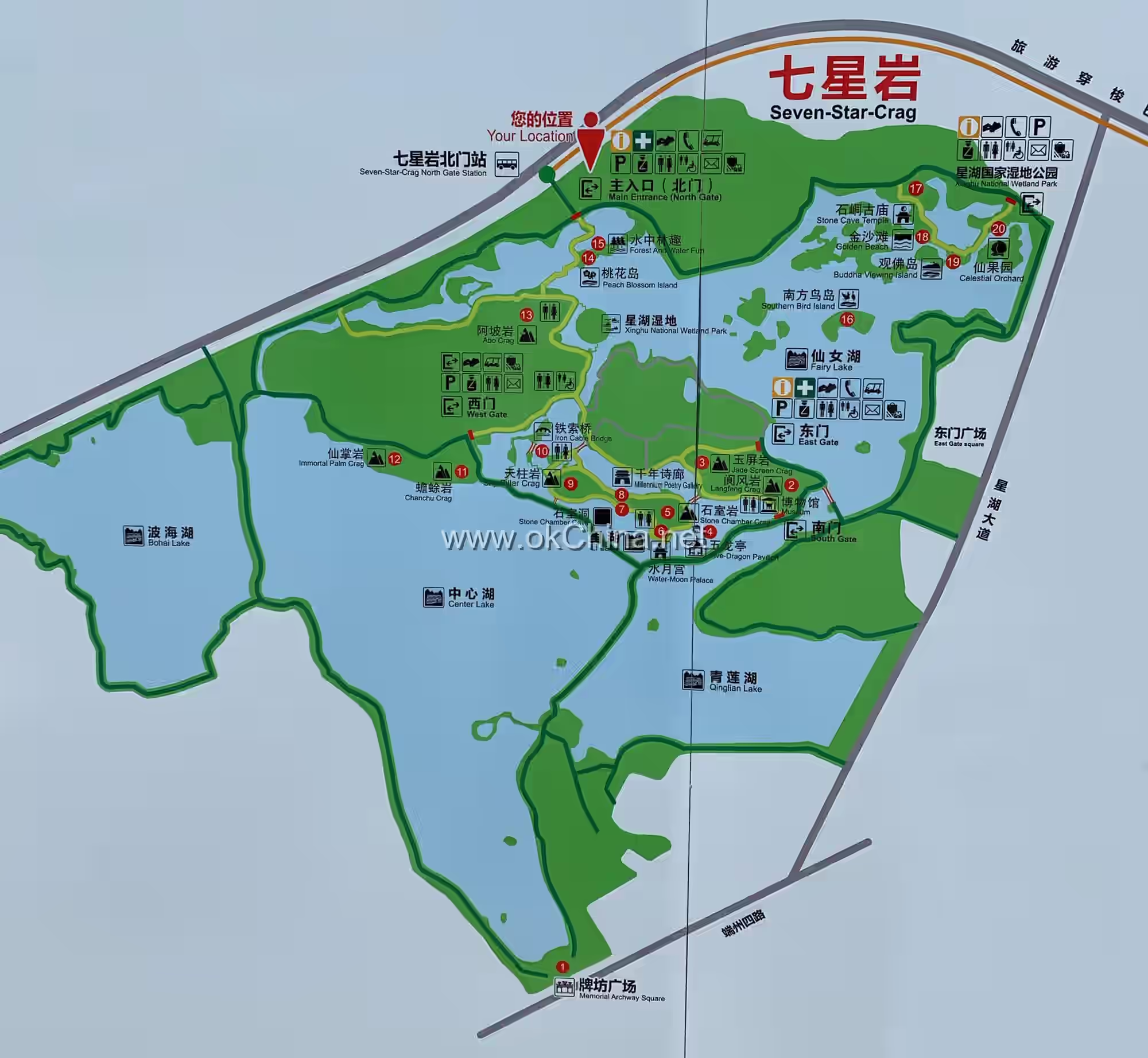
The Seven Star Crags scenic zone is named for its seven limestone peaks standing in a formation resembling the Big Dipper. It covers a total area of 8.23 square kilometers and features the scenery of five lakes, six hills, seven crags, and eight caves. The lake surface area is about 6.49 square kilometers, accounting for nearly 80% of the entire zone and is larger than Hangzhou's West Lake. The entire lake surface is divided by winding and intersecting causeways into five lakes: East Lake, Qinglian Lake, Central Lake, Bohai Lake, and Inner Lake. The causeways total over 20 kilometers in length, lined with willows and flame trees, resembling several green ribbons floating on the clear blue water. Scattered across the lake area are seven steep limestone peaks, shaped like the seven stars of the Big Dipper in the sky. Their names are: Langfeng Crag, Yuping Crag, Shishi Crag, Tianzhu Crag, Chanchu Crag, Shizhang Crag, and Apo Crag. The lake's reflections and mountain scenery complement each other, creating a charming and diverse landscape. Where there are crags, there are caves. What attracts visitors to Star Lake are its magnificent and unique peaks and caves. Some have distilled the attractions of the Seven Star Crags scenic zone into the "Twenty Scenes of Star Crags": Archway Vista, Serene Causeway on Calm Lake, Langfeng in Evening Glow, Emerald Layers of Yuping, Precipitous Stone Forest Bones, Rainbow Bridge and Snowy Waves, Water, Moon, Crag, and Cloud, Song Terrace Embracing the Moon, Shishi's Hidden Wonders, Millennium Poetry Corridor, Rosy Clouds Reflecting on Jade, Plucking Stars from Tianzhu, Boating on Lotus Lake, Apo's Gushing Spring, Lingering Drunkenness at Guixuan, Floating Green of Cup Peak, Open Sky Stone Cave, Moon's Essence and Pine Waves, Immortal's Palm in Autumn Wind, Bohai's Morning Glow. Among these twenty scenes, the most distinctive are "Shishi's Hidden Wonders" and "Water, Moon, Crag, and Cloud."
3.1.1 Water, Moon, Crag, and Cloud
Crossing the Seven Star Bridge and turning left, walking a few dozen meters leads to the intersection for the Five Dragon Pavilion. On the cliff face beside the intersection, the four characters "Water, Moon, Crag, and Cloud" are inscribed, a title by Shen Junru, former Vice Chairman of the Standing Committee of the National People's Congress, from the early 1960s. Standing on the Water-Moon Causeway opposite the Five Dragon Pavilion and looking up at Shishi Crag, one sees sheer cliffs reaching into the clouds; looking down at the lake surface, it is as smooth as a mirror. The mountains and rocks enter the water, creating a delightful scene. If visiting when the jade rabbit (moon) hangs high at night, one can also appreciate the charm where water, moon, crag, and cloud blend into one, merging heaven and earth.
3.2 Dinghu Mountain Scenic Zone
Dinghu Mountain covers an area of 11.3 square kilometers. Together with Danxia Mountain, Luofu Mountain, and Xiqiao Mountain, it is known as one of the Four Famous Mountains of Lingnan. There are two explanations for its name: First, because there is a lake on the mountaintop with clear water that never dries up throughout the seasons, it was called "Dinghu (Top Lake) Mountain." Second, the central peak is round and elegant, with two peaks standing on its left and right, and the foothill peaks branching in three directions. Combined with the lake on the summit, it resembles an inverted ancient ding (tripod). Legend says the Yellow Emperor once cast a ding here and ascended to heaven on a dragon, hence it is also called Dinghu (Ding Lake) Mountain.
The Dinghu Mountain scenic zone mainly consists of three parts: Tianxi, Yunxi, and Baoding Garden. As early as the Kangxi period of the Qing Dynasty, the Dinghu Mountain scenic area was divided into eastern and western sections, with a list of "Ten Scenes." After liberation, through gradual development and restoration, it formed twenty scenes. The eastern area is the Tianxi-Tianhu scenic area, including ten scenes: Resting Amidst Peaks, Stele Pavilion of Solidarity, Cloud-Sealed Winding Path, Qingyun Temple Amidst Verdure, Dragon Pool Flying Waterfall, Thunder in Secluded Valley, Twin Rainbows Spanning the Chasm, Fragrant Art Garden, Distant View of Yanzhou Island, and Tianhu Lake Adventure. The western area is the Yunxi-Old Ding scenic area, including ten scenes: Crane Pavilion Rest, Crouching Tiger Listening to Springs, Gourd's Marvelous Trace, White Geese Playing in Water, Holy Water Bathing Buddha, Water Curtain Cave Heaven, Samadhi's Secluded Beauty, Ancient Pool's Hidden Dragon, Yaolong Ancient Nunnery, White Clouds Cherishing Antiquity. Dinghu Mountain is also a Buddhist sacred site.
3.2.1 Resting Amidst Peaks
Resting Amidst Peaks is the first scene encountered upon entering Dinghu Mountain along the mountain road. Located about 100 meters past the Xiangjie Bridge, there is a pavilion named "Mid-Mountain Pavilion," built during the Shunzhi period of the Qing Dynasty. In front of the pavilion lies Xianghui Ridge, behind it rests Sanbao Peak, to the left is Qinglong Ridge, and to the right is Fuhu Ridge. Inside the pavilion is an ancient couplet: "Having come this far is but one step forward; I wish you, gentlemen, not to abandon the journey halfway." The meaning is to encourage visitors not to spare their effort nor fear the arduous path, but to rest briefly and then continue onward.
3.2.2 Stele Pavilion of Solidarity
Exiting the Mid-Mountain Pavilion and walking a few meters forward across the Huancui Bridge, at the starting point of the winding mountain path, stands a Tang-style building—the Rongrui Memorial Stele Pavilion. It was built in May 1979 to commemorate the Japanese monk Rongrui, who came to China to study during the Tang Dynasty. The front of the stele is inscribed with a dedication by Zhao Puchu, then President of the Chinese Buddhist Association, and the back bears Zhao Puchu's "Eulogy for Master Rongrui." In November of the same year, the Rongrui Memorial Stele Pavilion was listed as a Key Cultural Relic Protection Unit of Guangdong Province.
3.2.3 Cloud-Sealed Winding Path
Passing the Rongrui Memorial Stele Pavilion and ascending along the winding mountain path, at the midpoint of the trail stands the Bushan Pavilion. In front of the pavilion are "Mandarin Duck Trees," and on the pavilion pillars is a couplet: "Arriving here, not a speck of dust remains; ascending further, a thousand fathoms of jade-green await." Inside the pavilion wall is the "Record of the Bushan Pavilion at Dinghu Mountain's Qingyun Temple" written by Wu Ke of the Qing Dynasty. The weather here is unpredictable: suddenly clouds and mist shroud the area with drizzling rain, then just as suddenly clouds part, mist disperses, and the bright sun shines. Visitors feel as if lost in a thick fog, seemingly floating in a sea of clouds.
3.2.4 Fragrant Art Garden
At the end of the winding mountain path lies the large flower bed in front of Qingyun Temple—the Art Garden. Flowers bloom here throughout the four seasons. Among them are two Bodhi trees, one with red stamens and one with green stamens, introduced from Sri Lanka. They are over 200 years old and still have lush branches and leaves. The Bodhi leaf bookmarks made from their leaves are a specialty tourist product of Dinghu Mountain.
3.2.5 Qingyun Temple Amidst Verdure
Qingyun Temple is one of the four famous Buddhist temples in Lingnan. The temple complex is built along the mountain, divided into seven levels, with halls arranged in five layers. Each hall is grand and majestic, resplendent and magnificent, filled with Buddha statues, each with its own dignified appearance. Every day, worshippers, meditators, incense-offerers, and vow-fulfillers come in an endless stream. The temple preserves many scriptures such as the Diamond Sutra and the Platform Sutra of the Sixth Patriarch, as well as Buddhist treasures like sarira relics, a large bronze bell, a "thousand-person pot," a jadeite Buddha statue, and a silver ding. It also houses numerous precious cultural relics including the "King's Seat" (the meditation seat of Master Qixi) of the Qing Prince of Pingnan, Shang Kexi, as well as stone inscriptions, plaques, and couplets. In front of the Camellia Pavilion is an ancient camellia tree over 300 years old. Outside the temple, ancient trees reach for the sky, their dense shade blocking the sun.
3.2.6 Dragon Pool Flying Waterfall
Turning right at the Huancui Bridgehead and walking along the granite slab path, or turning right at the fork halfway up the winding mountain path and passing the Mianlv Pavilion, leads to the Flying Water Pool (Dragon Pool). The Flying Water Pool waterfall plunges over 30 meters from a cliff, its sound like thunder as it cascades down. Above the pool, water droplets sometimes fly like漫天飞雪 (all-over-the-sky flying snow), and at other times sunlight refracts to form a rainbow arching across the sky. On the cliffs by the pool, at places like the Shiluo Pavilion, there are many fine phrases praising the pool's scenery, such as "Can Move My Spirit" and "Natural Picture." In the 12th year of the Republic of China (1923), Dr. Sun Yat-sen once swam in the Flying Water Pool. On the cliff face, there is a stone inscription "Sun Yat-sen's Swimming Place" written by Soong Ching-ling, Honorary Vice President of the state, in 1980. The pool water is clear, the air is fresh, and the negative ion concentration in the air reaches 105,600 per cubic centimeter. People call the valley section from the Mid-Mountain Pavilion to the Flying Water Pool the "Natural Oxygen Bar."
3.2.7 Thunder in Secluded Valley
Climbing the stone steps beside the Flying Water Pool, passing the Guanxue Pavilion to the Xiangshui Pool, there is a Tingpu Pavilion by the pool. Ascending the pavilion allows one to fully enjoy the beautiful scenery of the lake and mountains, watch the splashing spray of the Xiangshui Waterfall, and listen intently to the sounds of springs and the melody of pines.
3.2.8 Twin Rainbows Spanning the Chasm
Passing the Tingpu Pavilion and following the ascending path past the Tingtao Pavilion, at the junction with the ring road, there are the three-dimensional intersecting Feiqian Bridge and Lingxu Bridge, forming the Twin Rainbows Spanning the Chasm. Below the Feiqian Bridge, the lake water is clear and cool, full throughout the seasons. Above the Lingxu Bridge, green trees form a canopy; below the bridge lies a deep, secluded ravine. The bridge's reflection, the sea of trees, and the sky form a beautiful picture.
3.2.9 Distant View of Yanzhou Island
At the midpoint of the ring road, there is a pavilion named Guanyan Pavilion. From here, one can gaze at the surging Xijiang River winding eastward like a jade belt, look into the distance at the Yanzhou Island in the river's heart, recall the story of Lord Bao throwing his inkstone to form the island, and cherish the memory of Lord Bao's legacy of integrity and uprightness.
3.2.10 Tianhu Lake Adventure
Following the ring road to the Dinghu Power Station, then turning onto the ascending path leads to Swan Lake. Crossing the plank walkway reaches Tianhu Lake. Here, a high mountain cradles a calm lake with clear, crystalline water, surrounded by peaks. Whenever the rain stops and the sky clears, clouds, mist, and haze create a majestic and spectacular scene. Setting out from Tianhu Lake and exploring upstream along the Tianxi stream reveals many wondrous sights.#### 3.2.11 Resting at the Crane Pavilion The Wanghe (Gazing at Cranes) Pavilion is the first scenic spot upon entering the Yunxi Scenic Area. Entering from the side of the Geological Sanatorium, at the foot of Shetou Mountain and by the banks of Yunxi Stream, one finds the Wanghe Pavilion. Resting here, one can look north at the verdant, steep peak, which resembles an enormous celestial crane poised to spread its wings and soar. Beside the pavilion stand two massive rocks inscribed with the characters "Yunxi Lan Sheng" (Enjoying the Scenic Beauty of Yunxi). In the stream below the pavilion lie the Zhuoying Spring and the Immortal's Bed. The Immortal's Bed consists of two recumbent rocks, one large and one small, by the stream. Legend has it that the immortals Han Zhongli and Lan Caihe once rested on this "bed."
3.2.12 Crouching Tiger Listening to the Spring
Proceeding past the Wanghe Pavilion along the right bank of the stream leads to the Shallow Water Pool. Here, the pool water is clear, the stream gurgles, and the stream bed is scattered with fantastically shaped rocks. Among them is one rock shaped like a fierce tiger, with limbs curled and head bowed as if listening quietly to the spring.
3.2.13 The Marvellous Gourd Trace
Going upstream past the "Vine Corridor," there is a large pool shaped like a gourd. Outside the "gourd's mouth" lies a rock that perfectly resembles a gourd stopper, hence the pool is called the Gourd Pool. Ancient trees tower to the sky by the poolside, and fantastical rocks lie scattered about, creating a wonderful scene.
3.2.14 White Goose Playing in the Water
Passing the Gourd Pool brings one to the White Goose Pool. This pool covers an area of about 30 square meters, and its water is unfathomably deep. Steep cliffs flank the stream by the pool, resembling a flying goose spreading its wings. A huge rock stands erect by the water's edge, strikingly similar to a white goose emerging from the water. On top of the "goose's" head sits a small pentagonal pavilion. Entering the pavilion to view the water, one seems to see goose feet paddling in the clear waves.
3.2.15 Holy Water Bathing the Buddha
About ten meters upstream from the White Goose Pool lies a pool named the "Buddha Bathing Pool." Above the pool is a small waterfall over ten meters high. In the pool, a large cluster of rocks resembles a reclining Buddha, with many smaller rocks of varying sizes around it like accompanying smaller Buddhas. The waterfall cascading over the large and small rocks creates the illusion of numerous Buddhas bathing in the water.
3.2.16 Water Curtain Cave Heaven
Beyond the Buddha Bathing Pool, there is another waterfall over thirty meters high. The flying waterfall forms a curtain, and mist perpetually lingers above the pool. Under sunlight, segments of rainbows appear, dazzlingly beautiful. Behind the water curtain is a cave. Passing through the curtain into the cave and looking outward, the scenery appears elusive and fascinatingly mysterious. In 1978, when Liu Tianfu, Secretary of the Guangdong Provincial Party Committee, inspected the scenic area's construction, he personally inscribed "Shui Lian Dong Tian" (Water Curtain Cave Heaven), which was carved onto the cliff face to the right of the waterfall.
3.2.17 The Secluded Beauty of Sanwei
Following the stream past the Water Curtain Cave leads upstream to the Sanwei Pool. The water here flows in three cascades. The pool is surrounded by sheer cliffs and shaded by ancient trees, creating a tranquil and secluded environment. At the pool's outlet lies a flat stone slab known as the "Immortal Chess Stone." Legend claims this is the very chessboard from the story of the immortal elders playing chess on Lanke Mountain. The cliff wall bears the stone carving "Lan Ke Yi Zhi" (Site of Lanke). Proceeding from the Sanwei Pool, one finds the Yuelong (Leaping Dragon) Pool, a natural swimming pool ideal for escaping the summer heat.
3.2.18 Ancient Pool Hiding a Dragon
From the Yuelong Pool, proceeding forward and climbing the Hundred-Step Stairs leads to the Laolong (Old Dragon) Pool. This pool lies at the confluence of the Dragon Boat Stream and the Dragon Bed Stream. Its water is deep blue and unfathomably deep. A curious phenomenon occurs when visitors drop coins into it: the coins do not sink for a long time but instead spin on the water's surface, the spinning circles growing wider and wider—a truly remarkable sight. Legend says a hidden dragon resides in this pool, subdued and imprisoned here by the founding patriarch of Dinghu Mountain. Whenever storms brew and darkness falls, the hidden dragon stirs, causing the pool water to churn with a sound like rolling thunder, while strange lights flicker from the depths. Above the pool is the Nirvana Platform, bearing the stone inscription by Zen Master Zhichang: "Zheng Fa Yan Cang, Nie Pan Miao Xin" (The Treasury of the True Dharma Eye, The Wondrous Mind of Nirvana). This is the oldest cliff carving on Dinghu Mountain.
3.2.19 Yuelong Ancient Nunnery
Passing the Laolong Pool and crossing the Yulongchi (Dragon Bathing Pool) plank walkway leads to the Yuelong Ancient Nunnery, built during the Song Dynasty. The main hall of the nunnery houses a white jade statue of Guanyin (Avalokitesvara). In the courtyard stand one ancient frangipani tree and one ancient osmanthus tree. Behind the nunnery are several century-old plum trees, magnolia trees, and loquat trees. In front of the nunnery lies the site of the Holy Monk Bridge. The cliff bears the powerful, vigorous inscription "Sheng Seng Qiao" (Holy Monk Bridge) in official script.
3.2.20 Baiyun Temple: Cherishing Antiquity
Walking north from the Yuelong Nunnery and passing through a natural forest leads to Baiyun Temple. Also known as the Ancient Dinghu Temple, it is the oldest temple on Dinghu Mountain, with a history of over 1,300 years. Ancient trees tower to the sky before the temple, including four osmanthus trees said to have been planted when Elder Jinshan rebuilt Baiyun Temple during the Ming Dynasty. Inside the temple hangs a wooden couplet inscribed with "Shan Chuan Yi Yu, Feng Yue Tong Tian" (Lands apart, sky shared—the wind and moon are the same), a gift inscribed in 1980 by Elder Senmu, the abbot of Japan's Toshodai-ji Temple.
3.2.21 Treasure Tripod Garden
Located beside the Tianhu (Heavenly Lake) Scenic Area of Dinghu Mountain, the Treasure Tripod Garden covers an area of approximately 13,000 square meters and was completed in 2000. The garden boasts two world records: the Nine-Dragon Treasure Tripod and the Duanxi Dragon Emperor Inkstone, both certified by the Shanghai Great World Guinness Records.
The Duanxi Dragon Emperor Inkstone is 2.76 meters long, 2.17 meters wide, 0.21 meters thick, and weighs 2 tons. Its perimeter is carved with 108 water dragons and cloud dragons in various lively postures. It was designed and crafted by master artisan Li Zhiqiang and supervised by Li Keng. Passing through the screen wall, on the left is the Treasure Tripod Exhibition Corridor, in the center is the square, and on the right is the Hall of One Word, Nine Tripods (Yiyan Jiuding Tang). In the center of the square stands a two-tiered granite platform upon which towers the Zhaoqing Nine-Dragon Treasure Tripod. This tripod has a mouth diameter of 5.58 meters, a mouth circumference of 17.5 meters, a belly circumference of 17.42 meters, a height of 6.68 meters, and a total weight of 16 tons. Its form is solemn and its decorative patterns elegant, based on the model of the national treasure-level artifact, the Great Ke Tripod from the Western Zhou Dynasty. Each of its two handles is adorned with 20 dragons, symbolizing the 20th century when this tripod was created. Below the rim are three symmetrical sets of dragon patterns, totaling 6 dragons. Adding the three large dragon heads at the top of the three legs brings the total to nine dragons. The dragon is an auspicious symbol of the Chinese nation, and the nine dragons carry profound meaning. The belly features broad, undulating spiral patterns. Inside the belly wall are cast 15 seal-script characters: "Jing Zhu Zhaoqing Jiu Long Bao Ding, Xi Ying Er Shi Yi Shi Ji" (Respectfully casting the Zhaoqing Nine-Dragon Treasure Tripod, joyfully welcoming the 21st century).
3.2.22 Reclining Buddha Holding the Elixir
Standing before the Guanfo (Viewing Buddha) Terrace at Fairy Lake and looking west, the overlapping distant mountains form a natural reclining Buddha about 1,200 meters long. Its facial features are distinct, its countenance full, possessing an aura that could swallow mountains and rivers and awe all things. This is the second-largest natural reclining Buddha in Asia, named the Pratyekabuddha. Every year around the evenings of the Spring Equinox or Autumn Equinox, one can be fortunate enough to witness the unique meteorological spectacle of the Xinghu Wetland Park—"Reclining Buddha Holding the Elixir." At that time, the setting sun, like a golden, radiant immortal elixir, slowly and precisely descends into the mouth of the reclining Buddha. The Buddha's entire body is then gilded with golden light, appearing both real and illusory, as if plunging the viewer into a realm of ethereal fantasy.
4. Historical Development
As early as the Tang Dynasty, following Zen Master Zhichang's founding of Baiyun Temple, thirty-six chaoti (monasteries) were built around the mountain, and Dinghu Mountain became a tourist destination. Historical sites such as the Longtan Waterfall, Nirvana Platform, Sanwei Pool, Holy Monk Bridge, and Arhat Market remain to this day. During the Shunzhi reign of the Qing Dynasty, Qingyun Temple was designated as a famous Buddhist temple in Lingnan. During the Kangxi reign, the Ten Scenes of Dinghu were established as: Lakes and Mountains Standing Like Tripods, Gorge Waters Flowing to the Ancestral River, Resting Temple Amidst Verdure, Brief Rest Amongst Peaks, Square Pool Reflecting the Moon, Winding Paths Veiled in Clouds, Dragon Pool Flying Waterfall, Phoenix Ridge Sparse Bell, Bodhi Flower Rain, and Pagoda Courtyard Fragrant Breeze. In the Guangxu reign, the temple received the plaque "Chi Ci Wan Shou Qing Yun Si" (Imperially Bestowed Longevity Qingyun Temple) and was granted the imperial gifts of the Dragon-Tripitaka scriptures and the Illustrated Events of Sakyamuni's Manifestations. Consequently, Qingyun Temple enjoyed great fame for a time, attracting up to 300 tourists daily and as many as 600 devotees coming to perform meritorious Buddhist services. During the War of Resistance against Japan, the flow of devotees and tourists remained uninterrupted.
In 1955, the Guangdong Provincial Xinghu Management Committee was established. By 1957, Vice Governor Gu Dacun had convened three meetings of the Xinghu Management Committee to study the protection and development of the Xinghu Scenic Area, instructing to "establish a scenic area renowned both at home and abroad."
In 1963, the Guangdong Provincial Government designated the Dinghu Mountain Scenic Area for opening to the public.
Comments
Post a Comment