Changzhou Chunqiu Yancheng Tourist Area
1. Introduction
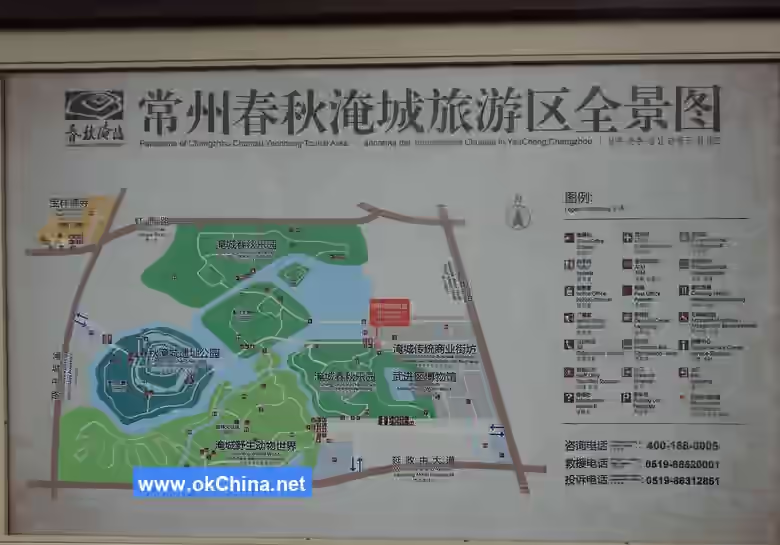
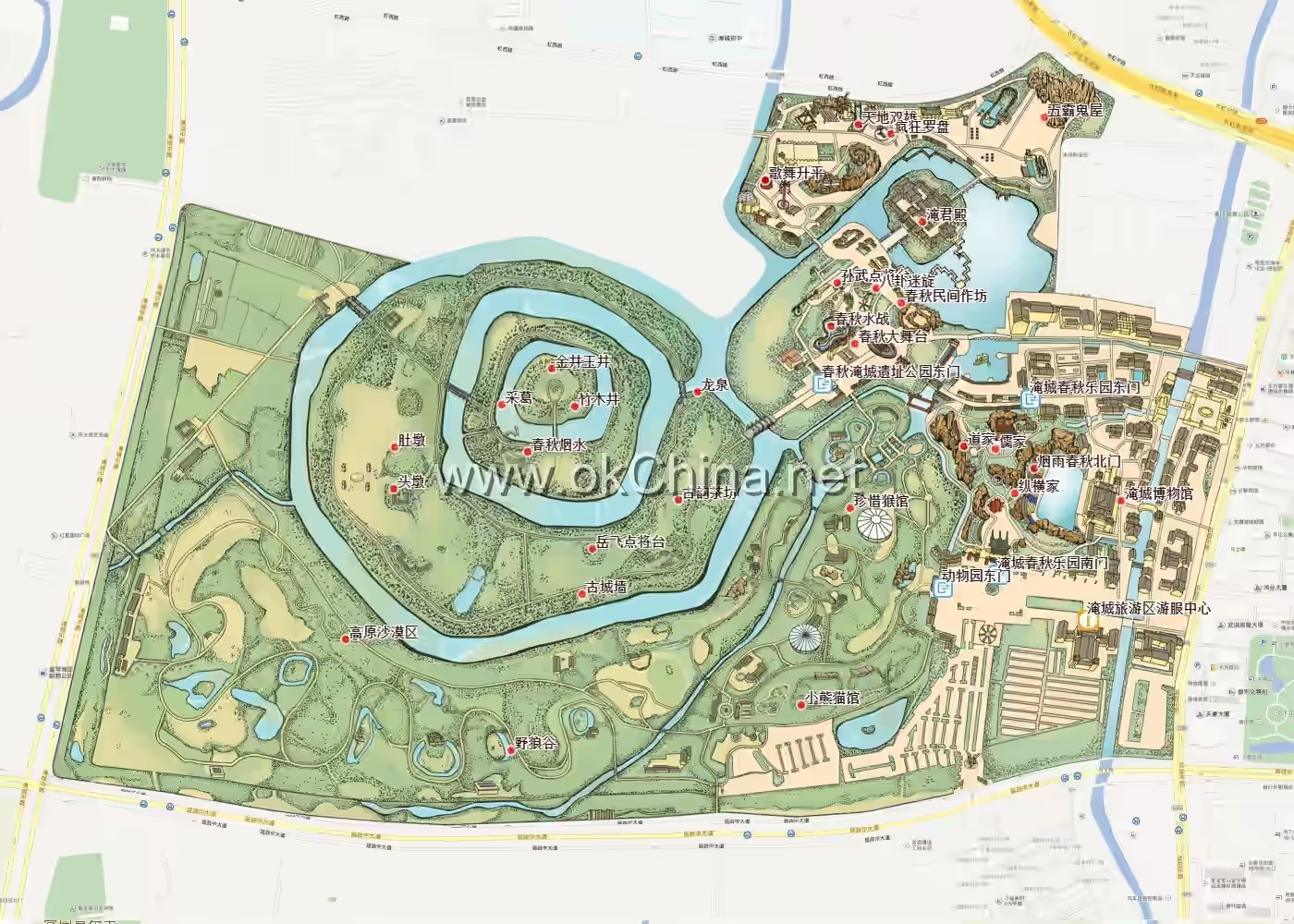
The Changzhou Chunqiu Yancheng Tourist Area is located in the central urban area of Wujin District, Changzhou City, Jiangsu Province. It was rated as a National 4A-level Tourist Attraction in 2010, passed the resource and landscape quality assessment for National 5A-level Tourist Attractions in 2015, and was newly designated as a National 5A-level Tourist Attraction on February 25, 2017. The tourist area has a total planned area of 7.6 square kilometers, divided into five major sections: the Chunqiu Yancheng Ruins, Yancheng Chunqiu Amusement Park, Yancheng Wildlife World, Yancheng Traditional Commercial Streets, and Yancheng Baolin Chan Temple.
The Changzhou Chunqiu Yancheng Tourist Area comprehensively showcases the splendid historical culture of the Spring and Autumn Period by recreating humanistic scenes. It actively builds the Chinese Chunqiu cultural brand, forming a tourism complex that integrates tourism, leisure, entertainment, science education, shopping, and dining. "For the Ming and Qing dynasties, look to Beijing; for the Sui and Tang, look to Xi'an; for the Spring and Autumn Period, look to Yancheng." The Chunqiu Yancheng Tourist Area shines like a brilliant pearl in the Yangtze River Delta region.
On February 25, 2017, it was newly designated as a National 5A-level Tourist Attraction.
2. Major Scenic Spots
2.1 Yancheng Ruins
The Chunqiu Yancheng Ruins, archaeologically confirmed to be over 2,700 years old, are the most completely preserved and uniquely structured ground-level city ruins from the Spring and Autumn Period in China. Its architectural form of "three concentric city walls and three moats" is unique in the world. The ruins are 850 meters long from east to west and 750 meters wide from north to south, covering a total area of approximately 650,000 square meters. Its scale corresponds to the record in Mencius: "a city of three li and an outer wall of seven li." Over a thousand precious cultural relics have been unearthed from the site, including four dugout canoes, more than 20 bronze artifacts, and a large number of primitive celadon and pottery items. In 1988, the Yancheng Ruins were listed as a National Key Cultural Relics Protection Unit; in 2009, they won the United Nations Environment Programme's Gold Award for Sustainable Development Projects.
2.1.1 Training Ground
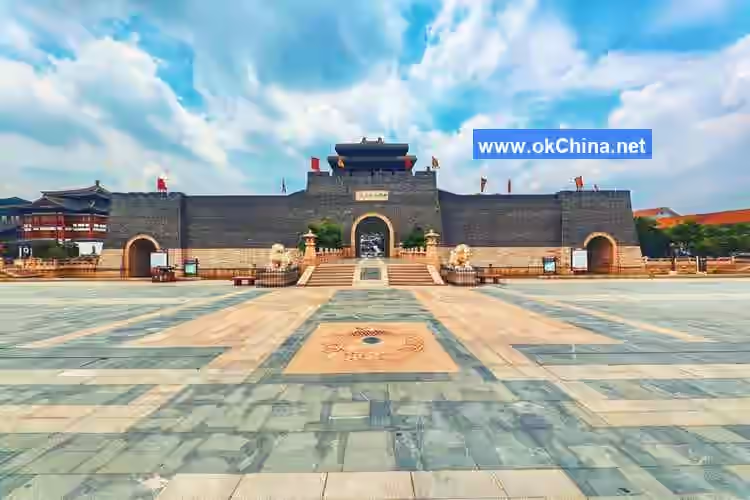
This open area was originally where the State of Yan stationed troops and stored provisions. The two square ancient buildings in the center of the square are called "que towers," which were watchtowers for soldiers on guard duty in ancient times. Yue Fei, a national hero of the Southern Song Dynasty who resisted the Jin, once trained soldiers here. Zhu Yuanzhang, the founding emperor of the Ming Dynasty, once practiced horsemanship here (as recorded in historical texts). Famous anti-Japanese pirate generals Tang Jingchuan and Qi Jiguang once taught Yanghu Boxing here. Today, this is the main venue for large-scale events in Yancheng. Famous singers like Song Zuying have performed on stage here multiple times.
2.1.2 Master-Worshipping Stone and Inkstone Washing Pond
This small pond, shaped like an inkstone, is called the Inkstone Washing Pond. Legend has it that this is where Tang Jingchuan, a Ming Dynasty hero who fought against Japanese pirates, sought a master for his studies. Tang Jingchuan was from Tangjia Village in Yancheng and was mischievous from a young age. He started school at seven but changed schools four times within half a year, causing his parents endless headaches. They had to invite teachers to their home, but the teachers would leave within a day or at most three days. One day, Tang Jingchuan's father invited a teacher named Ye. Seeing that Ye was short and looked like a frail scholar, Tang Jingchuan was unconvinced and thought, "How dare someone like this teach me?" The next day, Tang Jingchuan took Teacher Ye to this small pond and asked with a smirk, "Are you going to teach me literature or martial arts?" Teacher Ye replied, "I teach both." Tang Jingchuan said, "Great! Let's have a match first. But let's agree beforehand: the more capable one shall be the teacher!" As soon as he finished speaking, he charged forward. Unexpectedly, Teacher Ye was prepared. He grabbed Tang Jingchuan's arm, pulled him, pressed him to the ground, and squeezed hard, causing Tang Jingchuan to cry out in pain and shout, "Sir, spare me! I submit!" He then knelt on both knees on the large stone by the pond, kowtowed, and said, "Sir, please accept your disciple's bow!" From then on, master and disciple came to the pond every day to practice martial arts and study literature. Within less than three years, the talented Tang Jingchuan became well-read in classics and mastered martial arts, later founding the local Yanghu Boxing style in Wujin. He passed the imperial examination at the county level at 16, entered the Hanlin Academy at 23, and later served as a secretary in the Ministry of War, fighting Japanese pirates along the coast of Fujian. Many young people from Yancheng heard about this and came here to hold master-worshipping ceremonies, naming this stone the "Master-Worshipping Stone."
2.1.3 Bamboo-Wood Well
The Bamboo-Wood Well is the earliest style of well in China. The four corners of the well are fixed with logs 10 cm in diameter, and the well walls are woven from thin bamboo, resembling the Chinese character for "well" (井). There is a beautiful legend about this well. It is said that the daughter of the Dragon King of the East Sea met the prince of the State of Yan in Yancheng, and they fell in love at first sight, inseparable. The dragon princess decided to leave the dragon palace and marry the Yan prince, but the Dragon King firmly opposed this and instead arranged for her to marry someone else. The dragon princess threatened to kill herself, and the Dragon King had no choice but to allow them to meet regularly to ease their longing. Thus, on the first and fifteenth days of each lunar month at dusk, the dragon princess would come to the wellhead, hold her qin (a stringed instrument), and sing while waiting for the Yan prince. Enchanting music would drift from the well. Unfortunately, the good times did not last. One day, the Yan prince was ordered to lead troops on an expedition and never returned. Yet, regardless of the season or weather, the music from the Bamboo-Wood Well continued. Under the moonlight, through the clear well water, one could still see the figures of the dragon princess and the Yan prince, loving and confiding in each other.
2.1.4 Wetland and Inner City
The oval porous stones in the wetland are volcanic rocks containing various minerals. The plants growing in the water are cattails. Their leaves can be woven into cattail fans and mats, and the brownish-yellow cattail spikes in the middle can be dried and burned to repel mosquitoes. The tall earthen wall ahead is the inner city wall. Entering the inner city, you will find the ruins of the Yan king's palace. The inner city is also called the Purple Silk City. It is square with a perimeter of about 500 meters and was where the Yan ruler conducted court affairs and lived. In ancient China, the color "purple" represented mystery and auspiciousness. Therefore, the Jade Emperor's palace in heaven was called the "Purple Tenuity Palace," and the earthly emperor's palace was called the "Forbidden City" (literally "Purple Forbidden City").
2.1.5 Sun Wu's Thatched Cottage
At the end of the path, nestled in greenery, are three small thatched cottages built facing the water. Legend has it that this is where Sun Wu, the great general of the State of Wu, once lived in seclusion. Sun Wu, also known as Sunzi, was from the ancient State of Qi. To avoid war, he moved to Yancheng. Relying on his intelligence and the spiritual energy of Yancheng's land and water, he completed his masterpiece here—The Art of War—proposing the military theory "Know yourself and know your enemy, and you will never be defeated." He is revered by later generations as the "Military Sage." Later, recommended by Wu Zixu, a minister of the State of Wu, he became a great general of Wu. He defeated the powerful State of Chu in the west, intimidated the States of Qi and Jin in the north, was invincible, and achieved illustrious military exploits. In 512 BCE, after Sun Wu returned victorious to the court, he disappeared. King Helü of Wu visited Yancheng multiple times to search for him but found nothing. Later generations repaired and preserved the thatched cottage where he lived to commemorate him, attracting numerous domestic and international tourists to explore and visit this historic site.
2.1.6 Guanju Well
Legend has it that in the State of Yan, there was a city defense general named Meng Yan, who was born on the same year, month, and day as the princess of Yancheng. One was clever and brave from childhood, the other intelligent and quick-witted from a young age. They grew up together, often playing games on this bridge and admiring their reflections by the well. When they grew up, Meng Yan became handsome and skilled in martial arts, while the princess became graceful and talented in singing and dancing. Every evening at sunset, they would meet on the bridge, sing antiphonal songs, recite poetry, and express their love for each other. It is said that the Yan king, believing slander, decided to marry the princess to Prince Liu as the consort of Yancheng. The princess firmly refused. Upon learning of the deep affection between the princess and Meng Yan, the Yan king, using Meng Yan's high martial arts skills as a pretext, ordered him to serve as the national defense general and station outside the city. When the princess learned of this, she went to the bridge every day to watch and wait, refusing to leave. To sever the bond between the princess and Meng Yan, the Yan king ordered the wooden bridge to be demolished. When Meng Yan heard the news and rushed over, half of the bridge was already dismantled. Standing at the broken end of the bridge, Meng Yan called out to the princess toward the inner city. However, Prince Liu heard him and, seeing his rival Meng Yan, took him by surprise and shot an arrow through Meng Yan's chest. At that moment, a white turtle leaped out of the water, carried Meng Yan on its back, and dived away. From then on, Meng Yan disappeared, and the remaining half of the wooden bridge seemed rooted, impossible to dismantle, and remains to this day. The Book of Songs says: "Guan-guan go the ospreys, on the islet in the river. The modest, retiring, virtuous young lady: For our prince a good mate she." To commemorate the tragic love story of Meng Yan and Princess Bailing, later generations named this broken bridge "Guanju Bridge" and the well at the bridgehead "Guanju Well." This is also a good place for young men and women to confide their feelings to each other.
2.1.7 Inner City and Inner City Moat
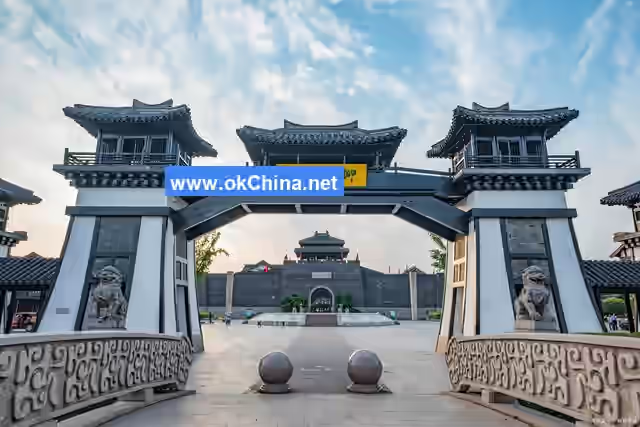
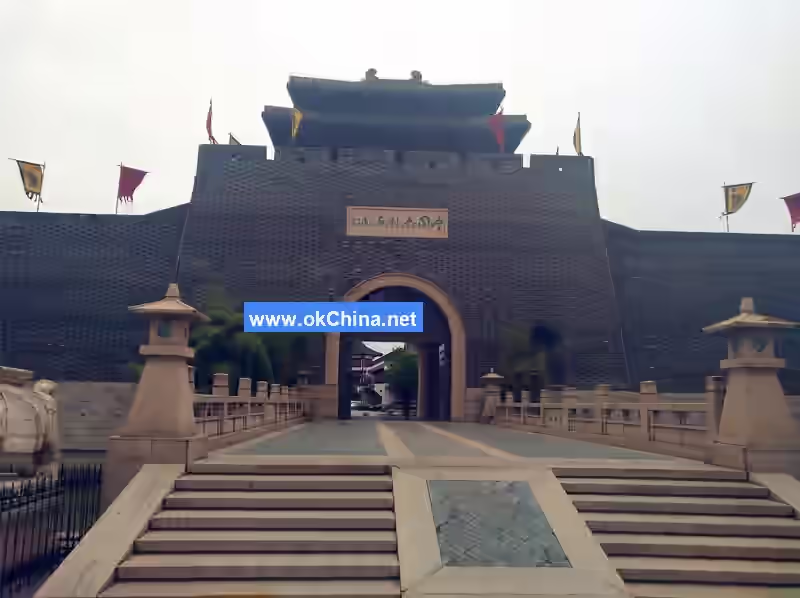
This bridge is the only passage to the inner city. Originally, it was a drawbridge that could be disconnected in the middle. Now, to ensure visitor safety, it has been connected. Crossing this bridge leads to the inner city, also called the "Inner Enclosed City," with a perimeter of 1,500 meters, approximately 3 li. Since the outer city wall has a perimeter of 3,500 meters, about 7 li, it precisely matches the record in Mencius regarding the scale of a Spring and Autumn Period feudal state's city: "a city of three li and an outer wall of seven li." The river ahead is Yancheng's third moat, the Inner City Moat. With a perimeter of 500 meters and a width of about 30 meters, it resembles a back garden more than a moat. Throughout the year, the river is filled with aquatic plants, displaying a spectrum of red, orange, yellow, green, cyan, blue, and purple, presenting a beautiful scene of the Jiangnan water town.
2.1.8 Princess TombWhere the divine turtle gazes upon, three large earthen mounds stand aligned from north to south, locally known as the "Princess Tomb." A poignant legend surrounds these three mounds. It is said that the ruler of Yan had a daughter, as beautiful as flowers and jade, skilled in both literary and martial arts, and kind-hearted, thus deeply beloved by the people of Yan. Nearby Yan City was the city of Liu, whose prince harbored ambitions for Yan and coveted the princess's beauty. However, Yan City's defenses of three walls and three moats made it difficult to capture. Thus, he conspired to bribe Yan's corrupt official, Minister Mu, to win the trust of the Yan ruler and marry the princess. But his true intentions lay elsewhere. Once, taking advantage of the Yan ruler's absence, he impersonated the princess to obtain the key to the rear garden and stole the national treasure, the White Jade Turtle. Upon his return, the Yan ruler, deceived by treacherous words, believed the princess had conspired with foreign powers and, in a fit of rage, ordered her execution. When the truth came to light, the ruler was filled with regret and ordered a grand burial for the princess. To prevent tomb robbery, three earthen mounds were constructed, named the Head Mound, Belly Mound, and Foot Mound. Every Qingming Festival, the Yan king would personally visit the tomb to pay respects. When faced with difficulties, the people of Yan would come here to pray for the princess's protection. Because their prayers were often answered, over time, she became known as the "Hundred-Spirits Princess."
2.1.9 White Jade Turtle
From the air, Yan City's shape closely resembles a turtle shell, so in ancient times, it was also called Turtle City. Since antiquity, there has been a legend of a divine turtle saving Yan: As early as the Western Zhou Dynasty, King Cheng launched an eastern campaign to conquer the State of Yan. The Yan king fled south to the banks of the Yangtze River but was blocked by its surging waters. With pursuers closing in, the Yan king was at a loss and sighed to the heavens: "Heaven destroys my Yan!" At that moment, a six-legged turtle, raised by the Yan king since childhood, suddenly spoke: "Master, do not fear!" It then transformed into a colossal creature, signaling the Yan king and his people to climb onto its back. Two of its legs turned into wings, and it soared into the sky. After an unknown period of flight, it landed on a marshland south of the river. Exhausted, the turtle breathed its last and turned into a white jade stone turtle. Witnessing this, the Yan king and his people wept bitterly. That night, the divine turtle appeared in the Yan ruler's dream, indicating that they could settle there and build a city by digging rivers in its shape, thus giving rise to the "Yan City" we see today. Under the protection of the White Jade Turtle, the State of Yan grew increasingly powerful, and the divine turtle became its national treasure.
2.1.10 Jizi Pavilion
Jizi Pavilion, also known as the Water Drawing Dock, was where Jizha, the cultural ancestor of Changzhou, rested when entering or leaving Yan City. Jizha, also known as Jizi, was the fourth son of King Shoumeng of Wu. He left behind timeless tales such as "Thrice Declining the Throne," "Observing Music in Lu," and "Hanging a Sword on a Grave Tree." Confucius praised him as a model of virtue, and later generations honored him as the "Gentleman of Yanling." From a young age, Jizha was well-read, understanding, and compassionate toward the people. The King of Wu intended for him to succeed to the throne, but Jizha politely declined, citing adherence to the "Rites of Zhou." After being enfeoffed in Yanling, he twice declined the throne again, living a pastoral life with the common people, "working at sunrise and resting at sunset." Jizha was proficient in music. During his diplomatic missions to various states, he often listened to their music, analyzing local customs and the pros and cons of governance, thus pioneering music criticism. Jizha was honest and trustworthy. Once, while passing through the State of Xu on a mission to the Central Plains, he was warmly received by the Lord of Xu. During their conversation, he noticed the lord's great admiration for his sword and silently promised to gift it to him upon his return. However, when he returned, the Lord of Xu had already passed away. Jizha went to his tomb to pay respects and hung the sword on a tree branch before the grave.
2.1.11 General's Platform
This square earthen mound is where the famous Southern Song general Yue Fei assembled his troops. Historical records indicate that in May 1130 AD, the Jin Dynasty broke the peace treaty with the Southern Song and launched a four-pronged attack. The Song army, unprepared, suffered successive defeats, losing cities one after another, and the Southern Song was on the brink of collapse. Emperor Gaozong of Song had no choice but to ask Yue Fei to lead the resistance against Jin. Without hesitation, Yue Fei led his troops north from Hangzhou to Yan City, where he assembled his soldiers and discussed military strategies on this small mound. When Jin troops invaded Changzhou, Yue Fei led his army from Yan City into battle. The soldiers shouted slogans like "Return Our Rivers and Mountains" and "Serve the Country with Utmost Loyalty," fighting bravely and achieving four consecutive victories. The Jin troops fled in disarray, and Yue Fei's army pursued them northward, reclaiming vast territories of the Southern Song. Thus, the "Yue Fei General's Platform" earned its name.
2.1.12 Inner Moat and Dugout Canoe
The second moat of Yan City is called the Inner Moat, approximately 40 meters wide. From this river, many national treasures have been unearthed, including a bronze plate with twin beasts and three wheels, resembling models placed by the riverbank. Additionally, four dugout canoes were discovered, the largest measuring 11 meters in length, now housed in the National Museum. The other three are respectively collected in the Nanjing Museum and the Wujin Museum. These are currently the earliest water transportation tools discovered in China, hailed as the "World's First Canoes." If interested, you can visit the Wujin Museum to see the originals.
2.1.13 Outer City and Hometown of the Yan People
The outer city of Yan City is elliptical, with a circumference of about 2,500 meters, commonly known as the "Outer Walled City." This was originally the hometown of the Yan people during the Spring and Autumn period. At that time, the Yan people made their living from farming and sericulture. It is said that the legendary physician Bian Que of the Spring and Autumn period once ran an inn here. Guided by a traveler named Chang Sangjun, he made pills from the water of Dragon Pool and wild herbs of Yan City, which could cure all diseases. After the news spread, patients from surrounding areas flocked here, and the hometown of the Yan people flourished. Perhaps the world-renowned Menghe Medical School of Wujin, known for its traditional Chinese medicine therapies, originated here.
2.1.14 Outer Moat and Dragon Pool
The river ahead is the first moat of Yan City, called the "Outer Moat," approximately 60 meters wide. To the right front, where the characters "Long Quan" (Dragon Spring) are inscribed, there is a circular water surface about 8 meters in diameter. Spring water surges here year-round, and its depth is unfathomable, so people call it "Dragon Pool." According to historical records: In the sixth year of Xianfeng (1856), a great drought struck Jiangnan, drying up thousands of rivers. Yet, the three rivers of Yan City flowed continuously, clear as usual. Why? Legend has it that Dragon Pool connects directly to the Dragon Palace of the East Sea. Because Yan City is beautifully scenic and its people are friendly and hospitable, the Dragon King's daughter often came to Yan City to play in the water, admire the moon, pick mulberries, view flowers, drink tea, and dance with the Yan maidens. Thus, Yan City never suffered from droughts or floods, enjoying favorable weather and abundant harvests year after year. A folk rhyme流传至今: "The water of Dragon Pool comes from the East Sea, never drying up, sweet and delicious, nourishing all things on both banks, all thanks to the Dragon Maiden and the White Jade Turtle."
2.2 Spring and Autumn Amusement Park
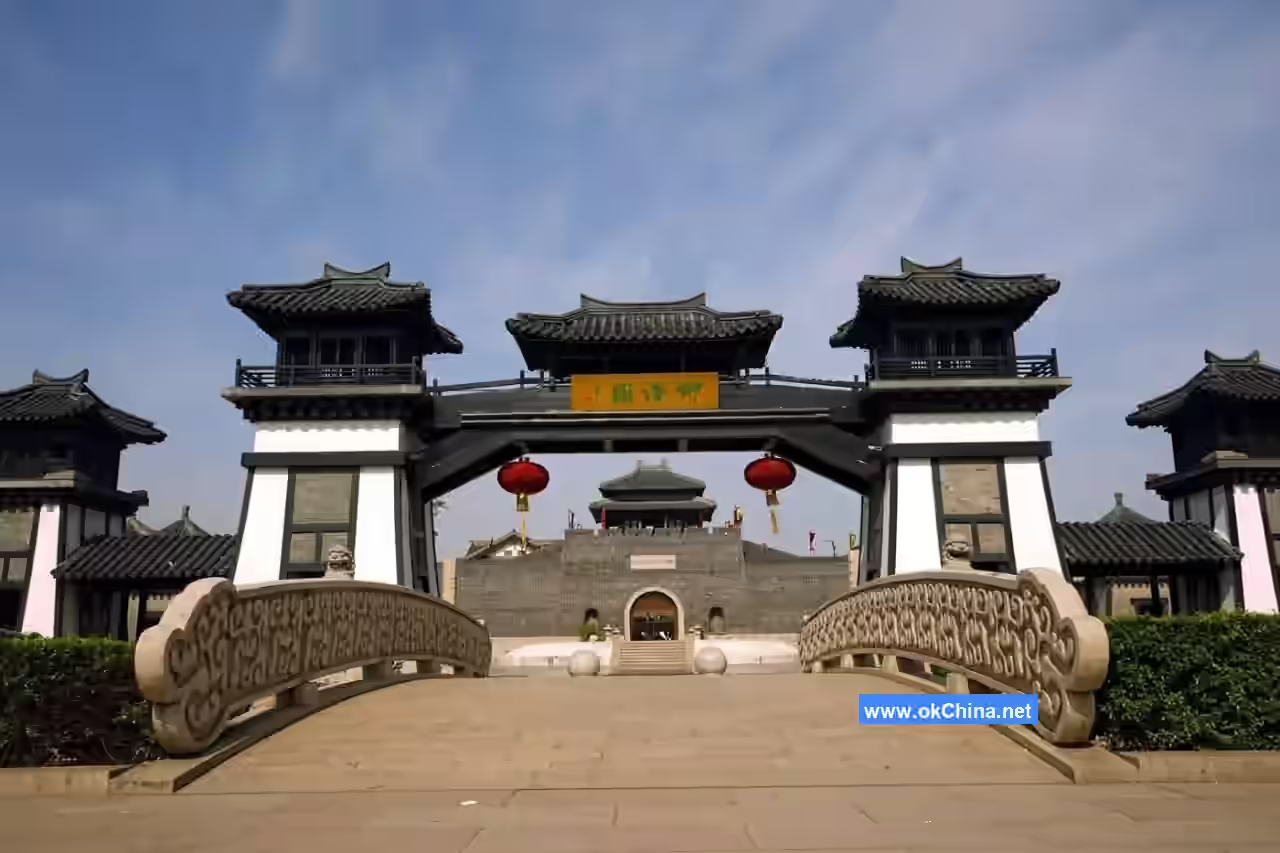
Yan City Spring and Autumn Amusement Park is the core area and pillar industry of the Yan City tourist zone, as well as China's first Spring and Autumn culture-themed park. Built on the eastern and northern parts of the Yan City ruins, it draws from the politics, military, economy, and culture of the Spring and Autumn period. It combines static观赏型 projects, interactive performance-based projects, and experiential游乐 projects within the意境 of Spring and Autumn culture through situational experiences. The park's environmental design is unique, featuring distinct historical and cultural characteristics of the Spring and Autumn period while incorporating modern aesthetics and时尚 elements, reflecting a creative fusion of tradition and modernity. All facilities employ modern technology, integrating traditional Chinese culture. Through themed entertainment and performances, the park extends cultural内涵, enhancing visitor participation, interaction, and entertainment. The project's creativity has achieved several firsts in China's tourism industry.
2.3 Yan City Wildlife World
Located southwest of the Yan City ruins area, Yan City Wildlife World is characterized by the ecological free-ranging of wild animals. It集中护养 and displays nearly ten thousand rare and endangered wild animals from around the world, integrating wildlife观赏, leisure entertainment, and科普教育. It is a超大规模的野生动物园 in Jiangsu Province. In 2015, Yan City Wildlife World built a Panda Pavilion and introduced two giant pandas from Wolong.
2.4 Yan City Traditional Commercial Streets
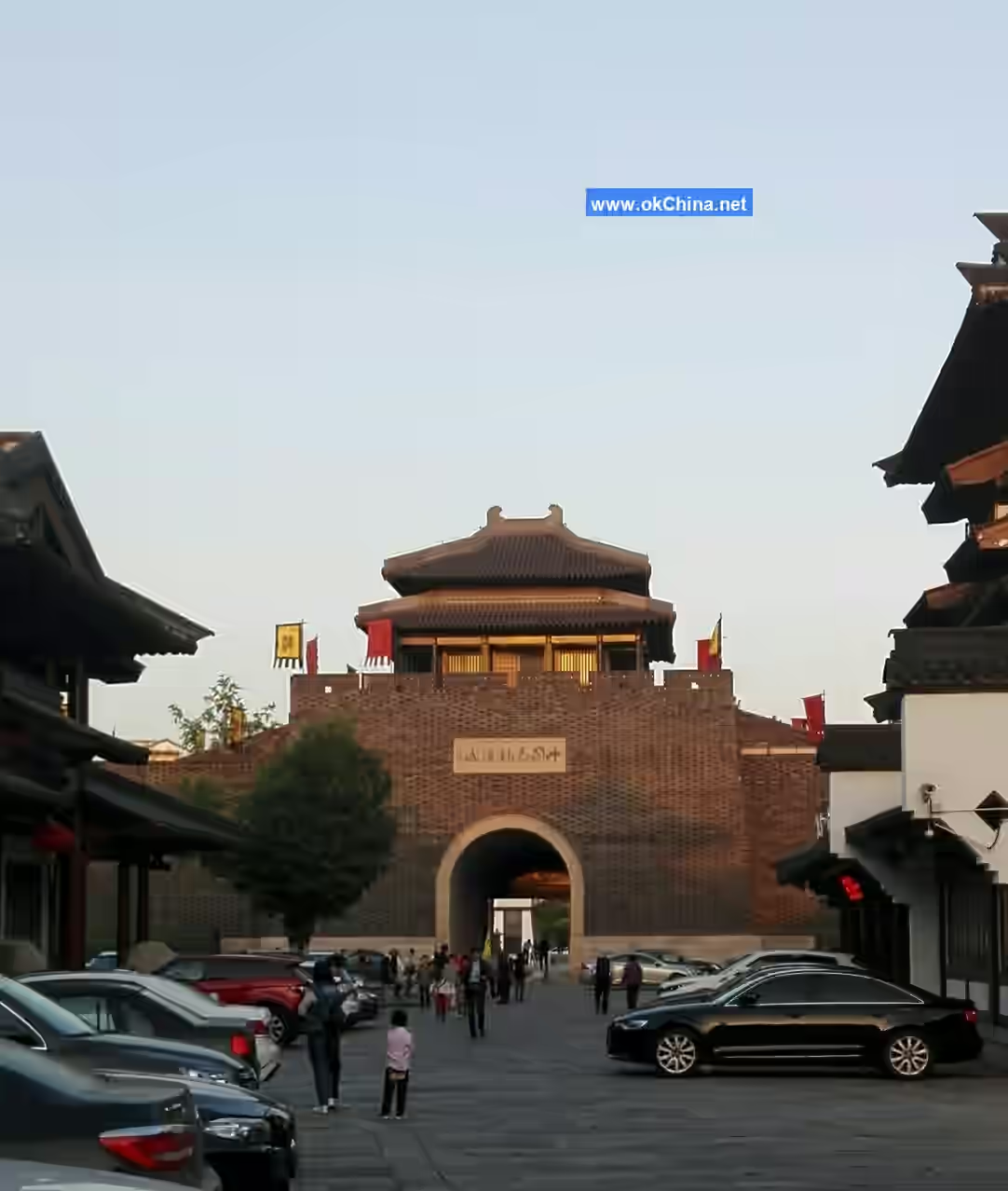
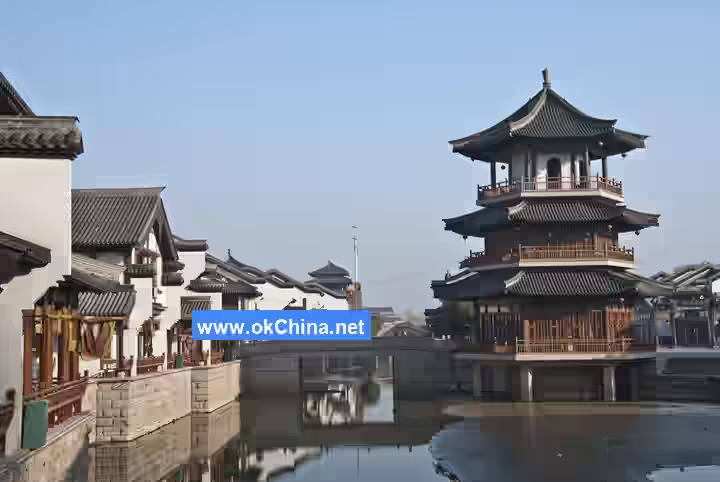
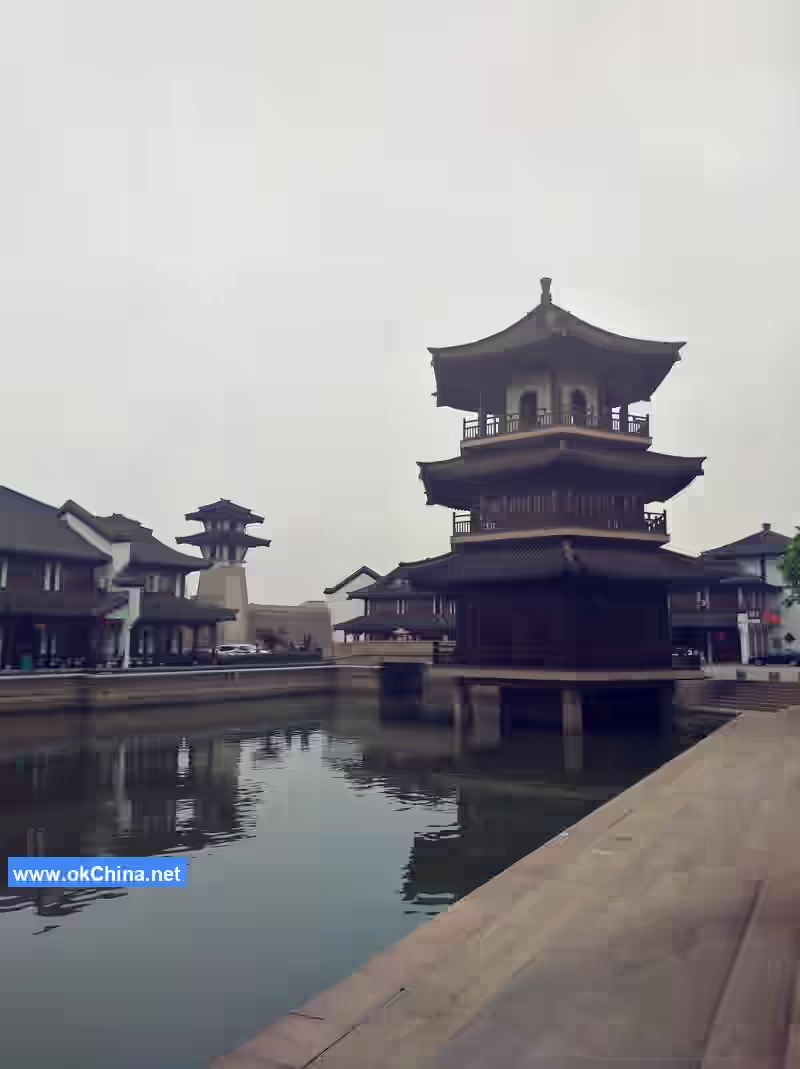
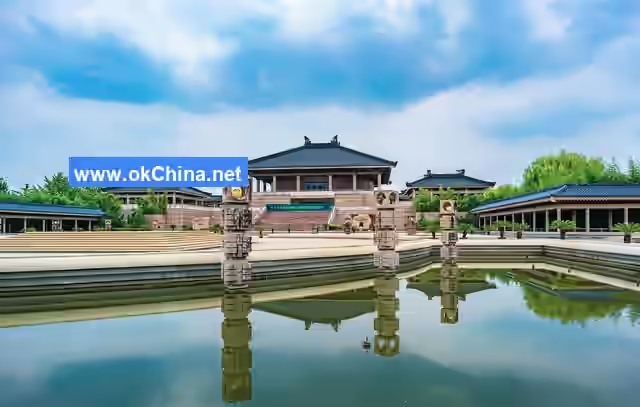
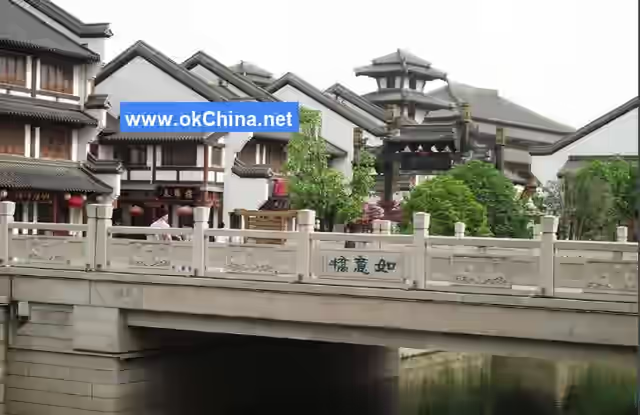
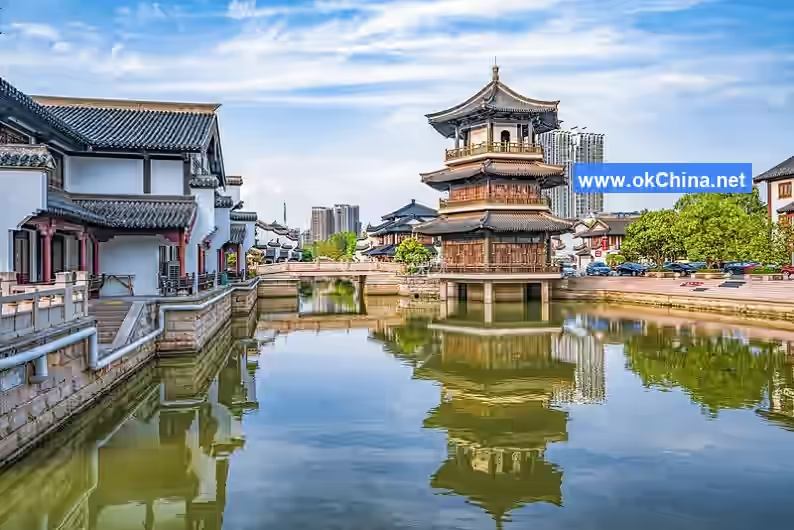
Yan City Traditional Commercial Streets are located east of the Yan City ruins, comprising Jian Lake and three ancient streets: Fengle Fang, Changle Fang, and Yile Fang. All three ancient streets face the harbor with rivers behind, tranquil, clean, and picturesque. The Yan City Museum, Wujin Cultural Center, Yuan Xiaoyuan Art Museum, and Yaoling Bell Tower are点缀其中,集中展示ing the historical传承 of Wujin culture.
3. Cultural Resources
3.1 Historical EvolutionYancheng was built in the late Spring and Autumn period, with a history of over 2,900 years. In 1935, Chinese archaeologists conducted the first on-site survey of Yancheng, confirming it as an ancient residential site, which drew academic attention. In the 1950s and 1960s, three dugout canoes and a batch of bronze and pottery artifacts were unearthed from the inner river of Yancheng. The discovery of these grouped cultural relics first revealed the unique cultural features and significance of the Yancheng site, causing a sensation in both society and academia. Research on Yancheng has continued ever since. In 1986, the Jiangsu Provincial Yancheng Site Archaeological Excavation Team conducted the first six-year archaeological excavation of the site, resolving some long-standing questions. As one of the team members, Lu Jianfang, an associate researcher at the Nanjing Museum, concluded after years of study: "Yancheng was a military fortress of the Wu State, and it is the world's best-preserved military facility from the Spring and Autumn period, featuring three moats and three walls."
Who inhabited Yancheng? This question remains unresolved in archaeological circles. According to records from the Eastern Han dynasty’s Yuejue Shu: Wudi Zhuan and the Northern Song dynasty’s Taiping Huanyu Ji, the Changwu area was called Yanling during the Spring and Autumn period under the Wu State and was the fiefdom of Jizha, the fourth son of King Shou of Wu in the late Spring and Autumn period. Dissatisfied with Helü’s assassination of King Liao to usurp the throne, Jizha vowed to "never enter Wu again." He then dug moats and built walls in his fiefdom of Yanling, creating what could be described today as an "independent kingdom," naming it "Yancheng" to signify his determination to remain there until death. Some speculate that there was once a Yan state here, with Yancheng as its capital, but this theory lacks sufficient evidence.
The earliest written record of Yancheng appears in the Eastern Han dynasty’s Yuejue Shu: Wudi Zhuan by Yuan Kang: "The southern city of Piling County is the ancient land of Lord Yan. To the southeast lies a large tomb, the burial place of Lord Yan’s children, located eighteen li from the county, buried by Wu." The Changwu area was called Yanling during the Spring and Autumn period and renamed Piling in the Han dynasty. It was the fiefdom of Jizha, the fourth son of King Shou of Wu. The Northern Song dynasty’s Taiping Huanyu Ji states: "Changzhou Prefecture was part of the Wu State during the Spring and Autumn period." Records of the Grand Historian notes: "It was occupied by Prince Jizha of Wu and was the city of Yanling." After Wu was conquered by Yue, it belonged to Yue, and after Yue was conquered by Chu during the Warring States period, it belonged to Chu. Hence, the Yuejue Shu refers to it as the "City of Lord Yan." The Qing dynasty’s Dushi Fangyu Jiyao records: "Yancheng is located twenty li southeast of Changzhou Prefecture. It has three layers of walls, deep and wide moats, and a circumference of fifteen li." Additionally, some local chronicles of the Changwu area contain scattered records, such as the Song dynasty’s Xianchun Piling Zhi, which states: "Yancheng is located in Yanghu Yanzheng Township."
3.2 Historical Records
The Book of Documents: Zhou Shu: Cai Zhong’s Mandate mentions: "King Cheng campaigned east against the Huaiyi, then conquered Yan, establishing King Cheng’s governance. After conquering Yan, King Cheng relocated its ruler to Pugu." Han dynasty commentator Kong Anguo’s Shangshu Zhuan explains: "When King Cheng assumed governance, the Huaiyi and Yan State rebelled again. The king personally led a campaign, destroyed Yan, and relocated its people due to their repeated rebellions." Tang dynasty commentator Kong Yingda’s Shangshu Zhengyi Shu adds: "At the beginning of the Duke of Zhou’s regency, Yan and the Huaiyi joined Guan and Cai in rebellion. The Duke of Zhou campaigned against them and pacified them. At the beginning of King Cheng’s governance, the Huaiyi and Yan rebelled again, and King Cheng personally led a campaign against them. King Cheng campaigned east against the Huaiyi and then conquered and destroyed the Yan State."
3.3 Origin of the Name
The origin of Yancheng and the identity of its ruler remain debated among historians and archaeologists, with no consensus reached. One theory suggests that Yancheng was the detached palace of King Jie of Xia. Another theory posits that Yancheng was the capital of the Yan State during the late Shang and early Zhou periods, with the ruler of Yan being the monarch of the Yan State east of Qufu in present-day Shandong. According to legend, the ruler of Yan conspired with Wu Geng, a descendant of the Shang dynasty, to launch a rebellion during King Cheng’s reign. After being defeated by King Cheng, he led his remaining forces from Shandong to the Jiangnan region, where he dug moats and built walls, still calling it "Yan." Since the ancient character for "淹" (with three water droplets) was interchangeable with "奄" (without water droplets), the name "Yancheng" has been passed down to this day. Another theory states that in the late Spring and Autumn period, Prince Jizha of Wu, dissatisfied with Helü’s assassination of King Liao to seize the throne, resolved to break away from Helü’s tyrannical rule and vowed to "never enter Wu again." He built walls and dug moats in his fiefdom of Yanling to demonstrate his determination to remain there, naming the state "Yancheng." Naturally, according to this theory, the ruler of Yancheng was Jizha.
Yancheng, this ancient historical city, holds many unsolved mysteries waiting to be uncovered by archaeologists and historians. According to historical records, the ancient walls of Yancheng reached up to 20 meters in height, with foundations 25–30 meters wide, all constructed from rammed earth. Since 1958, a large number of geometrically patterned pottery jars, vats, urns, bowls, and bronze artifacts (such as bronze chime bells and bronze tripods) have been unearthed at Yancheng. The discovery of dugout boats in the inner city caused a sensation in Chinese archaeological circles. The largest of these, made from a single section of nanmu wood through fire-heating and axe-carving, measures 11 meters in length, 0.9 meters in width, and 0.45 meters in depth. It is hailed as the "world’s first boat" and is now preserved in the Beijing Museum.
Comments
Post a Comment