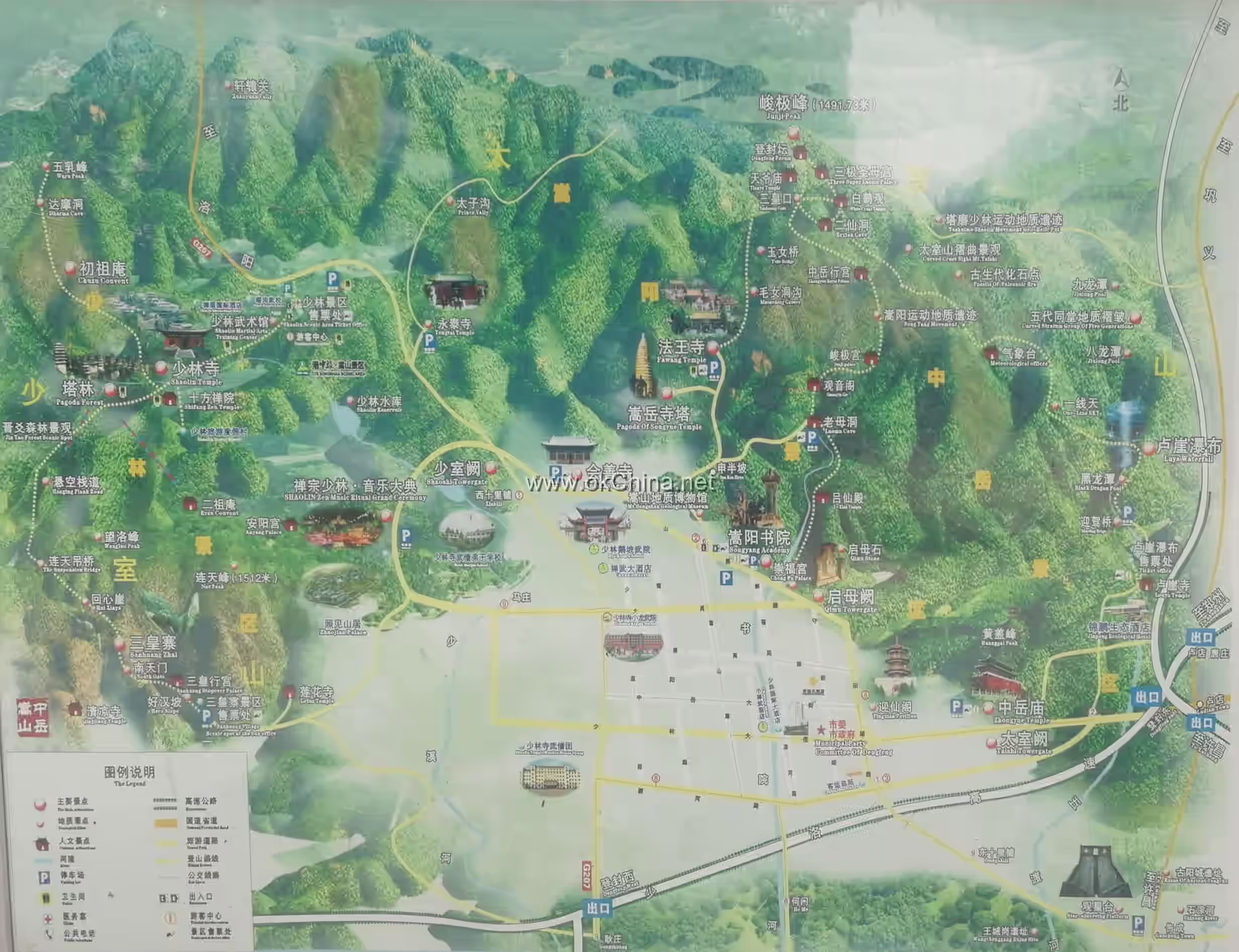
Songshan Shaolin Scenic Area in Zhengzhou
1. Introduction
Shaolin Temple, located in Dengfeng City, Zhengzhou, Henan Province, China, was first built in the 19th year of the Taihe era of the Northern Wei Dynasty (495 AD). It was established by Emperor Xiaowen to accommodate the Indian monk Batuo for spreading Buddhism. Because it is situated in the dense forest of Shaoshi Mountain in the heart of Songshan, it is named "Shaolin Temple." The main compound of Shaolin Temple covers an area of approximately 57,600 square meters. The current abbot is Shi Yongxin, the 47th generation of the Caodong school and the 33rd generation lineage holder.
Shaolin Temple is not only the birthplace of Chan Buddhism but also the cradle of Chinese martial arts. It is known as the "Ancestral Court of Chan Buddhism and Sacred Land of Martial Arts," and is hailed as "the foremost temple under heaven." It gained worldwide fame due to the Shaolin martial arts diligently researched, created, and developed by generations of Shaolin warrior monks, with the saying "All martial arts under heaven originate from Shaolin, and Shaolin martial arts are the best under heaven."
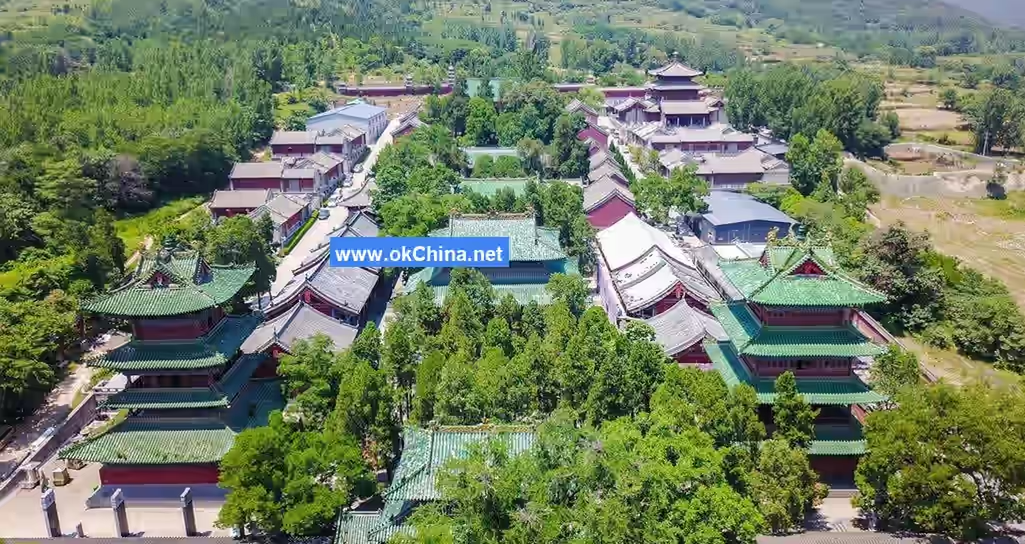
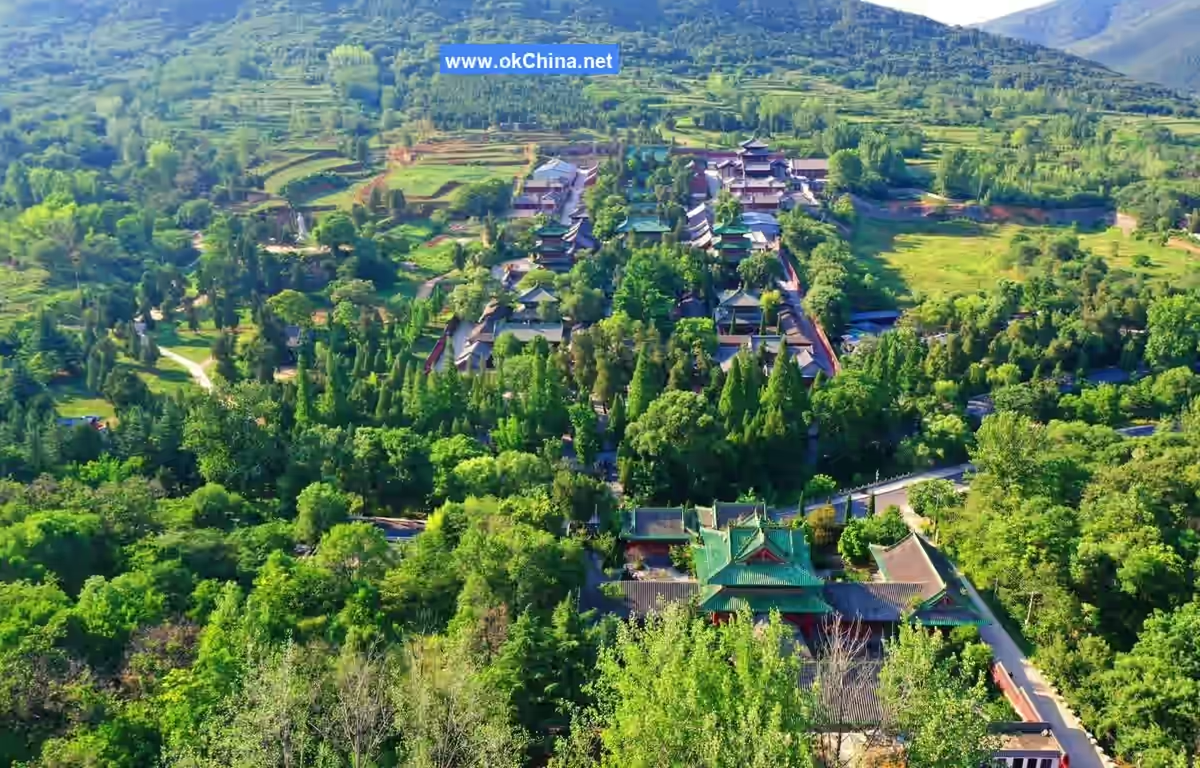
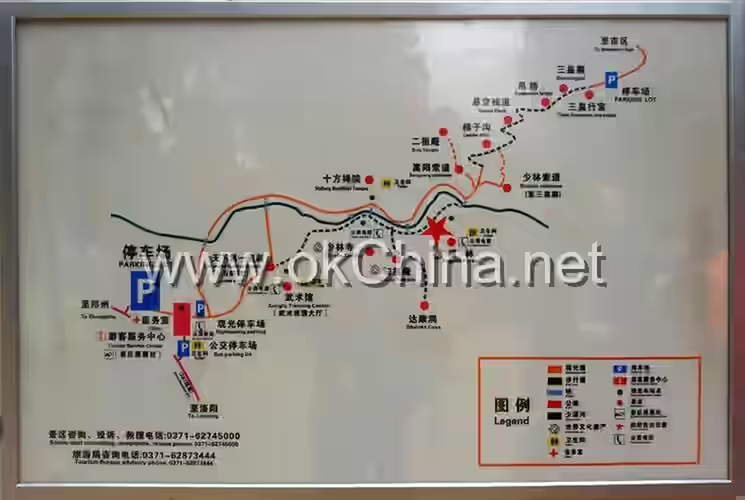
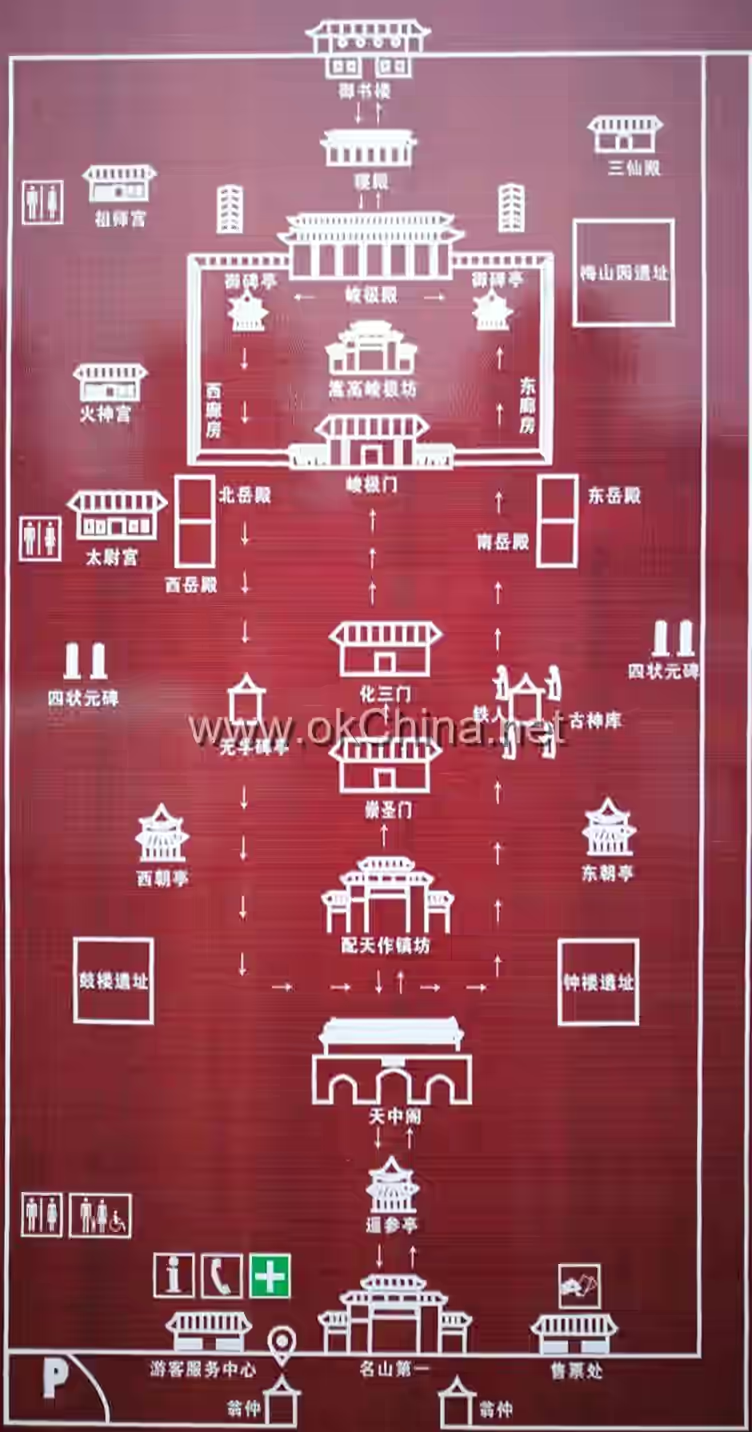
The main compound of Shaolin Temple is located on the north bank of Shaoxi River in Dengfeng, Zhengzhou. From the mountain gate to the Thousand Buddha Hall, it consists of seven courtyards, with a total area of about 57,600 square meters. It mainly includes the main compound, the Pagoda Forest, and the First Patriarch's Hut. The buildings along the central axis from south to north are the Mountain Gate, Heavenly King Hall, Mahavira Hall, Scripture Depository (Dharma Hall), Abbot's Quarters, Standing in Snow Pavilion, and Thousand Buddha Hall. Additionally, to the west of the temple is the Pagoda Forest; to the north are the First Patriarch's Hut, Bodhidharma Cave, and Sweet Dew Platform; to the southwest is the Second Patriarch's Hut; and to the northeast is Guanghui Nunnery. Around the temple, there are also more than ten ancient pagodas, such as the Pagoda of Chan Master Tongguang, the Pagoda of Chan Master Faru, and the Pagoda of Chan Master Fahua.
2. Geographical Location
The Songshan Shaolin Scenic Area is located in Chengguan Town, Dengfeng City, Zhengzhou, Henan Province. It lies at the southern foot of Taishi Mountain, facing Shaoshi Mountain and backed by Wuru Peak.
2.1 Climate Characteristics
Dengfeng City, where the Songshan Shaolin Scenic Area is located, has a warm temperate continental monsoon climate. The multi-year average temperature is 14.3°C, and the multi-year average precipitation is 606.2 mm.
3. Temple Architecture
3.1 Mountain Gate
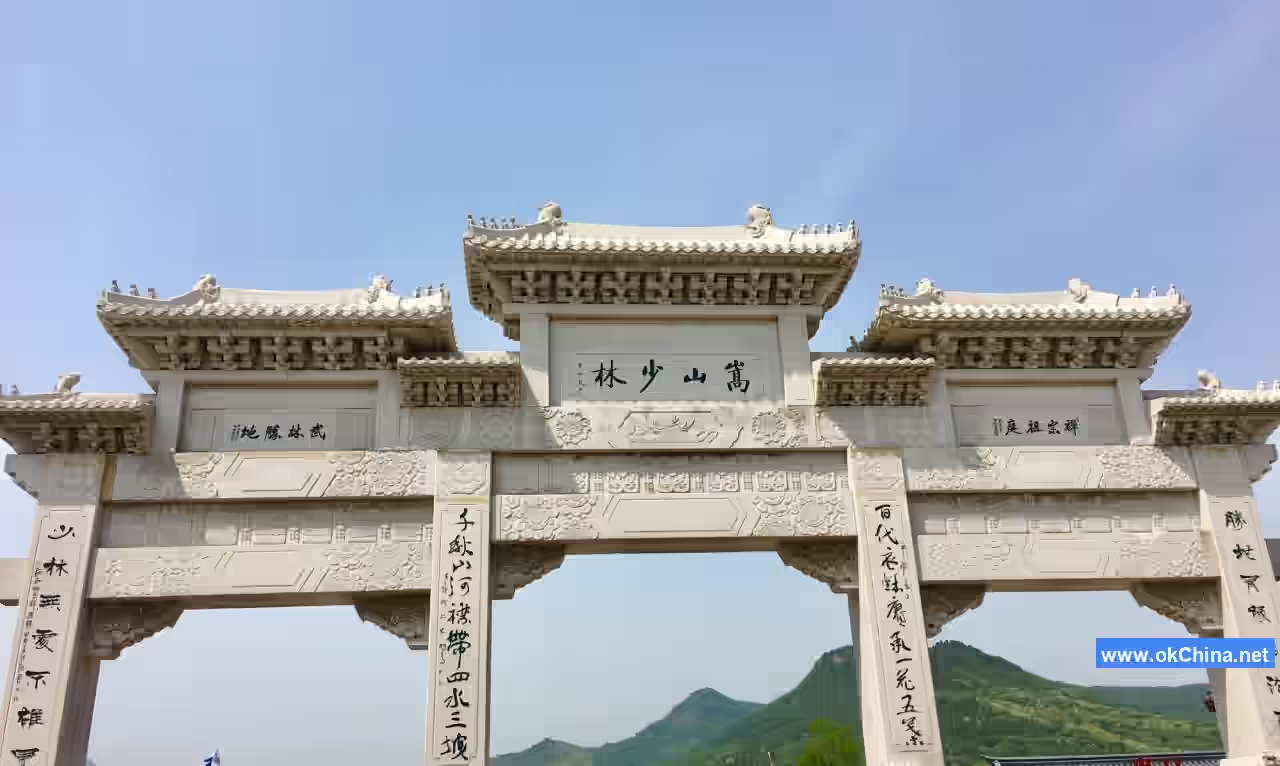
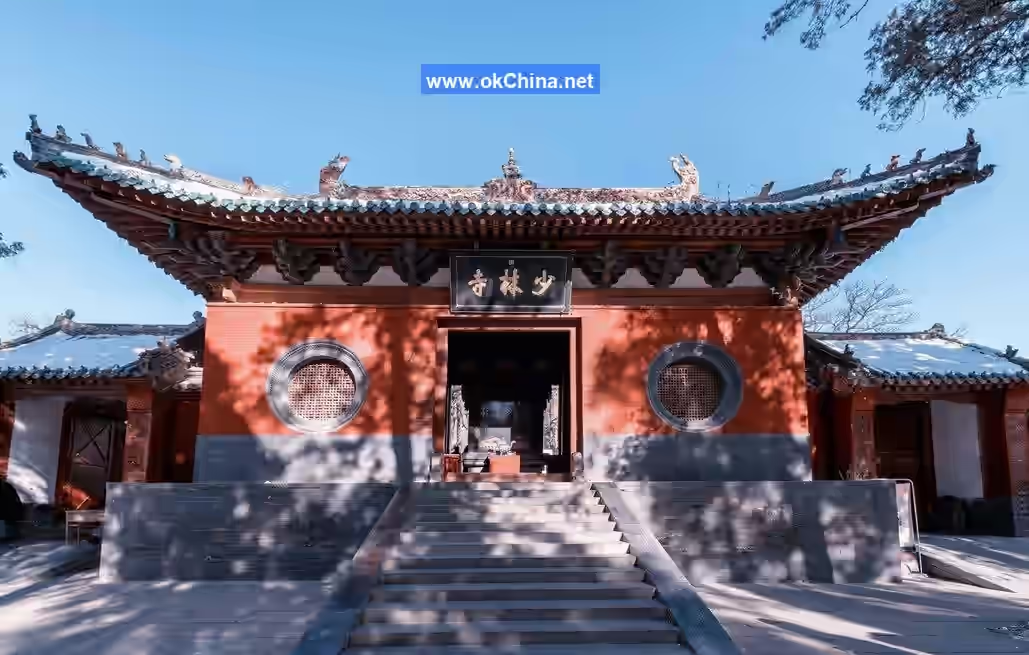
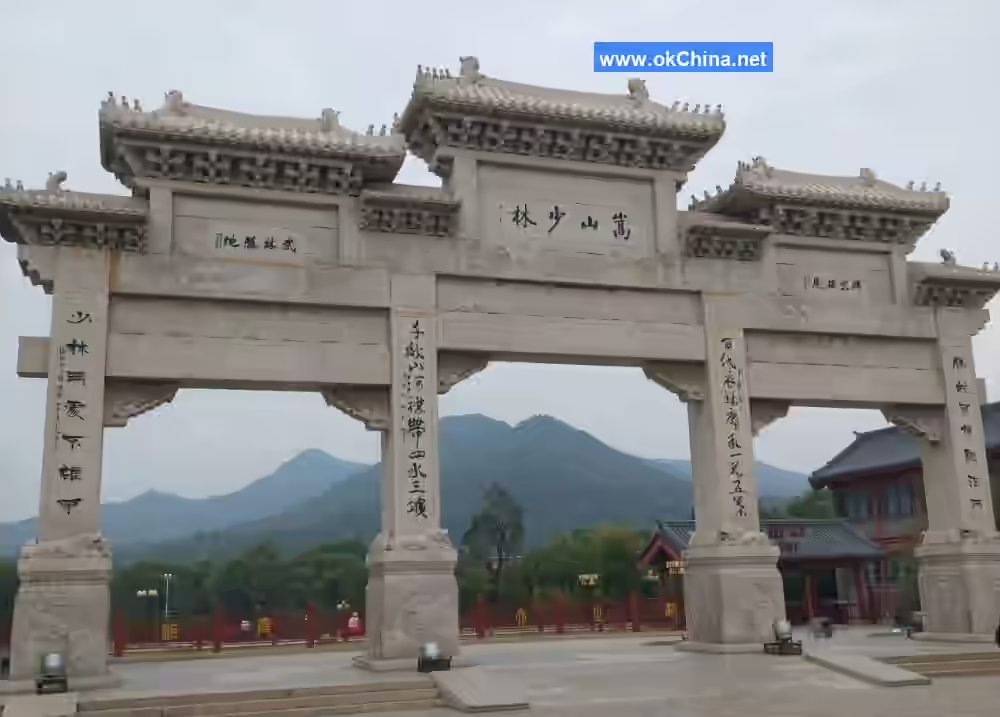
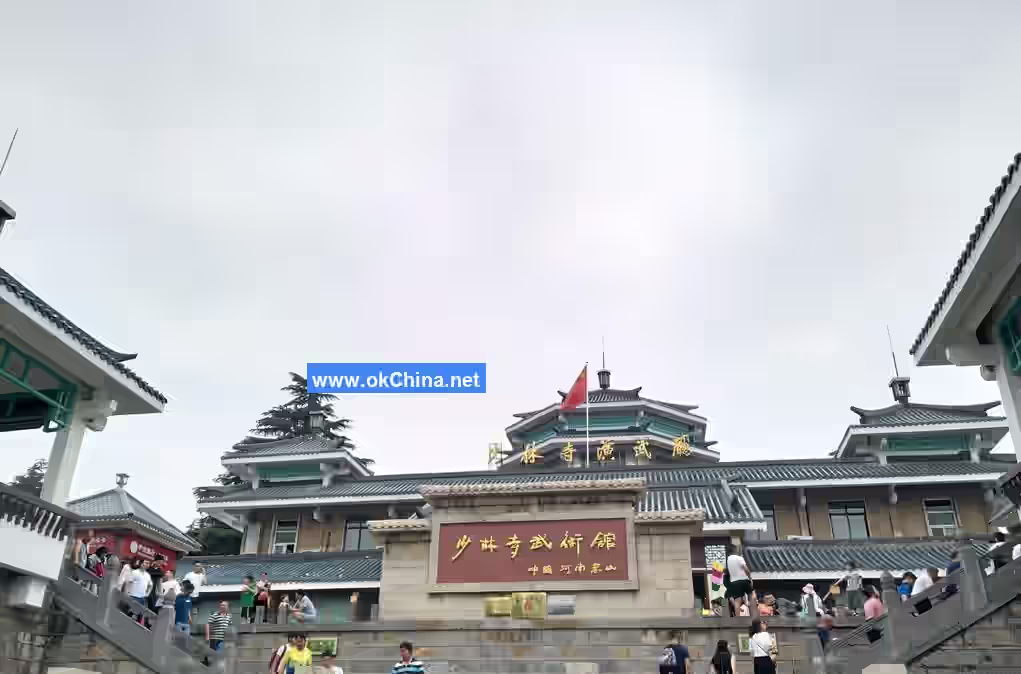
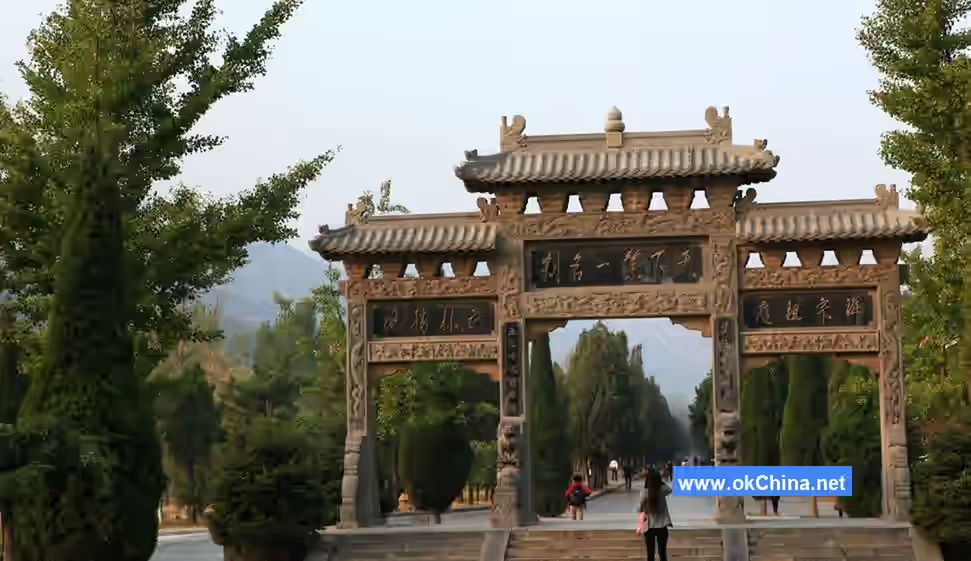
The Mountain Gate is the main entrance of Shaolin Temple, built in the 13th year of the Yongzheng reign of the Qing Dynasty (1735) and renovated in 1974. The horizontal plaque above the gate bears the three large characters "Shaolin Temple" inscribed by Emperor Kangxi himself. In the center above the plaque is carved the six-character imperial seal "Kangxi Yubi Zhi Bao" (Treasure of Emperor Kangxi's Imperial Brush). In front of the gate stands a pair of stone lions, male and female facing each other, carved during the Qing Dynasty. On the east and west sides of the splayed walls flanking the gate stand two stone memorial archways symmetrically. The outer horizontal inscription on the east archway reads "Zuyuan Diben" (Ancestral Source, True Foundation), and the inner one reads "Batuo Kaichuang" (Founded by Batuo). The inner horizontal inscription on the west archway reads "Dacheng Shengdi" (Sacred Land of Mahayana), and the outer one reads "Songshao Chanlin" (Chan Forest of Songshan and Shaoshi). The main gate itself is a single-eave hip-and-gable roof building with three bays, situated on a two-meter-high brick platform, flanked by side gates with flush gable roofs and splayed walls.
3.2 Path
Beyond the Mountain Gate lies the path. Flanking the path is a forest of steles shaded by verdant pines and cypresses, hence called the Stele Forest. There are over 20 historical steles here, such as the "Memorial Stele for Zong Daochen's Return to the Mountain" and the "Stele of Chan Master Xixi." On the east side of the path is a long corridor housing more than 100 famous steles from the Tang to Qing dynasties, known as the Stele Corridor. The Hammer Spectrum Hall is located west of the Stele Forest inside the mountain gate, containing groups of clay and wood sculptures.
3.3 Heavenly King Hall
Passing through the path and the Stele Forest leads to the Heavenly King Hall, located at the end of the Stele Forest. It is named for enshrining the Four Heavenly Kings, symbolizing "favorable winds, harmonious relations, timely rain, and peace." The hall features red walls and green tiles, with painted bracket sets. Inside the gate, on either side of the screen, stands a statue of a Vajra guardian. This three-bay hall with double-eave hip-and-gable roof houses two mighty Vajra guardians outside and statues of the Four Heavenly Kings inside, imposing and majestic.
3.4 Mahavira Hall
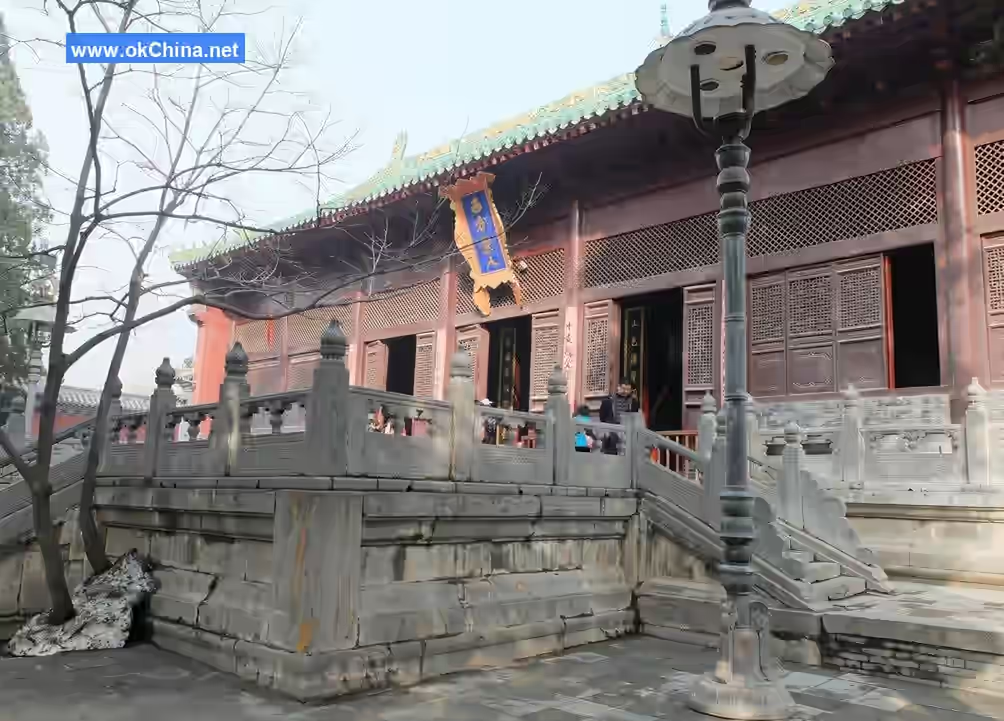
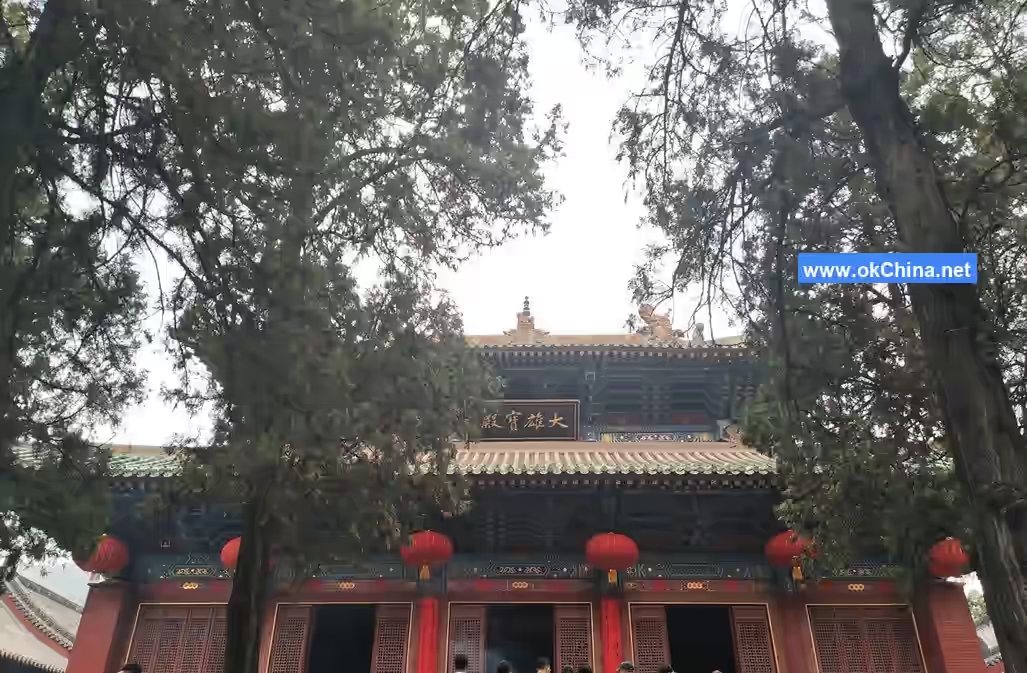
The Mahavira Hall is located behind the Heavenly King Hall. It is the central venue for Buddhist ceremonies in the temple, collectively known as the Three Great Buddha Halls along with the Heavenly King Hall and the Scripture Depository. The original structure was destroyed in the 17th year of the Republic of China (1928) and rebuilt in 1986. The hall enshrines statues of Sakyamuni, Bhaisajyaguru (Medicine Buddha), and Amitabha Buddha. In the center of the hall hangs a large plaque inscribed by Emperor Kangxi with the four characters "Baoshu Fanglian" (Precious Tree, Fragrant Lotus). Behind the screen wall is a statue of Guanyin (Avalokitesvara), with statues of the Eighteen Arhats on both sides. The hall enshrines statues of Sakyamuni, Amitabha, and Bhaisajyaguru. Behind the screen wall hangs a sculpted image of Guanyin, flanked by the Eighteen Arhats. The hall east of the Mahavira Hall is the Kinnara Hall, rebuilt in 1982.
3.5 Scripture Depository
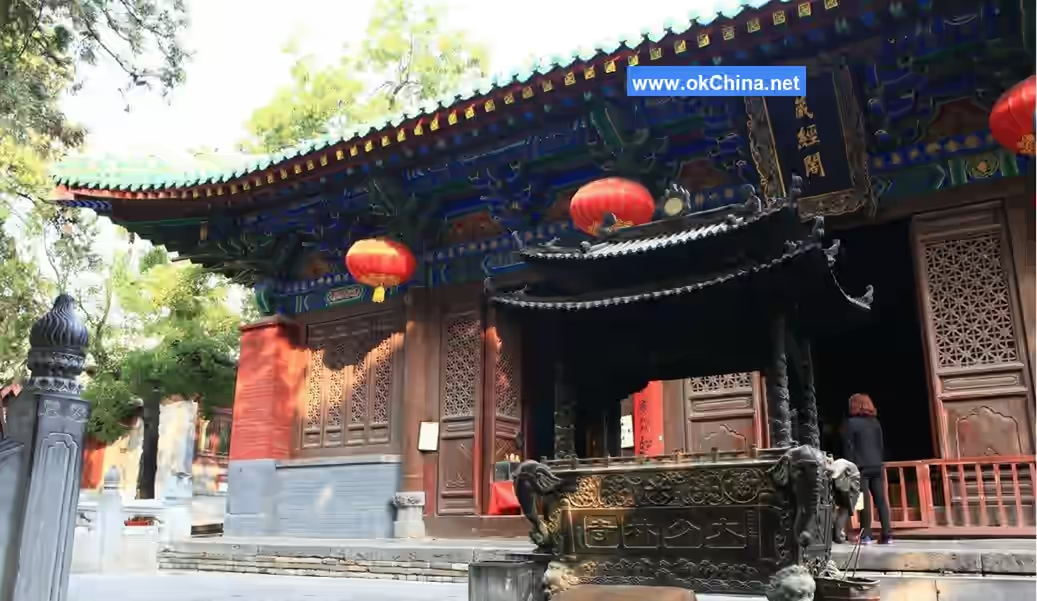
The Scripture Depository is located behind the Mahavira Hall. Also known as the Dharma Hall, it was built in the Ming Dynasty, destroyed in the 17th year of the Republic of China (1928), and rebuilt in 1994. It is where the monks store scriptures and expound the Dharma. The Scripture Depository houses eight million volumes of scriptures. It enshrines a white marble reclining Buddha statue donated in 1996 by a Burmese disciple of Shaolin Temple. Below the platform in front of the Scripture Depository is a large iron cauldron cast during the Wanli era of the Ming Dynasty, used by Shaolin monks for cooking at that time. Southeast of the Scripture Depository is the Meditation Hall, where monks practice meditation. Opposite it, the West Meditation Hall is the reception room for guests.
3.6 Six Patriarchs Hall
West of the Mahavira Hall is the Six Patriarchs Hall. The main altar enshrines Mahasthamaprapta, Manjusri, Avalokitesvara, Samantabhadra, and Ksitigarbha Bodhisattvas. The side altars enshrine the First Patriarch Bodhidharma, Second Patriarch Huike, Third Patriarch Sengcan, Fourth Patriarch Daoxin, Fifth Patriarch Hongren, and Sixth Patriarch Huineng of Chan Buddhism, collectively known as the "Six Patriarchs Paying Homage to Guanyin." The west wall of the hall features a large color sculpture depicting "Bodhidharma Returning West with One Shoe." In the path in front of the hall is a large iron bell cast during the Wanli era of the Ming Dynasty, weighing approximately 650 kilograms.
3.7 Bell Tower and Drum Tower
The Bell Tower and Drum Tower are situated on either side of the Mahavira Hall, with the Bell Tower on the east and the Drum Tower on the west. Both towers have four stories, ingeniously designed, towering, and majestic, considered treasures in Chinese architectural history. The original structures were destroyed in the 17th year of the Republic of China (1928). Later, in 1994 and 1996, the local government rebuilt them according to their original appearance.
"Morning bell and evening drum" served as signals for the monks' daily routines and Buddhist activities. The stele in front of the Bell Tower is the "Imperial Stele of Songyue Shaolin Temple," commonly known as the "Li Shimin Stele," erected in the 16th year of the Kaiyuan era of Emperor Xuanzong of Tang (728 AD). The front side contains an edict from Li Shimin (Emperor Taizong of Tang) to the abbot and others of Shaolin Temple, commending the Shaolin monks for their military service in helping the Tang pacify Wang Shichong. The fifth line from the right bears Li Shimin's personal cursive signature "Shimin." The inscription "Taizong Wen Huangdi Yushu" (Imperial Writing of Emperor Taizong the Cultured) was written by Emperor Xuanzong Li Longji. The back side is inscribed with Li Shimin's "Imperial Stele Inscription Bestowing the Bigu Manor to Shaolin Temple," which recounts the story of the thirteen staff-wielding monks rescuing the Prince of Qin (the future Emperor Taizong). This also served as the historical basis for the film "Shaolin Temple."
3.8 Bodhidharma Pavilion
Bodhidharma Pavilion, also known as the Standing in Snow Pavilion, was built in the Ming Dynasty and renovated in 1980. Legend has it that this is where the Second Patriarch Huike stood in the snow, severing his arm to seek the Dharma from Patriarch Bodhidharma. The shrine inside the hall currently houses a bronze seated statue of Patriarch Bodhidharma, cast in the 10th year of the Jiajing era of the Ming Dynasty (1531). Flanking it are statues of the Second Patriarch Huike, Third Patriarch Sengcan, Fourth Patriarch Daoxin, and Fifth Patriarch Hongren. The plaque hanging above the shrine, inscribed with the four characters "Xue Yin Xin Zhu" (Snow Imprints the Heart Pearl), was personally written by Emperor Qianlong of the Qing Dynasty, with vigorous and bold calligraphy. This hall is now used by the monks for daily Buddhist services. The East Side Hall, located west of the Bodhidharma Pavilion, was rebuilt in 1983. It contains a stone statue of Amitabha Buddha and the "Bodhidharma Facing the Wall Shadow Stone."
3.9 Thousand Buddha Hall
The Thousand Buddha Hall, located behind the Standing in Snow Pavilion, is also known as the Vairocana Hall. It is the last main hall in the temple compound. The murals inside this hall are very famous and are treasures among Shaolin Temple's murals. The back wall and the east and west walls are painted with colorful murals. The most famous ones are "Thirteen Staff-Wielding Monks Rescuing the Tang Emperor" and "Five Hundred Arhats and Vairocana." They are brightly colored, harmoniously composed, with flowing robes, showcasing the high standard of Tang Dynasty murals. The center of the hall also enshrines a bronze statue of Vairocana Buddha and a white jade statue of Sakyamuni. Covering an area of several hundred square meters, it is the largest existing hall in the temple. Additionally, east of the Thousand Buddha Hall is the White-Robed Guanyin Hall, and west is the Ksitigarbha Hall.
3.10 Abbot's Quarters
The Abbot's Quarters are where the abbot of the temple lives and conducts affairs. Emperor Qianlong once crossed the Luo River westward to Shaolin Temple and stayed here, composing a poem: "Tomorrow I shall gaze upon the Central Sacred Mountain (Songshan), tonight I lodge at Shaolin." On September 30th, the 15th year of the Qianlong era (1750), when Emperor Gaozong of Qing (Qianlong) visited Shaolin Temple, he used the Abbot's Quarters as his temporary palace, hence it is also called the "Dragon Court." The initial construction likely dates to the early Ming Dynasty. After maintenance through successive dynasties, the existing structure is a relic from the Qing Dynasty.
Currently, the center of the room displays a chicken-blood stone relief titled "Buddha Preaching the Dharma," presented by devotees in 1995 for the 1500th anniversary of Shaolin Temple's founding. On the inner side of the north wall is placed the lineage chart of Shaolin Temple's successive generations. On the east side is placed a bronze statue of Maitreya Buddha. The walls hang paintings such as "Picture of the Eight Great Disciples of Buddhism" and "Bodhidharma Crossing the River on a Reed." The room also contains a bronze statue of Bodhidharma presented by Japan in 1980.
3.11 Pagoda Forest
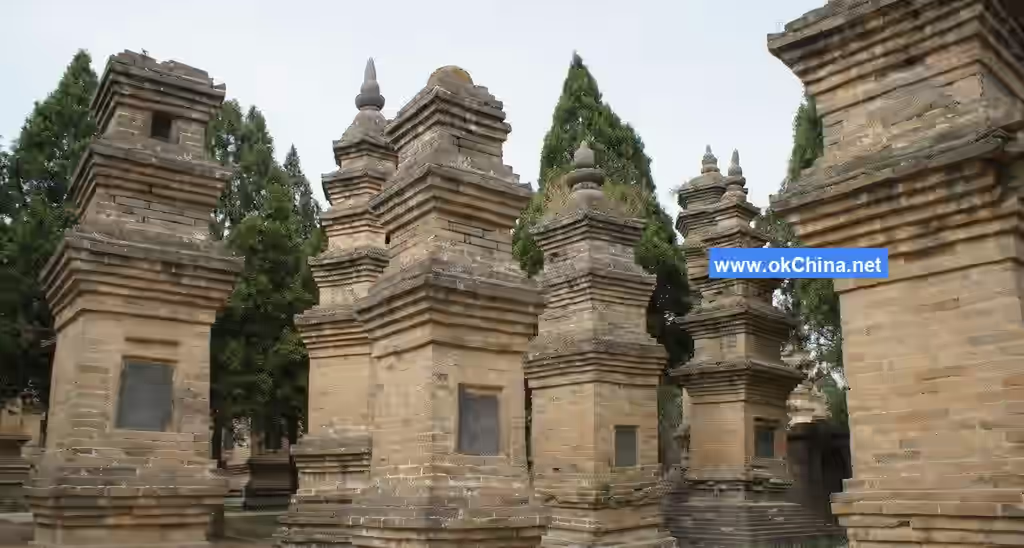
The Pagoda Forest is located at the foot of a small hill about 300 meters west of Shaolin Temple, covering an area of approximately 20,000 square meters. It contains 231 brick and stone pagodas from the Tang, Song, Jin, Yuan, Ming, Qing dynasties, and modern times. This is the cemetery where generations of eminent Shaolin monks rest. Currently, there are over 240 brick and stone tomb pagodas from the Tang to Qing dynasties. In 1996, the Shaolin Temple Pagoda Forest and the First Patriarch's Hut were designated as National Key Cultural Relics Protection Units. Because the pagodas are numerous, varying in size, height, thickness, and form, and arranged somewhat haphazardly, resembling a dense forest, it is called the Pagoda Forest.### 3.12 Chuzu Nunnery Chuzu Nunnery, located on a small hill at the foot of the Wuru Peak, about 1.3 kilometers from Shaolin Temple, is a commemorative structure built by people of the Song Dynasty in honor of Bodhidharma, the "First Patriarch of Zen Buddhism." As Bodhidharma often traveled and taught between Songshan and Luoyang, and his primary method of meditation was wall-facing silent sitting, this nunnery is also known as "Bodhidharma's Wall-Facing Nunnery." During the Song Dynasty, a "Wall-Facing Pagoda" was built at Chuzu Nunnery; the pagoda was destroyed, but its inscribed plaque remains. The stone plaque inscribed with "Wall-Facing Pagoda" by Cai Jing is now preserved within the temple, along with over forty ancient steles. From 1983 to 1986, during a comprehensive renovation of Chuzu Nunnery, a perimeter wall of over two hundred meters was constructed, restoring the complete courtyard. The current structures in the nunnery include the Mountain Gate, the Main Hall, the Wall-Facing Pavilion, and the Thousand Buddha Pavilion.
3.13 Bodhidharma Cave
On the upper part of the central peak of Wuru Peak behind Shaolin Temple, there is a natural stone cave known as Bodhidharma Cave, where the Venerable Bodhidharma faced the wall in meditation for nine years. The First Patriarch of Zen, Bodhidharma, sat in silent meditation facing the wall in this cave from 527 to 536 AD for a total of nine years. The cave faces southwest, with its entrance arched by bluestone blocks. It is about seven meters deep and over three meters high and wide. Inside the cave, on a platform, there are three stone statues: Bodhidharma seated in the center, flanked by his disciples.
According to the Qing Dynasty text Shuo Song, originally, there was a small stone pagoda above the left side of the cave, which has long been destroyed. On the eastern wall inside the cave, the characters "Ben Lai Mian Mu" (Original Face) are inscribed. On the stone cliff to the west outside the cave, the four large characters "Mian Bi Dong Tian" (Wall-Facing Cave Heaven) are carved.
3.14 Shaolin Yonghua Hall
Shaolin Yonghua Hall was founded in the twentieth year of the Wanli era of the Ming Dynasty (1592 AD). Its founding patriarch was the Chan Master Wuyan Zhengdao, a monk of the orthodox Caodong lineage of the ancestral Shaolin Temple, appointed by the Ming court as the 26th-generation lineage successor and abbot. Renowned for his mastery of Chan, martial arts, and medicine, he was praised as an outstanding monk among the clergy. The original site was on the south bank of the Shaoxi River at the northern foot of Shaoshi Mountain, facing the ancestral Shaolin Temple's permanent compound across the river on the north bank. Therefore, Shaolin disciples have referred to it as the Shaolin Southern Courtyard since ancient times. At its founding, not only were all the halls and buildings funded by the Ming imperial Prince of Zhou's mansion, but also eight Ming imperial princes, with the dharma names Yuanbao, Yuanhui, Yuanlin, Yuanxing, Yuanxi, Yuanming, Yuanliang, and Yuanpu, took monastic vows and became monks in this hall. Consequently, local laypeople called it the Zhou Mansion Nunnery or the Eight Princes' Courtyard. With the support of the Ming imperial family, it gradually evolved into the sole imperial gate hall of the Ming Dynasty within the ancestral Shaolin Temple that could transmit the orthodox Caodong lineage, select and appoint the abbot of Shaolin Temple, impart knowledge of Chan, martial arts, medicine, and arts, and command the Chan-martial-medicine monks of Shaolin. Hence the saying: "All martial arts under heaven originate from Shaolin, and Shaolin's skill lies in Yonghua Hall."
4. Cultural Value
4.1 Pagoda Forest
About three hundred meters west of Shaolin Temple, at the foot of Shaoshi Mountain, lies the largest pagoda forest in China. Bordered by the Shaoxi River to the south, backed by the Dragon-Tiger Ridge, connected to the Funiu Mountain Range to the east, and leaning against the Dangyang Slope to the west, it is lush with trees and boasts a beautiful, serene environment. This is the famous Shaolin Pagoda Forest, the burial ground for generations of Shaolin eminent monks and abbots.
The forest currently contains 256 pagodas of various types from the Tang Dynasty to the present, including 47 Yuan Dynasty pagodas, second only in number to Ming Dynasty pagodas. It is said that the existing pagodas are only half of the original number, with the rest destroyed by mountain floods over the years. The 47 Yuan Dynasty pagodas here, with their architectural styles and brick/stone carvings, provide valuable physical artifacts for studying Yuan Dynasty architectural art. More precious is that nearly every pagoda retains its inscription, offering invaluable material for researching Shaolin Temple's history and Yuan Dynasty culture. Several important Yuan pagodas, such as the Yugong Pagoda, the Elder Yueyan's Longevity Pagoda, and the Elder Huanyuan Pagoda, are located in the center of the forest.
Slightly east of the center of the Pagoda Forest stands the "Elder Ju'an's Spirit Pagoda," built in the fifth year of the Zhizheng era (1339 AD). It is a single-story, multi-eaved brick pagoda with five layers of stacked eaves, featuring an elegant design. Embedded in the rear wall of the pagoda is a stone stele inscribed with "Stele Inscription and Narrative for the Pagoda of the Great Chan Master Zhaogong, the Eminent Teacher of Manifest Teaching and Perfect Penetration." Both the text and calligraphy of the inscription were done by "Shaoyuan, the Japanese monk who was the Chief Seat of this mountain." Chan Master Fazhao, also known as Ju'an, was granted the title "Great Chan Master of Manifest Teaching and Perfect Penetration" by the imperial court. He was invited to serve as the abbot of Shaolin Temple in the second year of the Zhizhi era (1322 AD) and passed away the following year. Sixteen years later, his disciple Zizhen requested Shaoyuan, the Japanese monk then serving as Chief Seat of the mountain, to compose the text and inscribe it, leaving behind this pagoda inscription.
As the inscription is from the hand of a Japanese eminent monk and exhibits considerable literary and calligraphic excellence, it is particularly precious.
The Shaolin Temple Pagoda Forest has been selected by the World Record Association as the world's largest ancient pagoda architectural complex, holding the world record for ancient pagoda groups.
4.2 Stone Carvings and Inscriptions
The temple preserves many stone steles and inscriptions from the Tang Dynasty onward. Important ones include the Stele of Emperor Taizong of Tang Bestowing Teachings upon Shaolin, the Stele of Empress Wu Zetian's Poem and Calligraphy, the Ordination Platform Inscription, the Shaolin Temple Stele, the Stele Inscription for Chan Master Lingyun's Pagoda, the Stele for Monk Yugong, the Stele for Chan Master Xi'an's Virtuous Conduct, and the recently erected Monument for the Great Japanese Monk Sō Dōshin.
About one kilometer north of the Pagoda Forest is Chuzu Nunnery. It is the oldest surviving wooden structure among the cultural relics in Henan Province, built to commemorate Bodhidharma's wall-facing. The eaves columns, interior columns, carved stones beneath the walls, and the area around the altar inside the main hall are adorned with relief carvings. The main hall's shrine houses a statue of Patriarch Bodhidharma.
On Wuru Peak, Bodhidharma Cave is about 7 meters deep and over 3 meters high and wide. On the northern lintel, there is an inscription by Yandu Jinxi: "Dong Lai Zhao Ji" (Traces of the Eastern Arrival). On the stone wall inside the cave, there remains a recess about 1 meter high and 60 centimeters wide, which is the trace left from the excavation of Bodhidharma's wall-facing stone. Inside, four stone statues of Bodhidharma and his disciples are enshrined. Outside the cave, there is a stone memorial archway built in the Jia Chen year of the Wanli era of the Ming Dynasty (1604 AD). It is a two-pillar stone structure, with the southern lintel inscribed by Hu Bin: "Mo Xuan Chu" (Place of Silent Profundity). Legend says Bodhidharma faced the wall here for ten years. Due to his profound skill, the shape of his shadow was imprinted on the mountain rock, leaving behind the highly legendary "Bodhidharma Shadow Stone."
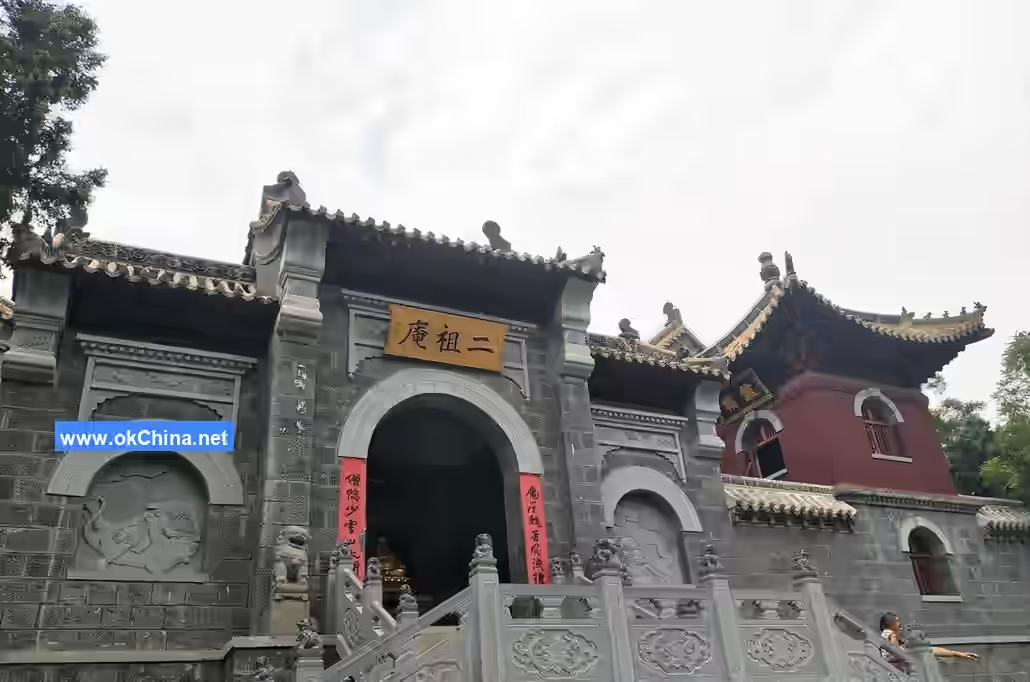
The Erzu Nunnery is located on the summit of Boyu Peak, southwest of Shaolin Temple. Legend has it that Huike, the Second Patriarch of Zen, after learning Buddhism from Bodhidharma, having his arm severed, and receiving the true transmission of the robe and bowl, convalesced here. In front of the hall are four wells, said to have been dug by Huike. These four wells are very close to each other, but the taste of their water differs; they are named "Zhuoxi Wells," and locals also call them the "Bitter, Spicy, Sour, and Sweet Four-Well."
4.3 Internal and External Stele Inscriptions
Shaolin Temple has numerous internal and external stele inscriptions. Among them, Yuan Dynasty inscriptions are not only considerable in number but also mostly possess precious cultural value. They are rare physical documents for studying Yuan Dynasty religion, politics, history, calligraphic art, and Sino-foreign exchanges. In the "Ciyun Tang" (Hall of Compassionate Clouds) stele corridor on the right side of Shaolin Temple's walkway, remarkable steles and precious inscriptions abound. Among them are two large steles standing majestically facing south. The one on the west is the "Stele for the Great Yuan Bestowed Grand Minister of Works, Pillar of State, Posthumously Enfeoffed Duke of Jin, Great Chan Master Yugong, Founder and Illuminator of the Orthodox Dharma of Shaolin" (Note: Yugong refers to Master Fuyu). This stele opens the first page of the history of the great Shaolin Chan Temple in the Yuan Dynasty. In terms of exquisite calligraphy, the Narrative Stele for the Great Yuan Reconstruction of the Liang Dynasty Patriarch Bodhidharma of the Songshan Shaolin Chan Temple in Henan stands out. This stele was erected in the seventh year of the Zhizheng era (1347 AD). The stele text is 3.23 meters high and 1.38 meters wide, composed in the fifth year of the Zhizheng era (1339 AD) by the literatus Ouyang Xuan of the time. The calligraphy for the stele text was done by the great Yuan Dynasty calligrapher Kangli Naonao. The Narrative Stele for the Great Yuan Reconstruction of the Liang Dynasty Patriarch Bodhidharma of the Songshan Shaolin Chan Temple in Henan not only has high calligraphic artistic value but also certain documentary value.
4.4 Shaolin Kung Fu
Shaolin Kung Fu is the most extensive school within Chinese martial arts, with over seven hundred sets of techniques. Because it integrates Chan into martial arts, practicing martial arts to cultivate Chan, it is also known as "Martial Chan." The term "Shaolin" has become synonymous with traditional Chinese martial arts. Shaolin Kung Fu includes the Seventy-Two Unique Skills, Shaolin boxing, Shaolin staff techniques, Shaolin spear techniques, Shaolin broadsword techniques, and Shaolin sword techniques.
Besides the aforementioned broadsword, spear, sword, and staff, Shaolin martial arts weapons also include the trident (also called large rake in the south), the convenience shovel, the linked three rings, the Emei piercers, the crescent moon shovel, the halberd-sickle, the embroidered rings, the fangtian painted halberd, paired hammers, large axe, paired axes, three-section staff, shaozi staff, seven-section whip, nine-section whip, paired whips, etc. Shaolin sets include empty hands against broadsword, empty hands against spear, single broadsword against spear, empty hands against dagger, staff piercing spear, grass sickle matching spear, shaozi staff matching spear, etc. Shaolin school combat sparring techniques include: Flash-Dodge Body-Shifting Hold, Mind-Intent Hold, Tiger Pounce Hold, Wandering Dragon Flying Step, Red Phoenix Facing the Sun, Cross Random Holds, Laozi Embracing the Gourd, Immortal Plucking the Eggplant, Peeking at the Peach Under the Leaf, Chopping Melon from Behind the Head, Black Tiger Steals the Heart, Old Monkey Moves the Branch, Golden Silk Entangling Method, Iron Fan at the Gate, Stepping Cannon, Little Ghost Gripping the Spear, etc. Qigong is a major category of Shaolin Kung Fu. Qigong methods流传 at Shaolin Temple include "Yijin Jing" (Muscle/Tendon Changing Classic), "Xiao Wu Gong" (Minor Martial Art), "Zhan Zhuang Gong" (Standing Post Qigong), "Yishou Yinyang Fa" (Longevity Yin-Yang Method), "Hunyuan Yiqi Gong" (Primordial Unity Qigong), etc. There are various methods for training soft and hard skills, including bone dislocation techniques, joint locking techniques, secret acupoint striking methods, short-range striking techniques, various medicinal application methods, and treatment methods.
The essence of Shaolin Kung Fu is the unity of Chan and martial arts. Shaolin Temple is the ancestral courtyard of Buddhist Chan. Chan emphasizes realizing one's mind and seeing one's nature, attaining sudden enlightenment and Buddhahood. In the eyes of Buddhism, practicing Chan is the true path. Shaolin Kung Fu inheritor Shi Yanmian said: "Fist and bravery are merely minor skills; monks merely use martial arts practice to achieve the goal of collecting the mind, restraining nature, eliminating distractions, and entering samadhi. At the same time, it also has the effects of strengthening the body and prolonging life."
5. Development History
Shaolin Temple was founded in the twentieth year of the Taihe era of the Northern Wei Dynasty (496 AD), established by the Indian monk Batuo who settled and propagated Buddhism here. It experienced several cycles of prosperity and decline afterward. In the early Tang Dynasty, Shaolin Temple gradually flourished, reaching its peak during the Ming Dynasty. After the Qing Dynasty, Shaolin Temple gradually declined.
In the seventeenth year of the Republic of China (1928), Shi Yousan set his troops to set fire, reducing almost all of Shaolin Temple's main structures, such as the Mahavira Hall, Dharma Hall, Bell Tower, Drum Tower, Heavenly King Hall, Sixth Patriarch Hall, and Kinnara Hall, to ashes, with the exception of the Lixue Pavilion, Thousand Buddha Hall, and Mountain Gate.
Starting in the 1950s, despite the country's difficult circumstances, the government allocated special funds for the renovation of Shaolin Temple, but its former grandeur had long vanished.
During the Cultural Revolution, damage to Shaolin Temple further intensified.In 1981, restoration and reconstruction took place on the original sites of the East and West Meditation Halls. Both were rebuilt as five-bay-wide, three-bay-deep structures with front corridors and flush gable roofs. The original East Meditation Hall was renamed the Incense Hall, while the West Meditation Hall was redesignated as the Guest Hall.
In 2003, Dengfeng City resolved to carry out demolition and renovation of the Shaolin scenic area, planning to remove all residential houses, commercial shops, and other buildings within the core zone that did not comply with the scenic area's master plan.
Comments
Post a Comment