
Solitary Beauty Peak & Jingjiang Prince City
1. Introduction
The Solitary Beauty Peak & Jingjiang Prince City Scenic Area, abbreviated as the Solitary Beauty Peak & Prince City Scenic Area, is a tourist attraction located in Xiufeng District, Guilin City, Guangxi Zhuang Autonomous Region, covering an area of 283 mu.
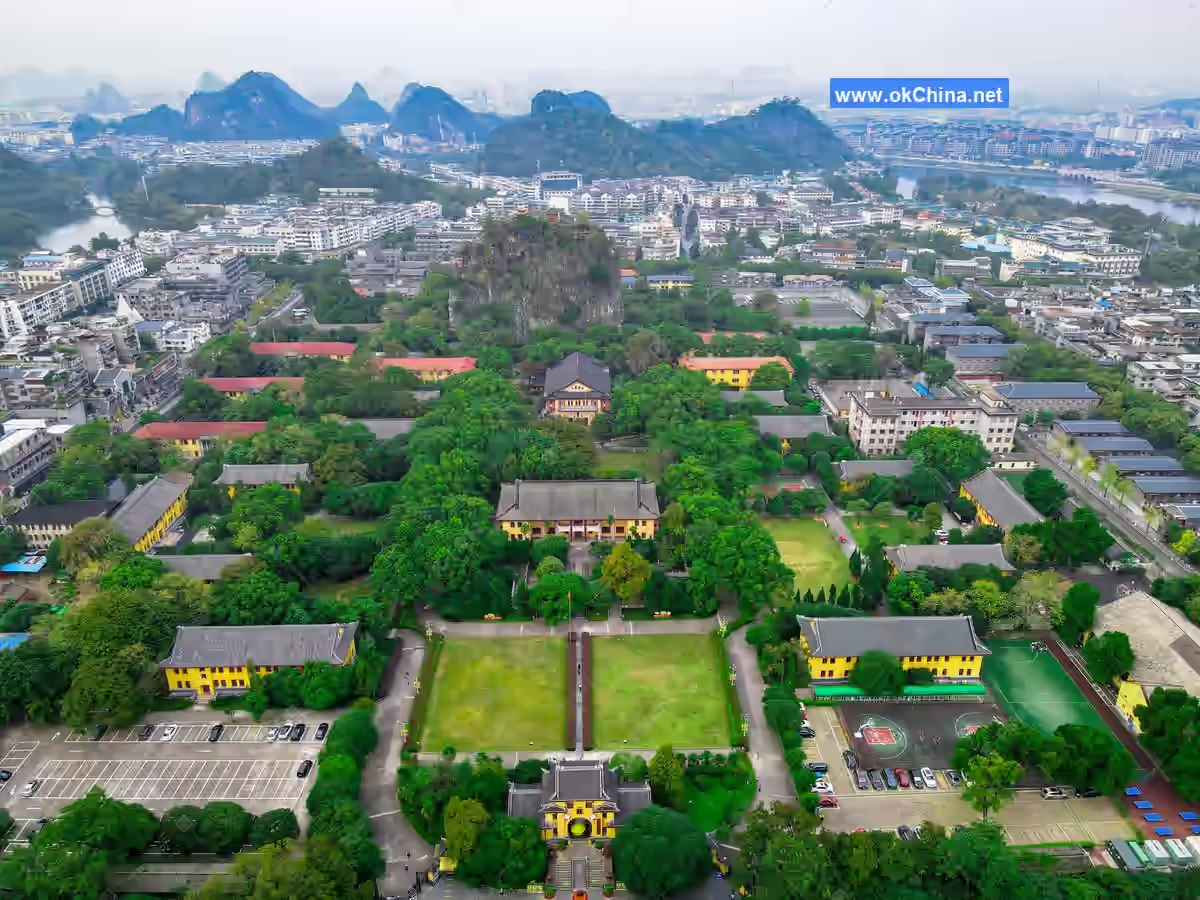
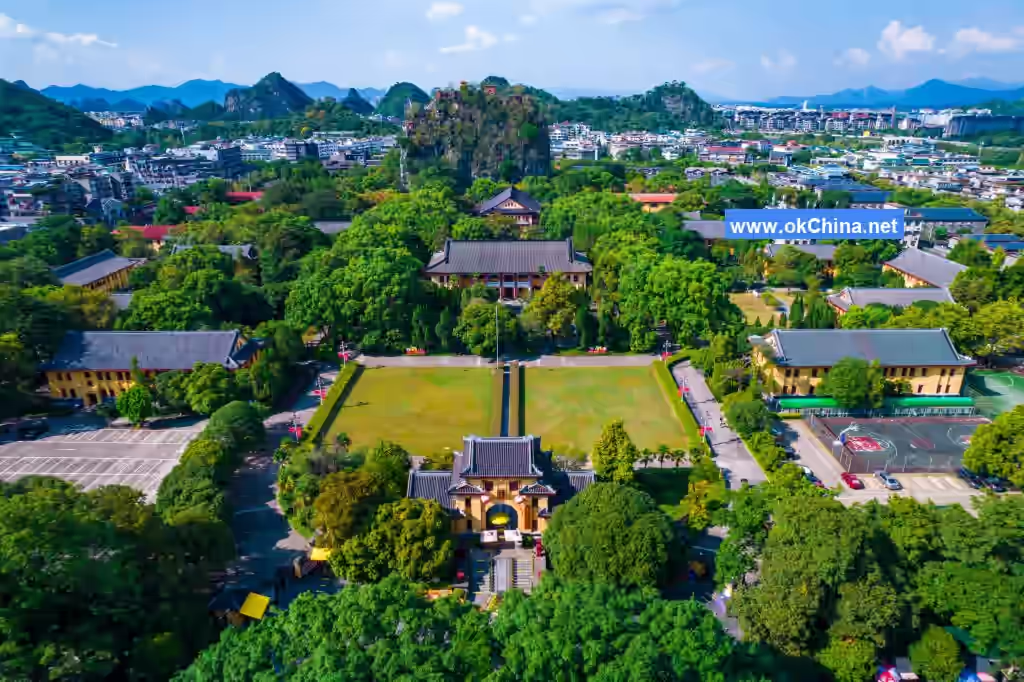
In the early Ming Dynasty, Prince Jingjiang Zhu Shouqian built a princely mansion at the foot of Solitary Beauty Peak. The mansion measured 555 meters from north to south and 340 meters from east to west, with a city wall 5.1 meters high. It was converted into an imperial examination hall during the Qing Dynasty. During the Republican period, the mansion served as the office of the Guangxi Provincial Government. After the founding of New China, the mansion eventually became the Wangcheng Campus of Guangxi Normal University. The mansion suffered two fires, destroying all wooden structures. The existing buildings were reconstructed during the Republican period, but the foundations and layout retain the original appearance of the Ming Dynasty princely mansion. The scenic area features attractions such as the city wall with its four gates, the Chengyun Gate, the Chengyun Hall with its stone-carved balustrades and platform base, the National Studies Hall, Solitary Beauty Peak, Crescent Moon Pool, and the Imperial Examination Hall.
2. Geographic Information
2.1 Location and Area
The Solitary Beauty Peak & Prince City Scenic Area is located at No. 1 Wangcheng Road, Xiufeng District, Guilin City, Guangxi Zhuang Autonomous Region, covering an area of 283 mu.
2.2 Climate Characteristics
Guilin City, where the Solitary Beauty Peak & Prince City Scenic Area is located, lies at a low latitude and belongs to the subtropical monsoon climate zone. The local climate is mild with abundant rainfall, long frost-free periods, ample sunshine, and rich heat resources. Summers are long and winters are short, with four distinct seasons. Rainfall and heat are generally concurrent, providing relatively favorable climatic conditions. The Tang Dynasty poet Du Fu praised Guilin's climate with the verse: "All the Five Ridges are sweltering, yet Guilin alone is pleasant." Guilin experiences little snow in winter and flowers bloom throughout the seasons. The average annual temperature (1981-2010) is close to 19.1°C. July and August are the hottest months, with average temperatures around 28°C, while January and February are the coldest, with average temperatures around 9°C. The minimum temperature occasionally drops below 0°C. The average annual number of precipitation days is 166, with the longest continuous precipitation period lasting 30 days. The average annual rainfall is 1887.6 mm, and the average annual relative humidity is 76%. The prevailing wind direction throughout the year is northerly, with an average wind speed of 2.2-2.7 m/s. The average annual sunshine duration is 1447.1 hours, and the average atmospheric pressure is 995.1 hPa.
3. Main Attractions
3.1 City Wall
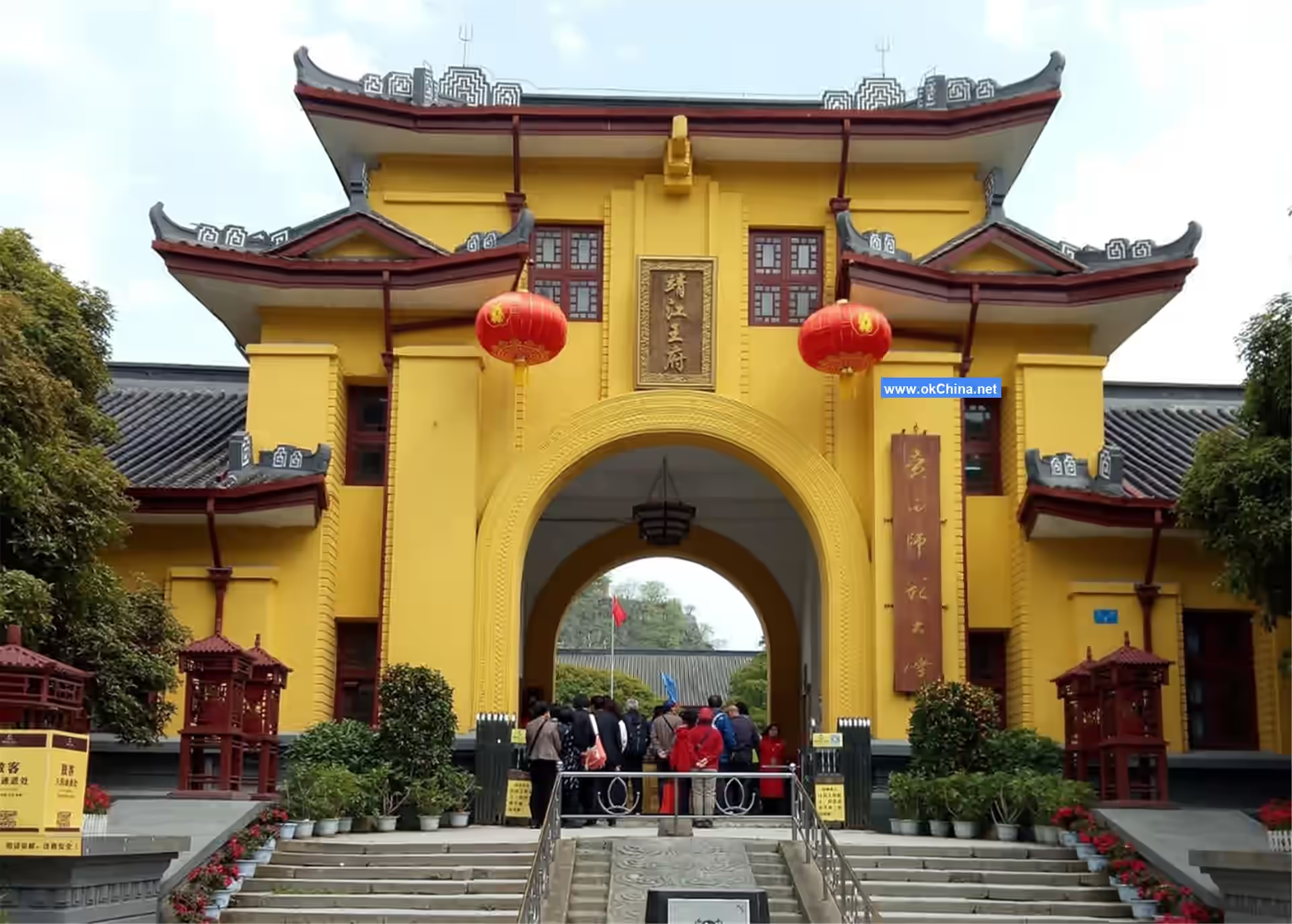
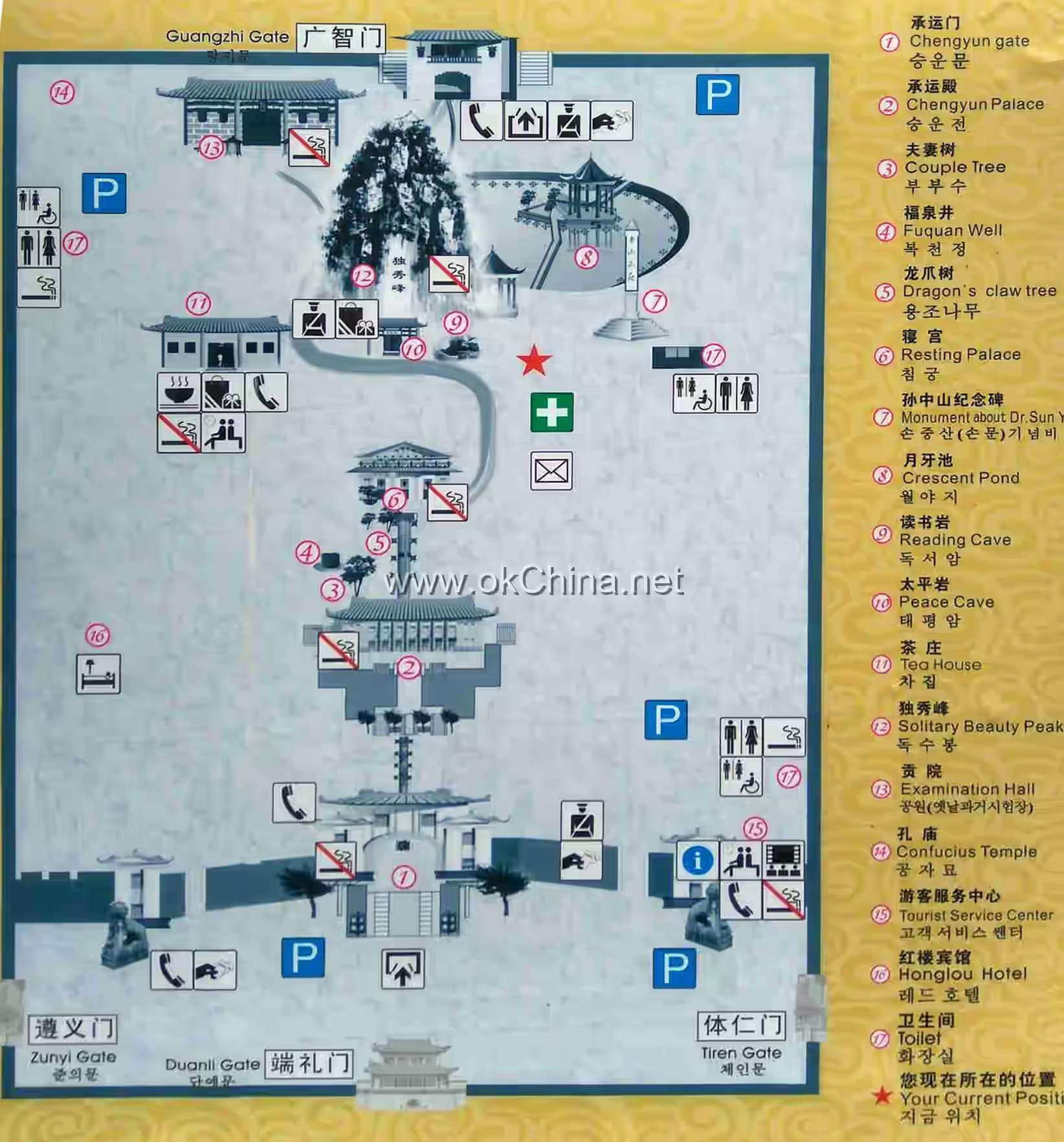
The Jingjiang Prince Mansion is surrounded by a city wall built with massive, square, and neatly cut bluestone blocks, forming a "city within a city" in Guilin, known as the Jingjiang Prince City. The Prince City faces south, with four gates: the south gate, also the main gate, called Duanli Gate (Zhengyang Gate); the east gate, called Tiren Gate (Donghua Gate); the west gate, called Zunyi Gate (Xihua Gate); and the north gate, the rear gate, called Guangzhi Gate (Hougong Gate). Stone memorial archways inscribed with "Top Three in the Imperial Examination" (Sanyuan Jidi), "Zhuangyuan (Top Scholar)" (Zhuangyuan Jidi), and "Bangyan (Second Place)" (Bangyan Jidi) are embedded above the Duanli, Tiren, and Zunyi Gates, respectively. The mansion's wall is about 500 meters deep from north to south, about 300 meters wide from east to west, and 7.9 meters high. The top of the wall has a road surface 5 meters wide, and the total perimeter of the wall is 1745 meters.
3.1.1 Guangzhi Gate
The Guangzhi Gate's wall is 33 meters long from east to west, 21.5 meters thick from north to south, and 6.1 meters high. The outer wall is flush with the city wall, while the inner wall protrudes. Stairways are built on both sides of the inner wall. A gate tower originally stood on the wall, featuring a double-eave structure, but it has been destroyed. The gate passage was bombed and destroyed by Japanese aircraft during the War of Resistance against Japan and was rebuilt after the war.
3.1.2 Chengyun Gate
The Chengyun Gate is the main gate of the Jingjiang Prince Mansion, named after the phrase "By the Mandate of Heaven, the Emperor decrees." The Chengyun Gate has a five-bay facade and is a yellow pailou (decorated archway)-style structure. Its roof is a single-eave hip-and-gable style covered with green glazed tiles. A plaque inscribed with "Guangxi Normal University" hangs beside it, as it also serves as the main gate of the Wangcheng Campus of Guangxi Normal University.
3.2 Chengyun Hall
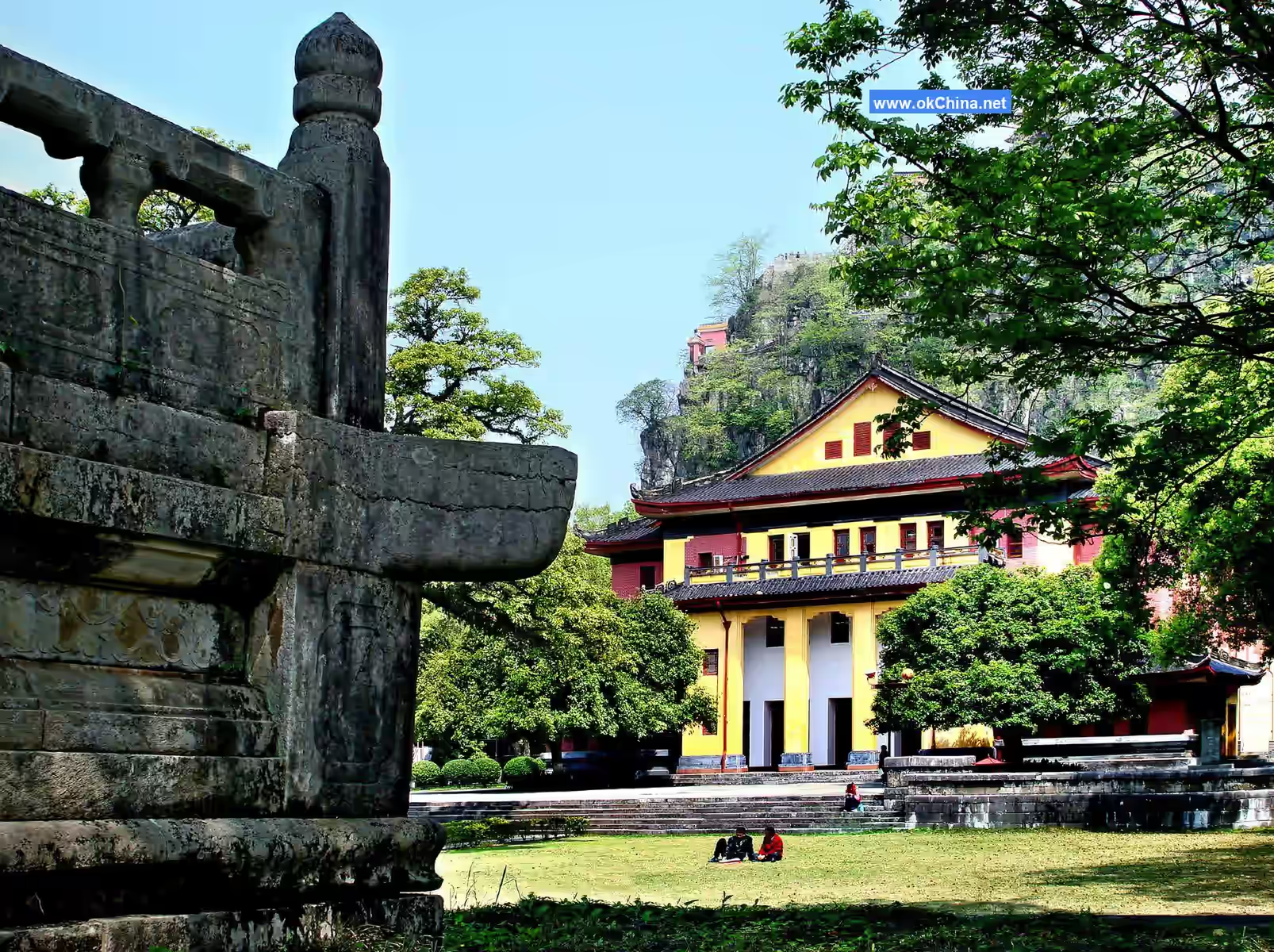
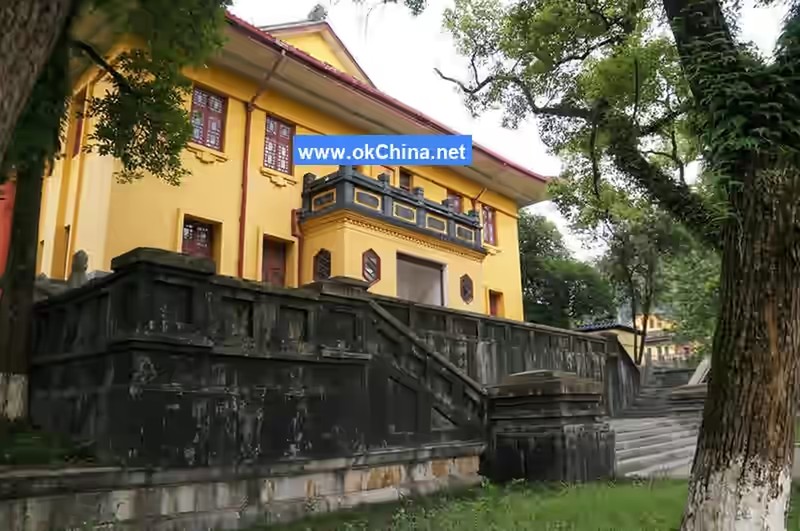
Since the late Ming Dynasty, the Chengyun Hall has been destroyed by war multiple times. Today, only the carved balustrades and platform base, the cloud-patterned jade steps, and the stone-paved path in front of the hall remain as relics from the Ming Dynasty. In 1944, during the Japanese invasion of Guangxi, all buildings within the Prince City were destroyed. In 1947, it was rebuilt as the office building for the Chairman of the Guangxi Provincial Government and has been preserved to this day. In 1954, when Guangxi Normal University moved into the Prince City, this building became the university's administrative office building.
3.3 Imperial Examination Hall (Gongyuan)
In 1652, the ninth year of the Shunzhi reign in the Qing Dynasty, Prince Xining Li Dingguo led Ming troops to capture Guilin. Kong Youde set fire to himself within the mansion, burning the Jingjiang Prince Mansion to ashes. Later, the Qing court established the Guangxi Imperial Examination Hall (Gongyuan) here to facilitate scholars from the region in taking imperial examinations and serving the country. The Gongyuan was the venue for provincial-level examinations, i.e., the place for selecting officials through examinations. "Gong" refers to scholars from various places coming here to take exams, as if presenting local specialties to the emperor. The Gongyuan originated in the Tang Dynasty. Currently, about sixty examination cells have been restored to their original appearance. At its peak, the Gongyuan had over 5,000 cells, indicating that although Guangxi was remote, education was highly valued among the people. Throughout the Qing Dynasty, a total of 112 regular and special examination sessions were held. Due to the resistance of the Southern Ming and later the Taiping Heavenly Kingdom, Guangxi, affected by warfare, only held 100 sessions. However, it produced over 590 jinshi (advanced scholars, 298 from Guilin) and 4 zhuangyuan (top scholars, all from Guilin). The number of zhuangyuan ranked fifth nationwide, including Chen Jichang, the last recipient of the "Top Three in the Imperial Examination" (Sanyuan Jidi) in imperial examination history. Notable figures who emerged from here include Chen Hongmou and Cen Chunxuan.
The Guangxi Gongyuan examination grounds consisted of multiple alleys. Each alley contained a corridor about 2 meters wide and over 30 meters long, with a wall on one side and over twenty flat-roofed examination cells lined up on the other. Each cell was about 1.5 meters wide, 2.2 meters high, and 1.5 meters deep. The interior had whitewashed walls on the left and right, a tiled roof above, and paved bricks below, with no door or curtain at the front. Each cell contained a flat bench and a flat table without drawers, accommodating one candidate who would take their assigned seat. Examiners patrolled the alleys periodically.
3.3.1 Confucian Temple
A place for provincial examination candidates in the Qing Dynasty to worship Confucius. It now houses an exhibition hall on the imperial examination culture and achievements of the Guangxi Gongyuan during the Qing Dynasty.
3.3.2 Fuquan Well
The Fuquan Well is located on the west side of the steps north of the Chengyun Hall. The well water is sweet, and the water level rarely dries up. "Quan" refers to the underground spring water, and "Fu" means bringing benefit to the people. It was dug in 1837, the 17th year of the Daoguang reign in the Qing Dynasty, to provide water for scholars taking exams in the Gongyuan. The well curb is engraved with two large seal script characters, "Fu Quan" (Blessing Spring), along with a record in clerical script by Xu Renhe, the prefect of Guilin: "In the autumn of Daoguang Dingyou (1837), Lord Liang from Fuzhou, while supervising the examinations, had a well dug to the west behind the Zhigong Hall, obtaining a spring below. All within the examination grounds drew from it. The significance of the well is to receive blessings, so it is respectfully named 'Fuquan' and inscribed. Recorded by Xu, administering affairs of Guilin Prefecture, Renhe." (Lord Liang refers to Liang Zhangju, then Governor of Guangxi.)
3.4 National Studies Hall
The site of the former bedchamber is now the National Studies Hall of the Wangcheng Campus of Guangxi Normal University. A monument marking the "Site of Sun Yat-sen's Headquarters" stands in front, commemorating Sun Yat-sen's establishment of the Northern Expedition headquarters here.
3.5 Solitary Beauty Peak
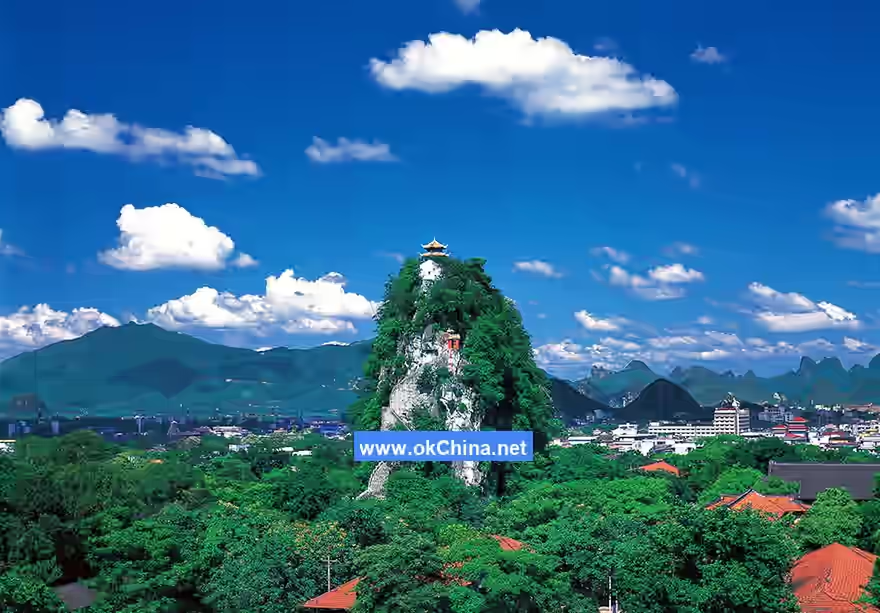
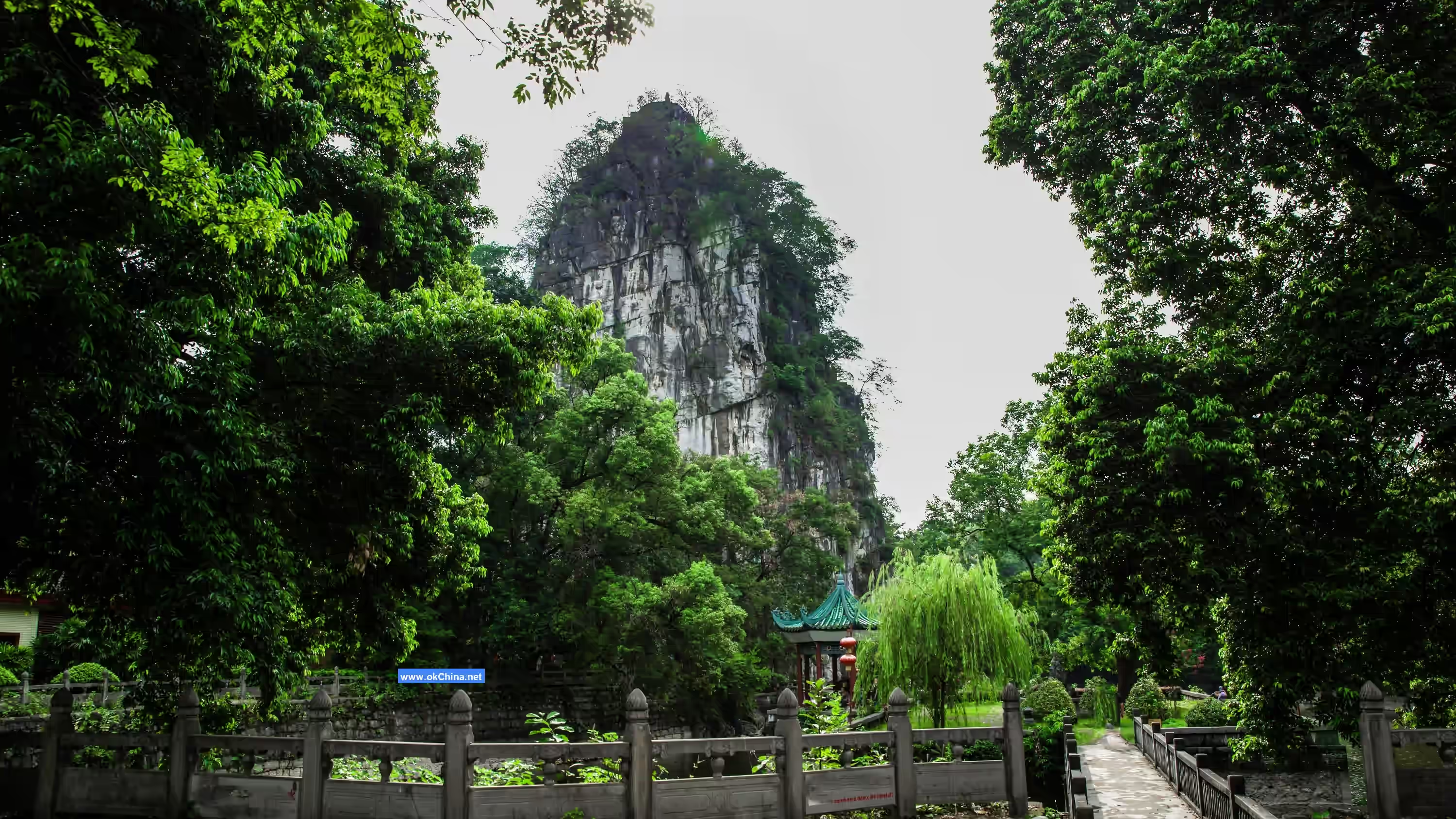
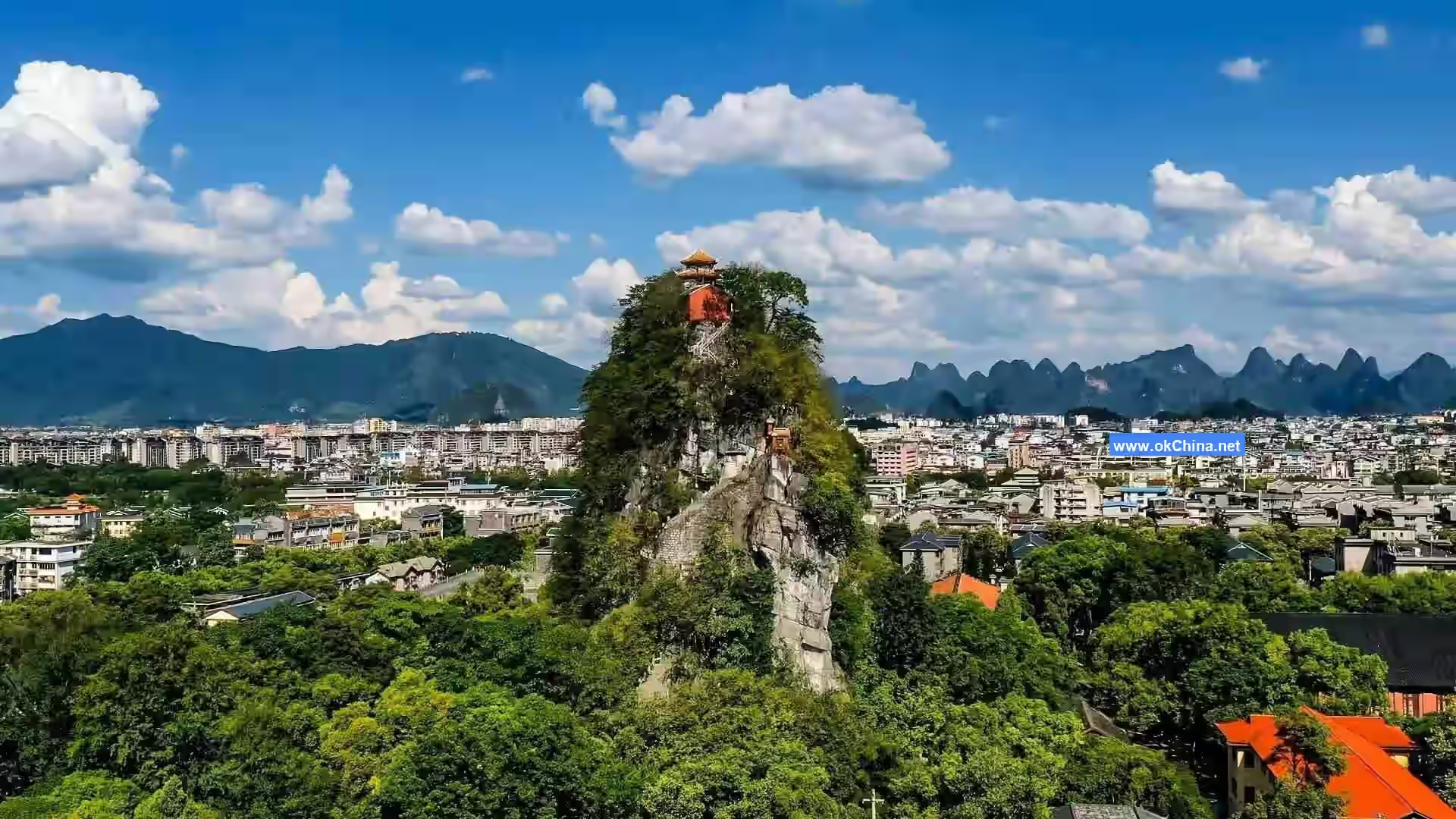
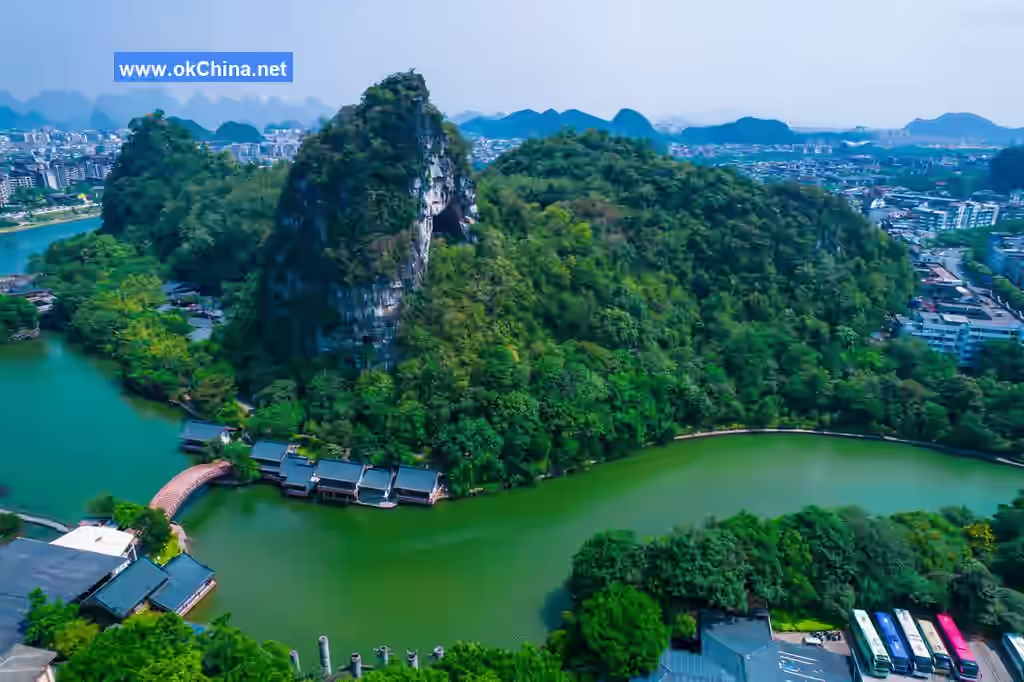
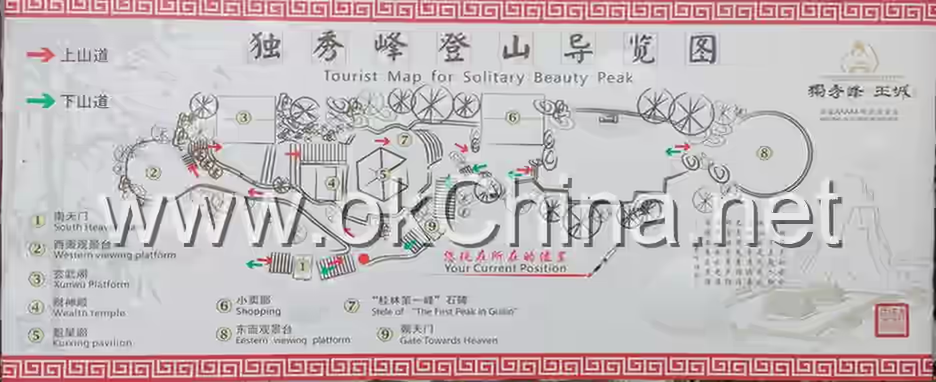
Solitary Beauty Peak is one of the landmarks of Guilin City. It has long enjoyed the reputation of "Pillar of the Southern Sky" and is historically known as the First Peak of Guilin. The peak rises abruptly, as if carved by a knife or axe, surrounded by other mountains yet standing alone with the dignity of an emperor. Climbing 306 steps leads to the summit, the best vantage point for a bird's-eye view of Guilin. Solitary Beauty Peak has an elevation of 216 meters, rising 66 meters above the plain. It is 1000 meters north of Diecai Hill and 500 meters east of Fubo Hill. Surrounded by mountains near and far, like ministers paying homage to a ruler, it creates the regal aura of "a solitary peak not keeping company with the masses," looking down upon the mountain ranges and被称为 "the head of the mountains, the king of the peaks." The cliff face is dotted with numerous carved inscriptions, among which the timeless phrase "Guilin's landscape is the finest under heaven" originates from here.
3.5.1 Solitary Beauty Pavilion
The Solitary Beauty Pavilion is located atop Solitary Beauty Peak. It is a two-story, red-pillared, hexagonal, double-eave, tile-roofed pavilion in antique style. It is 7 meters high, 4.8 meters long and wide each, covering an area of 23 square meters. The pillars feature openwork lattice windows, with double doors facing east and west. Beside it is another square pavilion, 6 meters high, 4.7 meters long and wide each, covering 22 square meters, originally used as an air raid alarm facility. In front of the pavilion is a 10-square-meter platform with railings, perched atop the cliff edge. From here, one can look out in all directions, with clouds beneath one's feet and stars before one's chest, offering a panoramic view of Guilin's extraordinary mountains and beautiful waters. The Solitary Beauty Peak garden also features attractions like the Reading Rock, Crescent Moon Pool, and Sun Yat-sen Memorial Pagoda. The Reading Rock is traditionally said to be where Yan Yanzhi, a literary figure of the Northern and Southern Dynasties, studied.
3.5.2 Taiping Cave
Located on the western foothills of Solitary Beauty Peak, originally named West Cave. It is 2.9 meters high, 4.25 meters wide, 31.5 meters long, covering an area of 140 square meters. It connects north to the Snow Cave. The cave once contained a portrait of Liu Haichan painted by Prince Gonghui Zhu Banning, commonly known as Liu Hai Cave. During the Jiajing reign of the Ming Dynasty (1522-1566), when it was redeveloped, a "Taiping Tongbao" coin was unearthed. Prince Jingjiang considered this an auspicious sign from the mountain spirit and thus named the cave "Taiping" (Great Peace), a name that has been used ever since. Taiping Cave has its own characteristics: the cave body resembles a spacious room with a very level floor. Stalactites hanging from the ceiling resemble neatly combed maiden's hair or colorful dragon scales, while strangely shaped sand and gravel glittering with gold and silver light dazzle the eyes. The Ming princes planted flowers and trees in front of the cave, built pagodas and nunneries, erected statues inside the cave, personally wrote "Record of Solitary Beauty Rock," and invited local officials for banquets and poetry compositions. Several poems by imperial clan members are carved on the cave walls. Inside the Taiping Cave at the foot of the peak is the world cultural wonder, the "Tai Sui" (Jupiter) cliff carving. Solitary Beauty Peak and the Crescent Moon Pool, one of Guilin's four famous pools, form a natural and harmonious pair, complementing each other beautifully, making it one of the Eight Ancient Scenes of Guilin. It was listed as a National Key Cultural Relics Protection Unit in 1996.#### 3.5.3 Snow Cave Located at the northwest foot of Duxiu Peak, the cave entrance faces the Crescent Pool. It is approximately 3 meters high, 5.6 meters wide, and 32 meters deep, covering an area of about 180 square meters. According to Chiya by Ming dynasty author Hu Lu: "The stalactites in Snow Cave are the most extraordinary." The cave walls are white, and the hanging stalactites are as pure as snow. The characters "Snow Cave" are carved at the entrance, with the Double Phoenix Stone beside it. Originally, there were Tang dynasty poetic inscriptions, but they have now completely vanished.
3.5.4 Memorial Tower
The Sun Yat-sen Memorial Tower is a key cultural relic protection unit in Guilin City. It is situated beside the Crescent Pool at the eastern foot of Duxiu Peak within the Royal City in the urban area. In September 1925, prominent Kuomintang figures in Guangxi at the time, including Bai Chongxi, Liu Weizhang, Li Yaoxuan, Li Weiren, and Qiu Bangtao, constructed this tower to commemorate the establishment of the Guangzhou Revolutionary Government and the unification of Guangxi, specifically at the site where Dr. Sun Yat-sen stationed during his Northern Expedition mobilization in 1921.
3.5.5 Reading Rock
Reading Rock is located at the eastern foot of Duxiu Peak and is a naturally formed cave. The interior structure is unique, being warm in winter and cool in summer. During the Southern Dynasties period, the renowned Chinese literary figure Yan Yanzhi, while serving as the prefect of Shi'an Commandery, often read and composed poetry within this cave, initiating the Confucian scholarly tradition in Guilin. Later generations named the cave where he studied at Duxiu Peak "Reading Rock" to honor his pioneering contributions to culture and education.
3.5.6 Snow Rock
Snow Rock is situated at the northern foot of Duxiu Peak, with its entrance facing the Crescent Pool. It is approximately 3 meters high, 5.6 meters wide, and 32 meters deep. The cave walls are white, and the hanging stalactites are as pure as snow, hence its name.
3.5.7 Crescent Pool
The Crescent Pool, located at the eastern foot of Duxiu Peak, is an artificially excavated pond. Along with Bailong, Chuntao, and Shengmu, it is known as one of the four famous pools of Guilin. It is named "Crescent Pool" due to its resemblance to a crescent moon. The Sun Yat-sen Memorial Tower and Yangzhi Pavilion were built beside the pool. In September of the 14th year of the Republic of China (1925), prominent Kuomintang figures in Guilin, Guangxi, including Bai Chongxi, Li Renren, Liu Weizhang, Li Yaoxuan, and Pei Bangtao, established Sun Yat-sen Park within the Royal City and constructed the tower and pavilion to permanently commemorate Sun Yat-sen's passing and the unification of Guangxi.
4. Historical Evolution
In the 5th year of the Hongwu era of the Ming dynasty (1372), Zhu Shouqian, the Prince of Jingjiang, chose the site at the southern foot of Duxiu Peak, originally the former residence of Emperor Shun of Yuan, to construct his princely mansion. The mansion was modeled after the Forbidden City in Nanjing, with main structures such as Duanli Gate, Chengyun Gate, Chengyun Hall, the palace, imperial garden, and Guangzhi Gate arranged sequentially along the north-south central axis centered on Duxiu Peak.
In the 9th year of the Hongwu era of the Ming dynasty (1376), the princely mansion was completed.
In the 26th year of the Hongwu era of the Ming dynasty (1393), the mansion was renovated.
In the 7th year of the Shunzhi era of the Qing dynasty (1650), Kong Youde, the Prince Dingnan, led Qing troops to capture Guilin Prefecture and stationed himself at the Jingjiang Princely Mansion, which thus also became known as the "Dingnan Princely Mansion."
In the 9th year of the Shunzhi era of the Qing dynasty (1652), Li Dingguo, the Prince Xining, led Ming troops to capture Guilin. Kong Youde set fire to himself within the mansion, and the Jingjiang Princely Mansion was destroyed in the blaze.
In the 14th year of the Shunzhi era of the Qing dynasty (1657), the former site of the princely mansion was repurposed to establish the Guangxi Examination Hall.
In the 2nd year of the Kangxi era of the Qing dynasty (1663), it was converted into the garrison for the defending general.
In the 20th year of the Kangxi era of the Qing dynasty (1681), it was reverted to an examination hall.
In the early Republic of China period, it was transformed into Sun Yat-sen Park.
In the 10th year of the Republic of China (1921), Dr. Sun Yat-sen stationed here, establishing the Northern Expedition headquarters and strategizing for the Northern Expedition.
From the 25th year of the Republic of China (1936) to November 22, 1949, it served as the location of the Guangxi Provincial Government, the center of political, economic, and military activities in Guangxi.
On November 22, 1949, after the liberation of Guilin, Guangxi Second Normal School, National Guilin Normal College, and the Southwest Military Region Specialized School of the Chinese People's Liberation Army (now the Army Academy) successively operated here.
In 1954, the Southwest Military Region Specialized School of the Chinese People's Liberation Army exchanged sites with Guangxi Normal University, and the location of the Jingjiang Princely Mansion became the campus of Guangxi Normal University.
In 1996, the Jingjiang Princely Mansion was listed as a national key cultural relic protection unit. To open this historical and cultural relic hidden in the bustling city to the public, Guangxi Normal University shifted its teaching focus to the Yanshan and Yucai campuses, retaining only the College of History, Culture, and Tourism within the Jingjiang Princely Mansion.
In 2001, Guangxi Normal University began collaborating with Guilin Shenghui Tourist Attraction Investment Management Co., Ltd. to culturally explore and develop parts of the Royal City campus buildings into tourist attractions.
In 2003, the Duxiu Peak · Royal City Scenic Area officially opened to the public.
On June 28, 2020, the ancient city wall of the Jingjiang Royal City officially opened to the public.
Comments
Post a Comment