Little Three Gorges - Mini Three Gorges
1. Introduction
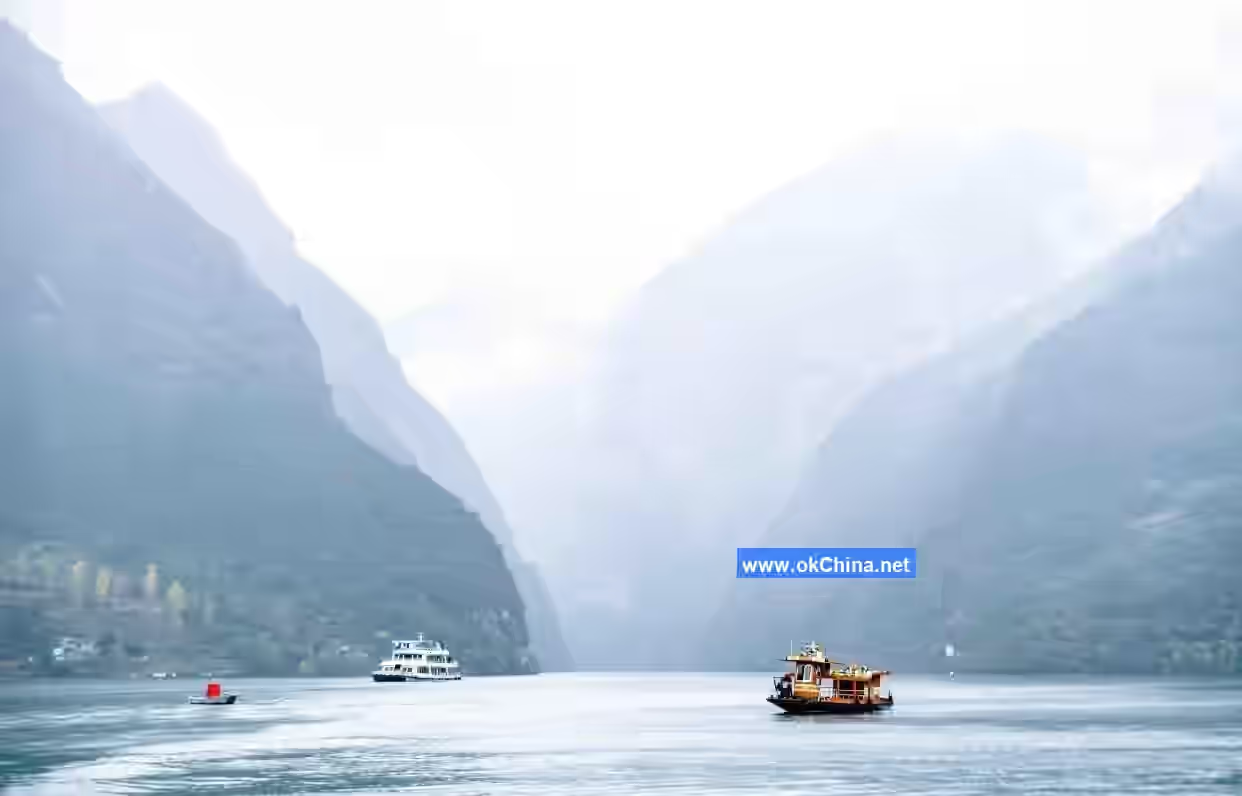
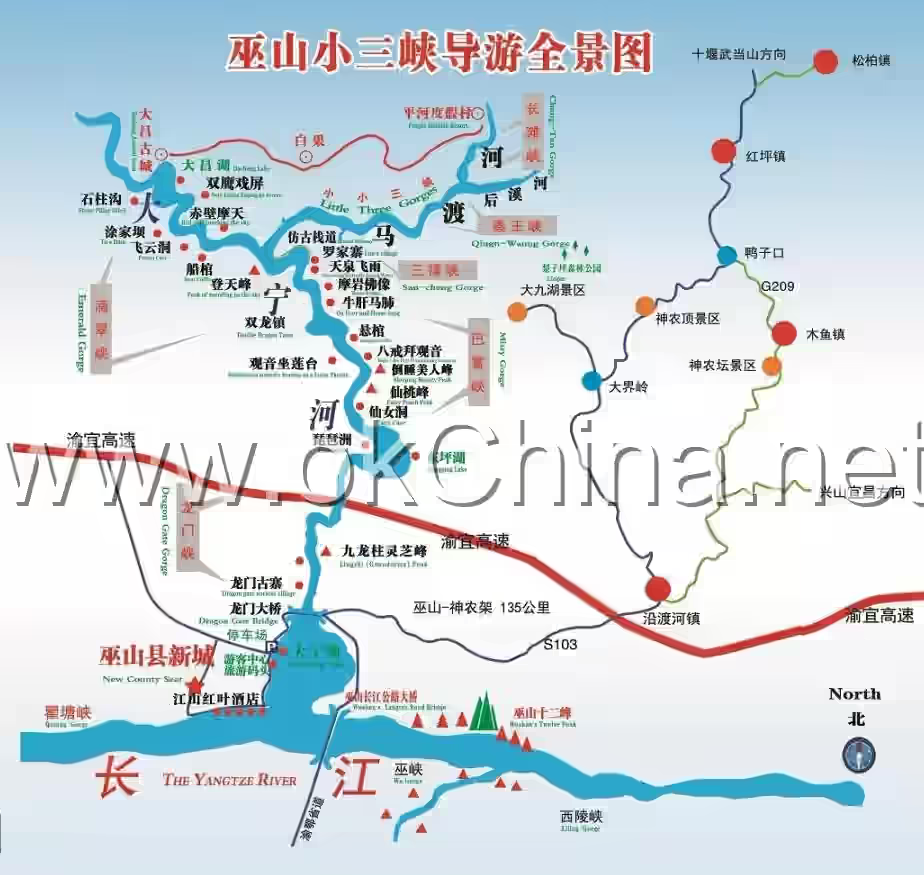
The Little Three Gorges - Mini Three Gorges Scenic Area is located at Ningjiang Road, Wuxia Town, Wushan County, Chongqing. The Wushan Little Three Gorges consists of the Longmen Gorge, Bawu Gorge, and Dicui Gorge formed by the lower reaches of the Daning River flowing through Wushan territory, adjacent to the Yangtze River's Three Gorges. The Wushan Mini Three Gorges is located on the Madu River, a tributary of the Daning River at Dicui Gorge. It is the collective name for the Changtan Gorge, Qinwang Gorge, and Sancheng Gorge. The Mini Three Gorges is the sister gorge to the Daning River's Little Three Gorges, named "Mini" because it is even smaller than the Little Three Gorges.
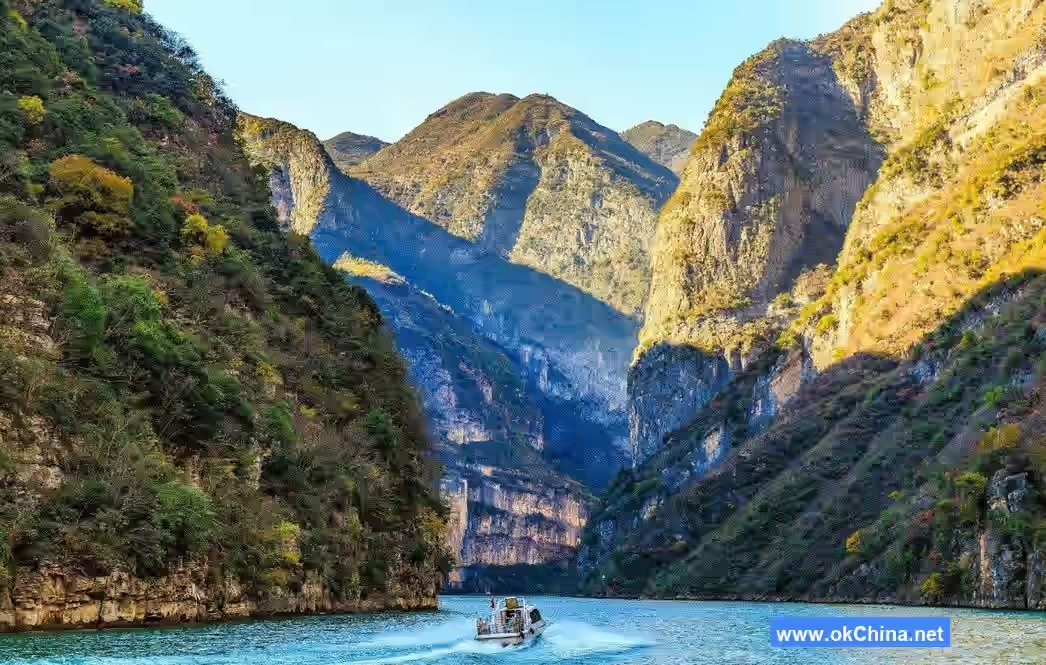
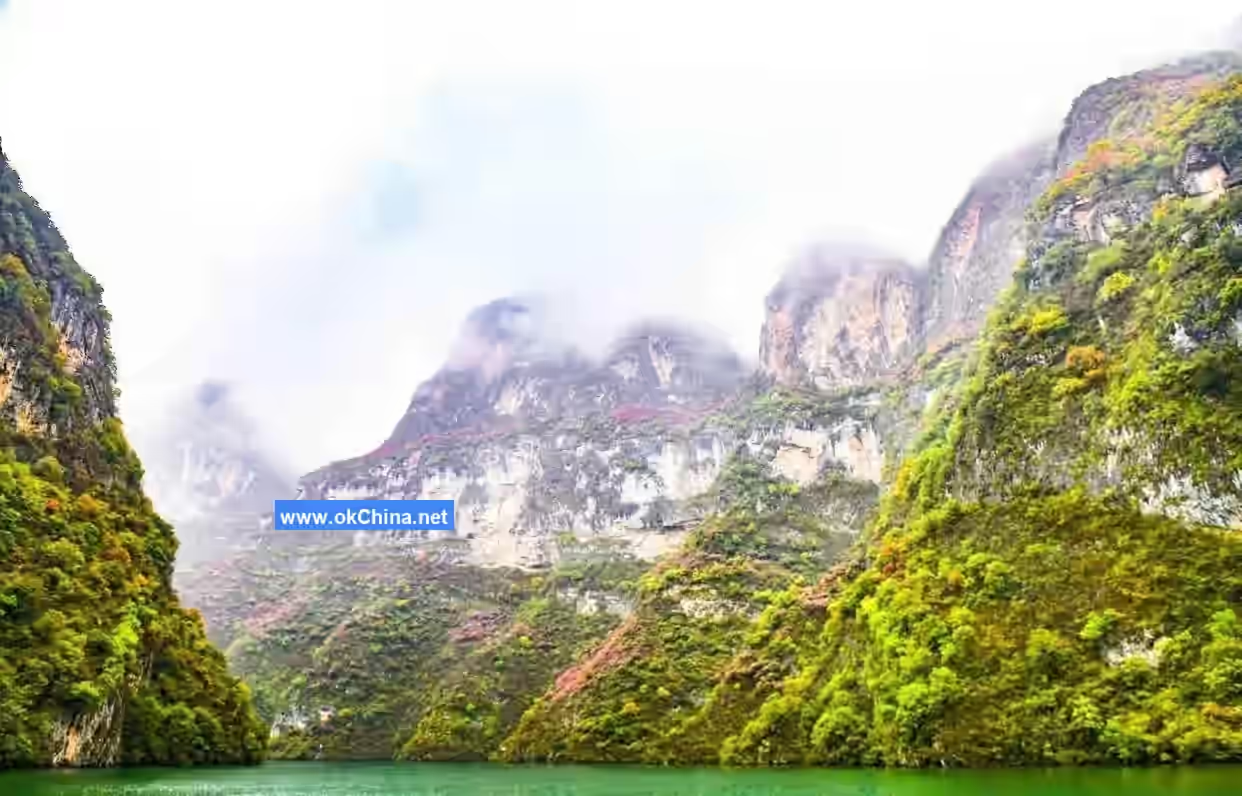
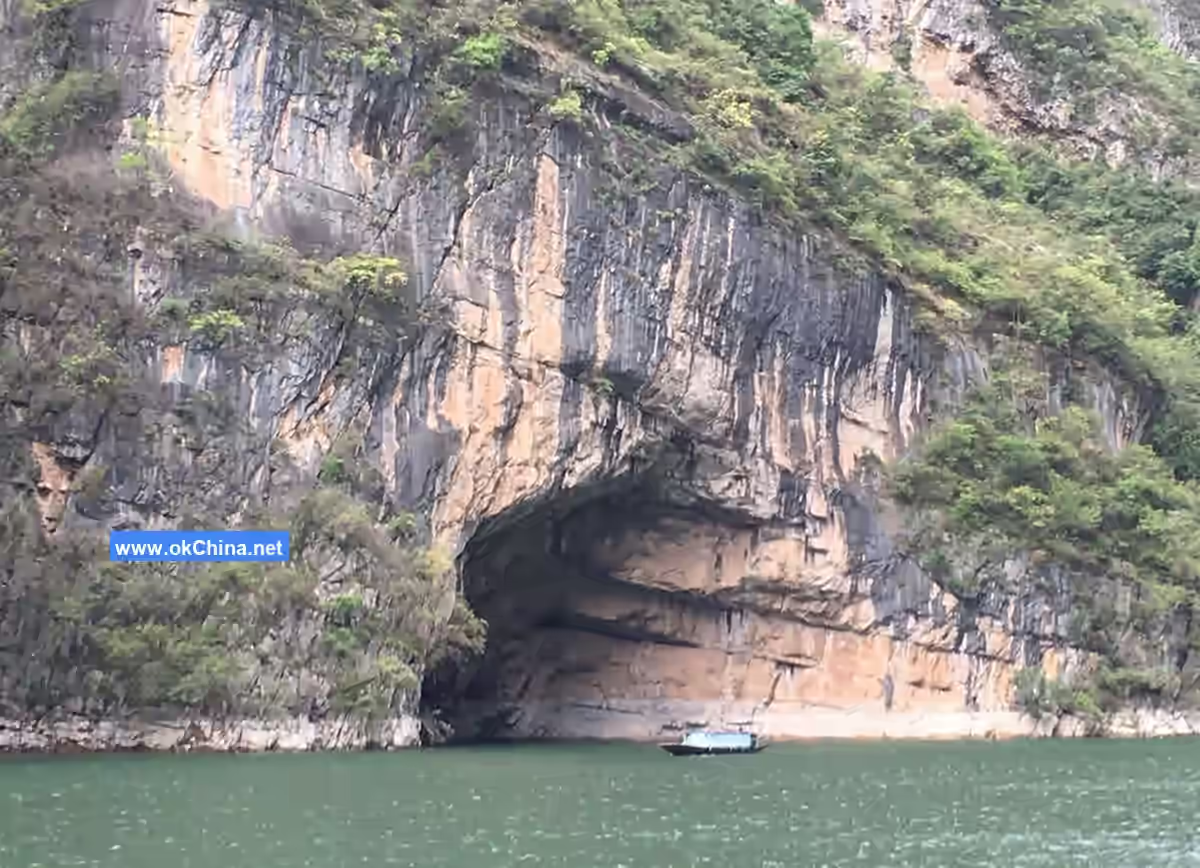
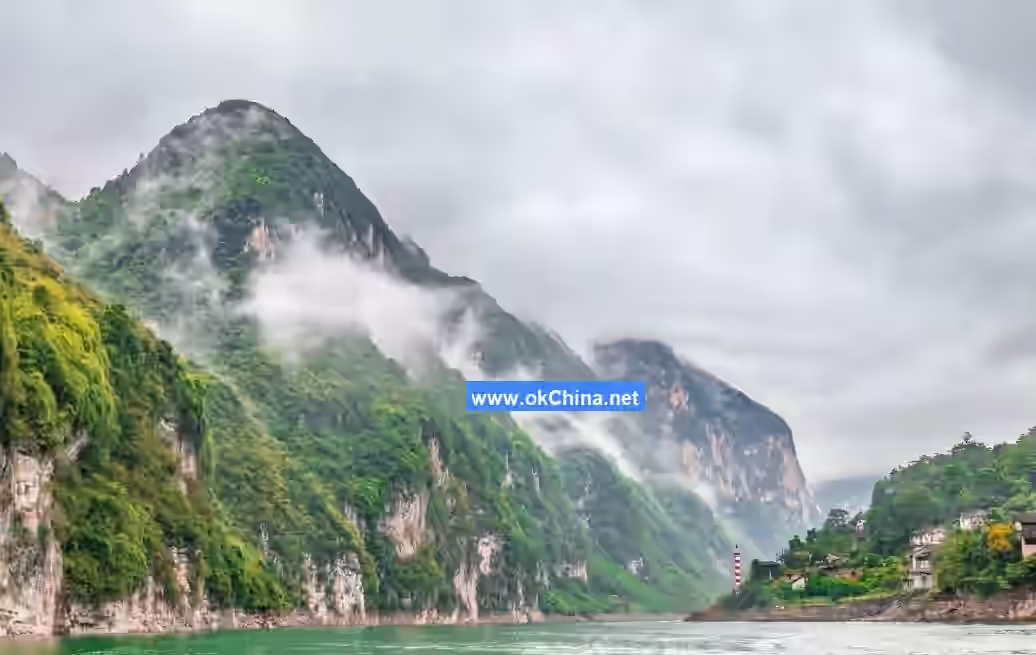
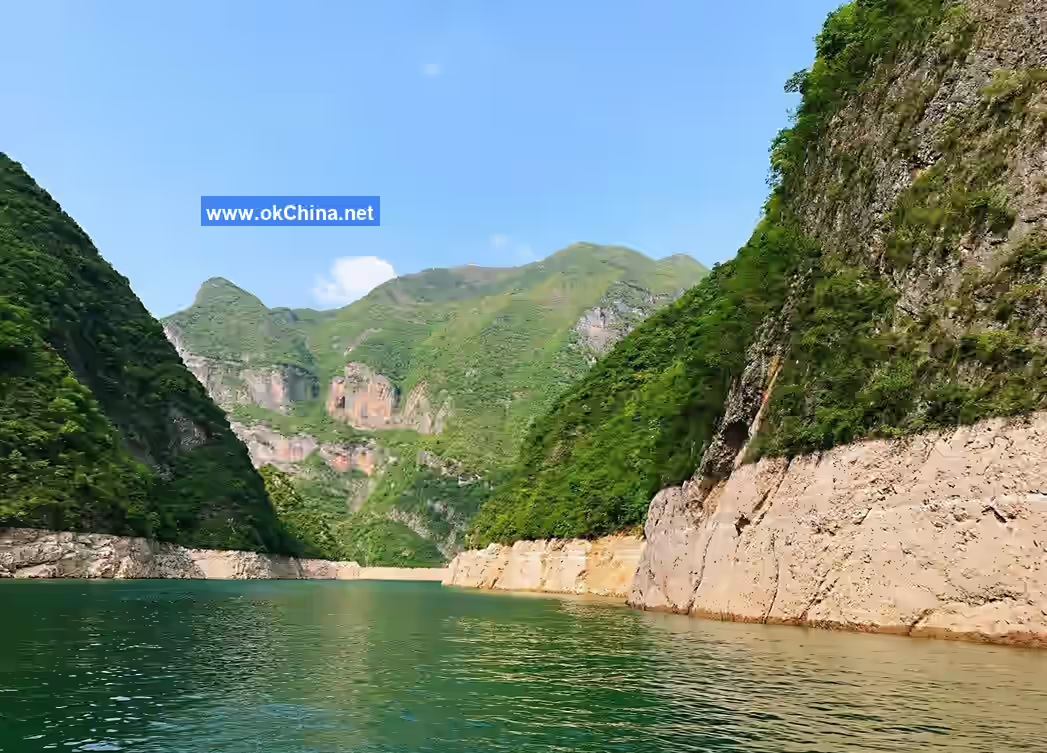
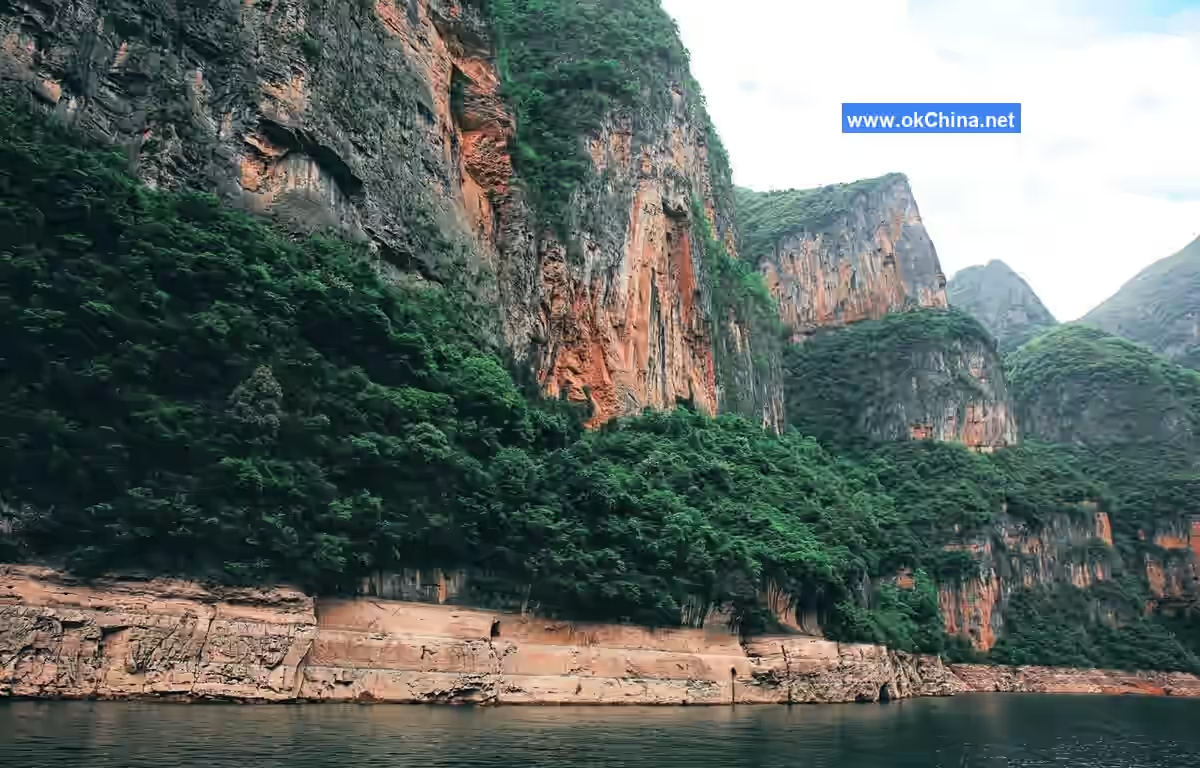
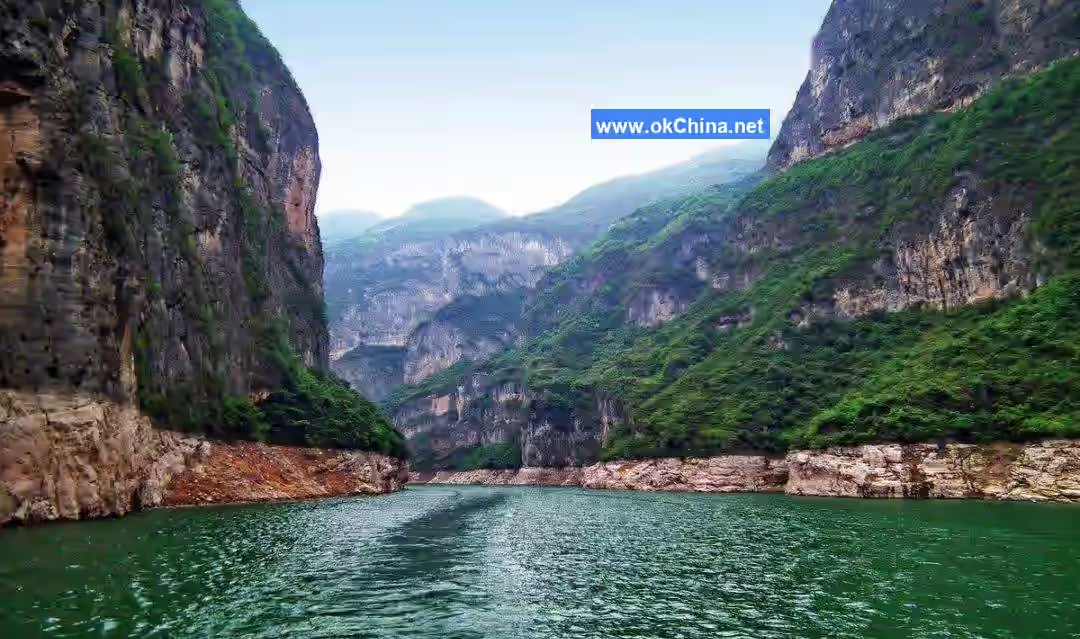
The Little Three Gorges - Mini Three Gorges Scenic Area stretches 65 kilometers in total. It features water gorge landscapes, peak and rock landscapes, cave landscapes, flora and fauna landscapes, cultural landscapes, and spatial landscapes. The water body landscapes include various types such as water, springs, streams, pools, shoals, curtain waterfalls, and pebbles. The peak and rock landscapes include various types like cliffs, mountain peaks, strange rocks, patterns, textures, and colors. The cave landscapes include numerous karst caves and underground rivers with varying degrees of development, sizes, heights, and styles.
2. Geographical Environment
2.1 Location and Territory
The Little Three Gorges - Mini Three Gorges Scenic Area is geographically situated between 109°47′–110°1′21″ east longitude and 31°7′03″–31°19′30″ north latitude. The scenic area entrance is 1.5 kilometers from Wushan County town, 445 kilometers from Chongqing's main urban area, 143 kilometers from Wanzhou District, 170 kilometers from Yichang City, and 540 kilometers from Wuhan City.
2.2 Geology and Geomorphology
The Little Three Gorges - Mini Three Gorges Scenic Area is located at the eastern edge of the Sichuan Basin, at the junction of three major tectonic units where the Daba Mountains meet the western Hubei mountainous area. The northern part belongs to the southern section of the Daba Mountain fold belt, with gentle mountain slopes and ridge-valley height differences of 200–500 meters. The geological structure is special, with Paleozoic and Mesozoic Triassic rock layers widespread, forming various unique karst landscapes.
2.3 Hydrological Characteristics
The Little Three Gorges - Mini Three Gorges Scenic Area was carved by the Daning River, a secondary tributary of the Yangtze River, flowing from north to south. The highest point, Taiping Mountain, is 2860 meters high, and the lowest point at the Daning River entrance is 79.3 meters above sea level. Due to the narrow river channel, water flow varies greatly, with significant fluctuations in water level. During flood season, the flow generally reaches 40,000 to 50,000 cubic meters per second, while during the dry season, it is typically around 3,000 cubic meters per second. The difference between the highest and lowest water levels can exceed 50 meters. The riverbed has a steep gradient, dropping an average of 1 meter every 5 kilometers. The water flow is rapid with swirling currents, and the velocity changes significantly. The average flow velocity during the dry season is 4 kilometers per hour, 11 kilometers per hour during flood season, and reaches 16–25 kilometers per hour at rapids and dangerous shoals.
2.4 Climatic Features
The climate of the Little Three Gorges - Mini Three Gorges Scenic Area is significantly influenced by the gorge terrain. The annual average temperature is 18.4°C, with the coldest month, January, averaging 7.1°C, and the hottest month, July, averaging 29.3°C. The annual average rainfall is between 1000–1400 mm, mostly concentrated in July and August. Winters are mild, summers are hot, rainfall is abundant, and the four seasons are distinct. Due to the deep gorges, the bottom receives limited sunlight—only about two to three hours around noon in winter and only five to six hours in summer. Winds are strong within the gorges, with fixed directions mostly being east or west winds along the gorge. The enclosed gorge terrain leads to high humidity, easily forming clouds and fog. Summer often brings thunder and lightning, making it one of the national heavy rain centers. Autumn has many clear days with light clouds and high skies. Winter often features "misty gorge rain," which can last for several consecutive days. During the transition between spring and summer, the weather is changeable, with "morning clouds and evening rain."
3. Main Landscapes
3.1 Natural Landscapes
3.1.1 Longmen Gorge
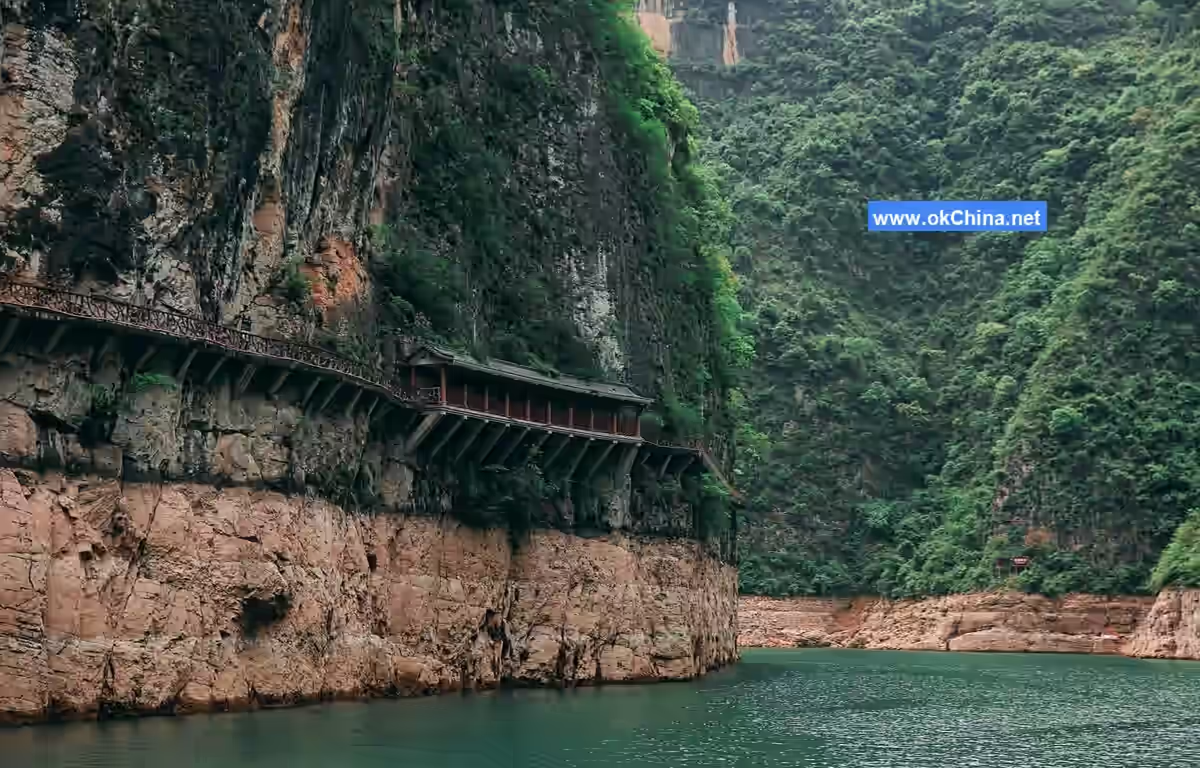
Longmen Gorge is the first gorge of the Little Three Gorges, stretching 8 kilometers from the Daning River mouth to Dongpingba. Towering cliffs face each other like a giant gate. Due to its majestic mountains, it is praised as "not the Kuimen, yet surpassing Kuimen." Main attractions within the gorge include ancient plank road ruins, Green Lion Guarding the Gate, Nine Dragon Pillar, Panda Cave, and Pipa Shoal.
3.1.2 Bawu Gorge
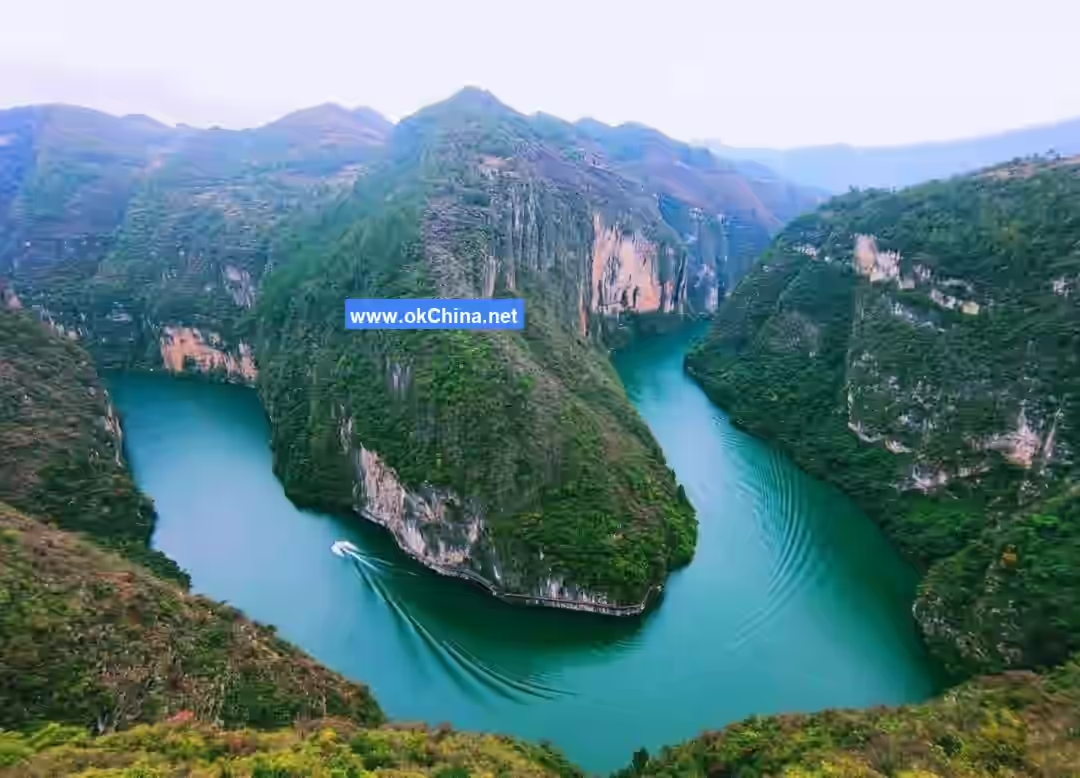
Bawu Gorge is the second gorge of the Little Three Gorges, extending 15 kilometers from Dongpingba to Shuanglong Town. The main gorge section, from Wuguitan to Taipingtan, is 10 kilometers long. The gorge features abruptly rising strange peaks, jagged rocks, and quietly flowing green water. Stalactite formations resembling humans, objects, and beasts are vivid, serving as natural sculptures within the gorge, earning it the praise "Marvelous, Bawu Gorge." Main attractions include Monkey Fishing for the Moon, Horse Returning to Mountain, Huilong Cave, Fairy Throwing an Embroidered Ball, Immortal Peach Peak, Guanyin Sitting on a Lotus Throne, and Bajie Worshipping Guanyin.
3.1.3 Dicui Gorge
Dicui Gorge is the third gorge of the Little Three Gorges, stretching 20 kilometers from Shuanglong to Tujiaba. The main gorge section, from the Dicui Gorge entrance to Feiyun Cave, is 15 kilometers long, making it the longest, deepest, and most beautiful gorge among the Little Three Gorges. The gorge features continuous cliffs, competing beautiful peaks, lush bamboo and trees; waterfalls hanging in the air, a river of green water, mandarin ducks playing in the water, and monkeys climbing, full of wild charm.
3.1.4 Sancheng Gorge
Sancheng Gorge begins at the Madu River entrance and is 5 kilometers long, the first gorge of the Mini Three Gorges. Cliffs on both banks are as if split by an axe; the river channel is narrow, with a slit of sky visible. Boating upstream against the rapid current without a towpath requires poling forward stroke by stroke, hence it is also called "Long Cheng Gorge." The primitive vegetation is intact, with lush greenery along the way, interspersed with bizarre stalactites, and flying waterfall mist spraying in the air. Attractions include Deer Looking Back, Longevity Star Peak, Stone Pillar Bay, Lovesick Spring, Dragon and Tiger Pool, Bajie Crossing the River, Mother Stone, and Moon Village.
3.1.5 Qinwang Gorge
Qinwang Gorge stretches 4 kilometers from Shangdukou to Shuanghe. The gorge features clear waters, beautiful mountains, deep and quiet scenery. The water flow is gentle and clear to the bottom, making it the best section for drifting tours. On the east bank of Qinwang Gorge, there is a large karst cave. Legend has it that during the Ming Chongzhen era, a bandit surnamed Qin occupied the cave as his king, oppressing the people, and was captured by the peasant rebel army of Zhang Xianzhong, hence the name "Capture (Qin) King Cave." Attractions within the gorge include Wangxiang Terrace, Tiger Head Rock, Yellow Dragon Crossing the River, Carp Leaping over the Dragon Gate, Fairy Welcoming Guests, Immortal Music Bell, and Arhat Hall.
3.1.6 Changtan Gorge
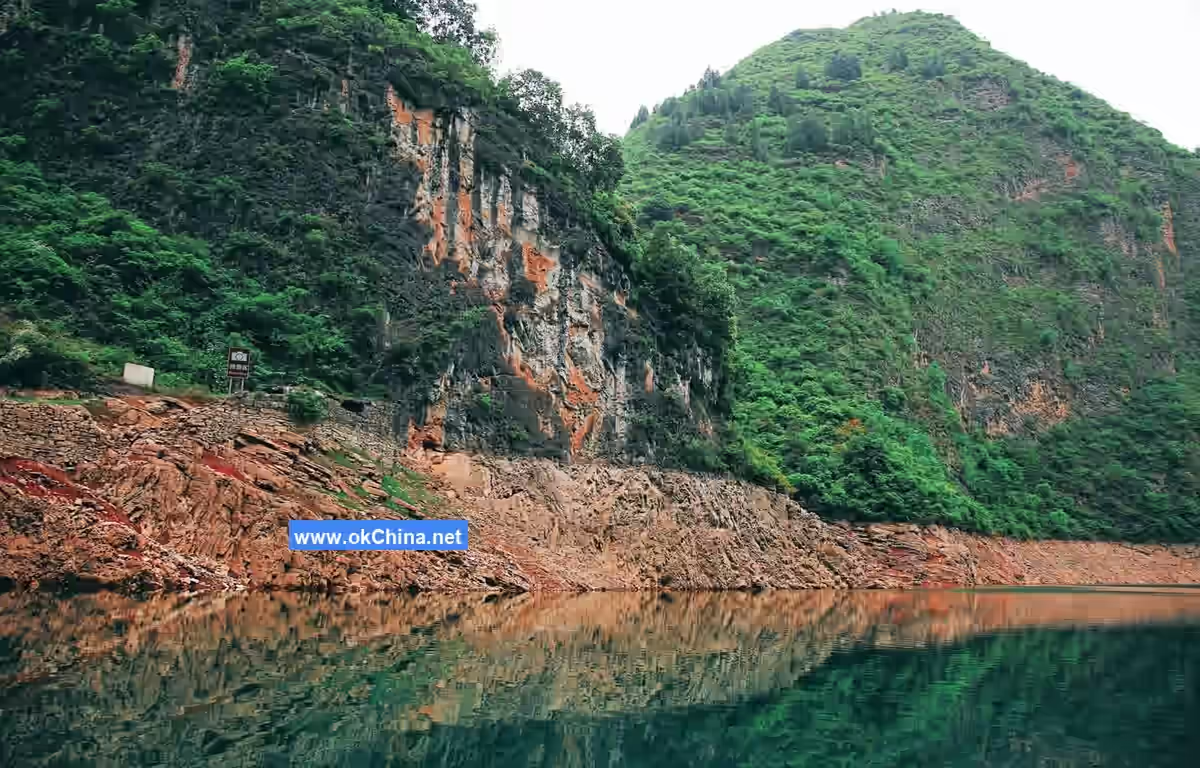
Changtan Gorge stretches 5 kilometers from Shuanghe to Pinghe. Within the gorge, there is a 2-kilometer-long river beach, over 10 meters wide, straight as a line, calm as a mirror, with white sand and stones, and landscapes reflected on both banks, hence the name Changtan Gorge. The gorge is narrow with high mountains, cliffs facing each other, imposing and dangerous. The water is clear to the bottom, containing a wide variety of fish species. The banks are often lined with colorful pebbles, and sometimes ancient fossil remains can be seen. Attractions include Dripping Water Rock, Clever Spring, Hand-Climbing Rock, and Chuandongzi.
3.2 Cultural Landscapes
3.2.1 Hanging Coffins
The hanging coffins are located in rectangular caves on the yellowish-brown cliffs on the east bank of Bawu Gorge. Inside the cave rests a pitch-black coffin, about four to five hundred meters above the river surface. For thousands of years, despite wind and rain erosion, it remains well-preserved. Based on the main occupant and burial items like bronze belt hooks and bracelets, it dates back over 2000 years. In the 1980s, archaeological research revealed that the hanging coffins are burial coffins of the Pu people who lived in this area during the Warring States period.
3.2.2 Boat Coffins
Boat coffins are located on the cliffs of Bawu Gorge and Dicui Gorge along the Daning River, over 100 meters above the river surface. The over 7-meter-long wooden boat is the "Little Three Gorges Boat Coffin." Research indicates that "boat coffin burial" was a unique custom of the Ba people.
3.2.3 Ancient Plank Road Ruins
The ancient plank road ruins are located on the cliffs of the west bank of Longmen Gorge, consisting of neatly arranged small square stone holes. The small stone holes are 15.2 cm square, 0.67 meters deep, with a spacing of 1.66 meters. During the dry season, they are about 15 meters above the river surface. Stretching about 400 kilometers in total, they are the most well-preserved and longest ancient plank road ruins in China. In ancient times, they were widely used for transportation, logistics, and military purposes.
3.2.4 Luo Family Fort
Luo Family Fort is located below the Tianquan Flying Rain on the east bank of Dicui Gorge. About 50 meters above the river surface, there is a stone wall clinging perilously to the rock, with broken walls and a single path up and down, making the terrain steep. Legend says it was a study place built by the wealthy Luo family for their descendants, hence the name Luo Family Fort. In the early 1980s, the path and walls were repaired. Tour boats dock, and visitors can walk about ten minutes to enter the fort.
3.2.5 Dachang Ancient Town
Dachang Ancient Town is 60 kilometers by water from Wushan County town. Founded in the Jin Dynasty, it has a history of over 1700 years. The ancient town has two main streets: the north-south street is over 150 meters long, and the east-west street is over 240 meters long, covering an area of less than 10 hectares. It is the largest complex of Ming and Qing ancient architecture in the Three Gorges Reservoir area of the Yangtze River. It features a complete ancient city wall and three well-preserved ancient city gates: Chaoyang Gate in the east, Yongfeng Gate in the west, and Tongji Gate in the south. There are 37 Ming and Qing ancient residential buildings with black bricks and tiles, wooden facades, double-barrel eaves, upturned corners, carved beams, and painted rafters.
3.2.6 Shuanglong Small Town
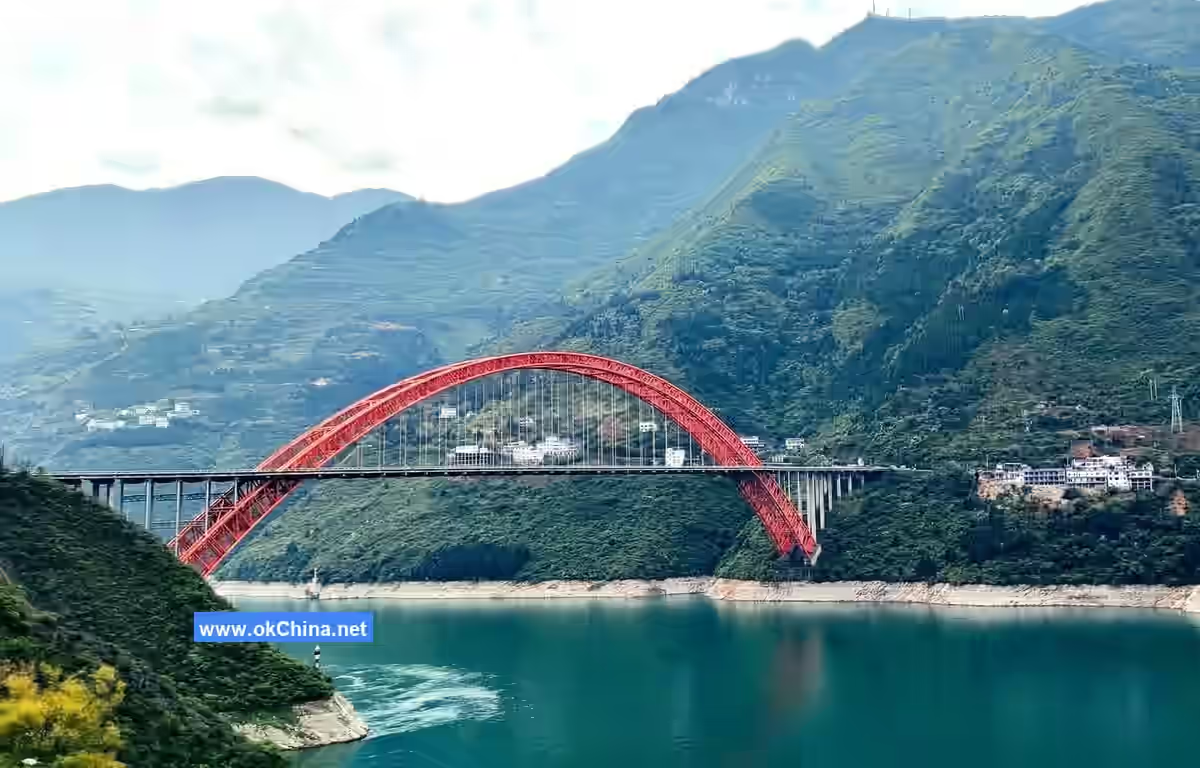
Shuanglong Small Town is located at the exit of Bawu Gorge, where the Shuanglong Town government is situated. It has various service industries including supply and marketing cooperatives, hotels, farmers' markets, and cooked food stalls. Legend has it that in the 13th year of the Ming Chongzhen era (1640), the peasant rebel armies of Zhang Xianzhong and Luo Rucai formed an alliance and maneuvered here for half a year, attacking the strongholds of Ming generals Zhang Yingyuan and Pan Yunfeng from Huguang, wearing down the Ming army, heading straight for Dachang, and marching into Sichuan.#### 3.2.7 Longmen Bridge The Longmen Bridge is located at the mouth of Longmen Gorge in the Lesser Three Gorges. After the final impoundment of the Three Gorges Reservoir, more than two-thirds of the main arch ring of the old Longmen Bridge was submerged, and the navigational clearance under the bridge could no longer meet requirements, leading to the demolition of the old bridge and the construction of a new one. The new Longmen Bridge forms a sister bridge with the Wushan Yangtze River Highway Bridge, echoing each other from afar. The new Wushan Longmen Bridge is situated beside Wushan County town, at the mouth of Longmen Gorge, 90 meters downstream from the old Longmen Bridge. The main span of the bridge adopts a 240-meter steel tube concrete half-through arch, crossing the gorge in a single span, with a total route length of 855.911 meters. The main quantities of work include 2,900 tons of steel and 1.39 cubic meters of concrete. The entire bridge consists of two arch ribs, each with 13 segments and 11 transverse braces, erected into an arch using cable-supported erection without scaffolding.
3.3 Other Landscapes
3.3.1 Gorge River Red Leaves
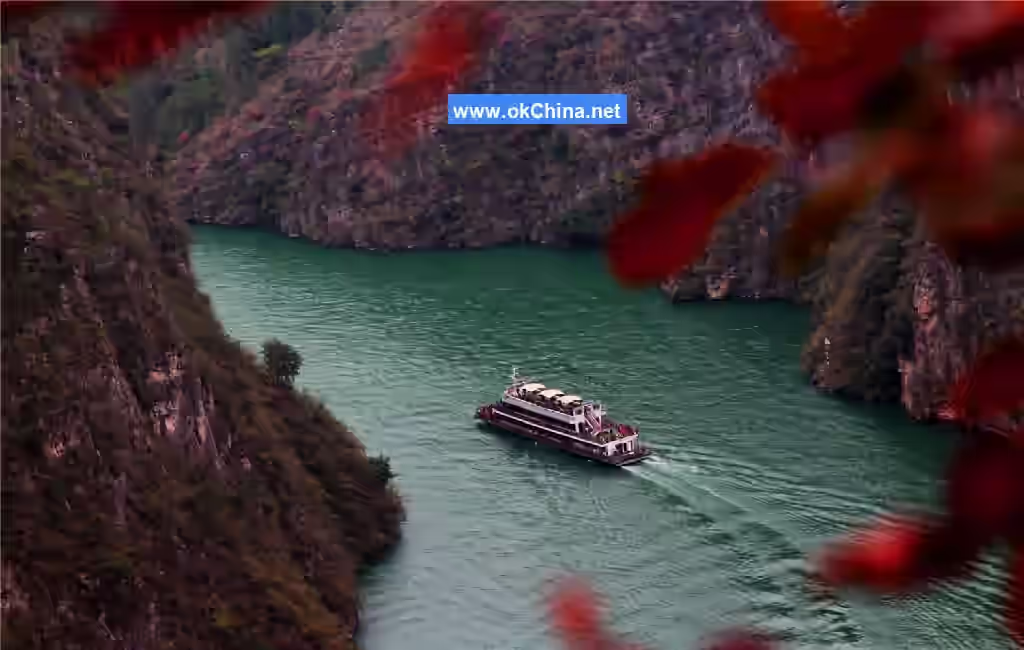
The temperature in Wushan creates the optimal conditions for the growth and formation of red leaves. With the Three Gorges Reservoir water level reaching 170.9 meters, the river, mountains, and red leaves form a trinity, where the high gorge's calm lake and the mountains covered in red leaves enhance each other's beauty. The red leaves in Wushan cover a concentrated contiguous area of 6,700 hectares, with Bawu Gorge in the Lesser Three Gorges being the most concentrated area. In autumn, the mountains are covered in red leaves, with every layer of forest dyed in vibrant colors. Visitors can either drive up the mountain, following the winding road to enjoy the red leaf scenery, take a boat to look up at the red leaves on both banks, or hike along forest trails for a close-up view of the red leaves.
3.3.2 Lesser Three Gorges Macaques
After the rise of the Yangtze River water level, the migration range of the macaque groups has expanded, and the ecological environment has increasingly optimized. The number of macaques in the Lesser Three Gorges has now exceeded 3,000. Bawu Gorge and Dicui Gorge are the best areas for viewing the Lesser Three Gorges macaques. Protective measures for the macaques in the Lesser Three Gorges scenic area include regular定点投食 (scheduled定点 feeding), planting suitable fruit trees, and hiring dedicated personnel for分片看守 (zonal guarding). These measures ensure a guaranteed food source, a broader range of activities, and more joyful play for the macaques, recreating the scene described in the poem: "The monkeys' cries on both banks never cease, while the light boat has passed ten thousand mountains."
3.3.3 Dangyang Grand Canyon
The Dangyang Grand Canyon stretches from the Pinghe Folk Custom Town in the south to the Shennongjia Dajiuhu in the north. It serves as an important通道 (passage) connecting the tourism "Golden Triangle" of Chongqing and Hubei, which includes the Wushan Lesser Three Gorges • Mini Three Gorges, Dachang Ancient Town, Dajiuhu Wetland Park, Shennongjia, and the Three Gorges Dam. The Dangyang Grand Canyon integrates canyons, streams, waterfalls, karst caves, grasslands, and pastoral scenery. The canyon is deep and mysterious, with奇异 (peculiar) peaks on both sides, featuring landscapes such as the Sedan Stone Buddha Cliff, Dangyang Pass, and Flag Mountain.
3.3.4 Yangfan Waterfall
The Yangfan Waterfall is located within the Dangyang Grand Canyon. It is three to four hundred zhang high and fifteen zhang wide, divided into upper, middle, and lower waterfalls. On the left bank, halfway up the mountain, there is a platform locally known as "Luogu Ping" (Gong and Drum Flat). From here, the waterfall resembles a white silk ribbon, swaying gracefully with the wind, taking the shape of a banner flag fluttering in the air.
3.3.5 Guoban Yaobao Waterfall
The Guoban Yaobao Waterfall is located within the Dangyang Grand Canyon. At a point 17 meters above the halfway mountain pedestrian path named "Drill Rod," a rock protrusion causes the waterfall to suddenly curl upwards, splashing pearls and spitting jade, drifting and sprinkling before垂落 (falling vertically) into the water pool within the "Drill Rod" of the halfway mountain path. There is a platform by the pool with scattered stone benches that can accommodate dozens of people, allowing visitors to sit and observe the waterfall closely.
3.3.6 Middle Waterfall
The Middle Waterfall is located within the Dangyang Grand Canyon. The cliff rock forms a hood-like shape, and the waterfall cascades down along the rock wall. Inside the waterfall, there is a pedestrian path, and within this path, there is a偏岩洞 (side rock cave). Observing the waterfall from within the cave, one sees the Middle Waterfall shrouded in mist,晶莹剔透 (sparkling and translucent). Under the sunlight, it resembles a wide,珠光闪闪 (pearly-glittering) water curtain. Viewing the green mountains on the opposite bank through the waterfall is like "viewing flowers in the mist" — the scene is both real and illusory, resembling a landscape ink painting.
3.3.7 King of Asian Ginkgo Trees
The King of Asian Ginkgo Trees is located at Tanjia Wuchang in Gaoping Village, Pinghe Township. It is a千年树王 (millennium tree king) and was certified by UN FAO experts as the "King of Asian Ginkgo Trees." The tree is 40 meters tall, with a root diameter of 2.8 meters and a breast-height diameter of 2.5 meters. Its shape resembles a jade brush, its aura like a coiling dragon, lush and dense, providing shade over an area of 700 square meters, and producing over 1,000 kilograms of ginkgo nuts annually.
3.3.8 Sedan Stone
The Sedan Stone is located in Hongyan Village, Dangyang Township. It is a四方石 (square stone) with a flat bottom and a pointed top, shaped like the bridal sedan chair used for娶新媳妇 (fetching a new bride), hence the name "Sedan Stone."
3.3.9 Big Ladder
The Big Ladder is located in Hongyan Village, Dangyang Township. A massive stone mountain stands巍峨矗立 (majestically), 100 meters high and 40 meters in diameter, blocking the passage from Dangyang to Miaotang. To cross this great mountain, people used凸石包 (protruding rock masses) along the cliff face to架起 (erect) several wooden ladders 0.67 meters wide, named the "Big Ladder." Initially, the ladders were bound with bamboo strips, had no handrails, and one could easily fall off the cliff with slight carelessness. In 1978, the Wushan County government allocated special funds to build a stone梯大道 (ladder pathway) 100 meters long and 2 meters wide along the cliff face, making it a名副其实的 (true-to-its-name) "Big Ladder."
3.3.10 Congping Wetland Park
Congping Wetland Park is located on the edge of Gaoping Village, Dangyang Township, connected to the Hubei Shennongjia Forest District. It is a pristine subalpine humid meadow rarely visited by people, at an altitude of 2,100 meters and covering an area of approximately 10 square kilometers. It is the best-preserved alpine wetland grassland in Chongqing Municipality and an important component of the national-level Wulipo Nature Reserve. The Congping wetland ecosystem mainly includes subalpine meadows, sphagnum moss bogs, bogbean marshes, sedge marshes, cattail marshes, purple moor grass marshes, as well as river ponds and channels. The maximum thickness of the basin peat layer reaches 3.5 meters. The wetland is rich in animal and plant resources,分布有 (distributed with) rare plants such as dove tree (Davidia involucrata), smooth-leaved dove tree (Davidia involucrata var. vilmoriniana), ginkgo (Ginkgo biloba), Chinese yew (Taxus chinensis), southern Chinese yew (Taxus chinensis var. mairei), Chinese hazel (Corylus chinensis), and rare animals such as golden snub-nosed monkey, Asian black bear, serow, golden eagle, and mainland serow.
3.3.11 Renziping
Renziping is located within Dangyang Township. Legend has it that during the Tang Dynasty, the绿林女英雄 (female greenwood hero) Ji Lanying was highly skilled in martial arts and exceptionally brave. Ji Lanying battled Duke Yuan within the area of present-day Dangyang Township. At that time, Ji Lanying was ten months pregnant with Xue Jiao and Xue Kui and about to give birth. She wrapped her lower abdomen with a battle flag, endured the pain, defeated the enemy forces here, and then gave birth to twins. Hence, the place was named "Renziping" (Enduring Child Flat).
4. History and Culture
4.1 Folk Culture
4.1.1 Singing Mountain Songs
The folk songs of the Lesser Three Gorges originated during the Warring States period and have been sung for millennia to this day. On the slopes and in the courtyards within Wushan, folk songs in various melodies can be heard during红白喜事 (weddings and funerals),劳作庆典 (work celebrations). The mountain songs are高亢嘹亮 (sonorous and clear), with a wide vocal range,热烈奔放 (passionate and unrestrained). The melodies are mostly stepwise, with a range mostly between 2nd and 9th intervals, forming a singing style and characteristic tunes with a strong rustic flavor and local characteristics.
4.1.2 Wuyin Performance
"Wuyin" is a type of民间传统祭祀音乐 (folk traditional sacrificial music) that孕育产生 (was born) from the世代相传 (generation-to-generation) traditional sacrificial customs of ancient ancestors, with a history of over a thousand years. It is divided into two main categories:跳神 (端公马脚)音乐 (spirit-jumping/shaman music) and做斋 (道士作法)音乐 (Taoist ritual music). Its main purposes are to尊敬神灵 (respect deities),宣扬良善 (promote goodness),悼念逝者 (mourn the deceased),教化生者 (educate the living), express sorrow over生离死别 (partings in life and death),给亡人灭罪消灾 (eliminate sins and disasters for the departed),与孝家增延福寿 (increase blessings and longevity for the filial family), and传承 (pass on) the traditional Chinese virtues of "忠孝礼义" (loyalty, filial piety, propriety, and righteousness).
4.1.3 Year Pig Festival
The Year Pig Festival is a traditional节庆活动 (festive activity) combining美食 (culinary delights) and过年习俗 (New Year customs). Every year during the winter and twelfth lunar months, people express their wishes for a美好生活 (beautiful life) and pray for风调雨顺 (favorable weather),人畜平安 (peace for people and livestock) in the coming year through activities such as杀年猪 (slaughtering the year-end pig),挂福肉 (hanging福肉 [likely preserved meat]),看民俗 (watching folk performances),发红包 (giving red envelopes),购年货 (buying New Year goods), and穿山林 (hiking through mountain forests).
4.2 Poetry and Prose
4.2.1 Five Poems of Parting Thoughts · No. 4
Tang Dynasty · Yuan Zhen Having seen the great ocean, it's hard to admire other waters; Having left Mount Wu behind, no other clouds seem fair. I pass through flowers, too lazy to turn my head for a glance, Partly because of cultivating Tao, partly because of you.
4.2.2 Prelude to Water Melody · Swimming
Mao Zedong I have just drunk the waters of Changsha, And now I eat the fish of Wuchang. Swimming across the thousand-mile Yangtze River, I gaze at the vastness of the Chu sky. Let the wind blow and waves beat, It's better than idly strolling in a courtyard; Today I have ample leisure. The Master said by the river: "Thus do things flow away!" Masts move in the breeze, Tortoise and Snake Hills are still, A grand plan is rising. A bridge will fly to span the north and south, Turning a deep chasm into a thoroughfare. Walls of stone will stand upstream to the west, To hold back Wushan's clouds and rain, Till a smooth lake rises in the narrow gorges. The mountain goddess, if she is still there, Will marvel at a world so changed.
Comments
Post a Comment