
Slender West Lake Scenic Area in Yangzhou
1. Introduction
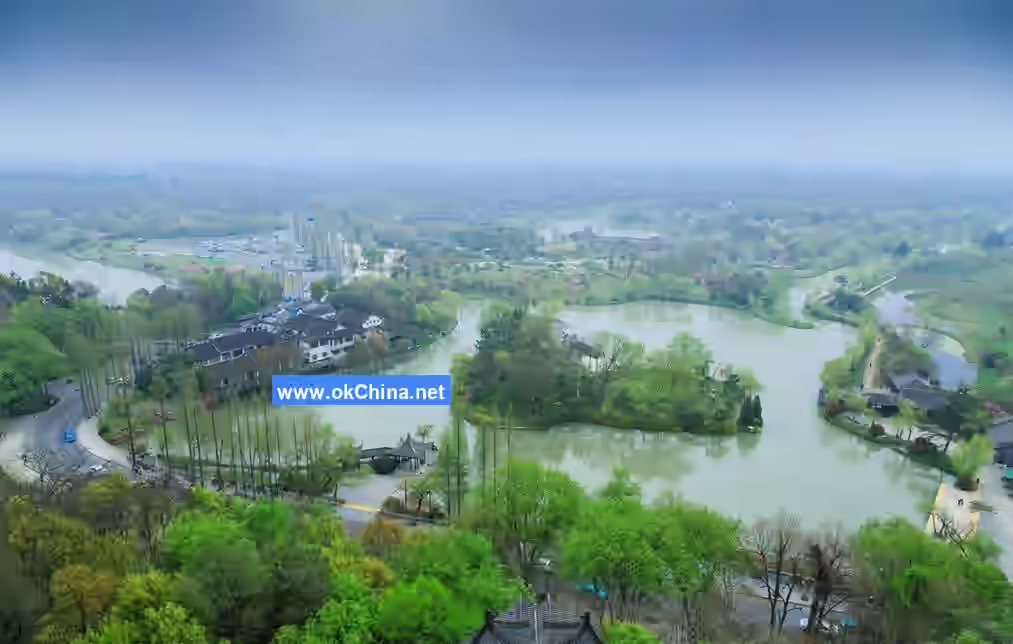
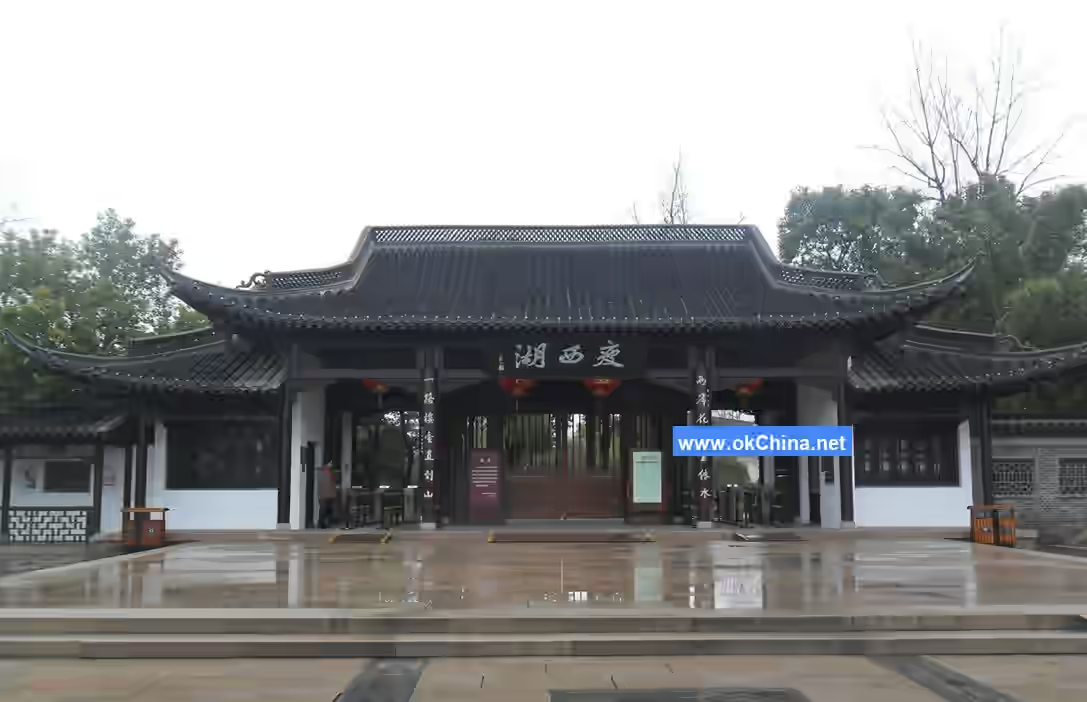
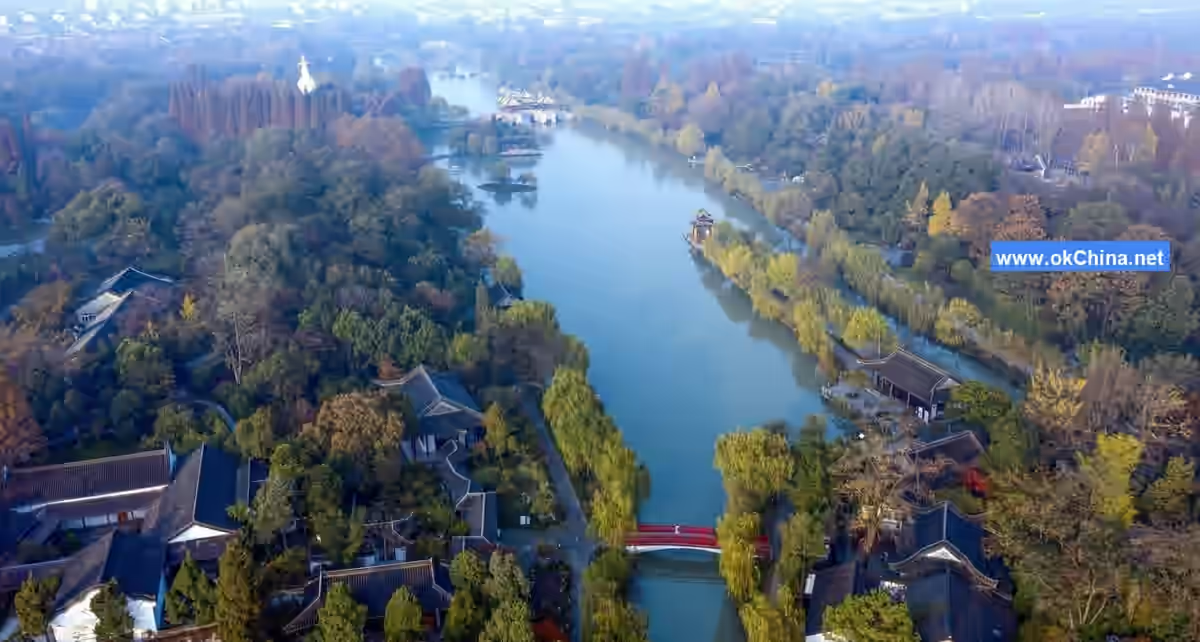
The Slender West Lake Scenic Area in Yangzhou, abbreviated as the Slender West Lake Scenic Area, is a tourist attraction located in Hanjiang District, Yangzhou City, Jiangsu Province. It is a sub-scenic area and the core essence of the national key scenic spot "Yangzhou Shugang-Slender West Lake Scenic Area." The total area of the scenic area is 168 hectares, including 132 hectares of land and 36 hectares of water.
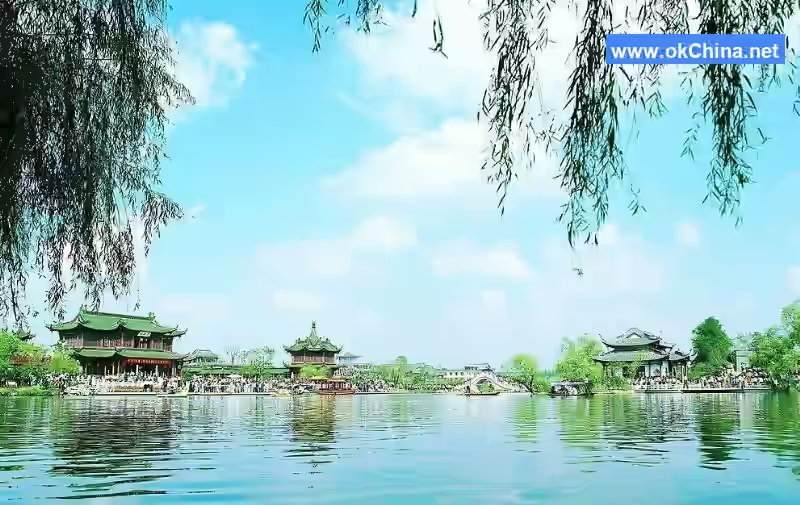
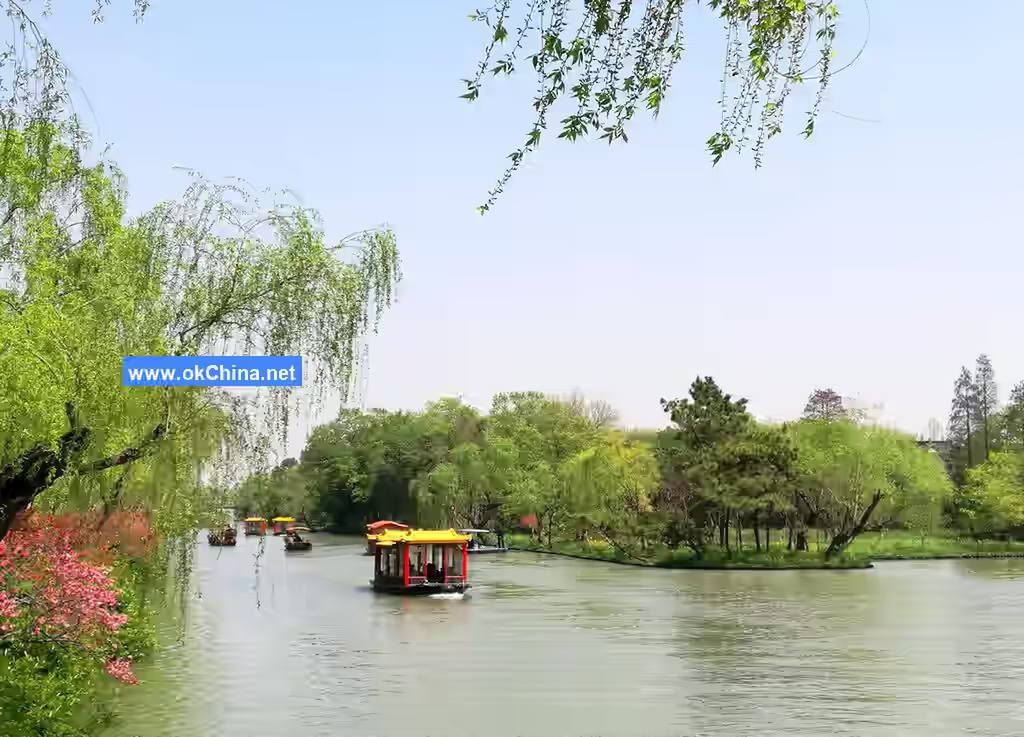
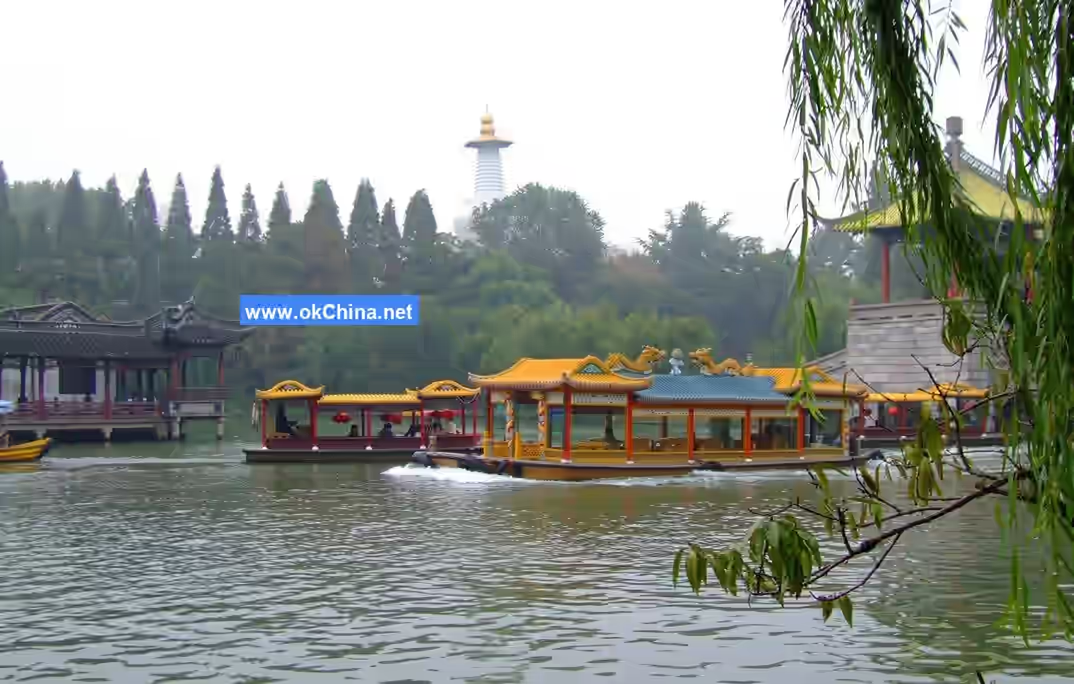
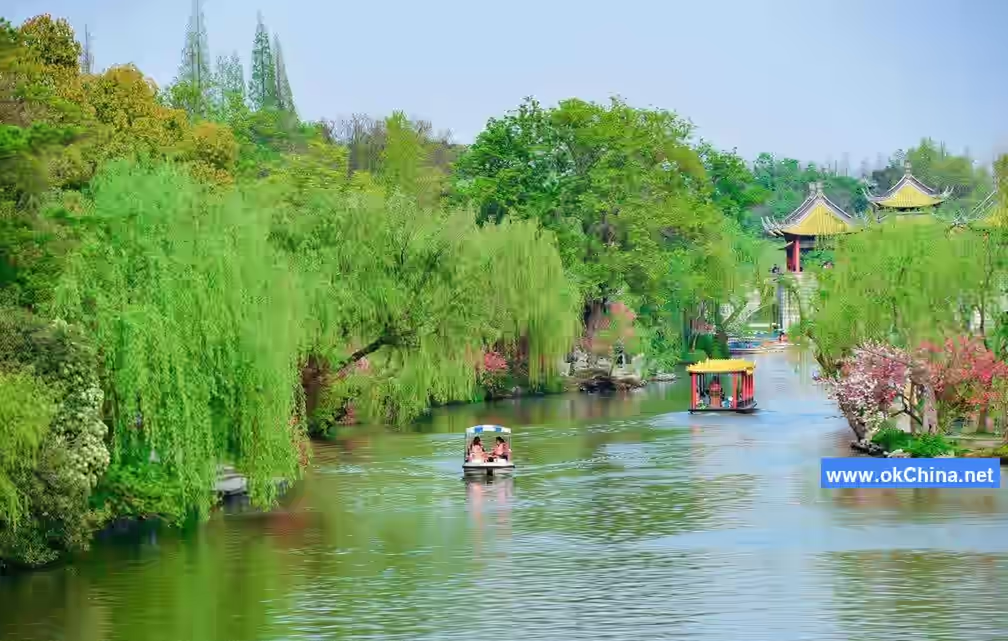
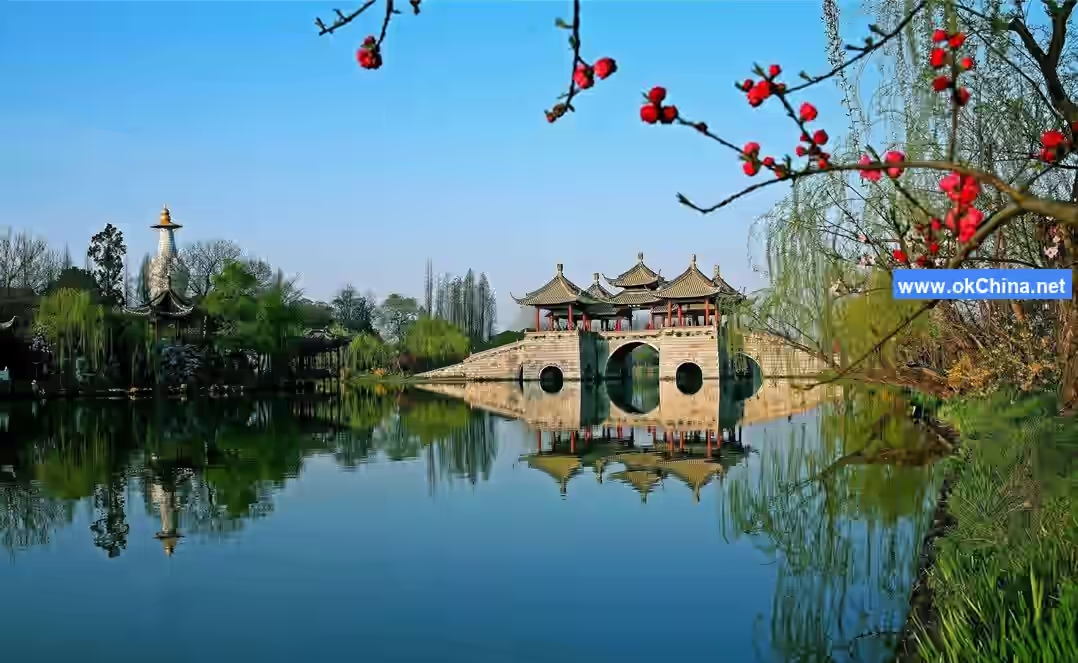
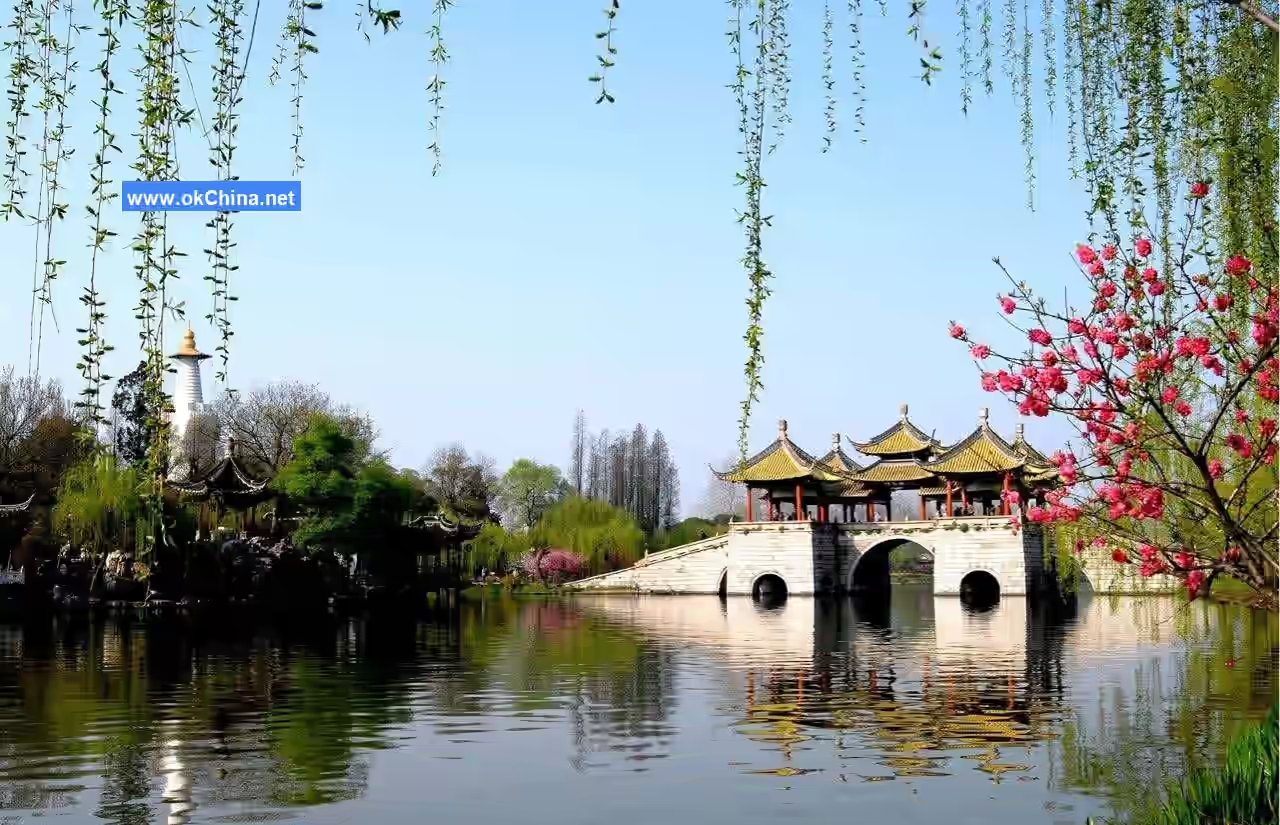
The Slender West Lake stretches 4.3 kilometers in length and is a ribbon-like landscape formed by connecting city moats from different dynasties, including the Sui, Tang, Five Dynasties, Song, Yuan, Ming, and Qing dynasties. It has always maintained an interactive relationship with the Grand Canal, sharing water sources. Starting from the Sui and Tang dynasties, gardens were gradually built along both banks of the water system. By the Kangxi and Qianlong periods of the Qing Dynasty, the six southern tours of Emperors Kangxi and Qianlong created the magnificent scene of "flowers and willows lining both banks, and pavilions and towers stretching all the way to the mountains," forming the basic layout of the Slender West Lake gardens. The scenic area is home to famous gardens and historical sites such as Xu Garden, Little Golden Hill, Five Pavilion Bridge, White Pagoda, Twenty-Four Bridges, Ten-Thousand Flower Garden, and Twin Peaks Cloudy Path, earning the reputation of "gardens so splendid, they are unparalleled under heaven."
In 2010, the Slender West Lake Scenic Area in Yangzhou was designated as a National AAAAA Tourist Attraction by the National Tourism Administration of the People's Republic of China, becoming the first such attraction in Yangzhou.
2. Orientation and Layout
2.1 Location and Territory
The Slender West Lake Scenic Area is located at No. 28 Dahongqiao Road, Hanjiang District, Yangzhou City, Jiangsu Province. The total area of the scenic area is 168 hectares, including 132 hectares of land and 36 hectares of water.
2.2 Climate Characteristics
The Slender West Lake region belongs to a transitional zone from a subtropical monsoon humid climate to a temperate monsoon climate. It experiences distinct seasons, abundant sunshine, and plentiful rainfall, with prevailing wind directions changing significantly with the seasons.
2.3 Hydrological Features
The Slender West Lake is a narrow water body stretching from the northern wall of Yangzhou City in the Qing Dynasty to Shugang. It covers a water area of 700 mu (approximately 46.7 hectares), with a total length of about 4.5 kilometers and a width ranging from 13 to 116 meters. It is a ribbon-shaped lake formed by connecting the Grand Canal water system of the Sui and Tang dynasties and city moats from the Sui, Tang, Song, Yuan, Ming, and Qing dynasties, belonging to a typical small shallow lake. The upstream water of the Slender West Lake comes from the Beijing-Hangzhou Grand Canal and the ancient canal, with generally average water quality. The original riverbed of the Slender West Lake had silt accumulation generally ranging from 0.5 to 1 meter in thickness. The slopes on both sides of the riverbank suffered from severe soil erosion due to perennial rainwater冲刷, leading to silt accumulation at the bottom of the lake area. On December 11, 2020, the Slender West Lake underwent a comprehensive dredging project lasting nearly four months. After dredging, the main channel of the Slender West Lake was widened to 12 meters.
2.4 Scenic Area Layout
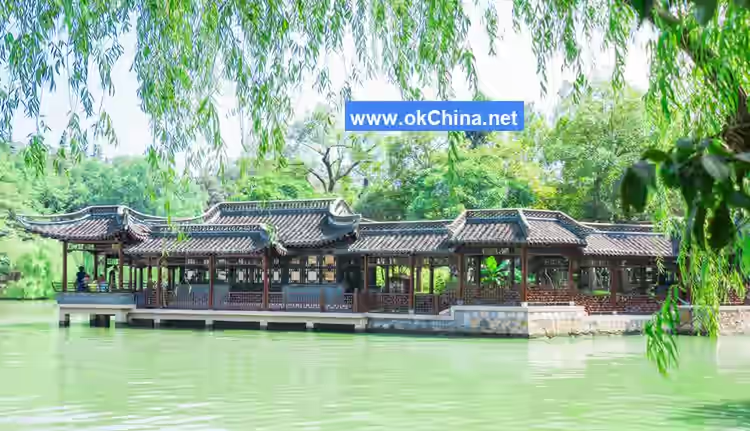
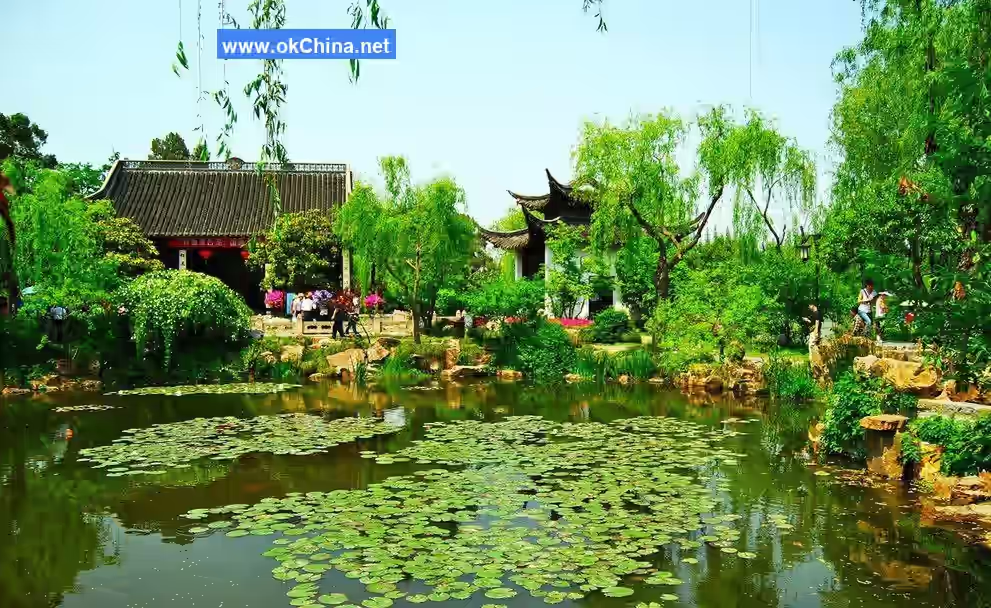
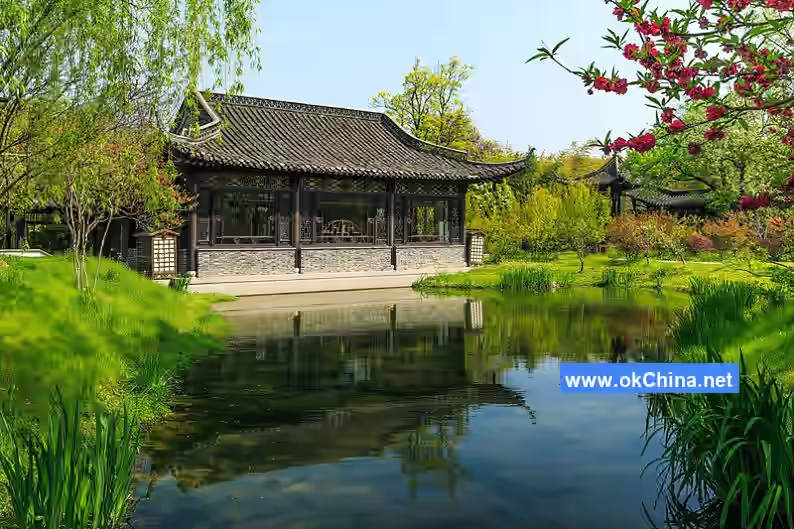
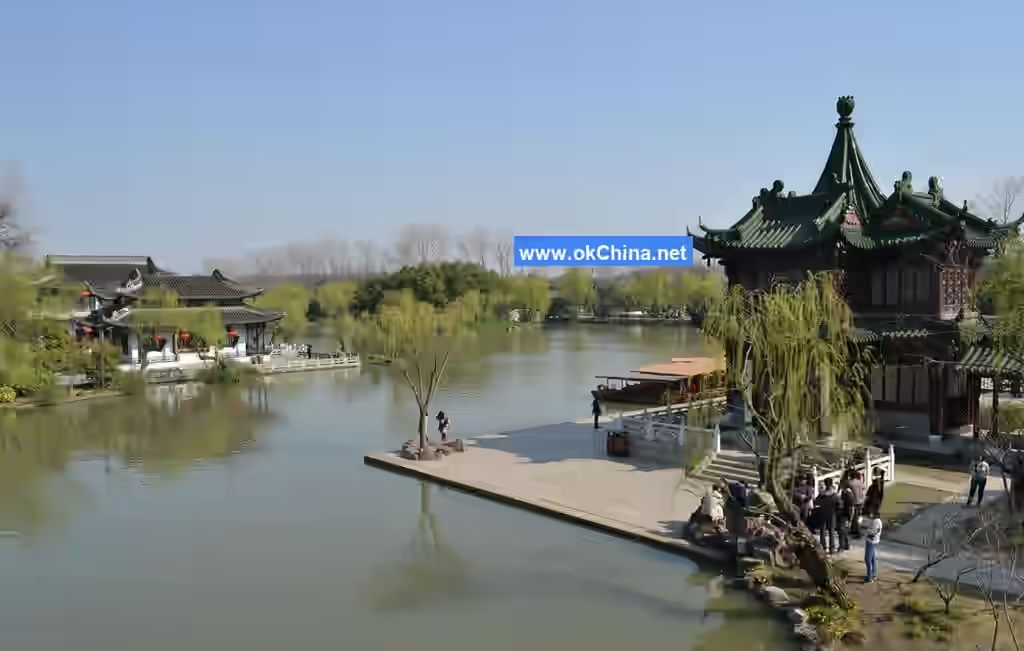
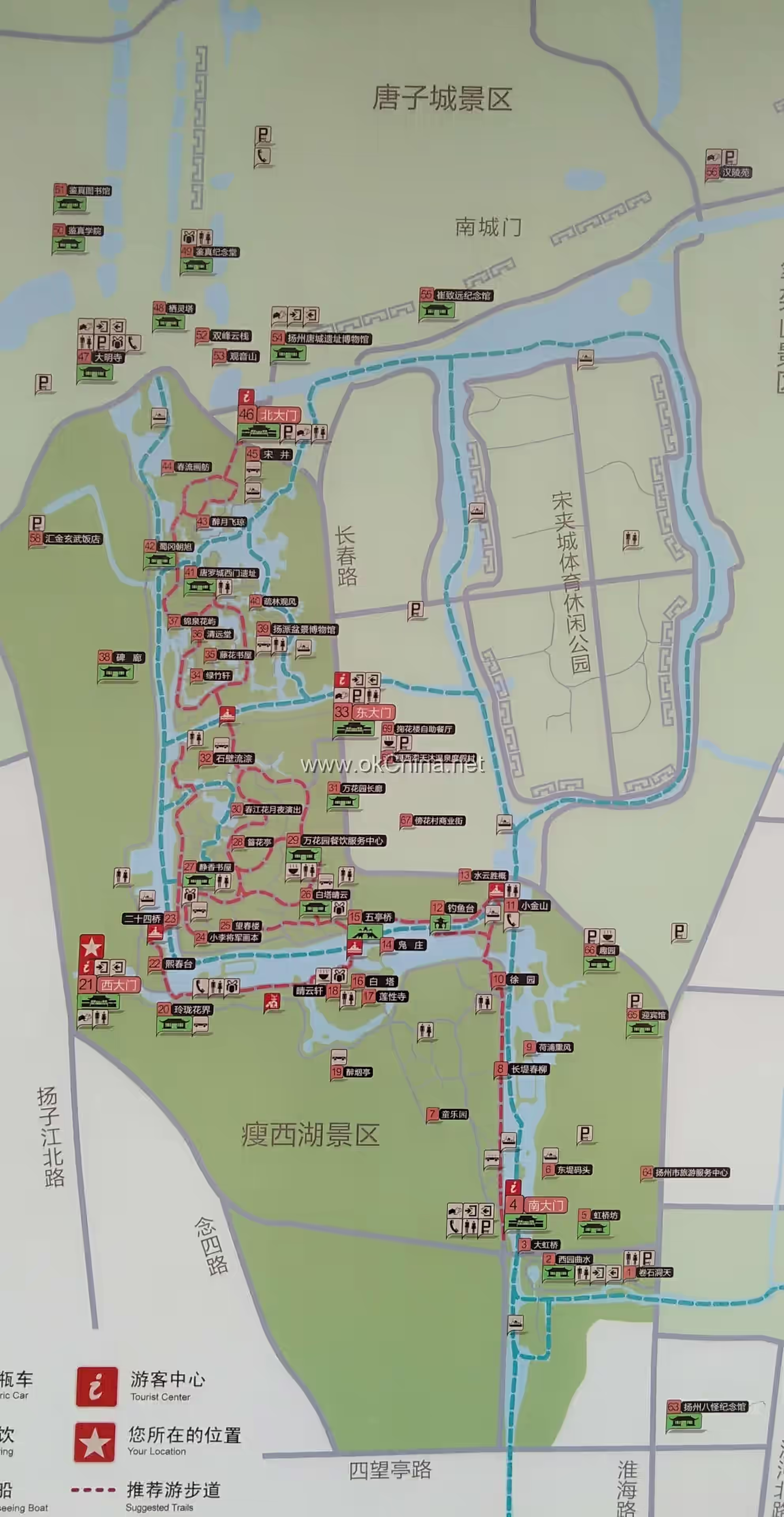
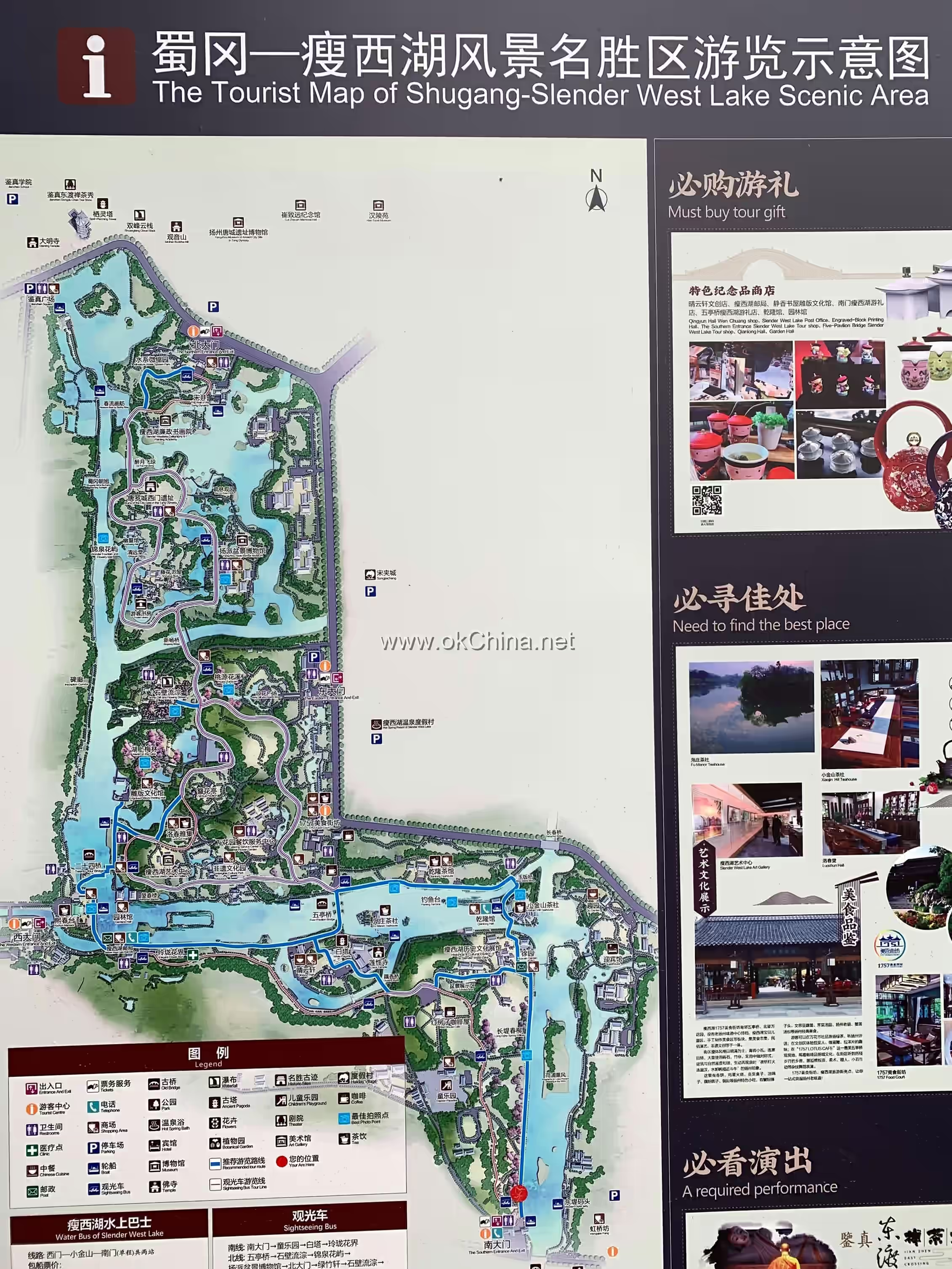
The attractions in the Slender West Lake Scenic Area are arranged in two forms: gardens within gardens and scattered layouts. For gardens within gardens, an inward-facing layout is generally adopted, such as White Pagoda in Clear Clouds and Quiet Fragrance Study. Generally, this requires a certain width of terrain for planning and arrangement. However, the terrain in the northern part of the Slender West Lake is long and narrow, so buildings are directly placed by the water's edge, adopting an expansive and discrete outward-facing layout. This makes the main facade of the buildings face the water, which is distinctly different from the traditional Chinese residential layout of facing south, thereby highlighting the characteristics of lakeside gardens. To enhance the contrast between solid and void, buildings are placed as close to the water as possible to create clear and complete reflections, such as Qingyan Room and Xiangxue Pavilion, where the platform rises from the water, making the buildings appear to float on the surface. Attractions in the Slender West Lake Scenic Area often form larger scales at river bends, such as Little Golden Hill, Xichun Terrace, and Wangchun Tower. Most buildings along the riverbank are elongated, and building combinations are primarily arranged longitudinally, aligning with the overall terrain of the scenic area and the direction of the riverbank.
3. Main Attractions
3.1 Lotus Bridge
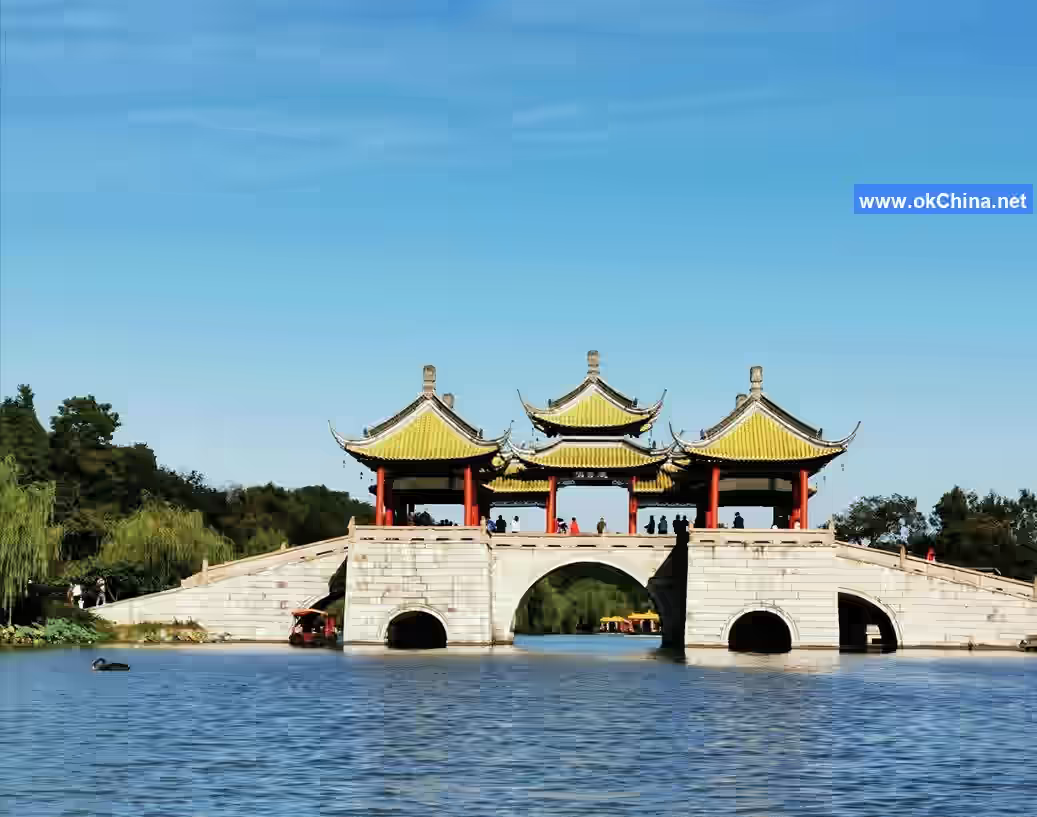
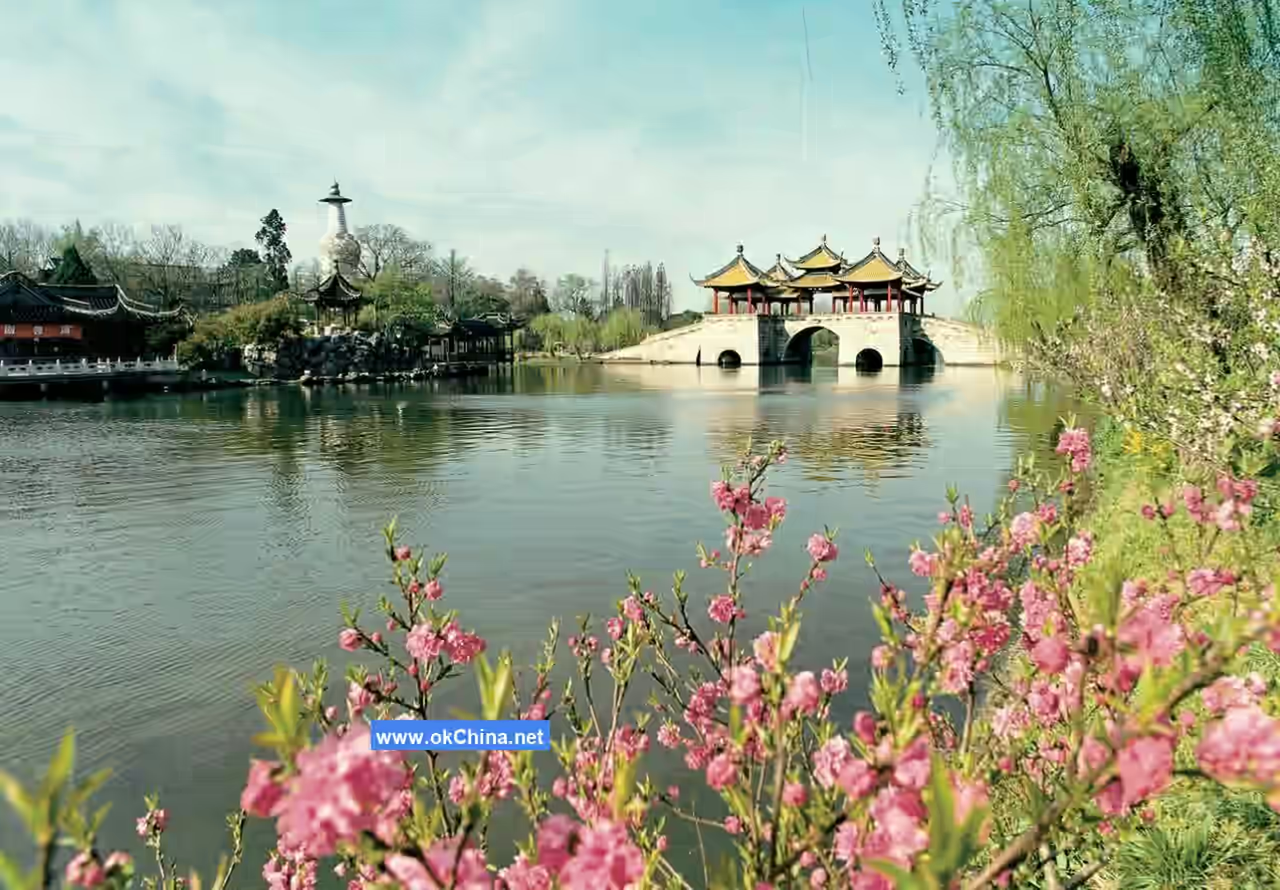
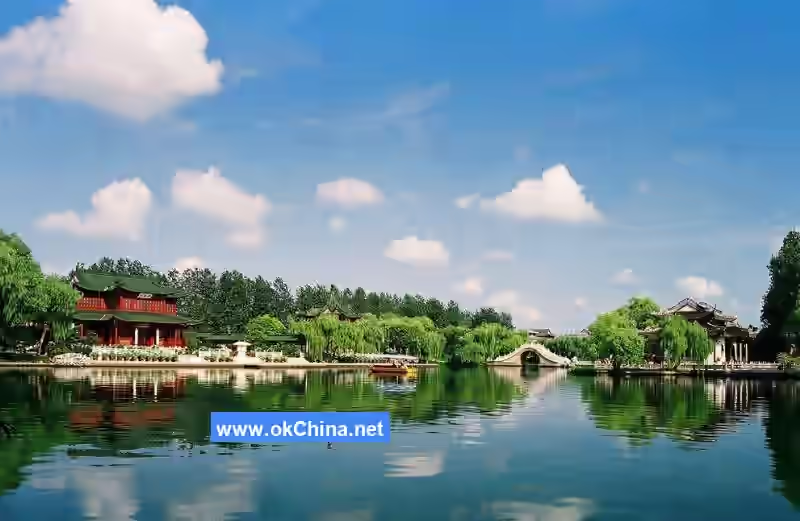
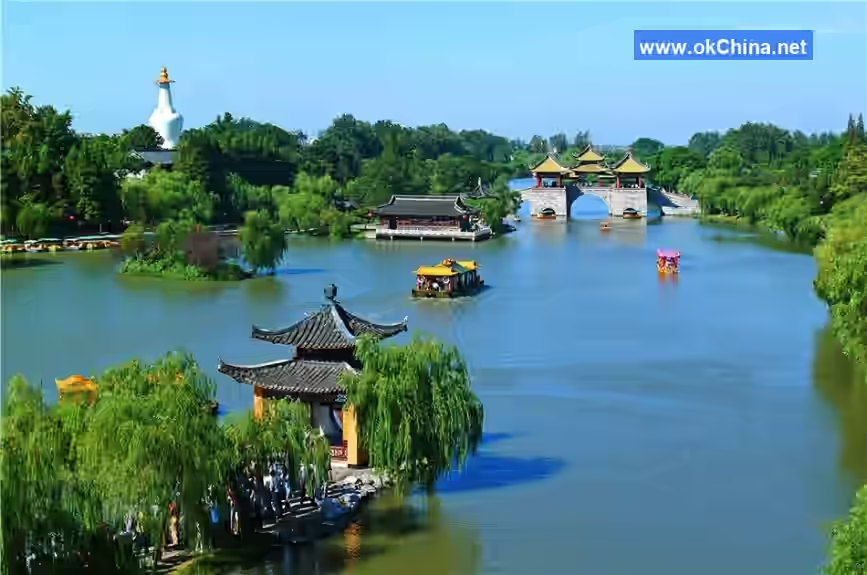
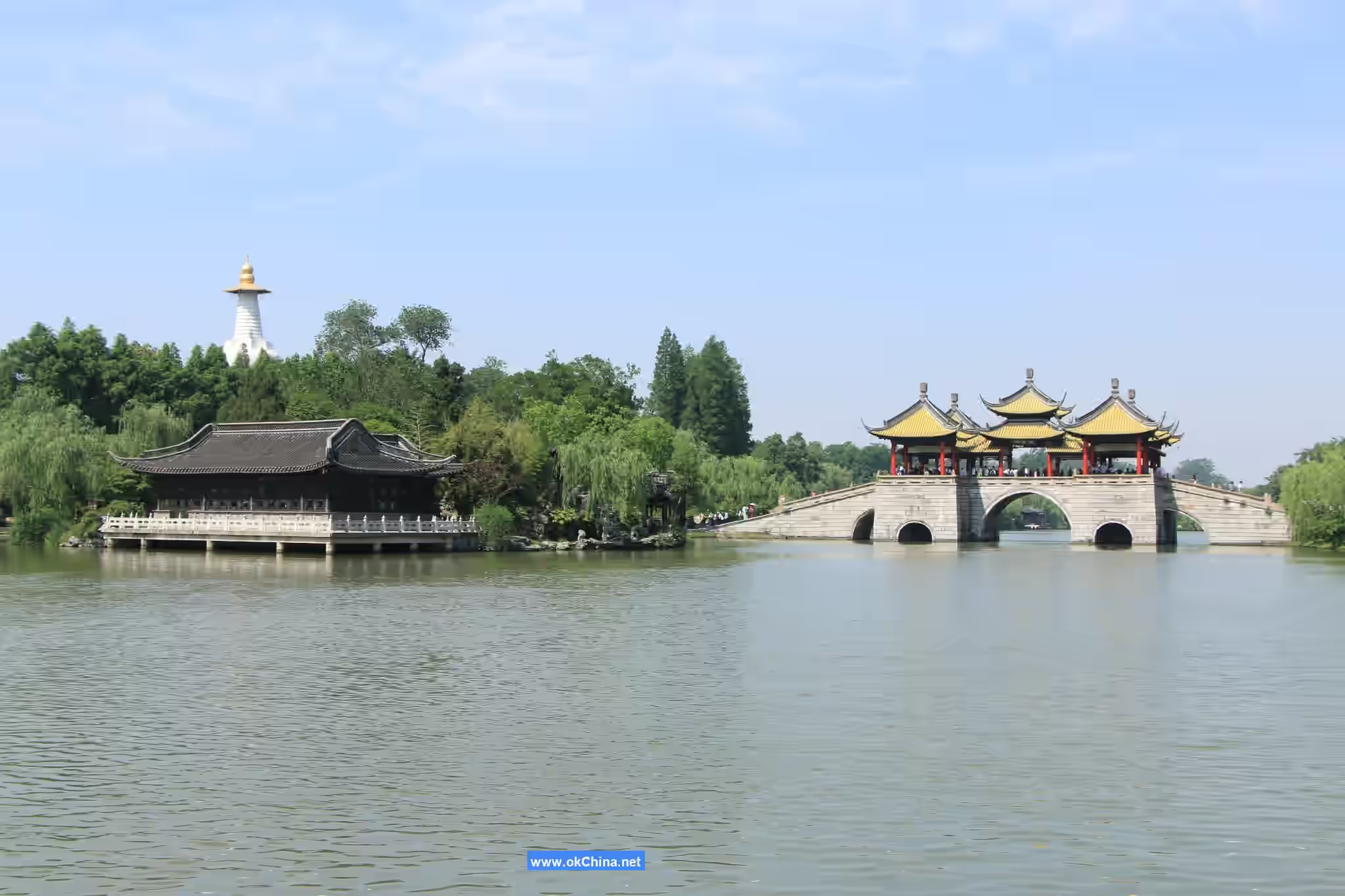
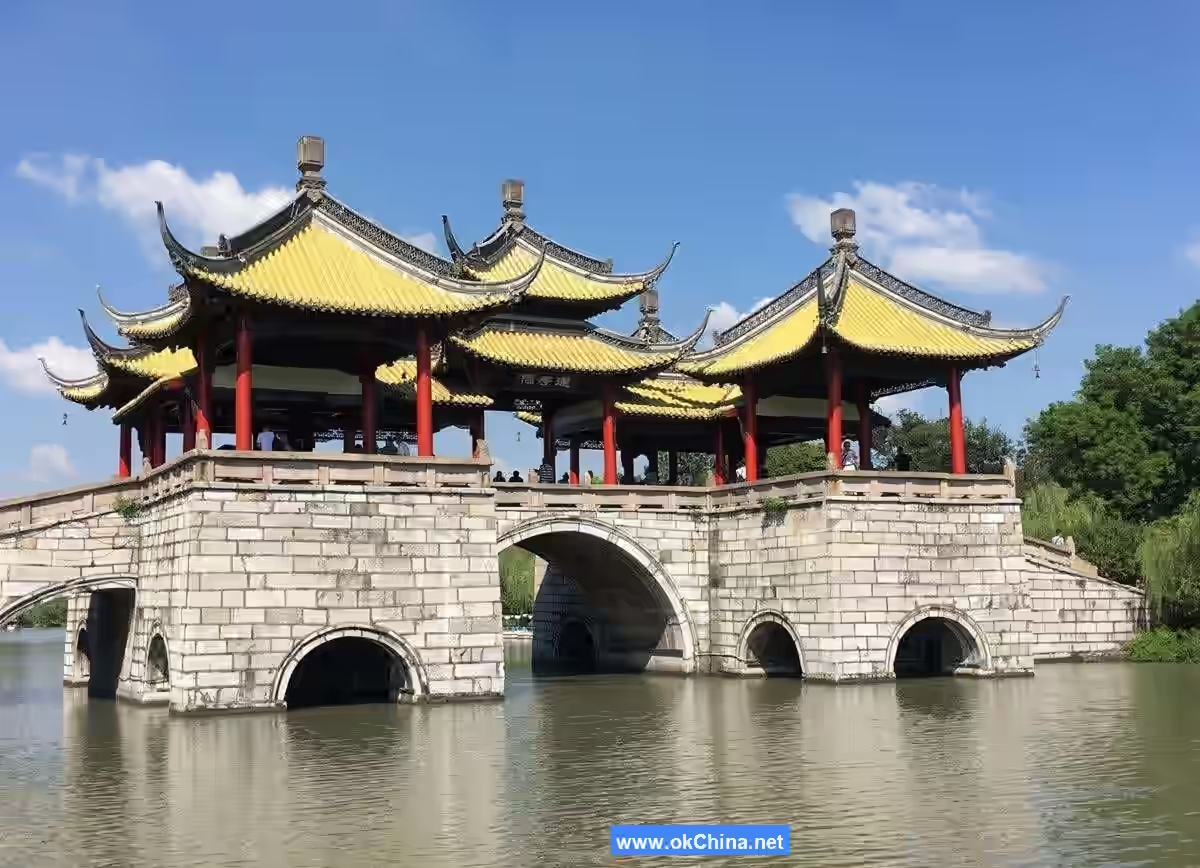
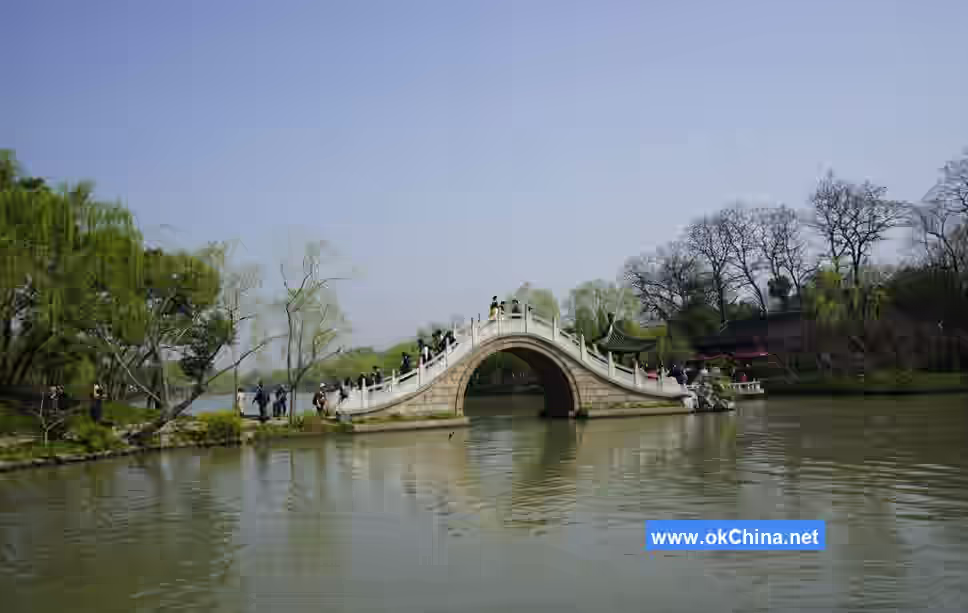
Lotus Bridge, also known as Five Pavilion Bridge, is located north of the White Pagoda, spanning the north and south banks of the Slender West Lake. Its shape resembles a blooming lotus. The bridge piers are built with bluestone, with a total of fifteen arched openings underneath. Viewed from the east and west sides, each side has five openings of varying sizes and shapes. The Qing Dynasty's "Pingshantang Tuzhi" records: "Five pavilions are placed on the bridge, with four wings below, totaling fifteen openings on the front and sides. When the moon is full, each opening holds a moon, with golden light shimmering, creating a uniquely spectacular view." This is precisely the unique aesthetic experience brought by the distinctive design of the bridge piers. Lotus Bridge has a unique shape, with rich variations in its piers and pavilions, making it an outstanding work with significant aesthetic characteristics in ancient Chinese bridge architecture. It was praised by the famous Chinese bridge expert Mao Yisheng as "the most elegant bridge in China."
3.2 White Pagoda
In the 49th year of the Qianlong reign of the Qing Dynasty (1784), Jiang Chun, the head of the Lianghuai salt administration, raised funds to imitate the White Pagoda in Beihai, Beijing, and built it on the old pagoda foundation. The pagoda is over 30 meters tall, with a square brick and stone carved flower base. The pagoda body above is shaped like an ancient plum vase, topped with a canopy, and a gourd-shaped bronze finial stands upright in the center. The famous architect Chen Congzhou, in his "Talks on Gardens," compared the Beihai Pagoda with the one in Yangzhou, saying: "However, its proportions are elegant and slender, standing gracefully like jade, with clear clouds over water, differing from the厚重工稳 (solid and stable) Beihai Pagoda." It can be said that Yangzhou's White Pagoda has an inclusive personality, integrating northern and southern styles. It draws inspiration from the characteristics of the Beihai Pagoda while incorporating the unique气质 (temperament) of Jiangnan architecture.
3.3 Brocade Mirror Pavilion
Brocade Mirror Pavilion is a water pavilion that combines a bridge and a tower, reconstructed based on the description in Li Dou's "Yangzhou Huafang Lu" (The Pleasure Boats of Yangzhou). It has three bays with flying eaves and double stories, shaped like the character "品" (pin). It spans a small river (夹河, Jia River), with the left and right bays crossing the two banks, leaving the middle空着 (empty) to allow small boats to pass. Pedestrians crossing the river must ascend the stairs to the second floor as if crossing a bridge, then descend the stairs on the other side to reach the opposite bank. The current Brocade Mirror Pavilion is a mixed structure of concrete and wood.
3.4 Xichun Terrace
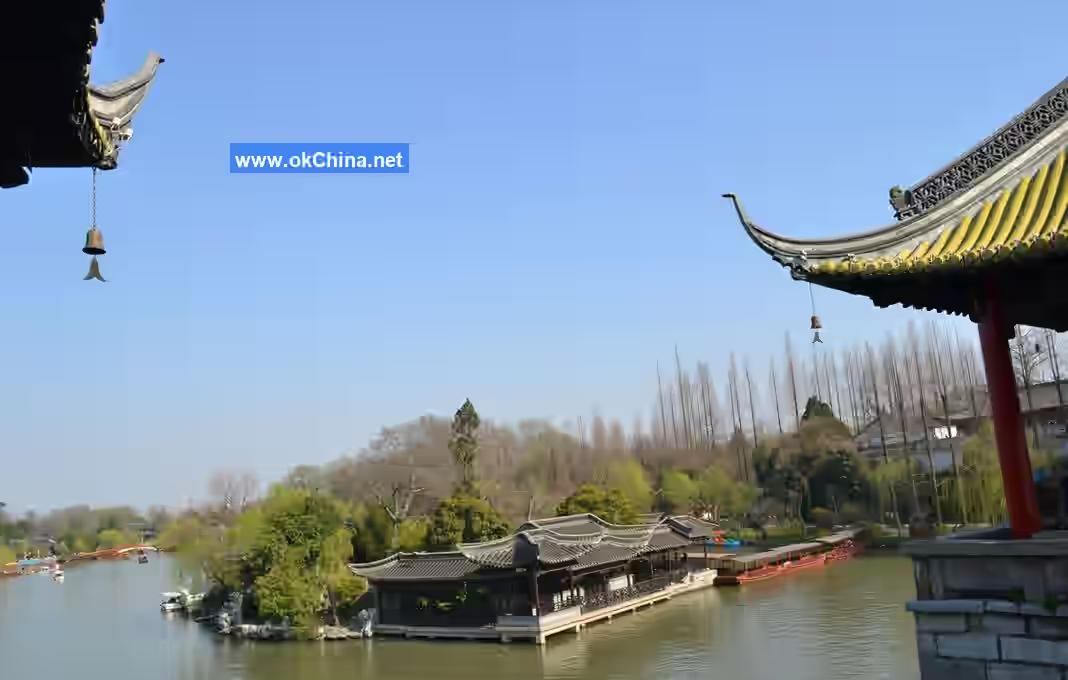
Xichun Terrace is located in the western section of the Slender West Lake, at the turning point of the waterway from Lotus Bridge to Pingshantang. It was originally built by Emperor Qianlong for his mother's birthday celebration and was once called the "Number One Lakeside Pavilion in China." The reconstructed building has a roof entirely covered with green glazed cylindrical tiles, complementing the yellow tiles and red pillars of the distant Five Pavilion Bridge and the jade body and golden top of the White Pagoda, reflecting the magnificent and grand style of imperial gardens. As a pavilion built by the water, it is also a spot for admiring the moon within the cultural landscape of the Slender West Lake.
3.5 Wangchun Tower
Wangchun Tower is in the style of Jiangnan gardens. Its architectural scale is subordinate to Xichun Terrace, with a色调 (color tone) that appears清心淡雅 (pure and elegant), embodying the秀 (delicacy) of the south. The lower level of Wangchun Tower has two rooms, north and south, respectively designed as a water courtyard and a mountain courtyard, bringing山水景色 (mountain and water scenery) indoors. Removing the doors and windows upstairs turns it into a terrace, making it an excellent place for admiring the moon during the Mid-Autumn Festival.
3.6 Xu Garden (Peach Blossom Dock)
Peach Blossom Dock is located at the northernmost end of the Long Dyke of the Slender West Lake, facing Little Golden Hill across the water to the north, backed by an earthen mound, with terrain higher in the southwest and lower in the northeast. Peach trees are planted all over the earthen mound in the southwest of the garden. During the spring blooming season, the red and white blossoms intermingle, with a refreshing fragrance, forming a unique景观构成 (landscape composition) along the Slender West Lake. Li Dou praised the northern suburbs of Yangzhou, saying, "Among the red peach blossoms, those on the west bank at Peach Blossom Dock are the best." Historical records indicate that the garden was built during the Qing Dynasty and was successively owned during the Qianlong period by Huang Weiquan, former Assistant Surveillance Commissioner and former Tongpan of Jiaxing, and Zheng Zhongshan, a salt merchant from Yizheng. The main buildings in the garden include Shufeng Hall, Chengxian Pavilion, and Zhengxia Hall. The vegetation is primarily peach, bamboo, and lotus, with peach blossoms being the most famous. The existing garden buildings at Peach Blossom Dock are remnants from the early Republic of China era. In the fourth year of the Republic of China (1915), to commemorate the warlord Xu Baoshan, locals restored buildings such as Shufeng Hall, Tingli Hall, and Spring Grass Pond吟榭 (poetic pavilion) on the旧址 (old site) of Peach Blossom Dock using traditional craftsmanship and renamed it "Xu Garden."
3.7 Spring Willows on the Long Dyke
Spring Willows on the Long Dyke, also known as "Willow Dyke" or "Sui Dyke Willows," starts from the west bank of Hongqiao (Rainbow Bridge). Willow and peach trees are planted along the dyke, forming a long and narrow带状景观 (ribbon-like landscape). The pavilions, flowers, grass, and lake展开 (unfold) like a painting along the dyke, stretching all the way to Peach Blossom Dock. It was built during the Qianlong period of the Qing Dynasty and reconstructed in the fourth year of the Republic of China (1915), serving as the渲染之篇 (embellishing chapter) of the Slender West Lake cultural landscape. There is a pavilion on the Long Dyke, not at the halfway point but at the one-third point, chosen under the inspiration of the golden ratio.
3.8 Rainbow Bridge Scenic View
The Great Rainbow Bridge is a three-arch bridge. The scenery here is called "Rainbow Bridge Scenic View" or "Rainbow Bridge Xiuxi," one of the twenty-four scenic spots of the Qianlong period in the Qing Dynasty. The Great Rainbow Bridge was first built during the Chongzhen period of the Ming Dynasty. Because it was围以红栏 (enclosed with red railings), it was originally named "Red Bridge." In the first year of the Qianlong reign of the Qing Dynasty (1736), it was rebuilt into a stone bridge, resembling a "rainbow lying over waves." Many literati and scholars have left their footprints and poems here, including the famous Cao Yin, Kong Shangren, Zheng Banqiao, and Lu Yayu.
3.9 Stone Cliff and Flowing Stream
Stone Cliff and Flowing Stream, also known as Water Bamboo Residence, is located on the east bank of the lake north of Wangchun Tower, connecting to Jinquan Huayu (Broken Spring and Flower Islet) to the north. It was a private garden built by Xu Shiye, a Fengchen Yuanqing (official title) and salt merchant from She County. Construction began during the Qianlong period. In the 30th year of the Qianlong reign (1765), Emperor Qianlong赐名 (bestowed the name) "Water Bamboo Residence" and presented couplets and a plaque. Historical documents such as "Pingshantang Tuzhi" and "Yangzhou Huafang Lu" record that there were two scenic spots in the garden: "Little Square Pot and Stone Cliff and Flowing Stream." Today, part of Stone Cliff and Flowing Stream retains the topographic feature of having a "夹河" (narrow river) from the original scene. In 1991 and 2007, two groups of garden architectural complexes, Quiet Fragrance Study and Stone Cliff and Flowing Stream, were reconstructed on the southern and northeastern sides of the遗址 (site), respectively. Their architectural names correspond with historical records. The reconstructed landscape features假山 (rockeries) piled with yellow stones, with water引 (channeled) from stone crevices泻 (cascading) into the池 (pond),基本延续 (basically continuing) the景观特征 (landscape characteristic) of the Stone Cliff and Flowing Stream scene, which is "胜 (renowned) for its water and rocks."
3.10 Wild Duck Villa
Wild Duck Villa is located on a lake islet southeast of Lotus Bridge. It was built in the tenth year of the Republic of China (1921) by Chen Chenshuo, the son of the late Qing Dynasty Yangzhou calligrapher and painter Chen Chongqing and a Yangzhou乡绅 (local gentry). Because it is on an islet and resembles a wild duck浮水 (floating on water), it is named Wild Duck Villa. Its scenic composition以小取胜 (wins with smallness), being delicate and exquisite. Pavilions, waterside pavilions, corridors, and towers come in diverse forms. The waterside pavilions are滨水 (by the water), the corridors form曲尺 (right angles), and the山池木石 (rockeries, ponds, trees, and stones) are each配置得当 (appropriately arranged),构成 (forming) an elegant and pleasant优美景观 (beautiful landscape) with勾心斗角 (intricate and clever design).### 3.11 Xiyuan Qushui Xiyuan Qushui was formerly the Xiyuan Tea House, located at the confluence of the Slender West Lake, South Lake, and the North City Moat waters. Its name derives from its geographical position where the water flows in winding courses. This area is distinguished by its water features, with islands in the water and bridges beyond the islands, accompanied by the murmuring sound of flowing streams. Along the water's edge, architectural styles characteristic of the Ming and Qing dynasties line the path.
3.12 Four Bridges in the Misty Rain
Four Bridges in the Misty Rain is situated at a bend in the Slender West Lake, east of Meiling Chun Shen and north of Jingxiang Garden. To the north lies the Changchun Bridge, to the west the Lotus Bridge, to the south the Hong Bridge and Chunbo Bridge. The scenery of these four bridges converges within one garden, hence the name. On misty, rainy days, ascending the "Four Bridges in the Misty Rain" tower offers a distant view of four bridges, each distinct in color and form, veiled in the mist and rain, appearing and disappearing intermittently like rainbows.
3.13 Little Golden Hill
Little Golden Hill, also known as "Meiling Chun Shen" (Deep Spring of Plum Hill), is located at a water bend east of the Five-Pavilion Bridge and north of the Hong Bridge. The terrain around the Slender West Lake is generally flat. Little Golden Hill was formed by accumulating earth into a hill, becoming the highest natural point in the lake area. Existing structures include the Guandi Temple, Lakeside Thatched Hall, Green Shade Hall, Qin Room (for guqin), Qi Room (for chess), Moon View Pavilion, and Breeze Pavilion, along with the Small Rainbow Bridge and Jade Slab Bridge connecting the northern and southern banks of the island. This area is a garden architectural complex integrating lake, islands, islets, bridges, and ancient buildings. Most buildings on the island are situated with hills at their back and facing the water, arranged at varying heights, providing both excellent scenic effects and optimal viewing points. Zhu Ziqing praised Little Golden Hill, saying it is "best for viewing the water, and also good for admiring the moon."
3.14 Fishing Platform
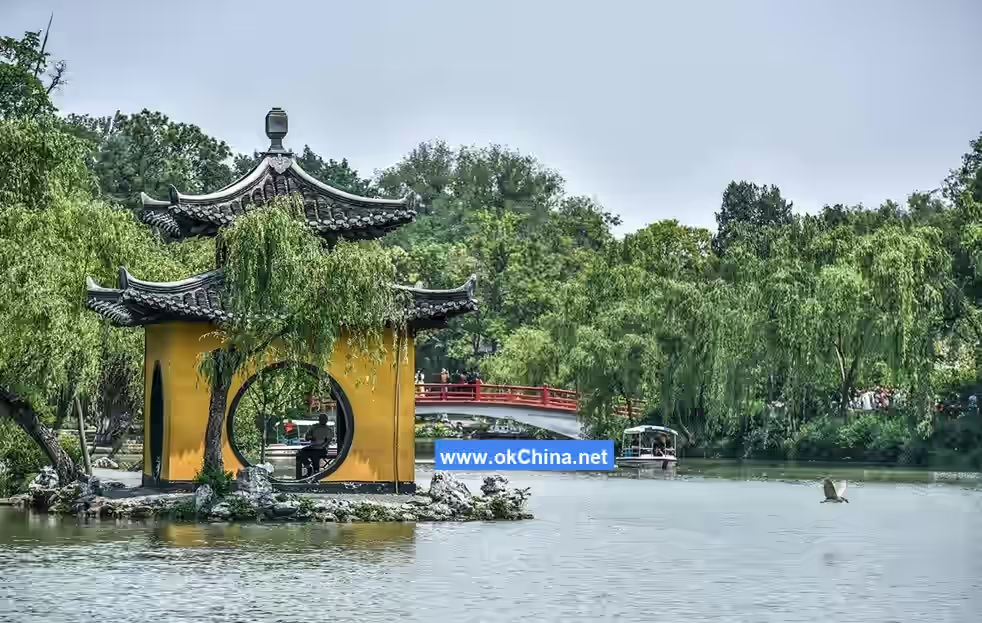
Chuitai, also known as the "Fishing Platform," was first built during the Liu Song period of the Southern Dynasties and was reconstructed around 1757 (the 22nd year of the Qianlong reign in the Qing Dynasty) by the wealthy salt merchant Cheng Zhiquan of Yangzhou. The pavilion is covered with grey tiles, features double eaves with upturned corners, and is surrounded by yellow walls. The eastern wall is entirely open, while the other three walls have moon gate openings. Viewed from the east, the Lotus Bridge and the White Pagoda are perfectly framed within the western and southern moon gates respectively. Combined with their reflections on the water, they create an excellent scenic composition through mutual borrowing of scenery.
3.15 Jingxiang Study
Jingxiang Study was once the studio of Jin Nong, a representative figure of the Eight Eccentrics of Yangzhou, and has been reconstructed in recent years. The four large characters on the plaque are collected from the calligraphy of Jin Nong, one of the Eight Eccentrics; the script is square, simple, and vigorous. Within the courtyard, ponds were dug, hills piled, bridges built, and houses constructed, with winding corridors and secluded paths. Hundreds of plum trees are planted around the "Jingxiang Study," including wintersweet and spring plum in the courtyard. Plums are carved on the study's furniture and railings, and even the courtyard gate is shaped like a plum blossom.
3.16 Moon View Pavilion
Yangzhou has many places for moon viewing, and the Moon View Pavilion is one of them. The "Moon View Pavilion" faces east, overlooking an expansive lake. Whenever the bright moon rises in the east, standing by the railings allows one to see the moon in the sky and its reflection in the water shining upon each other, evoking the意境 of "the moonlight flooding the ground like water, clouds rising to fill the sky with mountains." The rosewood furniture inside the Moon View Pavilion also features carvings related to moon appreciation. Lotus flowers, mandarin ducks, lotus leaves, and lotus roots are carved naturally and vividly, representing masterpieces of Yangzhou wood carving craftsmanship.
4. Cultural Resources
4.1 Origin of the Name
The name "Slender West Lake" first appeared in written records in Wu Qi's "Preface to Yangzhou Drumsong Lyrics" from the early Qing Dynasty: "A waterway north of the city connects to Pingshan Hall, named Slender West Lake, originally called Baozhang Lake." In 1736 (the first year of the Qianlong reign), the poet Wang Hang from Qiantang (Hangzhou), attracted by its fame, came to Yangzhou. After fully enjoying the beautiful scenery, he compared it to the West Lake of his hometown and composed a poem: "Willows connect continuously to fading weeds, the duck-tooth-like rainbow bridge resembles a painted scene. It is also a 'pot of melting gold,' thus it should be called Slender West Lake."
4.2 History and Culture
4.2.1 Historical Development
Ming Dynasty
During the Ming Dynasty, due to the renovation of the Grand Canal, Yangzhou regained its status as a vital north-south transportation route and a distribution center for the salt industry in the Lianghuai region. Over time, the Slender West Lake became silted at its center. Salt merchants funded its dredging and constructed some gardens along its eastern and western banks. The famous lake bridge—Hong Bridge (today's Great Rainbow Bridge)—was built during this period. In the late Ming, wealthy merchants and nobles vied to hire renowned garden designers to plan and manage gardens along both banks of the river. They fully utilized the long, rope-like water system of the Slender West Lake, adapting to the terrain to create a garden意境 described as "endless to appreciate and infinitely回味."
Qing Dynasty
The early Qing Dynasty marked the preliminary phase of the overall development of Slender West Lake gardens. During this stage, conscious garden landscaping began near the Slender West Lake. However, due to limited scale and relatively scattered locations, the gardens primarily featured natural landscapes without forming a cohesive overall scenic effect. Large-scale construction of Slender West Lake gardens occurred during the Qianlong period, with many of its scenic spots originating from this era. During Emperor Qianlong's southern tours, coinciding with the prosperity of Yangzhou's salt industry, local gentry and merchants competed to please the emperor. To earn the honor of an imperial visit from Emperor Qianlong, the "Thirty Miles of Towers and Pavilions" emerged, with gardens vying in novelty and uniqueness. "The Pleasure Boats of Yangzhou" records the spectacular scenes of "every household residing within verdant city walls" and "everywhere misty waves and towers." The basic layout of the Slender West Lake garden landscape was formed during the Kangxi and Qianlong reigns of the Qing Dynasty, earning the reputation of "gardens flourishing, surpassing all under heaven." The Slender West Lake itself thus became the most representative area of Yangzhou gardens. After 1815 (the 20th year of the Jiaqing reign), as Yangzhou's salt industry declined, the lakeside gardens gradually fell into desolation and disrepair. Subsequently, the area suffered damage during the Taiping Rebellion, leaving it in ruins. During the Guangxu reign, a small part, including the Five-Pavilion Bridge and Little Golden Hill, was restored.
Modern Era
With the loss of交通 advantages, Yangzhou eventually lost its superior交通 position. Economic depression, coupled with war damage, severely impacted the Slender West Lake gardens during this period. However, due to the lake's role in Yangzhou's urban life and production, garden construction continued to progress. Despite repeated damage, there were constant repairs and reconstructions of original landscapes, along with the addition of new ones. In 1920 (the 9th year of the Republic of China), local gentry Chen Chenshuo built Fu Zhuang east of the Five-Pavilion Bridge.
Contemporary Era
After the founding of the People's Republic of China, comprehensive restoration of the Slender West Lake gardens began. While preserving the characteristics of the original classical garden landscapes, modern needs for景观 functionality were considered, leading to the appropriate addition of some functional buildings and related facilities. In 1980, attractions such as the Twenty-Four Bridge, Xichun Terrace, and Juanshi Dongtian were restored. In 2007, Four Bridges in the Misty Rain and Shibi Liucong were restored. In December 2013, the Yangzhou Slender West Lake Tunnel was successfully completed.
4.2.2 Poetry Related to Slender West Lake
Poetry Related to Slender West Lake
| Work Title | Author | Dynasty | |--------------------|--------|---------| | "Passing Yangzhou" | Wei Zhuang | Tang Dynasty | | "Ode to Baozhang River" | Wang Hang | Qing Dynasty |
4.2.3 Buddhist Elements in Slender West Lake
The garden architecture of Slender West Lake exhibits typical Buddhist cultural characteristics. For example, the famous White Pagoda of Slender West Lake is a temple pagoda, typical of Lamaist monastery pagodas. The Lotus Bridge of Slender West Lake, commonly known as the Five-Pavilion Bridge, is the symbol of Slender West Lake. Built on the Lotus Embankment with five pavilions on the bridge, it was constructed in 1757 by the Salt Censor Gao Heng and Yangzhou salt merchants to welcome Emperor Qianlong. The lotus is a Buddhist symbol, and the Lotus Bridge ingeniously combines Buddhist imagery with architecture. Viewed from above, the five wind pavilions on the bridge resemble five lotuses rising from the water, hence the name Lotus Bridge, forming a harmonious and unified visual effect with the White Pagoda.
4.3 Major Activities
4.3.1 "Summer of Slender West Lake" Lotus Festival
Historically, lotus planting and appreciation were popular in Yangzhou. The lakeside gardens of Slender West Lake feature lotus as a theme, with a scene called "Lotus Marsh in Breeze." Slender West Lake creates lotus-themed landscapes adapted to its local conditions, forming splendid lotus vistas. To meet the demand of citizens and tourists for viewing lotuses in summer, the Slender West Lake scenic area holds the "Summer of Slender West Lake" Lotus Festival annually from July 1st to August 31st. During the festival, nearly three hundred varieties and over twelve hundred pots of lotuses are arranged along the main tourist routes. Lotuses bloom successively on land and in the lake at Xichun Terrace, Xu Garden, Shuiyun Shenggai, Ouxiang Bridge, and Jinquan Huayu scenic areas. Additionally, lotus-themed calligraphy, painting, and photography exhibitions, as well as lotus-flavored snacks, are held to allow visitors to experience the charm of lotuses comprehensively.
4.3.2 "Intangible Cultural Heritage Month" Activity
The "Intangible Cultural Heritage Month" activity is held annually from September to October, themed "Protecting Intangible Cultural Heritage, Inheriting the Beauty of Intangible Culture." Through a new format combining performances, exhibitions, experiences, and interactions, it offers close encounters with ancient intangible heritage skills, showcasing the风采 of Yangzhou's intangible cultural heritage. Main activities include: diabolo performances, cormorant fishing demonstrations, Yangzhou paper-cutting, Yangzhou puppetry, fan painting, incense ceremony, local folk arts, woodblock printing experiences, and live demonstrations of Yang-style bonsai trimming and wiring.#### 4.3.3 Slender West Lake Flower Festival The Flower Festival is held annually from April to May, jointly organized by the China Flower Association and the Yangzhou Municipal People's Government, and hosted by the Slender West Lake Scenic Area. The festival takes place in the newly built Flower Garden, drawing on Yangzhou's profound cultural heritage. It integrates flower appreciation, floral art, flower-themed cuisine, wellness practices, and folk customs. Starting from the goal of showcasing Yangzhou's historical and cultural essence, the festival allows visitors to appreciate the beautiful scenery of Slender West Lake while gaining a deeper understanding of the essence of Yangzhou's traditional culture.
Comments
Post a Comment