
Shuidonggou Tourist Area, Yinchuan City
I. Introduction
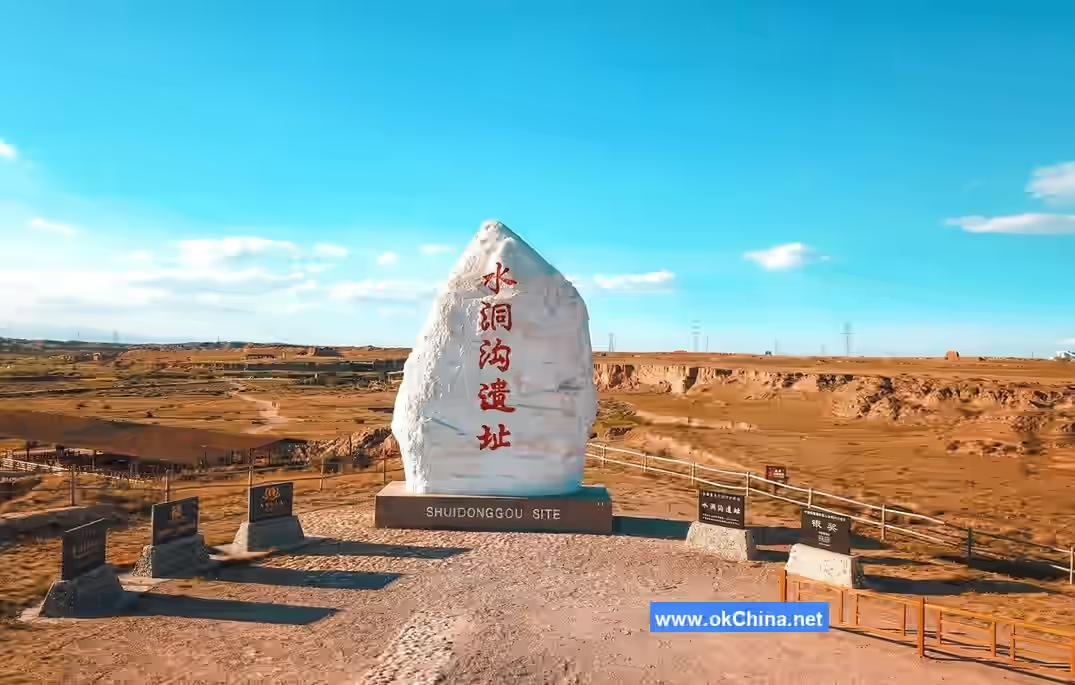
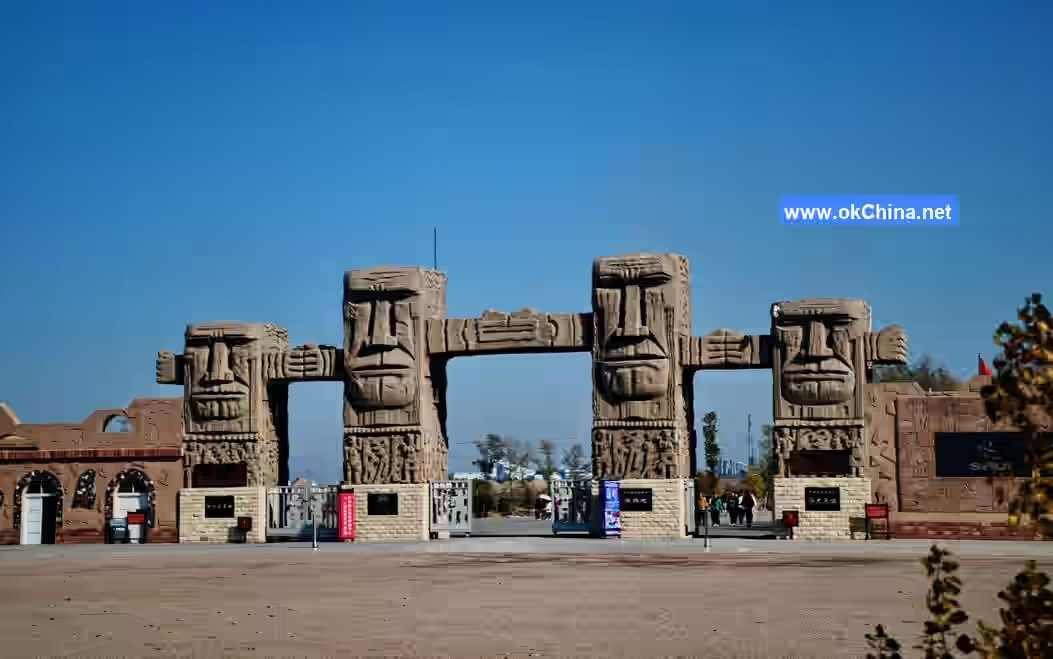
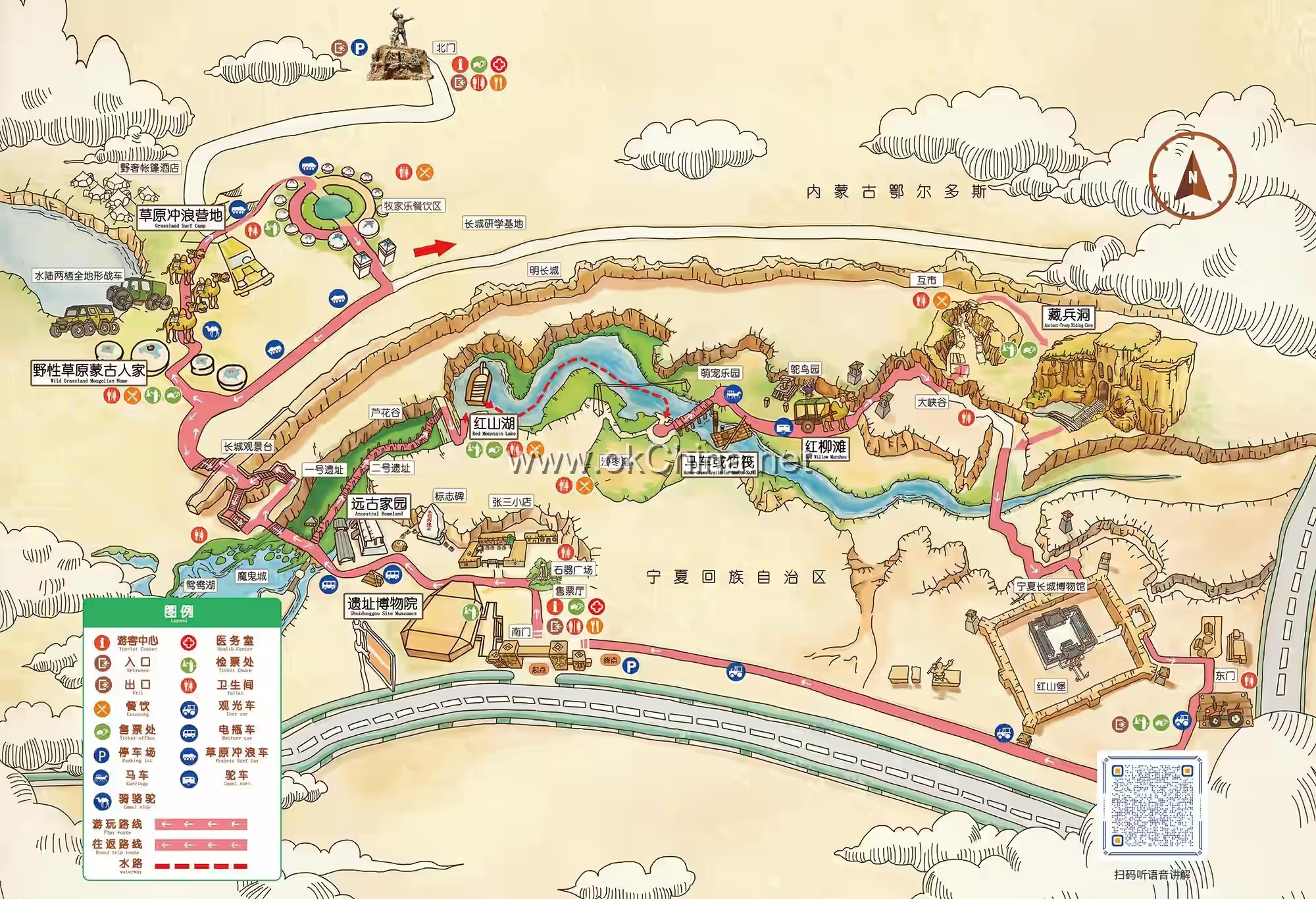
The Shuidonggou Site Tourist Area in Ningxia is located in Linhe Town, Lingwu City, Ningxia. It lies 19 kilometers west of Yinchuan City, 30 kilometers south of Lingwu City, and 11 kilometers from Hedong Airport. Situated in the core area of the Yinchuan Hedong tourism belt, it borders Ordos City of Inner Mongolia to the north and serves as a link connecting tourism between Ningxia and Inner Mongolia, covering an area of 7.8 square kilometers.
Shuidonggou is the earliest excavated Paleolithic cultural site in China, hailed as "the birthplace of Chinese prehistoric archaeology" and "a historical witness to cultural exchanges between China and the West." It is a National Key Cultural Relics Protection Unit, a National AAAAA Tourist Attraction, and a National Geopark. It has been listed by the state as one of the 100 major archaeological sites under national cultural relics protection and one of the "100 Archaeological Discoveries of Greatest Significance to Chinese Civilization." It has also been awarded the Silver Prize among "The 50 Most Worthwhile Places for Foreigners to Visit in China."
The Shuidonggou site records the historical witness of ancient humans thriving and struggling against nature, containing rich and precious prehistoric materials. It presents a picture of ancient human life dating back 40,000 years and is, to date, the only formally excavated Paleolithic site in the Yellow River region of China. In 1923, French paleontologists Pierre Teilhard de Chardin and Émile Licent discovered this prehistoric cultural site here. Excavations unearthed a large number of stone tools and animal fossils, making Shuidonggou the earliest discovered Paleolithic ancient human cultural site in China. Over the past 80 years, through six archaeological excavations, more than 30,000 stone tools and 67 ancient animal fossils have been unearthed at Shuidonggou.
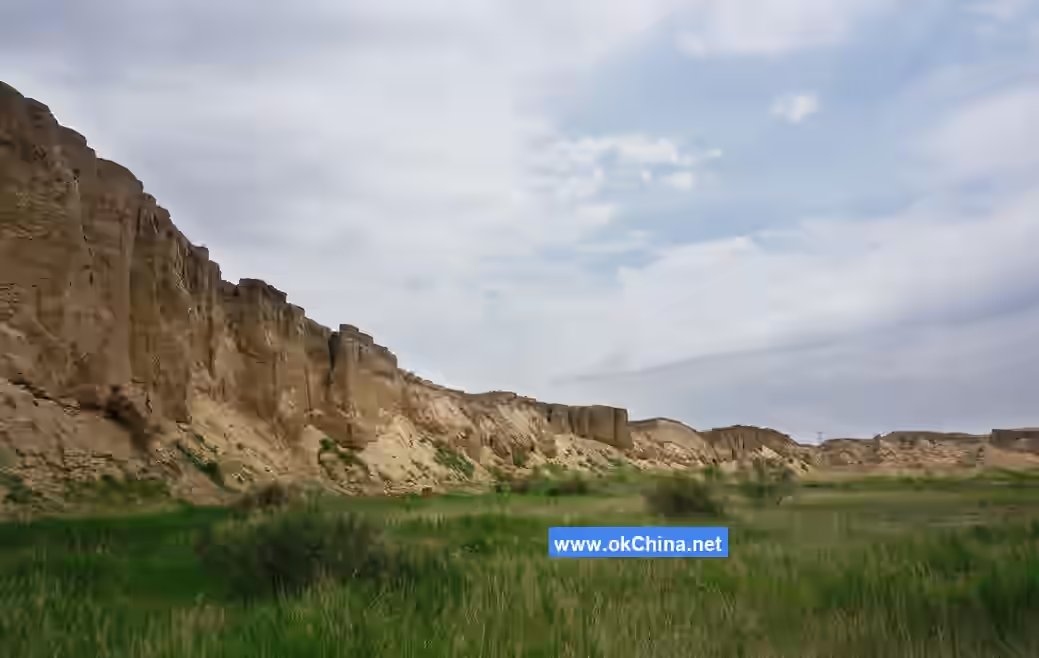
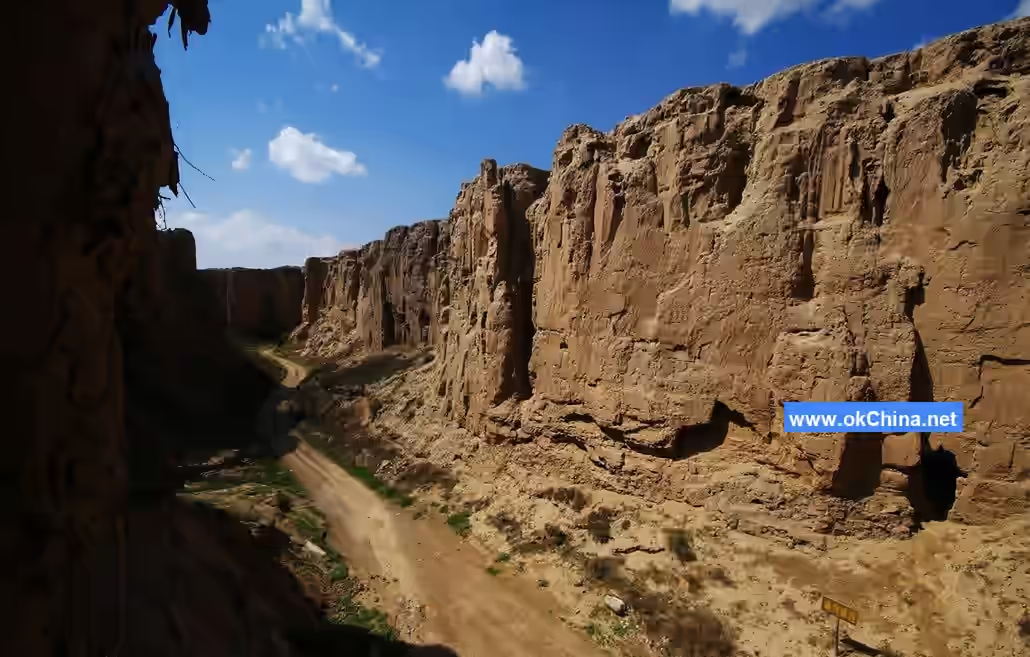
The Shuidonggou area also features the ancient Ming Dynasty Great Wall of northern China, "Hengcheng Great Wall," beacon towers, fortresses, barracks, and hidden soldier caves, forming the most completely preserved grand garden of military defense architecture in China. Located on the southern edge of the Ordos Plateau, Shuidonggou's Yardang landforms, sculpted by millions of years of wind and sand erosion, also concentrate over twenty spectacular earth forest landscapes, including Devil City, Sleeping Camel Ridge, Sky-Scraping Cliff, Broken Cloud Valley, and Tamarisk Gully.
II. Development History
Approximately 40,000 years ago, a group of hunter-gatherers migrating from the north arrived here, set up camp, and began writing the ancient history of the Shuidonggou area. Subsequently, successive generations of ancient people came here to produce and live, continuing the prehistoric cultural narrative. By 5,000 years ago, Neolithic communities were still knapping stone and making pottery here, passing on the torch of civilization...
In 1474, the Great Wall from Hengcheng to Yanchi was completed, becoming part of the Ming Dynasty Great Wall. In 1697, Emperor Kangxi of the Qing Dynasty personally led an expedition against the Dzungar tribe, passing through Shuidonggou along the ancient road south of the Great Wall, leaving a historical imprint.
The Six Excavations in Shuidonggou's History
In 1919, Belgian missionary Father Schram, while passing through Shuidonggou, stayed at "Zhang San's Inn." Schram discovered a rhinoceros skull fossil and a piece of artificially flaked quartzite on the cliff face of Shuidonggou. In Tianjin, he met French geologist and paleontologist Émile Licent and told him about his discovery in Ningxia.
In June 1923, Émile Licent and the renowned scholar Pierre Teilhard de Chardin arrived at Shuidonggou after concluding their investigations in parts of Gansu. By the cliff edge, they discovered mammal fossils exposed on the surface. A twelve-day investigation and excavation commenced, yielding over 300 kilograms of lithic artifacts and animal fossils, mainly including Paleolithic stone cores, scrapers, and points.
In the summer of 1960, the Sino-Soviet Paleontological Joint Expedition Team entered Shuidonggou and conducted the second excavation of the site.
In 1963, Pei Wenzhong, known as the "father of Chinese Paleolithic archaeology," personally led a team for the third excavation.
The 1980 archaeological excavation of Shuidonggou by the joint team of the Ningxia Museum and the Ningxia Geological Bureau was the fourth.
From 2003 to 2007, dozens of experts and scholars, filled with hope, conducted a new round of archaeological excavations. This time, it was a joint team from the Ningxia Institute of Cultural Relics and Archaeology and the Institute of Vertebrate Paleontology and Paleoanthropology (IVPP) of the Chinese Academy of Sciences. This excavation involved the most participants, lasted the longest, covered the largest area, and yielded the most fruitful results. It not only utilized advanced equipment such as GPS locators, total stations, and cameras but also invited experts in geology, chronology, paleoanthropology, and paleoenvironmental studies to the site for discussions and lectures. The archaeological achievements were particularly remarkable.
From June 10 to July 10, 2014, the Ningxia Shuidonggou Site held its fourth Cultural Tourism Festival and the sixth archaeological excavation. Experts from the IVPP of the Chinese Academy of Sciences and the Ningxia Institute of Archaeology conducted archaeological excavations at the Shuidonggou site. Over the 90 years since its discovery, renowned prehistoric archaeologists such as Pei Wenzhong, Jia Lanpo, and academician Liu Dongsheng have all come to excavate or investigate. Experts from the United States, South Korea, France, Japan, Russia, and other countries have also traveled from afar to visit.
On July 19, 2023, a press conference by the Information Office of the Ningxia Hui Autonomous Region announced new progress in the archaeology of the Shuidonggou site. Experts have clarified the stratigraphic sequence of Locality 1 at the Shuidonggou site and the formation process of the Paleolithic cultural layers. Research is ongoing regarding the human survival and evolution processes reflected by this information. From 2018 to 2022, the IVPP of the Chinese Academy of Sciences conducted five years of large-scale systematic excavations at Locality 1 of the Shuidonggou site. As of July 2023, related research work continues. The excavations have thoroughly clarified the stratigraphic sequence of Locality 1 and elucidated the formation process of its Paleolithic cultural layers. A large number of dating samples were collected during the excavation, and over 10,000 precious remains and artifacts were unearthed, including hearths, stone artifacts, and animal fossils.
III. Important Attractions
Site Museum
The Shuidonggou Site Museum's exterior is modeled after a stone core, a type of stone tool unearthed at Shuidonggou. With a floor area of 4,308 square meters, the museum uses sculptures, exhibition panels, projections, artifact displays, and guided explanations to convey knowledge about the origins of human evolution, the rise of Shuidonggou culture, and the processes and achievements of the five archaeological excavations at the Shuidonggou site. Additionally, there is a 12-minute dynamic performance that immerses visitors in a realistic experience of primitive humans' production, daily life, and their forced migration due to disasters like flash floods and earthquakes 30,000 years ago.
Immersive Experience: The Crazy Primitive Man
The immersive experience hall integrates high technology, artistry, and literary elements, reversing the flow of tens of thousands of years of time and historical scenes. It allows you to witness firsthand the transformation of ancient Shuidonggou from lush vegetation and abundant wildlife to climate change and environmental degradation, forcing the Shuidonggou people to migrate far away. Experience alongside the ancient inhabitants of Shuidonggou the gathering, hunting, rituals, courtship, roasting prey around bonfires, singing, and dancing of our ancestors 30,000 years ago, as well as the震撼 scenes of disasters like rainstorms, floods, and earthquakes. Through high-tech realistic reenactments, it transports you across 30,000 years of time and space.
Zhang San's Inn
In 1923, when the melodious sound of camel bells gradually approached from afar, the owner of a cart and horse inn named Zhang San knew that guests must be arriving from a distance. Therefore, the owner, Zhang San, and his wife stood at the door early to welcome them. The visitors were two foreigners with blond hair and blue eyes. Later, the Zhang couple learned they were the French paleontologists Pierre Teilhard de Chardin and Émile Licent. They had set out from Tianjin for an investigation along the Yellow River and, upon passing Shuidonggou as dusk fell, stayed at Zhang San's Inn.
The courtyard displays four statues: French paleontologists Pierre Teilhard de Chardin and Émile Licent, and Chinese archaeologists Pei Wenzhong and Jia Lanpo. These individuals all made significant contributions to the archaeological excavations at Shuidonggou.
Shuidonggou Village
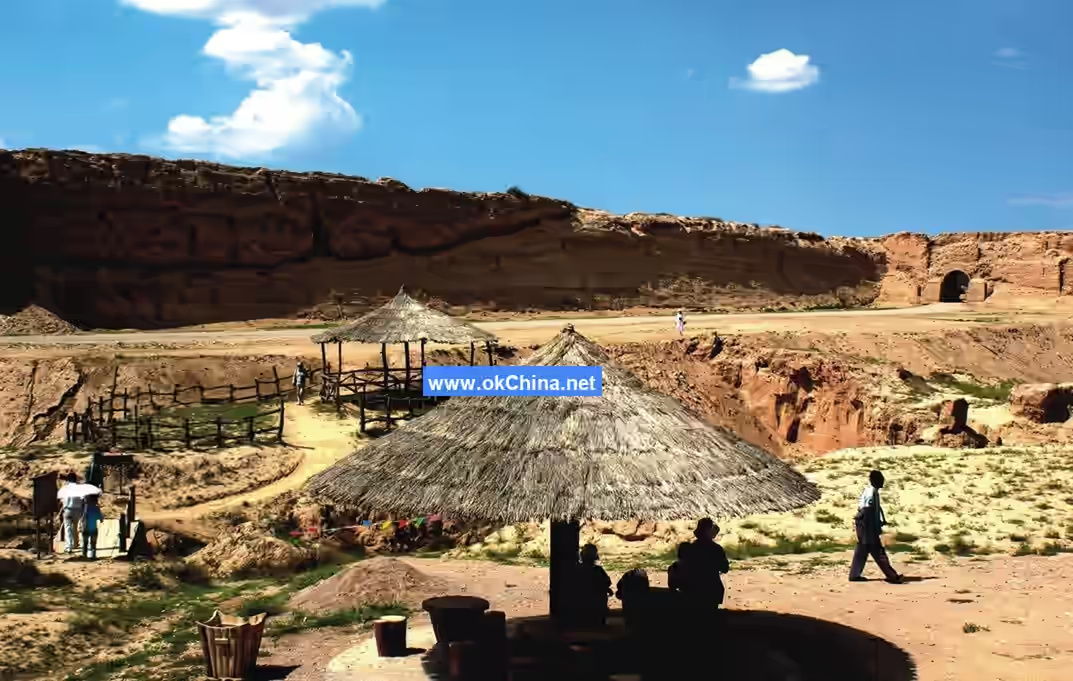
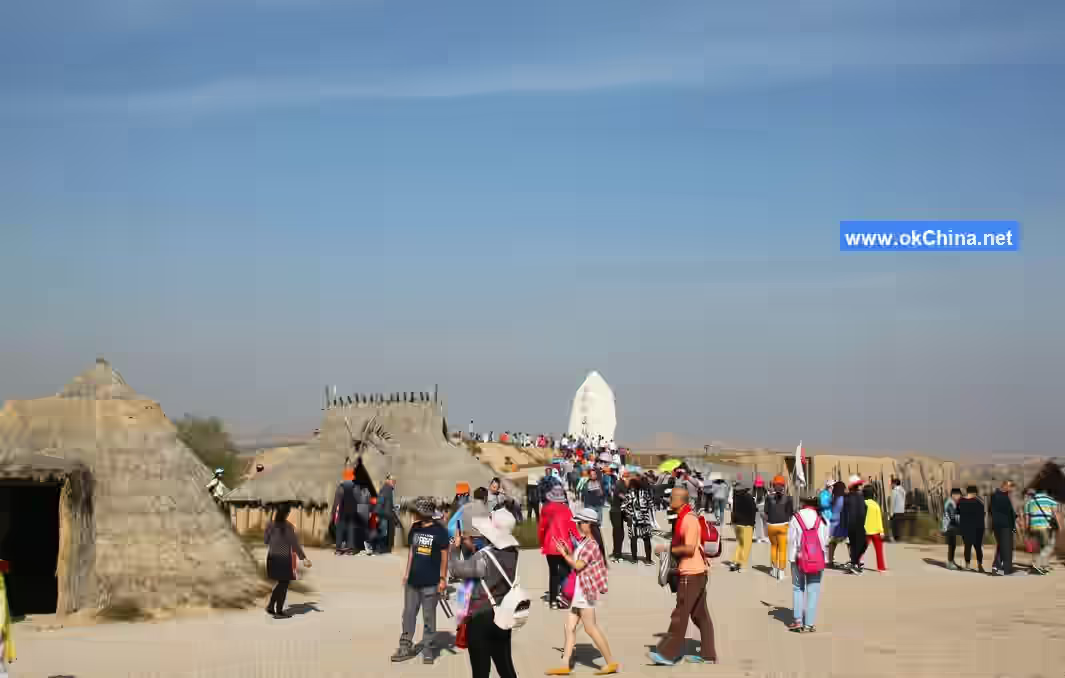
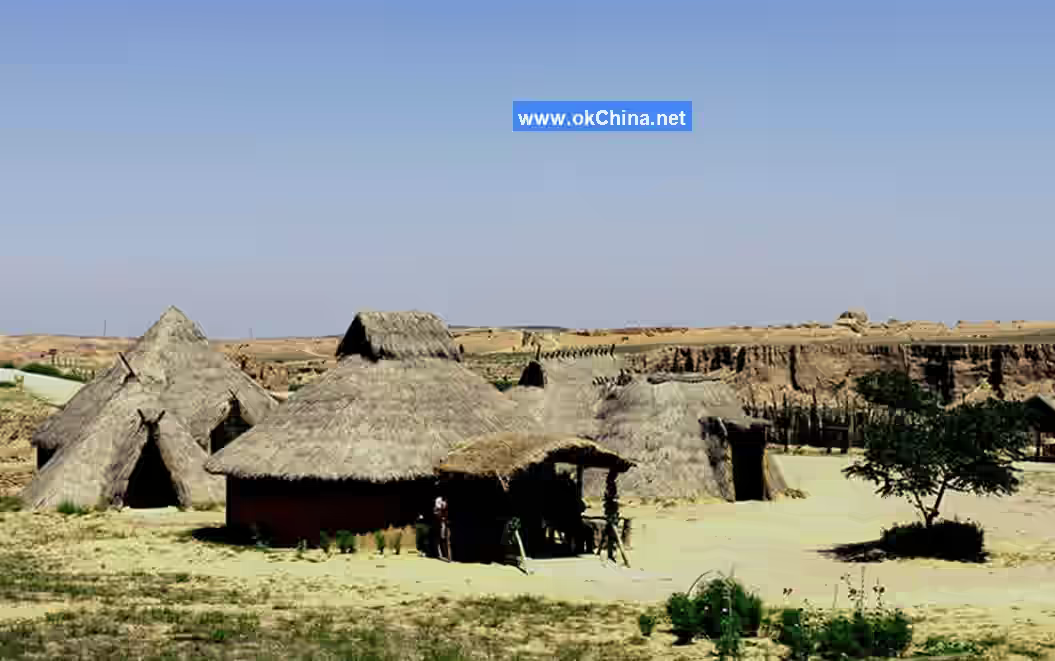
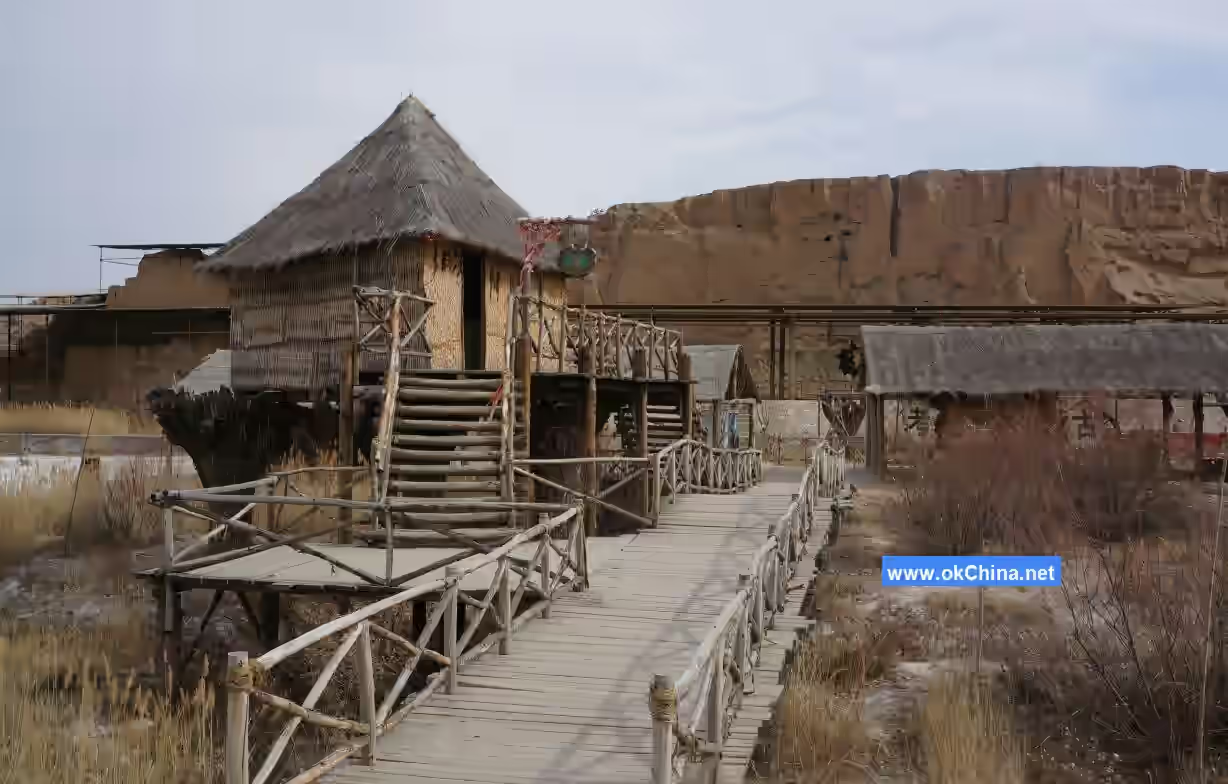
The ancient Shuidonggou Village was created by the early northern inhabitants using cave-dwelling and pit-house dwelling styles. These dwellings were often built on hillsides or gully banks with thick loess layers, featuring warmth in winter and coolness in summer. The Shuidonggou people improved upon this dwelling style, developing a semi-subterranean architectural form. The method involved first digging a pit of a certain depth into the loess slope. Then, on the foundation determined as walls around the pit, adobe bricks were used to build walls to a certain height. Beams and rafters were then placed to form a roof, covered with firewood and grass, and finally plastered with mud to prevent leaks. Shuidonggou Village is precisely such an ancient semi-subterranean settlement site, commonly called "di wozi" (earth nest) by people in northwest China. The Shuidonggou Village settlement has 29 pit-house dwelling sites, some of which have been restored, allowing us to直观 understand the dwelling forms of the ancient people.
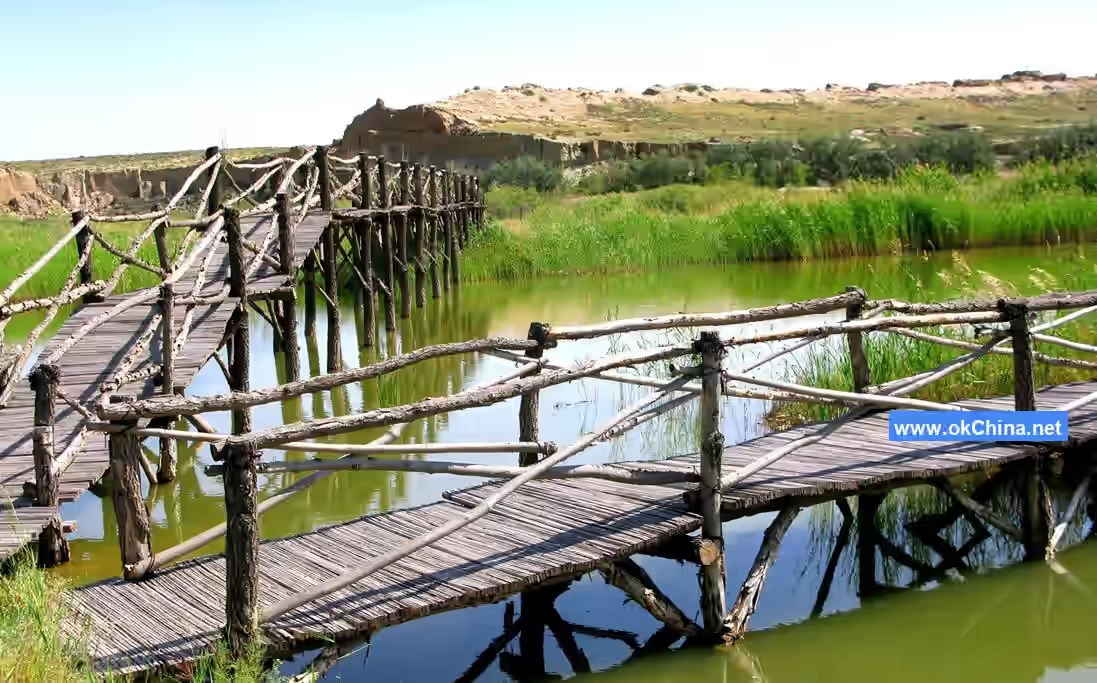
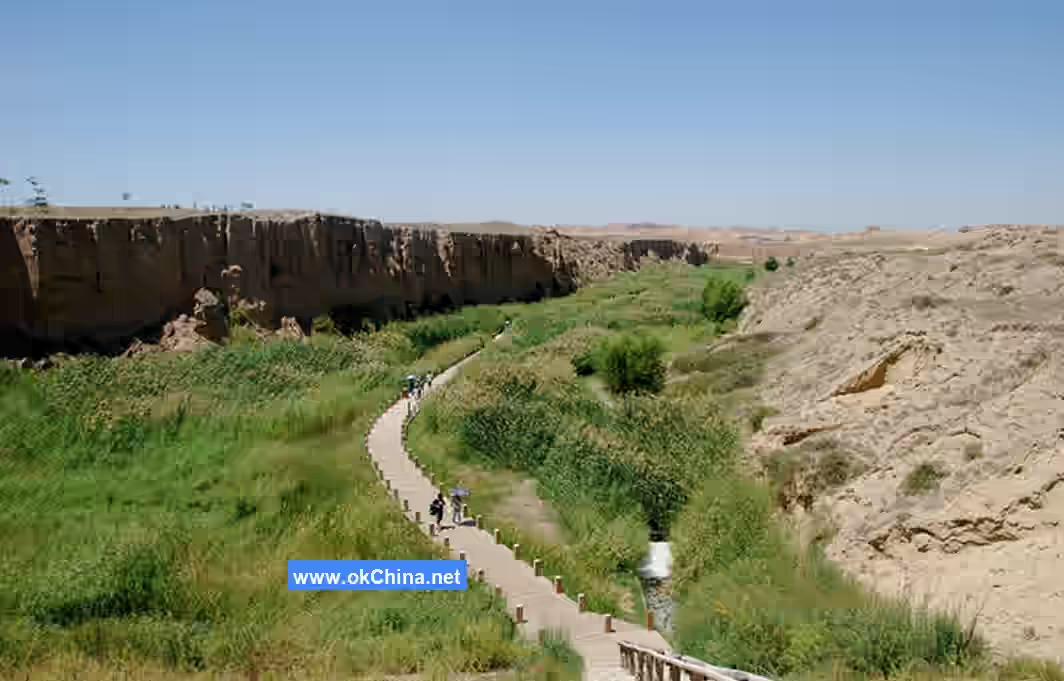
Reed Flower ValleyThe Shuidonggou Tourist Area features a three-kilometer-long Reed Flower Valley, where reeds sway gracefully. Walking along the paths within, one becomes enchanted by the reed marshes, experiencing a profound sense of tranquility. The lake area spans nearly 300,000 square meters, including the Mandarin Duck Lake, which is adorned with four primitive wooden bridges and two pavilions. The lake surface and reed marshes are teeming with flocks of birds. The emerald-green lake water, crisp bird songs, and picturesque scenery make it an ideal destination for leisure and entertainment. The Hongshan Lake ripples with green waves, dotted with boats coming and going. The rare sight of the Great Wall along the water’s edge adds a unique charm when viewed from a boat, offering a majestic perspective of the ancient Great Wall. Before you can fully emerge from the fairy-tale world of the earth forest landscape, disembarking at the dock transports you into another paradise—the Shazao Bay within the scenic area. Shazao Bay is lush with sand date trees, and when the sand date flowers bloom in June and July, their refreshing fragrance makes it a place you’ll never want to leave.
Ming Great Wall
The Ming Dynasty military three-dimensional defense system in the Shuidonggou Site Tourist Area is composed of the Ming Great Wall, hidden soldier caves, border trenches, the grand canyon, Hongshan Fort, and barbican entrances.
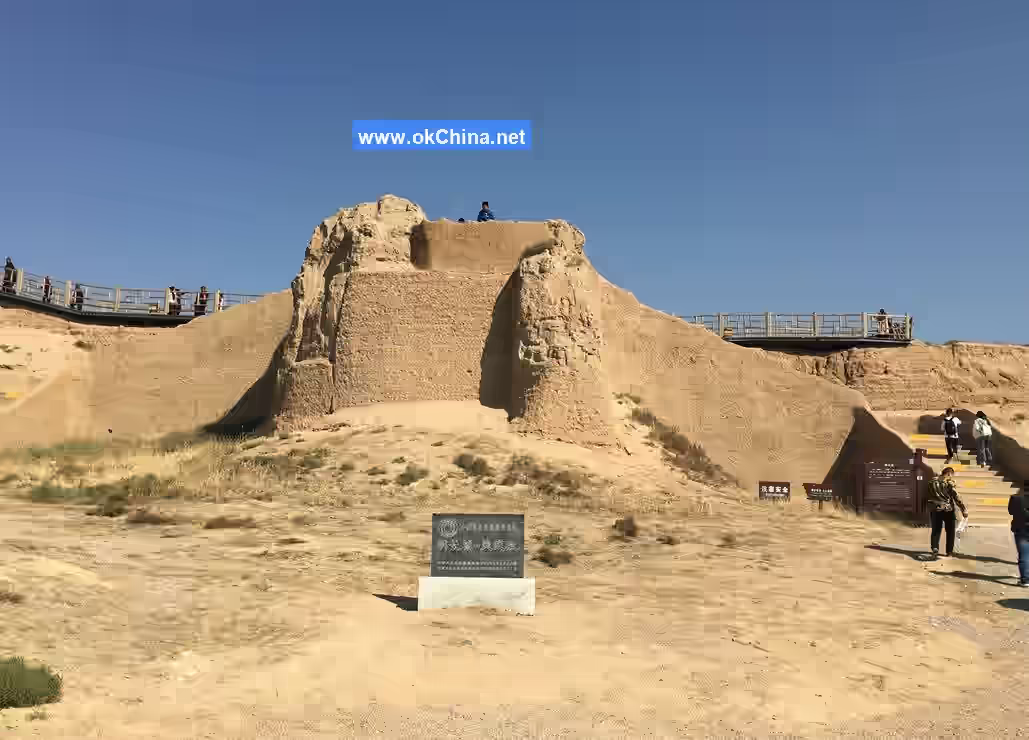
The Ming Great Wall in the tourist area is an earthen rampart and represents the most well-preserved section of the Great Wall ruins in Ningxia. To the west, the Ming Great Wall extends to the "Little Dragon Head," where it meets the Yellow River, known as the "confluence of two dragons." To the east, it reaches the territory of Yanchi. Standing atop the Great Wall, one can take in panoramic views of the Mu Us Desert to the north and the landforms of the Shuidonggou scenic area to the south.
Shuidonggou Great Wall Viewing Platform
The Shuidonggou Great Wall Viewing Platform is a unique structure that straddles two provinces. In the Shuidonggou Tourist Area, you can leisurely stroll at the foot of the Ming Great Wall or ascend the newly built viewing platform, standing with one foot in each province. From the Great Wall, you can gaze northward at the Mu Us Desert, which showcases the rich landscape of the northwestern desert, while to the south, Shuidonggou reveals lakes, wetlands, and high gorges with calm lakes, reminiscent of the scenic beauty of southern China, offering a distinctive experience.
The Shuidonggou Great Wall Viewing Platform is the best spot to admire the grandeur of the Shuidonggou Grand Canyon and Reed Flower Valley. From the platform, the intricate network of gullies and the uniquely shaped earth forest landscape appear to lie at your feet, stretching and winding deep into the canyon. Vast stretches of lush green reed marshes sway in the wind, creating a spectacular view. Wild pigeons occasionally take flight, the calls of red-billed ducks fill the air, and babbling springs converge into streams.
Wild Grassland Herder Experience
Crossing the Great Wall brings you to the wild Mongolian grasslands, where the Tatars and Oirats rested and galloped across battlefields 500 years ago. On the vast and picturesque wild grasslands, you can experience the untamed and hearty lifestyle of the Mongols and live as a true Mongolian. Exciting and thrilling activities such as wild grassland desert dune bashing, camel riding, and desert karting await you.
Hongshan Lake
Upon reaching the dam’s summit, another extraordinary sight unfolds before our eyes: "a calm lake emerging from high gorges." This lake, located in the Hongshan area, is aptly named "Hongshan Lake." Formed by accumulating water from border trenches, during the rainy season, the lake surface extends over two kilometers eastward through the canyon. Eagles and cranes often soar above, while mandarin ducks and wild ducks glide across the water. The lush green wild grasses on the mountainsides create a stunningly beautiful scene.
Gliding across Hongshan Lake by boat, you can observe the Great Wall along the water’s edge and experience the harmonious coexistence of humans and waterfowl. The reflections of the Great Wall and cliffs in the water, along with the blue sky and white clouds mirrored below, offer a unique and poetic charm. This integration of nature and humanity, blending historical culture with modern ecology, presents a rare "southern landscape north of the Great Wall." It truly embodies the sentiment of "sailing on emerald waves, as if wandering within a painting."
Grand Canyon
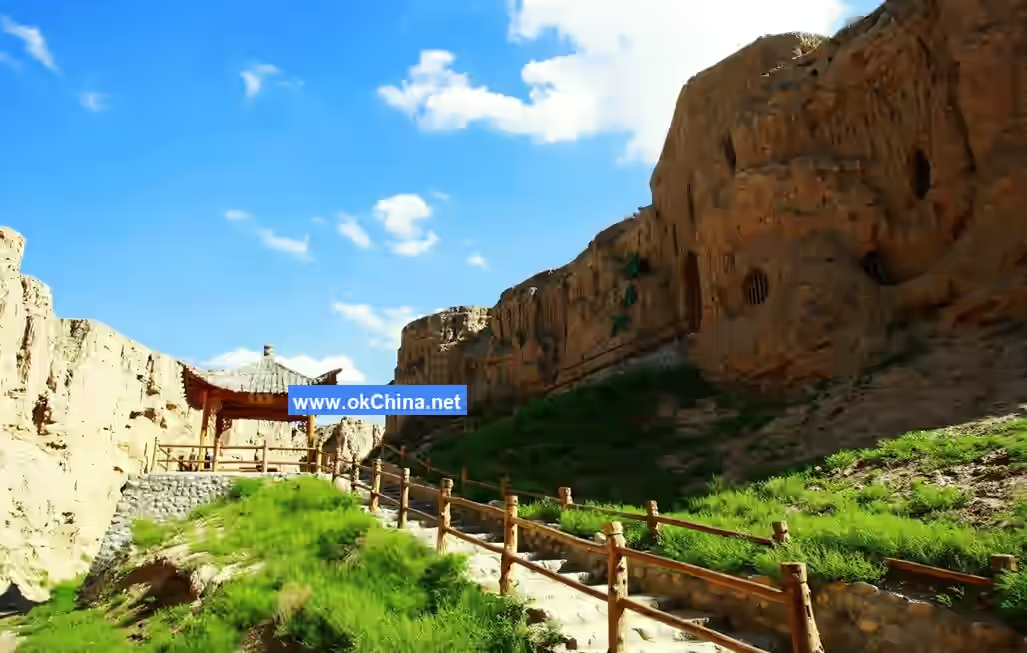
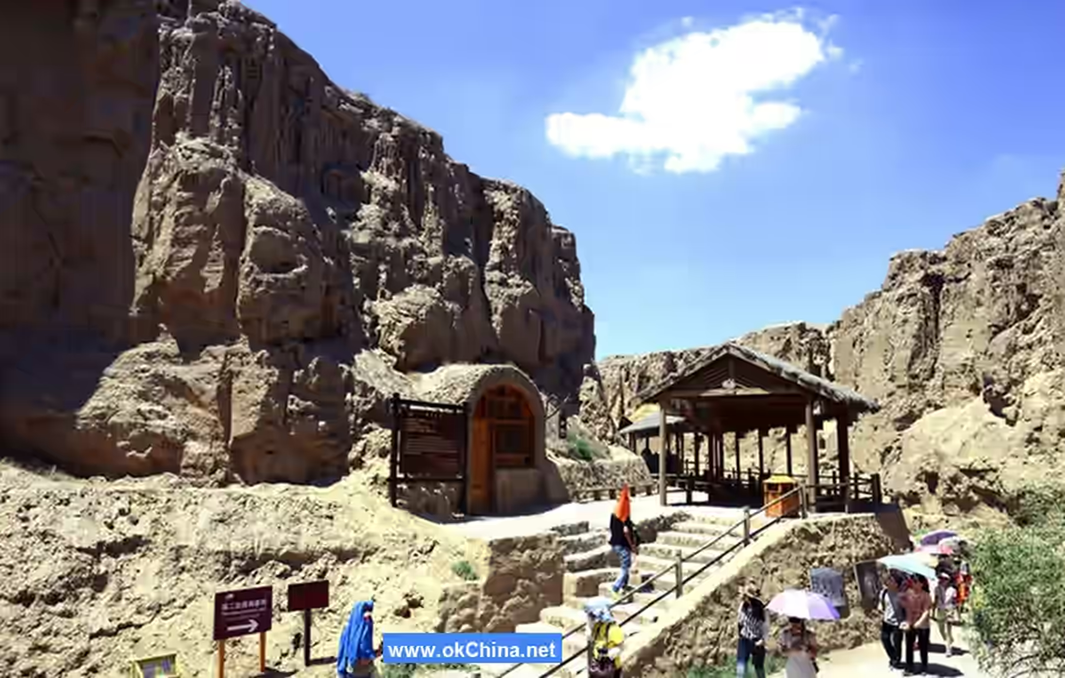
Between Shuidonggou and Hongshan Fort lies a approximately four-kilometer-long canyon, a masterpiece of nature that also served as a crucial component of the Ming Dynasty’s "deep trenches and high ramparts" defense system. Over years of weathering and erosion, the canyon’s banks have become a network of gullies. The thick loess, sculpted by prolonged rainwater冲刷, has formed towering earth pillars with unique shapes, creating the "earth forest." Nature’s artistry has further carved these earth pillars into a myriad of bizarre forms. Some resemble monks gazing into the distance, as if awaiting visitors; others appear like intimate couples or respectful spouses bowing to each other. Each formation sparks endless imagination. On the cliffs flanking the canyon, hidden soldier caves built by Ming Dynasty soldiers can be found, showcasing the military wisdom and ingenuity of ancient people.
Hidden Soldier Caves
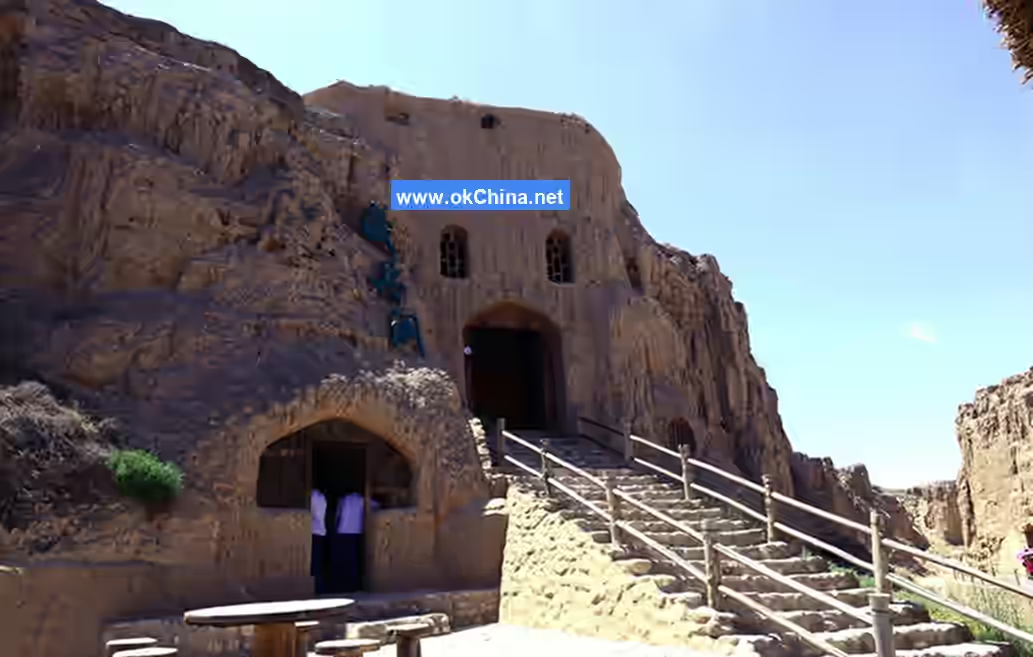
The dark caves dotting the cliffs on both sides of the canyon are the famous "hidden soldier caves." These caves allowed the defenders of Hongshan Fort to transition from above ground to underground, concealing troops, protecting themselves, awaiting opportunities to strike, or setting ambushes in open areas. This represents one of China’s most well-preserved ancient three-dimensional military defense systems. Within China’s Great Wall defense network, this is the only site where the Great Wall, fortresses, and underground hidden soldier caves are intricately linked. The unique hidden soldier caves, situated over ten meters above the canyon floor, wind and twist along the cliffs, interconnected vertically and horizontally. The caves feature numerous branching paths, winding left and right like a labyrinth with no end in sight. Inside, facilities include living quarters, grain storage rooms, wells, cooking stoves, armories, gunpowder stores, artillery emplacements, traps, and hidden weapon passages.
IV. Value of the Scenic Area
Since a large number of stone tools with European Mousterian and Aurignacian cultural characteristics were unearthed at the Shuidonggou site, displaying technical styles strikingly similar to those found in the West, some scholars have proposed the "Western origin theory" for Shuidonggou culture. Similarly, the presence of numerous stone artifacts at certain locations and on the surface of Shuidonggou, which align with the small stone tool tradition of northern China, suggests connections with contemporaneous or slightly later microlithic cultures in North China. These two cultural types also support the "indigenous origin theory."
Extensive archaeological discoveries indicate that Shuidonggou possessed abundant water sources, flora, and fauna resources 30,000 to 40,000 years ago, along with relatively favorable conditions for production and daily life. Based on this, Researcher Gao Xing from the Institute of Vertebrate Paleontology and Paleoanthropology of the Chinese Academy of Sciences speculates that around 40,000 years ago, a group of ancestors originally living in the Siberia-Altai region, forced by the harsh cold of the glacial period, migrated to Shuidonggou to settle and thrive. Utilizing their existing skills, they crafted a large number of sharp stone tools from locally available materials.
Comments
Post a Comment