Shenyang Botanical Garden

Location Map

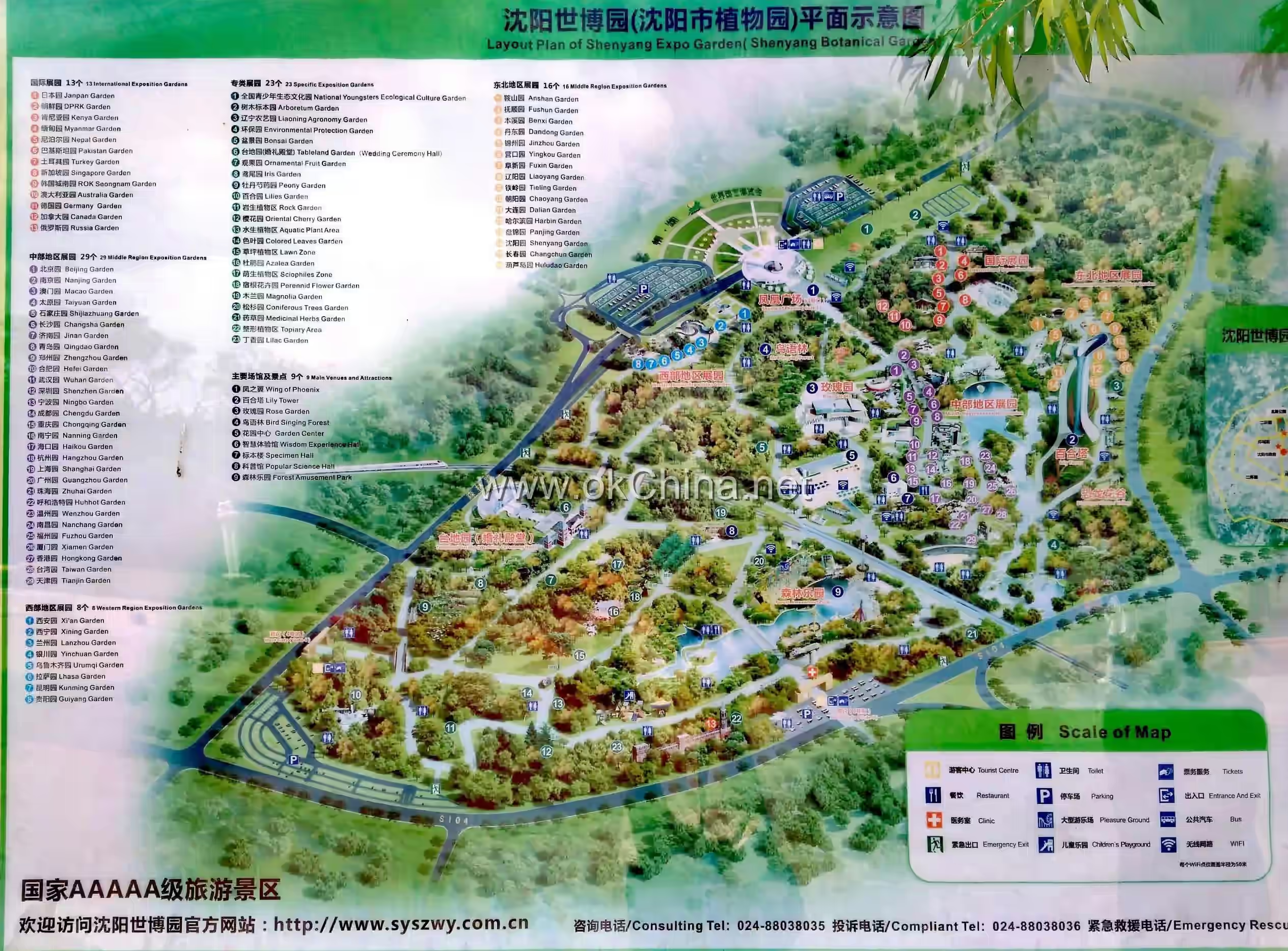
Map of Shenyang Botanical Garden

Ticket Price

Ticket Information

Original price 50 yuan, now 25 yuan, even cheaper for children, students, and seniors.

Opening Hours

Opening Hours

January 1 to December 31 - Monday to Sunday - All Day - 08:30-16:30, Last admission at 16:00.

Recommended Duration

Suggested Visit Duration

3-4 hours

Best Time to Visit

Best Time to Visit

Spring and Autumn

Official Phone

Contact Information

  • Emergency Rescue Hotline: 024-88038096
  • Inquiry Hotline: 024-88038035
  • Inquiry Service Hours: 9:00-15:30
  • Group Ticket Purchase Inquiry Hotline: 024-88062427

Transportation

Transportation Guide

Main Bus Routes

Shenyang Railway Station

  1. Sightseeing Line 1:

    • Route: Maluwan — Zhulin Bridge — Shenyang Agricultural University — Dongling Park — World Expo Garden West Gate — World Expo Garden Main Gate
  2. Shenfu Line 1:

    • Route: Shenyang Railway Station — Zhulin Bridge — Shenyang Agricultural University — World Expo Garden South Gate
  3. Metro Line 1 → Bus 385/168/Sightseeing Line 1:

    • Route: Take Metro Line 1 to Pangjiang Street Station, walk east about 150 meters to transfer to Bus 168, Sightseeing Line 1, or Bus 385 to the World Expo Garden

Shenyang North Railway Station

  1. Bus 168:

    • Route: Shenyang North Railway Station — Zhulin Bridge — Shenyang Agricultural University — Dongling Park — World Expo Garden West Gate — World Expo Garden Main Gate
  2. Shenfu Intercity Passenger Line 3:

    • Route: Shenyang North Railway Station — South of Huigong Square — Zhulin Bridge — Shenyang Agricultural University — World Expo Garden South Gate
  3. Metro Line 2 → Metro Line 1 → Bus 385/168/Sightseeing Line 1:

    • Route: Take Metro Line 2 and transfer to Line 1 to Pangjiang Street Station, walk east about 150 meters to transfer to Bus 168, Sightseeing Line 1, or Bus 385 to the World Expo Garden

Shenyang South Railway Station

  • Bus 333 → Bus 168:
    • Route: Shenyang South Railway Station — Shenyang North Railway Station — Zhulin Bridge — Shenyang Agricultural University — Dongling Park — World Expo Garden West Gate — World Expo Garden Main Gate

Other Transportation Routes

  1. Bus 385:

    • Route: Xiao Jinqiao — Zhulin Bridge — Shenyang Agricultural University — Qianlingbao — Dongling Park — World Expo Garden South Gate
  2. Bus V128:

    • Route: Starting from Dongling Park, passing by the World Expo Garden West Gate, and ending at the World Expo Garden Phoenix Wing Square

Shenyang Taoxian International Airport

  1. Airport Bus (Shenyang North Railway Station) → Bus 168:

    • Route: Take the Airport Bus (Shenyang North Railway Station) to Shenyang North Railway Station, walk west about 450 meters to transfer to Bus 168 to Shenyang Botanical Garden (Shenyang World Expo Garden) Phoenix Square
  2. Airport Bus (Shenyang Railway Station) → Sightseeing Line 1:

    • Route: Take the Airport Bus (Shenyang North Railway Station) to Maluwan Station, walk forward about 100 meters to transfer to Sightseeing Line 1 to Shenyang Botanical Garden (Shenyang World Expo Garden) Phoenix Square
  3. Airport Bus (Longzhimeng Passenger Station) → Bus 168/Sightseeing Line 1/385:

    • Route: Take the Airport Bus (Longzhimeng Passenger Station) to Longzhimeng Passenger Station, transfer to Bus 168, Sightseeing Line 1, or Bus 385 to Shenyang Botanical Garden (Shenyang World Expo Garden)

Classical Route

Recommended Routes

Officially Recommended Routes by the Scenic Area

Route 1 (4 hours)

  • Walk from West Gate—Peony and Herbaceous Peony Garden—Iris Garden—Fruit Viewing Garden—Shade-Tolerant Plant Area—Dutch Garden—Azalea Garden—Lawn Plant Area—Science Education Garden—Korean Garden—Colorful Foliage Garden—Rock Garden—Cherry Blossom Garden—Aquatic Plant Area—Star Paradise—Russian Garden—British Style Garden—South Gate

Route 2 (5 hours)

  • Walk from Main Entrance—Phoenix Square—Western Region Exhibition Gardens—World Cultural Heritage Exhibition Hall—Olympic Culture Exhibition Hall—China Auto Landscape Garden—Rose Garden—Lilac Garden—Central Region Exhibition Gardens—Red Wine Square—Lily Tower—Beer Square—Liaoning Agricultural Garden—Northeastern Region Exhibition Gardens—International Exhibition Gardens—National Youth Ecological Culture Garden—Phoenix Square—Main Entrance

Route 3 (5 hours)

  • Walk from Main Entrance—Phoenix Square—Western Region Exhibition Gardens—World Cultural Heritage Exhibition Hall—Olympic Culture Exhibition Hall—Flower Sky Bridge—Italian Garden—Fruit Viewing Garden—Iris Garden—Peony and Herbaceous Peony Garden—Science Education Garden—Lawn Plant Area—Azalea Garden—Dutch Garden—Manchu Folk Culture Garden—Magnolia Garden—Rainbow Bridge—Bonsai Garden—International Food Square—Off-Road Karting Paradise—Paintball Shooting Range—Central Region Exhibition Gardens—Lilac Garden—Crafts Corridor—Phoenix Square—Main Entrance

Suggestions

  • Recommended Route: It is suggested to choose Route 1, which takes 4 hours, allowing for a relatively relaxed tour of the main attractions.

Important Child Sites

Main Attractions

Greenhouse Exhibition Area

The core attraction of Shenyang Botanical Garden, covering approximately 20,000 square meters, is divided into sections such as the Tropical Rainforest Pavilion, Desert Plant Pavilion, and Orchid Pavilion. It showcases plants from different climate zones, allowing visitors to experience the charm of diverse flora.

Tropical Rainforest Pavilion

Simulating a tropical rainforest environment, it features palm trees, banana trees, orchids, and more. With high humidity and suitable temperatures, visitors can experience the unique landscape of a tropical rainforest and learn about the growth habits of tropical plants.

Desert Plant Pavilion

Displaying desert plants such as cacti, agave, and desert roses, this pavilion simulates a dry climate with high temperatures and low humidity. Visitors can admire the unique forms of desert plants and learn about their survival strategies.

Orchid Pavilion

Featuring orchid varieties such as Phalaenopsis, Oncidium, and Dendrobium, this elegant pavilion maintains suitable temperatures. Visitors can appreciate the beautiful forms of orchids and learn about their cultivation techniques.

Arboretum

Covering approximately 50 hectares, the arboretum is home to hundreds of tree species, including conifers, broad-leaved trees, and fruit trees. It showcases the diversity of trees and provides a great place for visitors to stroll and relax.

Coniferous Tree Area

Featuring conifers such as pine, cypress, and spruce, this area is characterized by tall, straight trees with dense foliage. Visitors can admire their unique forms and learn about their growth habits.

Broad-leaved Tree Area

Planting broad-leaved trees such as poplar, willow, and elm, this area is lush with foliage and wide canopies. Visitors can observe their unique forms and learn about their growth habits.

Fruit Tree Area

Featuring fruit trees such as apple, pear, and peach trees, this area is abundant with fruit and lush foliage. Visitors can admire their unique forms and learn about their growth habits.

Flower Garden

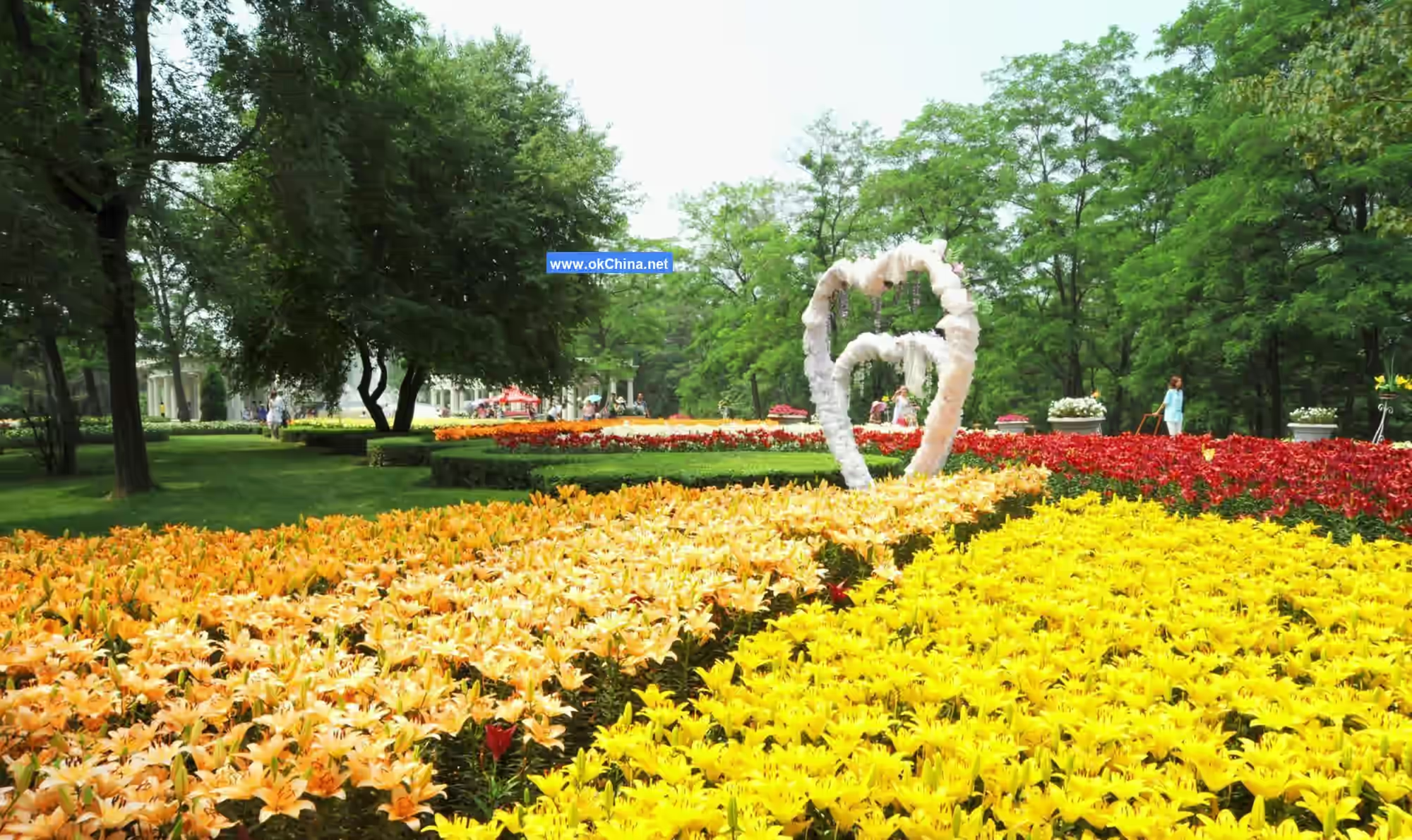
Covering approximately 30 hectares, the flower garden features hundreds of flower species, including herbaceous flowers, woody flowers, and aquatic flowers. It showcases the diversity of flowers and provides a great spot for visitors to enjoy blooms and take photos.

Herbaceous Flower Area

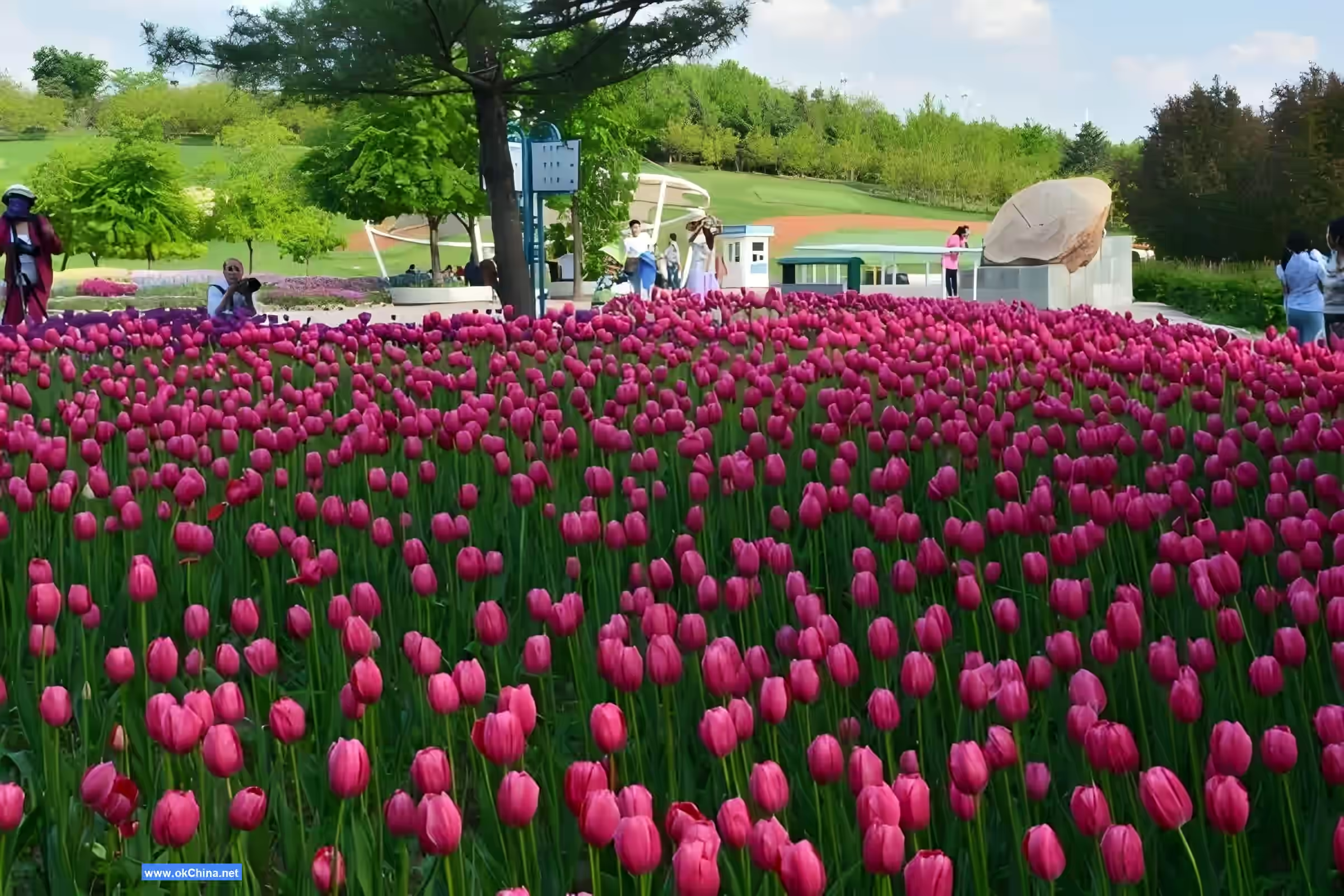
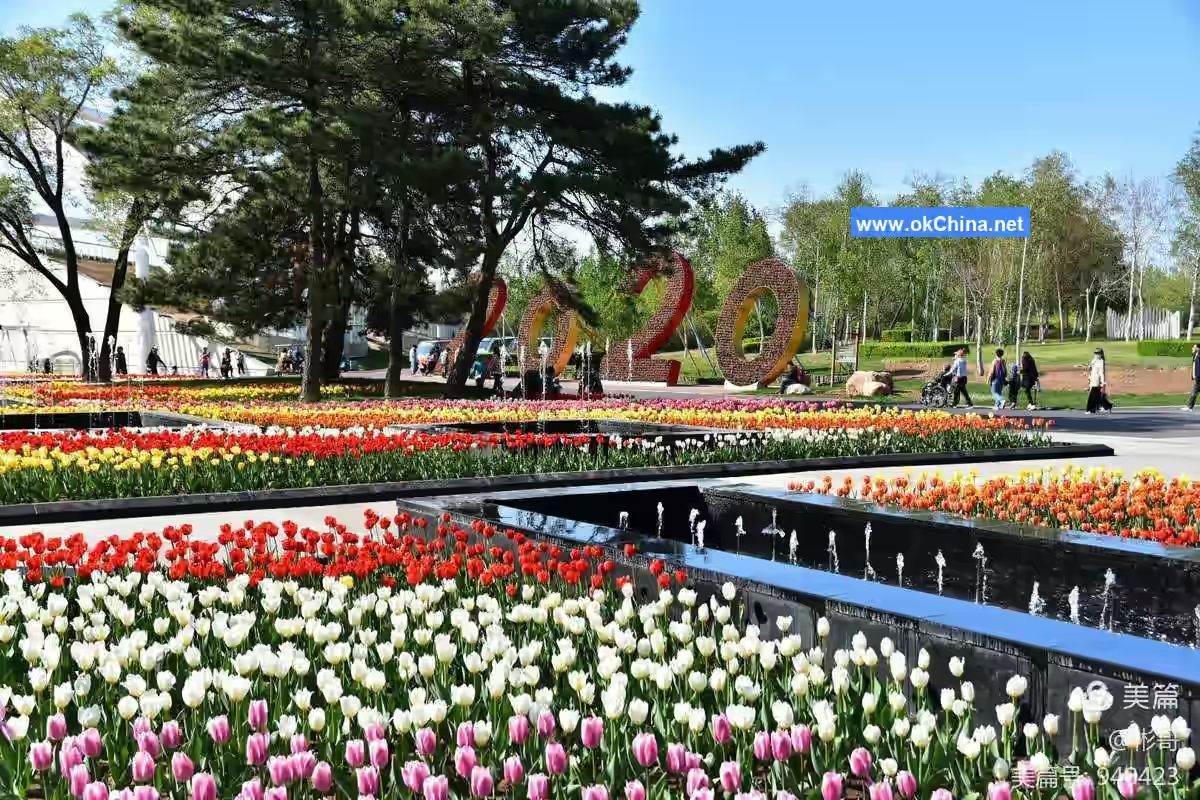
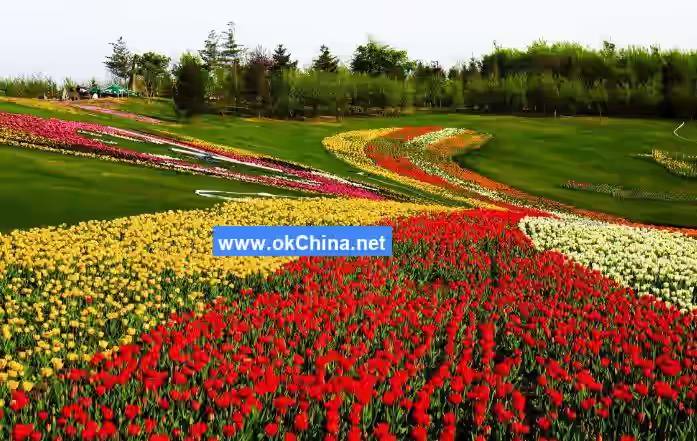
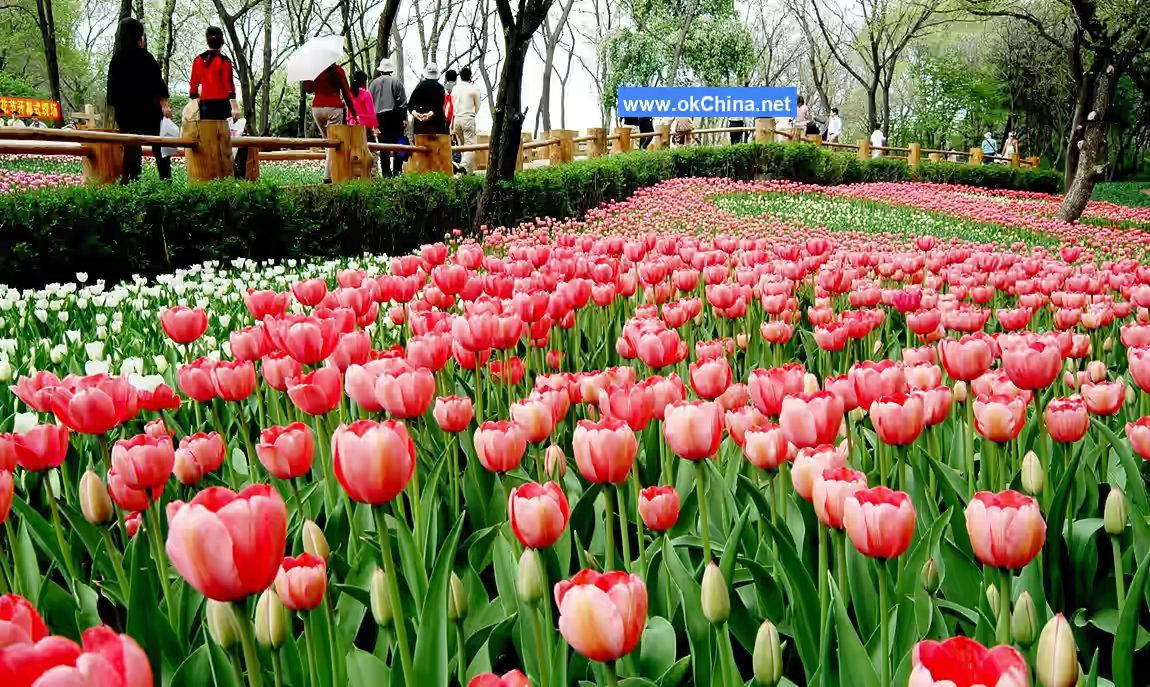
Featuring herbaceous flowers such as chrysanthemums, roses, and tulips, this area is vibrant with colors and varied forms. Visitors can admire their unique appearances and learn about their growth habits.

Woody Flower Area

Planting woody flowers such as cherry blossoms, plum blossoms, and peach blossoms, this area is lush with foliage and bright blooms. Visitors can observe their unique forms and learn about their growth habits.

Aquatic Flower Area

Featuring aquatic flowers such as lotus, water lilies, and daffodils, these plants grow on water surfaces with vibrant blooms. Visitors can admire their unique forms and learn about their growth habits.

Medicinal Plant Garden

Covering approximately 20 hectares, the medicinal plant garden features hundreds of medicinal plant species, including traditional Chinese herbs, Western herbs, and folk herbs. It showcases the diversity of medicinal plants and provides a great opportunity for visitors to learn about traditional Chinese medicine culture.

Traditional Chinese Herbs Area

Featuring traditional Chinese herbs such as ginseng, astragalus, and angelica, these plants are rich in medicinal value. Visitors can admire their unique forms and learn about their growth habits.

Western Herbs Area

Planting Western herbs such as mint, rosemary, and lavender, these plants are rich in medicinal value. Visitors can observe their unique forms and learn about their growth habits.

Folk Herbs Area

Featuring folk herbs such as dandelion, plantain, and purslane, these plants are rich in medicinal value. Visitors can admire their unique forms and learn about their growth habits.

Official Website

Scenic Area Official Website

https://www.syxuanyu.com/

Brief History

Shenyang Botanical Garden

I. Introduction

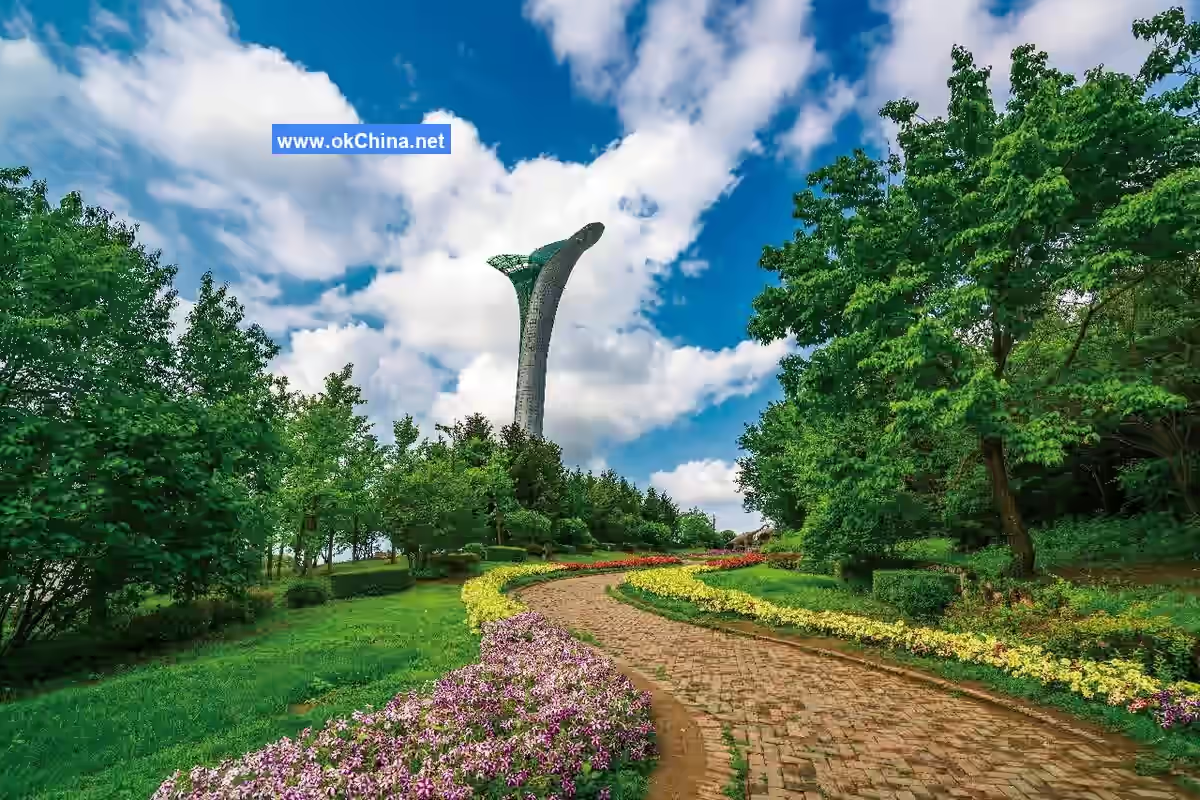
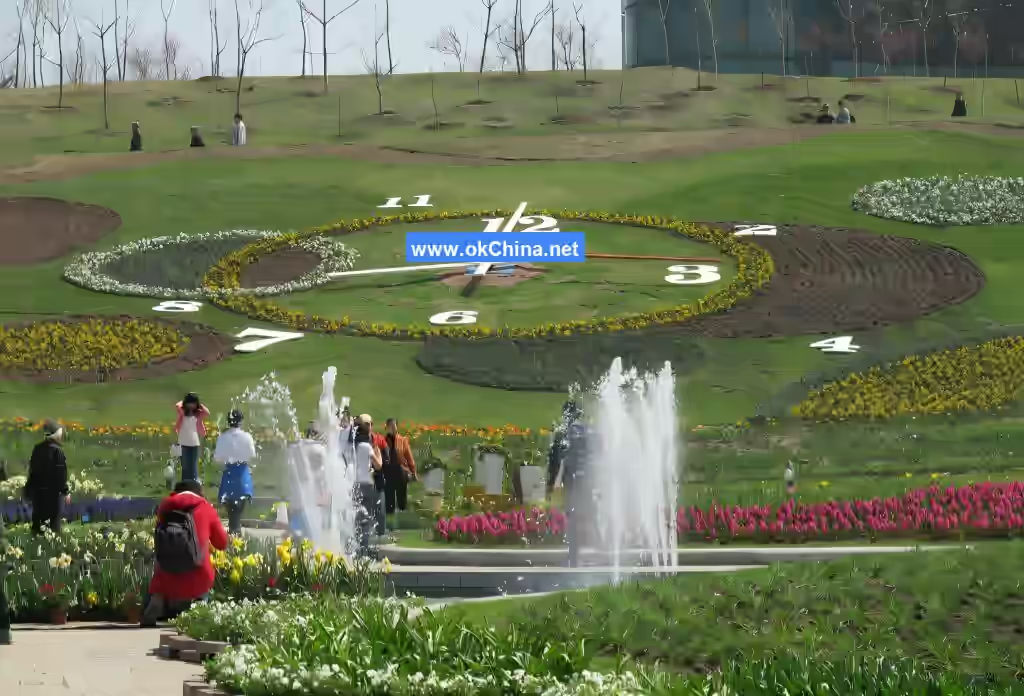
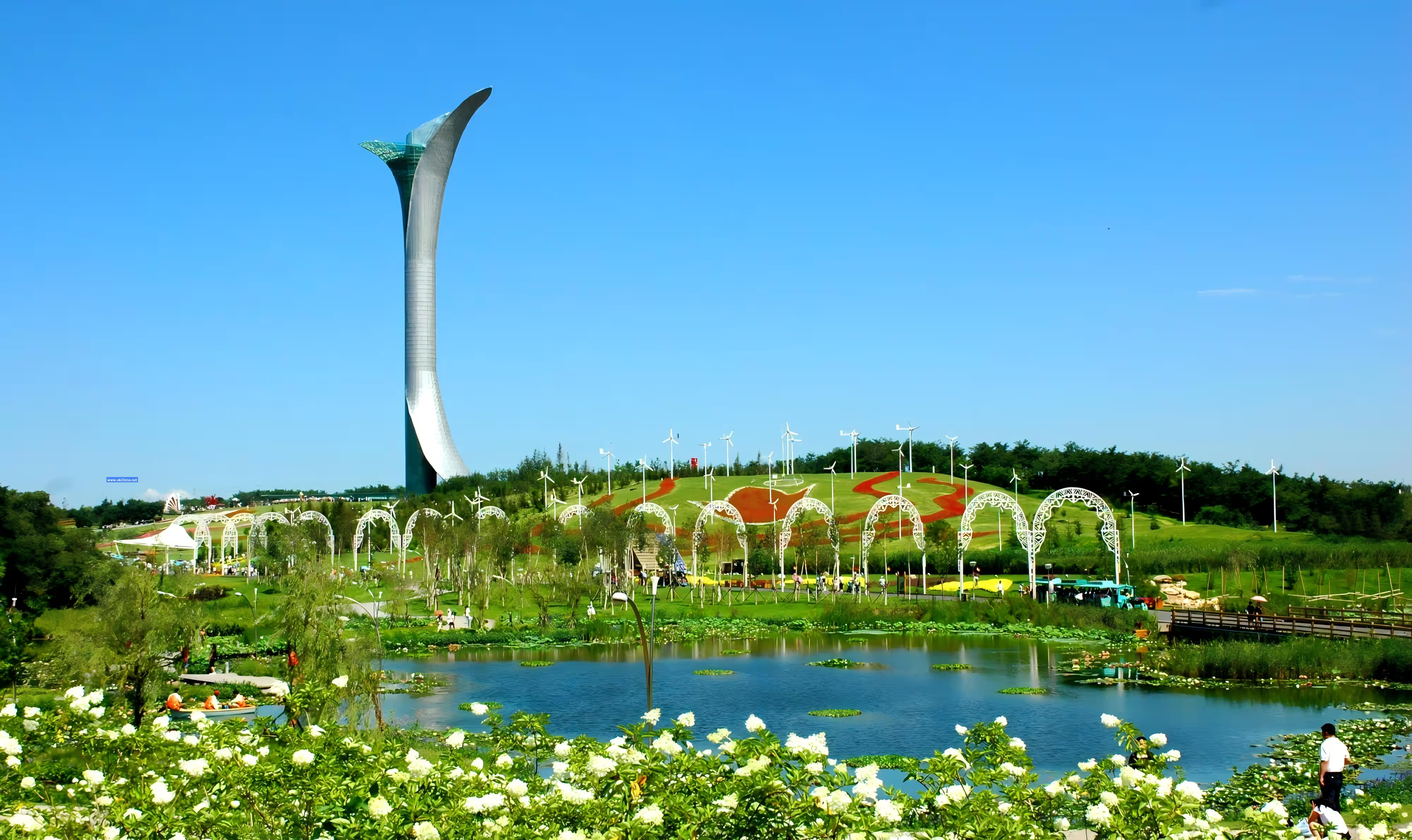
Shenyang Botanical Garden (Shenyang Expo Garden), located in Hunnan District, Shenyang City, Liaoning Province, also known as Shenyang Expo Garden or Shenyang World Horticultural Expo Garden, is a multifunctional comprehensive tourist attraction integrating green ecological viewing, exquisite garden art, humanistic landscape architecture, scientific research and popular science education, and recreational leisure activities. It was initially established in February 1959 and officially opened to the public in 1993, covering an area of 211 hectares.

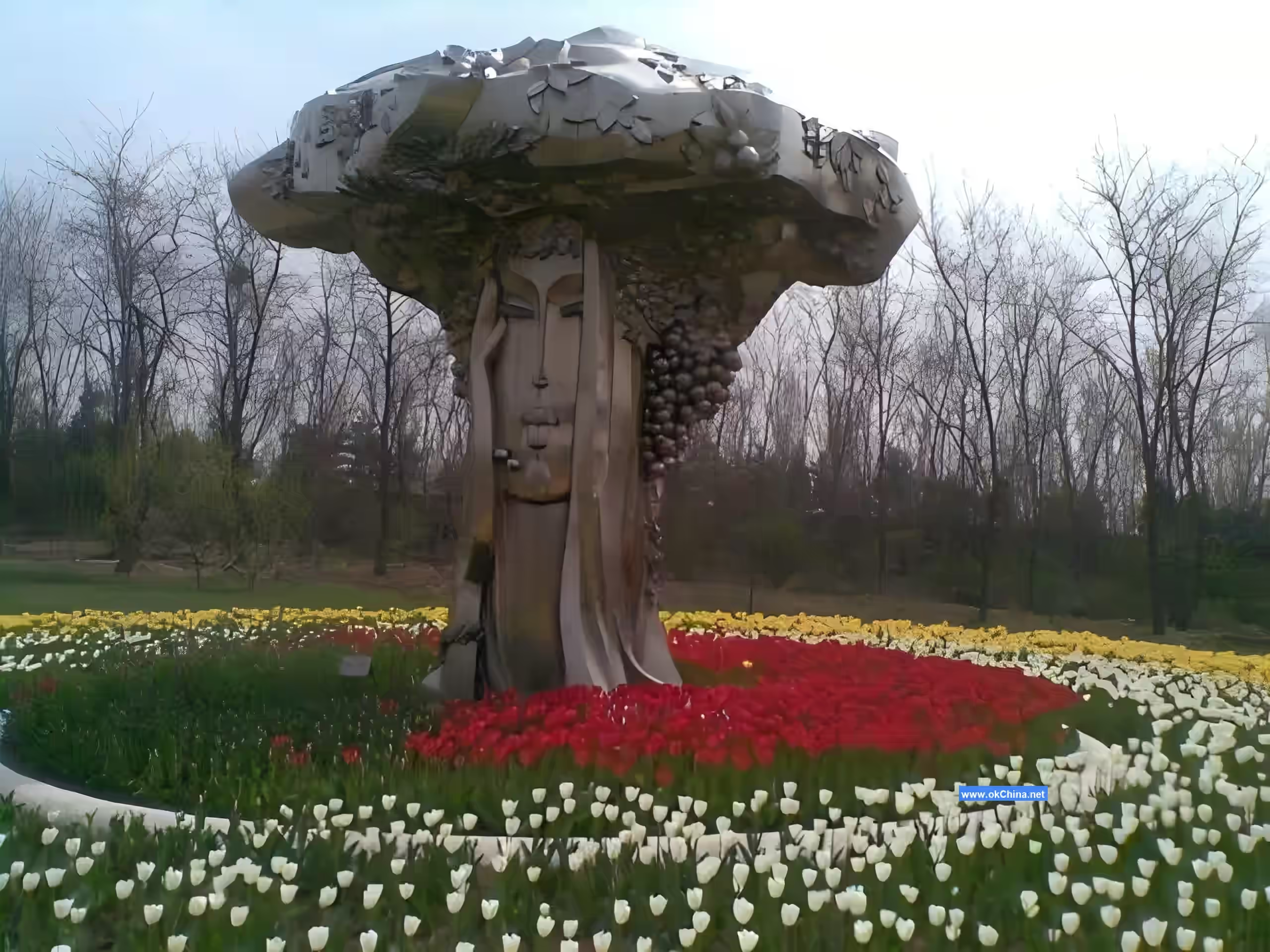
The botanical garden features iconic theme buildings such as the Lily Tower, Phoenix Square, and Rose Garden. It showcases outstanding gardens and architectural works from five continents around the world and key domestic cities, with a total of 100 exhibition gardens distributed across its northern and southern sections.

Shenyang Botanical Garden served as the venue for the 2006 China Shenyang International Horticultural Exposition and is acclaimed as the "Expo Garden in the Forest." It has been honored with titles such as "One of the Fifty Best Scenic Spots in Liaoning Province," "One of the Fifteen Major Tourist Attractions in Shenyang," and "One of the Ten Popular Science Education Bases in Shenyang." In 2004, it was awarded the title of one of the first National 5A-Level Tourist Attractions.

II. Historical Development

Background of Establishment

According to historical records, the areas surrounding Shenyang Botanical Garden, such as "Jiuzhan," "Gaokan," "Shangma" (historically known as "Shangmajiawanzi"), "Zhongma" (Zhongmajiawanzi), "Xiama" (Xiamajiawanzi), "Yantai" (historically known as "Yantainilu"), "Qijianfang," and "Zhongshuiquan," are ancient villages dating back to the early Qing Dynasty. Among them, Jiuzhan, Gaokan, Qijianfang, and Yantai once housed ancient temples such as "Xiangyun Temple," "Longquan Temple," "Qingyun Temple," and "Guandi Temple" (none of which exist today). Jiuzhan predates the other villages by many years. The main road in front of the south gate of Shenyang Botanical Garden—the Shenfu Highway (North Line)—is also a thousand-year-old ancient road, known as the "Great Imperial Road" during the Qing Dynasty. Emperors Kangxi, Qianlong, Jiaqing, and Daoguang frequently traveled this road between Shengjing (Shenyang) and Xingjing (Xinbin) to worship at ancestral tombs. During their journeys, the imperial entourage would set up a "rest camp" in Yantai Village for the emperor's midday meal. On such occasions, officials of the fifth rank and above in Shengjing would gather in Yantai Village to kneel and welcome the emperor into the capital.

The Shenfu Railway running through the garden was originally named the "Fenghai Railway." It was built in 1925 through the self-reliance of the people in Northeast China. Prior to this, railways in Northeast China were constructed by imperialist powers. The Fenghai Railway is an important historical relic of Northeast China's modern history and serves as educational material for instilling patriotism in young people.

In 1958, Chairman Mao Zedong inspected Jiuzhan (the location of Gaokan Commune) on his way to Fushun. The botanical garden was established here the following year.

Institutional Evolution

Shenyang Botanical Garden was founded in February 1959 under the directive of Comrade Jiao Ruoyu, then the First Secretary of the Shenyang Municipal Committee of the Communist Party of China. The Shenyang Urban Construction Bureau and the Shenyang Institute of Forestry and Soil Science of the Chinese Academy of Sciences jointly established the garden.

In 1962, it was taken over by the Shenyang Garden Management Office. During the Cultural Revolution, it was dissolved and merged into the "Donghui Forest Farm." Its institutional status was restored in 1973.

In 1981, the Shenyang Garden Management Office and the Shenyang Greening Office were separated, and the botanical garden was placed under the Greening Office.

In 1988, it was transferred to the Shenyang Institute of Landscape Architecture Science. Specialized gardens such as the Tree Specimen Garden and distinctive plant viewing areas were constructed. Leveraging the natural advantages of the lake, a chain bridge was built.

On July 18, 1993, the Shenyang Municipal Government approved its official opening to the public. From then on, Shenyang Botanical Garden embarked on a path integrating scientific research, popular science, and tourism.

In 1994, it was reassigned to the Shenyang Urban Construction Bureau, becoming an institution directly under the bureau.

In April 2002, as part of the overall plan to develop the eastern tourism area, the Shenyang Municipal Government transferred Shenyang Botanical Garden from the Shenyang Construction Management Bureau to the Shenyang Qipanshan Development Zone Management Committee.

In 2006, Shenyang Botanical Garden successfully hosted the 2006 China Shenyang International Horticultural Exposition.

In May 2015, after the National Tourism Administration issued a severe warning to Shenyang Botanical Garden, a National 5A-Level Tourist Attraction, the garden invested 80 million yuan in hardware improvements and implemented a one-card ticket system.

III. Main Scenic Areas

Scenic Area Planning

Shenyang Botanical Garden covers an area of 211 hectares, including 196 hectares of green space, 6.5 hectares of water surface, and 6.9 hectares of roads and buildings. It comprises four types of exhibition areas—leisure exhibition areas, specialized exhibition areas, domestic exhibition areas, and international exhibition areas—with over 100 exhibition gardens. The overall layout is divided into northern and southern sections by the Shenfu Railway. The southern section includes major visiting areas such as specialized plant gardens, Cuihu Lake and Rock Climbing Area, Jingtan Lake and Lingjiao Gully Recreational Bridge Area, the Popular Science Park, and Xingxing Amusement Park. The northern section houses the Steam Locomotive Exhibition Hall, hotels, and plant cultivation areas.

The garden brings together diverse plant resources from Northeast China, Northwest China, North China, and Inner Mongolia. It cultivates over 2,000 species of outdoor woody plants, outdoor herbaceous plants, and greenhouse plants, making it the botanical exhibition garden with the largest collection of plant species in Northeast China.

Comments

Post a Comment

Loading comments...