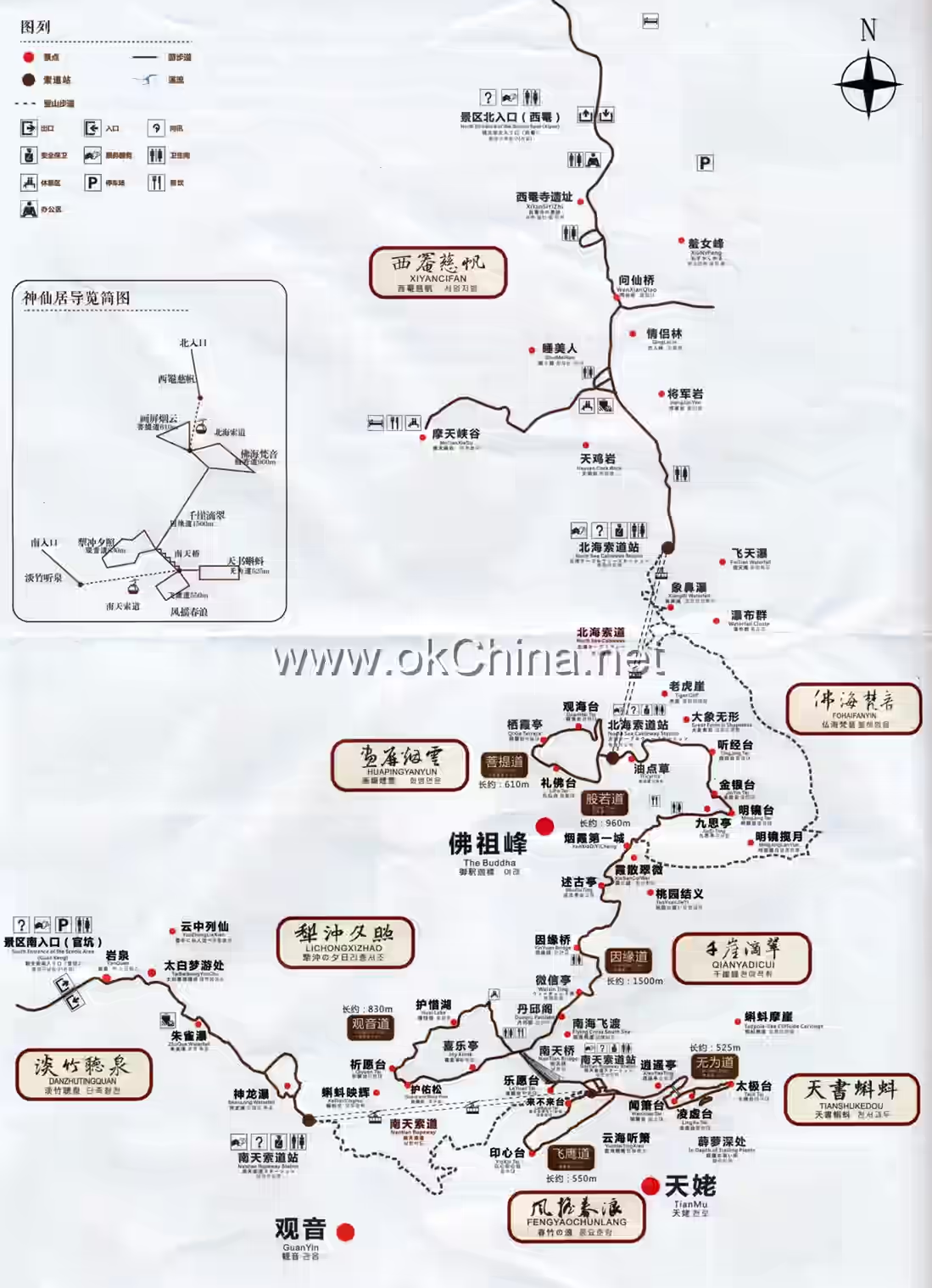
Shenxianju Scenic Area in Taizhou
1. Introduction
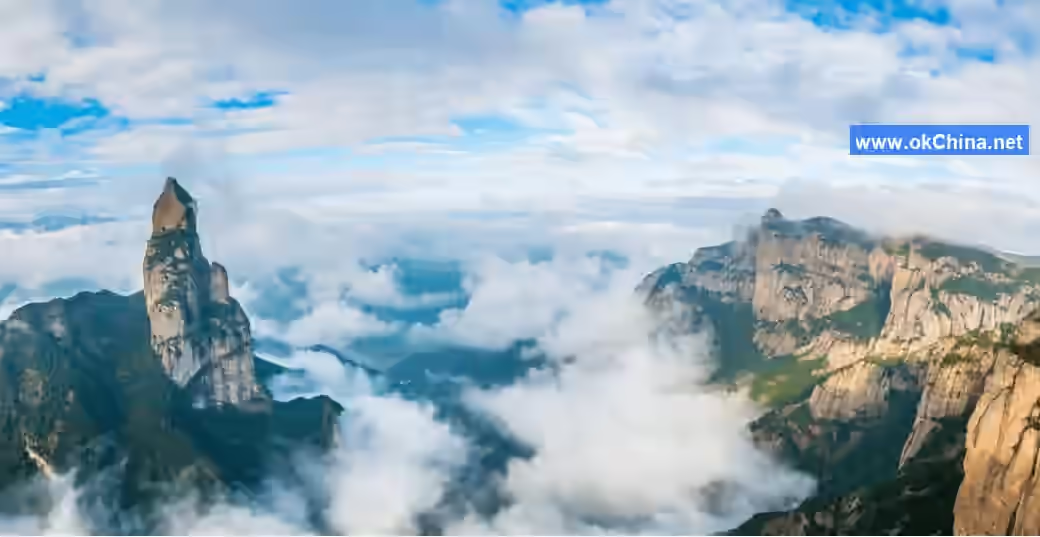
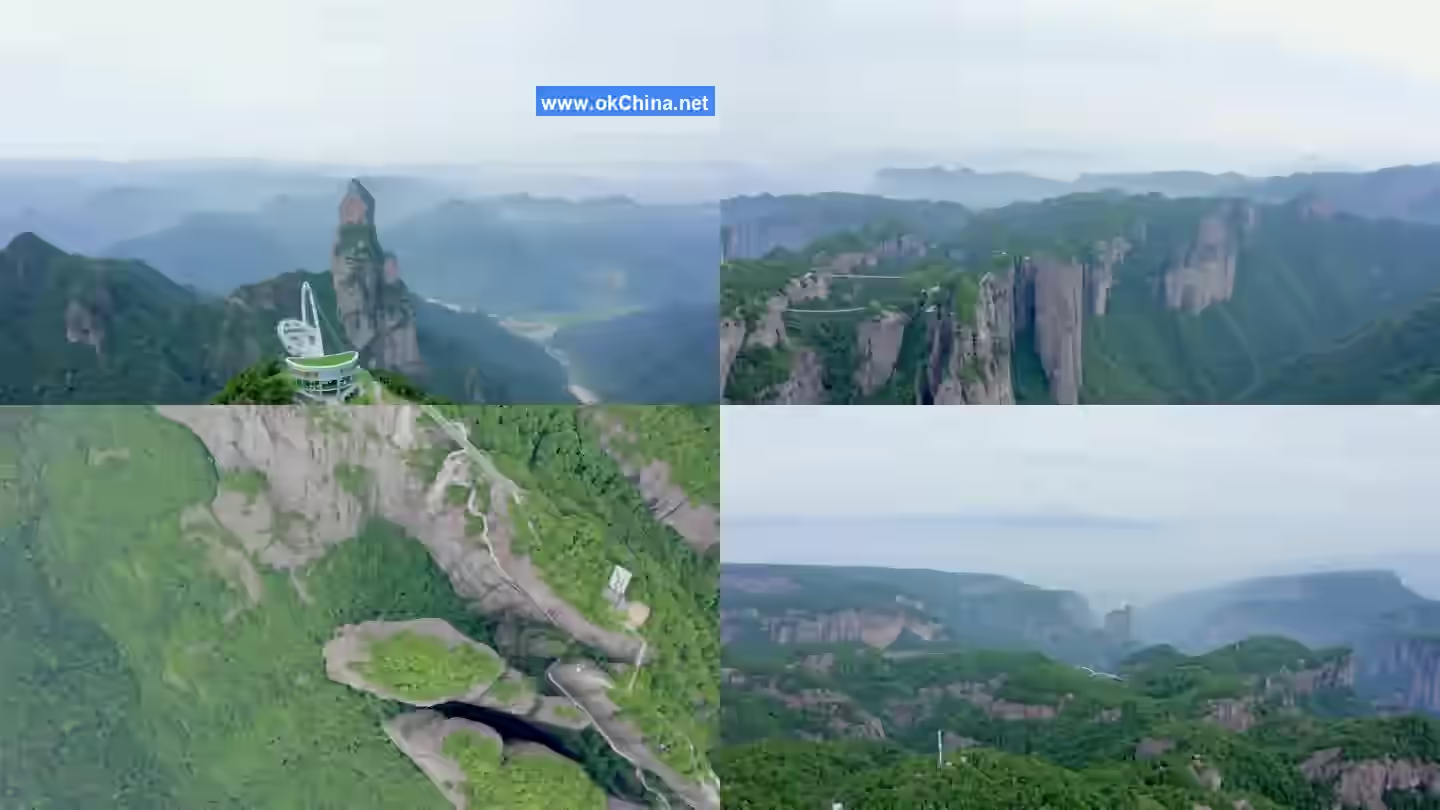
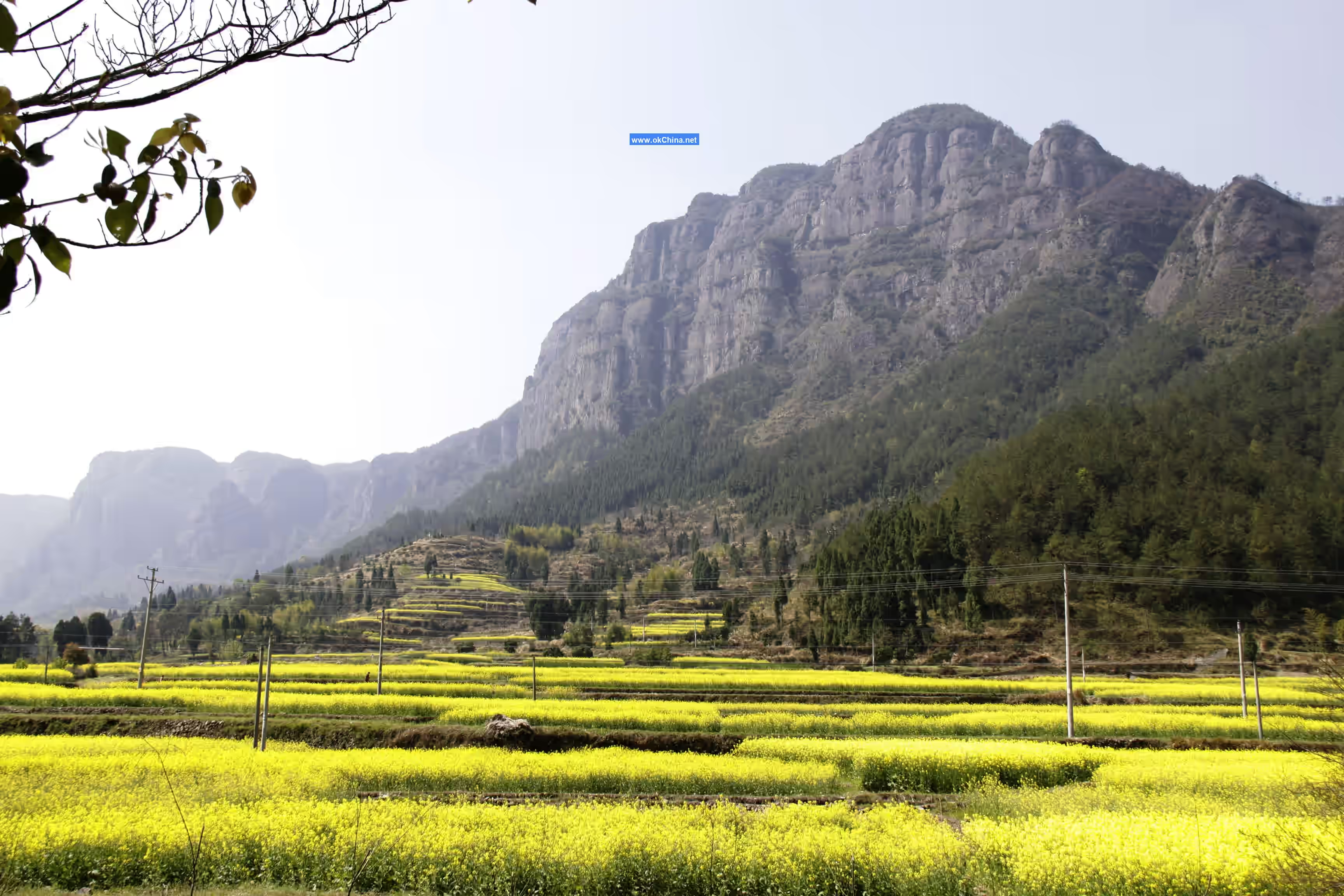
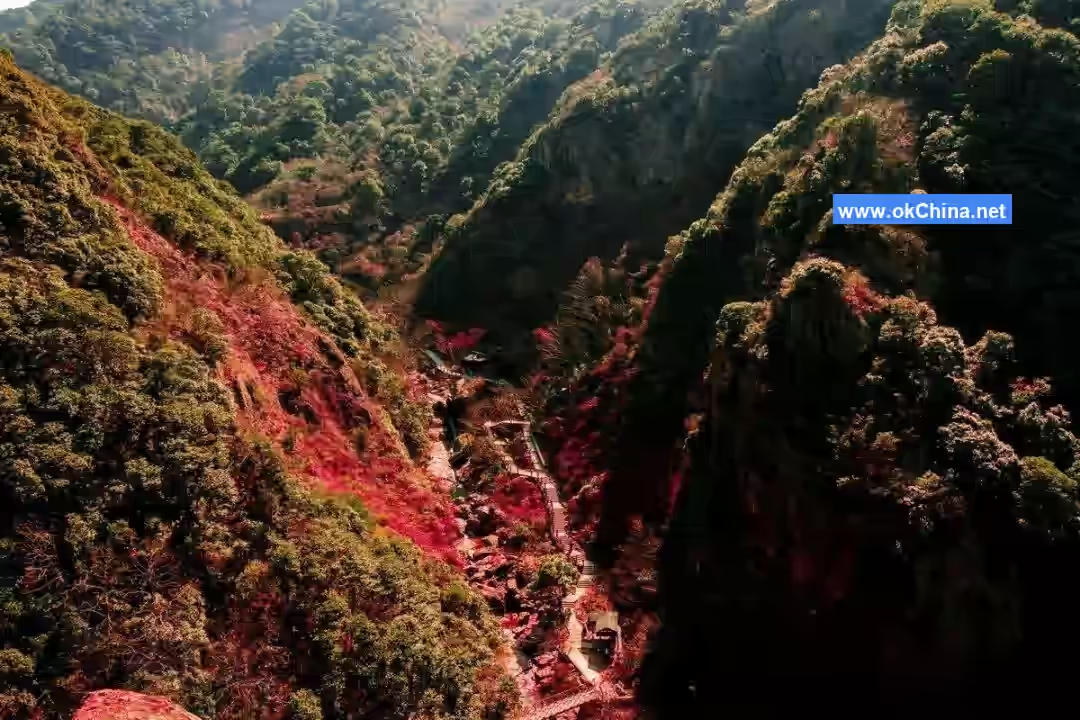
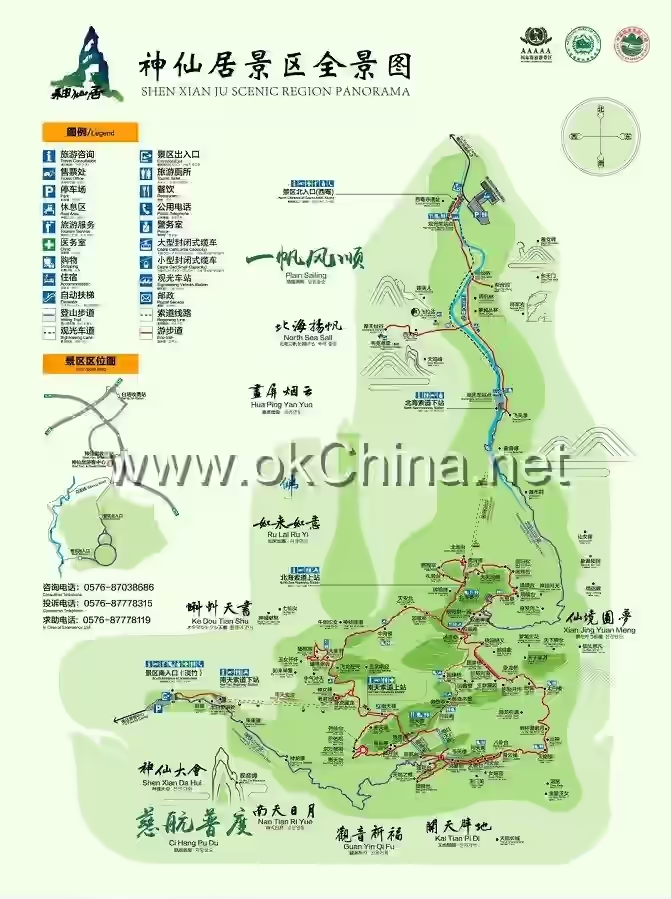
Shenxianju Scenic Area in Taizhou, formerly known as the Xiyan Temple Scenic Area, is located within Xianju National Park in Danzhu Township, Baita Town, Xianju County, Taizhou City, Zhejiang Province. The Shenxianju Scenic Area in Taizhou was established in 1998, covering a total area of 22.32 square kilometers. Shenxianju was anciently named Tianmu Mountain, also known as Weiqiang Mountain, belonging to the Kuocang Mountain Range. Its main peak, Daqinggang, stands at an altitude of 1,271 meters. Its cultural history can be traced back to the late Tang Dynasty. Geologically, the Shenxianju Scenic Area belongs to the South China Ancient Plate and is the world's largest cluster of volcanic rhyolite landforms. Shenxianju is situated in the mid-subtropical monsoon climate zone, characterized by warmth, humidity, ample rainfall, and sufficient sunlight, with a forest coverage rate of 93%. Major attractions include Xiyan Cifan, Jieyi Peak, Feiying Path, Jiusi Pavilion, Nantian Bridge, Kedou Cliff, Huxi Lake, Xiangbi Waterfall, Jiutian Feipu Waterfall, Hubei Cliff, Tianma Xingkong, Guanyin Cave, Wentian Platform, and other scenic spots.
In December 2015, the Shenxianju Scenic Area in Taizhou was rated as a National AAAAA Tourist Attraction by the Ministry of Culture and Tourism of the People's Republic of China.
2. Geographical Environment
2.1 Geographical Location
The Shenxianju Scenic Area in Taizhou is located within Xianju National Park in Danzhu Township, Baita Town, Xianju County, Taizhou City, Zhejiang Province. Its geographical coordinates are between 120°34'16"E to 120°37'30"E longitude and 28°40'26"N to 28°44'4"N latitude. It is approximately 25 kilometers southwest of Xianju County town, covering a total area of 22.32 square kilometers.
2.2 Topography and Landforms
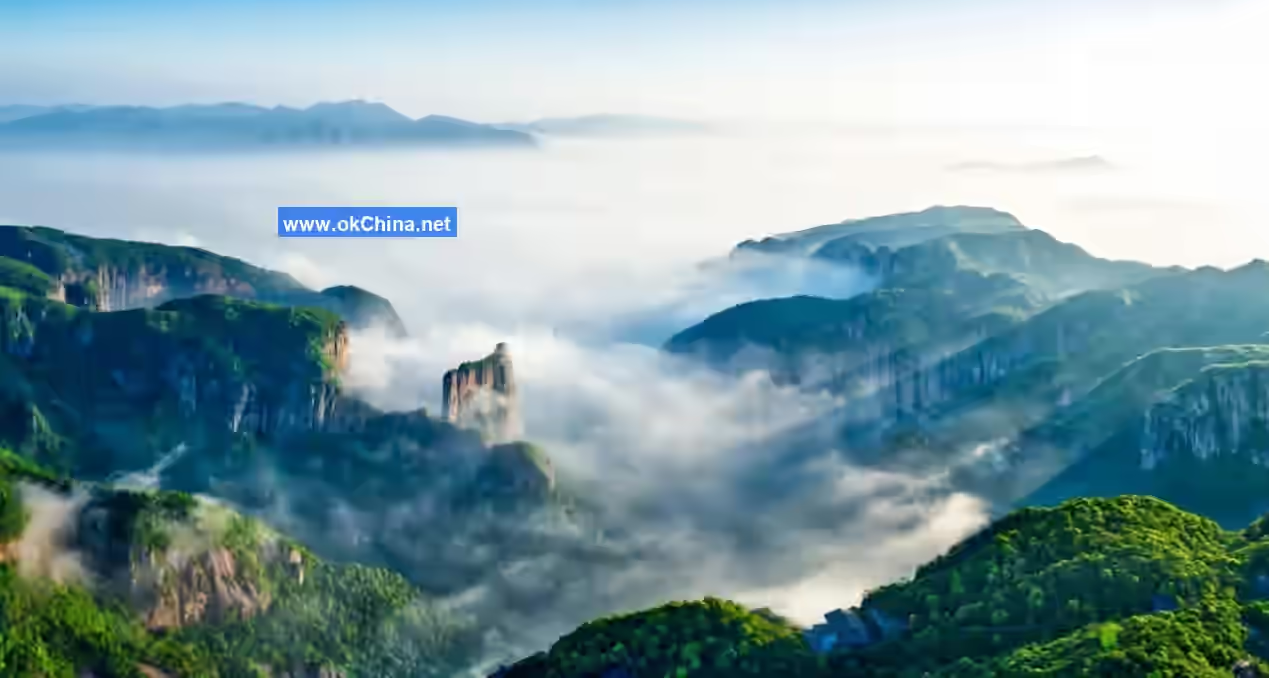
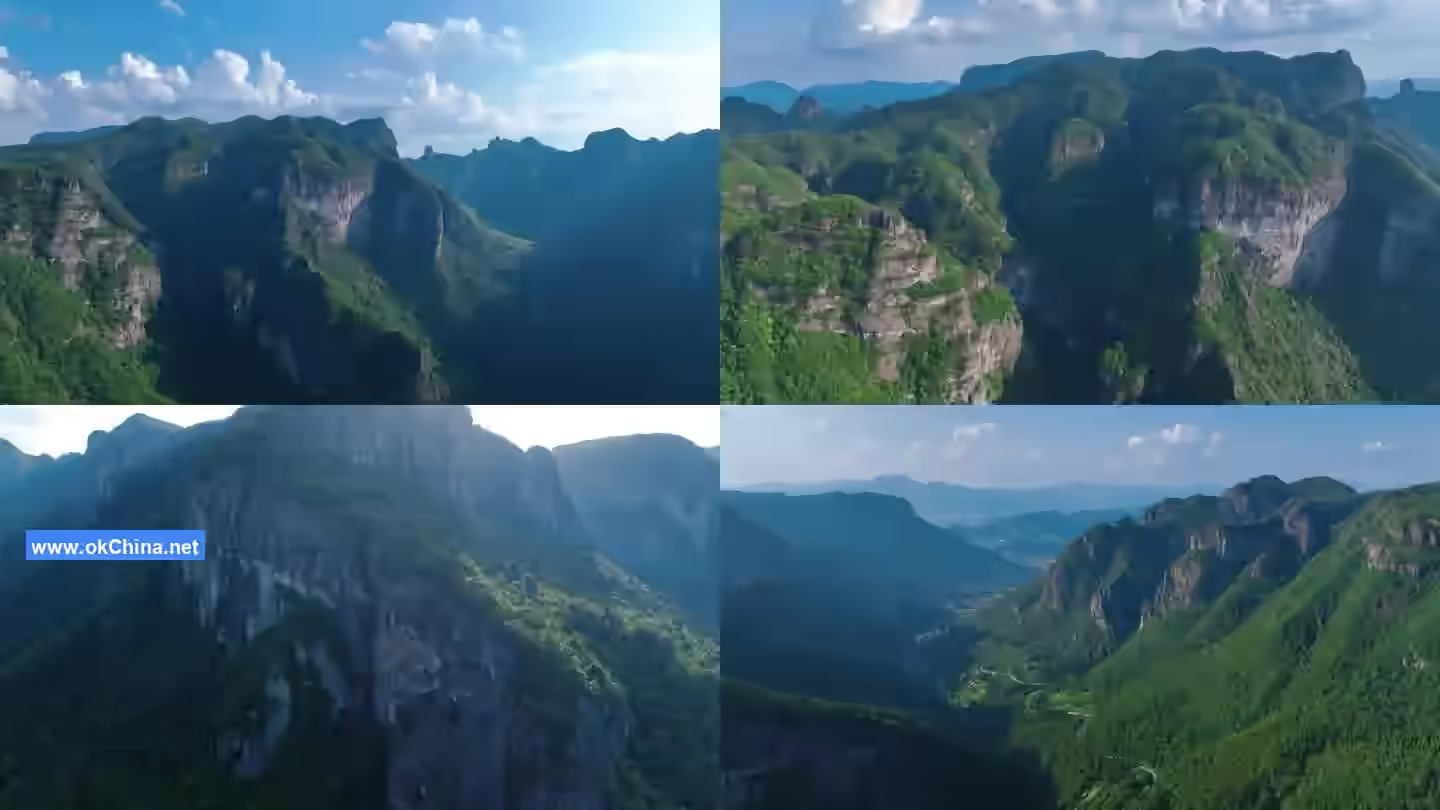
Shenxianju, also known as Weiqiang Mountain, belongs to the Kuocang Mountain Range. Its main peak, Daqinggang, has an altitude of 1,271 meters. The entire Shenxianju Scenic Area centers around the Xiyan Yougu (Xiyan Secluded Valley), forming landscapes of peaks, cliffs, streams, and waterfalls. The relative height difference between peaks and cliffs mostly exceeds 100 meters, making it a typical rhyolite landform. Geologically, the Shenxianju Scenic Area belongs to the South China Ancient Plate and is an ancient relic left by volcanic eruptions, constituting the world's largest cluster of volcanic rhyolite landforms. The vegetation in the scenic area is primarily coniferous forest, with its forest plant communities in an early successional stage and a relatively high degree of vegetation degradation.
2.3 Climate
The Shenxianju Scenic Area in Taizhou belongs to the mid-subtropical monsoon climate zone, characterized by warmth, humidity, ample rainfall, and sufficient sunlight. Typhoons affect the area from July to September each year. The annual average temperature is 17.2°C, with an annual precipitation of 1443.8 mm, annual evaporation of 1189.6 mm, annual sunshine hours of 1785.5 hours, annual sunshine percentage of 40%, an annual active accumulated temperature (>10°C) of 2909°C, and a frost-free period of 246 days.
3. Main Attractions
3.1 Xiyan Cifan
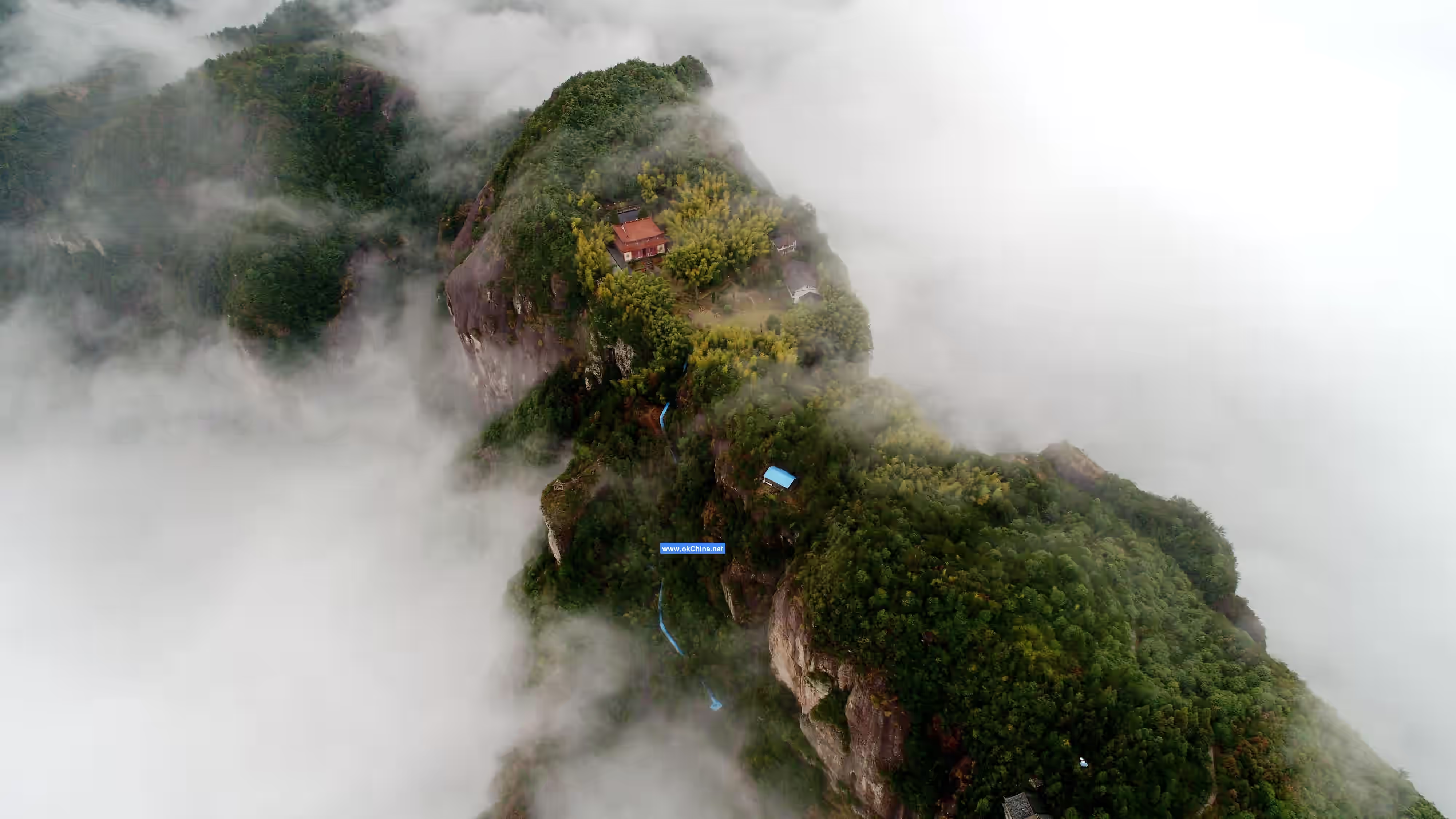
The ancient Xiyan Temple is situated within the Xiyan Yougu. Beside the temple, a giant peak soars into the sky, resembling a sail on a boat of mercy ferrying souls across, hence the name "Xiyan Cifan" (Xiyan's Merciful Sail). According to the Guangxu edition of "Xianju County Annals · Temples," Xiyan Temple was the dwelling place of the Song Dynasty Zen Master Xueya. During the Ming Dynasty, Wu Shilai from Houren Village, Baita Town, studied diligently here. He read by lamplight late into the night every day until he coughed up blood from exhaustion, eventually passing the imperial examination in the 32nd year of the Jiajing reign (1553) and rising to the position of Left Censor-in-Chief of the Censorate (a second-rank official), equivalent to the head of today's procuratorate. Wu Shilai was righteous and clear in his likes and dislikes, historically renowned for impeaching the powerful corrupt official Yan Song. In the 11th year of the Wanli reign (1583), funds were raised for reconstruction, making Xiyan Temple a grand, populous, and prosperous ancient temple. Due to dynastic changes and erosion by wind and rain, the temple collapsed by the end of the Republic of China era, its bell silenced. Today, only ruins remain.
3.2 Jieyi Peak
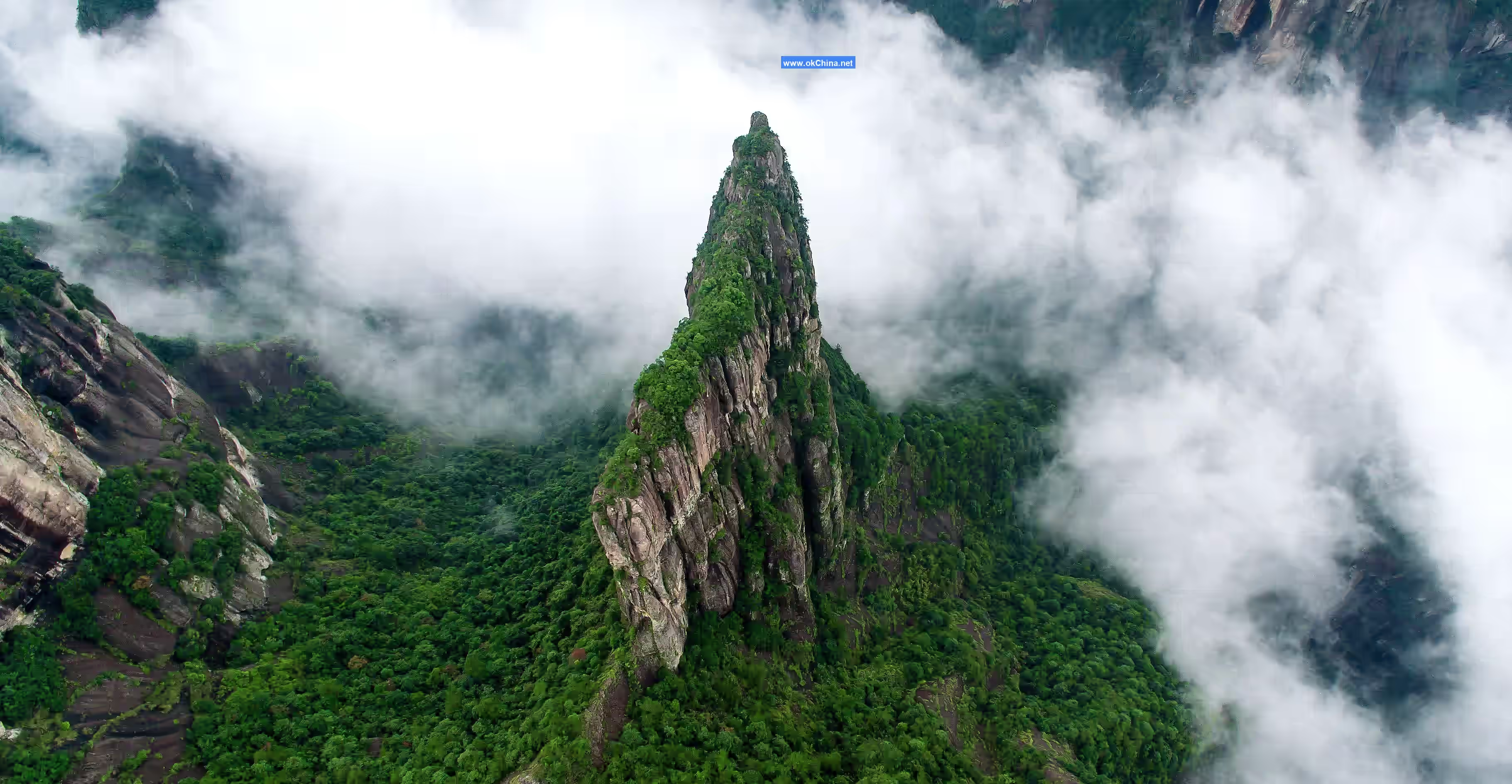
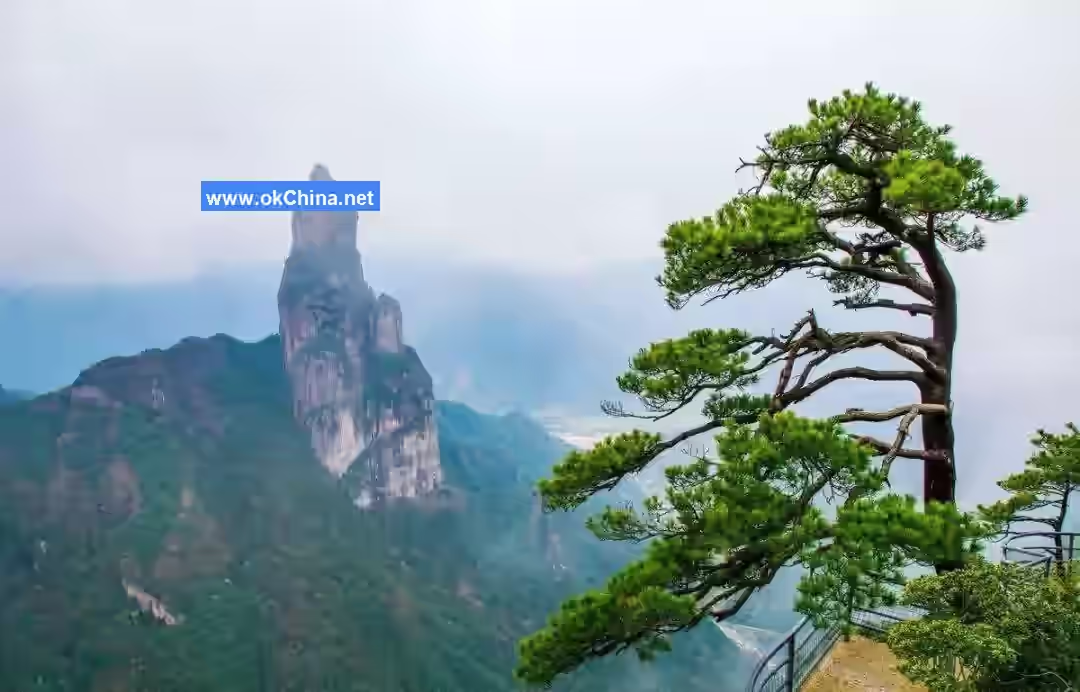
Jieyi Peak consists of three pillar peaks standing side by side, uniform in size and neatly arranged. The pillar peaks resemble human figures, with hats, eyes, and noses vividly depicted. They appear like a tripod standing firmly or like three sworn brothers or three deities gathering. The valley below was once planted with peach trees and is called Taoyuan (Peach Garden).
3.3 Taibai Mengyou Chu (Where Li Bai Dreamt His Journey)
Taibai Mengyou Chu is located at the starting point of the south entrance of the Shenxianju Scenic Area. It is a single-arch stone gateway with an inscription in seal script by Wu Changshuo reading "Taibai Mengyou Chu."
3.4 Feiying Path (Flying Eagle Path)
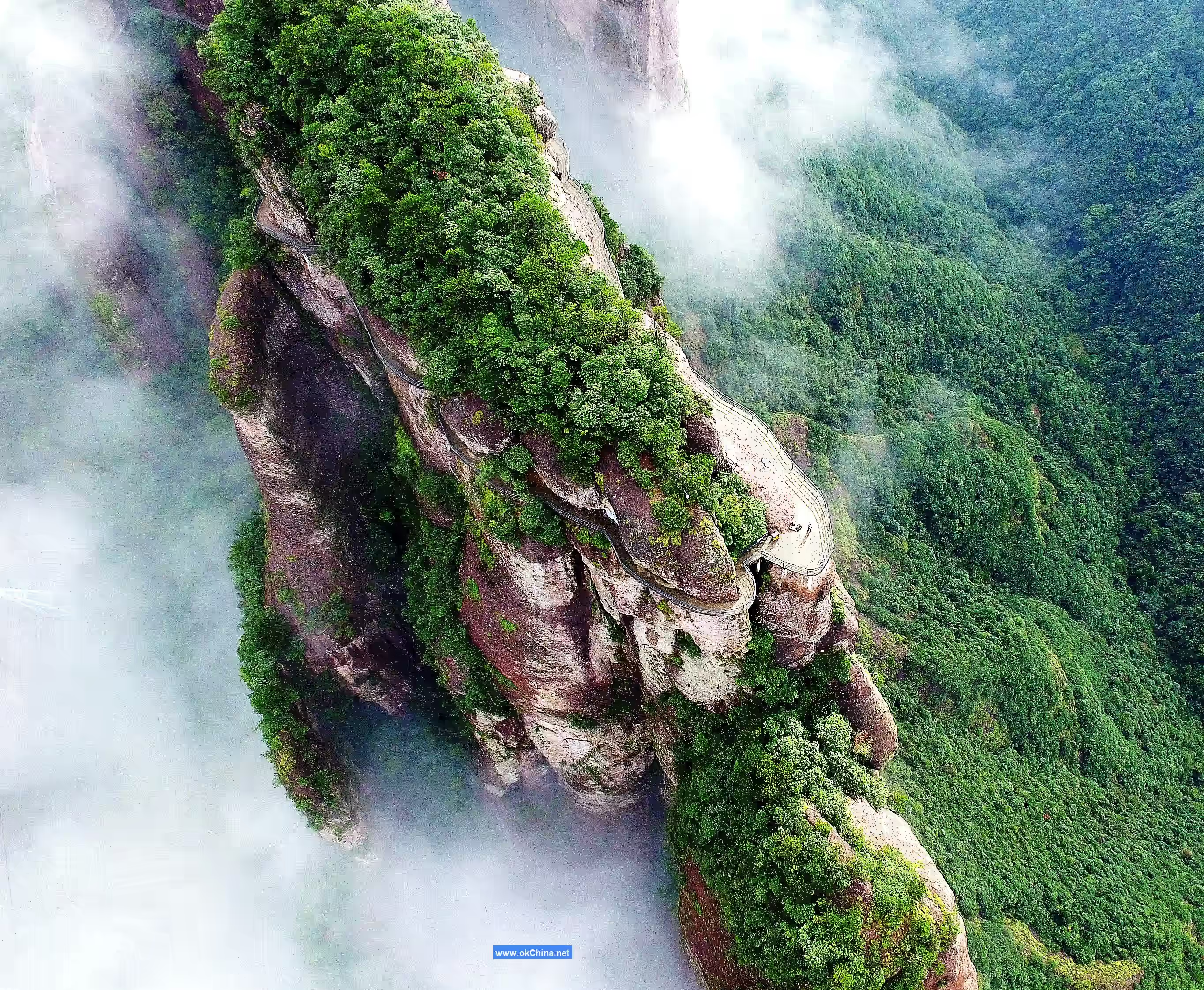
Feiying Path is located on the Shandun Peak behind Shandun Village, Huangyan Toutuo Town, Taizhou. Feiying Path is also a stone corridor within the hundreds-of-meters-high cliffs of Shandun Peak. There are two parallel stone corridors at the waist of the Shandun Peak cliff. Traces of artificial modification can be seen in the corridors. The Feiying Path corridors run parallel and have upper and lower levels, each over several hundred meters long. The upper and lower levels are connected by bamboo ladders. Feiying Path traverses the cliff face of Shandun Peak. Visitors can look up at the stone corridors from below or look down from within the corridors at the vast abyss beneath.
3.5 Tadpole Script Carvings
Tadpole script carvings are found on the Kedou Cliff of Weiqiang Mountain, covered with strange patterns and symbols such as sun, moon, insect, and fish motifs. In 2016, a CCTV "Geography · China" program crew led geological experts to investigate in Xianju. Through rock climbing and rappelling, they closely photographed the patterns on the Tadpole Cliff and conducted extensive field surveys of other rock formations in Xianju. They preliminarily confirmed that the "tadpole script" is a phenomenon of geological evolution.
3.6 Huxi Lake (Lake of Cherishing Protection)
Huxi Lake is a lake in the mountain col of the Guanyin Path. A small dam was built by the lake, and a small bridge was constructed outside the dam. The lake water overflows the dam, producing a crisp sound.
3.7 Jiusi Pavilion
Jiusi Pavilion was built to commemorate the Yuan Dynasty painter and calligrapher Ke Jiusi, a native of Xianju who lived in Kesiao Village at the foot of Tianmu Mountain. His courtesy name was Jingzhong. He was an academician of the Kuizhang Pavilion in the Yuan Dynasty and a renowned master of poetry, calligraphy, and painting. Jiusi Pavilion is an all-wood structure with upturned eaves and corners, belonging to the traditional antique-style pavilion architecture. Jiusi Pavilion is related to the Yuan Dynasty poet Yu Ji's poem "Wind Entering the Pines · Sent to Ke Jingzhong." It is said the pavilion's name originates from this, as Yu Ji was a good friend of Ke Jiusi, and they once worked together at the Kuizhang Pavilion. "Wind Entering the Pines · Sent to Ke Jingzhong" expresses Yu Ji's longing for his old friend.
3.8 Nantian Bridge (South Heaven Bridge)
Nantian Bridge spans 120 meters in total,架在100多米高的深渊之上, connecting the north and south sides of the Feidu Cliff. Visitors can stand in the center of the bridge to欣赏周边诸多的山风景观.
3.9 Xiangbi Waterfall (Elephant Trunk Waterfall)
Xiangbi Waterfall is so named because the surrounding mountain resembles an elephant, and the waterfall water appears to spout from the elephant's trunk. Xiangbi Waterfall has the largest water flow among all waterfalls in the Shenxianju Scenic Area.
3.10 Jiutian Feipu Waterfall (Nine Heavens Flying Waterfall)
Jiutian Feipu Waterfall, also known as Tianchi Feipu, is the highest waterfall in Shenxianju, with a height of 130 meters. The pool below the waterfall is also the largest waterfall pool in Shenxianju, named Tianchi (Heavenly Pool). Tianchi Feipu is at a relatively high altitude, requiring a climb to appreciate. Its highlights are not only the extremely high waterfall but also the ice瀑布 and ice spray in winter. Ice spray refers to the water spray溅起 by the waterfall falling into the pool freezing in winter, maintaining the state of溅起 water.
3.11 Hubei Cliff (Tiger Back Cliff)
Hubei Cliff is a broad ridge with steep cliffs on all sides. Its top gently extends forward and downward, resembling the back of a fierce tiger, hence the name Hubei Cliff. From the side, lifelike tiger stripe patterns can be seen. The整体形似猛虎出山, facing Xiyan Temple. Its imposing manner also reflects the overall态势 of the Shenxianju Scenic Area.
3.12 Wentian Platform (Platform for Questioning Heaven)
Wentian Platform is the southernmost point of the developed area of the scenic area. Vertical joints in the thick rhyolite have cut the rock into massive columns,排列 like rockets ready for launch. Below is the官坑峡谷 covered by lush forests, with the majestic Gongyu Rock visible in the distance.
3.13 Tianma Xingkong (Heavenly Steed Soaring)
Tianma Xingkong is one of the representative attractions of the Shenxianju Scenic Area and the highest peak within it, standing at 703 meters. This peak presents five different images from five different viewing angles: Golden Rooster Heralds Dawn, Smooth Sailing, Divine Brush Painting the Sky, Heavenly Steed Soaring, and Immortal Elder Praying for Blessings.
3.14 Guanyin Cave (Avalokitesvara Cave)
Guanyin Cave is named for housing a statue of Guanyin (Avalokitesvara). The cave is 15 meters wide, 6 meters high, and 13 meters deep. The main lithology of the cave wall is rhyolitic volcanic breccia. Due to loose cementation of the rock, it weathers and collapses more easily than the surrounding rhyolite, gradually forming a weathering and erosion-type cave landscape.
3.15 Ruyi Bridge (As-You-Wish Bridge)
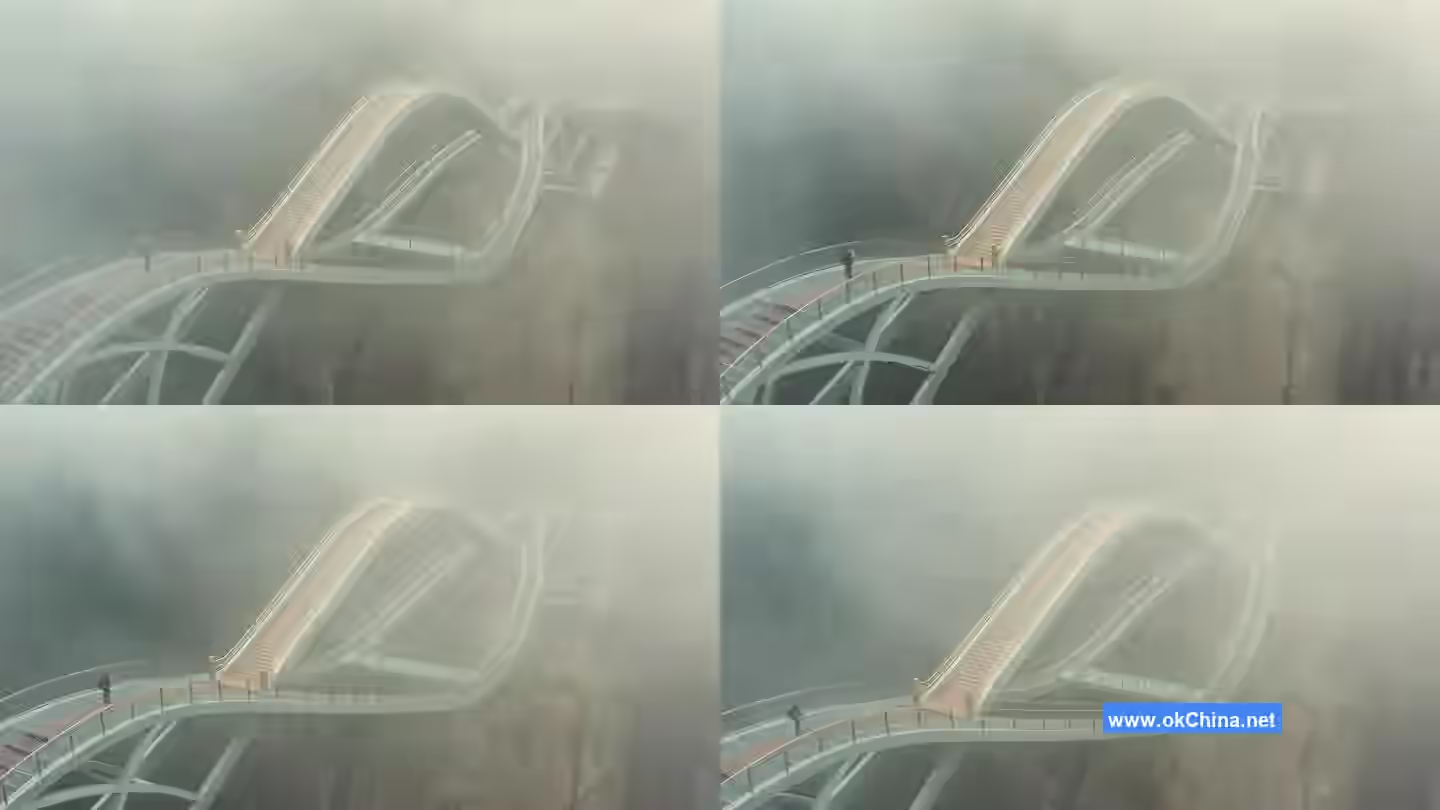
Ruyi Bridge was designed and built by the team of steel structure master He Yunchang. Located on the cliff of Ruyi Valley, it is an arched steel and glass bridge themed on the "Jade Ruyi" (a ceremonial scepter),寓意如来如意 (as Buddha wishes, as you wish). The main structure of Ruyi Bridge features柔线造型 of primary and secondary arches, connected by steel cables, echoing the起伏 of the mountains and forming a "heavenly eye" in the middle. The bridge foundation relies on the rock masses on both sides, connected through reinforced concrete rock anchors, integrating the bridge with the bedrock on both sides. The deck paving consists of steel grids, wooden planks, adhesive stone, and transparent glass. The railings are made of stainless steel wire mesh, ensuring passage for all visitors while providing a丰富通透的游览体验. During site selection for Ruyi Bridge, special attention was paid to nature conservation. An ancient tree at the north cliff口 serves as the center of the bridge abutment circle, and the trees at the two circular platforms are Castanopsis eyrei and ginkgo trees. Ruyi Bridge is 130 meters long, covers an area of 1100 square meters, has a design full-load capacity of over 4000 people, and实际运行控制 at 1500 people.
3.16 Hongmeng Bridge (Primordial Chaos Bridge)
Hongmeng Bridge was designed by the Architectural Design and Research Institute of Zhejiang University and constructed by Zhejiang Wanli Construction Engineering Co., Ltd. Located in Hongmeng Valley, its name取盘古开天地鸿蒙之意 (takes the meaning of Pangu separating heaven and earth from the primordial chaos). It features a continuous steel truss structure形态, with a concrete column in the middle and reinforced concrete rock anchors at both ends. The deck uses steel plate plastic and steel grids on both sides, with railings made of curved steel pipes. The bridge coating is尽量低调 to协调 with the surrounding mountains. Hongmeng Bridge is 75 meters long, with a桥面积 of 220 square meters. It has a design full-load capacity of over 800 people and实际运行控制 at about 300 people.### 3.17 Guanyin Mountain Pillar Peak Guanyin Mountain is the tallest and largest solitary pillar peak in the scenic area. It is named "Guanyin Mountain" due to its striking resemblance to the Bodhisattva Guanyin and serves as a quintessential representative of the area's pillar peak landscapes.
4. Culture
4.1 Cultural Activities
The Shenxianju Scenic Area hosts a rich variety of activities. Regular annual events include: the China · Shenxianju Global Highline Slackline Challenge, the Shenxianju China-Korea Mountaineering Conference, the China Climbing Natural Rock Wall Series (Shenxianju Station), and the Shenxianju National Treetop Adventure Challenge. Additionally, the area has organized numerous large-scale sports events such as the Shenxianju Greenway Marathon, the Shenxianju Mountain Orienteering Competition, Color Run, Neon Night Run, East China Rock Climbing Carnival, China's First Water Climbing Bouldering Conference, the Shenxianju Ten-Thousand-Person Mountaineering Event, the Yangtze River Delta Sports Circle National Fitness Festival, the Yangtze River Delta Sports and Leisure Experience Season, and the Via Ferrata World Cup Night.
4.2 Naming
Xianju County was established in the 3rd year of the Yonghe era of Emperor Mu of the Eastern Jin Dynasty (347 AD), initially named Le'an. It was abolished and re-established several times during the Sui and Tang dynasties. In the 5th year of the Baozheng era of the Wuyue Kingdom during the Five Dynasties period (930 AD), it was renamed Yong'an. In the 4th year of the Jingde era of the Northern Song Dynasty (1007 AD), Emperor Zhenzong, citing that its "cavern heavens and famous mountains form a protective screen, and it is home to many abodes of immortals," decreed the present name "Xianju" (Abode of Immortals). Shenxianju is a natural scenic area located in Baita Town, Xianju County, Taizhou City, Zhejiang Province. It was anciently named "Tianmu Mountain" and is also called "Weiqiang Mountain."
Xianju has a long history. Over 6,000 years ago, the ancestors of the Xianju people—the Ouyue tribe—had already settled on the valley plains below Tianmu Mountain. During the Warring States period, Xianju was part of the territory of the Yue State. After the Qin unification of China, it belonged to Huipu Township, Yin County, Minzhong Commandery. In the Eastern Han Dynasty, Xianju was a place visited by renowned Chinese Buddhist monks and Taoist masters. The "Stone Chan Temple" (i.e., the Stone Ox "Daxing Temple"), built in the 1st year of the Xingping era (194 AD), predates the construction of the Guoqing Temple by over 400 years.
4.3 King of Yue's Hiding Place
Legend has it that during the late Spring and Autumn period, amidst the rivalry between the states of Wu and Yue, the armies of the King of Yue and the King of Wu fought a battle in a mountain col on the border between Jinyun and Xianju. The King of Yue was besieged by the King of Wu on the mountain. In a moment of extreme crisis, the King of Yue prayed for divine protection before a local earth god temple. Immediately, all the vegetation on the mountain turned into soldiers, helping King Goujian of Yue break through the Wu encirclement single-handedly. However, the Wu soldiers continued their relentless pursuit. When the King of Yue fled to a field planted with ramie, seeing the pursuers closing in, he abandoned his white horse in desperation and dove into the ramie field, temporarily evading capture. Afterwards, the King of Yue moved eastward and hid behind a large rock for a long time. Only after confirming the pursuers had passed did he build a simple thatched hut in a small mountain col not far east of the rock to stay temporarily.
Later, the King of Yue remembered the beloved white horse he had abandoned in his panic. In a fit of anger, he threw away his horsewhip. It is said that after King Goujian of Yue was defeated at Yuewang Mountain in Jinyun, he fled all the way from the direction of Huanglian Pit to near Gufang Mountain, with pursuers constantly on his heels. Just as he reached San'gefo (Three Buddhas), the King of Yue hid under a shrine altar. Suddenly, many spiders emerged and wove layers of webs covering him. The Wu soldiers searched but could not find him, assuming he had gone farther, and continued their chase past Shangping Village.
From then on, King Goujian "slept on brushwood and tasted gall," recruiting soldiers and training troops to stage a comeback. He fought his way back to Kuaiji (present-day Shaoxing), established it as his capital, rebuilt the Yue State, and became its king. Therefore, he bestowed upon the "San'gefo" that had saved his life the title "Zidian" (Purple Palace). This legend has been passed down for thousands of years without fading.
To commemorate the King of Yue, many meaningful place names remain in this area: The mountain where the Wu and Yue armies fought is called Yuewang Mountain (King of Yue Mountain), and a Yuewang Temple was built on it. To honor the King of Yue, nearby villagers would later often pray for blessings at Yuewang Temple. It is said there was once a very prosperous period, though it has now declined. However, every year on the 16th day of the sixth lunar month, many nearby villagers continue this custom. The mountain col where the armies fought is called Yuezhen (Yue Battle Formation), and the present-day Yuechen Village (Yuezhen) is, as the name suggests, the battlefield where the Yue and Wu armies clashed. Choumen Village (Reward Gate) is where the King of Yue rewarded the local people. The two places where the King of Yue hid are called Matian (Ramie Field) and Yeyantou (originally Yinyantou, Hiding Rock Head; because "Yin" (hide) and "Ye" are near-homophones in the Xianju dialect, it later changed to Yeyantou). The place where the King of Yue temporarily resided is called Wangliao (King's Hut, present-day Huangliao). Furthermore, to commemorate the white horse, the mountain behind Yeyantou Village is named Baima Mountain (White Horse Mountain). The section of the Yong'an River the white horse passed through is called Baima Jingkeng (White Horse Passing Pit, now named Jinkeng). The place where the King of Yue threw his horsewhip is called Mabiantou (Horsewhip Head). People also built a Baima Dian (White Horse Hall) at Qianzhuang (Front Post, originally Qianzhuang, now Qianzhuang) where the King of Yue lost his white horse, as a memorial.
Comments
Post a Comment