Shennongxi Trackers Cultural Tourism Area in Enshi Tujia and Miao Autonomous Prefecture
1. Overview
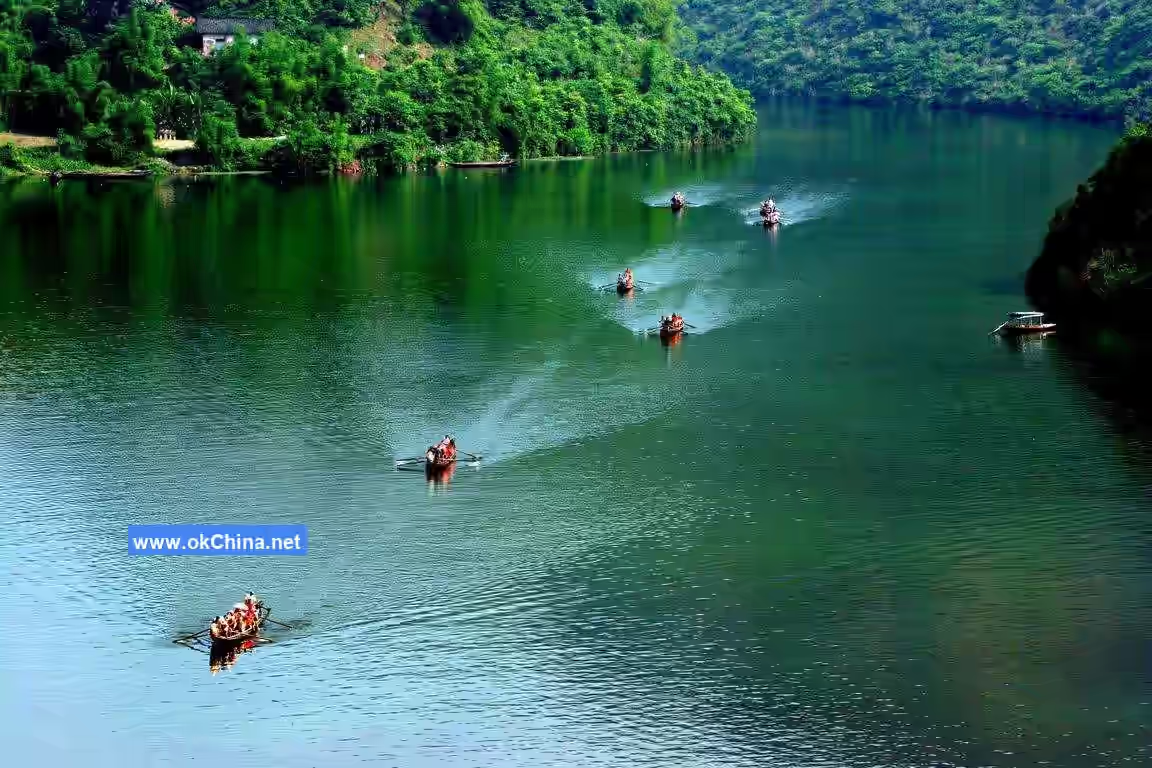
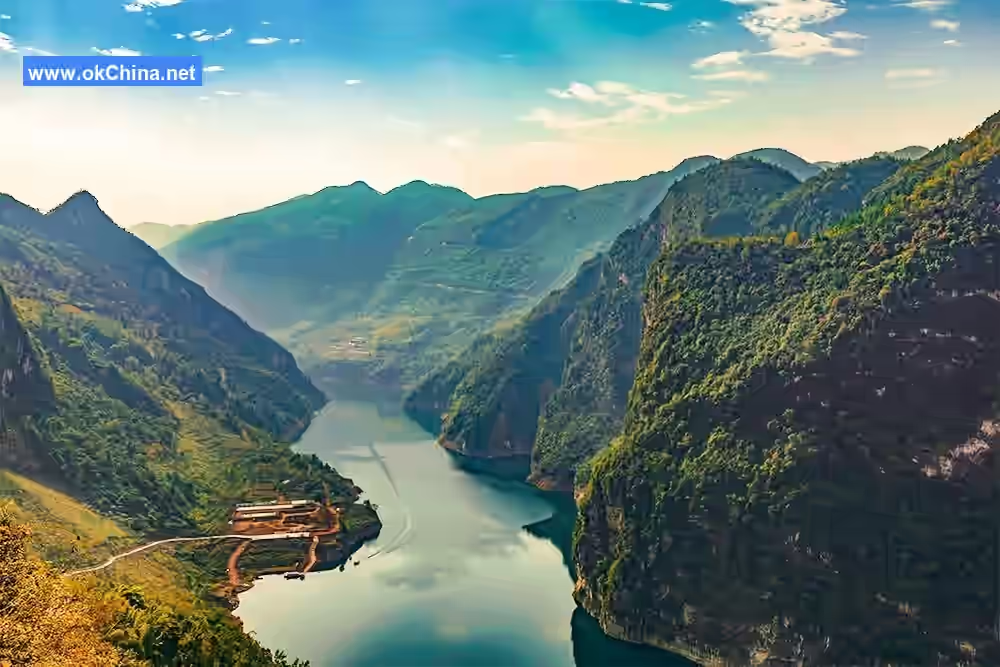
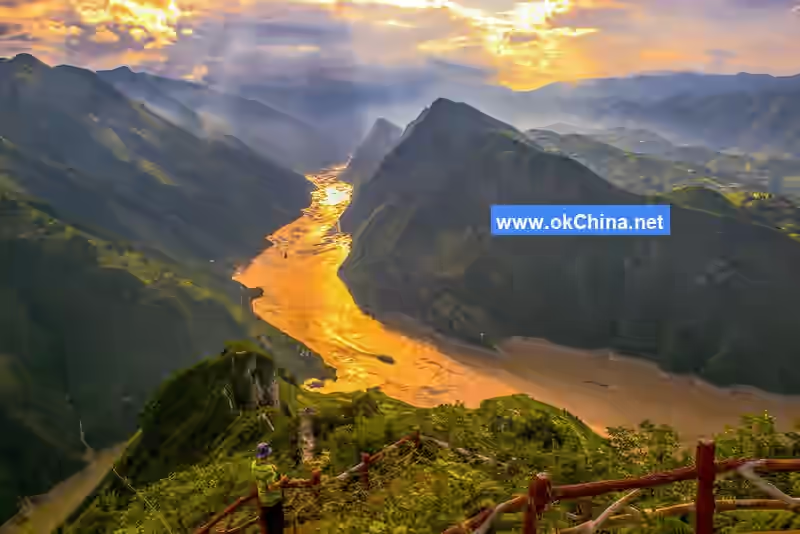
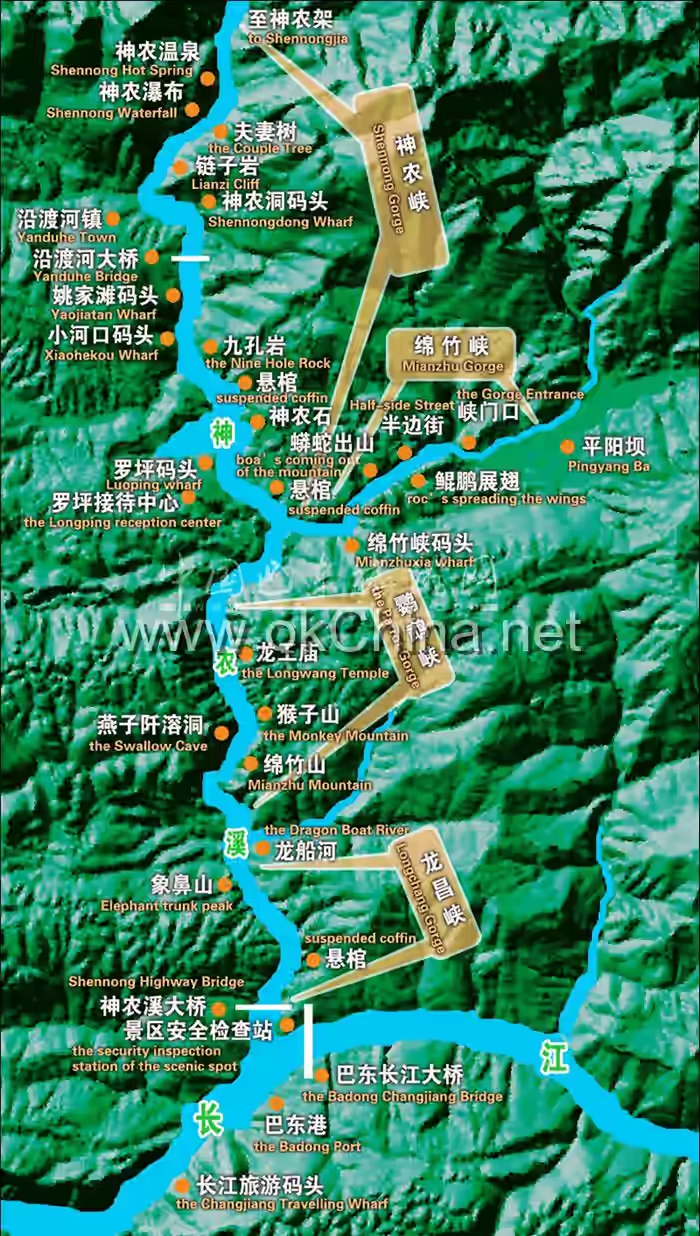
The Shennongxi Trackers Cultural Tourism Area in Enshi Tujia and Miao Autonomous Prefecture, abbreviated as Shennongxi Trackers Cultural Tourism Area or Shennongxi Scenic Area, is located in Badong County, Enshi Tujia and Miao Autonomous Prefecture, Hubei Province. Shennongxi is situated on the north bank of Badong County town, at the junction of the Xiling Gorge and Wu Gorge of the Yangtze River. It originates from the southern slope of the Shennongjia National Nature Reserve and is a perennial stream with a total length of 60 kilometers, flowing from north to south, and an average annual flow of 20 cubic meters per second. Along its course, it receives 17 tributaries. Opposite the new Badong county town, at Xirangkou, 2.5 kilometers west of the entrance to Wu Gorge, it breaks through the cliffs and empties into the Yangtze River. Its drainage area covers 1,031 square kilometers, and the total scenic area spans 300 square kilometers, with forest coverage exceeding 85%. Starting from the entrance at Xirangkou and proceeding upstream along the main stream, the area sequentially includes four gorge sections: Longchang Gorge, Parrot Gorge, Shennong Gorge, and the tributary Mianzhu Gorge.
On May 5, 2011, the Shennongxi Trackers Cultural Tourism Area in Enshi Tujia and Miao Autonomous Prefecture was rated as a National AAAAA Tourist Attraction by the National Tourism Administration, becoming the first national 5A-level tourist attraction in Enshi Tujia and Miao Autonomous Prefecture.
2. Development History
- May 25, 1987: The State Council Tourism Coordination Leading Group conducted an on-site inspection of Shennongxi and reached a consensus that "among the many scenic spots along the Yangtze Three Gorges tourism route, Shennongxi has unique landscapes and high tourism value." In July of the same year, it was identified as one of the eight key development scenic spots along the Yangtze Three Gorges tourism route.
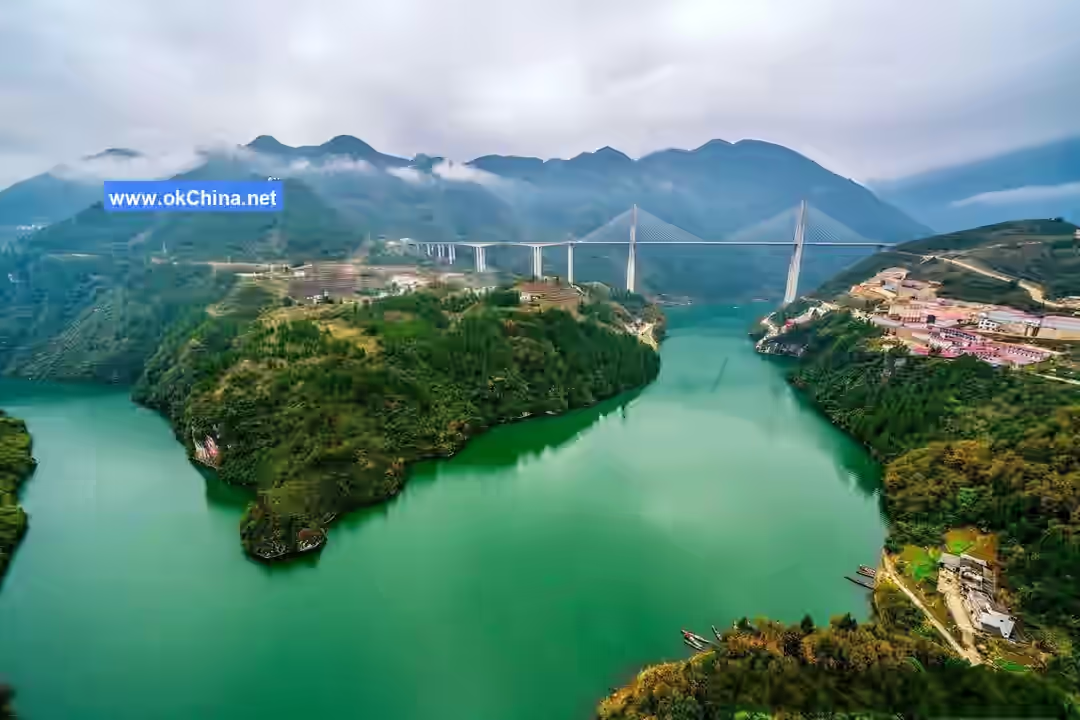
- 2012: Badong County made every effort to promote the upgrading of the Shennongxi Scenic Area, implementing projects such as building the Trackers Cultural Tourism Village, beautifying the Shennongxi Bridge, constructing a belt of characteristic folk houses along the Shennongxi River, and renovating and packaging the Luoping Tourist Reception Center.
- September 24, 2021: To enhance the quality of the scenic area and enrich its cultural content, multiple research trips and market surveys were conducted in Jiangxi, Chongqing, Wuhan, Yichang, and other places. An expert team was also invited for on-site inspections. Ultimately, it was decided to integrate existing tourist attractions in the Shennongxi Scenic Area, such as the Hanging Coffins, the "Pea Pod" small wooden boats, the musical Bashan Love, and the filming location of the song Trackers' Love. With an investment of nearly 2 million yuan, the live interactive performance Dream Back to Shennongxi was created. The performance, divided into four chapters—Raising the Coffin, Chasing Love, The Boat's Tale, and Tracker's Marks—is staged along both banks of the river from Longchang Gorge to Luoping within the scenic area.
- February 16, 2022: The groundbreaking ceremony for the Shennongxi Scenic Area Tourism Function Restoration Road Project was held. The project involves constructing a new tertiary road designed in the style of an original ecological mountain landscape road. It starts at Nanjiaya, connecting to the Shennongxi exit of the Shanghai-Chengdu Expressway, and ends at the Luoping Tourist Center of the Shennongxi Scenic Area. The route is 4,474 meters long, with a design speed of 30 km/h. The road features an asphalt concrete surface, and a total of 2,733 meters of corrugated guardrails are installed along the traffic lanes.
3. Geographical Environment
3.1 Location and Territory
The Shennongxi Trackers Cultural Tourism Area is located in Guandukou Town, Badong County, Enshi Tujia and Miao Autonomous Prefecture, Hubei Province. The total area of the scenic area is 300 square kilometers.
3.2 Climate Characteristics
Badong County, where the Shennongxi Trackers Cultural Tourism Area is located, lies in the subtropical monsoon zone, characterized by warmth, abundant rainfall, high humidity, frequent fog, and distinct four seasons. The distribution of sunlight, heat, and water shows significant vertical differences, forming various mountain-type microclimates. For every 100-meter increase in altitude, the average temperature decreases by 0.62°C, and the frost-free period shortens by 5–7 days. The total solar radiation is in the low-value zone of China, averaging 88–99 kcal/cm² per year. The total sunshine duration ranges between 1,200 and 1,650 hours. Temperature distribution is three-dimensional, with the longest frost-free period being 311 days and the shortest 173 days. The average annual rainfall is 1,100–1,900 mm, mostly concentrated from April to September. The annual wind speed is relatively low, averaging 1.5–3.4 m/s, predominantly easterly and southwesterly winds, with low frequencies of northerly and westerly winds.
3.3 Hydrological Features
Shennongxi, also known as Yandu River, is located on the north bank of the new Badong county town. It is the first tributary of the Yangtze River after it exits Wu Gorge and enters the Xiangxi Wide Valley. It originates from the southern slope of the main peak of the primitive forest in Shennongjia, Hubei, famously known as the "First Peak of Central China," and is 60 kilometers long. For thousands of years, Shennongxi has stood majestically among numerous mountains and deep abysses, finally merging into the embrace of the Yangtze River at Xirangkou in Badong County, Hubei.
4. Main Attractions
4.1 Longchang Gorge Section
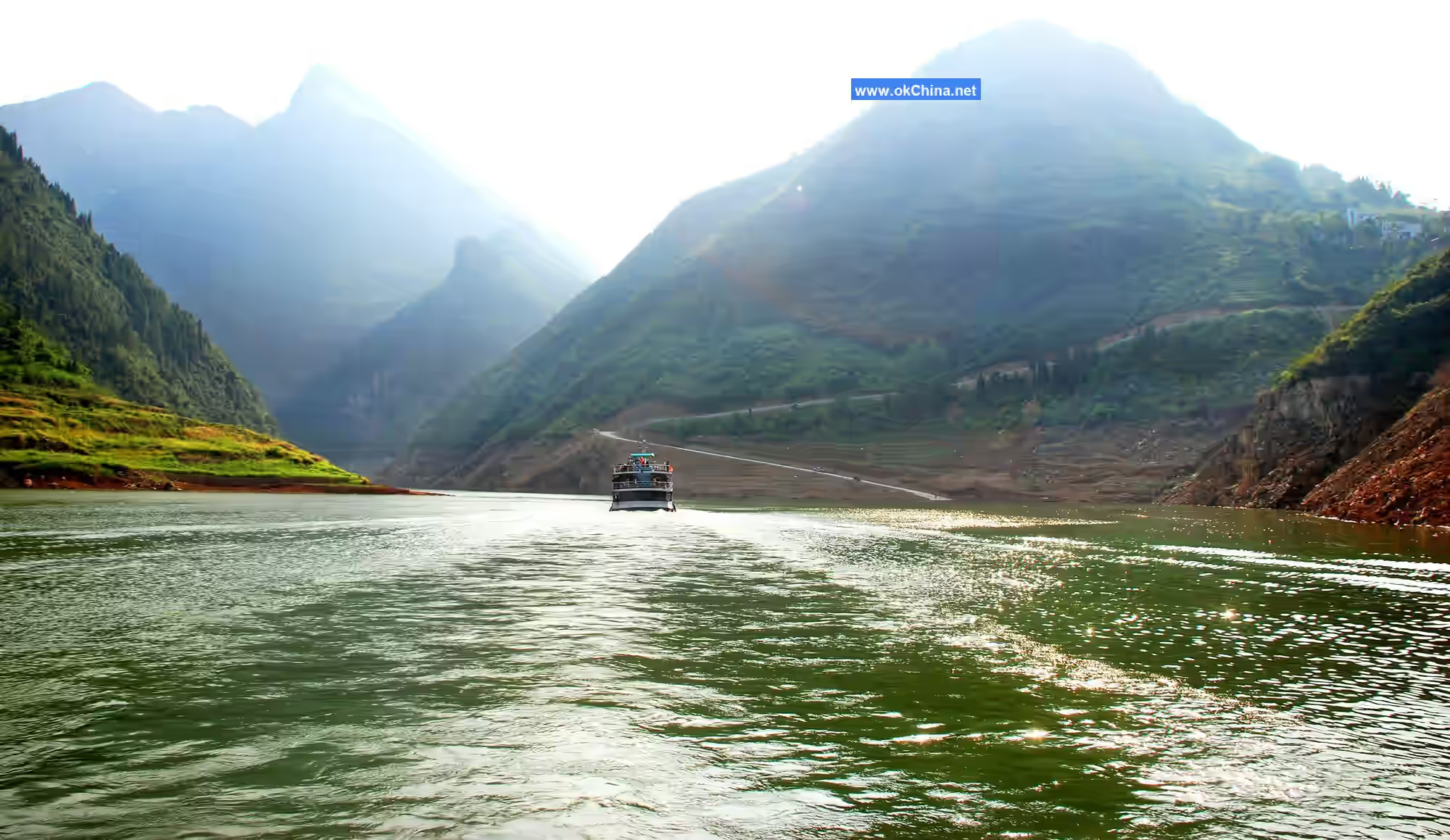
Longchang Gorge stretches from the Shennongxi Bridge to the locations of Longchuan River and Elephant Trunk Hill, with a total length of 5.7 kilometers and an average width of less than 20 meters. The Tang Dynasty poet Du Fu once drifted through this gorge by boat and wrote a poem praising it: "The winding water stretches like a long snake, embracing riverside villages in the wilderness. A leaf-like orchid boat in the dragon's cave dwelling, a few thatched cottages of rustic folk. In winter, pure green pine and fir trees; in spring, interspersed red peach and plum blossoms. Below the mountain, the site of Qinglian remains, often veiled by white clouds." Historical records state, "This cave is not a stone cave but a wonder of landscape; a cave of ten li, where boats can float back and forth." Longchang Gorge features cultural and natural landscapes such as cliff coffins and Elephant Trunk Hill.
4.2 Parrot Gorge Section
Parrot Gorge is located in the middle section of the Shennongxi stretch of the Yangtze River, connecting Mianzhu Gorge upstream and Longchang Gorge downstream, with a total length of 8.5 kilometers. In the Parrot Gorge section, visitors can view the largest karst cave in Shennongxi—Yanzigian Karst Cave. The cave entrance is over 100 meters high and more than 40 meters wide. Thousands of short-billed swiftlets inhabit the cave year-round, hence the name "Yanzigian" (Swiftlet Cave).
4.3 Shennong Gorge Section
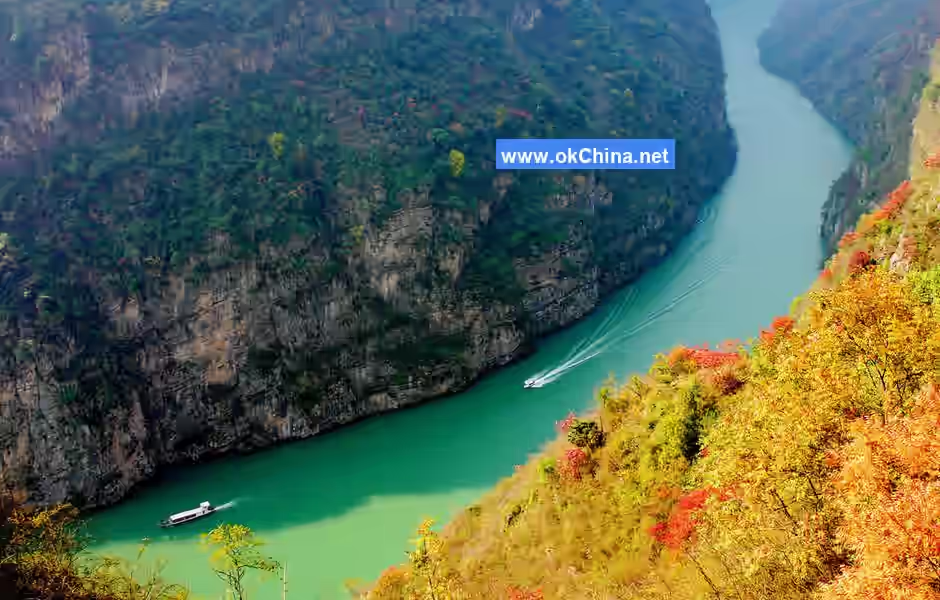
Shennong Gorge is the longest section within the Shennongxi area, stretching 15 kilometers. Attractions in the Shennong Gorge section include Shennong Stone, Hanging Coffins, Nine-Hole Rock, Chain Rock, Husband-and-Wife Trees, and Shennong Hot Spring. Within the gorge stands a peak shaped like Shennong, the legendary ancestor of agriculture in Chinese mythology, which is why this section of the canyon is called "Shennong Gorge."
4.4 Mianzhu Gorge Section
Mianzhu Gorge is named after the lush green Mianzhu bamboo growing in patches on both sides of the gorge. It is 5 kilometers long and is a rare specimen of ancient geological tectonic movement遗迹, renowned for its perilousness. Stalactites and stone curtains between the rock walls are sometimes two to three hundred meters wide. The narrowest point of the stream is less than 5 meters, with cliff walls on both sides almost touching, creating a "thread of sky" effect, aptly called "One-Line Sky." Vivid formations within the gorge include "Wild Man Stretching His Palm," "Python Emerging from the Mountain," "Roc Spreading Its Wings," "General Guarding the Gate," and "Mountain in the Water," along with the ancient site of "Half-Street."
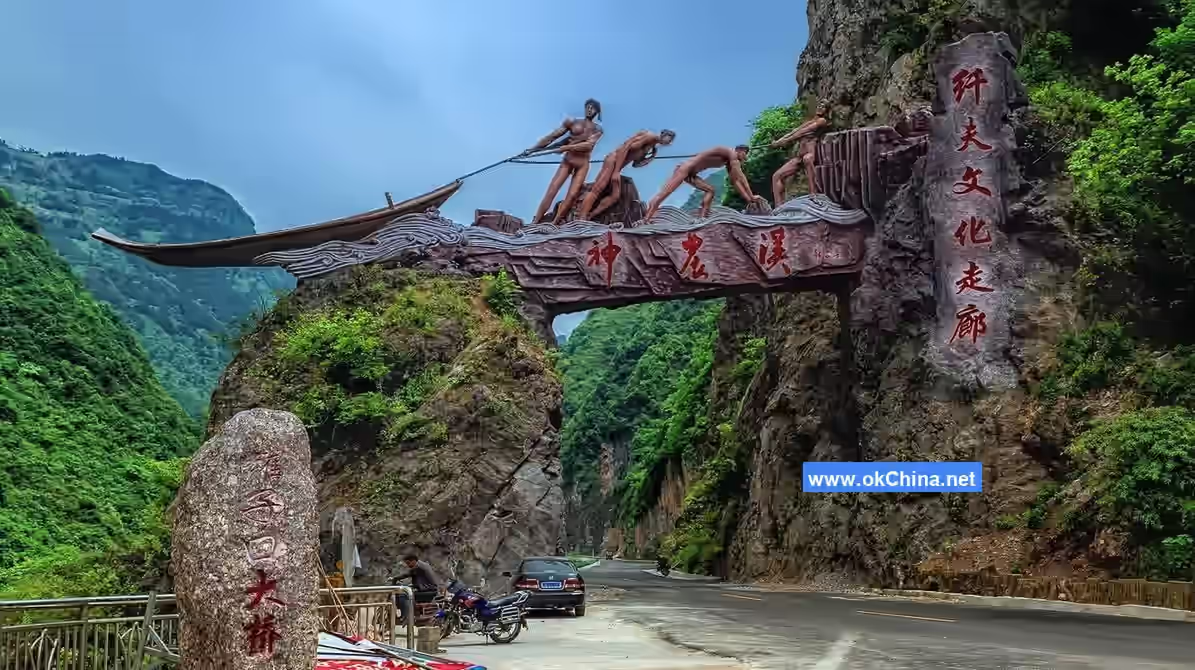
4.5 Trackers Cultural Corridor
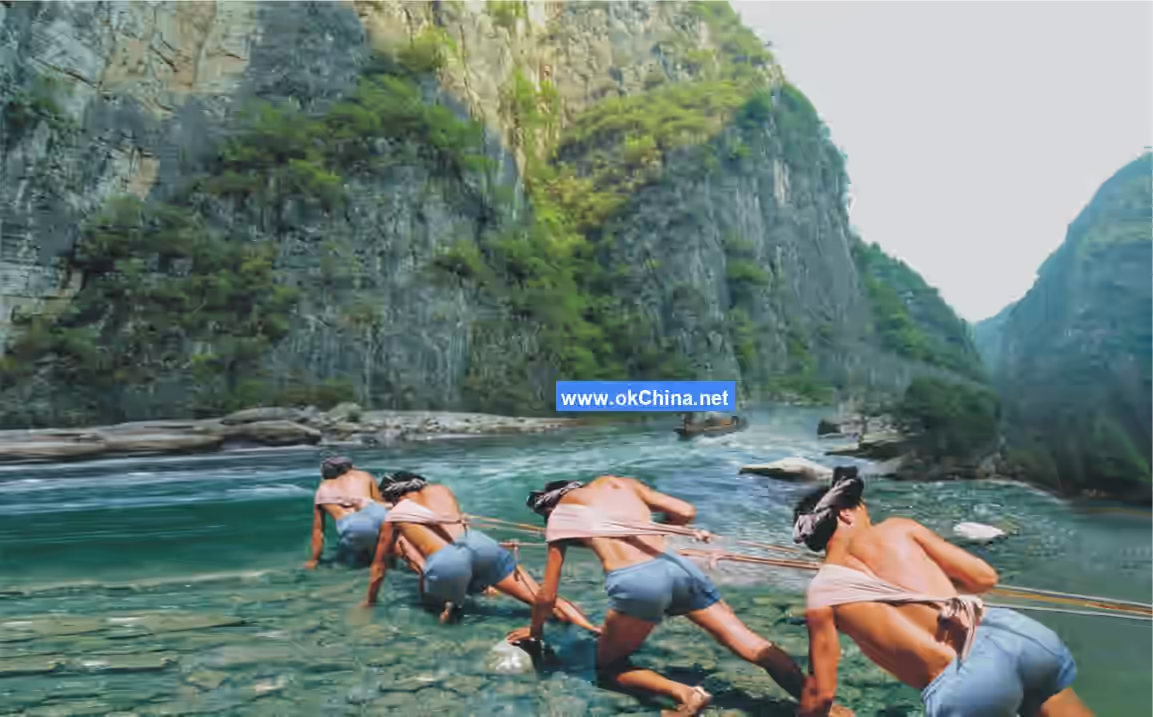
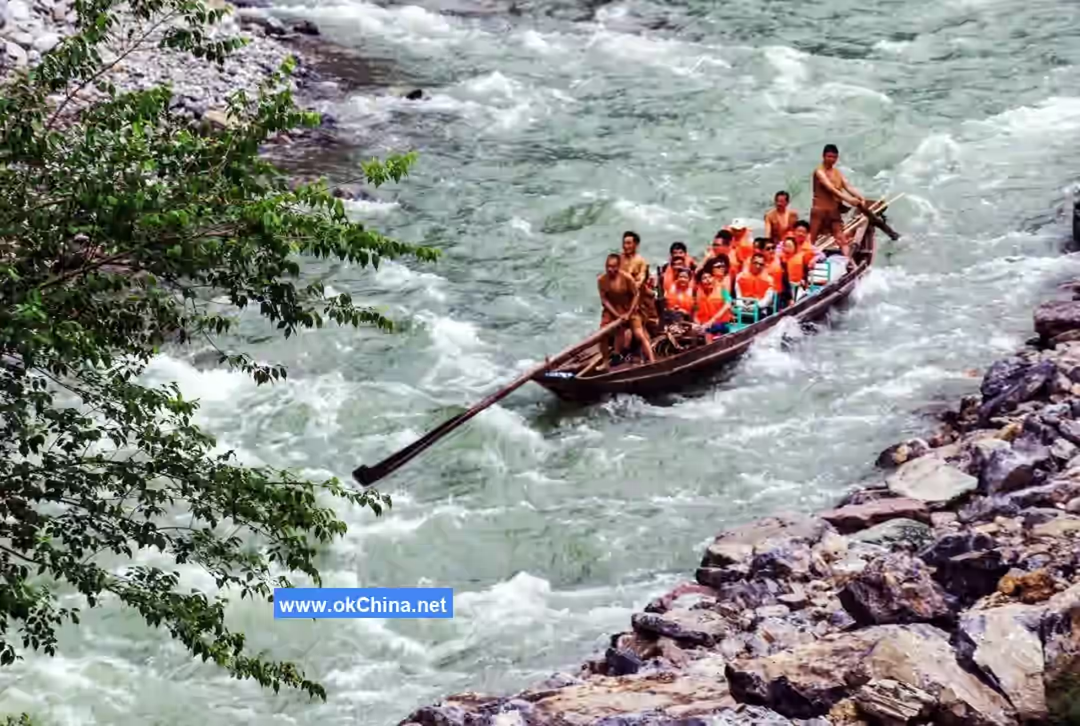
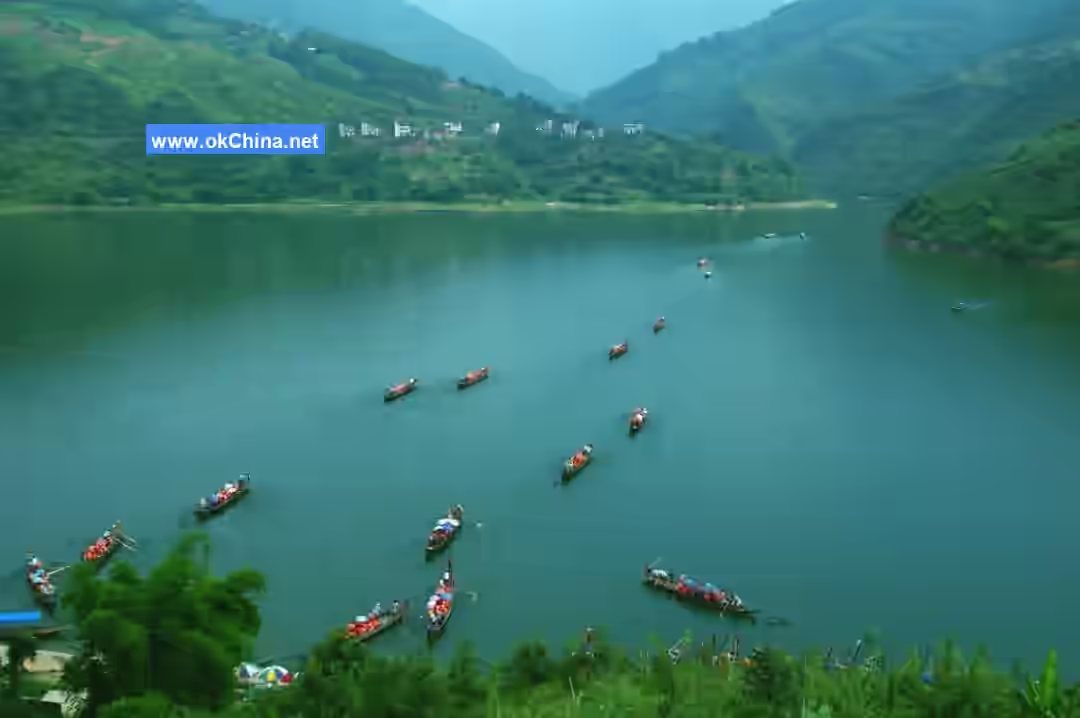
The Trackers Cultural Corridor is located in Yanduhe Town, Badong County, Hubei Province. It is an upgraded version of the Shennongxi Scenic Area, centered on tracker culture and integrating experience, vacation, adventure, and wellness into a tourist attraction. The cultural corridor extends 19 kilometers north from the South Gate (Guanzikou in Yanduhe Town) and connects closely with the primitive forest of Shennongjia. Within the scenic area, visitors can take a drift on ancient "pea pod" flat-bottomed boats, experience primitive tracker pulling, view the legendary Husband-and-Wife Trees rich in ethnic folklore, feel the震撼 of Shennong Waterfall, enjoy rubber rafting through rapids, appreciate mountainous rural scenery,领略 local ethnic cultural characteristics, and观赏 the神奇奇石公园 (Wonderful Stone Park).
4.6 Trackers Village Cultural Center
The Trackers Village Cultural Center is located on the west side of Huangshiban Village and the waterside east of Yujiazhai. With a total floor area of 3,816.57 square meters, it is a comprehensive building integrating multiple functions such as research, education, entertainment, and commercial services. It is designed with corresponding spaces for exhibitions, leisure, commerce, etc., including a tourist reception hall, commercial exhibition area, tracker culture exhibition area, villager service center, tourist toilets, and commercial leisure and entertainment area.
5. Cultural Activities
5.1 Cultural History
Shennongxi was originally named Yandu River and was called "Little Three Gorges" in the early stages of development. On May 25, 1987, 34 tourism experts from the Yangtze Three Gorges Tourism Planning论证会 took "pea pod" flat-bottomed boats to drift and考察 the tourism resources of Yandu River. They were captivated by the奇 of Shennong Gorge, the险 of Mianzhu Gorge, the秀 of Parrot Gorge, and the雄 of Longchang Gorge along the journey from Yandu River to Xirangkou. At the论证会, many experts unanimously suggested naming it "Shennongxi."
5.2 Three Gorges Trackers
The Three Gorges trackers are a unique occupational group in the Yangtze Three Gorges region. They relied on human strength to pull boats, helping them move upstream or navigate through dangerous rapids. Their working environment was exceptionally harsh, especially in the cold winter, when trackers often jumped into the bone-chilling river water下半身赤裸 to pull boats, their feet cracking and bleeding from the cold without retreat. Tracker culture includes the powerful and resonant tracker work songs and tracker stones that bear witness to their labor, becoming important cultural heritage in the Three Gorges region. With the development of modern transportation, the profession of trackers gradually faded from the historical stage, but their spirit of团结协作 and不畏艰险 continues to inspire future generations. Today, the Shennongxi Scenic Area strives to inherit and promote this unique cultural symbol through activities like the Tracker Cultural Tourism Festival, allowing more people to understand and remember the stories and contributions of the Three Gorges trackers.
Comments
Post a Comment