Shaoshan Tourist Area, Xiangtan City
1. Introduction
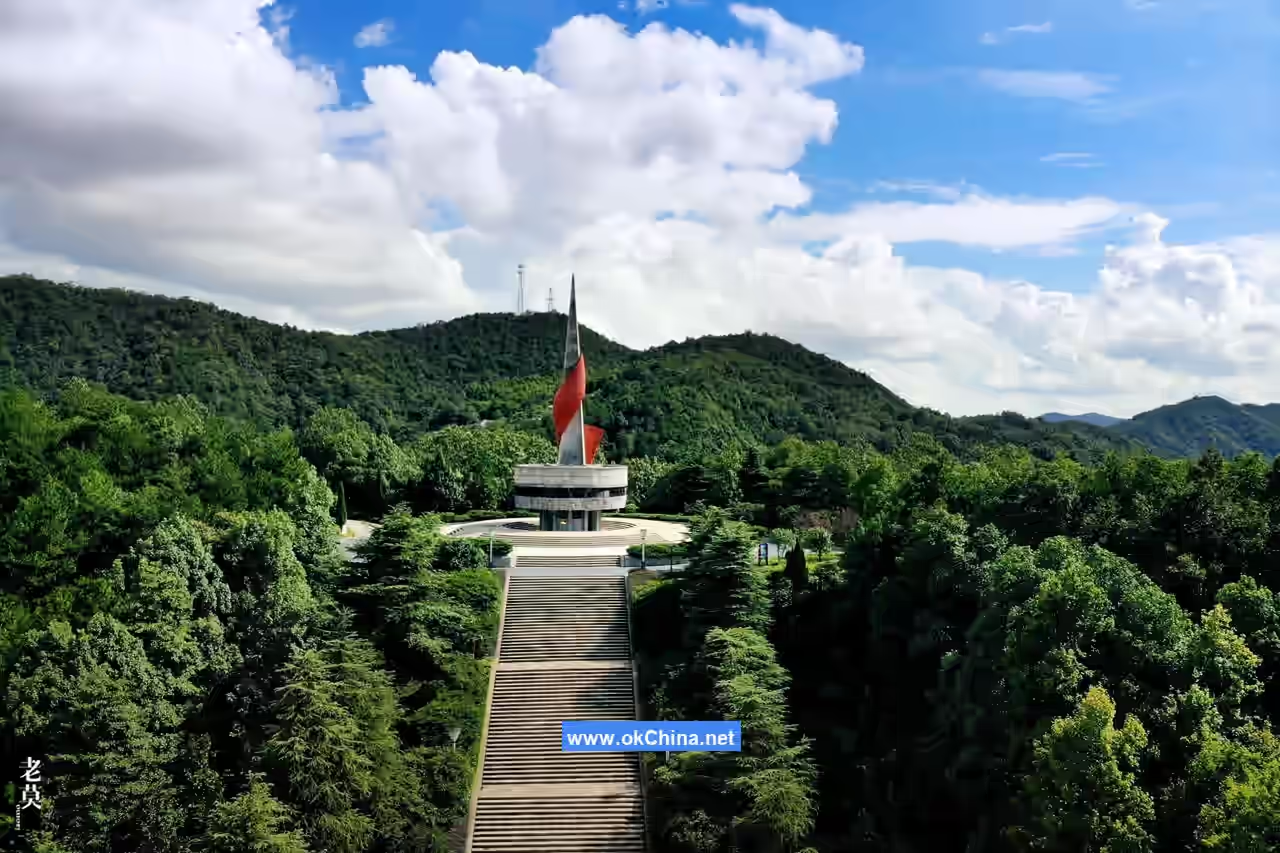
The Shaoshan Tourist Area is located in Shaoshan City, Xiangtan City, Hunan Province. It is the hometown of the great leader Mao Zedong and holds significant historical and cultural importance. As one of China's key red tourism destinations, Shaoshan is not only the place where Mao Zedong was born and raised but also preserves numerous historical sites related to his life, such as Mao Zedong's Former Residence, the Mao Zedong Memorial Hall, and the Mao Zedong Bronze Statue Square. It serves as an important site for commemorating the great leader, learning the revolutionary spirit, and understanding the changes in modern Chinese history. With its profound red cultural heritage and beautiful natural scenery, Shaoshan attracts a large number of domestic and international tourists and has become a vital base for promoting patriotism and inheriting red culture.
2. Geographical Environment
2.1 Location
The Shaoshan Tourist Area is situated in Shaoshan Village, Shaoshan Township, Shaoshan City, Xiangtan City, Hunan Province. Its geographical coordinates are 112°23′–112°38′ east longitude and 27°51′–27°28′ north latitude.
2.2 Topography and Landforms
Shaoshan belongs to the low mountainous and hilly region of central Hunan. The basic pattern of its landforms was established during the Yanshan Movement at the end of the Jurassic period. Subsequent intermittent slow uplift of the earth's crust and river incision formed the Shaoshan River valley and terraces, as well as the towering Shaofeng Mountain range and denudation surfaces of hills and ridges. The overall landform is characterized by the Shaofeng Mountain range and the Shaoshan and Shishijiang rivers as its framework, creating a terrain that rises in the west and tilts eastward and southeastward, featuring mountains, hills, ridges, and plains.
2.3 Climate Features
The Shaoshan Tourist Area is located in a subtropical humid climate zone, with distinct seasons: cold winters and hot summers, long hot summers, and short severe cold periods. The average annual temperature is 16.7°C, with an average annual precipitation of 1,358 mm and 1,717 hours of sunshine per year.
3. Scenic Spots and Attractions
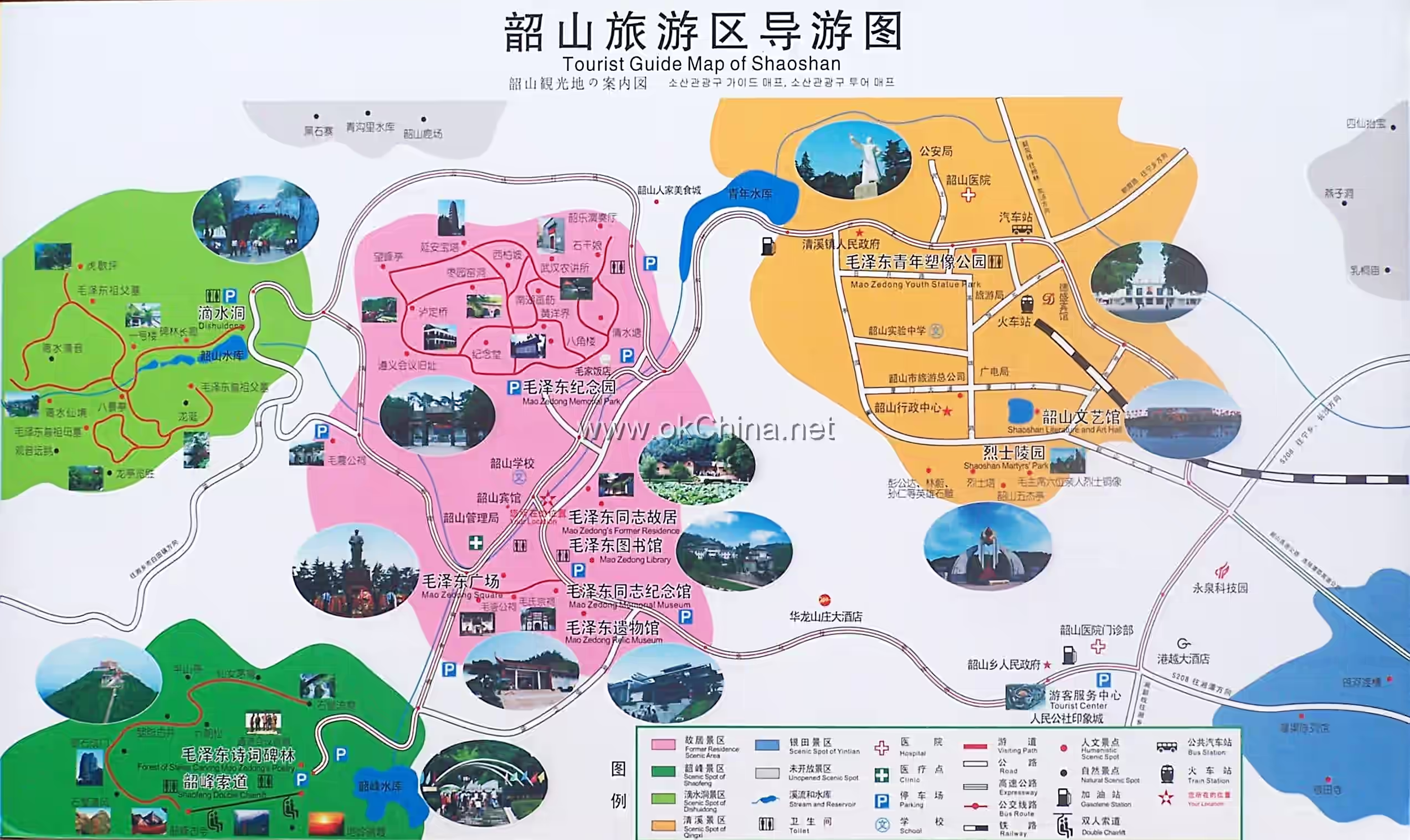
3.1 Former Residence Scenic Area
3.1.1 Mao Zedong Square
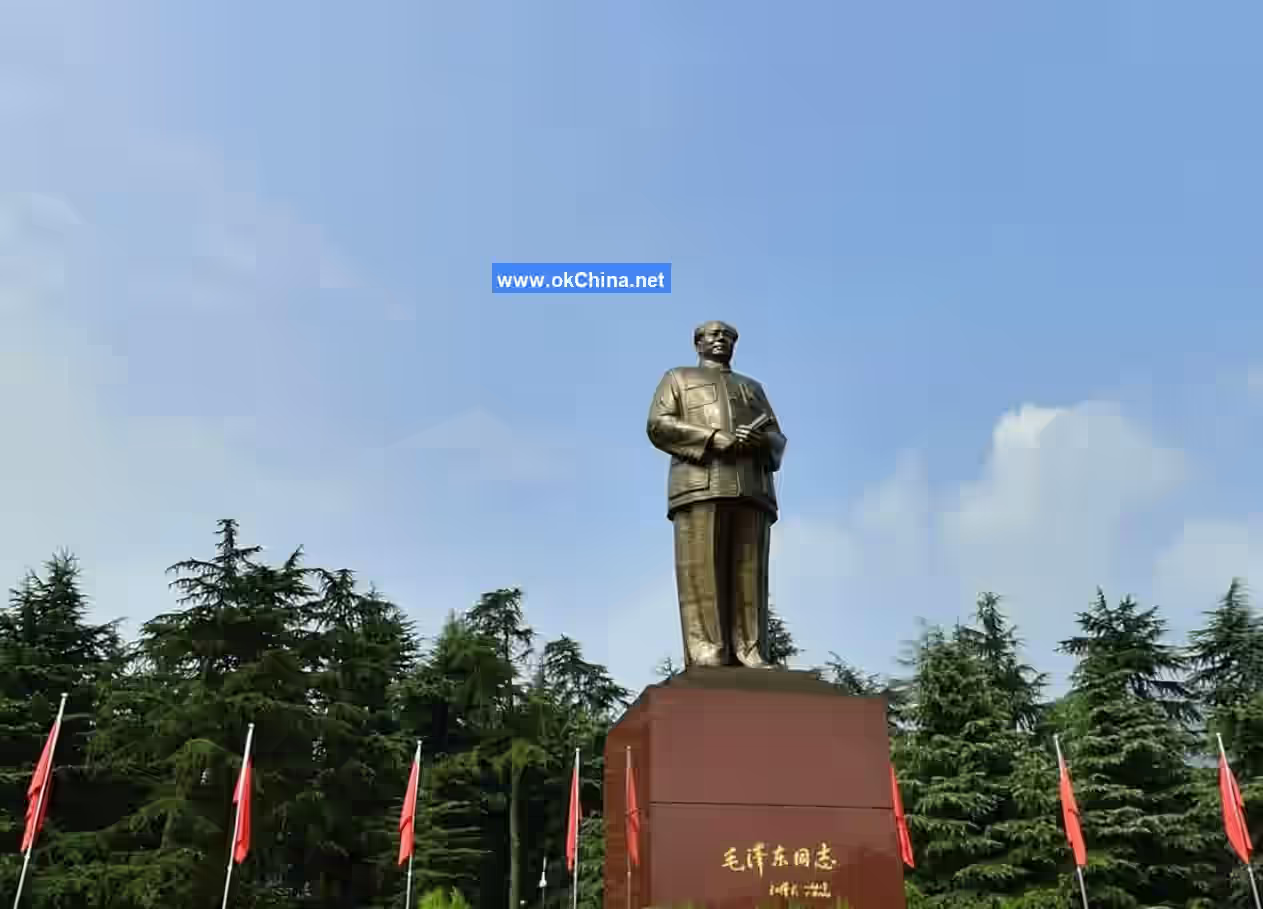
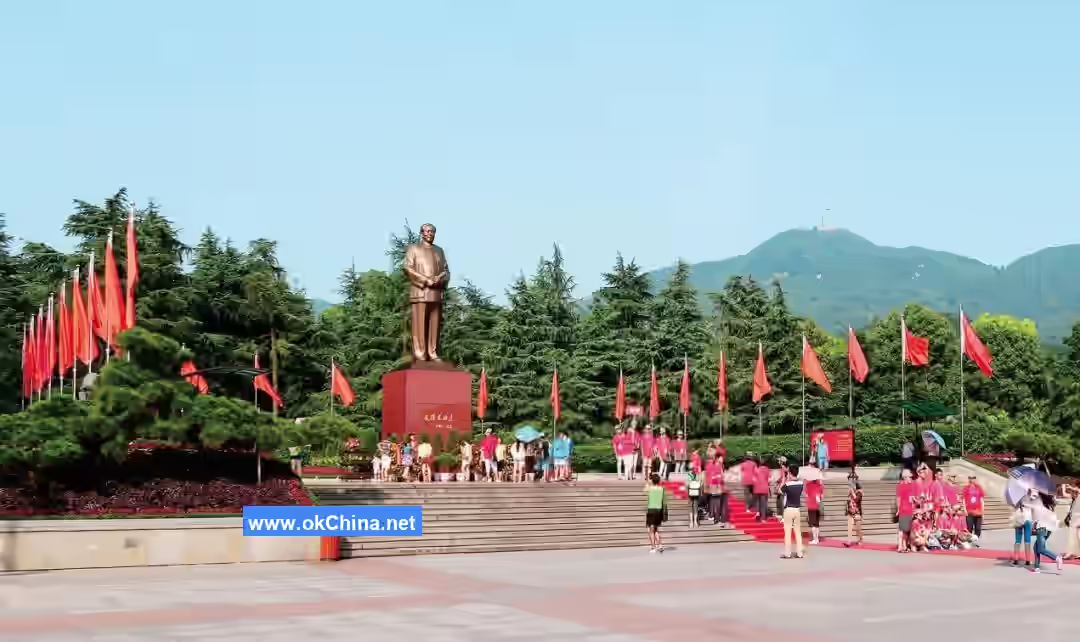
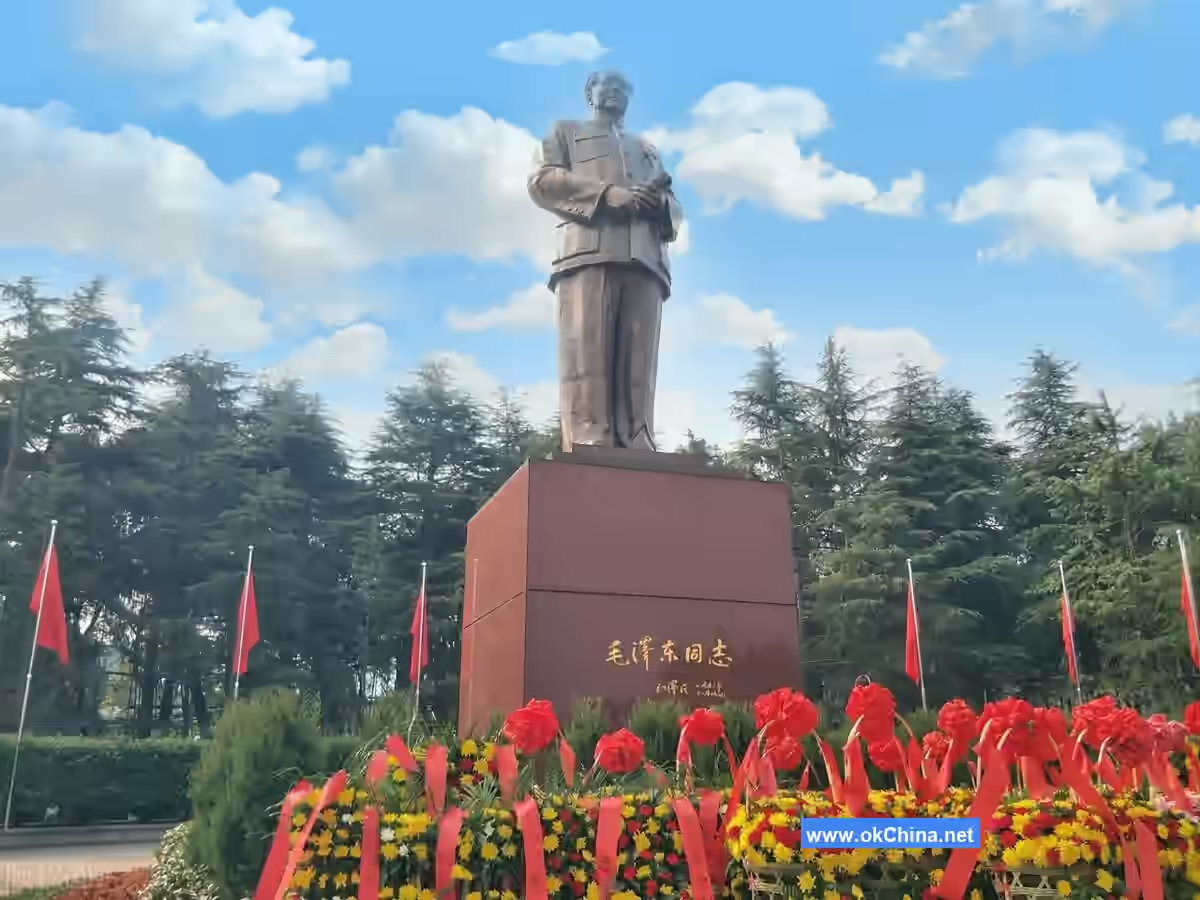
Mao Zedong Square was first built in 1993 and is located at the center of the core scenic area in Shaoshan, Hunan. Originally named the Comrade Mao Zedong Bronze Statue Square, it covers an area of 3,970 square meters. The bronze statue of Chairman Mao is based on his posture holding a manuscript during the founding ceremony of the People's Republic of China. It stands 10.1 meters tall and faces east-northeast. In January 2008, the central government approved the renovation and expansion plan, and the square was renamed "Mao Zedong Square" after the expansion.
3.1.2 Comrade Mao Zedong's Former Residence
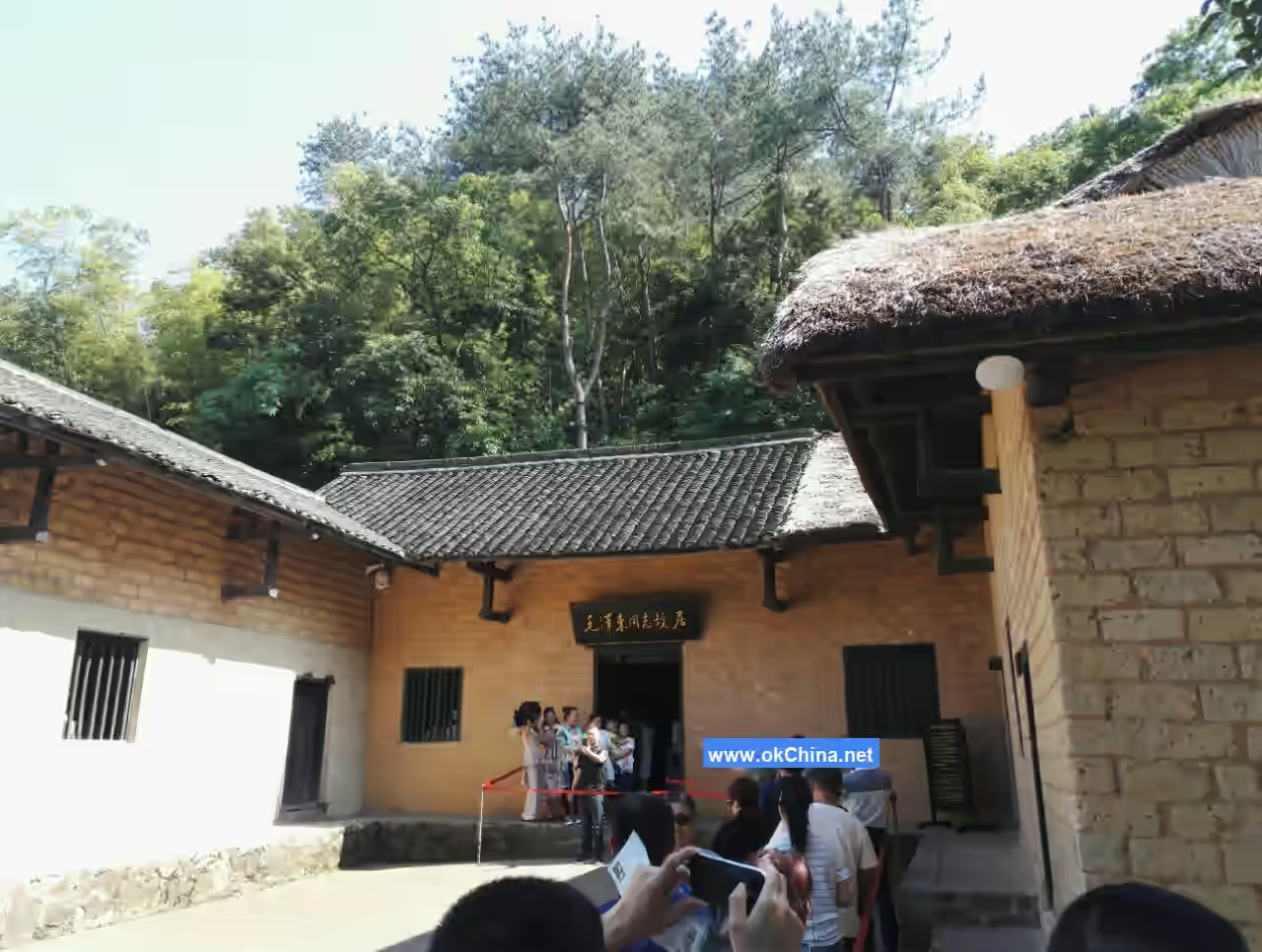
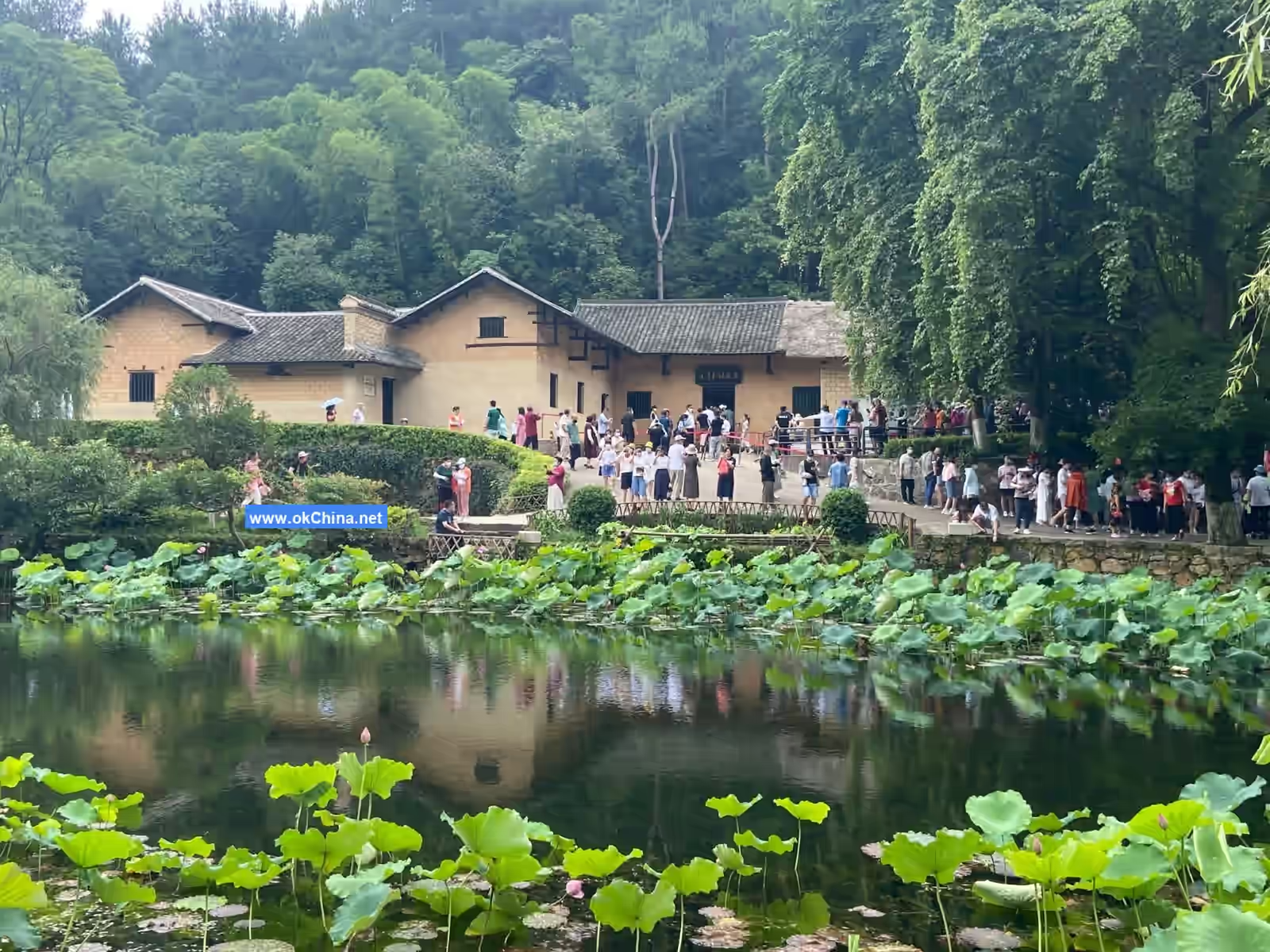
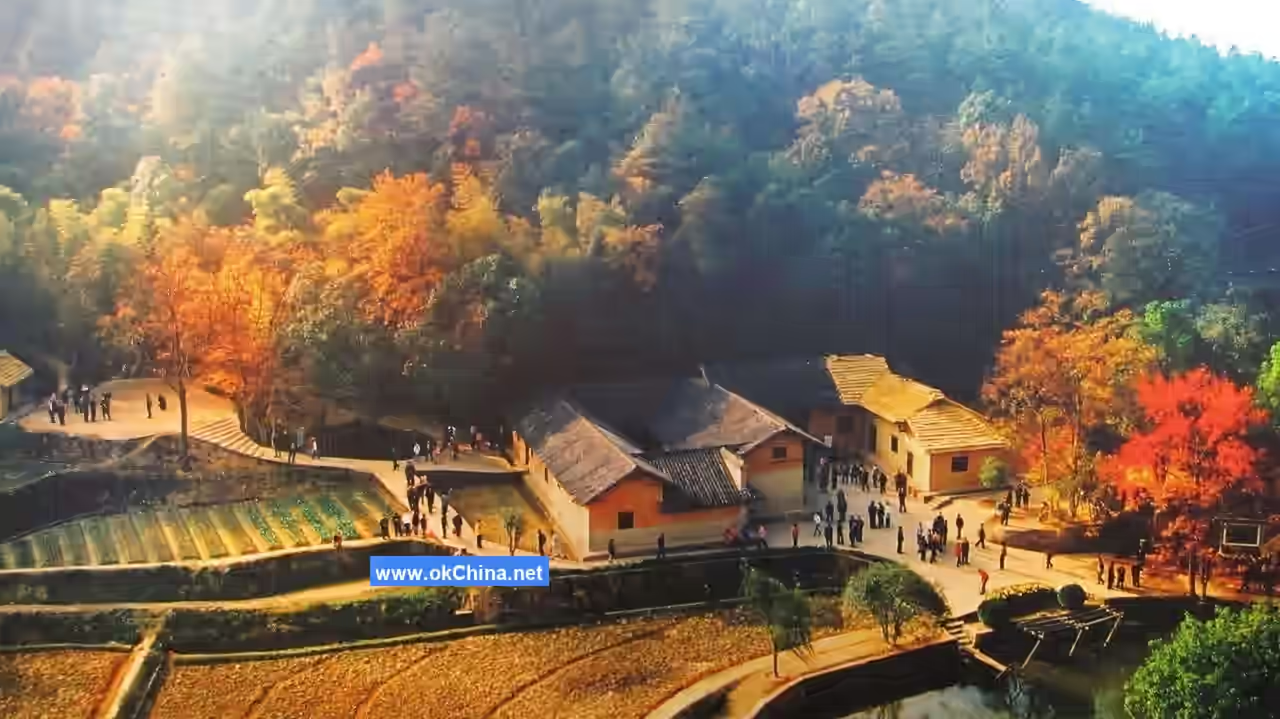
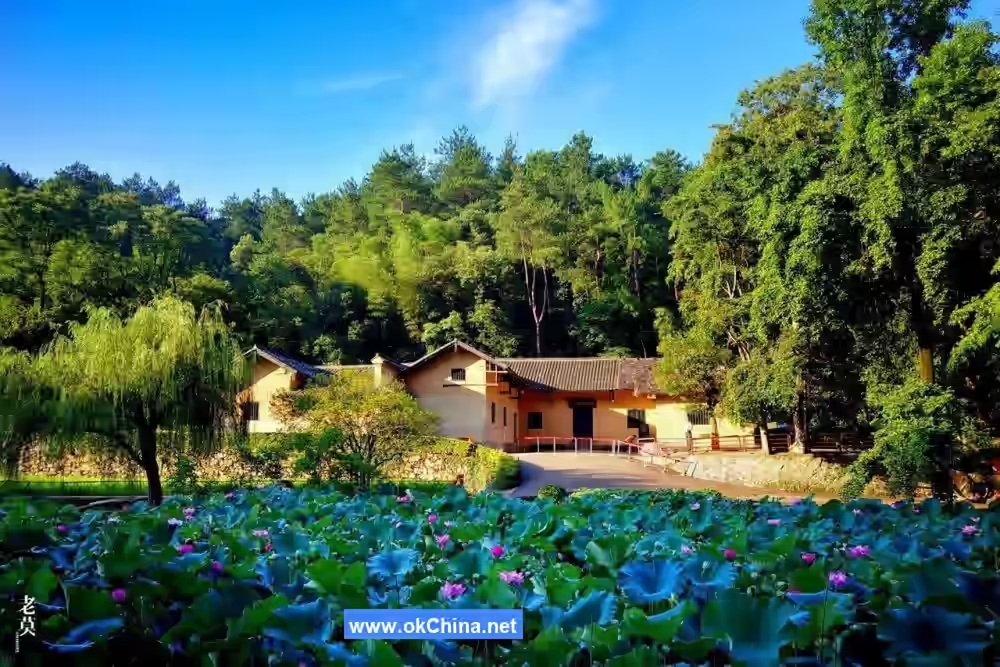
Comrade Mao Zedong's Former Residence, originally known as Shangwuchang or Mao Zedong's Old Residence, is located in Shaoshan Village, Shaoshan Township, Shaoshan City, Xiangtan City, Hunan Province. The building faces north and is a typical "concave"-shaped structure made of wood and earth. The current plaque bears the handwriting of Comrade Deng Xiaoping. Mao Zedong was born here and spent his childhood and teenage years, making it a valuable resource for patriotic education.
3.1.3 Comrade Mao Zedong Memorial Hall
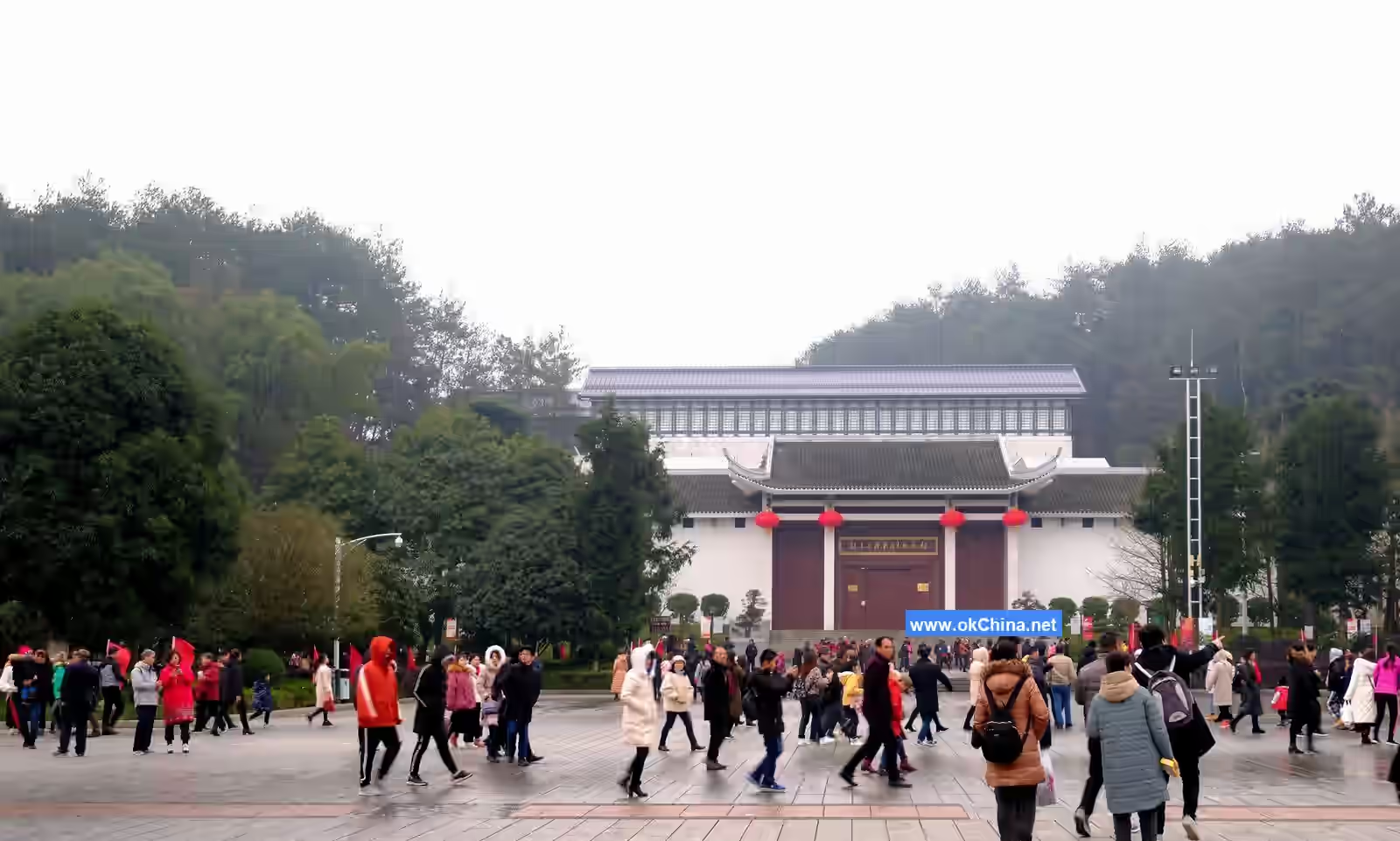
The Comrade Mao Zedong Memorial Hall is the main part of the Shaoshan Patriotic Education Demonstration Base. It is the only memorial museum in China that systematically displays Mao Zedong's life and achievements. Opened in 1964, it has received over 50 million domestic and international visitors, including more than 130 Party and state leaders and over 40 foreign heads of state and government.
3.1.4 Mao Zedong Memorial Park
Mao Zedong Memorial Park is a comprehensive scenic area integrating commemoration, education, and recreation. It stands on a hillside about 500 meters diagonally opposite Comrade Mao Zedong's Former Residence. Built to follow the natural terrain, it features major revolutionary sites and memorial facilities where Mao Zedong and his comrades worked and fought. Key attractions include the Hunan First Normal School Well Pavilion, the South Lake Boat, Changsha Qingshuitang, and the Shaoshan Mao Zedong Memorial Hall. It is known as a historical and cultural window into the Chinese revolution.
3.1.5 Mao Clan Ancestral Hall
The Mao Clan Ancestral Hall is located at the foot of the Eighteen Arhats Mountain and was built in the 28th year of the Qianlong reign of the Qing Dynasty (1763). The hall faces southeast-northwest, is constructed of brick and wood, and covers a building area of 688.8 square meters. The plaque reads "Mao Clan Ancestral Hall." Two stone drums stand outside the door, flanked by a couplet: "Annotating Classics, a Family Tradition; Holding Official Documents, a Family Reputation." The interior is divided into three sections: the first section has a stage; the second is the central hall, used for clan meetings, sacrifices, and banquets; and the third is the worship hall, named "Dunben Hall."
3.1.6 Mao Zedong Library
The Shaoshan Mao Zedong Library is a memorial and specialized library approved by the Hunan Provincial Committee of the Communist Party of China and the General Office of the Central Committee of the Communist Party of China. Its name was inscribed by General Secretary Jiang Zemin. The foundation was laid on December 26, 1993, the centenary of Mao Zedong's birth, and it opened on December 20, 1996. The building covers an area of 5,500 square meters. It is the only library in China named after "Mao Zedong." Its collections mainly include: first, books, newspapers, and periodicals that Chairman Mao read and annotated during his lifetime; second, Mao Zedong's manuscripts and various editions of his works from different periods, both domestic and international; and third, articles and monographs on Mao Zedong and Mao Zedong Thought from China and abroad. Its aim is to become a resource center for studying Mao Zedong and Mao Zedong Thought. The planned collection is 500,000 volumes, with 120,000 currently held, managed through automation. To better help people understand Mao Zedong and study Mao Zedong Thought, the library hosts exhibitions of folk collections of Mao Zedong memorabilia and editions of Mao Zedong's works.
3.1.7 Nan'an Private School
Nan'an Private School is located 100 meters west of Mao Zedong's Former Residence and is a blue-brick building with an archway-style facade. From 1902 to 1904 (the 28th to 30th years of the Guangxu reign of the Qing Dynasty), Mao Zedong received two years of启蒙教育 here, studying texts such as "Youxue Qionglin," "Three Character Classic," and "Analects." This place bears the marks of Mao Zedong's少年时代求学 and is also the origin of his calligraphy. Entering Nan'an Private School and standing by the old desk where Chairman Mao once studied, one can almost hear the students reciting lessons and see the young Mao Zedong diligently pursuing knowledge.
3.2 Dishui Cave Scenic Area
Dishui Cave is located in a valley about four kilometers west of the Mao Zedong Bronze Statue. The cave features verdant peaks, lush forests, bamboo groves, wildflowers, dancing butterflies, and singing birds, offering自然景观 of exceptional elegance. The "Mao Clan Genealogy" praises it: "A hook of flowing water, a fist of a mountain; tigers crouch and dragons coil here; spiritual beauty gathers unknown, stone bridges lock many passes."
In June 1959, Mao Zedong returned to his hometown after 32 years and swam in the Shaoshan Reservoir at the entrance of Dishui Cave. Inspired, he casually said to Hunan Provincial Party Secretary Zhou Xiaozhou: "Xiaozhou, build a few thatched cottages in this mountain valley for me to live in when I'm old. Some small meetings of the Central-South Bureau could be held here..." Thus, the Dishui Cave别墅 was built.
The别墅 was constructed in 1960, and its architectural style closely resembles that of buildings in Zhongnanhai, Beijing. In June 1966, Mao Zedong inspected the south and stayed in Building No. 1 for 11 days. On July 8 of that year, he wrote a letter from Wuhan referring to this place as "a cave in the west." In 1970, the Ouyang Hai Hero Company built a 100-meter-long air-raid shelter behind the别墅. One side of the shelter has facilities such as an anti-shock room and a command room. Both ends of the shelter are equipped with heavy iron doors nearly a foot thick, weighing several tons, with automatic controls. Even if an atomic bomb were detonated outside, the command system and personnel inside would remain safe.
The "Western Cave" was under extremely strict保密管理 and was once highly mysterious, known to very few people. In the autumn of 1986, it was approved for opening to the public by the Hunan Provincial Party Committee and Government. The Dishui Cave Scenic Area consists of three core parts: the别墅 series centered around Building No. 1; the Huxieping景观系列 to the west, featuring Mao Zedong's ancestral grave, tiger carvings, tiger pavilions, and Dishui Qingyin; and the Longtoushan景观系列 to the east, featuring the graves of Mao Zedong's great-grandparents, Longquan Sandie, Benlong Spring Pond, and Guanyin Overlook.
Dishui Cave combines the wonders of nature with significant人文 events, earning它 fame at home and abroad and attracting countless tourists. Party and state leaders such as Jiang Zemin and Hu Jintao have visited with pleasure. Over the 20 years since its opening, this "Western Cave," hailed as Hunan's "landscape pearl," has received over 15 million domestic and international visitors. Famous Party history expert Feng Wenbin praised the scenery of Dishui Cave: "A land of spiritual beauty in Hunan, a different sky within the cave."
3.2.1 Dishui Cave Building No. 1
Dishui Cave Building No. 1 is the main structure in Dishui Cave. The primary reason for Dishui Cave's fame at home and abroad is that Mao Zedong secluded himself here for eleven days. The style of Dishui Cave Building No. 1 closely resembles that of Songshan Building No. 1, both being small, single-story houses with blue bricks and tiles.
3.2.2 Huxieping
Huxieping is located on the mountain west of Dishui Cave别墅 Building No. 2, also known as Niuxingshan, originally called Dashigu. The山顶 has the grave of Mao Zedong's grandfather. Huxieping faces Longtoushan to the south, forming a天然屏障 for Dishui Cave and creating a magnificent scene of "tigers crouching and dragons coiling."
3.2.3 Dishui Wonderland
At the end of Dishui Cave is the foot of Huangfeng Mountain, adjacent to Shutang Mountain. This "cave bottom" is shrouded in mist, with trees and vines intertwined, the mountain体雄伟壮观, and the rocks凹凸陡峻. Clear springs trickle continuously from the rock crevices year-round. The泉水汇聚 into the "Half-Mu Mountain Pond"—Dishui Cave Reservoir No. 4. The pond is as clear as a mirror, reflecting the sky and clouds with sparse倒影. Approved by the Hunan Provincial Party Committee and Government, a new attraction—"Dishui Qingyin"—was constructed here in October 1990. The project was completed on June 30, 1992, and opened on August 1 of the same year.### 3.3 Shaofeng Scenic Area Shaofeng is the 71st peak among the 72 peaks of Mount Heng in Nanyue, with a current elevation of 519.1 meters, over 200 meters higher than Yunlu Peak of Yuelu Mountain in Changsha, the 72nd peak. Due to the legend of "Shao Music," it is also known as the "Peak of Music." Shaofeng is also called Fairy Mountain and Immortal Summit Peak.
The main attractions in the Shaofeng Scenic Area include the Mao Zedong Poetry Stele Forest, the Shaofeng Sightseeing Cableway, and Shaofeng Temple. The area features a harmonious blend of cultural and natural landscapes. The scenic highlights include Shaofeng's Verdant Peaks, Fairy's Thatched Cottage, Ancient Rouge Well, Clear Sunset at Taling, Stone House Breeze, Stone Gate Formation, Phoenix Pavilion Site, and Stone Wall Spring (collectively known as the Eight Scenes of Shaofeng), as well as the Six Dynasties Pine, Solid Bamboo, White Stone Spring, and Flying Boat (the Four Wonders of Shaofeng). Natural landscapes such as Five Dragons Paying Homage, Twin Dragons Playing with a Pearl, Roc Spreading Its Wings, and Golden Turtle Drawing Water add to the area's stunning wonders.
4. Related Culture
4.1 Related Figures
Mao Zedong (December 26, 1893 – September 9, 1976), courtesy name Runzhi, was born in Xiangtan, Hunan. He was a principal founder and leader of the Communist Party of China, the People's Liberation Army, and the People's Republic of China, as well as one of the most important political figures in modern Chinese history. Revered as "Chairman Mao," he was a great Marxist, proletarian revolutionary, strategist, and theorist. He was a pioneering figure in the Sinicization of Marxism and is regarded as a great patriot and national hero in modern China.
Born into a peasant family, Mao Zedong was exposed to and embraced Marxism-Leninism during his studies at the Hunan First Normal School. In 1921, he attended the First National Congress of the Communist Party of China, becoming one of the party's founders and playing a significant role in subsequent revolutionary activities. In 1927, he famously asserted that "political power grows out of the barrel of a gun," leading the Autumn Harvest Uprising and establishing the first rural revolutionary base area.
During the War of Resistance Against Japan and the Chinese Civil War, Mao Zedong led the Communist Party of China in a prolonged struggle against the Kuomintang, ultimately overthrowing the Kuomintang regime and founding the People's Republic of China. On October 1, 1949, Mao Zedong proclaimed the establishment of the People's Republic of China from the Tiananmen Rostrum in Beijing and was elected Chairman of the Central People's Government. He served as the paramount leader of the People's Republic of China until his death in 1976.
Mao Zedong achieved remarkable accomplishments not only in politics and military affairs but also made significant theoretical contributions. By integrating the fundamental principles of Marxism-Leninism with China's specific realities, he developed Mao Zedong Thought, which became one of the guiding ideologies of the Communist Party of China. His thought encompasses theories on the New Democratic Revolution, socialist construction, and analyses of the international situation, exerting a profound influence on China's revolution and development.
Mao Zedong was also an outstanding poet and calligrapher. His poetic works, such as "The Long March" and "Snow," reflect his bold vision and revolutionary spirit.
Although some of his later policies, such as the "Great Leap Forward" and the "Cultural Revolution," have sparked debate, his achievements are generally regarded as primary and his errors as secondary. He made indelible contributions to China's liberation, the establishment of the nation, and the development of socialism, while also contributing significantly to the liberation of oppressed peoples worldwide and the cause of human progress.
Mao Zedong's life is a crucial chapter in China's revolution and development, and his ideas and practices continue to exert a profound influence on China's modernization process.
4.2 Origin of the Name
Shao Music, historically known as Shun Music, is a traditional form of Chinese court music that originated over 5,000 years ago during the reign of the ancient Emperor Shun. It is a comprehensive classical art form integrating poetry, music, and dance. As one of the highest-ranking and most ancient forms of Chinese court music, Shao Music is revered as the "First Movement of China." Its core theme is to praise Emperor Shun's virtuous governance and ideals of peace. Confucius once praised Shao Music as "perfect in both beauty and goodness" and was so captivated by it that he "forgot the taste of meat for three months," highlighting its artistic charm. Shao Music was used in state ceremonies during the Xia, Shang, and Zhou dynasties, later spreading to the State of Qi and being designated as temple music during the Qin and Han dynasties, becoming essential for imperial sacrifices. However, with historical changes, Shao Music gradually faded into obscurity until recent efforts by scholars and artists partially restored and revived it.
Shaoshan derives its name from Emperor Shun's southern tour, during which he performed Shao Music here, giving it the meaning "Mountain of Music."
Comments
Post a Comment