The Great Wall - Shanhaiguan
I. Introduction
The Great Wall - Shanhaiguan, also known as Yuguan, Yuguan, or Linyuguan, is located at No. 1 Dongdajie, Shanhaiguan District, Qinhuangdao City, Hebei Province. It is one of the northeastern passes of the Ming Dynasty Great Wall. Before 1990, it was considered the eastern starting point of the Ming Great Wall. It is renowned as one of the "Three Great Wonders of the Chinese Great Wall" (Shanhaiguan in the east, Zhenbeitai in the center, and Jiayuguan in the west), the "First Pass Under Heaven," and the "throat of the frontier and the safeguard of the capital." It echoes Jiayuguan, which lies thousands of miles away, and is famous worldwide.
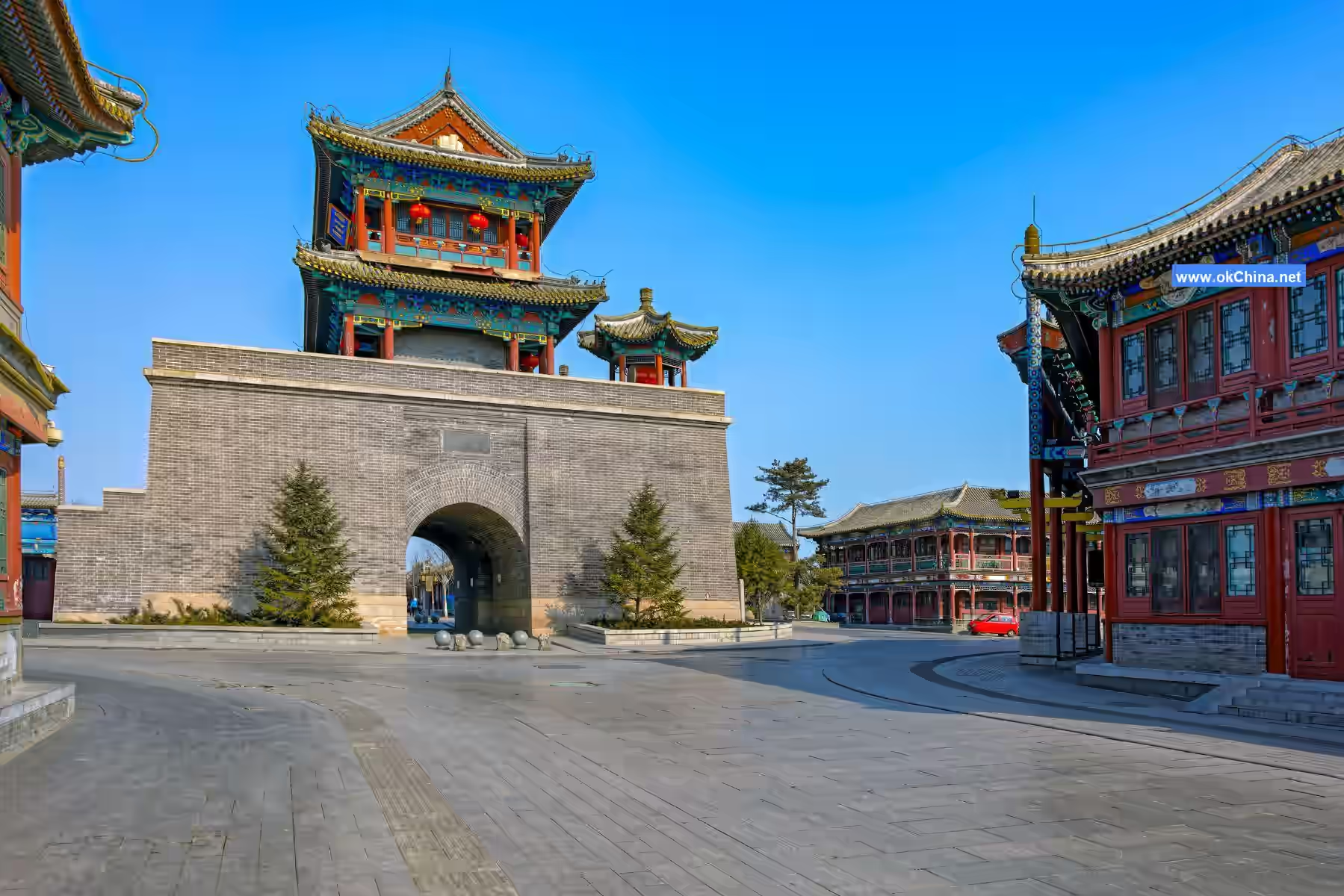
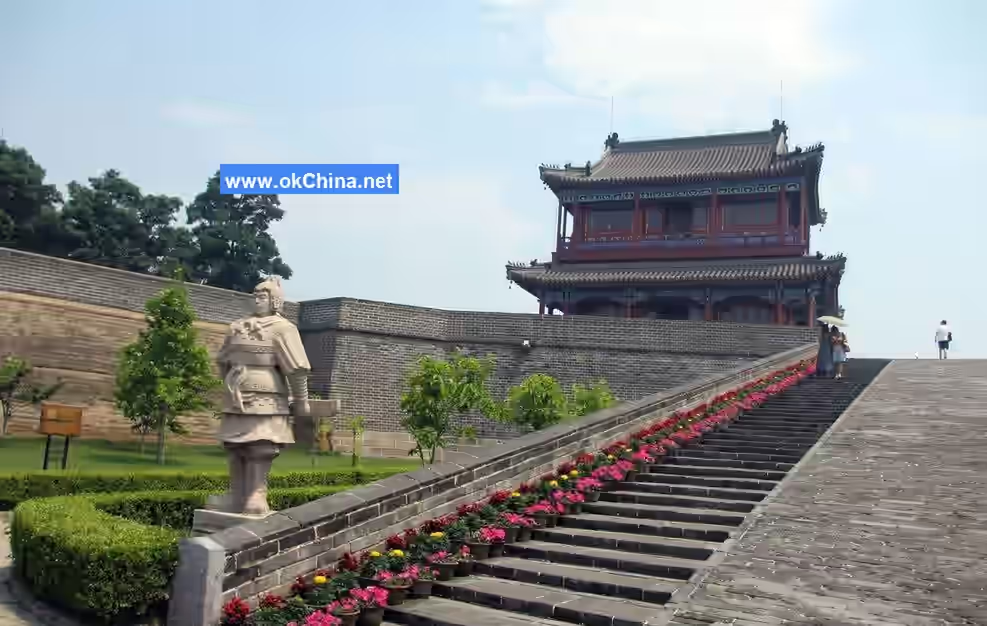
In the 14th year of the Hongwu era of the Ming Dynasty (1381), Emperor Zhu Yuanzhang ordered the construction of a city and pass here, making it a crucial military stronghold controlling the strategic passage between Northeast and North China. Because it lies between mountains and the sea, it was named Shanhaiguan (Mountain-Sea Pass). Shanhaiguan enjoys the reputation of the "First Pass Under Heaven," with its plaque inscribed by the famous Ming Dynasty calligrapher Xiao Xian. The perimeter of Shanhaiguan is about 4 kilometers, connected to the Great Wall, with the city itself serving as the pass. The city walls are 14 meters high and 7 meters thick, featuring four main gates and various defensive structures. These include the "First Pass Under Heaven" arrow tower, Jingbian Tower, Muying Tower, Linyu Tower, an enceinte, and a 1,350-meter-long section of the Ming Dynasty plain Great Wall, among other sights.
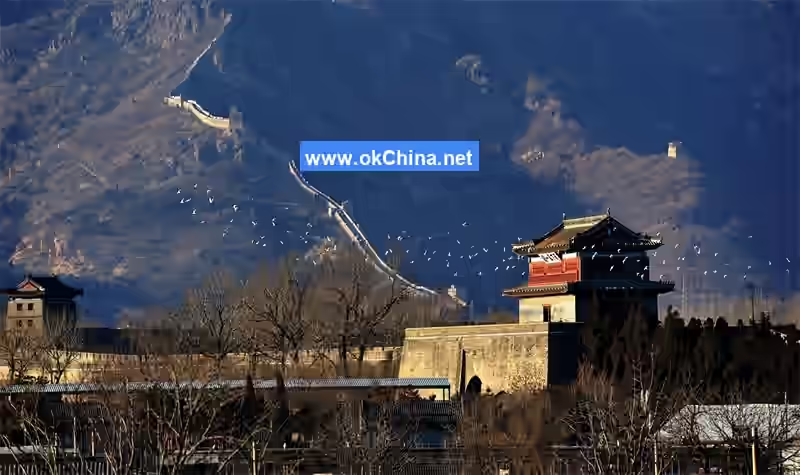
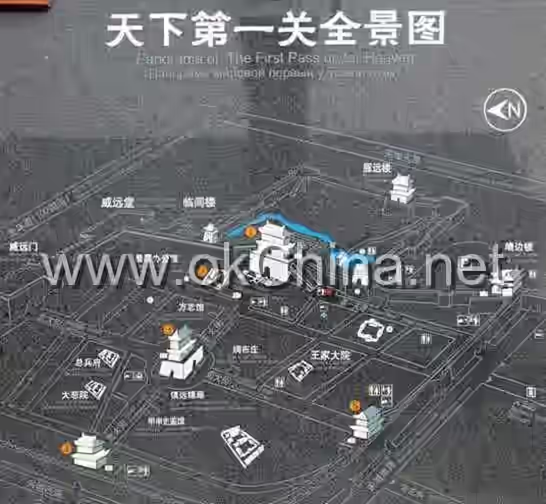
The city of the Great Wall - Shanhaiguan has a perimeter of about 4 kilometers, making it a small city. The entire city is connected to the Great Wall, with the city itself serving as the pass. It has four main gates and various ancient defensive structures, forming a relatively complete defensive system, earning it the title "First Pass Under Heaven." The majestic "First Pass Under Heaven" arrow tower is the centerpiece, complemented by Jingbian Tower, Linyu Tower, Muying Tower, Weiyuan Hall, the enceinte, the Eastern Outer City, and the Great Wall Museum, among other Great Wall structures.
II. Geographical Location
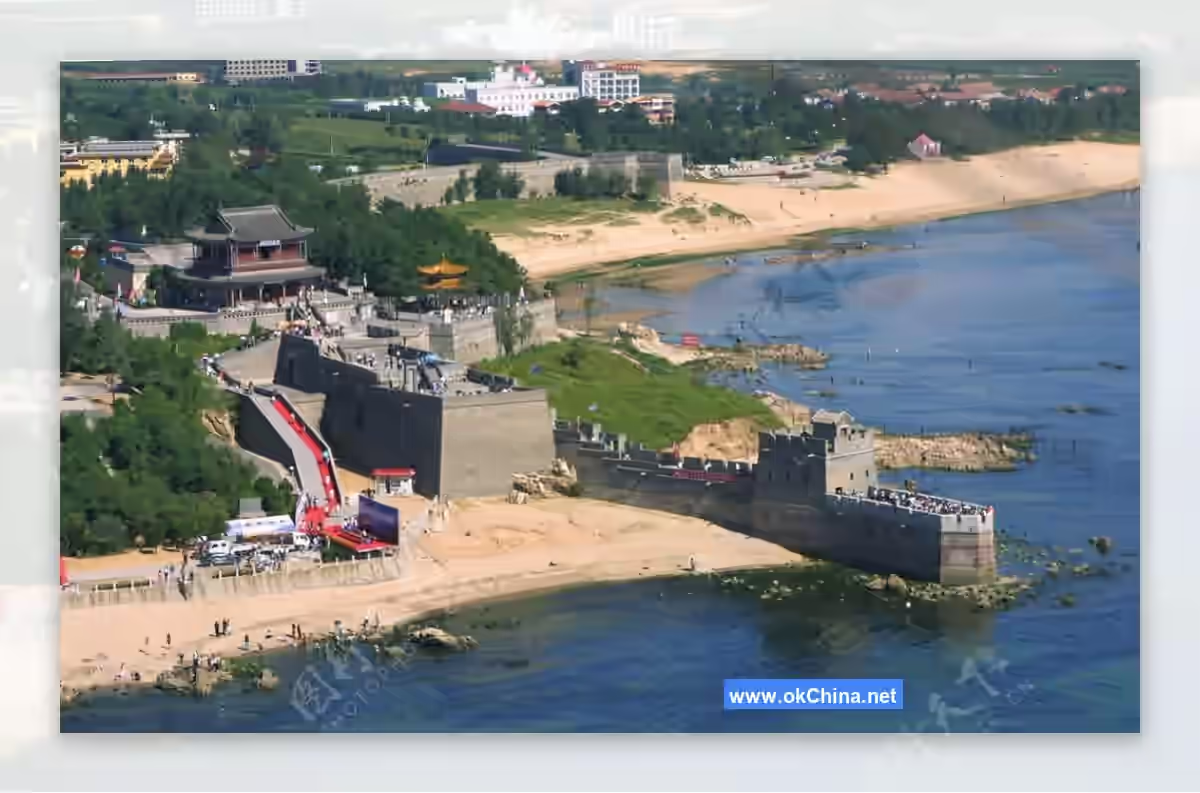
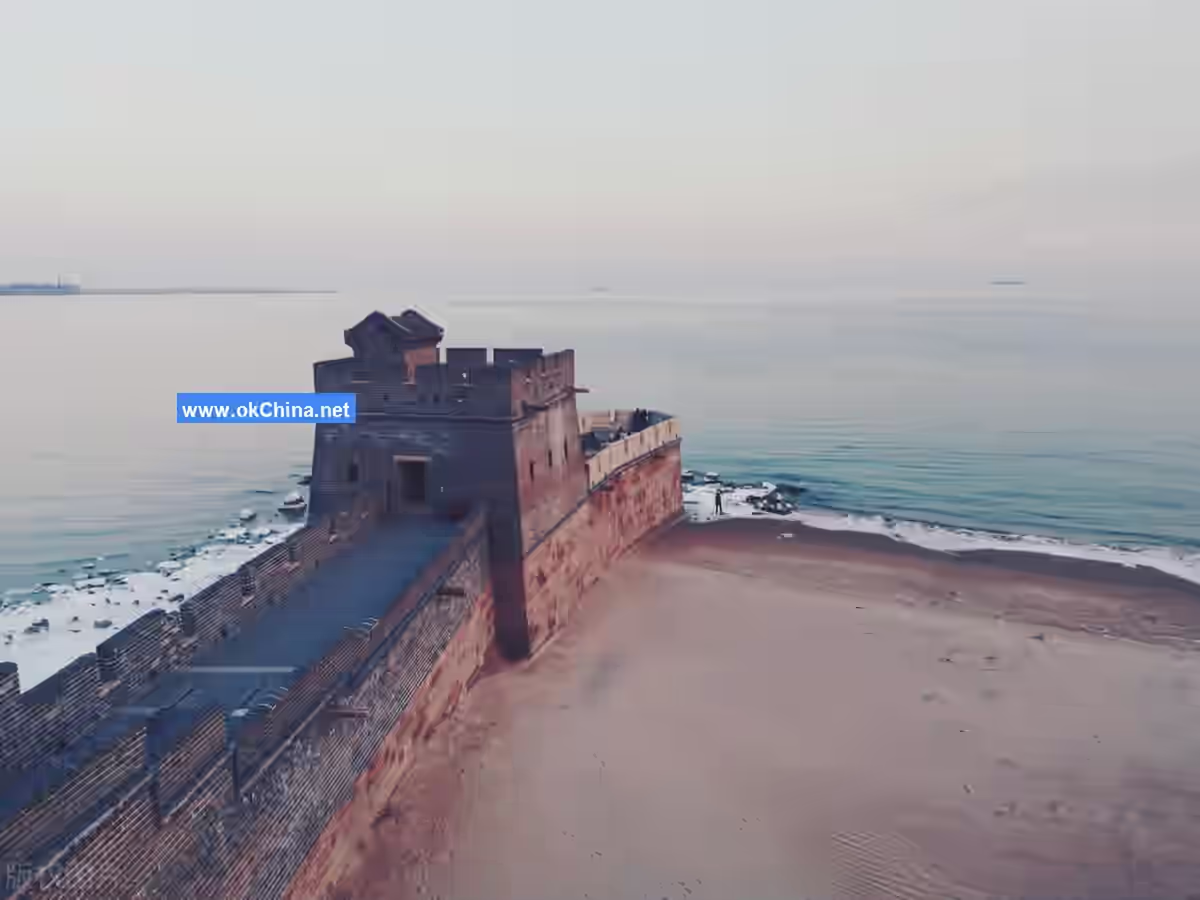
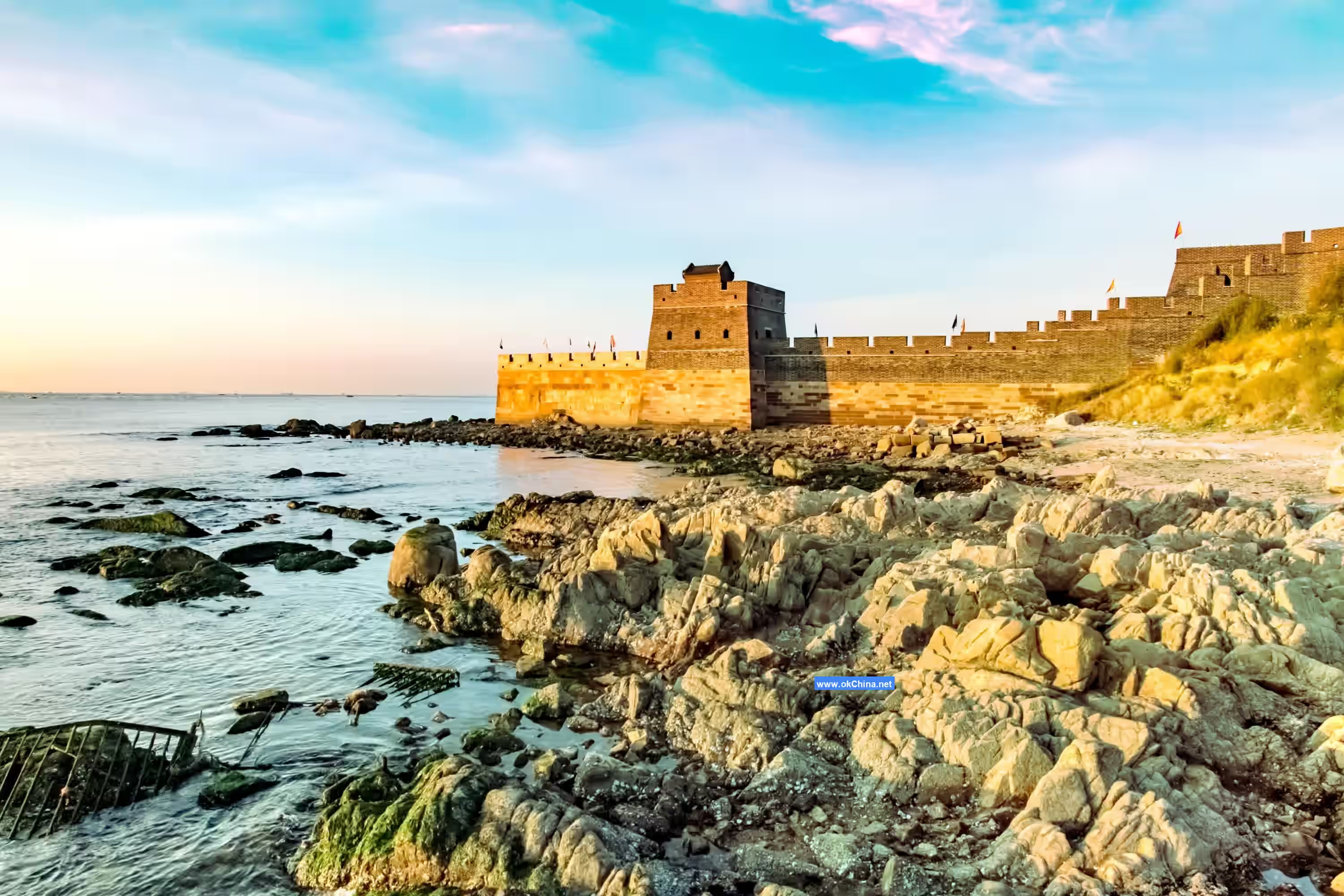
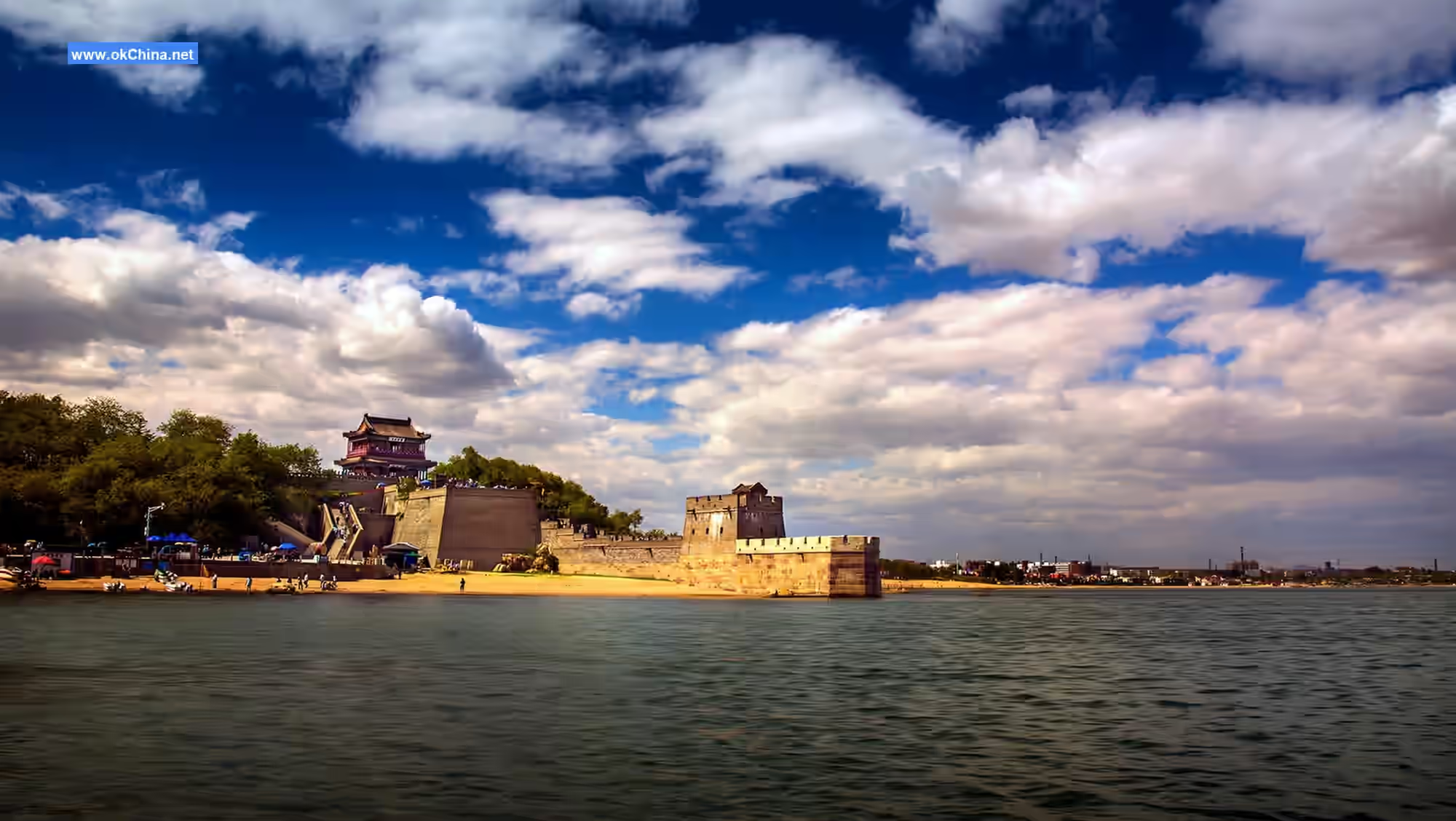
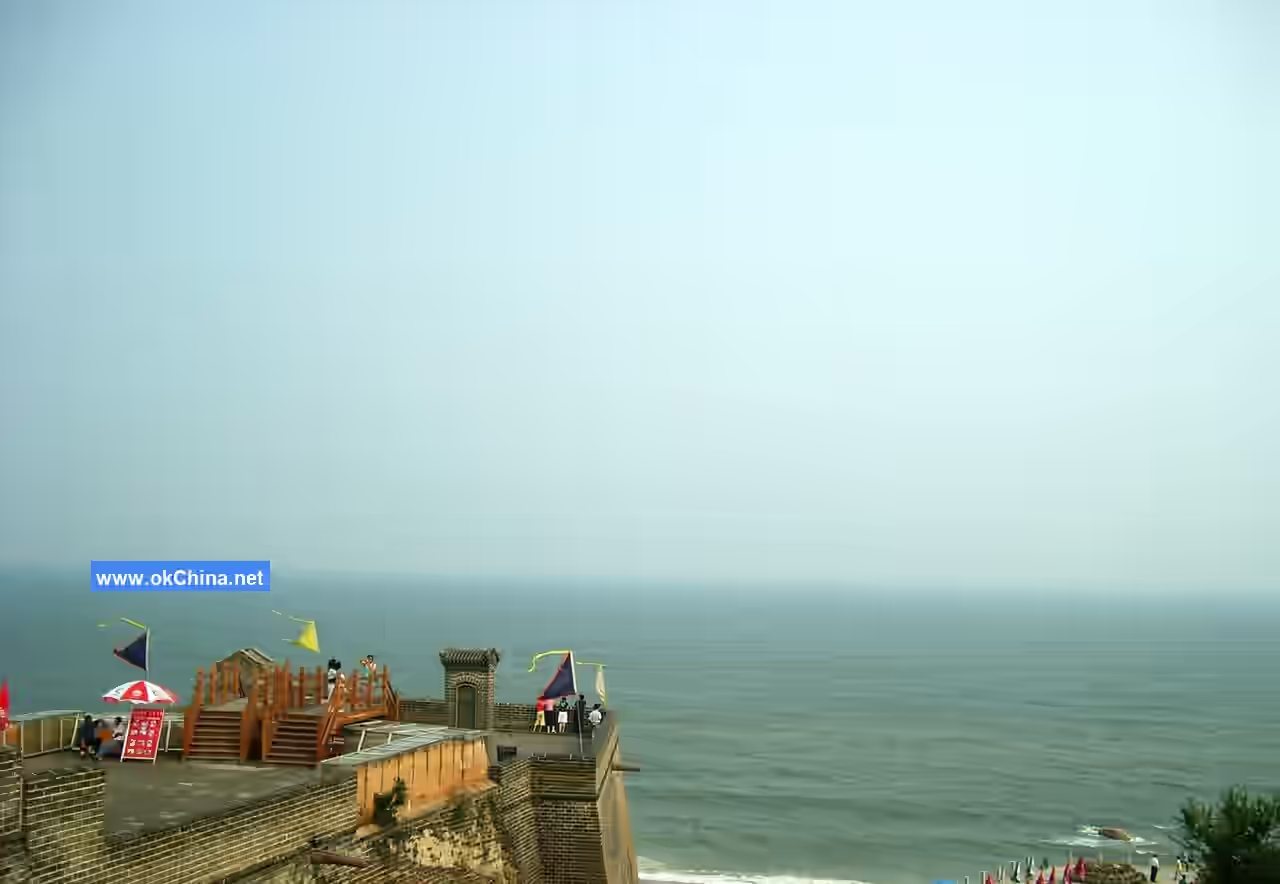
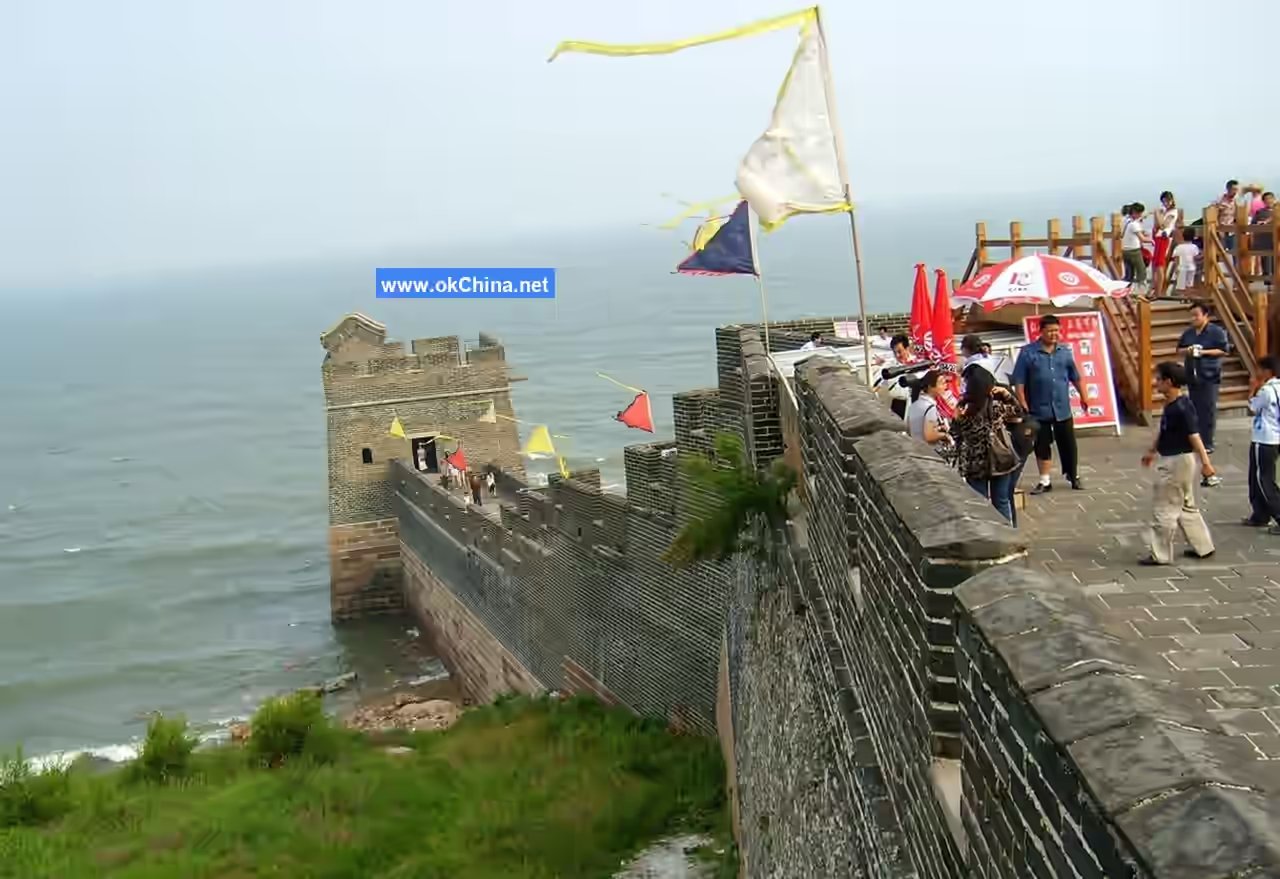
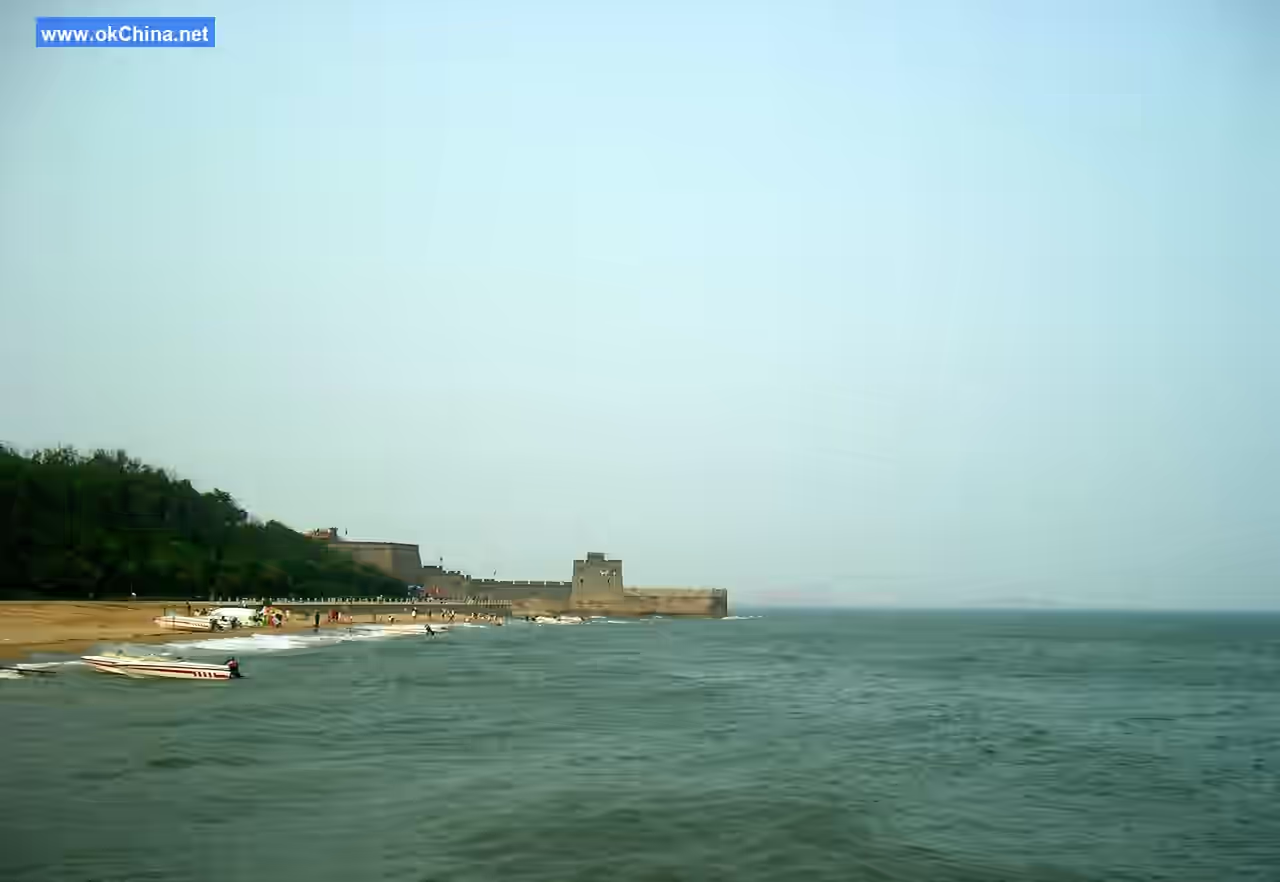
The Great Wall - Shanhaiguan is located at the eastern end of the Ming Great Wall and is the only place where the Ming Great Wall meets the sea. To the north lies the western section of the Liaoxi Corridor, a strategically important area and the ancient location of Jieshi, which is why historians also refer to it as the "Jieshi Route." The pass city leans against the Yanshan Mountains to the north and connects to the Bohai Sea to the south, hence the name Shanhaiguan. It marks the boundary between Hebei and Liaoning.
III. Historical Evolution
The Great Wall - Shanhaiguan was historically known as Yuguan, Yuguan, Linyuguan, and Linyuguan. The ancient Yuguan was located 20 li east of Funing County. It leaned against high mountains to the north and faced the sea to the south, with only a few li separating them, making it extremely strategic. Before 1990, it was considered the northeastern starting point of the Ming Great Wall (the currently discovered starting point of the Ming Great Wall is at Hushan Great Wall in Hushan Town, Kuandian County, Dandong City, Liaoning Province).
- Sui Dynasty: In the 3rd year of the Kaihuang era (583), the Yuguan pass city was built.
- Tang Dynasty: In the 19th year of the Zhenguan era (645), Emperor Taizong of Tang returned from Linyu after his campaign against Goguryeo.
- Five Dynasties: During the Qianhua era of the Later Liang, Yuguan was captured by the Khitan. Xue Juzheng noted: "Yuguan is surrounded by the sea on three sides and connected to land to the north. From Yuguan north to Jinniukou, eight defensive garrisons were originally stationed, with local soldiers recruited to guard them, preventing the Khitan from easily entering. When Prince Li Cunxu of Jin captured Youzhou and appointed Zhou Dewei as the military governor, Dewei relied on his bravery and neglected border defenses, thus losing the strategic advantage of Yuguan. The Khitan grazed their livestock between Ying and Ping prefectures, causing significant border troubles." At the end of the Qingtai era of the Later Tang, Zhao Dejun garrisoned Lulong. Shi Jingtang rebelled in Taiyuan and sought aid from the Khitan. Yelü Deguang agreed, but his mother, Empress Shulü, said: "If the Lulong army heads north toward Yuguan, you must withdraw immediately; Taiyuan cannot be saved."
- Song Dynasty: At the end of the Xuanhe era, Yuguan was captured by the Jurchens.
- Ming Dynasty: In the 14th year of the Hongwu era (1381), Zhongshan King Xu Da was ordered to repair Yongping, Jieling, and other passes. He led troops to this area and, considering the ancient Yuguan insufficient for control and defense, moved the pass 60 li east of the ancient Yuguan to establish Shanhaiguan. Because it leans against the Yanshan Mountains to the north and connects to the Bohai Sea to the south, it was named Shanhaiguan. The Shanhaiguan Great Wall was constructed over six reigns—Hongwu, Chenghua, Jiajing, Wanli, Tianqi, and Chongzhen—consuming vast amounts of manpower, resources, and funds. Over 263 years, a military defense system was built, featuring seven interconnected cities linked by the Great Wall. In the late Ming Dynasty, the female general Qin Liangyu garrisoned Shanhaiguan. Li Zicheng and Wu Sangui fought fiercely here.
- Qing Dynasty: In the 26th year of the Guangxu era (1900), the Eight-Nation Alliance invaded Shanhaiguan.
- Republic of China: In the summer of the 11th year of the Republic of China (1922), the Zhili and Fengtian warlords fought a major battle on the west bank of the Shihe River. In the autumn of the 13th year of the Republic of China (1924), they fought again in areas outside Shanhaiguan, such as Guanjiafen, Weiyuan City, and Jiangnü Temple. In the 22nd year of the Republic of China (1933), Japanese invaders occupied Shanhaiguan. In September of the 34th year of the Republic of China (1945), the Eighth Route Army's Hebei-Rehe-Liaoning Military District forces, with the cooperation of the Soviet Red Army, captured and liberated Shanhaiguan. In the 35th year of the Republic of China (1946), the Chinese People's Liberation Army fought the Battle of Shanhaiguan. All these wars caused varying degrees of damage to the pass city and the walls of the Eastern Outer City.
People's Republic of China
- In 1958, a 21-meter-wide breach was opened in the southern city wall, 260 meters west of the south gate of the Great Wall - Shanhaiguan, to serve as a passage.
- In 1961, the Great Wall - Shanhaiguan was listed as one of the first batch of National Key Cultural Relics Protection Units.
- In the late 1960s and early 1970s, interconnected air-raid shelters were built within the walls of the Great Wall - Shanhaiguan, with brick openings still visible in the walls.
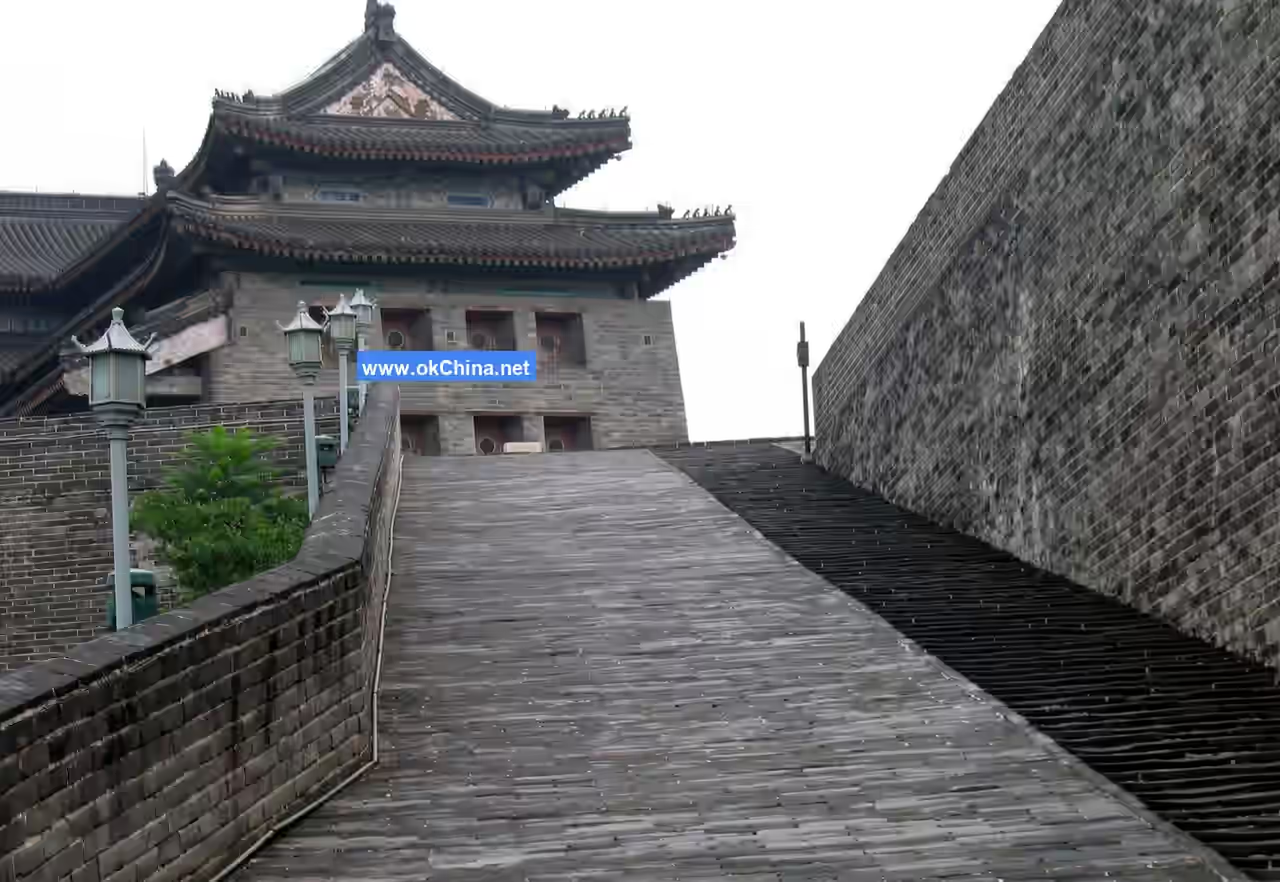
- From 1956 to 1994, sections of the city wall from Zhendong Tower to Weiyuan Hall and from Zhendong Tower to Jingbian Tower were repaired. Jingbian Tower, Muying Tower, and Linyu Tower were also restored. The main restoration work included repairing the inner brick wall between Jingbian Tower and Zhendong Tower, the inner rubble stone wall between Zhendong Tower and Weiyuan Hall, the parapet walls and battlements, the outer wall between Jingbian Tower and Linyu Tower, and repaving the city surface between Jingbian Tower and Zhendong Tower.
- In 1980, to facilitate access to the First Pass Under Heaven, a 35-meter-wide breach was opened in the city wall east of the south gate, directly facing Yiguan Road.
- In 1987, to harmonize with the ancient city's appearance, four arched gateways were built at the breach. The two middle gateways are identical, with a height of 6.8 meters, a width of 6 meters, and a length of 16 meters. The two side gateways are also identical, with a height of 5.9 meters, a width of 5 meters, and a length of 16 meters.
- In 1987, the Chinese Great Wall, including the Great Wall - Shanhaiguan, was inscribed on the UNESCO World Heritage List.
- In 1985, the Great Wall - Shanhaiguan was ranked first among the "Top Ten Scenic Spots of China."
- In 2000, the Great Wall - Shanhaiguan was awarded the title of "National Civilized Scenic Tourism Area Demonstration Site" by the Central Civilization Office and the National Tourism Administration.
- In 2007, the Great Wall - Shanhaiguan was reviewed and approved by the National Tourism Attractions Quality Rating Committee as one of the first batch of National 5A-Level Tourist Attractions.
- On October 9, 2015, the Shanhaiguan Scenic Area was publicly criticized by the National Tourism Administration and had its 5A-level qualification revoked.
- During the "Golden Week" of National Day in 2016, the Shanhaiguan Scenic Area was listed on the National Tourism Administration's "Red List" and rated as the "Best Scenic Area for Tourism Market Order."
- In 2018, the Shanhaiguan Scenic Area was honored as a "Hebei Business Card."
- On November 21, 2018, the Shanhaiguan Scenic Area successfully regained its 5A-level status.
IV. Main Structures
The Pass City
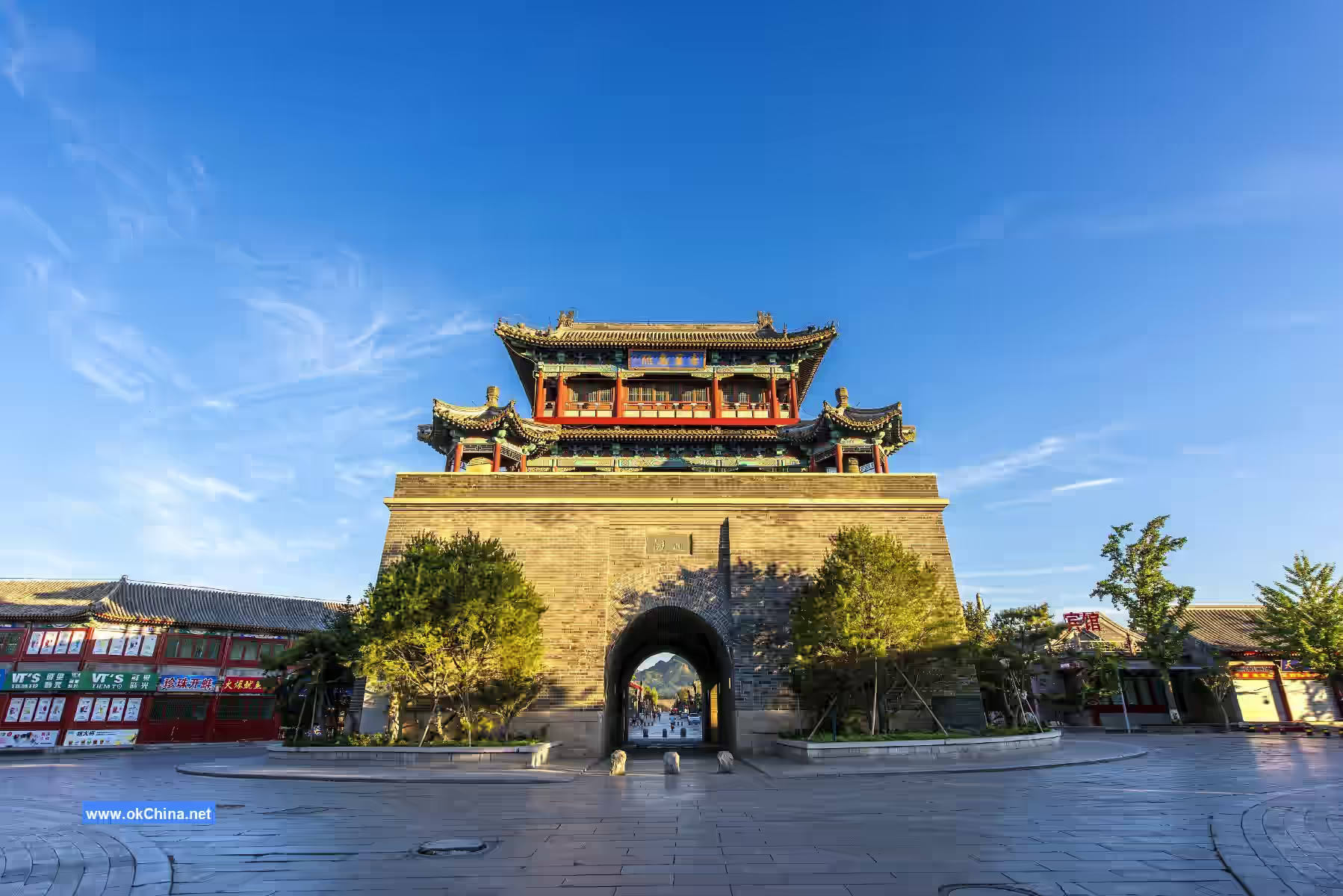
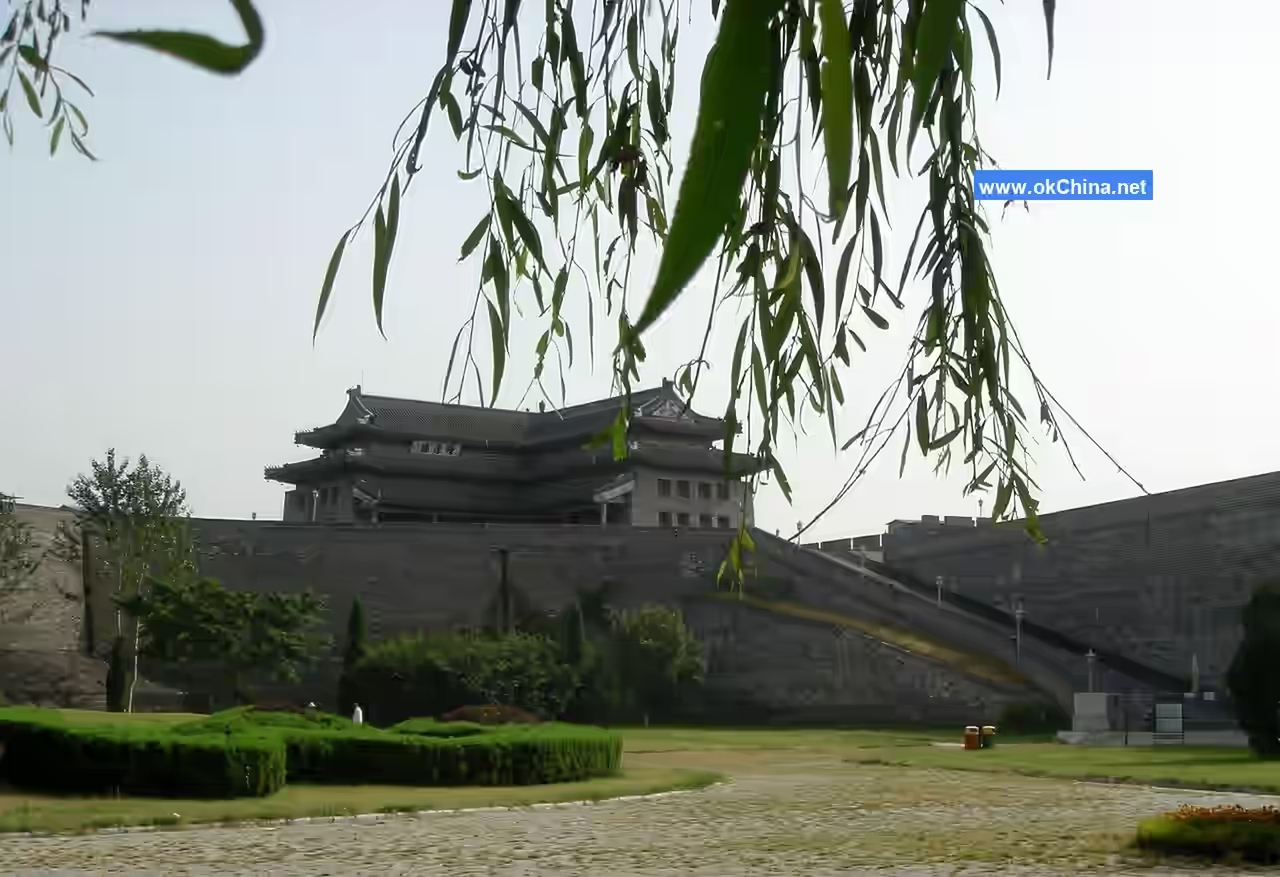
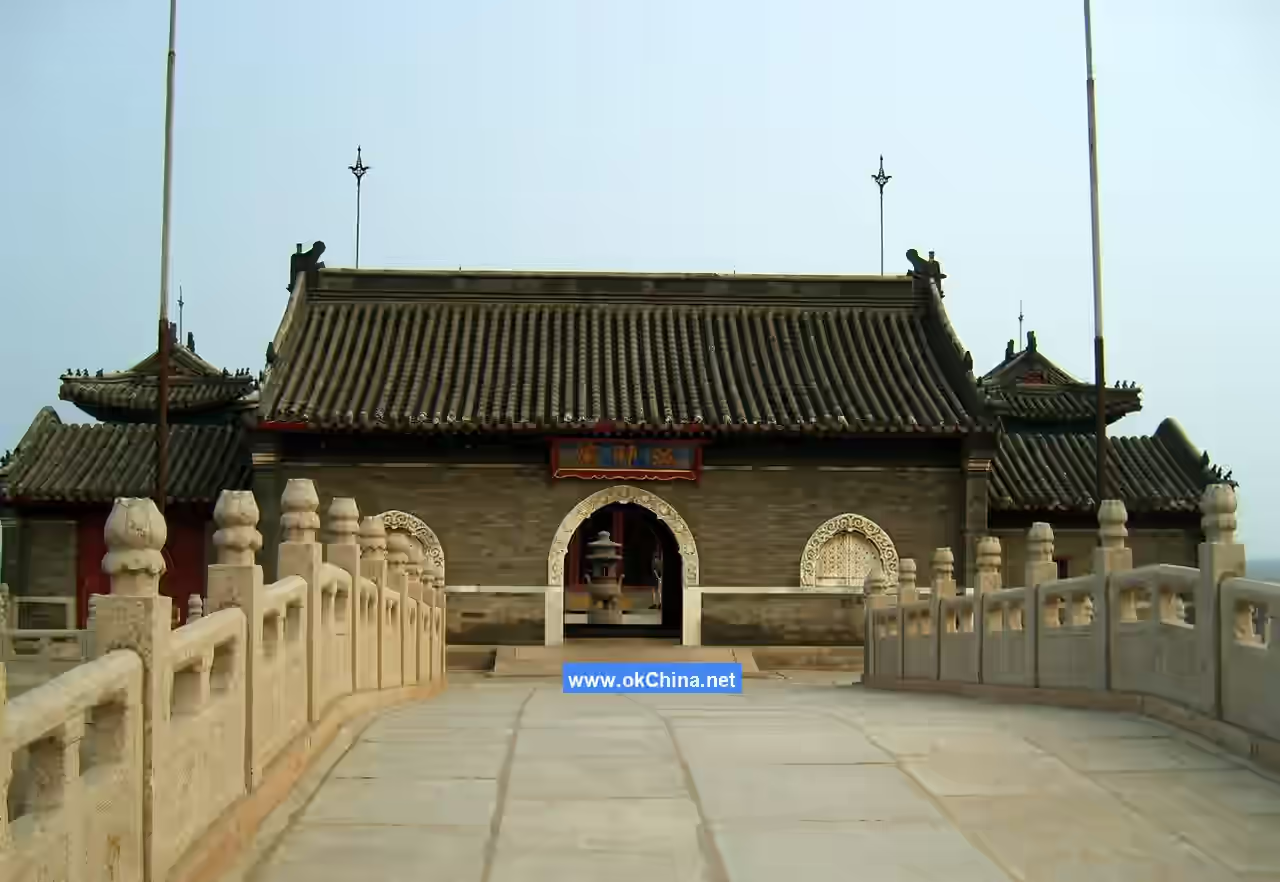
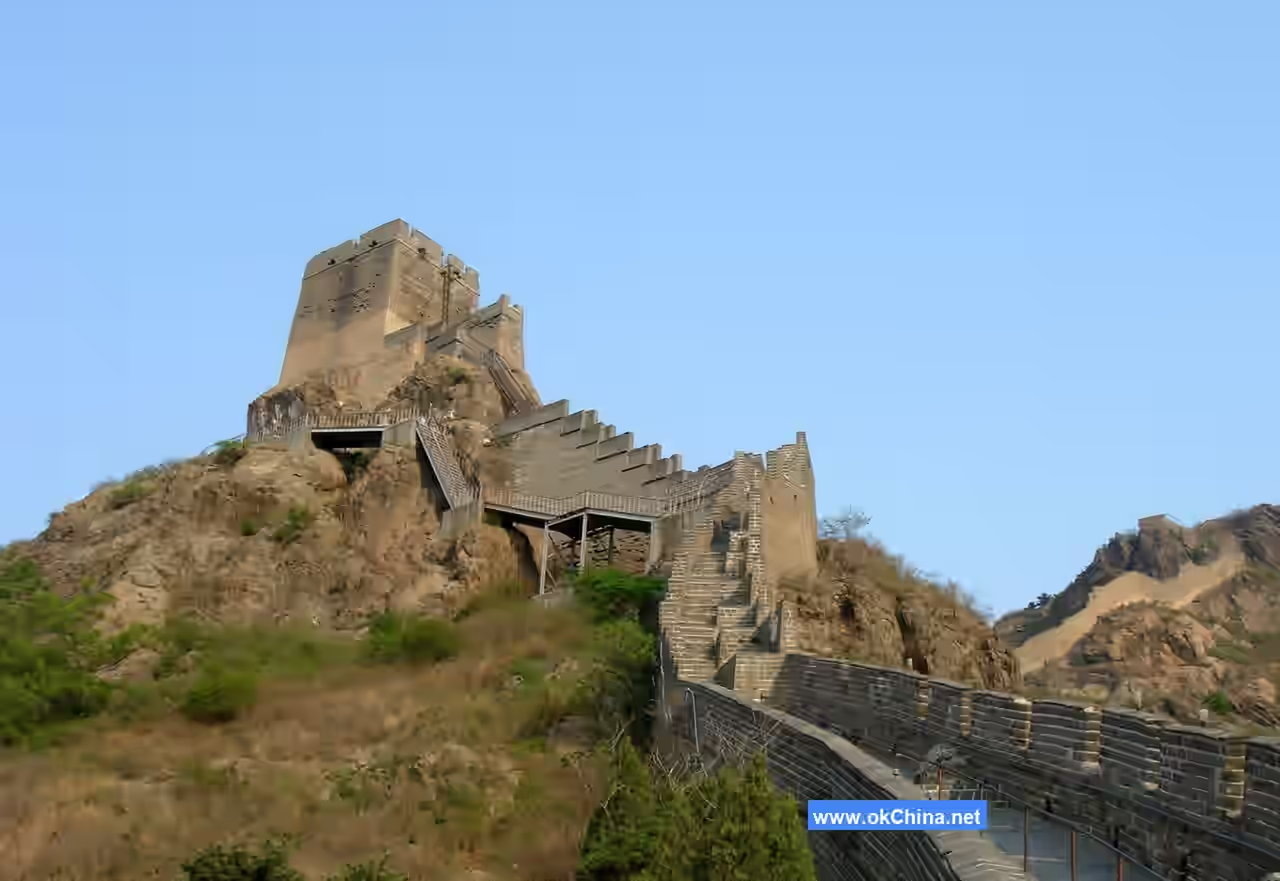
The pass city of the Great Wall - Shanhaiguan was first built in the 14th year of the Hongwu era of the Ming Dynasty (1381). It is the center of the Shanhaiguan Great Wall, shaped like an irregular trapezoid with rounded corners at the northwest and southwest, lacking corner platforms. The perimeter of the pass city walls is 4,727 meters, with a height of 14 meters and a thickness of 7 meters. The eastern wall is the main line of the Great Wall. The pass city has four gates on the east, west, south, and north sides: the east gate is "Zhendongmen" (the "First Pass Under Heaven"), the west gate is "Ying'enmen," the south gate is "Wangyangmen," and the north gate is "Weiyuanmen." Gate towers are built on the platforms of all four gates. Outside each of the four gates, there are enceintes with side-opening gates. The southeastern and northeastern corners of the city wall lie on the main line of the Great Wall, each equipped with corner platforms and corner towers, which are defensive structures at the corners of the pass city. On the north and south sides of Zhendong Tower, Linyu Tower, Muying Tower, and Xin Tower are also built. There is one water gate each at the southeastern, northwestern, and southwestern corners of the pass city, with a moat surrounding the walls.
The Gates
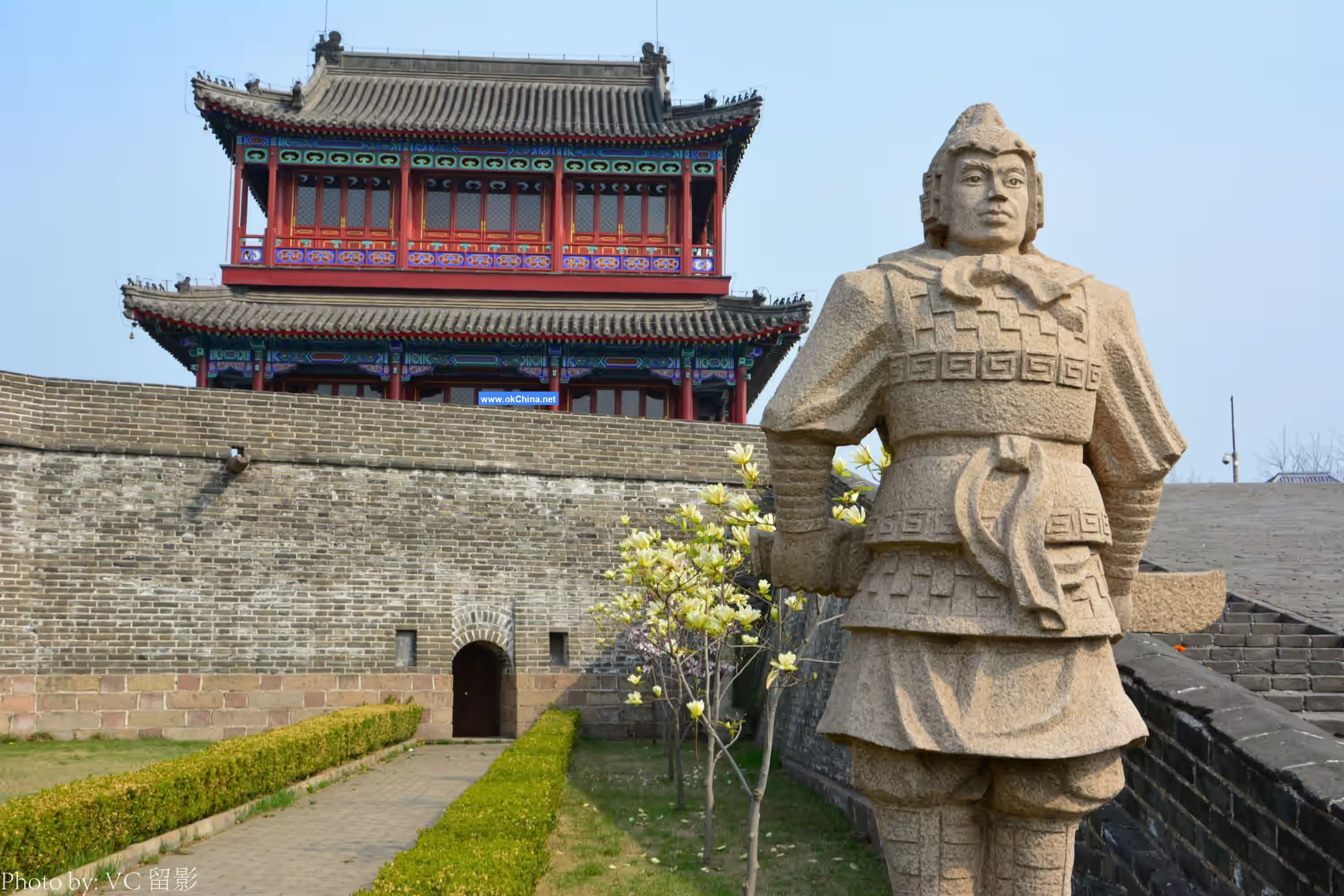
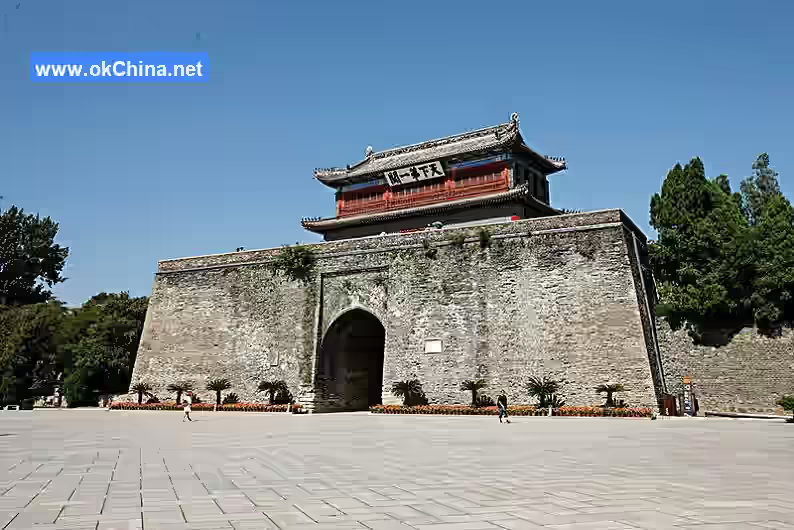
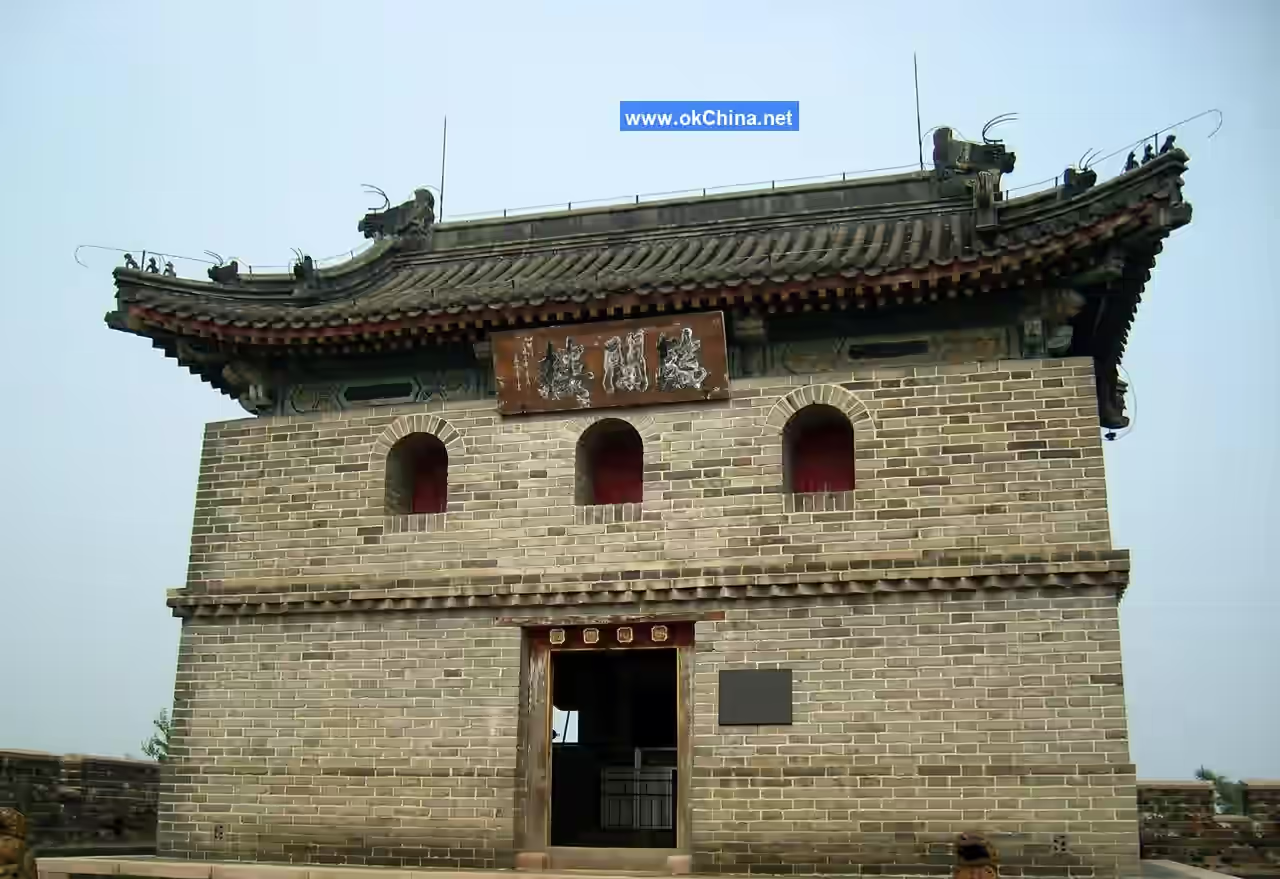
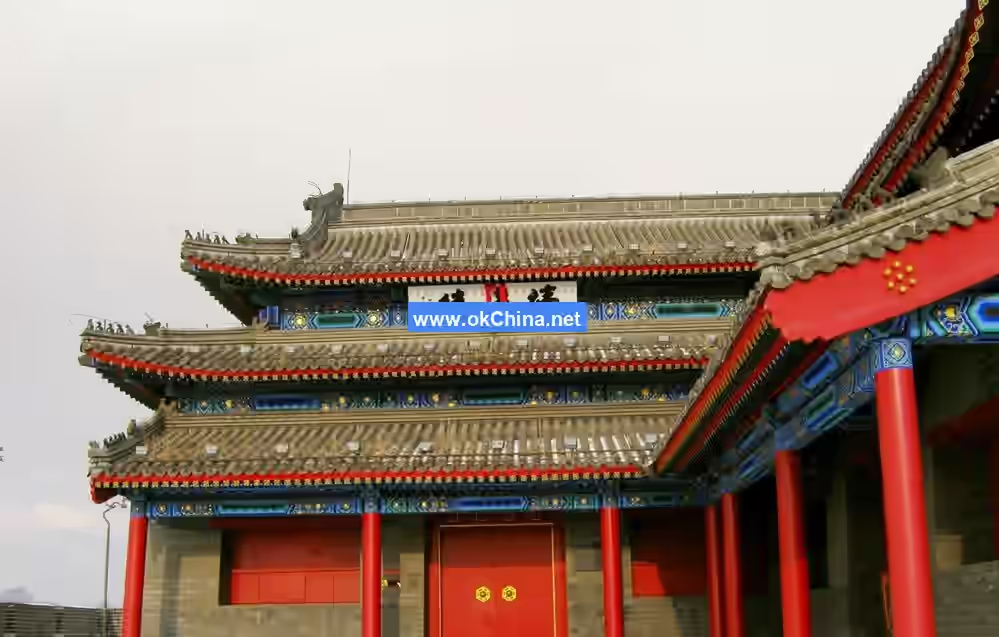
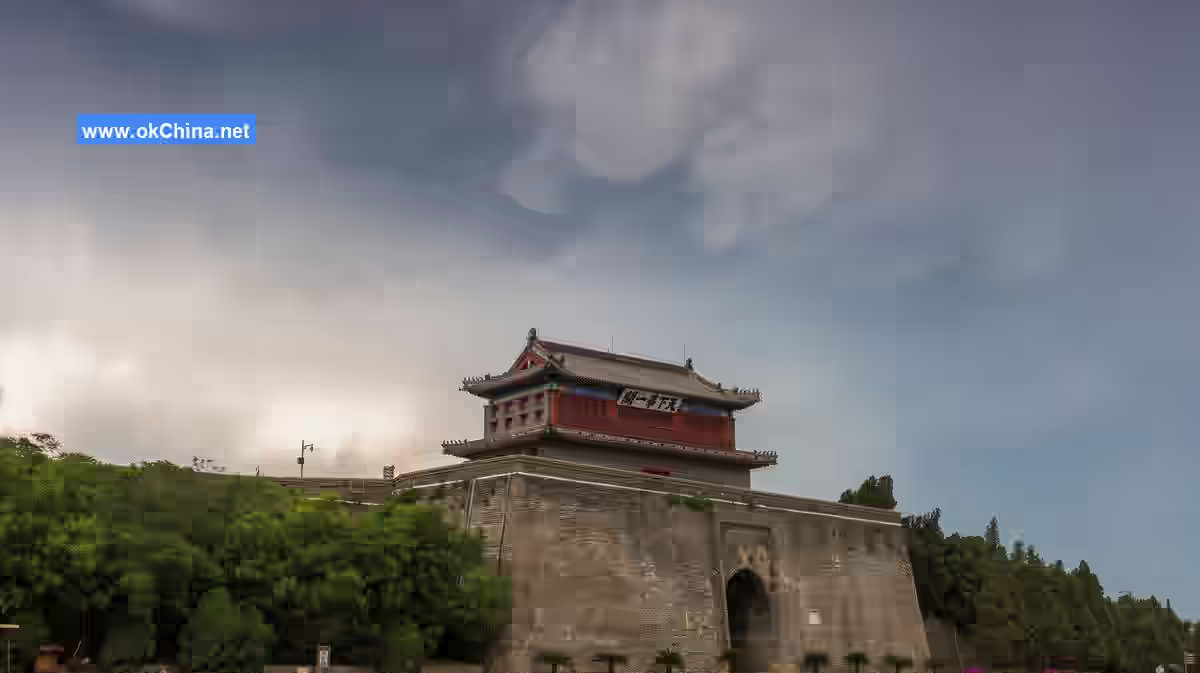
The Great Wall - Shanhaiguan has four gates: the east gate is called "Zhendongmen," the west gate "Ying'enmen," the south gate "Wangyangmen," and the north gate "Weiyuanmen." All four gates are preserved, with the east gate, the "First Pass Under Heaven," being the most intact. On the gate platform stands the "First Pass Under Heaven" gate tower, which is actually in the style of an arrow tower. Measurements show: the platform is 12 meters high, the gate tower is 13 meters high, 10.1 meters wide from east to west, and 19.7 meters long from north to south. The tower has two stories: the first story is 5.7 meters high, and the second story is 8 meters high. The gate tower architecture features a hip-and-gable double-eave roof with symmetrical ridge ornaments. The lower part is a brick-and-wood structure, with the four corners of the eaves adorned with ridge beasts of various forms, beautifully crafted and lifelike.
The Enceinte
Outside the four gates of the Great Wall - Shanhaiguan, there were enceintes. Currently, only the east gate enceinte remains, with a perimeter of 318 meters. The enceinte gate opens to the south, forming a right angle with the arched gate of the First Pass. The west wall of the enceinte is 85 meters long, the north wall 83 meters, the east wall 72 meters, and the south wall 77 meters, with a height of 13 meters. The width of the enceinte wall is 15 meters on the west side and 9.7 meters on the east side.
The Eastern Outer City
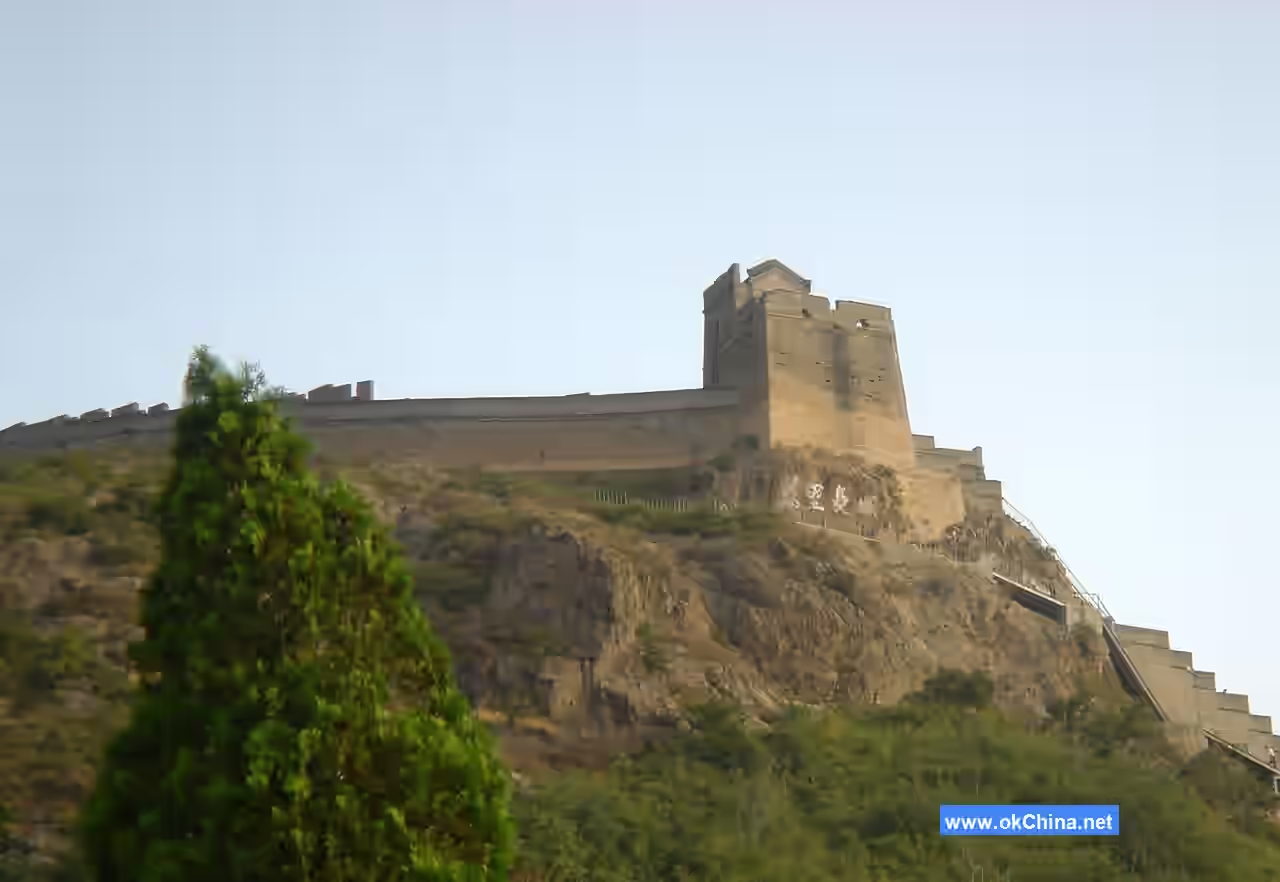
The existing Eastern Outer City is located outside the east gate of the pass city, connected to the eastern city wall on the east side. The existing walls were built during the Wanli era of the Ming Dynasty (1584). The earliest record of the Eastern Outer City is found in the "Yongping Prefecture Records" from the 27th year of the Wanli era, in the chapter "Construction Records: Cities and Walls."In the tenth year of the Wanli era, Zhang Jiayin, who served as the Minister of War and concurrently as the Right Deputy Censor-in-Chief, overseeing military affairs in Ji, Liao, and Baoding, wrote the "Record of the Luocheng at Shanhaiguan." This text provides a clear account of the reasons for constructing the East Luocheng and its commencement time. According to this record, the East Luocheng was built against the historical backdrop of the severe deterioration of northern defenses in the mid-Ming Dynasty, the southward shift of the entire northern defense line, and Shanhaiguan's transformation from an inner stronghold in the early Ming to an outer defensive position. To ensure the safety of Shanhaiguan's main city and establish a coordinated, multi-layered defensive layout, Wang Shoudao, then the Regional Commander of the Shanhai Route, began constructing the East Luocheng in the spring of the eleventh year of the Wanli era (1583). In February of the twelfth year of the Wanli era (1584), Cheng Xun, the Deputy Military Commissioner of Yongping, together with Wang Bangjun, the Chief Secretary of the Shanhaiguan Military Department, undertook repairs on the rammed-earth walls originally built by Wang Shoudao, which had been severely damaged by warfare. They reinforced the lower sections of the outer walls with stone and faced the upper sections with bricks, while only partially repairing the inner walls. The project was completed by May of the same year, establishing the scale of the East Luocheng. Most of the bricks used in the East Luocheng walls bear inscriptions such as "Made in Zhending, Wanli 12th Year," "Made in Dezhou, Wanli 12th Year," "Made by Jianchang Che, Wanli 12th Year," and "Made in Funing County, Wanli 12th Year," among ten varieties, confirming that the existing Luocheng walls date back to the twelfth year of the Wanli era. With the political and military developments of the Qing Dynasty, the ruling strategy shifted from the Ming Dynasty's military defense to political appeasement and conciliation, replacing the construction of the Great Wall with religious and ideological governance. This led to the gradual decline of the Great Wall's defensive function, and the East Luocheng of Shanhaiguan gradually evolved into a bustling commercial town, serving as a vital transportation route between North China and Northeast China, as well as a hub for information and goods. Wall maintenance largely ceased. The existing East Gate of the East Luocheng features the Fuyuan Tower built atop the gate, with a rectangular barbican protecting the area outside the gate. The other two gates, the South Gate (Bohai Gate) and the North Gate (with the tower atop the Gunlong Gate), have long since collapsed and are no longer traceable. Corner platforms were constructed at the southeastern and northeastern corners, each topped with a watchtower. The Luocheng also includes two water gates on the north and south sides, with a moat surrounding the eastern, northern, and southern sides.
West Luocheng
According to the "Linyu County Annals," the West Luocheng was located outside the west gate of the main city. In the sixteenth year of the Chongzhen era (1643), Governor Zhu Guodong proposed its construction, but the project was left unfinished due to the dynastic transition. It had one gate on the west side, named "Hongchen." Before the city wall was built, the Hongchen Tower already existed, though its construction date is unknown. Due to the susceptibility of earthen structures to collapse, Deputy General Yang Yuan replaced it with brick and stone in the twenty-fourth year of the Wanli era (1596). Today, both the "Hongchen Gate" and the West Luocheng have been destroyed.
North and South Wing Cities
The Wing Cities are located two li (approximately 1 kilometer) south and north of the main pass city, respectively, with identical architectural designs. According to the "Linyu County Annals," the walls of both the North and South Wing Cities were "over two zhang (approximately 6.6 meters) high," with a perimeter of "377 zhang, 4 chi, and 9 cun." Each city had one gate on the north and south sides. They were built by "Governor Yang Sichang of the Ming Dynasty." Today, both Wing Cities have been destroyed, leaving only remnants.
Other Structures
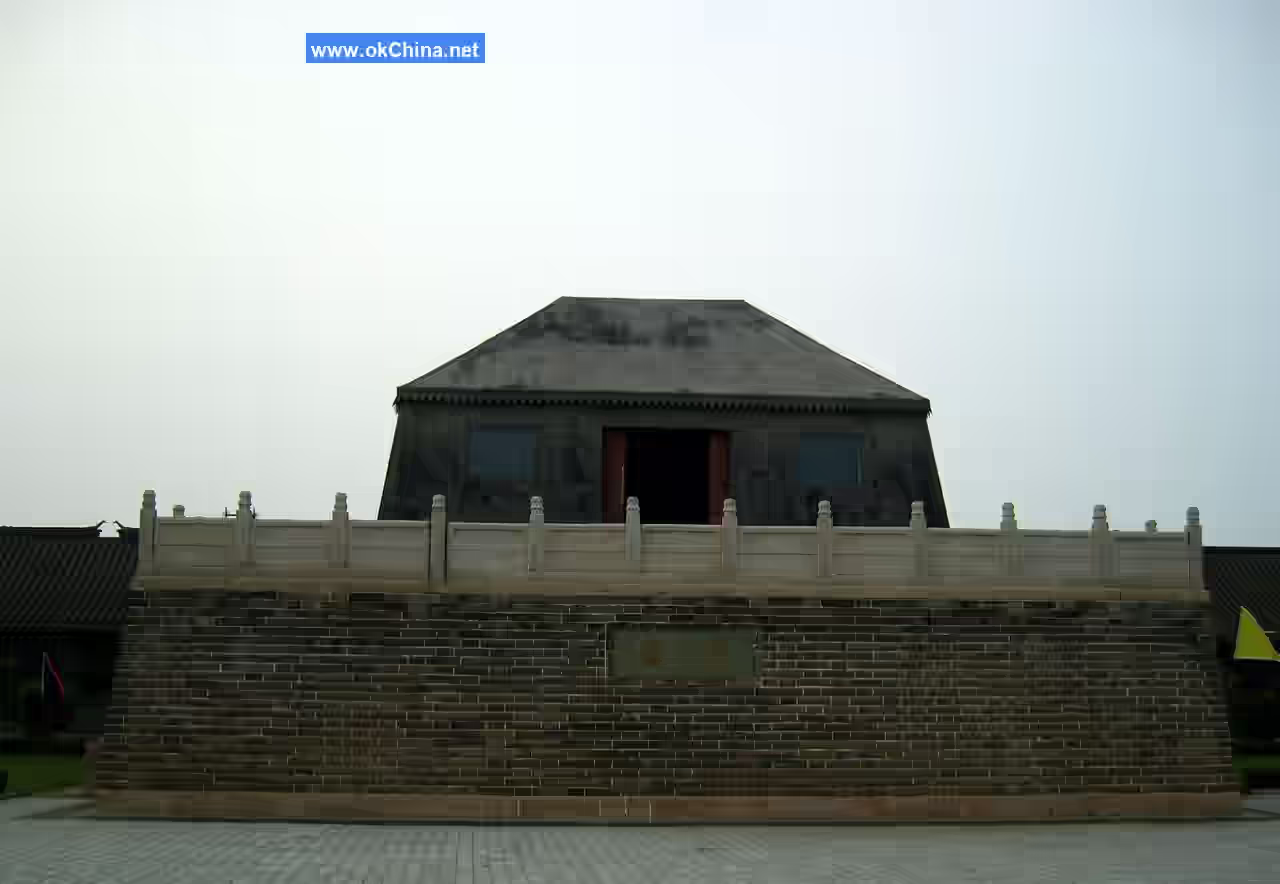
At the southeastern corner of the pass city, there once stood the Kuiguang Tower, and at the northeastern corner, the Weiyuan Hall. At the northern and southern corners of the East Luocheng, the Muying Tower and the Linlü Tower were constructed. All four of these towers have long been destroyed. At the center of the pass city, there was a Bell and Drum Tower, 2.7 zhang high, 5 zhang square, with four passageways. This tower was already dilapidated before liberation and was demolished in 1952 due to traffic obstruction, though it was later reconstructed. The West Gate of the pass city originally also had a tower, similar in scale to the "First Pass Under Heaven" tower at the East Gate. It bore an inscribed plaque reading "Xiang'ai Fusang," personally written by Emperor Qianlong in the ninth year of his reign (1744). Due to long-term neglect, it fell into severe disrepair and was demolished in 1953. The South Gate tower of the pass city was similar in scale to the East and West Gate towers. Its plaque read "Jili Puzhao," and it was built in the eighth year of the Jiajing era (1529). Due to neglect, it also suffered significant damage and was demolished in 1955. The North Gate of the pass city had a tower built in the sixth year of the Tianqi era (1627) and rebuilt in the thirty-ninth year of the Wanli era (1611) by Assistant Minister Shao Keli and Deputy General Liu Kongyin. After its reconstruction, the tower suffered multiple fires and was eventually abandoned without repair.
V. Value and Significance
Cultural Relic Value
The Great Wall—Shanhaiguan is among the first batch of national key cultural relics protection units and was inscribed on the UNESCO World Heritage List in 1987. The plaque of the "First Pass Under Heaven" measures 5 meters in length and 1.5 meters in height, with each character over one meter tall. It is said to have been inscribed by Xiao Xian, a Jinshi (imperial scholar) from the eighth year of the Chenghua era of the Ming Dynasty and a native of Shanhaiguan. The characters are in regular script, executed with vigorous and robust brushstrokes, harmonizing perfectly with the style of the tower, making it a monumental work of art across the ages.
Architectural Value
The ancient city of Shanhaiguan along the Great Wall is an important military defense system on the Ming Dynasty Great Wall. The Zhen Dong Tower at the East Gate is majestic and imposing. Due to its strategic location and perilous terrain, as well as being the first pass at the eastern end of the Great Wall, it is called the "First Pass Under Heaven" and serves as the iconic structure of the ancient city of Shanhaiguan. Flanking it on both sides are the Jingbian Tower, Muying Tower, Zhen Dong Tower, Linlü Tower, and Weiyuan Hall—five watchtowers evenly spaced along a stretch of over 1,000 meters of the Great Wall, collectively known as the "Five Tigers Guarding the East." At the center of the city stands the Bell and Drum Tower, with the streets and alleys of the pass city laid out in a grid pattern. Four barbicans guard the outer perimeter, creating a layered defensive system. Beyond these, structures such as the Luocheng, Wing Cities, Guard Cities, and Sentinel Cities showcase the meticulous defensive architectural style of ancient China. The barbican is the most precious structure in Great Wall architecture. Though modest in scale, it plays a critical role: first, in case of enemy invasion, it serves as a second line of defense, trapping the enemy like "a turtle in a jar"; second, architecturally, the barbicans outside the city walls provide additional protection, forming a robust and imposing layered defense that highlights the characteristics of Great Wall defensive engineering.
Military Value
The First Pass Under Heaven is the first fortress at the eastern starting point of the Great Wall, marking the boundary between inside and outside the pass and serving as a crucial barrier protecting the Ming capital, Beijing. It is a historical and cultural site primarily showcasing important Ming Dynasty passes and plains sections of the Great Wall. Shanhaiguan was a military stronghold and strategic location. During the Xuande era of the Ming Dynasty, a branch office of the Ministry of War was specially established here—the only such branch of the Ming Ministry of War—underscoring its unique military and political value. From its establishment until the fall of the Ming Dynasty, over 200 years, a total of 90 Chief Secretaries of the Ministry of War served here. Shanhaiguan is approximately only 280 kilometers from Beijing, and the terrain between the two locations is predominantly plains, favorable for cavalry charges. Precisely because of Shanhaiguan's strategic geographical position, which directly impacted the security of the Ming capital, it gradually earned the title "First Pass Under Heaven" from the mid to late Ming Dynasty. The term "first" in "First Pass Under Heaven" not only refers to Shanhaiguan's location at the easternmost end of the Great Wall but also highlights its critical geographical value in guarding the Liaoxi Corridor and protecting the North China Plain.
Historical Value
Due to its pivotal position between the agrarian culture of the Central Plains and the nomadic culture of the Northeast, the Great Wall—Shanhaiguan held significant commercial importance during the Ming and Qing dynasties. Trade between the Central Plains and ethnic minority regions flourished, making Shanhaiguan both a military stronghold and a commercial hub. Shanhaiguan and its structures played a decisive role in the Ming Dynasty's efforts to prevent the rise of the Jurchen tribes in the Northeast and to counter remnants of the Yuan Dynasty. After the Qing Dynasty entered the Central Plains, the Great Wall around Shanhaiguan lost its military defensive function but remained a vital transportation link between the Northeast and North China. It became a necessary route for Qing emperors traveling to Shenyang to worship their ancestors and a destination for literati and scholars to ascend towers and enjoy the scenery.
Comments
Post a Comment