




Shanghai Wild Animal Park
1. Introduction
Shanghai Wild Animal Park is located at No. 178 Nanliu Highway, Pudong New District, Shanghai, approximately 35 kilometers from downtown Shanghai. Officially opened to the public on November 18, 1995, it covers an area of 1.53 square kilometers. It is China's first national-level wild animal park, jointly constructed by the Shanghai Municipal People's Government and the China State Forestry Administration. The park is a theme park integrating wildlife breeding, exhibition, conservation, scientific education, and leisure entertainment.
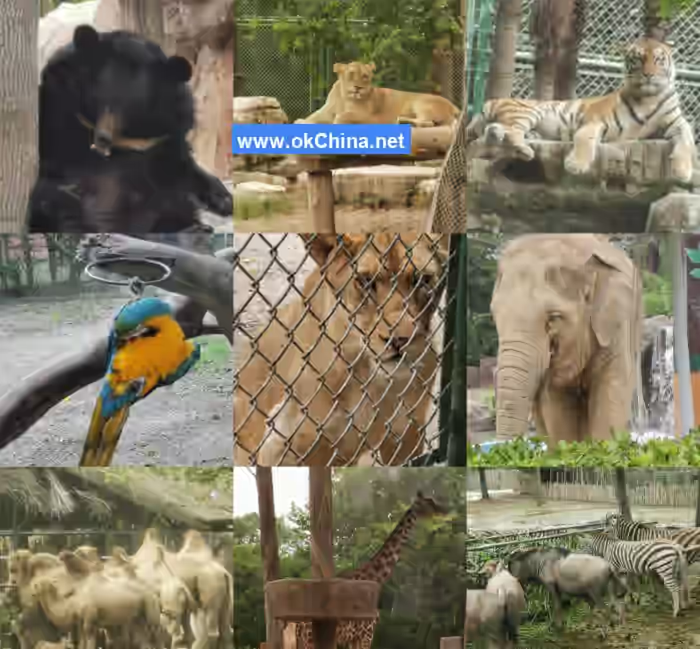
Shanghai Wild Animal Park houses over 200 representative rare animal species from around the world. These include foreign species such as giraffes, zebras, antelopes, and rhinoceroses, as well as China's first-class protected animals like the giant panda, golden snub-nosed monkey, South China tiger, Asian elephant, and crested ibis.
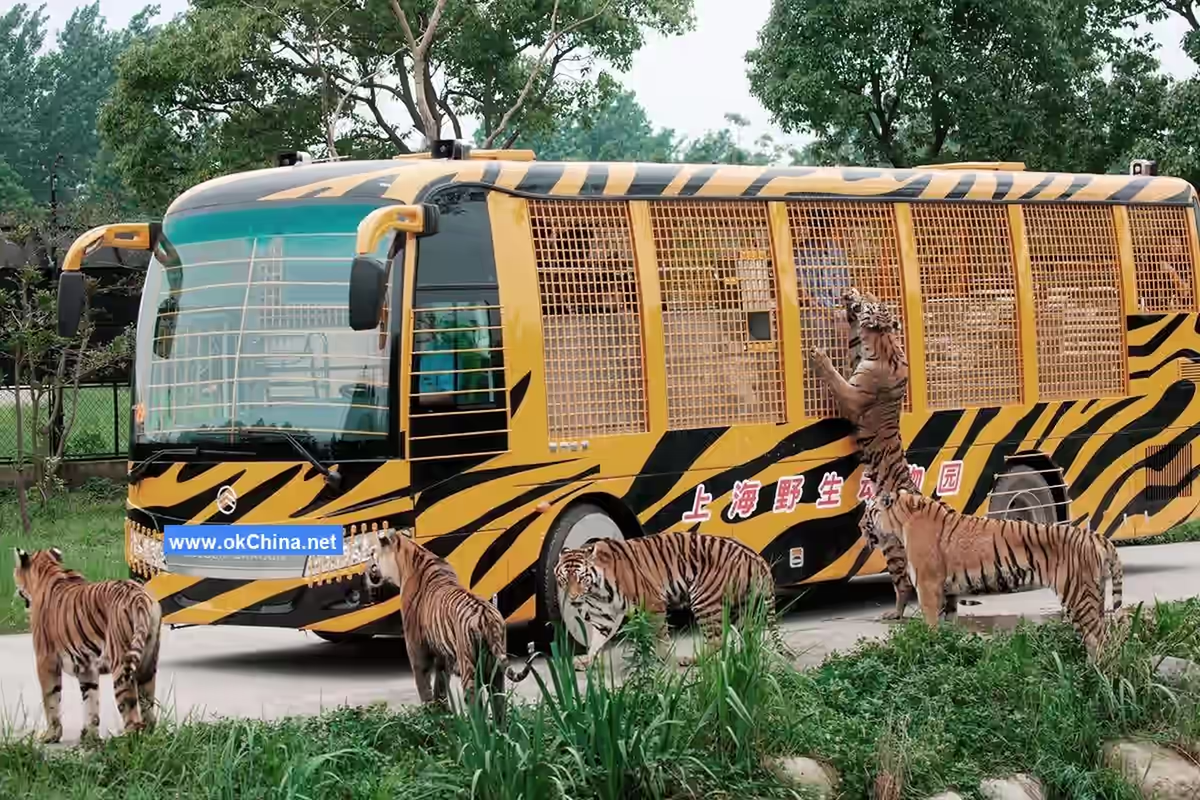
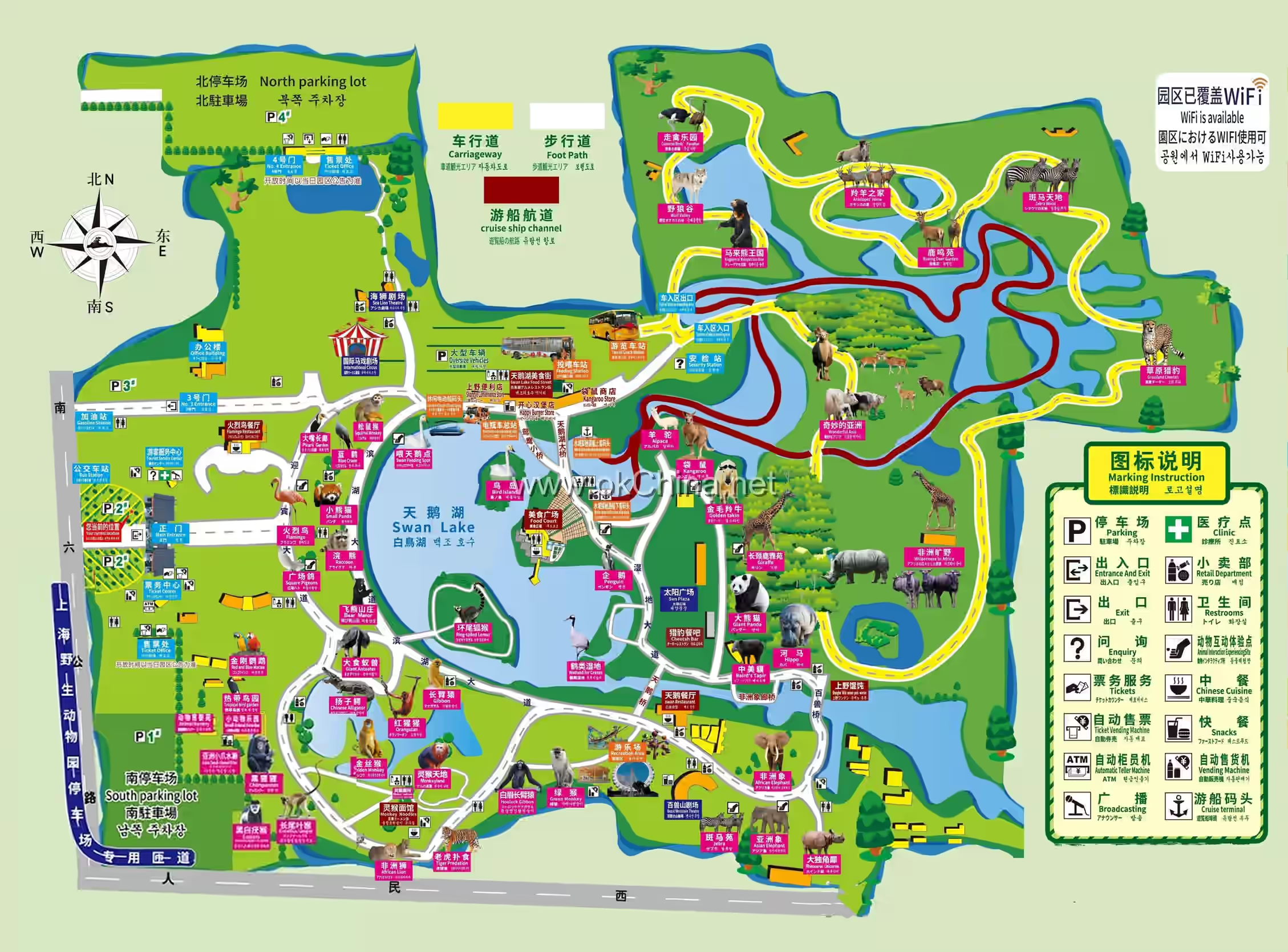
The park currently consists of two main areas: the Drive-through Area and the Walking Area. The Drive-through Area features ten themed zones: Wonderful Asia, African Wilderness, Elegant Giraffes, The Fastest Flash, Rulers of the Grassland, Mighty Bears of the Wild, Kings of the Forest, White Tiger Territory, Wolf Valley, and Malayan Sun Bear Kingdom. The Walking Area is distributed with 39 pavilions and zones: Giant Panda Pavilion, Crane Wetland, Flamingo Exhibit, Penguin Pavilion, Swan Lake, Alpaca Garden, Orangutan Pavilion, Baird's Tapir Pavilion, Small Animal Paradise, Parrot Pavilion, Hippopotamus Pavilion, White-browed Gibbon Exhibit, Giant Anteater Exhibit, Crocodile Island, Lemur Island, Raccoon Exhibit, Golden Snub-nosed Monkey Island, Flying Bear Villa, Vervet Monkey Area, White Tiger Exhibit, Squirrel Monkey Area, Red Panda Area, Chimpanzee Pavilion, Kangaroo Slope, Giraffe Elegant Garden, Asian Elephant Exhibit, Golden Takin Pavilion, National Gift African Lion Exhibit, Tropical Bird Garden, Zebra Garden, African Elephant Exhibit, Tiger Feeding Area, White-cheeked Gibbon Island, Blue Crane Exhibit, Greater One-horned Rhinoceros Exhibit, Big Mouth Corridor, Primate World, Asian Small-clawed Otter Exhibit, and Sun Plaza.
2. Major Pavilions and Exhibits
2.1 Giant Panda Pavilion
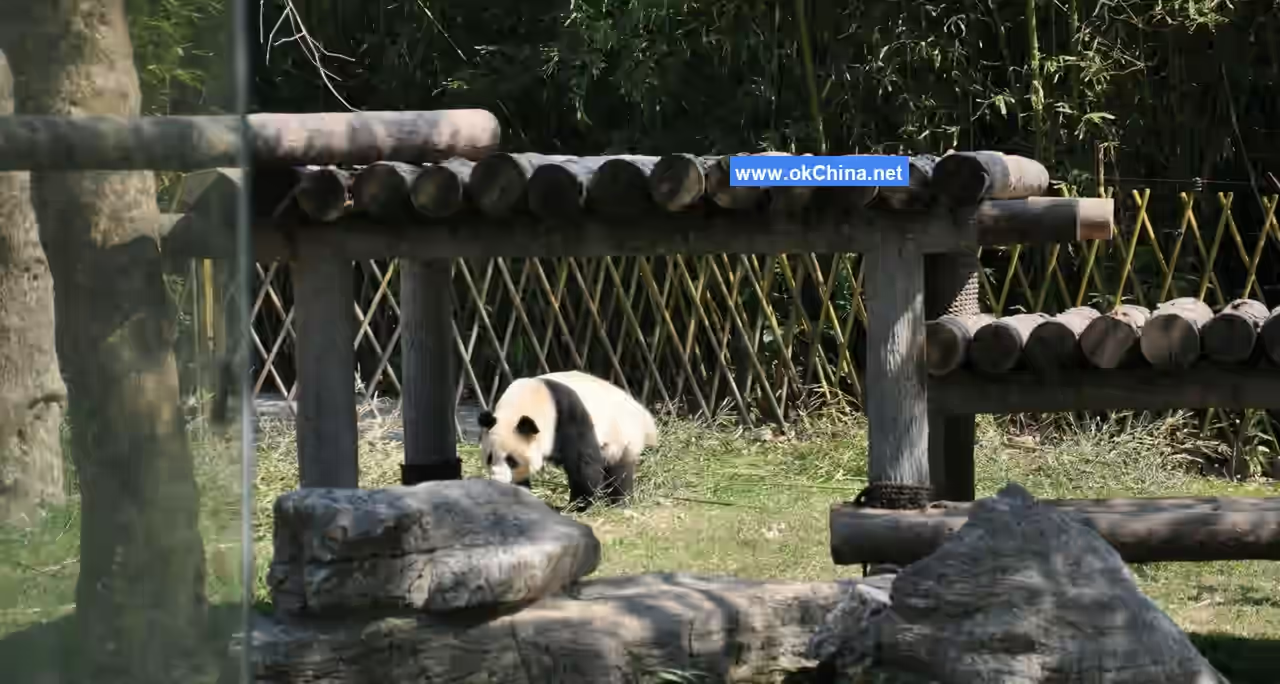
The Giant Panda Pavilion is home to the giant panda, known as a "living fossil" and a national treasure of China. With their gentle temperament, adorable appearance, and amusing behavior, giant pandas are one of the most beloved wild animals. The Giant Panda Pavilion undergoes maintenance and is closed for exhibition every Wednesday of the fourth week of the month from 15:00 to 17:00 (subject to on-site announcements).
2.2 Red Panda Area
The Red Panda exhibit area is equipped with artificial trees, rockeries, rope ladders, swings, and other facilities for the red pandas to climb, better showcasing their daily behaviors and enhancing the visitor experience.
2.3 Raccoon Exhibit
The Raccoon exhibit is designed with a natural ecology, allowing the raccoons to express their natural instincts by actively foraging for food, replicating the real-life scenarios of raccoons hunting and washing food in the wild. Shanghai Wild Animal Park has installed various puzzle feeders in the exhibit area, which are either hung in trees or hidden in water. Animal keepers employ a feeding method of small, frequent meals, encouraging the raccoons to be active while fully demonstrating their food-washing habits to visitors.
2.4 Kangaroo Slope
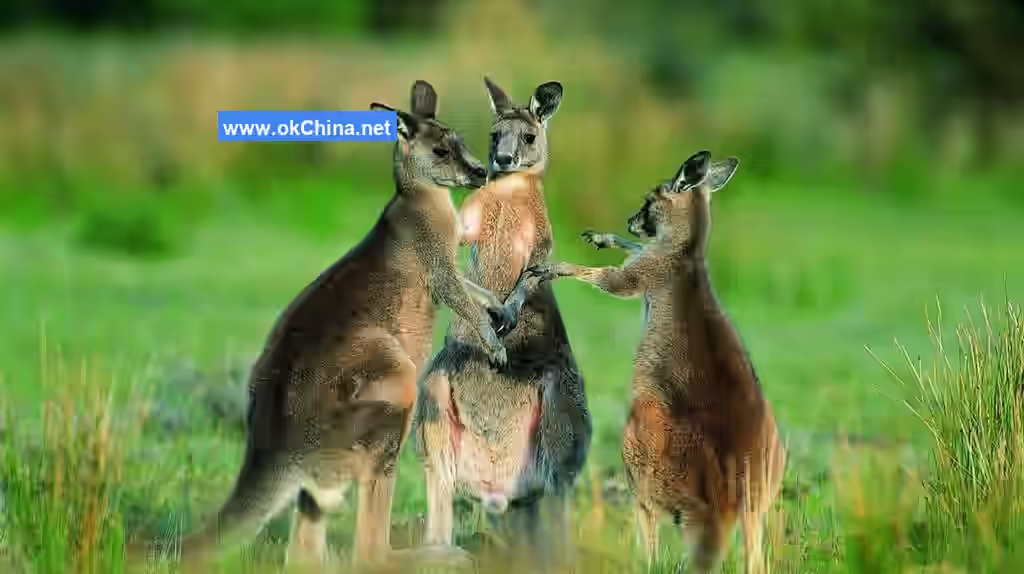
The kangaroo is the national animal of Australia, known for its unique parenting style. Kangaroos typically move by hopping on their hind limbs, reaching speeds of up to 60 kilometers per hour. Groups of Eastern Grey Kangaroos and Red Kangaroos live on the grassy Kangaroo Slope; they have a gentle temperament.
2.5 Golden Takin Pavilion
The Golden Takin is a national treasure-level endangered wild animal in China. It is not actually a cow but belongs to the Bovidae family, subfamily Caprinae, and is taxonomically close to cold-climate antelopes; it can be considered a super-sized wild goat. Its most notable characteristic is rock climbing, so the primary feature of the Golden Takin Pavilion is its design based entirely on the animal's habits, meeting the takin's climbing needs.
2.6 Baird's Tapir Pavilion
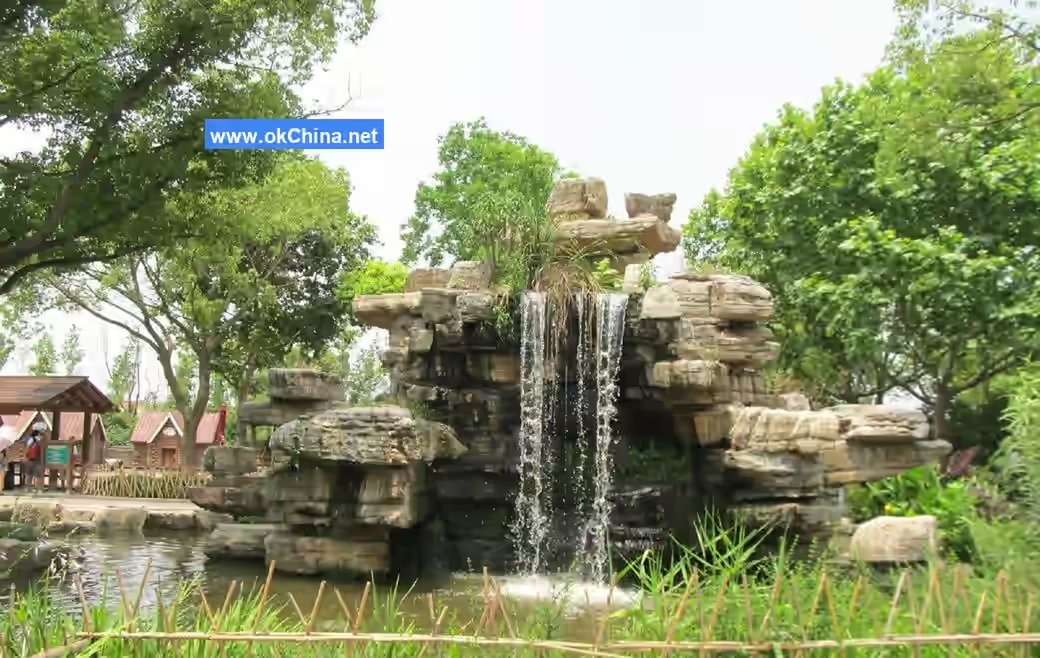
The Baird's Tapir is a herbivorous animal living in Central America, with a peculiar appearance resembling a pig. Baird's Tapirs inhabit dense tropical rainforests; they are skilled swimmers and climbers and prefer living near water sources in areas with abundant vegetation. The Baird's Tapir exhibit is configured with rockeries, waterfalls, trees, shrubs, and grasslands, creating an ecological display that better suits their living habits.
2.7 Hippopotamus Pavilion
The Hippopotamus Pavilion exhibit is arranged like a tropical rainforest. It houses the massive and clumsy hippopotamus family, characterized by their large heads and exceptionally big mouths. The Hippopotamus Pavilion undergoes maintenance and is closed for exhibition every Wednesday of the third week of the month from 9:00 to 11:00 (subject to on-site announcements).
2.8 Asian Elephant Exhibit
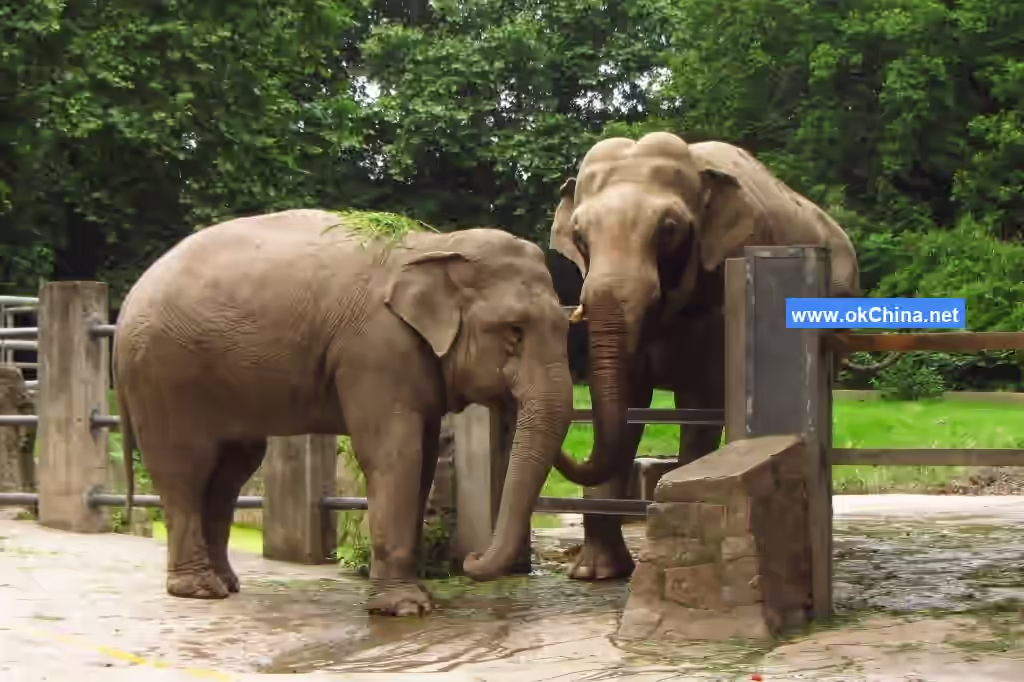
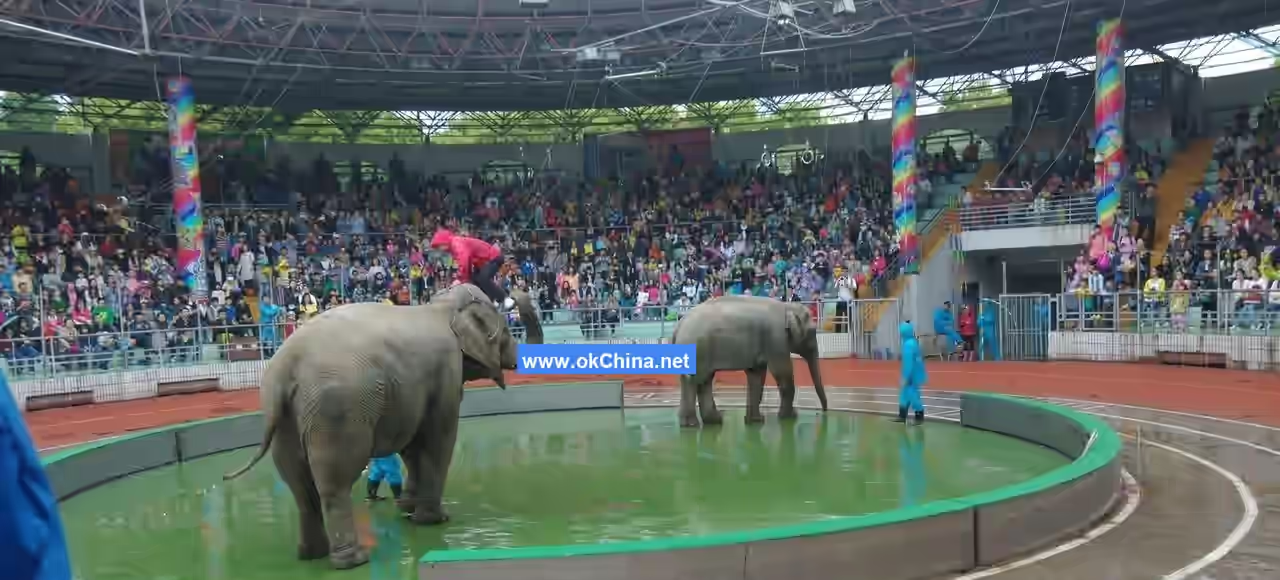
The Asian elephant is the largest extant terrestrial animal in Asia, primarily inhabiting China, Southeast Asia, and South Asia. The park boasts the largest Asian elephant herd in East China. The elephants collectively demonstrate their special skills to visitors, such as moving logs and spraying water. The Asian Elephant Exhibit undergoes maintenance and is closed for exhibition every Wednesday of the first week of the month from 9:00 to 11:00 (subject to on-site announcements).
2.9 African Elephant Exhibit
The African Elephant Exhibit incorporates African-style elements, simulating a natural ecological environment. Shanghai Wild Animal Park has the largest African elephant herd in East China. The African Elephant Exhibit undergoes maintenance and is closed for exhibition every Thursday of the fourth week of the month from 9:00 to 11:00 (subject to on-site announcements).
2.10 Giraffe Elegant Garden
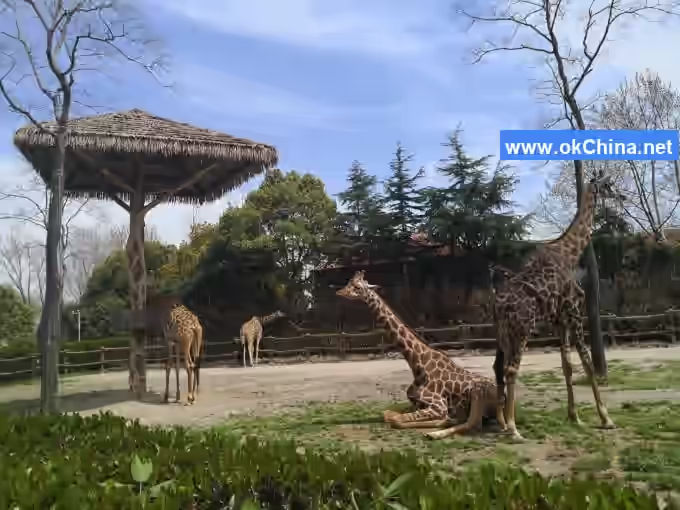
The giraffe is the tallest extant terrestrial animal in the world. At Shanghai Wild Animal Park, giraffes are housed in both the walking exhibit area and the drive-through exhibit area. The drive-through area displays them in a savannah and sparse woodland setting; visitors riding on buses can observe the giraffes' daily lives and also enjoy scenes of giraffes coexisting harmoniously with other animals. In the walking area, visitors can personally experience close interaction with the giraffes. Giraffe Elegant Garden undergoes maintenance and is closed for exhibition every Wednesday of the third week of the month from 9:00 to 11:00 (subject to on-site announcements).
2.11 Zebra Garden
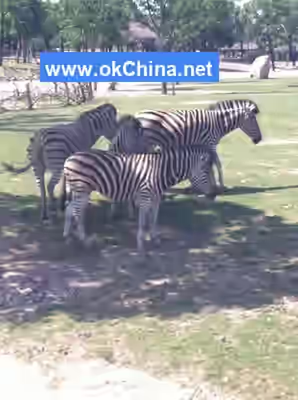
Zebra Garden is located between the Asian Elephant Exhibit and the Beast Mountain Square, featuring an ecologically simulated design. Over a dozen zebras roam leisurely, allowing visitors to observe them up close and listen to animal keepers explain scientific knowledge about zebras. Zebra Garden undergoes maintenance and is closed for exhibition every Wednesday of the first week of the month from 9:00 to 11:00 (subject to on-site announcements).
2.12 Greater One-horned Rhinoceros Exhibit
The Greater One-horned Rhinoceros, also known as the Indian Rhinoceros, currently has a population of only about 2,500. It is the world's largest single-horned rhinoceros, covered in thick, armor-like skin. It inhabits grasslands, reed beds, and swampy grasslands, enjoys mud baths, and primarily feeds on fresh grass, reeds, and tender branches. It can run at speeds up to 55 km/h. Based on the animal's origin and habits, Shanghai Wild Animal Park has created an original ecological environment, building a spacious and comfortable "independent courtyard" with advanced facilities and a beautiful environment, covering nearly 7,000 square meters. The Greater One-horned Rhinoceros Exhibit undergoes maintenance and is closed for exhibition every Thursday of the fourth week of the month from 9:00 to 11:00 (subject to on-site announcements).
2.13 Alpaca Garden
Alpaca Garden is adjacent to Kangaroo Slope and the Water Exploration Pier. Alpacas belong to the order Artiodactyla, family Camelidae; their appearance somewhat resembles sheep. Alpacas are highly social animals with a docile temperament. Their cute and silly appearance has earned them the nickname "divine beast" among netizens.
2.14 National Gift African Lion Exhibit
The National Gift African Lion Exhibit mimics the African natural environment, planted with trees like baobabs. A pair of African lions, gifted by the people of Zimbabwe to the Chinese people, reside here. The Chinese side named them "Jinjin" and "Feifei," symbolizing friendship between China and Zimbabwe and between China and Africa.
2.15 Flying Bear Villa
The Flying Bear Villa exhibit is home to a group of lively little black bears. To showcase their natural instincts, the exhibit is equipped with various climbing facilities. Under the careful guidance of animal keepers, the little black bears have become proficient in skills such as pole climbing, walking on plum blossom stakes, crossing balance beams, retrieving food in creative ways, and tightrope walking. Flying Bear Villa undergoes maintenance and is closed for exhibition every Thursday of the third week of the month from 9:00 to 11:00 (subject to on-site announcements).
2.16 Giant Anteater Exhibit
The Giant Anteater Exhibit is located north of Crocodile Island and adjacent to Flying Bear Villa. The giant anteater is a peculiar animal native to South America, with a very unique appearance featuring a pointed head and a "big broom"-like tail. The indoor exhibition hall for giant anteaters is designed with underfloor heating and air conditioning, which are turned on in winter to maintain an indoor temperature around 15 degrees Celsius. To ensure air circulation, windows are also opened for ventilation during the day. Furthermore, wooden boards are laid in their sleeping area to reduce heat loss; they enjoy curling up to sleep on these boards. In winter, the giant anteaters' food is pre-warmed; for example, milk is warmed before serving, and yogurt is brought to room temperature before use.
2.17 Crocodile Island
Crocodile Island is located south of the Giant Anteater Exhibit and north of the Golden Snub-nosed Monkey area. The Chinese alligator is a crocodile species unique to China. As a first-class protected animal in China, the Chinese alligator is endemic to the country, and many characteristics of dinosaur-like reptiles can still be found in them. From May to September each year, they are relatively active, frequently swimming in the water or lining up to bask in the sun. By late October, they begin to reduce activity, basking in the sun to maintain body temperature and digest food. From December to March of the following year, they enter a state of hibernation.### 2.18 Orangutan Pavilion The Orangutan Pavilion is divided into two main living display areas: indoor and outdoor. The indoor display area is spacious and bright, featuring a simulated ecological backdrop of hills and trees, and is equipped with wooden perches such as ropes, rubber tires, parallel bars, horizontal bars, balance beams, and slides for the orangutans to climb, play, and relax on. The outdoor display area resembles a small green island, with a broad expanse covered in lush green grass. Various perches, wooden stakes, and hanging tire rings are connected by cables, allowing the orangutans to play along the ropes without touching the ground. The Orangutan Pavilion undergoes maintenance closure every second Wednesday of the month from 9:00 to 11:00 (subject to on-site announcements).
2.19 Chimpanzee Pavilion
Chimpanzees are apes known for "making and using tools." They are lively, noisy, and highly imitative. Their lifespan is approximately 35–40 years, with some living up to 60 years. The exhibition area is designed to closely mimic the chimpanzees' natural habitat, creating an ecological and healthy environment that provides a more comfortable and suitable living space for them. The area is fully equipped with activity facilities to fully accommodate their living habits. The Chimpanzee Pavilion undergoes maintenance closure every second Wednesday of the month from 9:00 to 11:00 (subject to on-site announcements).
2.20 White-browed Gibbon Exhibit
White-browed gibbons inhabit dense tropical or subtropical mountain forests. They are named for the distinct white markings near their forehead, which resemble white eyebrows. The exhibit area is shaded by trees and equipped with various enrichment facilities. Gibbons particularly enjoy playing among tall trees and ropes.
2.21 White-cheeked Gibbon Island
Named for the white fur on their cheeks, the white-cheeked gibbon is a nationally protected first-class animal. The White-cheeked Gibbon Island consists of two small islands separated by water, facing each other from a distance. The islands are equipped with many ladders and hemp ropes to satisfy the gibbons' lively nature of loving to climb and being adept at jumping. Additionally, there are many highly realistic shelters hidden throughout, serving as places for them to rest, avoid heat, and stay warm.
2.22 Lemur Island
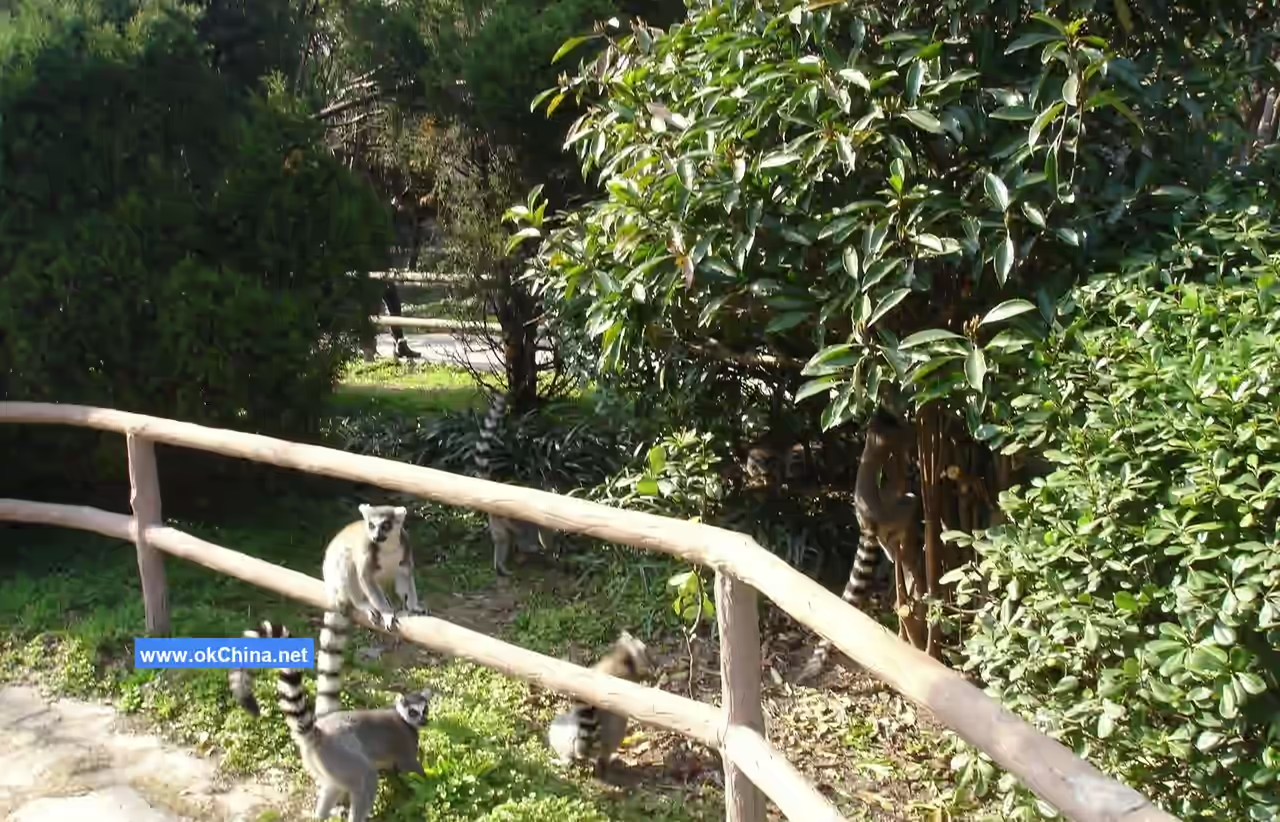
Lemur Island is characterized by its unique barrier-free display method, creating an atmosphere of harmonious coexistence between humans and animals. The "aerial walkway" allows visitors to observe ring-tailed lemurs resting in trees from different angles; the "sightseeing path" around the island lets visitors enjoy the scenery of Swan Lake; the "behavioral display area" allows visitors to appreciate behaviors such as jumping and feeding by the ring-tailed lemurs. Meanwhile, pavilions with an African ambiance within the exhibit provide resting spots for visitors. Lemur Island undergoes maintenance closure every first Tuesday of the month from 9:00 to 11:00 (subject to on-site announcements).
2.23 Golden Snub-nosed Monkey Island
Located east of the Small Animal Park and south of the Crocodile Island, Golden Snub-nosed Monkey Island is home to the largest captive population of golden snub-nosed monkeys in China. Over 50 Sichuan golden snub-nosed monkeys form three groups, living and thriving here. As a national treasure of China, the family-style free-range mode has attracted numerous animal experts and scholars from both domestic and international backgrounds.
2.24 Parrot Pavilion
Macaws are the most colorful and largest parrots, renowned in the animal kingdom for their versatility. Under the guidance of animal keepers at Shanghai Wildlife Park, the macaws perform daily behavioral displays for visitors, such as lifting buckets, cracking nuts, and flying back and forth. The Parrot Pavilion exhibit area undergoes maintenance closure every second Monday of the month from 9:00 to 11:00 (subject to on-site announcements).
2.25 Big Beak Corridor
The "Big Beak Corridor" gathers over 30 individuals of five species of colorful and diverse "big-beaked" birds native to tropical rainforests: Wreathed Hornbill, Great Hornbill, Toco Toucan, Red-billed Toucan, and Scarlet Macaw. The entire exhibit covers an area of 2,100 square meters, recreating the living environment of a bird habitat and equipped with multifunctional shelters, greenery, and other enrichment features. Additionally, a dedicated cherry blossom avenue has been created to complement the entire "Big Beak Corridor" exhibit.
2.26 Flamingo Exhibit
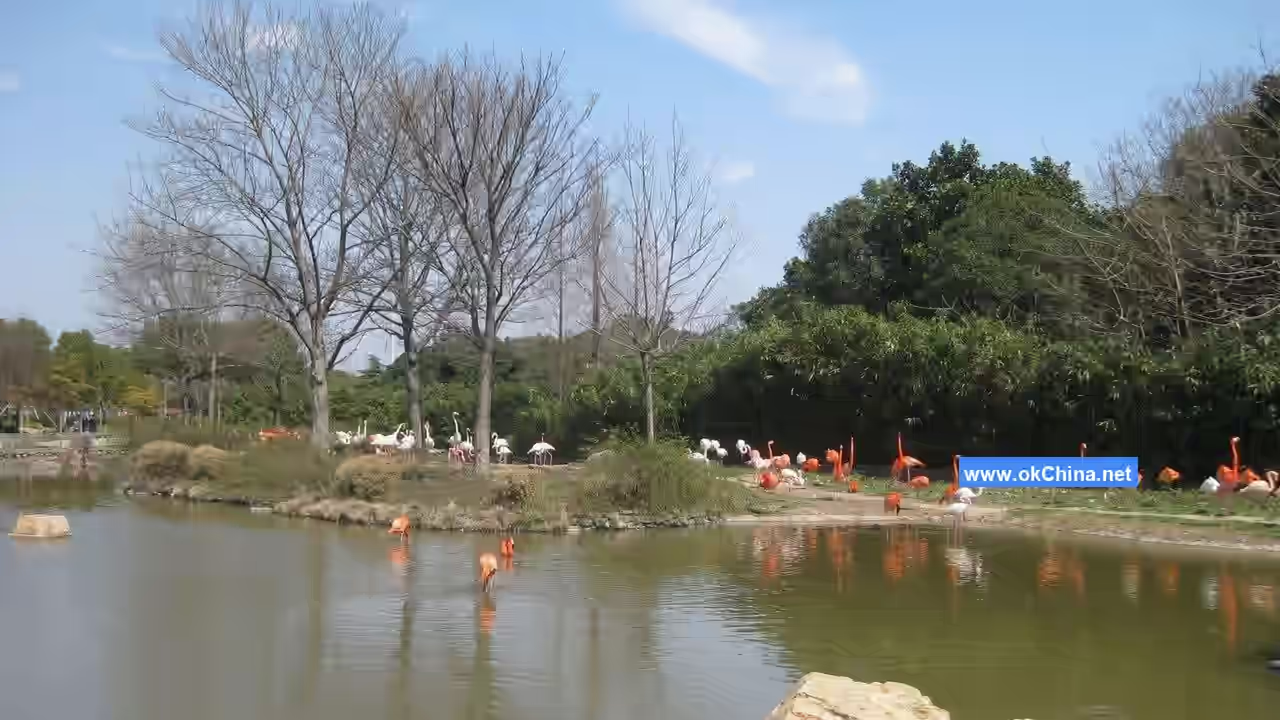
The Flamingo Exhibit is located directly opposite the main entrance of Shanghai Wildlife Park, where nearly 200 flamingos reside. Consequently, flamingos have become the park's "greeting birds." The Flamingo Exhibit undergoes maintenance closure every second Monday of the month from 9:00 to 11:00 (subject to on-site announcements).
2.27 Swan Lake
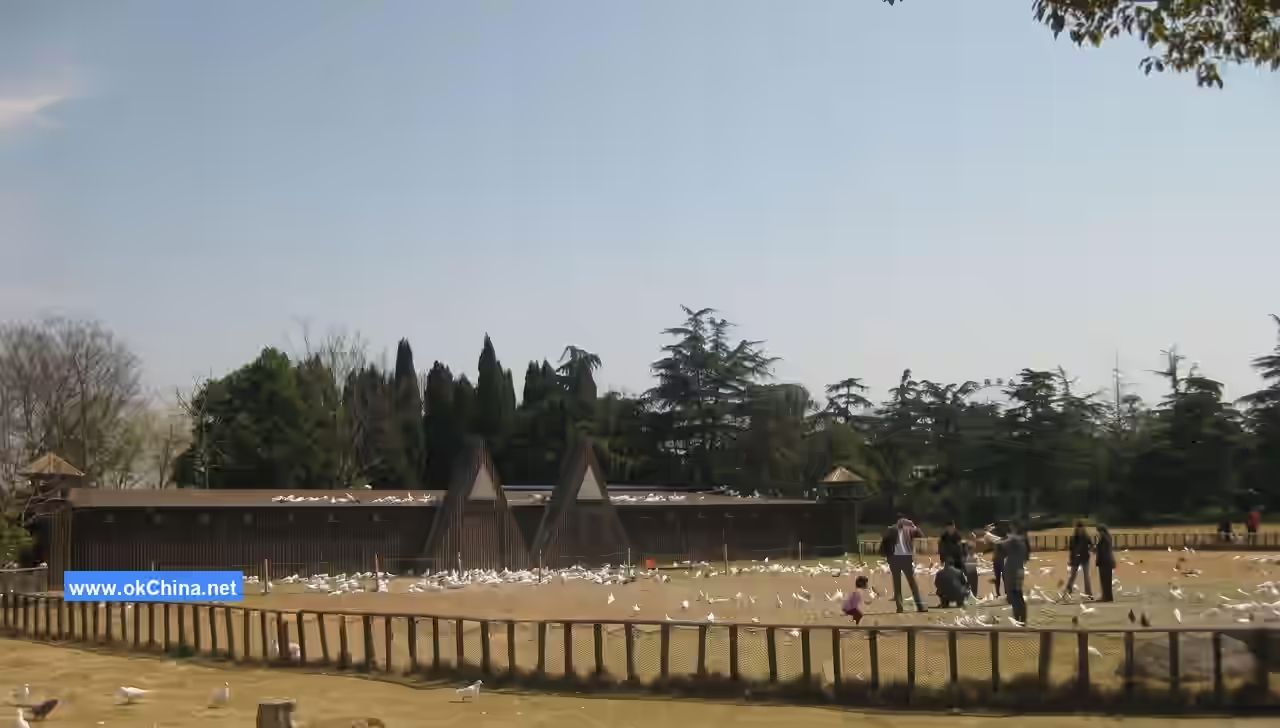
Swan Lake is home to over twenty species, totaling nearly a thousand waterfowl and wading birds, including various swans and pelicans. Swan Lake is most lively in the morning and evening, with its distinctive feature being the loud and clear calls.
2.28 Penguin Pavilion
The Penguin Pavilion at Shanghai Wildlife Park houses a group of adorable creatures from South America—Magellanic penguins—in a simulated ecological living environment.
2.29 Crane Wetland
Built along Swan Lake and surrounded by water, the Crane Wetland features a simulated natural ecological environment. It is home to species such as the Red-crowned Crane, White-naped Crane, White Stork, Demoiselle Crane, Common Crane, and Crowned Crane. Every evening, the cranes gather to dance and call in unison. The Crane Wetland also hosts daily animal科普讲解 (popular science talks) and animal feeding interaction programs.
2.30 Blue Crane Exhibit
The Blue Crane is the national bird of South Africa. Its feathers are bluish-gray overall. They typically build nests and lay eggs in spring, usually laying only two eggs per clutch. The Blue Crane Exhibit is located adjacent to areas housing Red Pandas, Squirrel Monkeys, Raccoons, and others.
2.31 Small Animal Park
Located in the southwest of Shanghai Wildlife Park, east of Golden Snub-nosed Monkey Island, south of the Chimpanzee Pavilion, and north of the Parrot Pavilion, the Small Animal Park covers an area of 20 acres. It features various animal display areas including the Meerkat Exhibit, Small Monkey Playground, Education Room, Animal Nursery Display Center, Feeding Area, Ring-tailed Lemur Island, and Capybara Exhibit. The Animal Park is one of the most distinctive and content-rich exhibits in the park and is also a favorite playground for children. Some venues within the Small Animal Park undergo maintenance closure every third Thursday of the month from 9:00 to 11:00 (subject to on-site announcements).
2.32 Tropical Bird Garden
Located within the Small Animal Park, the Tropical Bird Garden currently gathers colorful birds such as Lory Parrots, Toucans, and Scarlet Ibises. The Tropical Bird Garden undergoes maintenance closure every second Monday of the month from 9:00 to 11:00 (subject to on-site announcements at the scenic area).
2.33 Wonderful Asia Exhibit
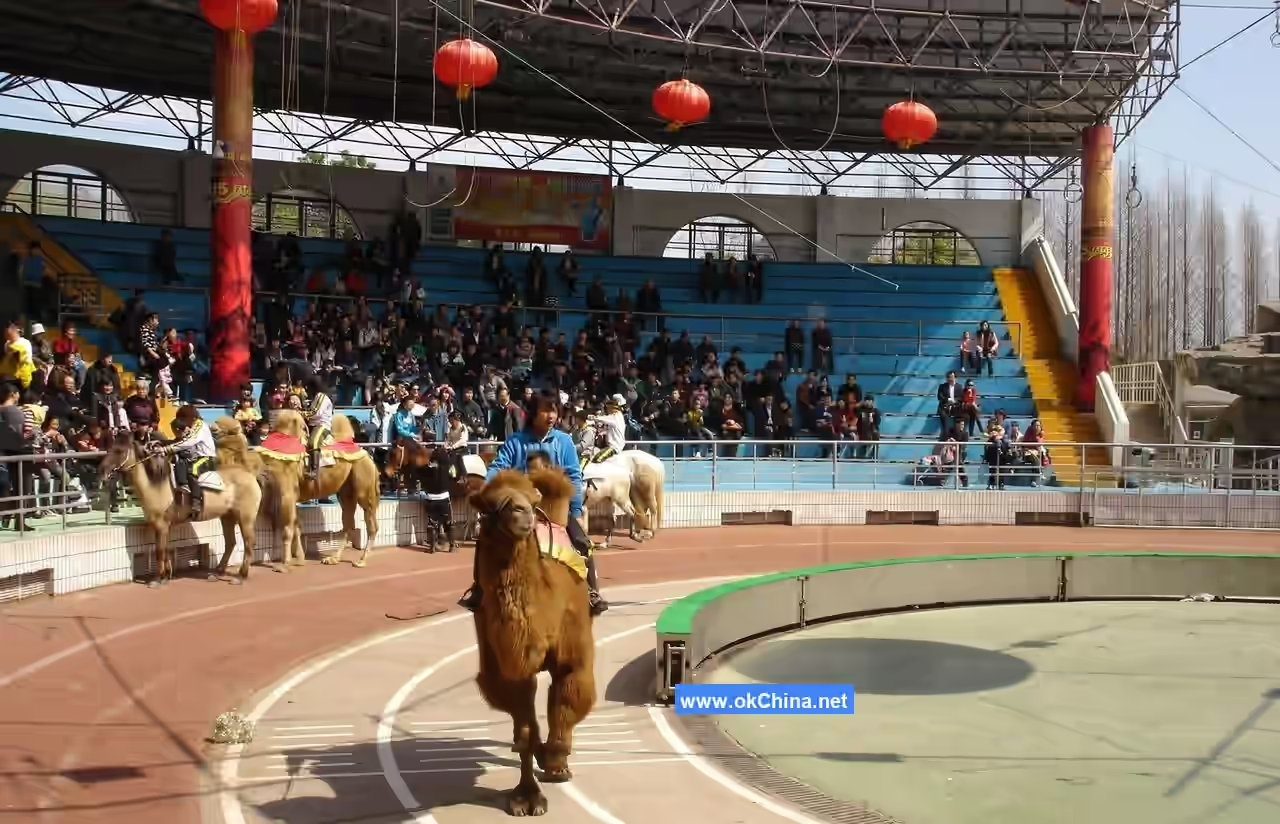
The Wonderful Asia Exhibit is the first attraction in the drive-through area. It features Asian herbivores such as the "ship of the desert" camel, yak, Mouflon sheep, Guangxi pony, and white fallow deer.
2.34 African Wilderness Exhibit
The African Wilderness Exhibit is part of the drive-through area. This exhibit模仿 (mimics) the ecological environment of the African savanna and is home to African herbivores such as Blue Wildebeest, Oryx, and White Rhinoceros.
2.35 Giraffe Zone
The Giraffe Zone is the giraffe display area within the drive-through section and is one of the two giraffe display areas at Shanghai Wildlife Park, the other being the Giraffe Elegant Garden in the walking area. The Giraffe Exhibit is presented in the form of a vast grassland with sparse woodlands. Visitors riding on buses can observe the daily life of giraffes and also enjoy scenes of giraffes coexisting harmoniously with other animals.
2.36 Cheetah Zone
The Cheetah Zone is part of the drive-through area. The ecological environment of the Cheetah Exhibit simulates African tropical and semi-desert grasslands, where a group of cheetahs from Africa roam freely, forming one of the larger cheetah groups in China.
2.37 African Lion Zone
The African Lion Zone is part of the drive-through area. The African lion is the现存 (existing) cat species with the largest average weight. Male lions have manes, while females do not. Within the pride, lionesses are responsible for hunting, while males patrol the territory and fight against外来 (intruding) males. The African Lion Zone behavioral display times are: Monday to Friday: 12:00, 13:00, 14:00; Weekends and holidays: 11:00, 12:00, 13:00, 14:00.
2.38 Bear Zone
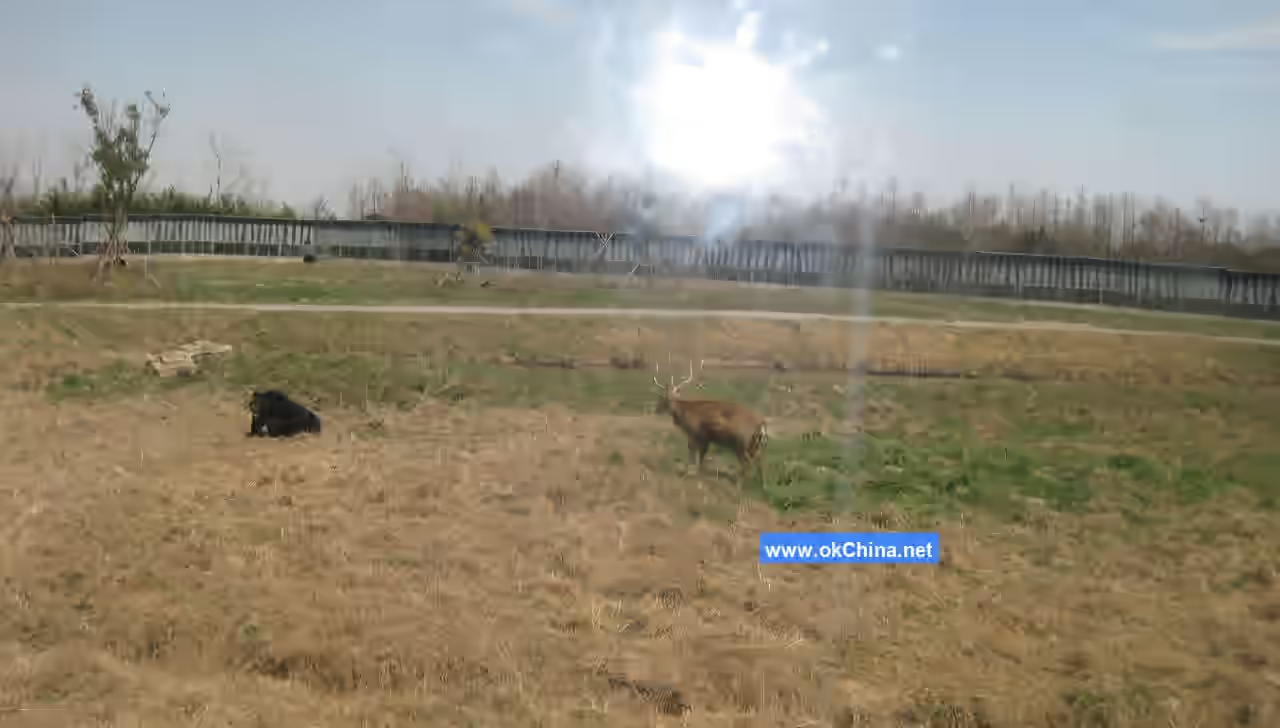
The Bear Zone is part of the drive-through area. The Bear Zone is constructed to simulate a natural ecological environment, featuring rocky mountains, ponds, and ditches; trees and shrubs are planted to provide more free activity space for brown bears and black bears.
2.39 Siberian Tiger Zone
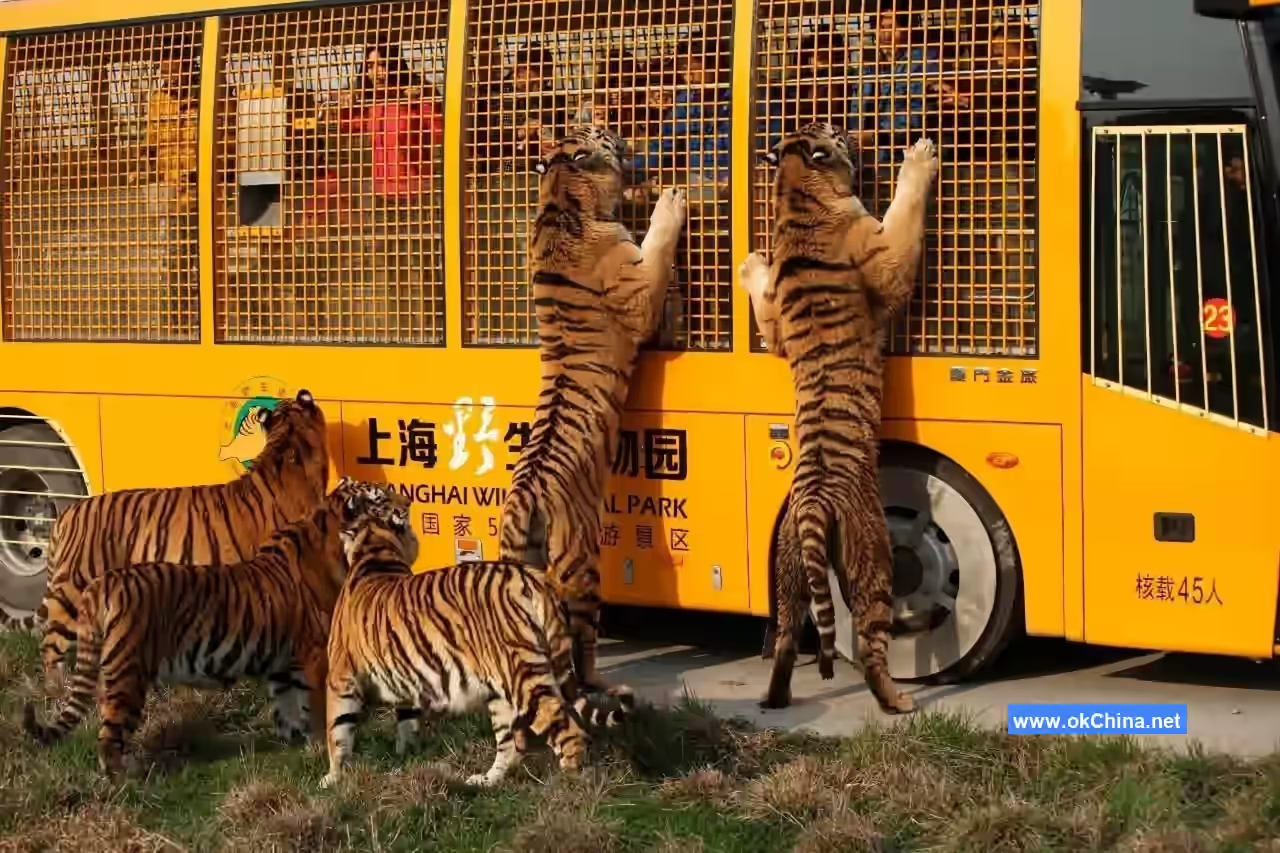
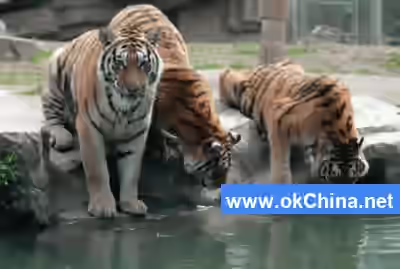
The Siberian Tiger Zone is part of the drive-through area. The Siberian tiger inhabits forests, shrubs, and grassy areas. It has sharp senses, is ferocious, swift in action, good at swimming, and adept at climbing trees. It is the现存 (existing) largest carnivorous cat species by weight, with males reaching up to about 2.8 meters in length and a maximum weight exceeding 350 kilograms. Its head is large and round, with several black horizontal stripes on the forehead, often connected in the middle, resembling the Chinese character for "king" (王), hence its美称 (beautiful title) "King of the Forest." The Siberian Tiger Zone behavioral display times are: Monday to Friday: 11:30, 12:30, 14:30; Weekends and holidays: 10:45, 11:30, 12:30, 14:30.
2.40 White Tiger Zone
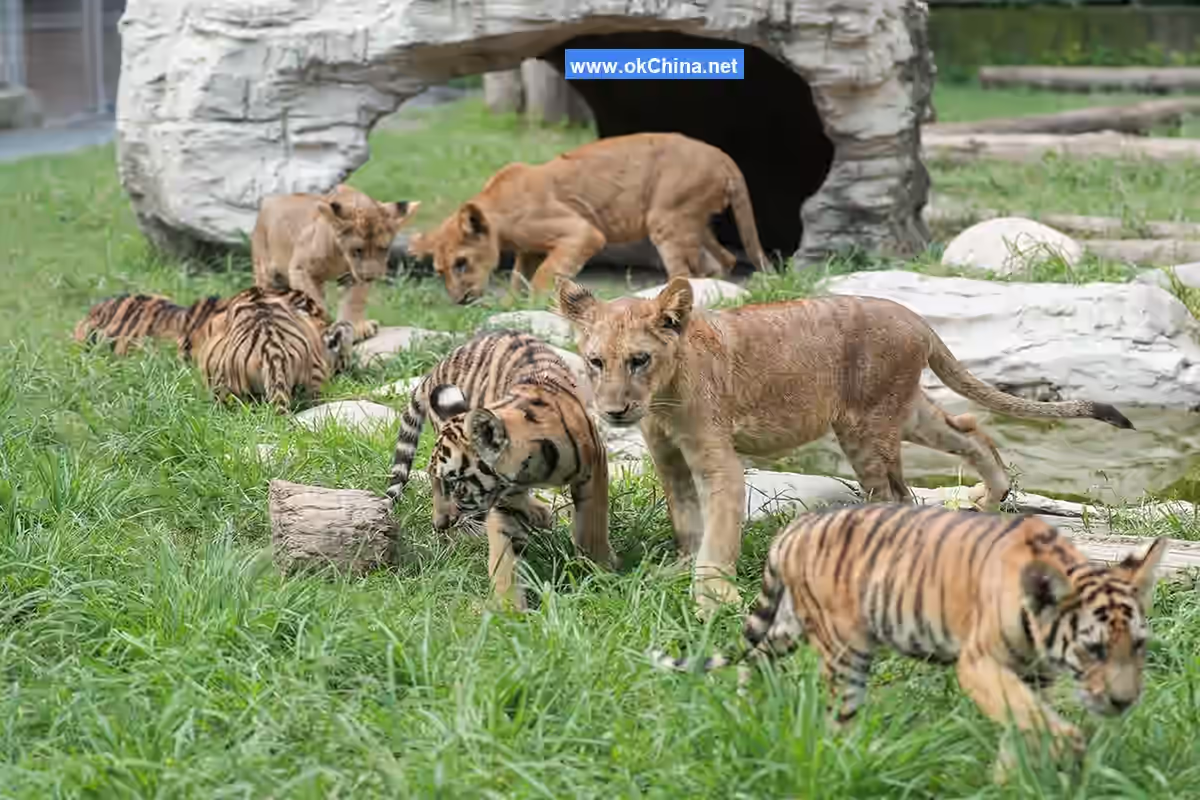
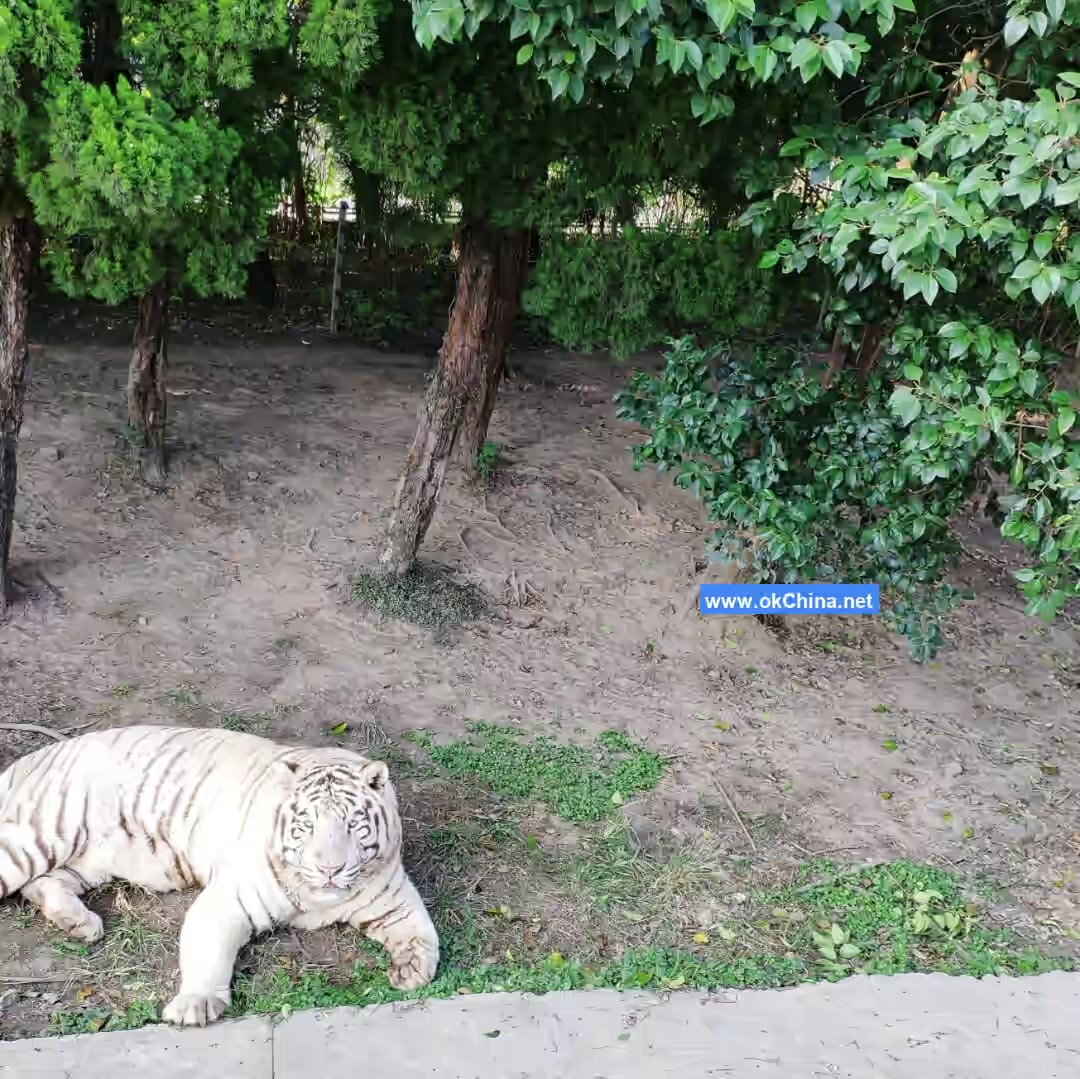
The White Tiger Territory Exhibit is located in the drive-through area, simulating the original生态 (ecological)生存环境 (living environment) of white tigers. White tigers are leucistic Bengal tigers. Their eyes are usually blue or amber, their noses are pink, their fur is creamy white, and their stripes can be black, gray, or chocolate-colored.
2.41 Wild Wolf Valley
The Wild Wolf Valley Exhibit is located in the drive-through area. It is an exhibit established to imitate the野外 (wild) living environment of wolf packs.
2.42 Sun Bear Kingdom
The Sun Bear Kingdom is part of the drive-through area. The Sun Bear Kingdom is home to the现存 (existing) smallest bear species, the "sun bear." Sun bears typically have a distinctive "U"-shaped marking on their chest. They are怕冷 (afraid of the cold) but do not hibernate, and are naturally curious and playful.## 3. Geographical Location
Shanghai Wild Animal Park is located at No. 178 Nanliu Highway, Pudong New District, Shanghai, approximately 35 kilometers from downtown Shanghai.
4. Value and Significance
Shanghai Wild Animal Park holds significant value in ecological conservation and science education. It is dedicated to the breeding, scientific research, and conservation of wild animals, while also conveying the importance of animal protection and ecological awareness through various exhibitions and activities. The park offers free science education sessions and specialized science lectures, allowing visitors, especially the younger generation, to learn about animal behaviors and ecosystems, thereby fostering environmental awareness.
In June 2004, Shanghai Wild Animal Park successfully bred a white tiger for the first time.
In October 2005, Shanghai Zoo successfully bred a green baboon for the first time.
In October 2010, Shanghai Wild Animal Park successfully bred a giant anteater for the first time, filling a gap in the domestic breeding record for this species.
In December 2012, Shanghai Wild Animal Park successfully bred a Baird's tapir for the first time.
In November 2022, Shanghai Wild Animal Park successfully hand-raised a chimpanzee infant for the first time.
Comments
Post a Comment