Shajiabang-Yushan Shanghu Tourist Area in Suzhou
1. Introduction
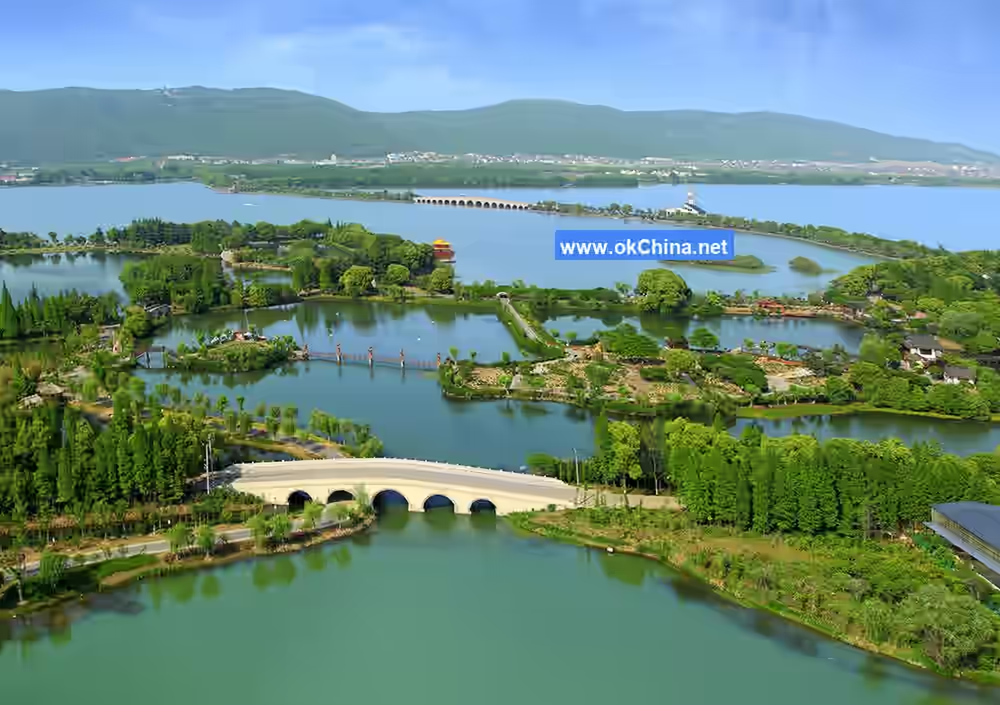
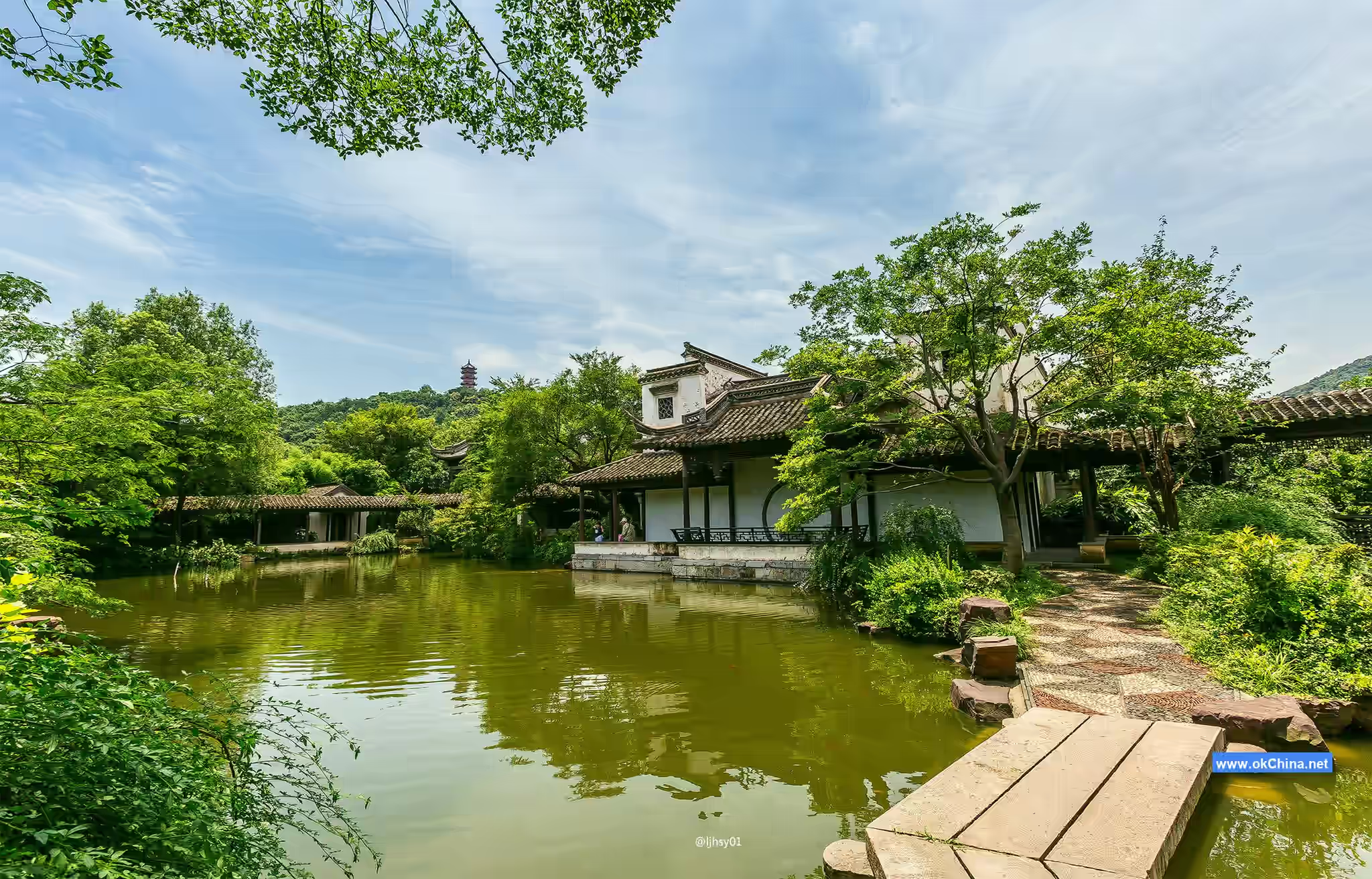
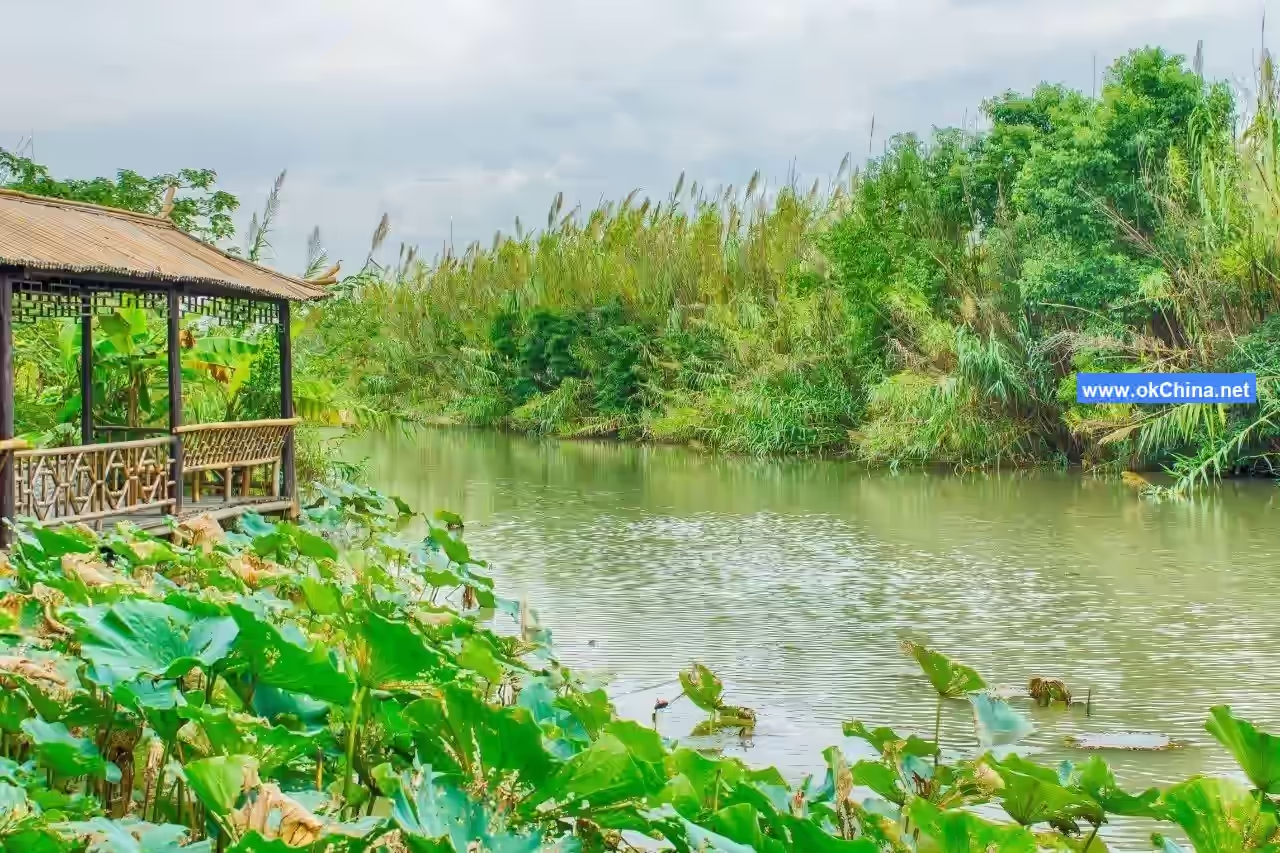
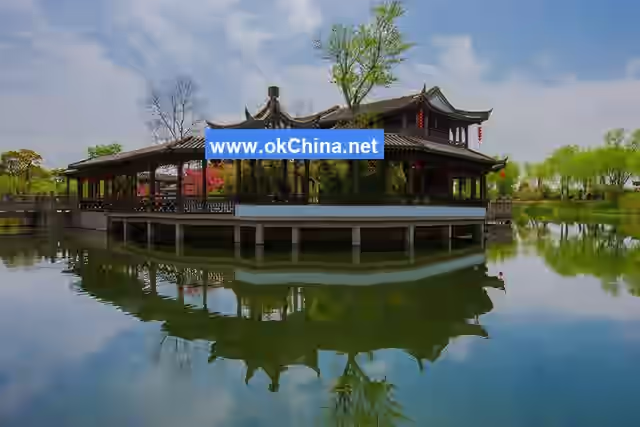
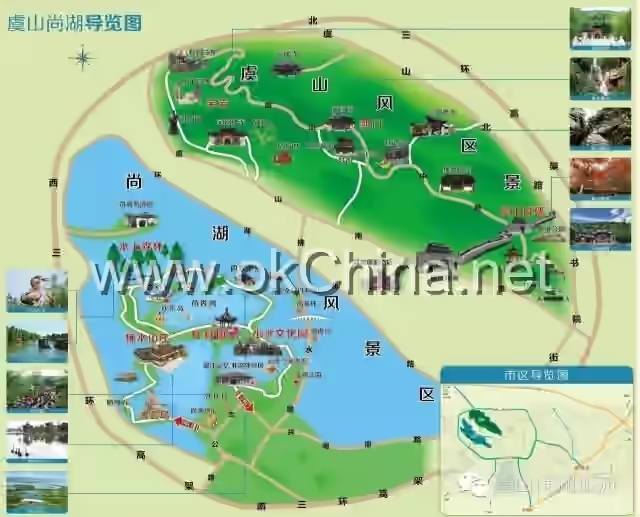
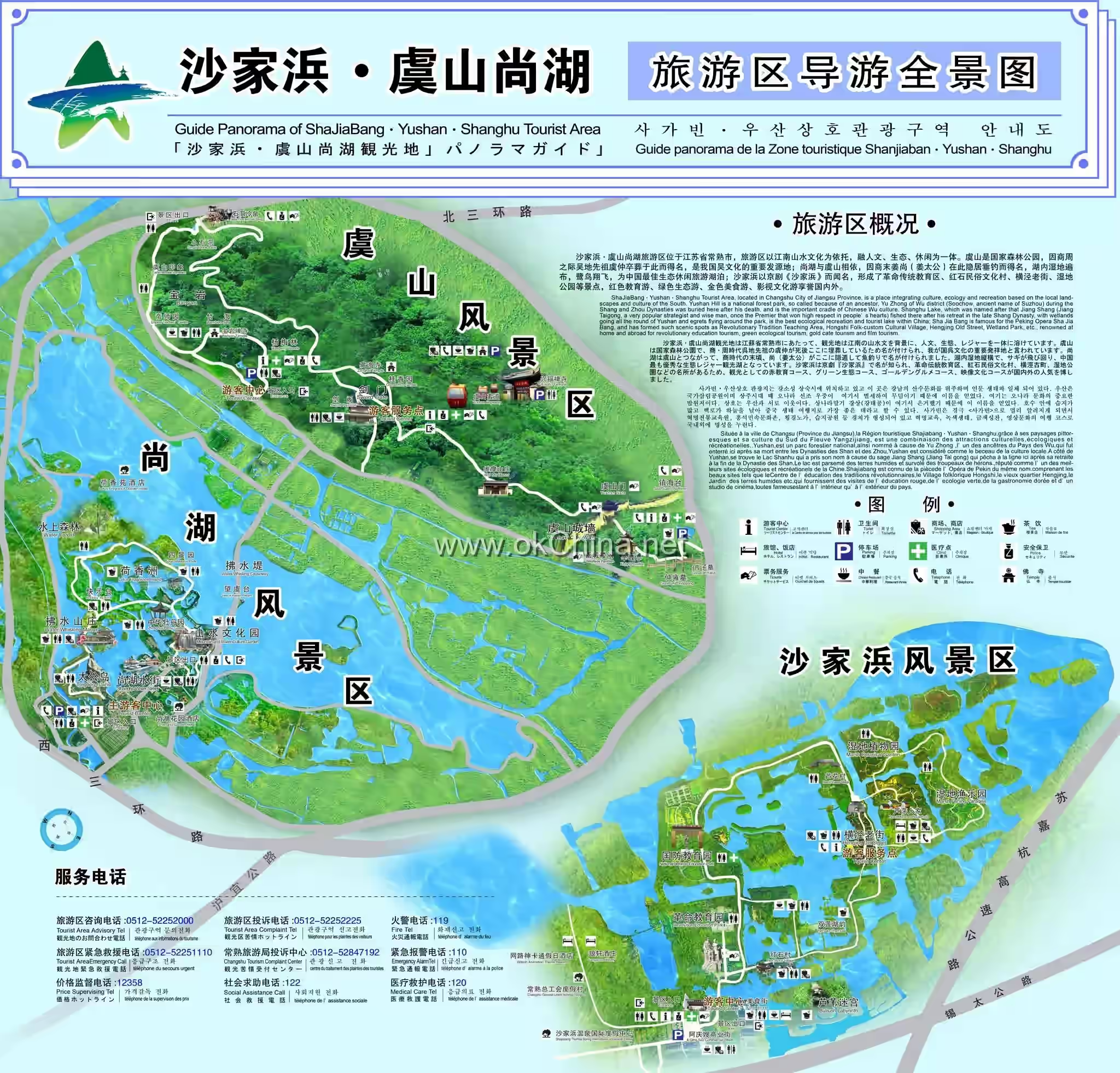
The Shajiabang-Yushan Shanghu Tourist Area is located within Changshu City, Suzhou, Jiangsu Province. The area is based on the culture of Jiangnan (south of the Yangtze River) landscapes, integrating cultural, ecological, and leisure elements. Yushan is a National Forest Park, named after Yu Zhong, an ancestor of the Wu region during the Shang and Zhou dynasties who was buried here. It is an important birthplace of Wu culture in China. Adjacent to Yushan is Shanghu Lake, named after Jiang Shang (Jiang Taigong) who lived in seclusion and fished here towards the end of the Shang Dynasty. The lake is dotted with wetlands and frequented by egrets, recognized as one of China's best ecological leisure tourism lakes. Shajiabang gained fame through the Peking opera Shajiabang, forming attractions such as the Revolutionary Tradition Education Zone, Hongshi Folk Culture Village, Hengjing Old Street, and Wetland Park. Its red education tours, green ecological tours, gourmet food tours, and film & TV culture tours are renowned both domestically and internationally.
On April 11, 2013, the National Tourism Attractions Quality Rating Committee officially approved the Shajiabang-Yushan Shanghu Tourist Area as a National AAAAA Tourist Attraction.
2. Geographical Environment
2.1 Shajiabang Tourism Resort
The Shajiabang Tourism Resort is situated by the beautiful and bright Yangcheng Lake, with convenient transportation. It is over 10 kilometers north of downtown Changshu, 40-50 kilometers south to the Suzhou and Wuxi interchanges of the Shanghai-Nanjing Expressway, and 85 kilometers east to Shanghai via the Changkun Line.
3. Main Attractions
3.1 Shajiabang
3.1.1 Patriotic Education Zone
- Revolutionary Education Zone
The Revolutionary Education Zone covers approximately 1 million square meters and consists of the Revolutionary History Memorial Hall, a screen wall, a stele pavilion, and a Tribute Square. It epitomizes the deep bond between the military and civilians in Shajiabang and their united resistance against Japanese aggression during the War of Resistance. The glorious history and revolutionary spirit it showcases profoundly resonate with generation after generation. Today, it has become a demonstration base for patriotic education.
- Shajiabang Revolutionary History Memorial Hall
The Revolutionary Education Zone covers approximately 1 million square meters and consists of the Revolutionary History Memorial Hall, a screen wall, a stele pavilion, and a Tribute Square. It epitomizes the deep bond between the military and civilians in Shajiabang and their united resistance against Japanese aggression during the War of Resistance. The glorious history and revolutionary spirit it showcases profoundly resonate with generation after generation. Today, it has become a demonstration base for patriotic education.
- Tribute Square
The Tribute Square is the main site of the Revolutionary Tradition Education Zone, with a total area of 13,300 square meters. At the center of the square stands the main sculpture group "The Deep Bond Between the Military and Civilians," created by the renowned sculptor Ye Yushan, who also sculpted the seated statue of Chairman Mao. The "Shajiabang" stele pavilion bears an inscription personally written by Vice Chairman Ye Fei. The other side of the stele records the historical achievements of the Changshu Party organization leading the people in the anti-Japanese struggle. The eight large characters "Reed Marsh Spark, Deep Bond Between Fish and Water" embody the theme of the Shajiabang spirit. Eighteen abstract pillar sculptures of various forms symbolize the 18 wounded soldiers of the New Fourth Army from the Peking opera Shajiabang, who remained tenacious and unyielding despite severe injuries, embodying the revolutionary spirit of not bending under immense pressure.
- Integrity Education Hall
The Changshu Shajiabang Integrity Education Hall consists of sections such as the Red Classics Zone, Interactive Experience Zone, Inheritance & Development Zone, and Enlightenment & Sharing Zone. Through various historical photos, sculptures, paintings, physical exhibits, and modern techniques, it comprehensively displays the diligent and honest historical records of revolutionary predecessors, allowing visitors to understand the essence of integrity during their visit, advocate for clean self-cultivation, and promote a social atmosphere of uprightness.
- Garden of Loyal Martyrs
The main sculpture is named "Loyal Souls," a burning torch. This is a cemetery holding the ashes of 36 wounded soldiers. Among them rests Xia Guang, the prototype of Guo Jianguang, the protagonist in Shajiabang. These New Fourth Army officers and soldiers held a special affection for this land where they once fought. As Elder Xia Guang told his family, "After I pass away, please bury my ashes in Shajiabang, so I may accompany my departed comrades and bathe together in the morning glow over Yangcheng Lake." The torch sculpture symbolizes the unceasing spread of the revolutionary spark, passed down through generations.
3.1.2 Folk Culture Exhibition Zone
- Hongshi Folk Culture Village
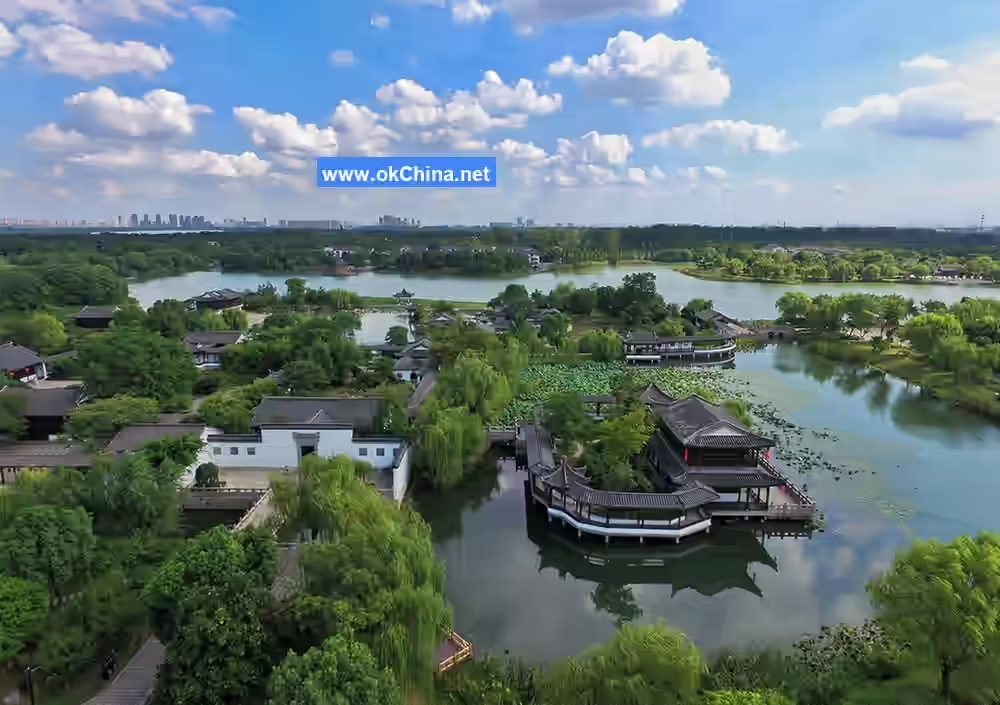
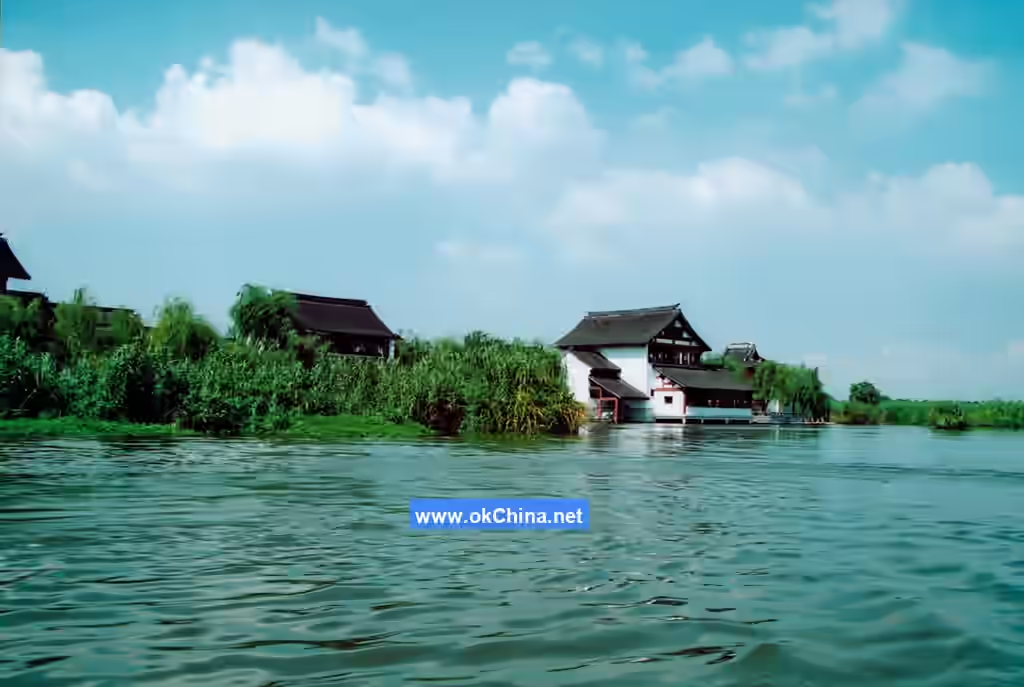
The houses in Hongshi Village are built along the water, with stone-paved docks at their doorsteps for mooring boats, typical of Jiangnan water towns where every household faces the water and has access to boats. The village features a Wenchang Pavilion and a Tudimiao (Earth God Temple), along with folk culture displays such as the Jiangnan Wedding Customs Hall and the Jiangnan Boat Boxing Hall that interest tourists. One can also enjoy tea and opera at the Chunlai Teahouse.
- Wenchang Pavilion
Wenchang Pavilions are typically places dedicated to Wenchang, the Deity of Literature (Wenquxing). In ancient times, scholars would come to pray for success in imperial examinations and bringing honor to their ancestors, hoping for the deity's blessing. The plaque bears the calligraphy of Weng Tonghe, a Qing Dynasty zhuangyuan (top scholar in imperial examinations) from Changshu and tutor to two emperors. This Wenchang Pavilion was originally located in Shebang Village, Shajiabang, and is the birthplace of the first Chinese Communist Party branch in Shajiabang. In April 1928, Communist Party member Shi Chucai held a meeting here to establish the Party branch and organize peasants in rent resistance struggles.
- Tudimiao (Earth God Temple)
On November 6, 1939, the recovered wounded soldiers who had been recuperating in the reed marshes held a meeting in this Tuditang (Earth God Hall) and decided to establish the "Jiangkang Eastern Route Command," abbreviated as "New Jiangkang." Xia Guang served as commander, and Yang Haolu as deputy commander and director of the Political Department. We rebuilt the Tudimiao and Wenchang Pavilion here to commemorate the early revolutionary activities in Shajiabang.
- Jiangnan Boat Boxing Hall
Boat boxing is a unique folk leisure culture in the Jiangnan region. It is both a physical activity for fitness and a living fossil of Suzhou's folk culture, recognized as an important intangible cultural heritage of China. The Shajiabang Jiangnan Boat Boxing Exhibition Hall combines graphic materials with physical exhibits, using audiovisual technology to vividly present knowledge and anecdotes of boat boxing. The hall displays boat boxing equipment such as knives, spears, swords, halberds, stone locks, and stone poles, photographic records of boat boxing activities held over the years in Shajiabang, and various examples unique to Shajiabang's "integration of martial arts and medicine," providing an intuitive and three-dimensional understanding of Shajiabang's boat boxing culture.
- Water Town Wedding Customs Hall
The wedding and childbirth customs of Shajiabang's water towns are actually a form of local culture, belonging to the Wu culture and have been listed as an intangible cultural heritage of Jiangsu Province. The Wedding Customs Hall mainly focuses on the traditional wedding customs of water towns, showcasing the procedures and ceremonial scenes of traditional weddings. The Childbirth Hall displays the characteristic childbirth process of water towns, vividly introducing knowledge and customs related to pre-pregnancy, pregnancy, and postpartum periods in water towns.
3.1.3 Film & TV Culture Zone
- Hengjing Old Street
The courtyards along Hengjing Old Street are built leaning against the water. The dye workshop, cloth shop, stone arch bridge, and waterside docks exude the unique historical charm of the ancient town. Walking on the old street, one can smell the sweet osmanthus and hear beautiful folk songs. Sitting in a teahouse, the seven-star stove burns brightly, the tea is strong, and the sound of pingtan (storytelling and ballad singing) murmurs.
- Chunlai Teahouse
The Chunlai Teahouse became famous far and wide due to the Peking opera Shajiabang. It served as an underground liaison station for the New Fourth Army during the War of Resistance. The teahouse, where people chatted and discussed business, provided excellent cover, making it the main activity area and meeting place for the Jiangkang troops. Today, it has become a must-visit spot for people to revisit red memories and experience classic charm. "Build the seven-star stove, boil water from three rivers with a copper kettle; set out the Eight Immortals table, receive guests from all directions." Brewing a pot of the famous Yushan green tea from Changshu, listening to opera while sipping tea, and revisiting history offers a unique pleasure.
- Diao Family Compound
Located at the most prominent spot on the old street is a classical "mansion" with distinct Jiangnan characteristics, grand and imposing. This is the famous Diao Family Compound, the location of the "Loyal and Righteous National Salvation Army Headquarters" in Shajiabang. Although a replica, it strictly reproduces the mansion structure of the 1930s and 1940s and the unique architectural style of the Jiangnan region. Its layout is rigorous, design exquisite, and craftsmanship refined, showcasing the infinite charm of traditional residential architecture, worthy of careful appreciation. Multiple film and TV dramas choose this location as an important filming scene every year, making it a must-see for visitors exploring the old street.
- Jiangnan Farming Customs Hall
The Jiangnan Farming Customs Hall collects and displays production tools and daily utensils used by rural households in Jiangnan water towns. Combined with modern technological means, it authentically reflects the local customs and practices of the water towns. All these collections were accumulated over more than 20 years by Ms. Shen Yueying from Changshu. Various fishing nets and crab traps; tools for plowing, sowing, hoeing, harvesting, threshing, and winnowing; a man wearing a mask fluffing cotton, a girl in blue calico concentrating on spinning and weaving; scenes of croaking frogs, singing birds, crowing roosters, and barking dogs involuntarily pull our memories back to that era, intoxicating us with that simple beauty belonging only to places beyond the city.
3.1.4 Wetland Science Education Zone
- Wetland Science Garden
Nature is the best teacher. The Science Garden features wetland plants such as metasequoia, camphor trees, reeds, calamus, fox nuts, arrowhead, floating heart, and hornwort, creating wetland plant communities characteristic of Jiangnan water towns. Combined with a comprehensive wetland science education system, it guides visitors to discover and learn about various organisms in nature, integrating education with entertainment and travel.
-
Wetland Science MuseumThe Wetland Science Museum is located within the Wetland Science Park, covering an area of 1,070 square meters. It is divided into six exhibition zones: Wetland Impressions, Wetland Guardians, Crossing Wetlands, Wetland Creatures, Wetland Protection, and Wetland Boutique Garden. The museum introduces visitors to scientific knowledge about wetland concepts, the relationship between wetlands and human civilization, and the role of reeds as pollution fighters. Additionally, through specimens and models of wetland birds, fish, and insects, it showcases various wetland organisms commonly found in Shajiabang. Furthermore, topics such as the hazards of invasive species, the dangers of human overexploitation of wetland resources, and environmental protection games are presented to promote ecological awareness. It serves as an effective venue for primary and secondary school students to learn about science.
-
Shajiabang Wetland Nature School
The Shajiabang Wetland Nature School is an environmental education platform established by the Shajiabang National Wetland Park to fully leverage the educational functions of the national wetland park and the national science education base. It is also one of the science education bases in Suzhou. Based on the wetland resources of Shajiabang, the school conducts wetland science education activities, with the "Wetland Adventure Family Tour" as its core curriculum, through outreach programs and external collaborations. Currently, the courses offered include wetland bird watching, themed activities on flowering plants in wetlands, themed activities on the four major families of aquatic plants, leaf vein bookmark making, handmade rose making, and seed wind chime activities. A series of exciting courses are also being developed.
3.1.5 Special Performance Projects
-
Reed Marsh Flames
-
Outsmarting Commander Hu
-
Peking Opera "Shajiabang"
3.1.6 Folk and Intangible Cultural Heritage Projects
- Shiwan Mountain Songs
Shiwan Mountain Songs are regarded as the main prototype of Wu songs. Originally, they were a form of ecological communication among the people of Shajiabang, who lived by the river and expressed their emotions by singing across the banks. Due to their beautiful melodies, they gradually developed into a unique mountain song system in the Shajiabang area.
- Jiangnan Boat Boxing
Jiangnan Boat Boxing combines the unique water town region of Jiangnan with martial arts, bringing martial arts performances onto boat decks and integrating performance with fitness. Shajiabang is one of the three major birthplaces of Jiangnan Boat Boxing. The Shajiabang Scenic Area organizes boat boxing performances annually, inviting teams from the Yangtze River Delta region.
-
Water Town Wedding Customs
-
Reed Marsh Fishing Fun
Visitors can experience traditional fishing methods rarely seen in modern urban life, such as using fishing nets to catch crabs, "daolongshao" (a traditional fishing method), and gill nets, to catch fish and crabs from the lake. In spring, there is a special activity called "Netting Wealth," where visitors can try their hand at catching the local specialty, the "wealth fish," through netting or fishing, symbolizing abundant luck and prosperity.
3.1.7 Water Tour Projects
- Hand-Rowed Boats
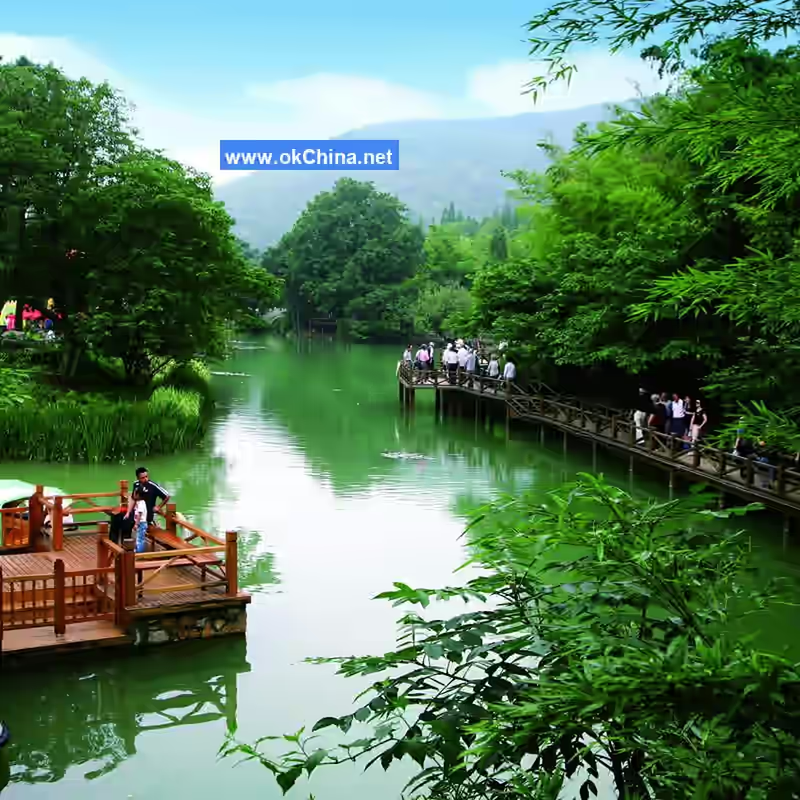
In Shajiabang, rivers and lakes are interconnected, and reeds are densely distributed. The water and reeds form a vast, winding, and fragrant aquatic maze known as the "Reed Maze." Here, you can often see boatwomen and boatmen dressed in blue calico clothing, rowing hand-rowed boats as they meander through the reed maze, passing under wooden bridges and navigating narrow waterways. During the season when reed flowers flutter, it feels like strolling through a flowing ink painting.
-
Bamboo Rafts
-
Painted Pleasure Boats
-
Reed Marsh Sunset Serenade
This activity combines boating to watch the sunset with tea and snacks. Before the sun sets, gather a few friends, board a rowing boat, observe birds, enjoy the sunset, listen to boat songs, and savor tea and snacks. The 90-minute route is non-repetitive, allowing you to fully appreciate the beauty of the reed marshes.
3.2 Yu Mountain
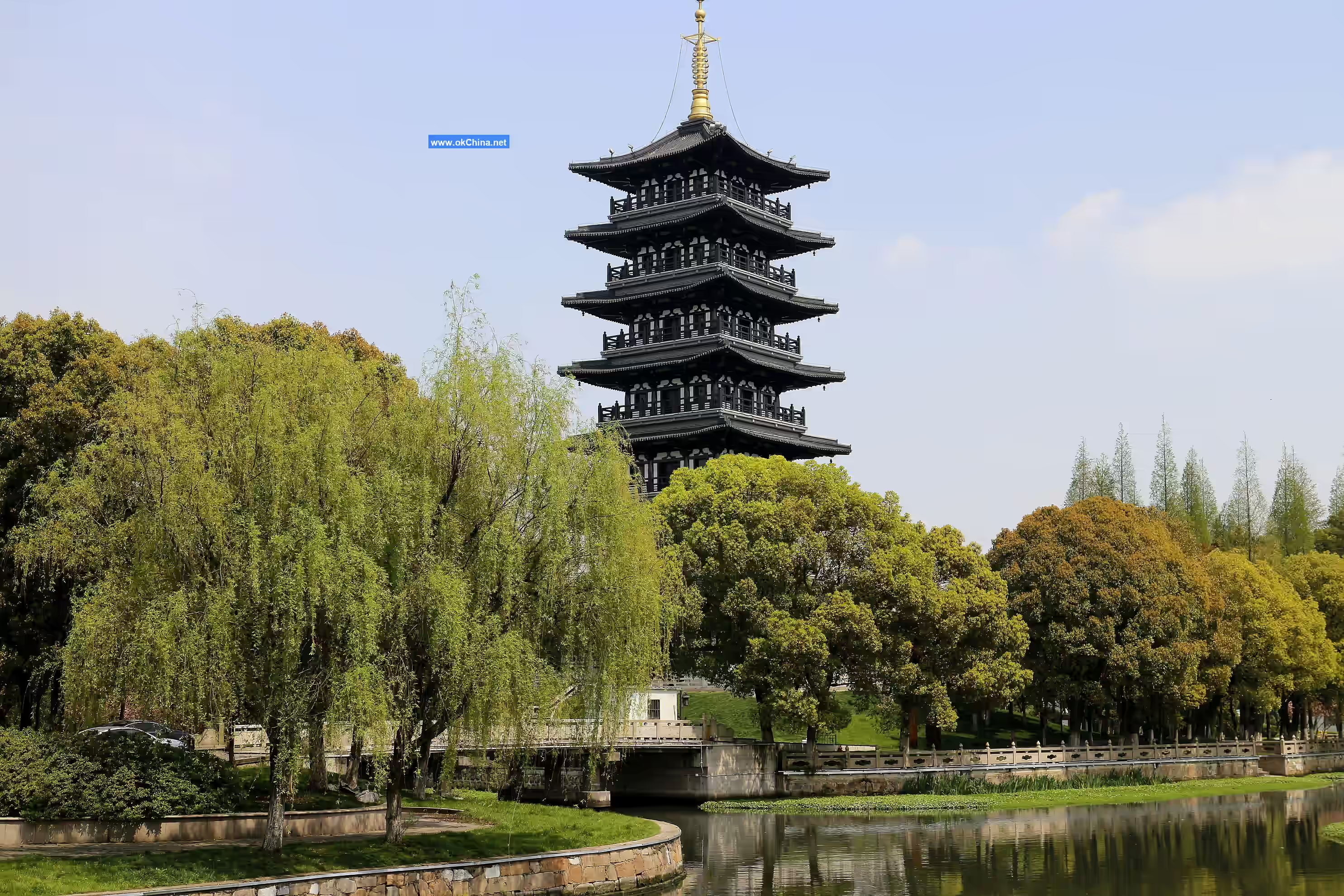
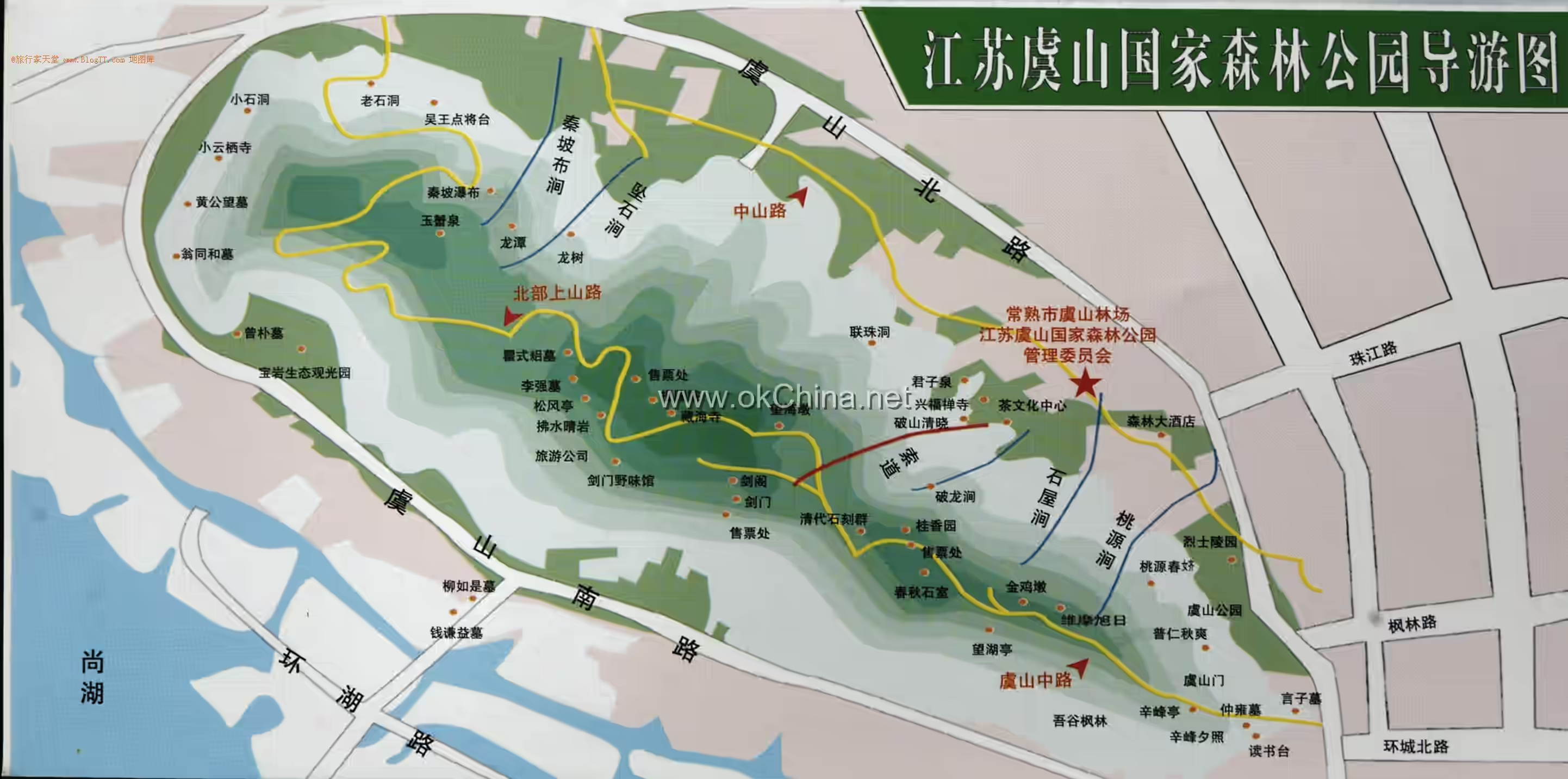
Yu Mountain, anciently known as Wumu Mountain and Haiyu Mountain, is also called "Lying Ox Mountain" due to its shape resembling a reclining ox. It was later renamed Yu Mountain after Zhongyong (also known as Yu Zhong), the second son of King Tai of the Zhou Dynasty, who, along with his elder brother Taibo, abdicated the throne and moved south. After his death, he was buried here. Yu Mountain features rolling peaks with a majestic presence, with its highest point reaching an altitude of 261 meters. The southern slope is short and steep, known for its towering strange rocks, with attractions such as "Fushui Qingyan" and "Jianmen Qishi" concentrated here. The northern slope is long and gentle, dotted with deep streams and ravines, and features attractions such as Weimo Villa, Jian Pavilion, Canghai Temple, Baoguo Temple, Baoyan Temple, and Laoshi Cave, as well as numerous tombs of famous figures scattered across the mountain. The ten-mile-long Yu Mountain, rich in Wu cultural historical relics and natural landscapes of mountains and water, winds its way into the city, blending with the ancient city of Changshu to form the unique landscape of a Jiangnan water town and mountain city. It was designated as Jiangsu Yu Mountain National Forest Park in 1987.
3.2.1 Jianmen Scenic Area
Located at the summit of Jin Peak on Yu Mountain, at an altitude of 261 meters, the Jianmen Scenic Area is renowned for its stone scenery. Legend has it that King Fuchai of Wu tested his sword here, splitting a rock into two stone gates with a single strike. The inscriptions "Yanlan Gaokuang" by Emperor Kangxi of the Qing Dynasty and the imperial seal are engraved on the giant Jianmen stone. Below Jianmen, there is a group of stone carvings from the Ming and Qing dynasties. The scenic area also includes attractions such as Guixiang Garden, Fushui Qingyan, the Tomb of Qu Shisi, Songfeng Pavilion, Canghai Temple, Baoguo Temple, and Longevity Bridge. Climbing to Jianmen offers a broad view with refreshing mountain breezes, where lakes, crisscrossing fields, farmhouses, and leisurely boats are all visible.
3.2.2 Baoyan Scenic Area
Located at Baoyan Bay on the southern foothills of Yu Mountain, the Baoyan Scenic Area is nestled against the mountain and faces the lake, offering fresh air and serving as a natural oxygen bar. The thousand-year-old Baoyan Temple within the area is surrounded by bamboo forests and lush bayberry trees. The folk tradition of "viewing bayberries and burning incense" has been passed down for over 900 years. The scenic area also features attractions such as Xiaoyunqi Temple, Shidong Lengquan, Liancheng Stone Wall, Imperial Tutor Garden, Yu Mountain Impressions, and the Ecological Science Museum, showcasing both old and new sites that highlight the cultural and natural resources of Yu Mountain.
3.2.3 Yu Mountain City Wall Scenic Area
Located on the eastern slope of Yu Mountain, which partially extends into the city, the Yu Mountain City Wall was first built in the fourth year of the Taikang era of the Western Jin Dynasty (283 AD). It underwent repairs and reconstructions throughout history. In the sixteenth year of the Zhizheng era of the Yuan Dynasty (1356 AD), Zhang Shicheng reinforced the earthen wall into a brick wall, built along the mountain, giving it an initial scale. In the thirty-second year of the Jiajing era of the Ming Dynasty (1553 AD), County Magistrate Wang Fu raised funds to rebuild the wall to resist Japanese pirate invasions. The wall stands 24 feet high with a base width of 8 feet, winding into the city in a magnificent and grand manner, earning it the nickname "Little Great Wall of Jiangnan." The scenic area consists of attractions such as Zhenhai Platform, Yu Mountain Gate Tower, West City Tower Pavilion, and Fucheng Gate Tower, stretching about 1,400 meters in total. Among them, the "West City Tower Pavilion" landscape, formed by the Dizang Hall, Wuyue Tower, and Dashan Study built along the mountain path beside the ancient west gate, was listed as one of the "Eighteen Scenes of Yu Mountain" during the Ming and Qing dynasties. Meanwhile, Xinfeng Pavilion and Yu Mountain Gate Tower together form "Xinfeng City Tower," one of the new eighteen scenes of Yu Mountain. Climbing the tower offers a panoramic view of green mountains, clear waters, and ancient city lanes, providing a delightful experience.
3.3 Shanghu Scenic Area
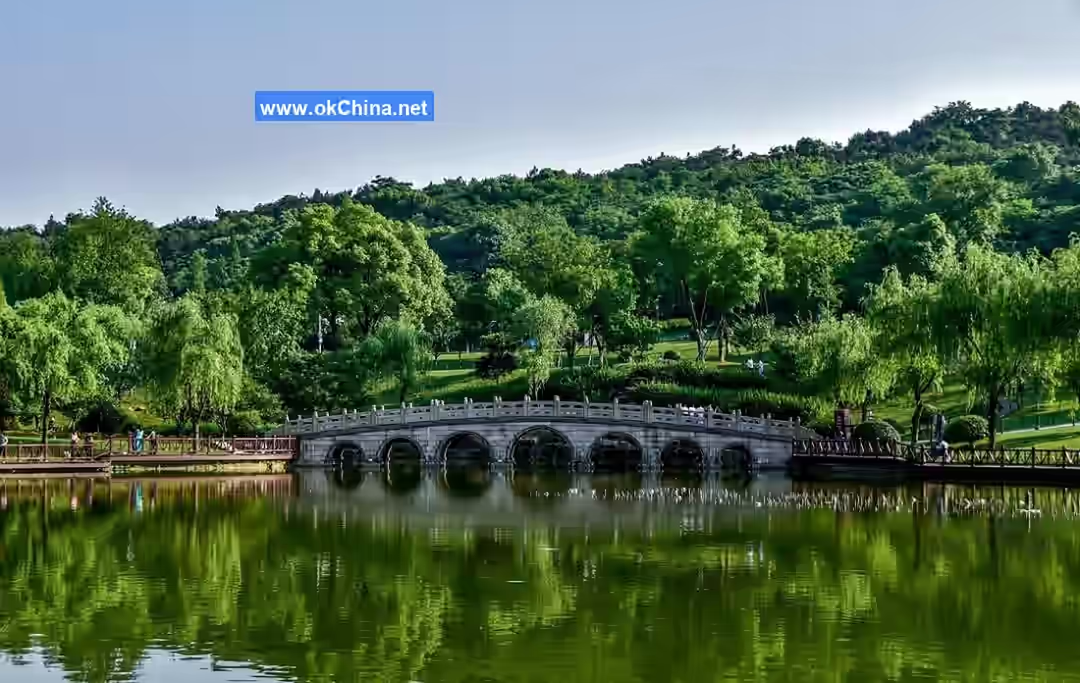
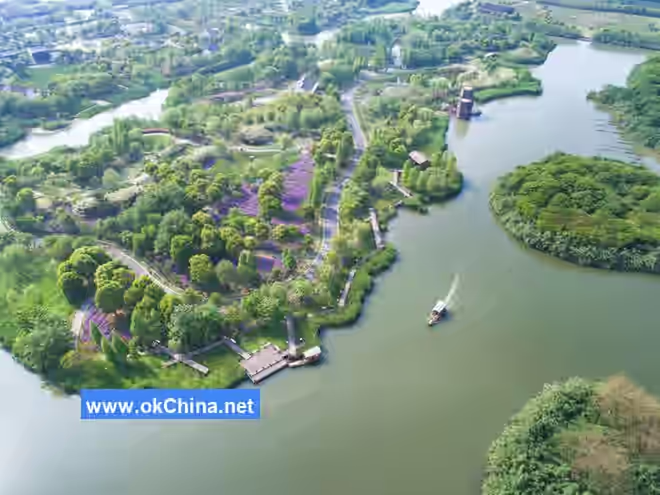
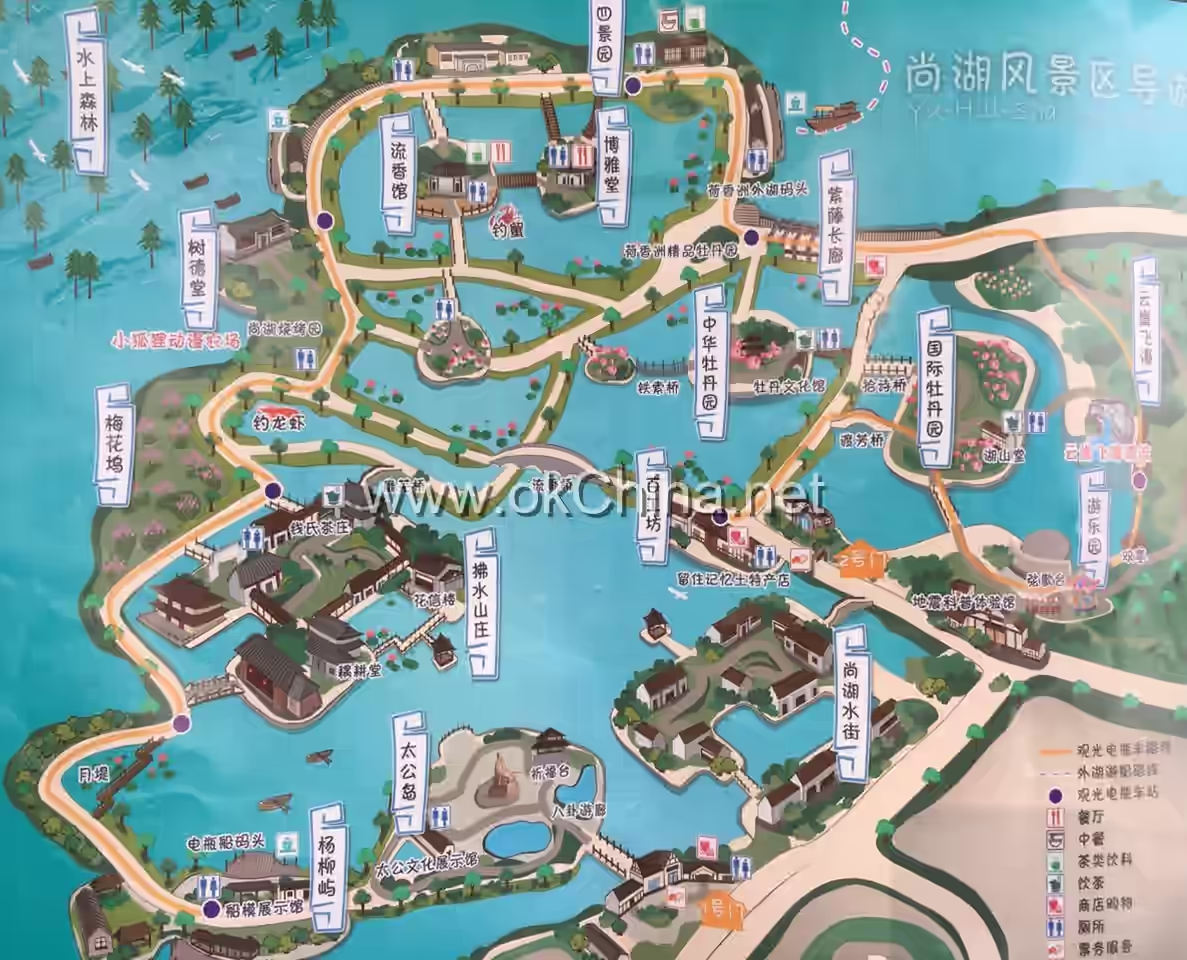
Shanghu is named after Jiang Shang (Jiang Ziya), who lived in seclusion and fished here during the late Shang Dynasty. It is a national AAAA-level tourist attraction, one of China's first national urban wetland parks, and one of China's top ten charming lakes for best ecological leisure. The main water surface covers 800 hectares, with misty waves and clear water reflecting the ten-mile-long Yu Mountain, forming a natural landscape painting. Wetlands are scattered throughout the lake, with seven islets such as Hexiangzhou, Fishing Islet, Mingqinzhou, and Peach Blossom Island embedded within, creating a unique landscape of lakes within islands and islands within lakes. The islands are lush with trees, where gulls and egrets soar, and the scenery is delightful. The area features cultural attractions such as Taigong Island, Fushui Villa, Ship Model Museum, and Jiangnan Peony Museum, as well as recreational projects like Happy Island and water boating. The scenic area hosts rich activities throughout the seasons, with the spring peony flower festival becoming one of the most influential tourism festivals in the Jiangnan region.
3.3.1 Taigong Island
Taigong Island at the entrance of the scenic area highlights Jiang Shang culture. Through attractions such as the "Taigong Culture Museum," Prayer Platform, Ziya Pavilion, and Taigong Fishing Platform, visitors can learn about the historical connection between Jiang Shang and Shanghu and experience the unique charm of Jiang Shang culture.
3.3.2 Fushui Villa
Fushui Villa was the private retreat of Qian Qianyi, a prominent literary figure in the southeast during the late Ming and early Qing dynasties. It witnessed the legendary love story between Qian Qianyi and the talented Liu Rushi. The eight scenes of Fushui, including Ougeng Hall, Huaxin Tower, Yan Tower, and Qiushui Pavilion, are elegantly arranged,古朴典雅, and full of charm,堪称明清私家园林建筑中的精品.
3.3.3 Hexiangzhou
Hexiangzhou is named after the lotus flowers planted throughout its ponds, which fill the air with fragrance in summer. It is an excellent spot for viewing the mountain and lake scenery. The islet is shaded by green trees and features numerous scenic spots: the Lake Bridge String Moon, where Huang Gongwang is said to have drunk and painted; Liuxiang Pavilion and Sijing Garden for tea tasting and lotus viewing; the water forest where hundreds of birds gather; and the renowned Jiangnan Chinese Peony Garden with its exquisite collection. Strolling here, the beauty of nature is fully displayed.
3.3.4 Shanghu Peony Garden
Today, Shanghu features premium peony culture display areas such as the Chinese Peony Garden, International Peony Garden, and Century-Old Peony Garden. It boasts over 50,000 peonies of more than 300 varieties across nine color series, making it the largest in scale and variety in Jiangnan. "View peonies in Jiangnan, meet in Changshu." The peony flower festival held every spring is grand and widely renowned. The scenic area has successfully collaborated with traditional peony production areas such as Luoyang, Heze, and Pengzhou to create the national tourism brand "China Peony Tour."
3.3.5 Shanghu Water Street
Shanghu Water Street integrates dining and entertainment and is located at the exit of the Shanghu Scenic Area. The architectural style of the water street fully reflects the cultural elements and historical heritage of the Jiangnan water town, forming an urban tourist attraction that combines traditional charm with modern lifestyle culture. It blends the ancient charm of Yu Mountain and Shanghu with white walls and black tiles.
Comments
Post a Comment