Baotu Spring
1. Introduction
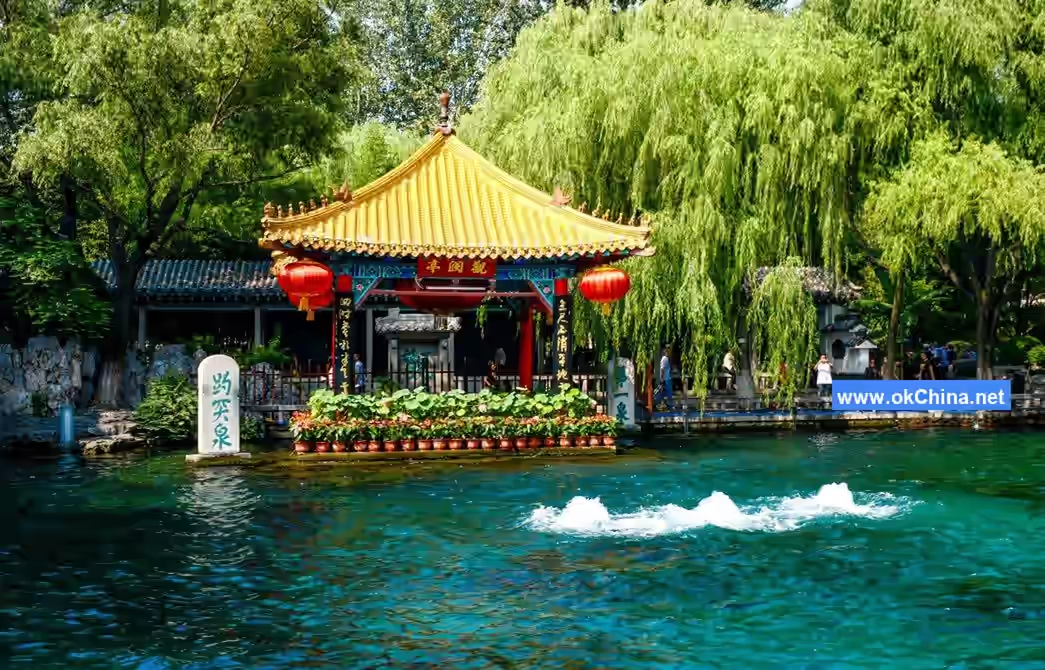
Baotu Spring, one of the three major scenic spots in Jinan, is located in Lixia District, Jinan City, Shandong Province. It borders Quancheng Square to the east and overlooks the Five-Dragon Pool to the north. Covering an area of 158 mu, it ranks first among the seventy-two famous springs in Jinan. During his southern inspection tour, Emperor Qianlong conferred upon Baotu Spring the title "The First Spring under Heaven" because the tea brewed with its water was exceptionally mellow and sweet. It is also the earliest recorded famous spring of Jinan in ancient literature.
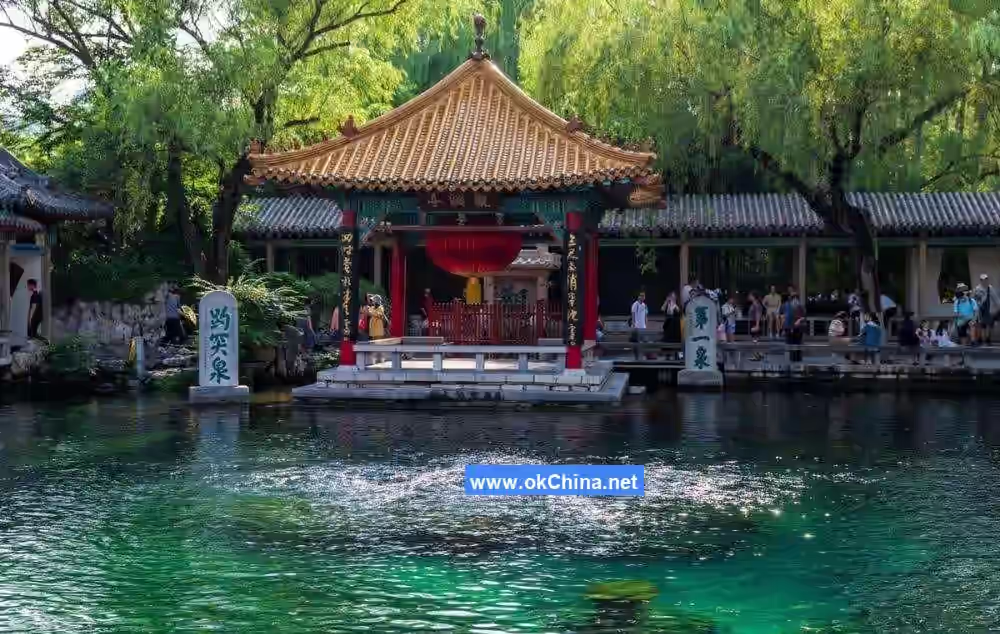
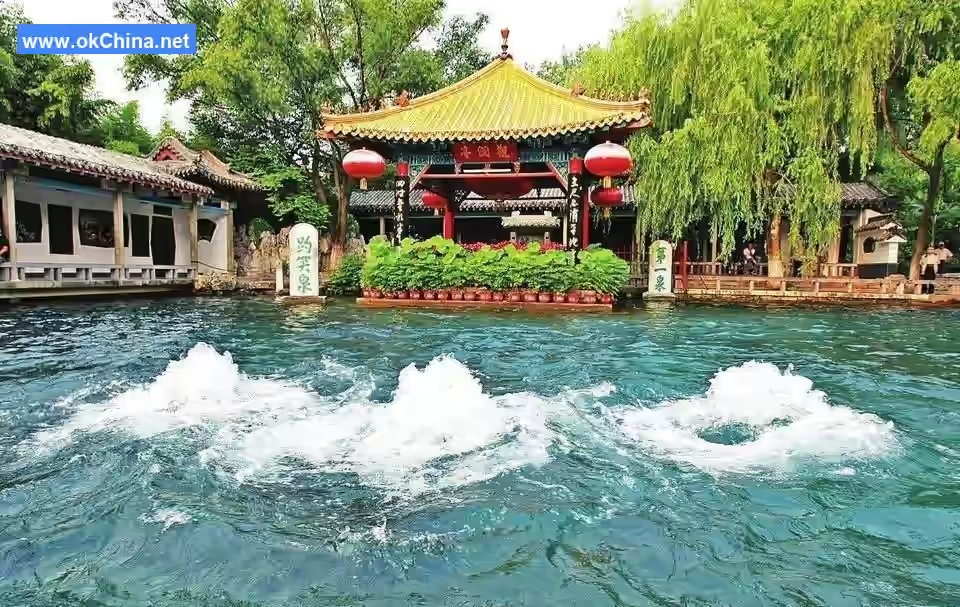
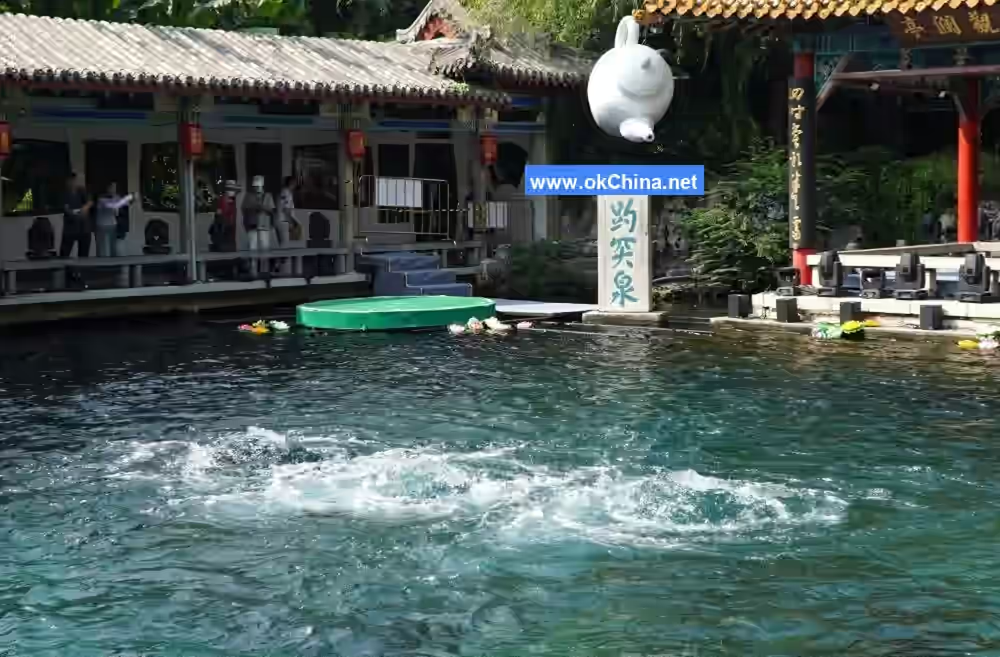
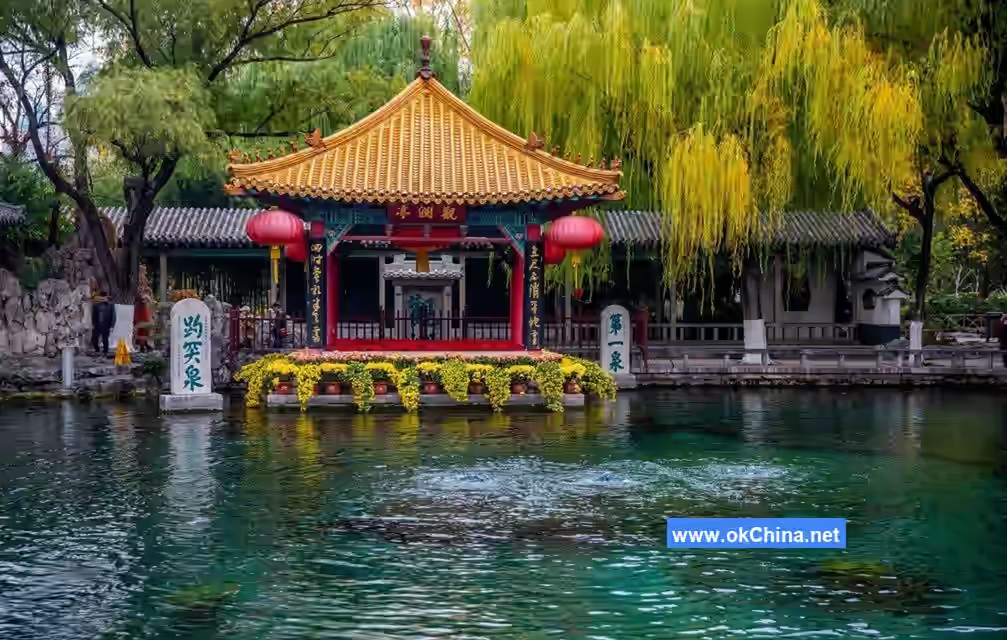
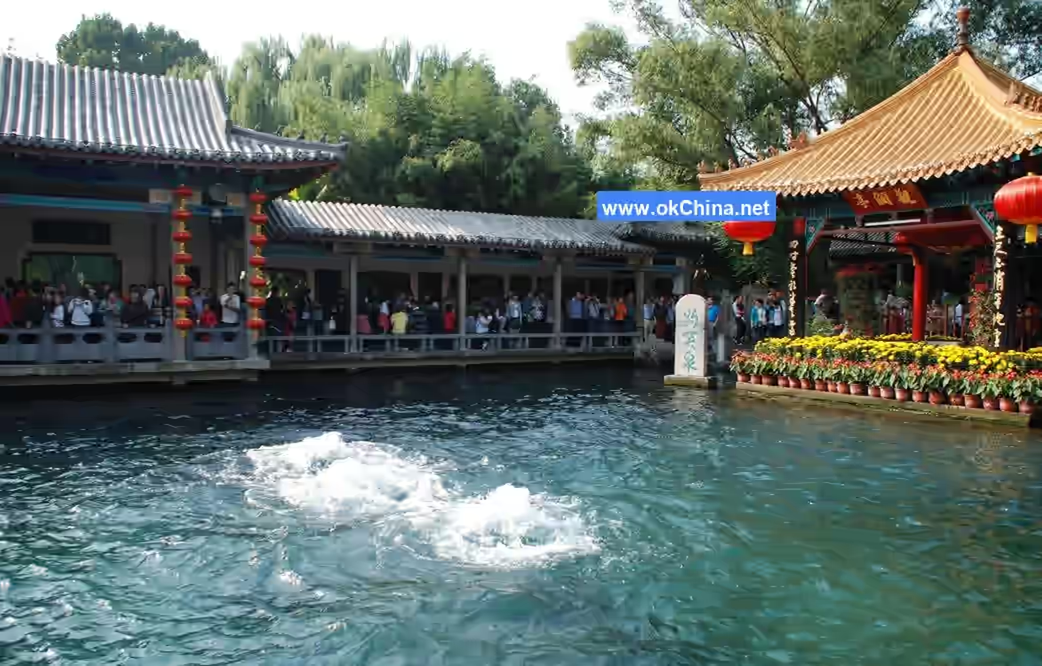
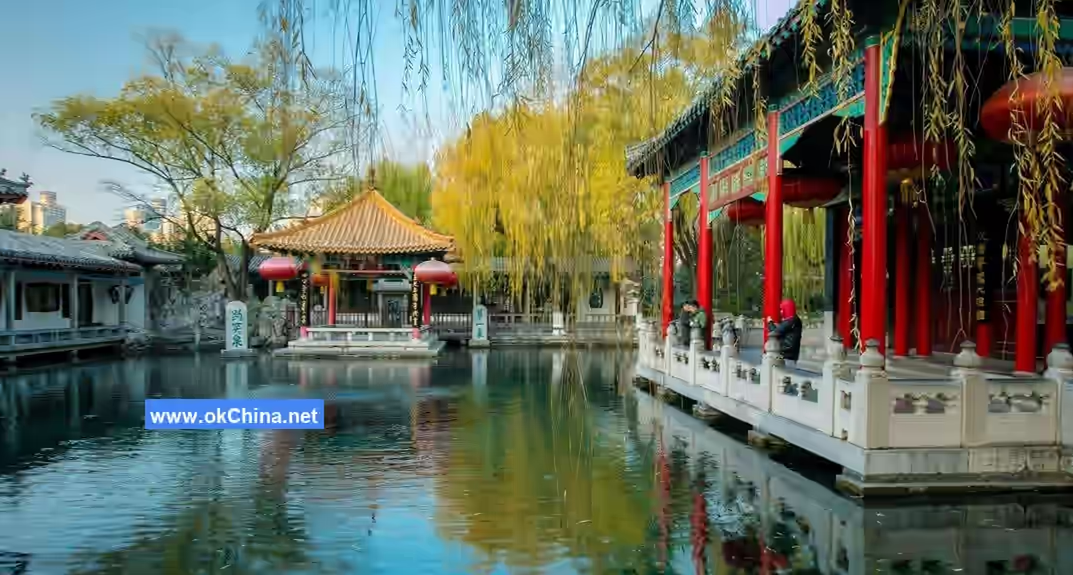
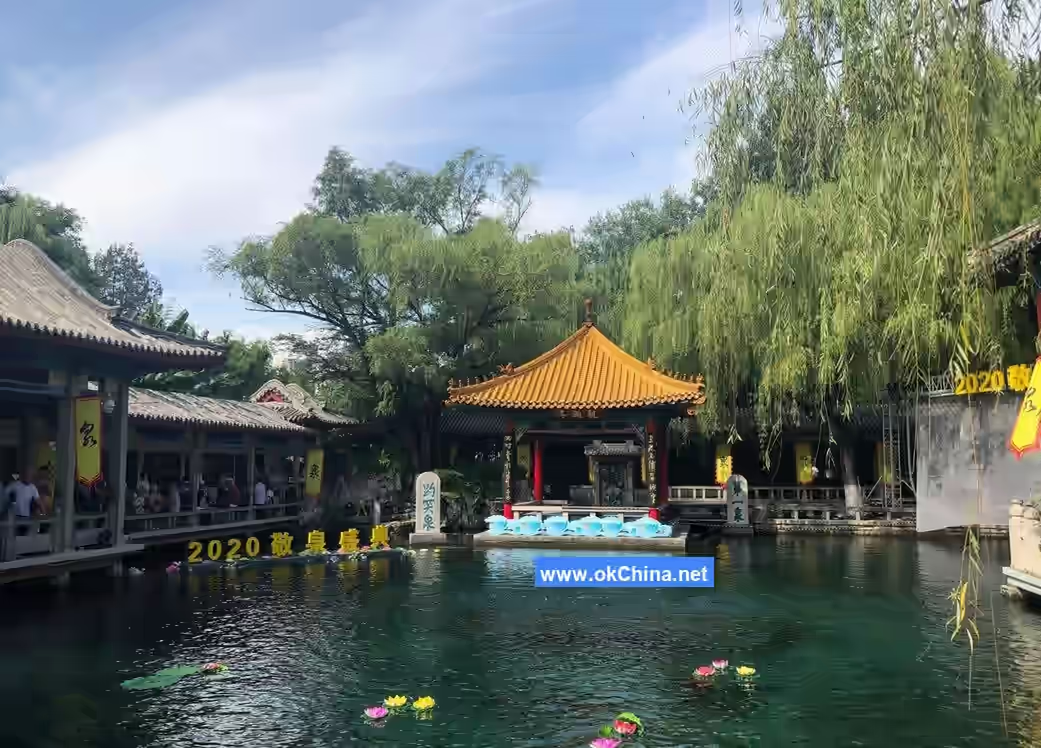
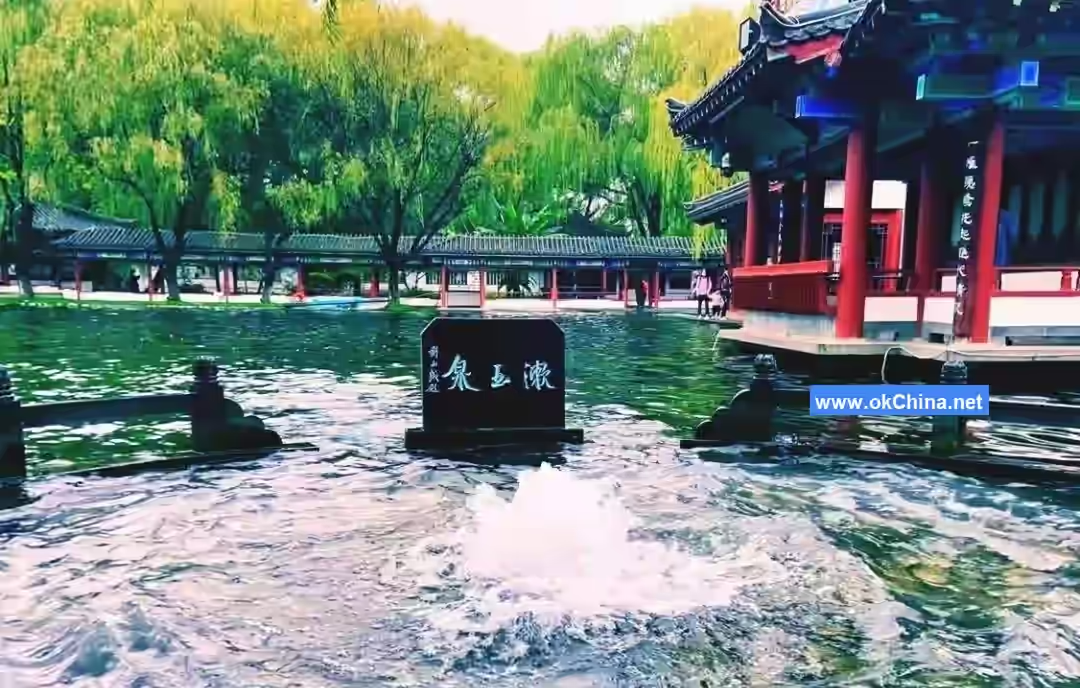
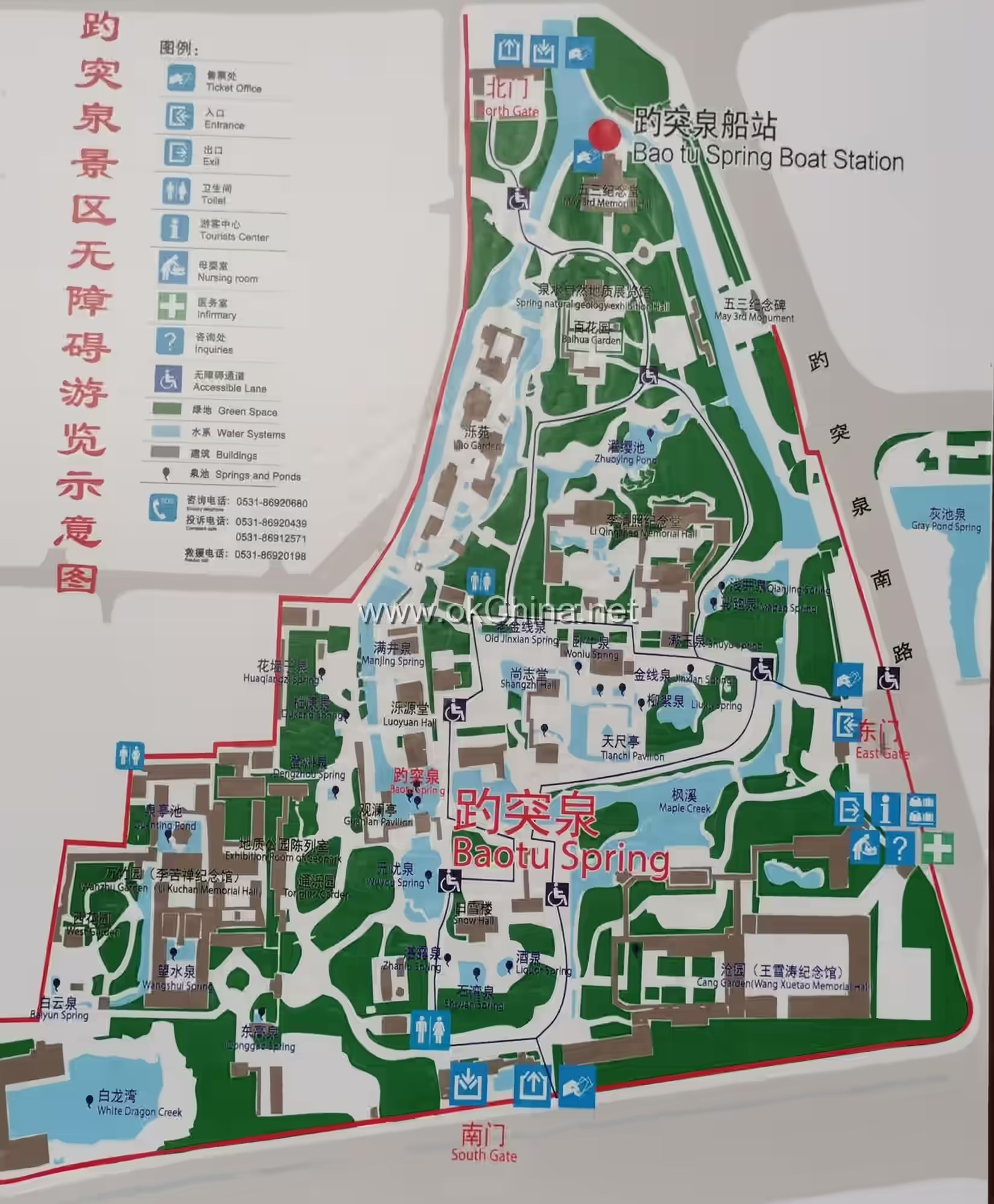
The spring vent of Baotu Spring is located in front of the Luoyuan Hall within Baotu Spring Park. In the 20th year of the Republic of China (1931), stone banks were constructed around it. After several changes, it formed a rectangular spring pool measuring 30 meters long, 18 meters wide, and 2.2 meters deep. It is bordered by Luoyuan Hall to the north, the Guanlan Pavilion to the west, the Laihe Bridge to the east, and a long corridor encloses it to the south. The spring water gushes out from an underground limestone cave, with a daily outflow of 70,000 cubic meters. The spring has three outlets, with a maximum discharge of 162,000 cubic meters per day. The water temperature of Baotu Spring remains constant at around 18°C throughout the year. The surrounding scenic spots and historical sites include Luoyuan Hall, Guanlan Pavilion, Shangzhi Hall, Li Qingzhao Memorial Hall, and Li Kuchan Memorial Hall.
2. Geographical Conditions
2.1 Location and Area
Baotu Spring is located in the city center of Jinan, adjacent to Quancheng Square to the west, in the middle section of Baotu Spring South Road and Luoyuan Street, and north of the Five-Dragon Pool Park.
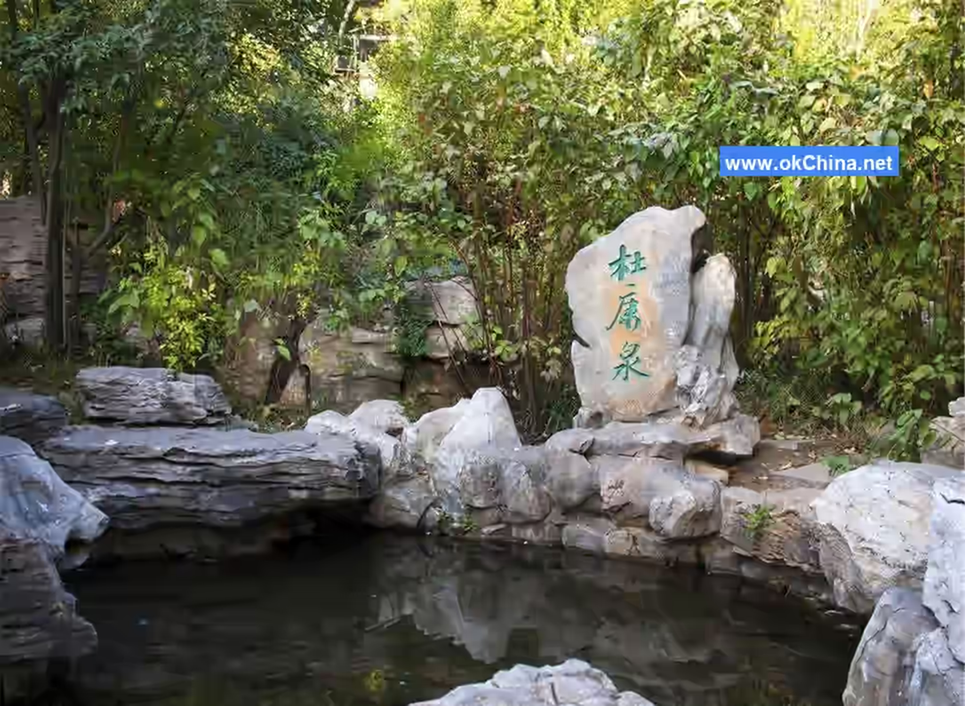
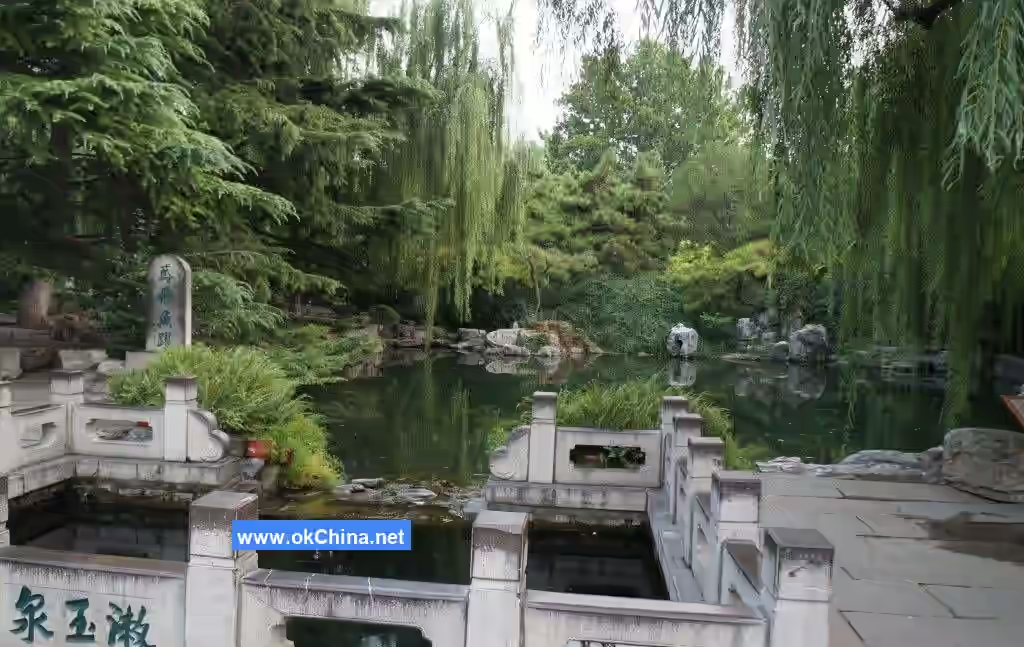
The spring pool is 30 meters long from east to west and 20 meters wide from north to south. The spring water emerges from the ground in three streams. Baotu Spring is surrounded by large stone blocks, allowing visitors to lean on the railings and look down at the spectacular sight of the three springs gushing. In the vicinity of Baotu Spring, more than thirty other famous springs are scattered, including Jinxian Spring, Shuyu Spring, Xibo Spring, Liuxu Spring, Huanghua Spring, Dukang Spring, and Bailong Spring, forming the Baotu Spring group.
2.2 Geological Conditions
The gushing of Baotu Spring is related to the topographic structure of Jinan. To the south of Jinan are mountainous hills, including Qianfo Mountain, while to the north are the Yellow River and plains. Jinan is located at the junction of the mountains and plains. The mountainous area of Jinan is composed of limestone, while beneath the soil of the plains lies igneous rock.
The limestone in the mountainous area was formed approximately 400 million years ago. It is relatively pure in texture and tilts from south to north at an angle of about 30°. Limestone itself is not very dense, containing pores, fissures, and caves that can store and transport groundwater. Groundwater flows in large quantities towards Jinan along the tilt of the limestone layers, becoming the source of Jinan's springs.
The igneous rock beneath the plains is very compact. When groundwater flows here and encounters the obstruction of igneous rock, it cannot pass through. Above the igneous rock lies a layer of impermeable clay, preventing groundwater from freely flowing to the surface. This large amount of blocked groundwater, under strong pressure, gushes to the surface through underground fissures, forming these springs. Baotu Spring is one of them.
2.3 Hydrological Characteristics
Baotu Spring gushes out 70,000 cubic meters of water daily. The spring water emerges from an underground limestone cave through three outlets, with a massive water volume. The maximum discharge is 162,000 cubic meters per day, and the outlet elevation can reach 26.49 meters. The bacterial content in the water is extremely low, and tests show it meets national drinking water standards. The spring water temperature remains constant at around 18°C throughout the year. In severe winter, a thin layer of mist forms on the water surface, which locals call "cloud steaming and mist moistening."
3. Main Attractions
3.1 Main Gate
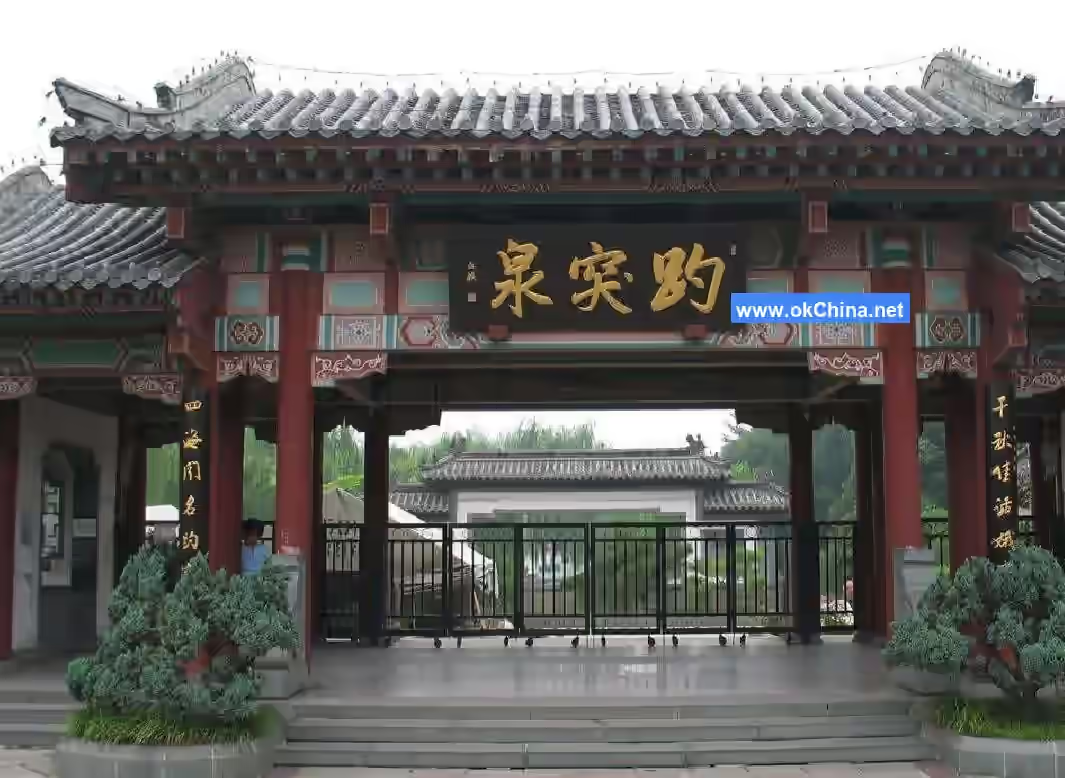
The horizontal plaque on the south gate of Baotu Spring, inscribed with "Baotu Spring" in gold characters on a blue background, is the imperial handwriting of Emperor Qianlong of the Qing Dynasty. It is hailed by some as the "First Gate" of Chinese gardens.
3.2 Guanlan Pavilion
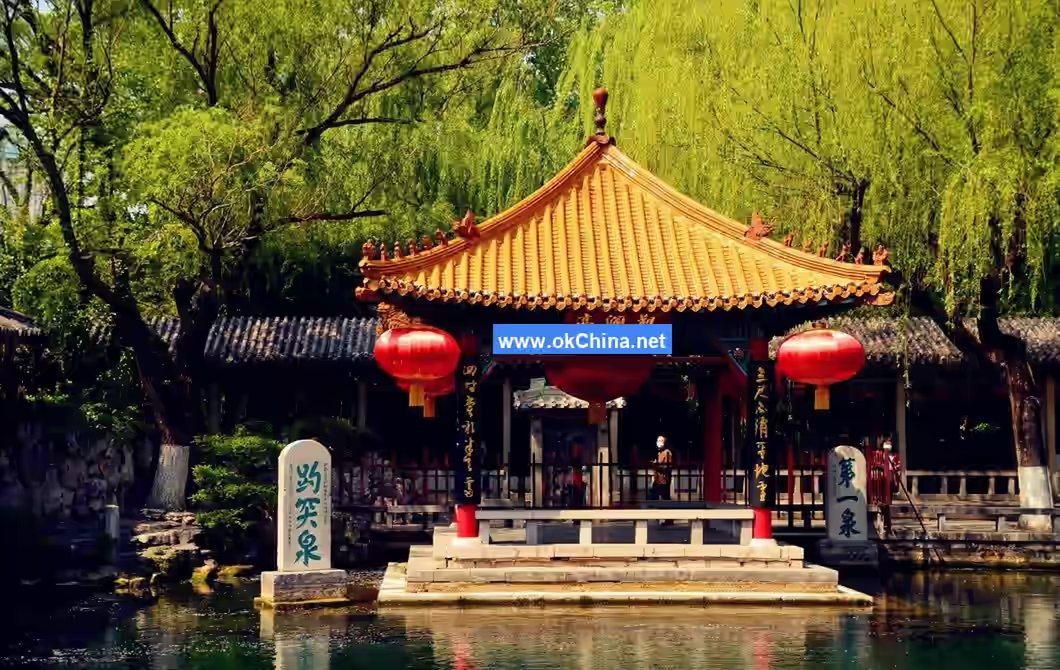
The Guanlan Pavilion was built in the fifth year of the Tianshun era of the Ming Dynasty (1461). Imperial eunuchs Wei and Wu came to Jinan and constructed a pavilion beside the spring (another account attributes it to Governor Hu Zuanzong), naming it "Guanlan," meaning "observing the waves," derived from the phrase in Mencius: Jin Xin I: "There is an art in observing water; one must observe its waves." Originally, it was a four-sided long pavilion, semi-enclosed. The great Song Dynasty literary figure Su Zhe served as the secretary of Qizhou in the sixth year of the Xining era (1073) and composed many poems about Jinan's scenic spots and historical sites, among which his poem Ode to the Jianquan Pavilion is particularly famous.
3.3 Pavilion Stele
A stone stele stands in the water in front of the Guanlan Pavilion, inscribed with the three characters "Baotu Spring," written by the Ming Dynasty calligrapher Hu Zuanzong. To the east of the pool is the "Laihe Bridge." At the southern end of the bridge stands a wooden archway, with horizontal plaques inscribed with the phrases "A Blessed Land of Caves and Heavens" and "Traces of Penglai Mountain."
Another stone stele is erected beside Baotu Spring, inscribed with "First Spring" in dark green, a title written by Wang Zhonglin of Licheng during the Tongzhi era of the Qing Dynasty (1861-1874).
3.4 Guanlan Bridge
The Guanlan Bridge is on the west side of Baotu Spring, located between the E'ying Temple and Tongluo Garden. The bridge is 3 meters wide and 5 meters long, arched in shape, constructed in a traditional ethnic style with an east-west framework. It is called Guanlan Bridge because one can view the Baotu Spring water from the bridge.
3.5 Guanghui Bridge
The Guanghui Bridge is about 30 meters north of the Guanlan Bridge. This bridge is recorded in both Liu Chi's Li Cheng and the Chongzhen Licheng County Annals from the Ming Dynasty. Embedded in the south wall of the bridge is the Stele Inscription for the Reconstruction of Guanghui Bridge from the fourth year of the Tongzhi era. The text includes records such as: "Jinan is also called Dabangiao. Several thousand meters south of the bridge is Baotu Spring. The springs from the clear mountains all converge with the northern waters. Every time at the turn of summer and autumn, when mountain waters swell, they surge and roar."
3.6 Tortoise Stone
The Tortoise Stone is a relic from the villa of the Yuan Dynasty sanqu poet Zhang Yanghao in Beiyuan, called Yunzhuang. According to research, there were ten beautiful stones in Yunzhuang at that time, called the "Ten Friends." Among them, the four spiritual stones—Dragon, Phoenix, Tortoise, and Qilin—were particularly famous. After the Ming Dynasty, they were moved to various places in Jinan city, including Huangting, Confucius Temple, and Baotu Spring.
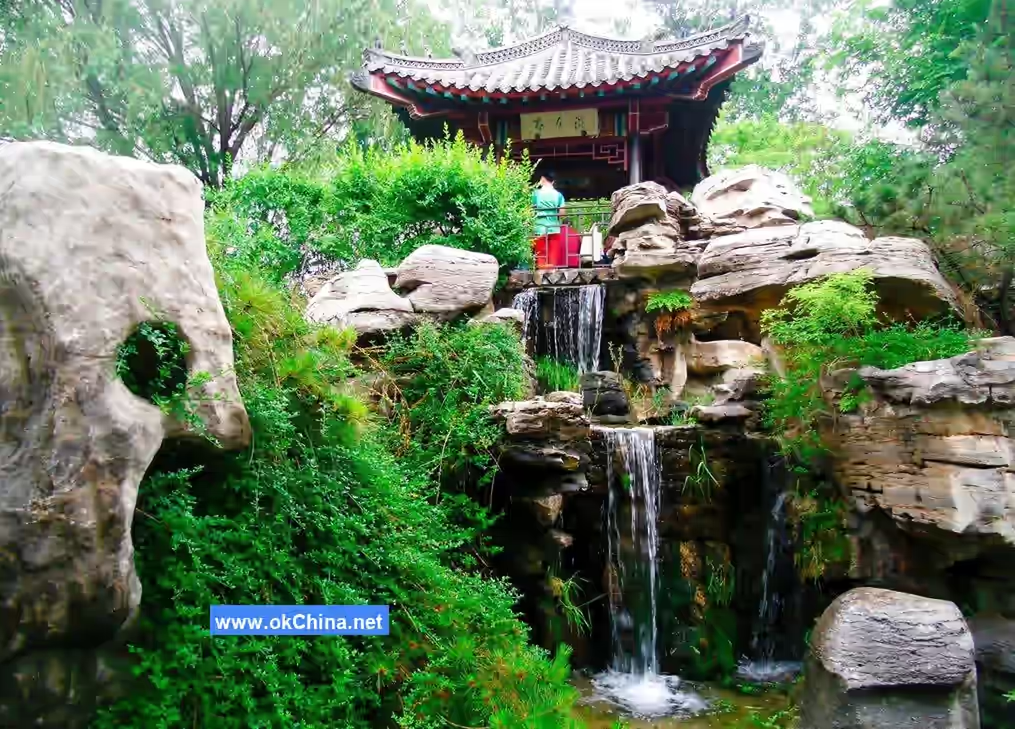
Originally, there was also a Qilin Stone at Baotu Spring, which was destroyed by Japanese imperialist aircraft bombs during the "July 7th Incident." Among the four spiritual stones, only this Tortoise Stone remains. It is an exquisite and lifelike Taihu stone, nearly 4 meters high and weighing about 8 tons. The stone is tall and exposed, with many cavities, distinct veins, and numerous凹凸 (concavities and convexities), possessing the characteristics of "wrinkled, lean, perforated, and leaky" among Taihu stones.
3.7 Luoyuan Hall
Luoyuan Hall is on the north bank of Baotu Spring. It was originally the E'jiang Temple or E'ying Temple. It is a complex of three courtyards, built on the former site of the ancient E'jiang Temple, which originally enshrined Emperor Yao's two daughters, Ehuang and Nüying, the wives of Emperor Shun. Around the Jin and Yuan dynasties, it was converted into a Lüzu Temple, enshrining the increasingly popular Taoist deity Lü Dongbin from the Song Dynasty onwards. The famous literary figure Zeng Gong served as the prefect of Qizhou during the Xining era of the Northern Song Dynasty (1072-1073). He built two halls by the Luo River. The southern hall faced the source of the Luo River, hence named "Luoyuan Hall." The northern hall faced Lishan to the south, called "Lishan Hall." Later, Yuan Haowen of the Jin Dynasty changed the "Luoyuan" and "Lishan" halls into "Lü Gong Temple." During the Ming Dynasty, Salt Transport Commissioner Zhang Kuiguang, Jinan Prefect Fan Shiying, and Licheng County Magistrate Lü Huangzhong converted the temple into a pavilion. Afterwards, it was restored to its original name "Luoyuan Hall."
Luoyuan Hall consists of three bays and two stories, facing south, built on the same central axis. It is a relatively large Ming and Qing architectural complex.
3.8 Laihe Bridge
The Laihe Bridge was originally a wooden bridge, running north-south, located on the east bank of the Baotu Spring pool, southwest of the Wanghe Pavilion. It was first built by Zhang Heming, the prefect of Licheng during the Wanli era of the Ming Dynasty, rebuilt by Jinan Prefect Fan Shiying during the Tianqi era, and rebuilt again by Censor Cheng Gong during the Shunzhi era of the Qing Dynasty. It was originally wooden and later changed to a flat stone slab bridge. During the expansion of Baotu Spring Park in 1964, the stone slabs were replaced. In 1975, carved stone railings were installed on both sides of the bridge.
3.9 Baixue Tower
Baixue Tower is located southeast of Baotu Spring, built to commemorate the Ming Dynasty literary figure Li Panlong. In his later years, Li Panlong built another tower by Baihua Islet at Daming Lake, also called "Baixue Tower."
During the Wanli era of the Ming Dynasty (1572-1620), Ye Mengxiong, the Provincial Administration Commissioner of Shandong, out of admiration for Li Panlong, funded the construction of a third Baixue Tower by Baotu Spring. In 1956, during the expansion of Baotu Spring Park, this tower was demolished due to its dilapidated state. It was rebuilt in 1996.
4. Historical Development
4.1 Origin of the Name
Baotu Spring originally had no formal name. Because it is the source of the ancient Luo River, it was often referred to as "Luo" in history. The Northern Wei geographer Li Daoyuan wrote in Commentary on the Water Classic: "The Luo River emerges southwest of the old city of Licheng County; the spring source surges upward, and the water gushes like a wheel." Later, because a temple dedicated to Ehuang and Nüying was built above the spring, it was also commonly called E'ying Water.
When Zeng Gong of the Song Dynasty served as the prefect of Qizhou, he named the spring "Jianquan." "Jian" is borrowed to mean "lan" (overflowing). "Jianquan" originates from the Book of Songs. The Book of Songs: Greater Odes: Zhan Ang states: "Bubbling and overflowing is the Jian spring; how deep it is!" However, the people of Jinan found the name "Jianquan" too refined and directly abandoned it. Regarding this, Yuan Haowen of the Jin Dynasty recorded in Travels in Jinan: "In recent times, a prefect changed the spring's name to Jianquan and also erected a Jianquan memorial archway, based on the meaning in the poem. However, the locals still call it 'Baoliu' as before." The people of Jinan still called it "Baoliu Spring." The name "Baoliu" also gave rise to many similar names, and "Baotu" is one of them.
Zeng Gong recorded in Record of the Two Halls in Qizhou: "From the (Kema) cliff northward to the west of Licheng, about fifty li, a spring gushes forth, sometimes reaching several feet in height. The people nearby call it the Baotu Spring." "Baotu" means leaping and rushing forth.
4.2 Developmental History
In 2002, based on research of the "Oracle Bone Inscriptions" unearthed in Anyang, Henan, experts verified that records of Baotu Spring can be traced back to the Shang Dynasty, dating back 3,543 years. Baotu Spring is the source of the ancient Luo River, called "Luo" in ancient times. As early as 2,600 years ago, the chronicle Spring and Autumn Annals recorded: "Duke Huan of Lu met with the Marquis of Qi at Luo."
Li Daoyuan's Commentary on the Water Classic from the Northern Wei Dynasty records: "The spring source surges upward, and the water gushes like a wheel, protruding several feet like snowy waves. The sound is like hidden thunder." "The Luo River emerges southwest of the old city of Licheng County; the spring source surges upward, and the water gushes like a wheel, bubbling from three caverns."During the Song Dynasty, when Zeng Gong served as the prefect of Qizhou, he constructed the "Luoyuan Hall" beside the spring and wrote "A Record of the Two Halls in Qizhou," formally bestowing the name "Baotu Spring" upon the Luoshui River. The spring was also known by other names such as "Jian Spring," "E'ying Water," "Warm Spring," "Waterfall Spring," and "Three-Stream Water." In "A Record of the Two Halls in Qizhou," it is stated: "From the (Kema) cliff northward to the west of Licheng, a distance of about fifty li, a spring gushes forth, sometimes reaching several feet in height. The local people named it 'Baotu' Spring."
Legend has it that when Emperor Qianlong traveled to the south, he initially carried water from the Yuquan Spring in Beijing. However, after tasting the water of Baotu Spring in Jinan, he immediately switched to carrying Baotu Spring water and proclaimed Baotu Spring as the "Number One Spring Under Heaven."
Comments
Post a Comment