Mount Sanqingshan Scenic Area in Shangrao City
1. Introduction
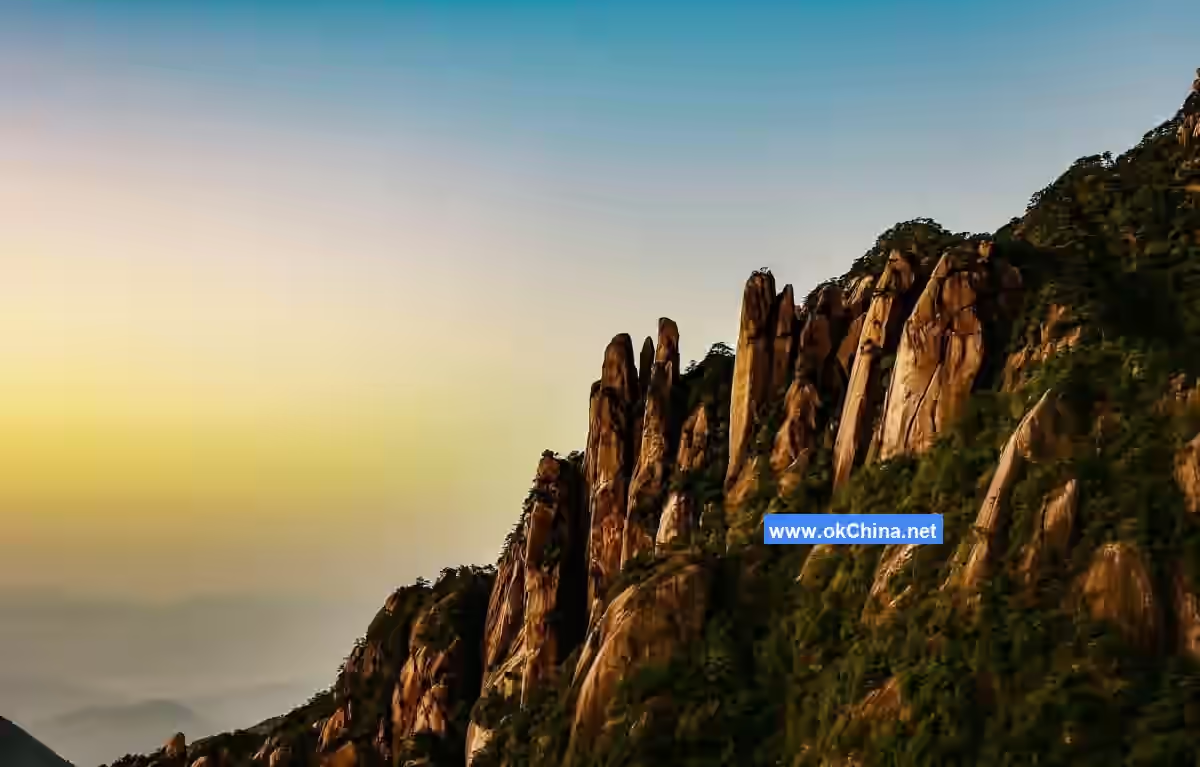
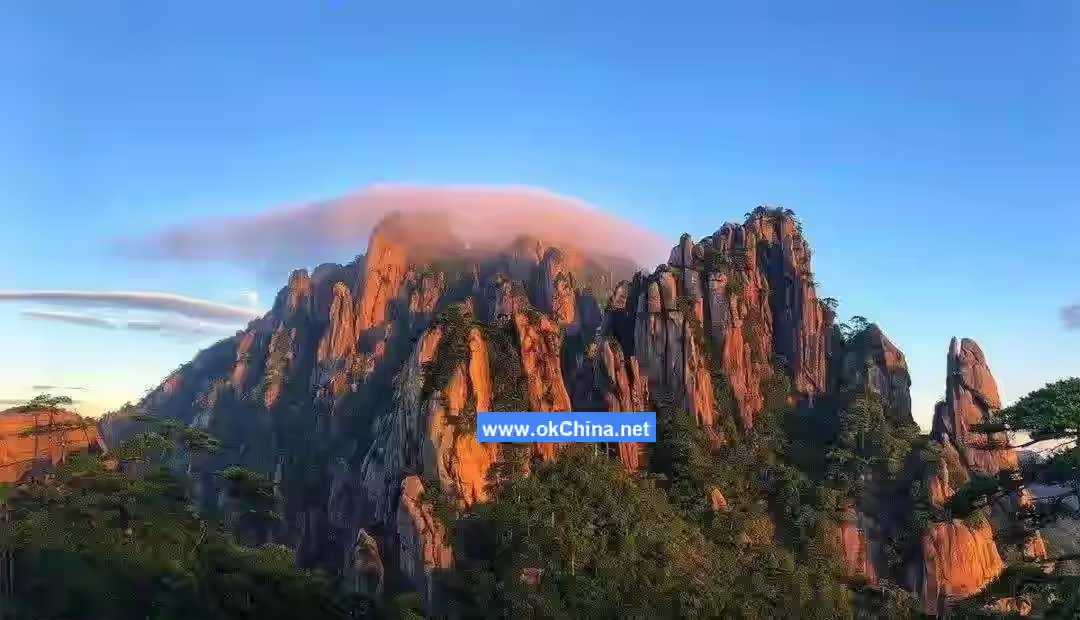
Mount Sanqingshan Scenic Area in Shangrao City is located in the northeastern part of Shangrao City, Jiangxi Province, at the border of Yushan County and Dexing City. It covers a total area of 756.6 square kilometers, with a core scenic area of 230 square kilometers. The main peak, Yujing Peak, has an elevation of 1,819.9 meters.
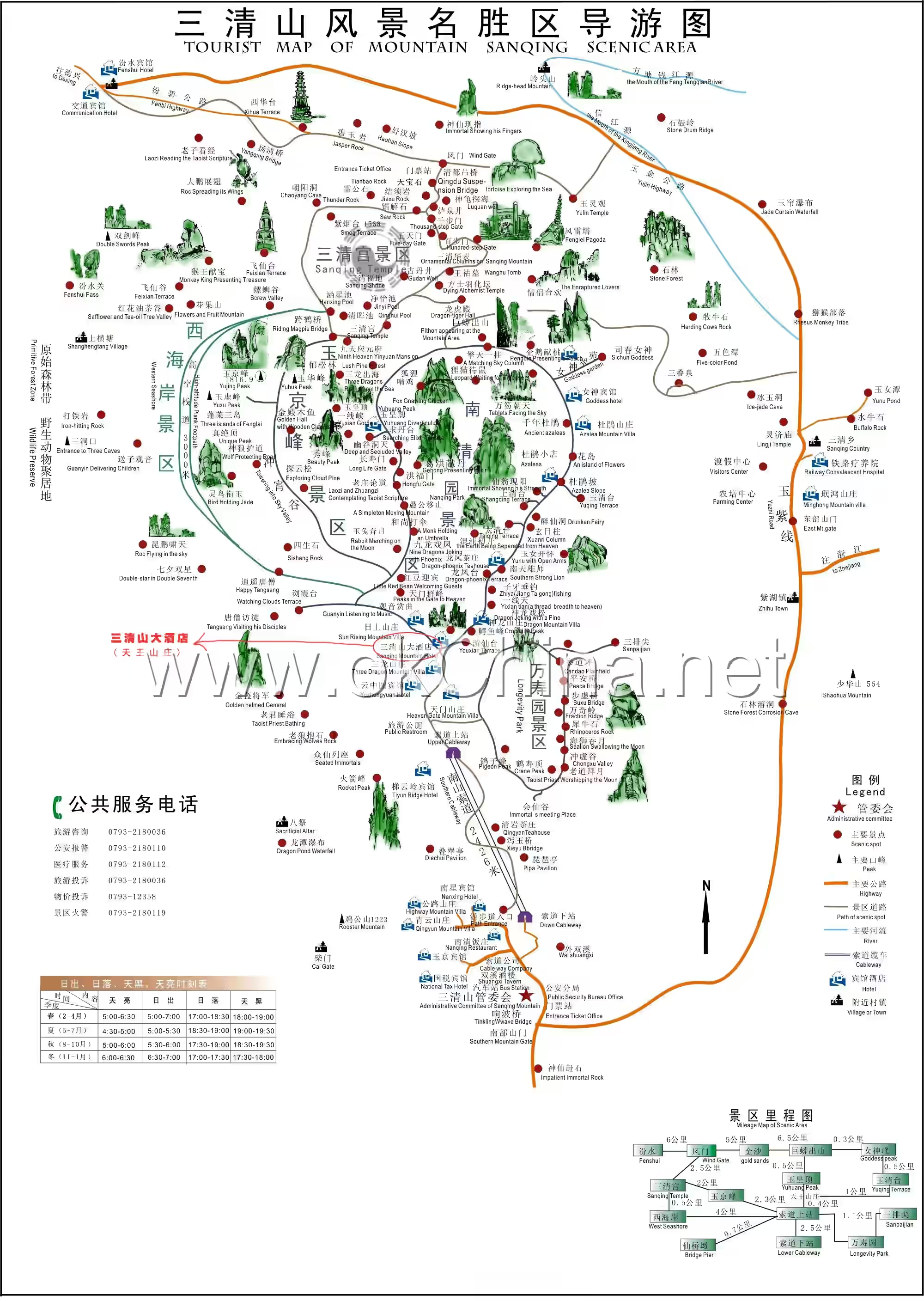
During the Song Dynasty, Wang Lin, a descendant of the Wang family, donated funds to build a Taoist temple, and Mount Sanqingshan began to become a Taoist sacred site. [11] During the Hongwu period of the Ming Dynasty (1368–1398), the Ming court constructed Taoist temples on Mount Sanqingshan and issued official notices to local governments. From the Jingtai to Tianshun periods of the Ming Dynasty (1450–1464), Wang You, a descendant of Wang Lin, undertook large-scale reconstruction of the temples on Mount Sanqingshan. Later, more than 200 structures, including temples, pavilions, stone carvings, stone sculptures, mountain gates, and bridges, were established on the mountain. In 1984, the Jiangxi Provincial Government invited over 120 professors and scholars from across the country to survey Mount Sanqingshan. In the same year, the Shangrao Prefectural Committee and Administrative Office established the Shangrao Prefecture Scenic Area Development Leading Group and the Shangrao Prefecture Mount Sanqingshan Scenic Area Administration, which was established at the county level. The Mount Sanqingshan Scenic Area in Shangrao City includes ten major scenic zones, such as Nansqingyuan, West Coast, Sanqing Palace, Tiyun Ridge, and Yujing Peak, with over 1,500 scenic spots. It is an area that integrates natural and cultural landscapes.
2. History of the Scenic Area
During the Jin Dynasty, the medical scientist, Taoist theorist, and renowned Taoist priest Ge Hong came to Mount Sanqingshan Scenic Area around the Shengping period of the Eastern Jin Dynasty to practice alchemy. During the Qianfu period of the Tang Dynasty, Wang Jian, the Grand Master of Purple-Gold Light and Prefect of Xinzhou, retired with his family in Dayuanwu at the foot of the mountain (now Yinjiang Village, Fanda Township, Dexing) in his later years. In the sixth year of the Qiandao period of the Song Dynasty (1170), Wang Lin, the tenth-generation descendant of Wang Jian, founded the Sanqing Taoist Temple. However, the temple was later destroyed due to social unrest and famine.
During the Jingtai period of the Ming Dynasty (1450–1456), Wang You, the twenty-eighth-generation descendant of Wang Jian, rebuilt the Sanqing Palace on the original site, adding scenic spots and temples along the way and donating land to support Taoist priests. At the time, Sun Yuanzhen, the Grand Master of Assisting Governance and Minister of War in Nanjing, personally inscribed the plaque "Sanqing Palace," which gradually made Mount Sanqingshan Scenic Area widely known.
During the Qing Dynasty, the breathtaking beauty of Mount Sanqingshan Scenic Area attracted visitors from all directions. Notable figures such as Cheng Yunji, Cheng Yixian, Mao Jiurui, Xiao Lixuan, Chen Xun, Cheng Guangbi, and Yu Chaokai visited the mountain, and pilgrims from Zhejiang, Anhui, and other provinces also came to pay homage. Tourism in Mount Sanqingshan Scenic Area flourished. However, during the late Qing Dynasty and the Republic of China period, the area declined due to continuous warfare. In modern times, during the Second Chinese Revolutionary Civil War, Mount Sanqingshan Scenic Area was one of the old revolutionary base areas in the Anhui-Zhejiang-Jiangxi-Fujian border region. A Soviet regime was established, foreign trade was developed, and the blockade by the Nationalist government was broken, making it an important supply station for salt, medicine, cloth, and other materials for the Soviet area.
3. Main Scenic Zones
3.1 Nansqingyuan Scenic Zone
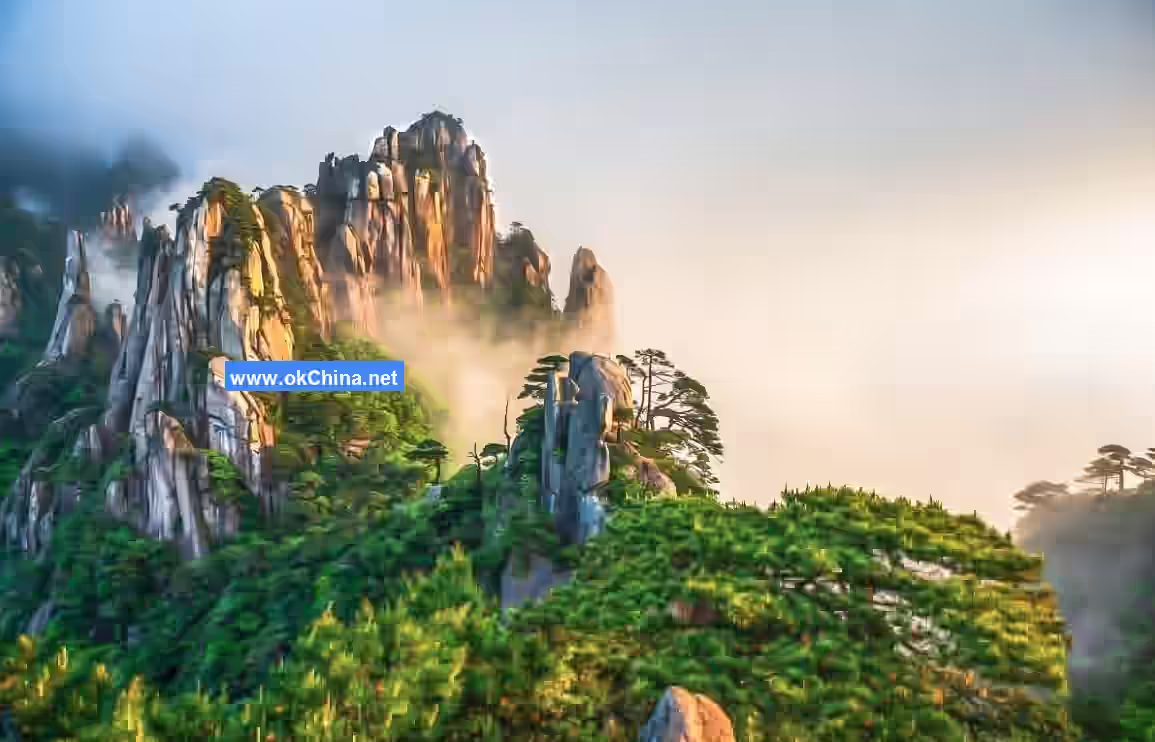
Located at the center of Mount Sanqingshan, the Nansqingyuan Scenic Zone is the area with the most spectacular natural landscapes on the mountain, with an average elevation of 1,577 meters. Nansqingyuan showcases the granite peak forest landforms formed over 1.4 billion years of geological evolution, representing the essence of Mount Sanqingshan's natural scenery. The zone includes a loop from Liuxia Terrace through Yu Huangding, Giant Python Emerges from the Mountain, Eastern Goddess, Azalea Valley, and One-Line Sky to Youxian Valley.
3.2 Sanqing Palace Scenic Zone
Sanqing Fudi is the center of Mount Sanqingshan, located on the mountainside below Yujing Peak. During the Shengping period of the Eastern Jin Dynasty, Ge Hong and Minister Li built a hut here for alchemy and Taoist practices. In the Tang Dynasty, the Laojun Palace was built, and later, the Sanqing Temple was constructed, featuring stone carvings of the Three Pure Ones, Ge Xianweng, Minister Li, Golden Boy, Jade Girl, and Marshal Pan.
3.3 Yujing Peak Scenic Zone
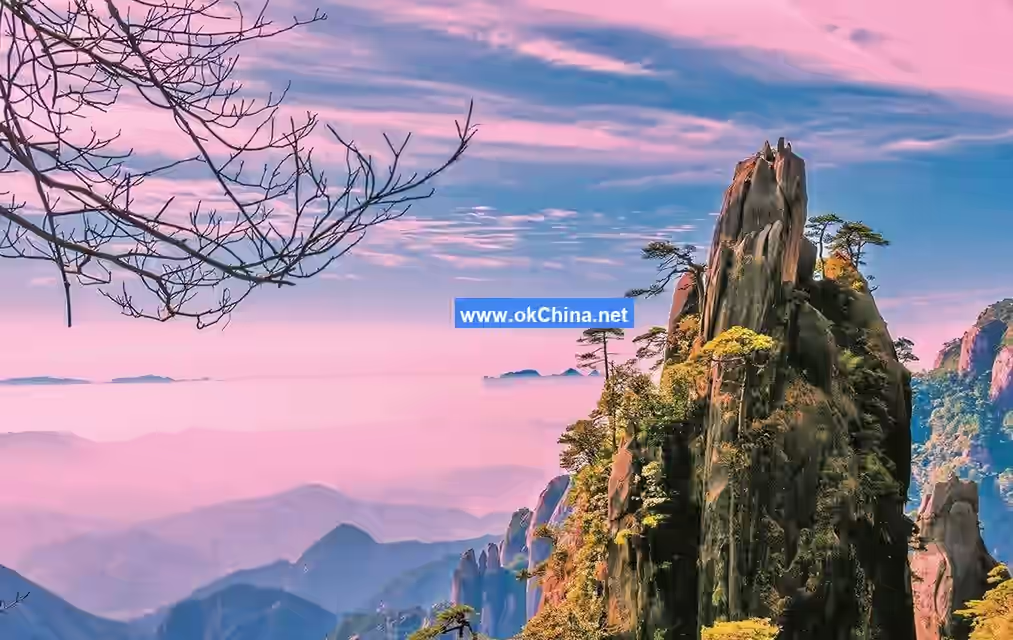
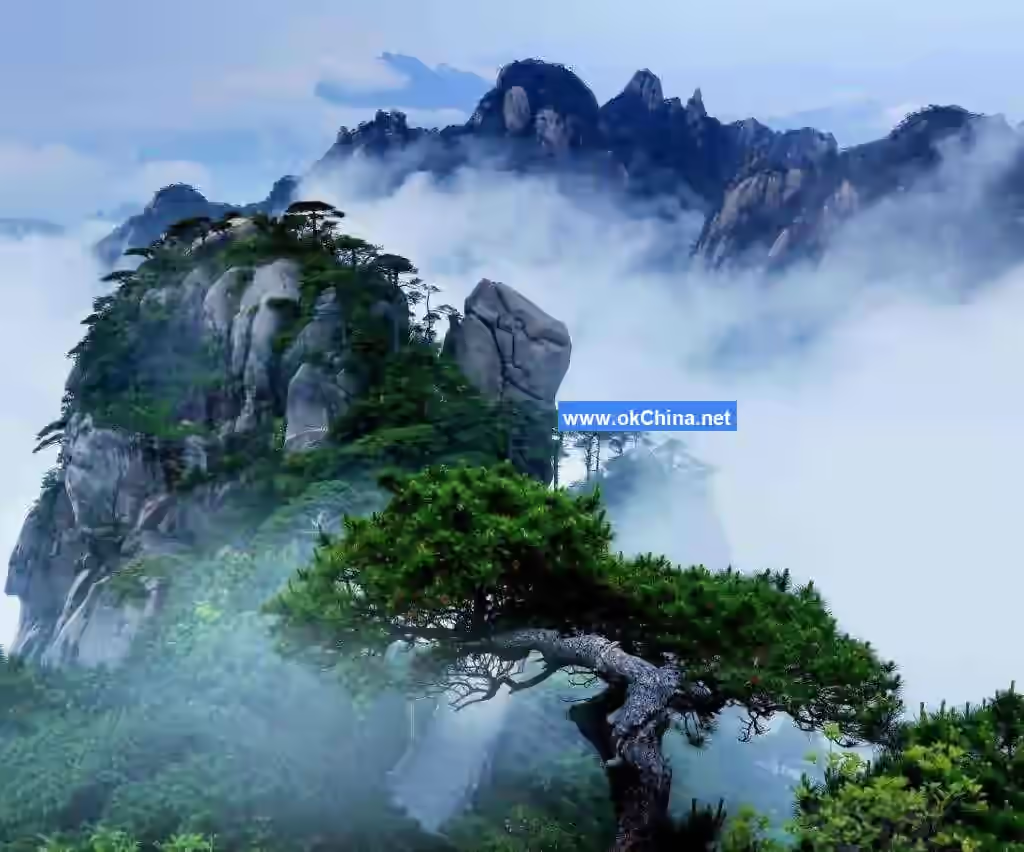
The Yujing Peak Scenic Zone is home to the highest peak of Mount Sanqingshan, with an elevation of 1,819.9 meters. The zone stretches from Jiutian Yingyuan Temple and Red Camellia Stone, through Yusong Ridge, Kuahe Bridge, Dengzhen Terrace, Yuhua Peak, and Yuxu Peak, to the Penglai Three Peaks area. In addition to the three main peaks—Yujing, Yuxu, and Yuhua—soaring into the clouds, the zone also features the Penglai Three Peaks, the thousand-meter-deep Feixian Valley, the abysmal Wangmu Valley, and spectacular natural phenomena such as sea of clouds, fog waves, sunrise, and Buddha's halo.
3.4 West Coast Scenic Zone
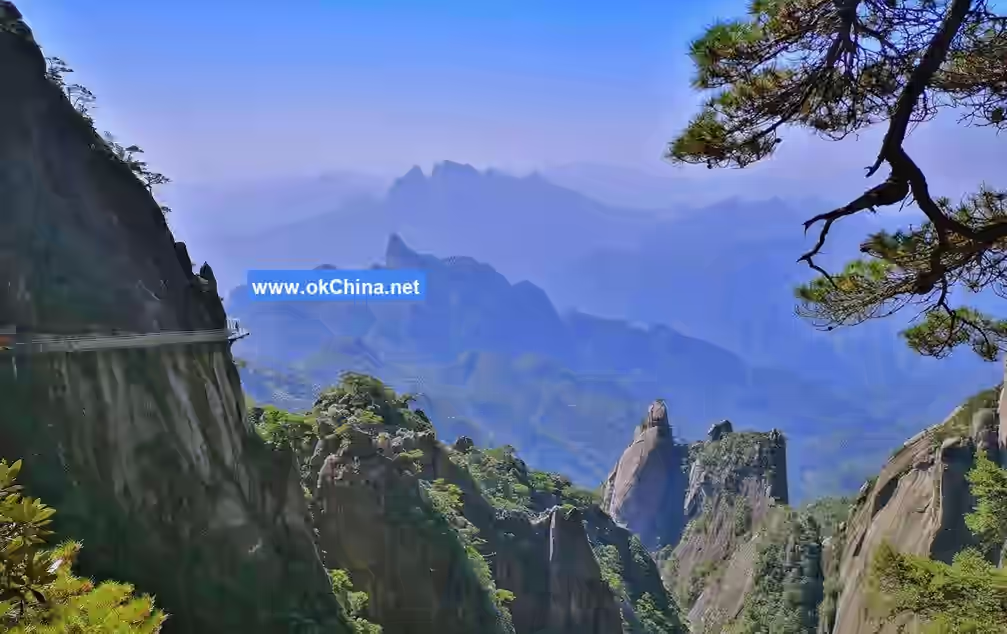
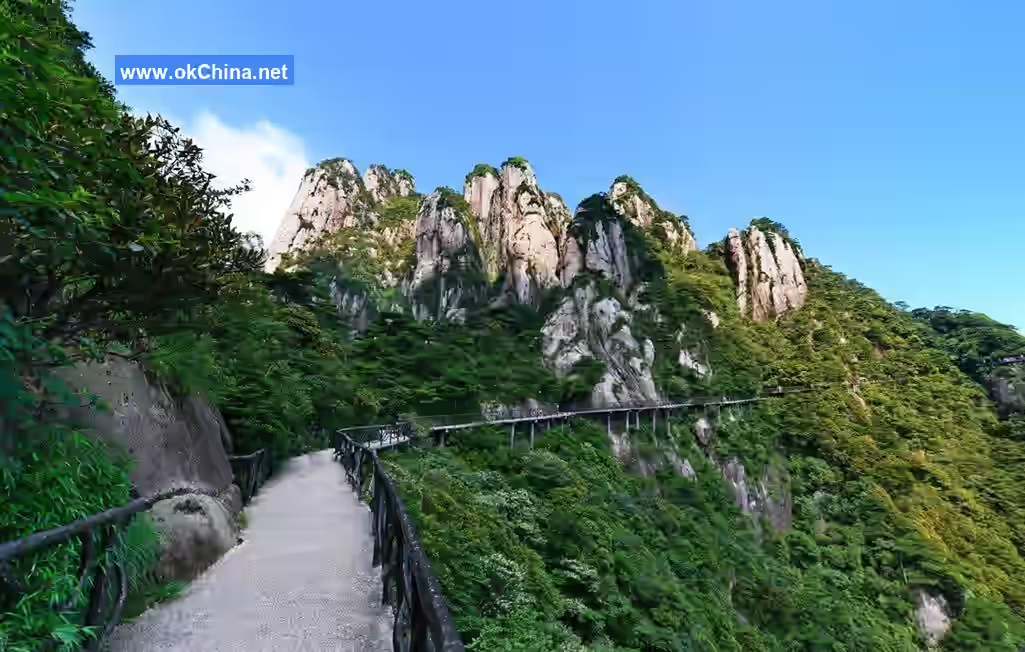
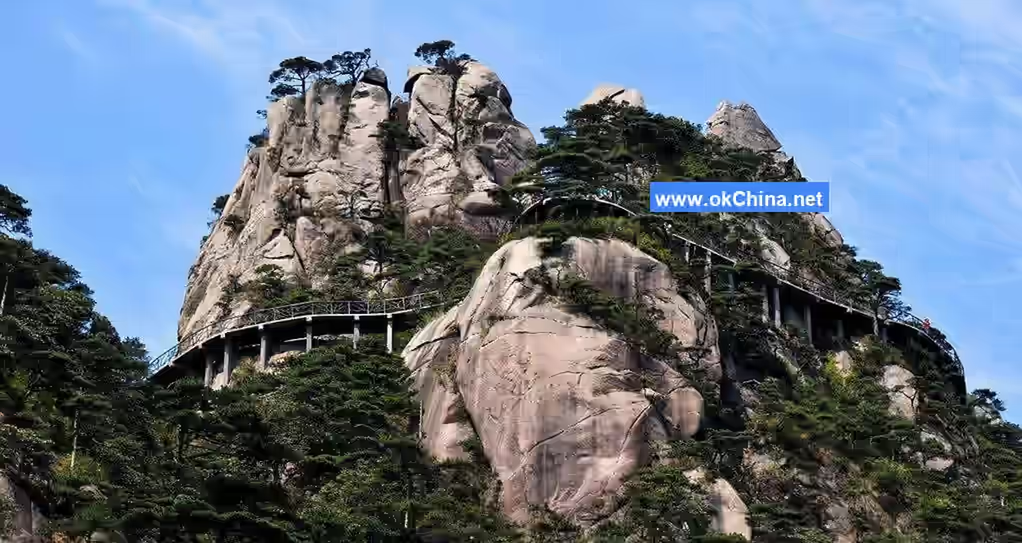
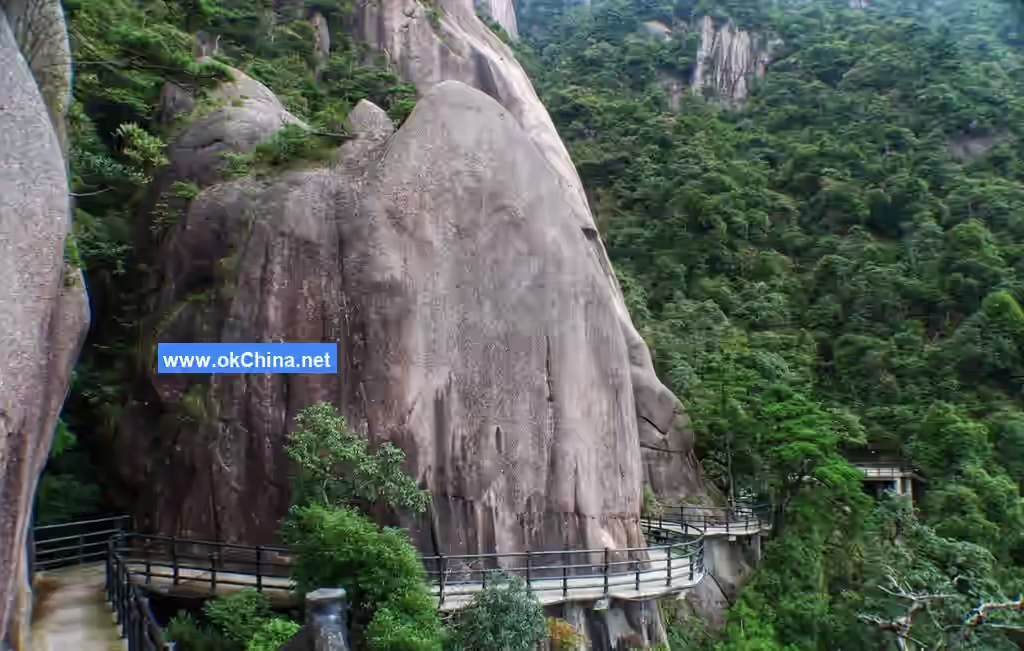
Located in the western part of Mount Sanqingshan, the West Coast Scenic Zone offers the most expansive views on the mountain, with an average elevation of 1,600 meters. Mount Sanqingshan was submerged by seawater three times in history, and the West Coast was the coastline at that time. The zone stretches from the fork 50 meters past Liuxia Terrace in the south to Hanxing Pond in the Sanqing Palace Scenic Zone in the north, covering approximately 4 kilometers. About 3,600 meters of the trail have no steps, and the walkway consists of the highest and longest mountain plank road in China.
3.5 East Coast Scenic Zone (Sunshine Coast Scenic Zone)
Located in the eastern part of Mount Sanqingshan, the Sunshine Coast Scenic Zone, also known as the East Coast, is a newly developed high-altitude plank road scenic area. The Sunshine Coast is 3,600 meters long, with an average elevation of 1,600 meters. It starts from Yu Huangding in the Nansqingyuan Scenic Zone in the south and extends to Jiutian Yingyuan Temple in the Sanqing Palace Scenic Zone in the north, connecting with the West Coast Scenic Zone to form a circular plank road route around the core scenic area of Mount Sanqingshan. Walking along the Sunshine Coast, with clouds underfoot and mist enveloping the body, feels like wandering in a fairyland. From here, visitors can enjoy panoramic views of distant mountains and stone forests.
3.6 Wanshou Garden Scenic Zone
Located on the southern foothills of Mount Sanqingshan, the Wanshou Garden Scenic Zone is themed around auspicious longevity culture. The zone features naturally formed peculiar peaks and rocks, with the beauty of the mountain peaks embodying traditional Chinese auspicious longevity culture and Taoist practices of self-cultivation. The entire zone resembles a natural bonsai garden, with each scenic spot showcasing exquisite charm and aligning with the theme of auspicious longevity culture, offering insights into health and wellness. The loop trail starts from the Statue of Peng Zu Offering Longevity Wishes, passes through Guanyin Terrace, Heshou Peak, Delu Terrace, and Xiaoyao Stone, and ends at Shukai Stone, covering approximately 1.5 kilometers.
3.7 Yulingguan Scenic Zone
The Yulingguan Scenic Zone is located from Fengmen to Jinsha and Longquan Bridge in the Mount Sanqingshan area, serving as the eastern route for mountain climbing. The winding mountain paths meander between peculiar peaks and ridges, passing through pine and bamboo forests. Along the way, visitors can enjoy the scenery of water, moon, and pine-covered peaks, eventually reaching Fengmen and the cloud gate.
3.8 Xihuatai Scenic Zone
Located on the northern foothills of Mount Sanqingshan, the Xihuatai Scenic Zone features the ancient stone steps used for climbing since the Song and Ming dynasties, stretching from Fenshui Village to Fengmen. The most distinctive feature of this zone is its picturesque pastoral scenery, reminiscent of the "Peach Blossom Spring" described by Tao Yuanming. Along the way, the sound of pines blends with the sound of springs, lush vegetation abounds, and flowers bloom in competition. The stone paths wind through shaded forests, offering relief even during the hottest summer days. It is praised as the "Green Kingdom," "Cool World," and "Hundred Flowers Garden."
3.9 Shiguling Scenic Zone
Located on the eastern foothills of Mount Sanqingshan, the Shiguling Scenic Zone is characterized by its concentrated and spectacular waterfalls. For example, the "Jade Curtain Waterfall" is one of the largest waterfalls on Mount Sanqingshan, with a height of 34 meters and a width of 30 meters, resembling a crystal curtain hanging from the sky. Other notable waterfalls include the "Chuanqiao Two-Color Waterfall" and the "Shimen Four-Tier Waterfall."
3.10 Sandongkou Scenic Zone
Located in the western part of Mount Sanqingshan, the Sandongkou Scenic Zone is distinguished by its exploration of deep, maze-like valleys from high peaks to secluded depths. It offers unique perspectives to view the majestic Yujing Peak, the fairyland of Penglai, and the splendid Qiongtai Langyuan, features that cannot be found in other scenic zones.
3.11 Goddess Peak
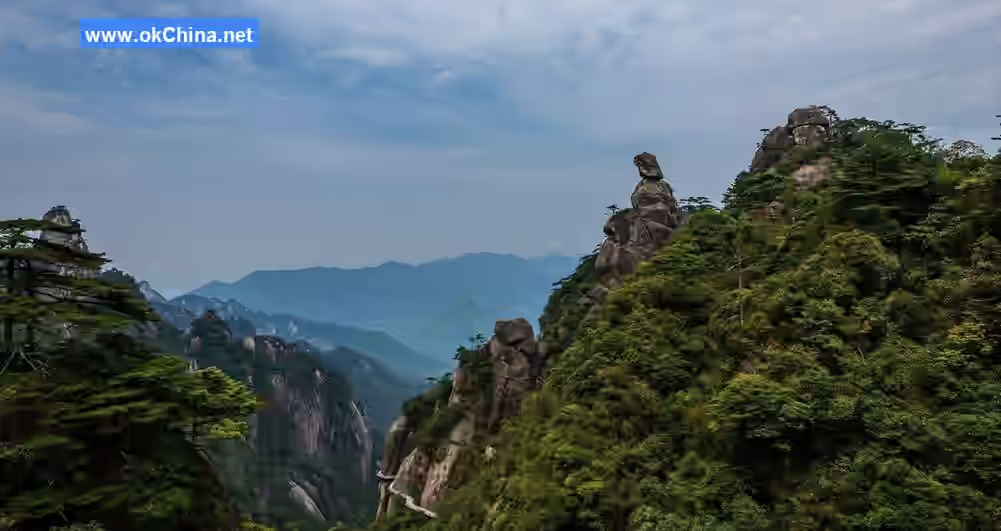
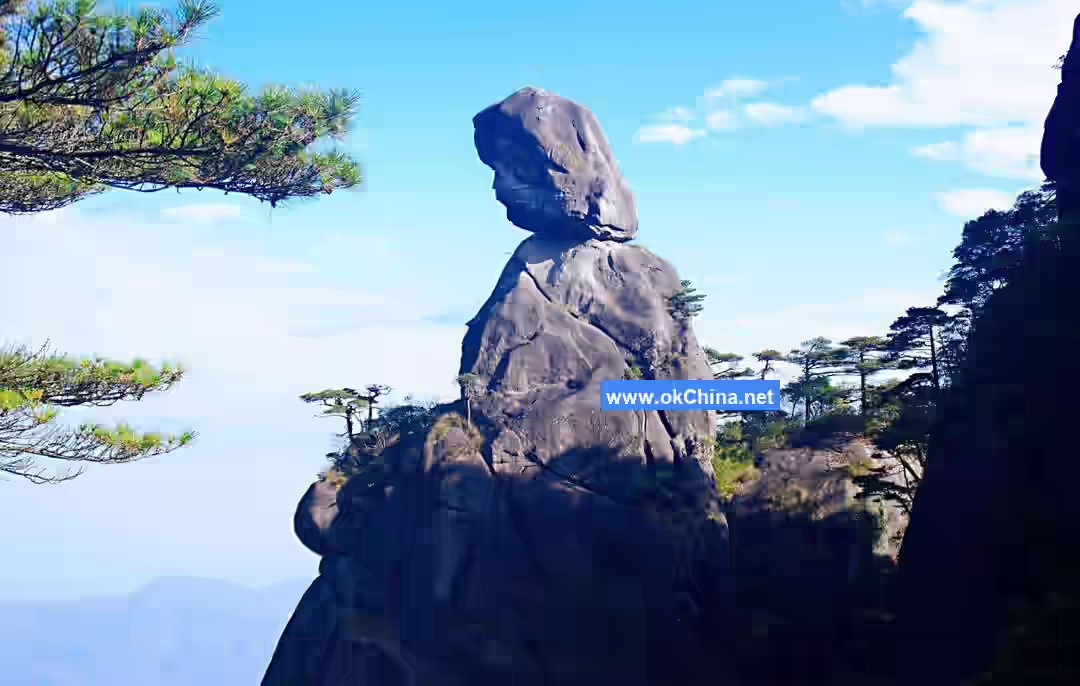
One of the three most spectacular sights of Mount Sanqingshan, the Goddess Peak is located in the southern part of the mountain, facing Yujing Peak. Standing over 86 meters tall, the peak resembles a young woman from every angle, with a full and graceful figure. She has a high nose, cherry lips, a rounded chin, and shoulder-length hair, sitting upright in deep contemplation. Her hands cradle two ancient pine trees, as if wishing to preserve eternal spring. The peak appears as if carved by divine craftsmanship, creating this artistic masterpiece. Legend has it that the maiden was the only daughter of an herb-gathering elder living at the foot of the mountain. To save the villagers, she revealed the Jade Emperor's plan to turn Mount Sanqingshan into a sea and its people into mermaids, and as punishment, she was turned into a stone peak.
3.12 Wanwu Chaotian (Ten Thousand Bamboo Slats Facing the Sky)
Located southeast of Yujing Peak, this peak rises abruptly from the ground with a flat, thin facade. Due to the development of vertical joints in the granite, the rock surface appears as if sliced, forming long, uniform fissures resembling bamboo slats, hence the name. Legend has it that while the Supreme Lord Laozi was playing chess with other immortals on Yujing Peak, he heard a loud noise from the cliff below. Looking down, he saw a giant python breaking through the rocks, intending to harm an elderly woman nearby. Moved by compassion, Laozi threw down a bamboo scripture to subdue the python. Today, below the Jian Shu Peak, a giant rock rises into the air, resembling a python, and nearby, a perilous rock looks like a village woman. This legend connects the scenic elements, adding charm for visitors.
3.13 Xianyuan Xiufeng (Fairy Garden Elegant Peak)
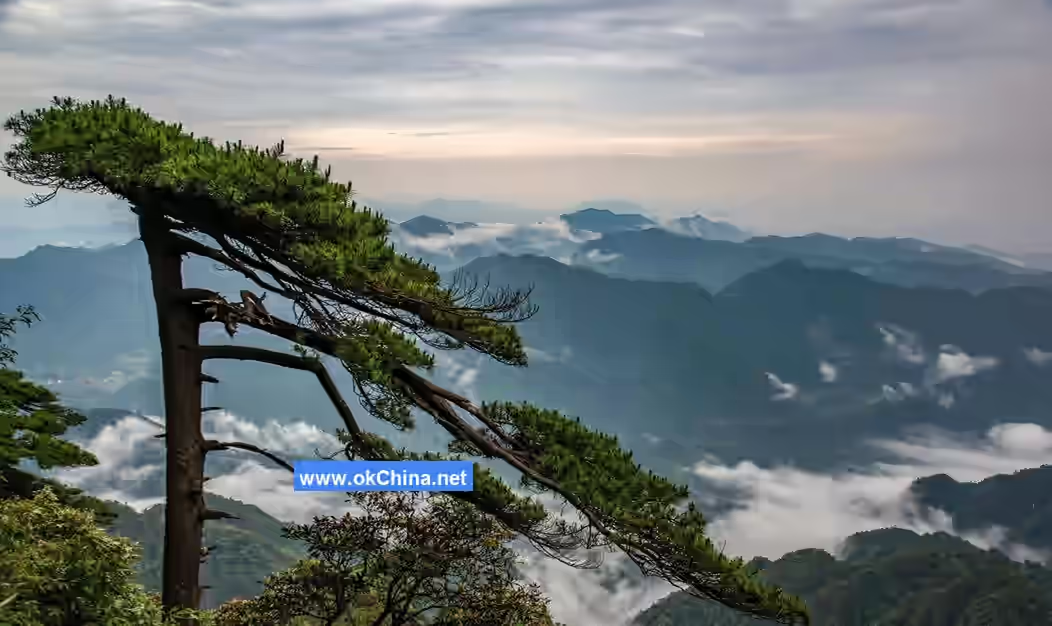
Located west of Yanlong Peak, this peak rises abruptly from the ground with a rugged and elegant appearance, hence the name. The peak is surrounded by steep cliffs, making it nearly impossible to climb. On its top, uneven rocks protrude, and several twisted pines break through the stones, displaying graceful postures.
3.14 Yujing Peak
Commonly known as Guangpingjian or Kongmingjian, Yujing Peak is located at the center of Mount Sanqingshan, standing majestically alongside Yuxu and Yuhua peaks, with an elevation of 1,816 meters.9 meters, it is the highest peak of Qing Mountain. According to the "Wei Shu Shi Lao Zhi": "The origin of Daoism stems from Laozi, who claimed to have existed before heaven and earth, nurturing all things. Above, he resides in the Jade Capital as the patriarch of divine kings; below, he dwells in the Purple Tenuity as the master of flying immortals." As Qing Mountain is a renowned Daoist mountain, its highest peak is thus named the Jade Capital Peak. The summit features two prominent rocks. On the eastern rock cliff, the three large regular script characters "玉京峰" (Jade Capital Peak) are carved. The top is flat, covering about 0 square meters, with a square stone in the center engraved with a chessboard. Legend has it that this was where the Supreme Lord Laozi played chess with other immortals, hence it is called the "Chessboard Stone." To its southeast stands a cast-iron survey marker from the General Staff Surveying and Mapping Bureau of the Chinese People's Liberation Army, marking the highest point of Jade Capital Peak. The western rock area is open and spacious, featuring two connected massive stones as sharp as blades, making it difficult to stand on. The cliff face is carved with the characters "升天石" (Ascension Stone), which is 3.08 meters higher than the eastern rock. "Here, the sky is eighteen zhang away," making it the absolute summit of Qing Mountain. Jade Capital Peak is majestic, towering into the clouds, with cliffs on the east, south, and west sides, rugged and perilous. To the northwest of the peak lies the Flying Immortal Valley, deep and unfathomable. To the north is the Ascension Ridge, with winding stone steps leading directly to the summit. Standing atop feels like being in the highest heavens, with sheer cliffs and precarious rocks beneath. Surrounding peaks intertwine, and deep ravines crisscross, making one dizzy when looking down. From the peak, gazing into the distance, the endless smoky ridges blur the line between heaven and earth. "On clear days, Mount Lu and Poyang Lake can be vaguely pointed out in the distance." To the south of Jade Capital Peak, the three peaks of Penglai stand across the ravine, steep, beautiful, lush, and enchanting. Watching the sunrise from Jade Capital Peak is a spectacular sight, with the rising sun resembling a golden plate on brocade, breathtakingly beautiful. When clouds and mist appear, the scenery transforms: sometimes vast like an ocean, sometimes ethereal like a veil. Visitors feel as if they are walking through clouds, able to reach out and grasp them, creating a fairyland on earth.
3.15 Jade Curtain Waterfall
Located in the secluded valley forests above Stone Drum Ridge on Qing Mountain. This waterfall splits into several streams: some cling closely to the cliff walls, winding and intermittent; others hang in the air, cascading down like water curtains. About one li away, another large waterfall plunges from a cliff, over 34 meters high, about 18 meters wide at the top and 30 meters at the bottom. From afar, it looks like a curtain of white jade beads hanging in the sky; up close, it resembles countless pearls shaking loose in the air.
3.16 Wind and Thunder Pagoda
On the cliff north of the Dragon and Tiger Hall. Built during the Song Dynasty. It faces a deep valley and exudes grandeur. The pagoda uses a massive rock on the cliff as its foundation, constructed from granite in three sections: base, body, and top, dry-laid and carved. It has six layers and five sides, with slightly upturned eaves and a pointed roof. Standing 2 meters tall, it is simple yet exquisite, considered a gem among Qing Mountain's ancient structures. The Wind and Thunder Pagoda is not far from Wang Hu's tomb and was originally an auxiliary structure for it, built according to geomancy principles to shield against mountain winds, hence its name. Surrounded by towering pines and beautiful scenery, it faces east over a ravine, offering expansive views, making it an excellent spot for observing sea of clouds and sunrises.
3.17 Guanyin Listening to the Pipa
Located south of Qing Mountain, below Cloud Ladder Ridge. Amidst the vast landscape, clusters of peaks gather, with one stone peak resembling an old monk sitting upright, holding a pipa in his left hand and plucking the strings with his right. Another peak takes the shape of the Bodhisattva Guanyin standing facing the monk, as if intently listening to the immortal pipa music. With gentle mountain breezes and the clear sound of flowing springs, gazing at this peak, one seems to hear the melody of the instrument.
3.18 Giant Python Emerging from the Mountain
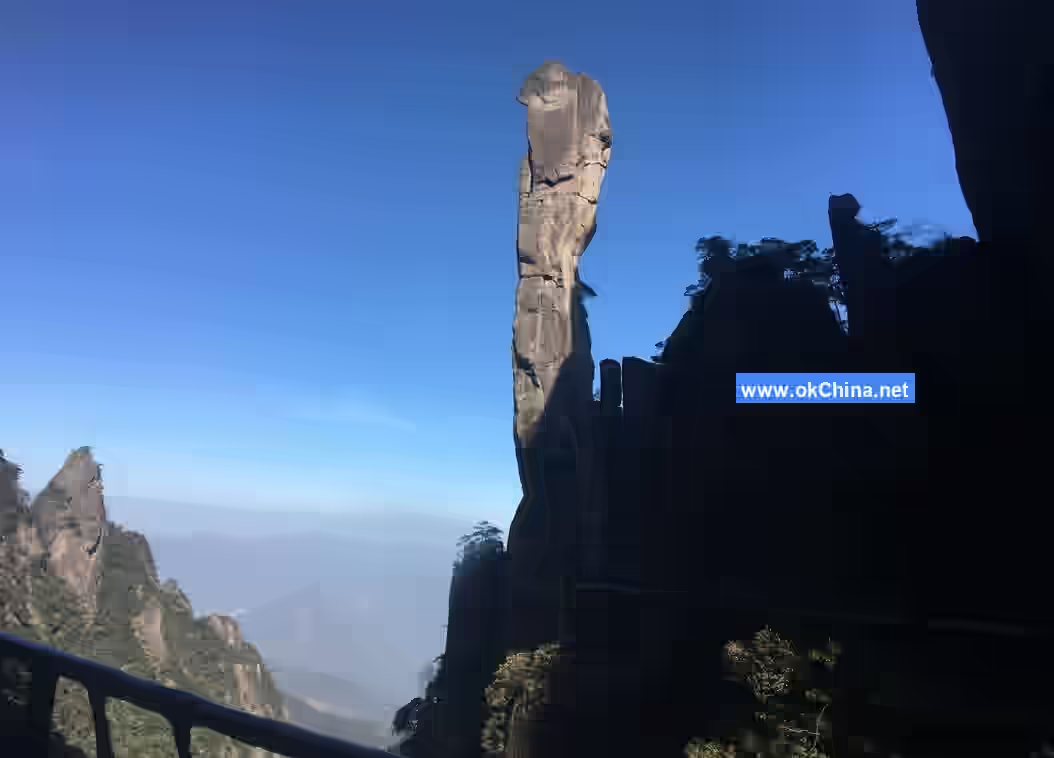
Located south of Qing Mountain, facing the Goddess Peak. This peak rises abruptly from a deep valley next to a steep cliff, soaring over 120 meters into the sky. The top resembles a snake's head, and the waist varies slightly in thickness, like a snake's body standing upright, strikingly similar to a giant python charging toward the heavens, imposing and awe-inspiring—a rare and spectacular sight. Legend has it that this was the Black Python General sent by the Jade Emperor to move mountains and create seas. Having borrowed water from the East Sea and about to emerge from its cave to stir up trouble, it was restrained by the goddess Lingzhi with a long vine, instantly immobilized, and after death, turned into this stone peak.
3.19 Southern Clear Heaven Gate Peak
Located northwest of Jade Capital Peak, facing the Spirit Turtle Peak, with the strategic pass of Heaven Gate between them leading to the Qing Palace in the Qing Blessed Land. The peak lies north of the Qing Palace; according to geomancy, the northwest direction represents the Heaven Gate. Additionally, Laozi's phrase "the opening and closing of the Heaven Gate" refers to the heart or nostrils in Daoist terminology, hence the name. Heaven Gate Peak stands at an elevation of 1,568 meters, with high and open terrain. Ascending from the industrial area requires climbing a steep cliff to reach the summit. Due to the difficulty, ancient people carved the characters "天梯" (Heavenly Ladder) on the rock face. The summit is a large, smooth granite surface covering hundreds of square meters. Standing atop this rock offers panoramic views: the wonders of the East Sea, the sunset over the western mountains, the layered peaks of the northern slopes, and the main peaks to the south, all in sight. Below, the Qing Palace, Qinghua Pond, Jingyi Pond, Hanxing Pond, and the Nine Dragon Pine Forest are fully visible. The peak is lush with pine trees and dotted with strange rocks, including sites like Purple Smoke Rock, Thunder God Rock, Alchemy Furnace Rock, Feiyin Rock, and Chaoyang Cave.
4. Scenic Area Culture
The rise and fall of the Qing Mountain Scenic Area have always been closely tied to the fortunes of Daoism. Daoist culture at Qing Mountain began with Ge Hong during the Jin Dynasty, who holds a special place in the mountain's history. Historical records indicate that during the Shengping era of the Eastern Jin Dynasty (357–361), the alchemist and renowned physician Ge Hong, along with Minister Li, built a hut on Qing Mountain to practice alchemy, write books, promote Daoist teachings, and advocate that "humans can become immortals." To this day, the mountain retains traces of the alchemy well dug by Ge Hong and his alchemy furnace. Particularly, that alchemy well, over a thousand years old, remains unfailing throughout the year, with clear and sweet water, later called the "Immortal Well." Thus, Ge Hong became the "founding patriarch" of Qing Mountain and the first disseminator of Daoism there.
By the Tang Dynasty, Daoism was established as the state religion by the court, with scholars traveling extensively across the land. Daoism at Qing Mountain flourished accordingly, with continuous incense offerings and streams of pilgrims. In the first year of the Tang (Zhou) Sheng era (639), to strengthen governance, the court carved out the southern part of Xujiang in Quzhou (modern-day Jiangshan City), the western part of Changshan, and the eastern part of Yiyang in Raozhou to establish Yushan County, thereby placing Qing Mountain under its jurisdiction. Subsequently, using alms they collected, Daoist practitioners built the first Daoist structure on Qing Mountain at the site where Ge Hong had his hut and practiced alchemy—the Laozi Palace (also known as the "Qing Blessed Land"), further solidifying Qing Mountain's important position in Daoist history. During the Northern Song Dynasty, Emperor Zhenzong devoutly believed in Daoism, honoring Laozi as the Supreme Lord Laozi, Emperor of Primordial Virtue. Around this time, batches of Daoist structures began to appear in the Qing Mountain area. To commemorate Ge Hong's pioneering efforts, practitioners built the Ge Xian Temple on the mountain, enshrining statues of Ge Hong and Minister Li. Simultaneously, Fuqing Temple and Lingji Temple were also constructed. Particularly noteworthy is the Wind and Thunder Pagoda, built by practitioners on the cliff of Heaven Gate Peak using natural granite, dry-laid and carved into a six-layer, five-sided structure. This pagoda has withstood a thousand years of wind and rain, standing firm to this day, hailed as a brilliant gem among Qing Mountain's Daoist architecture.
During the Yuan Dynasty, the court used Daoism as an ideological tool to control the Han Chinese, further elevating its status. At this time, practitioners adhering to the Quanzhen sect appeared within the Qing Temple, dedicated solely to Daoist activities, sometimes numbering in the dozens. More practitioners followed the Zhengyi sect, adhering to Daoist scriptures and regulations, proficient in various ritual ceremonies, and engaging in Daoist activities among the people: some focused on yin matters, such as guiding souls and performing merits; others on yang matters, such as conducting jiao rituals. According to Yuan Dynasty scholar Lu Qiyuan's "Travelogue of Qing Mountain," large-scale construction was underway at Qing Mountain to expand the Qing Temple. The temple enshrined stone statues of deities including Stone Immortal Lord, Ge Hong, Minister Li, Golden Boy, Jade Girl, and Marshal Pan. Scenic spots and locations on the mountain were also named using Daoist terminology, such as Immortal Bridge, Thunder God Rock, and Judge Rock. This reflects the flourishing state of Qing Mountain at the time. Emperor Taizu of the Ming Dynasty, Zhu Yuanzhang, particularly revered Daoism, appointing Celestial Master Zhang as the national religious leader, making Longhu Mountain in Guixi the national center for Daoist activities.
Qing Mountain is only 300 li from Longhu Mountain, very close, leading to frequent exchanges and close connections between missionary and alms-seeking practitioners. Daoist activities at Qing Mountain were almost directly under the control of Celestial Master Zhang. During this period, pilgrimage activities on the mountain were extremely vibrant. Practitioners and believers scattered across Jiangxi, Zhejiang, Anhui, and Fujian organized incense societies annually in the eighth or ninth month, with the motto "one year pilgrimage to Qing Mountain, one year to Shaohua." They traveled in groups, led by statues of Qing deities and banners, burning incense and candles, carrying sacrifices such as pigs, cattle, and sheep, accompanied by the firing of three-eyed cannons for effect, along with drums and music, marching grandly toward Qing Mountain. Daily numbers ranged from tens of thousands to several thousand. The Ming Dynasty marked the peak of Daoist activities at Qing Mountain. Daoist structures on the mountain proliferated like bamboo shoots after rain. By the Jingtai era, numerous buildings had been erected, including the Dragon and Tiger Hall, the Practitioners' Ascension Altar, the Jade Zero Temple, the Inspection Office, the Teaching Hall, the Jiutian Yingyuan Office, the Marshal Pan Temple, Fanghao Shang, the Heaven Gate Stone Archway, the Flying Immortal Platform, the Flowing Rosy Bridge, and stone steps like the "Gate of a Thousand Steps to All Wonders" and the "Gate of a Hundred Steps to Emptiness." Additionally, the Qing Temple was rebuilt, and the Qing Palace was renovated. Ming Dynasty palace architecture was unique: two rows facing south, constructed from granite carved and dry-laid on the mountain, with stone beams and pillars, surrounded by stone walls. Inside, 130 stone statues of deities, including the Jade Pure, Upper Pure, and Supreme Pure, were enshrined, along with 45 cliff inscriptions.
Comments
Post a Comment