
Sanhe Ancient Town
1. Introduction
Sanhe Ancient Town, historically known as Quezhu, Quewei(zhu), or Que'an, is a famous Chinese historical and cultural town and a national AAAAA-level tourist attraction. It is located at the southern end of Feixi County, Hefei City, Anhui Province, at the junction of Feixi, Lujiang, and Shucheng counties, with a total area of 2.9 square kilometers.
Originally a highland in Chaohu Lake, Sanhe Ancient Town gradually became land due to silt accumulation. In the late Northern and Southern Dynasties, it was called Sancha River, and during the Ming and Qing dynasties, it was established as Sanhe Town.
Within Sanhe Ancient Town, the Fengle River, Hangbu River, and Xiaonan River converge, flowing eastward for about 15 kilometers via the Xin River into Chaohu Lake. The town is home to historical relics such as ancient city walls, ancient fortresses, the former headquarters of the Taiping Army, the Prince Ying's Mansion, One-Person Lane, Wannian Stage, Li Family Granary, Heru, and Liu Tongxinglong Manor. It is also the birthplace of Lu Opera and is known for local specialties like rice dumplings, cowhide candy, crispy candy, malt candy, tea-flavored dried tofu, and rice wine.
2. Geographical Environment
2.1 Location and Territory
Sanhe Ancient Town is situated at the southern end of Feixi County, Hefei City, Anhui Province, at the junction of Hefei, Lu'an, and Chaohu. Its geographic coordinates range from 31°30ˊ to 31°32ˊ north latitude and 117°14ˊ to 117°16ˊ east longitude. It lies about 35 kilometers south of downtown Hefei, adjacent to Shucheng County and Lujiang County, and borders Chaohu Lake. It is the site of the ancient Quezhu Town, with a total area of 2.9 square kilometers.
2.2 Climate
Located by Chaohu Lake, Sanhe Ancient Town experiences a subtropical monsoon humid climate, with an annual precipitation of around 1,000 millimeters.
2.3 Topography
The ancient streets of Sanhe Ancient Town were originally part of the western shore of ancient Chaohu Lake, with relatively high ground elevation. Over time, silt accumulation and land reclamation gradually turned the area into land. The absolute elevation (Yellow Sea elevation) within the ancient streets ranges from 9.1 to 11.6 meters, accounting for 20% of the town's total area.
3. Main Attractions
3.1 Sanhe Great Victory Relics
The Sanhe Great Victory relics are located in the eastern and central streets of Sanhe Town, primarily featuring the Taiping Army city walls and the Prince Ying's Mansion.
3.1.1 Taiping Army City Walls
In 1855, the Taiping Army built a city in Sanhe. After a century and a half, two sections of the Taiping Army's city walls remain: one is about 50 meters long, located about 10 meters to the right of the Dajie Gate, representing the northern wall. The other is about 30 meters long, situated in front of a small gate, representing the eastern wall. These two sections preserve traces of the ancient battlefield of Sanhe. On August 11, 1858 (during the Xianfeng reign of the Qing Dynasty), Taiping generals Chen Yucheng, Li Xiucheng, Li Shixian, and Nian Army general Zhang Luoxing jointly fought against the Qing forces, annihilating over 6,000 Xiang Army troops in Sanhe Town. Xiang Army leaders Li Xubin and Zeng Guohua died here. This event is historically known as the "Sanhe Great Victory." Existing relics include Taiping Army fortifications, their headquarters in Sanhe, as well as artifacts such as cannons, stone carvings, and inscriptions.
3.1.2 Former Prince Ying's Mansion
This served as the Taiping Heavenly Kingdom's headquarters and the command center for the Taiping Army before and after the Battle of Sanhe. A 12-meter-long screen wall bears the inscription "Former Prince Ying's Mansion," while two 4.8-meter-wide blue stone doorframes exude solemnity and grandeur. Two side buildings on the left and right add to its majestic appearance. The mansion will house the Sanhe Great Victory Memorial Hall, showcasing the historical story of this significant battle.
3.2 Ancient Folk Streets
The ancient folk streets are located in the southern and western streets of Sanhe Town.
3.2.1 Southern Street Ancient Folk Street
Stretching from Sanxian Bridge and Quezhu Promenade in the north to the former residence of Yang Zhenning in the south, this area covers approximately 11,000 square meters. The street features a 100-meter-long, 3-meter-wide bluestone pavement and includes 52 households with a total of 389 rooms. Key relics include Sanxian Bridge, Yang Zhenning's former residence, and One-Person Lane. The Southern Street Ancient Folk Street has been fully restored and is now open to the public.
Yang Zhenning's Former Residence
In 1937, 17-year-old Yang Zhenning moved to Sanhe with Luzhou Middle School, where he lived and studied for three months. The young Yang Zhenning walked from One-Person Lane to the world, eventually becoming a renowned scientist. His former residence displays photographs, literary materials, and interactive scientific exhibits related to his life. The residence consists of five sections: the first two sections feature photo exhibitions of Professor Yang Zhenning, the third section is a restoration of his living quarters, and the last two sections highlight his academic achievements.
3.2.2 Western Street Ancient Folk Street
Extending from Liu Tongxinglong Manor in the east to the end of Western Street, this area is 245 meters long, 85 meters wide, and covers approximately 20,825 square meters. The street pavement is 245 meters long and 3.5 meters wide, with 148 households and a total of 469 rooms. The Western Street Ancient Folk Street has been largely restored and is set to open to the public soon. Notable relics include Liu Tongxinglong Manor and Zheng Shanfu's former residence.
Liu Tongxinglong Manor
This brick-and-wood structure covers about 700 square meters and consists of five sections with 32 rooms. The street-facing section is a two-story building, the second section features a "horse-riding revolving heart" tower, the third is an open hall for receiving guests, the fourth is a side room for ancestral worship, and the fifth is a residential area. The last three sections are single-story houses. Liu Jintang (1879–1941), once the vice president of the Sanhe Chamber of Commerce, partnered with his second brother Liu Jinchen to run a rice and cloth business under the name "Tongxinglong." Their business flourished, and they lived here together. A golden plaque hung on the north wall of the street-facing building, giving the manor its name.
Zheng Shanfu's Former Residence
Zheng Shanfu (1882–1965) served as the secretary to the famous patriotic general and Northwest Army leader Feng Yuxiang during his youth and middle age. In the 1930s, when Chiang Kai-shek placed Feng Yuxiang under house arrest on Mount Tai in Shandong, Zheng Shanfu was forced to relocate his family to Sanhe. The brick-and-wood residence covers about 400 square meters and consists of five sections. Zheng Shanfu was highly knowledgeable and once served as a teacher to Han Fuju, the governor of Shandong Province during the Republic of China. He enjoyed collecting calligraphy, paintings, and books from famous figures, but his collection of Tang and Song dynasty works was destroyed during the Cultural Revolution.
3.3 Jigong Bridge
Jigong Bridge was built in the 1940s. At the time, movies were just becoming popular, and a middle school student drowned while rushing to cross the river to watch a film. In response to public appeals, Sanhe Town decided to build a bridge here. In 1944, Zhang Jigong, commander of the Kuomintang's Sixth Army, passed through Sanhe to visit the family of senior Kuomintang general Sun Liren. Seeing the bridge under construction, Zhang donated funds to support it. After the bridge was completed, local gentry named it Jigong Bridge in his honor.
3.4 Sanxian Bridge
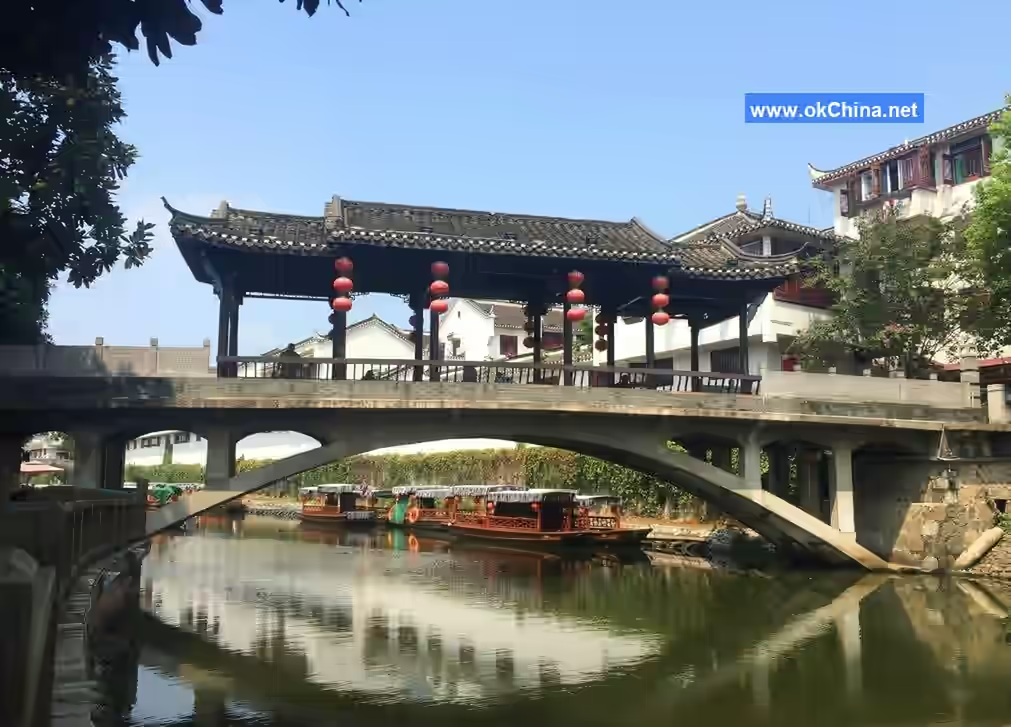
Sanxian Bridge, also known as Stone Bridge, is an ancient bridge in Sanhe. It is 38 meters long and 7 meters wide, with three arches. Built in 1926, the bridge is over 70 years old. "One bridge spans two banks, a rooster's crow echoes across three counties." Sanxian Bridge serves as a link connecting Feixi, Shucheng, and Lujiang counties, symbolizing Sanhe. The bridge was funded by donations collected by an anonymous monk named Bao, who spent half his life gathering alms to build it. Bao died of exhaustion just before the bridge was completed, leaving behind a bridge built with his life.
3.5 Quezhu Covered Bridge
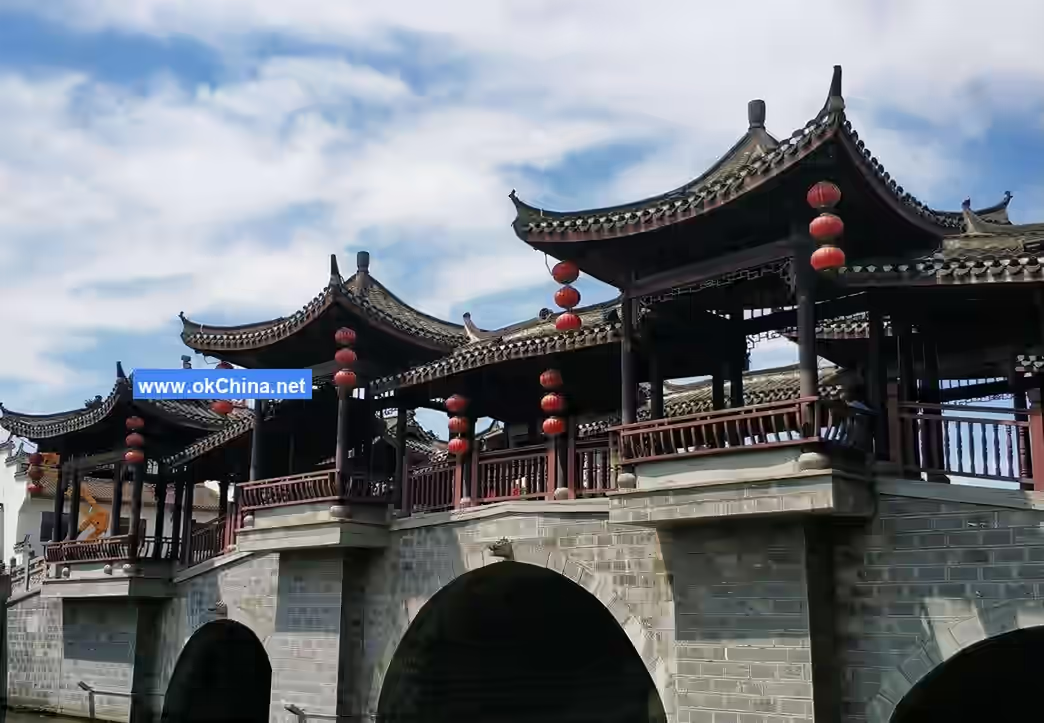
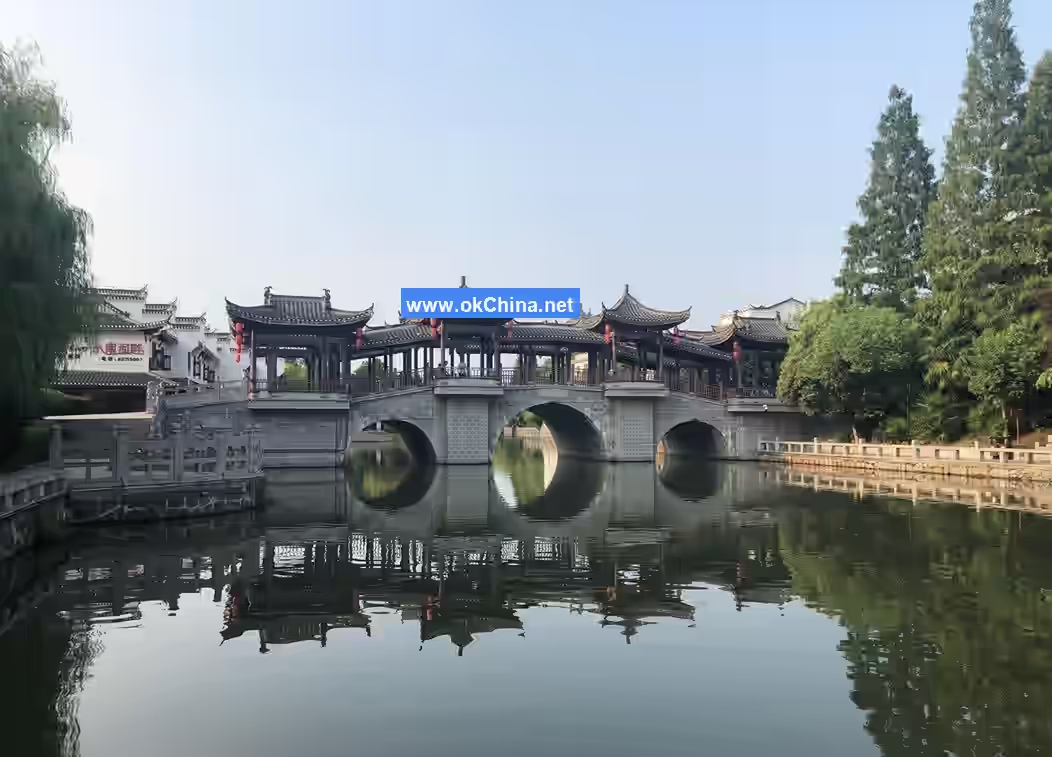
Originally an ancient bridge called Quezhu Bridge, it has been renovated into the Quezhu Covered Bridge. The covered bridge is 22 meters long and 2.7 meters wide, supported by 12 pillars that hold up a two-story pavilion with upturned eaves. Both sides of the bridge feature "beauty seats" for visitors to sit and enjoy the scenery. Four square blue stone lamp posts at both ends provide lighting for tourists at night.
3.6 Mosquito-Free Bridge
Also known as Xiaonan Bridge or Dai's Bridge, Mosquito-Free Bridge was built by a widow surnamed Dai. According to legend, during the late Song Dynasty, a man named Luo Shi, known for his prophetic words, came to Sanhe. To thank Dai for her hospitality, he offered to do something for her. Dai said, "There's nothing I need, except there are too many mosquitoes on this bridge." Luo Shi replied, "I'll fan the mosquitoes away for you. With one wave of my fan, I'll send them to the eight nations and nine continents." Dai said, "No need to send them that far. Just fan them from this side of the bridge to the other side." Luo Shi then gently fanned with his feather fan, driving the mosquitoes away. Since then, there have been no mosquitoes on Dai's bridge, and it was named Mosquito-Free Bridge.
3.7 Guogong Bridge
Guogong Bridge is an ancient bridge said to have been built by a historical Guogong. "Guogong" was a noble title in ancient China, ranking below Junwang (Prince of a Commandery) and above Houye (Marquis). This title existed during the Sui, Tang, Song, Yuan, and Ming dynasties. The exact dynasty and Guogong who built Sanhe's Guogong Bridge remain a historical mystery. Regardless of who built it, as long as they did something good for the people, they are remembered.
3.8 One-Person Lane
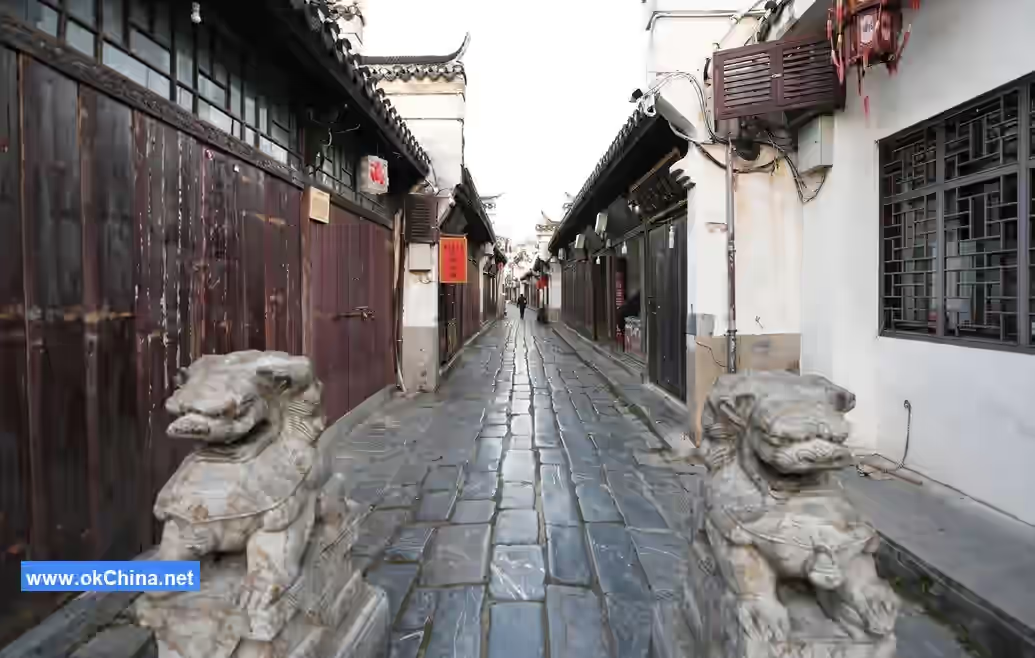
Located on the Southern Street antique street, One-Person Lane is the oldest and longest deep alley in Sanhe. It is so narrow that only one person can pass through at a time. Walking into One-Person Lane feels like stepping into an ancient tunnel, evoking a sense of historical沧桑.
3.9 City God Temple
Situated on Southern Street, the City God Temple features historically and culturally significant prohibition steles against smoking and gambling on its outer walls. The stone drums, twin lions, and twin phoenixes inside are precious relics.#### 3.9.1 Prohibition of Opium and Gambling Stele This prohibition stele, embedded in the wall of the City God Temple, was erected in the 12th year of the Tongzhi reign of the Qing Dynasty (1873). It is the best-preserved ancient stele in Sanhe Town. The stele is 112 cm long and 45 cm wide, made of bluestone. The inscription is vertically carved in regular script in intaglio, consisting of 5 lines with 27 characters per line at most, totaling 73 characters. This ancient stele illustrates that the prohibition of opium and gambling is a historical topic.
3.9.2 Smallpox Vaccination Notice Stele
This notice stele from Luzhou Prefecture was erected in the 22nd year of the Guangxu reign (1896). It is currently located in the courtyard of Xu Hongyu's house on Lower Heng Street, South Street. The stele is made of bluestone, measuring 111 cm long and 59 cm wide, with decorative patterns carved along its edges. The inscription is vertically carved in regular script in intaglio, comprising 18 lines with 45 characters per line at most, totaling 508 characters. This stele indicates the local government's determination to promote smallpox vaccination at that time.
3.10 Wooden Goose Bridge
This is an ancient scenic site. Legend has it that in ancient times, due to the crisscrossing network of rivers and canals, the boundary between Hefei County and Shucheng County was difficult to define. One year, the authorities of the two counties carved a large wooden goose and set it adrift from upstream. It floated to South Street in Sanhe and stopped moving. Consequently, the river originally by South Street came to be known as the Wooden Goose River, and Sanhe Town was also called Wooden Goose Town. To commemorate the boundary demarcation by the wooden goose, a bridge was built in Sanhe, named the Wooden Goose Bridge. Because the bridge deck was very short, it was also called the "Three Steps, Two Counties Bridge."
3.11 Oar-Racking Shoal
Located on the west side of Sanhe Port. Due to a bend in the Fengle River here, silt accumulates. During the Three Kingdoms period, Cao Cao passed through this river bend on his fourth expedition to Chaohu. His military boats ran aground, and the soldiers all racked their oars upright. Cao Cao then jokingly called this place the "Oar-Racking Shoal."
3.12 Two Dragons Street and Yellow Water Well
There is a street in East Street of Sanhe Town named Two Dragons Street. Within Yangpo Village of Sanhe Town, there is a well named Yellow Water Well. It is said that the brothers Zhao Kuangyin and Zhao Kuangyi passed through Sanhe in their childhood. Later, they successively became emperors of the Song Dynasty, so this street was named Two Dragons Street. The well, because it received the tears they shed, was originally called Imperial Water Well, which later evolved into Yellow Water Well.
3.13 Great Victory Gate
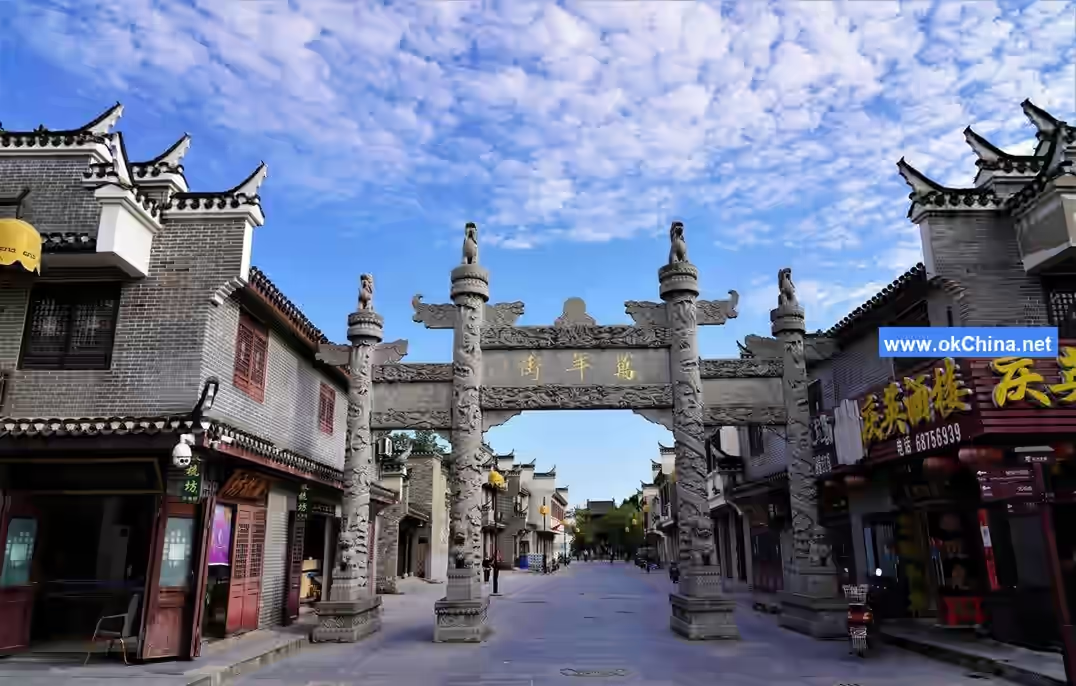
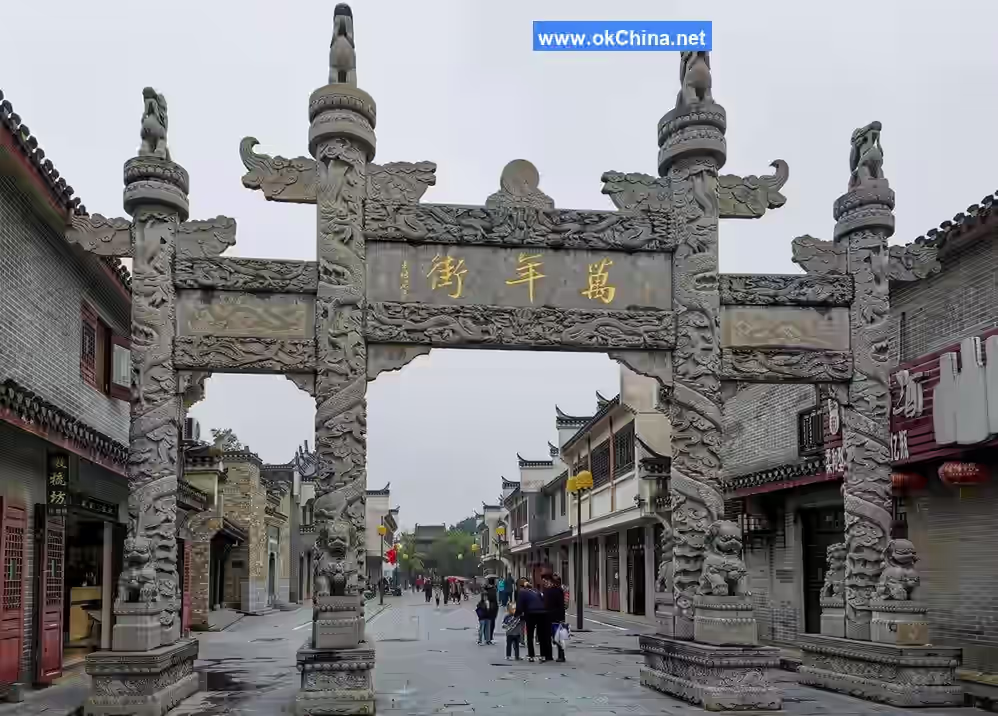
The Great Victory Gate, located on Yingwang Road, derives its name from the historical "Great Victory of Sanhe." This gate is a memorial archway gate with four side gates on both flanks. The three characters for "Great Victory Gate" were inscribed by the famous calligrapher Ke Dalin. The couplets on both sides were composed by the renowned poet Liu Zuici. This gate can be considered the entrance to the ancient town tourism area of Sanhe.
3.14 Eternal Stage
Diagonally opposite the former residence of Prince Ying, the reconstructed Eternal Stage features a frame structure with an antique style, featuring upturned eaves and corners, making it quite spectacular. In front of the stage is a 2,000-square-meter cultural plaza paved with bluestone, capable of accommodating thousands of people to watch performances.
3.15 Dafu Residence
The Dafu Residence was the private residence of civil officials during the Ming and Qing dynasties. It displays Ming and Qing furniture and architectural components. Key exhibits include the "Dafu Di" plaque inscribed by Zhu Fengbiao, who served as Minister of five ministries (Works, Justice, Revenue, War, and Personnel), a Ming Dynasty full-surface cherry wood square table, rosewood and padauk round-backed armchairs, nanmu cabinets, a golden-threaded nanmu canopy bed, and early Qing ancestral portraits.
3.16 Sun Liren's Former Residence
Sun Liren's former residence is a typical Huizhou-style dwelling from central Anhui, consisting of two sections. The first section features an exhibition of pictures and texts, mainly introducing Sun Liren's life, including sections on his long academic journey, family background, determination to strengthen himself, the need for constant self-improvement, studying in the United States, and the Battle of Shanghai ("August 13th") etc. Between the first and second sections is a courtyard with a skylight. The sides of the courtyard mainly display pictures of some of the battle terrains from Sun Liren's time. The second section is a two-story building. The ground floor is a reception hall, and the second floor is a small wooden loft.
3.17 Immortal Maiden Tower
The Immortal Maiden Tower was formally established by the partnership of Shi Daosheng, Peng Zhongqiao, and Wang Liangzhi, who invested in the food industry "Zhonghexiang." The "Immortal Maiden Tower" largely preserves its original appearance, and the stele "Compassionate Heart Aiding the World," carved in the 25th year of the Republic of China (1936), still exists.
3.18 Dong Yinchu Memorial Hall
The Dong Yinchu Memorial Hall focuses on displaying the extraordinary life of Mr. Dong Yinchu. It is mainly divided into six exhibition halls: Hall One: Land of Outstanding People; Hall Two: Family Background; Hall Three: A Lineage of Scholarly Tradition; Hall Four: Resisting Japan and Saving the Nation; Hall Five: Industrial Salvation of the Nation; Hall Six: Deep Bonds with Generations of Leaders.
3.19 Ancient Entertainment House
The Ancient Entertainment House was built during the Xianfeng period of the late Qing Dynasty by the local richest man, Zhang Baiwan, for his daughter before her wedding.
3.20 Moon-Viewing Pavilion
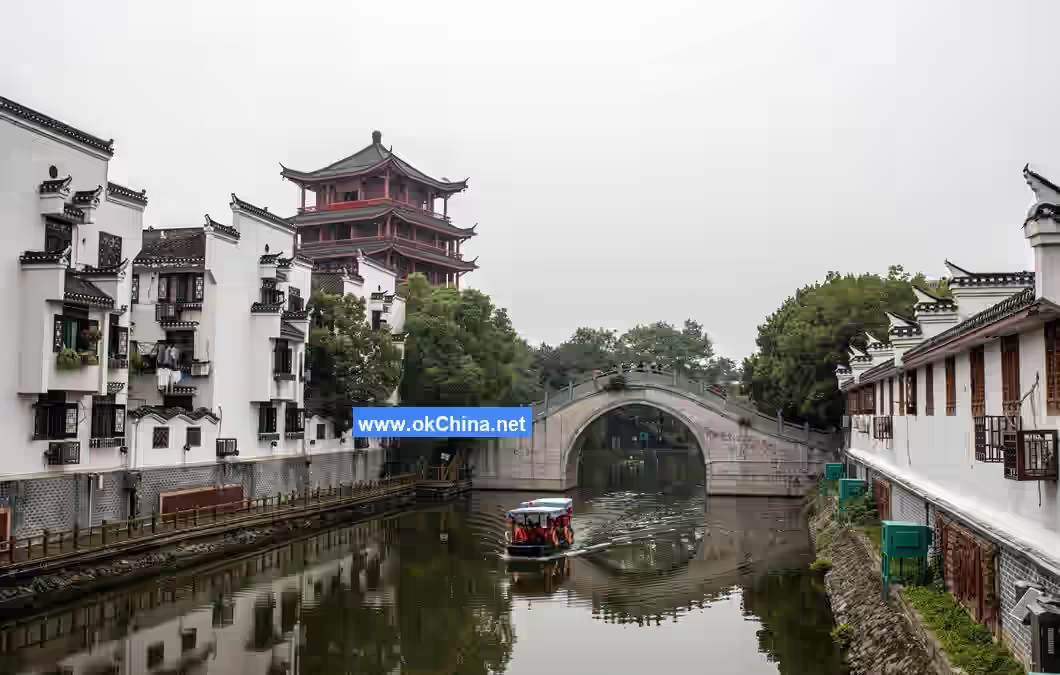
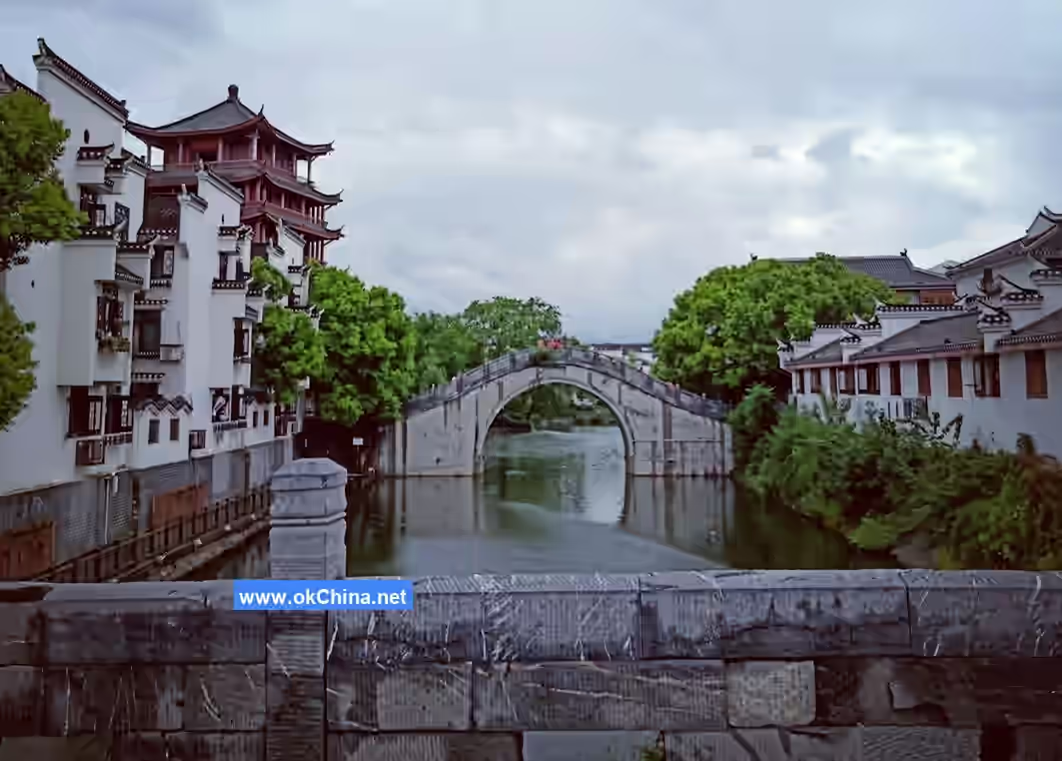
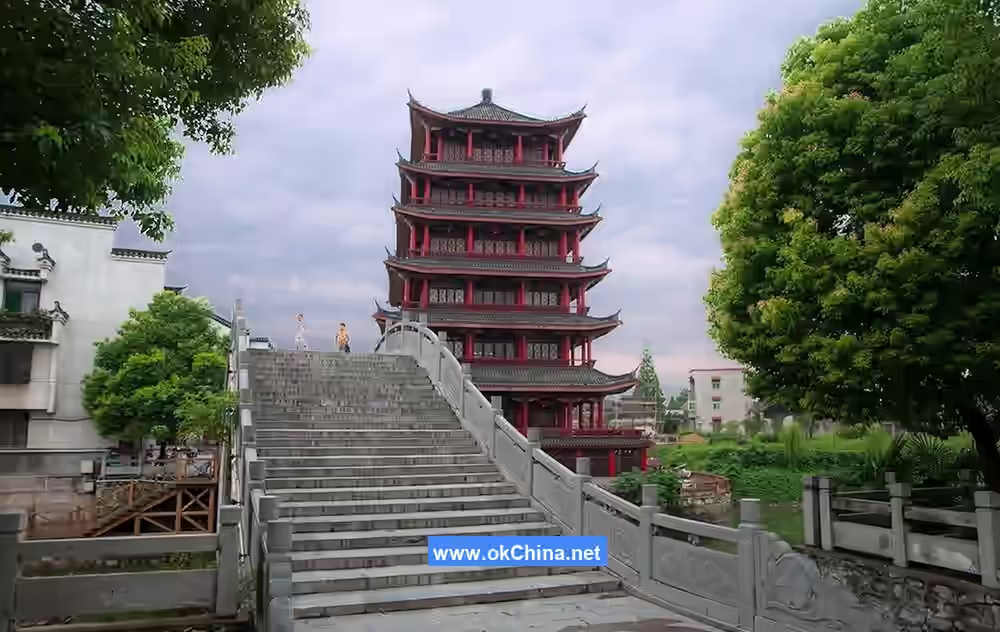
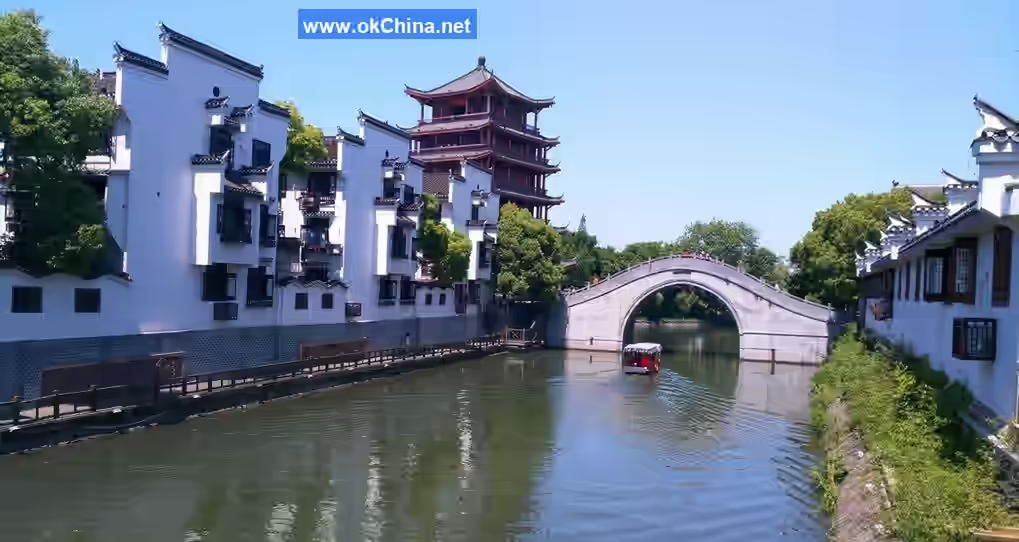
The Moon-Viewing Pavilion, also known as the National Essence Tower. The Moon-Viewing Bridge is an arched stepping stone bridge, entirely paved with thick bluestone slabs, with balustrades made of bluestone relief carvings. The Moon-Viewing Bridge and the Moon-Viewing Pavilion built by the water complement each other beautifully. The pavilion is 37 meters high, a 7-story ancient pagoda.
4. Architectural Layout
4.1 Spatial Pattern
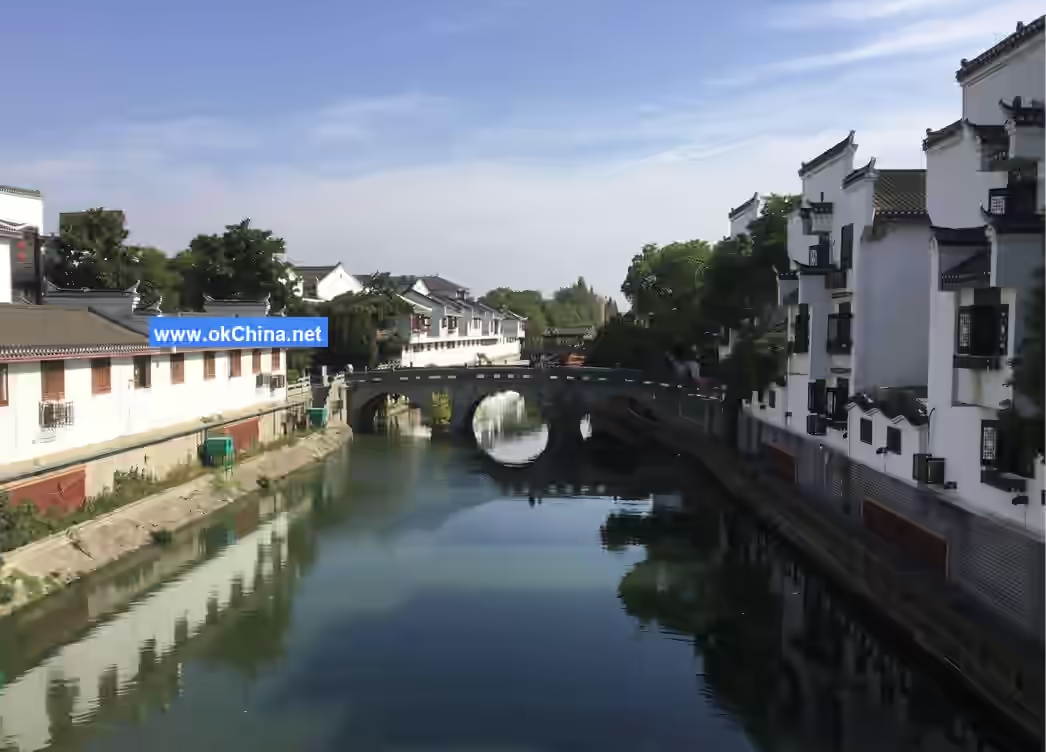
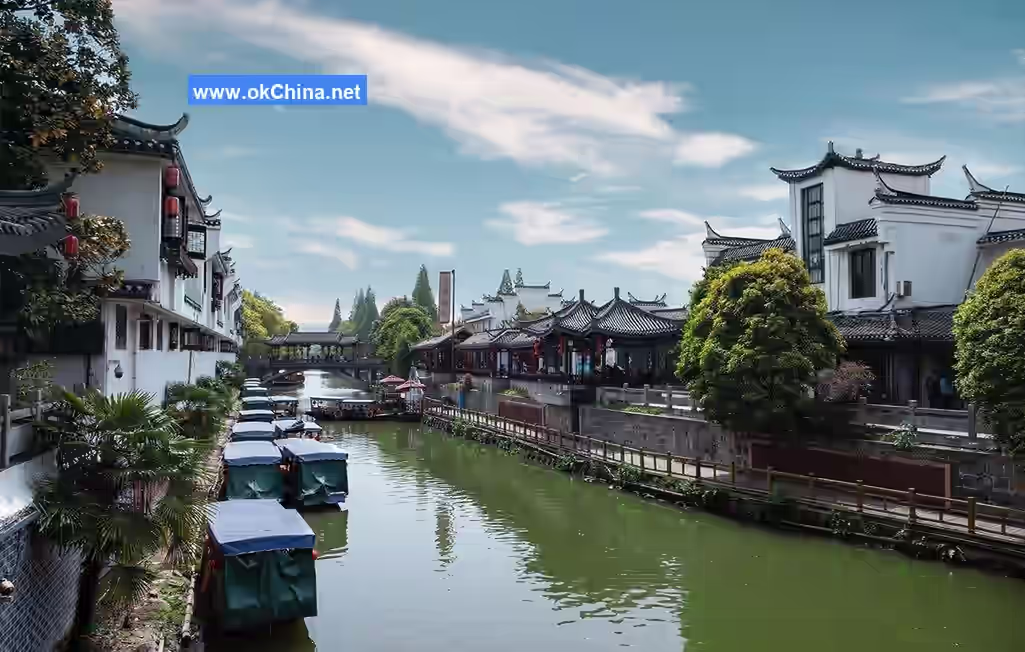
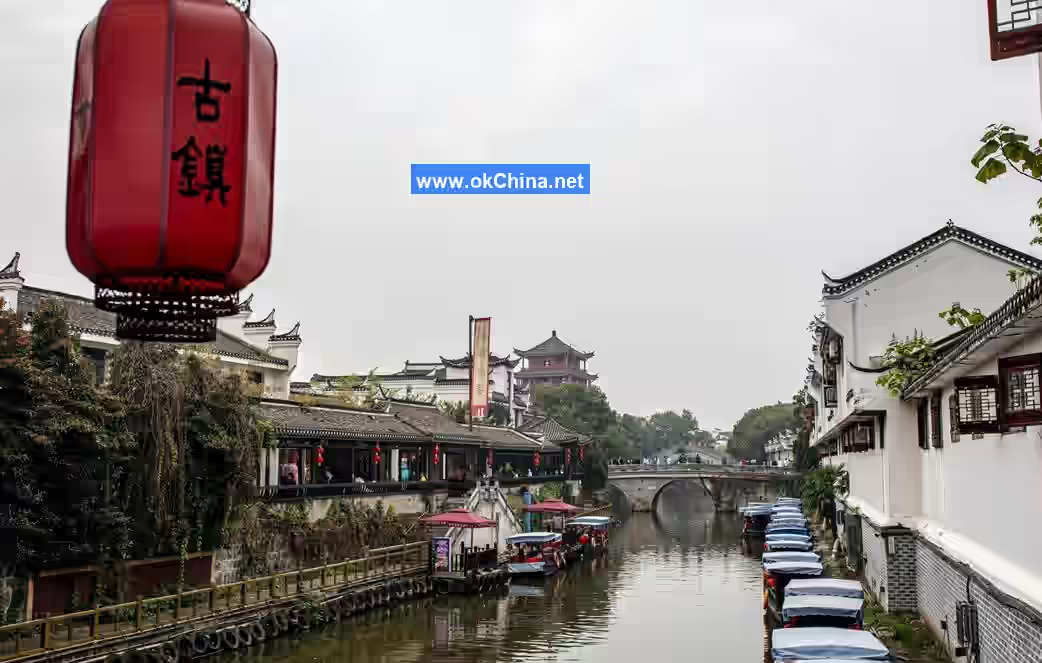
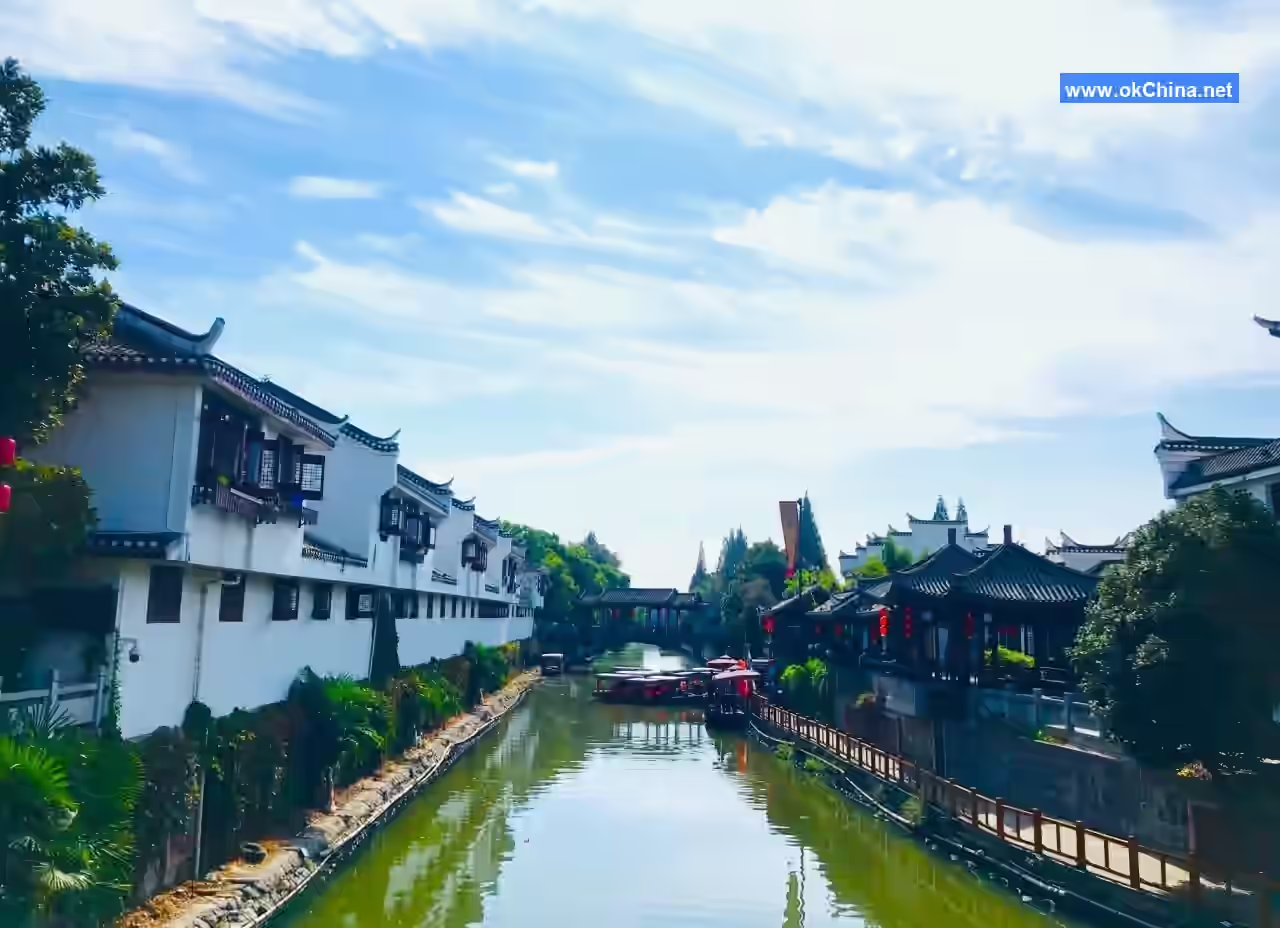
The basic layout of the ancient town of Sanhe is: the two banks form an outer ring, with three islets standing in the middle. Buildings are constructed facing the water, extending along the river, forming a long, narrow shape surrounded by water on all sides. Three rivers encircle Sanhe, with rivers and lakes navigable and river embankments connected, described as "branches and tributaries intertwine, capable of hiding ten thousand vessels." The three rivers—Fengle River, Xiaonan River, and Hangbu River—form a "口"-shaped layout embracing the ancient town. The basic pattern of the街区 (block/neighborhood) takes the Xiaonan River as the central axis, with streets formed along the river, using wharves as endpoints and the river course as the boundary, radiating out to form several ancient commercial streets.
Using "streets and lanes" as the骨架 (framework/skeleton), connecting numerous narrow alleys, stringing together clusters of residential houses. The streets, lanes, and residential compounds are relatively regular, with a central axis and clearly defined edges. The street and lane system is dendritic, with main streets and branch lanes connected in a "十" shape, elevating the ancient town above the Sanhe river embankments. A bluestone-paved path left in the middle forms the ancient street, divided by direction into three main streets: South Street, North Street, and West Street. The streets and branch lanes constitute the main traffic arteries of the ancient town.
Using "buildings" as nodes, at both ends of the ancient town, remnants of the city walls from the Taiping Rebellion battlefield are preserved. The city walls, artillery forts, and the deep, wide river channels served both supply and defensive functions.
4.2 Architectural Style
4.2.1 Layout Characteristics
Buildings in the ancient town of Sanhe are generally 1 to 2 stories tall. The ground floor is typically for shops, the second floor for residence, often with the shop in front and residence behind, mixing workshop and dwelling. The平面布局 (plan layout) of the ancient town's buildings is composed of "courtyard houses" (合院) as the basic unit, primarily三合院 (three-sided courtyard) and四合院 (four-sided courtyard/siheyuan), incorporating both northern courtyard forms and southern skylight courtyards. The courtyards face south, with a symmetrical layout along a central axis. The main平面形式 (plan forms) are "凹"-shaped, "回"-shaped, "H"-shaped, and "日"-shaped. The "凹"-shaped plan, also known as the three-bay style, is a three-bay, one-section building with the skylight in front, the main hall at the back, and side rooms on the left and right. The "回"-shaped plan, or四合式 (four-sided style), is a three-bay, two-section building, which is a combination of two three-bay styles facing each other, with the skylight in the center, the main hall towards the back, and four side rooms at the four corners. The "H"-shaped plan is a three-bay, two-section style where two three-bay styles are背对背组合 (combined back-to-back), with skylights at the north and south ends, the central part housing two main halls, and four side rooms located on either side of the halls. The "日"-shaped plan is a three-bay, three-section style, where there is a skylight between the first and second sections and between the second and third sections, essentially a纵向并置 (longitudinal juxtaposition) of two "凹"-shaped plans. In larger residential houses, the second floor features a "revolving heart loft" (转心楼), a circular corridor围绕天井 (surrounding the skylight). Standing by the railing, one can clearly hear conversations from opposite sides and above and below, characteristic of the四合院式徽派风格建筑 (courtyard-style Huizhou architecture). The roofs of the dwellings are constructed with inwardly curved hip roofs (庑殿顶), a unique spatial form of ancient dwellings in the Jianghuai region.
4.2.2 Color Characteristics
Sanhe dwellings are composed of five characteristic colors: black, white, gray,棕红 (brownish-red), and土黄 (earth yellow), divided into interior and exterior architectural color schemes. The exterior architectural colors mainly consist of three color families: black, yellow, and gray. Gray-black tiles and gray-yellow brick walls are the main components of the exterior structural colors. The interior architectural colors mainly consist of three color families: white,棕红 (brownish-red), and yellow.
4.2.3 Structural Characteristics
The buildings in the ancient town of Sanhe are constructed using post-and-beam (抬梁式) and column-and-tie (穿斗式) frameworks, either choosing one or mixing both. The architectural features of Sanhe ancient town are traditional wooden structures. In terms of roof, walls, doors, windows, and flooring, the choice of materials and craftsmanship all adopt traditional Chinese forms. The roofs of Sanhe ancient town buildings are covered with small black tiles. The structure is thinner than in the north, and double-layer tiles common in the north are not used. The construction method is relatively simple: basically, rafters are placed at equal intervals on the eaves purlins, fixed with蚂蟥钉 (leech nails?), roof panels are placed on top, covered with black tiles, combining仰瓦 (concave tiles) and扣瓦 (convex tiles), arranged in a straight line longitudinally. Exterior walls use locally characteristic small black bricks. The construction of the外围墙体 (outer enclosing walls) uses the sill window as a boundary: the lower part is solid wall, the upper part is空斗墙 (hollow brick wall). The bricks for the hollow wall are hollow bricks, with碎砖 (broken bricks) or草泥 (straw mud) and other杂物 (debris)填充 (filled) in the hollow parts. The resulting wall saves material, is lightweight, and provides thermal and sound insulation. Wall bricks are categorized by their laying pattern into眠砖 (stretchers),丁砖 (headers), and斗砖 (soldiers?). The main forms include一眠一斗式 (one stretcher, one soldier?),一眠三斗式 (one stretcher, three soldiers?),单立砖无眠空斗式 (single soldier? without stretcher hollow wall), and双丁砖无眠空斗式 (double headers without stretcher hollow wall). The vertical joints of the bricks in upper and lower皮 (courses/layers) are staggered, with white grout used for pointing in the middle. Doors and windows. Board doors (板门) are assembled from several wooden planks, originally featuring iron fittings like door nails and door rings. Lattice doors and windows (格扇门窗) are primarily made of traditional wood materials, supplemented with some stone. Main streets and branch lanes are paved with bluestone slabs of varying sizes. The short edges of the bluestone slabs are laid along the direction of the street,顺势而上 (following the slope). At some corners and intersections, smaller bluestone slabs are used for transition.
4.2.4 Material Characteristics
The buildings and architectural components in the ancient town exhibit a relatively rugged and厚重 (substantial/heavy) architectural style characteristic of northern Anhui.The wall decorations of ancient residences in the old town primarily feature white walls and gray brick walls with exposed masonry. However, not all walls are painted white; only the fire walls are left white, while the entire structure is made of blue bricks to prevent moisture and peeling. The roof treatments in Sanhe Ancient Town mainly include two forms: the flush gable style and the stepped style. The flush gable style resembles the character "人" (person), with the gable walls not protruding. The stepped style resembles the character "品" (product), with gable walls ranging from one to four layers. The ends of the horse-head walls are shaped like magpie tails, creating a staggered and harmonious contrast of black and white. Functionally, these walls serve both as fire barriers and partitions between households. Visually, they provide a clear, elegant, and rhythmically layered aesthetic pleasure.
4.2.5 Decorative Features
The door hoods, lattice windows, window frames, and pillars of Sanhe’s ancient residences are simple in design, though some wealthy households feature exquisitely crafted doors and windows. Fully realistic depictions of flora and fauna are rare; most patterns are exaggerated or stylized, giving them a rustic charm. For example, the partition doors in the main hall of the Liutongxinglong Pawnshop feature a "井" (well) pattern in the lattice work. The apron panels are decorated with circular "寿" (longevity) carvings, surrounded by four bats. The belt panels are adorned with floral relief carvings, breaking the monotony of large, plain surfaces and adding a delicate, lively touch. The lattice windows feature ice crack patterns and well patterns.
5. Historical Evolution
Sanhe Town is an ancient water town with a history of 2,500 years. Ancient Sanhe (its central area located along the banks of the present-day Xiaonan River) was once called "Que Zhu" (Maggie Islet) or "Que An" (Maggie Shore), meaning a habitat for birds. According to geological and geomorphological studies of the western shore of Chaohu Lake, the current ancient street of Sanhe was originally part of the western shore of Chaohu Lake. Over thousands of years, sediment from the river mouths continuously accumulated, and the surrounding river and lake marshes gradually developed into polder fields, stretching for dozens of miles. The western shore of Chaohu Lake shifted eastward due to increasing human activity.
During the Xia and Shang Dynasties, fishermen built shelters here to avoid wind, marking the beginning of human settlement. The area was part of the "Dongyi" and "Huaiyi" regions. During the reign of Yu the Great, who divided the land into nine provinces, Sanhe belonged to the "Yangzhou" region.
In the Zhou Dynasty, it fell within the territory of states such as "Shu Jiu" (located in the central and eastern parts of present-day Shucheng).
During the Spring and Autumn Period, frequent wars led to constant changes in the territories of various states. Sanhe successively belonged to the states of Lu, Xu, Chu, and Wu. After Qin unified the country, Sanhe became part of Jiujiang Commandery.
During the Han Dynasty, Sanhe was under the jurisdiction of Lujiang Commandery. From the Han to the Jin Dynasty, Sanhe lay on the border between Shu County in Lujiang Commandery and Hefei County in Jiujiang Commandery.
After the Eastern Jin Dynasty, the northern and southern regimes were divided by the Huai River, leading to two centuries of warfare. Sanhe frequently changed hands but mostly belonged to the Eastern Jin and the Southern Dynasties (Song, Qi, Liang, and Chen). During this period, Sanhe was also known as "Que Wei" (Maggie Tail) and "San Cha He" (Three-Forked River).
In the early Sui Dynasty, Luzhou Prefecture was established (with its seat in Hefei), and Sanhe remained under its jurisdiction until the Qing Dynasty.
During the reign of Emperor Xuanzong of the Tang Dynasty, the original Shu County was divided into Lujiang and Shucheng counties. From then until the Republic of China era, Sanhe was located at the junction of Hefei, Shu, and Lujiang counties.
Sanhe Town has long been a strategically important location due to its position: locking Chaohu Lake to the east, guarding Luzhou (present-day Hefei) to the north, protecting Longshu (present-day Shucheng) to the west, and facing Qianchuan to the south. From the Sui and Tang Dynasties to the Qing Dynasty, Sanhe was under the jurisdiction of Hefei County in Luzhou Prefecture.
After the Xinhai Revolution, Luzhou Prefecture was abolished, and counties were established. Hefei County established the Sanhe District, which included present-day Fengle Town in Feixi County, Tongda Town in Lujiang County, and Hangbu Town in Shucheng County.
During the Anti-Japanese War, the population surged, and its scale and prosperity surpassed that of Hefei and Shangpai at the time.
Comments
Post a Comment