Ganzhou City Sanbai Mountain Scenic Area
1. Introduction
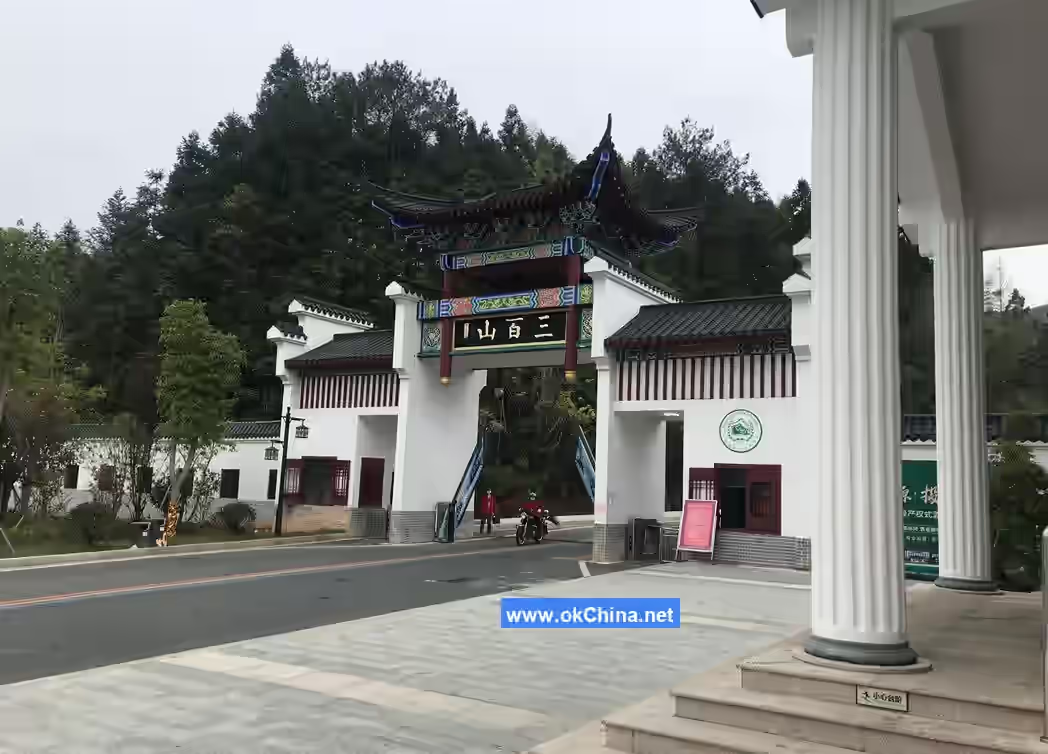
The Sanbai Mountain Scenic Area in Ganzhou City, abbreviated as Sanbai Mountain Scenic Area, is located in the southeastern part of Anyuan County, Ganzhou City, Jiangxi Province. It covers a total area of 197 square kilometers, with a core area of 36 square kilometers. It is also the only tourist destination in China with the significance of "remembering the source of drinking water" for Hong Kong compatriots.
Sanbai Mountain is the collective name for the peaks on the southeastern border of Anyuan County. It is the source of the Dongjiang River and the origin of drinking water for residents of Guangdong and Hong Kong. The forest coverage rate of Sanbai Mountain is 98%, and it is rich in animal and plant resources, making it an important biological gene pool in southern China. The scenic area is home to 1,702 species of higher plants from 271 families, including over 300 rare plant species. There are 1,361 species of wild animals, including 38 species of higher animals under national key protection. The "Six Wonders" of Sanbai Mountain are the Sanbai Peaks, Source Waterfalls, Primeval Forest, High Mountain Lakes, Volcanic Landforms, and Gorge Rapids.
2. Geographical Environment
2.1 Location and Territory
The Sanbai Mountain Scenic Area in Ganzhou City is located in the southeastern part of Anyuan County, Ganzhou City, Jiangxi Province. It covers a total area of 197 square kilometers.
2.2 Climate
The Sanbai Mountain Scenic Area in Ganzhou City features a subtropical monsoon humid climate. The annual average temperature is 15.1°C, with an average temperature of 5.8°C in January and 23.3°C in July. The annual temperature range is significant.
2.3 Hydrology
Sanbai Mountain is the watershed between the Gongjiang River of the Yangtze River system and the Dongjiang River of the Pearl River system. According to the "Anyuan County Annals · Water Conservancy": "The Sanbai Stream flows south into Guangdong, benefiting the fertile southern fields." The Zhenjiang River, anciently known as the Sanbai Stream, flows out of Sanbai Mountain, passes through Dingnan County, and then flows into Longchuan, Guangdong, becoming a tributary of the Dongjiang River.
3. Main Attractions
3.1 The First Waterfall of Dongjiang
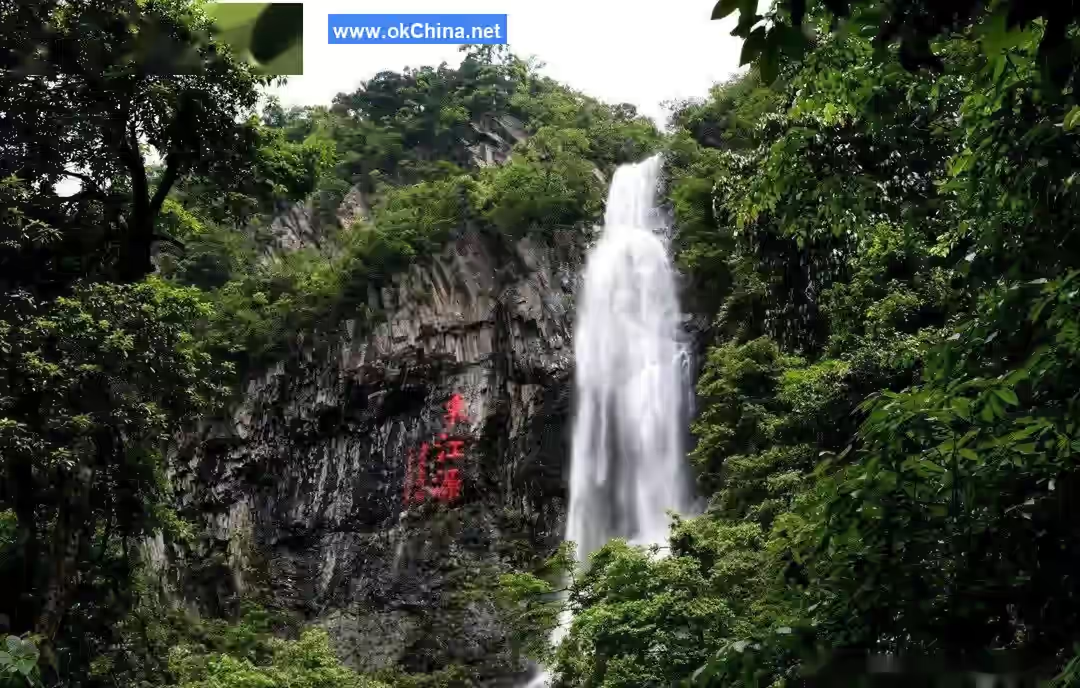
Formed by the convergence of Fu'ao Pond and mountain streams, this waterfall has a single-drop height of over 120 meters, making it the tallest perennial waterfall discovered in the scenic area. It is majestic, flanked by sheer cliffs and ancient towering trees. The view in front of the waterfall is expansive, with distant green mountains and vast forests, creating a refreshing and uplifting experience. The three characters "Dong Jiang Yuan" (Source of Dongjiang) on the stone wall were inscribed by Ye Xuanping, former Vice Chairman of the National Committee of the Chinese People's Political Consultative Conference.
3.2 Cableway
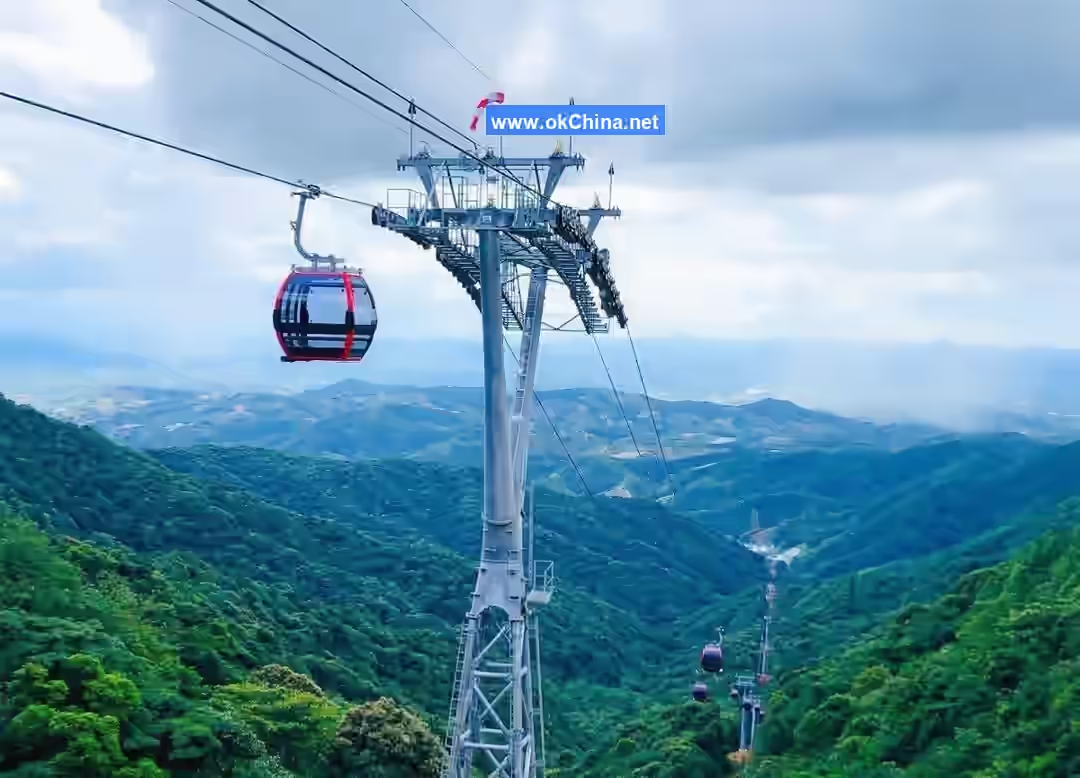
The lower station of the cableway is located at the Sanbai Mountain Tourist Service Center at the foot of the mountain, while the upper station is situated at Fu'ao Pond. The cableway is 2,567 meters long with a vertical drop of 440 meters. Its one-way passenger capacity reaches 2,000 people per hour, and the fastest one-way trip takes about 8 minutes. Riding the Sanbai Mountain Cableway offers views of rolling green hills and lush forests through the windows, allowing visitors to appreciate the beauty of the Dongjiang River's source amidst competing peaks and picturesque landscapes.
3.3 Source Protection Stone
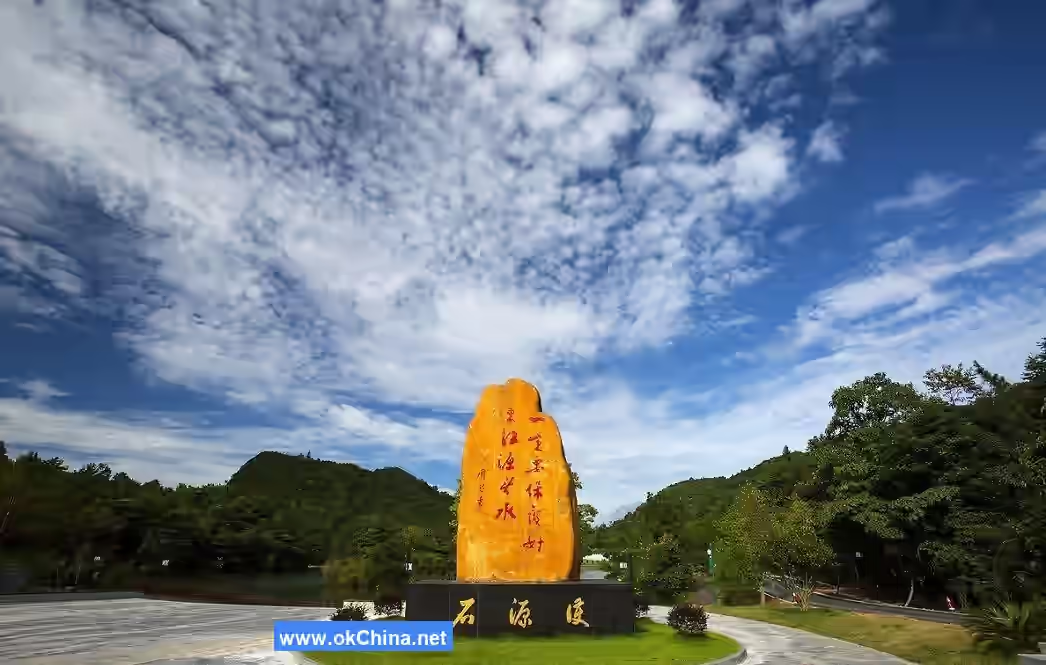
The Source Protection Stone was erected in 2017 to commemorate the 20th anniversary of Hong Kong's return to China. The inscription "We must protect the source water of the Dongjiang River" on the stone is the handwritten calligraphy of Premier Zhou Enlai. The stone is shaped like a palm, symbolizing protecting the source with hands. It stands 5.23 meters tall, corresponding to the 523-kilometer length of the Dongjiang River basin. Its width of 3 meters represents the three regions: Jiangxi, Guangdong, and Hong Kong. The base is 4.65 meters long, matching the 465-kilometer distance from Sanbai Mountain to Hong Kong. The flower bed is circular, symbolizing "perfection and fulfillment."
3.4 Dripping Water Guanyin
The statue of Dripping Water Guanyin Bodhisattva was donated and built by devotees from Jiangxi, Guangdong, and Hong Kong in 2007 to commemorate the 10th anniversary of Hong Kong's return. The statue, with a benevolent and solemn appearance, holds a clean vase in its left hand and forms a mudra with its right hand, standing at the source of the Dongjiang River in Sanbai Mountain. The total height of the statue is 11.69 meters, matching the elevation of the main peak.
3.5 Siyuan Treasure Tripod
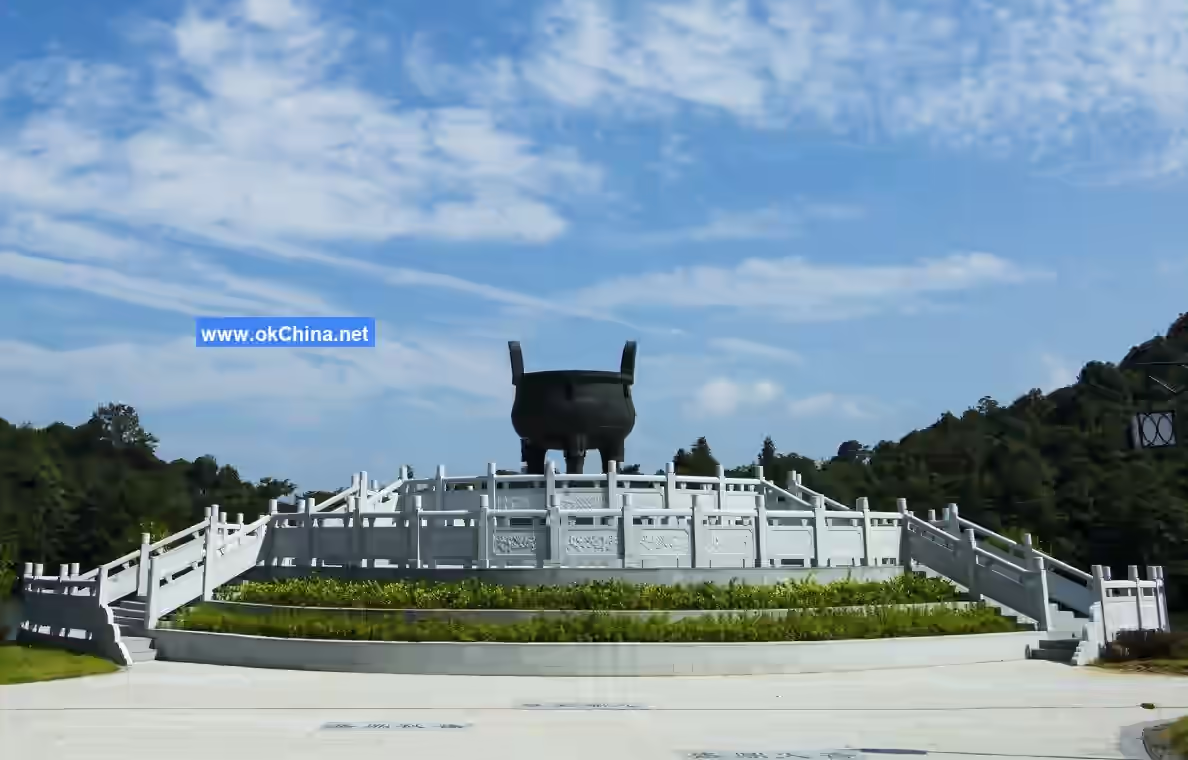
The Siyuan Treasure Tripod was built in 2007 to commemorate the 10th anniversary of Hong Kong's return. Its design is based on the Western Zhou Dynasty's Great Ke Tripod, featuring three legs and a round shape. The tripod is 4.65 meters tall and weighs 4.65 tons, symbolizing the 465-kilometer distance from Hong Kong to Sanbai Mountain. Its diameter of 330 centimeters echoes the name "Sanbai Mountain." The Siyuan Treasure Tripod symbolizes the unity of people from Jiangxi, Guangdong, and Hong Kong in protecting the water source and the friendship forged by water.
3.6 Dongfeng Lake
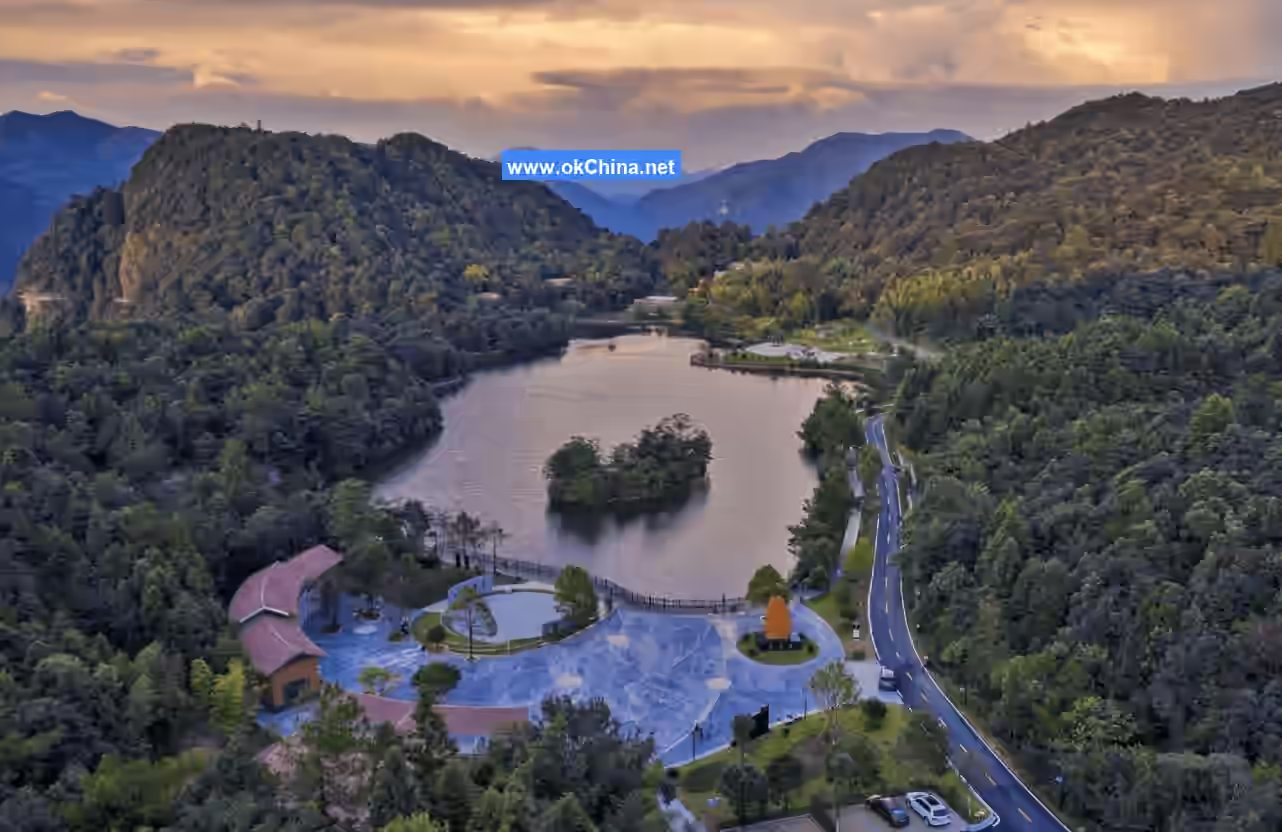
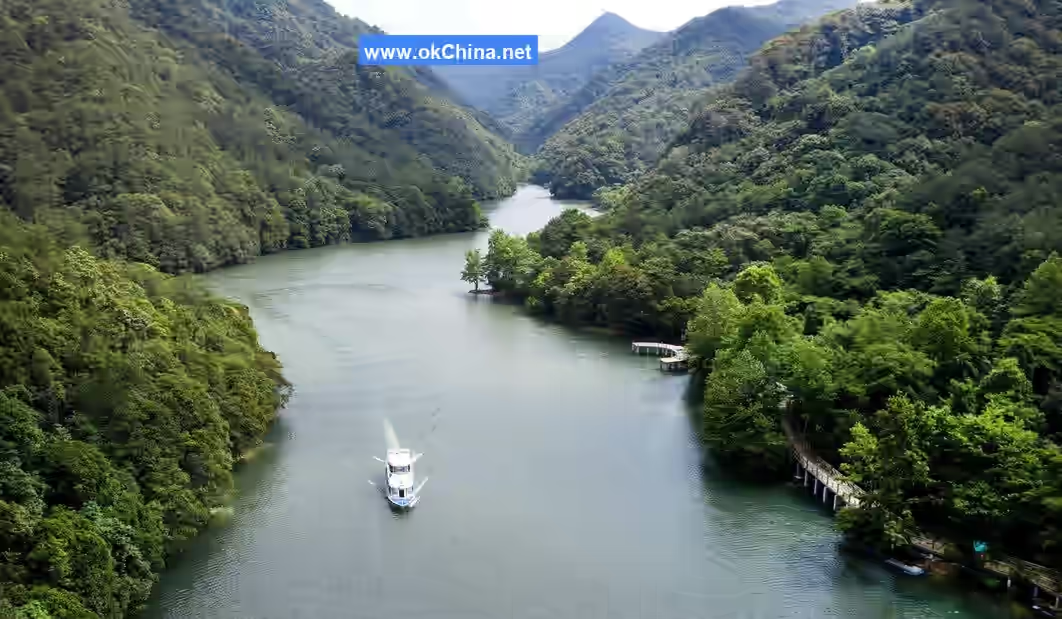
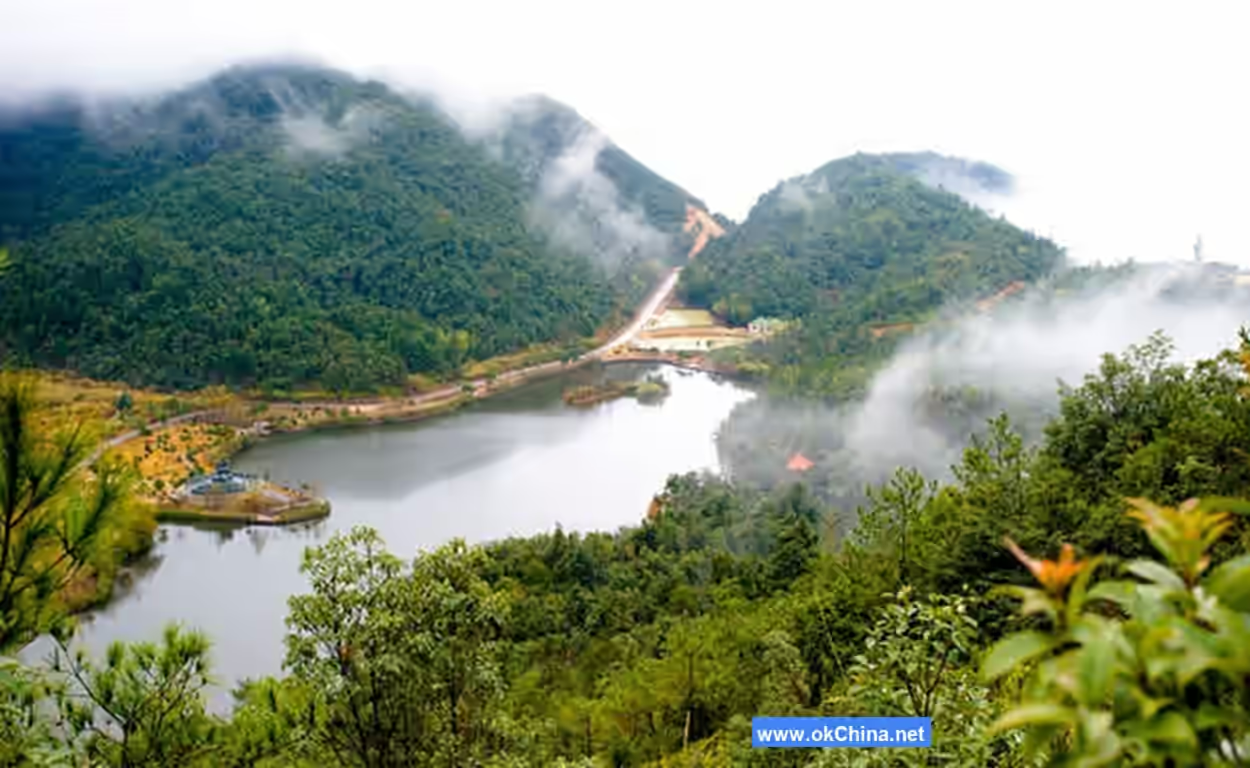
Dongfeng Lake is a medium-sized reservoir at the source of the Dongjiang River, built in 1966. The dam is 47.4 meters high, with an arc length of 113.8 meters at the crest. The reservoir has a capacity of 11 million cubic meters, stretching about 5 kilometers from east to west and 50–120 meters from north to south. The Dongfeng Lake Scenic Area spans the lake and the surrounding mountains, covering a total area of 11 square kilometers. The area features lush green hills and forests on both banks, with main attractions including Gaoxia Feihong, General's Chair, General's Rock, Sanbo Gong Temple, Guanyin Sending a Son, Hanfeng Beach, Wangpo Herding Horses, and Lovers' Tree.
3.7 Siyuan Pavilion
Built in 2007 by the Hong Kong-Shenzhen Community Association to commemorate the 10th anniversary of Hong Kong's return, it was completed simultaneously with the Siyuan Treasure Tripod opposite it. The couplet on the pavilion's pillars reads, "Sweet water from Hong Kong and Shenzhen flows thousands of miles from this source; the rain and dew of Sanbai nurture all things, a kindness unforgettable," expressing the gratitude of Hong Kong compatriots for the water source.
3.8 Volcanic Jade Pool (Fu'ao Pond)
The Volcanic Jade Pool, also known as Fu'ao Pond, covers an area of over 300 acres and is located at an altitude of about 900 meters. It is a natural mountain basin. Over 800 million years ago, this was a volcanic crater. After the volcanic eruption, a massive circular crater formed, and rainwater and water from surrounding forest crevices collected here, creating the lake we see today. The lake maintains a consistent water level year-round and never dries up, earning it the nickname "Source Volcanic Lake."
3.9 Glass Skywalk
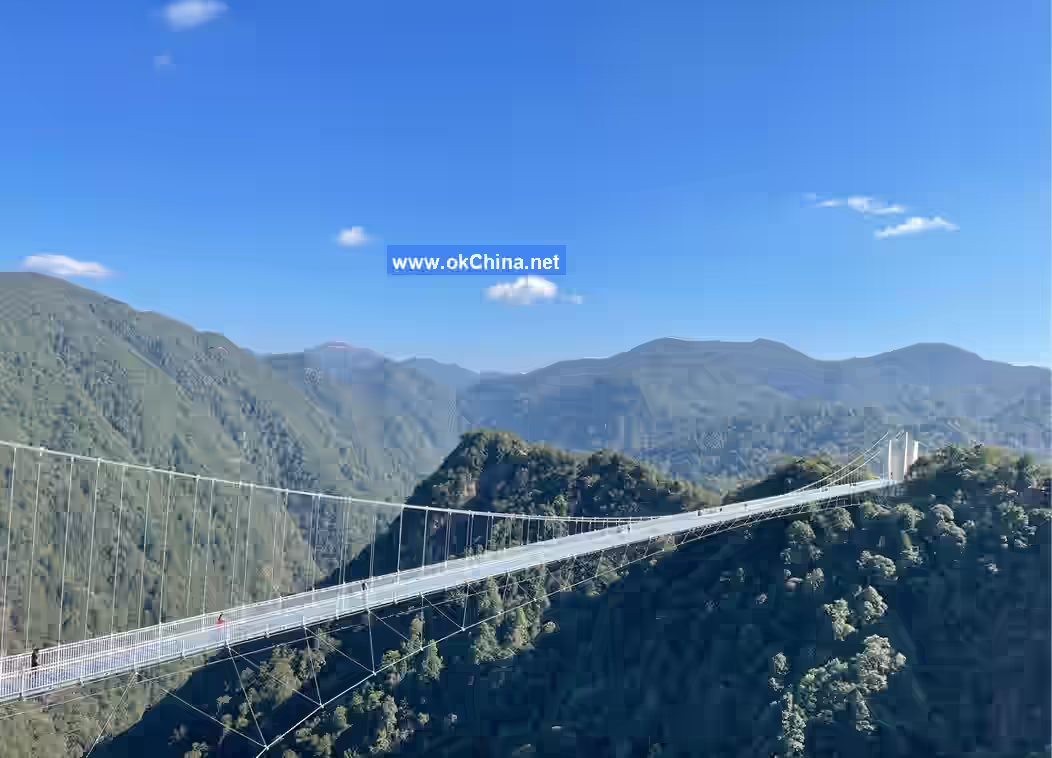
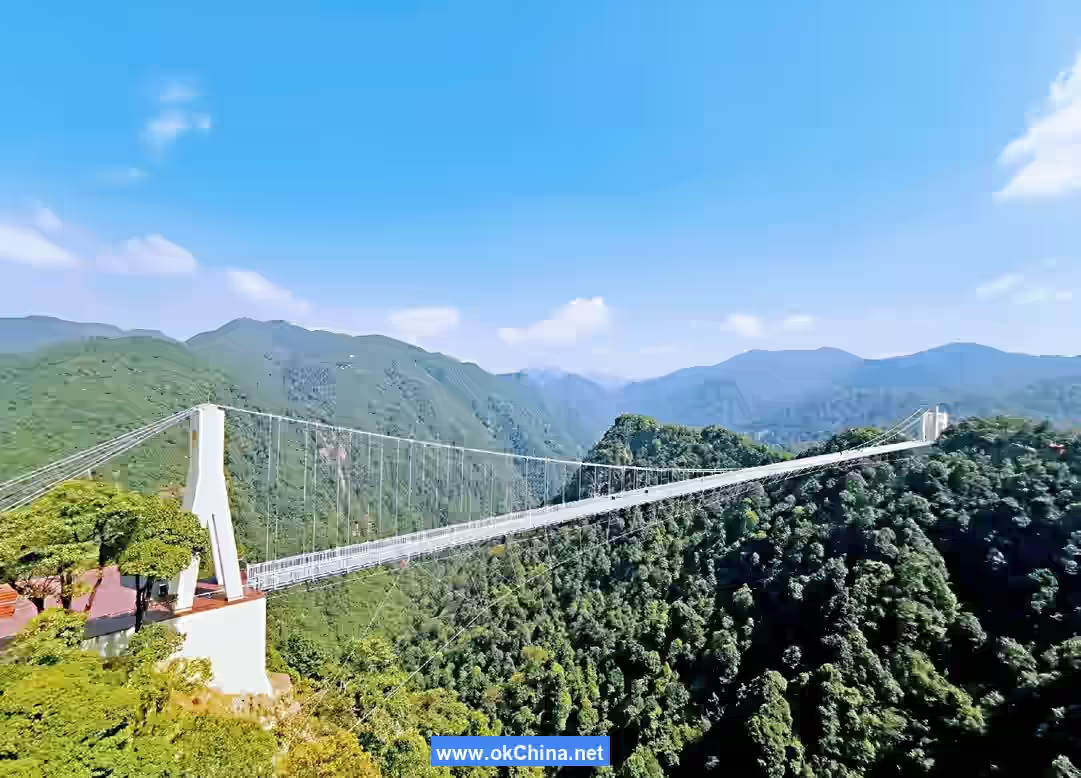
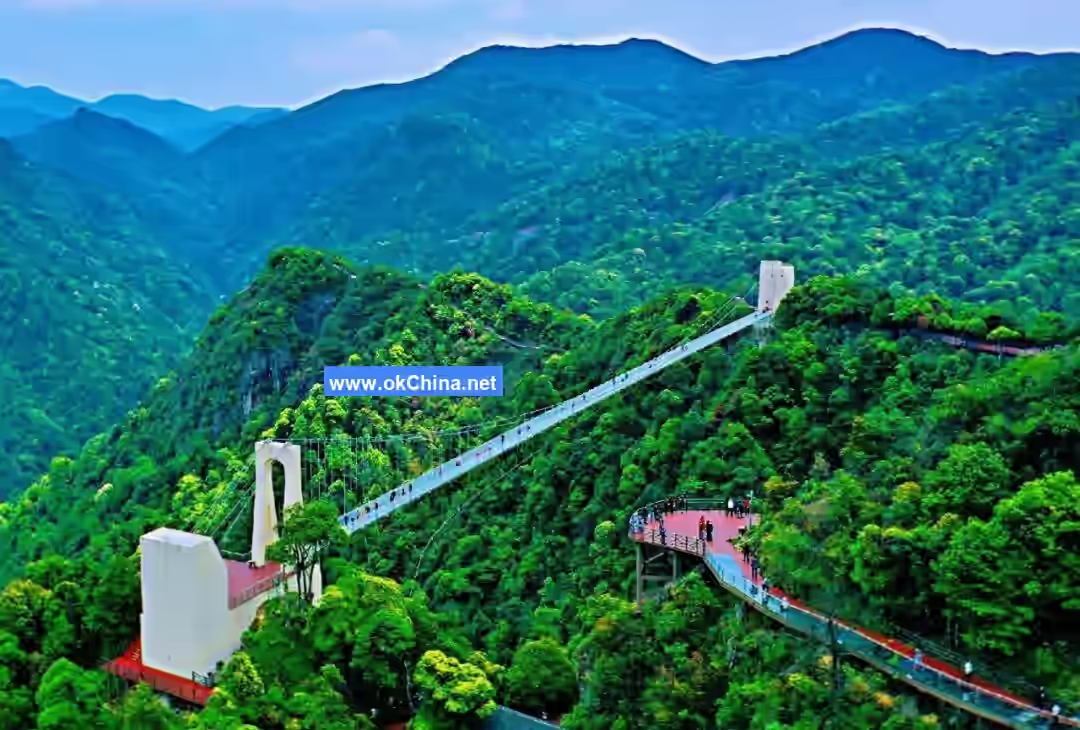
The Glass Skywalk is 330 meters long, 2.5 meters wide, with a maximum drop of 198 meters, making it the longest glass skywalk in Jiangxi Province. With clouds and mist swirling among the mountains, the glass bridge spanning two peaks appears to float in the clouds, resembling a fairyland on earth.
3.10 Glass Viewing Platform
The Glass Viewing Platform uses the principle of leverage, with one end connected to the cliff and the other extending 6.6 meters outward. It is made of triple-layer laminated explosion-proof glass using patented national technology, capable of bearing 300 kilograms per square meter. The platform can accommodate up to 25 people simultaneously.
3.11 Manyun Plank Walkway
The Manyun Plank Walkway is 3,166 meters long, including an 80-meter glass walkway. It is a cliffside viewing trail that loops around the back mountain of Fu'ao Pond, connecting major attractions such as Tian Terrace, Tianyin Qisong, Jianjian Peak, and the Glass Skywalk. It is also one of the few fully accessible and user-friendly trails in mountainous scenic areas.
3.12 Tian Terrace
Tian Terrace is located on the eastern ridge of the scenic area. The mountaintop is formed by a single protruding rock that can accommodate dozens of people. Surrounded by steep cliffs and perilous terrain, standing at the peak offers views of sunrise and sunset. From this vantage point, visitors can overlook the vast forest sea of Sanbai Mountain, with its endless green hills, creating a captivating experience.
3.13 Tianyin Qisong
At the mountaintop, bare rocks protrude to form a platform. On the platform, four square stone pillars of varying heights and sizes resemble seals, hence the name "Tianyin" (Heavenly Seal). A pine tree grows tenaciously in a nearby crevice, full of vitality, earning it the name "Qisong" (Wonderful Pine). Standing on the stone platform offers an expansive view of the forest sea.
3.14 Zhiyin Spring
In a deep ravine within a dense forest, there is a massive stone screen shaped like a harp. On either side of the screen are two waterfalls: one with a drop of over 10 meters, cascading in three steps and three curves, and the other with a drop of over 100 meters. The two waterfalls have distinct styles and resonate across the screen, like close friends harmonizing, leaving behind the beautiful legend of "A fairy carrying a harp seeking a soulmate."
3.15 Golden Turtle Drinking Spring
On the shallow riverbed in the distance, three giant stones shaped like divine turtles can be seen. The three turtles float on the water, chasing and playing with each other, vividly lifelike. Legend has it that three divine turtles from the South Sea swam upstream and turned into these remarkably realistic giant stones upon reaching this spot.
3.16 Butterfly Grand Canyon (Nine-Bend Stream)
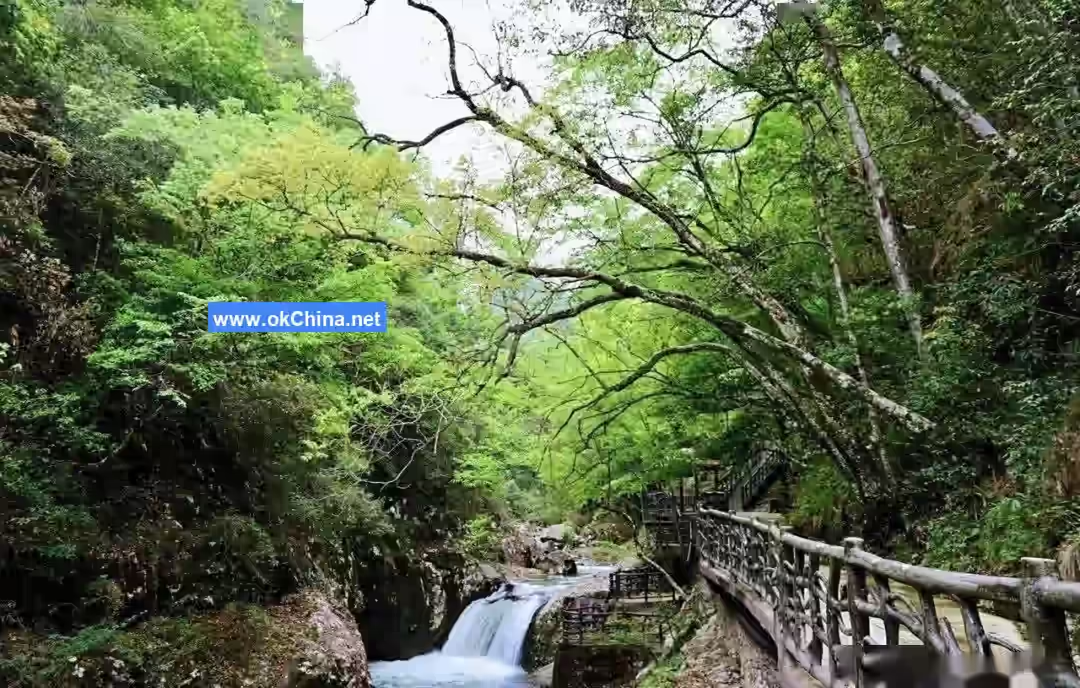
Butterfly Grand Canyon (Nine-Bend Stream) is approximately 6 kilometers long. It is a deep volcanic canyon formed by crustal uplift and erosional downcutting. The canyon has a well-developed water system, with volcanic rhyolite columnar joints visible everywhere. It includes core scenic spots such as Qingxin Waterfall, South Sea Dragon Pool, Zhiyin Spring, and Golden Turtle Drinking Spring, making it the essence of the integration of mountains and water.
3.17 Wangtian Waterfall
Wangtian Waterfall is located 4 kilometers northeast of Fu'ao Pond. In the deep mountain gorge, the waterfall cascades down. Standing at the pool at the base of the waterfall and looking up, one sees only the blue sky and white clouds, creating a spectacular view, hence the name "Wangtian Waterfall" (Waterfall Gazing at the Sky).
3.18 Qingxin Flying Waterfall
The waterfall cascades in multiple tiers, with a total vertical drop of over 50 meters. As it falls, it creates mist that spreads around the pool. The pool is wide, with clear water visible to the bottom, and the scene is majestic. Standing near the base of the waterfall and bathing in the mist is refreshing and uplifting.
3.19 Sanbai Mountain Forest Sea
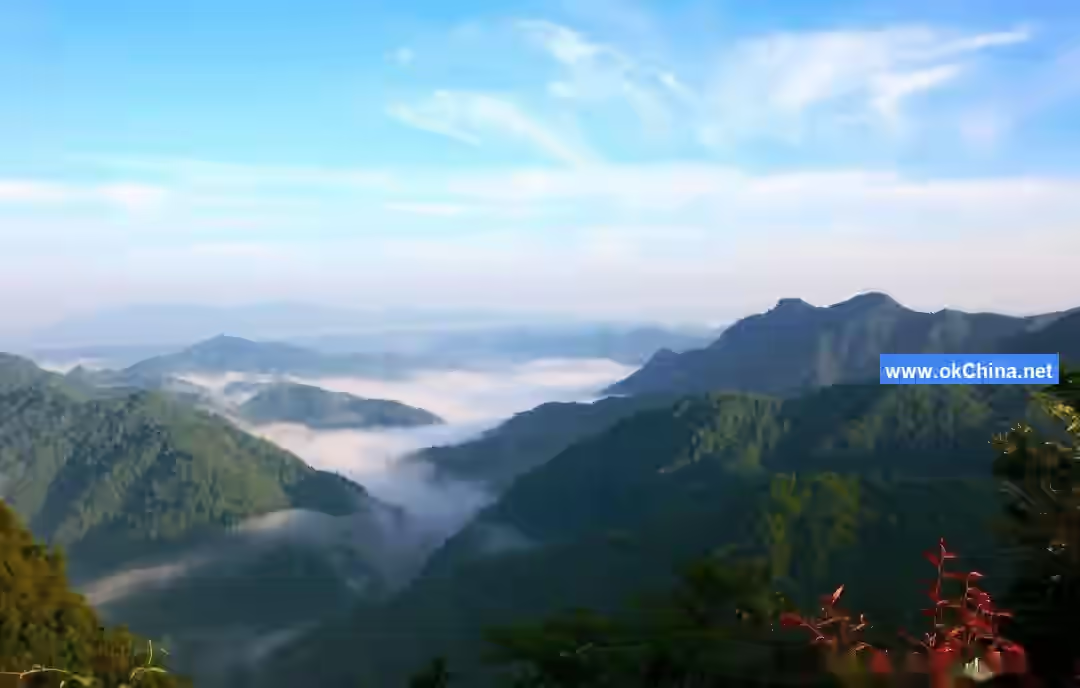
The Sanbai Mountain Forest Sea consists of over 300 mountain peaks, with winding ridges, overlapping ranges, and majestic beauty. The main peak stands at an elevation of 1,169 meters, while the lowest point is 320 meters, creating a height difference of over 800 meters. The area spans dozens of miles with no human habitation, preserving a pristine wilderness landscape.
3.20 Dragon Pool
The surface of the pool churns with waves, and its depth is unfathomable, resembling a dragon soaring in the abyss. The pool is surrounded by steep cliffs and unique terrain, making visitors feel as if they have entered a fairyland.
3.21 "Yuan" Character Cliff Carving
Looking across at the mountain of the Guanyin Worship Garden, a massive cliff carving comes into view. The carving covers an area of 16 square meters and is grand in scale. The calligraphy of the carving is the character "Yuan" (Fate/Connection) in the regular script of the Tang Dynasty calligrapher Yan Zhenqing. It symbolizes the Sanbai Mountain Scenic Area welcoming visitors from all over the world with open arms and forming connections with everyone!### 3.22 Immortal's Cave The characters for "Immortal's Cave" were inscribed by the young calligrapher Mr. Long You. Looking up from behind the engraved stone, there is a cave here. Legend has it that a hermit once lived in seclusion here, guarding the peace of Sanbai Mountain day and night, blessing the local people with well-being and ensuring their happiness and health for generations. Later, he attained enlightenment and became an immortal here.
3.23 Listening to the Waves
The characters for "Listening to the Waves" were inscribed by the Anhui calligrapher Mr. Yang Wenliu. Leaning on the railing here, one can hear the rustling of pine waves and the cascading sounds of waterfalls. Even countless worries will drift away with the wind, becoming fleeting clouds.
3.24 Harmony Under Heaven
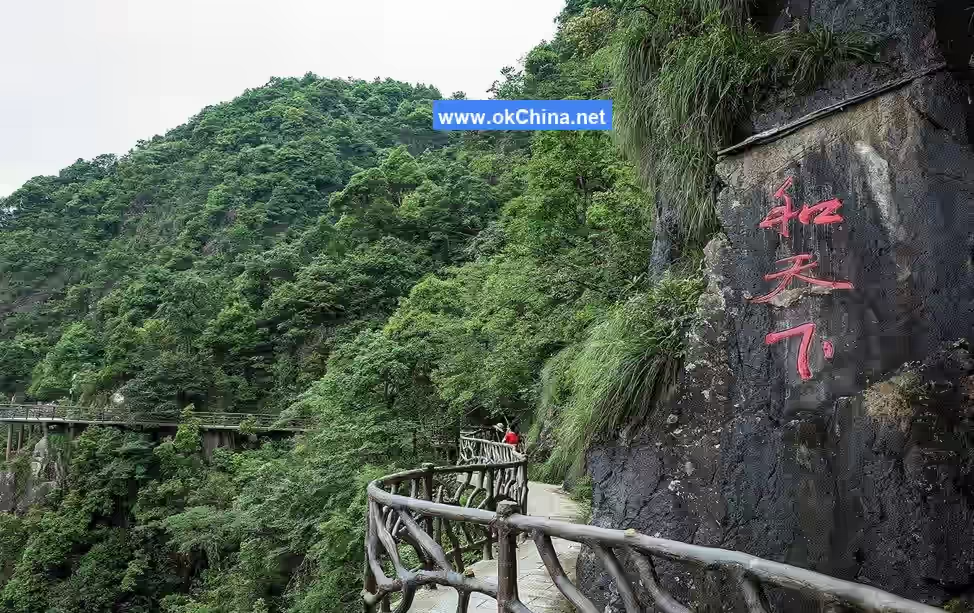
A robust Schima superba tree stretches out diagonally from the cliff, like a hospitable host extending a hand to welcome guests from afar. The character "和" (harmony) carries two meanings: first, harmony generates wealth; second, family harmony leads to prosperity in all endeavors.
3.25 Penholder Mountain (Twin Peaks)
Penholder Mountain features two towering peaks standing side by side. From a distance, they resemble a penholder.
3.26 Eternal Union
Above the engraved seal, a thousand-year-old cliff cypress grows in a rock crevice. Opposite it, a robust Schima superba tree thrives. To commemorate this divine thousand-year-old cypress and its corresponding robust Schima superba, the seal script engraving "百年好合" (Eternal Union) was carved into the rock. It symbolizes young men and women happily marrying and newlyweds remaining united forever.
3.27 Common Origin
The characters for "Common Origin" were inscribed by the Jiangxi calligrapher Mr. Zhang Shenglin. Here, three large but root-sharing Michelia figo trees grow closely together, symbolizing the blood ties and shared roots of Jiangxi, Guangdong, and Hong Kong!
3.28 Rainbow Across the High Gorge
During every spring, when the water rises and cascades over the dam, it forms a silver ribbon over a hundred meters long, resembling ten thousand galloping horses with a deafening roar, its momentum flowing for miles. Occasionally, a rainbow appears, arching across the high gorge.
3.29 Lover Trees
The two Lover Trees stand about 50 centimeters apart. One is a pine, the other a Schima superba. Their branches intertwine and they have embraced each other for decades, like a loving couple passionately hugging and kissing. Their roots are tightly entwined in the ground; their leaves meet in the clouds. During the flowering season, the Schima superba blooms brilliantly while the pine remains evergreen, creating a delightful contrast.
4. Cultural Resources
4.1 Historical Evolution
Anyuan County has a long history. Due to the clarity of the Lianjiang River water, Anyuan is also known as Lianjiang. According to records, before its establishment, the area of Anyuan County was part of the Yangzhou territory during the Yu and Xia periods as recorded in the "Tribute of Yu." During the Spring and Autumn period, it belonged to Wu; during the Warring States period, to Chu; during the Qin dynasty, to Jiujiang Commandery; and during the Han dynasty, to Yudu County in Yuzhang Commandery. In 544 AD (the 10th year of the Datong era of the Southern Liang dynasty), Anyuan County was established and placed under Nankang Commandery. The county's name derives from the Anyuan River within its territory and has been used ever since. After its establishment, the county underwent several divisions, mergers, and administrative changes. In 1310 AD (the 3rd year of the Zhida era of the Yuan dynasty), Anyuan County was re-established under Ganzhou Route. Since then, it has remained without further abolishment or re-establishment, continuing to the present day.
4.2 Folk Customs and Traditions
4.2.1 Horse and Carriage Lantern
The ancient folk dance "Horse and Carriage Lantern" originated in the mid-Qing Dynasty and has a history of over 170 years. It is a traditional folk dance choreographed by Chen Kaipeng during the Qing Dynasty based on the historical story "Li Dan Leaving the Capital" from the Tang Dynasty. The performance involves 10 performers. The entire act primarily features various formation changes such as running in circles, forming plum blossoms (both forward and inverted), walking in figure-eights, and gathering the lanterns, supplemented by singing and spoken parts. The ensemble accompaniment music creates a lively, joyful, and festive atmosphere, while the singing and spoken parts are accompanied by music rich in the flavor of Southern Jiangxi tea-picking opera.
4.2.2 Jiulong Mountain Tea-Picking Opera
Jiulong Mountain Tea-Picking Opera evolved from the tea-picking song and dance "Tea Basket Lantern" of Jiulong Mountain. As early as the Ming Dynasty, tea produced on Jiulong Mountain in Anyuan was renowned for its "fragrant aroma, clear green color, and rich taste," gaining fame far and wide. It peaked during the Kangxi and Yongzheng reigns of the Qing Dynasty when Jiulong tea was selected as a tribute. Anyuan's Jiulong Mountain was one of the main tea-producing regions in Jiangnan at that time. Every March, tea merchants from Jiangxi, Guangdong, Fujian, and other places would gather here. While picking tea, tea girls enjoyed singing the "Twelve Months Tea-Picking Song" in unison. Influenced by local folk lantern performances such as Horse Lantern and Dragon Lantern, props like tea baskets and paper fans were added. Thus, the tea-picking songs combined with local folk lantern performances evolved into a folk lantern performance integrating song and dance—the Tea-Picking Lantern, also known as "Tea Basket Lantern."
4.2.3 Nanxiang Hall Music
Anyuan's Nanxiang Hall Music possesses rich cultural connotations and artistic charm. It was gradually created by people in their production and daily life, primarily used for weddings, funerals, birthdays, plaque-hanging ceremonies, and other red and white events. Kongtian Town is the birthplace of Nanxiang Hall Music. According to historical records, in 1168 AD, Donglin Temple was built in Kongtian Town, located in what is now Shangzhai Village. It once attracted numerous pilgrims and housed over ten monks and several musicians. In 1952, Donglin Temple was destroyed by a fire and turned into ruins. The monks scattered, and the musicians returned home to farm. Later, as farmers invited musicians to play Buddhist music during weddings and funerals, the tradition was passed down and developed through several generations of artists, eventually forming Anyuan's Nanxiang Hall Music.
Nanxiang Hall Music differs from other instrumental music in terms of its musical patterns, repertoire, and performance style. It features the suona as the main instrument, accompanied by instruments like the erhu, flute, houguan (a double-reed wind instrument), and yangqin (a hammered dulcimer). The entire performance uses no percussion. The playing method involves improvisational accompaniment: the suona plays the main melody, while other instruments provide improvised accompaniment with different tunings, sometimes in higher or lower registers. The flute adds ornamental notes to the main tones, and instruments like the erhu add embellishments during sustained notes. This approach allows each instrument to showcase its strengths while effectively demonstrating the individual skill and style of the musicians. The main instrument, the suona, differs from those in other regions. Its reed is made from the cocoon of a specific insect found on the tung oil tree, harvested in winter and preserved for long-term use. It produces a joyful, bright, lyrical, and melodious tone, a unique creation of Anyuan's folk artists. In June 2007, Nanxiang Hall Music was included in the second batch of Jiangxi Province's intangible cultural heritage in the folk music category.
Comments
Post a Comment