
Quzhou Root Palace Buddha Kingdom Cultural Tourism Area
1. Introduction
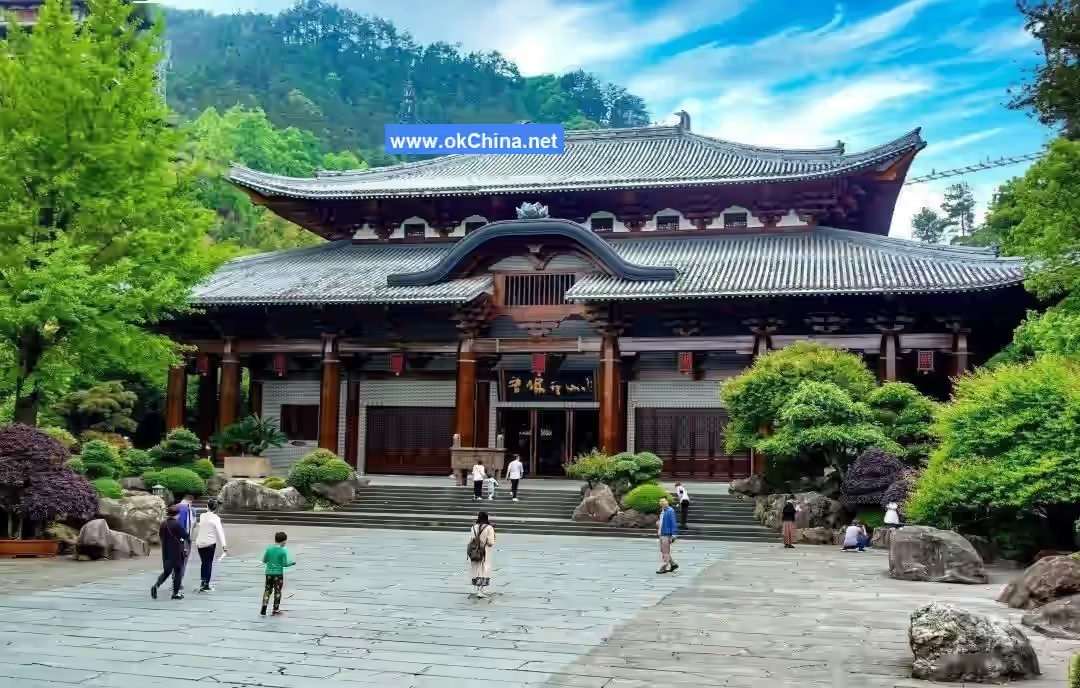
The Quzhou Root Palace Buddha Kingdom Cultural Tourism Area, abbreviated as the Root Palace Buddha Kingdom Cultural Tourism Area, is located at No. 1 Genbo Road, Kaihua County, Quzhou City, Zhejiang Province. Covering an area of 3.03 square kilometers, it is a landscape garden-type scenic area.
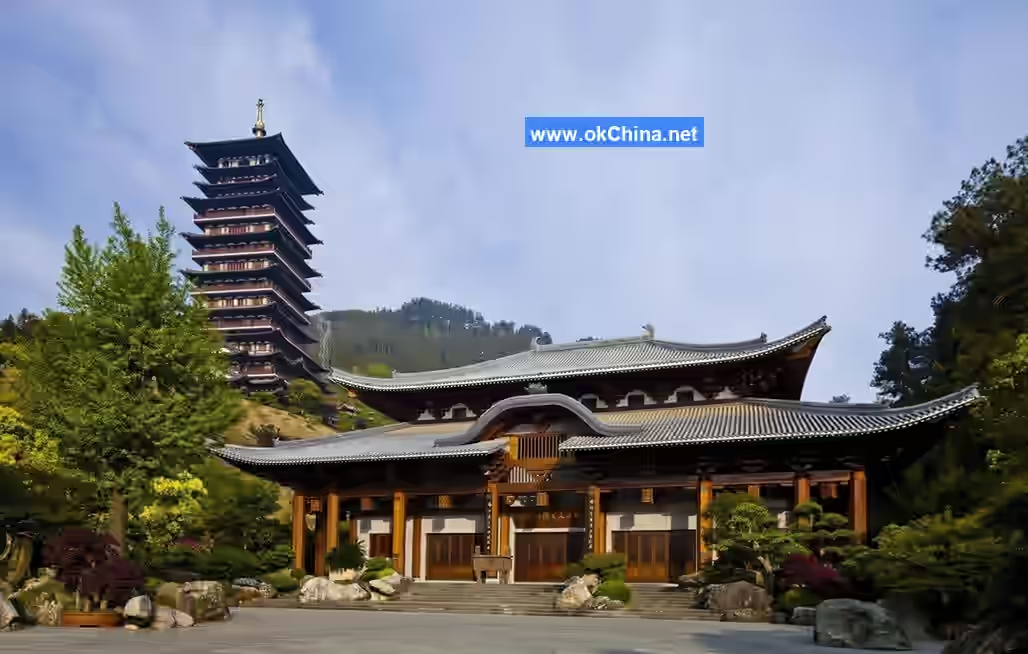
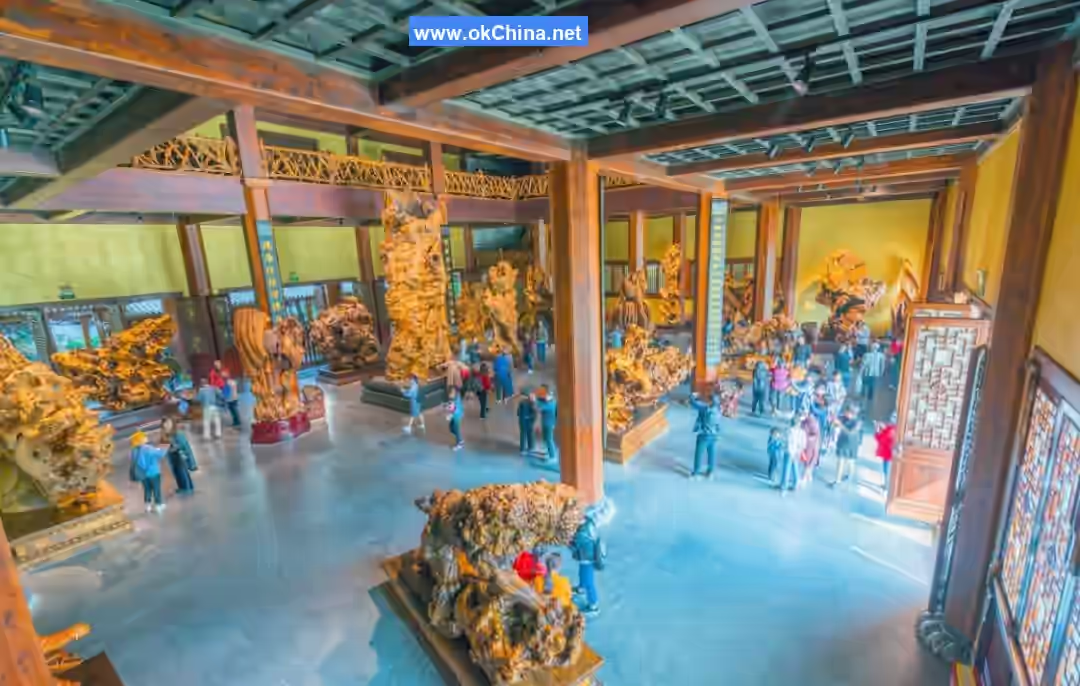
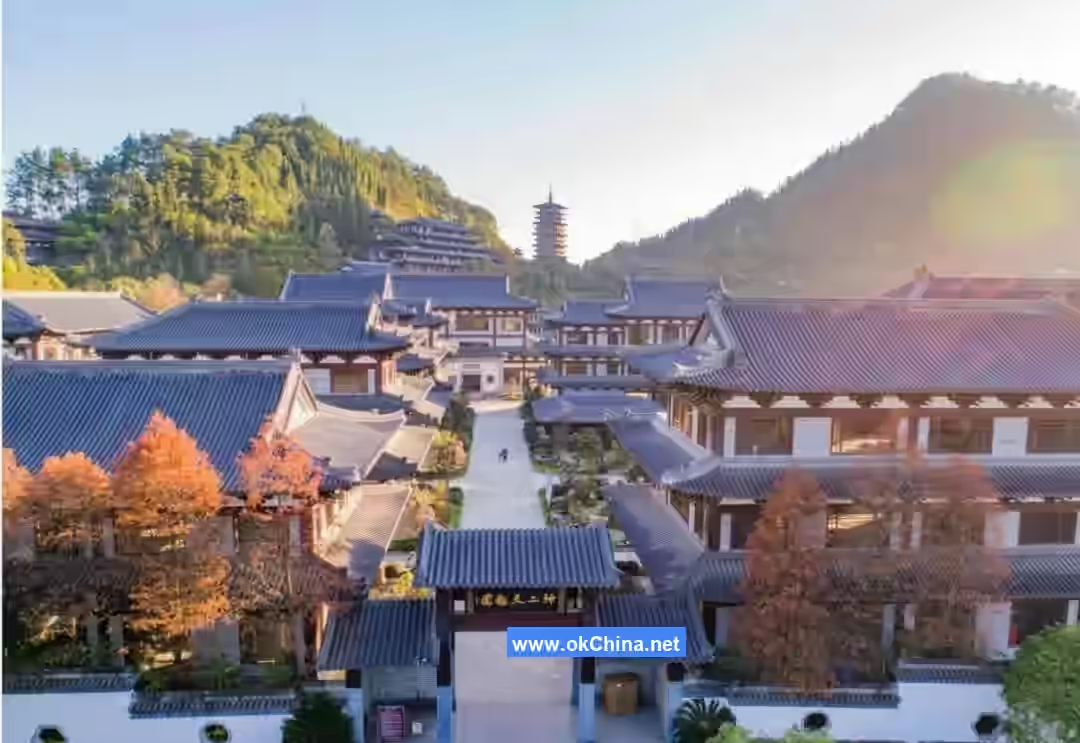
On January 1, 2017, the Root Palace Buddha Kingdom Cultural Tourism Area became free to visitors from within Kaihua County. The tourism area forms a serene and harmonious picture blending heaven and humanity through its composition of bonsai, rare stones, root art, and ancient garden architecture. The scenic area contains nearly 30 attractions, including the Gate of Fortune and Auspicious Light, Yunhu Zen Heart, Museum of Heavenly Craftsmanship, Root Carving Buddha Kingdom, and Drunken Root Pagoda. It displays over 20,000 large-scale root carving art series works (sets) and more than 3,000 bonsai art works, making it a new world cultural heritage site.
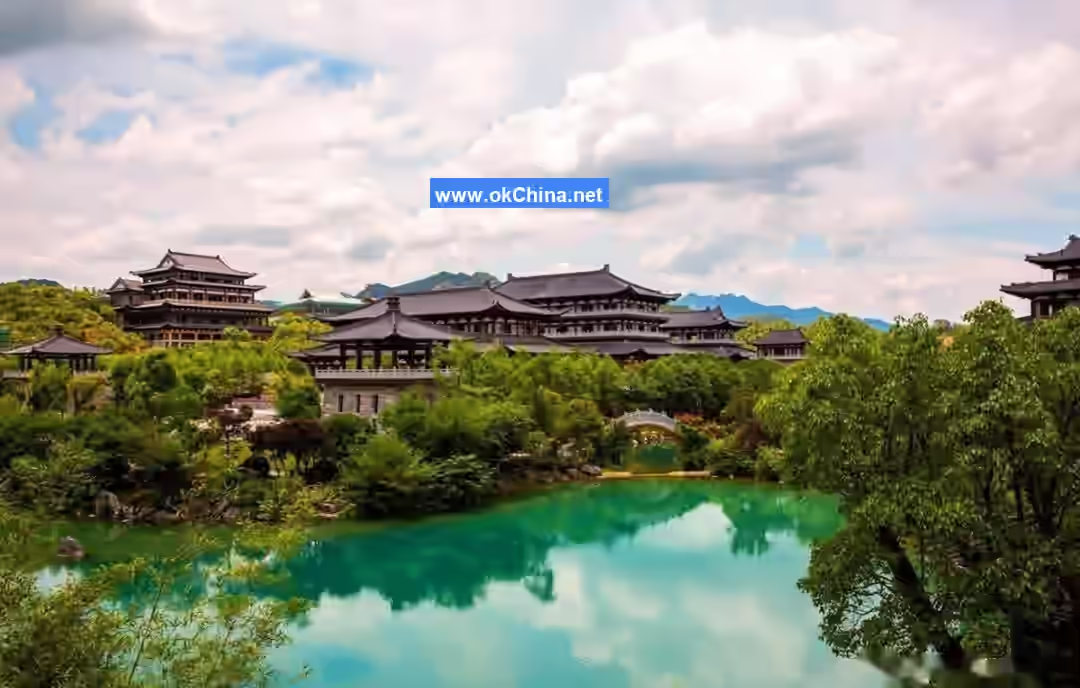
In terms of layout, Master Xu Guqing used water to divide the Drunken Scenery Garden into two major spatial systems. This arrangement places the main pavilions and corridors around the four directions of the water, creating a "centripetal and inward-gathering" pattern that broadens the view. Techniques of "borrowing scenery" and "framing scenery" are employed to "borrow" external scenery into the garden's visual field, achieving the wonderful effect of containing infinite views within a limited space. The borrowed scenery of the Drunken Scenery Garden uses the surrounding lush mountains and the forests, pagodas, and buildings to the north and south as a backdrop, expanding the garden's visual effect. Special attention is paid to creating a sense of winding elegance, making the water body full of natural dynamism. A crescent-shaped stone bridge was built in the middle for connection, adorned with vines and wildflowers.
In December 2010, the China Root Art and Fine Arts Expo Garden was officially approved by the National Tourism Administration as a National AAAAA Tourist Attraction. On August 15, 2013, the Root Palace Buddha Kingdom Cultural Tourism Area was rated as a National AAAAA Tourist Attraction.
2. Main Attractions
2.1 Scenic Area Layout
The Root Palace Buddha Kingdom Cultural Tourism Area covers 3.03 square kilometers. Within the area, pines, plums, elms, ginkgo trees, and red loropetalum are extensively used. It forms a serene and harmonious picture blending heaven and humanity through its composition of bonsai, rare stones, root art, and ancient garden architecture. The scenic area contains nearly 30 attractions, including the Gate of Fortune and Auspicious Light, Yunhu Zen Heart, Museum of Heavenly Craftsmanship, Root Carving Buddha Kingdom, and Drunken Root Pagoda. It displays over 20,000 large-scale root carving art series works (sets) and more than 3,000 bonsai art works, making it a new world cultural heritage site.
Mountains and water are the finishing touches of the Root Palace Buddha Kingdom garden—creating a poetic landscape painting within a limited space, allowing people to immerse themselves in it, feel the freshness of nature and the profound artistic conception of mountains and waters, and evoke broad and free imagination in people's hearts—this was Master Xu Guqing's original intention in garden creation.
In terms of layout, Master Xu Guqing used water to divide the Drunken Scenery Garden into two major spatial systems. This arrangement places the main pavilions and corridors around the four directions of the water, creating a "centripetal and inward-gathering" pattern that broadens the view. Techniques of "borrowing scenery" and "framing scenery" are employed to "borrow" external scenery into the garden's visual field, achieving the wonderful effect of containing infinite views within a limited space. The borrowed scenery of the Drunken Scenery Garden uses the surrounding lush mountains and the forests, pagodas, and buildings to the north and south as a backdrop, expanding the garden's visual effect. Special attention is paid to creating a sense of winding elegance, making the water body full of natural dynamism. A crescent-shaped stone bridge was built in the middle for connection, adorned with vines and wildflowers.
2.2 Drunken Scenery Garden
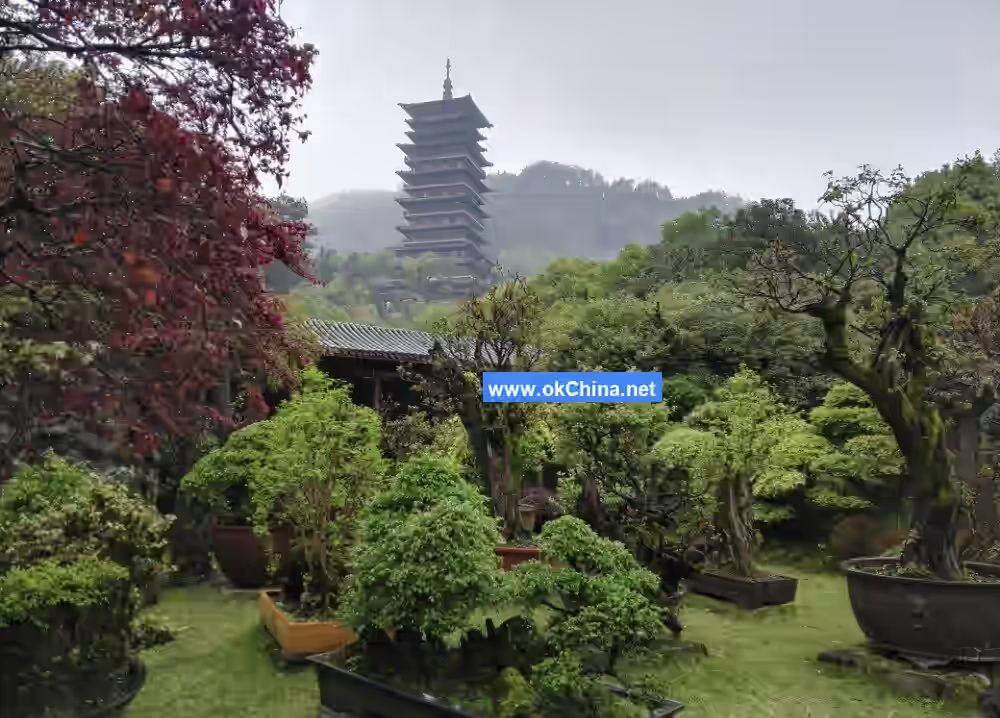
The Drunken Scenery Garden is one of the many gardens within the Root Palace Buddha Kingdom Cultural Tourism Area. It is located in the mountain col behind the Root Carving Buddha Kingdom. It was created by leveling the land with excavated earth and stone from the Drunken Root Pagoda construction project, channeling water to build a lake, and arranging scenery according to the mountains. It includes structures such as the majestic "Walking the Path·Awakening to Zen" archway, the Huizhou-style horse-head wall screen corridor, the Drunken Pine Pavilion, the Joyful Birds Garden, the Meditation Pavilion, and the Sun and Moon Pavilion, housing over 2,000 pots of various bonsai.
The Drunken Scenery Garden features harmonious mountains and waters, integrated roots and stones, changing spaces, well-proportioned layout, natural creativity, and lofty artistic conception, making it another exemplary model of Jiangnan gardens. During its creation, Master Xu Guqing ingeniously integrated the Taoist philosophical concept of "harmony between man and nature," the Confucian aesthetic taste of "delighting in mountains and waters," and Zen Buddhist thoughts into the mountain and stone landscapes of the Drunken Scenery Garden. In material selection, he skillfully utilized the mountain's original stones, based the design on natural landscape scenery, selected highly interesting Taihu stones by the lakeside, and used local Kaihua dripstones as the main materials for the garden. These Taihu stones vary in size and form, exhibiting extreme winding and twisting. The dripstones in the garden either lie beside a pavilion, stand next to a corridor gate, crouch in a corner of the garden, or echo the natural stone bodies atop distant high mountains. Their shapes are supplemented with various dynamic postures—some resembling a fleeing hare, some craning their necks to look into the distance, some gathering in groups of three or five. They can be appreciated independently or integrated with the landscape for enjoyment.
2.3 Red Culture Root Carving Art Museum
The Red Culture Root Carving Art Museum is China's largest museum dedicated to red culture root carving art. Covering over 7,000 square meters, it uses roots to convey principles, taking the birth of the Party, the Party's revolutionary process, the Party's spirit of innovation, and spirit of struggle as its支撑点和落脚点 (supporting points and落脚点). It expresses emotion through the匠心 (ingenuity) and工匠精神 (craftsman spirit) of Chinese artisans, employing a多元形式 (multifaceted form) that融合 (integrates) root carving art with modern 3D, holographic technology, sound, light, and electricity. It场景化 (scenically),形象化 (figuratively), and多维度 (multidimensionally) presents the magnificent century-long history of the Party in a真实客观 (truthful and objective) manner. It contains over 30 groups, totaling more than 500 pieces, of red culture-themed root carving series featuring "hundred-meter scrolls, hundred scenes, hundred figures." It also includes sections on the Chinese Dream, Zhejiang Spirit, the famous city of Quzhou, and Red Kaihua, constituting the largest red culture科技馆 (science and technology museum)板块 (section) in Zhejiang Province to date. It invited over 100 top artistic creation teams from the domestic root carving circle to create together on-site. Through collective攻坚作业 (assault operation) under the slogan "百匠齐心、百日攻坚" (A Hundred Artisans United in Heart, A Hundred Days of攻坚), it opened to the public on July 1, 2021, as a tribute to the 100th anniversary of the founding of the Party.
2.4 Zen Corridor
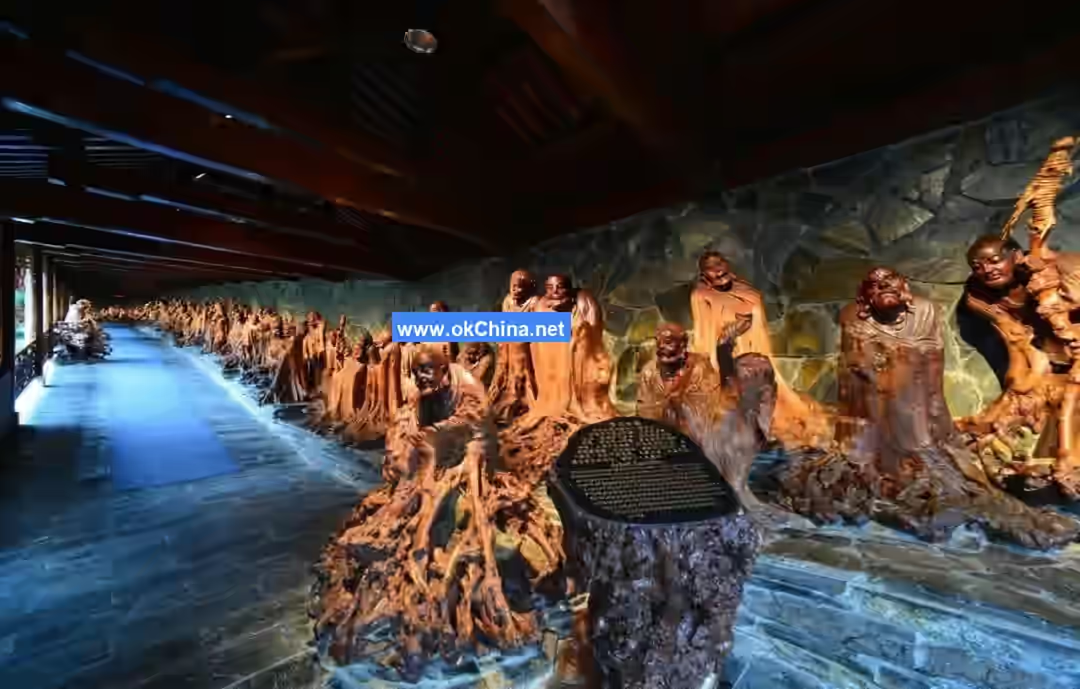
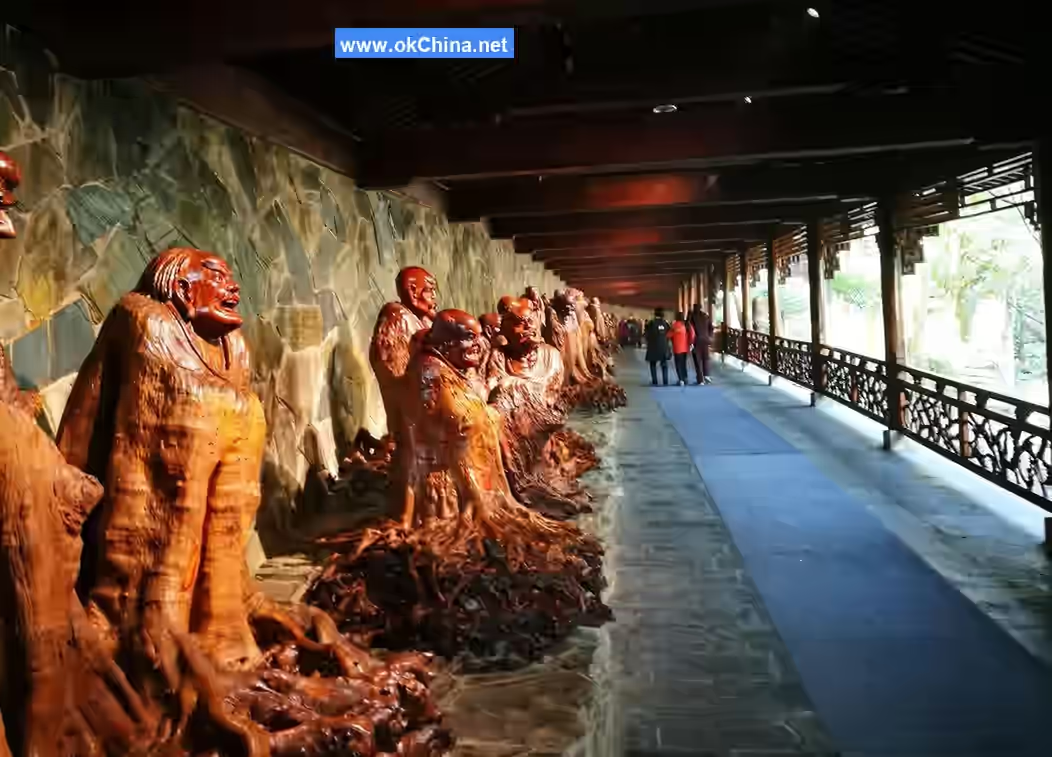
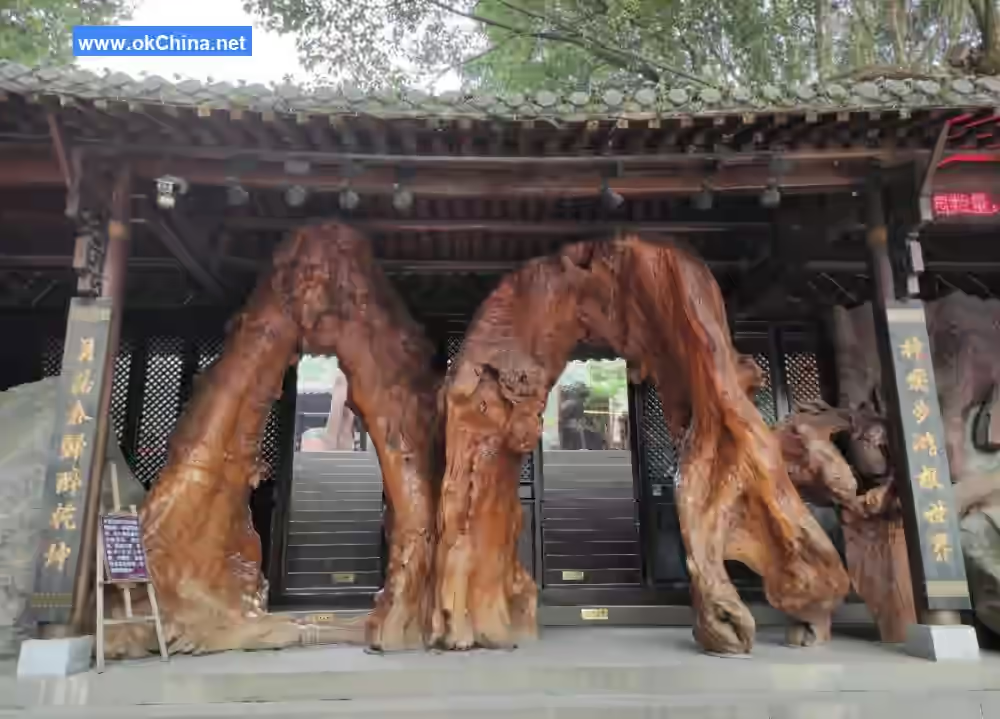
The Zen Corridor is a set of root carving murals created using leftover materials from large-scale works in the Root Carving Buddha Kingdom. It uses branch roots for勾线 (outlining),块根 (tuberous roots) for塑型 (shaping), and employs the rough,质朴 (simple and unadorned),苍劲 (vigorous and old) natural forms of tree roots to烘托 (set off) the主题 (theme). It possesses both the natural charm and beauty of roots and contains the transcendent artistic conception of calligraphy and painting. The artist learned from nature, depicting classic Buddhist story scenes such as Renouncing the World, Subduing Demons and Practicing Asceticism, Sudden Enlightenment Under the Tree, Preaching at the Deer Park, Nirvana at the Twin Sala Trees, Guanyin's Universal Salvation, Bodhidharma's Zen Enlightenment, and Children Playing with Buddha. The works are妙趣天成 (wonderfully interesting and naturally formed), combining写意 (freehand brushwork) and工笔 (meticulous brushwork),简约 (simplicity) with神韵 (spirit resonance). They reveal慧根禅机 (innate wisdom and Zen insight) in silence, overflowing with浓厚的人文底蕴 (rich humanistic heritage), possessing丰富而清新的艺术表现力 (rich and fresh artistic expressiveness), and折射出 (reflecting) the绚丽光华 (resplendent radiance) of深邃的佛教文化 (profound Buddhist culture).
2.5 Future Buddha Hall
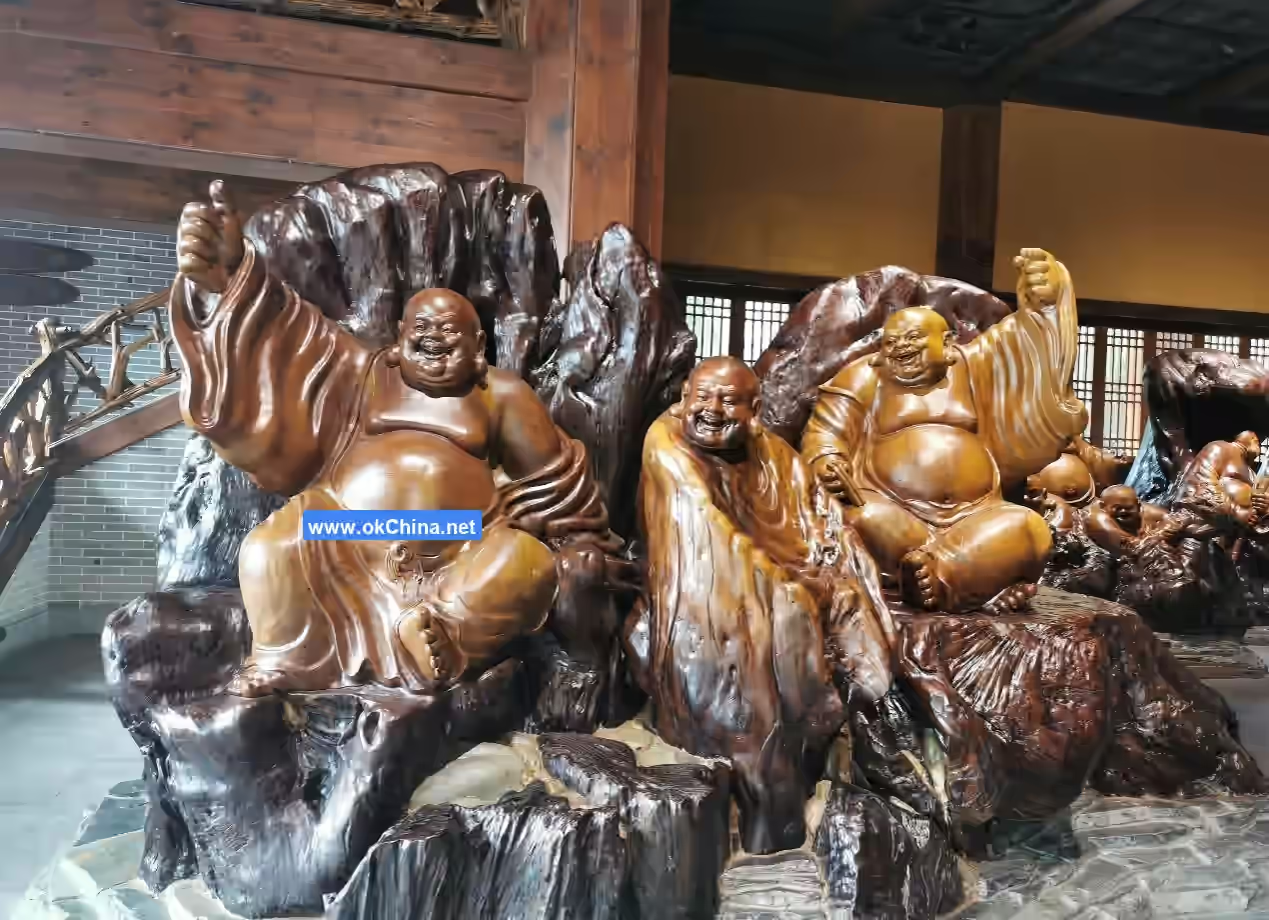
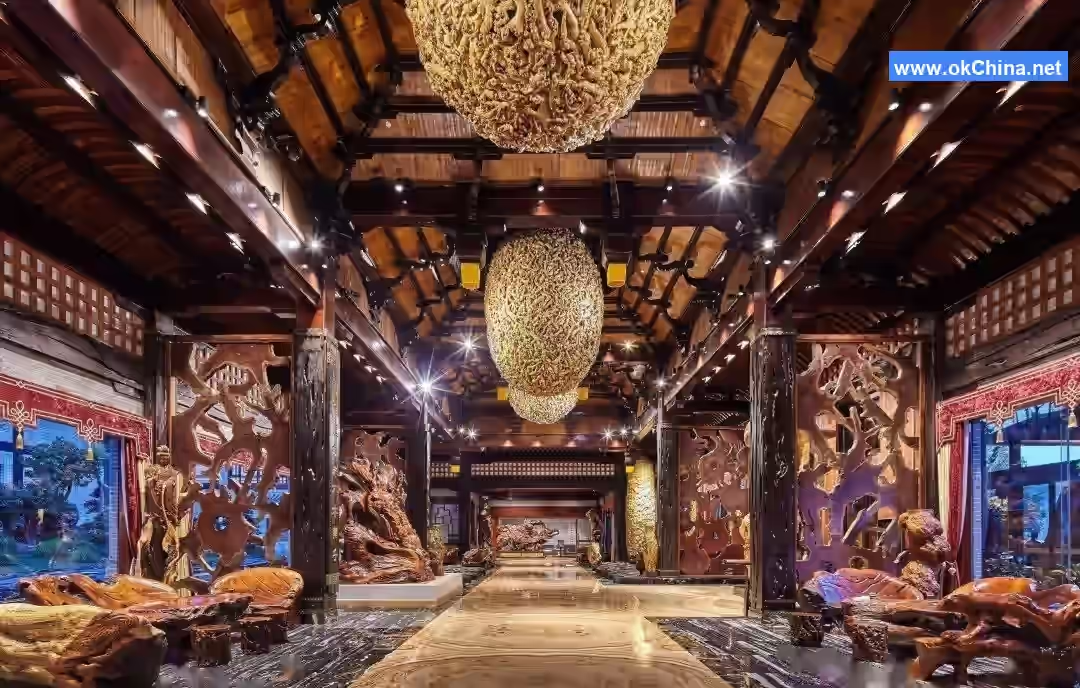
The Future Buddha Hall enshrines 17 large-scale root carving works depicting classic Buddhist figures, including the Future Buddha (Maitreya), the Four Heavenly Kings, Ksitigarbha Bodhisattva, and the Living Buddha Jigong. The root materials are all千年古根 (thousand-year-old ancient roots), massive in size, with the largest weighing up to 16 tons. The primary珍贵根材 (precious root materials) include nanmu,阴沉木 (ancient buried wood), and golden camphor wood. The creations are exquisite, with作品刀笔精妙、人创天成 (wonderful knife and brushwork, creations by man yet seemingly made by heaven),形神兼备 (possessing both form and spirit). They use神奇的根雕艺术 (magical root carving art) to渲染 (enhance) the庄严肃穆 (solemn and dignified) atmosphere of the Future Buddha Hall.
2.6 Mahavira Hall (Great Hero Hall)
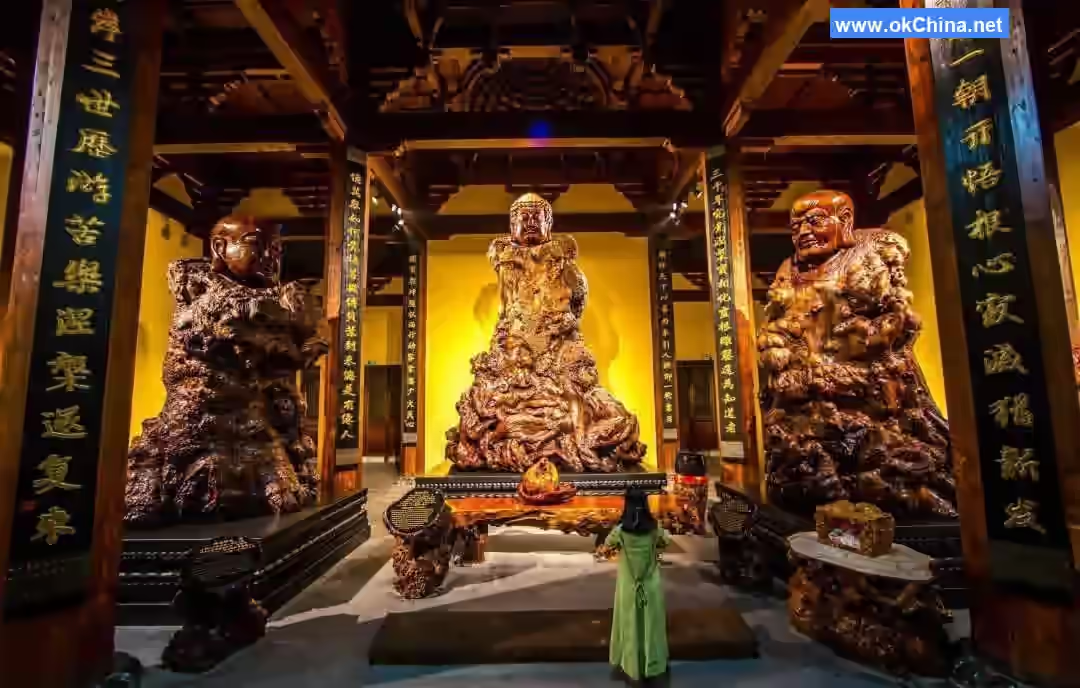
The Mahavira Hall is a place专门供奉 (specifically dedicated to enshrining) Sakyamuni Buddha. Sakyamuni Buddha was originally the crown prince of King Suddhodana in ancient India. Upon growing up, he renounced his尊荣 (honor and glory) to leave home and practice the path. After six years of苦行 (ascetic practices), he最终成大觉 (ultimately achieved great enlightenment). "Sakya" signifies compassion; "muni" signifies wisdom. "Mahavira" (Great Hero) is an epithet; "maha" (great)包含万有 (encompasses all things); "vira" (hero) means摄伏群魔 (subduing all demons). Buddhist disciples尊称他 (respectfully call him) Mahavira. The "宝" (treasure/jewel) in宝殿 (Precious Hall) refers to the三宝 (Three Jewels): Buddha, Dharma, and Sangha (Buddha is the great educator, Dharma is the truth of the universe and life, Sangha are the practitioners of the truth). Similar to the Mahavira Halls in some temples, this hall enshrines 28巨型作品 (giant works), including Sakyamuni Buddha, Ananda, Kasyapa, Manjusri, Samantabhadra, Guanyin, the Eighteen Arhats, and auspicious cloud totems.
The central Sakyamuni Buddha is made of yellow-heart nanmu wood, standing 9.9 meters tall and weighing over 40 tons (main Buddha 26 tons, base 14 tons). It is the largest Buddha statue in the Root Carving Buddha Kingdom. The root material was acquired at巨资 (great expense) from Myanmar, a Buddhist holy land. The root material is庞大 (massive) in形体 (form),奇绝 (uniquely extraordinary) in造型 (shape), and十分稀有 (extremely rare). Moreover, it seemed destined by fate to have a connection with the Root Carving Buddha Kingdom and Master Xu.当年 (Back then), when Master Xu was searching for roots in Myanmar, he passed by a timber yard and purchased this root stump from under the workers' electric saws. Later, during transportation, because the root material exceeded height and width limits, Master Xu, cherishing the root's原始造型 (original form), requested a绕道捻转 (detour and迂回曲折绕道), which was quite troublesome. It was akin to Tang Sanzang's journey to the West to obtain scriptures,历经九九八十一难 (undergoing eighty-one difficulties) before finally being迎请至 (welcomed to) the Root Expo Garden.好事多磨 (The road to success is never smooth). After being skillfully "点化" (enlightened/transformed) into a Buddha by Master Xu Guqing's妙手 (expert hands), this over-40-ton work was also陈列起来 (displayed) in the hall by人工 (manual labor), creating another奇迹 (miracle) for the Root Expo Garden. Beside Sakyamuni Buddha are Kasyapa and Ananda, who respectively represent the merits of知 (knowledge/wisdom) and行 (practice/action).
2.7 Five Hundred Arhats
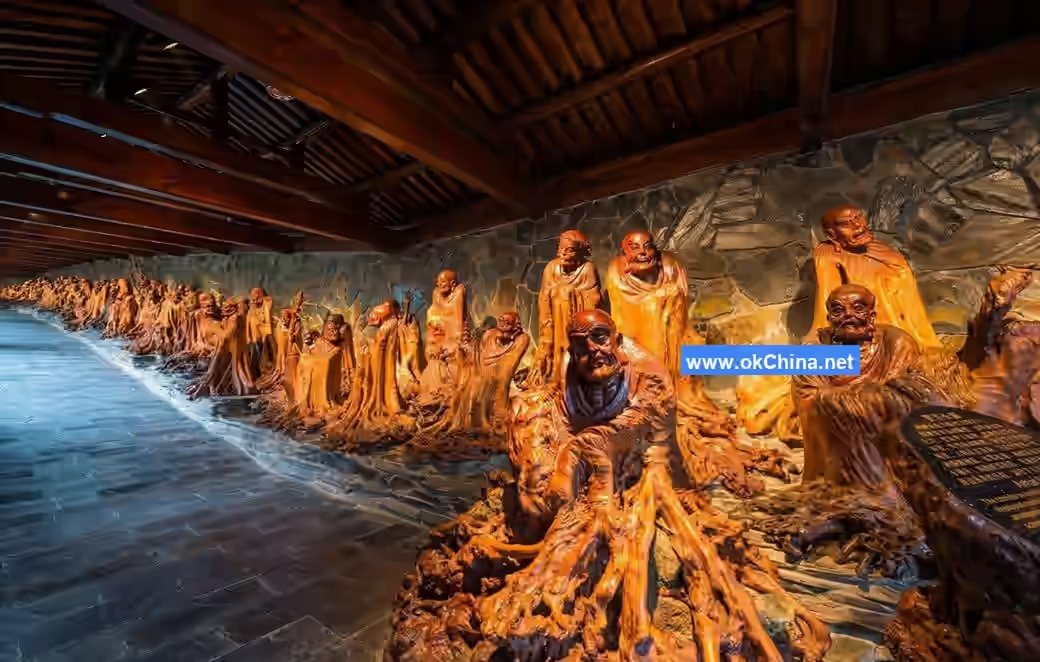
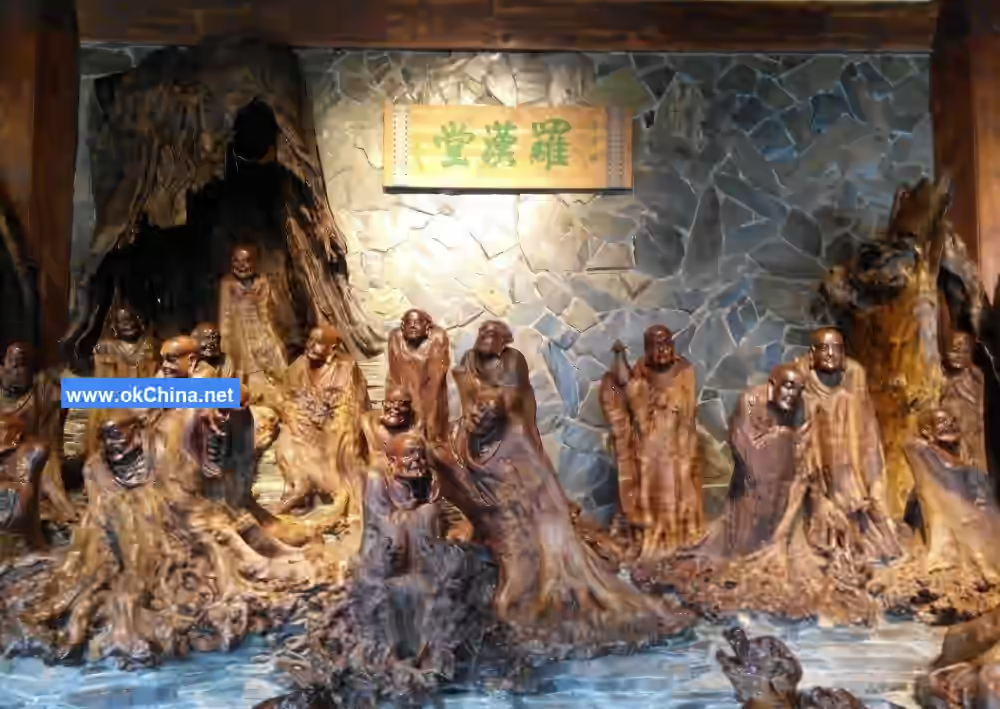
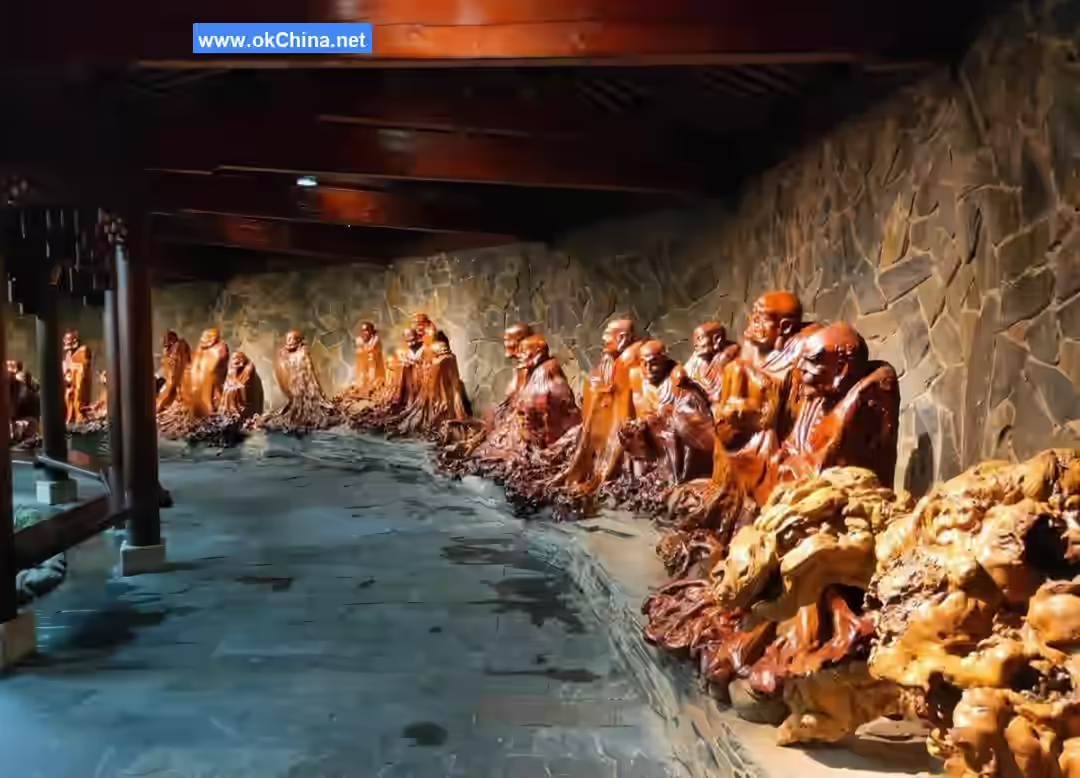
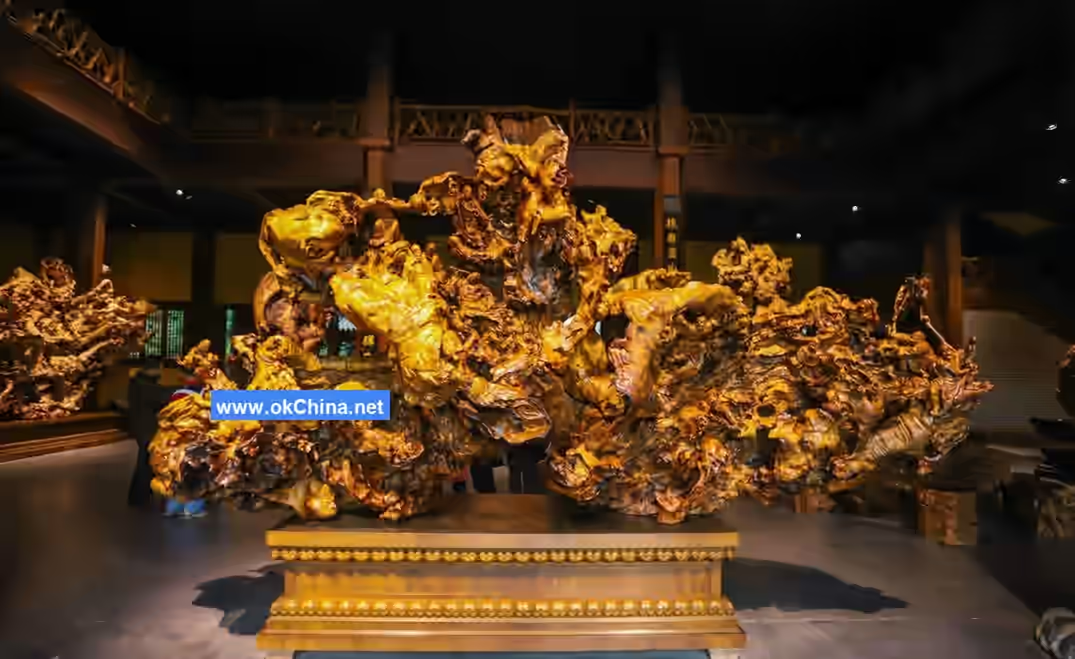
This巨型根艺 (giant root art) set of Five Hundred Arhats is the result of over ten years of精心准备 (meticulous preparation) by Master Xu Guqing. He spent巨资 (vast sums) collecting千年龙眼和荔枝木根桩 (thousand-year-old longan and lychee wood root stumps) from all over the country for its creation. The整体布局 (overall layout) follows several important Dharma assemblies as the主线 (main thread), such as the Buddha's enlightenment of the first five bhikkhus and the propagation of Dharma in Magadha. It has a独特风格 (unique style) and恢弘气势 (magnificent momentum), possessing both the mystery of Buddhism and reflecting the百态 (myriad aspects) of human life. It融汇 (integrates) modern artistic innovation concepts into traditional carving techniques, allowing the Arhat series to情表于外 (express emotion outwardly),意韵其中 (contain meaning and resonance within), being典雅且通俗 (elegant yet通俗). It perfectly combines根雕艺术 (root carving art) and佛教文化 (Buddhist culture), making it the world's largest set of root carving statues of the Five Hundred Arhats.### 2.8 Zuigen Tiangong Museum The Zuigen Tiangong Museum is China's first professional root carving museum, with a construction area of 3,000 square meters. The first floor displays over twenty large-scale root art pieces from "Zuigen." The top floor features a multifunctional lecture hall used for academic exchanges and skill training. The second floor exhibits rare root art treasures, archival materials, research achievements on root art, and hosts rotating exhibitions of works by master root artists from various regions. It serves as a comprehensive encyclopedia of root carving art. From these archival materials, one can appreciate the local customs, cultures, and artistic styles of ethnic groups across the country. The walls are adorned with photos from various exhibitions, as well as calligraphic works and group photos left by notable figures from all walks of life—such as Xiao Yang, Li Zemin, Xiao Feng, Liang Pingbo, Lu Kunfeng, and Li Zihou—after their visits. Their words are filled with praise and encouragement for root art practitioners, reflecting the development of contemporary Chinese root art through Zuigen's artistic journey. The museum is an antique-style building inspired by the Tang and Han dynasties. Its exterior features a centrally rising, layered lotus sculpture symbolizing Buddhism, conveying the meaning of "the lotus blooms, the Buddha arrives." The front eaves form a "合"-shaped platform, highlighting the conceptual theme of "harmony between man and nature."
2.9 Qingmei Garden
The name "Qingmei Garden" is derived from the character "青" from Xu Guqing's name and the character "梅" from his hometown, Meiling. It features over 800 pots of aged, withered plum tree stumps, characterized by their ancient tree age and uniquely elegant shapes. With green vines clinging to the wood, moss covering the branches, and sparse shadows slanting, the garden presents a three-dimensional painting that blends the enduring spirit of centuries. The flowerpots are custom-made, high-quality purple clay pots inscribed with poetic verses by the plum blossom poet Zhang Daoqia. Appreciating the plum blossoms while savoring the poetry complements each other perfectly, creating a plum blossom viewing paradise infused with the historical and cultural atmosphere of Kaihua. Among them, the bonsai of withered plum tree stumps with a thousand-year root age embodies the historical and cultural essence of Kaihua, serving as three-dimensional poetry and painting. Viewing the scenery evokes nostalgia, blending emotion with the scene, and vividly captures the poetic意境 of Kaihua's historical figure—the plum blossom poet Zhang Daoqia.
3. Related Culture
3.1 Naming
The Quzhou Root Palace Buddha Kingdom Cultural Tourism Area is a palace of roots and a kingdom of Buddha. Its name originates from its unique root carving art and Buddhist cultural theme.
3.2 Cultural Background
Culturally, the Root Palace Buddha Kingdom Cultural Tourism Area is grounded in Buddhism, Confucianism, Taoism, historical culture, and folk culture. It integrates the architectural styles of the Han and Sui-Tang periods, employing design techniques such as "a scene with every step," "a scene in every hall," "a scene in every garden," "a scene in every root," and "a charm in every root." It uses roots to convey principles and emotions, recreating the grandeur and vastness of the Han and Tang dynasties. Simultaneously, the scenic area is dedicated to inheriting traditional culture, having invited a group of master-level intangible cultural heritage inheritors. It showcases master-level intangible cultural heritage halls featuring root carving, wood carving, Ru kiln porcelain, and traditional Chinese painting.
3.3 Cultural Works
Kaihua root carving can be traced back to the fourth year of the Wude era in the Tang Dynasty (621 AD). It began to gradually separate from wood carving during the sixth year of the Zhengde era under Emperor Wuzong of the Ming Dynasty (1511 AD), forming an independent art category. According to the Qing Dynasty's "Kaihua County Annals" from the Guangxu era: "Song Guoguang, styled Er Yan, was a county student during the Qianlong era of the Qing Dynasty. He was appointed as a Battalion Commander by special recruitment. He excelled in painting and carving. Upon encountering gnarled and intertwined tree stumps, he would casually carve them into figures, flowers, and birds. Those who saw them marveled at their lifelikeness." "When Zhongfeng Academy was completed, the doors and windows were carved with bamboo leaves, plum blossoms were engraved, and the walls were painted with the ancient Eighteen Scholars, capturing both form and spirit vividly." This shows that Kaihua root carving had already separated from wood carving by that time and formed an independent folk root carving art category. Kaihua root carving uses materials from deep mountain rotten roots and withered vines, cleverly borrowing from and recreating nature. It is philosophical and full of natural charm. In particular, the "Zuigen" masterpieces created by Mr. Xu Guqing are profound and extensive. His large-scale works are simple, grand, natural, and realistic. His figure works adapt the art to the material, achieving divine craftsmanship; with minimal carving, the figures are vividly shaped, with natural charm and ease. His root carving furniture features varied forms, clear textures, hard quality, and a simple, natural style.
3.4 Cultural Celebrities
On March 1, 2015, the famous American Hollywood director, screenwriter, and producer Malcolm Clarke led his production team to visit and investigate the Root Palace Buddha Kingdom Cultural Tourism Area.
On April 20, 2019, the renowned writer, painter, speaker, and educational theorist Mr. Liu Yong and his entourage visited the Root Palace Buddha Kingdom Cultural Tourism Area for sightseeing and sketching within the scenic area.
3.5 Folk Culture
The nationally protected intangible cultural heritage item—the Mid-Autumn Festival Incense Fire Grass Dragon Dance—is a unique folk custom widely spread in the rural areas of Kaihua. The Kaihua Grass Dragon is a continuation of China's rice farming culture. Many townships in the county have the custom of dancing the incense fire grass dragon. In the sixth year of the Hongwu era (1373 AD), after Zhu Yuanzhang ascended the throne, he sent his minister, the Secretariat Drafter Ye Chen, to Suzhuang to bestow the name "Fulou Village" upon Jinxi Village. The Kaihua Grass Dragon has a unique local style and strong rural flavor. The procedure of the grass dragon dance corresponds to the rising and setting of the Mid-Autumn moon, divided into three steps: Rising Mountain Moon, Full Mountain Moon, and Setting Mountain Moon.
- Rising Mountain Moon: Before the dragon dance, villagers offer sacrifices to their ancestors in the ancestral hall. The host instructs on the dragon dance, begins the dragon worship, burns incense and candles, recites sacrificial prayers, and sets off ceremonial firecrackers, creating a solemn and sacred atmosphere. After the "Calling the Dragon" ritual, several firelock shots sound. The prepared crowd surges forward, each holding a pine torch, quickly lighting the incense on the dragon's head, body, and the accompanying ceremonial objects. The grass dragon then comes alive like a fire dragon.
- Full Mountain Moon: The "dragon" is held high, led by rolling fireballs. The grass dragon surges out from the ancestral hall's main gate, accompanied by folk music bands both in front and behind. With the sound of suona horns and firecrackers, various "imperial carriages" follow behind as it circles the village. On the Mid-Autumn night, under the bright, hazy moonlight, a long fire dragon is seen dancing wildly, leaping and tumbling in the fields just after harvest. The villagers dancing the dragon move freely, performing various dance postures. The flickering incense火构成的仙班水族仿佛被注入了生命,生气勃勃地活动起来。The flickering incense火构成的仙班水族仿佛被注入了生命,生气勃勃地活动起来。The flickering incense火构成的仙班水族仿佛被注入了生命,生气勃勃地活动起来。The flickering incense火构成的仙班水族仿佛被注入了生命,生气勃勃地活动起来。The flickering incense火构成的仙班水族仿佛被注入了生命,生气勃勃地活动起来。The flickering incense火构成的仙班水族仿佛被注入了生命,生气勃勃地活动起来。The flickering incense火构成的仙班水族仿佛被注入了生命,生气勃勃地活动起来。The flickering incense火构成的仙班水族仿佛被注入了生命,生气勃勃地活动起来。The flickering incense火构成的仙班水族仿佛被注入了生命,生气勃勃地活动起来。The flickering incense火构成的仙班水族仿佛被注入了生命,生气勃勃地活动起来。The flickering incense火构成的仙班水族仿佛被注入了生命,生气勃勃地活动起来。The flickering incense火构成的仙班水族仿佛被注入了生命,生气勃勃地活动起来。The flickering incense火构成的仙班水族仿佛被注入了生命,生气勃勃地活动起来。The flickering incense火构成的仙班水族仿佛被注入了生命,生气勃勃地活动起来。The flickering incense火构成的仙班水族仿佛被注入了生命,生气勃勃地活动起来。The flickering incense火构成的仙班水族仿佛被注入了生命,生气勃勃地活动起来。The flickering incense火构成的仙班水族仿佛被注入了生命,生气勃勃地活动起来。The flickering incense火构成的仙班水族仿佛被注入了生命,生气勃勃地活动起来。The flickering incense火构成的仙班水族仿佛被注入了生命,生气勃勃地活动起来。The flickering incense火构成的仙班水族仿佛被注入了生命,生气勃勃地活动起来。The flickering incense火构成的仙班水族仿佛被注入了生命,生气勃勃地活动起来。The flickering incense火构成的仙班水族仿佛被注入了生命,生气勃勃地活动起来。The flickering incense火构成的仙班水族仿佛被注入了生命,生气勃勃地活动起来。The flickering incense火构成的仙班水族仿佛被注入了生命,生气勃勃地活动起来。The flickering incense火构成的仙班水族仿佛被注入了生命,生气勃勃地活动起来。The flickering incense火构成的仙班水族仿佛被注入了生命,生气勃勃地活动起来。The flickering incense火构成的仙班水族仿佛被注入了生命,生气勃勃地活动起来。The flickering incense火构成的仙班水族仿佛被注入了生命,生气勃勃地活动起来。The flickering incense火构成的仙班水族仿佛被注入了生命,生气勃勃地活动起来。The flickering incense火构成的仙班水族仿佛被注入了生命,生气勃勃地活动起来。The flickering incense火构成的仙班水族仿佛被注入了生命,生气勃勃地活动起来。The flickering incense火构成的仙班水族仿佛被注入了生命,生气勃勃地活动起来。The flickering incense火构成的仙班水族仿佛被注入了生命,生气勃勃地活动起来。The flickering incense火构成的仙班水族仿佛被注入了生命,生气勃勃地活动起来。The flickering incense火构成的仙班水族仿佛被注入了生命,生气勃勃地活动起来。The flickering incense火构成的仙班水族仿佛被注入了生命,生气勃勃地活动起来。The flickering incense火构成的仙班水族仿佛被注入了生命,生气勃勃地活动起来。The flickering incense火构成的仙班水族仿佛被注入了生命,生气勃勃地活动起来。The flickering incense火构成的仙班水族仿佛被注入了生命,生气勃勃地活动起来。The flickering incense火构成的仙班水族仿佛被注入了生命,生气勃勃地活动起来。The flickering incense火构成的仙班水族仿佛被注入了生命,生气勃勃地活动起来。The flickering incense火构成的仙班水族仿佛被注入了生命,生气勃勃地活动起来。The flickering incense火构成的仙班水族仿佛被注入了生命,生气勃勃地活动起来。The flickering incense火构成的仙班水族仿佛被注入了生命,生气勃勃地活动起来。The flickering incense火构成的仙班水族仿佛被注入了生命,生气勃勃地活动起来。The flickering incense火构成的仙班水族仿佛被注入了生命,生气勃勃地活动起来。The flickering incense火构成的仙班水族仿佛被注入了生命,生气勃勃地活动起来。The flickering incense火构成的仙班水族仿佛被注入了生命,生气勃勃地活动起来。The flickering incense火构成的仙班水族仿佛被注入了生命,生气勃勃地活动起来。The flickering incense火构成的仙班水族仿佛被注入了生命,生气勃勃地活动起来。The flickering incense火构成的仙班水族仿佛被注入了生命,生气勃勃地活动起来。The flickering incense火构成的仙班水族仿佛被注入了生命,生气勃勃地活动起来。The flickering incense火构成的仙班水族仿佛被注入了生命,生气勃勃地活动起来。The flickering incense火构成的仙班水族仿佛被注入了生命,生气勃勃地活动起来。The flickering incense火构成的仙班水族仿佛被注入了生命,生气勃勃地活动起来。The flickering incense火构成的仙班水族仿佛被注入了生命,生气勃勃地活动起来。The flickering incense火构成的仙班水族仿佛被注入了生命,生气勃勃地活动起来。The flickering incense火构成的仙班水族仿佛被注入了生命,生气勃勃地活动起来。The flickering incense火构成的仙班水族仿佛被注入了生命,生气勃勃地活动起来。The flickering incense火构成的仙班水族仿佛被注入了生命,生气勃勃地活动起来。The flickering incense火构成的仙班水族仿佛被注入了生命,生气勃勃地活动起来。The flickering incense火构成的仙班水族仿佛被注入了生命,生气勃勃地活动起来。The flickering incense火构成的仙班水族仿佛被注入了生命,生气勃勃地活动起来。The flickering incense火构成的仙班水族仿佛被注入了生命,生气勃勃地活动起来。The flickering incense火构成的仙班水族仿佛被注入了生命,生气勃勃地活动起来。The flickering incense火构成的仙班水族仿佛被注入了生命,生气勃勃地活动起来。The flickering incense火构成的仙班水族仿佛被注入了生命,生气勃勃地活动起来。The flickering incense火构成的仙班水族仿佛被注入了生命,生气勃勃地活动起来。The flickering incense火构成的仙班水族仿佛被注入了生命,生气勃勃地活动起来。The flickering incense火构成的仙班水族仿佛被注入了生命,生气勃勃地活动起来。The flickering incense火构成的仙班水族仿佛被注入了生命,生气勃勃地活动起来。The flickering incense火构成的仙班水族仿佛被注入了生命,生气勃勃地活动起来。The flickering incense火构成的仙班水族仿佛被注入了生命,生气勃勃地活动起来。The flickering incense火构成的仙班水族仿佛被注入了生命,生气勃勃地活动起来。The flickering incense火构成的仙班水族仿佛被注入了生命,生气勃勃地活动起来。The flickering incense火构成的仙班水族仿佛被注入了生命,生气勃勃地活动起来。The flickering incense火构成的仙班水族仿佛被注入了生命,生气勃勃地活动起来。The flickering incense火构成的仙班水族仿佛被注入了生命,生气勃勃地活动起来。The flickering incense火构成的仙班水族仿佛被注入了生命,生气勃勃地活动起来。The flickering incense火构成的仙班水族仿佛被注入了生命,生气勃勃地活动起来。The flickering incense火构成的仙班水族仿佛被注入了生命,生气勃勃地活动起来。The flickering incense火构成的仙班水族仿佛被注入了生命,生气勃勃地活动起来。The flickering incense火构成的仙班水族仿佛被注入了生命,生气勃勃地活动起来。The flickering incense火构成的仙班水族仿佛被注入了生命,生气勃勃地活动起来。The flickering incense火构成的仙班水族仿佛被注入了生命,生气勃勃地活动起来。The flickering incense火构成的仙班水族仿佛被注入了生命,生气勃勃地活动起来。The flickering incense火构成的仙班水族仿佛被注入了生命,生气勃勃地活动起来。The flickering incense火构成的仙班水族仿佛被注入了生命,生气勃勃地活动起来。The flickering incense火构成的仙班水族仿佛被注入了生命,生气勃勃地活动起来。The flickering incense火构成的仙班水族仿佛被注入了生命,生气勃勃地活动起来。The flickering incense火构成的仙班水族仿佛被注入了生命,生气勃勃地活动起来。The flickering incense火构成的仙班水族仿佛被注入了生命,生气勃勃地活动起来。The flickering incense火构成的仙班水族仿佛被注入了生命,生气勃勃地活动起来。The flickering incense火构成的仙班水族仿佛被注入了生命,生气勃勃地活动起来。The flickering incense火构成的仙班水族仿佛被注入了生命,生气勃勃地活动起来。The flickering incense火构成的仙班水族仿佛被注入了生命,生气勃勃地活动起来。The flickering incense火构成的仙班水族仿佛被注入了生命,生气勃勃地活动起来。The flickering incense火构成的仙班水族仿佛被注入了生命,生气勃勃地活动起来。The flickering incense火构成的仙班水族仿佛被注入了生命,生气勃勃地活动起来。The flickering incense火构成的仙班水族仿佛被注入了生命,生气勃勃地活动起来。The flickering incense火构成的仙班水族仿佛被注入了生命,生气勃勃地活动起来。The flickering incense火构成的仙班水族仿佛被注入了生命,生气勃勃地活动起来。The flickering incense火构成的仙班水族仿佛被注入了生命,生气勃勃地活动起来。The flickering incense火构成的仙班水族仿佛被注入了生命,生气勃勃地活动起来。The flickering incense火构成的仙班水族仿佛被注入了生命,生气勃勃地活动起来。The flickering incense火构成的仙班水族仿佛被注入了生命,生气勃勃地活动起来。The flickering incense火构成的仙班水族仿佛被注入了生命,生气勃勃地活动起来。The flickering incense火构成的仙班水族仿佛被注入了生命,生气勃勃地活动起来。The flickering incense火构成的仙班水族仿佛被注入了生命,生气勃勃地活动起来。The flickering incense火构成的仙班水族仿佛被注入了生命,生气勃勃地活动起来。The flickering incense火构成的仙班水族仿佛被注入了生命,生气勃勃地活动起来。The flickering incense火构成的仙班水族仿佛被注入了
Comments
Post a Comment