Ruijin Cradle of the Republic
1. Introduction
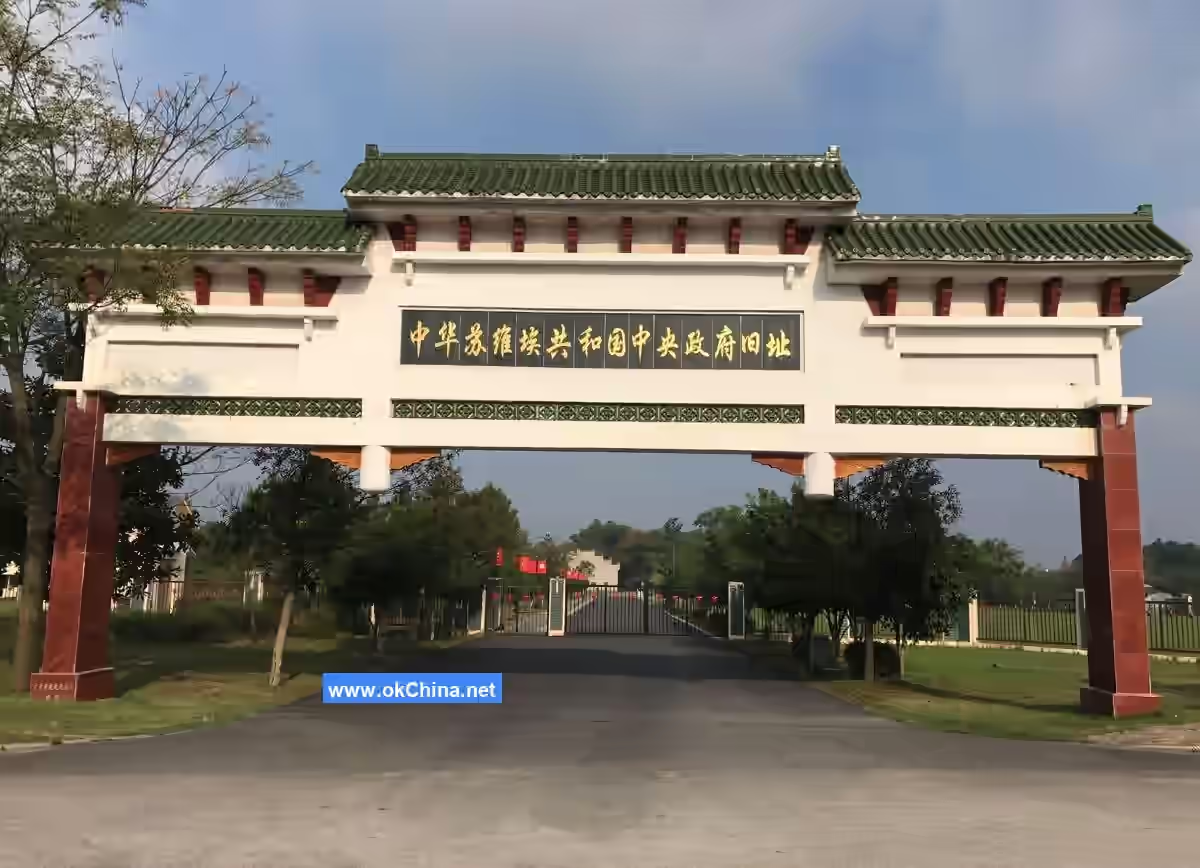
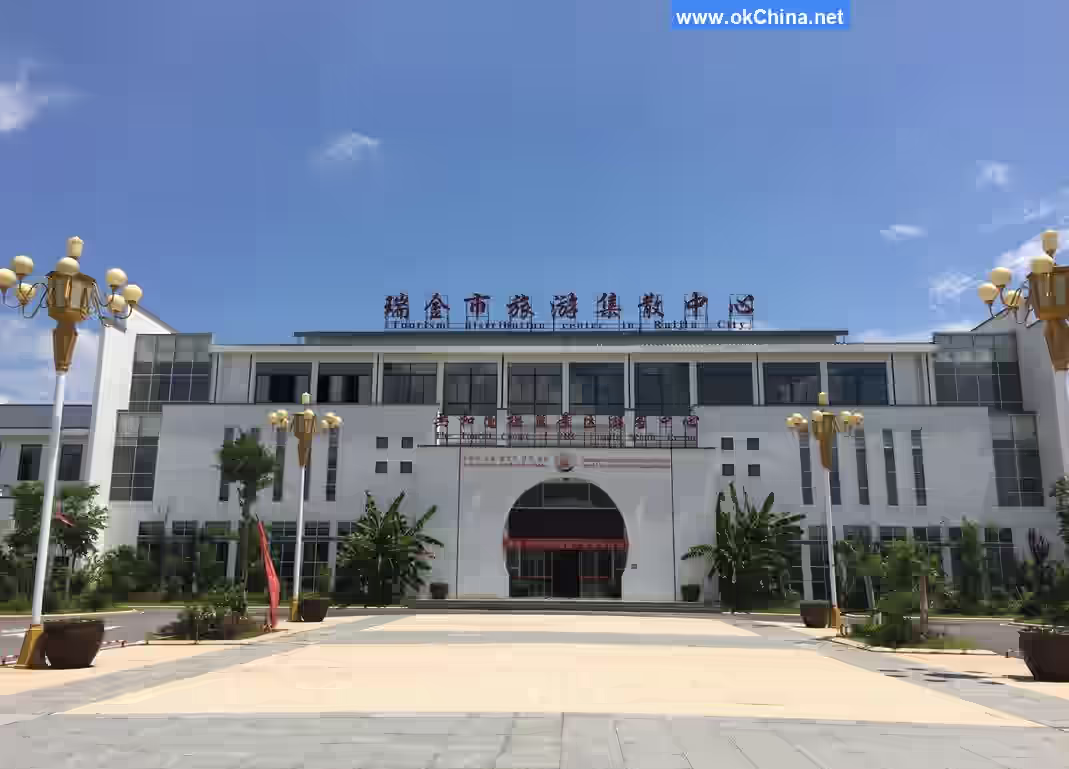
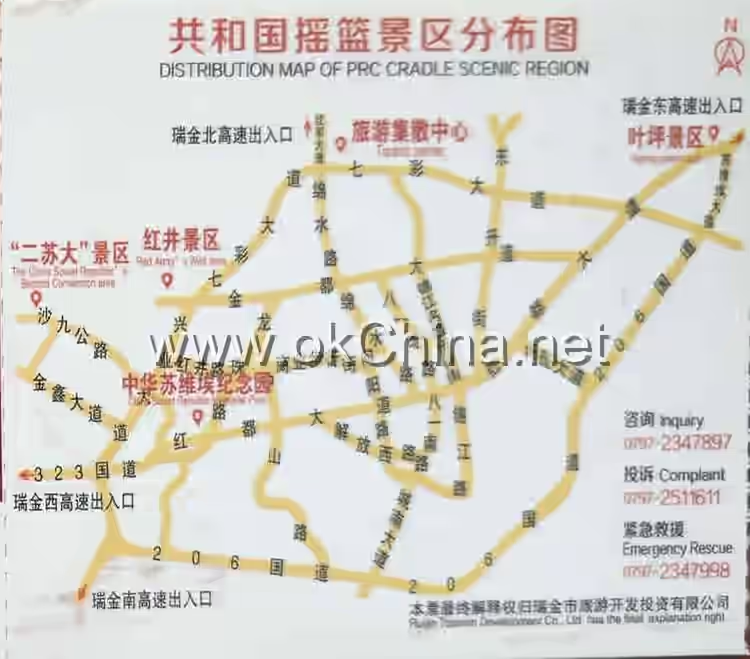
The Ruijin Cradle of the Republic Scenic Area is located on Jindu Avenue, Shazhouba Town, Ruijin City, Jiangxi Province. Covering an area of over 4,550 acres, it comprises the Yeping Scenic Area, the Red Well Scenic Area, the Second National Soviet Congress Scenic Area, and the Chinese Soviet Memorial Park. The Ruijin Cradle of the Republic Scenic Area retains the simplicity of its "form" while showcasing the profound "value" of its essence. The Yeping Scenic Area includes the former residences of Mao Zedong and Zhu De, the site of the Provisional Central Government, the Red Army Square, the Red Army Reviewing Stand, the Red Army Martyrs' Memorial Pavilion, the Bosheng Fort, and the Gonglue Pavilion. The Shazhouba Scenic Area includes the site of the Central Government Auditorium, the site of the All-China Federation of Trade Unions, the site of the General Political Department of the Chinese Workers' and Peasants' Red Army, the Red Well, and the site of the Lenin Primary School. The Second National Soviet Congress Scenic Area includes the site of the Central Bureau of the Communist Party of China and the site of the Provisional Central Government Auditorium of the Chinese Soviet Republic. The Ruijin Cradle of the Republic Scenic Area is among the first batch of National Patriotic Education Demonstration Bases announced by the Publicity Department of the Central Committee of the Communist Party of China. It is also one of China's classic red tourism scenic spots, an important base for Chinese tourism, cultivating patriotic sentiments and national spirit, and a distribution center for red tourism in the border area of Jiangxi and Fujian. It was listed as a National 5A-level Tourist Attraction in July 2015.
2. Geographical Environment
2.1 Location and Territory
The Ruijin Cradle of the Republic Scenic Area consists of the Yeping Scenic Area, the Red Well Scenic Area, the Second National Soviet Congress Scenic Area, and the Chinese Soviet Memorial Park. Among them, the Yeping Scenic Area is located in Yeping Village, Yeping Township; the Red Well Scenic Area and the Second National Soviet Congress Scenic Area are located in Shazhouba Town; and the Chinese Soviet Memorial Park is located north of Hongdu Avenue and east of Longzhu Road in Ruijin City.
2.2 Climate Characteristics
The Ruijin Cradle of the Republic Scenic Area has a subtropical monsoon humid climate. It features abundant heat, ample rainfall, sufficient sunlight, and distinct seasons. The average frost-free period is 286 days, and the annual average temperature is 18.9 degrees Celsius. The hottest month is July with an average temperature of [data missing] degrees Celsius, and the coldest month is January with an average temperature of 7.6 degrees Celsius. The average annual rainfall is 1,710 mm, with an average of 163.7 rainy days per year. The climate is neither too cold nor too hot, neither too humid nor too dry, making it pleasant for people and suitable for things.
3. Main Attractions
3.1 Yeping Scenic Area
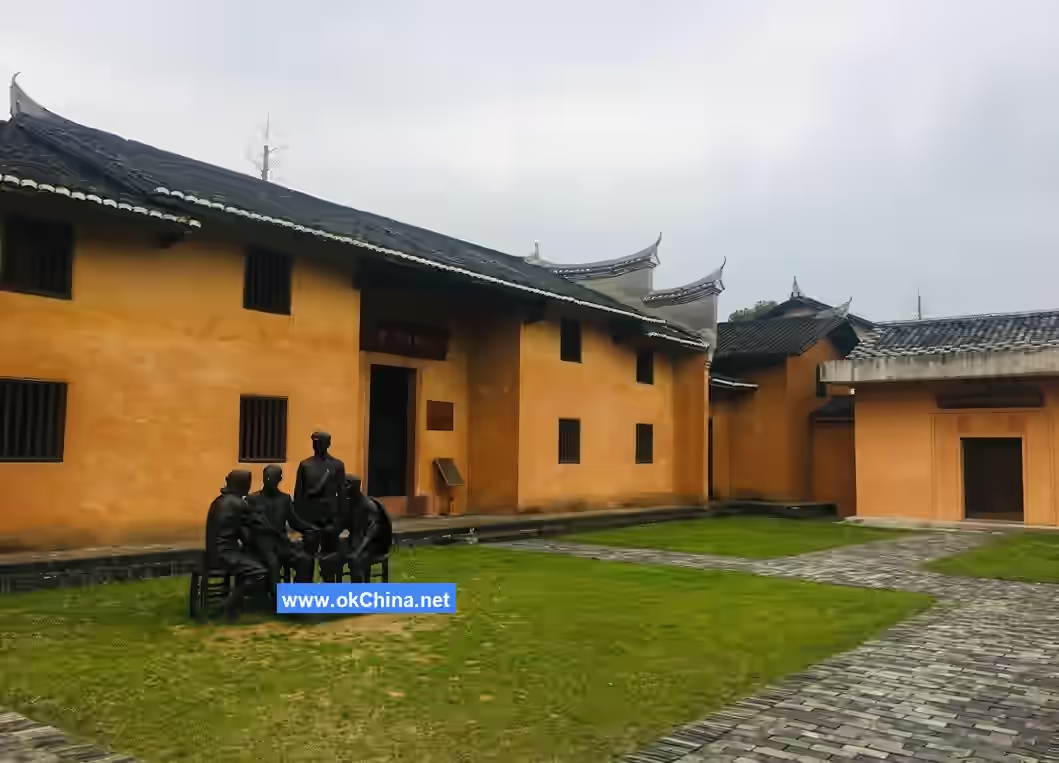
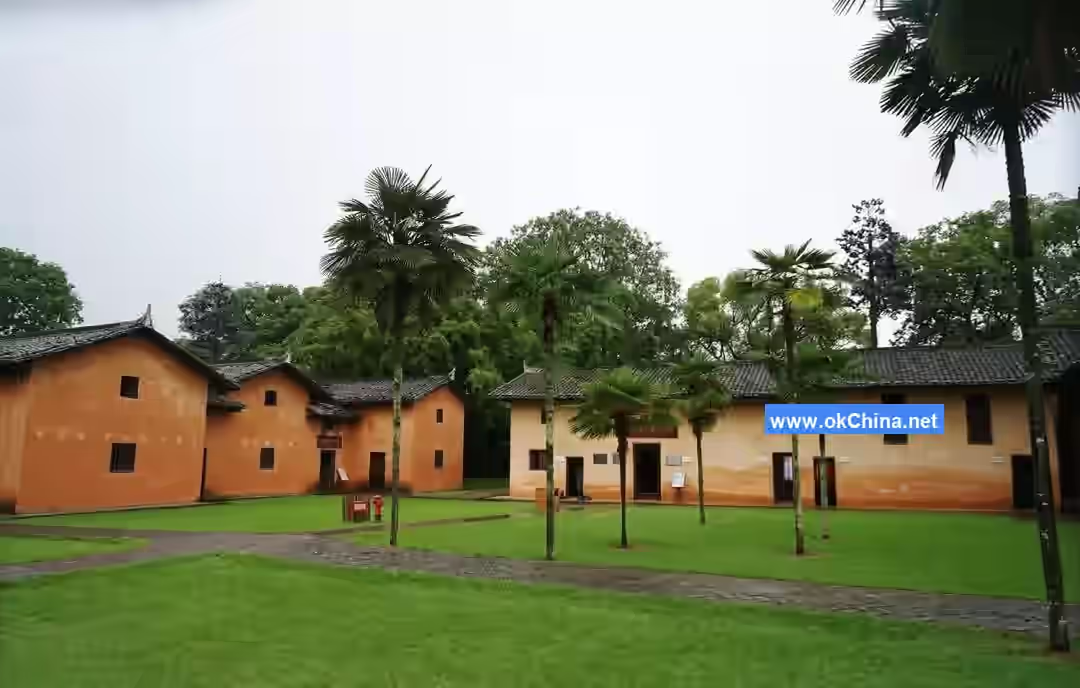
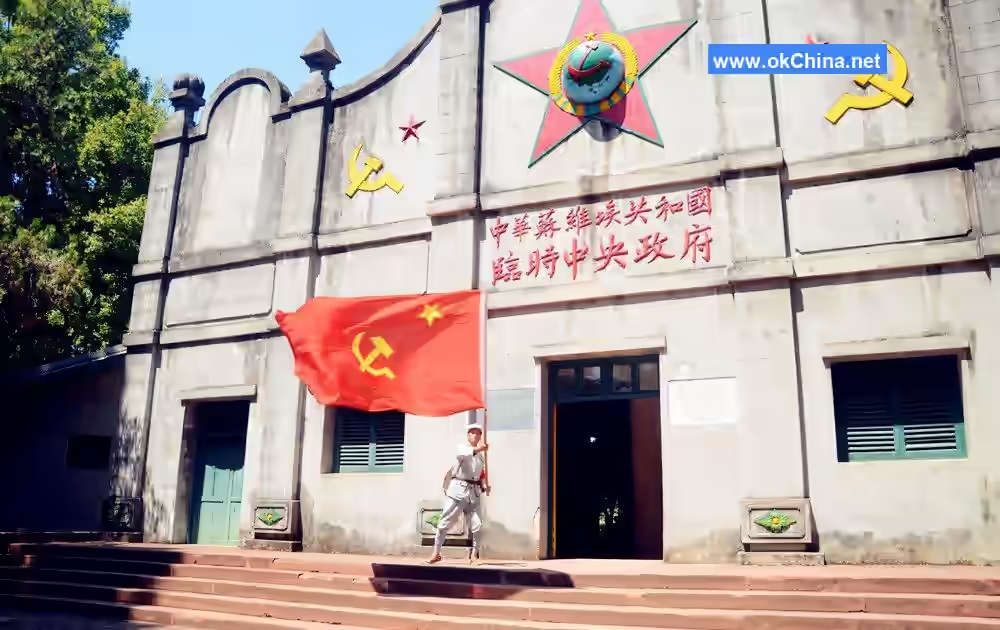
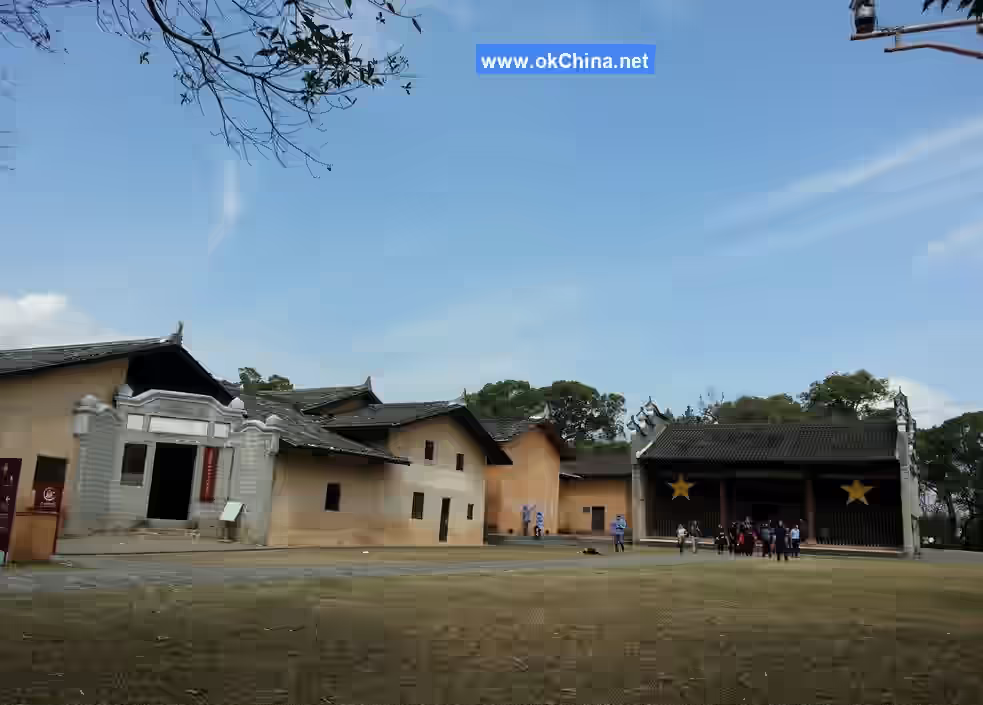
The Yeping Revolutionary Site Complex is located in Yeping Village, Yeping Township, Ruijin City, about 3 kilometers from the urban area, covering an area of over 500 acres. This is the birthplace of the Provisional Central Government of the Chinese Soviet Republic. Veteran proletarian revolutionaries such as Mao Zedong, Zhu De, and Zhou Enlai fought and lived on this red land in southern Jiangxi and western Fujian for nearly six years, including one year and eight months in Yeping. The area preserves 23 revolutionary sites and memorial buildings, including 16 national key cultural relics protection units such as the site of the First National Soviet Congress, the site of the Central Bureau of the Communist Party of China Soviet Areas, the Red Army Martyrs' Memorial Tower, and the site of the Central Post Office.
3.1.1 Site of the Central Printing House
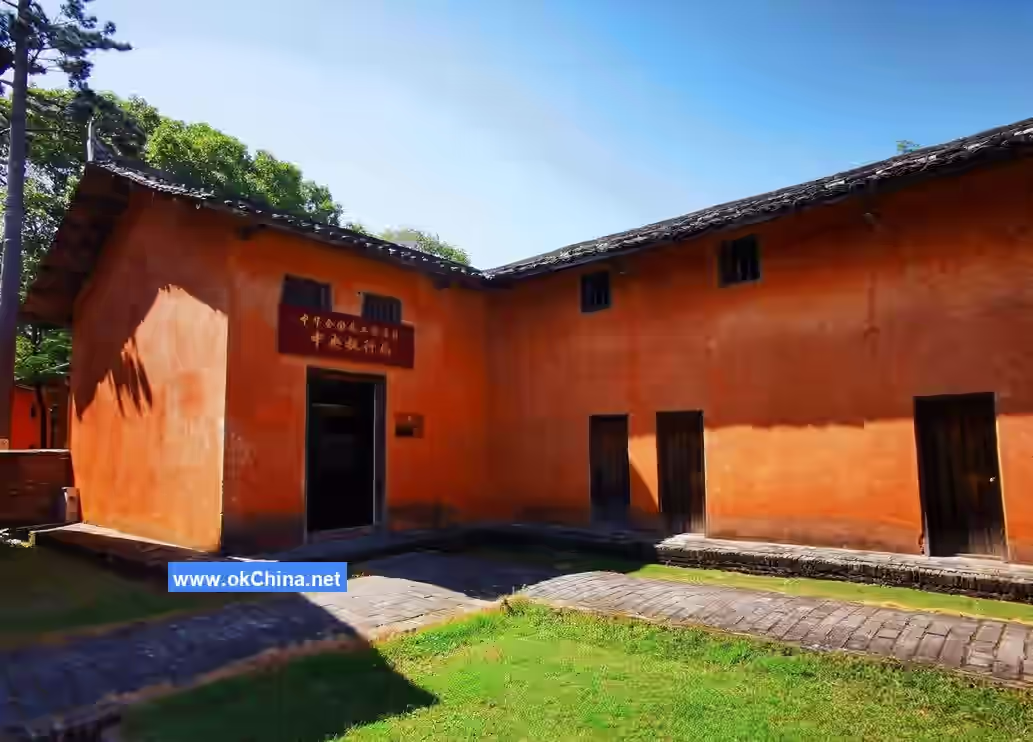
The site of the Central Printing House is located in the Yeping Scenic Area and was originally a civilian house of the Xie family. The Central Printing House was established in Yeping in November of the 20th year of the Republic of China (1931). The director was Chen Xiangsheng, the deputy director was Yang Qixin, the Communist Youth League secretary was Yang Shangkui, and the trade union chairman was Zeng Qingxi. At that time, the factory had over 100 staff and workers.
3.1.2 Red Army Reviewing Stand
The Red Army Reviewing Stand is located within the Yeping Revolutionary Site Complex in Ruijin. It was initially built on the eve of the First National Soviet Congress. On the morning of November 7, the 20th year of the Republic of China (1931), during the opening ceremony of the First National Congress of Chinese Workers, Peasants, and Soldiers' Soviets, party, government, and military leaders such as Mao Zedong and Zhu De reviewed the Red Army and presented flags and medals here.
3.2 Red Well Scenic Area
The Red Well Revolutionary Site Complex is located in Shazhouba Village, Shazhouba Town, Ruijin City, 3 kilometers from the urban area, covering an area of over 600 acres. It is the location of the Red Well, a water well personally dug by Mao Zedong for the masses. In April 1933, the Provisional Central Government of the Chinese Soviet Republic moved from Yeping, Ruijin, to Shazhouba, making this the second base of the Provisional Central Government in Ruijin. The scenic area contains 35 former residences, sites, and landscapes, including 8 national key cultural relics protection units and 23 predecessor sites restored by central ministries and commissions (offices/bureaus) that came to Ruijin to "trace their roots."
3.2.1 The Red Well
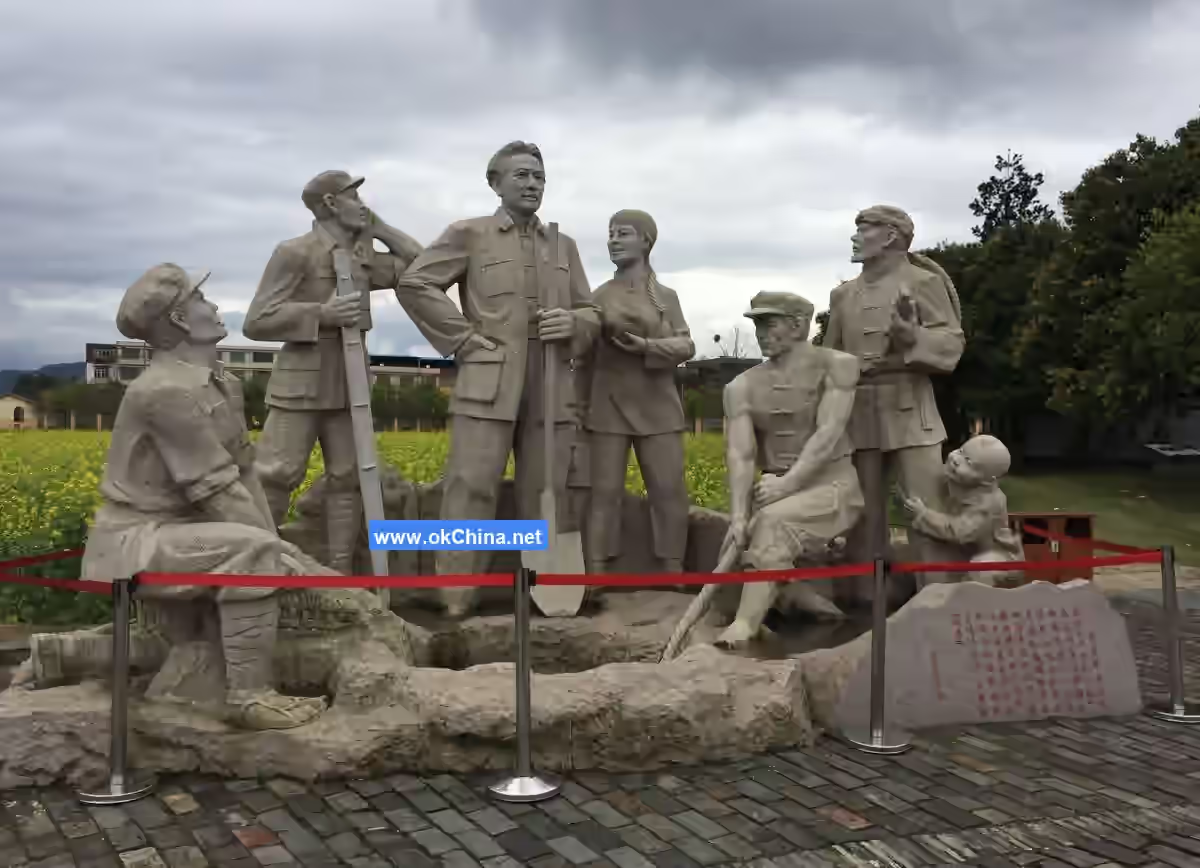
The Red Well is located in Shazhouba, Ruijin. Shazhouba was a village suffering from drought and water shortage. One day in September of the 22nd year of the Republic of China (1933), Mao Zedong led several Red Army soldiers to survey for a water source dozens of meters in front of the village and broke ground. After the well was dug, it was lined with cobblestones. In 1950, to welcome the arrival of the Central Southern Old Revolutionary Base Areas Condolence Delegation, the people of Ruijin repaired this well and named it the "Red Well." Simultaneously, a wooden sign was erected beside the well, inscribed with "When you drink the water, think of those who dug the well; always remember Chairman Mao." Later, the wooden sign was replaced with a stone stele.
3.2.2 Site of the Central Auditing Committee
The site of the Central Auditing Committee is located in the Red Well Scenic Area. It was originally the Yang Clan Ancestral Hall, built during the Guangxu period of the Qing Dynasty (1875-1908). It was a financial and economic supervision department directly under the leadership of the Central Executive Committee. Its main responsibilities were to audit state revenues and expenditures, supervise the execution of the state budget, and it played a significant role in unifying the finances of the Soviet areas, strengthening financial management, implementing financial supervision, and enforcing strict financial discipline.
3.3 Second National Soviet Congress Scenic Area
The "Second National Soviet Congress" Revolutionary Site Complex is located in Shazhouba Town, Ruijin City, 4 kilometers from the urban area. It includes the site of the "Second National Soviet Congress," the site of the Central Revolutionary Museum, and the Exhibition Hall of Historical Materials on the Chinese Soviet Congress System. In April 1933, the Provisional Central Government moved from Yeping to Shazhouba. To provide a venue for large-scale gatherings, especially in preparation for convening the Second National Soviet Congress, the Provisional Central Government decided to build a large auditorium.
3.3.1 Site of the Central Bureau of the Communist Party of China
The site of the Central Bureau of the Communist Party of China is located in Xiaxiao Village, Shazhouba, Ruijin. In January of the 22nd year of the Republic of China (1933), after the Provisional Central Political Bureau of the Communist Party of China moved from Shanghai to Ruijin, it was stationed here. In April of the same year, the Central Bureau of the Communist Party of China Soviet Areas also moved from Yeping to this location and merged with the former, becoming known as the Central Bureau of the Communist Party of China. Members of the Political Bureau of the Central Committee of the Communist Party of China such as Bo Gu (Qin Bangxian), Zhang Wentian, and Chen Yun, along with Li Weihan, Director of the Central Organization Bureau, and Deng Yingchao, Secretary-General of the Central Bureau, worked and lived here.
3.3.2 Site of the Provisional Central Government Auditorium of the Chinese Soviet Republic
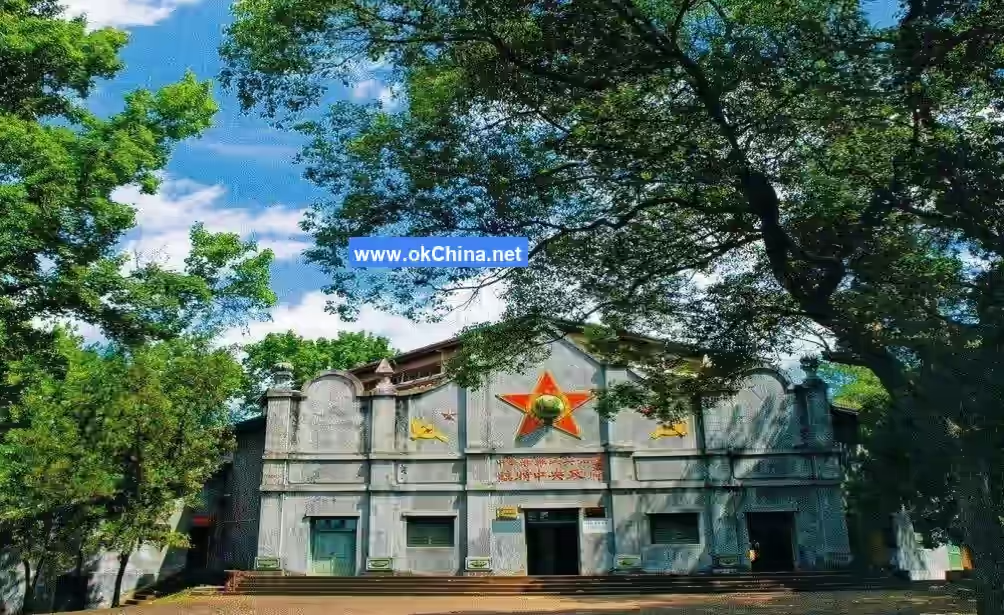
The site of the Provisional Central Government Auditorium of the Chinese Soviet Republic is located in Shazhouba. The auditorium faces south and covers an area of 1,500 square meters. Its shape has eight corners, and when viewed from above, it resembles a Red Army octagonal cap. Above the main entrance of the auditorium are 14 large characters: "Provisional Central Government of the Chinese Soviet Republic." The auditorium has two floors. The upper floor features a corridor-style layout with tiered seating, while the lower floor is semicircular. The entire auditorium could accommodate over 2,000 people.
3.3.3 Shishan Plum Garden
Shishan Plum Garden is located in the Laochating Group, Guanshan Village, Shazhouba Town, and is an expansion project of the "Second National Soviet Congress" Scenic Area. The project covers 144 acres and includes a tourist service center, parking lot, small square, gate tower, electric vehicle lane, tourist paths, and a poetry stele corridor.
3.3.4 Site of the Central Revolutionary Military Commission
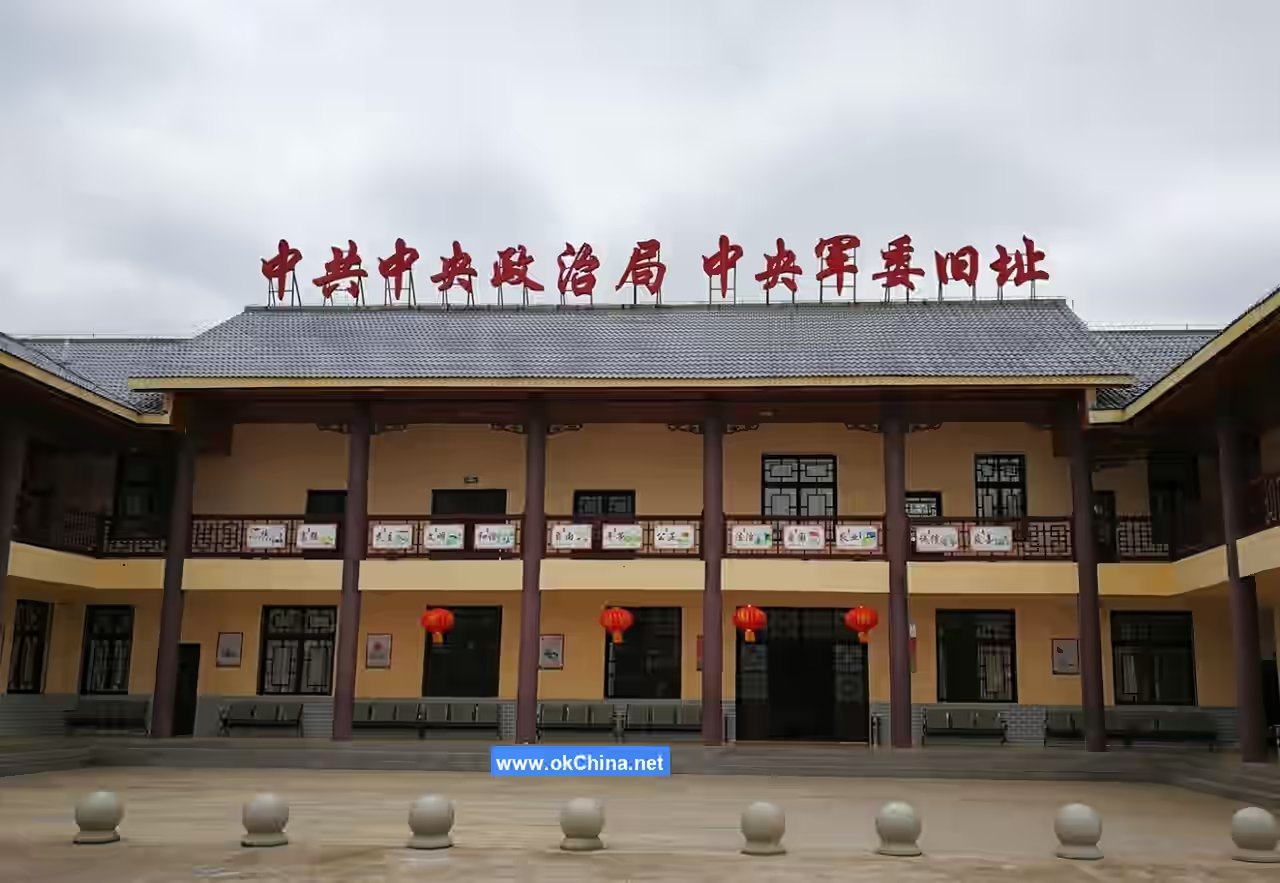
The site complex of the Political Bureau of the Central Committee of the Communist Party of China and the Central Revolutionary Military Commission is located in Jinlong Village, Shazhouba Town, Ruijin, covering an area of over 800 acres. It was the station for the party, military, and youth league organs of the Central Soviet Area. Veteran proletarian revolutionaries such as Zhou Enlai, Zhu De, Deng Xiaoping, Liu Bocheng, Ye Jianying, and Chen Yun lived and worked here. The area includes the site complex of the Central Revolutionary Military Commission, the site of the Political Bureau of the Central Committee of the Communist Party of China, the site of the Central Committee of the Communist Youth League, the site of the General Party Branch of the Central Organs of the Soviet Areas, and the site of the General Political Department of the Chinese Workers' and Peasants' Red Army.
3.3.5 Site of the General Political Department of the Chinese Workers' and Peasants' Red Army
The site of the General Political Department of the Chinese Workers' and Peasants' Red Army is located in Bai Wuzi, Shazhouba, about 1 kilometer from the central government. It is a brick-and-wood rural house. In April of the 22nd year of the Republic of China (1933), the General Political Department of the Red Army moved here from Yeping. Wang Jiaxiang, Vice Chairman of the Central Military Commission and Director of the General Political Department, and Deng Xiaoping, editor-in-chief of the Military Commission's organ newspaper "Red Star," worked and lived here, publishing newspapers and periodicals such as "Red Star" and "Political Work."
3.4 Yunshishan Revolutionary Site Complex
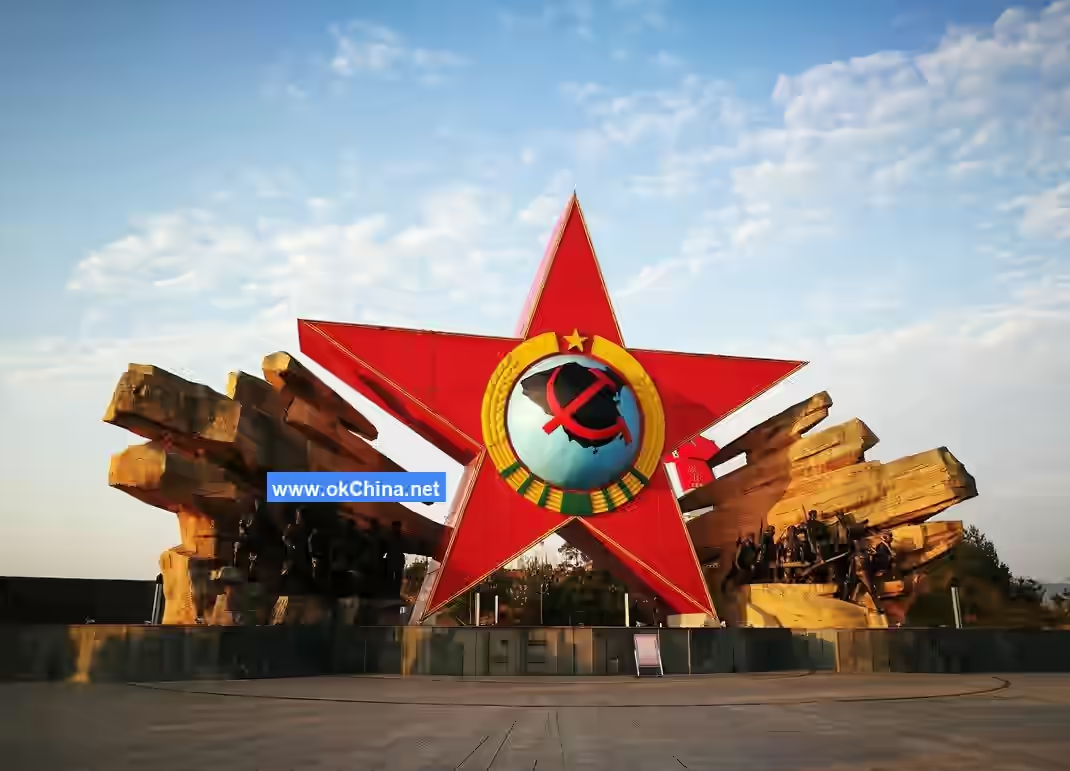
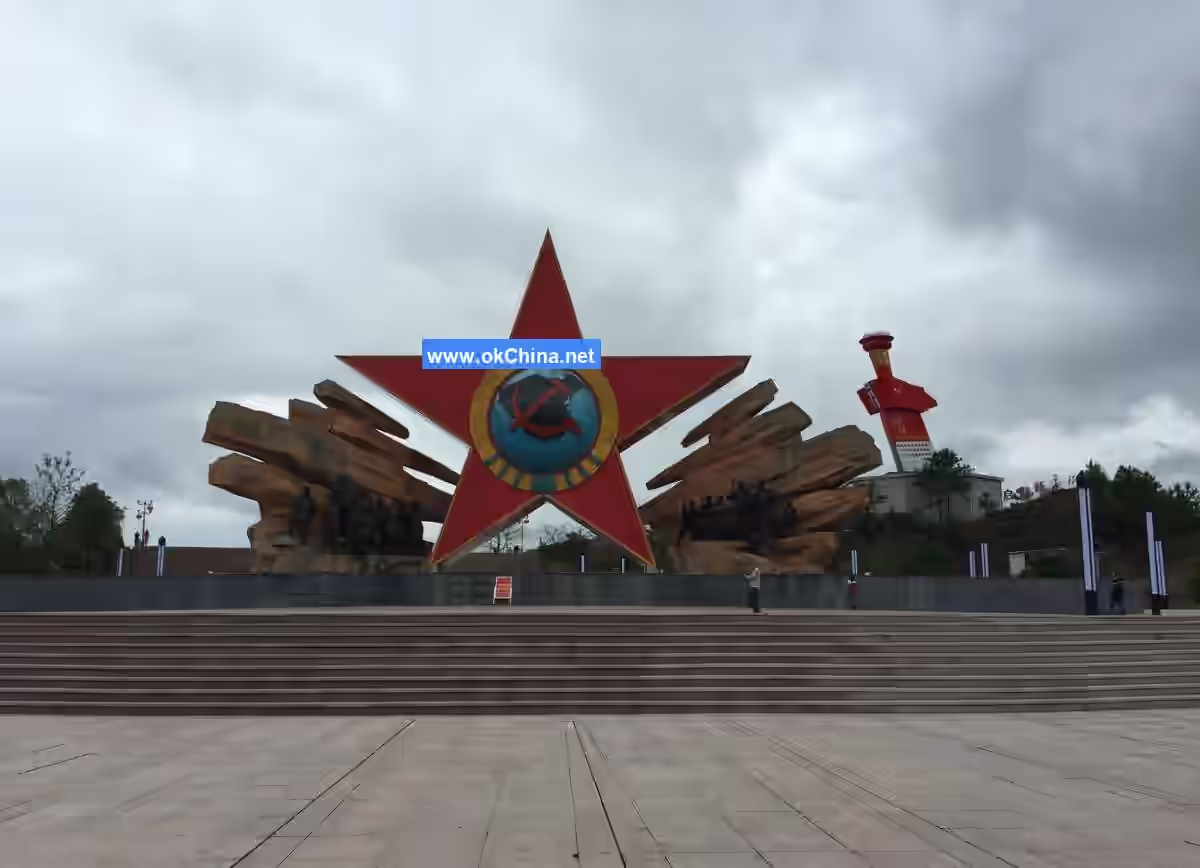
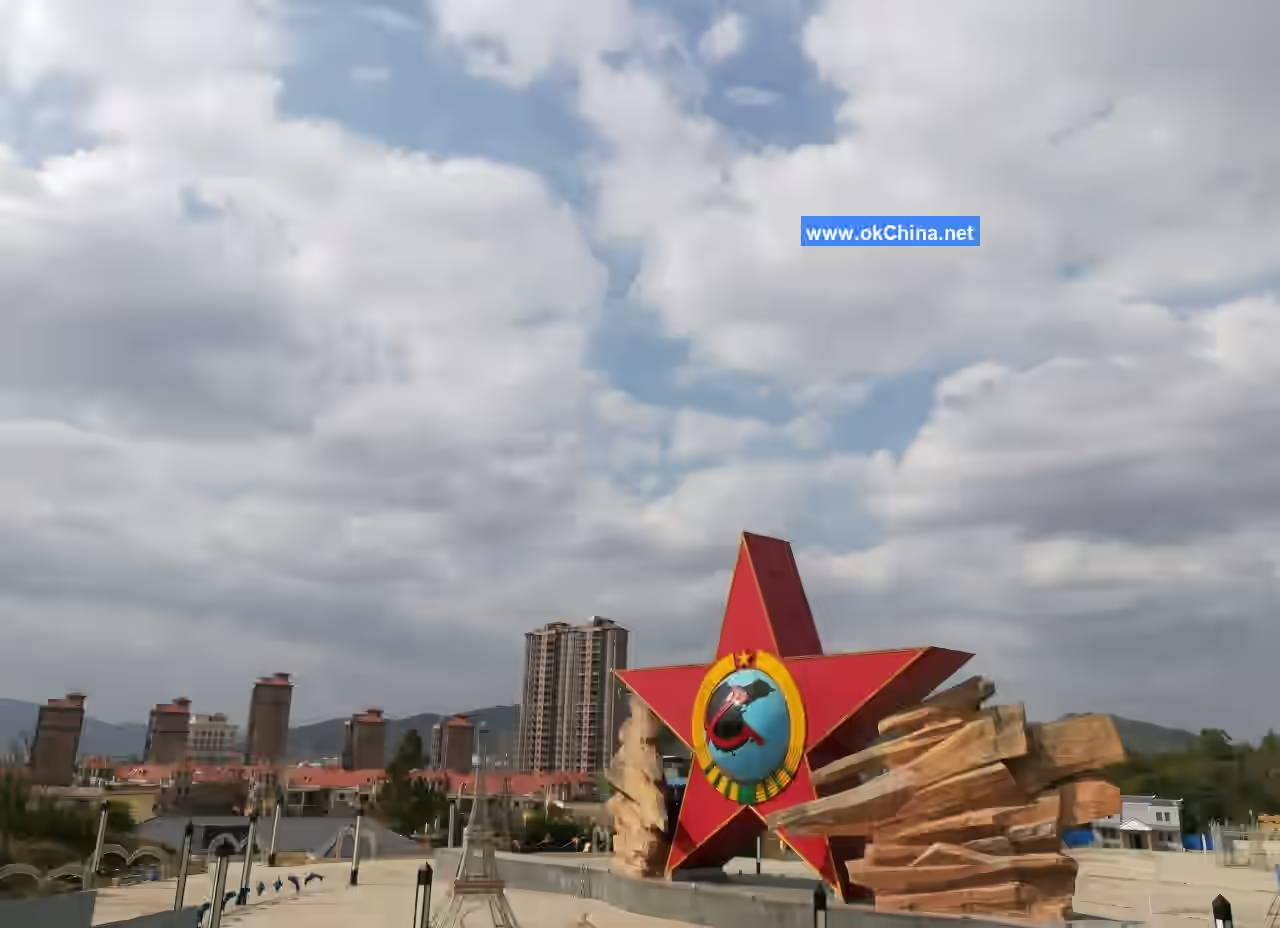
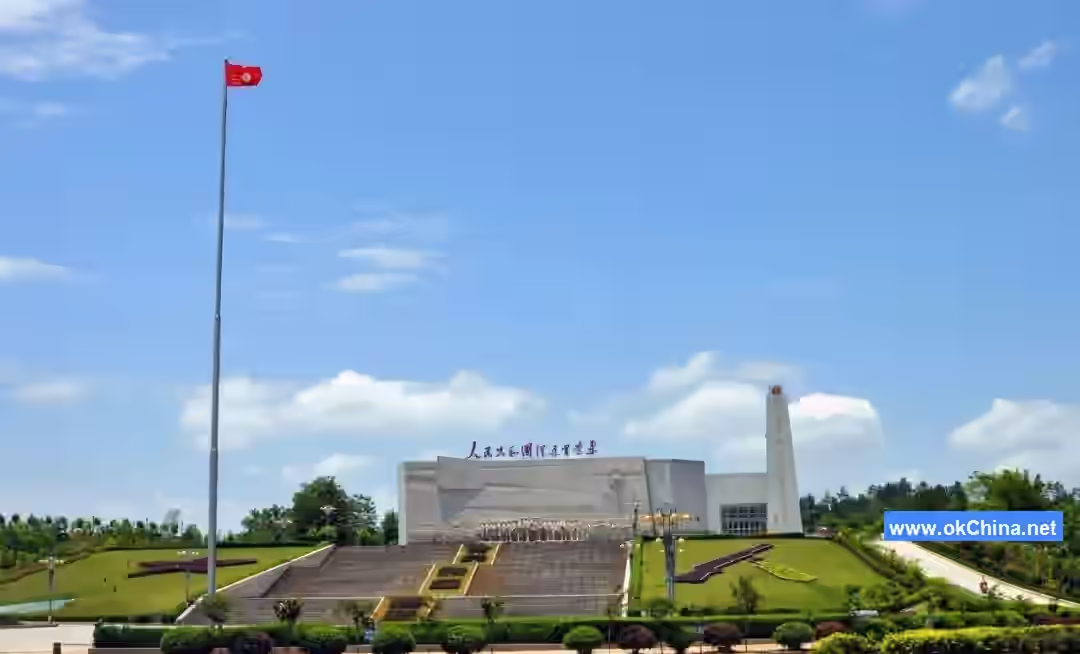
The Yunshishan Revolutionary Site Complex is located within Yunshishan Township, 19 kilometers west of Ruijin City. It was the location of the leading organs of the Central Government of the Chinese Soviet Republic from July to October 1934 and the starting point of the Long March for the Central Committee of the Communist Party of China, the Central Revolutionary Military Commission, and their directly affiliated troops. In July 1934, the Fifth Counter-Encirclement Campaign in the Central Soviet Area was at a critical moment. As the revolutionary situation became increasingly severe, the central party, government, military, and mass organizations of the Chinese Soviet Republic moved from Shazhouba to Yunshishan. Currently, 21 sites are preserved, including those of the Political Bureau of the Central Committee of the Communist Party of China (Central Committee Branch Bureau), the Central Government of the Chinese Soviet Republic, the Central Bureau of the Communist Youth League of China, the Central Military Region, the Central Ministry of Finance, the Central Ministry of Education, the National Bank, the Ministry of National Economy, and the Central Executive Bureau of the All-China Federation of Trade Unions.### 3.5 Chinese Soviet Memorial Park The Chinese Soviet Memorial Park features the Central Revolutionary Base History Museum (Exhibition Hall), the Red Five-Star Square, the 28-character relief sculpture of the Soviet Area Spirit, the Chinese Soviet Memorial Ding (a ceremonial vessel), the Four Provinces Hundred Counties Forest, and thirteen thematic sculpture scenes depicting major base areas from the Land Revolution period. The Red Five-Star Sculpture and the Chinese Soviet Memorial Ding are respectively situated at the commanding heights of two hilltops, highlighting the unique historical status of the Red Capital, Ruijin. The park is planted with large areas of azaleas and other vegetation, offering a beautiful environment. It serves as an important base for patriotic education and revolutionary tradition education, as well as an excellent site for sightseeing.
3.5.1 Central Revolutionary Base History Museum
The Central Revolutionary Base History Museum is located within the Chinese Soviet Memorial Park. Originally the Ruijin Central Revolutionary Base Memorial Hall, it was one of the first hundred patriotic education demonstration bases approved by the Central Propaganda Department and is among the first batch of national first-grade museums. Approved by the General Office of the Central Committee of the Communist Party of China, the museum began its renovation and expansion in 2004. Comrade Jiang Zemin inscribed the name for the new museum in 2007. The museum covers an area of 68 mu (approximately 4.5 hectares), with a building area of 10,100 square meters, of which the exhibition hall occupies 4,800 square meters.
4. Historical Background
4.1 Construction Background
After the failure of the Great Revolution: In 1927, the Kuomintang launched the "April 12" counter-revolutionary coup, leading to the breakdown of the Kuomintang-Communist cooperation. The Communist Party of China was forced to go underground and began armed resistance against the Kuomintang. The Agrarian Revolutionary War: The Communist Party of China initiated peasant uprisings in Jiangxi, Fujian, Hunan, and other regions, establishing rural revolutionary bases and carrying out the land revolution. Regime Building: To consolidate the revolutionary bases, the Communist Party of China decided to establish its own regime to counter the rule of the Kuomintang.
4.2 Establishment and Development
The First National Congress of Soviets: On November 7, 1931, the Provisional Central Government of the Chinese Soviet Republic was established in Ruijin, Jiangxi, electing Mao Zedong as Chairman, and Xiang Ying and Zhang Guotao as Vice Chairmen. Political Structure: The Chinese Soviet Republic implemented a system of congresses of workers, peasants, and soldiers, establishing a Central Executive Committee and a People's Committee, with various departments such as foreign affairs, military, finance, and land. Main Activities:
- Carrying out the land revolution, confiscating land from landlords and distributing it to peasants.
- Establishing the Red Army, engaging in armed struggle to resist the Kuomintang army's "encirclement and suppression" campaigns.
- Implementing a series of social reforms, such as women's liberation and the popularization of education.
4.3 Status and Significance
The Communist Party of China's Regime Experiment: The Chinese Soviet Republic was the Communist Party of China's first attempt to establish an independent regime, accumulating experience for later regime-building during the War of Resistance Against Japan and the Liberation War. Symbol of a Workers' and Peasants' Democratic Regime: It represented the interests of the working and peasant classes and served as the prototype of the workers' and peasants' democratic dictatorship under the leadership of the Communist Party of China. Core of the Revolutionary Bases: The establishment of the Chinese Soviet Republic consolidated the status of the Central Soviet Area, making it the political, military, and cultural center of the nationwide revolutionary bases.
4.4 Outcome and Impact
Failure of the Fifth Counter-Encirclement Campaign: In 1934, due to the Kuomintang army's fifth "encirclement and suppression" campaign, the Central Soviet Area was lost. The Provisional Central Government of the Chinese Soviet Republic embarked on the Long March with the main forces of the Red Army. Transformation After the Long March: In 1935, during the Long March, the Central Committee of the Communist Party of China held the Zunyi Conference, establishing Mao Zedong's leadership position. In 1937, after the full outbreak of the War of Resistance Against Japan, the Chinese Soviet Republic was transformed into the Shaanxi-Gansu-Ningxia Border Region Government, becoming the core of the anti-Japanese base areas.
4.5 Historical Evaluation
Positive Significance: The establishment of the Chinese Soviet Republic was an important step in the Communist Party of China's exploration of the path of the Chinese revolution, laying the foundation for later revolutionary victories. Limitations: Due to the constraints of the conditions at the time, the regime-building of the Chinese Soviet Republic was not yet fully developed and was mainly confined to rural base areas, failing to exert a widespread influence across the country. Overall, the Chinese Soviet Republic represents a significant historical stage for the Communist Party of China during the Agrarian Revolutionary War period. It marks the Party's transition from armed struggle to regime-building and holds important historical status and significance.
Comments
Post a Comment