Qinhu Lake Tourist Scenic Area
1. Introduction
The Qinhu Lake Tourist Scenic Area is located in the Lixiahe region of central Jiangsu, specifically in Qintong Town, Jiangyan District, Taizhou City. It is within a 2-hour drive from major and medium-sized cities such as Shanghai, Suzhou, Wuxi, Changzhou, Nanjing, Yangzhou, and Nantong. The Ningyan First-Class Highway, S229, and S353 pass through the area, and the Ningjingyan Expressway has an exit at the scenic area, giving it a superior geographical location and convenient transportation.
This area has been close to the sea since ancient times. A marine transgression 8,000 years ago formed a lagoon here. The Huai River flows through Qinhu Lake into the Yellow Sea, creating a confluence of three waters. It is also the intersection point of Wu-Yue culture and Chu-Han culture, giving birth to a pearl of the Jianghuai region—Qinhu Lake.
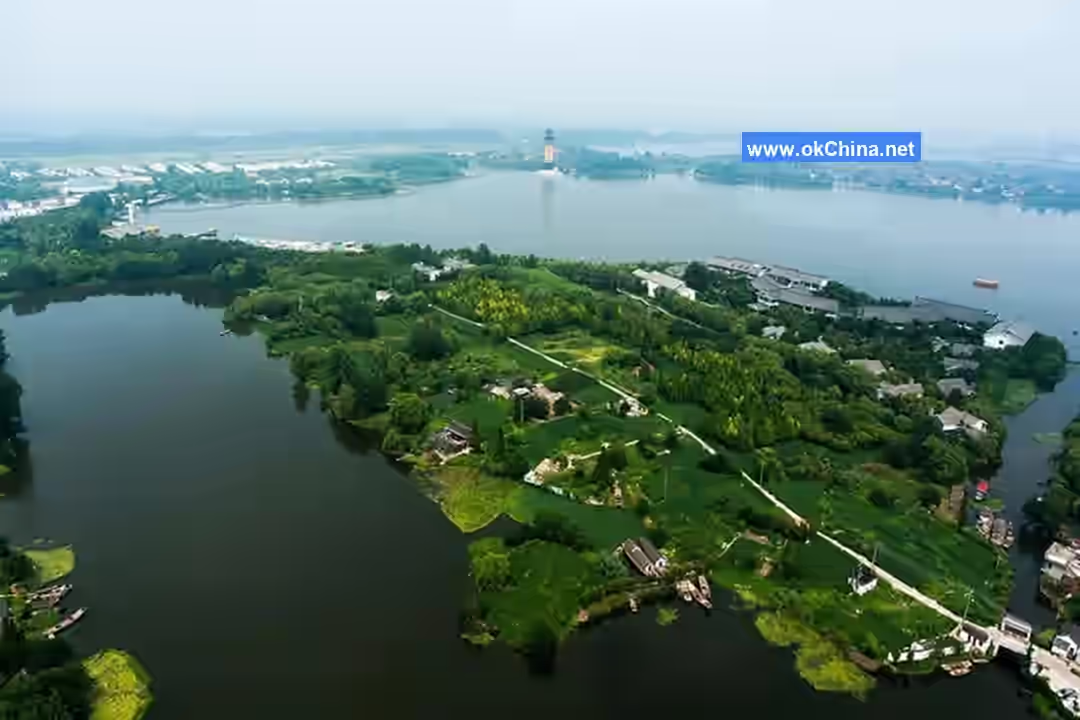
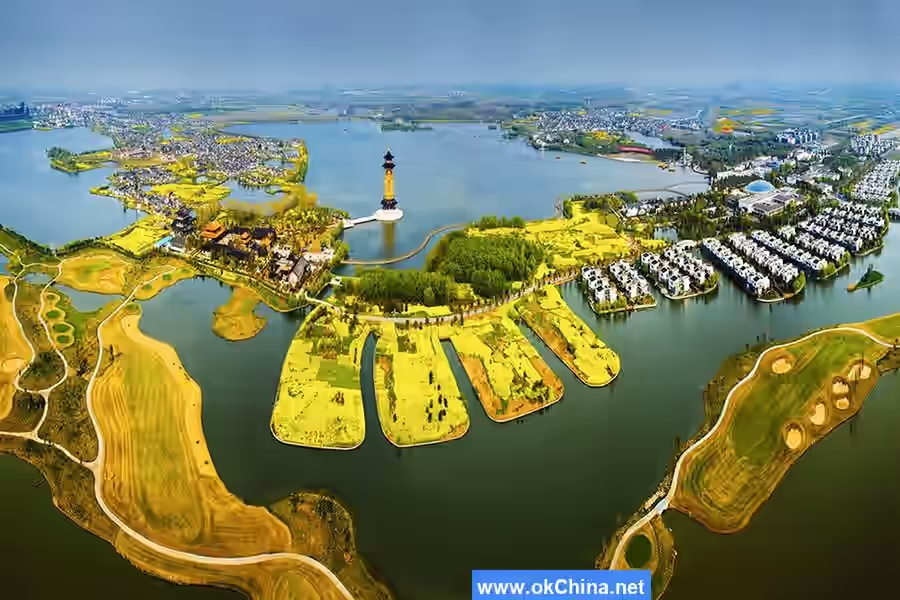
Qinhu Lake covers an area of over 6,300 mu. Its main body is called Magpie Lake, named for the "many magpies that once gathered here." The lake is 1.4 kilometers long from east to west and 1.5 kilometers long from north to south, resembling a jade pendant, with an area of approximately 3,500 mu. From a high vantage point, nine main rivers can be seen flowing into the lake from all directions, naturally forming the unique spectacle of "Nine Dragons Paying Homage to the Palace." Qinhu Lake has an open surface, dotted with islands, and its water is pure and sweet, meeting national Class II drinking water standards, with the lake's central water being directly drinkable. The lake area is rich in pollution-free green foods such as fish, shrimp, water chestnuts, and lotus roots. Fish cakes and shrimp balls made from Qinhu Lake fish and shrimp are white as jade and red as coral, known as the "Two Wonders of Qinhu Lake." The renowned "Qinhu Lake Duan Crab" is rated as a top-grade crab for its tender meat and rich roe.
2. Geographical Location
2.1 Location and Boundaries
The Qinhu Lake Tourist Scenic Area is located in the northwestern part of Jiangyan District, Taizhou City, in central Jiangsu, within the Lixiahe marsh and water network region of Taizhou City. It is bounded by the Jiangqin River to the east, the western shore of Magpie Lake to the west, Jiangqin Road to the north, and the West Jiangqin River to the south, protecting its core rivers. The planned area features flat terrain, scattered ponds, and a crisscrossing river network, with a total planned area of 806.9 hectares, of which 588.6 hectares are wetlands, accounting for a wetland rate of 72.94%.
2.2 Topography and Geomorphology
The Qinhu Lake Tourist Scenic Area is located within a Cenozoic tectonic basin, specifically in the Qintong Depression in the southwestern part of the Dongtai Sag. The underlying bedrock consists of the Upper Cretaceous Pukou Formation red fine clastic rocks, belonging to plain river deposits; the Lower Tertiary Taizhou Formation clastic sedimentary rocks, belonging to river and lacustrine deposits; the Lower Tertiary Funing Formation clastic sedimentary rocks, belonging to river-lake and deltaic marine-terrestrial interactive deposits; the Lower Tertiary Dainan Formation, mainly sandstone, belonging to residual lake deposits; the Lower Tertiary Sanduo Formation mudstone and sandstone, mainly river flood deposits; the Upper Tertiary Yancheng Formation variegated clastic rocks, mainly river deposits; and the Quaternary Dongtai Formation, consisting of river-lake deposits intercalated with marine transgression deposits. The mid-Holocene marine transgression over 7,000 years ago turned the Lixiahe lowland into a lagoon. The local Xigang was once the eastern sand barrier of this lagoon.
Lakes and rivers within the wetland park where the Qinhu Lake Tourist Scenic Area is located account for about 37% of the total area. Among them, Qinhu Lake is relatively large. Qinhu Lake, also known as Magpie Lake, is named for the "many magpies that once gathered here." The lake is 1.4 kilometers long from east to west and 1.5 kilometers long from north to south, resembling a jade pendant, with an area of approximately 3,500 mu. From a high vantage point, nine main rivers can be seen flowing into the lake from all directions, naturally forming the unique spectacle of "Nine Dragons Paying Homage to the Palace."
2.3 Soil
The Qinhu Lake Tourist Scenic Area has flat terrain with minimal elevation differences. However, influenced by natural soil-forming processes, it is divided by the Tongyang Canal: the southern part belongs to high-sand soil, while the northern part belongs to paddy soil. The soil properties and agricultural characteristics differ significantly, roughly categorizing the area into high-sand soil, paddy soil, and transitional zones between the two.
2.4 Hydrology
The main rivers in the wetland park include the Taidong River, Jiangqin River, Huangcun River, and others. Over ten rivers, lakes, and streams around Qinhu Lake exchange water with Magpie Lake. The formation of these rivers is related to drainage, flood discharge, and navigation in the Lixiahe lowland. They have abundant and stable water levels year-round, favorable for aquaculture and fishing, thus forming a distinctive water-town ambiance.
2.5 Climate
The Qinhu Lake Wetland belongs to the northern subtropical monsoon climate zone, a transitional area between the subtropical and temperate zones. The climate features mild winters, with average January temperatures generally above 0°C, and hot summers, with average July temperatures around 25°C. Wind directions change significantly between winter and summer. Annual precipitation is generally over 1,000 mm, concentrated mainly in summer, with less in winter.
3. Main Attractions
3.1 Qinhu Lake's Four Seasons
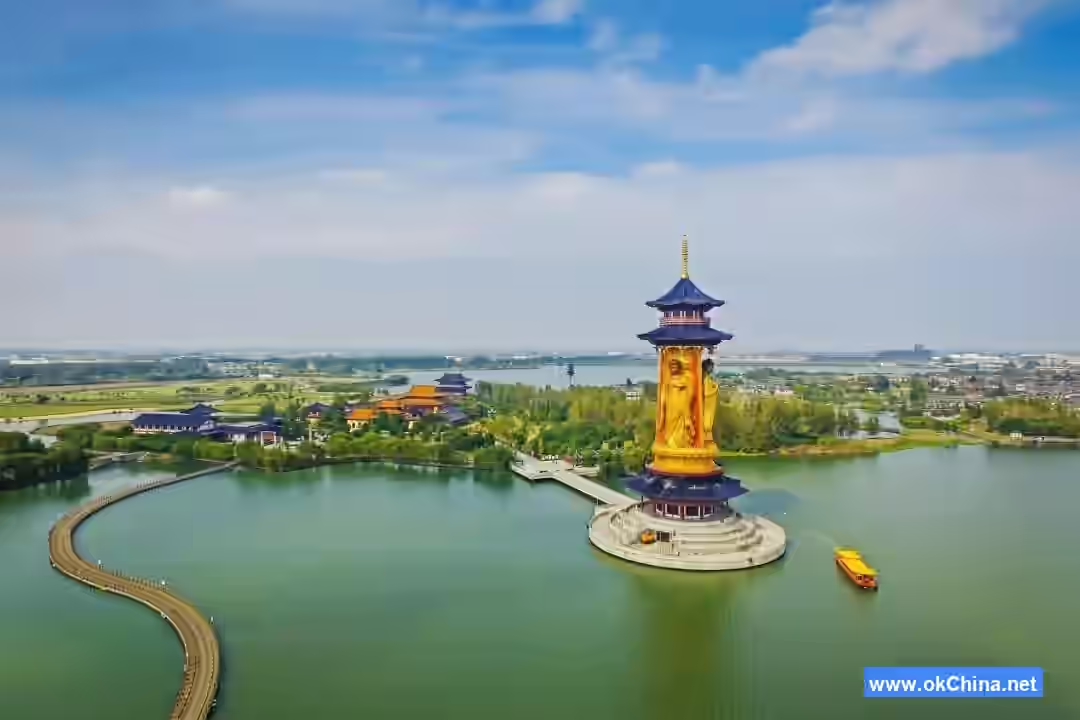
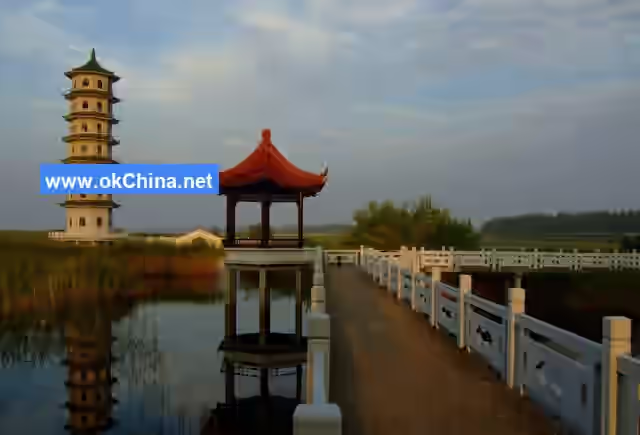
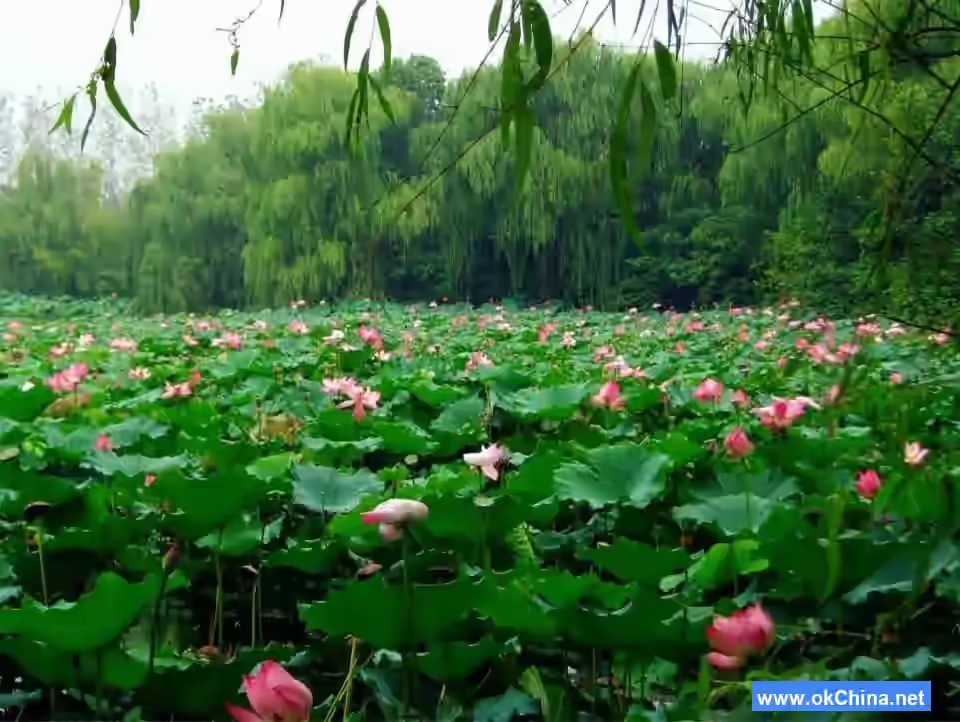
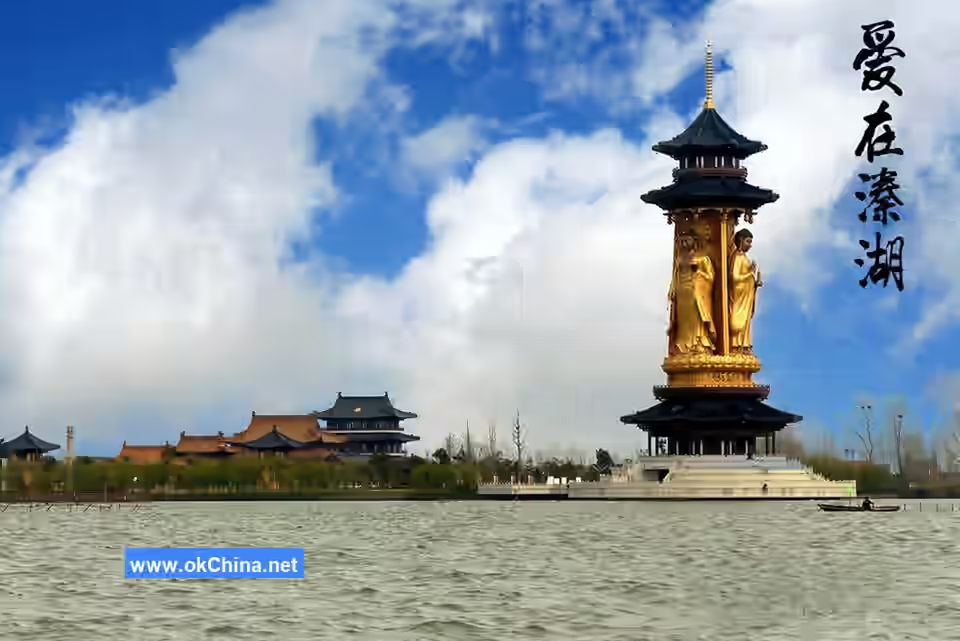
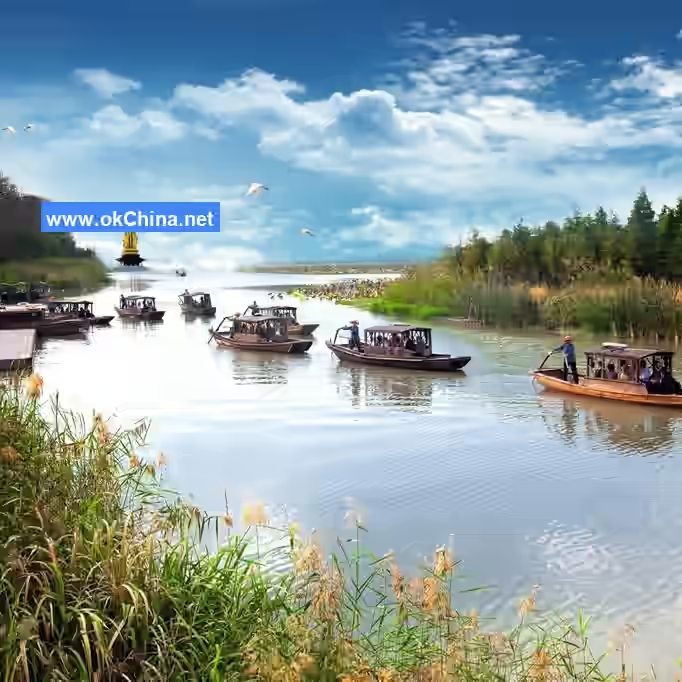
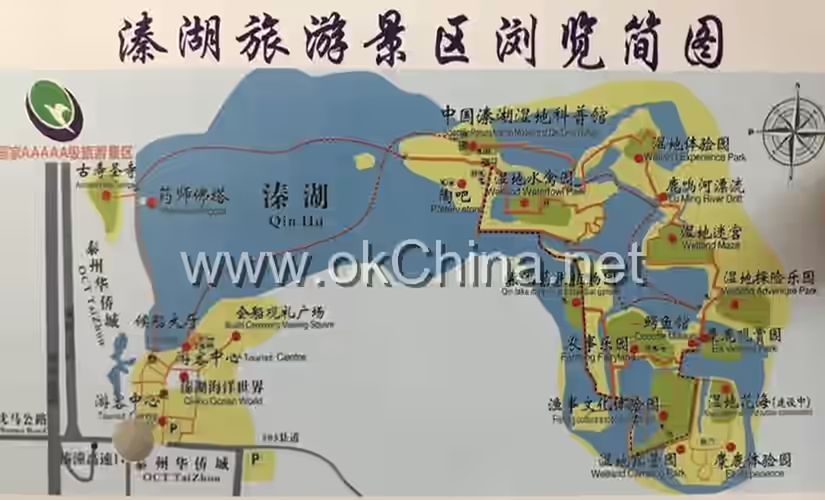
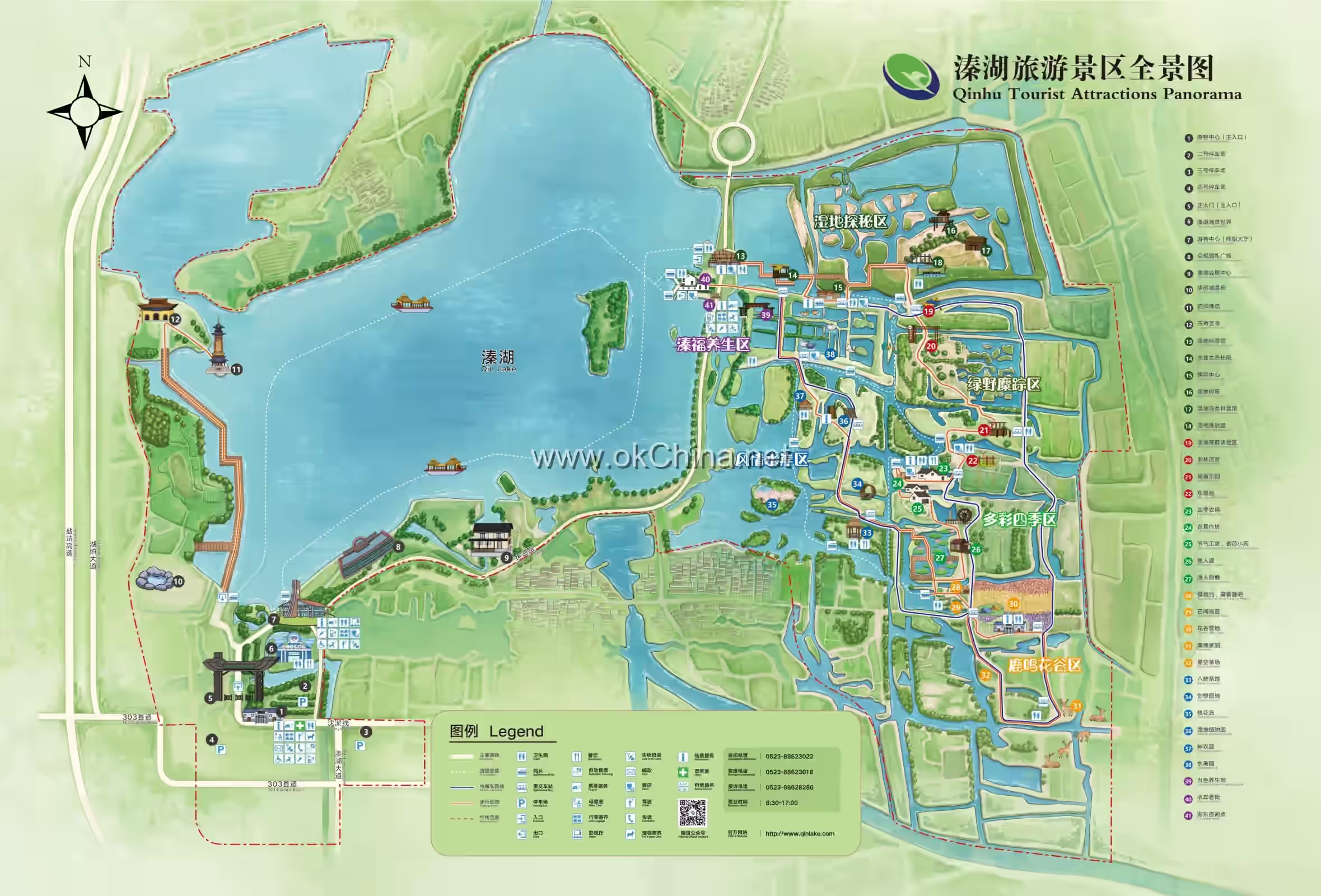
Qinhu Lake offers distinct scenery in each season: watching boat festivals in spring, admiring lotus flowers in summer, tasting the "Eight Delicacies" in autumn, and observing migratory birds in winter. It boasts the world's largest water temple fair—the Qintong Boat Festival, the world's tallest three-sided Medicine Buddha Pagoda on water, one of the earliest national wetland parks, rare wildlife, and a wetland science museum. Particularly famous are the Qinhu Lake Eight Delicacies, led by the Qinhu Lake Duan Crab. The scenic area is home to 392 species of wild animals and 251 species of plants. The wetland ecological islands east of the lake feature numerous attractions such as the Qinhu Lake Wetland Science Museum, Wetland Experience Park, Deer Antler Paradise, Milu Deer Habitat, Four Seasons Farm, Flower Valley Camp, Wetland Botanical Garden, and Waterfowl Garden.
3.2 Qinhu Lake Wetland Science Museum
The China Qinhu Lake Wetland Science Museum is a national-level professional science museum themed on wetlands, integrating exhibition, tourism, experience, education, and research. Inside, visitors can appreciate the Qinhu Lake wetland ecosystem, learn about wetland science, and use it as a second classroom for science education. The first floor is the essence exhibition area, allowing visitors to experience the changing beauty of Qinhu Lake through spring, summer, autumn, and winter, overview the harmonious coexistence of Qinhu Lake's organisms, and enjoy the breathtaking ecological panorama of Qinhu Lake's hydrology and life in an immersive circular-screen theater. The second floor is the science exhibition area, where visitors learn about the wetland ecosystem from macro to micro, acquire exclusive cultural and biological knowledge of Qinhu Lake Wetland, and experience its unique wetland culture. The third floor is the research space, where young people learn about wetland conservation, wetland flora and fauna, and explore the relationship between humans and nature.
3.3 Water Ecological Corridor
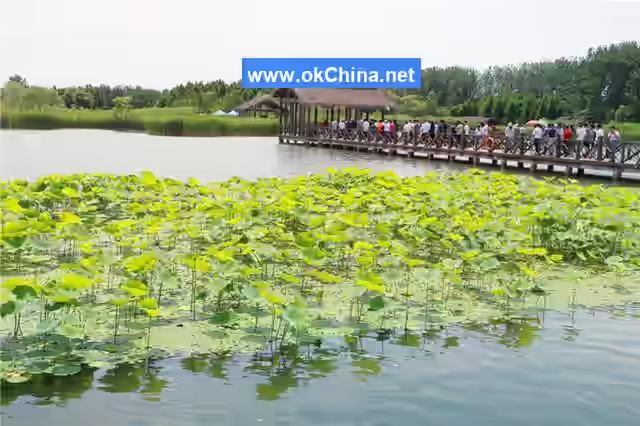
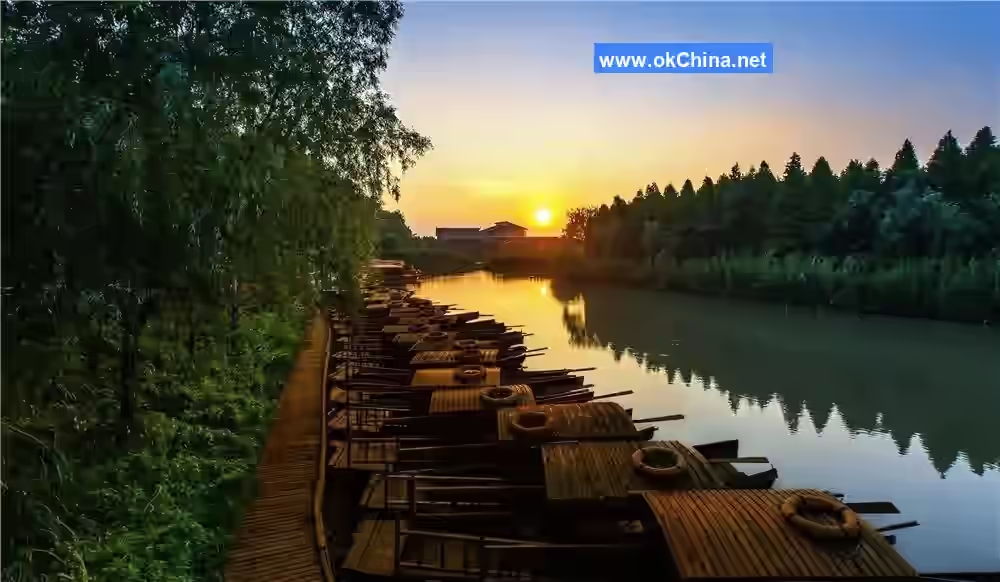
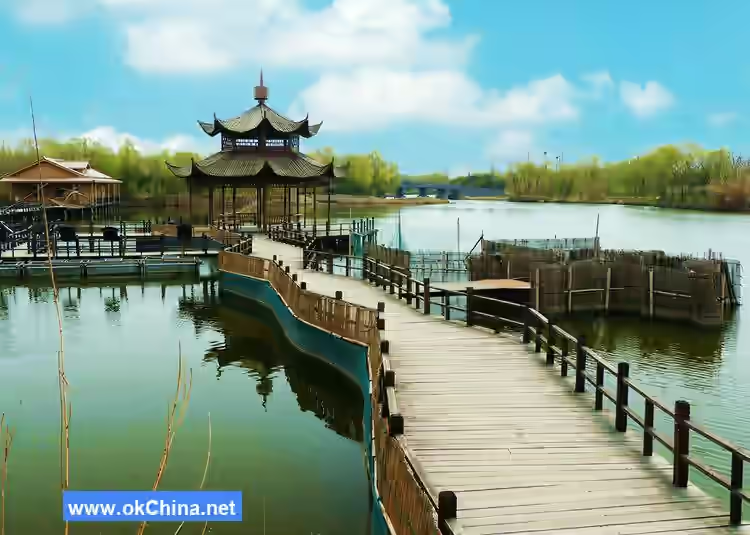
This area features lush trees, swaying reeds, and expansive lotus leaves. Long wooden boardwalks lie close to the water, sometimes zigzagging, sometimes straight, in ever-changing postures. Qinhu Lake has always emphasized ecological environmental protection and restoration. With the improvement of its ecological environment, Qinhu Lake Wetland has increasingly become a paradise for various birds and wildlife.
3.4 Deer Forest Maze
Qinhu Lake is rich in aquatic plants and enjoys a pleasant climate. The wetland maze is centered around unique wetland scenery, with rivers, ports, lakes, and bays scattered like stars. Cattails, reeds, water lilies, and green fir trees are everywhere. Immersed in it, visitors can experience the magical illusion of blending with nature and conversing with heaven and earth. It allows visitors to experience the charm of wetlands while finding their way, marveling at the "unadorned and rich wild fun."
3.5 Four Seasons Farm
The Four Seasons Farm showcases the unique farming culture of the Lixiahe region. Various crops grow in well-tended fields, and primitive thatched cottages display the farming tools used by the hardworking people of Lixiahe. Step on a waterwheel, push a stone mill, and stroll through the world of ancient farming tools to fulfill a dream of rural pastoral life.
3.6 Milu Deer Habitat
The Milu deer (Père David's deer) is a world-class rare protected animal. Because its antlers resemble a deer, its face a horse, its hooves a cow, and its body a donkey, it is commonly called the "Four Not Alikes." It has a life history of 3 million years and has been regarded as an auspicious creature since ancient times. Legend has it that Jiang Ziya's mount was the "Four Not Alikes."
According to the "Milu Deer Habitat Investigation," the Qinhu Lake area is the hometown of the Milu deer. Supporting this is the fact that the most Milu deer fossils have been unearthed in this region, making it a typical area nationwide. The Taizhou Museum houses the only complete Milu deer fossil specimen in China, unearthed from this area.
About two thousand years ago, during the peak of China's feudal society, the Milu deer population also flourished. People observed, tamed, and ate Milu deer, much like raising pigs for meat today. Due to various reasons, the wild Milu deer population became extinct a thousand years ago, with only a few hundred remaining in the royal gardens of the Ming and Qing dynasties. In 1900, when the Eight-Nation Alliance captured Beijing, the last few Milu deer surviving in the royal gardens were taken overseas like prisoners of war, beginning a century-long wandering existence. From then on, not a single Milu deer could be seen across the 9.6 million square kilometers of Chinese territory.
However, the maritime humid climate of London and other places could not sustain the Milu deer. In the 1980s, with the advocacy and assistance of the World Wildlife Fund, these national-level rare animals that had been stranded overseas returned to their homeland from the UK, traveling thousands of miles.
The Milu deer is a herbivore. In summer, it often inhabits swamps to avoid heat and biting insects. It prefers damp environments and is cold-resistant, able to safely survive winters in temperatures as low as -15 to -18°C. It enjoys living in groups, is timid and afraid of humans, and is good at running. The Milu deer's fur molts twice a year: summer fur is brown, and winter fur is gray-brown. It sheds its antlers and grows new ones once a year around New Year's Day. Mating generally occurs from May to July each year. When a pregnant female deer detects a hostile intrusion threatening the group, the male deer on patrol will promptly issue a warning sound and even charge to fight. The gestation period for females is 270 to 290 days, with one offspring per birth. Newborn fawns often hide in grass and can live with the group after six months. Male deer engage in fierce battles during the rutting season, with the winner becoming the leader, governing the group of females.The antlers of deer species can be palmate or branched, with the main stem growing upward or forward and branches mostly extending forward. They serve as weapons for defense and combat. However, only the Père David's deer has antlers with branches that extend backward and outward, which is related to its habitat and temperament. The backward extension helps in tangling with tall grass. The face of the Père David's deer resembles that of a horse, being longer and wider compared to other deer, and it has long, stiff hair. All these characteristics are associated with its preference for feeding on aquatic plants. The Père David's deer can fully submerge its head in water to forage for aquatic plants, with the tactile hairs on its lips serving a sensory function. Its tail serves purposes such as warning, balance, and as a weapon. The tail extends down to the ankles because the swampy environment harbors many mosquitoes and insects, and the long tail helps in driving them away. The hooves of the Père David's deer resemble those of cattle—broad and large—with small webbed membranes between the two weight-bearing hooves, similar to a duck's webbing. This adaptation facilitates walking in muddy swamps without easily sinking.
The Père David's deer in the Qinhu area were introduced in 1996, initially with only four individuals. Over the years, the population has grown to nearly 50, each one robust and well-nourished.
Experts from the Shanghai Wildlife Research Institute, specializing in the study of Père David's deer, have conducted years of tracking research. They believe that, in terms of growth habits and calving rates, the Qinhu area is more suitable for the growth and reproduction of Père David's deer compared to the Dafeng area. This is because the Dafeng area has many saline-alkali lands, whereas Qinhu is a warm, wetland environment ideal for the deer. Additionally, research has verified that 72 fossil specimens of Père David's deer have been unearthed in the Qinhu area, while only four have been found in the Dafeng area. This truly confirms that the Qinhu area was the last location where wild Père David's deer disappeared from the Earth and substantiates that Qinhu is indeed the homeland of the species.
3.7 Fishermen’s Residence
This is a themed park integrating fishing experiences, cultural displays, ecological tours, and culinary leisure. With winding corridors, waterside pavilions, and surrounded by greenery, visitors can not only learn about the evolution of fishing activities, fishing customs, and fishing gear exhibitions but also engage in hands-on activities like catching and fishing, followed by savoring the fruits of their labor.
3.8 Wetland Botanical Garden
Nearly 100 species of medicinal herbs are cultivated here. From a plant biology perspective and using traditional gardening techniques, this themed科普 demonstration garden is constructed with medicinal flowers and trees as the main attraction, supplemented by wetland ornamental plants, integrating观赏性, interactivity, and meaningfulness.
3.9 Waterfowl Garden
The Waterfowl Garden, through the dredging of internal water systems and terrain modifications, forms small spaces centered around water, providing an optimal habitat for birds. Here, the birds are free from the confines of cages, soaring unrestrained between heaven and earth. Black swans, mallards, wild geese, and others chase and play in the Waterfowl Garden. When migratory birds come here for winter, thousands gather among the reed bamboo groves. The migratory birds’ fulfillment of their承诺 is the greatest recognition of Qinhu’s beautiful environment. In Qinhu, the clear and melodious bird calls are not only a blessing for the scenic area but also for nature itself.
4. Cultural Resources
4.1 Qintong Boat Festival
On the second day of the Qingming Festival each year, thousands of boats and tens of thousands of boatmen from surrounding towns gather at Qinhu to participate in the annual China Jiangyan Qintong Boat Festival, creating a spectacular scene of thousands of boats racing and competing. The origin of the Qintong Boat Festival is tied to a historical event: It is said that in the first year of the Shaoxing era of the Southern Song Dynasty, when Yue Fei served as the commander of Tongtai Town and concurrently as the prefect of Taizhou, a volunteer army from Shandong, heading south, sought to join Yue Fei’s forces. Upon reaching Qinhu, they encountered an ambush by Jin soldiers. The Jin soldiers, unfamiliar with water, were soundly defeated, but the volunteers also suffered heavy casualties. The local people mournfully buried the fallen soldiers and, on the second day of Qingming each year, organized races with pole boats and rowboats to pay their respects. Over time, this evolved into the custom of boat racing. The over-800-year-old boat racing culture is the very lifeblood of Qinhu, touching the hearts of millions and passed down through generations. Thus, during Qingming at Qinhu, it is not the poet’s depiction of “the rain falls thick and fast on the Tomb-sweeping Day, the mourner’s heart is breaking on his way.” Instead, in this ten-mile Qinhu and this千年古镇, it completely transcends the poet’s sorrow, brilliantly becoming the world’s largest water temple fair, acclaimed as “a grand view of folk culture, an exposition of water town customs.”
4.2 Qinhu Eight Delicacies
Qintong Lake has vast waters, clear and pure quality, and abundant produce. The renowned banquet “Qinhu Eight Delicacies,” made from its aquatic products, is famous worldwide.
- Qinhu Duan Crab: Since ancient times, it has been said, “In the south, there is Chenghu闸蟹; in the north, there is Qinhu Duan蟹,” also known as “Southern闸, Northern Duan.” Qinhu Duan蟹, with green eyes and red hair, is rich in roe and meat, considered a superior product.
- Qinhu Soft-shelled Turtle: Characterized by large size, thick shell, round shape, and dark color. Regular consumption can nourish yin, tonify kidneys, cool blood, and lower blood pressure. Often paired with spring chicken, turtle eggs, and sea cucumber to create prestigious dishes like “Farewell My Concubine,” “Bringing Sons to Court,” and “Night Battle at Ma Chao.”
- Qinhu Whitebait: Transparent and crystal-like, slender and willow-leaf-shaped, without scales or bones, it is one of the rare aquatic products.
- Qinhu Green Shrimp: With hard, green shells and plump, thick meat, dishes made from it have a unique flavor.
- Qinhu Waterfowl: Qinhu boasts a variety of waterfowl species. The meat of these delicious waterfowl contains lysine, alanine, histidine, etc., offering both wild flavor and high nutritional value.
- Qinhu Snails and Shellfish: Thin-shelled, tender meat, delicious taste, without any gamey odor, and性温凉. Regular consumption can nourish yin, reduce internal heat, lower blood pressure, tonify kidneys, soothe the liver, and promote lung function.
- Qinhu Four Joys: Divided into “Big Four Joys” and “Small Four Joys.” The “Big Four Joys” are black carp, culter, grass carp, and crucian carp. The “Small Four Joys” are yellow catfish, bitterling, sleeper goby, and white minnow. Dishes made from the “Big Four Joys” are truly delicacies of Qinhu cuisine. The “Small Four Joys” are all wild, rich in nutrition, and exceptionally delicious.
- Qinhu Aquatic Vegetables: A wide variety, all are pollution-free green foods, available year-round in a continuous supply; they are brightly colored, crisp, and tender.
Comments
Post a Comment