Quanzhou Qingyuan Mountain Scenic Area
1. Introduction
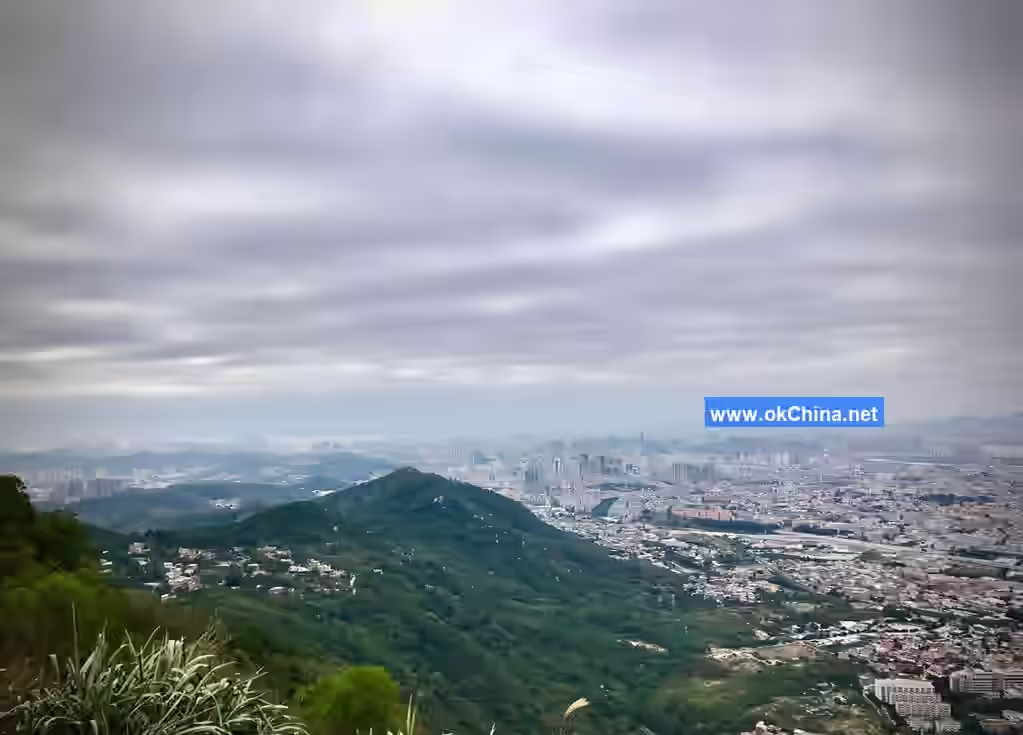
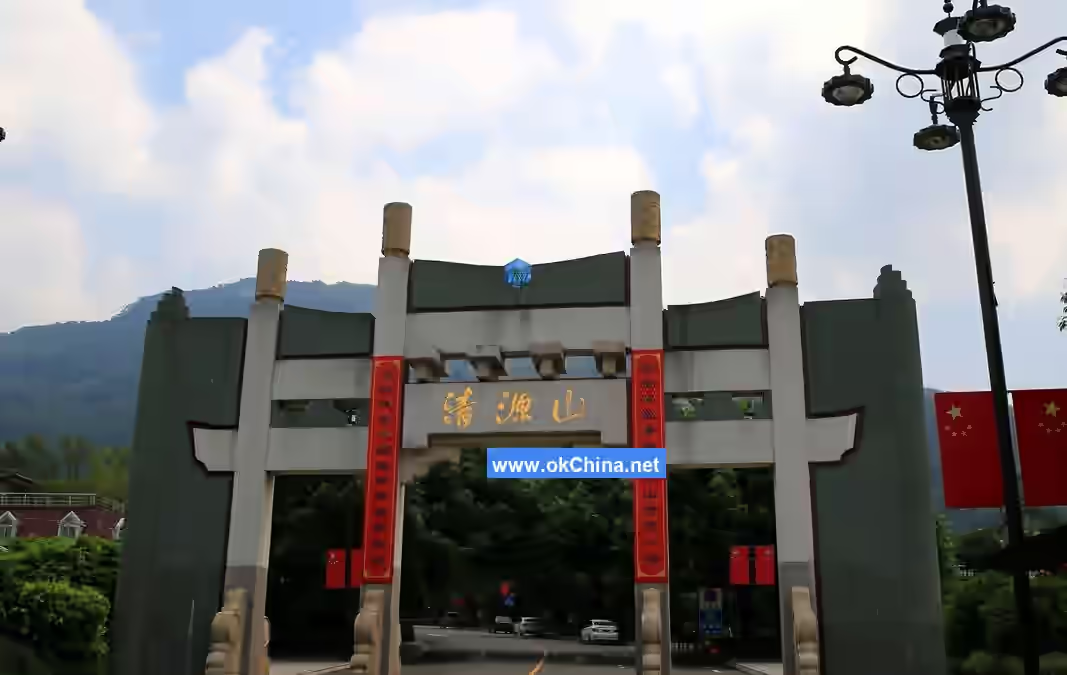
Qingyuan Mountain is located in the southeastern part of Fujian Province, on the northeastern bank of the lower reaches of the Jinjiang River, bordering the urban area of Quanzhou on three sides. It is 106 kilometers from Xiamen and 196 kilometers from Fuzhou. Due to the numerous springs on the mountain, it is also known as "Spring Mountain," and because it reaches into the clouds, it is called "Qiyun Mountain." Situated in the northern suburbs of the city, it is also referred to as "North Mountain," and with its three peaks, it is also known as "Santai Mountain."
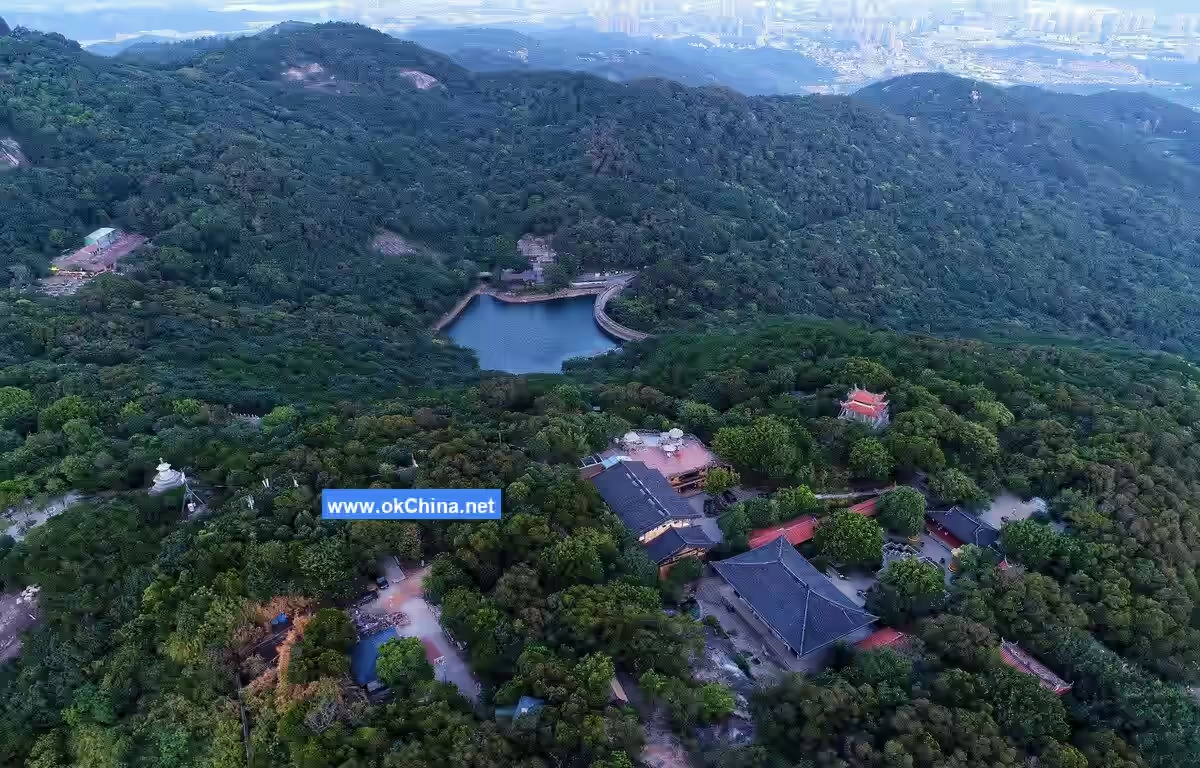
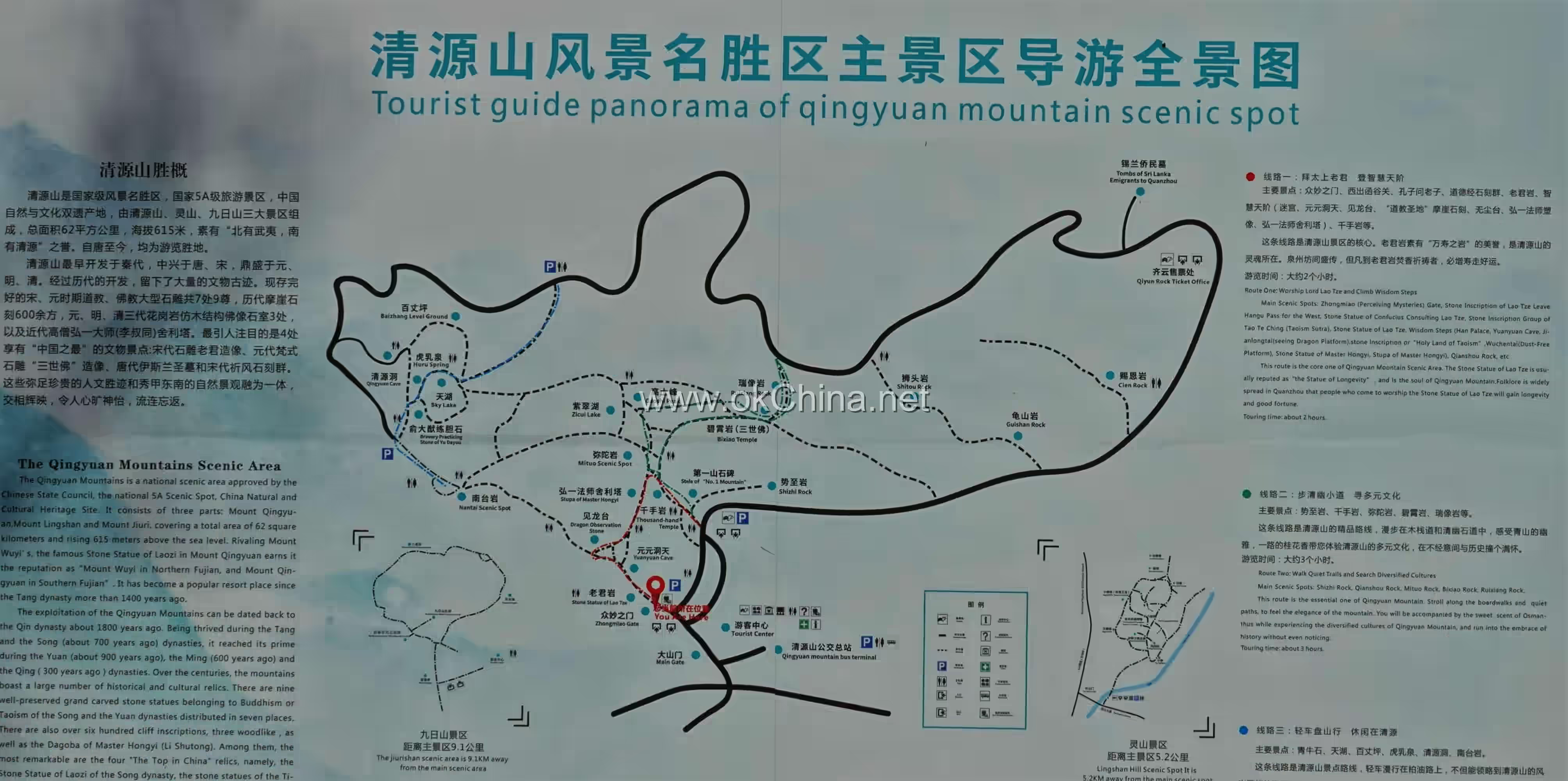
Qingyuan Mountain is one of the eighteen scenic spots in Quanzhou and a national key scenic area. It consists of three major sections: Qingyuan Mountain, Jiuri Mountain, and Lingshan Holy Tomb, covering a total area of 62 square kilometers. The Qingyuan Mountain scenic area spans about 40 Chinese miles, with its main peak reaching an elevation of 498 meters. Nestled alongside the mountainous city of Quanzhou, it attracts numerous overseas tourists.
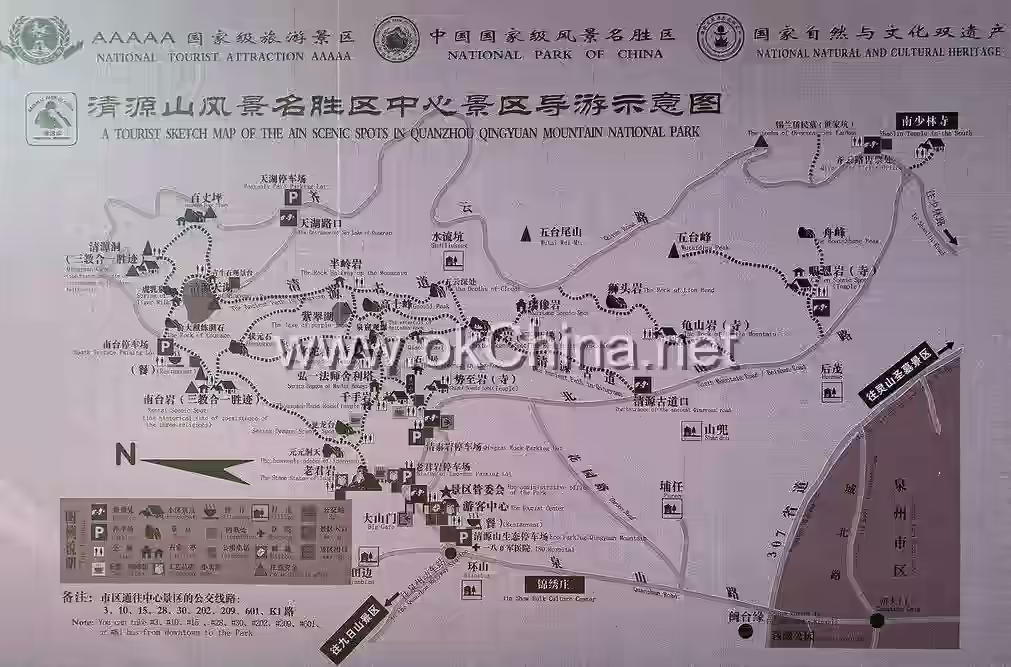
Since ancient times, Qingyuan Mountain has been renowned for its 36 caves and 18 scenic spots, with highlights including Laojun Rock, Thousand-Hand Rock, Mituo Rock, Bixiao Rock, Ruixiang Rock, Tiger Milk Spring, Nantai Rock, Qingyuan Cave, and Cien Rock.
2. Geographical Environment
2.1 Location and Territory
Qingyuan Mountain is situated in the southeastern part of Fujian Province, on the northeastern bank of the lower reaches of the Jinjiang River, bordering the urban area of Quanzhou on three sides. The scenic area comprises three major sections: Qingyuan Mountain, Jiuri Mountain, and Lingshan Holy Tomb, covering a total area of 62 square kilometers. The Qingyuan Mountain scenic area spans about 40 square Chinese miles, with its main peak reaching an elevation of 498 meters, nestled alongside the mountainous city of Quanzhou.
2.2 Topography and Landforms
Qingyuan Mountain features granite landforms with hilly terrain, characterized by undulating landscapes and protruding rocks. The highest elevation in the main scenic area is 498 meters. Its geological structure was formed through multiple tectonic movements and rock intrusions. The exterior of the rock mass is dark brown, with underdeveloped rock joints. The soil is predominantly formed from slope deposits and is of a moist type.
2.3 Climate Characteristics
Qingyuan Mountain enjoys warm winters and cool summers, with a warm and humid climate suitable for sightseeing and tourism year-round. The average annual temperature ranges from 17°C to 21.3°C, with an average annual precipitation of 1,202 to 1,550 millimeters. The frost-free period lasts 358 days per year.
2.4 Resource Conditions
2.4.1 Plant Resources
Within the entire Qingyuan Mountain area, there are 750 species of wild vascular plants belonging to 487 genera and 145 families. Terrestrial vertebrates include 179 species across 65 families and 25 orders, while insect species number 592 across 155 families and 21 orders, indicating high species diversity. Moreover, the forest communities within the scenic area feature five vegetation types and freshwater herbaceous marsh wetlands, making it a rare South Asian subtropical ecological landscape in coastal regions.
Among the wild plant resources, there are nationally protected second-class species such as camphor trees, rosewood, and water ferns, as well as provincially protected species like oil camellia, which are distributed in small patches. Plants listed in the appendices of the Convention on International Trade in Endangered Species of Wild Fauna and Flora (CITES) include small-tongued orchids, blood-stopping herbs, and spiranthes from the orchid family, as well as euphorbia and thousand-root grass from the spurge family.
2.4.2 Animal Resources
Among the wild animals, there are nationally protected first-class species such as pythons and 23 second-class protected species, including tiger-striped frogs, black kites, and red-bellied eagles. Provincially protected wildlife includes 19 species such as black-spotted frogs, leopard cats, and king cobras. Thirty species are listed in CITES, and 34 species of migratory birds are protected under bilateral international agreements. Insects under national protection include the Chinese broad-tailed swallowtail butterfly and the large camphor silkworm moth.
In 2022, the Narcissus Flycatcher was discovered here.
3. Main Attractions
3.1 Laojun Rock Mountain Gate
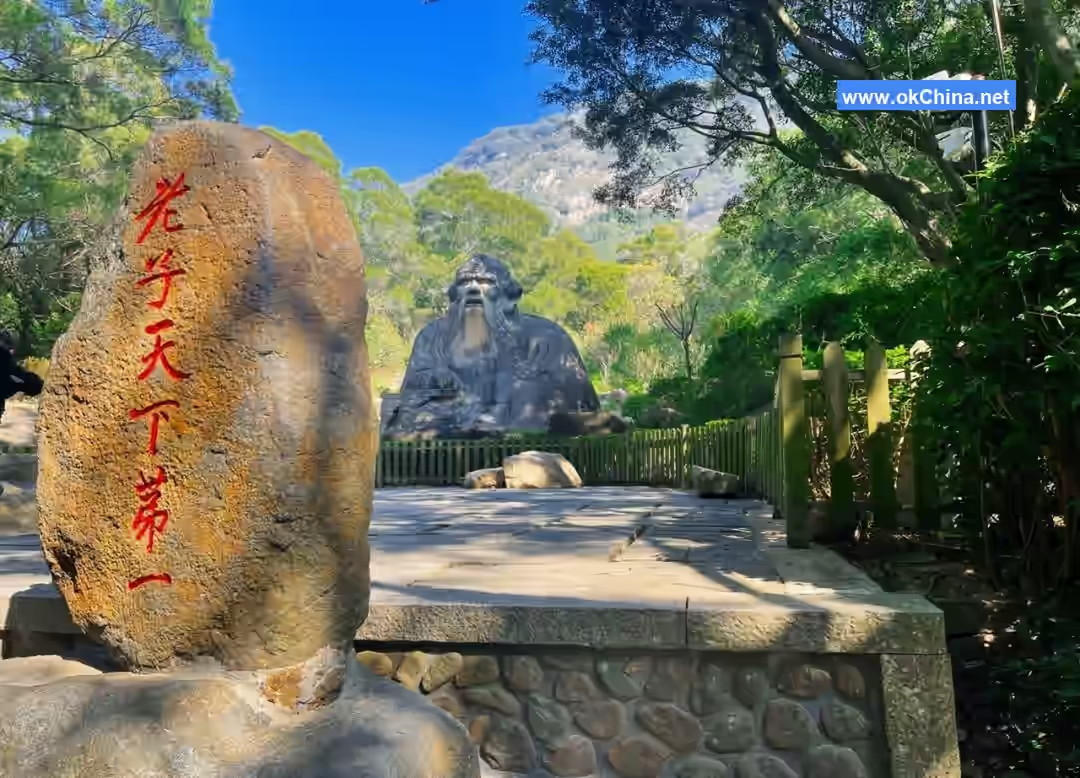
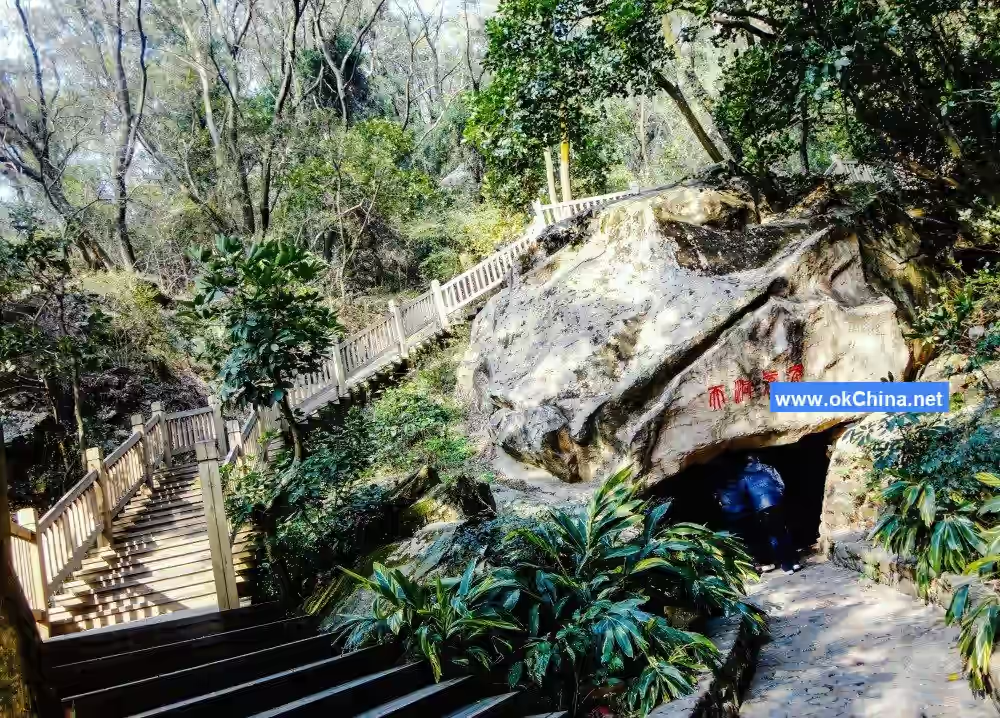
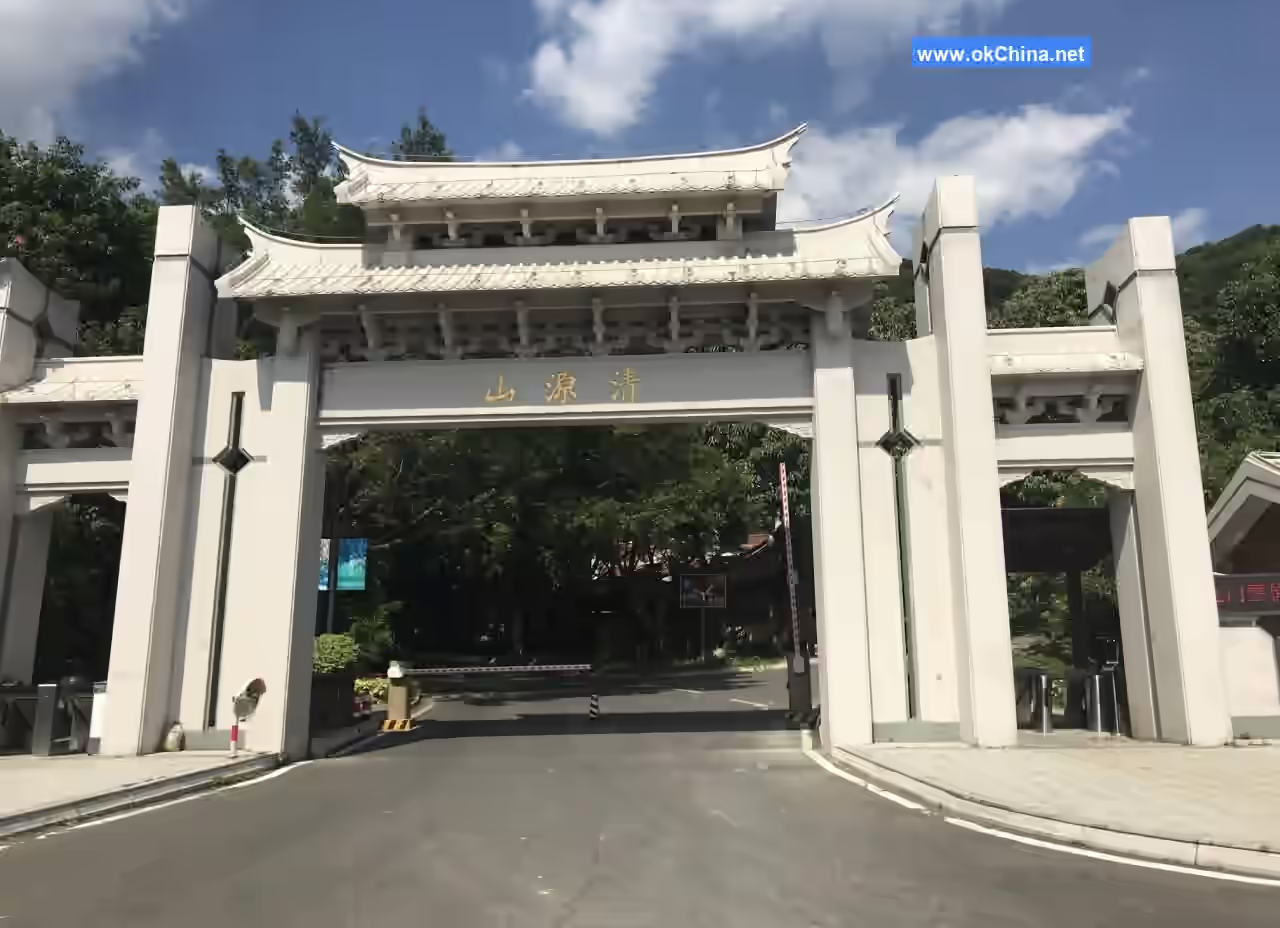
The mountain gate of Laojun Rock features a zigzag-shaped two-level platform, which is a variation of the Yin-Yang Taiji Bagua pattern. On the natural stone standing directly in front, eight seal characters are inscribed: "The Green Ox Goes West, Purple Air Comes East." The stone-structured mountain gate, adorned with intricate root-like window decorations, exudes a rustic charm, vividly highlighting Laozi's philosophy of "revering nature" and evoking a sense of entering an otherworldly paradise. Along the quiet, shaded stone path ahead, giants of the plant kingdom—banyan trees—stand on both sides. Their dense and long roots resemble Laozi's flowing beard, symbolizing his idea of "eternal heaven and earth, infinite vitality."
3.2 Laojun Statue
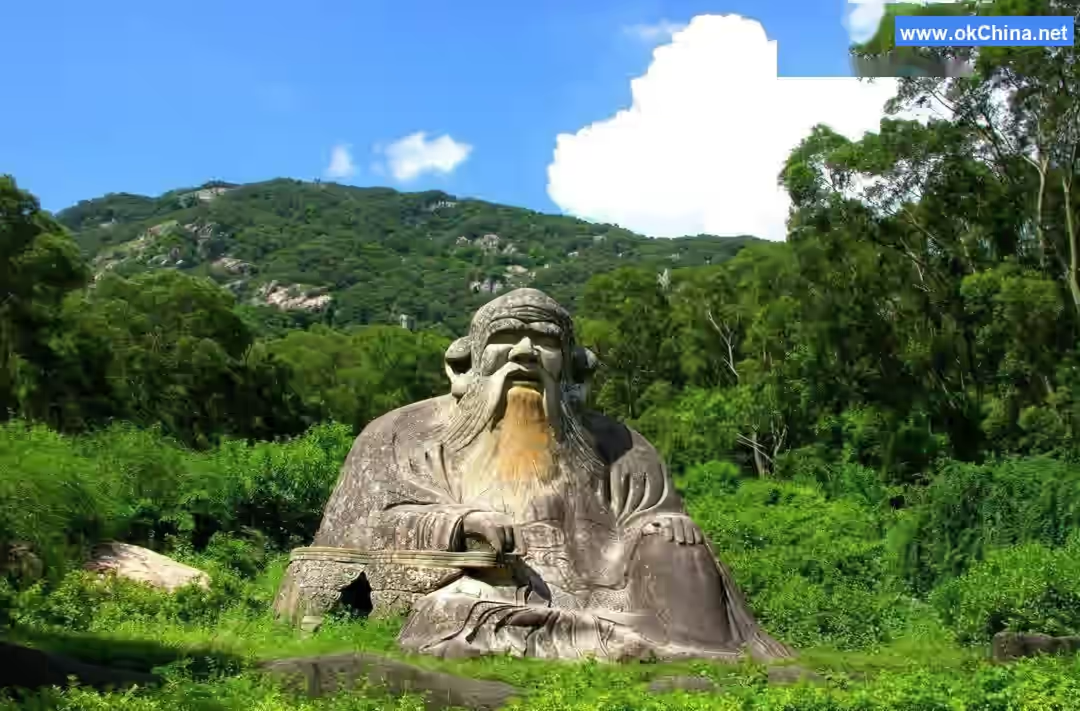
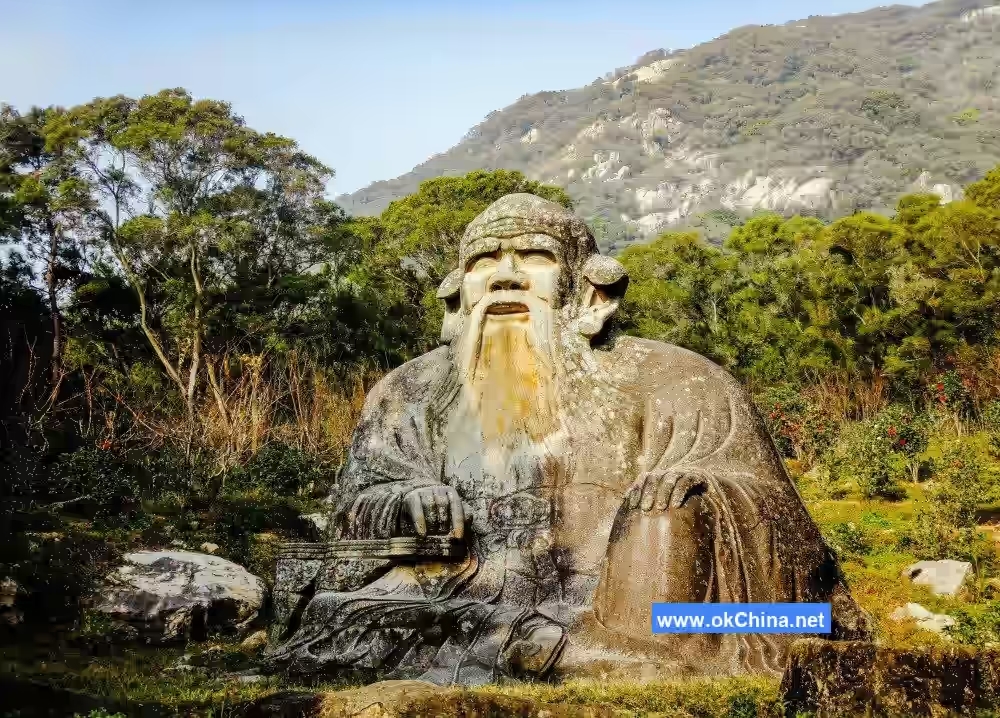
The Laojun Statue is listed as a national key cultural relic and is a unique artistic treasure among Chinese Taoist stone carvings. According to the "Quanzhou Prefecture Records" compiled during the Qing Dynasty's Qianlong period: "The stone statue was naturally formed, with minor carving by enthusiasts." This indicates that it is a massive natural rock resembling an old man, skillfully carved by folk artisans into a seated statue of Laozi, the famous philosopher, thinker, and founder of Taoism from the Spring and Autumn period. The renowned Han Dynasty historian Sima Qian recorded in "Records of the Grand Historian: Biographies of Laozi and Han Fei": "Laozi's surname was Li, given name Er, courtesy name Boyang, and posthumous name Dan." His ancestral home was in Qurenli, Lixiang, Ku County, in the Chu region. Originally, the Laojun Statue was enclosed by a grand Taoist temple, with magnificent structures like the Zhenjun Hall and Beidou Hall. After the temple was burned down, the Laojun Rock stood exposed, blending seamlessly with nature. Its preservation confirms that Quanzhou, known as the "World Religious Museum," had a highly developed and prosperous Taoist culture during the Song Dynasty. The statue is 5.63 meters tall, 6.85 meters thick, and 8.01 meters wide, covering a ground area of 55 square meters. As the largest, most exquisitely carved, and oldest Taoist stone statue in China, it is humorously referred to by literary and historical circles as "Laozi, the First Under Heaven," a title that is well-deserved.
3.3 Tiger Milk Spring
Tiger Milk Spring is located on the rocky slope above "Qingyuan Tianhu." According to "Universal Records": "It is the Spring Mountain mentioned in the biography of Zhu Maichen in the 'Book of Han' as the place defended by the King of Eastern Yue." Ye Tinggui, a Fujian native from the early Southern Song Dynasty, wrote in "Fragmented Records of the Sea": "Spring Mountain is the main mountain of Quanzhou, named for its porous springs." Qingyuan Mountain is thus named Spring Mountain, and Quanzhou derives its name from this mountain.
Beside Tiger Milk Spring, there is a stone inscription for "Porous Spring." The spring is surrounded by rocks above and below, with the upper rock resembling a shell and the lower rock like a whetstone. A fissure in the middle allows the spring water to flow out and collect in a square stone hole. Above, there are inscriptions by Taoist Lü: "Tiger Milk" and by Zhu Xi of the Song Dynasty: "Source of Living Water." Tiger Milk Spring never dries up, and visitors can press their ears to the rock to hear the gurgling sounds from below.
3.4 Thousand-Hand Rock
Thousand-Hand Rock, also known as Guanyin Temple, is named for its enshrinement of a Guanyin statue. Located on the left peak of Qingyuan Mountain, the temple features red walls and plain tiles, giving it a particularly fresh appearance. In the center of the main hall, towards the back, is a seated stone statue of Sakyamuni, the founder of Buddhism, carved during the Song Dynasty. The statue is exquisitely crafted and lifelike, representing one of the finest examples of Song Dynasty stone carving art on Qingyuan Mountain.
3.5 Ruixiang Rock
Ruixiang Rock is located east of Bixiao Rock. In the second year of the Yuanyou era of the Northern Song Dynasty (1086 AD), a standing statue of "Sakyamuni Auspicious Image" was carved into the Tianzhu Peak rock, standing 4.4 meters tall. In the 19th year of the Chenghua era of the Ming Dynasty (1483 AD), a wooden-style stone chamber was constructed. Ruixiang Rock is a provincial-level key cultural relic protection unit in Fujian.
3.6 Mituo Rock
Mituo Rock is one of the main attractions in the "Serene Valley and Buddhist Chants"意境区 of the Qingyuan Mountain Scenic Area. It was designated as a provincial-level key cultural relic protection unit in Fujian in May 1961. Passing Thousand-Hand Rock and ascending along the ancient stone steps, one reaches the mountain gate of Mituo Rock after passing Zhenyi Pavilion. The gate pillars bear a couplet written by the Ming Dynasty calligopher Zhang Rui tu: "Every celebration of calm waves allows for gazing afar; often viewing fertile fields invites stopping the carriage." This indicates it is an excellent spot for enjoying elevated views and savoring the breeze with wine.
Here, massive rocks stand steeply, and ancient trees reach for the sky. Nearby, the "Heavenly Companions Presenting Auspiciousness" consists of two different tree species tightly embracing each other—one is a重阳木 (Chinese tallow tree) and the other a banyan tree. Their roots intertwine, trunks embrace, and branches entangle, as if glued together, having endured for over 300 years like a pair of devoted lovers.
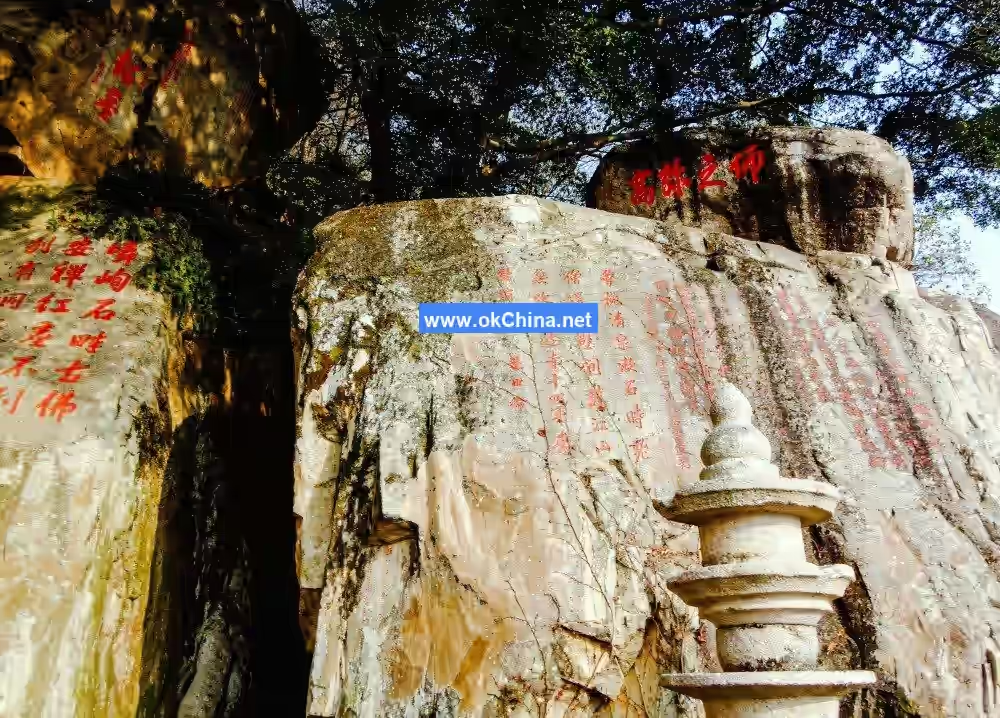
The wooden-style stone chamber at Mituo Rock was built in the 24th year of the Zhizheng era of Emperor Shun of the Yuan Dynasty (1364 AD). Inside, the Yuan Dynasty stone statue of Amitabha Buddha, carved from a natural cliff, stands 5.77 meters tall and 2.5 meters wide. The statue features a coiled hair bun, stands on a lotus flower, with the left hand held at chest level and the right hand hanging down. Its posture is dignified, serene, and benevolent. The architectural features of the stone chamber and the attire of the Buddha statue provide important physical materials for studying Yuan Dynasty architecture and Buddhist stone carving art south of the Yangtze River in China. To the right of the stone chamber, a stone stele from the 24th year of the Zhizheng era records: "Pingzhang Sandanba, Censor Tiemuer Buhua, Constitutional Envoy Sun Sanbao, and Qian Shi Shijiaru donated funds to initiate the conversion of the hall to stone, building platforms and modifying the hall, further refining the Buddha statue and gilding it." Among the 193 Chinese characters in this Yuan Dynasty stone inscription, 13 are simplified characters, which is rare in Yuan Dynasty inscriptions. Above the stone chamber, following the Buddhist scriptures carved into the steps, under the steep cliff, there is a stone inscription of the character "佛" (Buddha) handwritten by Ma Fushu, the Fujian Land Route Commander during the Qing Dynasty's Qianlong period, hailed as the "First Buddha of the Minhai Region." The cliff inscription "拜观" (Pay Homage and Observe) by the renowned Chinese painter Huang Zhou shines even more brilliantly, creating a magnificent sight. To the left front of the stone chamber, beside the cliff, a massive rock stands tall with banyan trees climbing over it. Ancient people carved inscriptions such as "一啸台" (One Whistle Platform) and "云谷" (Cloud Valley). Below and to the right of the stone chamber, on a large platform, stood the ancient Mituo Rock Temple, which was destroyed during the Cultural Revolution.
3.7 Cien Rock
Cien Rock is located within the "奇峰醉月" (Drunken Moon on Peculiar Peaks)意境区 of the Qingyuan Mountain Scenic Area. The Song Dynasty stone statue of White-Robed Guanyin inside Cien Temple was carved from natural rock during the Yuanyou era (1086–1093 AD).In June 2001, it was designated as a national key cultural relics protection unit.
According to historical records, Cien Rock was a fief granted by a Tang Dynasty emperor to the prefect Xu Ji. Xu Ji was born into an official family; his grandfather, Fu Qian, served as the prefect of Quanzhou, and his father, Xu Maowen, passed the imperial examination in the second year of the Qianyuan era of the Tang Dynasty (759 AD) and later served as the prefect of Xi'an. In his youth, Xu Ji studied diligently, and after passing the imperial examination, he held important central government positions. He accompanied the emperor on a western inspection tour and made significant contributions to border security, earning imperial rewards. As a result, the mountain was named Cien Mountain, and the temple built there was called Cien Temple. To the right of the temple, the ancestral hall of the Xu clan of Fujian was constructed. The couplet inside Cien Temple was composed by the outstanding progressive thinker, writer, and historian Li Zhi (1527–1602) of the late Ming Dynasty: "No need for literary fame to be called a great scholar; even without bells and drums, it is still Guanyin."
On Cien Mountain, massive rocks form clusters, overlapping and creating many natural stone caves and chambers. Among them is a stone cave inscribed with the four characters "Gao Shan Yang Zhi" (Looking Up to the High Mountain), which served as the study for the young Ouyang Zhan, a top scholar in Fujian during the Tang Dynasty. Known as "Ouyang Cave," Ouyang Zhan was ambitious and exceptionally resolute from a young age. He immersed himself in diligent study in the cave and eventually passed the imperial examination in the eighth year of the Zhenyuan era of the Tang Dynasty (792 AD), ranking alongside the famous young literary figure Han Yu on the prestigious "Dragon and Tiger List."
Around the cave, there are historical sites such as Wanxin Pavilion, Yaoyue Terrace, and Kuixing Tower. Additionally, 83 cliff inscriptions of poems from various dynasties are distributed across the uneven cliff faces, along with inscriptions left by literati and scholars throughout history, such as "Yuan Fei Yu Yue" (Kites Fly, Fish Leap), "Shan Hai Qi Hui" (Mountains and Seas Meet Wonderfully), and "He Jing Qin Tai" (Crane Path and Zither Terrace).
3.8 Three Periods Buddha
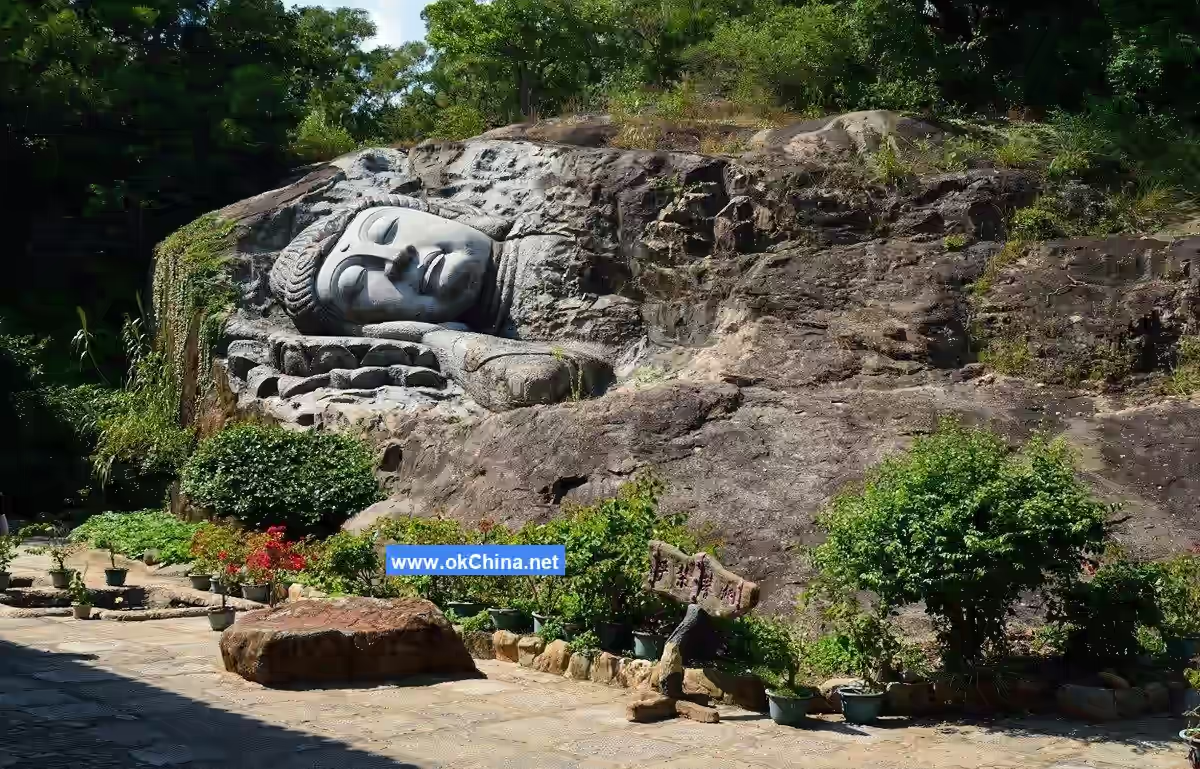
The Three Periods Buddha sit side by side in the lotus position on an upward-facing lotus throne. The main statue is approximately 2.5 meters tall, with the two flanking statues slightly shorter. The Buddha statues are well-preserved and feature a Tibetan style: coiled hair adorned with a jeweled crown, a broad upper face narrowing toward the chin, elongated ears reaching the shoulders, broad shoulders, and a slender waist. All wear robes exposing the right shoulder, with a corner of the kasaya draped over the left shoulder. The robe patterns are depicted with raised carved lines, which remain distinct despite the passage of time. Each stone statue has a circular head halo and body halo. The central statue is Shakyamuni, the Buddha of the Present, who governs the present world. Its depiction shows the earth-touching mudra, with one hand pointing downward to touch the earth and the other raised upward. The left statue is the Medicine Buddha, the Buddha of the Past, who governs the past world. It also has one hand pointing downward and the other upward, with the left palm holding an alms bowl. The right statue is Amitabha, the Buddha of the Future, depicted in a meditative posture with hands folded over the abdomen.
The Three Periods Buddha have been the primary statues enshrined in Tibetan Buddhist temples since the 13th century. According to the "Yuan Dynasty Painting and Sculpture Records," the Three Periods Buddha were enshrined in the "main hall" of Tibetan-style temples in the Yuan capital, serving as the principal deities worshipped during the Yuan Dynasty. Experts have identified these Three Periods Buddha stone carvings as the earliest, best-preserved, and southeasternmost examples of Indian-style Three Periods Buddha statues discovered in China. A stone inscription located 20 meters to the south records that the Three Periods Buddha were carved in 1292, over 700 years ago.
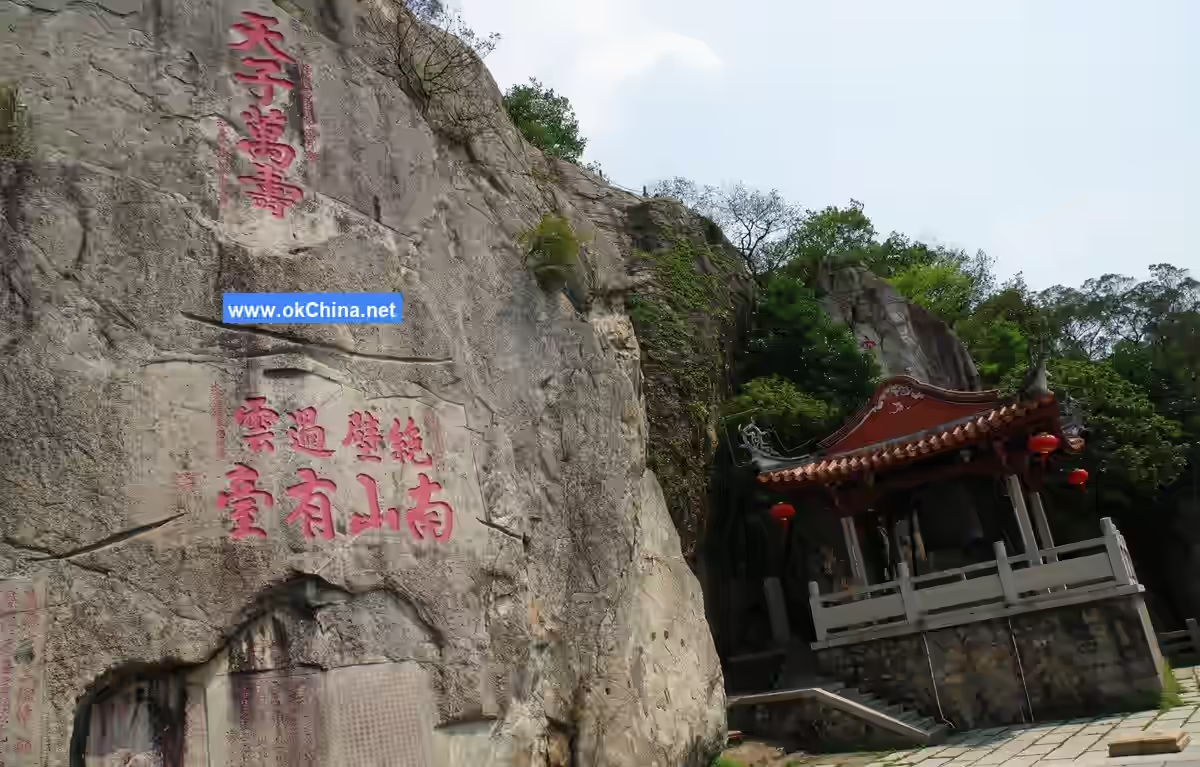
Famous steles, peculiar stones, dense shade, and secluded streams are distinctive features of Bixiao Rock. Centered around the "Three Periods Buddha," to the south lies the Guangqin Master Pagoda complex, built in 1991 in the style of southern Fujian residential architecture. Behind it, a large Southern Song Dynasty cliff inscription of the character "Shou" (Longevity) can be seen, measuring 3.5 meters in height and 3.15 meters in width, acclaimed as the "largest 'Shou' character in Fujian." Nearby is the carving of the Tiger-Taming Monk, with several stone inscriptions left by Qing Dynasty scholars below.
3.9 Relic Pagoda
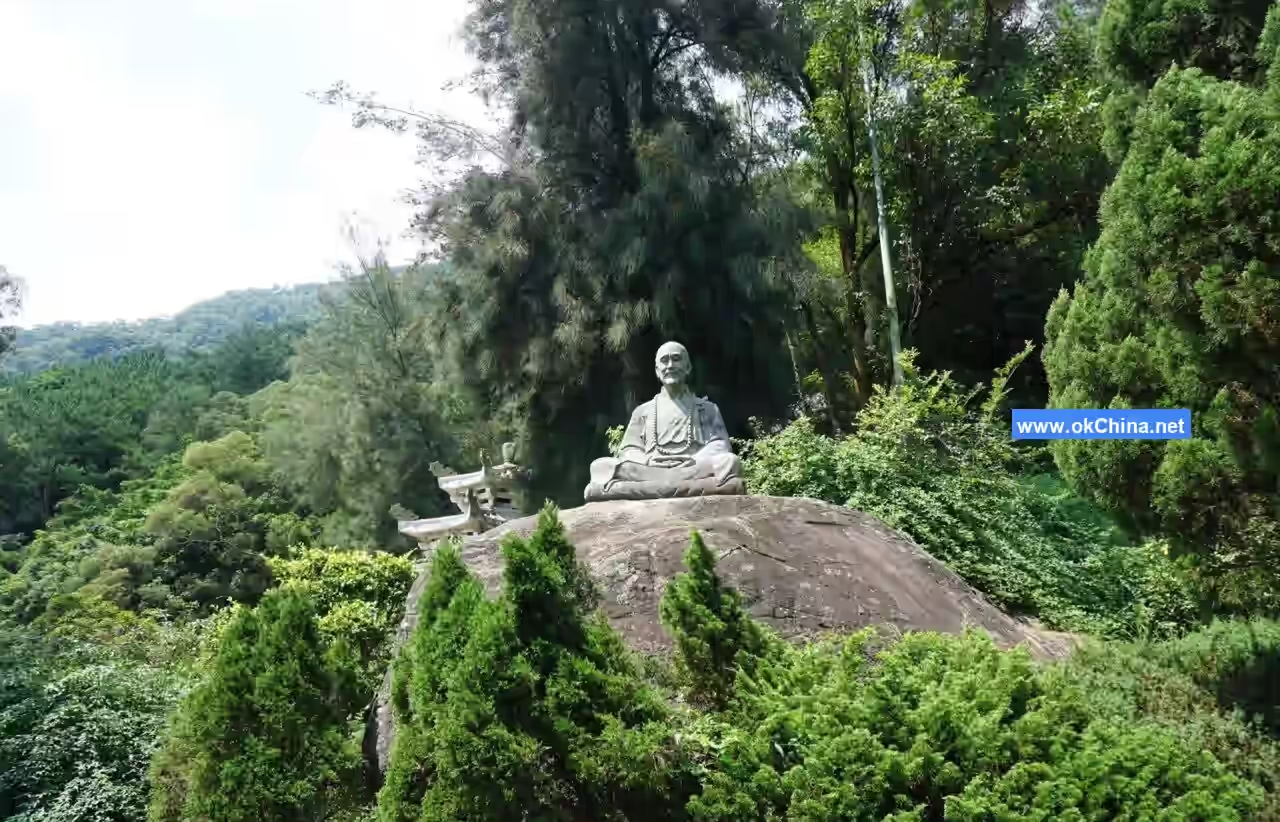
In 1952, the "Pagoda of Master Hongyi" was constructed on the west side of the Amitabha Rock in the Qingyuan Mountain Scenic Area, housing the master's relics. The stone pagoda is made of the renowned Quanzhou white granite, meticulously carved to reflect the architectural characteristics of southern Fujian's wooden-stone structures. The interior ceiling features a spider-web caisson design imitating wooden bracket sets, layered to enhance the spatial effect. On the front wall, a dark green stone carving of "Portrait of Master Hongyi" is embedded, a "tear-ink painting" created by Mr. Feng Zikai in a moment of grief. In March 1991, it was designated as a key cultural relics protection unit of Fujian Province. To the left of Master Hongyi's Relic Pagoda, a cliff inscription by Zhao Puchu, president of the Chinese Buddhist Association, reads: "The eternal landscape preserves historic sites; a forest of wind and moon accompanies the eminent monk." To the right are the relic pagodas of Masters Guangqie and Guangjing, former presidents of the Singapore Buddhist Federation.
Due to Master Hongyi's profound achievements in art, epigraphy, calligraphy, music, and Buddhism, he is regarded as one of the three great eminent monks of modern times, alongside Taixu and Yinguang. Many of his calligraphic works are preserved in Quanzhou, with the inscription "Bei Xin Jiao Ji" (Intermingling of Sorrow and Joy) in front of the relic pagoda being his final work before his passing.
3.10 Baizhang Ping
Baizhang Ping, also known as Zun Rock or Xingtai Rock, is located southeast of Qingyuan Cave. According to the "Min Shu," it was constructed by the Song Dynasty monk Ke Zun. The area features massive, sprawling rocks spanning several hundred paces, hence its name. Historically, it housed the "Zhenyun Pavilion" and three stone pagodas. In the early Jiajing era of the Ming Dynasty, the young Wang Shenzhong studied here and later passed the imperial examination, becoming the foremost of the "Eight Talents of Jiajing." It is said that Yu Dayou also practiced martial arts here in his youth. During the Wanli era of the Ming Dynasty, Jiang Zhili, the prefect of Quanzhou, inscribed the three large characters "Baizhang Ping," creating a magnificent sight.
3.11 Qingyuan Cave
Qingyuan Cave is located at the peak of Qingyuan Mountain and is regarded as the foremost of the thirty-six rock caves of Qingyuan Mountain, often called the "First Cave Heaven." Entering the mountain gate and ascending the stone steps, a stele from the thirty-sixth year of the Wanli era (1608) stands to the left, inscribed with: "The phrase 'Quan Mountain' is recorded in the Han Shu, hence the name of the prefecture, Qingyuan. Visitors from all directions and locals alike admire the scenic spots, with tourists coming incessantly."
Qingyuan Cave was first built during the Shaoxing era of the Southern Song Dynasty, with structures such as Guankong Tower, Buddha Hall, and Pei Immortal Shrine. Legend has it that during the Shaoxing era of the Southern Song Dynasty, a Taoist named Pei chased a giant serpent that harmed living creatures to this location. Seeing the serpent disappear into the cave, he covered it with a stone and sat in meditation at the entrance, preventing the serpent from reemerging to cause harm. Thus, the cave is also known as "Pei Immortal Cave." Originally, the "Qianfeng Zicui Pavilion" stood atop the cave, but now only several cliff inscriptions from various dynasties remain, such as "Tui Yan," "Yu Hua Deng Xian," and "You Xian Ze Ming."
3.12 Qingyuan Tianhu
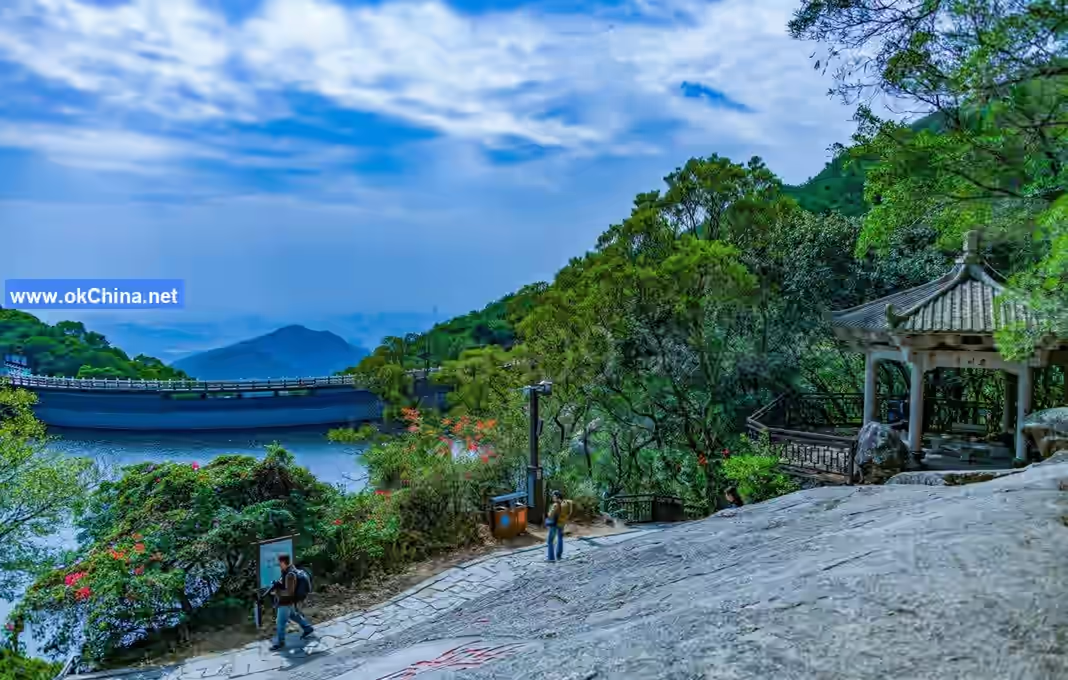
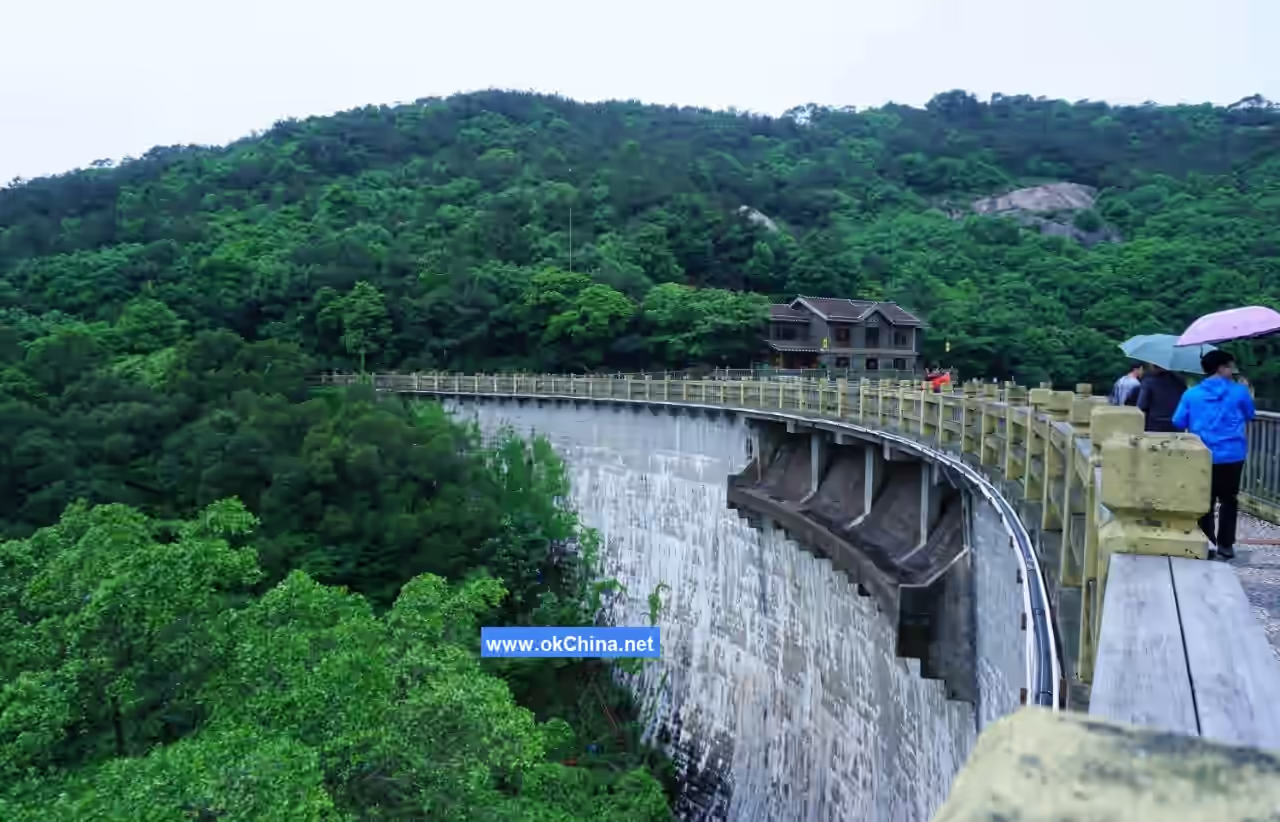
In 1993, the municipal government decided to construct the Qingyuan Mountain water storage project—Qingyuan Tianhu—in the Zize Dongtai Valley below the Tiger's Milk Spring within the main scenic area of "Shan Hai Da Guan."
The dam of Qingyuan Tianhu is located at an elevation of 368 meters and is a double-curvature stone arch dam. It stands 30 meters high, with a crest length of 140 meters and a width of 2.8 meters. The total storage capacity is 115,000 cubic meters, and the maximum water surface area is 12,000 square meters. Construction began in October 1994, and the reservoir started storing water in June 1996.
3.13 Ruixiang Rock Stone Chamber
Ruixiang Rock is one of the main attractions in the "You Gu Fan Yin" scenic area of Qingyuan Mountain. It was designated as a key cultural relics protection unit of Fujian Province in May 1961. The Ruixiang Rock Stone Chamber, standing atop Tianzhu Peak, was first built in the second year of the Yuanyou era of the Song Dynasty (1087 AD). Initially constructed of wood, it was rebuilt as a stone structure imitating wooden architecture in the nineteenth year of the Chenghua era of the Ming Dynasty (1483 AD). The Song Dynasty stone carving of Shakyamuni inside the chamber, carved from a natural cliff, stands 4.62 meters tall and 2 meters wide in a standing posture. The statue is solemn, dignified, and benevolent, with exquisite craftsmanship, serving as important material for studying ancient Chinese architecture and Buddhist stone carving art.
To the left of the stone chamber, a stone stele inscribed by Li Han, the Ming Dynasty general and commander of the Quanzhou Guard, titled "Record of the Restoration of Ruixiang Rock," documents the construction and restoration of the rock during the Song and Ming dynasties.
Passing through the cliff cave to the left of the stone chamber, the view opens up to three massive rocks resembling three giant pythons emerging from the cave, hence the name "Three Pythons Emerging from the Cave." In ancient times, the "Wangzhou Pavilion" was built on the cliff platform, offering a panoramic view of the ancient city.
3.14 Lingshan Holy Tombs
The Lingshan Holy Tombs are the oldest and best-preserved Islamic holy sites in China, located within the Lingshan scenic area of Qingyuan Mountain. They were designated as a national key cultural relics protection unit in January 1988. According to He Qiaoyuan's "Min Shu" from the Ming Dynasty, during the Wude era of the Tang Dynasty (618–626 AD), Muhammad sent four disciples to China: the first preached in Guangzhou, the second in Yangzhou, and the third (Shashiya) and fourth (Wogaoshi) preached in Quanzhou, where they were buried on Lingshan Mountain.
After their burial, the mountain emitted a nocturnal glow, astonishing people with its spiritual aura. Thus, it was named the Holy Tombs, and the mountain was called Lingshan. The existing two tombs are placed side by side, with tombstones carved from granite. Behind the tombs, a horseshoe-shaped corridor about 3 meters high was built against the mountain. Several stone pillars in the corridor resemble weaving shuttles, referred to by ancient architecture experts as "lozenge-shaped pillars," showcasing typical Tang Dynasty architectural features. The corridor contains five stone steles from various dynasties, with the central one being an Arabic inscription on dark green stone from the second year of the Zhizhi era of the Yuan Dynasty (1322 AD), recording the arrival of the two sages in China during the Fafuer era. To the right is a stele erected in the fifteenth year of the Yongle era of the Ming Dynasty (1417 AD) by Zheng He's subordinates after he paid homage here during his fifth voyage to the Western Oceans. It reads: "Imperial envoy and commander-in-chief eunuch Zheng He, on a mission to Hurmoz and other countries in the Western Oceans, paid homage here on the sixteenth day of the fifth month of the fifteenth year of Yongle, praying for the protection of the holy spirits. Recorded by Pu He." The stone pavilion above the tombs was rebuilt in 1962. Around the tombs are several stone coffin graves of Islamic believers from various dynasties, inscribed with common Islamic patterns like the "cloud and moon" or excerpts from the Quran. In front of the tombs lies a natural giant stone that sways in the wind and can be rocked by hand, known as the "Wind-Rocking Stone." Zhou Daoguang, the Ming Dynasty prefect of Quanzhou, inscribed the three large characters "Bi Yu Qiu" (Jade Ball) on it. The Islamic Holy Tombs have become an important historical site for studying Quanzhou's maritime history and the spread of Islam.
3.15 Bixiao Rock
Bixiao Rock is divided into Upper Bixiao and Lower Bixiao.Looking up from the entrance, the blue sky appears as a slender line, earning this spot the name "Little Haven." On the rock face beside the cave, the three characters "Tou Bi Xiao" are inscribed. Descending from the cave entrance via a ladder leads one into Lower Bixiao. Here, stone carvings of the "Buddhas of the Three Times" from the Yuan Dynasty Tibetan Buddhism tradition can be found. On the southern side lies the "Venerable Guangqin's Pagoda Courtyard," where the monk's relics are enshrined. Above the pagoda courtyard, on the cliff face, there is a relief carving depicting "Venerable Guangqin Meditating and Subduing a Tiger."
3.16 Quanzhou Shaolin Temple
Quanzhou Shaolin Temple was originally built during the Tang Dynasty. According to the "Xishan Magazine" written by Cai Yongjian of Jinjiang during the Jiaqing period of the Qing Dynasty (1796–1820), one of the thirteen staff-wielding monks of the Songshan Shaolin Temple, Zhikong, entered Fujian and established Shaolin Temple at the foot of Qingyuan Mountain. The temple complex consisted of thirteen courtyards, marking the beginning of the martial arts tradition among Fujian monks. The Shaolin Temple had thirteen main halls, walls three zhang high, a thousand monks, vast farmlands, and dense forests that enveloped the temple at the mountain's base. Over time, the temple experienced cycles of prosperity and decline. During the Five Dynasties period, the temple was destroyed after its monks opposed the allegiance of Min King Wang Shenzhi to the Later Liang Dynasty. In the first year of the Song Jingyan era (1276), a thousand Shaolin monks resisted Pu Shougeng's surrender to the Yuan Dynasty, engaging in fierce battles with Yuan troops. Yuan commander Sodu dispatched cavalry to attack Shaolin Temple, resulting in the death of a thousand monks, with only a hundred survivors. The temple was destroyed once again. In the tenth year of the Ming Hongwu era (1377), Emperor Taizu Zhu Yuanzhang ordered the restoration of Shaolin Temple. By the autumn of the twenty-eighth year of the Qing Qianlong era (1763), Emperor Gaozong Hongli issued an edict to burn Quanzhou Shaolin Temple... From then on, no one dared to rebuild it.
4. Historical Development
According to the "Quanzhou Prefecture Records," Qingyuan Mountain was first developed during the Qin Dynasty, flourished during the Tang Dynasty, and reached its peak during the Song and Yuan periods. Through successive dynasties of development, the mountain has retained a wealth of cultural relics and historical sites. Among the well-preserved artifacts are seven sites with nine stone statues from the Song and Yuan periods, nearly 600 cliff inscriptions from various dynasties, and several granite chambers imitating wooden structures from the Yuan and Ming periods. The most renowned is the Song Dynasty statue of Laozi, which is the largest and artistically most valuable Taoist stone carving in the country. The wind-praying inscriptions on Jiuri Mountain serve as precious materials for studying ancient Chinese overseas transportation history and calligraphic art. During the Wude period of the Tang Dynasty, two disciples of Muhammad, known as the "Third Sage" and "Fourth Sage," came to Quanzhou to preach and were buried on Lingshan Mountain, now referred to as the Islamic Holy Tombs. Nearby stands the "Incense Offering Stele" commemorating Zheng He's fifth voyage to the Western Oceans, an important historical relic of China's maritime communications.
Comments
Post a Comment