
Qingyan Ancient Town
1. Introduction
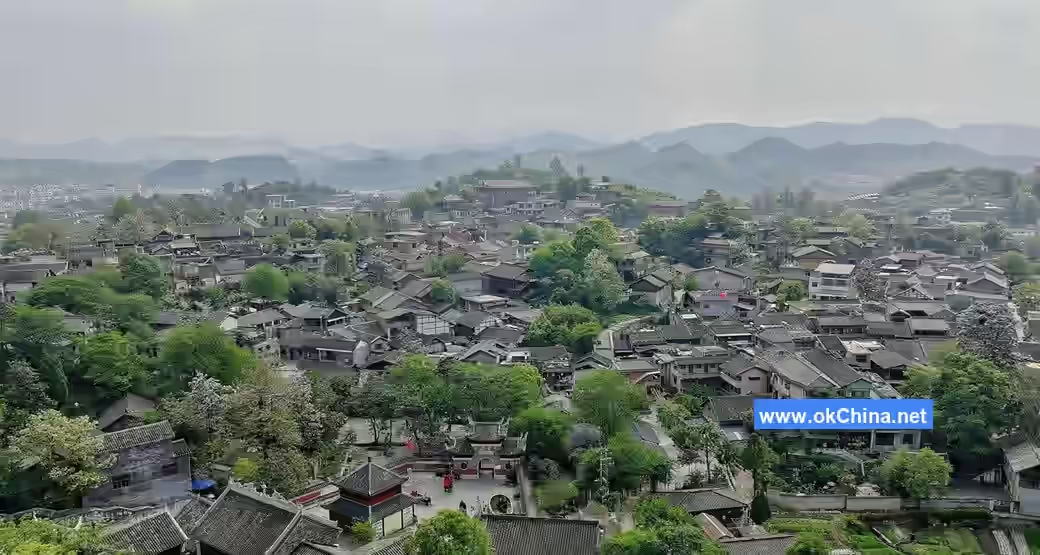
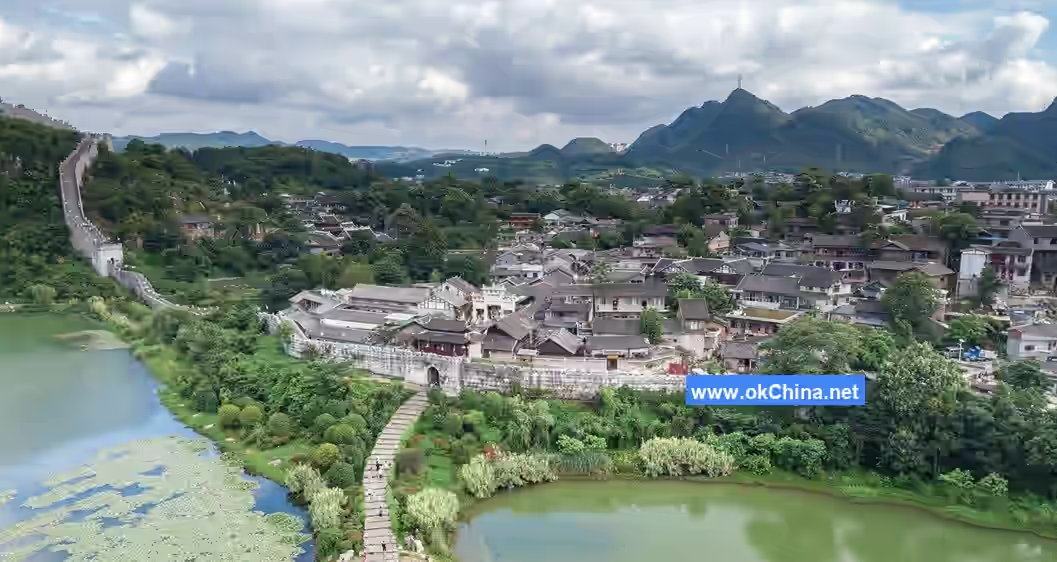
Qingyan Ancient Town is located in the southern part of Huaxi District, Guiyang City, Guizhou Province. It is 29 kilometers from the central urban area of Guiyang and 12 kilometers from Huaxi District. It served as a military stronghold during the Ming and Qing dynasties.
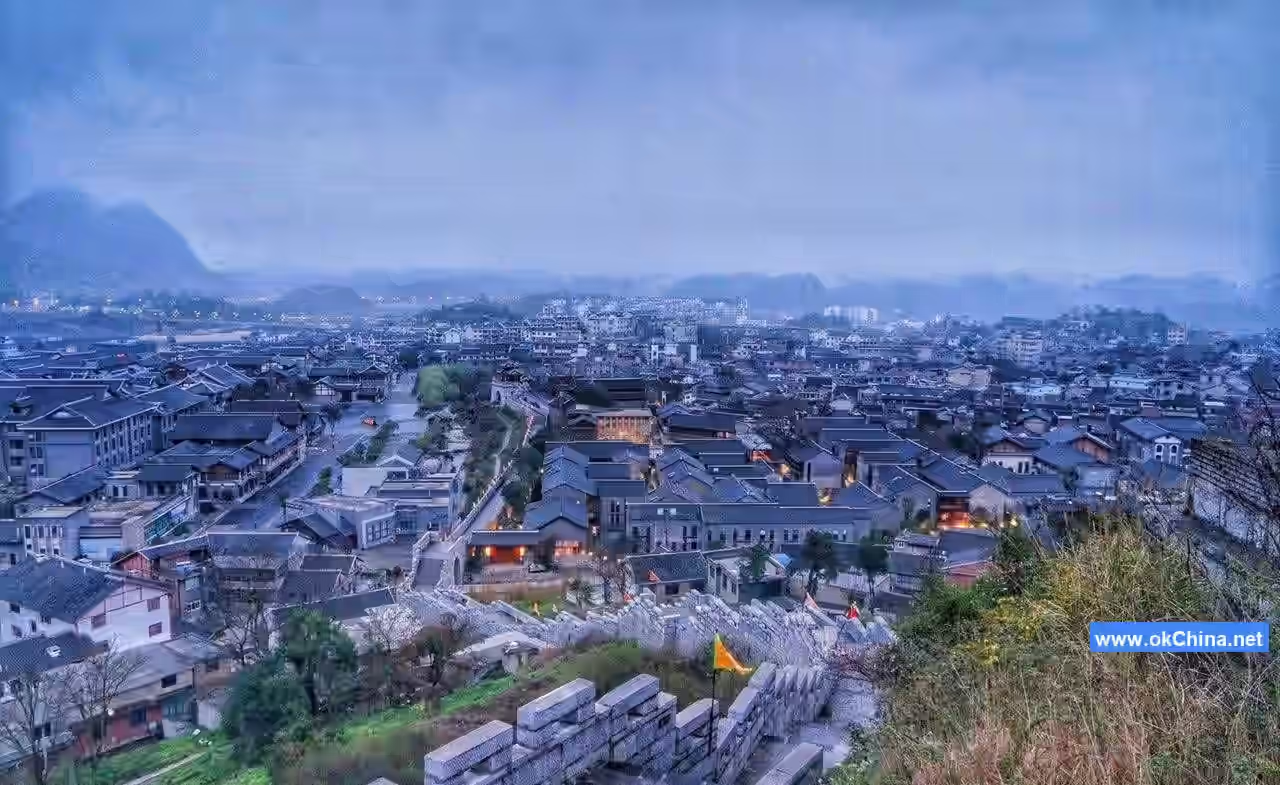
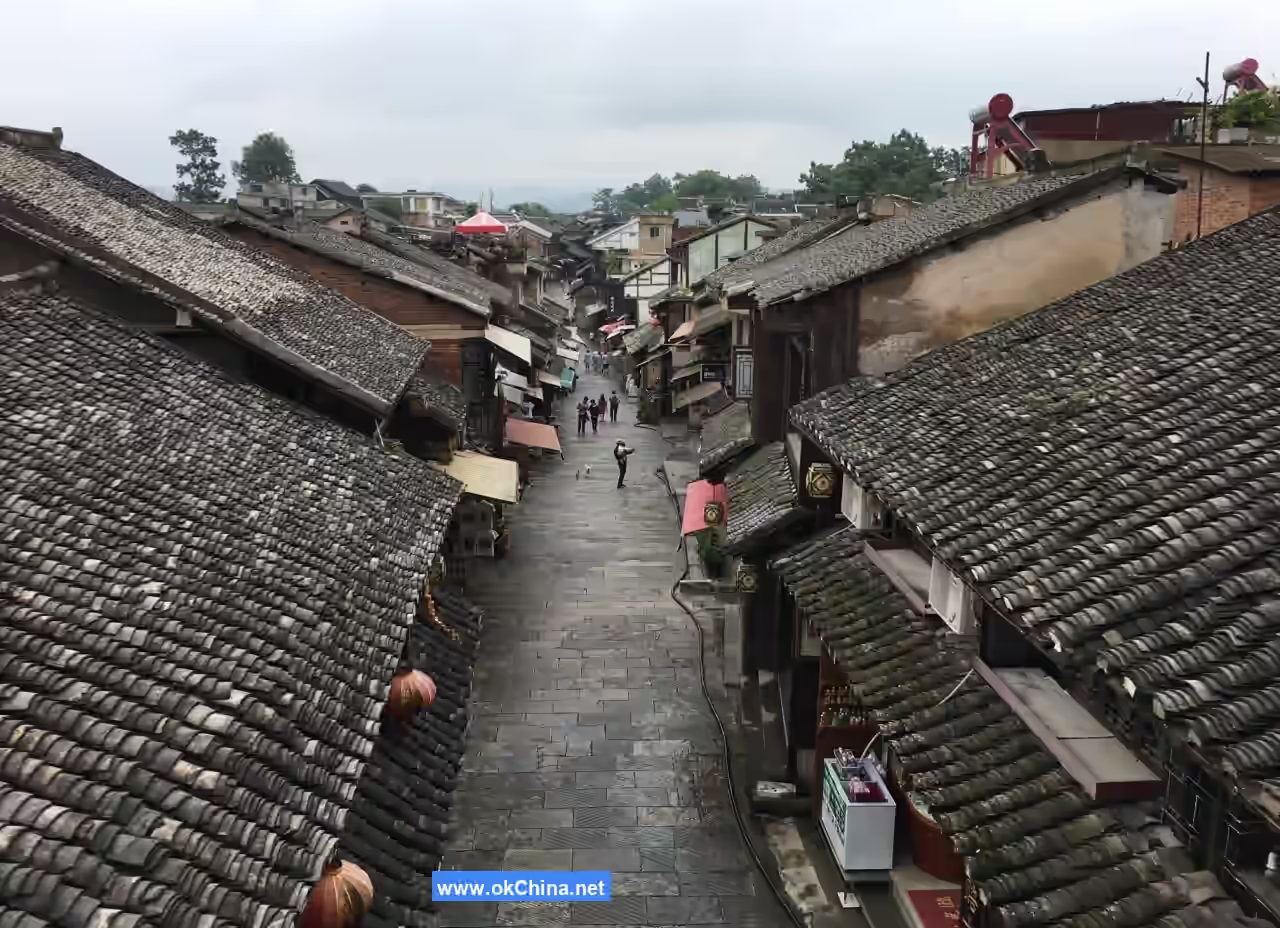
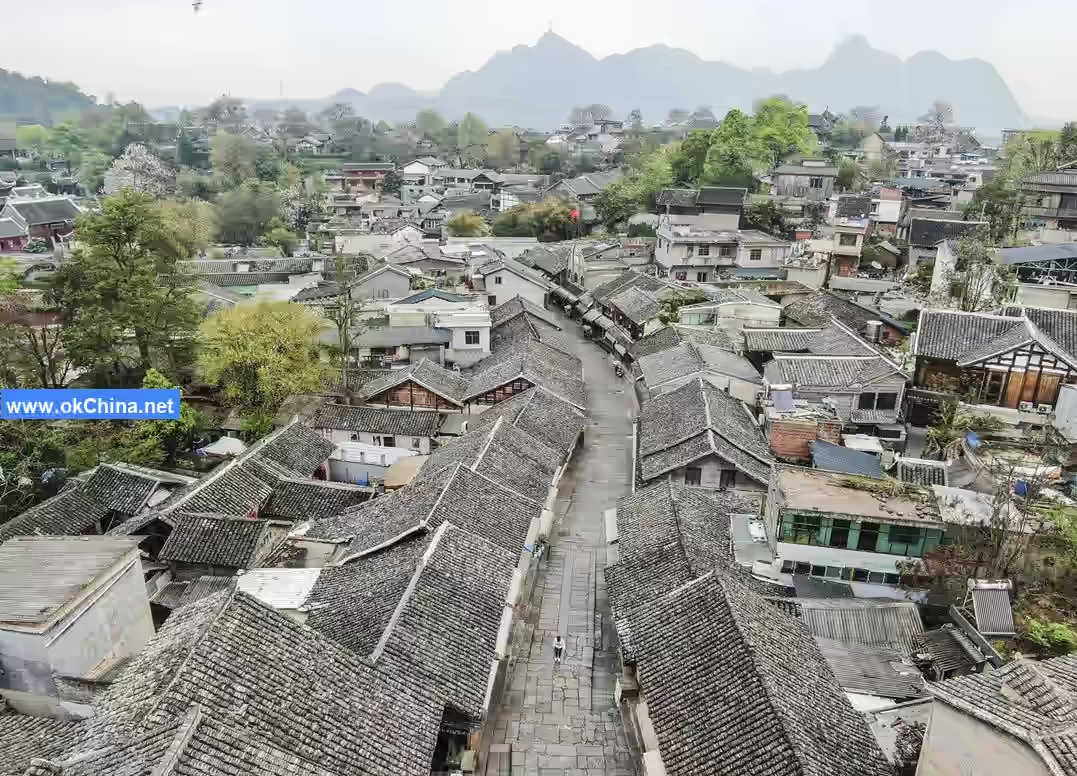
The town covers an area of 3 square kilometers within its walls, with a total planned scenic area of approximately 5.8 square kilometers. Its streets and alleys are paved with stone, and the residential houses feature stone-built walls, counters, and courtyards. The town's layout follows the patterns of the Ming and Qing dynasties. Well-preserved elements such as Chaomen (ceremonial gates), Yaomen (waist gates), tile roofs, double-eave overhanging gable roofs, and carved floral doors reflect the architectural style of the Ming and Qing periods. Qingyan Ancient Town has 4 main streets and 26 small streets and alleys, dotted with numerous historical sites including towers, terraces, pavilions, temples, palaces, ancestral halls, pagodas, and courtyards.
2. Architectural Layout
2.1 Structure
Qingyan Ancient Town covers an area of 3 square kilometers within its walls, with a total planned scenic area of approximately 5.8 square kilometers. Its streets and alleys are paved with stone, and the residential houses feature stone-built walls, counters, and courtyards. The town's layout follows the patterns of the Ming and Qing dynasties. Well-preserved elements such as Chaomen (ceremonial gates), Yaomen (waist gates), tile roofs, double-eave overhanging gable roofs, and carved floral doors reflect the architectural style of the Ming and Qing periods. The Qingyan Cathaya Reserve is home to over 9,000 living Cathaya argyrophylla trees, the only remaining ones on Earth.
2.2 Features
2.2.1 Shops
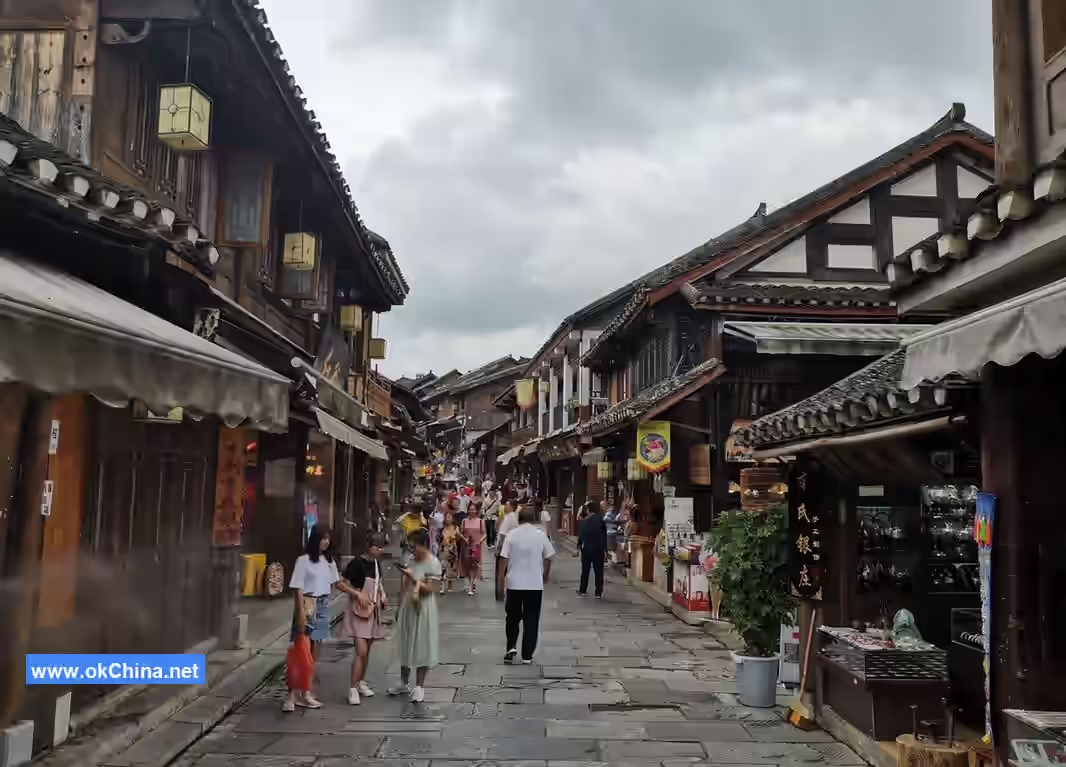
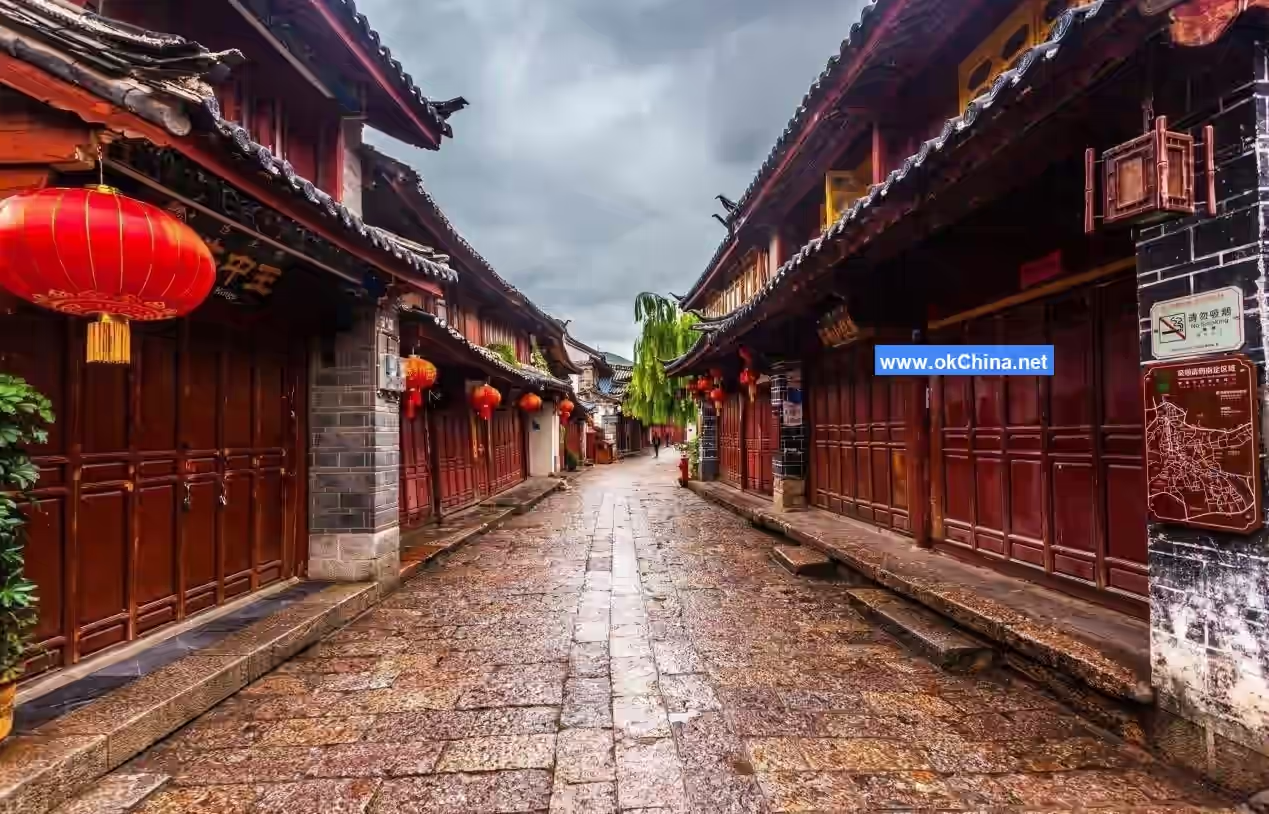
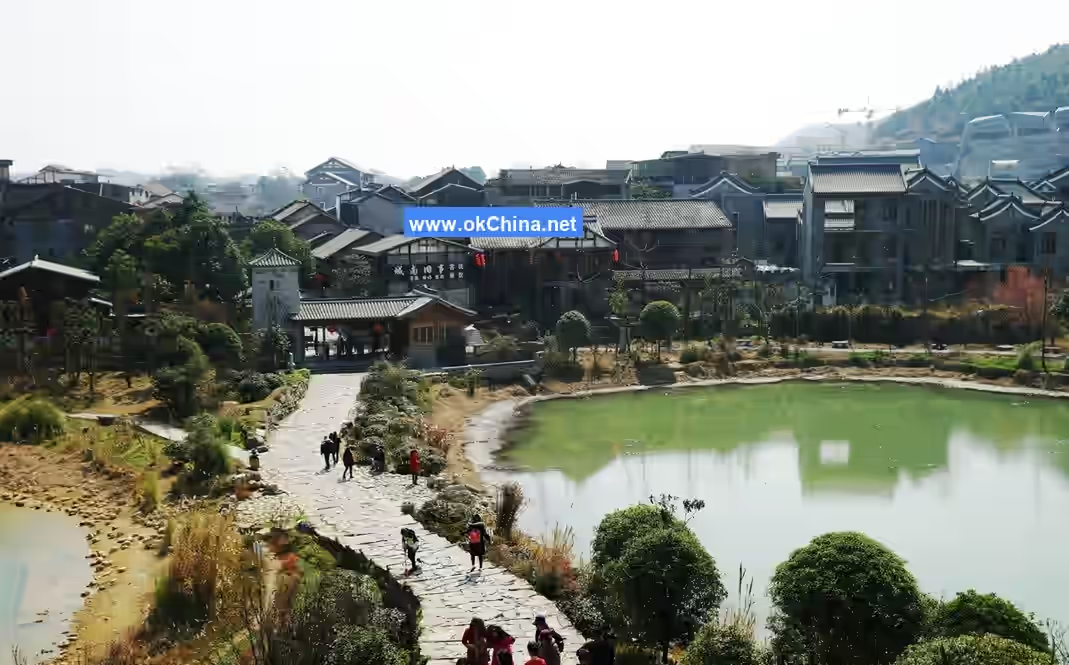
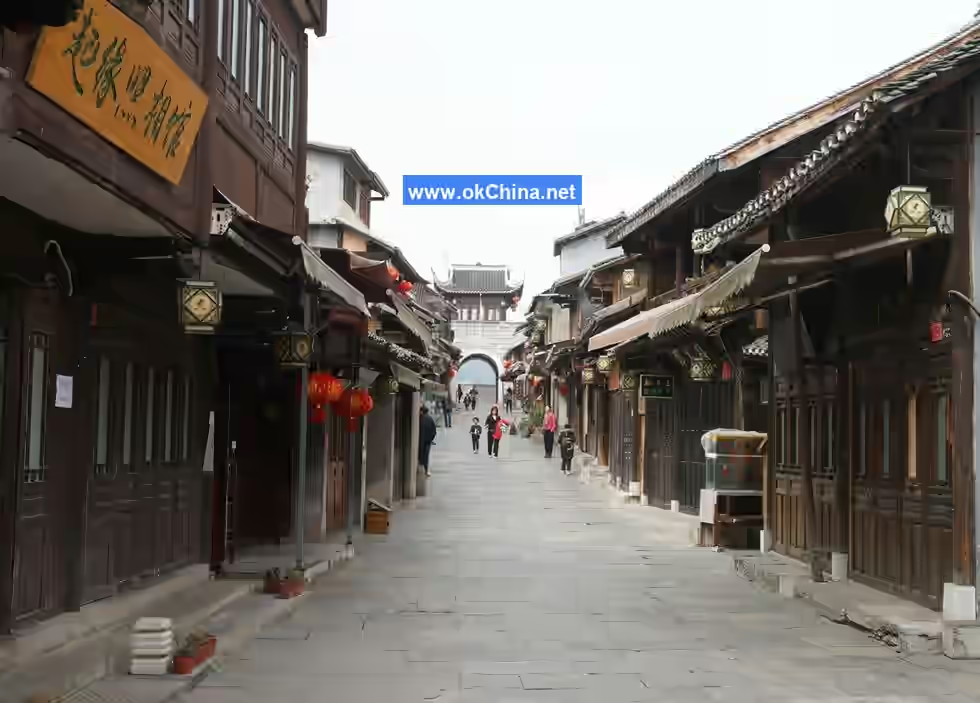
The shops lining the streets of Qingyan Ancient Town are mostly small wooden or brick-and-timber structures with gray-tiled roofs. Signs and banners hang in front of the doors. In the past, lanterns inscribed with phrases like "Rise at cockcrow to see the weather, seek lodging early before nightfall" were hung in front of inns.
2.2.2 Courtyards
The courtyards of wealthy families in Qingyan Ancient Town are not overly spacious. They typically follow a three-sided layout, featuring small ceremonial gates, stone-paved courtyards, flower beds, stone benches, and small latticed windows, embodying simplicity, tranquility, and a scholarly ambiance. The narrow alleys are home to ordinary families, with walls on both sides often built from rough stones or rammed earth. Covered with green grass and moss, occasionally adorned with branches of flowers or fruits, these alleys exude a rustic, timeless charm.
2.2.3 City Wall
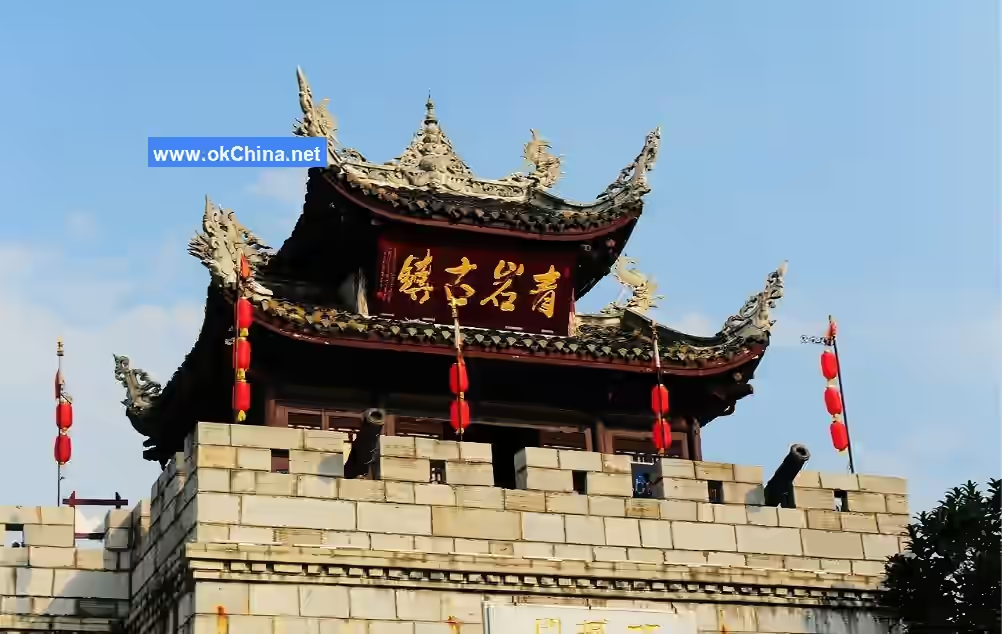
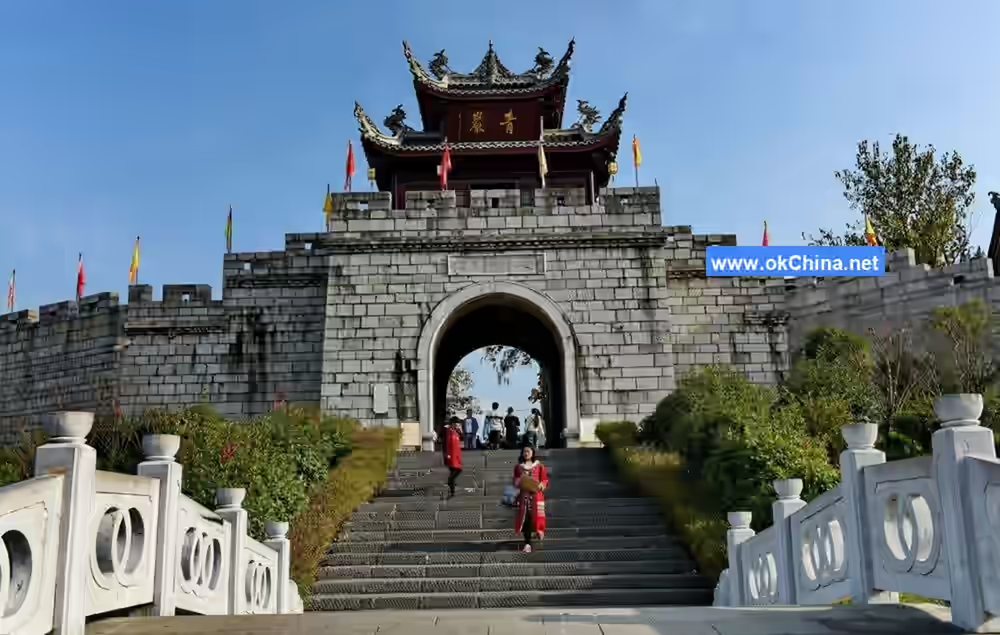
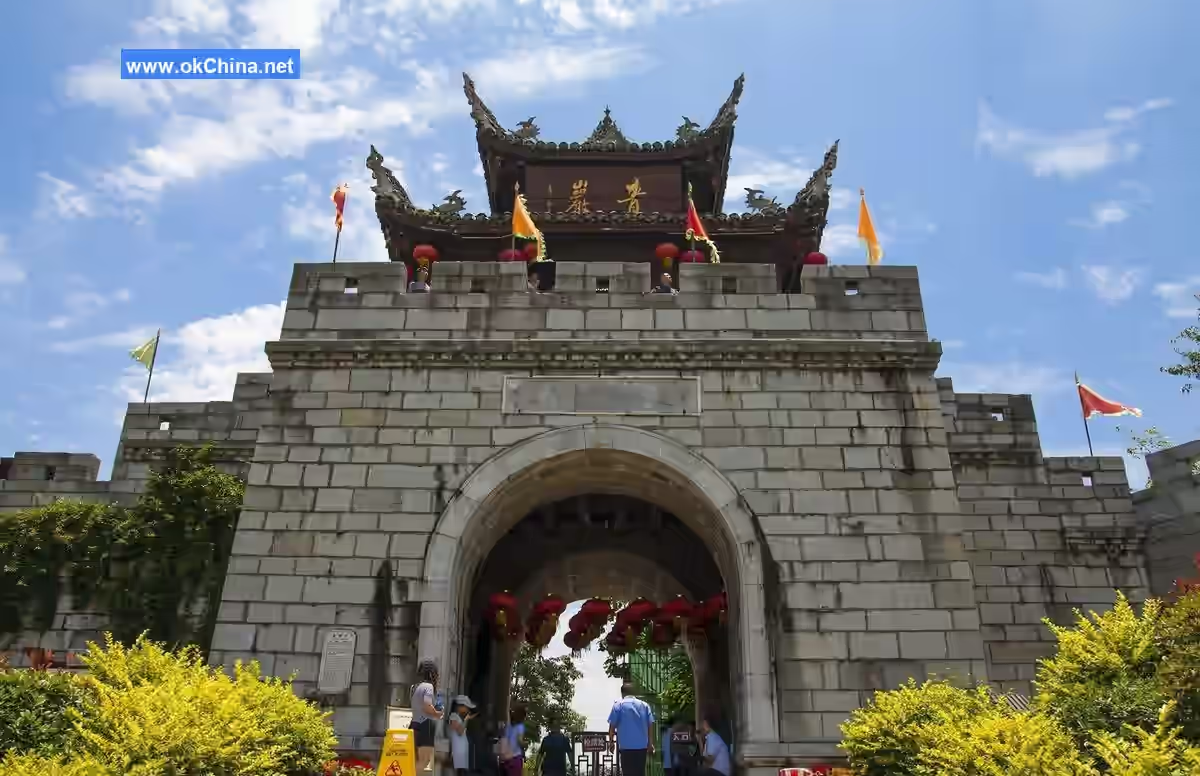
The city wall of Qingyan Ancient Town winds along the mountain ridges, stretching for about two kilometers. Several of its gates have disappeared over time, leaving only the Dingguang Gate standing tall on the hilltop. The Dingguang Gate was a crucial pass connecting Guiyang to Dingfan (present-day Huishui) and Guangshun (now part of Changshun), controlling Guiyang's grain supply route. In the past, it was said, "If grain does not arrive within three days, the provincial capital will face famine." Ascending the stone steps, one finds the imposing and lofty gate tower. The ancient post road remains faintly visible, meandering and undulating through the fields.
2.2.4 Elephant Trunk Wood Carvings
Elephant trunk wood carvings are commonly seen in the residential houses of Qingyan Ancient Town. They are mostly used on the cantilevered purlins under the eaves, which bear structural weight. Carving them into the shape of an elephant trunk undoubtedly symbolizes strength. The pillars in Qingyan's houses have cross-sections that are round, square, or square with chamfered edges. Round and square ones are called round pillars and square pillars, respectively, while those with chamfered edges are known as "sesame pillars" because their shape resembles sesame stalks. Besides their aesthetic lines, "sesame pillars" also reflect the traditional cultural mindset of wishing for "many children and much happiness" and "steady advancement."
2.2.5 Chaomen (Ceremonial Gates)
Chaomen are often decorated with hanging floral carvings. Some feature intricately carved pillars and plinths on the lintel, imitating stone structures with a highly realistic appearance. In front of some Chaomen or main gates, bluestone slabs are laid, carved with patterns of bats, ancient coins, ginkgo nuts, carp, etc., symbolizing auspicious meanings such as "encountering blessings upon opening the door," "encountering wealth upon opening the door," "encountering sons upon opening the door," "surplus year after year," and "the carp leaping over the dragon gate." The exterior decorations of Qingyan's houses do not appear particularly luxurious or eye-catching, reflecting to some extent the traditional merchant philosophy of "not flaunting wealth." However, upon closer inspection, these decorations are rich in cultural connotations, akin to an ancient book full of depth. Wood carvings of pomegranates, gourds, sunflowers, etc., on the door frames, door studs, and lintels symbolize both "many children" and "abundant happiness," both of which are highly desired. Many wealthy families used the front courtyard as shops, the rear courtyard as living quarters, and the side wings as studies. The window carvings in studies often feature ice crack patterns, symbolizing the need to endure years of hard study before achieving success and prosperity.
2.2.6 Double-Eave Overhanging Gable Roof Style
The double-eave overhanging gable roof style represents a clever combination of bionics (inspired by the human body) and commercial needs. At first glance, the residential houses in Qingyan Ancient Town do not differ significantly from other Ming and Qing architecture, with their gray tiles, stone walls, and ancient, weathered appearance. However, upon closer inspection, they possess distinct personality and regional characteristics. Guizhou is often described as having "no three consecutive sunny days." To avoid business interruptions during rain, shrewd merchants, through accumulated experience and lessons, developed the typical residential style of Qingyan. Houses with shopfronts are generally taller. A single eave could not withstand wind and rain, especially the wind-driven slanting rain, so an additional eave was added, effectively protecting the counters from even the heaviest downpours. Upon closer observation, the double eaves resemble human eyebrows and eyelashes: eyelashes protect the eyes, while eyebrows serve a decorative function. This bionic-inspired commercial residential architecture fully embodies the wisdom and innovative spirit of the ancient town's laborers. This unique, multifunctional residential architecture, applying principles of human bionics, is rare even on a national scale.
2.2.7 Yaomen (Waist Gates)
Many houses in Qingyan feature Yaomen (waist gates), and their door frames and handles are quite intricate. The upper door frames of many houses are deliberately carved into shapes like peaches, Ruyi (scepters), tiger heads, or ox horns. Handles are sometimes made into shapes like gourds, pomegranates, auspicious clouds, or Ruyi. The large door studs, commonly called "door hammers," may be carved with the Qian (Heaven) and Kun (Earth) trigrams or with peonies and sunflowers. The door lintels are carved with patterns of peaches, pomegranates, auspicious clouds, Ruyi, or dragons and phoenixes, earning them the reputation of "door dragons."
2.2.8 Window Carvings
Wood carvings of pomegranates, gourds, sunflowers, etc., on door frames, door studs, and lintels symbolize both "many children" and "abundant happiness," both of which are highly desired. Patterns like Ruyi, peonies, auspicious clouds, dragons, and phoenixes are all traditional cultural auspicious symbols, long favored by the people. The window carvings in Qingyan are also exquisite. Besides common patterns symbolizing fortune, prosperity, longevity, happiness, farming, study, fishing, and woodcutting, there are also designs of dragons, phoenixes, lions, and elephants. Many wealthy families used the front courtyard as shops, the rear courtyard as living quarters, and the side wings as studies. The window carvings in studies often feature ice crack patterns, symbolizing the need to endure years of hard study before achieving success and prosperity. The bracket arms (chenggong) in Qingyan houses are sometimes carved into bat or butterfly shapes. In Han culture, bats and butterflies often represent "fortune" (fu), with butterflies even symbolizing "longevity" (shou). The Chinese word for butterfly (die) is a homophone for "octogenarian" (耋). Living to one's eighties or nineties (maodie zhinian) undoubtedly signifies being a venerable elder. (Note: The original text ends abruptly here regarding wooden pillars; translation follows the provided text.)
3. Main Attractions
3.1 Overview
The tourism resources of Qingyan Ancient Town Scenic Area cover 21 out of the 31 subtypes across all 8 main categories of tourism resources, encompassing 51 out of 155 basic types. It boasts a large number of individual tourism resource units, making it a theme-focused and distinctive tourist destination. The scenic area maintains good integrity, with well-preserved Ming and Qing architecture, cultural relics, attractions, shops, overall layout, and street style, presenting a unified architectural style and layout.
Qingyan Ancient Town has 4 main streets and 26 small streets and alleys, dotted with numerous historical sites including towers, terraces, pavilions, temples, palaces, ancestral halls, pagodas, and courtyards. Within the 3-square-kilometer area of the ancient town, there are nearly a hundred cultural relic sites. These can be summarized as follows: one palace (Wanshou Palace), two ancestral halls (Ban Lingui Chieftain Ancestral Hall, Zhao Guoshu Ancestral Hall), five pavilions/pagodas (Kuiguang Pavilion, Wenchang Pavilion, Yunlong Pavilion, Sangong Pavilion, Yuhuang Pavilion), eight temples (Sun Bin Temple, God of Wealth Temple, Fire God Temple, Black God Temple, Medicine King Temple, Thunder God Temple, Chuanzhu Temple, Dongyue Temple), nine monasteries (Jiuquan Monastery, Ciyun Monastery, Huanyin Monastery, Chaoyang Monastery, Shoufu Monastery, Yuantong Monastery, Yingxiang Monastery, Fenghuang Monastery, Lianhua Monastery), as well as Qingyan Academy, Zhuangyuan Mansion (Top Scholar's Residence), Shuixing Tower, former residences of notable figures, stone memorial archways, etc. The comprehensive tourism service area includes a racetrack, a performing arts center, an ancient town style street, and characteristic inns, adding a modern touch to the ancient town.
3.2 Memorial Archways
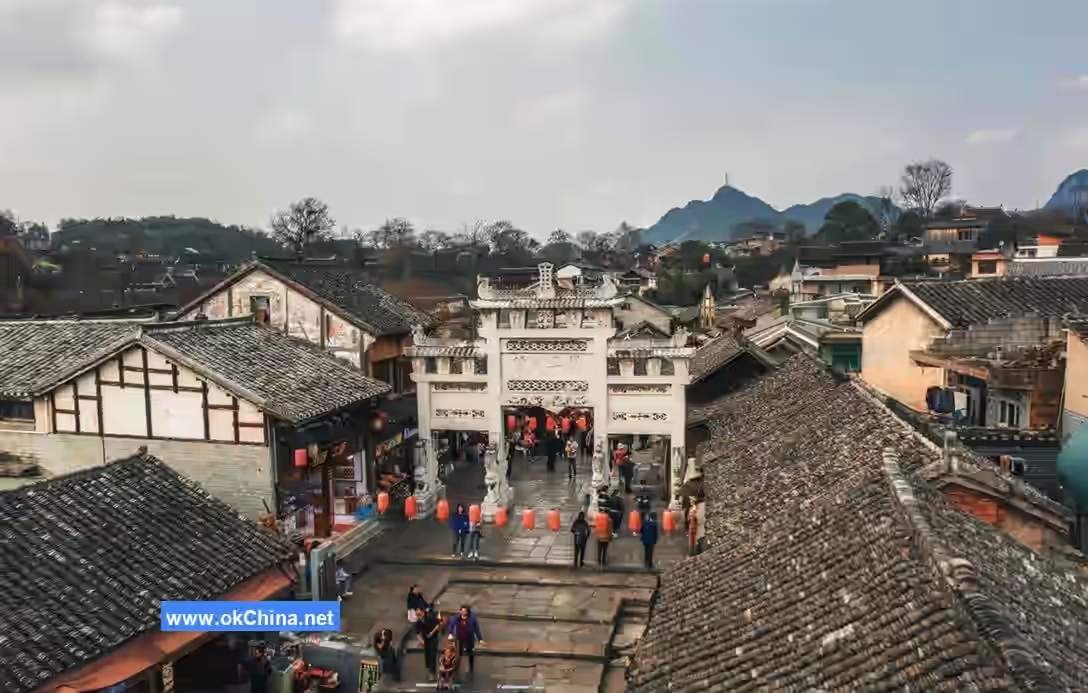
Originally, there were eight memorial archways spanning the flagstone-paved main streets in Qingyan Ancient Town. Today, only two Centenarian Archways and one Chastity Archway remain. The Zhao Lilun Centenarian Archway inside the Dingguang Gate was built by imperial decree in the 23rd year of the Daoguang reign (1843). It is a stone archway with four pillars, three bays, three stories, and a hipped roof, standing 9.5 meters high and about 9 meters wide. The exquisitely carved stone archway appears ethereal against the blue sky and white clouds. The central horizontal plaque bears inscriptions by Emperor Daoguang: on the front, "Seven Generations of Auspiciousness" (Qi Ye Yan Xiang), and on the back, "Longevity in Times of Peace" (Sheng Ping Ren Rui), with the characters "Qin Ci" (Bestowed by Imperial Decree) above. The four pairs of stone lions flanking the pillars are extraordinary; they are neither standing, lying, nor crouching. The eight lions appear as if swooping down from a high mountain, full of spirit.### 3.3 Wanshou Palace Wanshou Palace, also known as the Jiangxi Guild Hall, is dedicated to the True Lord Xu Xun of the Eastern Jin Dynasty. Xu Xun, a Hakka from Nanchang, Jiangxi, was born in the second year of the Chiwu era of the Wu Kingdom (239 AD). He studied Taoism in his youth and gained a reputation for his virtue, leading to his recommendation as a Xiaolian (a candidate for officialdom). He once served as the magistrate of Jingyang in Shu Commandery, advocating loyalty and filial piety and benefiting the people. After retiring into seclusion, he managed the flood control of Poyang Lake, protecting the local populace, who revered him as a deity. After his ascension to immortality, a shrine was built in his hometown (present-day Xiaoyao Mountain in Xinjian District, Nanchang City) to worship him. During the Northern and Southern Dynasties, the Xu Xun Shrine was renamed Youwei Guan. During the reign of Emperor Zhenzong of the Song Dynasty, it was renamed Yulong Palace, and under Emperor Huizong of Song, it became Yulong Wanshou Palace, abbreviated as "Wanshou Palace." Emperor Huizong, a devout Taoist, conferred upon Xu Xun the title "True Lord of Divine Merit and Wondrous Aid." Later generations respectfully called him "True Lord Xu." Wanshou Palace gradually became a cultural bond integrating native Jiangxi people and Hakka settlers, evolving into a vessel of faith for Jiangxi people. After the Ming and Qing dynasties, Jiangxi migrants built Wanshou Palaces across the country, with records indicating approximately over 1,400 such structures. Wherever there were Jiangxi people, there was a Wanshou Palace. In distant lands, Wanshou Palace served as a fellow townsmen's association for Jiangxi natives and a business club for Jiangxi merchants. They used the guild hall as a rallying point, uniting as one to seek common development. During its peak, it also engaged in charitable and public welfare endeavors, possessing strong cohesion, pioneering spirit, and economic driving force. The Wanshou Palace in Qingyan is a vast architectural complex, comprising a main hall, side halls, wing rooms, and an opera tower. Jiangxi people often gathered here to drink, watch operas, discuss business, and foster connections, hence its nickname "Wine and Opera Stage." The relief sculpture of the "Eight Immortals" on the memorial archway at the entrance reflects the merchants' competitive spirit, akin to "the Eight Immortals crossing the sea, each showing their divine powers." However, Wanshou Palace's "Eight Immortals" secretly became "Nine Immortals"—with the addition of the True Man Xu.
3.4 Zhuangyuan Mansion
Zhuangyuan Mansion is the former residence of Zhao Yijiong, the first literary Zhuangyuan (top scholar in the imperial examinations) from Guizhou. It is located at No. 1 Zhuangyuan Street in the town, where Zhuangyuan Street meets North Street. The southern section is called "Xiayuan Street," and it is relatively easy to find with directional signs on the main North Street. A simple couplet adorns the main gate: "Qin and He (representing elegance) compose aspirations; The Analects pass down the family," revealing the lifelong ambitions of its owner. The mansion faces south with its back to the north and consists of two consecutive siheyuan (courtyard houses), each with a main hall flanked by two wings. Built in the Xieshan style, it covers a total area of approximately 700 square meters. The existing structures include the front hall, main hall, wing rooms, and the ceremonial gate. On the inner wall of the ceremonial gate are remnants of various forms of the Chinese character for "longevity" (寿), said to be left by Zhao Yijiong's great-great-grandfather, Zhao Lilun, on his hundredth birthday. The building is primarily wooden in structure, imposing yet understated, tranquil and serene, exuding an air of scholarly refinement.
3.5 Ciyun Temple
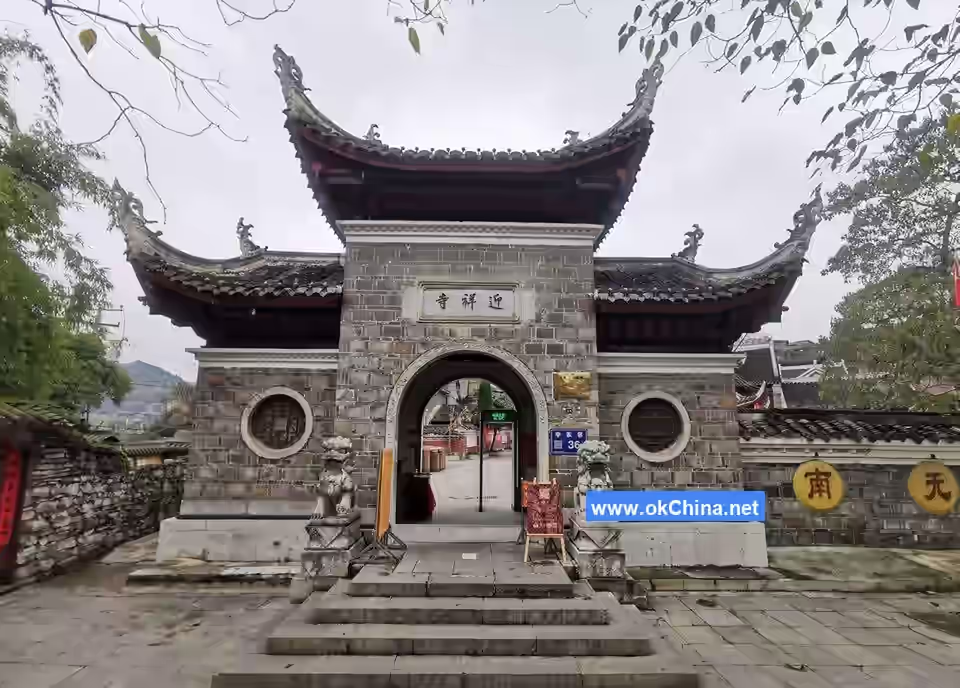
Ciyun Temple is located at No. 5 North Street. It was initially built during the Kangxi period of the Qing Dynasty and rebuilt in the 12th year of the Daoguang era (1832 AD), covering a total area of nearly 2,000 square meters. Legend has it that it was donated and built by the Wu family from West Street. The entire architectural framework remains well-preserved, with many stone column bases considered masterpieces of stone carving art among those in Guiyang City.
3.6 North City Gate
The North City Gate, also known as Xuanwu Gate, is a wooden structure with a double-eave Xieshan-style roof, featuring a gray tile surface and clay ridge decorations. It was the site where imperial edicts from the emperor were proclaimed by imperial envoys in ancient times. Initially built during the Tianqi era of the Ming Dynasty (1621–1624 AD), the earthen city wall was rebuilt into a stone wall in the 17th year of the Shunzhi era of the Qing Dynasty (1660 AD) by Ban Yinghou, son of Ban Lingui, who inherited his father's position as Tusi (local chieftain). It was further renovated and expanded in the 3rd year of the Jiaqing era of the Qing Dynasty (1789 AD) by the military Juren (provincial graduate) Yuan Dapeng. It is one of the symbols of the ancient town of Qingyan.
3.7 Wenchang Pavilion
Wenchang Pavilion is located at No. 143 East Street, covering an area of over 800 square meters. Built during the Wanli period of the Ming Dynasty and renovated during the Qianlong era of the Qing Dynasty, it is a brick-and-wood structure built against a mountain, featuring an octagonal design with multiple eaves and upturned corners. It was a place where scholars of old often went to study, gather, and worship the Deity Wenchang.
3.8 Zhao Gong Memorial Temple
Zhao Gong Memorial Temple is located on South Street, Qingyan Town, Huaxi District, Guiyang City. Built during the Tongzhi period of the Qing Dynasty, it was originally the memorial temple dedicated to Zhao Guoshu (courtesy name Weisān), the head of the Qingyan local militia. The temple covers an area of 1,600 square meters, with a building area of 920 square meters, consisting of a mountain gate, passageway, entrance hall, wing rooms, and a main hall. In the 2nd year of the Tongzhi era (1863 AD), Zhao Guoshu died in battle while attacking the Deng Hua Sect led by He Desheng. The Qing court posthumously honored him as the Minister of the Court of Imperial Sacrifices, awarded him the title of Qiduwei (a military rank), granted hereditary privileges, and decreed the construction of Zhao Gong Memorial Temple. The temple was renovated in 2001 and was announced as a municipal-level cultural relics protection unit of Guiyang City in 2003.
3.9 Shoufu Temple
Shoufu Temple, also known as the Hunan Guild Hall, was built in the 9th year of the Daoguang era of the Qing Dynasty (1829 AD). It is a two-courtyard complex with a mountain gate, opera tower, wing rooms, main hall, and rear hall. The "Two Dragons Playing with a Pearl" on the opera stage, together with the two ancient osmanthus trees in front of the hall, form the profound寓意 of "Two Dragons Playing with a Pearl, Dragon and Phoenix Double Nobility." It is a provincial-level cultural protection unit. In 2000, Shoufu Temple was restored, and the adjacent Sun Bin Temple was incorporated into its premises.
3.10 Yingxiang Temple
Yingxiang Temple is one of the ancient temples in Guiyang, initially built in the first year of the Tianqi era of the Ming Dynasty (1621 AD) and known as the "Ancestral Temple of Qian Mountain." The temple has three main halls: the Hall of Heavenly Kings at the front, the Mahavira Hall in the middle, and the Guanyin Hall at the back. Interestingly, upstairs in the Guanyin Hall sits a "Doumu" (Mother of the Big Dipper) with three eyes, four heads, and eight arms. Because Buddhism and Taoism coexist here, locals often refer to Yingxiang Temple as Doumu Pavilion.
3.11 Former Residences of Notable Figures
During the War of Resistance against Japan, Qingyan's city walls remained intact, its four gates stood firm, and its remote location provided safety,接纳 many "refugees." The Guiyang Transportation Station of the Eighth Route Army established a safe house in Qingyan,疏散 many family members of revolutionary cadres here. The fathers of Zhou Enlai, the mother of Deng Yingchao, and the families of Li Kenong and Bogu (Qin Bangxian) all once lived in Qingyan.
- Former Residence of Li Kenong's Relatives: Located at No. 10 North Street, Qingyan Town, relatives of Li Kenong and other CPC leaders lived here from 1939 to 1941. It remains a private residence.
- Former Residence of Deng Yingchao's Mother: Located at No. 75 South Street, Ms. Yang Zhende, mother of Deng Yingchao, lived here from 1939 to 1941. It remains a private residence operating a fast-food business.
- Former Residence of Premier Zhou Enlai's Father: Located at No. 2 Back Street, Qingyan, Zhou Maochen, father of Zhou Enlai, lived here from 1939 to 1941. It is now open to the public.
- Zhang Mansion: Originally the residence of Zhang Shangqin, a chamberlain to Chiang Kai-shek, and his brother Zhang Shangquan, it is a typical Qingyan residential building from the Republican era. The site features distinct levels and well-arranged高低错落. After restoration, the Zhang Mansion will showcase authentic mansion culture, becoming a window and base for displaying Guizhou's intangible cultural heritage, folk culture performances, intangible cultural products, and handicraft skills.
4. History and Culture
4.1 Folk Customs
The annual dragon dances and lantern dances during the first lunar month, the Miao ethnic group's "Tiaochang" (field dancing) from the 9th to the 20th day of the first month, the dragon and lantern activities on the 15th day of the first month, the "You Baibing" (strolling to dispel ailments) on the 5th day of the fifth lunar month, and the Guanyin gatherings on the 19th day of the second and ninth lunar months, among others, are all very lively occasions.
4.2 Releasing "Kongming Lanterns"
Kongming Lanterns are generally released after the "Baoding" fireworks display. The lantern shade is cylindrical, about five feet high, with a sealed top, resembling a large inverted basket. The bottom of the shade is pasted onto a circular bamboo hoop about three feet in diameter. A cross-shaped fine iron wire frame is tied onto the hoop, with a paper wick soaked in rapeseed oil bound at its center. To release the lantern, a bundle of straw is first burned to let the hot air inflate the soft, long shade. Then the wick is lit to maintain the heat of the air inside the shade.
4.3 Releasing "Water Rats"
"Water Rats" are specially made small fireworks set off on water, generally燃放 during festivals. They are made by rolling and pasting layers of straw paper, then painting eyes, whiskers, ears, etc., with various colors. Finally, the rat's body is sealed with paraffin wax. Inside are two layers of gunpowder and one layer of隔药 (a separating agent), connected sequentially by a fuse. When燃放, a calm and wide water surface is chosen. The ignited Water Rat is placed on the water, where it will一会儿 dive underwater and一会儿浮出水面, resembling a lively real rat, which is very amusing.
4.4 Releasing "Baoding"
Releasing "Baoding," also called "releasing盆景 (penjing)." Baoding is a large fireworks body, typically set off on the evening of the 15th day of the first lunar month after the "lighting of the lanterns." The "Baoding" in Qingyan is about six feet high and three feet in diameter, with a cylindrical lower part and a conical upper part. Its frame is woven from bamboo strips and covered with white tissue paper. Inside, various fireworks and figures or shapes of birds and beasts are installed in sequence, including "rockets," "dripping flowers," "earth beetles," "spark tubes," and various "fireworks" similar to today's magic shells. The content of the shapes is based on stories popular in different regions. Qingyan's include images from ancient operas such as "The Heavenly Maiden Scatters Flowers," "The Legend of the White Snake," and "The Eighteen Farewells." A main fuse connects all the firework devices and layered shapes inside the Baoding in sequence. Simultaneously, the喷出的焰火 include countless shimmering "golden flowers and silver pillars" shooting into the sky; "ground mice" leaping out of the鼎盖, "hopping活蹦乱跳" among the crowd, scurrying everywhere; "rockets" shooting嗖嗖地 one after another into the firmament, like一道道流星 trailing fire划破天空;无数条 "fire dragons" dancing in the air; "dripping flowers"撒下无数闪亮的 "pearls" with a滴滴嗒嗒 sound. Finally, auspicious banners such as "Bumper Harvest of the Five Grains" and "The Country is Prosperous and the People are at Peace" appear, symbolizing the people's美好愿望.### 4.5 Folk Legends The Legend of the Qingyan Dragon. In those days, the mountain near the Black God Temple in the southwest of Qingyan was lush with catalpa trees. Around the Dragon Pavilion next to the Qiantao Road, there were even more forests of Keteleeria. The town's market square was broad and fine. High city walls, numerous temples and halls—Wanshou Palace, Shoufu Temple, Longquan Temple, Catholic Church, and others. The dragon's head was in the river at the foot of the mountain below the Yinglong Pavilion, accompanied by many fish as large as door planks. The dragon's tail was on the mountain of the Black God Temple, where its scales could still be seen. The dragon's body stretched underground beneath the market square. In the center of the stone-paved square stood a tall brick pagoda, with a pool in front of it. Beneath this pagoda and pool, used for burning paper offerings, lay the dragon's waist. It is said that underneath, there was also a large iron cauldron, upon which stood a large rooster, guarding the dragon's body. If the dragon's waist were to twist, it would cause a great flood. The large rooster would peck it fiercely, and the dragon's body would remain still, ensuring Qingyan City's safety from flooding.
4.6 Military Significance
The importance of Qingyan's military position stemmed from Guiyang's location amidst the southwestern provinces, with extremely crucial terrain and strategic value. During the Ming Dynasty's northern campaigns to the south and the Ming and Qing policy of replacing native chieftains with state-appointed officials, Guiyang was always secured first. The History of Ming·Biographies of Guizhou Chieftains records Zhu Yuanzhang's edict: "If we cannot fully subdue the likes of Aicui, even if we hold Yunnan, we cannot defend it," indicating his focus was already on Guizhou. During the Yongzheng reign of the Qing Dynasty, Ertai, the Governor-General of Yunnan, Guizhou, and Guangxi, petitioned that implementing the policy of replacing native chieftains must first pacify Guiyang to achieve control over the strategic throat of the southwest.
4.7 Industry Competition
In the early Ming Dynasty, a group of garrison troops from "migrating to consolidate the frontiers" moved from Jiangnan, Jiangxi, and Huguang and established Qingyan Fort, Yangmei Fort, Yuqing Fort, and Baituo Fort in the ancient town of Qingyan. Because Qingyan was located on a vital transportation route, commerce flourished from the Qing Dynasty onward, transforming it from a military garrison into a commercial market town. People from all walks of life made their living here, each with their own崇尚. Soldiers崇尚martial prowess and built the Black God Temple; scholars崇尚culture and built the Wenchang Pavilion; merchants particularly valued the Temple of the God of Wealth; doctors and medicine sellers especially revered the Medicine King... Commerce attracted merchants from other regions. They came in groups, forming guildhalls based on "native-place ties." People from the same region supported each other, sought共同development, controlled certain industries, and competed with merchants from other regions.
4.8 Religious Culture
Confucianism, Taoism, and Buddhism all flourished in the ancient town of Qingyan. A "town of a thousand households" surprisingly had "nine temples, eight shrines, and five pavilions," filled with a cultural atmosphere. In modern times, Catholicism and Christianity were introduced, and new-style schools were established. With the arrival of garrison troops, Confucianism was传播进来, and people upheld "farming and studying to maintain the family." The major surnames Li, Zhao, and Zhang jointly established the Qingyan Academy (now Qingyan Primary School) and set up a "charity school" with free admission within the Chaoyang Temple. There were dozens of private schools in Qingyan City, and the sound of reading could be heard everywhere. Chan monks and various masters came捧钵而来, building Fenghuang Temple, Longquan Temple, Yingxiang Temple, Ciyun Temple, Shoufo Temple, Chaoyang Temple, Guanyin Temple, Yuantong Temple, and Lianhua Temple in Qingyan. Taoist practitioners traveled here, finding a "cave heaven and blessed land," and thus built the "eight shrines and five pavilions." Dongyue Temple, Sun Bin Temple, Black God Temple, Thunder God Temple, Fire God Temple, God of Wealth Temple, Medicine King Temple, and Chuanzu Temple were collectively called the "Eight Shrines." Yuhuang Pavilion, Ziguang Pavilion, Doumu Pavilion, Wenchang Pavilion, and Yunlong Pavilion constituted the "Five Pavilions." The Wenchang Pavilion is a symbol of崇尚culture,供奉the celestial Wenchang Star (God of Literature) in hopes of achieving success in imperial examinations. Beside Wenchang Jun stand two attendants, one called "Deaf from Heaven" and the other "Mute from Earth." This is because celestial secrets must not be泄露, so the attendants must be deaf and mute. During the Xianfeng reign of the Qing Dynasty, Catholicism spread to Guiyang. A minor seminary was established at the Guiyang Catholic Church. In the sixth year of Xianfeng (1856), the French missionary Louis Faurie built a major seminary at Yaojiaguan in Qingyan, named St. Peter's Major Seminary. This was the first major seminary established by Catholicism in Guizhou and is also the site of the "Qingyan Missionary Case." During the Republic of China period, Christian organizations like the "China Inland Mission," "Gospel Hall," and "Seventh-day Adventist Church" successively conducted missionary work in Qingyan.
4.9 Connection with Zhejiang University
After the full outbreak of the War of Resistance Against Japan, at the end of the 28th year of the Republic of China (1939), Zhejiang University relocated westward to Guizhou. Under the leadership of then-president Zhu Kezhen, while most teachers and students moved to Zunyi and Meitan, the freshman year and preparatory classes were set up in the ancient town of Qingyan. Classrooms, the library, and offices were located in Longquan Temple; students lived in Ciyun Temple; additionally, practice grounds and faculty housing were分别设在Yuantong Temple and the Black God Temple. This area was a blind spot for Japanese bomber planes, protecting the safety of teachers, students, and teaching facilities.
4.10 Postal Culture
The first "Agency Postal Office" in Chinese history was established in the ancient town of Qingyan. In the 14th year of the Guangxu reign of the Qing Dynasty (1888), Su Kang from Qingyan opened an "Agency Postal Office." According to historical research, it is the earliest discovered first private "Agency Postal Office" in Chinese history, predating China's earliest official postal service by eight years. Until the 28th year of the Republic of China (1939), when the "Agency Postal Office" was transformed into an official postal service, the "Agency Post Office" was continuously operated by the Wang family of Qingyan without interruption. This promoted the development of the ancient town's commercial trade, making it a hub for transmitting important information from all directions, and was recorded in the annals of China's postal development. The precious plaque of the "Agency Post Office" is now珍藏in the Beijing China Post Museum.
4.11 Film and Television Culture
Qingyan is the filming location for the movie The Missing Gun, directed by Lu Chuan and starring Jiang Wen. It was Jiang Wen who recommended Guiyang, as he spent his elementary school years here. While reading the script, the奇山异水和阴郁天空of the area near Huaxi, Guiyang repeatedly契合into the story. After on-site comparisons, the film crew found that the ancient-style streets, the audible yet relatively lonely human interactions of chickens and dogs, and many other天然质素gave the story a strong sense of belonging and could capture the feeling of a "nightmare."
5. Historical Evolution
Qingyan Ancient Town was a military stronghold during the Ming and Qing dynasties. In the 6th year of Hongwu of the Ming Dynasty (1373), because Qingyan was located on the main post road midway to Guiyang from Guangxi, a postal station and garrison pond were established, with troops stationed and a屯built at the foot of Twin Lion Peak, historically known as Qingyan屯. In the 14th year of Hongwu of the Ming Dynasty (1381), Zhu Yuanzhang dispatched a large army to expedition to Yunnan and Guizhou. After stationing troops and farming in the hinterland of central Guizhou, Qingyan屯gradually developed into Qingyan Fort, where soldiers and civilians lived together. From the 4th to the 7th year of Tianqi of the Ming Dynasty (1624–1627), the Bouyei chieftain Ban Lingui built the Qingyan earthen city, the雏形of today's Qingyan City. Over the following centuries,经过多次修筑扩建, the earthen city walls were replaced with stone砌walls, featuring four city gates: east, west, south, and north. The south and north gates remain extant.
Comments
Post a Comment