Qingtongxia Yellow River Grand Canyon Tourist Area, Wuzhong City
I. Introduction
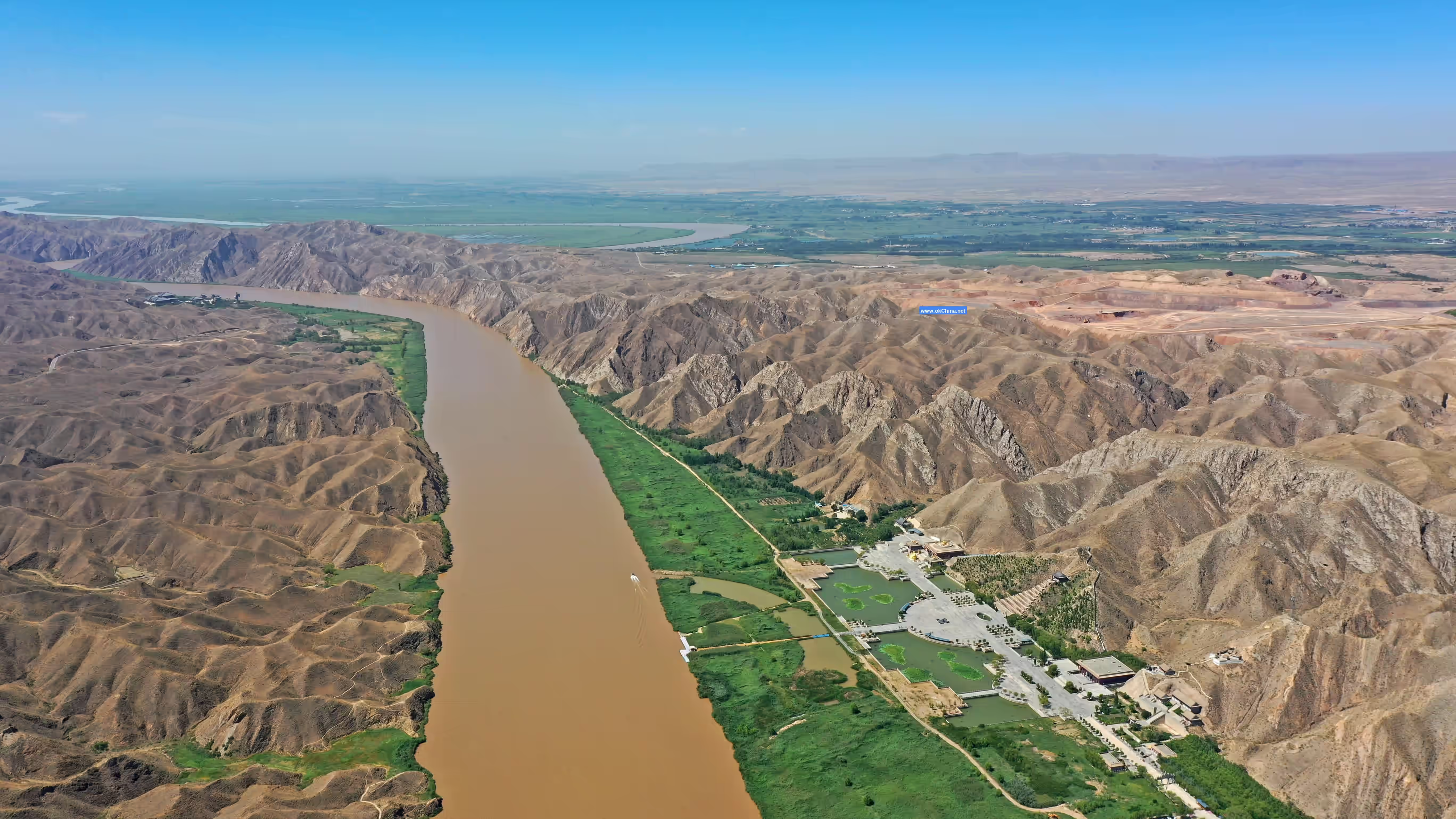
The Qingtongxia Yellow River Grand Canyon Tourist Area, Wuzhong City, commonly referred to as the Qingtongxia Yellow River Grand Canyon Tourist Area, is located in Qingtongxia Town, Qingtongxia City, Wuzhong City, Ningxia Hui Autonomous Region, with a total area of 126 square kilometers.
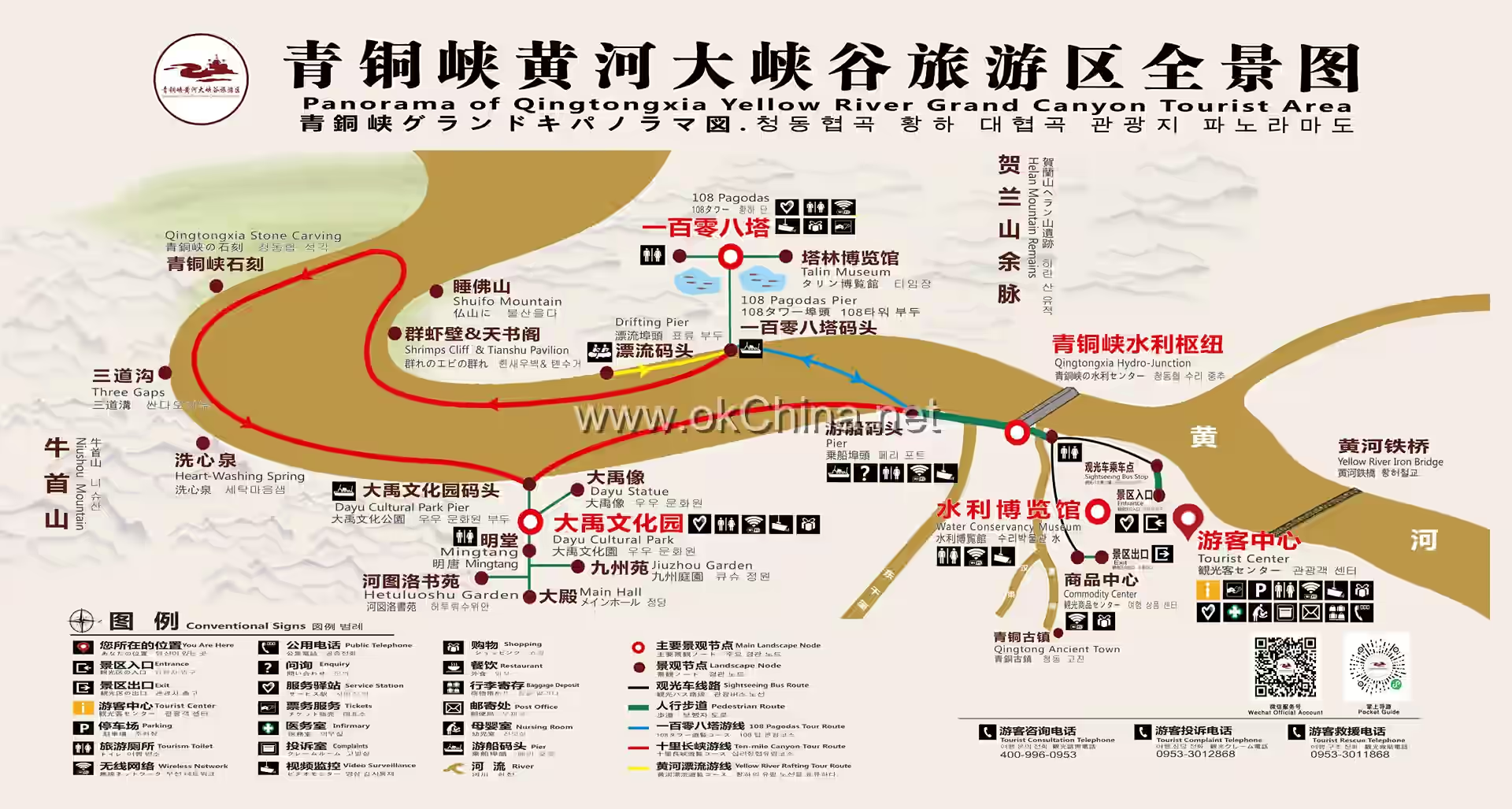
Centered around the Yellow River, the Qingtongxia Yellow River Grand Canyon Tourist Area leverages high-quality resources such as the river, canyon, pagodas, temples, mountains, wetlands, ancient roads, and ancient towns. With Yellow River culture as its theme and incorporating local folk customs, the scenic area showcases a diverse cultural character. It is divided into six functional zones: the Entrance Area, the Ancient Canyon Sightseeing Area, the Yellow River Altar Cultural Experience Area, the Jinshawan Ecological Agriculture Sightseeing and Leisure Resort Area, the Reservoir Bird Island Wetland Sightseeing and Entertainment Area, and the Niushou Mountain Religious and Folk Culture Experience Area.
II. Orientation and Layout
Geographical Location
The Qingtongxia Yellow River Grand Canyon Tourist Area is situated in the central part of the Ningxia Plain. Its approximate geographical coordinates are 105°50′–106°37′ east longitude and 37°36′–38°15′ north latitude. It borders Yinchuan City to the north, Zhongwei City to the south, the Helan Mountains to the west, and faces the Ordos Plateau to the east. The Yellow River flows through the area. Its unique geographical position makes it an important transportation hub and tourism node connecting northern and southern Ningxia, as well as linking the eastern and western regions.
Climate and Hydrology
The region experiences a mid-temperate continental monsoon climate with four distinct seasons. Spring sees a rapid temperature rise but is often windy. Summers are hot with relatively concentrated precipitation, including heavy rainstorms, leading to a rise in the Yellow River's water level. Autumn is characterized by clear, crisp skies and pleasant weather, making it the golden season for tourism. Winters are cold and dry, sometimes experiencing severe cold spells. As the core hydrological element of the tourist area, the Yellow River rushes through the canyon with turbulent, abundant water. Its substantial annual runoff provides rich water resources for the surrounding areas and has shaped the canyon's unique geomorphological landscape.
Flora and Fauna Resources
Within the Qingtongxia Yellow River Grand Canyon Tourist Area, a variety of plants thrive. Along the Yellow River banks, vast reed marshes sway in the wind, creating a distinctive wetland landscape. Additionally, common trees such as poplars and willows add a touch of green to the riverbanks. On some slopes, drought-tolerant herbaceous plants and shrubs grow, such as Caragana korshinskii and sea buckthorn. Regarding animal resources, the Yellow River is home to various fish species, including carp and crucian carp, which are not only vital components of the Yellow River ecosystem but also provide resources for local fisheries. In the riverbank wetlands and surrounding woodlands, birds are frequently seen, including waterfowl like egrets and grey cranes, as well as common birds like sparrows and magpies. They forage, roost, and breed here, adding vitality and dynamism to the scenic area.
III. Key Scenic Areas
Qingtongxia Water Control Project
Attraction Highlights: The dam itself is majestic and imposing, with a solid and stable structure resembling a massive barrier holding back the surging Yellow River waters. The main body of the dam is constructed of poured concrete, presenting a stern gray-white hue that gleams with a metallic sheen under sunlight. The dam is tall and thick, with a significant height difference from bottom to top. Looking down from the dam crest, the Yellow River forms a vast, calm lake surface upstream of the dam, contrasting sharply with the turbulent flow downstream. The dam crest is wide and flat, allowing for vehicle and pedestrian passage. Strolling along the crest, one can closely experience the dam's grand scale and the powerful force of the Yellow River's flow.
The Qingtongxia Water Control Project features complete and advanced engineering facilities. The massive turbines are its core power generation equipment, hidden within the dam. When the Yellow River rushes down, driving the turbine blades to rotate at high speed, hydraulic energy is converted into electricity, continuously transmitted to surrounding areas, providing strong power support for industrial and agricultural production and residential life. Additionally, the dam is equipped with comprehensive flood discharge facilities. During flood seasons, by reasonably regulating the opening of the floodgates, the Yellow River water level can be effectively controlled, ensuring flood safety in downstream areas. The design and construction of these engineering facilities fully reflect the advanced technical level and outstanding innovative capabilities of China in the field of hydraulic engineering at the time.
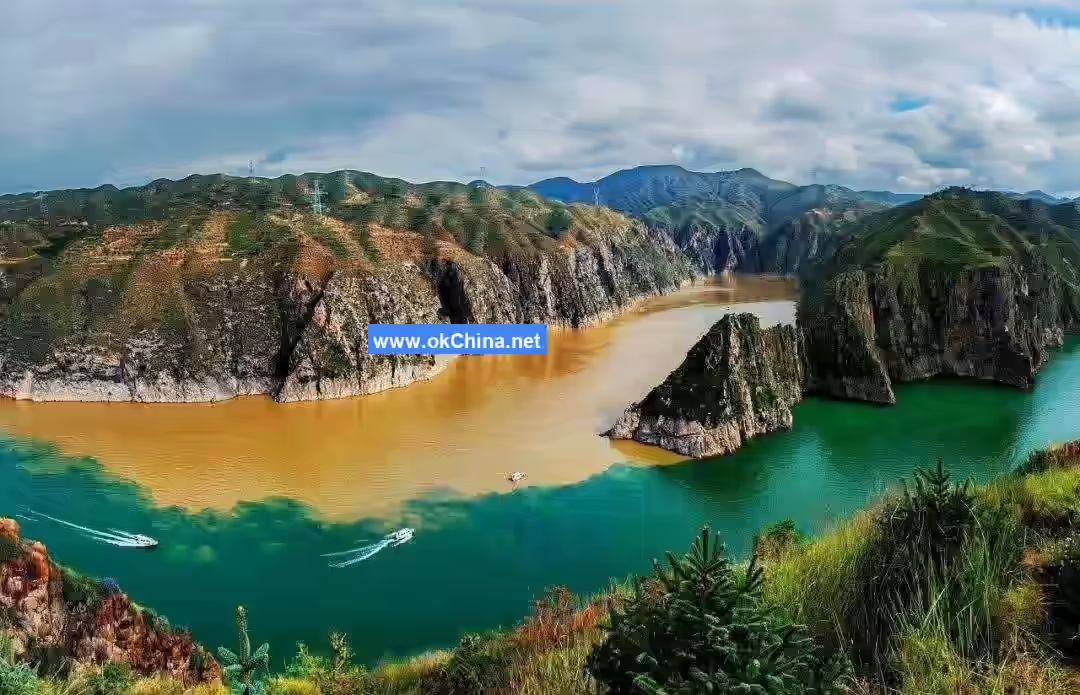
From the viewing platform, the vista is extremely broad, revealing starkly different Yellow River landscapes upstream and downstream of the dam. Upstream, due to the raised water level, a man-made lake has formed. The lake water is clear and emerald green, shimmering with ripples in the breeze. Occasionally, boats pass on the lake, breaking the calm surface and leaving trails of white ripples. Downstream, the Yellow River water surges out like ten thousand galloping horses. The immense flow impacts the riverbed, splashing high waves and producing a deafening roar, showcasing the untamed wildness and immense power of the Yellow River. This combination of stillness and motion, with its strong contrasts, allows visitors to deeply appreciate the Qingtongxia Water Control Project's regulatory effect on the Yellow River flow and its significant impact.
In the surrounding area of the water control project, there is a dedicated exhibition hall. Through diverse display methods such as models, pictures, textual introductions, and multimedia presentations, the hall provides visitors with detailed information about the construction process, engineering principles, comprehensive benefits, and important historical status of the Qingtongxia Water Control Project in China's hydraulic engineering development. Here, visitors can gain an in-depth understanding of how the builders overcame numerous difficulties to complete this great project under arduous conditions. The precious historical photos and accounts of the builders' deeds are deeply moving, inspiring respect for their wisdom, courage, and dedication. The Qingtongxia Water Control Project is not only a functional hydraulic engineering structure but also a vivid historical textbook and a patriotic education base, attracting numerous visitors to learn and experience the glorious achievements of China's modern hydraulic engineering construction.
One Hundred and Eight Pagodas
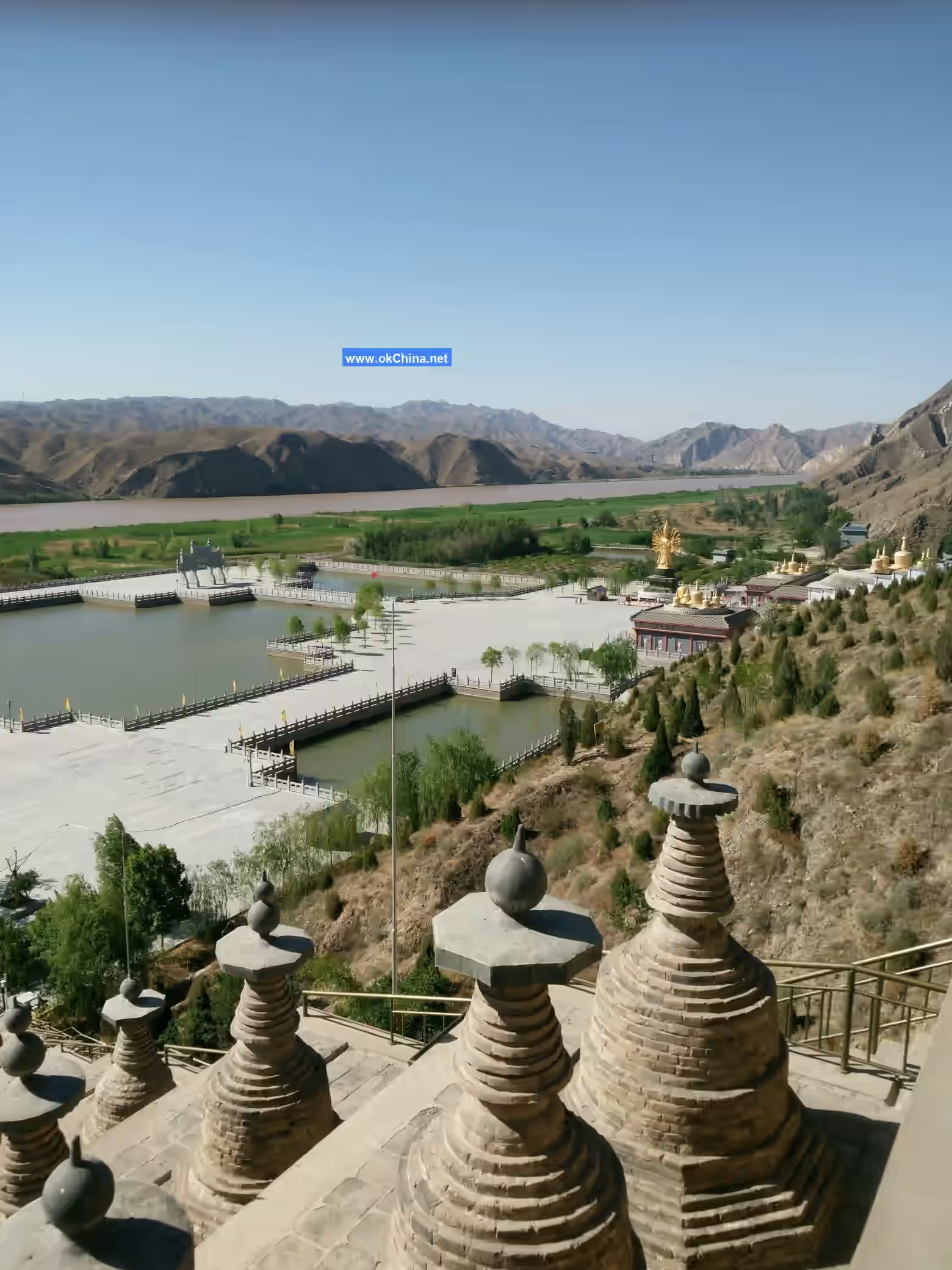
Attraction Highlights: These 108 lama pagodas are neatly arranged on a hillside, built according to the terrain from west to east. They are organized into twelve rows following an odd-number sequence of 1, 3, 3, 5, 5, 7, 9, 11, 13, 15, 17, 19, forming a grand isosceles triangular matrix. This unique layout not only provides a visually striking impact but also contains profound religious symbolism. It is said that 108 in Buddhism represents the 108 human afflictions, and by worshipping these pagodas, one can eliminate these afflictions and attain spiritual liberation and peace.
Each pagoda resembles an exquisite piece of art. The pagoda bodies are as white as snow, emitting a soft glow under sunlight. Their shapes are elegant and graceful, with bodies in the form of a precious vase, featuring smooth, natural lines that taper gradually from the base to the top, culminating in the finial. The finial typically consists of a canopy, rings, and a precious pearl, towering into the sky and pointing towards the heavens. The canopy resembles a magnificent umbrella, adding solemnity and dignity to the pagoda; the rings are layered, symbolizing the stages of Buddhist practice; and the precious pearl at the top shines brilliantly in the sunlight, as if reflecting the radiance of Buddhist wisdom.
The hillside environment where the pagoda group is located complements the pagodas, enhancing their mystery and solemnity. The surroundings consist of vast, boundless deserts and rolling hills, with the distant Yellow River rushing by. The sound of the surging water contrasts sharply with the tranquility of this pagoda forest. When a breeze passes, the pagoda bells tinkle softly. The clear, crisp sound of the bells echoes in the open expanse, resembling Buddhist chants traversing millennia, narrating past religious events and historical changes to visitors.
Approaching the pagoda forest, one is enveloped by an atmosphere of solemnity and reverence. Visitors can ascend slowly along the steps, weaving through the pagoda array, and carefully observe the architectural details of each pagoda. The carvings on the pagoda bodies are exquisite and delicate, some inscribed with Buddhist scriptures, others adorned with various auspicious patterns such as lotuses and the Eight Treasures. These carvings not only showcase the superb craftsmanship of ancient artisans but also convey Buddhist teachings and cultural connotations. Around the pagoda group, there are explanatory signs and rest areas where visitors can listen to guides recount the historical origins, religious significance, and related legends of the One Hundred and Eight Pagodas. This allows for a deeper understanding of the rich cultural connotations behind this pagoda forest, offering a spiritual cleansing and purification in this Buddhist pure land. Whether for religious and cultural enthusiasts or ordinary tourists, the One Hundred and Eight Pagodas are a tourist destination full of mysterious charm and cultural value.
Great Yu Cultural Park
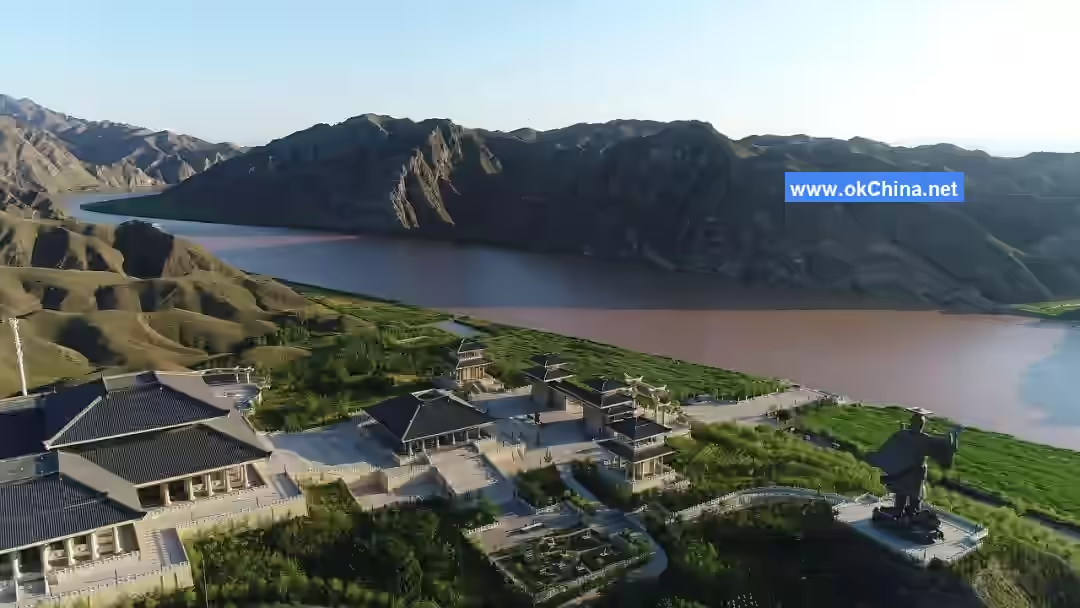
Attraction Highlights: Upon entering the Great Yu Cultural Park, the first sight that greets visitors is the towering statue of Great Yu, standing dozens of meters high. Great Yu stands tall and majestic, wearing a ceremonial crown with hanging beads and ancient attire, holding a leisi (an ancient farming tool). His gaze is steadfastly fixed on the Yellow River, as if he is still guarding this land and protecting the people on both banks from flood disasters. The statue's carving technique is exquisite and unparalleled, with every detail vividly rendered. Whether it is the resolute expression on Great Yu's face or the texture and folds of his clothing, all demonstrate an extremely high artistic standard, inspiring deep respect for this ancient hero.
The architectural layout within the park is rigorous and orderly, primarily in a simple yet elegant classical style. Proceeding along the central axis, various halls, pavilions, and stele corridors are distributed in sequence. The upturned eaves, bracket sets, carved beams, and painted rafters of these structures all showcase the charm of traditional Chinese architectural art. In the stele corridors, numerous calligraphic works by ancient and modern literati and poets, featuring poems and writings about Great Yu's flood control and Yellow River culture, are displayed. The brushstrokes are powerful and vigorous or elegantly fluid; the textual content either praises Great Yu's flood control spirit or reflects on the majestic grandeur of the Yellow River. While appreciating the art of calligraphy, visitors can also gain a profound understanding of the connotations of Yellow River culture and the legends of Great Yu.The exhibition area in the cultural park is an important venue for gaining an in-depth understanding of the story of Yu the Great's flood control. Through a variety of display methods, such as large-scale murals, three-dimensional models, and multimedia presentations, the entire process of Yu the Great's flood control is vividly recreated. From Yu the Great's appointment to control the floods, through thirteen years of arduous efforts—braving the elements, traversing every inch of the Yellow River basin, and the moving scene of passing by his home three times without entering—to the ultimate success of channeling the Yellow River, pacifying the floods, and enabling the people to live and work in peace, every episode seems to transcend time and space, appearing before the eyes of visitors. These displays not only allow people to learn about that ancient history but also deeply appreciate the great spirit of the Chinese nation—unyielding and courageous in the face of natural disasters.
Additionally, the landscape design of the Yu the Great Cultural Park is uniquely ingenious. The park is planted with various flowers, plants, and trees, remaining evergreen throughout the year and filled with the fragrance of blossoms. Winding paths meander through the gardens, complementing the pavilions and towers, creating an atmosphere of tranquility and harmony. Visitors strolling through the park can not only immerse themselves in the influence of Yu the Great's culture but also enjoy the beauty and serenity of nature. Whether for scholars interested in history and culture or ordinary tourists, the Yu the Great Cultural Park offers a profound and unforgettable cultural journey.
Ten-Mile Long Gorge
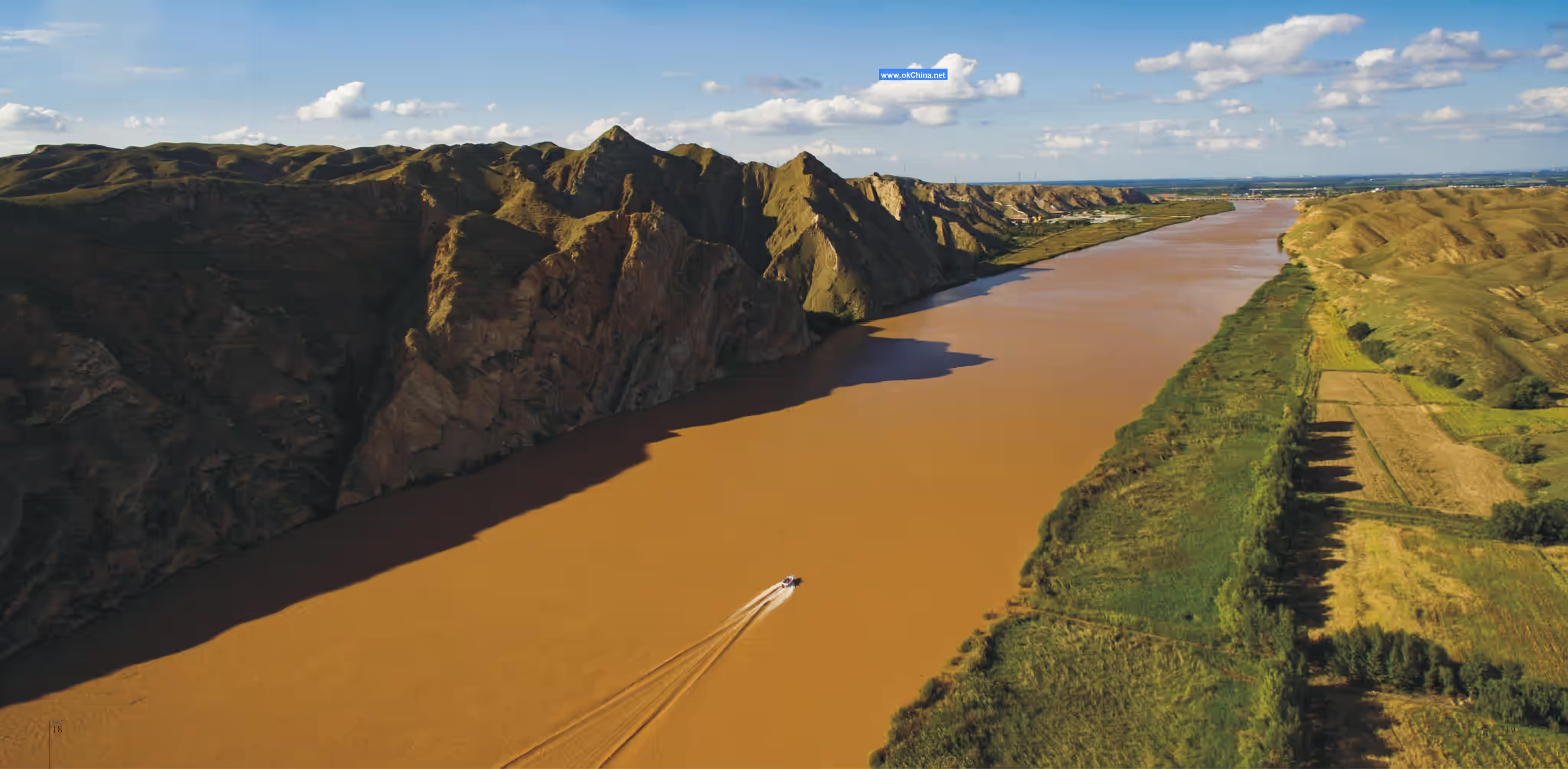
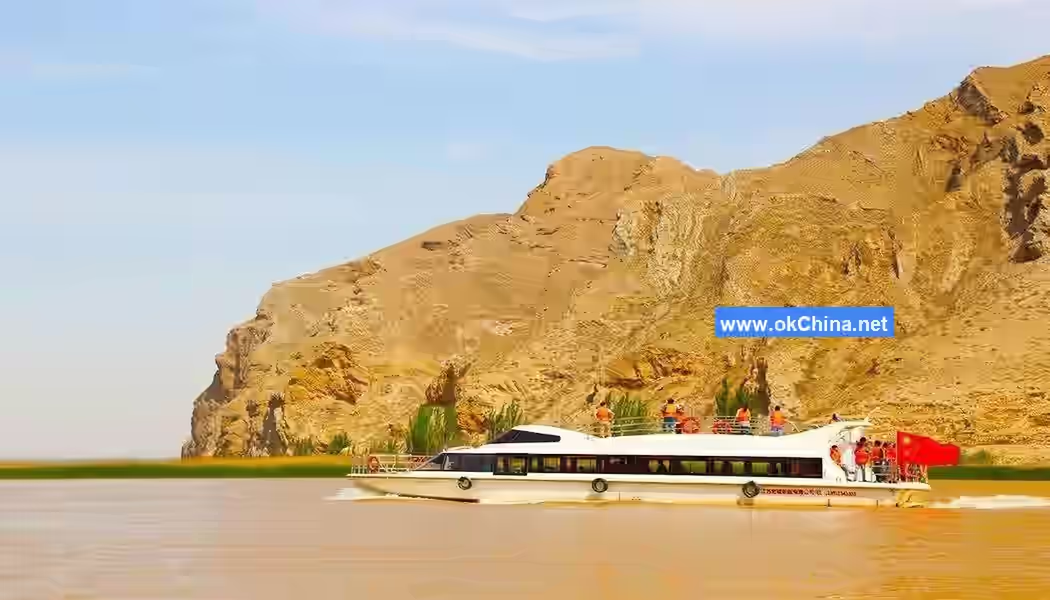
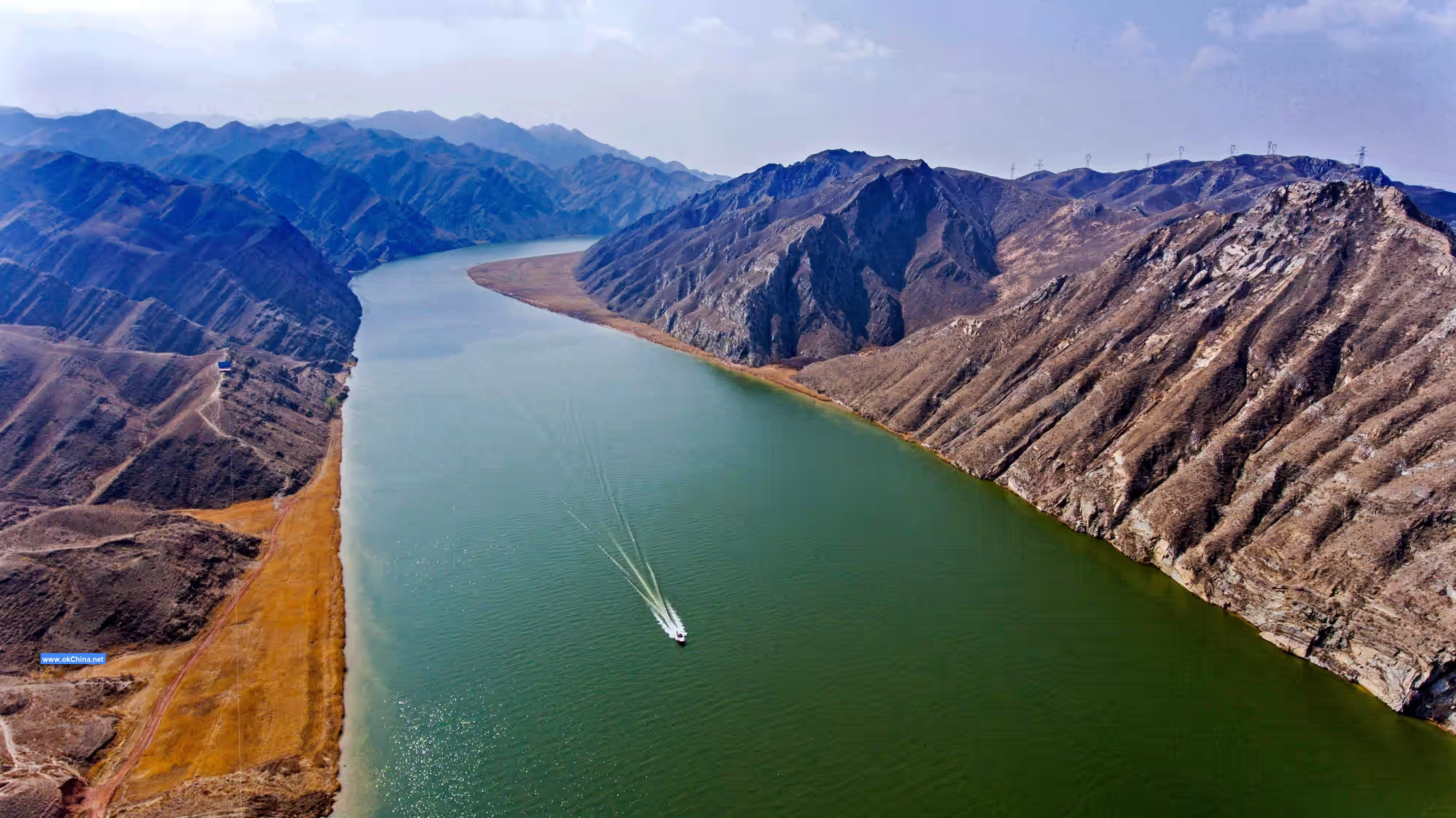
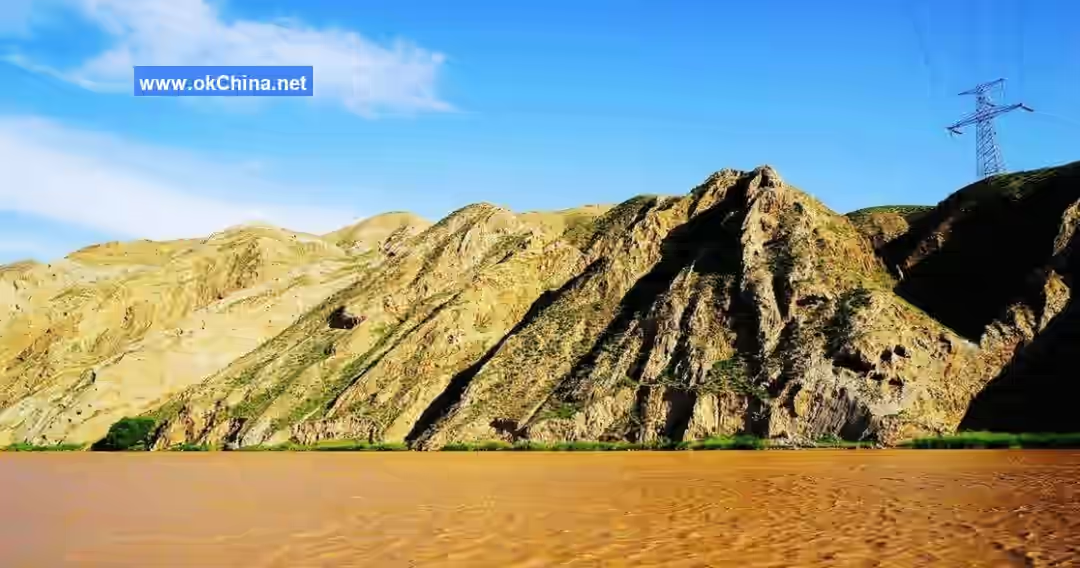
Attraction Features: The cliffs on both sides of the gorge stand like giants facing each other, steep and precipitous, almost vertically plunging into the Yellow River. These cliffs are composed of rocks that have accumulated over time, with limestone, sandstone, and other formations shaped into myriad strange forms through billions of years of geological evolution and erosion by the Yellow River's waters. Some rock layers resemble thick history books, stacked layer upon layer, recording the passage of time; others appear like meticulously carved artworks, displaying various peculiar textures and folds, as if they were the spontaneous creations of nature, the great artist. When sunlight falls on the cliffs, the interplay of light and shadow causes the colors of the rocks to change unpredictably, from gray to orange-yellow, from light brown to deep brown, resembling a vibrant oil painting.
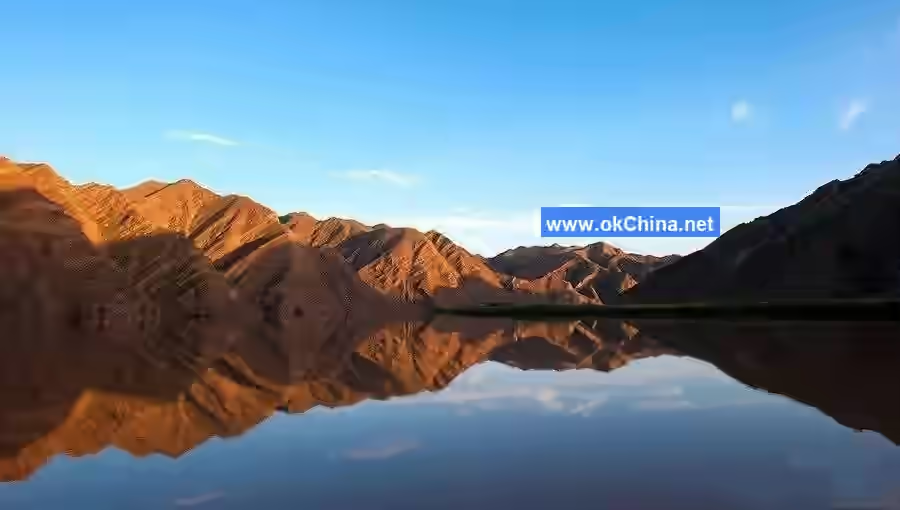
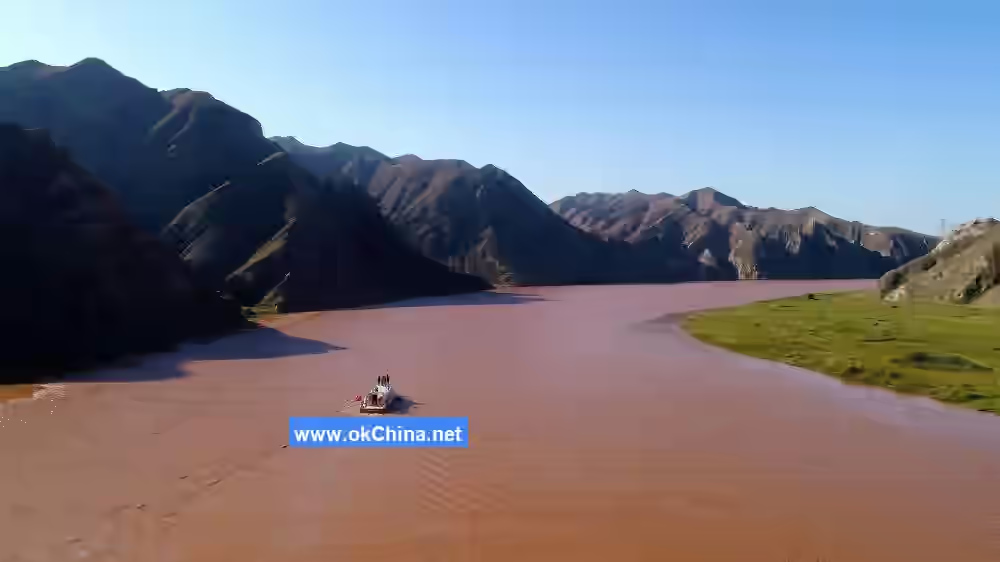
The Yellow River flows ceaselessly through the Ten-Mile Long Gorge, serving as the soul of this canyon. At times, the river surges like a wild horse, roaring with immense waves, its white spray flying into the air, echoing an激昂 melody through the gorge; at other times, it resembles a gentle mother, flowing calmly and smoothly, its surface mirror-like, clearly reflecting the mountains and sky on both banks, making it hard to distinguish reality from reflection. In certain sections of the gorge, the Yellow River forms whirlpools and undercurrents, adding an element of mystery and dynamism to the landscape.
The rich and diverse ecological environment within the gorge is another of its distinctive features. Dense vegetation grows along the banks, with reed marshes swaying in the wind as if dancing for the Yellow River. Various aquatic plants drift with the river's currents, providing habitats for fish and other aquatic life. In the air, birds can often be seen soaring—some skimming the water's surface to hunt, others perching on branches along the shore—adding a lively touch to this landscape painting. The Ten-Mile Long Gorge presents entirely different scenes in different seasons. In spring, as all things come back to life, the gorge is lush with greenery, and the air is filled with the breath of new life; in summer, shaded by green trees, cool mist rises from the river, bringing a refreshing chill to visitors; in autumn, the leaves on both banks turn golden and fiery red, intertwining with the yellow of the Yellow River to form a dazzlingly colorful autumn scene; in winter, the entire gorge is draped in silver, with the Yellow River flowing silently beneath the ice and snow, displaying a serene and sacred beauty.
IV. Cultural Resources
Myths and Poems
In the Qingtongxia Yellow River Grand Canyon area, many myths and legends related to the Yellow River are passed down. Among them, the legend of Yu the Great's flood control is the most famous. According to legend, in ancient times, the Yellow River frequently flooded, and Yu the Great was appointed to control the waters. Leading the people through great hardships, he passed by his home three times without entering, ultimately succeeding in taming the Yellow River by channeling its flow. In the Qingtongxia area, Yu the Great left behind many relics and legendary stories during his flood control efforts, such as splitting mountains to divert water. The current gorge terrain is said to be the masterpiece of Yu the Great's flood control. These legends not only reflect the ancient people's awe of the Yellow River's floods and their reverence for the flood control hero but also form an important part of Yellow River culture.
Many literati and poets have also left behind poems describing the Qingtongxia Yellow River Grand Canyon. For example, the ancient poem: "On the road to Weizhou in Qingtongxia Gorge, nine out of ten soldiers never return. Bones like sand, sand like snow, generals, do not ascend the terrace to gaze toward home." This poem vividly depicts the war scenes and harsh frontier environment of the ancient Qingtongxia area, reflecting the historical strategic importance of the Yellow River Grand Canyon from a different perspective. There are also lines such as "The Yellow River falls from the sky, rushing toward the eastern sea, its ten thousand miles written within the breadth of one's heart." Although not specifically describing Qingtongxia, these verses capture the majestic momentum of the Yellow River, and as an important segment of the Yellow River, Qingtongxia similarly allows one to feel the profound cultural connotations conveyed in the poetry. These myths, legends, and poems add rich cultural color to the Qingtongxia Yellow River Grand Canyon, making it not just a natural landscape but also a treasure trove of culture.
Notable Figures
Apart from Yu the Great, who has deep historical connections with Qingtongxia, many other figures throughout history have been closely linked to this land. In ancient times, numerous border garrison generals and soldiers were stationed here, making significant contributions to defending the frontier and maintaining the nation's peace. For example, during the Ming Dynasty, this area was an important defensive line against invasions by northern nomadic tribes, and many generals commanded battles here, their heroic deeds widely circulated locally.
In modern times, the builders of the Qingtongxia Water Control Project are the heroic group of this land. In the early years of the People's Republic of China, they overcame numerous difficulties, relying on their wisdom and strength to construct this significant hydraulic engineering project on the Yellow River. These builders came from all over the country, filled with enthusiasm for the nation's construction efforts, and devoted themselves to the Qingtongxia Water Control Project. Working day and night under艰苦 conditions, their spirit of dedication and patriotism has become an important part of the cultural内涵 of the Qingtongxia Yellow River Grand Canyon tourist area, inspiring generations to inherit and carry forward the spirit of hard work and innovation.
Comments
Post a Comment