Millennium City Park
1. Introduction
Along the River During the Qingming Festival, one of China's Ten Great Classical Paintings. It is a genre painting from the Northern Song Dynasty, the only surviving masterpiece by the Northern Song painter Zhang Zeduan, classified as a national treasure, and currently housed in the Palace Museum in Beijing.
The painting measures 24.8 cm in height and 528.7 cm (some say 528 cm) in length, executed in ink and color on silk. In the form of a long handscroll and employing a scattered perspective composition, it vividly records the urban landscape of Dongjing (also known as Bianjing, present-day Kaifeng, Henan), the capital of the Northern Song Dynasty in 12th-century China, and the living conditions of people from all social strata at that time. It serves as a witness to the prosperity of the Northern Song capital, Dongjing, and a portrayal of the urban economic situation during the Northern Song period.
This is unique in the history of Chinese and even world painting. Within the over-five-meter-long scroll, a vast number of various figures, livestock such as oxen, mules, and donkeys, vehicles, sedan chairs, boats of different sizes, houses, bridges, city gates, and towers—each with distinct characteristics—are depicted, reflecting the architectural features of the Song Dynasty. It holds significant historical and artistic value.
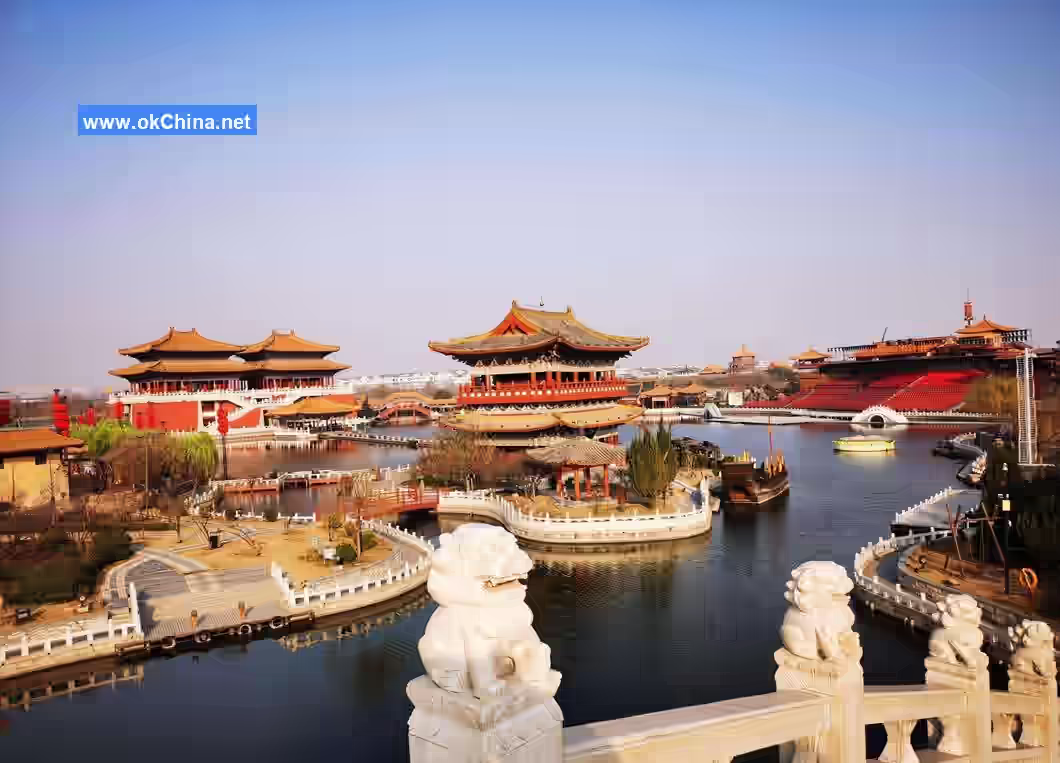
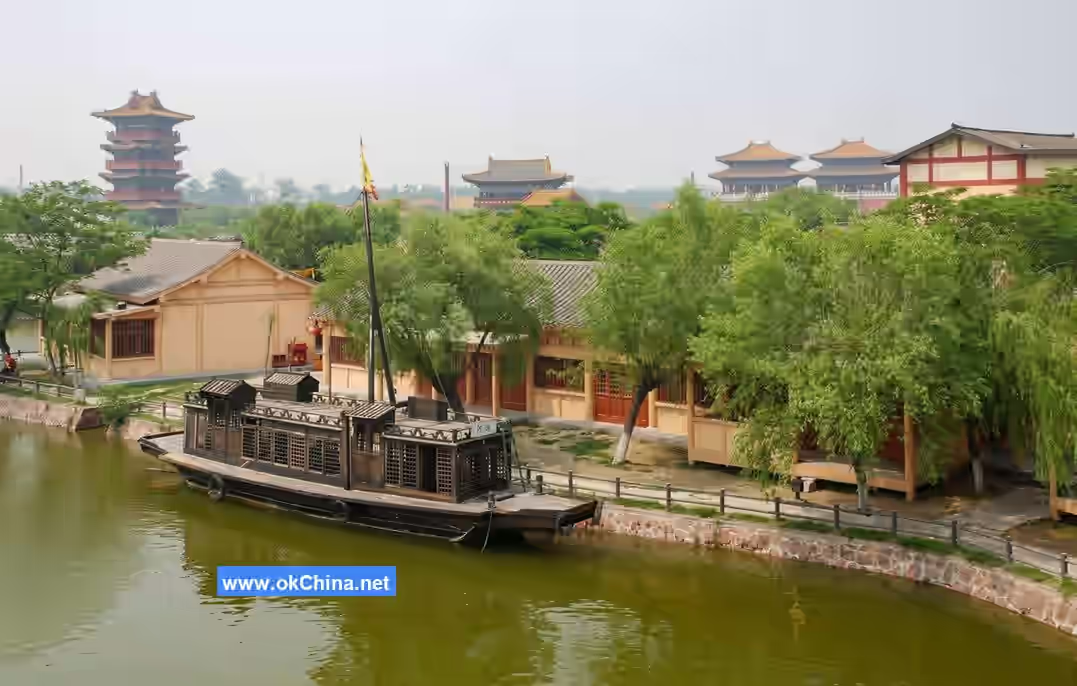
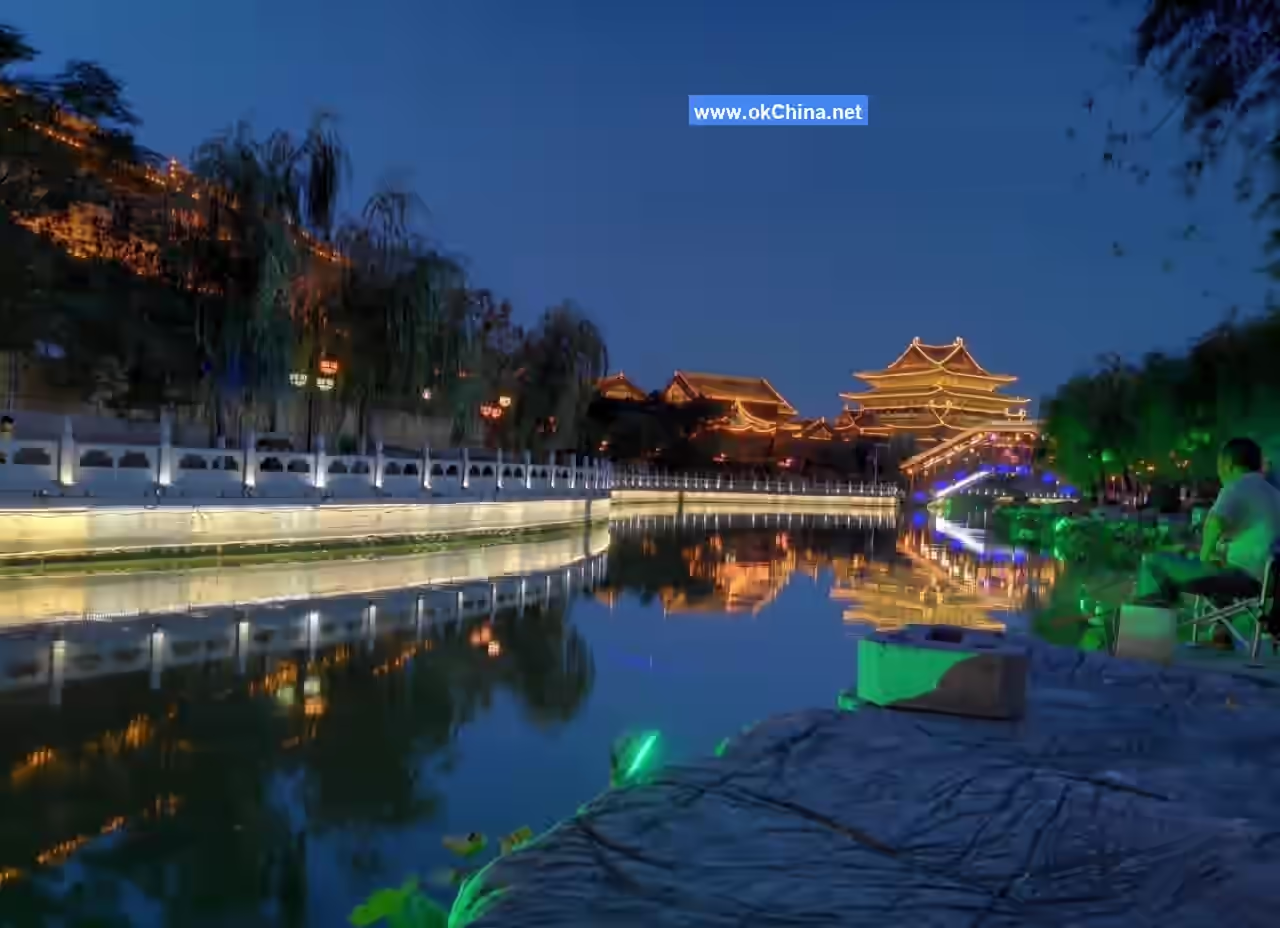
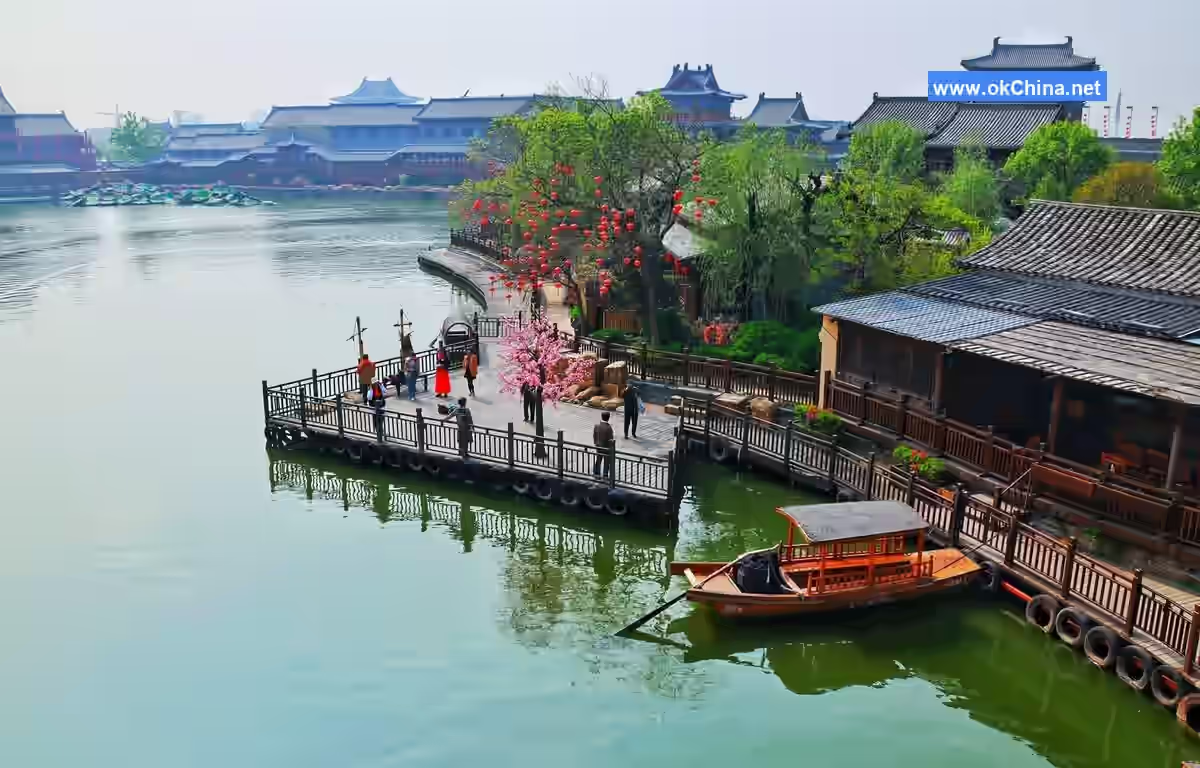
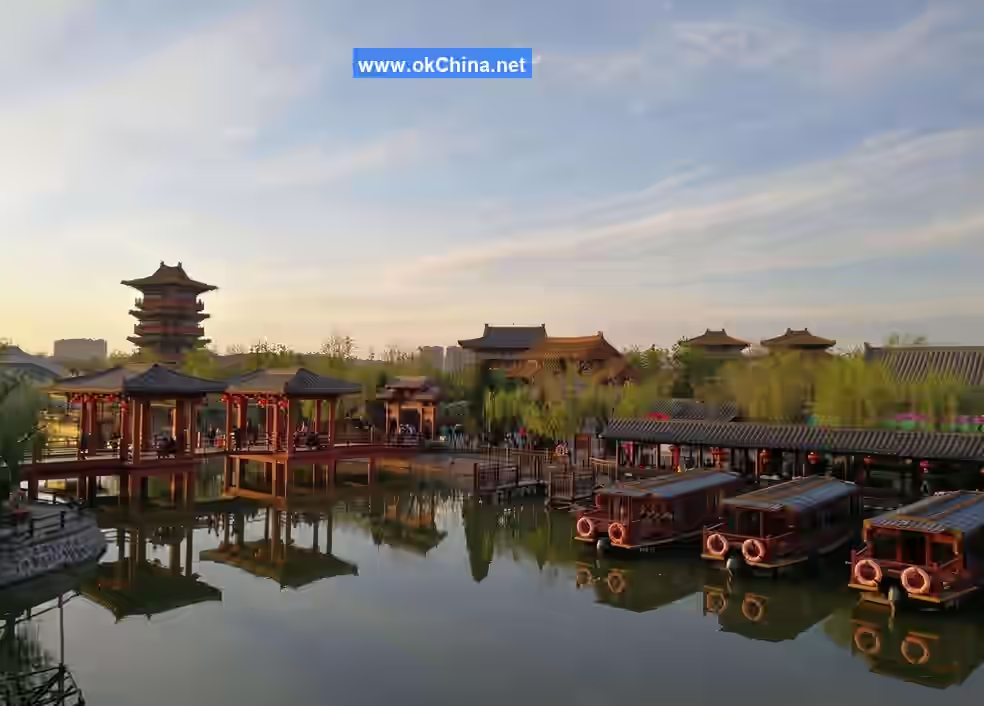
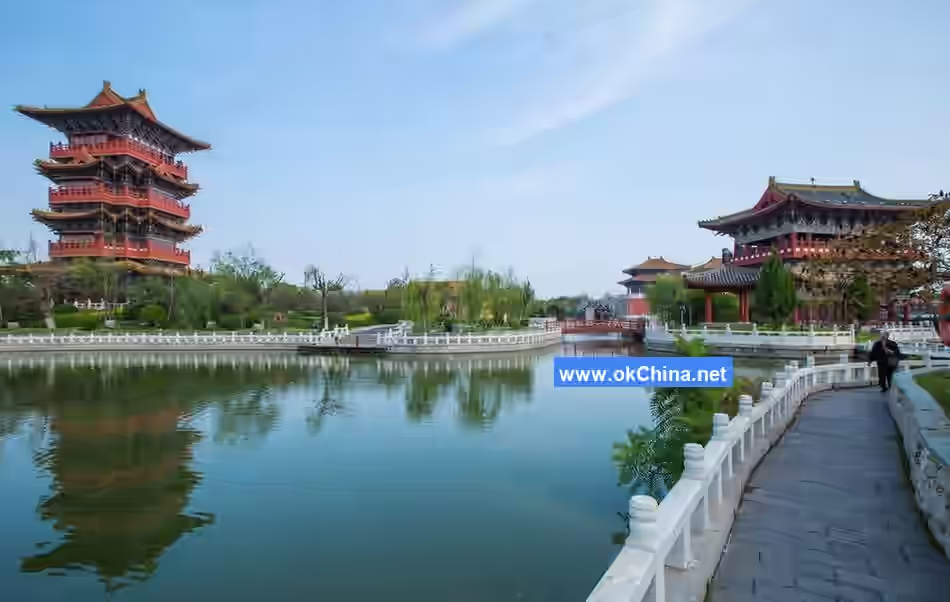
The Millennium City Park scenic area (English: Millennium City Park) in Kaifeng City is located at No. 5 Longting West Road, Kaifeng City, Henan Province. It is a large-scale historical and cultural theme park from the Song Dynasty, restored at a 1:1 scale based on Along the River During the Qingming Festival. It covers an area of over 600 mu, including 180 mu of water surface and a landscape building area of more than 30,000 square meters.
As the largest imitation Song Dynasty ancient architectural complex in the Central Plains region, the Millennium City Park scenic area in Kaifeng was rated as a National AAAAA Tourist Attraction in 2011 and was included in the proposed list of advanced collectives in the national cultural and tourism system for commendation in October 2021.
2. Geographical Location
2.1 Location and Area
The Millennium City Park scenic area in Kaifeng City is located at No. 5 Longting West Road, Kaifeng City, Henan Province, with a landscape building area of more than 30,000 square meters.
3. Important Attractions
3.1 Scenic Area Layout
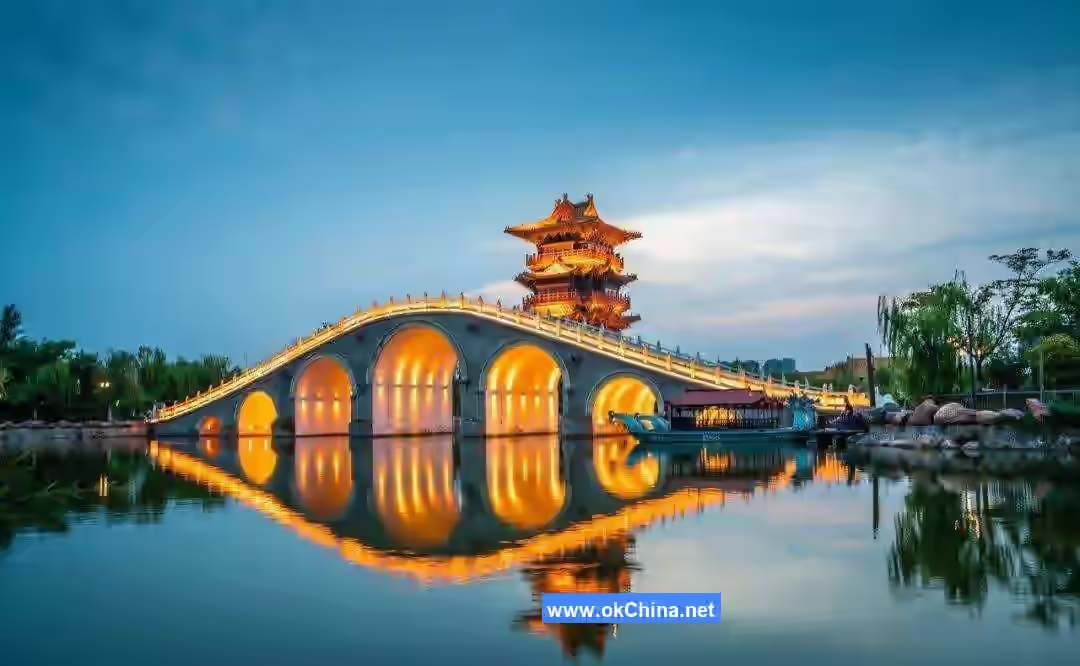
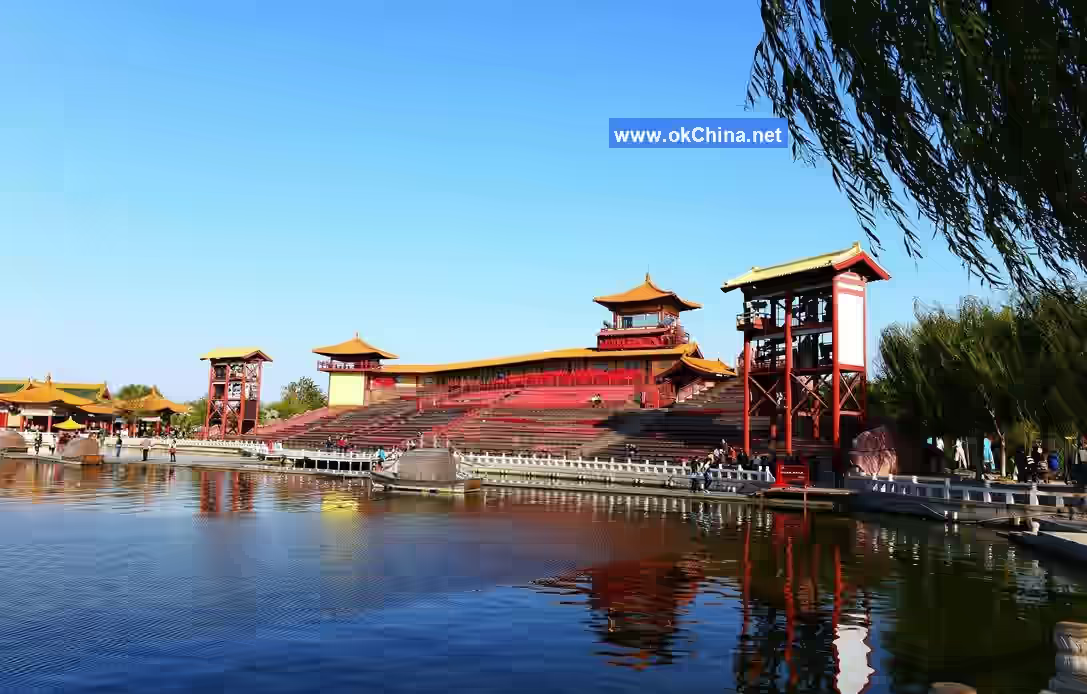
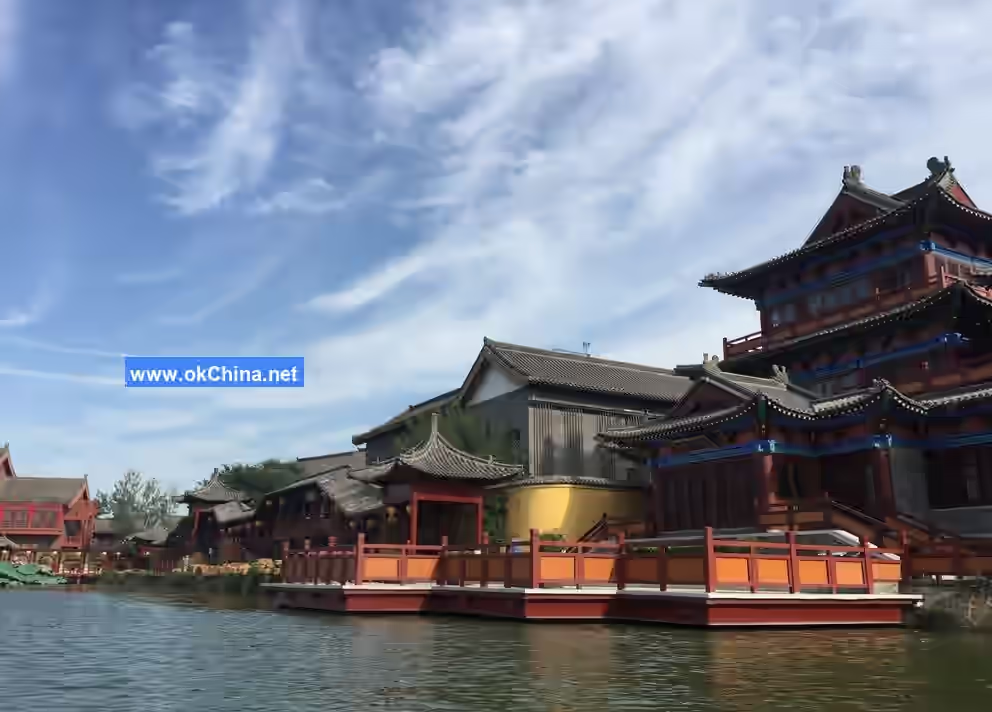
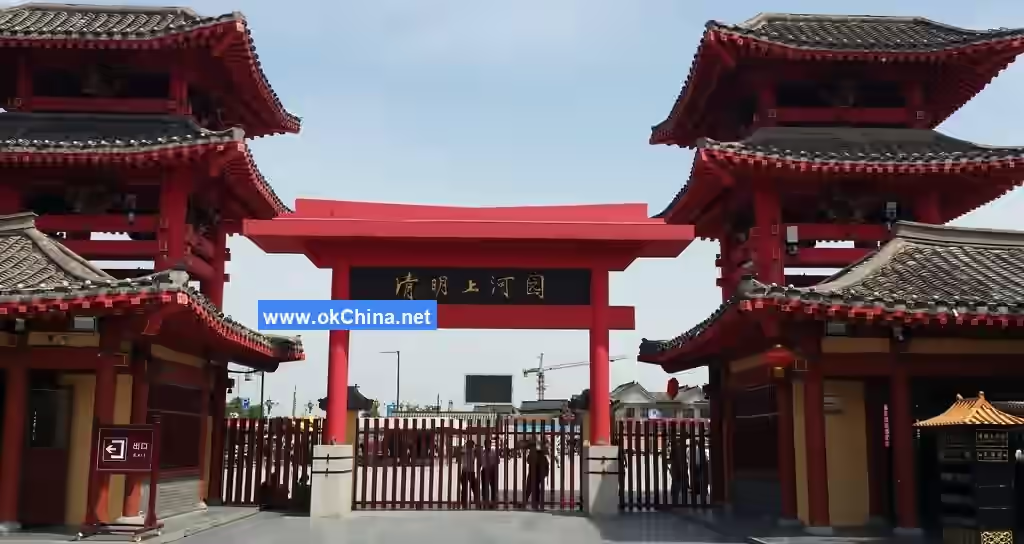
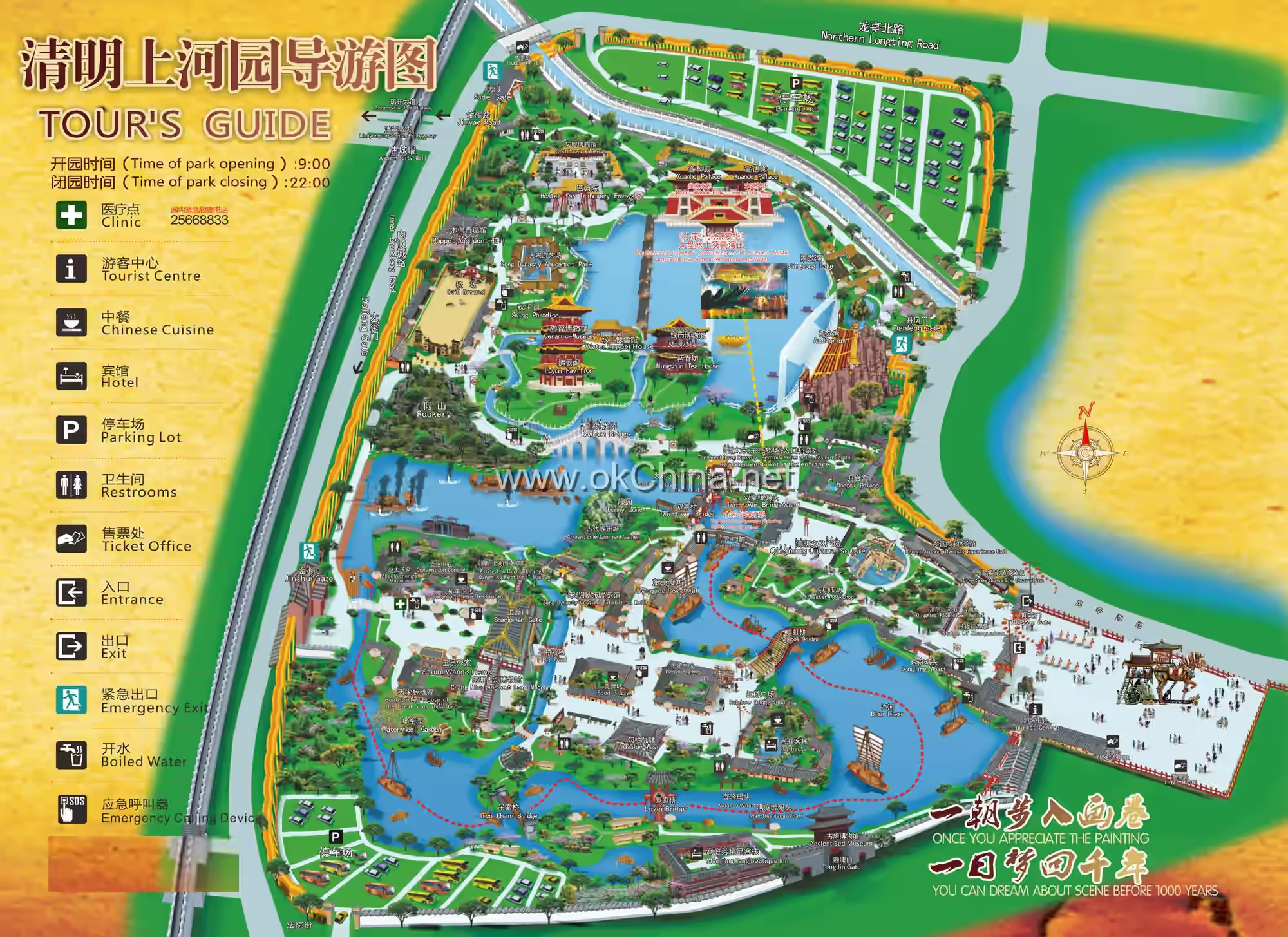
The Millennium City Park scenic area in Kaifeng is a large-scale historical and cultural theme park from the Song Dynasty, restored and recreated at a 1:1 scale based on the Chinese classical painting Along the River During the Qingming Festival. The park has five entrances: the Welcoming Gate, Duan Gate, Danfeng Gate, Jinshui Gate, and Tongjin Gate. The park is divided into three main areas: the Welcoming Square, the South Garden scenic area, and the North Garden scenic area. The Welcoming Square mainly includes the Zhang Zeduan Statue, the Bronze Sculpture of Along the River During the Qingming Festival, the Song Capital Square, the Dongjing Dock, the Dream Back to the Great Song Experience Hall, the Masters' Workshop, and the Qingming Cultural Square. During its construction, following the creative concept of Along the River During the Qingming Festival, the park is divided into two main parts, the South Garden and the North Garden, by the Double Pavilion Bridge. The South Garden focuses on the folk customs and cultural landscapes of the Song Dynasty, while the North Garden emphasizes the royal landscapes and ancient entertainment projects of the Northern Song Dynasty.
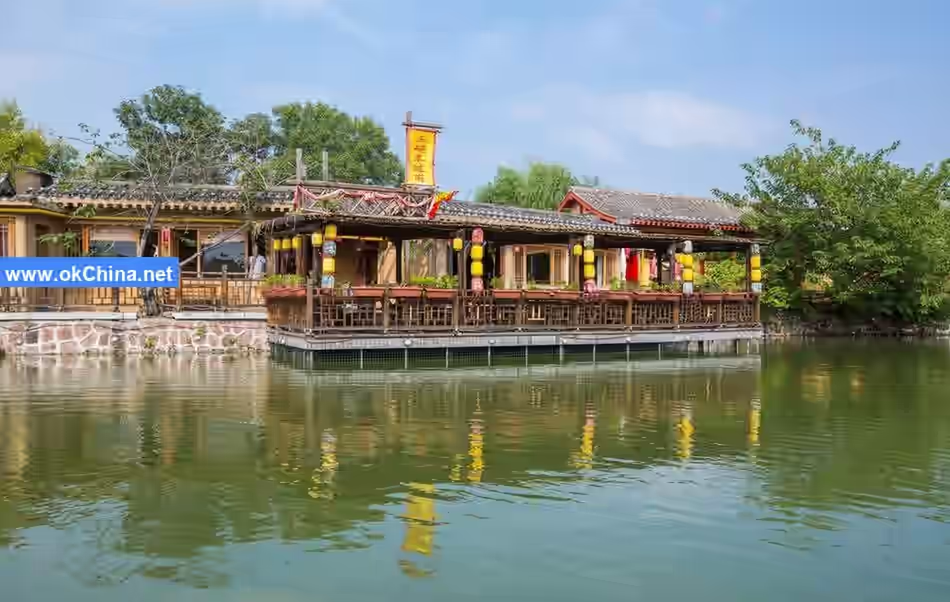
The South Garden is based on the folk customs section of Along the River During the Qingming Festival, divided into eastern and western spaces by the Shangshan Gate. The area west of the Shangshan Gate to the Jinshui Gate mainly includes Sun Yang Zhengdian, Zhao Taicheng's House, Wang Yuanwai's House, the Along the River During the Qingming Festival Exhibition Hall, the Changming Ancient Lantern Museum, the Great Song Horror House, and the Waterwheel Garden scenic area. The area east of the Shangshan Gate, north to the Double Pavilion Bridge, south to the Bian River, and east to the Rainbow Bridge includes the Dongjing Food Street, the Song Dynasty Costume Exhibition Hall, the Food City, the Goulan Wasi (entertainment district), the Dongpo Academy, the Shiqian Jiao Dian, the Rainbow Bridge Square, the Official Post Inn, the Ancient Entertainment City, and the Qu Garden scenic area.
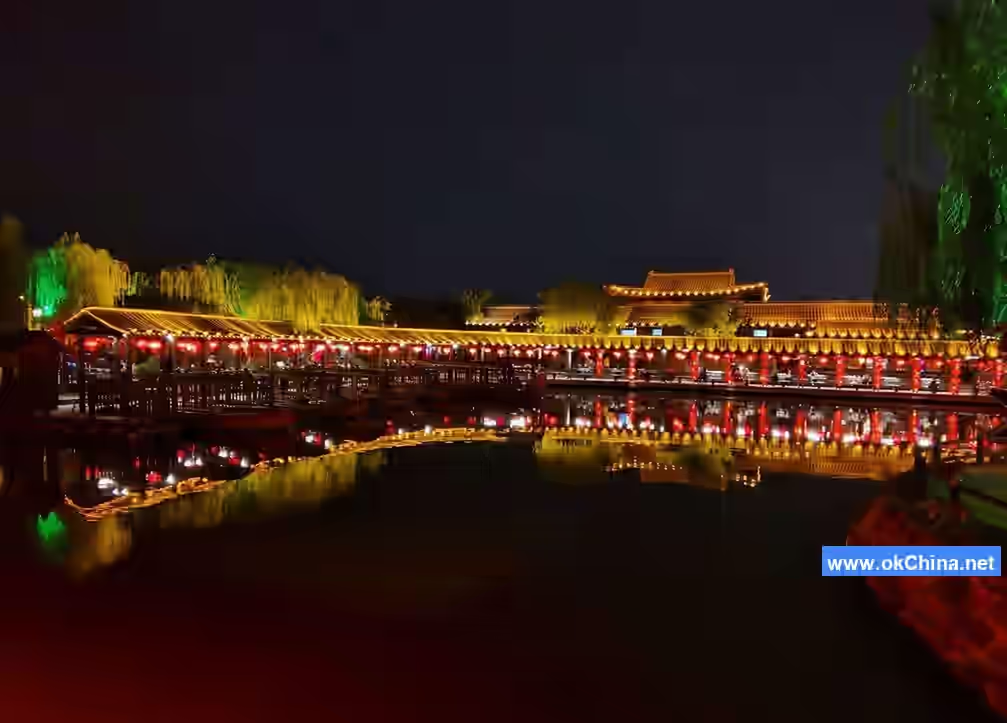
The North Garden is based on the royal garden section of Along the River During the Qingming Festival, with the entire space centered around Jinglong Lake and surrounded on four sides. The north side of Jinglong Lake mainly includes the Xuanhe Hall, Xuande Hall, the Stationery Museum, and the Sifang Courtyard. The south side of Jinglong Lake mainly includes the Nine Dragons Bridge, artificial rockeries, the Mingchun Fang, the Coin Museum, the Water Puppet Theater, the Fuyun Pavilion, and the Ceramics Museum. The west side of Jinglong Lake mainly includes the Drill Ground, the Swing Garden, the Great Song Amusement Park, and the Puppet Adventure Hall. The east side of Jinglong Lake features the Covered Bridge, the Lanxiu Pavilion, the Dantai Palace, and the spectator stands for the "Great Song · Dream of Dongjing" performance.
3.2 Main Structures
3.2.1 Welcoming Gate
The Welcoming Gate is the east main gate of the Millennium City Park, with the corresponding west gate called the Jinshui Gate. The Welcoming Gate is located at the center of the Longting Lake area. The park opens daily at 9:00 AM to welcome visitors, hence the name Welcoming Gate.
3.2.2 Tongjin Gate
During the Northern Song Dynasty, there were two water gates on the east side of Dongjing Bianliang City: the Shanli Gate and the Tongjin Gate. These were two passages for the Bian River to enter the city, holding strategic importance. During peacetime, due to convenient transportation, this area was also a water transport hub, concentrating important granaries of the Great Song. During the defense of Great Song Dongjing, fierce battles took place here between Song troops and the Jin forces.
3.2.3 Bronze Sculpture of Along the River During the Qingming Festival
The Bronze Sculpture of Along the River During the Qingming Festival is 33.32 meters long and 2.23 meters high. It depicts the prosperous scene of Dongjing Bianliang during the Qingming Festival, highlighting the urban landscape of the Northern Song capital and the lives of people from all social strata. This bronze sculpture is also the largest bronze sculpture of Along the River During the Qingming Festival in the world to date.
3.2.4 Shangshan Gate
The Shangshan Gate is an iconic structure vividly depicted in Along the River During the Qingming Festival. It served as an important passage in and out of Kaifeng and the boundary between the city and the countryside. The restored gate is 21.6 meters high, covering an area of 1,553 square meters, with an archway as high as 8 meters.
3.2.5 Double Pavilion Bridge
The Double Pavilion Bridge draws inspiration from the pavilion bridge in the Northern Song painter Wang Ximeng's A Thousand Li of Rivers and Mountains and imitates the bridge pavilion form in the Southern Song literata Xia Gui's Clear and Distant View of Streams and Mountains. A drawbridge is set in the middle of the stream to allow the passage of boats of various sizes. Two tile-roofed pavilions are built on either side to provide shade and shelter from rain for visitors, hence the name "Double Pavilion Bridge." The bridge is flat and level without undulations, facilitating access for visitors with mobility impairments.
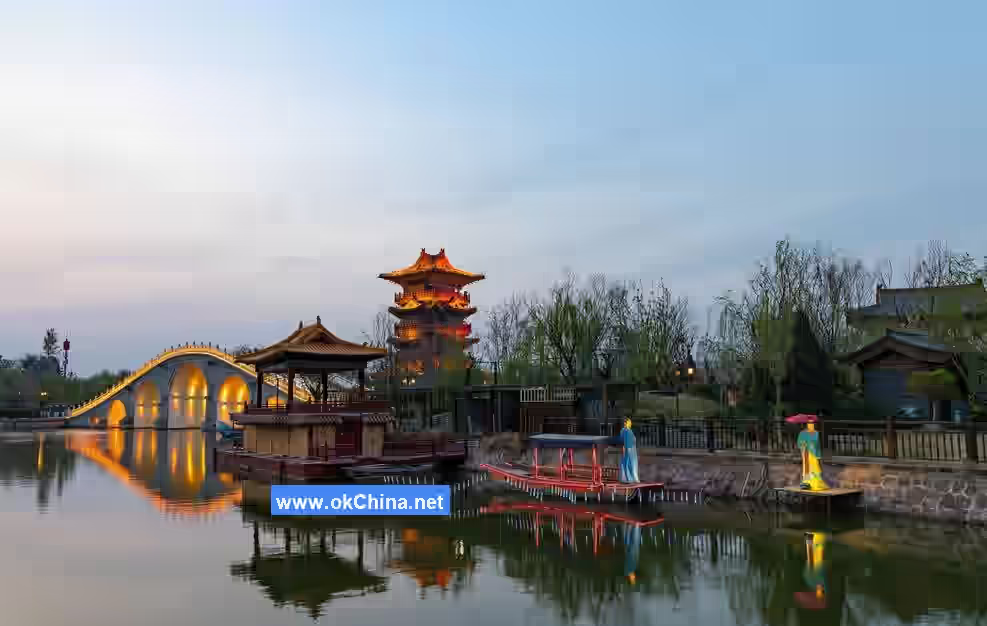
3.2.6 Rainbow Bridge
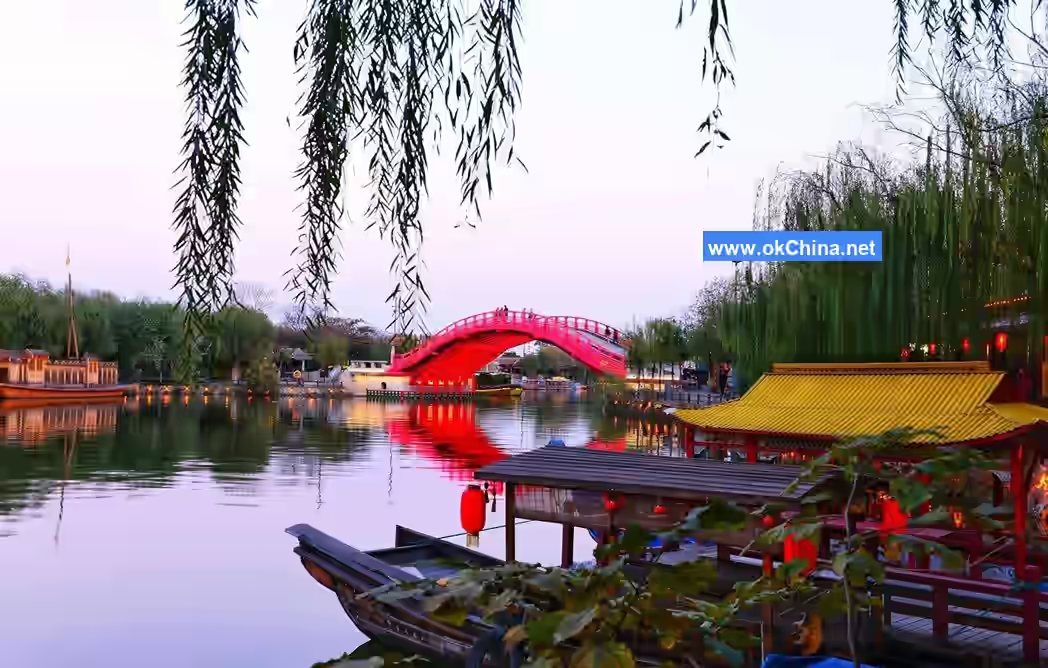
The Rainbow Bridge is a main attraction in the Millennium City Park, representing an important creation in the history of ancient Chinese bridges and listed as one of China's Ten Famous Bridges. It spans the "Bian River," arching like a rainbow, allowing horses and pedestrians to pass above and cargo boats to navigate below. Historical records indicate that the Bian River originated during the Warring States period in Wei, was connected during the Sui Dynasty, flourished during the Song Dynasty, starting from Heluo in the upper reaches and flowing down to Huaisi, directly connecting to the Yangtze River, serving as the main artery linking north and south during the Northern Song Dynasty. In Dongjing City at that time, the banks of the Bian River were the most bustling and lively places, with shops lining both sides of the Rainbow Bridge, boats shuttling back and forth, and merchants gathering.
3.2.7 Waterside Hall
The Waterside Hall is formed by connecting the Xuanhe Hall and the Xuande Hall, both structures majestic and solemn. In the Song Dynasty, these two halls served as large private boxes for male and female guests, respectively. Connected with the Shuixin Pavilion, they formed a functionally sophisticated royal opera house. From here, one can overlook the entire park, especially the scenes in the pond, making it convenient to watch various water-based performances and entertainment programs.
3.2.8 Shuixin Pavilion
The Shuixin Pavilion is surrounded by water on all sides, connected by a single bridge, giving it a transparent and ethereal appearance; the pavilion roof is exquisite, and the beams and columns are slender and elegant. Additionally, folk music performances can be enjoyed here.
3.2.9 Sifang Courtyard
The Sifang Courtyard is not large in area, not deep in its courtyard, and its halls are not towering, yet it is an important place. "Sifang" (four directions) not only refers to its shape but also signifies the prominent status and imperial demeanor of "ruling over all directions." Here, visitors can personally participate in a recreation of the Great Song imperial examination scene. Dressing in ancient costumes, entering examination cells, answering test questions, they can understand the hardships of ancient exams and also enjoy the exhilaration of passing the examination.
3.2.10 Nine Dragons Bridge
The Nine Dragons Bridge is a large brick arch bridge, one of the main architectural features of the Millennium City Park, and also the highest and longest bridge in the park. Due to its large span, it was constructed using a multi-arch structure.
3.2.11 Mingchun Fang
The Mingchun Fang is located in the center of Jinglong Lake and houses an ancient coin museum inside. Here, visitors can both enjoy the scenery and learn about ancient coin culture.
3.2.12 Fuyun Pavilion
The Fuyun Pavilion has a structure of four visible and three hidden stories; viewed from outside, it appears as four stories and is the tallest building in the park. The name "Fuyun" (brushing clouds) has two meanings: first, to touch, indicating the pavilion reaches into the clouds, gently brushing against the white clouds; second, to cleanse, brushing away the mists of history to reveal the true essence of the treasure painting.
3.2.13 Dantai Palace
The predecessor of the Dantai Palace was the Shaofu Jian, equivalent to the Royal Academy of Sciences. With hip-and-gable and overhanging gable halls, winding and迂回曲折的游廊, adorned with small bridges, ponds,奇石, and flowers and trees, it is a严谨雅致的园中之园 (a garden within a garden,严谨雅致). The interior is divided into several courtyards of varying sizes and shapes, including the Papermaking Hall, Brocade Weaving Courtyard, Sinan Workshop, Great Song Official Kiln, Gunpowder Hall, etc.
3.3 Amusement Rides
3.3.1 Sushuang Qianli (Galloping a Thousand Miles)
A 108-seat amusement ride primarily featuring jumping and起伏 motions, it is the world's largest and China's first carousel设备 based on Song Dynasty culture. The ride is themed with the overall architectural style of the Song Dynasty, making passengers feel as if they are riding on steeds, galloping across the vast,延绵千里的壮阔江山.
3.3.2 Longteng Guwu (Dragon Soaring and Drum Beating)
A 40-seat large-scale high-speed滑行类游艺设备. The设备 mainly consists of滑行轨道 and车体两部分. The设备 is themed around the drumming and music of the Song Dynasty, with a large drum design in the center of the turntable and the轨道 body展现 in the form of a giant dragon. Accompanied by musical rhythms, it is full of dynamism, allowing visitors to have an immersive experience of soaring through the clouds.
3.3.3 Shenzhou出海 (Divine Ship Sailing to Sea)
A 50-seat large amusement设备 that recreates the "Divine Ship" used by Great Song official envoys on missions to海外国家. As the number of swings increases, the entire ship's cabin is swung higher and higher. During the swinging process, visitors experience惊涛骇浪.#### 3.3.4 Lanterns Begin to Glow A 48-person rotating disc that integrates both rotation and lifting motions. During operation, the disc rotates at a 15° inclination, allowing visitors in the gondolas to experience the outward swing and undulating, swirling sway under centrifugal force.
3.3.5 Phoenix Soaring in the Sky
The cabin revolves 360° while also performing regular eccentric rotations, giving visitors an experience akin to a phoenix in flight.
4. Cultural Activities
4.1 Great Song: Bian River Light and Shadow
As a large-scale night tour immersive project, "Great Song: Bian River Light and Shadow" consists of an LED rainbow bridge, four sets of 20-meter-long water flower rafts, four sets of artificial snowfall systems, 18 laser projectors, a 20m*8m laser water screen, 26 floating lotus lanterns, a 70-meter-long light and shadow scroll of the "Along the River During the Qingming Festival" painting, 2,000 LED lamps, and 70,000 meters of optical cable. This large-scale fantastical boat light show represents an investment of nearly 20 million yuan in the Qingming Riverside Landscape Garden scenic area.
4.2 Great Song: New Year Folk Culture Festival
During the Great Song: New Year Folk Culture Festival, Qingming Riverside Landscape Garden gathers distinctive folk performances from across the country, including high-platform flower drum, pan drum, stilt walking, dragon dance, lion dance, elbow pavilion, small Henan opera, donkey running, old carrying young, land boat dance, clam dance, big head dance, pole sedan jumping, bamboo horse dance, small cart, and carrying Lao Si—all brimming with festive Spring Festival folk traditions. The International Lantern Exhibition is a highlight of the festival, featuring the auspicious traditions of the China Pavilion, the fresh and refined style of the Asia Pavilion, the minimalist fashion of the Europe Pavilion, the rustic and Zen-like ambiance of the Southeast Asia Pavilion, and the luxurious grandeur of the Africa Pavilion.
4.3 Qingming Culture Festival
Every year during the Qingming period, the Qingming Culture Festival is held. Visitors can enjoy spring outings, willow planting, folk customs, snacks, and the large-scale water-based live performance "Great Song: Splendid Dreams of the Eastern Capital." This event combines historical Song Dynasty cultural elements with modern entertainment, allowing visitors to better experience spring, connect with culture, and enjoy life.
4.4 Dragon Boat Festival Culture Festival
The Dragon Boat Festival Culture Festival is a continuously developed festive activity at the Qingming Riverside Landscape Garden scenic area. Every year during the Dragon Boat Festival, leveraging its rich traditional culture and exciting garden activities, the scenic area attracts large crowds of daily visitors. Various large-scale performances are presented continuously, alongside multiple series of activities reflecting the unique culture of the Dragon Boat Festival, such as Nuo dance performances and special experiences like making zongzi, Dragon Boat Festival knowledge quizzes, and the Great Song Imperial Examination for the Dragon Boat Festival, all promoting the culture of the festival.
4.5 Qixi Festival Culture Festival
Centered around recreating a grand Song Dynasty wedding, the Qixi Festival Culture Festival features a series of activities during the festival period, including "Three Letters and Six Etiquettes," "I Build the Magpie Bridge for the Cowherd and Weaver Girl," newlywed flash mobs, "The Landlord Delivers Joy," and "Predestined Connection from Afar," allowing visitors to experience the atmosphere of this traditional Chinese festival at Qingming Riverside Landscape Garden.
4.6 Mid-Autumn Festival Culture Festival
Every year during the Mid-Autumn Festival, Qingming Riverside Landscape Garden hosts the Mid-Autumn Festival Culture Festival. Through a series of activities and special thematic decorations throughout the park, it aims to establish itself as a "premier destination for moon appreciation during Mid-Autumn."
4.7 Chrysanthemum Culture Festival
Every year from October to November is Kaifeng's annual chrysanthemum extravaganza. Qingming Riverside Landscape Garden focuses on creating beautiful chrysanthemum plant landscapes, fully utilizing architecture, sculptures, hills, and water surfaces, combining static and dynamic elements, and integrating planar and three-dimensional designs to highlight Kaifeng's chrysanthemum cultivation and landscaping techniques, shaping various chrysanthemum-themed displays.
4.8 May Day Puppet Carnival
The Qingming Riverside Landscape Garden "May Day" Puppet Carnival innovatively expresses various traditional puppet elements, featuring hundreds of performances and puppet shows to boost the "May Day" festivities.
4.9 National Day Performance Carnival
Every year during the National Day holiday, Qingming Riverside Landscape Garden stages a Performance Carnival. Performances such as Chinese opera, Chinese martial arts, dazzling acrobatics, trendy folk music, and Song Dynasty costume parades offer fresh expressions of traditional culture, blending tradition with fashion, allowing visitors to feel the fervor of the carnival.
4.10 Dongjing Food Court
The Dongjing Food Court gathers the essence of Henan cuisine, offering a distinctly rich variety of gourmet delights. Among them, the Xiaolongbao series, originating from the Northern Song Dynasty, is renowned as a unique culinary treasure of the Central Plains.
4.11 Sun Yang Zheng Dian
Sun Yang Zheng Dian covers a construction area of nearly 1,000 square meters, featuring古朴典雅 (classically elegant) decor, over ten luxurious private dining rooms, and a main hall of nearly 600 square meters that can accommodate over 600 diners simultaneously. This venue serves business receptions, Song Dynasty-style weddings, and tourist group dining, and also concentrates the culinary essence of the Northern Song Dynasty period.
5. Value and Significance
"Along the River During the Qingming Festival" vividly depicts the bustling scene of the Northern Song capital, Kaifeng. Qingming Riverside Landscape Garden not only recreates the painting on a 1:1 scale but also ingeniously brings history to life. Upon entering the park, visitors feel as if they have stepped through a time tunnel into a living historical scroll, often experiencing a sense of time reversal described as "stepping into the painting in a morning, dreaming back a thousand years in a day." As a theme cultural park integrating historical and cultural tourism, folk custom tourism, leisure vacation tourism, fun entertainment tourism, and ecological environment tourism, Qingming Riverside Landscape Garden prominently features观赏性 (spectacle), 知识性 (educational value), 娱乐性 (entertainment), 参与性 (interactivity), and 情趣性 (charm). Furthermore, the scenic area continuously integrates and expands Song Dynasty cultural elements, deeply explores and innovatively develops tourism cultural products, promotes the inheritance and innovation of Song culture, and has achieved a magnificent transformation from a "famous painting" to a "famous garden."
Comments
Post a Comment