
Qingjiang Gallery Scenic Area in Yichang City
1. Introduction
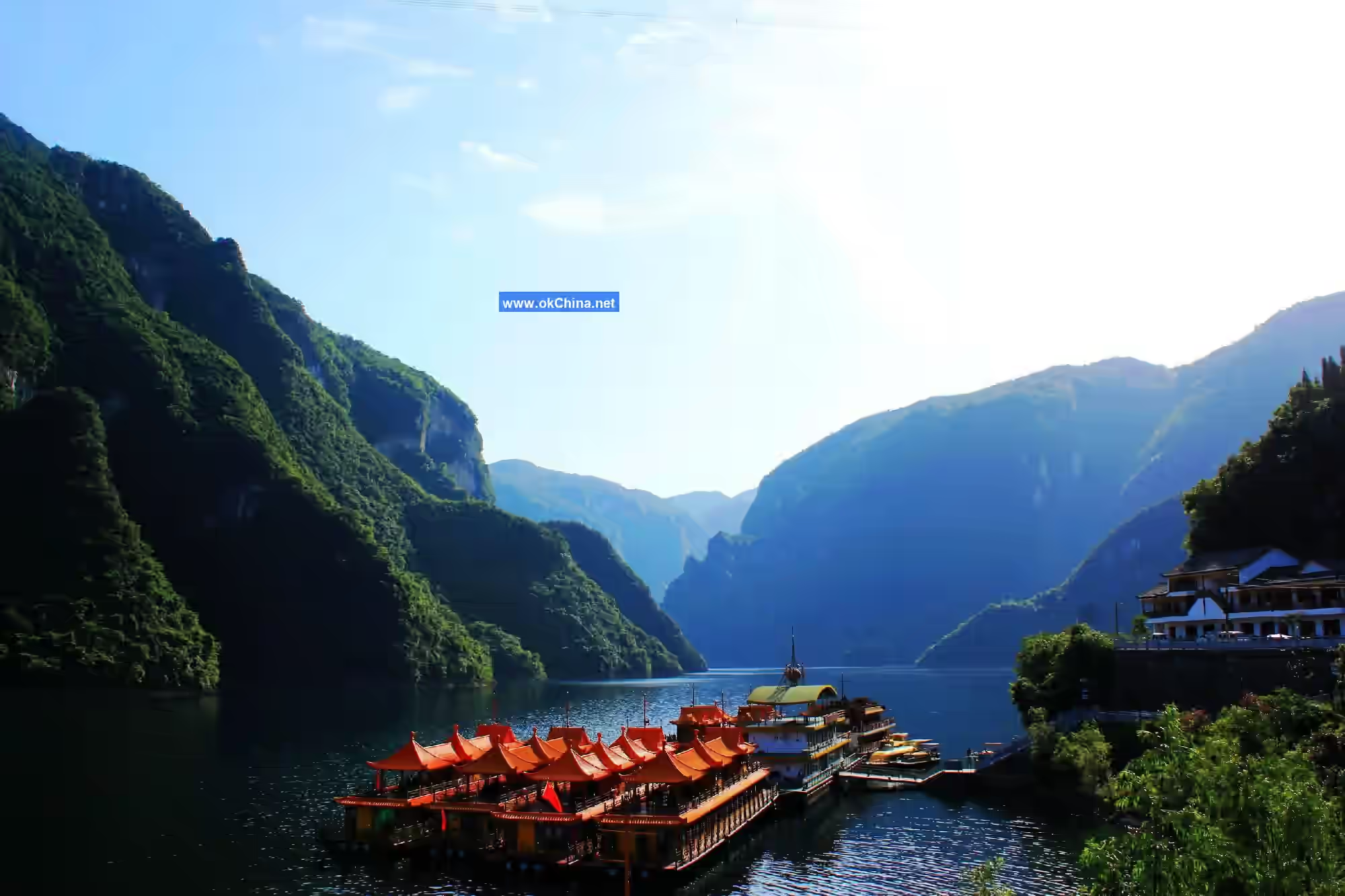
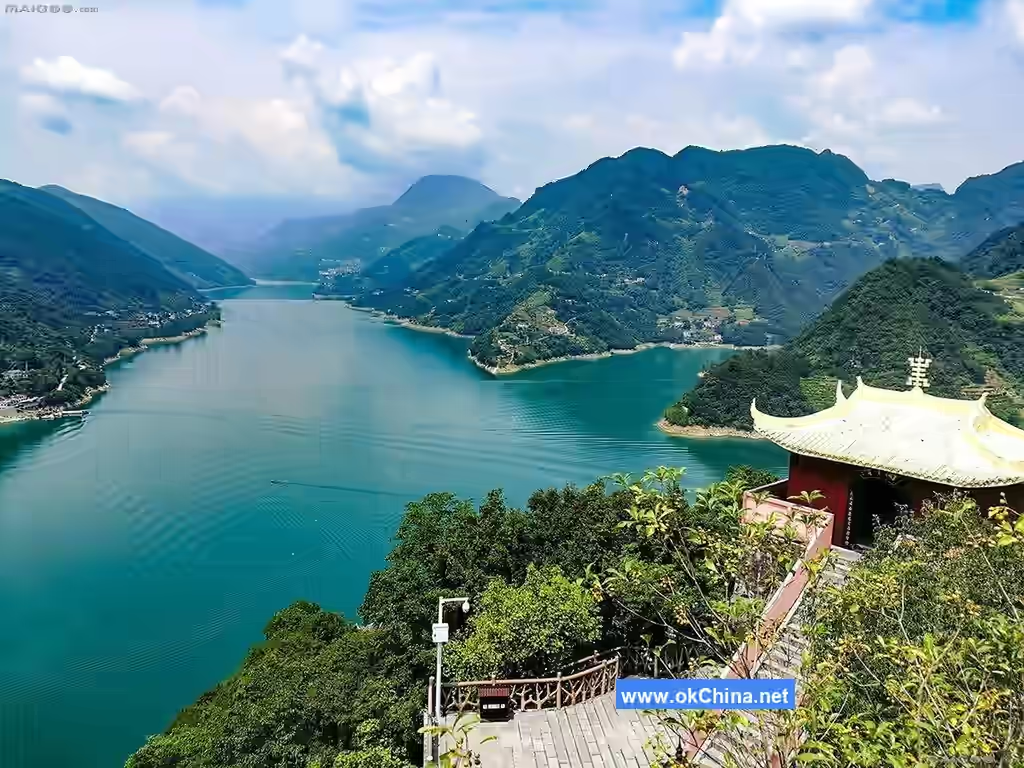
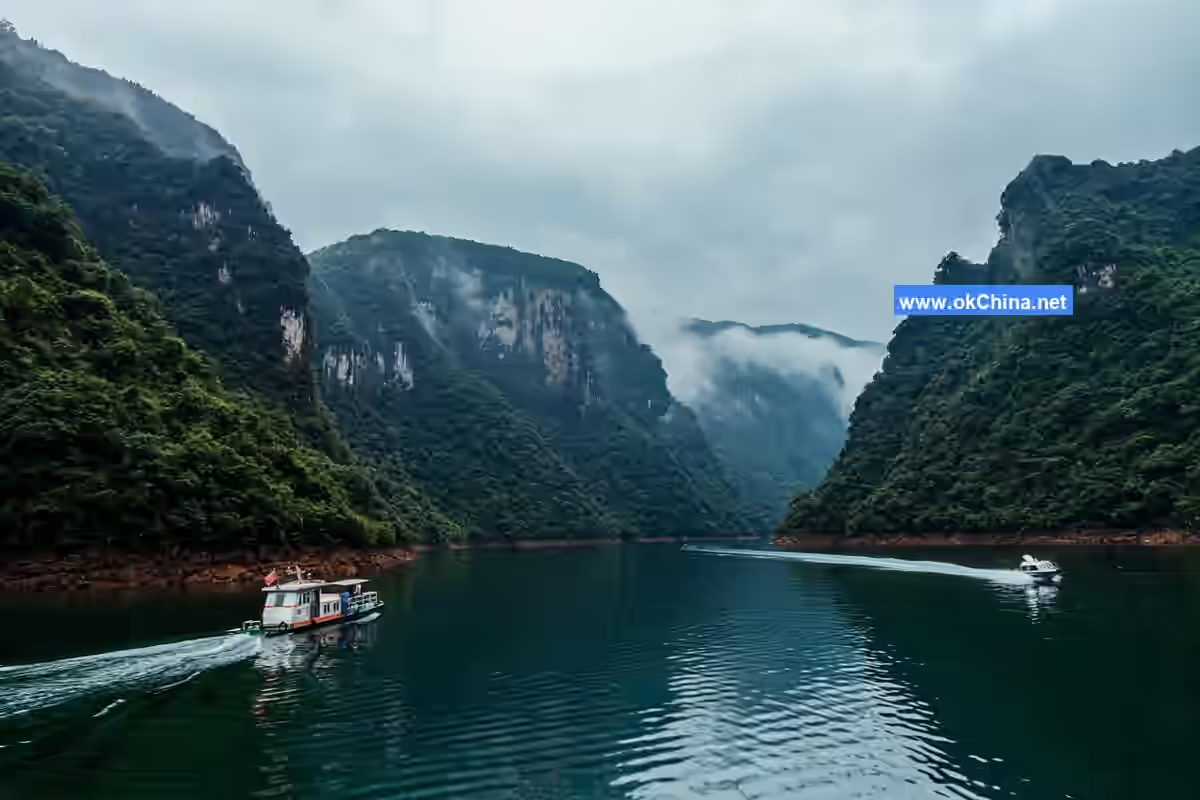
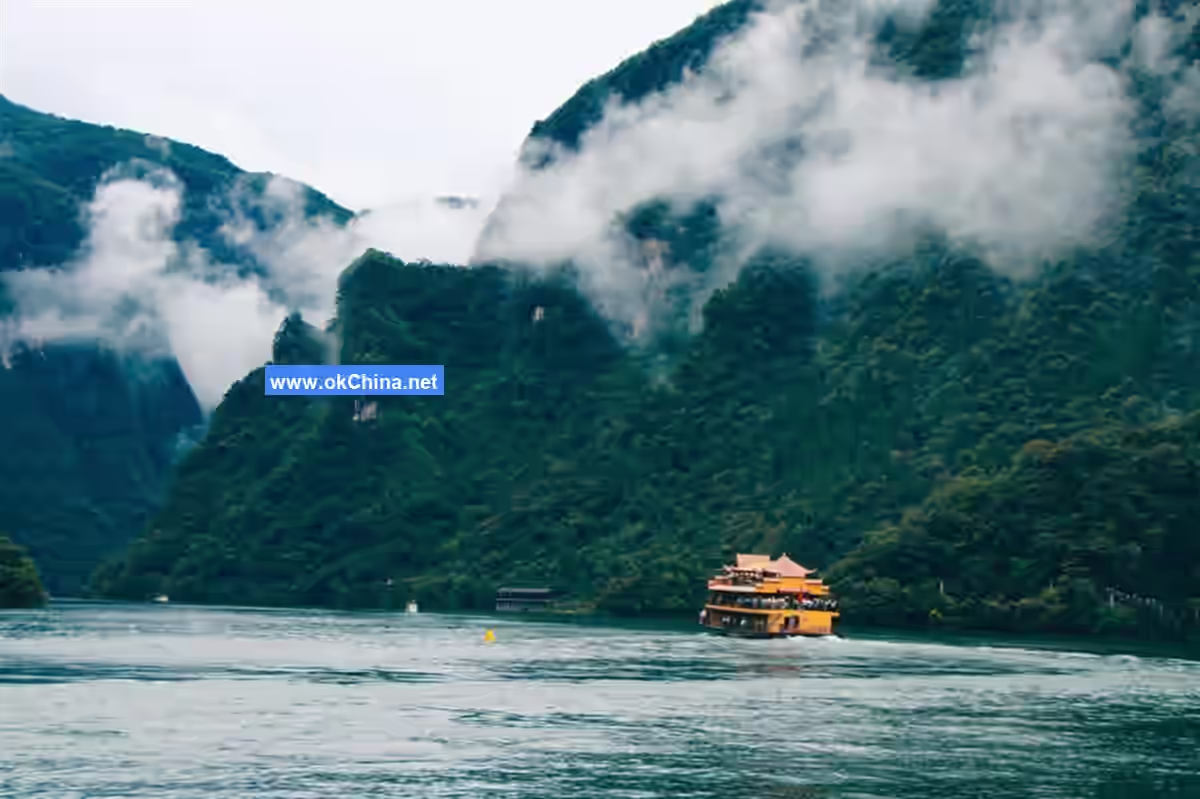
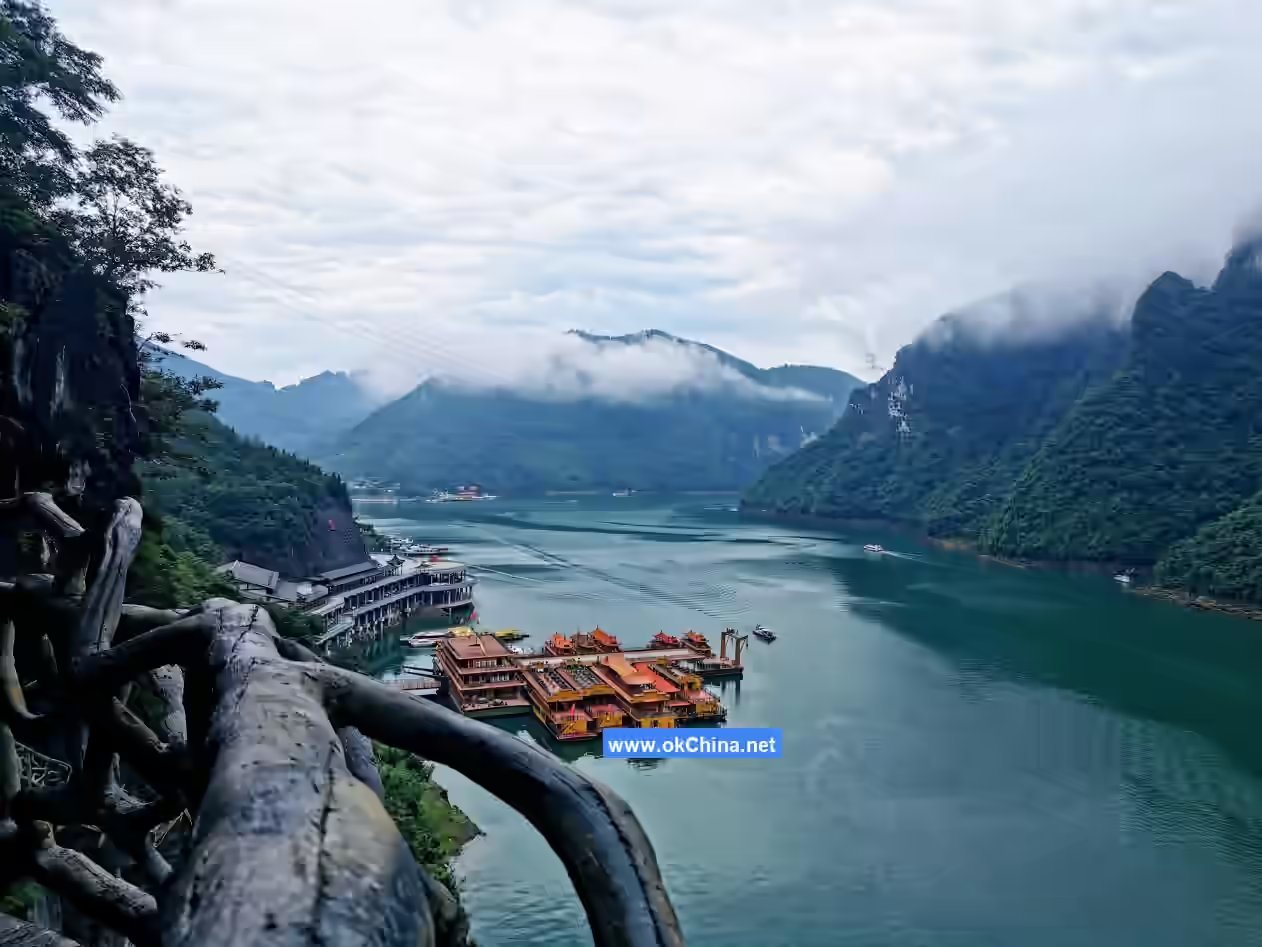
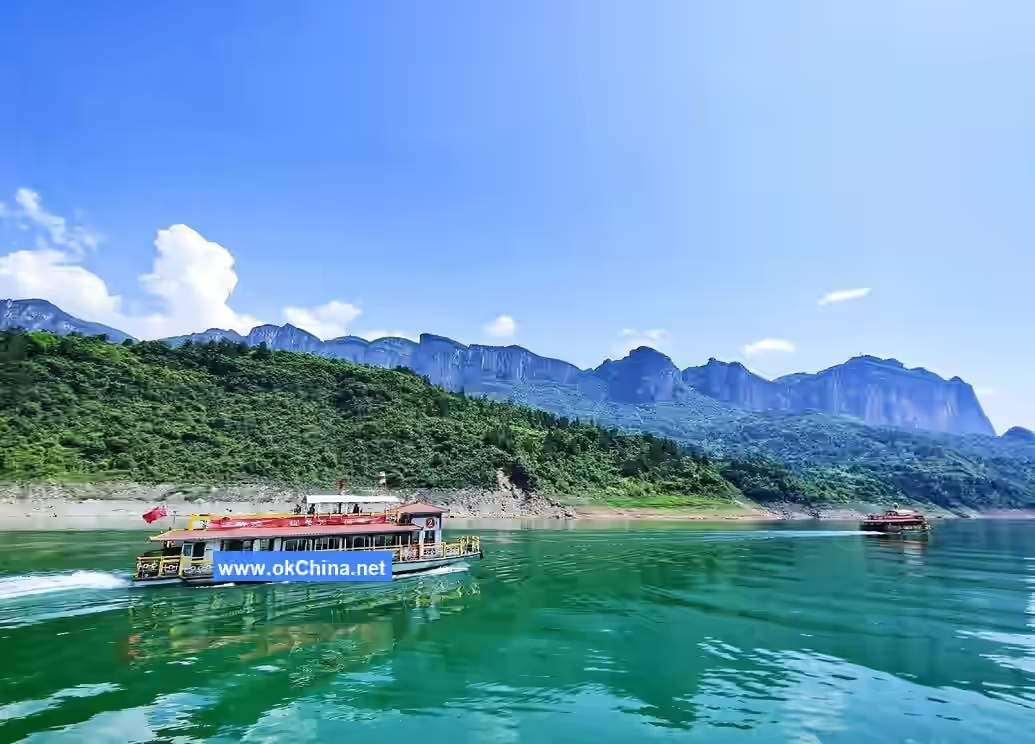
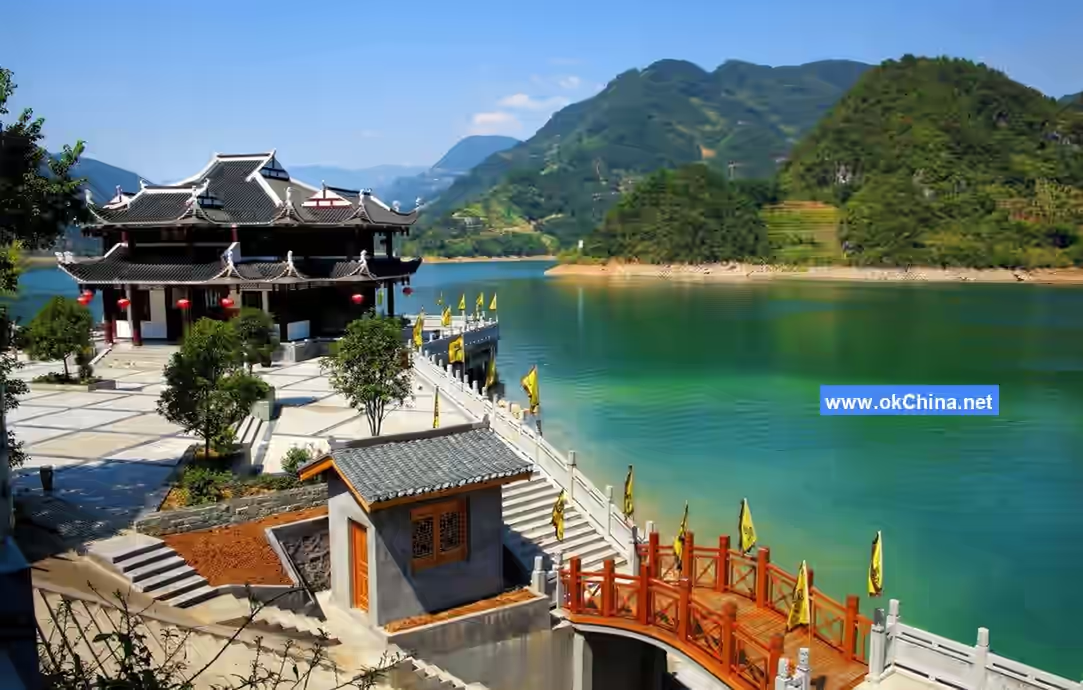
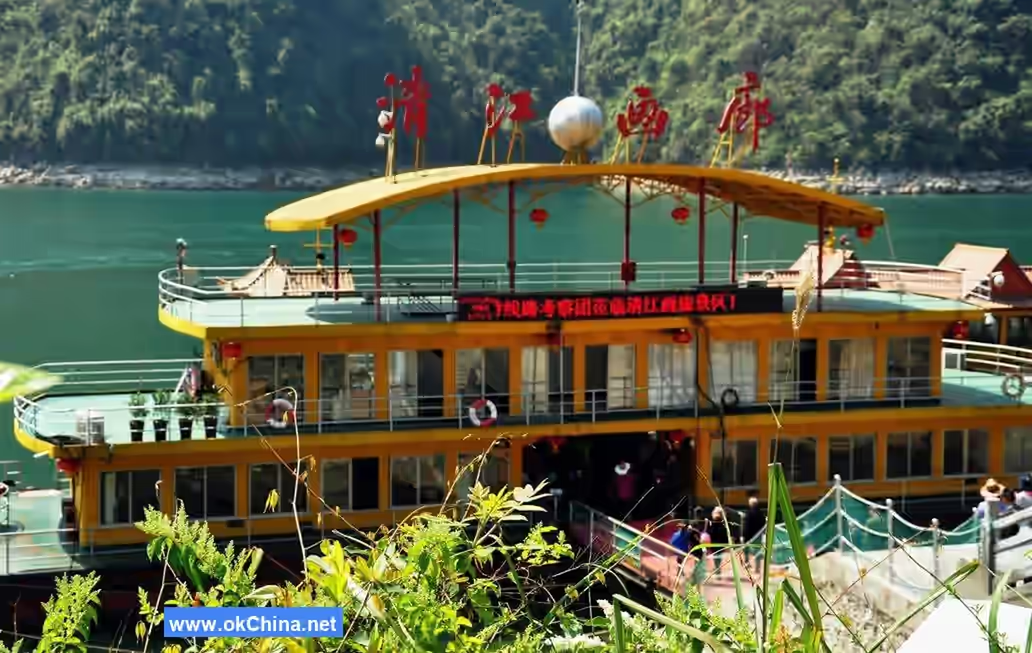
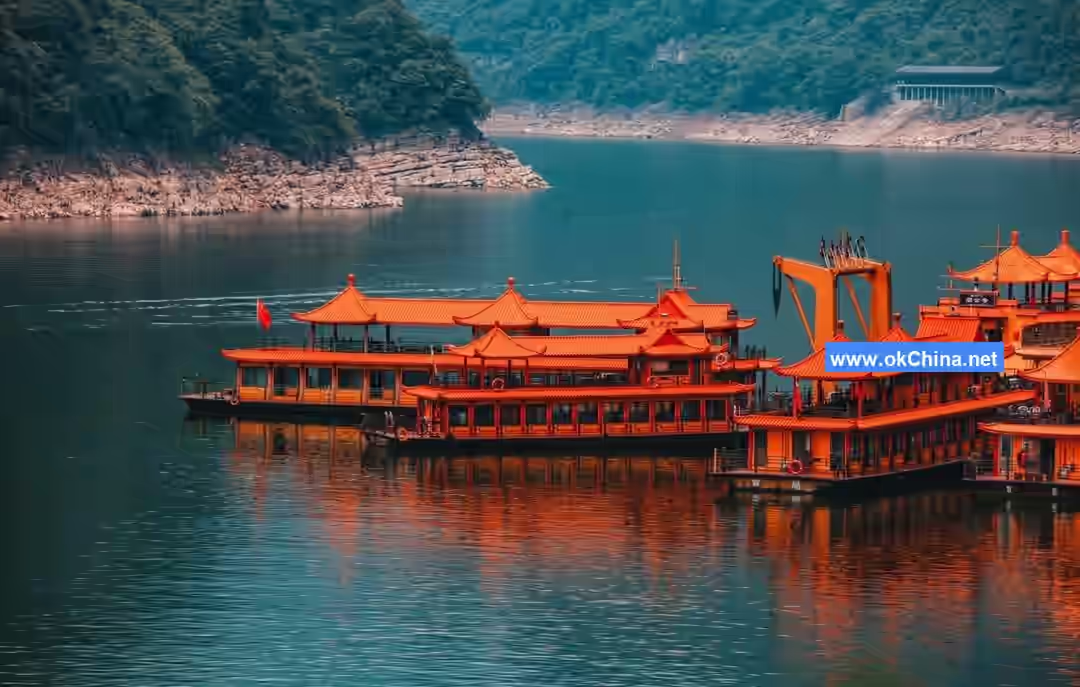
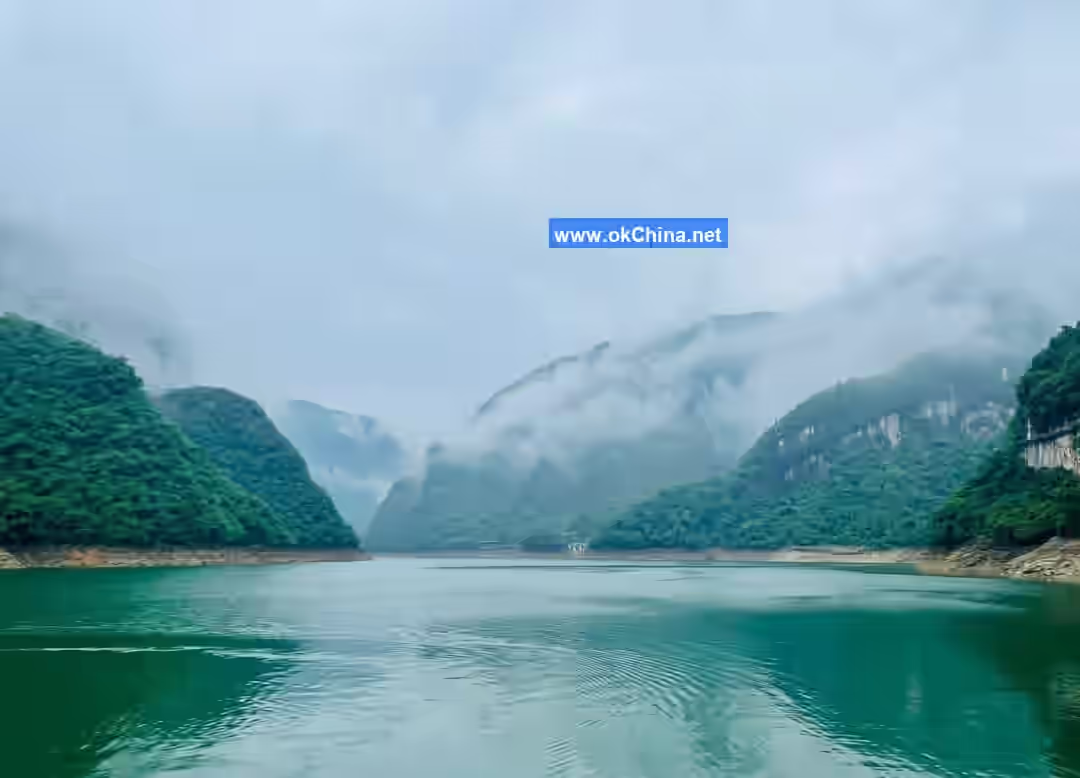
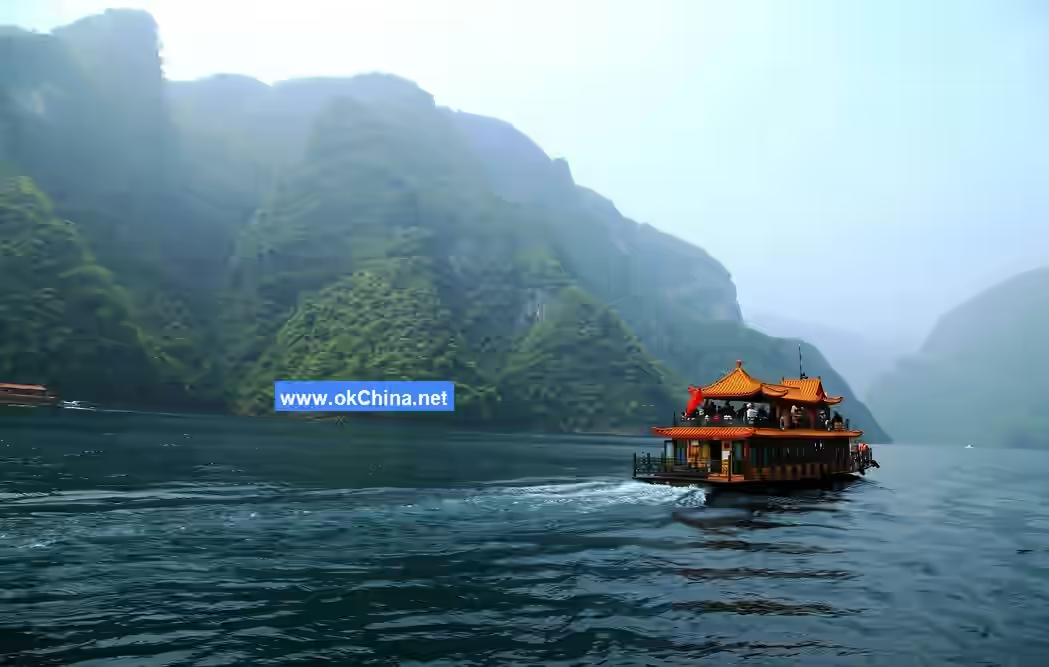
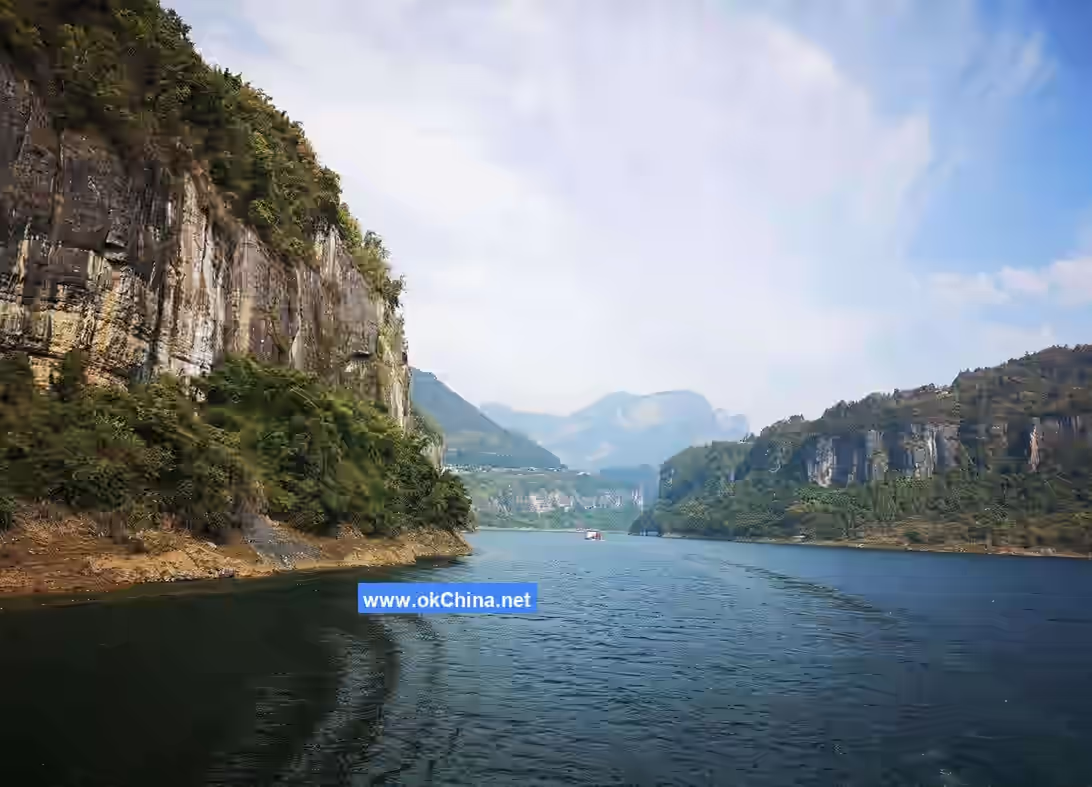
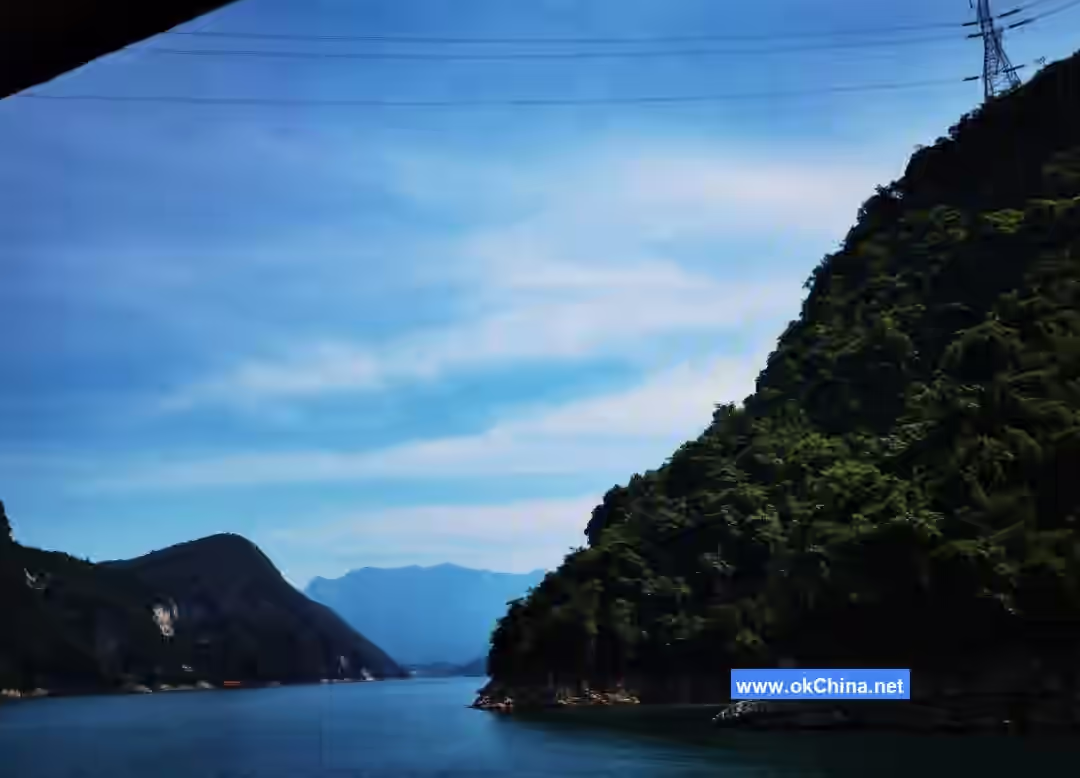
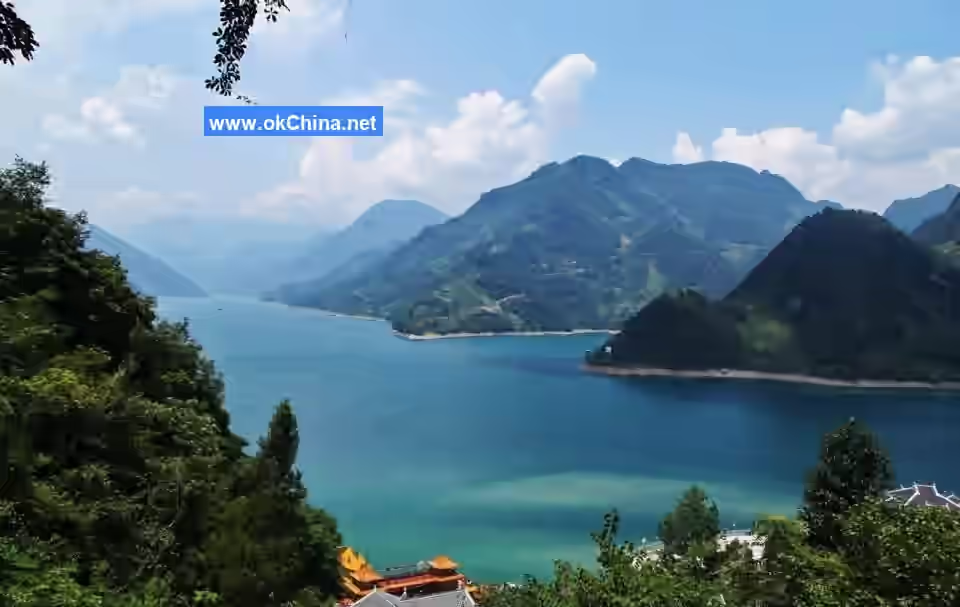
The Qingjiang Gallery Scenic Area in Yichang City, abbreviated as Qingjiang Gallery Scenic Area and also known as Qingjiang Gallery Tourist Resort, is a tourist attraction located in Longzhouping Town, Changyang Tujia Autonomous County, Yichang City, Hubei Province. The total area of the scenic area reaches 120 square kilometers.
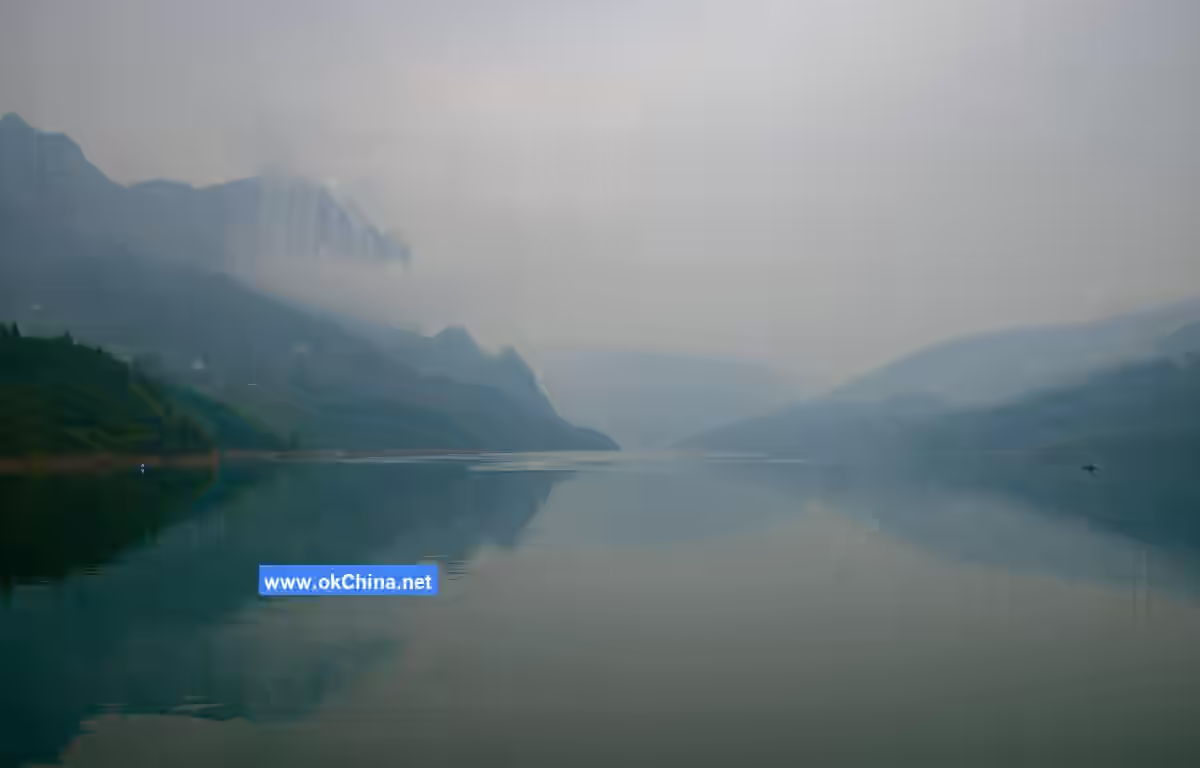
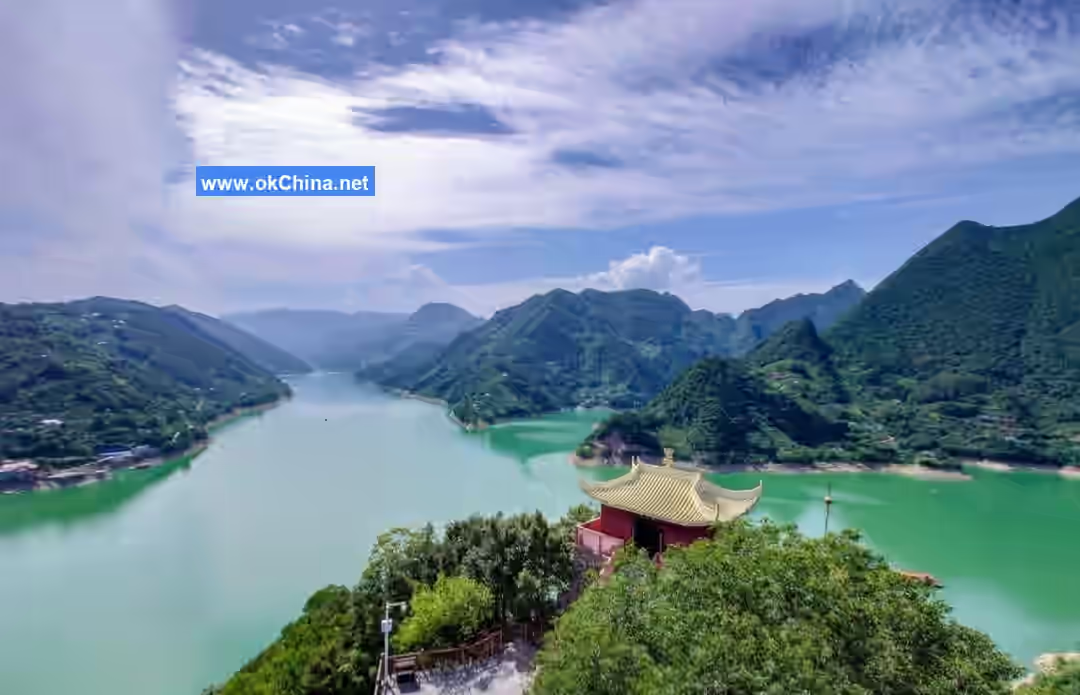
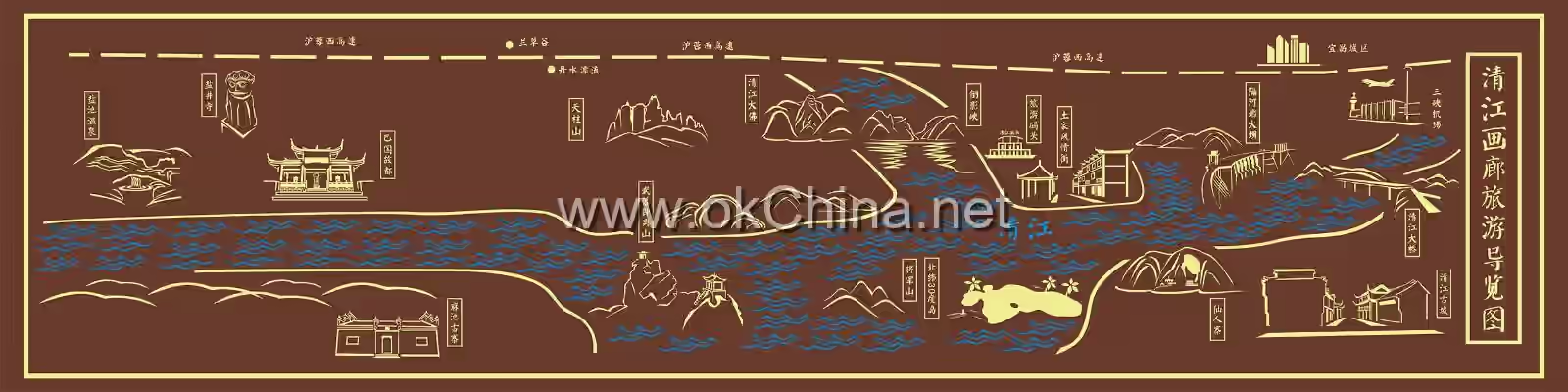
The Qing River is the second largest tributary of the Yangtze River within Hubei Province, the birthplace of the Ba people, and the mother river of the Tujia people. 190,000 years ago, the ancient "Changyang Man" initiated the ancient civilization of the Yangtze River here. 5,000 years ago, King Xiang sounded the first horn for the Ba Kingdom's territorial expansion here. The ancient Ba people expanded their territory from here and established the ancient Ba Kingdom. 2,000 years ago, the Tujia ethnic group was born here. The scenic area stretches from the Reflection Gorge at the Geheyan Dam on the Qing River in the east to the Yanchi Hot Spring at the Shuibuya Dam on the Qing River in the west. It features numerous attractions, with the three main core scenic spots being Reflection Gorge, Immortal Village, and Wuluo Zhongli Mountain.
2. Geographical Environment
2.1 Geographical Location
The Qingjiang Gallery Scenic Area is located in Longzhouping Town, Changyang Tujia Autonomous County, Yichang City, Hubei Province. The total area of the scenic area is 120 square kilometers.
2.2 Climatic Characteristics
Changyang Tujia Autonomous County, where the Qingjiang Gallery Scenic Area is situated, belongs to the subtropical continental summer-hot and humid climate zone. It features abundant sunlight, rich heat, ample rainfall, with rain and heat occurring in the same season.
3. Main Attractions
3.1 Wuluo Zhongli Mountain
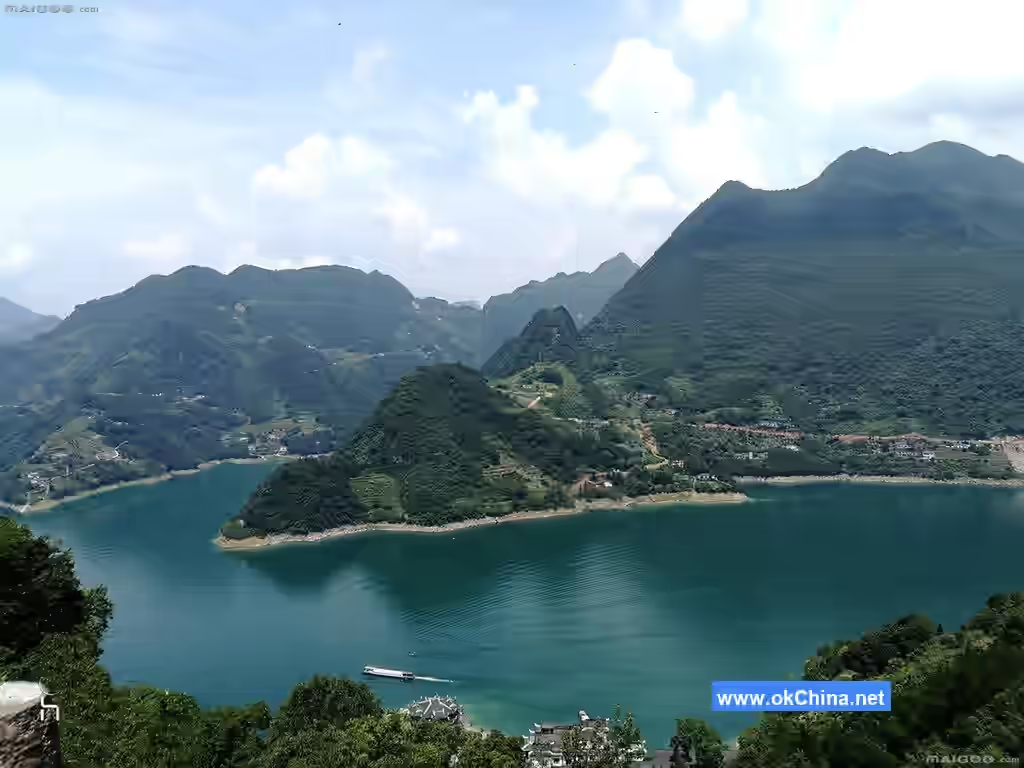
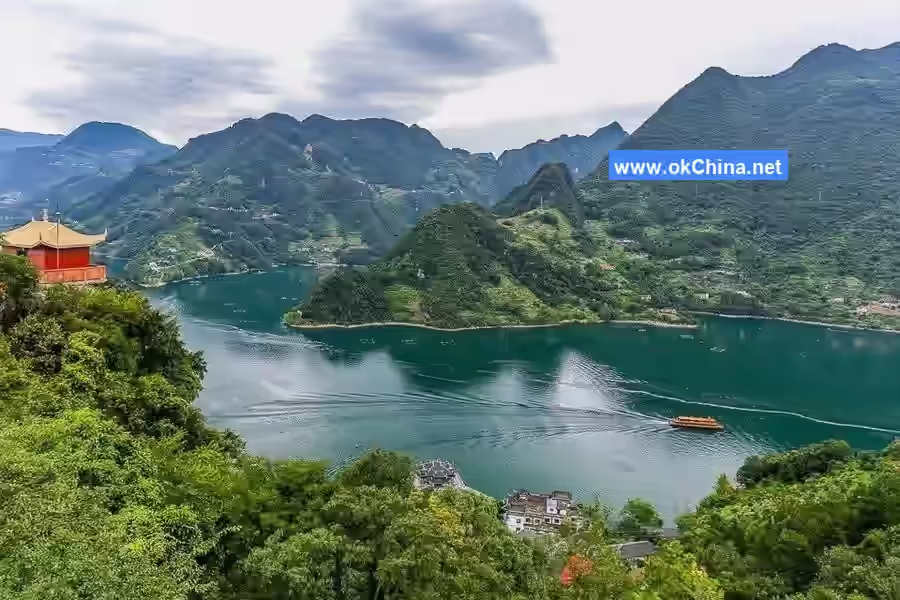
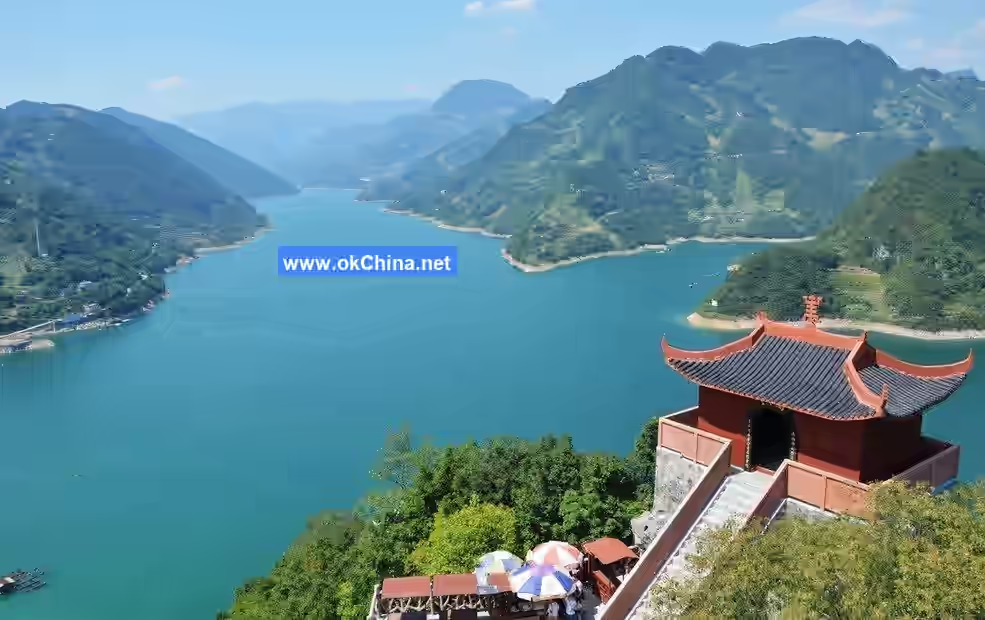
Wuluo Zhongli Mountain, also known as "Hen Mountain," has an altitude of 397.5 meters and is located within Changyang Tujia Autonomous County, Hubei Province. It is a main attraction of the Qingjiang Gallery Scenic Area, located 25 kilometers from the Geheyan Hydropower Station. The entire mountain appears to float on the lake surface, with its main peak at 397.5 meters. The base of the mountain is surrounded by water on all sides, with shimmering blue waves. The island features five staggered peaks and towering jagged rocks. Legend has it that Linjun, the leader of the Ba tribe, was born here. According to the Book of the Later Han, Wuluo Zhongli Mountain is where the Ba ancestors' leader Linjun Wuxiang threw a sword to claim kingship. It was from here that the Ba leader Linjun led his tribe to venture out in all directions. Wuluo Zhongli Mountain is shrouded in mist year-round and produces high-quality tea. The famous "Hen Mountain Tribute Tea" of the past originated from here. The newly planted tea gardens remain evergreen, creating a delightful contrast with the blue lake waters. The locally handcrafted spring tea is pure in color, aroma, and taste. The "Qingjiang Fish" caught by local fishermen is pollution-free green food, with "Qingjiang Whitebait" being particularly excellent. Whether tea or fish, purchasing some makes for the best gift for family and friends.
White Tiger Pavilion At the White Tiger Pavilion, there is a natural stone tiger, its head raised upward as if stretching its neck and roaring, ready to leap into the sky. Legend says that after Linjun died, he transformed into a white tiger and ascended to heaven. Later, the Tujia people revered the white tiger as their protective deity. Deji Pavilion Deji Pavilion was built to commemorate Linjun's wife, the Salt Water Goddess. The Tujia people respectfully call the Salt Water Goddess "Lady Deji," hence the name Deji Pavilion. Climbing the pavilion offers a panoramic view of the beautiful scenery below. Looking westward into the depths of the misty clouds lies the distant land where Linjun ventured west and met the Salt Water Goddess. Xiangwang Temple At the mountain top is Xiangwang Temple. The Tujia people have a saying: "King Xiang Tianzi with one horn, blew out the Qingjiang River." As Linjun developed and governed the Qing River, possessing virtues akin to Yu the Great, the Tujia people revered him as King Xiang and built Xiangwang Temple here for people to worship. This Xiangwang Temple was once burned down by Japanese troops and was restored in 1984. Stone God Platform Opposite Xiangwang Temple is the Stone God Platform. A small shrine on the platform houses a pair of cobblestones, representing ancestral worship of genitalia. It is said that climbing the platform to touch the stone god brings its spiritual energy, bestowing good luck, marital harmony, and fertility to the childless. The temple door has an ancient couplet: "Veins connect to the head, gathering spiritual elegance; facing the Dragon Horn, descendants prosper." "Dragon Horn" refers to Longjiao Mountain across the Qing River. Salt Goddess Rock The rock east of the Stone God Platform, thick at the top and thin at the bottom, is the incarnation of the Salt Water Goddess—the Salt Goddess. This loyal and steadfast Salt Goddess has been here for tens of millions of years, overlooking the Qing River and the Tujia villages, blessing their descendants with prosperity. Red and Black Caves Descending the stone steps from the other side of the mountain top, one soon sees the "Black Cave" and "Red Cave." These two caves were places where various tribes gave birth and raised children. Legend says Ba Wuxiang was born in the "Red Cave." Due to the passage of time, erosion by wind and rain, and strikes by lightning, "the mountain rocks collapsed," leaving the caves in their current state. The Dingshi Ping at the mountain base bears witness to this "collapse of mountain rocks." White Tiger Hall The stilted building by the riverside is the recently constructed White Tiger Hall, built to commemorate Linjun. The first floor houses a Tujia Folk Customs Exhibition Hall, featuring a jade-carved white tiger and a large collection of artifacts reflecting Tujia customs and lifestyles. The second floor is a Tujia Folk Performance Hall, where one can enjoy authentic Tujia song and dance performances. Research
3.2 Reflection Gorge
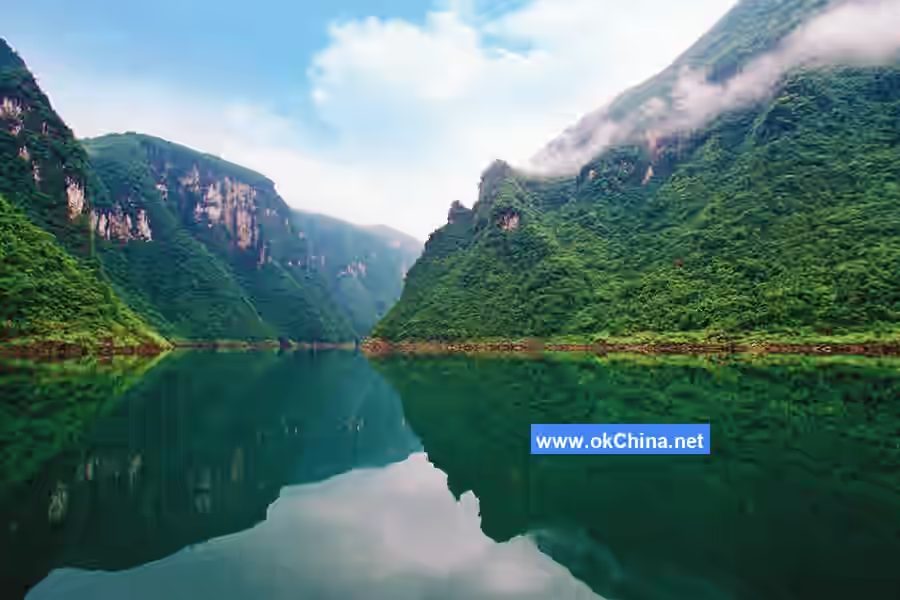
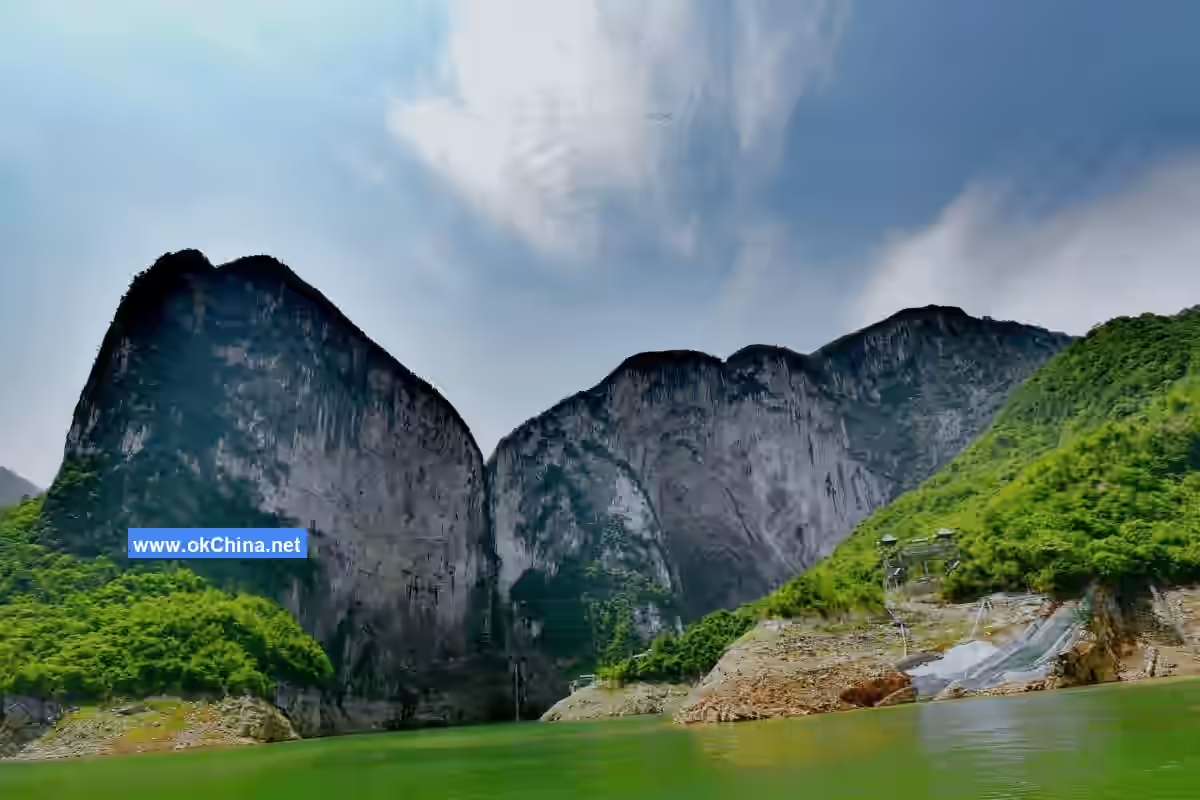
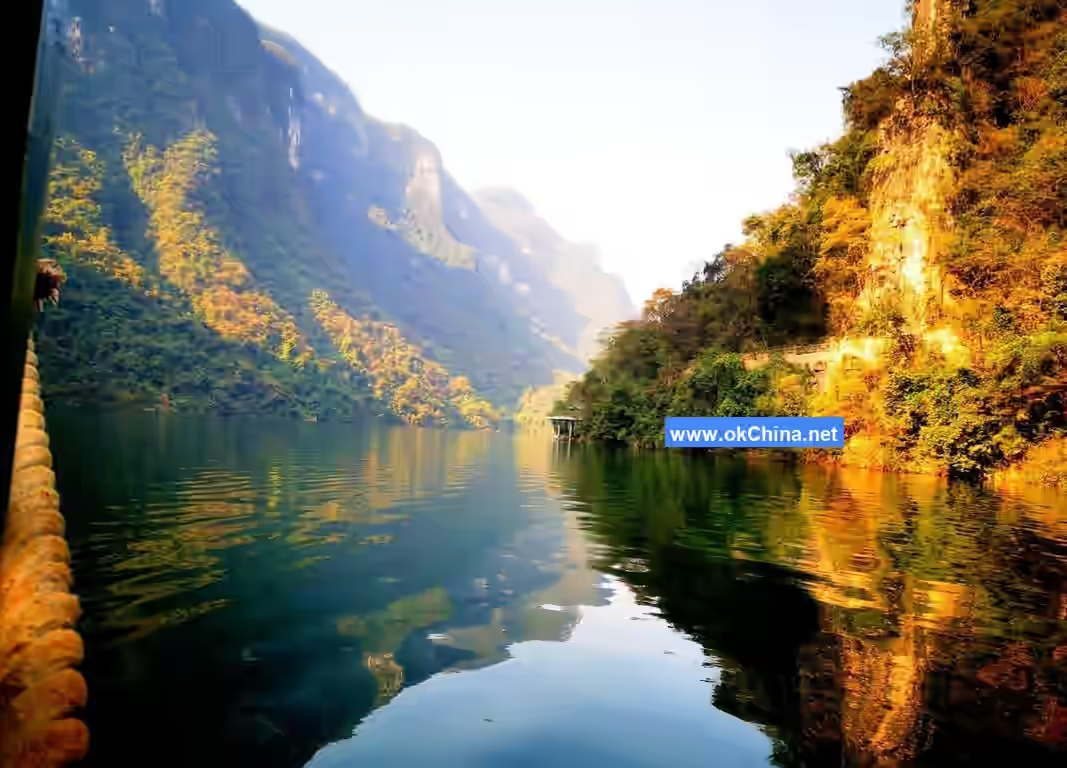
Reflection Gorge is the first main attraction upon entering the Qingjiang Gallery Scenic Area, located north of the Geheyan Dam. The gorge is 5 kilometers long, featuring tranquil waters, serene valleys, steep peaks, and picturesque scenery everywhere. Attractions here include the world's largest natural Maitreya Buddha and Peacock Spreading Its Tail.
3.3 Immortal Village
Immortal Village, known as the "Kingdom of Flora and Fauna," is home to nearly 200 rare plant species, including fairy fragrant grass, four-season apricot, field pseudo-ginseng, rock cabbage, rock pine, aloe vera, and dove tree.
4. History and Culture
4.1 Origin of the Name
The Qing River, anciently called "Yishui" and also known as "Salt Water," is the second largest tributary of the middle reaches of the Yangtze River within Hubei, second only to the Han River. Its name first appeared in the Tribute of Yu and is also recorded in the Book of Han: Treatise on Geography and the Commentary on the Water Classic. The river was initially called Yishui due to the "Ba people (White Tiger Yi)," the ancestors of the Tujia people, hence people today call it the mother river of the Tujia. The name "Salt Water" is undoubtedly related to the salt-producing regions it flows through, such as the Yanchi Hot Spring in Yuxiakou, Changyang, and the salt spring in Bashan Gorge, where people boiled brine for salt until before the establishment of New China. There are also places like Xianchi River in Langping and Baixianchi in Hejiaping, etc. Li Daoyuan of the Wei and Jin periods, in his commentary on the Water Classic, wrote: "Yishui is the mountain-clear river; its water is so clear it reflects ten zhang, distinguishing sand from stone. The Shu people, seeing its clarity, thus named it Qingjiang (Clear River)."
4.2 Homeland of the Ba People
Legend says that during their migration, the ancestors of the Ba people split into two branches. One branch was called the Linjun Ba people. They were the Ba people who migrated along the Han River basin to the Qing River in Hubei. They lived on Wuluo Zhongli Mountain (also known as Nanliu Mountain, in present-day Changyang County, Hubei). On the mountain were red and black caves; the Ba clan lived in the red cave, while the other four clans lived in the black cave. They decided to select a leader to unify the five clans for better survival. How was the selection conducted? First, a sword-throwing competition: whoever could hit the cave would become the leader. As a result, Ba Wuxiang succeeded, while the others failed. Next was a boat competition; the boats were made of clay. The boats of the other four clans sank, but only Wuxiang's boat floated. Everyone resolved to establish Ba Wuxiang as their leader, with the title "Linjun." What does "Linjun" mean? According to Shuowen Jiezi, "lin" means "the person who shakes the grain," i.e., the granary. Since food is the paramount necessity of the people, "Linjun" thus means the monarch who can provide the people with surplus grain. Also, according to Guangya: Explanation of Words, "lin" means "to govern," i.e., the monarch who governs the people. Both meanings might be combined. Because primitive clans or tribes often engaged in warfare for survival, without formidable martial prowess, one could not be a competent leader; hence, sword-throwing tested martial skill. For the Ba people living in the gorge area of the Qing River basin, proficiency in water and boat floating was their sole means of transportation for salt collection, fishing, hunting, trade, and tribal migration. Therefore, skills in watermanship, boat-building, and floating were evidently crucial. The tribal leader's proficiency in this skill was directly related to the economic life and survival of the entire tribe. In the early Warring States period, the territory of the Ba Kingdom "extended east to Yufu (present-day Fengjie), west to Bodao (present-day Yibin), north connecting Hanzhong, and south reaching Qianfu," roughly between the Jialing River, Yangtze River, and Wujiang River basins, with the eastern Sichuan region as its heartland—truly a vast kingdom. However, at its founding, the Ba Kingdom had neither fixed borders nor a fixed political, economic, or military center. After the mid-Warring States period, the Chu State launched further large-scale attacks against the Ba Kingdom. Around the early 4th century BC, the Ba Kingdom lost all its territories in southern Shaanxi, southwestern Hunan, southeastern Sichuan, and northern Guizhou.
4.3 Major Events
On April 28, 2021, the "Magnificent Qingjiang, Dreamlike Changyang" new routes and products tourism promotion conference was held at Qingjiang Gallery. On January 13, 2024, the "Celebrate the Long Year Together" — 2024 Qingjiang Gallery New Year惠民 (benefiting the people) event and the "Rich Hubei Shopping" New Year goods festival opened at the Qingjiang Gallery Scenic Area. On November 9, 2024, the 2024 Qingjiang Gallery "Huajia Wedding Banquet" Autumn-Winter Food Festival grandly opened at the Qingjiang Gallery Scenic Area.
5. Specialty Cuisine
5.1 Gold Wrapping Silver
"Gold Wrapping Silver" is also called "corn rice." Essentially, it is cornmeal wrapped around white rice. "Gold Jian Shi, Silver Li Chuan" — Jian Shi produces much corn, and Li Chuan produces much rice. Therefore, the Tujia people call this mixed food "Gold Wrapping Silver." It is nutritious, soft, and fragrant, with a bright color, yellow tinged with white, and is considered "auspicious rice" by the Tujia people.
5.2 Lazy Tofu
Lazy Tofu is also called "Hezha" (mixed dregs). Because making this lazy tofu "does not require filtering the soybean dregs with a cloth," and since it is a soup made by cooking vegetables together with soybean milk and its dregs, it is aptly named "Hezha" or "Mixed Dregs."
5.3 Meat Cake
Meat Cake is a traditional food of the Changyang people, made by steaming a mixture of sweet potato starch, minced pork (or fish), tofu (or potatoes), eggs, and seasonings. The meat cake is stacked in a flower-patterned bowl in the shape of a pagoda.
Comments
Post a Comment