

Mianyang Qiang City
1. Introduction
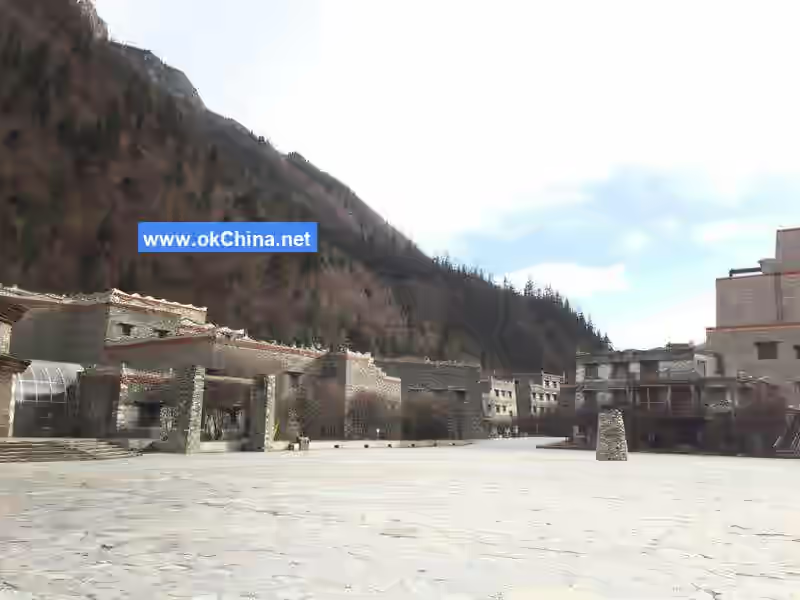
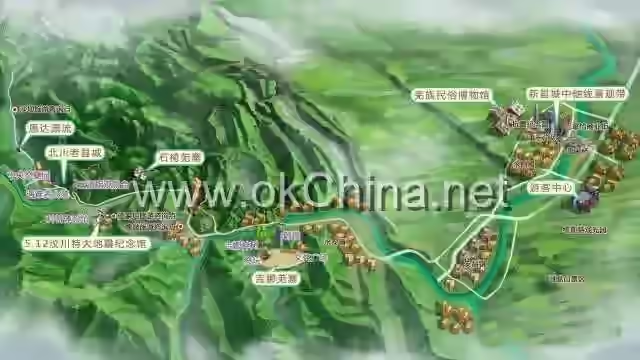
The Mianyang Qiang City Tourist Area, also known as the Beichuan Qiang City Tourist Area, is located within Beichuan Qiang Autonomous County, Mianyang City, Sichuan Province, with a total area of 6.01 square kilometers. The Beichuan Qiang City Tourist Area consists of two towns (the new county town Banacha and the old county town), two museums (the "5.12" Wenchuan Earthquake Memorial Museum and the Beichuan Qiang Folk Customs Museum), one village (Jina Qiang Village), and one center (the Tourist Center). It is divided into three main parts: earthquake memorial tourist attractions, great love cultural tourist attractions, and Yu-Qiang cultural tourist attractions. The earthquake memorial tourist attractions include the old county town earthquake ruins and the "5.12" Wenchuan Earthquake Memorial Museum. The old county town earthquake ruins are the most completely preserved and largest-scale earthquake ruins in the world today, a precious legacy left to the world by the "5.12" earthquake disaster. The "5.12" Wenchuan Earthquake Memorial Museum is a national patriotic education base, a national classic red tourism scenic area, a national science popularization education base, and a national social science popularization base. The great love cultural tourist attractions form the central axis landscape belt of the new Beichuan county town. The Yuwang Bridge majestically stands over the Anchang River, overlooking the entire town; Banacha's distinctive shops are rich in Qiang ethnic style; the giant stone sculpture in Xingfu Garden serves as a warning to the world; the towering earthquake resistance monument is engraved with spiritual mottos of rebirth from destruction; and Jingsi Garden composes the song of life, expressing eternal gratitude. The Yu-Qiang cultural tourist attractions include Jina Qiang Village and the Beichuan Qiang Folk Customs Museum. Jina Qiang Village represents the 3,000-year distinctive folk culture of the Beichuan Qiang people. The Beichuan Qiang Folk Customs Museum is the largest Qiang folk customs museum in China and is hailed as the "Number One Qiang Museum in China."
2. Geographical Environment
2.1 Location and Territory
The Beichuan Qiang City Tourist Area is located in Beichuan Qiang Autonomous County, Mianyang City, Sichuan Province, with a total area of 6.01 square kilometers.
2.2 Climate Characteristics
Beichuan Qiang Autonomous County, where the tourist area is located, has a climate belonging to the subtropical humid monsoon climate of the Sichuan Basin. The thermal conditions are mid-subtropical, characterized by warm winters and cool summers, a long frost-free period, abundant precipitation, susceptibility to summer waterlogging, persistent autumn rains, and insufficient sunlight.
3. Main Attractions
3.1 5·12 Wenchuan Earthquake Memorial Museum
The main building of the 5·12 Wenchuan Earthquake Memorial Museum is named "The Crack," symbolizing "freezing the moment of disaster like a flash of lightning in the earth, leaving an eternal memory for future generations." The entire architectural form uses a landscape approach, with the main building volume formed by cutting and lifting the ground, extending outward through sunken squares and walkways, blending with gentle grassy slopes. Parts of the structure rise above the ground, symbolizing rebirth and hope. The main hall (Earthquake Memorial Museum) has an exhibition area of 10,748 square meters and a total exhibition line of 1,900 meters. Its permanent exhibition—"Mountains and Rivers Forever Remember"—is divided into six sections: "Prologue Hall, Unprecedented Catastrophe and Severe Destruction, United as One in Earthquake Relief, Scientific Reconstruction Creating Miracles, Development and Revitalization as a Monument of the Era, and Epilogue." It comprises 18 units, 60 groups, and 13 special topics, truthfully recording the 5·12 Wenchuan earthquake disaster, the earthquake relief efforts, the post-disaster reconstruction process, and the new achievements in economic and social development of the disaster area since the 18th National Congress of the Communist Party of China. The auxiliary hall (Science Popularization Experience Hall) has an exhibition theme of "Experiencing Earthquakes, Disseminating Knowledge, Cherishing Life," with an exhibition area of 1,560 square meters and a total exhibition line of 512 meters. It is divided into six exhibition areas: "Time-Space Tunnel, Disaster Scene, Decoding Earthquakes, Crossing the Seismic Fault Zone, Pre-Earthquake Defense, and Evacuation and Rescue." The outdoor sites include the Beichuan Old County Town Earthquake Ruins, the Shaba Earthquake Fault, and the Tangjiashan Barrier Lake Earthquake Remains. The Beichuan Old County Town Earthquake Ruins are the world's largest earthquake disaster ruin area preserved in its original location and appearance, featuring the most comprehensive types of destruction and the most typical secondary disasters.
3.2 Beichuan Old County Town Earthquake Ruins
The Beichuan Old County Town Earthquake Ruins belong to the outdoor exhibition area of the 5·12 Wenchuan Earthquake Memorial Museum. They are the most representative ruins formed after the 5·12 Wenchuan earthquake and are the world's largest earthquake ruin area preserved in its original location and appearance, with the most comprehensive types of destruction and the most typical secondary disasters. The total protected area is 1.2 square kilometers, with a core protected area of 0.79 square kilometers.
3.3 Banacha
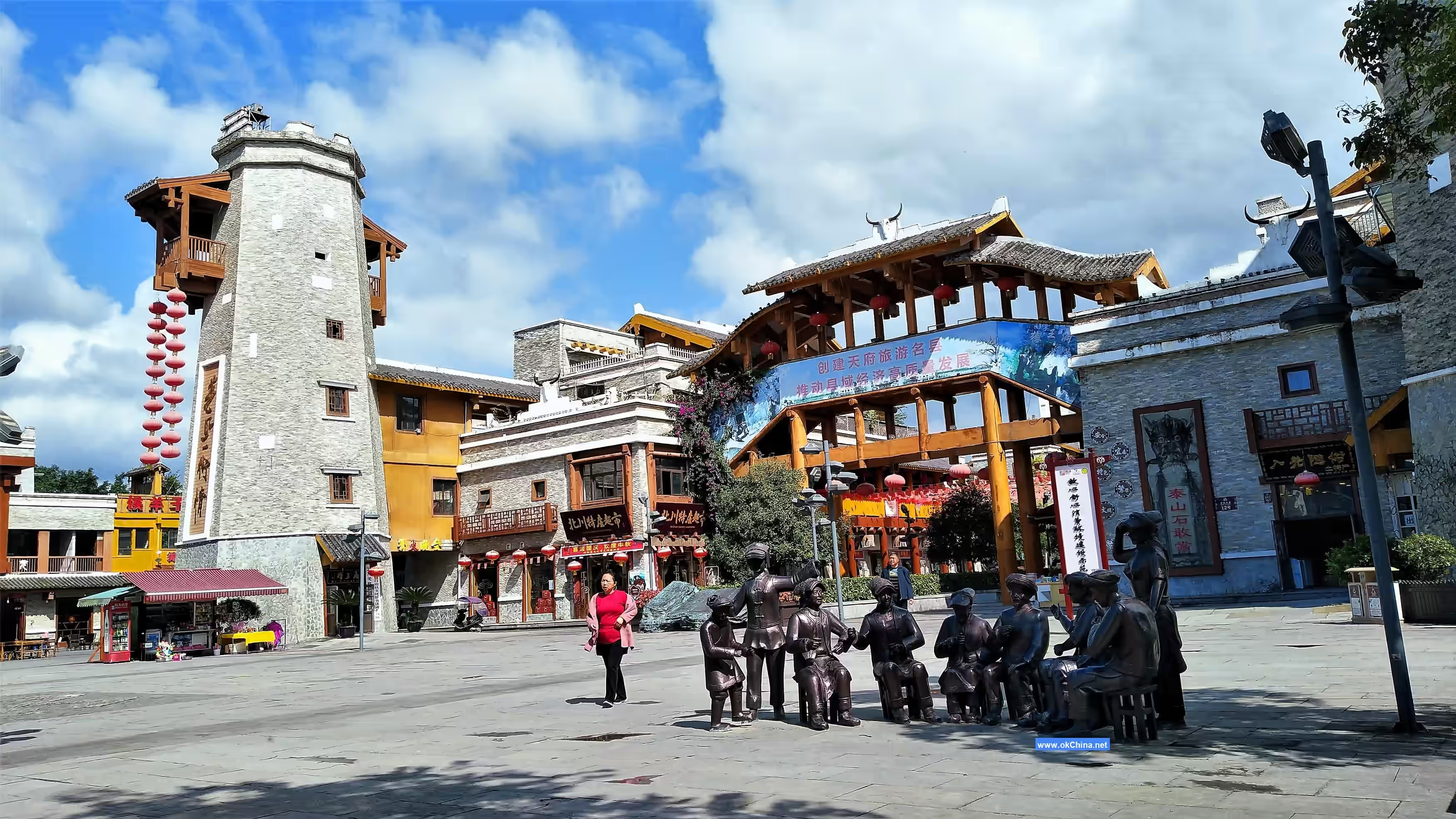
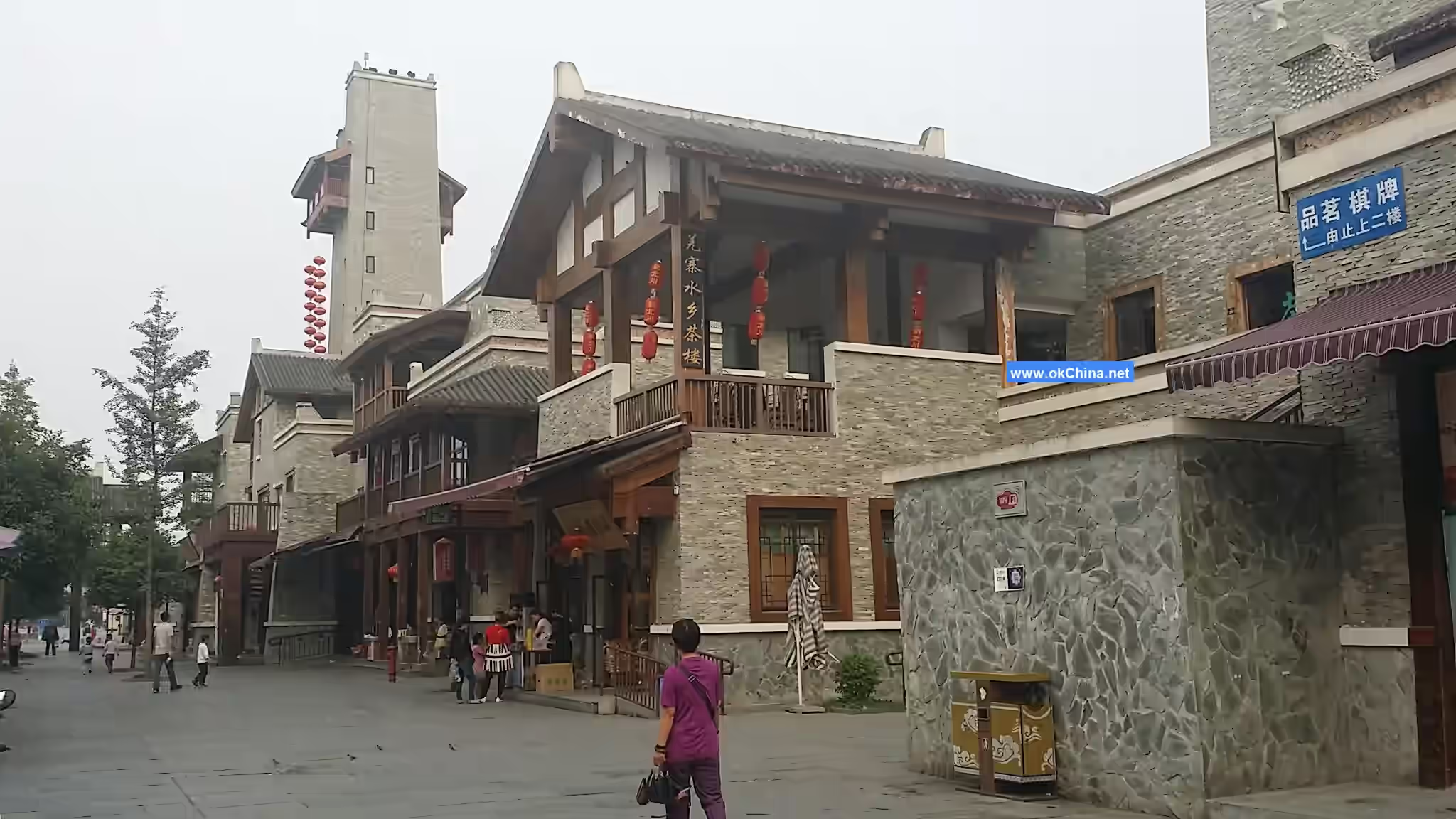
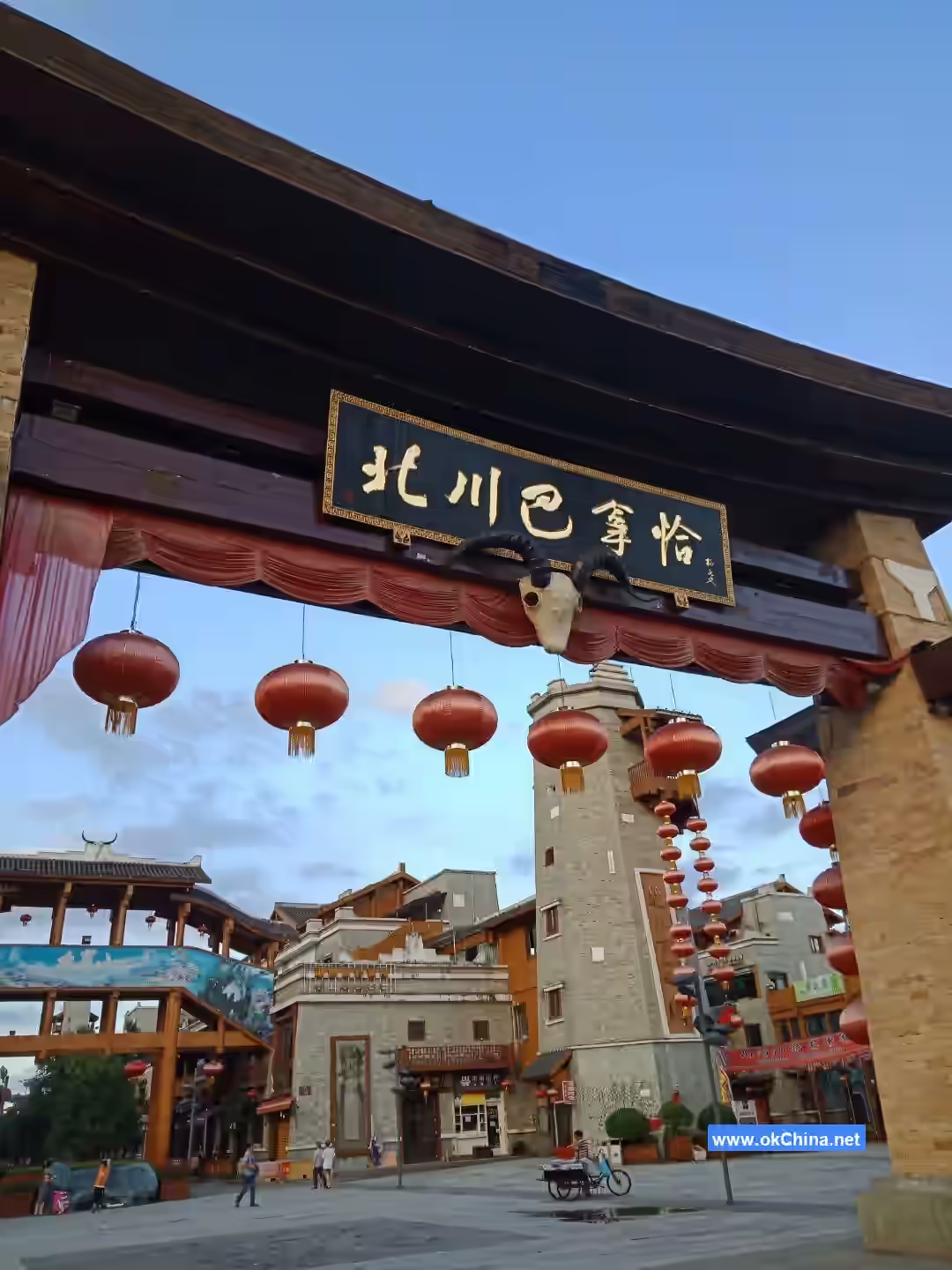
Beichuan Banacha is located on the central axis of Beichuan's landscape and culture. With regional ethnic customs as its theme and showcasing ethnic folk handicrafts as its characteristic, it integrates shopping, dining, entertainment, leisure, and recreation. It is one of the ten landmark buildings of the new Beichuan county town and the largest Qiang ethnic tourism commercial pedestrian street in Sichuan. It is 582 meters long and 130 meters wide, divided into three zones (A, B, C) and eight sections, featuring one large square, nine watchtowers, and 27 individual buildings. "Qiang New Year" is a national-level intangible cultural heritage. The "Qiang New Year" activities held annually on the first day of the tenth lunar month on Beichuan Banacha Commercial Pedestrian Street are particularly grand. During this period, large-scale folk activities such as the "Ten Thousand People Salang," "Thousand People Drum Dance," and "Qiang Region Salang Competition," along with exhibitions and sales of local specialty products from the Qiang mountains, are brilliantly presented. In April 2019, the Taiwan Affairs Office of the State Council listed the "Cross-Strait Dayu Cultural Exchange and Dayu Sacrificial Ceremony" as a key project for exchanges with Taiwan. In July of the same year, Beichuan held the first Cross-Strait Dayu Cultural Exchange and Dayu Sacrificial Ceremony, with over 100,000 compatriots from home and abroad participating, making it a cultural bond for the unity and progress of the Chinese people. Every year, Beichuan's Dayu sacrificial activities are rich and splendid, conducted with the "Great Sacrifice" ritual: drumming and bell ringing, offering the three sacrificial animals, respectfully reading the sacrificial oration, and performing ritual music and dance.
3.4 Jina Qiang Village
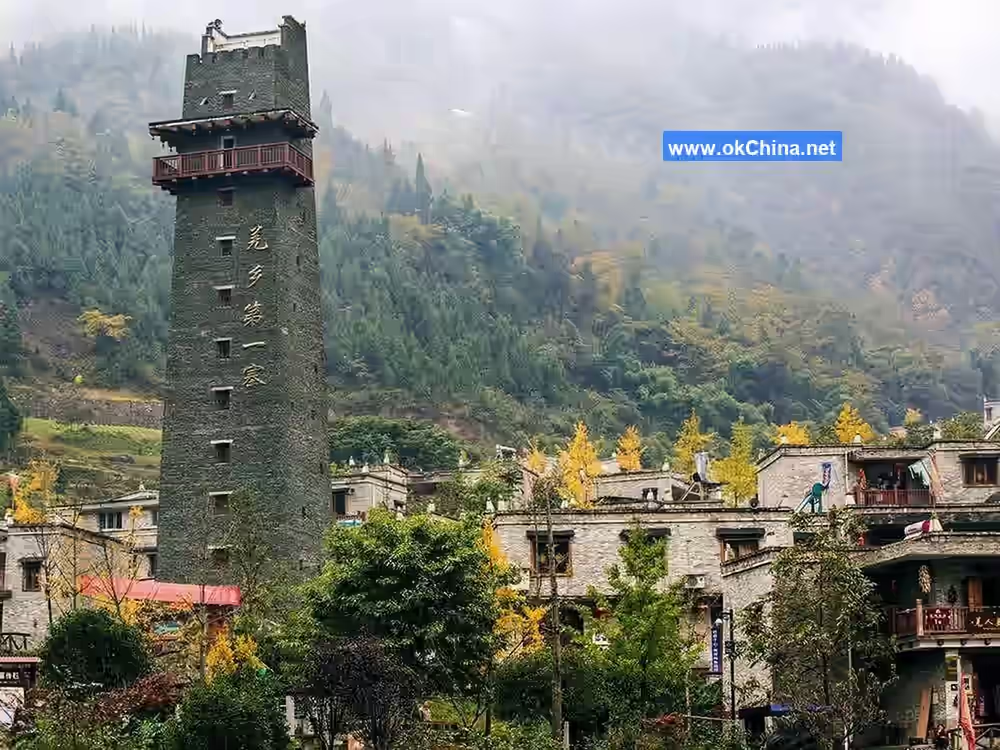
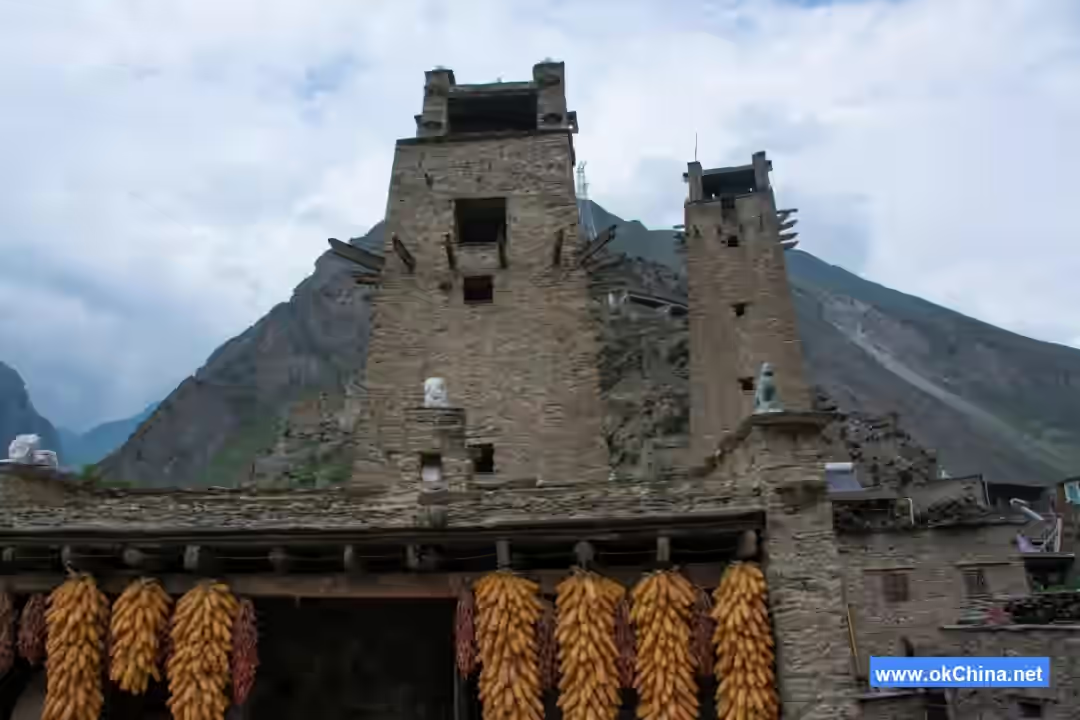
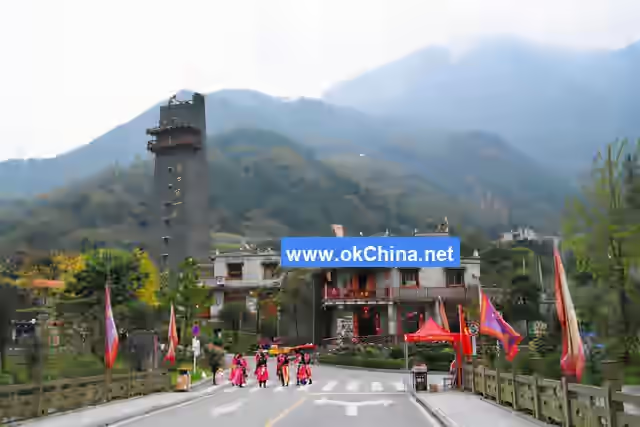
Jina Qiang Village is a settlement of Qiang residents within the first and second communities of Mao'ershi Village, Leigu Town, Beichuan County. It is located on the necessary route between Leigu Town, Beichuan County, Mianyang City, Sichuan Province, and the old and new Beichuan county towns. It is known as the "First Village of Beichuan." To the left of the village is Huajiaoping, to the right is Houpishan, and directly behind is Zhakousi Temple. It suffered severe losses in the 5·12 earthquake, with 69 out of 71 households' houses collapsing and 26 people perishing. By 2008, all 280-plus original villagers had moved back to the new village and into new homes. The rebuilt courtyards after the earthquake still give a sense of antiquity. The majestic watchtowers stand tall and proud, with elegant and plain exteriors. On the rooftops, white stones stand upright, adorned with various Qiang character flags. Above the doors of every household hang Qiang red cloths and sheep skulls. On the bonfire square, two over-10-story grayish-white watchtowers built with bluestones have become a beautiful and striking landscape amidst the green mountains and clear waters.
3.5 Qiang Folk Customs Museum
In May 2006, Beichuan established the Qiang Folk Customs Museum, with a site area of 2,000 square meters and a building area of 960 square meters. The museum housed four exhibition halls for historical relics, folk cultural relics, and folk artifacts, along with four offices and a reference room. It collected over 400 Qiang cultural relics, 208 Red Army cultural relics, 805 folk artifacts, and 508 historical relics. It was a moderately scaled Qiang folk customs museum in the Qiang inhabited areas of Sichuan, located within the "Three Centers" of the old Beichuan county town, and was completely destroyed in the 5.12 Wenchuan earthquake. In September 2009, the Macao Foundation and the Sichuan Provincial Government signed a cooperation agreement in Beichuan, providing aid of 100 million Macau Patacas (equivalent to 85.88 million RMB) to rebuild the Beichuan Qiang Folk Customs Museum. Designed according to national second-grade museum standards, construction began in January 2010. The museum integrates collection, protection, exhibition, and research, and is the largest Qiang folk customs museum in China to date, serving as an important window for inheriting and promoting ancient Qiang folk culture. The Beichuan Qiang Folk Customs Museum is divided into three main sections: "History," "Society," and "Culture." The "History" section narrates the grand historical background of the Qiang people. This section uses sculptures, murals, multimedia sand tables, pictures, and text to reflect Qiang historical details such as "Emperor Yan as the Ancestor," "Dayu Taming the Floods," "Southward Migration of the Qiang People," "The Qiang-Ge War," and "The Red Army Passing Through Beichuan." The "Society" section systematically elaborates on the Qiang people's social production, social relations, clothing, food, housing, transportation, weddings, funerals, and religious beliefs, providing a panoramic view of Qiang social forms to visitors. The "Culture" section, besides displaying intangible cultural heritage content such as Qiang embroidery, Qiang flutes, mouth harps, Qiang songs and dances, folk activities, and folk crafts, features a particularly attractive voice-controlled Qiang language learning area.
3.6 Yuwang Bridge
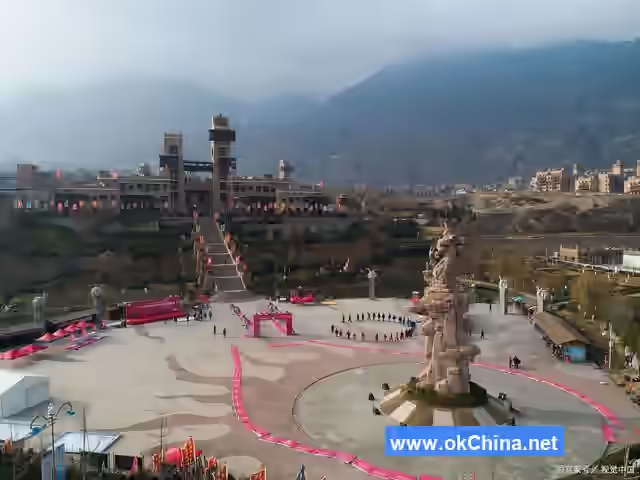
Yuwang Bridge is an important landscape on the east-west central axis of the new Beichuan county town. The bridge is 204.2 meters long, 12.6 meters wide, and 13 meters high, with a main span of 72 meters and spans of 56.1 meters at each end of the main span. The two watchtowers at the east and west bridgeheads each occupy 10 meters. The bridge features two-story antique-style buildings, with one traditional Qiang watchtower built at each end, totaling a building area of 5,166 square meters. The two ends of the bridge are the Yuwang Bridge East Square (built with aid from Weifang) and the Yuwang Bridge West Square, respectively. The architectural style of the entire bridge centrally embodies Qiang ethnic characteristics. The facade design fully expresses Qiang ethnic charm, divided into three sections to avoid the monotony brought by the bridge's overly long continuous surface. The bridge interior houses commercial shops while also providing platforms for pedestrians to stop, rest, and enjoy the scenery.
4. Cultural Background### 4.1 The 5·12 Wenchuan Earthquake
At 14:28:04 on May 12, 2008, a magnitude 8.0 earthquake struck Wenchuan County, Sichuan Province, China, with a focal depth of 14 kilometers. This sudden disaster instantly changed the lives of countless people. The earthquake affected 417 counties (cities, districts) across 10 provinces (autonomous regions, municipalities), including Sichuan, Gansu, Shaanxi, and Chongqing, covering an area of approximately 500,000 square kilometers. It became the most destructive, widespread, and challenging earthquake to rescue in the history of the People’s Republic of China. As of September 25, 2008, the Wenchuan earthquake had confirmed 69,227 fatalities, 374,643 injuries, and 17,923 missing persons, with direct economic losses reaching 845.1 billion yuan. Collapsed buildings, landslides, and disrupted roads left the disaster area in ruins, countless families shattered, and the entire nation deeply shaken.
Following the earthquake, the Chinese government swiftly activated emergency response mechanisms, mobilizing military, armed police, firefighting, and other rescue forces to rush to the disaster area. Then-Premier Wen Jiabao arrived in the disaster zone within hours of the earthquake to direct rescue operations. At the same time, the international community extended a helping hand, with rescue and medical teams from countries such as Russia, Japan, South Korea, and Singapore arriving in the disaster area to work alongside the Chinese people. The entire nation united in solidarity, donating money and supplies, while volunteers from all directions rushed to the front lines, demonstrating the powerful cohesion of the Chinese nation. The people in the disaster area persevered amidst the rubble, and rescue workers raced against time in perilous conditions. The moving scenes brought tears to people’s eyes and showcased the resilience of life and the strength of unity.
Post-disaster reconstruction was a daunting task, but the Chinese government delivered remarkable results through scientific planning and efficient execution. A comprehensive plan for post-disaster recovery and reconstruction was quickly formulated, with significant financial investment from the central government and active participation from local governments and all sectors of society. Infrastructure, housing, schools, hospitals, and other facilities in the disaster area were rapidly rebuilt. The newly constructed houses were more robust, schools were equipped with advanced teaching facilities, and hospitals boasted improved medical conditions. Moreover, post-disaster reconstruction emphasized ecological protection and sustainable development, with many disaster areas revitalized after rebuilding. For example, Yingxiu Town in Wenchuan County was almost completely leveled by the earthquake, but after reconstruction, it has now become a modern tourist town, attracting numerous visitors.
In addition to physical reconstruction, psychological assistance was a crucial part of post-disaster recovery. The earthquake inflicted deep psychological trauma on survivors, many of whom lost loved ones, saw their homes destroyed, and were filled with fear and despair. To address this, the government and various sectors of society actively provided psychological aid, organizing counselors and volunteers to offer psychological support to affected individuals, helping them overcome their trauma and regain confidence in life. Many children who lost their parents in the earthquake were placed in new families, receiving care and support from society. Their smiles returned, becoming symbols of hope in the disaster area.
The Wenchuan earthquake was not only a disaster but also a profound test for the nation and society. It exposed shortcomings in China’s disaster prevention and mitigation efforts and spurred rapid development in related fields. After the earthquake, China strengthened the construction of earthquake monitoring and early warning systems, raised public awareness of disaster prevention, and implemented regular earthquake emergency drills in many schools and enterprises. Additionally, the country established stricter building seismic standards to ensure new constructions could withstand strong earthquakes. These measures not only laid the foundation for future disaster prevention and mitigation but also provided valuable experience for global efforts to address natural disasters.
From a historical perspective, the Wenchuan earthquake was a tremendous test for the Chinese nation but also an opportunity for the升华 of national spirit. During this disaster, the Chinese people demonstrated a great spirit of unity and solidarity, which not only inspired the people in the disaster area to rebuild their homes but also became a driving force for the nation’s progress. Post-earthquake China placed greater emphasis on people’s livelihoods, environmental protection, and sustainable development, promoting comprehensive social progress. At the same time, the international community’s collaboration with China during the rescue and reconstruction efforts exemplified the concept of a shared future for humanity, setting an example for global responses to natural disasters.
Every year on May 12, China holds various commemorative activities to honor the earthquake victims and promote the spirit of earthquake relief and rescue. These activities not only console the deceased but also inspire the living. The Wenchuan earthquake reminds us that natural disasters are a common enemy of humanity, and only through unity, cooperation, and scientific responses can we reduce the losses they bring. The story of the Wenchuan earthquake is not just a recollection of a disaster but also a profound reflection on human courage, wisdom, and solidarity. It teaches us that no matter the difficulties we face, as long as we hold onto hope and work together, we can overcome challenges and create a better future.
Comments
Post a Comment