Introduction to Qiandao Lake
1. Introduction
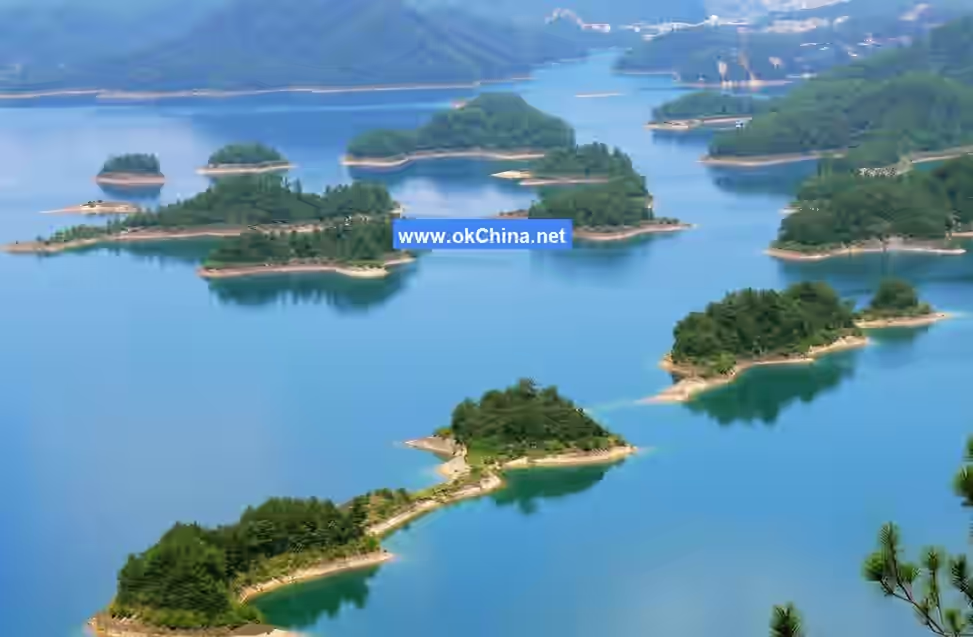
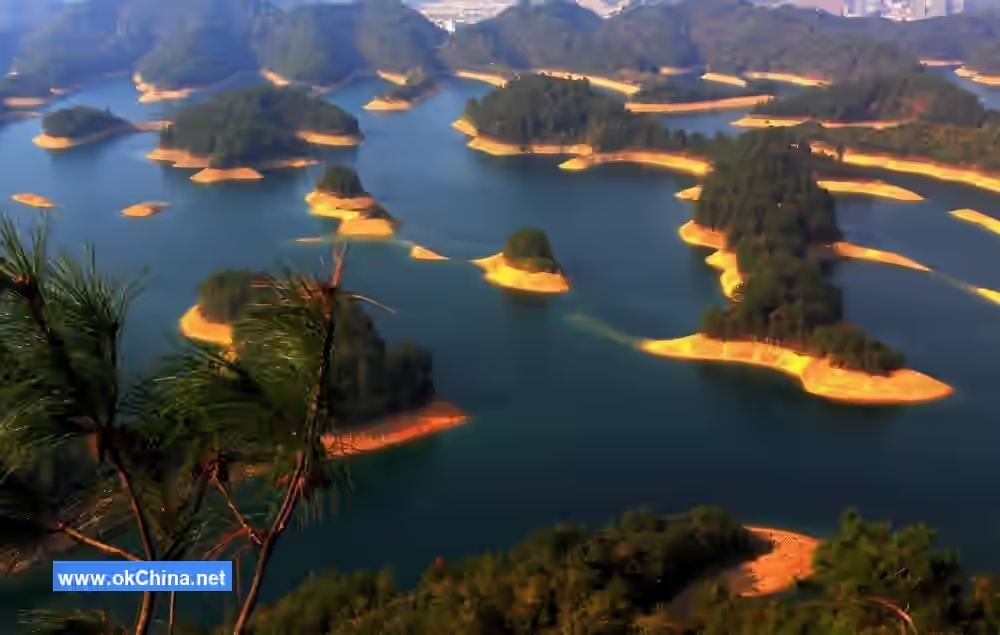
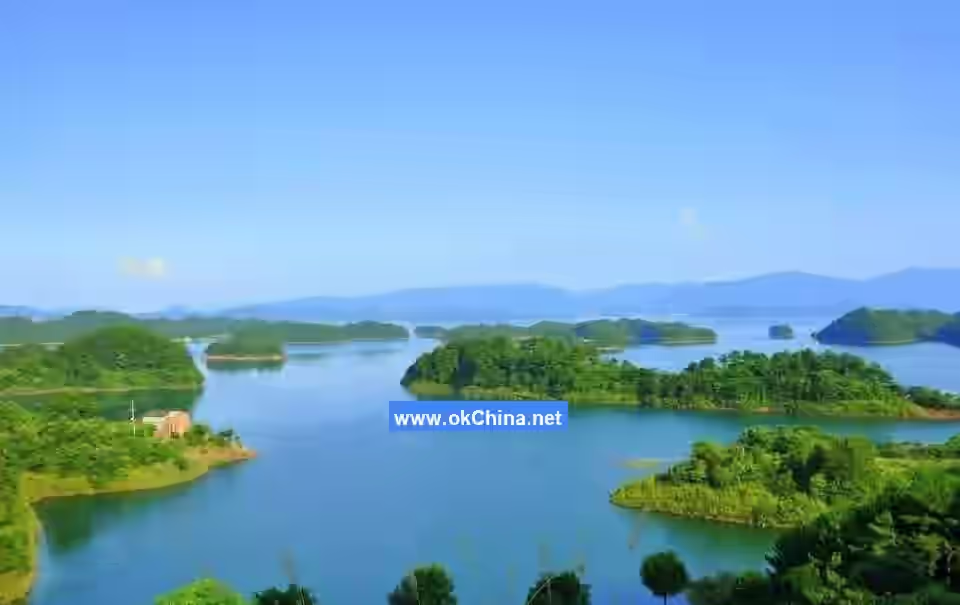
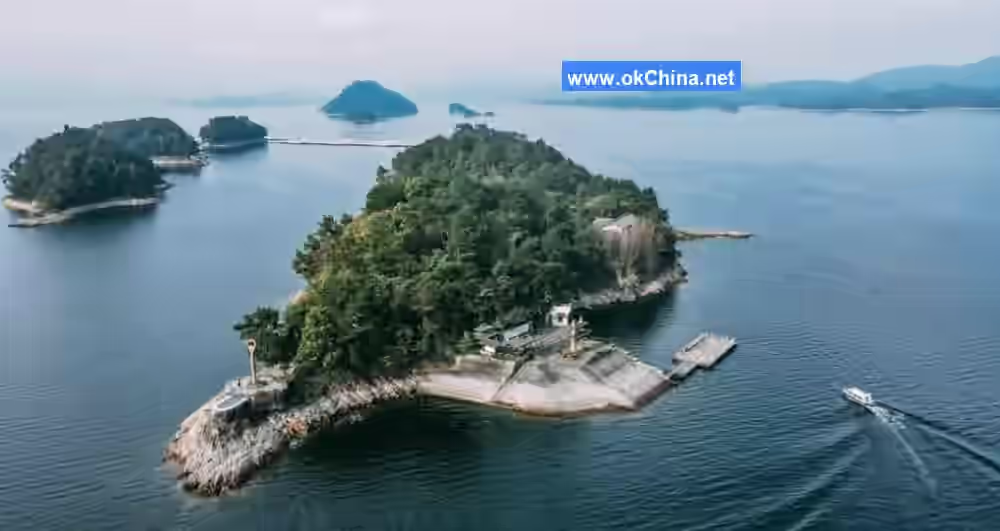
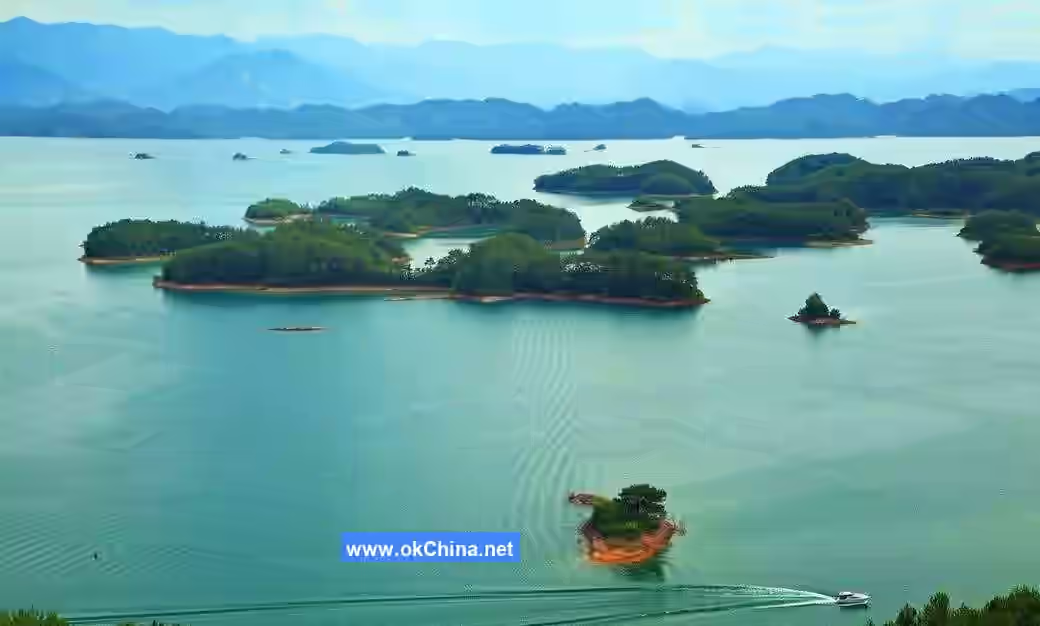
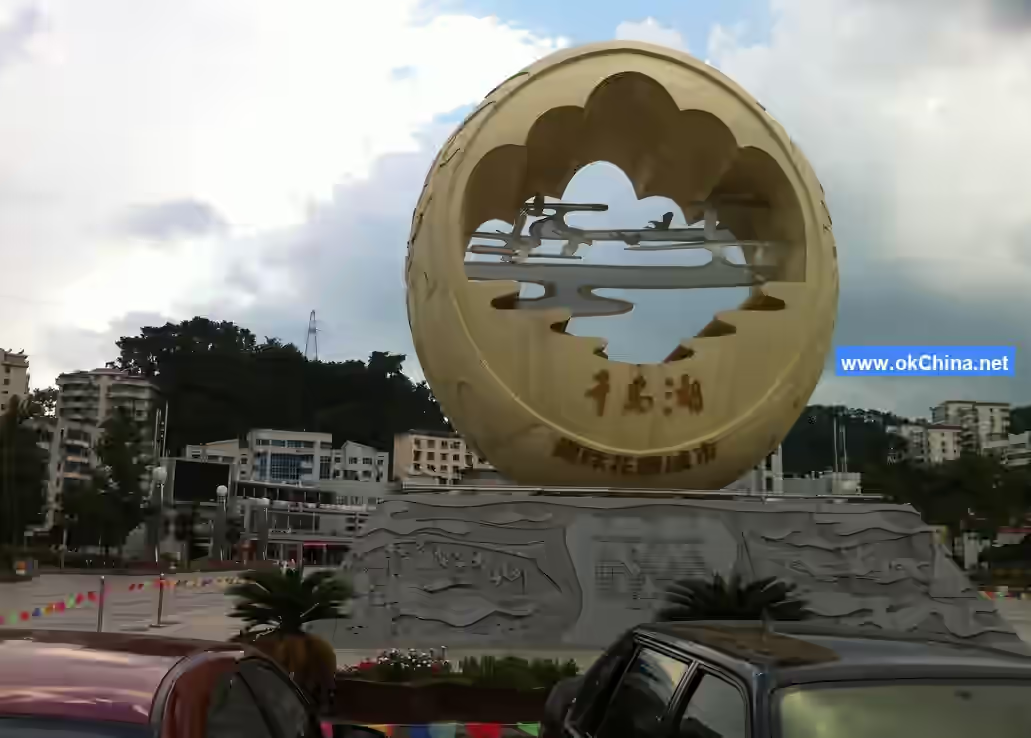
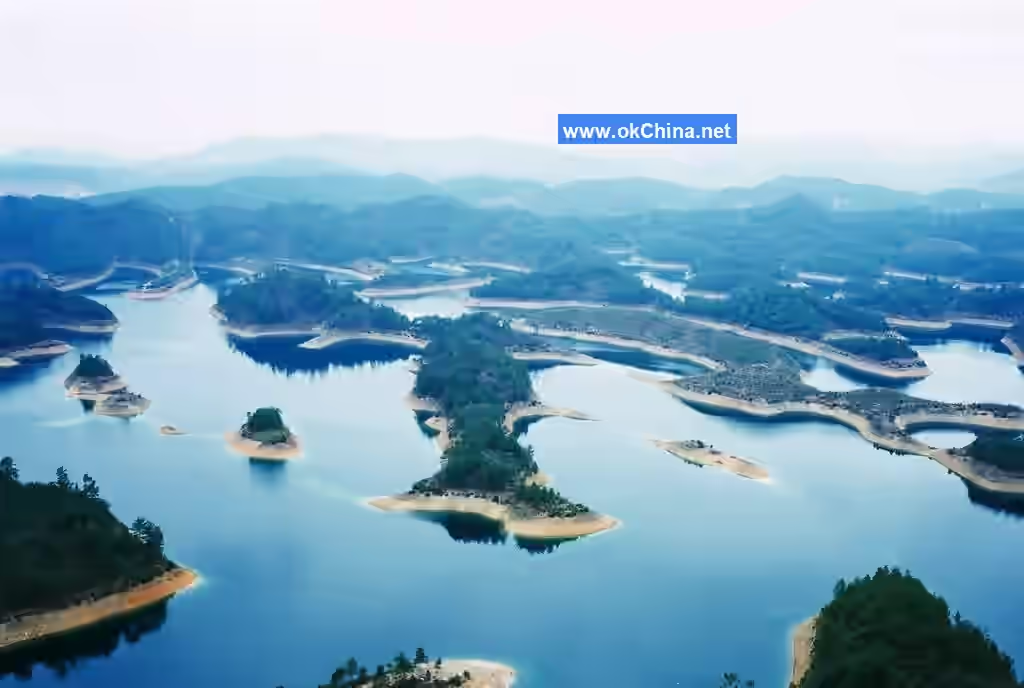
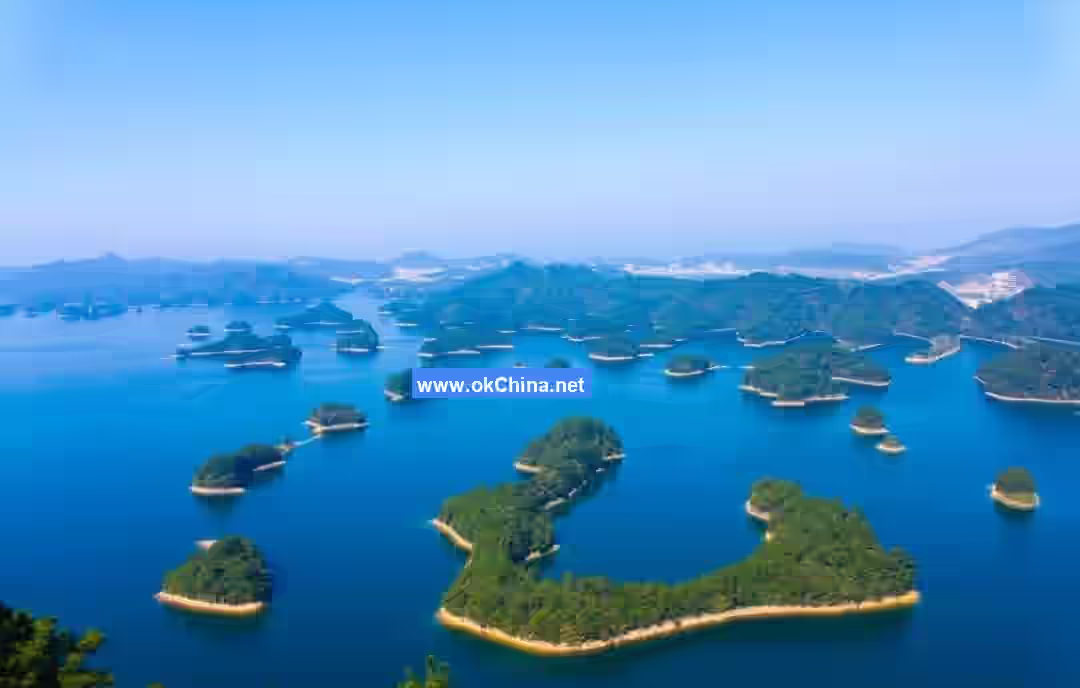
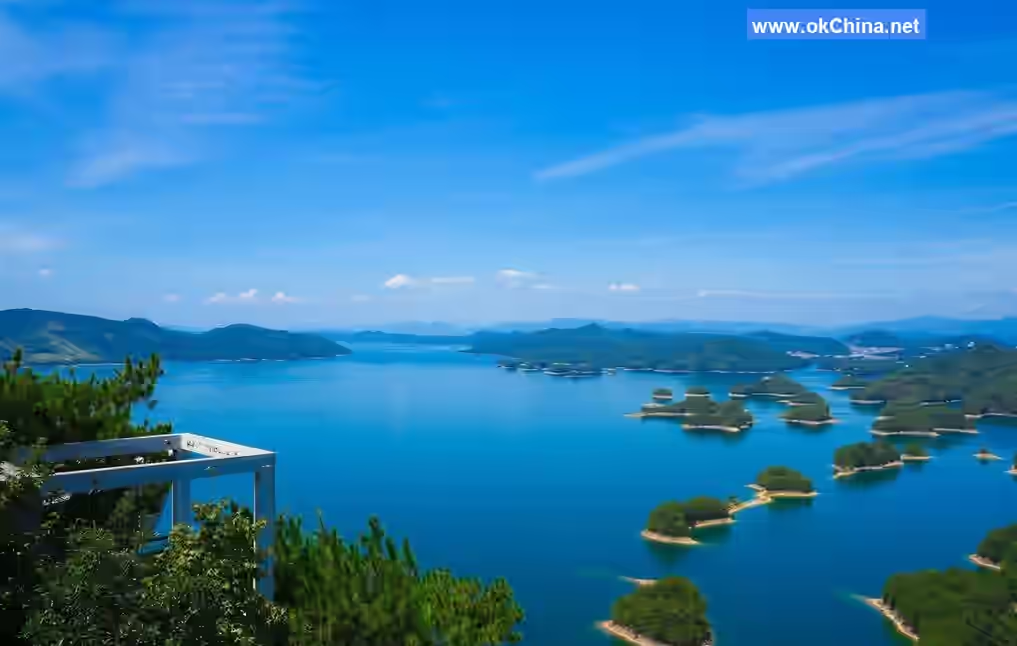
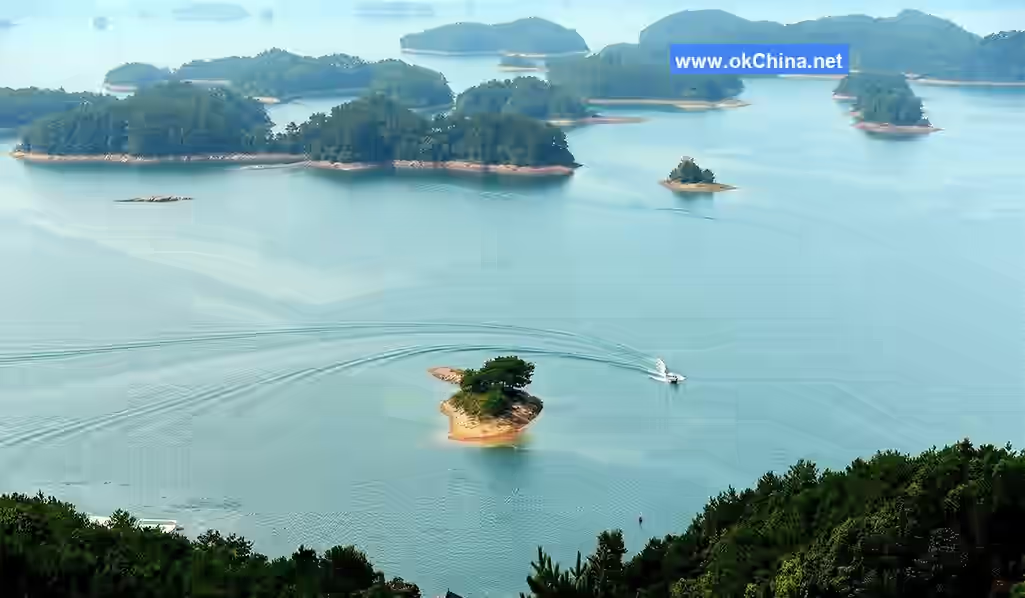
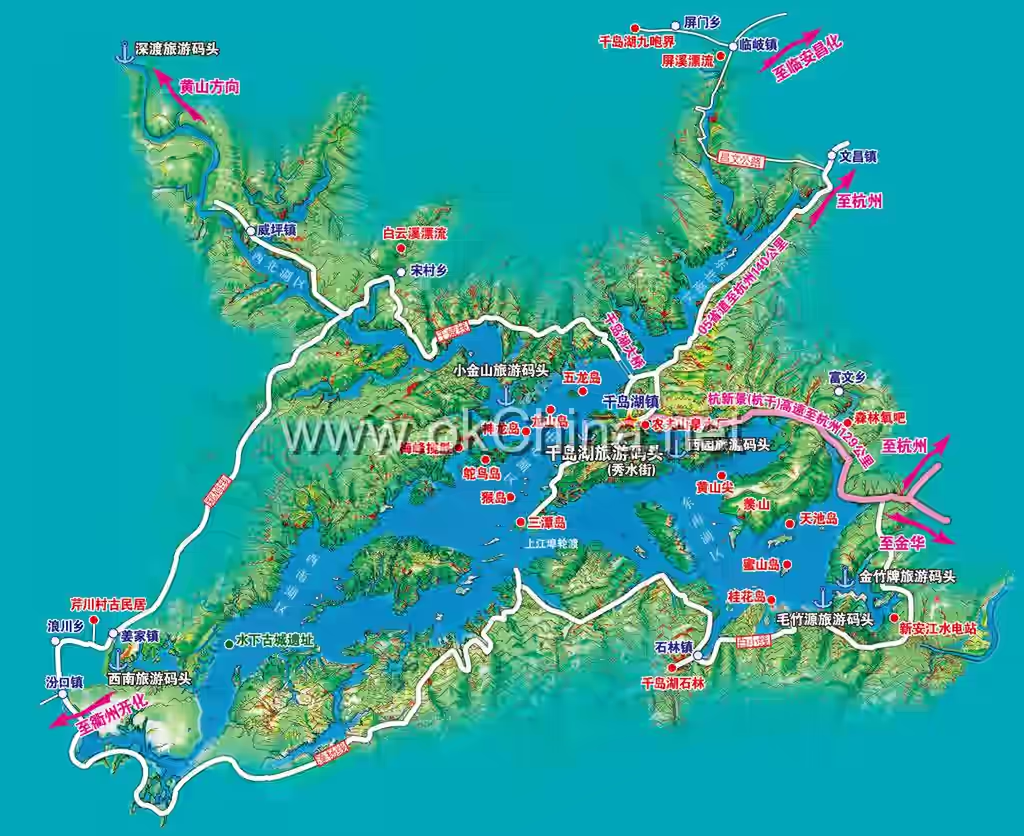
Qiandao Lake, also known as the Xin'anjiang Reservoir, is located within Chun'an County, Hangzhou City, Zhejiang Province, with a small part connecting to the northwest of Jiande City, Hangzhou. It is an artificial lake formed by damming the upper reaches of the Xin'an River for the construction of the Xin'anjiang Hydropower Station. After the completion of the Xin'anjiang Reservoir, the dam intercepted the upper reaches of the Xin'an River, creating a vast lake. The submerged mountains and ridges became islands of various sizes, totaling 1,078, hence the name "Qiandao Lake" (Thousand Island Lake). Qiandao Lake is divided into six tourist areas: the Southeast Lake Area, Central Lake Area, Northwest Lake Area, Southwest Lake Area, Northeast Lake Area, and the Stone Forest Scenic Area.
In 1955, construction began on the Xin'anjiang Reservoir. In 1959, the Xin'anjiang Hydropower Station was sealed and began storing water. In 1960, the Xin'anjiang Reservoir was completed. On December 15, 1984, the Zhejiang Provincial Geographical Names Committee officially named the Xin'anjiang Reservoir "Qiandao Lake." Qiandao Lake is one of the "World's Three Great Thousand Island Lakes." The dam of Qiandao Lake is 105 meters high and 462 meters long. The reservoir is approximately 150 kilometers long, with the widest part exceeding 10 kilometers. The deepest point reaches over 100 meters, with an average depth of 30.44 meters. Under normal water levels, the area is about 580 square kilometers, with a storage capacity of 17.8 billion cubic meters. At the highest water level, there are 1,078 land-bridge islands larger than 0.25 square kilometers, predominantly small islands under 2 square kilometers, with a total island area of 409 square kilometers.
In 2001, the Qiandao Lake Scenic Area, where Qiandao Lake is located, was designated as a National AAAAA Tourist Attraction by the National Tourism Administration. In 2010, it was further upgraded to a National AAAAA Tourist Attraction.
2. Geographical Environment
2.1 Location and Territory
Qiandao Lake is located between 29°11′–30°02′ north latitude and 118°34′–119°15′ east longitude, situated in Chun'an County at the border of western Zhejiang and southern Anhui, with a small part connecting to the northwest of Jiande City.
The dam of Qiandao Lake is 105 meters high and 462 meters long. The reservoir is approximately 150 kilometers long, with the widest part exceeding 10 kilometers. The deepest point reaches over 100 meters, with an average depth of 30.44 meters. Under normal water levels, the area is about 580 square kilometers, with a storage capacity of 17.8 billion cubic meters. At the highest water level, there are 1,078 land-bridge islands larger than 0.25 square kilometers, predominantly small islands under 2 square kilometers, with a total island area of 409 square kilometers.
2.2 Geology
The reservoir bed and base of Qiandao Lake are mostly composed of dense, impermeable Paleozoic rock layers, with a small portion being semi-dense or cohesive impermeable to slightly permeable rock layers. Locally, there are impermeable magmatic intrusive bodies, all of which have exposure elevations higher than the designed backwater level. Soil and water conservation in the reservoir area is excellent, with an average annual sediment concentration of only 0.248 kg/m³, resulting in minimal sedimentation and erosion. The dam site is located at Tongguan Gorge. Tongguan Gorge is 800 meters long, with both banks at an elevation of 300 meters above sea level. The riverbed elevation ranges from 20 to 22 meters above sea level, with steep lower slopes of 30°–40°. The gorge is about 180 meters wide during the dry season. The left bank consists of Tangjiawu quartz sandstone, while the right bank is composed of Xihu Formation quartz sandstone. The riverbed is mostly Tangjiawu sandstone, with a compressive strength of up to 150×10⁶ N/m² and a friction coefficient of 0.60. There is no weathered layer at the river bottom, and no significant fracture zones in the riverbed.
2.3 Topography and Landforms
The Qiandao Lake area belongs to the mountainous and hilly region of western Zhejiang, consisting of medium-low mountains, hills, small basins, and valleys. The terrain is high on the periphery and low in the center, sloping from west to east, forming a transitional landform from medium-low mountains in the periphery to hilly areas in the center. Before the Paleozoic era, the Qiandao Lake area was located in an ancient ocean. It gradually uplifted during the late Indosinian orogeny of the Mesozoic era, laying the foundation for the regional landform. After the Yanshan and Himalayan orogenies, long-term external erosion and differential uplift, along with volcanic eruptions, magmatic intrusions, fault activities, and external weathering, denudation, and leveling, formed a landscape dominated by low mountains and hills. Mountains and basins are distributed in a stepped, multi-layered terrain. In the low hill and basin areas downstream of the river valleys, erosion and pedestal terraces are well-developed. River alluvial, diluvial, and lacustrine deposits are widely distributed in the valleys and basins, with residual and slope deposits developed on both valley slopes. After the formation of the Xin'anjiang Reservoir, valleys and low hills below 108 meters elevation became water surfaces, making low mountain landforms more prominent. The landform types are primarily denudational mountain landforms, followed by depositional landforms and artificial lake landforms.
2.4 Climate Characteristics
Qiandao Lake has a subtropical monsoon climate, with an average annual temperature of 17°C. The rainy season occurs from early June to early July, while mid-July to late August is the summer drought season, characterized by muggy weather and afternoon temperatures rising to 36°C. The average annual precipitation is 1,489.0 mm, and the average annual evaporation is 1,355.1 mm. The multi-year average net inflow into the reservoir is 94.1×10⁸ m³, with an outflow of 90.0×10⁸ m³ and a water renewal cycle of two years. The upstream Xin'an River is the main inflow river, with a catchment area of 6,000 square kilometers above the Jiekou section, accounting for 60.2% of the total inflow.
3. Main Attractions
3.1 Southeast Lake Area
3.1.1 Overview
Attractions in the Southeast Lake Area include: Tianchi Island, Mishan Island, Huangshan Peak, and others.
3.1.2 Tianchi Island
Tianchi, also known as Baoshi Mountain, is located one kilometer north of Mishan. At the top of the island, there are seven artificially excavated stone pools, relics left from the Southern Song Dynasty when large quantities of tea garden stone were quarried for building palaces, pavilions, and archways in Lin'an (Hangzhou). Later generations named these seven stone pools "Tianchi" (Heavenly Pools).
3.1.3 Mishan Island
Mishan Island is a small island in Qiandao Lake filled with Zen ambiance, covering an area of 0.36 square kilometers with an elevation of 223 meters. The island features picturesque landscapes and a strong Zen culture. At the top of the island stands the Mishan Zen Temple, and legend has it that the story of "Three Monks, No Water" originated here.
3.1.4 Huangshan Peak
The main peak of Huangshan Peak stands at 266 meters above sea level, known for its "clear water, unique islands, and serene scenery." It is located 8 kilometers from Qiandao Lake Town and faces the Xianshan Tourism Resort, offering an excellent geographical location.
3.2 Central Lake Area
3.2.1 Overview
Attractions in the Central Lake Area include: Meifeng Lansheng, Longshan Island, Moonlight Island (Wulong Island), Yule Island, and others.
3.2.2 Longshan Island
Longshan Island is an island where cultural and natural landscapes complement each other. Longshan has long been regarded as a symbol of Chun'an's natural beauty and cultural richness. Visiting Longshan Island allows one to appreciate the historical and cultural heritage encapsulated in "one ancestral hall, one pond, one academy, and the three top scholars: Hai Rui and Zhu Xi."
3.2.3 Moonlight Island
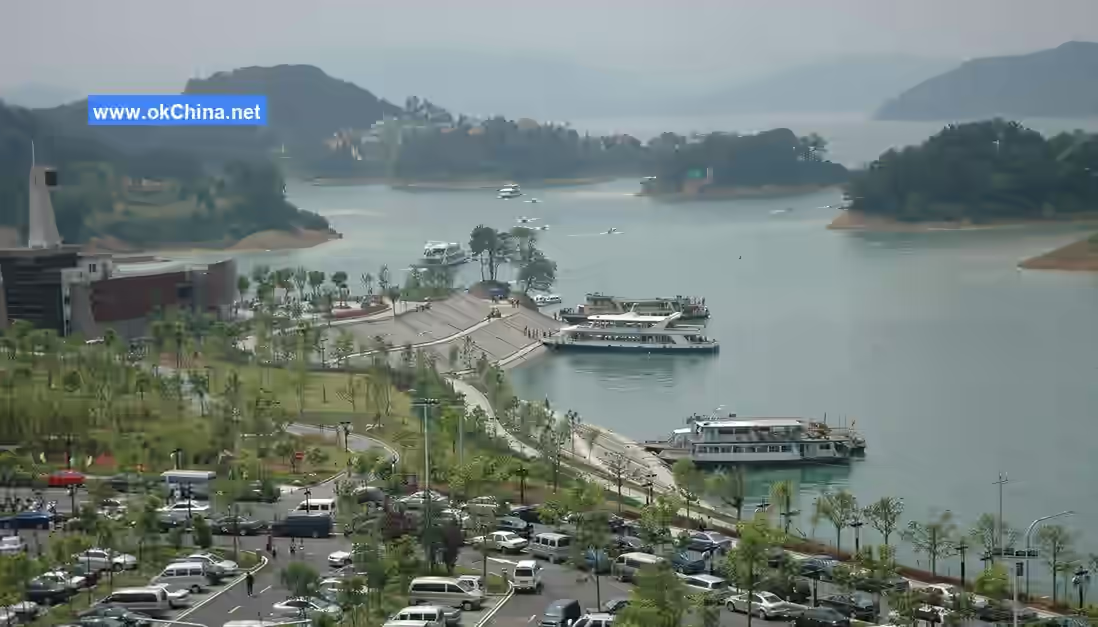
Moonlight Island is located in the Central Lake Area of Qiandao Lake, covering over 60 acres. It is the most romantic and culturally rich scenic area in Qiandao Lake. With "love" as its theme, the island features four gardens: "Love, Connection, Heart, and Dream," and welcomes visitors via ferry. The Moonlight Island Scenic Area has two main docks, east and west, allowing entry from either dock and exit from the other.
3.2.4 Yule Island
Yule Island is located in the Central Lake Area of Qiandao Lake, 13 kilometers from Qiandao Lake Town. It covers an area of 90 acres, with an elevation of 140 meters. The island is surrounded by intricate waterways, creating a maze-like environment. It houses reception and service facilities for the Central Lake Area, integrating dining, entertainment, water sports, and leisure sightseeing.
3.2.5 Meifeng Island
One of the most popular islands in the Qiandao Lake Scenic Area, visitors can take a cable car from the foot of the mountain to the top. At the summit, there are eastern and western viewing platforms. From the western viewing platform, islands are densely scattered below, leading to the saying, "Without viewing the islands from Meifeng, one cannot truly know Qiandao Lake."
3.2.6 Guihua Island
Guihua Island is located in the Southeast Lake Area, 16 kilometers from Qiandao Lake Town, covering an area of 120 acres. It is named for its abundant wild osmanthus trees. Guihua Island has three distinctive features: first, the scenic walking paths cleverly use surrounding rocks as barriers, creating an illusion of a dead end before revealing a new path; second, large stretches of wild osmanthus forests grow from rock crevices, showcasing strong vitality; third, the karst landforms, shaped by millions of years of rainwater erosion, are masterpieces of nature.
3.3 Northwest Lake Area
3.3.1 Overview
The Northwest Lake Area of Qiandao Lake is close to the western border of Zhejiang, centered around Qiping. It stretches east to the Huquan Islands, south to the Shuozhen Peninsula, and north to the Weiping Peninsula, connecting Zhejiang and Anhui provinces. Belonging to the upper reaches of the Xin'an River, it serves as the main route to Min County and Huangshan. The Northwest Lake Area features traces of the ancient Xin'an River, with a narrow lake surface and peculiar peaks on both banks. Main attractions include the Chen Shuozhen Uprising Site, Fang La Uprising Site, Liuxiang Waterfall, Changling Stone Pillar, Jin'ao Secluded Valley, and others.
3.3.2 Chen Shuozhen Uprising Site
The Chen Shuozhen Uprising Site is located at Wenjia Ridge, situated at the mouth of Zitongyuan on Shangbu Island. It is the ancient battlefield site of Qiong Shuozhen's uprising.
3.3.3 Fang La Uprising Site
The Fang La Uprising Site, also known as Fang La Cave, is located within the Qiping District. There are two caves in the area: one on the mountain of Dongyuan Village, Miaoshi Township, where Fang La initiated the uprising and was captured. Originally named Bangyuan Cave, it is located on the waist of Changlong Mountain northeast of Dongyuan Village, Miaoshi Township. The cave is layered, with upper and lower sections connected, extending tens of meters deep. Each layer can accommodate 50–60 people.#### 3.3.4 Changling Stone Pillar and Liuxiang Waterfall The Changling Stone Pillar and Liuxiang Waterfall are located along the highway from Changling Township to Huangshan. Here, the Cambrian and other strata have undergone significant crustal movements, with folds and fractures being very pronounced. Water has deeply incised along these fractures and fissures, forming a canyon landscape. In the stream stands a vertical stone pillar about 100 meters high. The clear stream flows around the pillar. To the right of the pillar, the 150-meter-high Liuxiang Waterfall cascades directly down from the mountaintop. The stone pillar and the waterfall complement each other beautifully.
3.4 Southwest Lake Area
3.4.1 Overview
The Southwest Lake Area of Thousand Island Lake is centered around Longchuan Peninsula and Jieshou Archipelago. It extends east from Tandao of the Port Archipelago, north to the Baimufan Archipelago, and south to Xiashan Peninsula. This area features vast water surfaces, continuous islands, overlapping mountains and waters, and numerous intricate inlets. The mountains are covered with dense mixed forests, full of natural charm. Notable attractions here include Lingyan Flying Waterfall, Longchuan Hundred Lakes, and the numerous historical sites (such as the place where Zhu Xi gave lectures). Places like Langchang Scenic Area are under development. The main scenic spots in the Southwest Lake Area include the Jieshou Archipelago, Longchuan Peninsula, Yingshan Academy, and White Horse Milk Cave.
3.4.2 Jieshou Archipelago
The Jieshou Archipelago faces the Yunmeng Archipelago of the Central Lake Area across the water, approximately 0.5 kilometers from the county town. It consists of 142 large and small islands, with a total area of about 40,244.6 mu. The islands are numerous and densely packed, encircling the main Jieshou Island, fully embodying the characteristic of "thousand islands." The lake bays of the Jieshou Archipelago are winding and varied, forming a "Hundred-Bay Maze." The islands are lush with forests. The northeastern end of the archipelago is its highest peak, with an elevation of 262 meters, offering the best vantage point for overlooking the lake.
3.4.3 Longchuan Peninsula
Longchuan Peninsula is 36 kilometers from the county town. Besides dense pine forests, the peninsula also features about 4,000 mu of broad-leaved forests including sweetgum, schima, oak, and rosewood. Numerous large and small islands surround it in a scattered layout, with winding and迂回曲折的港汉 (inlets and branches).
3.4.4 White Horse Milk Cave
The White Horse Milk Cave is located on Huangshan Mountain in White Horse Township, 1 kilometer from the county town. The cave entrance is about 10 meters wide, and inside are unique rocks resembling bridges, dragons, tigers, monks, Buddhas, lychees, and other shapes. It was historically known as the premier scenic spot in Suiyang (Sui'an) within the Southwest Lake Area.
3.5 Northeast Lake Area
3.5.1 Overview
The Northeast Lake Area of Thousand Island Lake is centered around Yanshan (Swallow Mountain). It extends south from Tandao under the center of Jinxian Archipelago to Yujiatao Island, east to Wenmatou, and west to Anlong Peninsula. This area features narrow lake surfaces and beautiful natural landscapes. Due to transportation issues, it is not yet fully developed. Main attractions include: Yanshan Spring Glow, Pingfeng Strange Rocks, Thousand-Mu Field, and Longmen Waterfall.
3.5.2 Yanshan Spring Glow
The Yanshan mountain range is located 10 kilometers northeast of the county town, with an elevation of 640 meters. Whenever spring returns to the earth, the slopes of Yanshan are adorned with pink peach blossoms, green willows, white pear blossoms, and azaleas reddening the mountains and fields, presenting a vibrant scene of vitality, hence the name Yanshan Spring Glow. Yanshan faces the Jinxian Archipelago, where the lake and mountain scenery complement each other delightfully. The environment is tranquil, and the air is fresh. The Yanshan Forest Farm cultivates over 10 varieties of economic forests such as tea, citrus, peaches, and loquats on about 2,000 mu of land, serving as the main production base for Thousand Island Lake's canned fruits.
3.5.3 Pingfeng Strange Rocks
The Strange Rocks are located on Pingfeng Peninsula. A row of cliff faces resembling a screen shines brilliantly golden under sunlight, hence its old name Baizhao Mountain (Hundred-Shine Mountain). It is several kilometers from the county town, with an elevation of 500 meters. In fact, the strange rocks on Pingfeng Mountain are formed by geological faults from ancient times, creating Danxia landform landscapes composed of thin-layer limestone and purple sandstone, resulting in varied shapes and colors. The rocks are fantastically shaped and diverse, including main attractions like Flying Rock, Kidney Rock, Arrow Cave, Carp Back, and Pingfeng Fissure Spring.
3.5.4 Thousand-Mu Field
Thousand-Mu Field, also named Thousand-Hill Field, is located in Qiuyuan Township in the northern part of Chun'an County. It has an elevation of 1,436 meters and is 47 kilometers from the county town. The mountaintop slope is relatively flat. Farmers throughout history have cultivated many terraced fields on the mountain, making it a major grain-producing area for Chun'an, hence called Thousand-Mu Field.
3.6 Stone Forest Scenic Area
The Stone Forest Scenic Area is located in Shilin Town in the southeast of the Thousand Island Lake scenic area, 46 kilometers from Thousand Island Lake Town. Due to its distance from popular tourist areas and the relatively poor road conditions to the scenic area, there are not many tourists here.
4. Cultural Activities
4.1 Origin of the Name
Because the continuous lofty mountains and ridges were submerged in the lake, forming large and small islands totaling 1,078, it was named "Thousand Island Lake."
4.2 History and Culture
4.2.1 Cultural Sites
By 2009, numerous ancient cultural sites and tombs had been discovered around Thousand Island Lake, including the Neolithic cultural site on Wulong Island, the Western Zhou to Spring and Autumn period cultural site at Xiaotangwu, the Spring and Autumn, Warring States to Jin dynasty cultural site at Shuidui; also ancient temple structures like the bone pagoda and Mishan Temple on Mishan Island, and Yinshan Temple; as well as ancient tombs like Ye Gong's Tomb and Zheng Yunzhong's Tomb.
4.2.2 Ancient Architecture
Yingshan Academy, Shixia Academy, Shufu Academy, etc.; Ha Rui Temple, Longmen Pagoda, Langguan Pagoda, Little Golden Palace, etc.; ancient covered bridges in Yaoshan and Qinchuan; Jiexiao Archway; and widely distributed Ming and Qing dynasty residential buildings, ancestral halls, family temples in the mountainous villages and countryside.
4.2.3 Discovery of Human Tooth Fossil
In the winter of 1974, a group of archaeologists from the Institute of Vertebrate Paleontology and Paleoanthropology of the Chinese Academy of Sciences and the Zhejiang Museum were surveying cultural relics and historic sites along the upper reaches of the Xin'an River. In a cave called Turtle Cave in Lijia Town, Jiande, they discovered a fossilized tooth of an ancient human. This ancient human tooth fossil is an upper right canine. The crown height is 11.6 mm, the mesiodistal diameter is 8.5 mm, and the labiolingual diameter is 9.5 mm. Scientific appraisal determined that this human tooth fossil belongs to the Homo sapiens type similar to the Liujiang Man from the later stage of the Late Pleistocene, dating back approximately over 50,000 years. Following archaeological convention of naming after the discovery site, this human tooth fossil was named "Jiande Man."
4.2.4 Millennium-Old Ancient Cities
In 1959, due to the construction of the Xin'an River Hydropower Station, the "Lion City" and "He City," which originated in the Han and Tang dynasties, were submerged overnight beneath these blue waves. "He City" was initially built in the 13th year of the Jian'an era (208 AD). Under the exquisitely crafted "商"-shaped gateways resembling ancient coins, clusters of Hui-style mansions were built along the stream. The other city, "Lion City," got its name from the Wushi Mountain north of Sui'an County town. This city served as the seat of Sui'an County since the Tang dynasty and was historically known as the "Little Land of Abundance in Western Zhejiang." Both ancient cities were once hubs along the merchant routes of Hui merchants by the Xin'an River. Half a century later, the Xin'an River Hydropower Station gradually receded to become a backup power station for East China and faded from public attention, while the reputation of Thousand Island Lake as a tourist destination rose. After historical events like the "Destroy the Four Olds" campaign and old city renovations, it has become difficult to find intact ancient cities on land.
4.2.5 Related Activities
In 2001, the Thousand Island Lake Clear Water Festival was first held, featuring a series of festive activities like "Ten Cities, Hundred Cars, Thousand Island Lake Tour" and "China TV Guinness — Thousand Island Lake Water Sports Competition."
On September 24, 2005, the 2005 International Lake Tourism Forum with the theme "Lake Protection and Tourism Development" was held at Thousand Island Lake.
On October 4, 2024, the 2024 Thousand Island Lake Creative Life Week event was held at Thousand Island Lake.
Comments
Post a Comment