

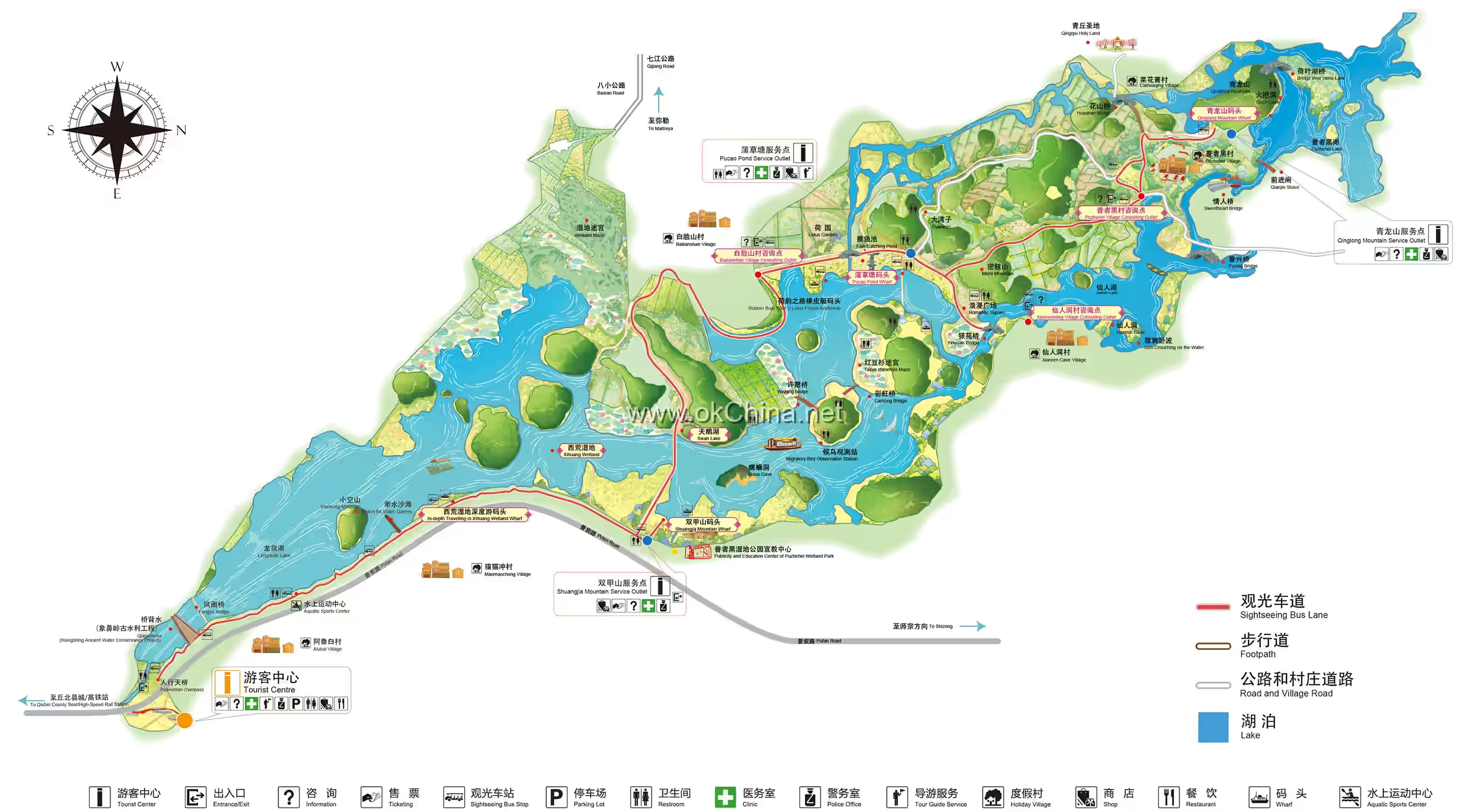
Puzhehei
1. Introduction
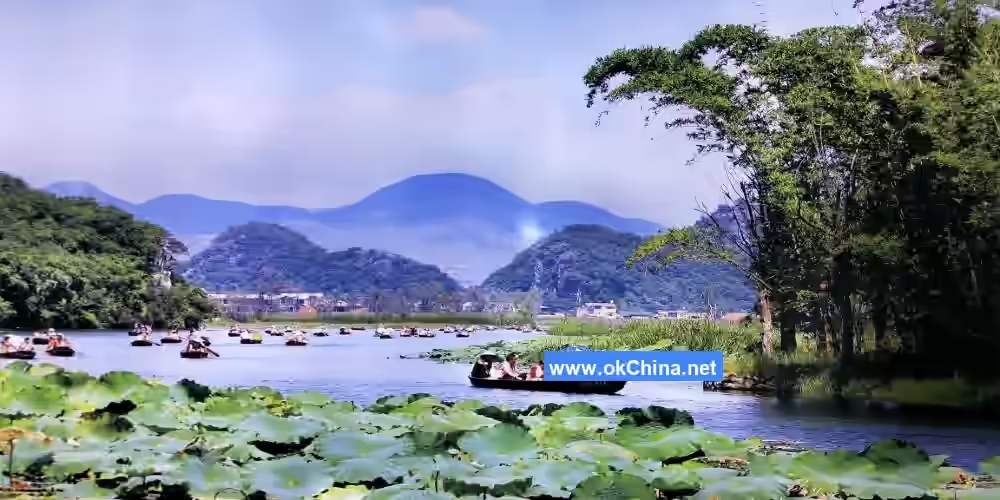
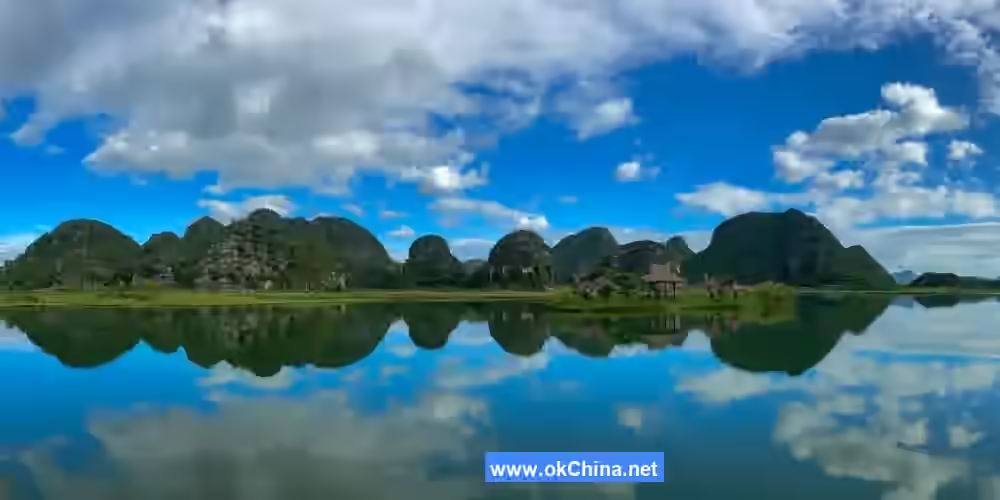
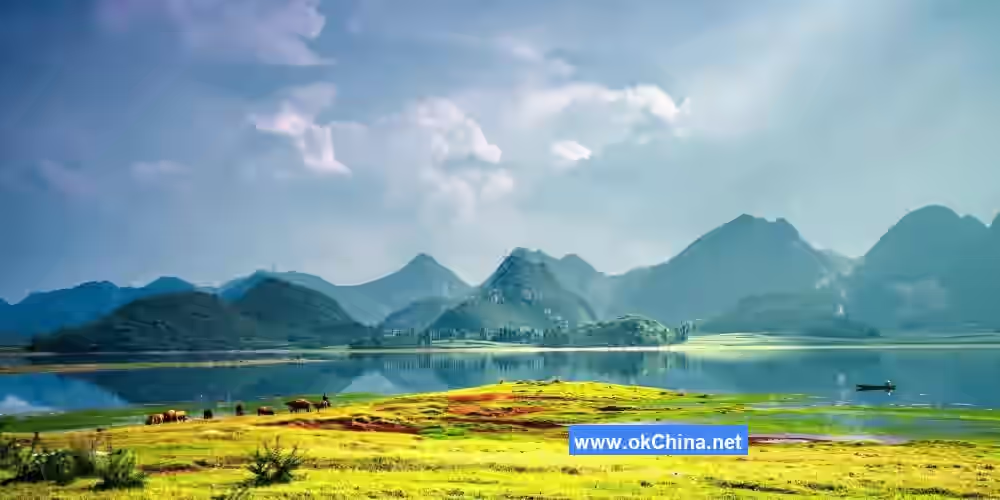
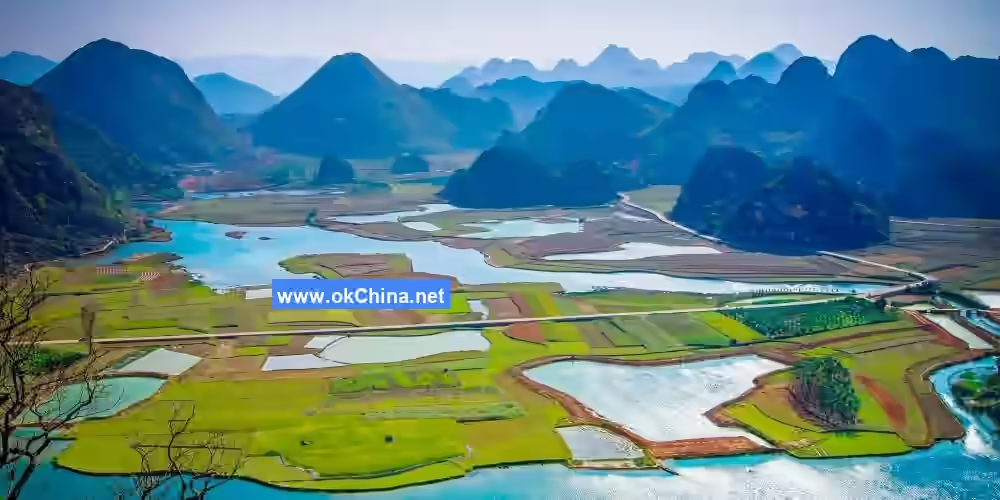
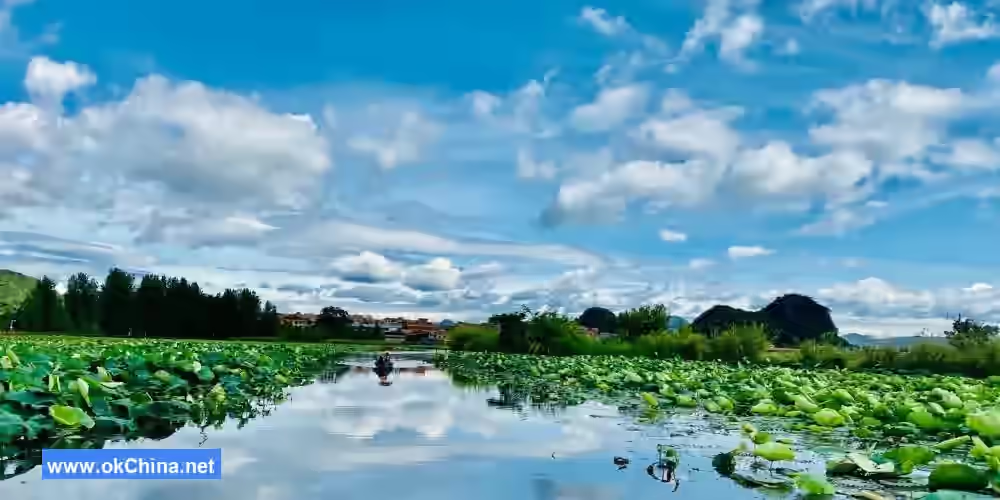
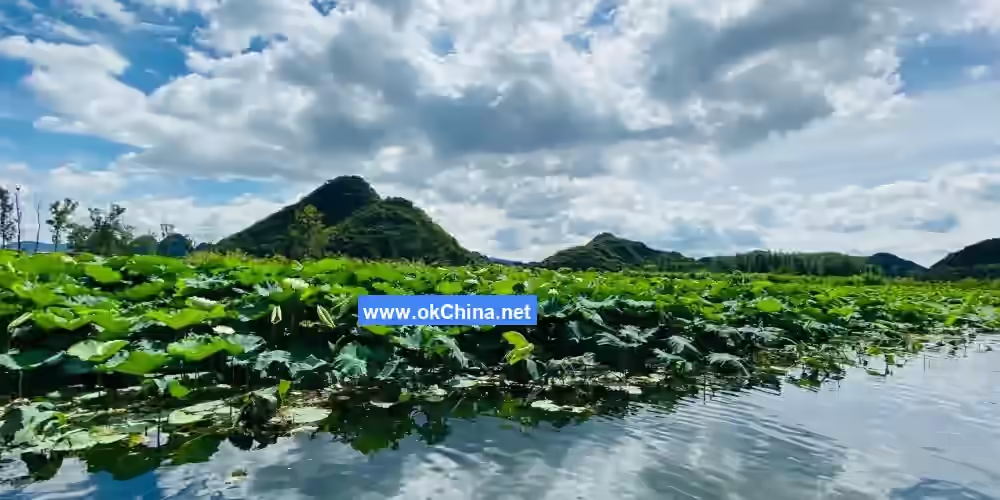
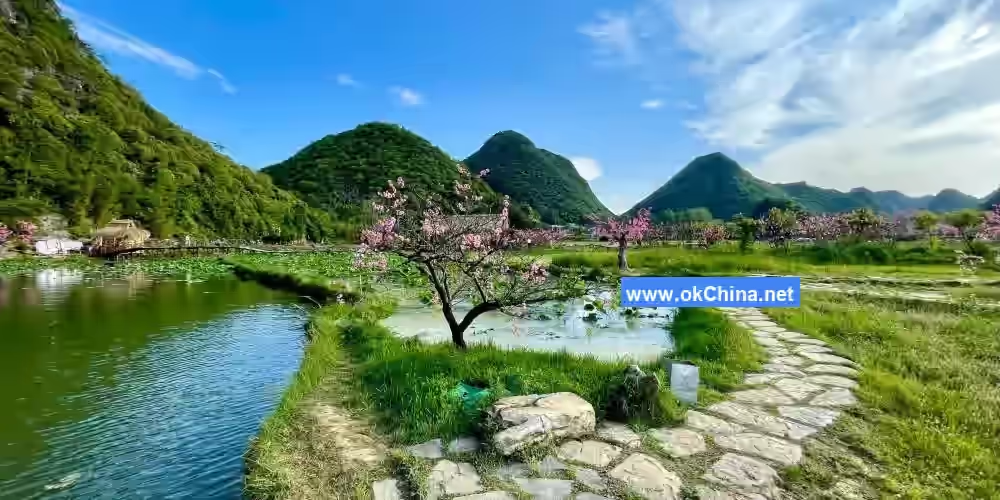
The Puzhehei Tourist Attraction in Wenshan Prefecture, "Puzhehei" is a Yi language term meaning "a lake filled with fish and shrimp." It is located in Qiubei County, Wenshan Zhuang and Miao Autonomous Prefecture, Yunnan Province. It is 1 kilometer from Qiubei County town, 113 kilometers from the Wenshan Prefecture seat, and 280 kilometers from the provincial capital, Kunming. The total area of the scenic spot is 388 square kilometers, with a core area of 15 square kilometers. Belonging to the karst region of southeastern Yunnan, it features typical developed karst landforms. The Puzhehei Tourist Attraction in Wenshan Prefecture was developed into a scenic area in 1992 based on existing villages. Within the area, there are 256 distinctive scenic spots, 312 scattered solitary peaks, 83 caves of various shapes, 54 interconnected lakes, 40,000 mu (approx. 2,667 hectares) of wild lotus flowers, and 60,000 mu (approx. 4,000 hectares) of plateau karst wetland. Major attractions include Hainumide (Swan Lake) and the Puzhehei Karst National Wetland Park. The Puzhehei Tourist Attraction in Wenshan Prefecture is renowned for its six major landscapes: "Water Countryside, Yi Water Village, Lotus World, Karst Wetland, Lake-Peak Forest, and Fish-Bird Paradise." It has been successively rated as a National Scenic Area and a National Wetland Park. On December 29, 2020, the Puzhehei Tourist Attraction in Wenshan Prefecture was announced by the National Ministry of Culture and Tourism as a National AAAAA-level Tourist Attraction.
2. Natural Environment
2.1 Location and Area
The Puzhehei Tourist Attraction in Wenshan Prefecture is located in Qiubei County, Wenshan Zhuang and Miao Autonomous Prefecture, Yunnan Province. It is 1 kilometer from Qiubei County town, 113 kilometers from the Wenshan Prefecture seat, 280 kilometers from the provincial capital Kunming, 85.7 kilometers from Wenshan Yanshan Airport, 9.8 kilometers from Puzhehei High-Speed Railway Station, and 30.7 kilometers to the Puzhehei Toll Station. The total area of the scenic spot is 388 square kilometers, with a core area of 15 square kilometers.
2.2 Climate
The Puzhehei Tourist Attraction in Wenshan Prefecture is situated in a low-latitude monsoon region. The climate is generally a subtropical plateau monsoon climate, encompassing four climate types: southern subtropical, central subtropical, northern subtropical, and southern temperate. The annual average temperature ranges from 13.2°C to 19.7°C, and the annual average rainfall ranges from 1000 to 1270 millimeters.
2.3 Hydrology
The Puzhehei Tourist Attraction in Wenshan Prefecture belongs to the Xijiang River system of the Pearl River Basin. The wetland area is 3454.33 hectares, including 1392.06 hectares of lakes, 437.69 hectares of marshes, 27.92 hectares of river wetlands, and 1596.66 hectares of artificial wetlands. This accounts for 54.5% of the county's total wetland area and 80% of the county's total water storage capacity, making it one of the important wetlands in Yunnan Province.
2.4 Topography and Landforms
The Puzhehei Tourist Attraction in Wenshan Prefecture belongs to the karst region of southeastern Yunnan and features typical developed karst landforms. It integrates karst solitary peak clusters, lake clusters, cave clusters, and wetland ecosystems, comprising four types: river wetlands, lake wetlands, marsh wetlands, and artificial wetlands.
3. Important Attractions
3.1 Puzhehei Village
The largest natural village in Wenshan, Yunnan.
3.2 Qinglong Mountain (Green Dragon Mountain)
Located about 600 meters west of Puzhehei Village, its main peak has an elevation of 1555 meters, standing 108 meters above the lake. The mountain is lush with shrubs, remaining green all year round. Qinglong Mountain is surrounded by water on three sides, presenting a majestic and beautiful scenery. Within the mountain, there are eight caves including Torch Cave, Moon Cave, and Zhangzui Stone Cave. Climbing up the stone path to the Qinglong Mountain viewing platform, one can enjoy a panoramic view of Puzhehei's beauty and witness the most beautiful sunrise and sunset.
3.3 Mizhi Mountain
Mizhi Mountain is a sacred place in the hearts of the Yi people. It is called Mizhi Mountain because every year on the first Rat Day of the winter calendar, local Yi people go to the mountain to celebrate a festival—the Mizhi Festival. Ascending to the top along the stone slab path offers a full view of the beautiful Xianren Lake (Immortal Lake). The mountaintop is enclosed by iron chains. Visitors can bring locks with their loved ones and lock them onto the chains together, symbolizing locking in love and locking in this lifetime. This site has also been selected as one of Yunnan Province's most beautiful landscape photography locations by China National Geographic.
3.4 Xihuang Wetland
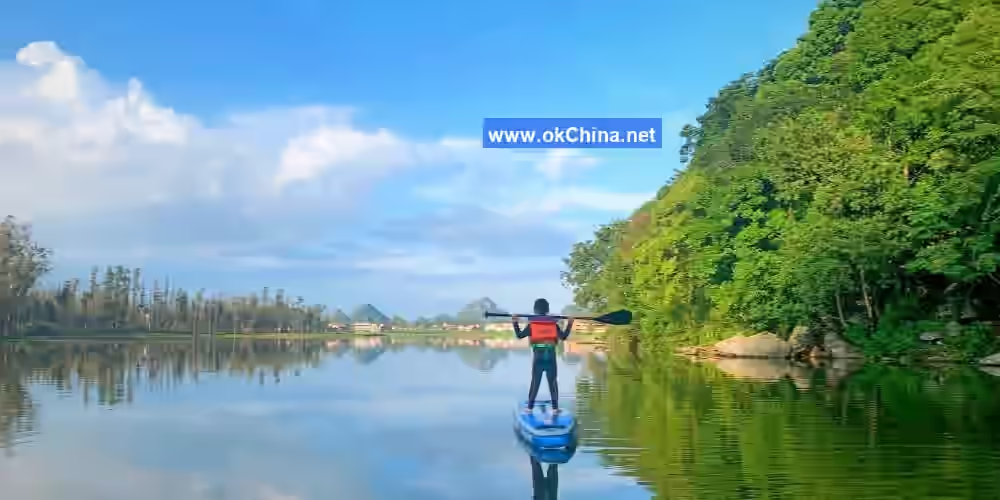
Located in the middle section of the Puzhehei Landscape Avenue, this area is a habitat for birds such as storks, cranes, egrets, and wild ducks. The scenic area mainly features landscapes like vast wetlands and wetland mazes, providing visitors with wetland experiences such as leisure activities, lake tours, entertainment, fishing, self-driving tours, and bird watching.
3.5 Shuangjia Mountain (Double A Mountain)
Located in the northern part of the Puzhehei Landscape Avenue, the scenic area features undulating karst peaks like Luosi Cave (Screw Cave), winding waterways, and extremely rich biodiversity. Exploring this area allows visitors to fully appreciate the harmonious development between humans and nature.
3.6 Xianrendong Village (Immortal Cave Village)
Xianrendong Yi Ethnic Cultural Ecological Village is a model village established by the Yunnan Provincial Committee Propaganda Department for building Yunnan into a major province of ethnic culture. In 2001, Xianrendong Village was named "Yunnan's First Ethnic Cultural Village" by the Provincial Committee Propaganda Department. Visiting Xianrendong Yi Ethnic Cultural Ecological Village allows one to experience the traditional folk customs of the Sani branch of the Yi people, such as the "Flower House" and "Lover's Room." One can see ancient Sani dances, as well as artifacts like Han Dynasty stone tigers, jiama (paper horses for rituals), wood carvings, stone carvings, and embroidery. Visitors can also listen to ancient tunes, watch Bimo (Yi shaman) rituals, climb mountains to view peaks, purchase souvenirs and local products, stay in farmhouses to enjoy rural life, and taste authentic Yi specialty dishes. It has become a window for Yunnan's external cultural promotion and a demonstration base for ethnic cultural exchange.
3.7 Hainumide (Swan Lake)
The Swan Lake scenic area is located within the Puzhehei Karst National Wetland Park. It is the most representative karst wetland migratory bird habitat in southwestern China. The integration of wetlands and stone peak forests creates a unique natural landscape and a special karst lake wetland ecosystem, presenting a plateau water town scene where water and sky merge and thousands of birds gather. The Swan Lake migratory bird habitat covers an area of 3 square kilometers, including 2.6 square kilometers of wetland. Swan Lake boasts rich biodiversity, with over 200 species of wetland animals including fish, amphibians, reptiles, mammals, and birds. Birds such as the Eurasian Coot, Asian Openbill, Little Egret, and Spot-billed Duck can be seen. Wetland plants include Ottelia acuminata, Nymphoides indica, Ceratophyllum submersum, Ottelia alismoides, Trapa incisa, and wild lotus flowers.
3.8 Puzhehei Karst National Wetland Park
The Puzhehei Karst National Wetland Park has a total area of 1107.4 hectares, including 529.5 hectares of lakes, 205.5 hectares of marshes, 259.1 hectares of forest land, and 113.3 hectares of other areas. The park has extremely rich biodiversity. According to surveys, there are 465 plant species distributed here, belonging to 119 families and 332 genera. Among them, there are 15 species of National Class II Key Protected Wild Plants: Trapa incisa (wild water chestnut) of the Trapaceae family, Ottelia acuminata of the Hydrocharitaceae family, Lepisorus palmatopedatus of the Polypodiaceae family, Dalbergia fusca, Burretiodendron esquirolii, Dichocarpum hypoglaucum, Fagopyrum dibotrys, Dendrobium thyrsiflorum, Dendrobium crepidatum, Rosa odorata, Bletilla formosana, Ascocentrum ampullaceum, Arundina graminifolia, Arundina graminifolia var. chinensis, and Bulbophyllum sp. There are three rare and endangered plant species under National Class II protection: Ottelia acuminata, Trapa incisa, and Lepisorus palmatopedatus. There are 18 fish species, belonging to 4 orders and 6 families, including two locally endemic fish species: Triplophysa qiubeiensis and Sinocyclocheilus qiubeiensis. There are 6 amphibian species, 10 reptile species, 16 mammal species, and 145 bird species. Among the animals, there is one National Class I protected animal: the Oriental White Stork. There are 9 National Class II Key Protected Animals: the Black-winged Kite, Black Kite, Eurasian Sparrowhawk, Besra, Common Buzzard, Common Kestrel, Greater Coucal, Collared Scops Owl, and Yellow-throated Marten.
4. History and Culture
4.1 Festivals and Activities
4.1.1 Flower Face Festival
The Flower Face Festival, held annually on July 18th, is the most important traditional festival of the Yi people in Qiubei. It gets its name from ancient ancestors who smeared their faces with soot from pots to ward off evil spirits and disasters. Over time, the "Flower Face Festival" has evolved into a carnival where contemporary Yi youth take the opportunity of smearing faces to choose their sweethearts. During this time each year, young men and women from Yi villages chase each other, grabbing soot from stoves to blacken each other's faces. The darker one gets smeared, the deeper the affection is considered. If someone is unwilling to engage with the other, they try to escape and avoid getting soot smeared on them, thus rejecting the other's courtship. In 2009, the opening ceremony of the Flower Face Festival set a Guinness World Record for "a thousand people dancing the Xianzi dance and ten thousand people smearing flower faces."
4.1.2 Flower Mountain Festival
The Miao Flower Mountain Festival is generally held on relatively gentle earthen slopes. In the flower field, a bamboo pole or tree trunk five or six zhang high (approx. 16-20 meters) is erected; this is the flower pole, from which two pieces of cloth, one red and one black, are hung. Every year on the 16th day of the twelfth lunar month, the festival host erects the flower pole to let people know there will be a flower field. The Caihuashan (Stepping on the Flower Mountain) activities begin on the first day of the first lunar month, and more grand Flower Mountain Festivals can extend until the eighth or ninth day. There are two different accounts of the origin of Caihuashan: one says it was established to pray for children, and the other says it is a commemorative day. Caihuashan is a Miao sporting activity, an exchange of life experiences among the Miao people, and also an entertainment activity for Miao youth.#### 4.1.3 March Third Festival The Zhuang ethnic group's March Third Sacrifice to the Dragon Festival is celebrated on the first Dragon day of the third lunar month, typically in early April of the Gregorian calendar. Before the festival, village elders notify the villagers. Each household contributes money equally to purchase sacrificial offerings, and one male from each household participates in the mountain sacrificial ceremony. The chief officiant prays to the Dragon God. Each household then takes two branches from the dragon tree back home to place in their kitchen and on their grain piles, praying for favorable weather, thriving livestock, and a good harvest. On that day, each household eats specially prepared oil-fried glutinous rice cakes. Wealthier families may fry hundreds of jin (a unit of weight) of cakes, enough to last over a month, and also share them with relatives and friends.
The March Third Festival lasts for three days. First, each village holds a grand ceremony to sacrifice to the dragon. This is followed by activities such as beating gongs and drums, performing lion and dragon dances, visiting neighboring villages to ward off evil and attract blessings, and praying for favorable weather. Large-scale song and dance performances, Zhuang opera, and martial arts demonstrations are also organized. During the festival, young Zhuang men and women also seek companionship through antiphonal singing, egg-touching games, throwing embroidered balls, and exchanging tokens of affection.
4.1.4 Taiping Festival
The Bai ethnic group's Taiping Festival, with a history of over 500 years to date, is a traditional folk temple fair. An auspicious day within the first lunar month is chosen for the four-day celebration. The first three days involve vegetarian meals and Buddhist chanting. On the fourth day, three small live fish are offered as sacrifices. Activities include "Xie Jiang" (Thanksgiving), "You Daren" (parading a paper-made "Heavenly King" through the streets), and "Bai Longshen" (worshiping the Dragon God). Afterwards, groups of 3-5 people, wielding knives and sticks, visit every household to exorcise evil and dispel disasters and illnesses.
During the three-day fair, the entire village observes a vegetarian diet to show reverence to Buddha. Each day, a group of people carries the idol of the "Heavenly King," accompanied by the sounds of gongs, drums, and Buddhist music, while chanting scriptures as they process through the village. Villagers set up incense altars in front of their homes to respectfully welcome the procession. The fair concludes on the afternoon of the third day with "Bai Long Sao Zhai" (Worshiping the Dragon and Sweeping the Village). A group of people, painted red and black to impersonate demons and ghosts, wield tools to subdue evil spirits. They visit every household to drive away ghosts and evil, seeking protection from the gods and Buddha.
4.1.5 Du Jie (Ordination Ceremony)
Du Jie is called "Zai She" by the Blue Indigo Yao and "Du Sai" by the Red-Headed Yao. It is often held in the twelfth lunar month. Du Jie is a religious ritual that every Yao male must undergo upon reaching adulthood. Only after completing Du Jie is one considered a full member of the ethnic community, permitted to start a family and career, entitled to participate in various social activities, and believed to have their soul "ascend to heaven" after death.
4.2 Intangible Cultural Heritage Transmission
4.2.1 Fireweed Textile Craft
As early as the beginning of the Ming Dynasty, Zhuang people in Qiubei were making fireweed quilts. Since cotton was not produced in Yunnan, the diligent and ingenious Zhuang women of Qiubei used "fireweed," a herbaceous plant called "Man Wei" in Zhuang language, as a substitute for cotton. Previously, fireweed quilts were essential as dowry items and daily necessities, but they have now been replaced by cotton quilts. Currently, the most complete preservation of the fireweed quilt weaving technique is found in Xiaoxilong Village, Jinping Town, Qiubei County. In August 2009, the Zhuang fireweed quilt of Qiubei County was recognized by the Yunnan Provincial People's Government and the Provincial Department of Culture as part of the second batch of Yunnan Provincial Intangible Cultural Heritage.
4.2.2 Indigo Dye Making Craft
The Yao ethnic group's indigo dye making is primarily distributed in villages such as Chongge Village in Jinping Town and Yazitang Village in Wenliu Township, Qiubei County, with a history of over 600 years. Indigo dye is made from purely natural indigo plants as raw materials, using unique traditional methods. It is a rare eco-friendly dye, known for its fast, pure color, pleasant fragrance, and properties that prevent corrosion and moth damage. It is the preferred dye for modern practices like plain dyeing, tie-dyeing, and batik. It can also be used as the "hua qing" pigment in traditional Chinese painting, favored by Chinese painters. The indigo making craft, passed down for centuries as an excellent traditional culture, embodies the diligence and wisdom of the Chinese nation. In 2009, the Yao indigo making craft was recognized as a provincial-level intangible cultural heritage.
Comments
Post a Comment