
Mount Putuo
1. Introduction
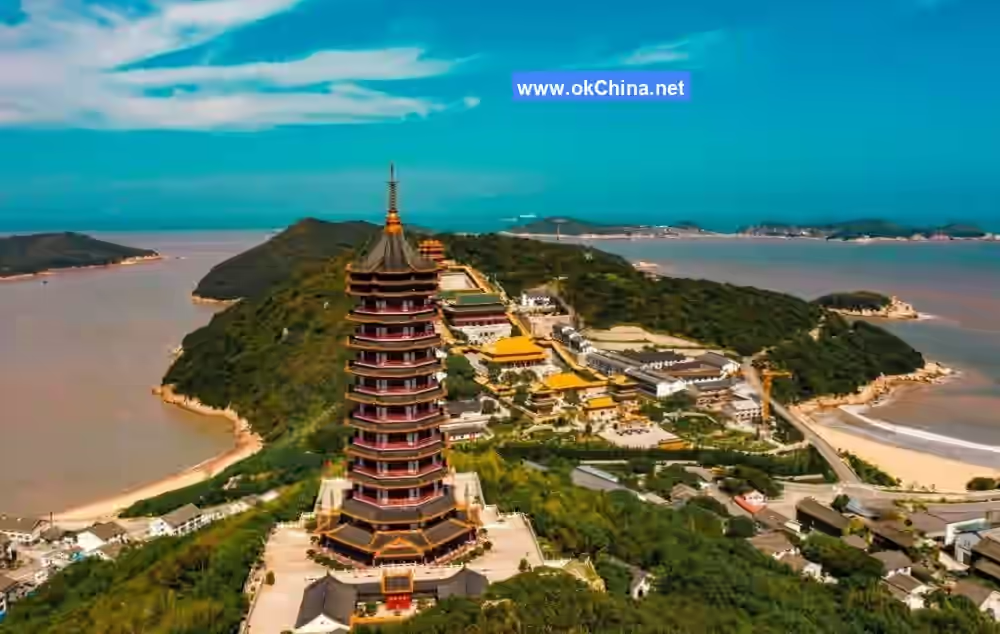
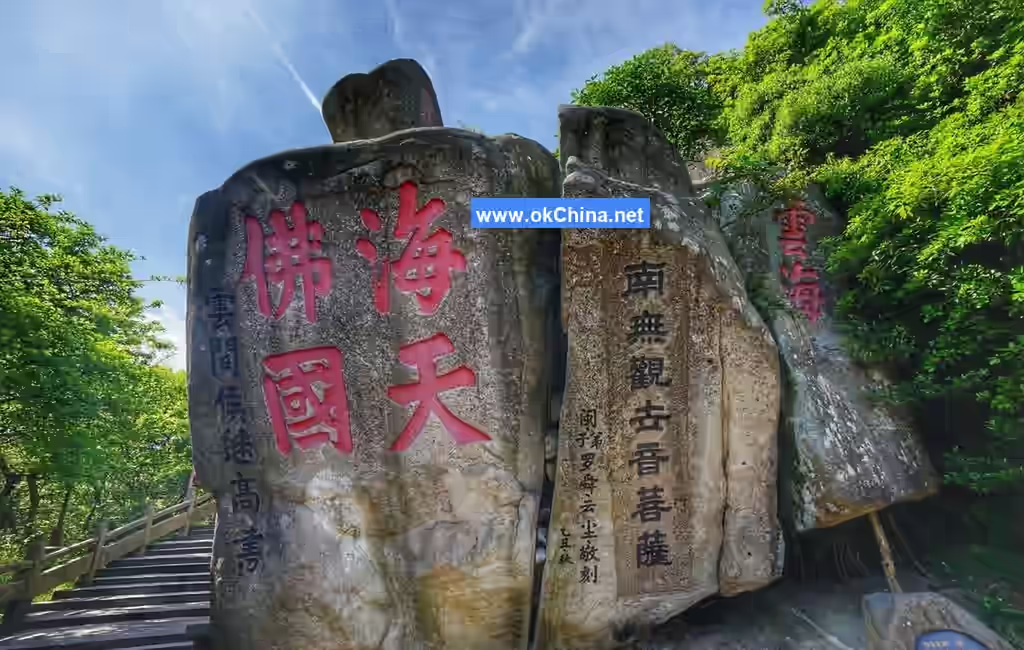
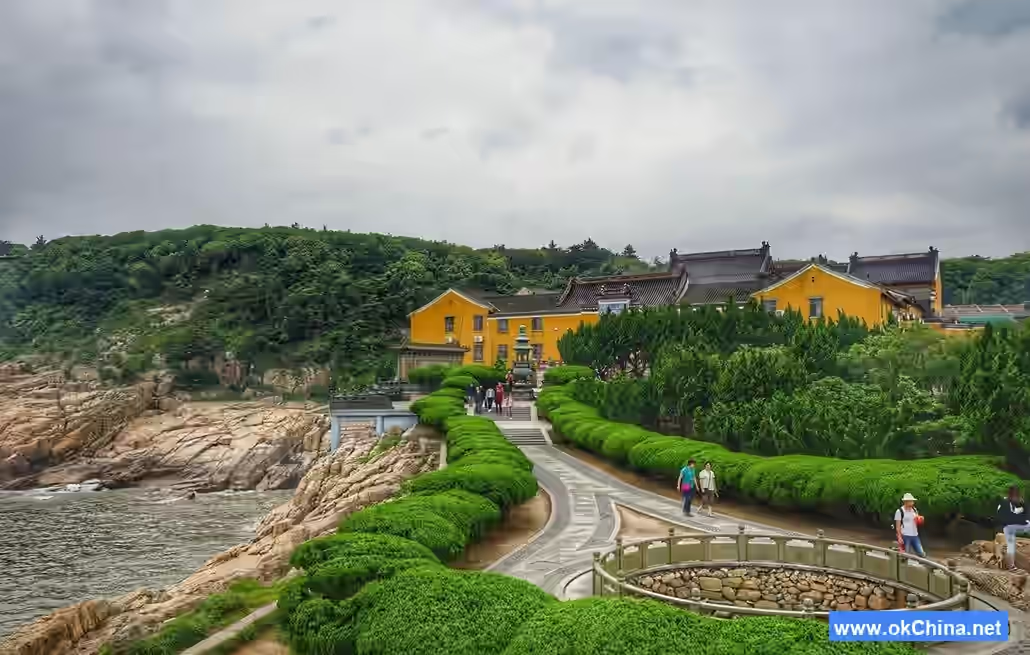
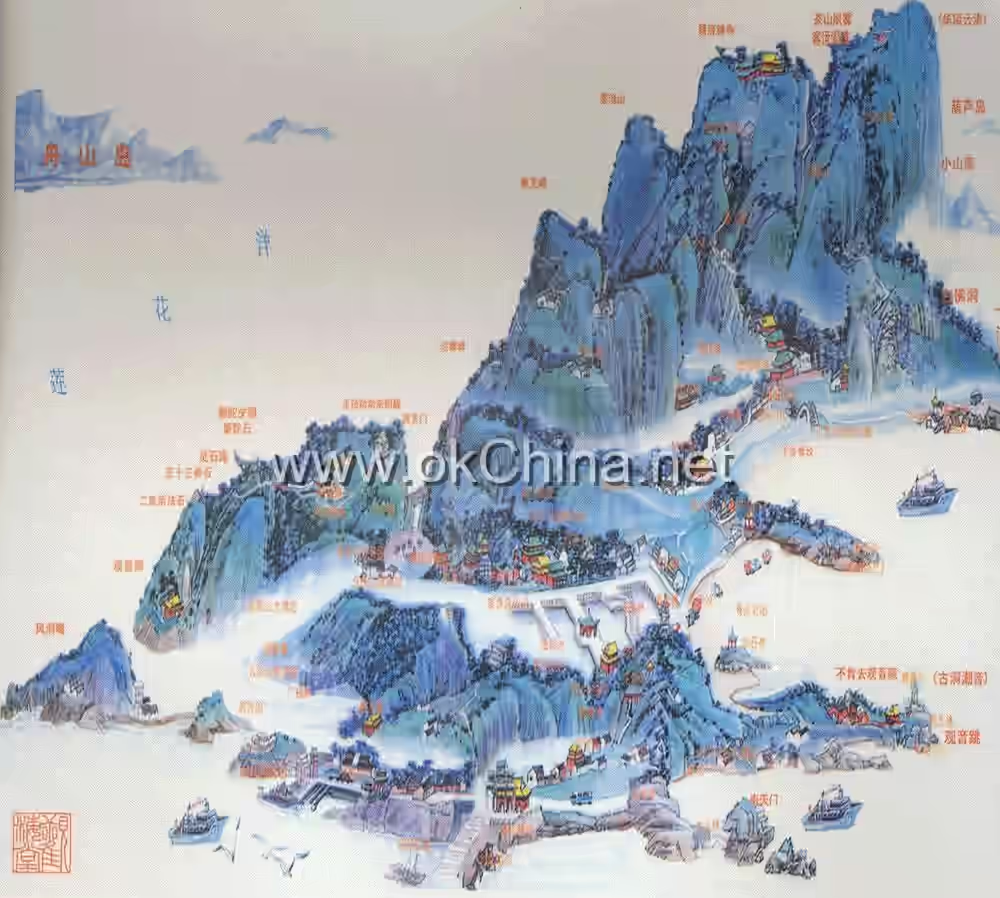
Mount Putuo, located in Putuo District, Zhoushan City, Zhejiang Province, at the southern edge of Hangzhou Bay and in the eastern waters of the Zhoushan Archipelago, is traditionally regarded as the bodhimanda where Guanyin (Avalokitesvara) Bodhisattva teaches and liberates sentient beings. Shaped like a rhombus, Mount Putuo is a small island among the 1,390 islands of the Zhoushan Archipelago, resembling a reclining azure dragon in the sea. It covers an area of 12.52 square kilometers and faces Shenjiamen across the water. Known as the "Buddhist Kingdom on the Sea and Sky" and the "Sacred Site of the South Sea," it stretches 8.6 kilometers from north to south and about 3.5 kilometers from east to west, with a coastline of 30 kilometers. The highest point is the Tiandeng Terrace on Foding Mountain in the center, with an elevation of 291.2 meters. The terrain extends in all directions: Tea Mountain to the west, Fulong Mountain to the north, Qinggu Mountain to the east, and Jinping Mountain, Liantai Mountain, and Baihua Mountain to the southeast. Meicen Mountain lies to the southwest, with main peaks ranging between 100 and 200 meters, forming a continuous, undulating landscape.
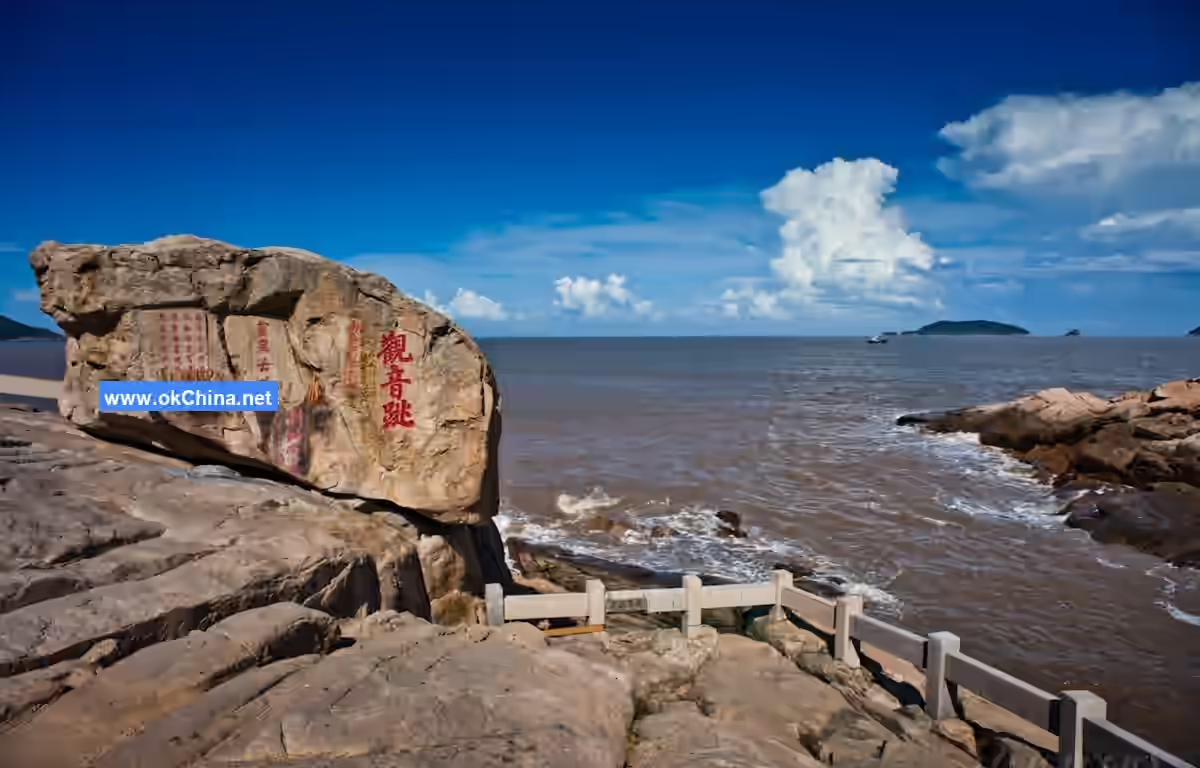
The main attractions of Mount Putuo include three major temples: Puji Chan Temple (Front Temple), Fayu Chan Temple (Rear Temple), and Huiji Chan Temple (Foding Mountain Temple), collectively known as the Three Great Chan Temples of Mount Putuo, which form the core of the Guanyin Bodhimanda. The Three Treasures of Mount Putuo, also called the Three Treasures of the Buddhist Kingdom, refer to the Nine Dragons Caisson Ceiling, the Yangzhi Guanyin Stele, and the Duobao Pagoda (Prince Pagoda). The Three Stones of Mount Putuo are Pantuo Rock, Heart Character Rock, and Two Turtles Listening to the Dharma Rock. The Three Caves are Chaoyang Cave, Chaoyin Cave, and Fanyin Cave. The Twelve Scenes of Mount Putuo are: Lotus Ocean at Noon Crossing, Short Aunt Holy Trace, Plum Bay Spring Dawn, Pantuo Rock Sunset, Lotus Pond Moonlit Night, Fahua Spiritual Cave, Ancient Cave Tide Sound, Chaoyang Surging Sun, Thousand-Step Golden Sand, Guangxi Snow Clearing, Tea Mountain Morning Mist, and Tianmen Pure Chant.
2. Geographical Environment
2.1 Geology and Topography
Mount Putuo features steep terrain in the northwest and gentle slopes in the southeast. The highest point is the Tiandeng Terrace on Foding Mountain at 291.2 meters above sea level. The elevation gradually decreases as it extends northward, eastward, and southward. To the north, it stretches into Tea Mountain (93.7 meters) and Longtou Mountain (102.3 meters); to the east, into Jinping Mountain (205.2 meters), Liantai Mountain (133.3 meters), and Qinggu Mountain (142.7 meters); and to the south, into Xuelang Mountain (183.2 meters), Dashan Mountain (183.2 meters), Meicen Mountain (109.3 meters), and Baihua Mountain (97.1 meters).
2.2 Climate Characteristics
Mount Putuo experiences distinct seasons, with neither extreme summer heat nor severe winter cold, belonging to a subtropical maritime climate. The annual average temperature is around 20°C, with annual precipitation of approximately 1100 mm.
Mount Putuo falls under the central subtropical maritime monsoon climate, characterized mainly by warm winters and cool summers, with four distinct seasons; strong winds, frequent fog, and abundant rainfall. According to an analysis of twenty years of meteorological data from the weather station, the annual average temperature is 16.1°C. The coldest month (January) averages 5.4°C, while the hottest month (August) averages 27°C. The extreme maximum temperature recorded is 38.2°C, and the extreme minimum is -6.5°C. Annual precipitation totals 1186.9 mm, with an average of 149.1 rainy days per year. Rainfall is more abundant in spring and summer, and less in autumn. Relative humidity ranges from 72% to 91% (average 80%). The average annual sunshine duration is 2133.7 hours. Monsoons are pronounced, with prevailing northerly winds in autumn and southerly winds in spring and summer. Typhoons occasionally occur in July, August, and September. The average annual wind speed is 4.2–5.7 m/s, with a maximum average speed of 31 m/s. The frost-free period lasts 254 days, and the average number of icy days is 18.3.
3. Main Attractions
3.1 Puji Chan Temple
Puji Chan Temple, also known as the Front Temple, was first built during the Song Dynasty's Yuanfeng era (1078–1085). It is the largest temple on Mount Putuo and a nationally key Buddhist monastery. Throughout history, the abbots of the entire mountain have resided here. The temple complex is grand in scale, described as "a pavilion every five steps, a tower every ten steps." The entire temple consists of six halls arranged along a central north-south axis. Among them, the Great Yuantong Hall is the main hall of Puji Temple, housing an 8.8-meter-tall statue of Vairocana Guanyin as the principal image of the Bodhisattva. Flanking it are the "Thirty-Two Manifestations" of Guanyin, symbolizing the Bodhisattva's responsiveness to all sentient beings in the world.
3.2 Fayu Chan Temple
Fayu Temple, also known as the Rear Temple, was initially named Haichao Nunnery. In the 38th year of the Qing Kangxi Emperor's reign (1699), it was bestowed with the plaque "Tianhua Fayu" (Heavenly Flowers and Dharma Rain), hence the name Fayu Chan Temple. Its architectural layout follows the mountain's contours, with clusters of buildings rising in tiers. The most magnificent is the Nine Dragons Hall (Jiulong Dian). This Buddha hall was relocated entirely from the Ming Dynasty palace in Nanjing. Inside the hall is one of the Three Treasures of Mount Putuo: the "Nine Dragons Caisson Ceiling."
3.3 Huiji Chan Temple
Huiji Temple is located at the highest point of Mount Putuo, on Foding Mountain, and is also called Foding Mountain Temple. The temple's overall layout is unique among Chan monasteries. Behind the Heavenly Kings Hall, the Mahavira Hall (Great Hero Hall), the Great Compassion Hall, the Scripture Repository, the Jade Emperor Hall, and the Abbot's Quarters are all aligned on a single horizontal line, showcasing the architectural style of gardens in eastern Zhejiang. Unlike other temples on Mount Putuo, the main hall of Huiji Temple is the Mahavira Hall, which enshrines a statue of Sakyamuni Buddha. To its right, the Great Compassion Hall houses a Tang Dynasty statue of Guanyin, the oldest Buddhist statue art on Mount Putuo. The roof of Huiji Temple's main hall is covered with glazed tiles in sky blue, light green, goose yellow, and purplish-red. Under sunlight, they reflect myriad rainbows, creating the spectacle of "Buddha's Light Shining Everywhere."
3.4 South Sea Guanyin Standing Statue
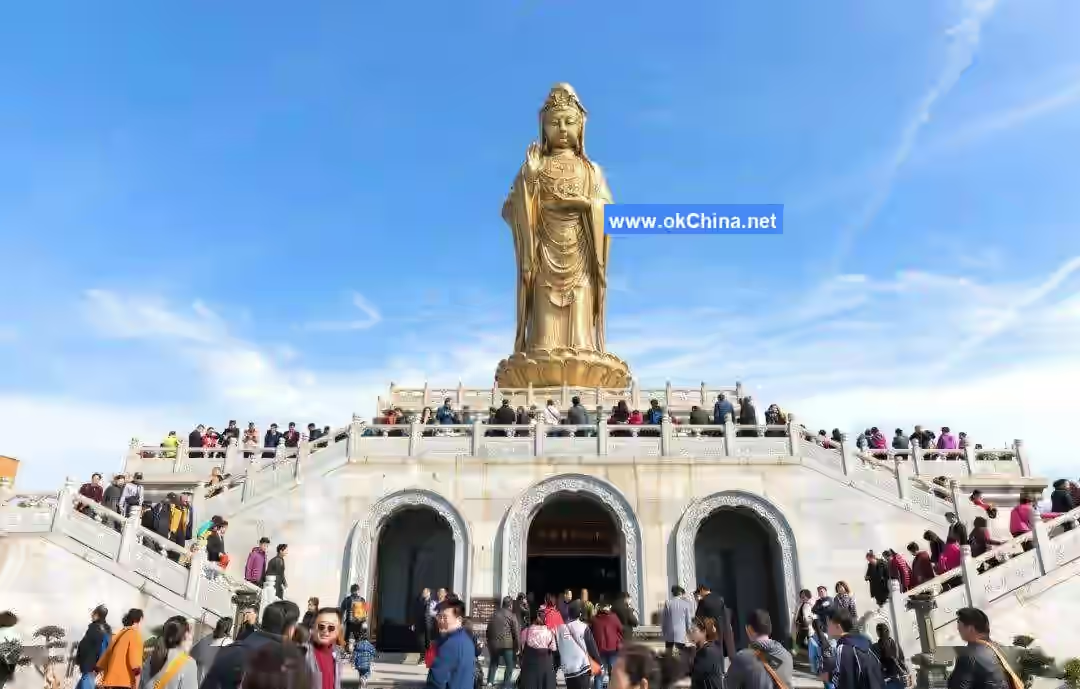
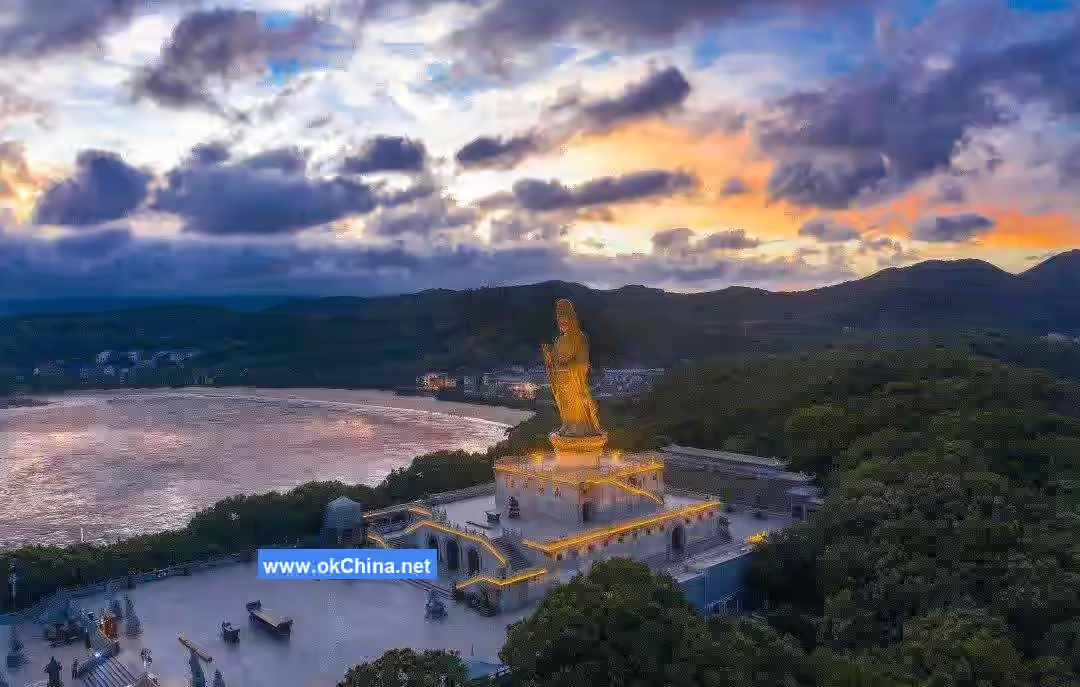
The South Sea Guanyin Standing Statue is situated on Longwan Gang Peak in the southeastern part of the Mount Putuo Scenic Area. This statue has a total height of 33 meters: a 13-meter-high base, an 18-meter-high bronze statue, and a 2-meter-high lotus pedestal, weighing over 70 tons. The base of the statue is a Merit Hall covering more than 1000 square meters. The upper level enshrines 500 bronze Guanyin statues in various forms, while the lower hall is decorated with large boxwood carvings depicting miraculous stories of Guanyin and colored jade reliefs featuring scenes from the Mount Putuo Scenic Area.
3.5 South Heaven Gate
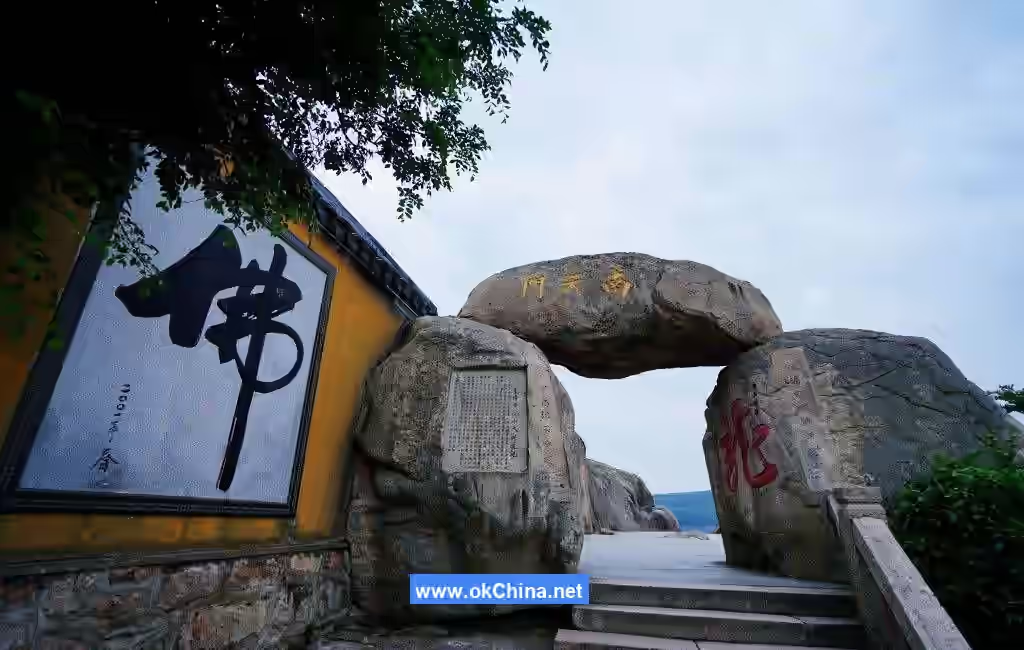
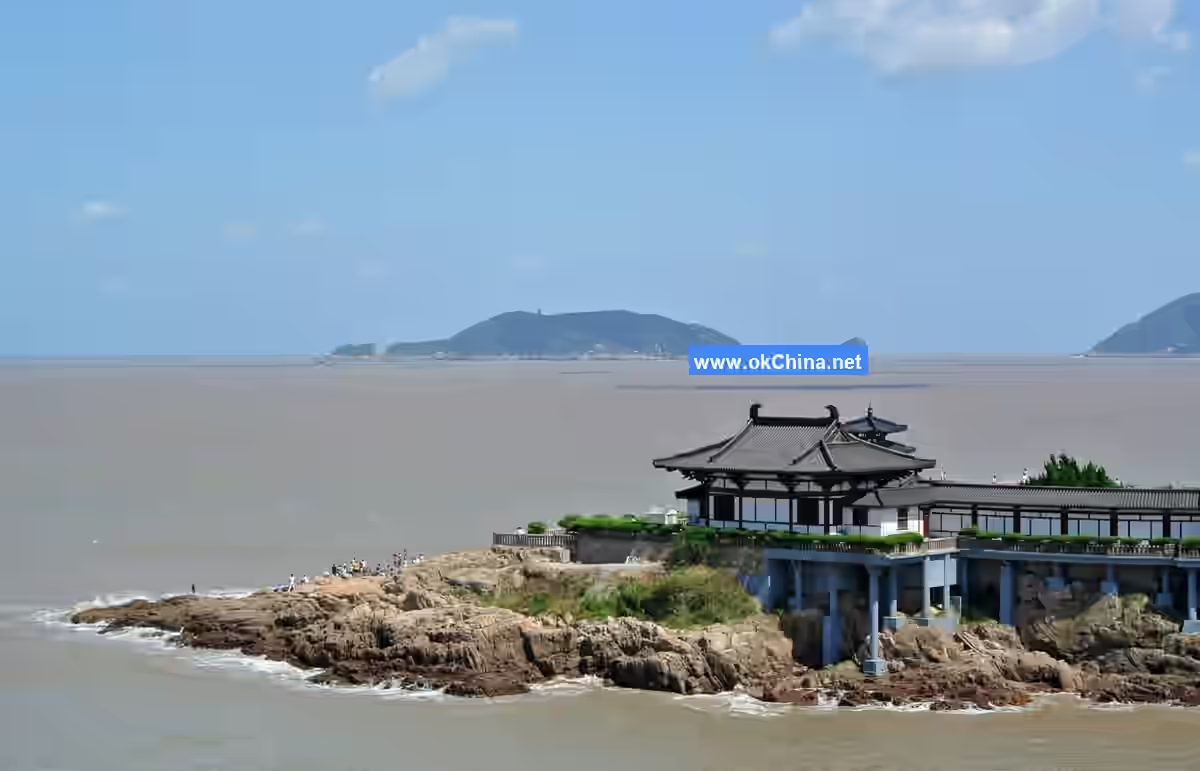
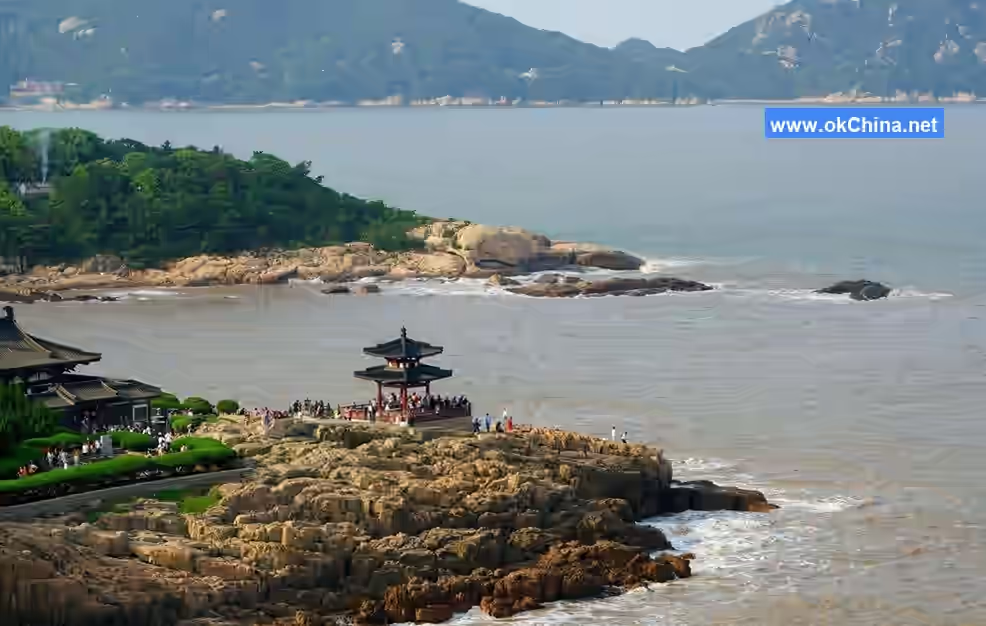
South Heaven Gate (Nantianmen) is located on South Mountain at the southern end of Mount Putuo, facing Duangu Landing across the water. Jutting isolated into the sea at the southernmost tip of Mount Putuo, it is separated from the main island by a narrow channel, connected by a stone bridge shaped like a dragon, named Huanlong Bridge (Coiling Dragon Bridge). Here, massive rocks stand densely, with towering cliffs. Among them, two rocks resemble a gate, hence the name South Heaven Gate. The gate tower features upturned eaves and corners, with the three characters "South Heaven Gate" inscribed in the center. Nearby is the Dragon Eye Well. On the cliff, there is a stone drum. To the upper left of the gate is Lion Rock. Inside South Heaven Gate, numerous cliffs rise elegantly. In front of the gate, vast blue waves stretch to the horizon, with many cliff inscriptions. Beside the gate are the four characters "Grand View of Mountains and Sea" inscribed by General Lan Li during the Qing Kangxi era (1662–1722). Inside the gate are Buddhist temples and palaces. Next to a temple is a huge rock accessible by stone steps leading to its top. The rock's top is flat, featuring two small pools of clear, sparkling water, commonly called Lion's Eyes. The rock is carved with inscriptions such as "Dragon Flower Assembly," "Pillar of the South Heaven," and "Solitary Place by the Shore." Legend says this is where the Eight Immortals crossed the sea. The Chan patriarch of Mount Putuo, Master Zhenxie, once built a thatched hut here for meditation.
3.6 Guanyin Cave
The Ancient Guanyin Cave, commonly known as Guanyin Cave, is the largest stone chamber cave on Mount Putuo. Passing through the mountain gate, one encounters a yellow temple wall inscribed with the characters "Namo Guanyin Bodhisattva." Devotees refer to this wall as the "Bodhisattva Wall." Guanyin Cave resembles a large natural stone chamber, spacious inside with a fairly level floor. A stone pillar hangs from the ceiling, wider at the top and tapering downward, seemingly plunging into the ground, called "Hanging Clouds and Inverted Waves." The cave interior is ethereally empty. The cave walls and the pillar itself are carved with reliefs of Guanyin's compassionate countenance. The cave roof is covered by a massive rock inscribed with the four large characters "Great Being Reappears," each character 1.5 meters in diameter. Inside the cave, a stone pillar hangs down to the ground. The cave ceiling and surrounding rock walls are carved with images of Guanyin. A nunnery was built beside the cave. During the Ming Wanli era (1572–1620), it was a thatched hut. It became a nunnery during the Qing Kangxi era (1662–1722), with further constructions during the Daoguang, Guangxu, and Xuantong reigns. In 1983, a seated Guanyin statue was carved inside the main hall by the Zhejiang Academy of Fine Arts.
3.7 Purple Bamboo Grove
Purple Bamboo Grove (Zizhulin) is a scenic spot at the foot of Meitan Ridge in the southeastern part of Mount Putuo, Zhoushan City, Zhejiang Province. The Bamboo Grove Nunnery (Zhulin An) is located south of Baibu Sand and west of Chaoyin Cave, facing the shimmering Lotus Ocean and overlooking Luojia Mountain across the sea. The nunnery is nestled against the mountain and faces the sea. Its plaque inscribed with "Butan Zizhulin" (Mending the Robe at Purple Bamboo Grove) was written by the renowned modern Chinese thinker Kang Youwei. The main hall of Purple Bamboo Grove Nunnery primarily enshrines a white marble statue of Purple Bamboo Guanyin, manifesting in various forms to inspire all kinds of virtuous roots. In front of the nunnery lies a vast promontory valley.
3.8 Refusing-to-Go Guanyin Temple
The Refusing-to-Go Guanyin Temple (Bukenqu Guanyin Yuan) is located within Purple Bamboo Grove. This temple is where Master Hui'e once enshrined the "Refusing-to-Go Guanyin" statue and is considered the birthplace of the Guanyin Bodhimanda on Mount Putuo. The current hall houses an imitation Tang-style Eleven-Faced Guanyin statue. To the west of the temple, a "Thirty-Three Guanyin Sacred Sites" corridor was built, containing statues of the principal deities from 33 Japanese temples dedicated to Guanyin.
3.9 Twelve Scenes
3.9.1 Lotus Ocean at Noon Crossing
This refers to the Lotus Ocean (Lianyang), situated between Zhoushan Island and Mount Putuo, connecting to Huangda Ocean in the north and Puchen Waterway in the south. It derives its name from the legend that when Japanese attempted to bring a Guanyin statue back to their country, iron lotuses grew in the sea, blocking their passage. The Qing Dynasty's "Dinghai County Annals" quotes the "Putuo Chronicles": "During the Song Yuanfeng period, Japanese envoys paying tribute witnessed the great spiritual power of the Bodhisattva and wanted to take her to their country. Iron lotuses grew in the sea, and the ship could not proceed. The Japanese, fearful, returned the statue. Hence, it got this name."
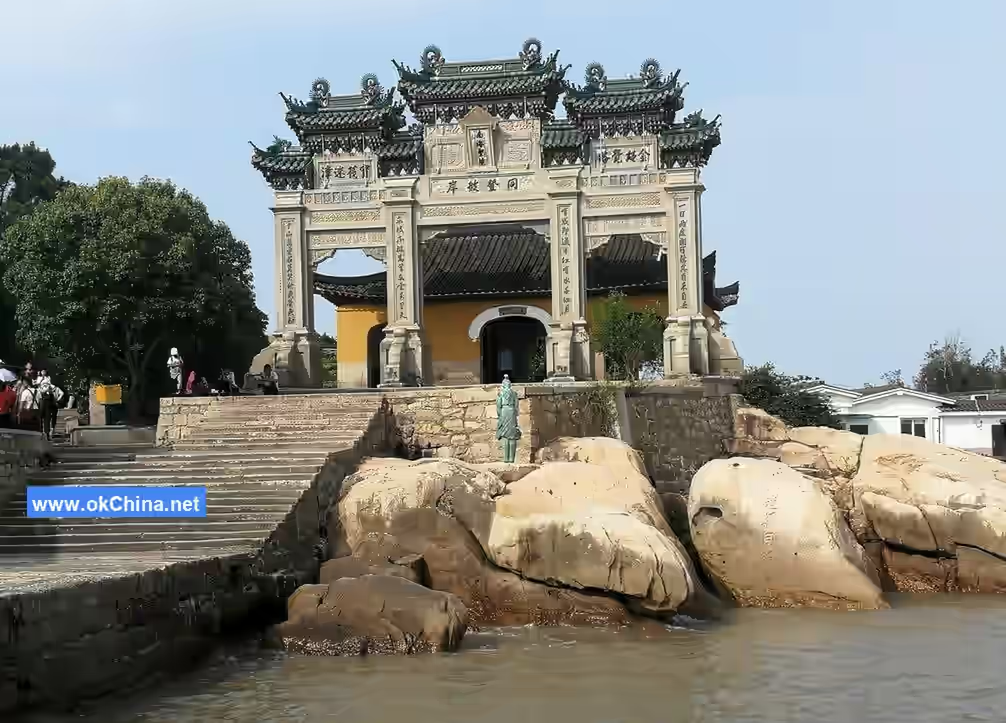
A fisherman's song once described it: "Winds and waves are strong in Lotus Ocean, / Calm seas sprout lotuses without wind. / A single lotus blooms for ten li, / Its petals sharp like wolf's teeth."#### 3.9.2 Short-Gu Relics Located about 300 meters southeast of the Mountain Gate of the Buddhist Kingdom. On the beach, there are "rocks over ten meters wide and about a hundred meters long, with small stones naturally attached to each other, flanked by rocks of varying sizes and shapes." Some rocks are inscribed with characters such as "Short-Gu Relics," emerging and submerging with the tides and waves, serving as a natural dock in ancient times. When boats arrived at the Short-Gu landing, they could not reach the shore directly and required ferrying by small sampans no longer than ten feet and no wider than three feet. In the 31st year of the Guangxu reign of the Qing Dynasty (1905), the abbots of Putuo Mountain, Liaoyu and Lianchan, raised funds to construct a stone landing using massive rocks, measuring 11 meters long and 8 meters wide, due to the inconvenience caused by tidal fluctuations for docking boats. Before the construction of the Putuo Mountain Passenger Terminal, all pilgrims and tourists visiting Putuo Mountain had to disembark here.
3.9.3 Spring Dawn at the Bay
Refers to the early spring scenery of Putuo Mountain, also known as Mei Cen, with the western bay called Mei Bay or Qian Bay. It is said that wild plum trees abound here, and monks in temples and huts often cultivated plum trees for enjoyment. In early spring, the wild plum blossoms dot the green mountains and trees with specks of red, earning the area the reputation of "Luofu on the Sea."
3.9.4 Evening Glow at Pantuo Rock
Refers to the evening scenery around Pantuo Rock. A short walk west from Meifu Temple leads to Pantuo Rock. Pantuo Rock consists of two stacked stones: the lower one, broad at the base and pointed at the top, with a circumference of over 20 meters, supports the upper stone at its protruding center, called "Pan"; the upper stone, flat on top and pointed at the base, stands 3 meters high and nearly 7 meters wide, diamond-shaped, called "Tuo." The seam between the two stones is as thin as a thread, appearing translucent when viewed from an angle, seemingly connected yet suspended, as if one stone hangs in the air above the other.
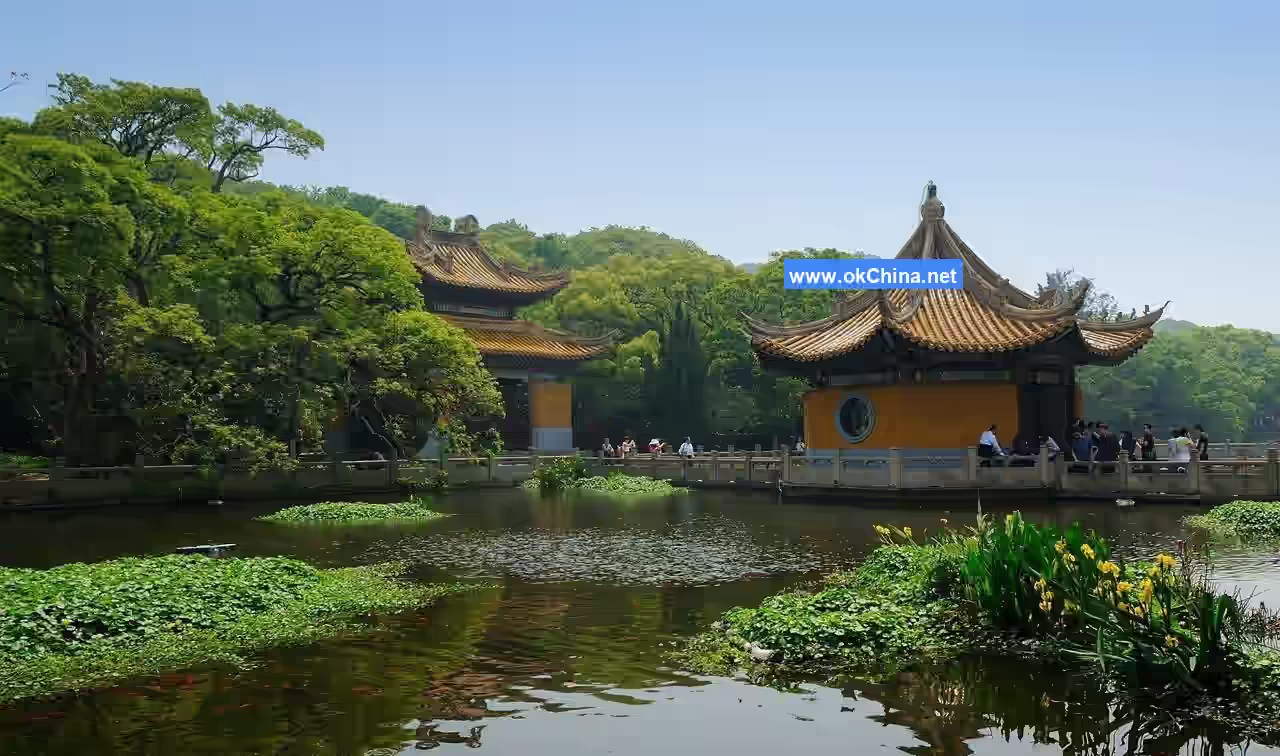
3.9.5 Moonlit Lotus Pond
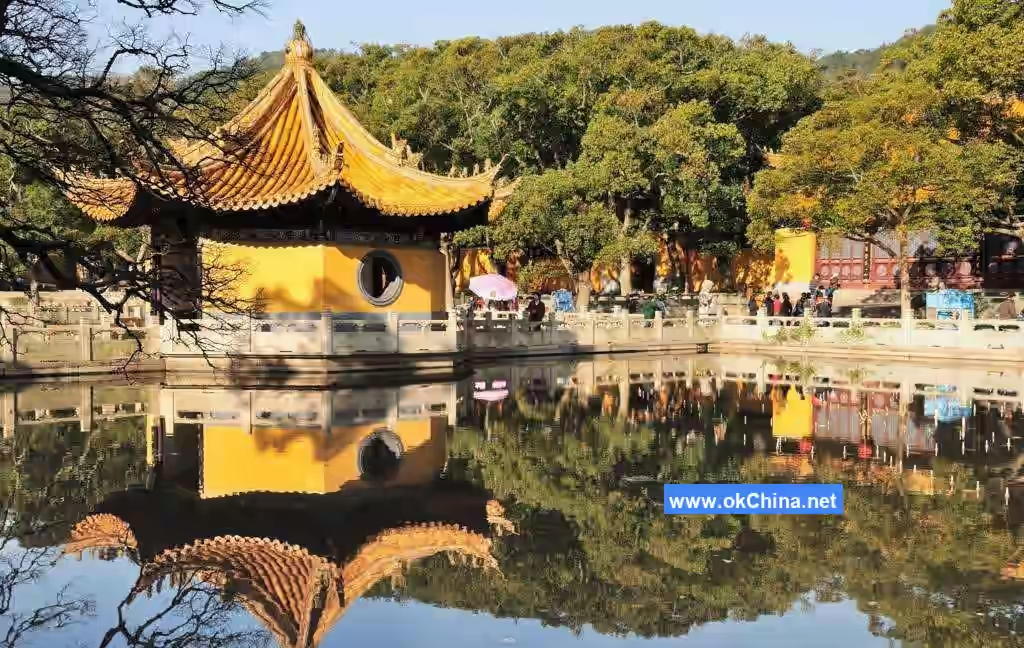
"Moonlit Lotus Pond" refers to the moonlit scenery of Haiyin Pond. Located in front of the mountain gate of Puji Temple, also known as the "Release-Life Pond" or "Lotus Pond," it was originally a pond where Buddhist followers released captive animals. Later, lotus flowers were planted, giving it the name "Lotus Pond." "Haiyin" is the name of a samadhi attained by the Buddha, symbolizing the Buddha's wisdom ocean, which, like the sea gathering the waters of a hundred rivers, can reflect all phenomena of the universe. Haiyin Pond covers an area of about 15 mu and was built during the Ming Dynasty. Three stone bridges span the pond: the middle one is called Ping Bridge; the north bridge connects to the central mountain gate of Puji Temple, with an octagonal pavilion in the middle, and the south bridge leads to the Imperial Stele Pavilion. The Imperial Stele Pavilion, Octagonal Pavilion, and ancient Puji Temple are aligned along the same central axis. Ancient stone bridges lie across the water, with Puji Temple towering in the distance.
The Lotus Pond is surrounded by mountains on three sides, with ancient camphor trees reaching for the sky, and the pond water is accumulated from mountain springs. In midsummer, lotus leaves spread across the pond, and lotus flowers stand tall, reflecting the shadows of ancient trees, temples, arched bridges, and pagodas.
3.9.6 Fahua Spiritual Cave
A uniquely scenic area where massive rocks naturally stack to form dozens of caves: some narrow and low, passable by stooping; some spacious as rooms, enshrining stone statues; some broad at the top and narrow at the bottom, with springs dripping from crevices to form pools. Although Putuo Mountain has many caves, layered and extraordinary, this cave is the most remarkable. Outside the cave, inscriptions such as "Land of Great Blessing," "Putuo Rock," and "Great Pillar of the Southeast" can be found.
3.9.7 Ancient Cave and Tidal Sound
The cave is half-submerged in the sea, extending about 30 meters deep, with cliffs dropping over 10 meters to the cave floor. The coastline here is winding, with steep cliffs and layered strange rocks. The cave floor connects to the sea, and there are two crevices at the top, called "skylights."
The entrance of Chaoyin Cave faces the sea, shaped like an open mouth. Day and night, it is struck by waves, with tides rushing into the entrance. During strong winds, spray flies, and foam surges up to the "skylights." On clear days, rainbows magically appear inside the cave.
According to records, during the Song and Yuan dynasties, pilgrims visiting Putuo Mountain often prayed at Chaoyin Cave for the Bodhisattva to appear and bestow blessings. After the Ming Dynasty, many went to Fanyin Cave to pray for Guanyin Bodhisattva's manifestation. Among the pilgrims, some would leap from the cliffs, sacrificing their lives in hopes of being reborn in the Western Pure Land. Consequently, the Dinghai County Magistrate, Ying Sui, built a pavilion on the shore and personally inscribed the "Prohibition Against Self-Sacrifice," erecting a stele to forbid such acts.
3.9.8 Sun Rising from Chaoyang Cave
For viewing the sunrise on Putuo Mountain, Chaoyang Cave is the foremost location, giving rise to the saying "Sun Rising from Chaoyang Cave." Passing the Immortal Well and ascending Babao Ridge to look east, one sees a slope with a rock slanting like an elephant, raising its trunk and gazing toward the East Sea—this is Elephant Rock. East of Elephant Rock, near the sea, lies the natural cave Chaoyang Cave, with its entrance facing the Eastern Ocean, flanked by Hundred-Step Beach and Thousand-Step Beach. On clear days, one can watch the sunrise and sea scenery here in the early morning. The rising sun, "as huge as a wheel, as red as cinnabar, suddenly surges from the seabed, casting myriad reddish rays that scatter across the seawater, mingling freshness and brilliance, dazzling the eyes." Hence, people named it "Chaoyang Cave." Chaoyang Cave is also a place to listen to tidal sounds. Originally, Chaoyang Convent stood above the cave. Tanxia Pavilion, also called Chaoyang Pavilion, was built on the left platform of Chaoyang Cave, close to the cliffs and sea.
3.9.9 Thousand-Step Golden Sand
Thousand-Step Golden Sand is 1,370 meters long and over 400 meters wide, making it the second-largest beach in the Zhoushan Archipelago, located on Putuo Mountain, Zhoushan. Also known as Tawan Golden Sand, it is said that a stone pagoda was once built in Longtan Pit south of Tawan Bay, with the harbor reflecting the pagoda's shadow, hence the name. Thousand-Step Golden Sand consists of fine, soft, and pure sand.
3.9.10 Snow Clearing on Guangxi Peak
"Snow Clearing on Guangxi Peak" refers to the snowy scenery of Guangxi Peak, one of the twelve major landscapes of Putuo Mountain. Guangxi Peak is southeast of Foding Mountain, also called "Lotus Stone Flower" or "Stone House." Viewed from afar, amidst lush greenery, the peak and rocks stand elegantly, resembling lotus flowers or snow accumulated on the peak.
3.9.11 Morning Mist over Tea Mountain
Tea Mountain is located behind Foding Mountain, stretching from north to west, winding and continuous. The mountain terrain is open and spacious, with many streams and ravines. Before sunrise, morning mist often lingers over the tea groves, sometimes like threads, sometimes dense and diffuse. In ancient times, Putuo Mountain had no residents; monks living on the mountain grew their own food, and tea cultivation was an important task for them. During the picking season, monks would all go out to harvest, creating a scene described in a Ming Dynasty poem by Li Tong: "Every mountain vies to speak of picking fragrant buds, pushing through mist and clouds on a distant path." The tea from Putuo's Tea Mountain is called "Cloud and Mist Buddha Tea." Since most tea trees were planted by monks, discussions about "Morning Mist over Tea Mountain" among mountain monks carry a unique charm.
3.9.12 Clear Chants at Tianmen
Refers to the landscape of Fanyin Cave at the easternmost end of Putuo Mountain. Among the many magical caves and ravines of Putuo Mountain, Fanyin Cave's majestic momentum and steep cliffs are unmatched by others. The mountain colors of Fanyin Cave are clear and dark, with towering cliffs. At the cave's waist, several zhang from the cliff top, a horizontal rock is embedded like a bridge. A stone platform is built between the two steep cliffs, with a double-layer Buddhist niche called "Guanyin Pavilion," the best place to view tides at Fanyin Cave. In the 38th year of the Kangxi reign of the Qing Dynasty (1699), the emperor bestowed an inscribed plaque "Fanyin Cave" to be hung here.
4. History and Culture
4.1 Historical Evolution
According to historical records, as early as over 2,000 years ago, Putuo Mountain was a treasured site for Taoist cultivation. The name of Putuo Mountain has changed several times.
During the reign of King Goujian of Yue in the Spring and Autumn period (497–465 BC), it was collectively called Yongdong along with Zhoushan and other islands.
Legend has it that during the reign of Emperor Cheng of the Western Han Dynasty (32–7 BC), Mei Fu, the Commandant of Nanchang, came to the mountain to live in seclusion, gathering herbs and refining elixirs, after which it was called Mei Cen Mountain. Putuo Mountain as a Guanyin (Avalokitesvara) bodhimandala began in the Tang Dynasty.
During the Dazhong era of the Tang Dynasty (847–860), a Brahmin monk (also said to be a monk from the Western Regions) came to the mountain to worship the Buddha, and it is said he witnessed Guanyin manifesting at Chaoyin Cave. In the 4th year of Xiantong of the Tang Dynasty (863), Japanese monk Master Hui'e invited a Guanyin statue from Wutai Mountain and sailed back to Japan. When the boat reached Lotus Ocean, it encountered storms; despite several attempts to proceed, they could not succeed. Believing that Guanyin was unwilling to go east, they left the sacred statue at Chaoyin Cave for worship, hence called the "Unwilling-to-Go Guanyin." Later, through successive dynasties of construction, temples proliferated. At its peak, the entire mountain had 4 major temples, 106 nunneries, 139 thatched huts, and over 4,654 monks, historically known as the "Foremost Buddhist Kingdom in China."
During the Song Dynasty, Putuo Mountain was called Baotuo Mountain. The Song Dynasty Baoqing "Changguo County Annals" records: "Mei Cen Mountain Guanyin Baotuo Temple is in the sea east of the county, built in the 2nd year of Zhenming of Liang, named after the mountain." Song Dynasty Zhang Bangji's "Ink Manor Random Notes" states: "Baotuo Mountain is two tides away from Changguo; the mountain is not very high or steep."
In the 5th year of Qiande of the Song Dynasty (967), Zhao Kuangyin sent the eunuch Wang Gui to the mountain to offer incense and bestowed brocade banners, marking the beginning of imperial incense offerings to Putuo. In the 3rd year of Yuanfeng (1080), the court granted silver to build Baotuo Guanyin Temple (now the Front Temple). At that time, merchants and tribute envoys from Japan, Korea, and other countries also began to visit the mountain to worship the Buddha, gradually increasing Putuo Mountain's fame. In the 1st year of Shaoxing (1131), the abbot of Baotuo Guanyin Temple, Zen Master Zhenxie, petitioned the court for permission to change from Vinaya to Chan (Zen) practice, and all over 700 fishing households on the mountain were relocated, making Putuo Mountain a pure land of Buddhism. In the 7th year of Jiading (1214), the court granted ten thousand strings of cash to repair the Yuantong Hall and designated Putuo Mountain as a dedicated Guanyin bodhimandala.
During the Yuan Dynasty, Putuo Mountain was called Butuoluojia Mountain. In the 3rd year of Dade of the Yuan Dynasty (1299), June, the Emperor decreed the Jiangnan Buddhist President and abbot of Baotuo Guanyin Temple, Yishan, as Master Miaoci Hongji, sending him with state letters to Japan to promote Buddhism and establish friendly relations.
From the Song to Ming dynasties, Putuo Mountain was also called Baihua Mountain, translated from the Sanskrit "Potalaka."
In the 19th year of Hongwu of the Ming Dynasty (1386), a maritime ban was implemented, ordering Tang He to burn temples and destroy Buddha images on the mountain and relocate monks to Mingzhou Qixin Temple (now Qita Temple in Ningbo). It was not until the 1st year of Hongzhi of Emperor Xiaozong of Ming (1488) that Buddha images were welcomed back to the mountain and temples rebuilt. During the Jiajing era of Emperor Shizong of Ming (1522–1566), temples on Putuo Mountain were destroyed, and Baotuo Guanyin Temple was not spared. In the 33rd year of Wanli of the Ming Dynasty (1605), Baotuo Guanyin Temple was imperially bestowed as "Huguo Yongshou Putuo Chan Temple," and the mountain was named after the temple, marking the beginning of the name Putuo Mountain.In the eighth year of the Kangxi reign of the Qing Dynasty (1669), Dutch colonists invaded Putuo, and the temple was completely destroyed except for the main hall. In the thirty-eighth year of the Kangxi reign (1699), the Huguo Yongshou Putuo Chan Temple was built and bestowed with the plaque "Puji Qunling," after which it became known as "Puji Chan Temple." In the ninth year of the Yongzheng reign of the Qing Dynasty (1731), Puji Chan Temple expanded its halls and auxiliary buildings.
In the thirteenth year of the Republic of China (1924), the entire mountain had three major temples, 88 nunneries, 128 thatched huts, and over 4,000 monks, with Puji Chan Temple alone housing over a thousand monks.
In July of the twenty-sixth year of the Republic of China (1937), the Japanese army occupied Putuo Mountain, blockaded the harbor, cut off pilgrim traffic, left nunneries in disrepair, and caused Buddhist activities to decline. After the victory in the War of Resistance, there was a slight recovery.
On May 19, 1950, Putuo Mountain was liberated, with 316 monks at the time. The Party and government implemented the policy of freedom of religious belief, protected legitimate religious activities, and allocated funds for the repair of Puji Temple, Fayu Temple, Yangzhi Nunnery, and others.
Starting in 1958, due to the influence of "leftist" tendencies and the turmoil of the "Cultural Revolution," the Party's religious policy was severely undermined, and religious activities were suspended for a time. After the overthrow of the "Gang of Four," the Party's religious policy was reinstated.
In April 1979, the Putuo Mountain Administration was established, and the state allocated funds and materials to urgently repair dilapidated buildings and restore scenic spots.
4.2 Buddhist Culture
4.2.1 Buddhist History
According to Buddhist legend, during the Dazhong era of the Tang Dynasty, an Indian monk came here and witnessed Guanyin Bodhisattva appearing to preach, bestowing upon him a seven-colored gemstone. Thus, this place became known as the sacred site of Guanyin's manifestation. Buddhist scriptures mention Guanyin residing on Mount Potalaka in southern India, which is why the island was named after it. In the fourth year of the Xiantong era of the Tang Dynasty (863), Japanese monk Hui'e invited a statue of Guanyin from Wutai Mountain to take back to Japan by boat. When the boat reached Lotus Ocean, it encountered storms and waves, and despite several attempts, it could not proceed. Believing that Guanyin was unwilling to go east, he left the sacred statue at the side of Chaoyin Cave for worship, hence the name "Guanyin Who Refused to Go" (now called "Guanyin Who Refused to Go Temple"). Over successive dynasties, temples were built, and the mountain became densely populated with monasteries. At its peak, the entire mountain had four major temples, 106 nunneries, 139 thatched huts, and over 4,654 monks, historically known as the "First Buddhist Kingdom of China." After the Northern Song Dynasty, Guanyin worship flourished on Putuo Mountain, temples gradually increased, and monks gathered in large numbers. In the Yuan Dynasty's "Supplement to the Biography of Mount Putuo," only a few places such as Baotuo Temple, Chaoyin Cave, Shancai Cave, Pantuo Stone, Samadhi, and Zhenxie Nunnery were mentioned, indicating that there were not many temples at the time. By the first year of the Shaoxing era of the Southern Song Dynasty (1131), the various Buddhist sects on Putuo Mountain were unified under Chan Buddhism. During the Yuan, Ming, and Qing dynasties, temples continued to be built, and by the late Qing Dynasty, there were three major temples, over 70 nunneries, and more than 100 thatched huts.
4.2.2 Major Temples
The major temples on Putuo Mountain include Puji Temple, Fayu Temple, and Huiji Temple.
Puji Temple, also known as the "Front Temple," is one of the three major temples on Putuo Mountain and the largest temple on the mountain. It is said to be the temple where Chan Master Zhenxie first resided, later succeeded by Huihui, Puji, Huaixin, Zuming, and others, experiencing several cycles of prosperity and decline. In the thirty-second year of the Wanli era of the Ming Dynasty (1604), the Yuantong Treasure Hall was built by imperial decree and bestowed with a plaque. In the twenty-eighth year of the Kangxi reign of the Qing Dynasty (1689), the Buddha Hall was built by imperial decree, and in the thirty-eighth year, the main hall was renovated, with the temple plaque "Puji Qunling" bestowed, and the temple was renamed Puji Chan Temple. The existing main hall was rebuilt by imperial decree in the ninth year of the Yongzheng reign of the Qing Dynasty (1731), with over 200 halls, pavilions, and rooms, serving as the main temple on the mountain for worshiping Guanyin Bodhisattva.
Fayu Temple is one of the three major temples on Putuo Mountain. It was founded by Dazhi Zhenrong in the eighth year of the Wanli era of the Ming Dynasty (1580) and named Haichao Nunnery. In the twenty-second year (1594), it was renamed Haichao Temple, and in the thirty-fourth year, it was renamed Huguo Zhenhai Chan Temple. In the thirty-eighth year of the Kangxi reign of the Qing Dynasty (1699), the main hall and other structures were renovated, and the plaque "Tianhua Fayu" was bestowed, leading to its current name. During the Tongzhi and Guangxu reigns, construction continued, and the temple now has 245 halls and rooms.
Huiji Temple, also known as Foding Mountain Temple or the "Rear Temple," is one of the three major temples on Putuo Mountain. In the early Ming Dynasty, monk Huiyuan built a thatched hut on the mountaintop and founded Huiji Nunnery. In the fifty-eighth year of the Qianlong reign of the Qing Dynasty (1793), the nunnery was expanded into a temple and named Huiji Temple. The entire temple consists of four halls, seven palaces, and six towers, and together with Puji and Fayu, it is known as one of the three major temples of Putuo.
In addition, there are Baotuo Lecture Temple, Hongfa Hall, Xilin Hall, Yaoshi Nunnery, Chengxin Nunnery, Xilai Nunnery, Sansheng Nunnery, Wenchang Pavilion, Miaofeng Nunnery, Yuecen Nunnery, Heming Nunnery, Dasheng Nunnery, Changle Nunnery, Changsheng Nunnery, Shuangquan Nunnery, Changming Nunnery, Yiyun Nunnery, Banshan Nunnery, and others.
4.3 Festivals and Activities
4.3.1 South Sea Guanyin Cultural Festival
The Guanyin Cultural Festival is the grandest tourism festival on Putuo Mountain, first established in 2003 and held annually. The China Putuo Mountain South Sea Guanyin Cultural Festival is a Buddhist tourism event based on Putuo Mountain's profound Guanyin cultural heritage, aiming to promote Guanyin culture and build a culturally renowned mountain. Activities during the festival include large-scale Buddhist ceremonies, Buddhist music concerts, pilgrimages by devotees, lotus lantern festivals, cultural seminars, Buddhist cultural tourism product exhibitions, and more.
4.3.2 Incense Festival
The Putuo Mountain Guanyin Incense Festival originated from the days of Guanyin's manifestation, birth, or enlightenment. Every year on the nineteenth day of the second lunar month (Guanyin's birthday), the nineteenth day of the sixth lunar month (Guanyin's enlightenment day), and the nineteenth day of the ninth lunar month (Guanyin's renunciation day), Buddhist disciples from home and abroad gather from all directions to Putuo Mountain to offer incense, worship, and participate in Buddhist ceremonies. The festival reaches its peak on the evening of the eighteenth and the early morning of the nineteenth, with tens of thousands of devotees crowding together, bowing every three steps as they ascend Foding Mountain, creating a spectacular scene. The entire mountain is illuminated with candles and lanterns throughout the night, and the sounds of sutra chanting and Buddhist recitations continue until dawn.
4.3.3 Spring Tourism Festival
The Putuo Mountain Spring Tourism Festival, with the motto "Ecotourism, Cultural Experience, Tourist Interaction, and Public Enjoyment," is held every March. It is a large-scale interactive tourism and cultural activity integrating public entertainment and tourist participation. First held in 1990, the festival includes vocal music, dance, drama, calligraphy and painting, lantern riddles, lucky draws, Buddhist tea ceremonies, tourism volunteer activities, and more. It is another cultural festival on Putuo Mountain following the Guanyin Cultural Festival and the Incense Festival. Additionally, there are photography contests, beach games, and a series of other tourism programs.
4.4 Legends and Anecdotes
4.4.1 The Sacred Site of Short Gu
Legend has it that two sisters-in-law crossed Lotus Ocean to come to the mountain to offer incense. When the boat docked, the younger sister unfortunately began her menstrual cycle and, feeling unclean, dared not disembark. Her sister-in-law criticized her for lacking the fortune to worship, telling her to wait in the small boat while she went alone to pray. By noon, the tide had risen, separating the boat from the shore. The younger sister sat in the boat, starving. At that moment, a village woman carrying a food basket walked to the dock, threw some stones into the tidewater, stepped on them to reach the younger sister's boat, and said her sister-in-law had asked her to deliver the food. After placing the food box, she left. When the sister-in-law returned from worship and heard about this, she found it strange. Suddenly, she remembered that while praying earlier, she had noticed the hem of Guanyin Bodhisattva's robe was wet, and she realized it was Guanyin Bodhisattva who had performed this act of kindness. Because the sister-in-law had "criticized" her younger sister at the dock, the place where they moored the boat became known as "Short Gu Dock," and the stones thrown into the tidewater for stepping on were called "The Sacred Site of Short Gu."
4.4.2 The Two Turtles Listening to Dharma Stone
One legend says that while Guanyin Bodhisattva was preaching on the Dharma platform, the Dragon King of the East Sea sent his two turtle ministers to listen. Unexpectedly, the two turtles became so engrossed that they refused to return to the dragon palace. The Dragon King, angered by this, turned them into stone. Another legend says these were a male and female turtle who were punished and turned into stone for frolicking in the sacred land.
4.4.3 The Origin of Luojia
Putuo Mountain is an abbreviated form of the Indian name, with the full name being Mount Potalaka, also known as Potala, Potalaka, etc. In Chinese, it is called Little White Flower Mountain. Originally, Potalaka referred to a single mountain, but because the Chinese have a habit of shortening names, it was sometimes called Putuo or simply Luojia. Over time, these became regarded as two separate mountains.
The reason Putuo Mountain became the sacred site of Guanyin Bodhisattva is also documented in Buddhist scriptures, which mention several places called Potalaka in India at the time.
Mount Potalaka It is said that on Mount Potalaka, there is a palace of Guanyin Bodhisattva. Shakyamuni Buddha gathered here with Guanyin Bodhisattva, countless other bodhisattvas, disciples, and the eight classes of supernatural beings to preach the Dharma. In addition to achieving great compassion, Guanyin Bodhisattva is also skilled in cultivating countless dhāraṇī gates and secretly emits divine light. When the Tang Dynasty monk Xuanzang traveled to India, he visited Mount Potalaka to pay homage to the sacred site of Guanyin. In "The Great Tang Records on the Western Regions," Xuanzang noted that Mount Potalaka was steep and towering, difficult for ordinary people to climb, with only Guanyin Bodhisattva coming and going there. Guanyin Bodhisattva often appears in the form of a heavenly being or a smeared ash ascetic to comfort and guide people, fulfilling their wishes. To those who can be saved, the bodhisattva appears in whatever form is necessary.
In addition to preaching the Dharma to countless bodhisattvas, disciples, and the eight classes of supernatural beings on this mountain, Guanyin Bodhisattva often accompanied Shakyamuni Buddha to preach in various places. For example, the "Eleven-Faced Divine Mantra Heart Sutra" states: When the Buddha was at the Shravasti Bamboo Grove, Guanyin Bodhisattva was surrounded by countless hundreds of thousands of mantra-holding immortals.
Comments
Post a Comment