

Prince Gong's Mansion and Garden
I. Introduction
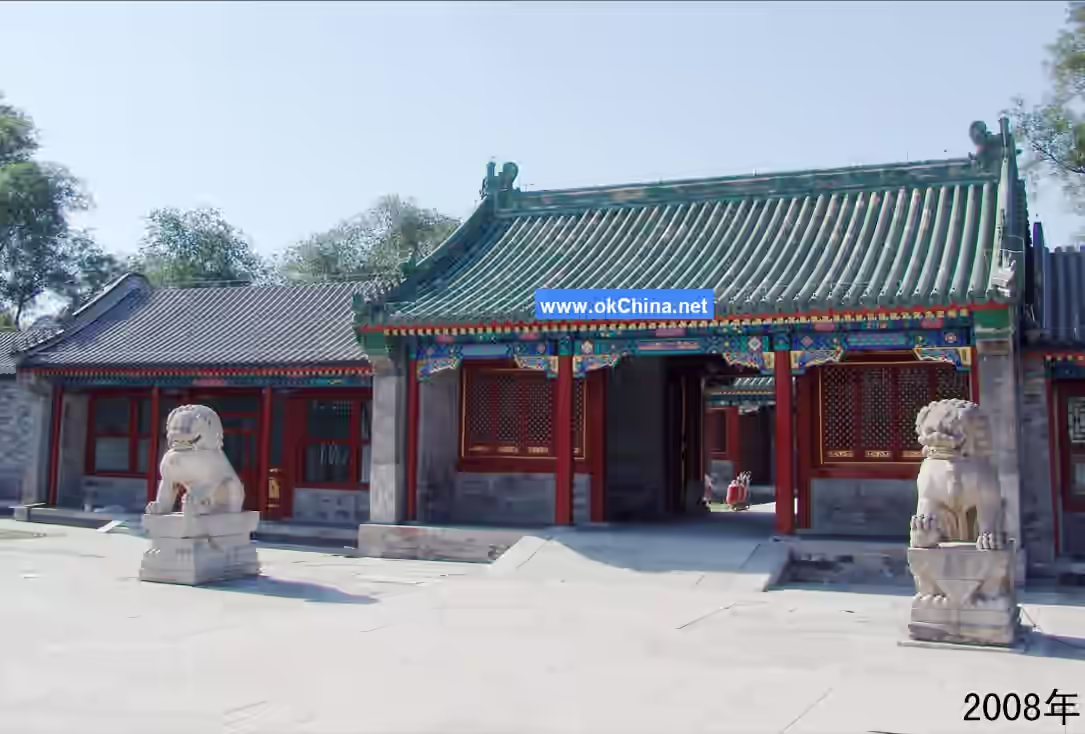
Prince Gong's Mansion and Garden is located on the west bank of Qianhai and the south bank of Shichahai. It is the largest princely mansion from the Qing Dynasty, having served successively as the residence of Heshen and Prince Qing Yonglin. In the first year of the Xianfeng reign (1851), Prince Gong Yixin became the owner of the mansion, from which the name "Prince Gong's Mansion" derives. The mansion and garden witnessed the historical process of the Qing Dynasty's rise to prosperity and subsequent decline, hence the saying, "One Prince Gong's Mansion tells half the history of the Qing Dynasty." After the founding of the People's Republic of China, under the concern of State Council leaders such as Zhou Enlai, Gu Mu, and Li Lanqing, the relocation and restoration of Prince Gong's Mansion were completed over 28 years, transforming it into a fully open princely mansion from the Qing Dynasty.
The mansion covers an area of approximately 60,000 square meters and contains over 30 architectural complexes. Its garden, located behind the mansion, is also known as Cuijin Garden. It was built in the 42nd year of the Qianlong reign (1777) and, according to research, was reconstructed on the site of an old garden from the Ming Dynasty. The entire garden covers an area of 28,000 square meters. The garden's architecture is divided into eastern, central, and western sections, each consisting of multiple courtyard compounds arranged along a strict north-south central axis.
II. Historical Evolution
The Qing Dynasty Period
The Period of Princess Hexiao's Mansion (Heshen's Residence)
- On the 20th day of the fifth lunar month in the 45th year of the Qianlong reign (1780), Emperor Qianlong designated Heshen's son, Fengshen Yinde, as the consort of Princess Hexiao (the Tenth Princess).
- On the 21st day of the sixth lunar month of the same year, Emperor Qianlong issued an edict: "The confiscated house of Li Shi'ao shall be granted to Heshen as the mansion for the Tenth Princess."
- In the 49th year of the Qianlong reign (1784), Heshen began constructing this mansion, a process that took at least over four years.
- In the eleventh lunar month of the 54th year of the Qianlong reign (January 1790), Princess Hexiao (the Tenth Princess) married Fengshen Yinde and officially moved into this mansion.
- In the first lunar month of the 4th year of the Jiaqing reign (1799), Heshen was convicted, ordered to commit suicide, and his property was confiscated. The mansion was granted to Prince Qing Yonglin, and Princess Hexiao was ordered to move out.
The Period of Prince Qing's Mansion
- In the third lunar month of the 4th year of the Jiaqing reign (1799), Prince Qing Yonglin received Heshen's mansion, which then began to be called "Prince Qing's Mansion."
- In the third lunar month of the 25th year of the Jiaqing reign (1820), Prince Qing Yonglin died of illness. His title was inherited by his third son, Mianmin, who was demoted to the rank of commandery prince, becoming the second owner of Prince Qing's Mansion.
- In the 16th year of the Daoguang reign (1836), Mianmin died of illness. The commandery prince title was inherited by Yicai, grandson of Prince Yi Yongxuan and son of Mianzhi, who became the third owner of Prince Qing's Mansion.
- In the 22nd year of the Daoguang reign (1842), Yicai was exposed for taking a concubine and having a child during the mourning period for his mother. It was later discovered that Yicai had bribed a clerk of the Imperial Clan Court with three thousand coins. Yicai was stripped of his title and returned to his original branch. Yonglin's fifth son, Mianti, was stripped of his "not within the eight privileges" duke title, demoted one rank to a general of the state, and succeeded to Yonglin's sacrificial duties, becoming the fourth owner of Prince Qing's Mansion.
- In the 29th year of the Daoguang reign (1849), Mianti died of illness without an heir. His brother Mianxing's son, Yikuang, succeeded Mianti, inheriting the demoted title of bulwark general, becoming the fifth owner of Prince Qing's Mansion. Shortly after Yikuang's succession, he was ordered to move to the old residence of Qishan, not far west of the mansion.
- In the 30th year of the Daoguang reign (1850), Yixin was ordered to establish a separate mansion and was granted the former residence of Prince Qing Yonglin and the mansion of Bulwark General Yikuang.
The Period of Prince Gong's Mansion
- In the fourth lunar month of the 2nd year of the Xianfeng reign (June 1852), Yixin formally moved into this mansion, historically known as Prince Gong's Mansion.
- Half a year after Yixin moved in, on the 23rd day of the tenth lunar month of the 2nd year of the Xianfeng reign (December 4, 1852), Emperor Xianfeng, accompanied by Yixin's mother, the Imperial Noble Consort, visited Prince Gong's Mansion. Emperor Xianfeng also inscribed the plaques for the mansion's halls, such as "Duofu Xuan" and "Baoguang Shi." In the early years of the Tongzhi reign, Yixin also undertook a large-scale renovation of the mansion's rear garden, naming it "Langrun Garden."
- On the 10th day of the fourth lunar month of the 24th year of the Guangxu reign (May 29, 1898), Yixin died of illness at Prince Gong's Mansion. Yixin's grandson, Puwei, succeeded to the title of Prince Gong by decree of Empress Dowager Cixi.
The Republican Period
- In January 1912, Puwei fled from Prince Gong's Mansion. In February, the Qing emperor abdicated, and Prince Gong's Mansion became private property that princes could freely dispose of for the first time.
- In 1924, Puwei's brothers, Puyu and Puhui, who had been living in seclusion in the Western Hills, along with their mother, returned to live in the garden of Prince Gong's Mansion.
- In 1936, after Puwei's death, Bao Shijie filed a lawsuit with the Beiping District Court in 1937. The court auctioned Prince Gong's Mansion, which was purchased by Fu Jen Catholic University. Puyu left Prince Gong's Mansion in early 1938.
- In 1937, commissioned by the Society of the Divine Word, Father Zhang Weidu, on behalf of the society, legally purchased 569 rooms, 60 corridors, and the garden land of Prince Gong's Mansion, totaling 49.3 mu of property rights. The property was located on Sanzuoqiao Road outside Di'anmen, bounded by Fu Jiadao to the east, Shichahai River to the south, Shichahai Lake to the west, and Ximeichang Street to the north. This purchase was for Fu Jen Catholic University to establish a women's college.
- In September 1939, Fu Jen Catholic University began enrolling female students on a large scale. Prince Gong's Mansion was subsequently renamed Fu Jen Women's College, managed by the Sisters of the Holy Spirit.
After the Founding of the People's Republic of China
- In the early years of the People's Republic of China, most people had not yet realized the importance of protecting ancient buildings like princely mansions, and naturally, the protection of Prince Gong's Mansion was not noticed. Zhou Enlai was the first to propose protecting Prince Gong's Mansion.
- In 1952, Fu Jen Catholic University merged into Beijing Normal University, and Prince Gong's Mansion became the women's college of the university.
- From 1956 to 1964, the mansion part of Prince Gong's Mansion was successively occupied and used by multiple institutions, including Beijing Art Normal College, Beijing Art College, and the China Conservatory of Music.
- In 1962, Zhou Enlai specifically instructed the relevant departments in Beijing to allocate funds for the restoration of Prince Gong's Mansion. Subsequently, the relevant departments in Beijing formulated a protection plan for Prince Gong's Mansion and allocated funds for its restoration. During that restoration, archaeologists unexpectedly discovered the missing "Fu" character stele in the Miyun Cave of the mansion's garden.
- In 1975, during his serious illness, Premier Zhou Enlai entrusted then Vice Premier of the State Council, Gu Mu, with three tasks: building a new Beijing Library; renovating the Liulichang Cultural Street; and fully opening Prince Gong's Mansion to the public.
- By the early 1980s, Prince Gong's Mansion had become a large compound divided among eight units and inhabited by hundreds of households, with over 200 resident families. The primary task for restoring Prince Gong's Mansion was relocation. Under the concern of three generations of State Council leaders—Zhou Enlai, Gu Mu, and Li Lanqing—the relocation and restoration of Prince Gong's Mansion were completed over 28 years.
- In 1978, Gu Mu convened a meeting with leaders from relevant central ministries and commissions and Beijing Municipality to determine the implementation of Premier Zhou's wishes.
- In 1981, a meeting led by the State Council Government Offices Administration resulted in the "Report on the Relocation of Residents from Prince Gong's Mansion." Consequently, Prince Gong's Mansion received key protection and maintenance.
- In 1982, Prince Gong's Mansion and Garden were announced by the State Council as part of the second batch of Major Historical and Cultural Sites Protected at the National Level.
- Around the Spring Festival of 1982, the construction team submitted a research report on Prince Gong's Mansion to the Ministry of Culture, proposing a restoration plan for the 24 scenic spots in the rear garden. On February 13, during a briefing on the restoration of Prince Gong's Mansion and the renovation of Liulichang, Gu Mu set the tone for the relocation of Prince Gong's Mansion: "Whoever's child it is, take it away." In March, the Ministry of Culture submitted the "Request for Instructions Report on the Restoration Project of Prince Gong's Mansion," proposing a restoration plan of "take over one section, manage one section, restore one section," and suggested establishing a Prince Gong's Mansion Restoration and Management Committee.
- In 1986, the relocation of residents from the Beijing Refrigeration Fan Factory, the Ministry of Public Security, and the State Council Government Offices Administration Kindergarten was basically completed. In 1987, the Prince Gong's Mansion Management Office under the Ministry of Culture was established.
- On August 17, 1988, the garden of Prince Gong's Mansion opened to the public.
- In 1989, Li Ruihuan inspected Prince Gong's Mansion. To enable the garden to become a designated reception unit during the upcoming Asian Games, he approved a special fund of 1.5 million yuan from the Asian Games budget to the Ministry of Culture. Just before the opening of the 1990 Asian Games, the restoration project of the rear garden of Prince Gong's Mansion was finally completed.
- In 2002, the Chinese National Academy of Arts completed its relocation. In 2003, the China Federation of Literary and Art Circles completed its relocation. In 2003, the Management Office was upgraded to the Prince Gong's Mansion Management Center under the Ministry of Culture. On November 23, 2006, as the last occupying unit in the Beijing Prince Gong's Mansion—the Affiliated Middle School of the China Conservatory of Music—removed its school plaque, which had hung at the mansion for nearly 50 years, and transferred the occupied buildings and management rights, the relocation work for Prince Gong's Mansion was successfully completed.
- In 2007, the Central Commission for Public Sector Reform approved the establishment of the Prince Gong's Mansion Museum under the Ministry of Culture.
- On August 20, 2008, the extensively restored Prince Gong's Mansion opened to the public.
- In 2012, Prince Gong's Mansion and Garden were upgraded to a National 5A-level Tourist Attraction.
- In 2017, Prince Gong's Mansion and Garden were rated as a National First-class Museum.
- In 2018, Prince Gong's Mansion and Garden were renamed the Prince Gong's Mansion Museum under the Ministry of Culture and Tourism.
III. Orientation and Layout
Architectural Features
Site Selection
The site selection of Prince Gong's Mansion was quite deliberate. Legend has it that Beijing has two dragon veins: one is the earth dragon, referring to the central axis of Beijing city, but buildings on this axis were generally reserved for the emperor; the other is the water dragon, referring to the line formed by Shichahai, Houhai, and Beihai.Compared to terrestrial dragon veins, there were fewer regulations on construction along aquatic dragon veins, and their shapes were less discernible, which allowed Heshen to exploit this loophole. Prince Gong's Mansion is not only situated on Beijing's aquatic dragon vein but also precisely at the "dragon's belly acupoint" of this aquatic dragon. In Feng Shui, water symbolizes wealth, and the belly of the aquatic dragon is believed to be the place where wealth accumulates. Thus, this unique location made Prince Gong's Mansion the most "wealth-attracting" place in Beijing.
Structure
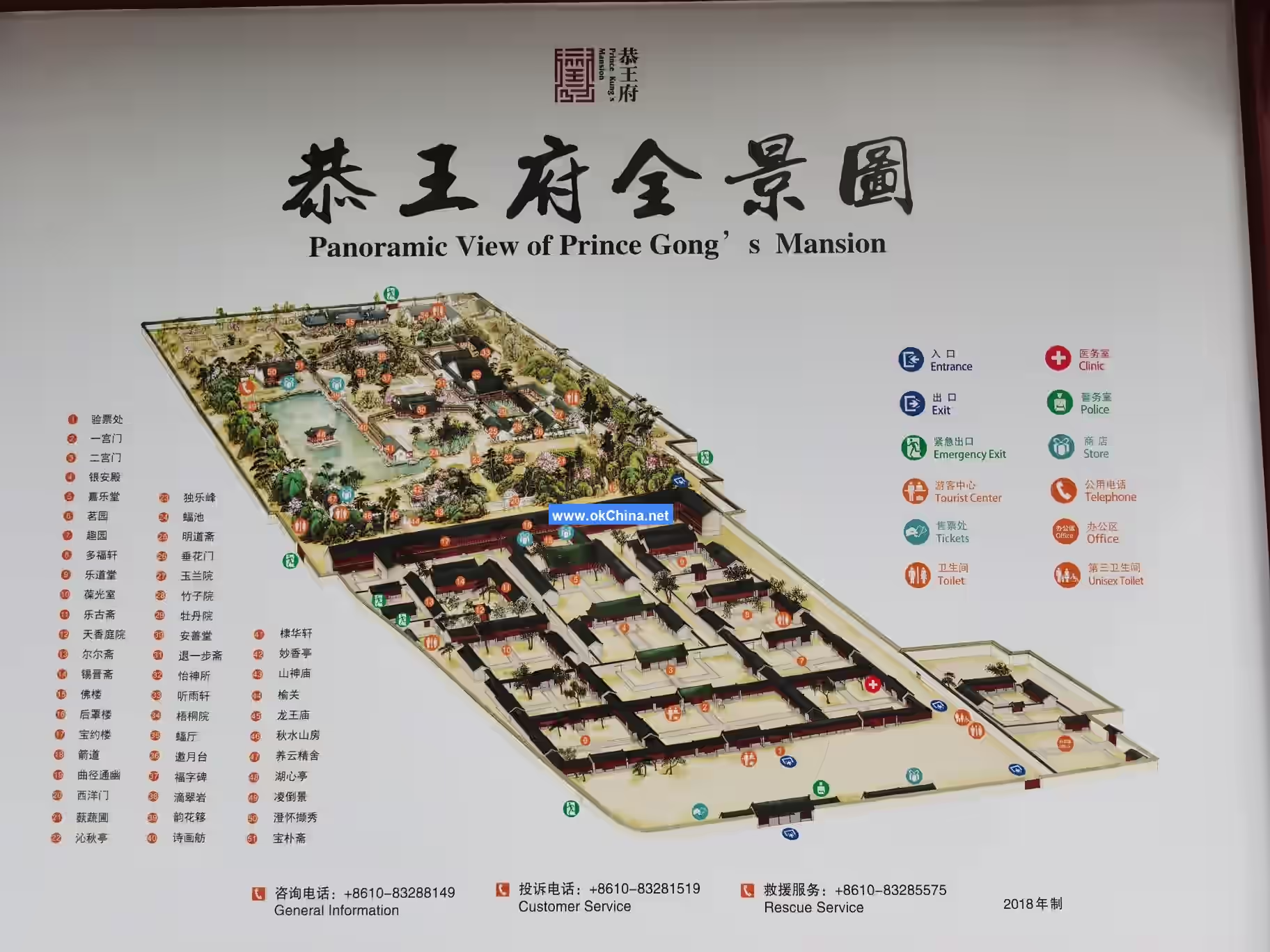
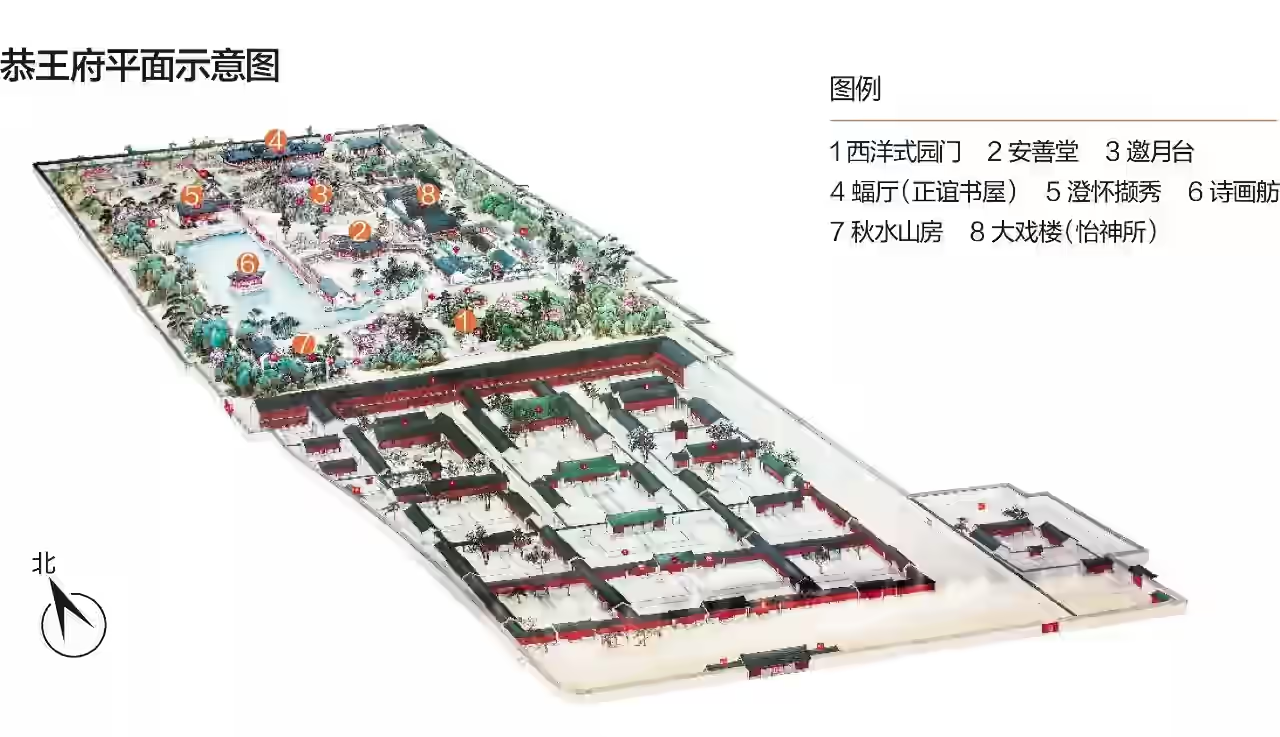
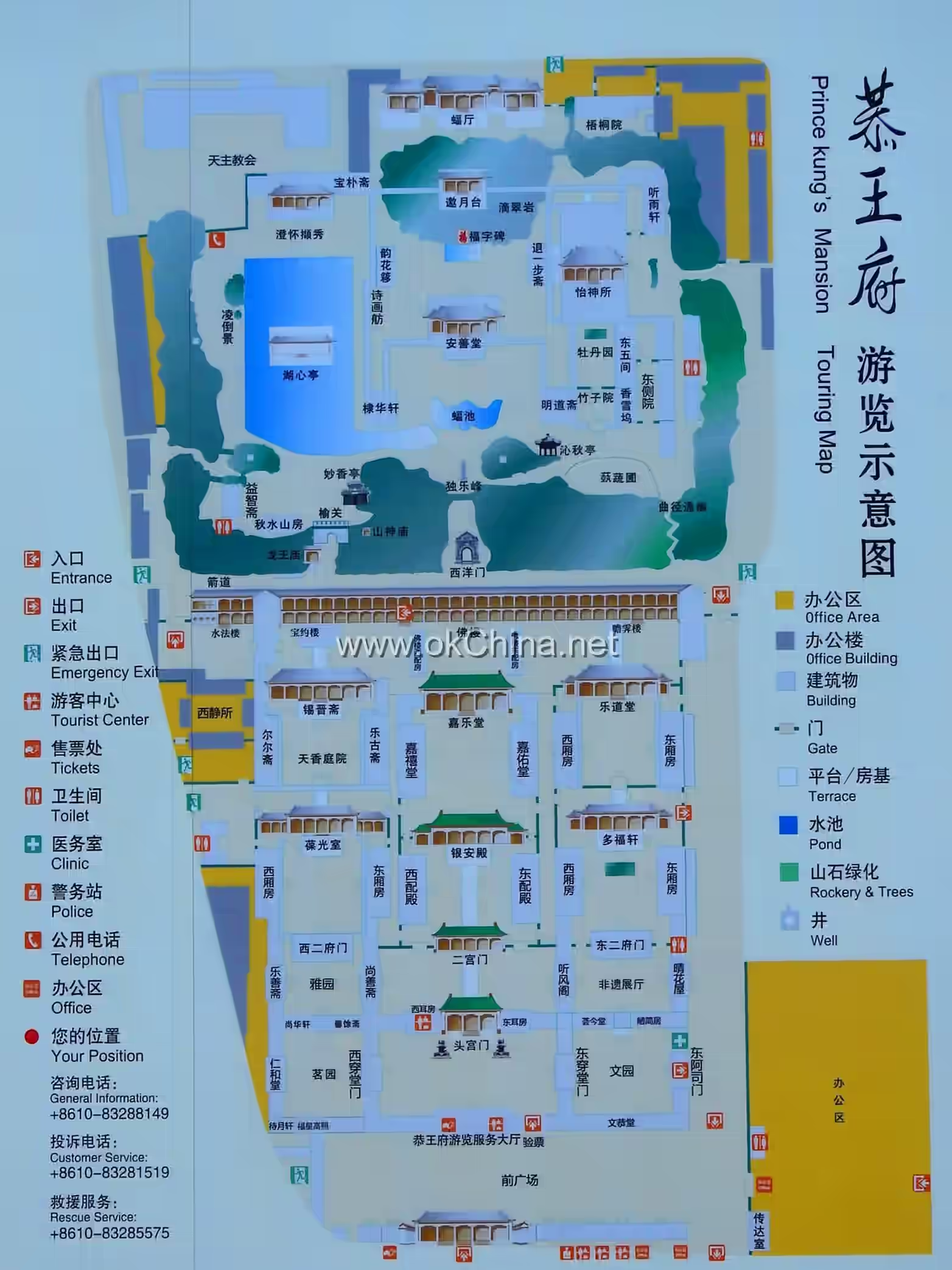
Prince Gong's Mansion covers an area of approximately 31,000 square meters. The mansion's architecture can be divided into two parts: the mansion proper and the garden.
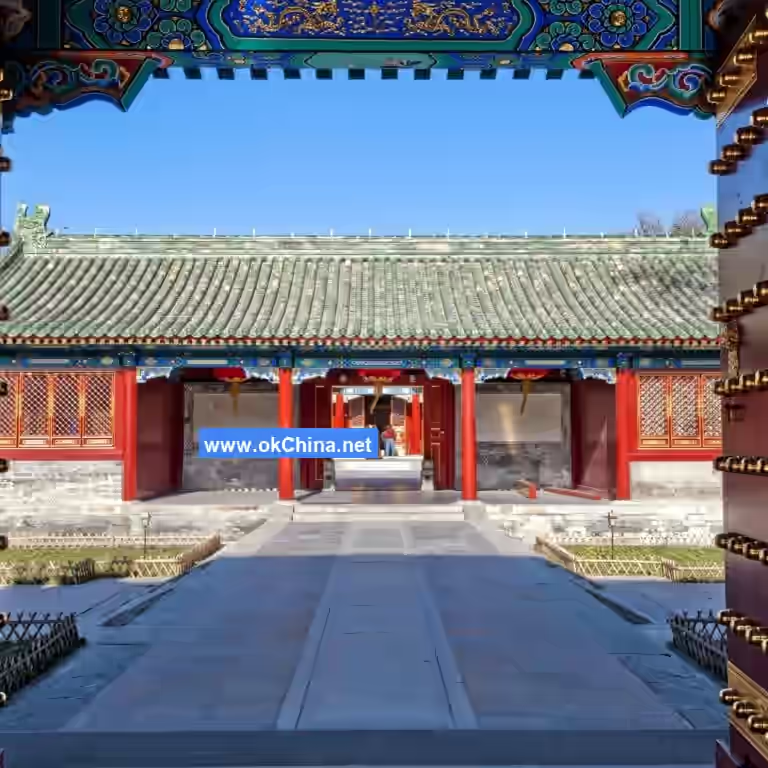
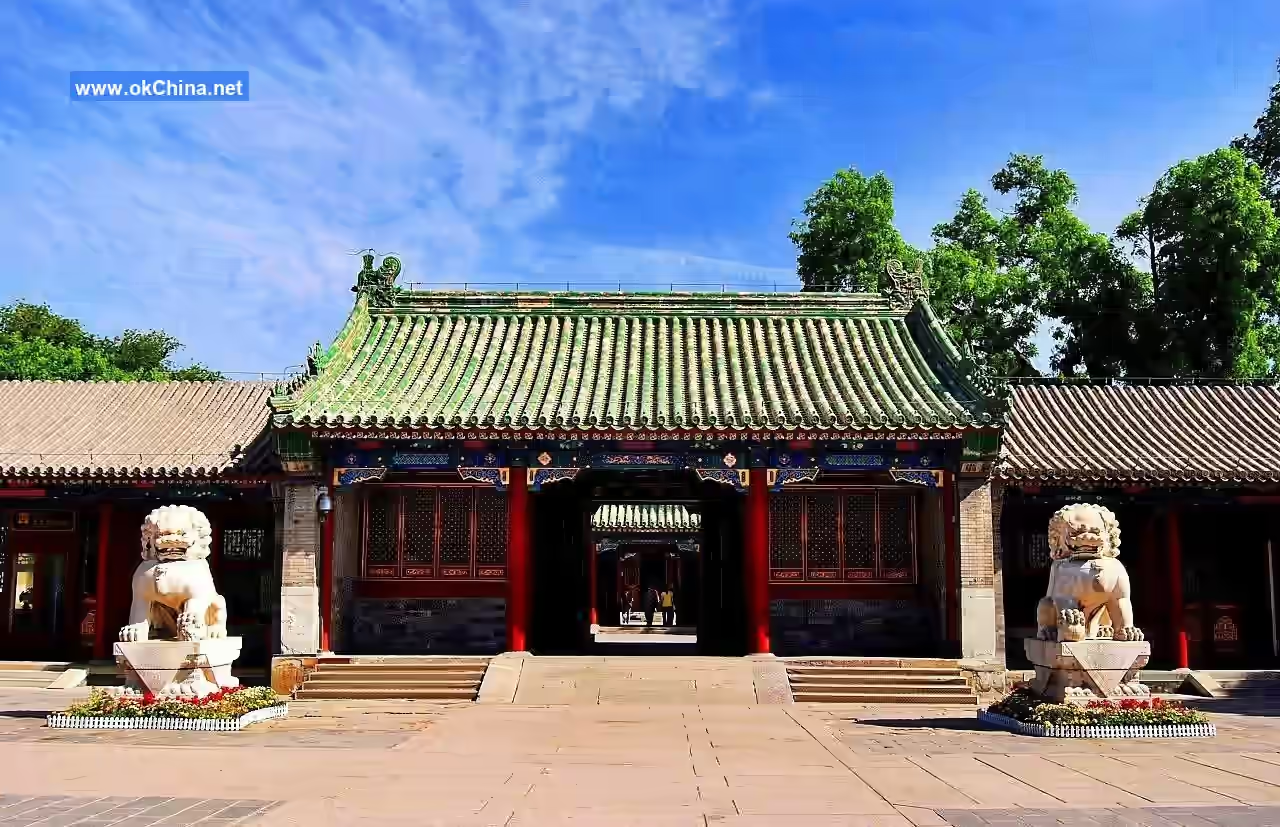
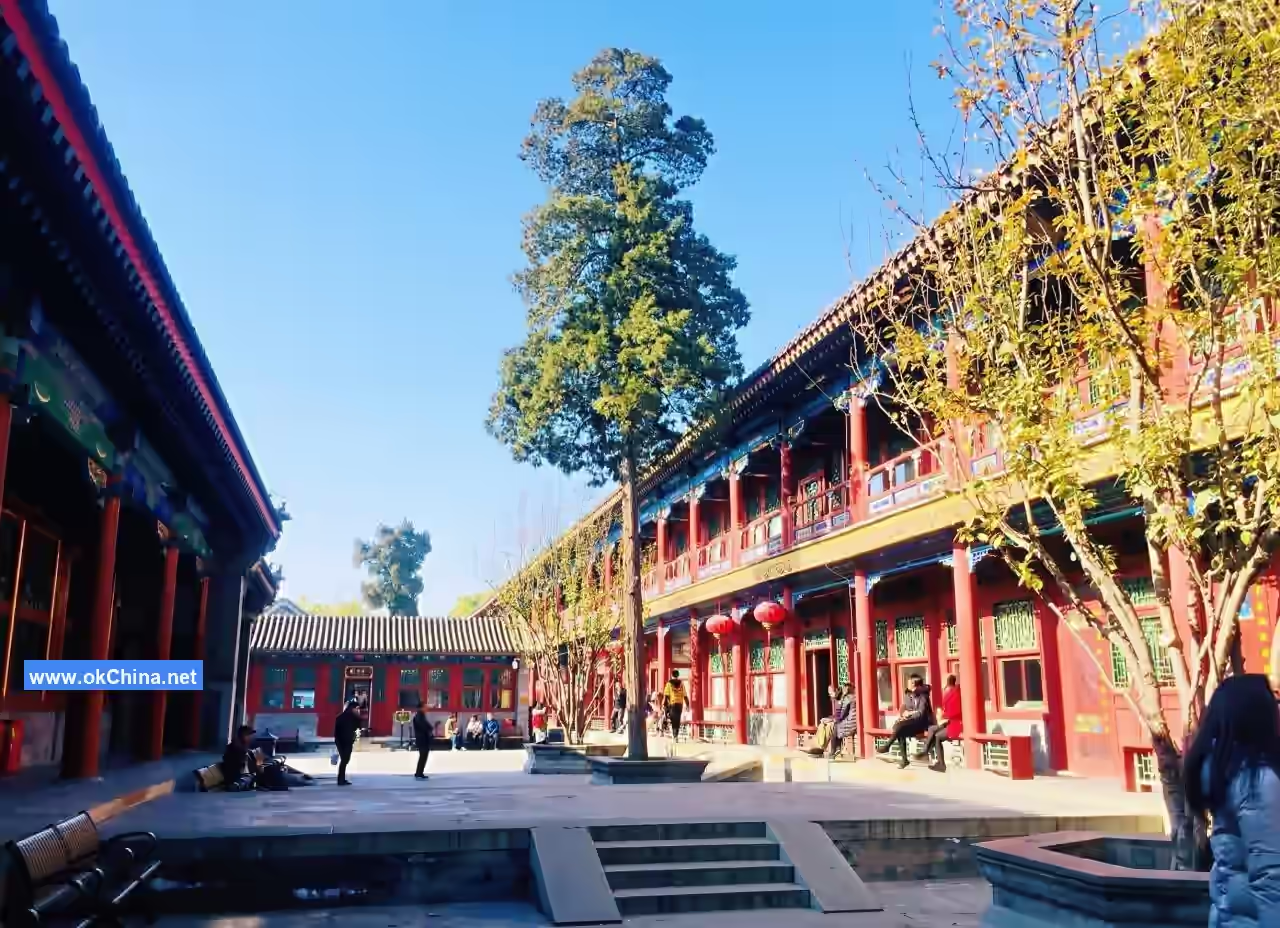
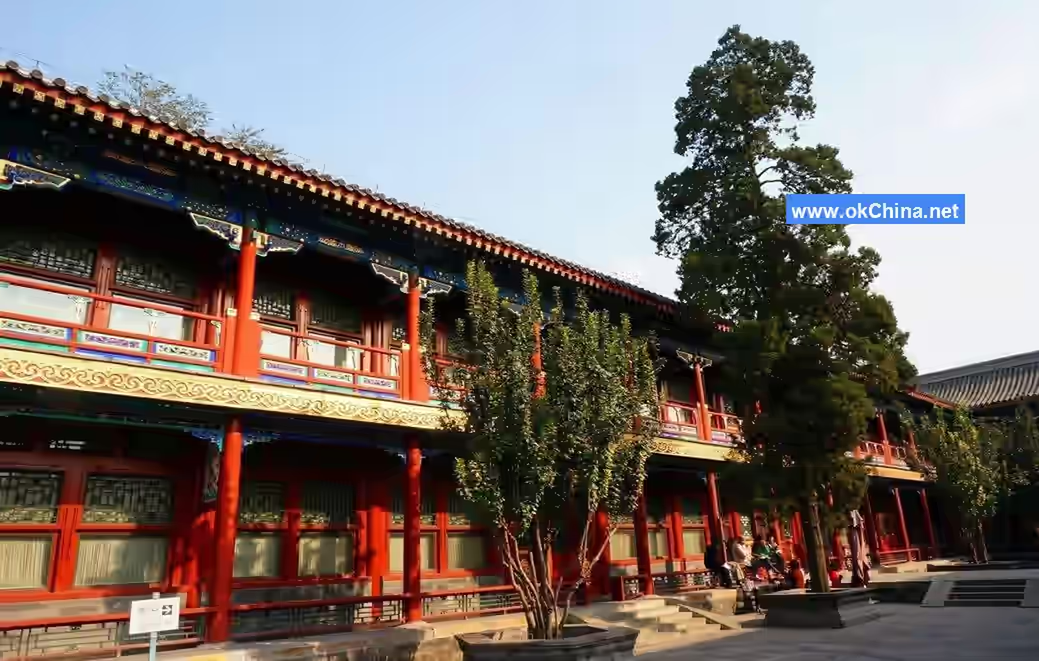
The mansion proper is divided into three sections: central, eastern, and western, each composed of multiple courtyard houses. The three buildings in the central section form the main body of the mansion: the main hall, the rear hall, and the Yanlou (Extended Building). The Yanlou stretches 160 meters from east to west and contains over 40 rooms. The eastern and western sections each have three courtyards, echoing the central section. The architecture of the mansion adheres to the highest standards of the Qianlong period, with notable indicators being the number of gateways and rooms. A prince's mansion features five gateways, a seven-bay main hall, a five-bay rear hall, a seven-bay rear sleeping quarters, and side halls on both sides. Mansions of lower-ranking nobles were strictly forbidden to exceed these numbers.
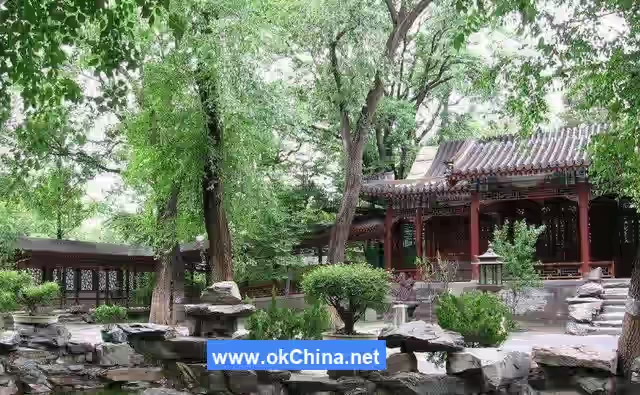
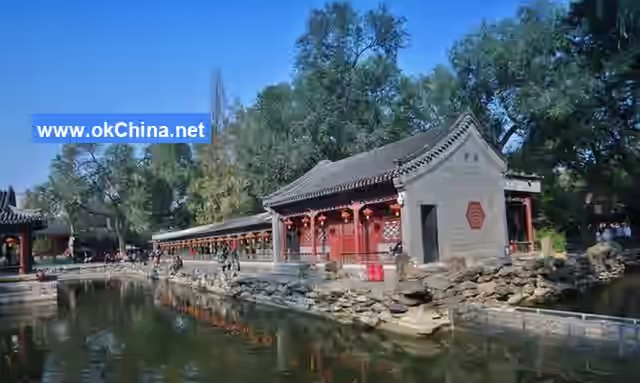
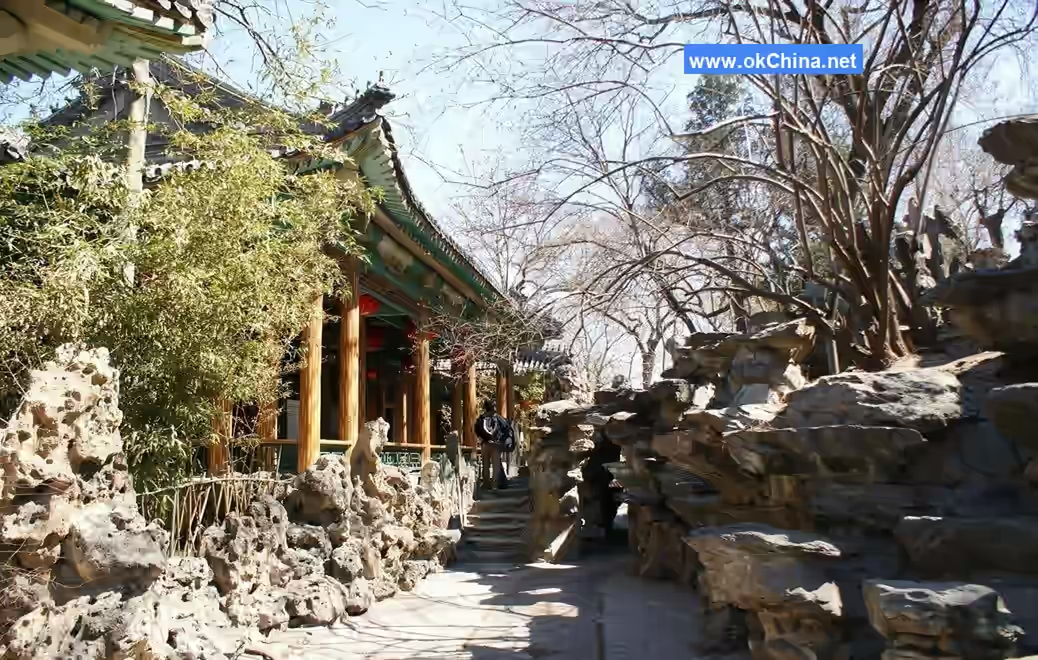
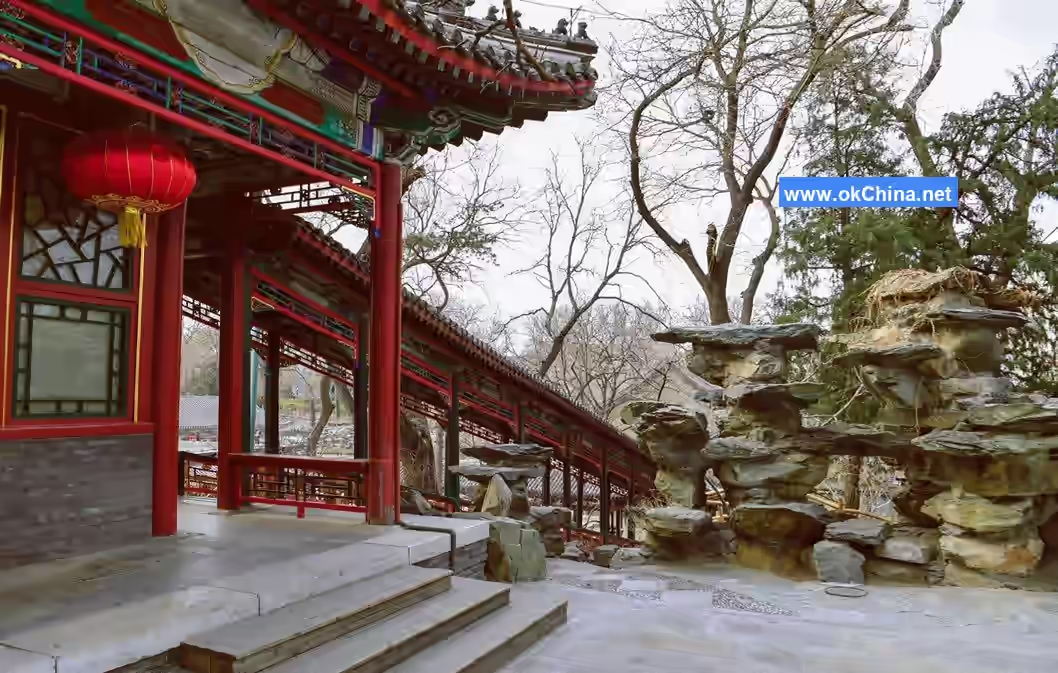
Behind the mansion stands a two-story rear screen building with a continuous ridge, over 160 meters long, beyond which lies the garden. The garden, named Cuijin Garden, is also arranged into central, eastern, and western sections. It features scattered rockeries, winding corridors, pavilions, ponds, and flowers and trees. Due to the serene and deep scenery of Prince Gong's Mansion and its garden, it has long been rumored to be the Rongguo Mansion and Grand View Garden from Dream of the Red Chamber.
From the overall "Yangshi Lei" architectural drawings, it can be seen that there were over twenty buildings with interior decorations, featuring various types such as Taishi walls, throne beds, green gauze cabinets, sacrificial stoves, Wanzi kang (heated brick beds), jitui screens, floor screens, kang screens, real and false doors, celestial lofts, study lofts, multi-treasure shelves, Shunshan kang, and front and rear eaves kang.
Features
The interior decorations of several main halls in Prince Gong's Mansion include multi-treasure shelves, partitions, celestial lofts, and sacrificial stoves with Pilu hats, which are identical to those in the imperial palace. There are also indoor rockeries and ponds, decorated to resemble small indoor gardens.
The spaces within the various halls of Prince Gong's Mansion are divided according to their functional uses, with diverse layouts. The main halls include both open, large spaces and private, small spaces, symmetrical as well as asymmetrical designs, and some that can be flexibly combined. Some are suitable for receiving high-ranking guests, others for Shamanistic sacrificial activities, some for daily living, and others for sleeping, meeting different spatial needs appropriately.
From the remaining decorative objects in Prince Gong's Mansion, it is known that hardwoods were used, with exceptionally fine materials. The processed wood could be made into small cross-sections, with carved patterns that rise and fall, and circular or curved pieces were used to create various lattice patterns. This could only be achieved through meticulous craftsmanship, and the difficulty of the construction is astonishing. Unfortunately, most of the original interior decorations of Prince Gong's Mansion have been lost.
IV. Main Scenic Areas
Mansion Section
Yin'an Hall
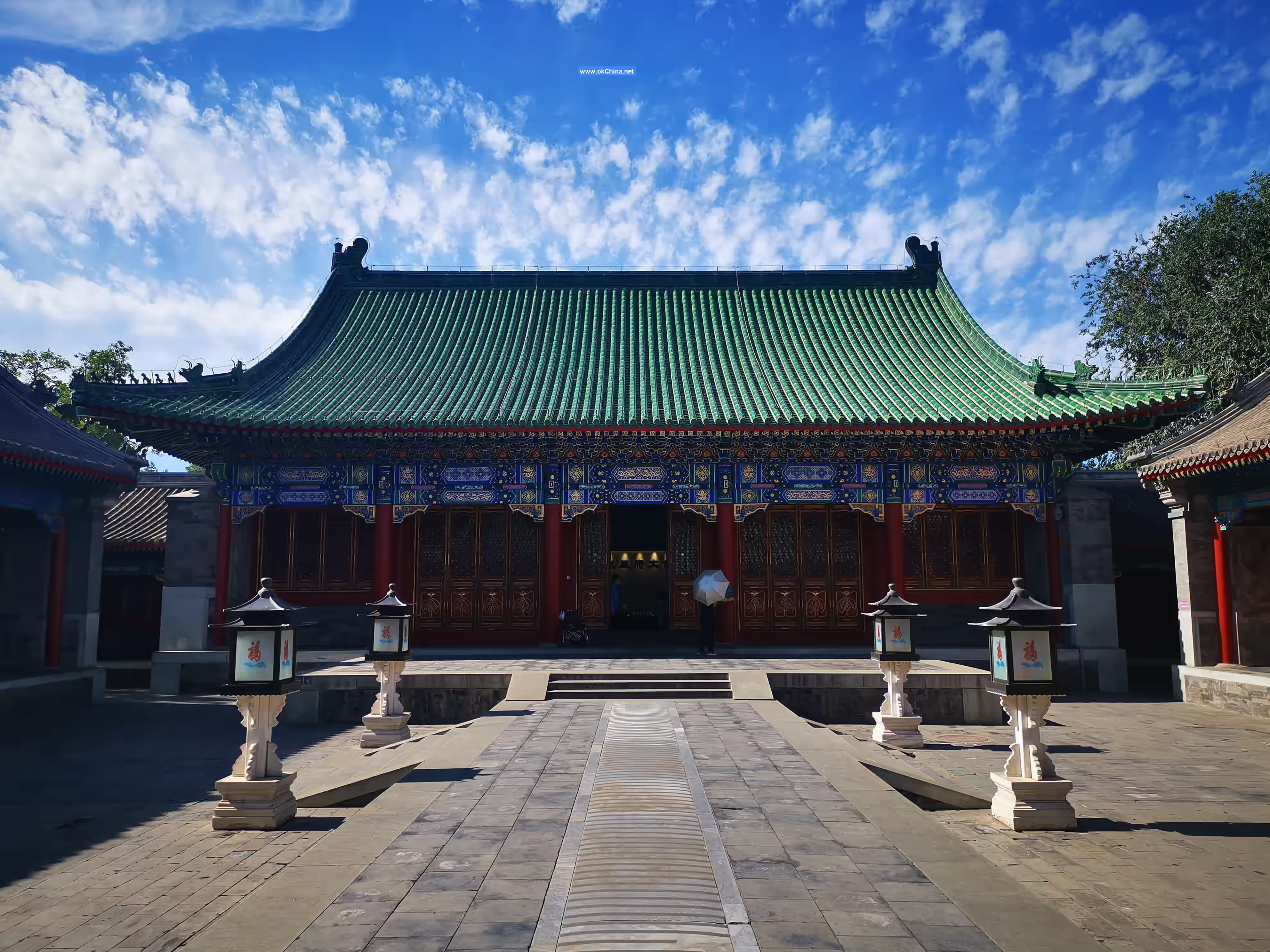
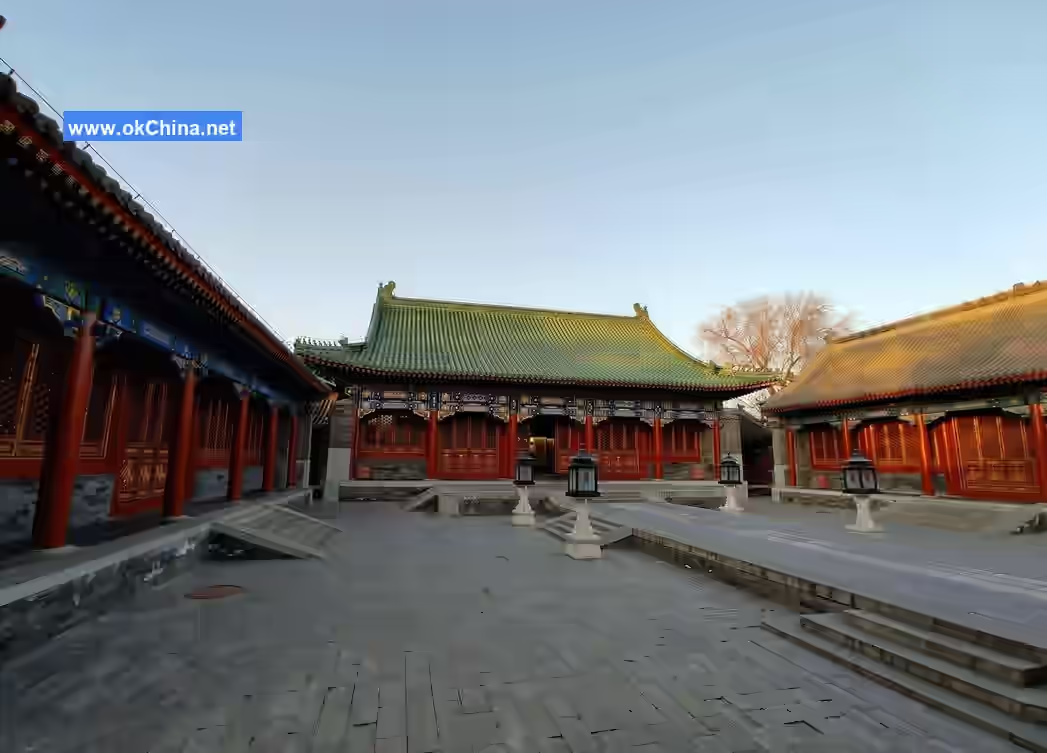
Commonly known as the Silver Luan Hall, it is the most important building in Prince Gong's Mansion. As the main hall of the mansion, it was only opened for major events and important festivals, serving a ceremonial function. The original Yin'an Hall, along with the entire courtyard including the east and west side halls, was destroyed by a fire caused by incense burning on the night of the Lantern Festival in the 10th year of the Republic of China (1921). The current Yin'an Hall courtyard is a reconstruction.
Jiale Hall
A building from the Heshen period. It still bears a plaque inscribed with "Jiale Hall." This plaque is suspected to have been bestowed upon Heshen by Emperor Qianlong, but as it bears no signature or seal, there is no way to confirm this. However, Heshen left behind the Jiale Hall Poetry Collection, indicating that it was his chamber name. During Prince Gong's time, Jiale Hall primarily served as the sacrificial venue for the mansion, housing tablets for ancestors and various deities.
Rear Screen Building
Also known as the Treasure House, it is located at the junction between the mansion and the garden. Over 180 meters long, it is the longest building among princely mansions in China and is considered the "treasure" among the "three unique features and one treasure" of Prince Gong's Mansion. Inside the Rear Screen Building, there are "99 and a half rooms." When Heshen designed and built this treasure house, he referenced the fractional part of the Forbidden City's 9,999 and a half rooms.
The rear wall of the Rear Screen Building features 44 decorative windows, each with a different pattern. The reason for building so many decorative windows was that Heshen's treasures were countless. This way, when Heshen went to retrieve treasures, he could match the window shape to the type of treasure.
Baoguang Chamber
Located in the western section of the mansion, it served as a reception hall during the Heshen and Prince Qing periods. During Prince Gong's time, it was a secret reception hall for receiving the prince's closest relatives. The plaque for "Baoguang Chamber" was personally inscribed by Emperor Xianfeng when he visited Prince Gong's Mansion and bestowed it upon Prince Gong Yixin, with profound meaning. The term "Baoguang" originates from Zhuangzi·Discussion on Making All Things Equal: "Pour into it and it is never full; dip from it and it never runs dry; and yet one does not know from whence this supply comes. This is called the 'Preservation of the Light.'" Emperor Xianfeng's intention was for Yixin to conceal his brilliance, implying a warning. Prince Gong Yixin wrote an Inscription for the Baoguang Chamber in response, indicating that he understood Xianfeng's meaning.
Xijin Study (Nanmu Hall)
The last courtyard in the western section of the mansion. It was called "Jiale Hall" during Heshen's time and "Qingyi Hall" during the Prince Qing and Prince Gong periods. It was not until the time of the lesser Prince Gong, Puwei, that it was renamed "Xijin Study" because it housed the precious Pingfu Tie manuscript by the great Jin Dynasty scholar Lu Ji.
Xijin Study, also known as Jiale Hall during Heshen's time, was once Heshen's residence. The main part of the Nanmu Hall, which was part of the thirteenth charge of "extravagance and exceeding regulations" among Heshen's twenty major crimes, still remains. The interior decoration of golden nanmu wood is made of exquisite materials at great cost. The precious golden nanmu wood does not decay for a thousand years, and the superb woodworking craftsmanship is exquisite. Such luxurious decoration is similar to that of the Palace of Tranquil Longevity in the Forbidden City. The golden bricks on the floor are a type of precious volcanic rock that, when polished, reveals golden-yellow patterns. Combined with the intricate carving of the golden nanmu, the overall effect is one of overwhelming splendor.
Duofu Pavilion
This courtyard is commonly known as the "Wisteria Courtyard." During Prince Gong's time, it was called "Duofu Pavilion" and served as the mansion's passageway reception hall. It was mainly used for the master's daily reception of guests, relatives, friends, or subordinates reporting official matters, and also for storing gifts from the emperor.
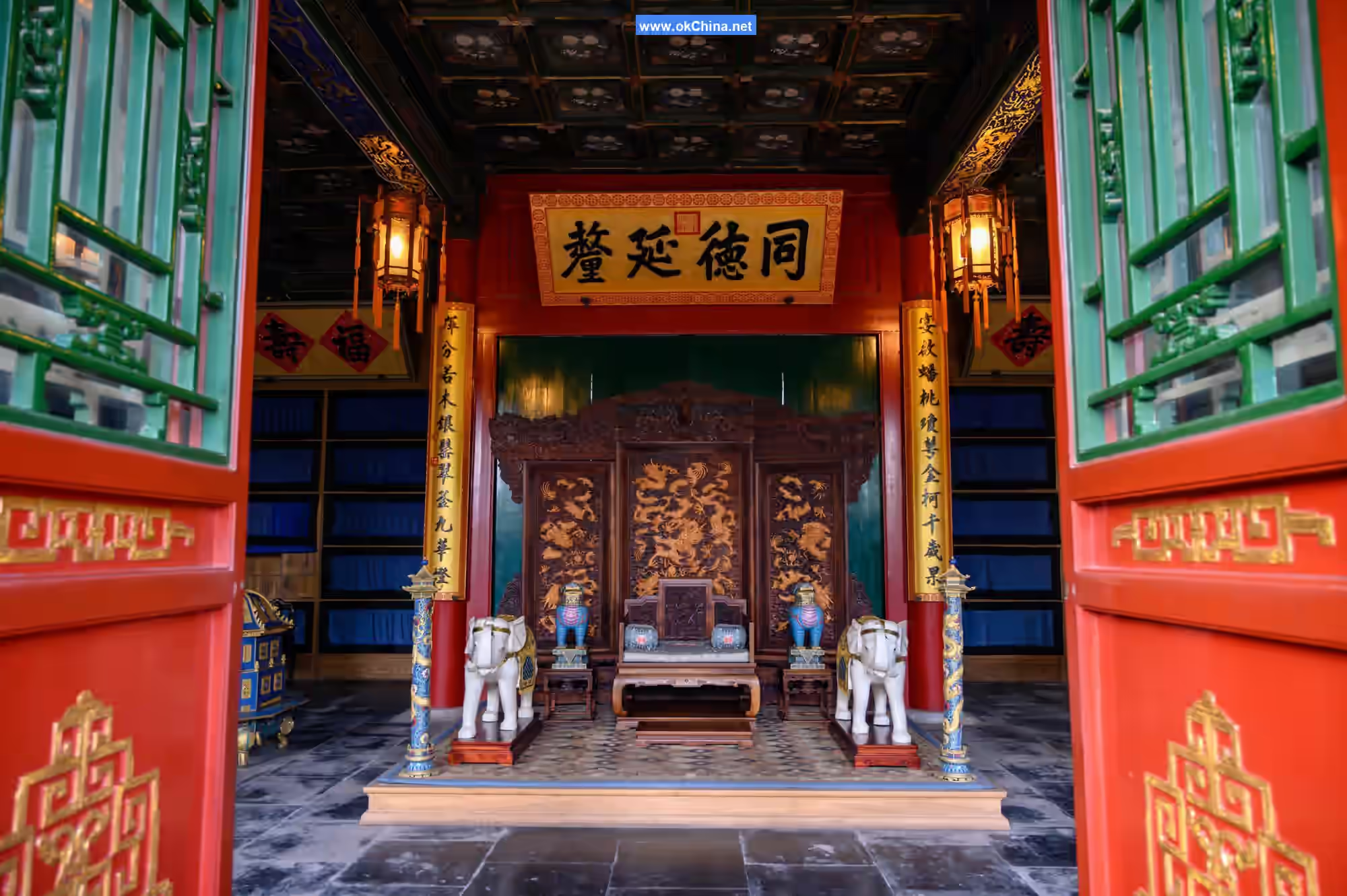
The plaque "Duofu Pavilion" was inscribed by Emperor Xianfeng, meaning "Hall of Abundant Happiness." In the center of the hall hangs a plaque inscribed "Tong De Yan Xi," intended to admonish the master: "Only by sharing virtue with the emperor can you extend happiness (Xi: auspiciousness, good fortune, and longevity)." On the four walls near the ceiling, plaques with characters for "happiness" and "longevity" are hung. These characters are written on red square paper (i.e., "doufang") and arranged in a diamond shape, with one "happiness" and one "longevity" paired to form a plaque.
Duofu Pavilion is an important building in the eastern section of Prince Gong's Mansion.
Ledao Hall
Located in the fourth courtyard of the eastern section of the mansion. According to Qing Dynasty customs, which regarded the east as the superior direction, the most important figure in a residence lived in the eastern section. After Prince Gong Yixin used this as his living quarters, he renamed it "Ledao Hall" and called himself the "Master of Ledao Hall." The original name "Ledao Hall" was personally inscribed by Emperor Daoguang when Yixin moved to the Prince's Residence in the Old Summer Palace before his wedding. To commemorate his father, Yixin named his residences in the Prince's Residence, his old home in Haidian, Prince Gong's Mansion, and the main hall of his tomb all "Ledao Hall." The plaque inscribed by Emperor Daoguang hangs in the main hall of the tomb, while the others are replicas.
During renovations in 2005, a colored painting of gold-leaf phoenixes holding peonies was discovered on the main beam of the northern volume of Ledao Hall. The main pattern features two golden phoenixes with spread wings clustering around a blooming peony flower, surrounded by colorful auspicious clouds. The supporting patterns on both sides also feature peonies, golden phoenixes, and auspicious clouds, creating an atmosphere of wealth and grandeur.
Garden Section
Western-style Gate
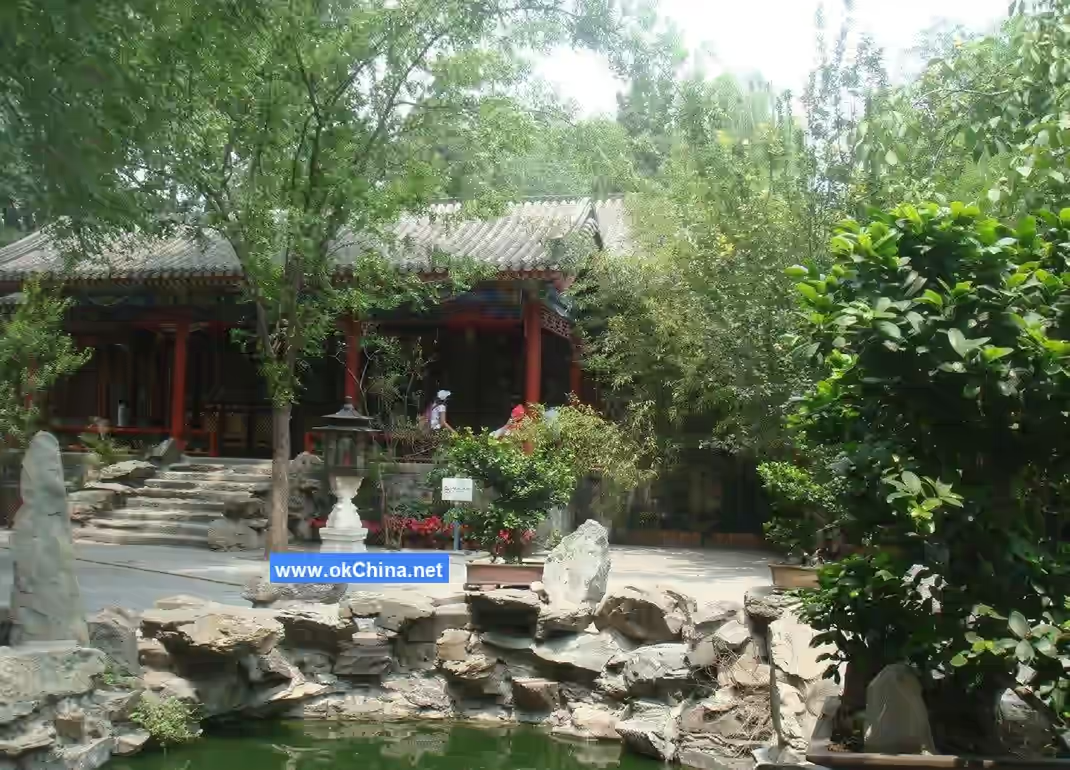
Located at the southernmost end of the central path of the garden, it is the main gate of the garden, called "Jing Han Tai Gu" (Tranquility Contains Antiquity), built by Yixin. The gate is carved from white marble, modeled after the gate of the Great Dharma Sea Garden in the Old Summer Palace, in a Western arched style. The outer side of the gate is inscribed with "Jing Han Tai Gu," and the inner side with "Xiu Yi Heng Chun" (Elegance Embraces Eternal Spring). The Western-style Gate is also the only Western-style building in the garden, reflecting the owner's hope of saving Qing rule by learning Western culture and technology. This is also one of the "three unique features" of Prince Gong's Mansion, the other two being the Grand Theater and the Rear Screen Building.
Dule Peak
Located north of the Western-style Gate, it is an isolated ornamental stone made of northern Taihu stone, about 5 meters high. It serves to embellish the garden and prevent the garden's beauty from being fully revealed at once. Landscape experts believe it functions simultaneously as a screen wall and a screen. The stone is named "Dule Peak," perhaps alluding to Sima Guang's "Dule Yuan" (Garden of Solitary Happiness). Due to years of weathering, Dule Peak has developed a natural beauty, resembling soft water eddies or gently rolling clouds,古朴典雅而又富有诗情画意 (simple, elegant, and full of poetic charm).
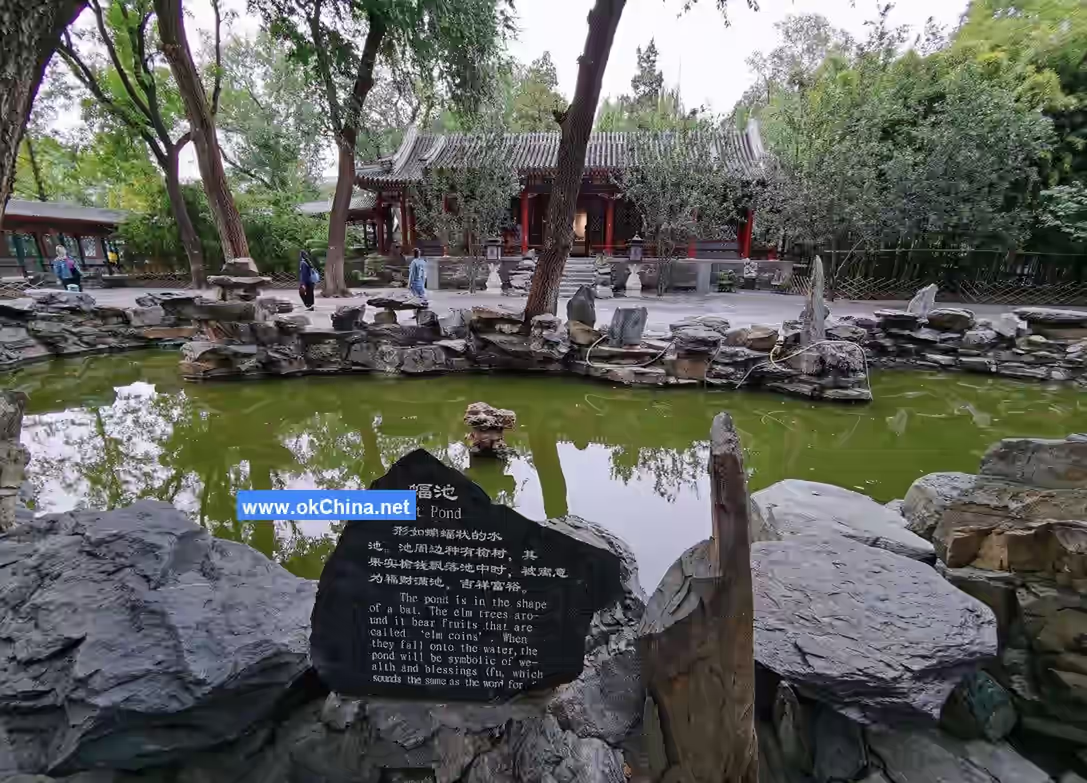
Bat Pond
Named for its bat-like shape, it carries auspicious connotations. Elm trees are planted around the pond, and every late spring, elm seeds fall into the Bat Pond. "Fu" (bat, homophone for happiness) and "Cai" (wealth) together bless the master with auspiciousness and prosperity.
In Qing Dynasty Beijing, introducing live water into private residences required special permission from the emperor. Prince Gong's Mansion was one of the few mansions granted this honor. This large bat-shaped pond, enclosed by bluestone, was originally named "Fu River," later called "Bat Pond," and also known as the "Ingot Pond" due to its ingot-like shape. The pond is surrounded by elm trees. Every spring and early summer, elm seeds, resembling copper coins ("Yuqian'er"), fall and fill the Bat Pond, homophonically implying "Fu Qian" (happiness and wealth) overflowing, symbolizing both happiness and wealth.#### Anshan Hall
A grand and solemn five-bay hall, also the main building along the central axis of Cuijin Garden. It features a front porch, a rear platform, and covered corridors on both sides leading to the eastern and western wings. Surrounded by the garden's Bat Pond, Moon-Inviting Terrace, Waterside Pavilion, Grand Theater, and other structures, it appears opulent and majestic, with exquisite scenery. Originally, this was where the master of the house composed poetry and painted while strolling through the garden, and it also served as the venue where Prince Gong Yixin entertained important guests.
Dicul Rock
North of "Anshan Hall" stands a rockery named Dicul Rock. The secret Yun Cave, which houses the Kangxi Emperor's "Fu" (Blessing) Stele, is located at the heart of Dicul Rock. The summit of the rockery is the highest point in the entire garden, topped by a structure called "Green Sky Retreat"; the platform in front of this structure is the "Moon-Inviting Terrace," a place for appreciating the moon.
Dicul Rock is a unique treasure mound in the Prince Gong's Mansion Garden, constructed from piled Taihu stones. There are winding paths on both the eastern and western sides leading to the top of the rockery, each path ending with a perforated water jar. Servants would fill these jars with water. During the hot and humid summers and autumns, green moss would grow between the stone crevices. The yellow stones and green moss intermingle, creating a lush, dripping verdancy, hence the name "Dicul Rock" (Dripping Green Rock). Below the rock, a rectangular small pond contains three groups of stacked stones, representing the three mythical islands of Penglai, Fangzhang, and Yingzhou.
Fu Stele
Located inside the Yun Cave, this stele is engraved with the calligraphy of the Kangxi Emperor, the Sacred Ancestor of the Qing Dynasty. The stele is 7.9 meters long and runs through the entire rockery. On the ground in front of the stele, there is a Chinese chessboard laid out with gravel, square and clearly visible.
Emperor Kangxi rarely inscribed characters, making this "Fu" character extremely precious. Moreover, this "Fu" character is vigorous and powerful, with imposing momentum. It can be decomposed into multiple components representing abundant fields, many children, great talent, and longevity. Its ingenious design is hailed as the "Number One Fu" under heaven.
Bat Hall
Also known as Bat Hall or Bat House, located at the northernmost end of the central axis of the garden. The main hall consists of five bays, with three-bay porches extending from both the front and rear. Additionally, there are side rooms on both flanks, and corridors extend on all four sides, creating a varied form resembling the wings of a bat. The side rooms are slightly forward compared to the main hall, forming a curved and symmetrical layout similar to a bat, hence the name Bat Hall.
The mottled bamboo patterns in the architectural paintings were all meticulously painted stroke by stroke by artisans. The building's form and painted decorations are praised as "unique among ancient architecture." Sheltered by the garden's main hill and mansion walls, it is tranquil and elegant. Prince Gong Yixin often discussed military and state affairs with his ministers here. It was also an excellent place for escaping the summer heat. Later, it became the study of Pu Ru (Pu Xinyu), the grandson of Prince Gong and a renowned calligrapher.
Moon-Inviting Terrace
The Moon-Inviting Terrace is the highest point in the Prince Gong's Mansion Garden. The ascending paths on both sides have two steps at the very bottom, with sloping corridors without steps further up. When walking, visitors must stride over these two steps, which holds a particular significance. Legend has it that in ancient times, steps were seen as obstacles. Heshen hoped that after overcoming the hardships of his early years, he would face no more obstacles in life and have a smooth official career. Therefore, he built this "Path to Swift Promotion." Ascending and descending the Moon-Inviting Terrace via this "Path to Promotion and Wealth" follows specific customs: one must vigorously stride over the two "obstacles," then proceed smoothly all the way to the hilltop. One should not descend from the other side but only take the side path down the hill to avoid ruining one's luck.
The Moon-Inviting Terrace offers a panoramic view of the garden from its elevated position. On the terrace, there are three small rooms named "Green Sky Retreat," now called "Blessing Temple." Every Mid-Autumn Festival, pastries and fruits are placed here, making it an excellent spot for the master and his family or friends to admire the moon together.
Prince Gong's Mansion Grand Theater
Built during the Tongzhi reign (1862-1874), it was the venue where Prince Gong and his relatives and friends enjoyed operas. This theater is the only fully enclosed grand theater still extant in China. In Qing court archives, it is referred to as the "Grand Theater Room." Covering a floor area of 685 square meters, the structure adopts a fully enclosed design with three interconnected volumes. It is said that the entire theater, despite being a brick-and-wood structure, was built without a single iron nail. Particularly noteworthy is the theater's acoustics. To ensure realistic sound, several large vats were placed beneath the stage after hollowing it out. This clever and unique construction enhanced the resonance and reverberation space, allowing audiences anywhere in the theater to hear the performers' singing clearly without any amplification tools.
Bamboo Courtyard
Separated by a street from the "Vegetable Garden" to the north lies a serene and elegant courtyard complex. One of the three unique features of Prince Gong's Mansion, the Grand Theater, is situated in the center of this courtyard. Passing through the festooned gate leads into the first courtyard—the Bamboo Courtyard. The elegant chamber on the eastern side is named "Fragrant Snow Lodge," serving as a resting place for Prince Gong's principal wife and concubines when they toured the garden or watched operas. It is said that the principal wife particularly liked swaying green bamboos, so all four corners of the small courtyard are planted with bamboo.
Vegetable Garden
East of the "Qinqiu Pavilion" lies the "Vegetable Garden," the mansion's kitchen garden. While planting various vegetables, the garden's owner could appreciate the vitality of nature and the rustic pleasures of farming.
Qinqiu Pavilion (Floating Cup Pavilion)
This is where the master invited literati and scholars to drink wine and compose poetry during early spring, midsummer, and late autumn. Also known as the Floating Cup Pavilion, it draws inspiration from the phrase "winding stream with floating wine cups, performing the purification ritual and enjoying music" from the Preface to the Orchid Pavilion Collection by the great Eastern Jin calligrapher Wang Xizhi.
The highlight of the Qinqiu Pavilion is the intriguing "winding stream with floating cups" inside: water from an old well in the rockery behind the pavilion flows into the winding channel within the small pavilion.
The pavilion's painted decorations depict stories such as the Twenty-Four Filial Exemplars and the Legend of the White Snake.
Square Pond Waterside Pavilion
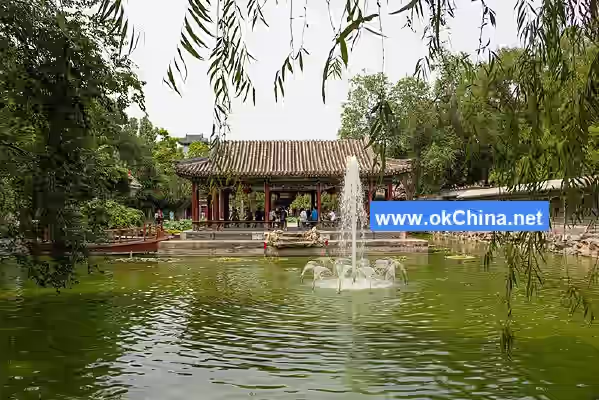
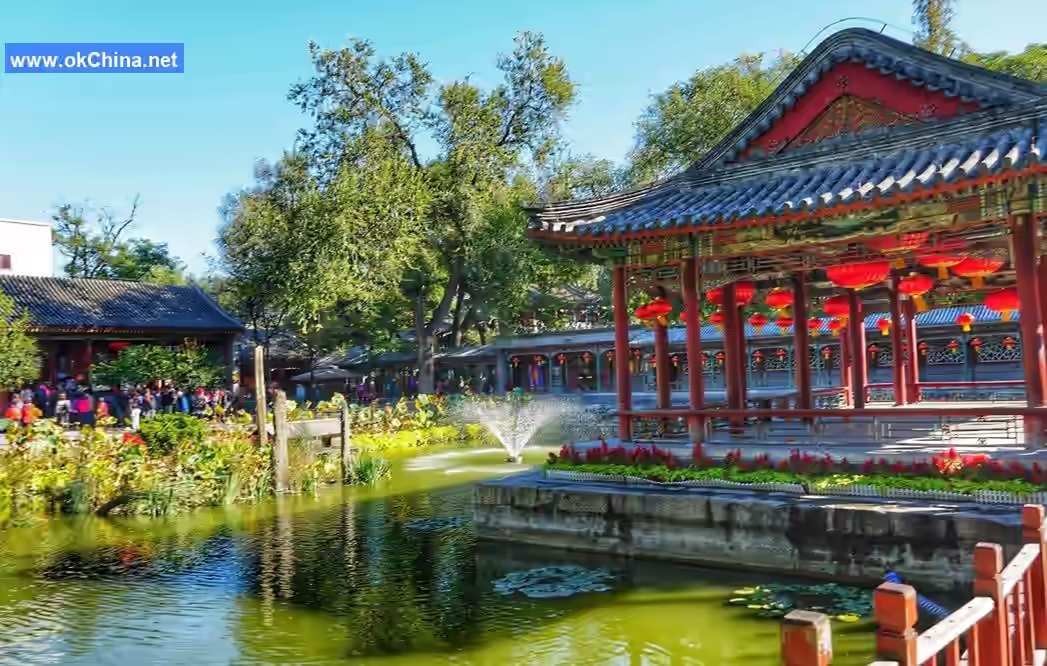
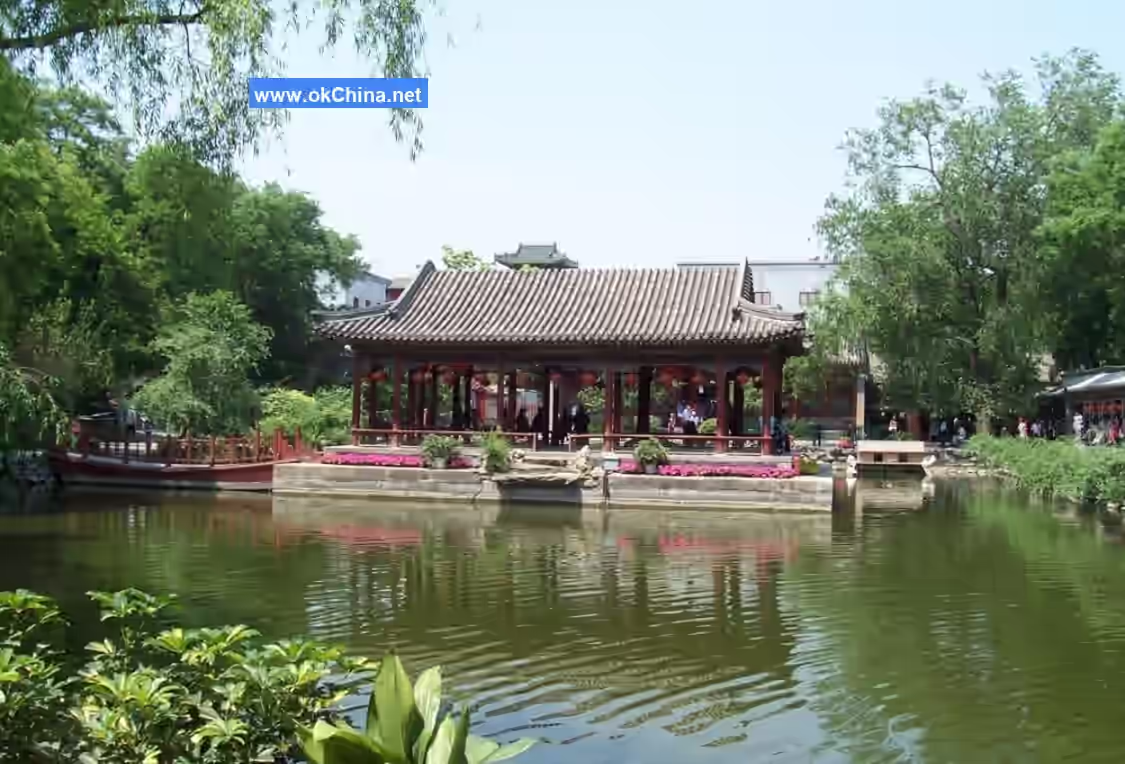
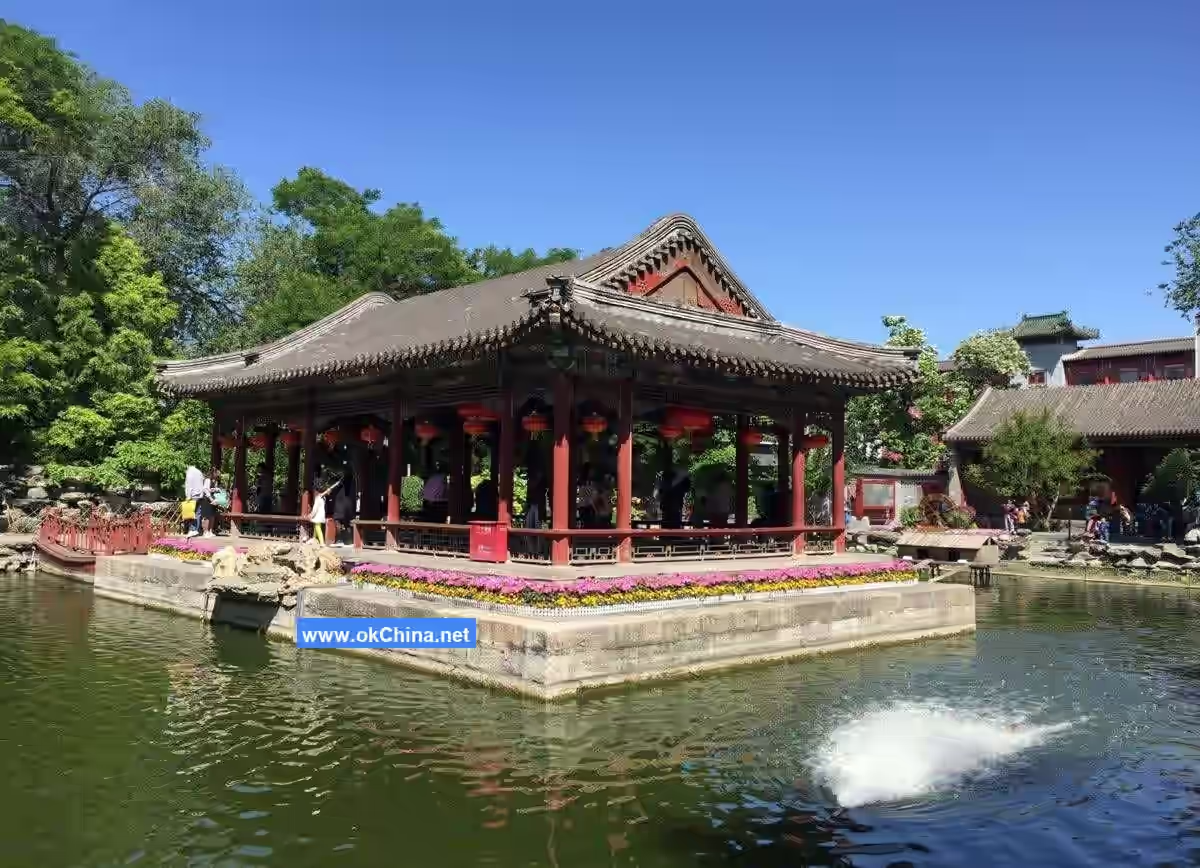
The main scenic feature along the western axis of the Prince Gong's Mansion Garden, consisting of a rectangular pond approximately 200 square meters in area and a pavilion at its center. Springs were channeled from the hills, and water flows into the pond from stone-carved dragon heads at three different locations.
V. Scenic Area Culture
Water Culture
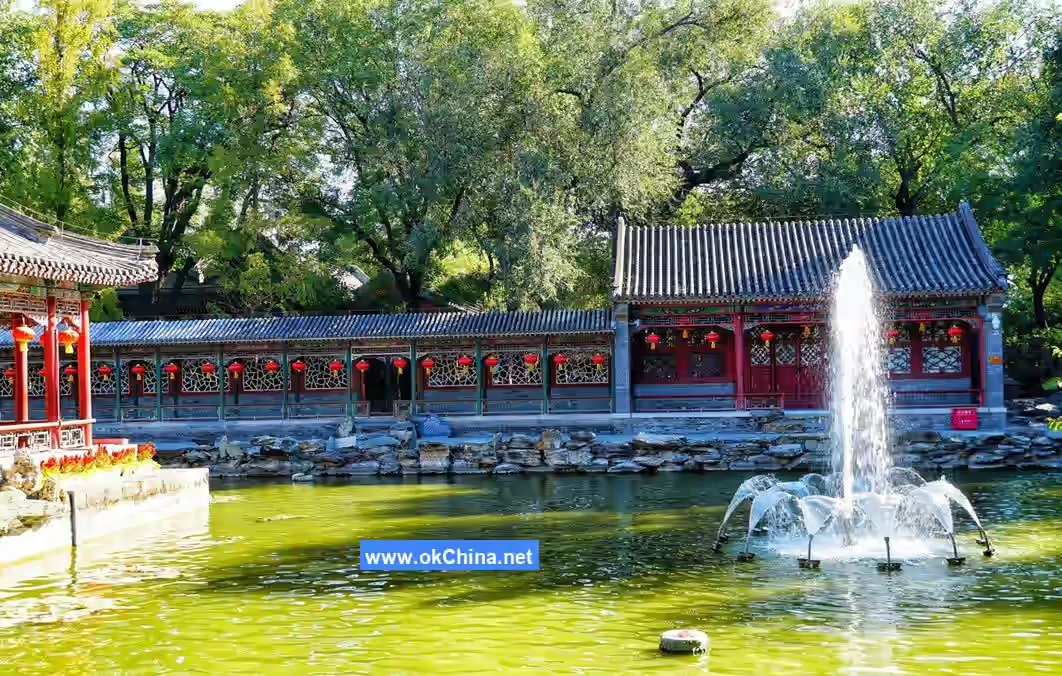
Water is an indispensable and highly captivating element in garden art. The water features in the Prince Gong's Mansion Garden add vibrant vitality to the garden.
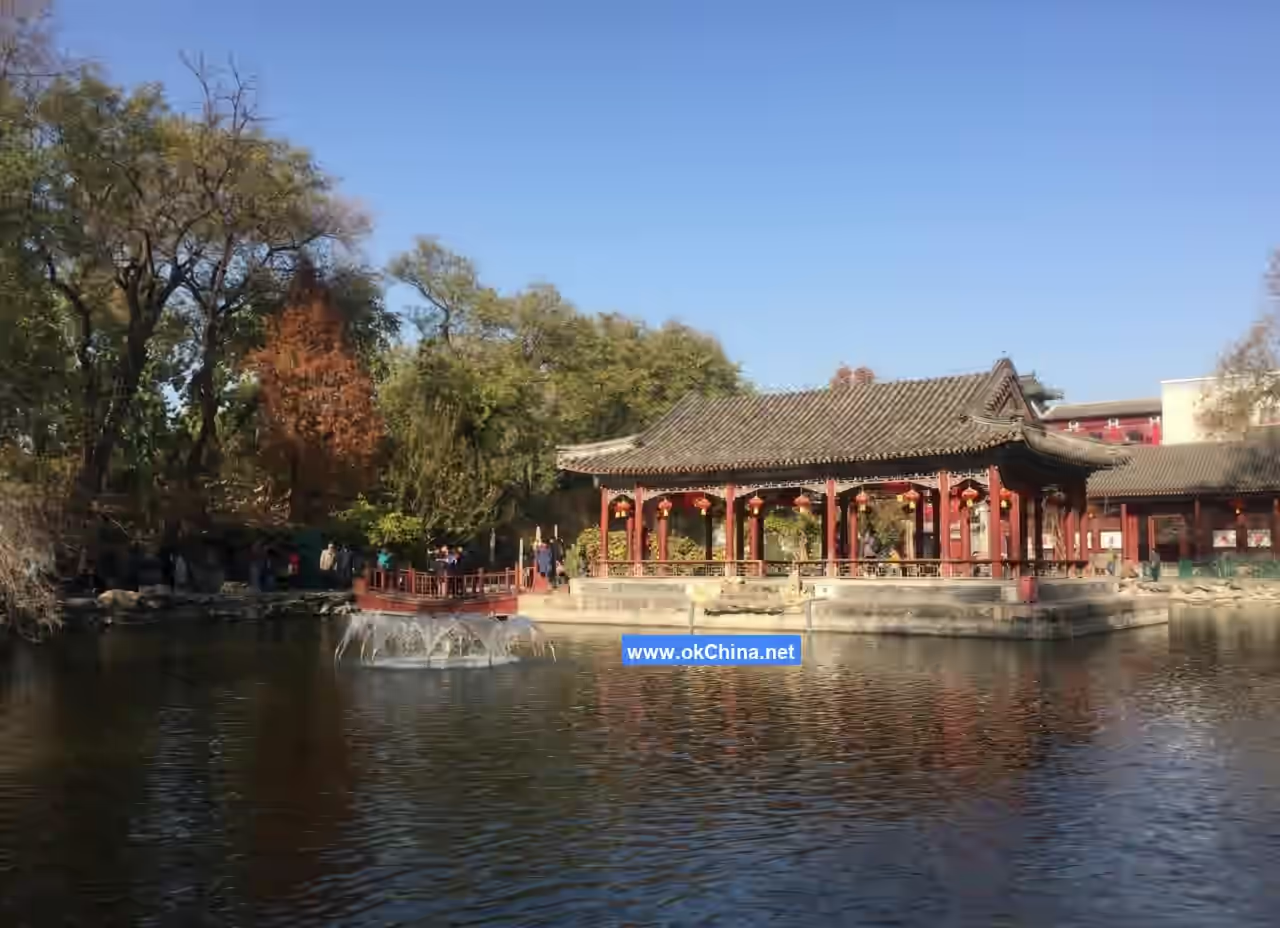
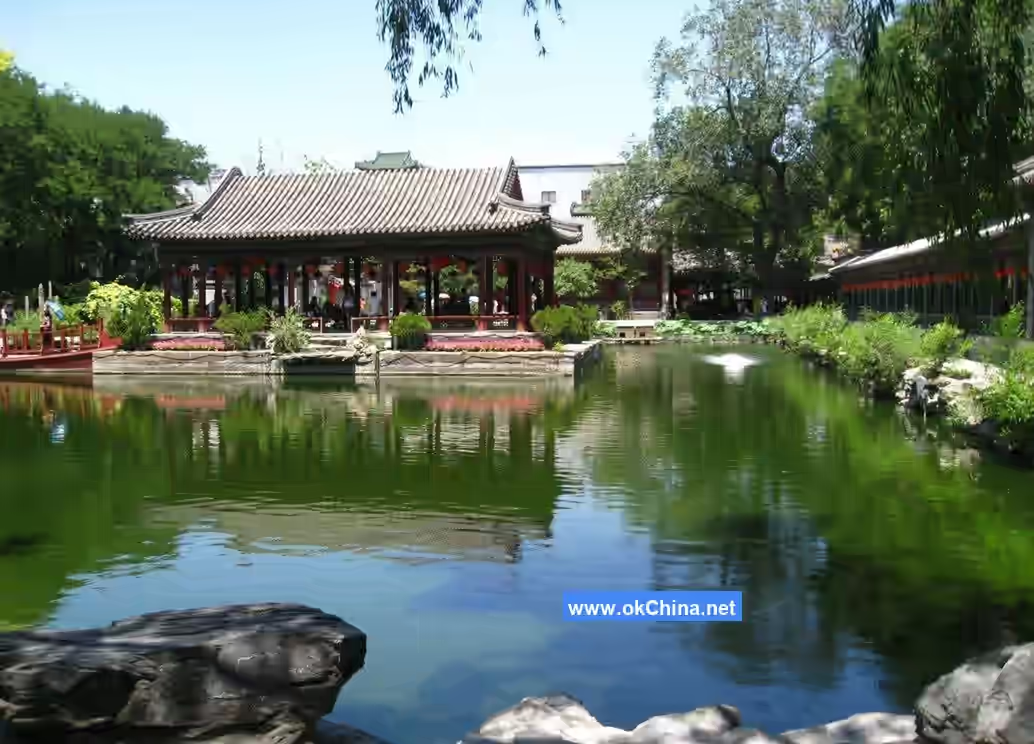
The Square Pond on the western axis, covering about 2,000 square meters, is the largest water body in the mansion garden. A pavilion stands gracefully at the center of the lake, with carved beams and painted rafters adorned with colorful paintings. A boat-shaped wooden bridge connects it to the shore. Pink lotuses stand elegantly, complementing the large, canopy-like green lotus leaves. White geese playing in the water and golden leaping fish break the pond's tranquility. This scene makes one feel as if transported to a fairyland.
The Bat Pond on the central axis, shaped like a bat, is a stretch of clear, deep green. When spring arrives, the elm trees around the pond produce clusters of "elm seeds" (yuqian, homophonous with "money") that fall into the water. The combination of "bat" (fu) and "elm" (yu) creates a homophone for "wealth and abundance" (fuyu). The principle of "every design must have meaning, and every meaning must be auspicious" is flexibly and fully applied in the garden's design.
The Dicul Rock on the central axis is also a landscape feature that exists because of water. Located in front of the Moon-Inviting Terrace, it is a row of irregularly arranged Taihu stones. Among these stones is a round Taihu stone flanked by two winding dragons. Beneath each dragon head hides a water jar densely perforated with small holes. During summer and autumn, the jars are filled with water, which seeps through the holes and drips down the crevices of the Taihu stones into the square pond below. Nourished by the water, the surface of the rocks becomes covered with green moss, hence the name "Dicul Rock" (Dripping Green Rock).
The Floating Cup Pavilion on the eastern axis has an even deeper origin; it is a miniature landscape built based on the典故 of "winding stream with floating cups." The custom of "winding stream with floating cups" is said to have appeared very early. The general practice involved people sitting around a winding water channel, placing specially made cups (often lightweight lacquerware) upstream, and letting them float slowly along the meandering stream. Whoever the cup drifted in front of would take it and drink. Besides drinking, literati were also required to compose a poem. The most famous gathering of "winding stream with floating cups" in history was on the third day of the third lunar month in the ninth year of the Yonghe era of the Eastern Jin (353 AD), when the great calligrapher Wang Xizhi, along with over forty scholars including Xie An and Sun Chuo, gathered at the Orchid Pavilion in Shanyin, Zhejiang (present-day Shaoxing). Participants had to drink the cup that floated to them and compose a poem on the spot; failure to compose meant a penalty of three cups of wine. As described: "There was also a clear, swift stream, reflecting the surroundings on both banks, which we used for the winding stream drinking game. Seating ourselves in order along the bank, though lacking the grandeur of music from strings and pipes, with each cup of wine and each poem, we could fully express our deep feelings." These poetic compositions were compiled into the Orchid Pavilion Collection, with a preface by Wang Xizhi, later hailed as the "Number One Running Script under Heaven."
Imagine in those days, how delightful it must have been when the mansion's master gathered with high officials, distinguished guests, relatives, and friends, sitting together, drinking wine, and composing poetry. Viewed from east to west, the winding channel resembles the seal-script character for "water" (水); viewed from north to south, it resembles the character for "longevity" (寿). Therefore, this pavilion is also called the "Water-Longevity Pavilion," conveying the meaning of "longevity like an endless flowing stream."
Blessing (Fu) Culture
On the window lattices and painted decorations of the Prince Gong's Mansion buildings, patterns of flying bats can be seen everywhere. Although bats may not look appealing, because "bat" (蝠, fu) is homophonous with "blessing" or "happiness" (福, fu), they symbolize good fortune. In traditional Chinese culture, using homophones to convey auspicious wishes is common, such as deer (鹿, lu) symbolizing "official salary" (禄, lu), and monkey (猴, hou) symbolizing "nobility" (侯, hou).
Moreover, within the Prince Gong's Mansion residence, there is an important hall named "Duofu Xuan" (Hall of Many Blessings). Regarding this building, there is a small anecdote. During the initial restoration of Duofu Xuan, some experts believed it was named so because the interior walls were covered with "Fu" characters.However, the management center of Prince Gong's Mansion later conducted extensive searches and found a photograph of Duofu Hall published in the 1940 yearbook of Fu Jen Catholic University (then the women's college library). The photo revealed that there were screen doors in the center of the hall, with plaques and couplets above and on both sides of the doors. The walls were adorned with more than ten large plaques inscribed with the characters "Fu" (福, blessing) and "Shou" (寿, longevity), rather than being covered entirely with "Fu" characters. This old photograph provided reliable evidence for the restoration of Duofu Hall to its original state. Today, as you stroll through Duofu Hall, you can carefully appreciate the charm of the multiple "Fu Shou" plaques bestowed upon Prince Gong's Mansion by different emperors at various times.
In the garden of Prince Gong's Mansion, the Fu Pond and the Bat Hall, both shaped like bats, echo each other from front to back. In the middle, the Miyun Cave houses the Fu Stele inscribed by Emperor Kangxi himself. This "Fu" character is interpreted as representing multiple blessings: many children, abundant talent, great fortune, longevity, and vast land. It is hailed as the "Number One Fu Under Heaven," gathering all the blessings of feudal society.
VI. Related Figures
Heshen
(July 1, 1750 – February 22, 1799), surnamed Niohuru, originally named Shanbao, courtesy name Zhizhai, self-styled as Jialetang, Shihuyuan, and Master of Lüye Pavilion. He was a member of the Manchu Plain Red Banner and served as a powerful minister and merchant during the mid-Qing Dynasty. Heshen held and concurrently served in numerous key positions in the central government of the Qing Dynasty. He was enfeoffed as the First-Class Duke Zhongxiang and appointed as the Grand Secretary of the Wenhua Hall. His roles included Chief Grand Secretary of the Grand Council, Chief Minister of the Grand Council of State, Minister of Personnel, Minister of Revenue, Minister of Justice, Minister of the Court of Colonial Affairs, as well as the Director of the Imperial Household Department, Chancellor of the Hanlin Academy, Chief Editor of the Complete Library of the Four Treasuries, Commander of the Imperial Guards, and Commander of the Infantry, among dozens of other important positions. In the fourth year of the Jiaqing reign (1799), Emperor Jiaqing issued an edict dismissing Heshen and imprisoning him. The wealth Heshen amassed was estimated to be worth between 800 million and 1.1 billion taels of silver. The gold, silver, antiques, and treasures he possessed exceeded the total revenue of the Qing government over fifteen years. Fifteen days after the death of Emperor Qianlong, Emperor Jiaqing ordered Heshen to commit suicide. Heshen died at the age of 49.
Aisin Gioro Yixin
(January 11, 1833 – May 29, 1898), self-styled as Master of Ledao Hall, was a politician in the late Qing Dynasty and a key leader of the Self-Strengthening Movement. He was one of the twelve "Iron Cap" Princes of the Qing Dynasty. The sixth son of Emperor Daoguang and the half-brother of Emperor Xianfeng, his birth mother was Empress Xiao Jing Cheng of the Borjigit clan. He was enfeoffed as "Prince Gong" in Emperor Daoguang's will. During the Xianfeng reign, Yixin served as the Chief Minister of the Grand Council of State from the third year of Xianfeng (1853) to the fifth year (1855). In the Second Opium War, Yixin was appointed as the Plenipotentiary Imperial Commissioner, responsible for negotiations with Britain, France, and Russia, and signed the Convention of Peking. In the eleventh year of Xianfeng (1861), after Emperor Xianfeng's death, Yixin collaborated with the two empress dowagers to launch the Xinyou Coup, successfully seizing power. He was granted the title of Prince-Regent.
Comments
Post a Comment