Potala Palace Scenic Area, Lhasa
1. Introduction
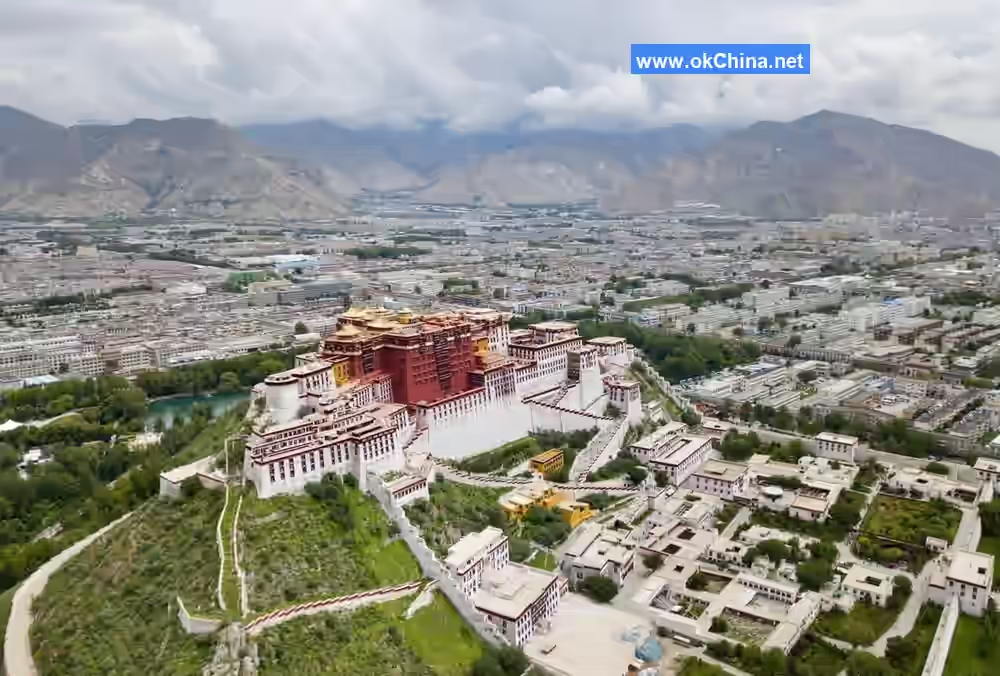
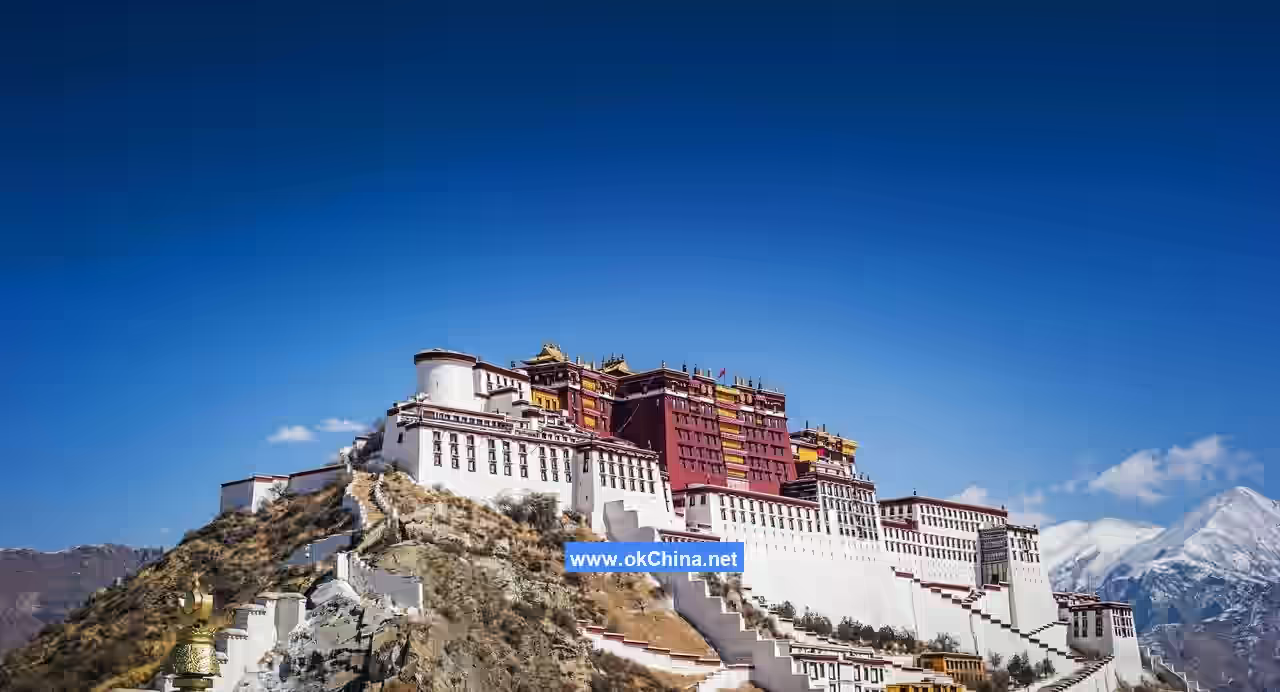
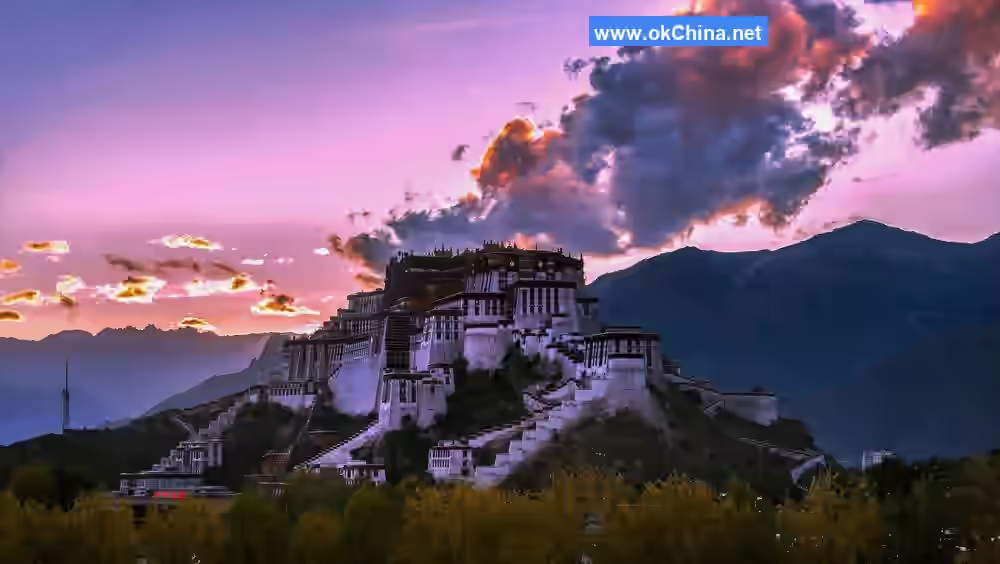
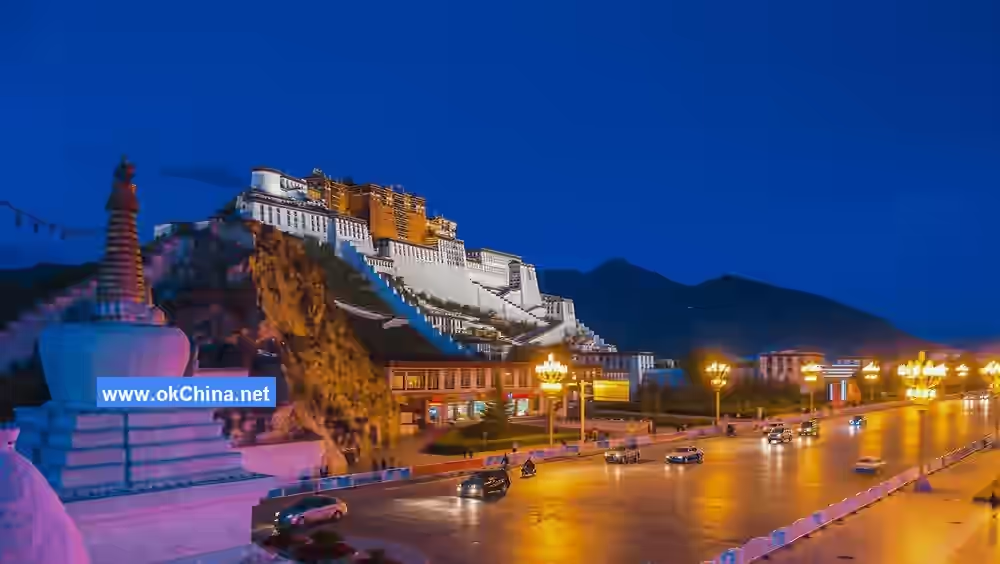
The Potala Palace is located on the Maburi Hill northwest of Lhasa, the capital of the Tibet Autonomous Region in China. It is a palace-fortress complex. One account states it was built by Tibetan King Songtsen Gampo to welcome Princess Bhrikuti of Nepal and Princess Wencheng of the Tang Dynasty; another suggests it was constructed as the royal palace after Songtsen Gampo moved the capital to Lhasa. After its reconstruction in the 17th century, it became the winter residence of successive Dalai Lamas and the political and religious center of Tibet's theocratic rule. In 1961, the Potala Palace was designated as one of the first National Key Cultural Relics Protection Units by the State Council of the People's Republic of China. In 1994, it was listed as a UNESCO World Heritage Site. The main structures of the Potala Palace consist of the White Palace and the Red Palace.
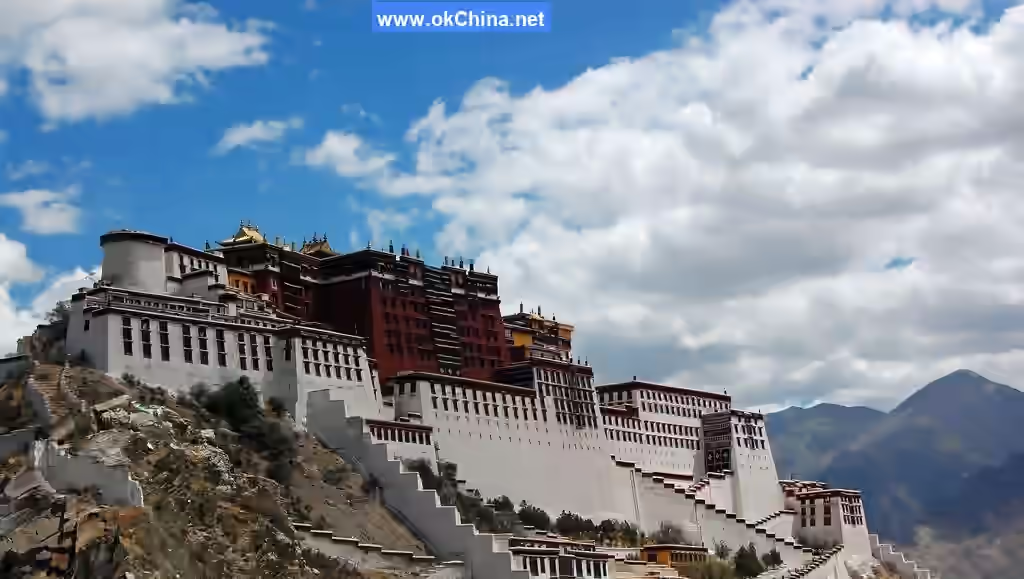
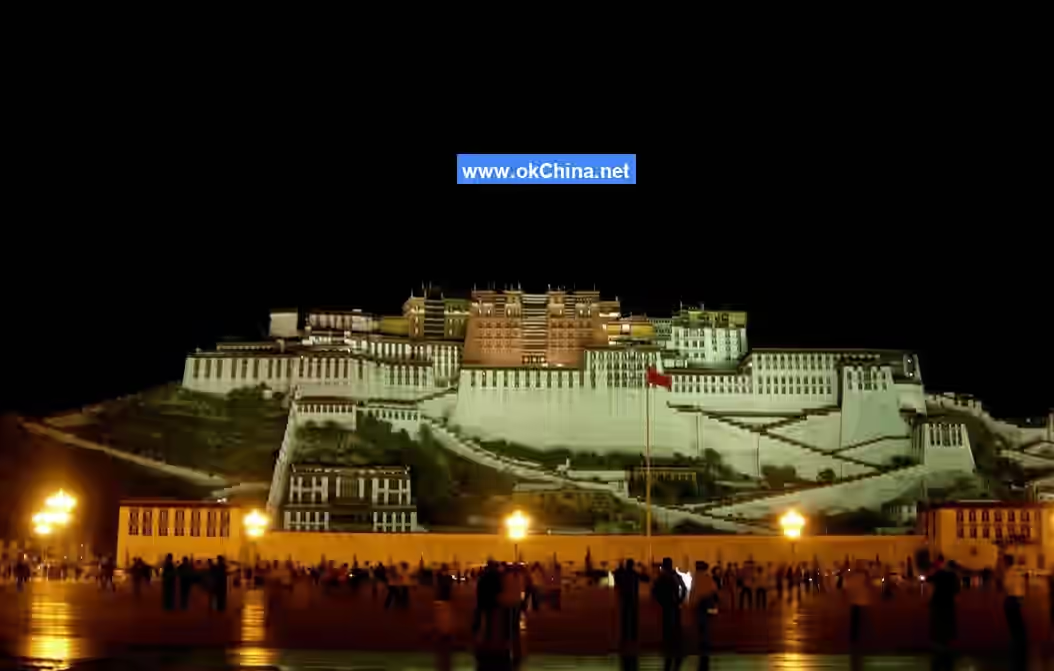
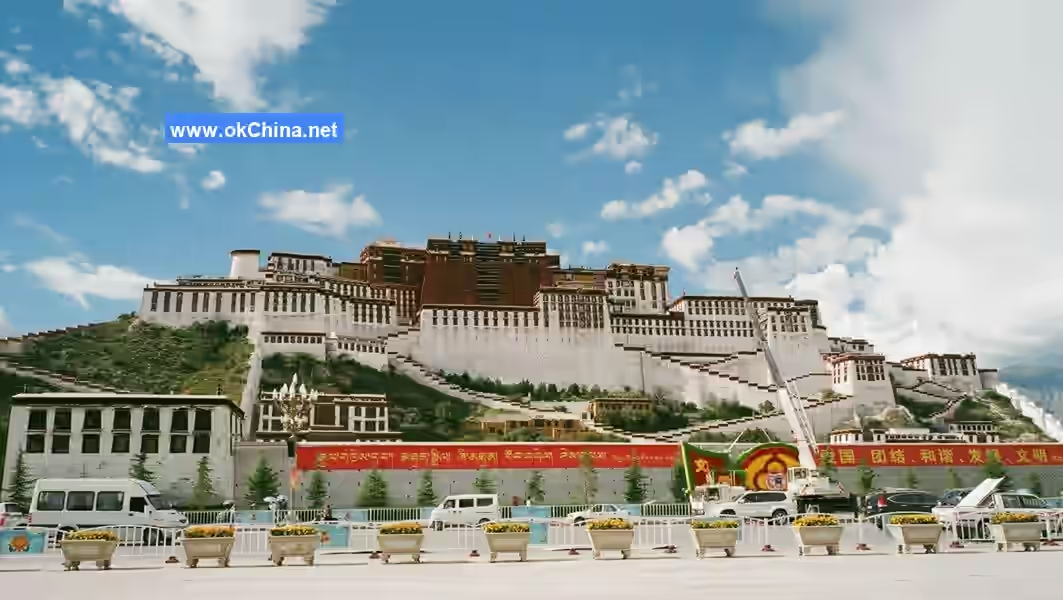
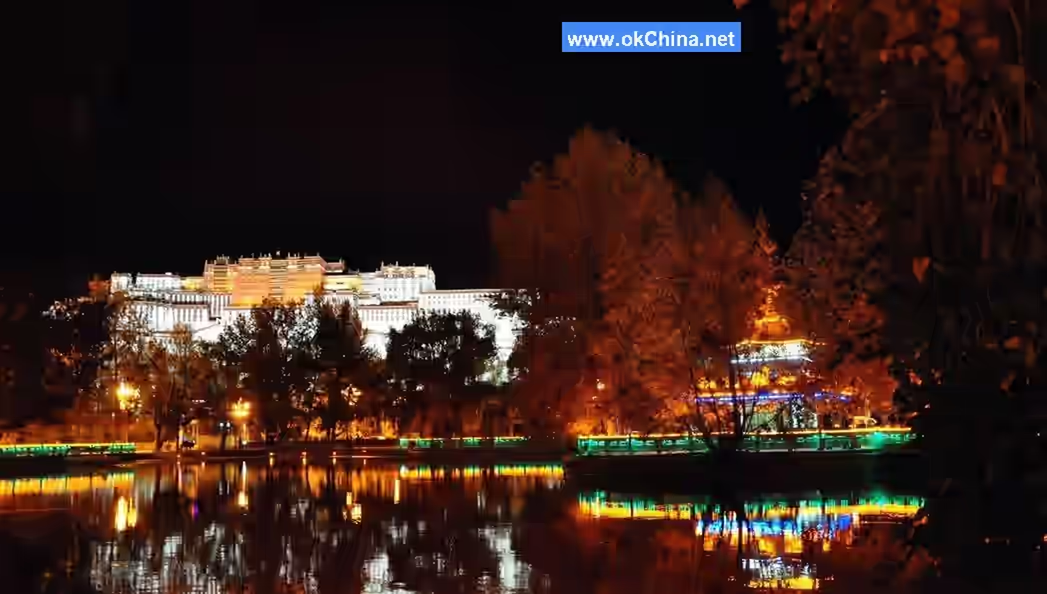
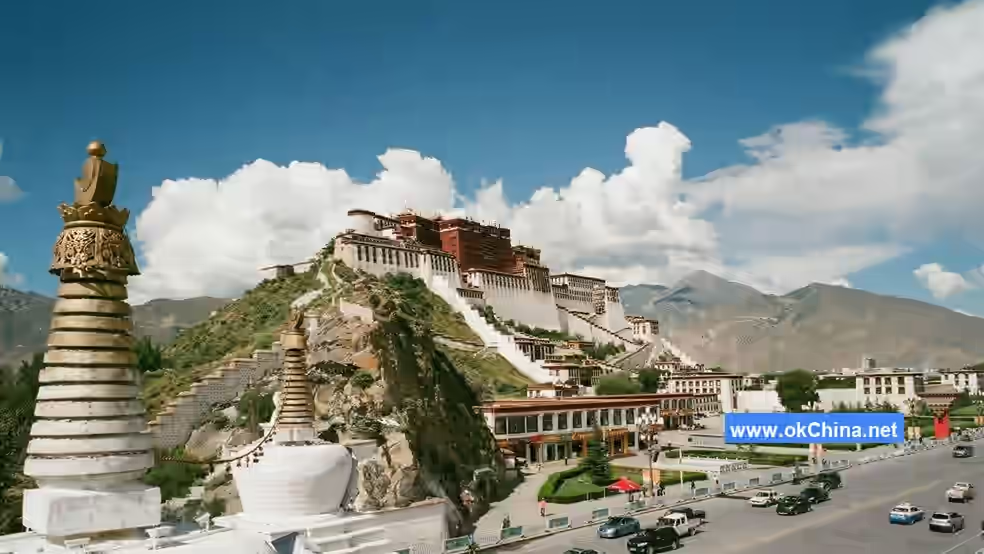
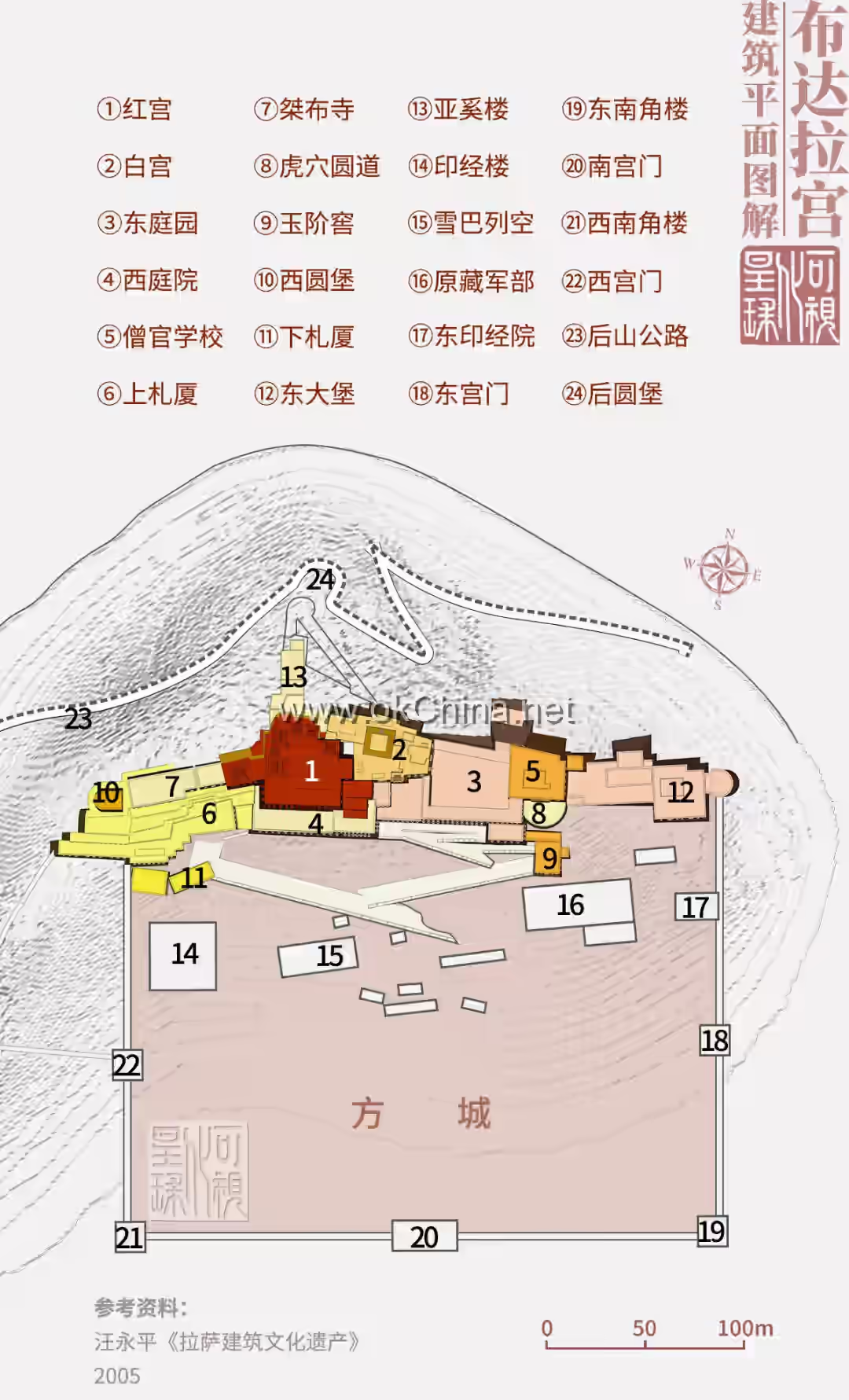
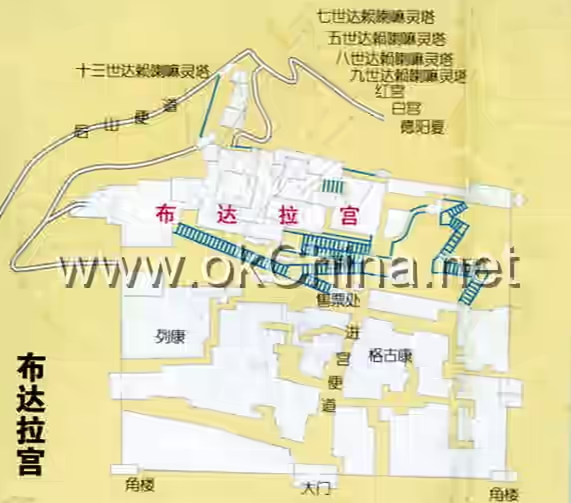
The entire palace features Tibetan architectural style, standing over 200 meters tall with 13 visible tiers, though it actually has only 9 floors. Built on the mountainside with large stone walls rising like cliffs, the structure seems to merge with the hill, creating a majestic and imposing sight. The main building extends downwards on its eastern and western sides, connecting with the tall palace walls. These walls are 6 meters high, 4.4 meters wide at the base, and 2.8 meters wide at the top, constructed with rammed earth and faced with brick and stone. There is a three-story gate tower on the east, south, and west sides of the wall, with watchtowers at the southeastern and northwestern corners. The entire area enclosed by the walls belongs to the Potala Palace. The area in front of the hill within the walls is called "Shöl" (Snow City), housing the former administrative offices of the Tibetan local government, the Gasha, such as the court, scripture printing house, and Tibetan army headquarters. Additionally, auxiliary facilities like workshops, stables, water supply points, warehouses, and prisons were located here. The area behind the hill within the walls is called "Lingka," primarily consisting of a garden complex centered around the Dragon King Pond, serving as the palace's rear garden. During the reconstruction by the Fifth Dalai Lama, soil was excavated here, forming a deep pond. Later, the Sixth Dalai Lama built a three-story octagonal glazed pavilion on the lake, housing a statue of the Dragon King, hence the name Dragon King Pond. To the right of Red Hill is Chagpori (Medicine King Hill), home to a Tibetan medical college built in the 17th century. South of the road in front of the palace stands the "Dazha Lugong Meritorious Stele," erected by Tibetan King Trisong Detsen to honor his general Dazha Lugong for leading troops to raid Chang'an in 763 AD (the first year of the Tang Guangde era). Around the palace walls, many commercial facilities have been newly built, creating a stark contrast with the solemn and dignified atmosphere of the Potala Palace. Surrounding the White Palace are sturdy and imposing round fortress structures like Shakyamuni Chok, Gyabum Chok, Yujing Chok, and Danma Chok, rebuilt during the Fifth Dalai Lama's era in imitation of earlier palace-fortress styles.
2. Construction History
The basic appearance of the Potala Palace primarily stems from the reconstruction of the White Palace during the era of the Fifth Dalai Lama in the 17th century and the subsequent construction of the Red Palace after his death. "Successive Dalai Lamas later expanded it, eventually forming the Potala Palace's present scale."
The Potala Palace was initially built during the era of Tibetan King Songtsen Gampo in the 7th century AD, boasting a history of over 1,300 years.
In the 630s AD, the 33rd Tibetan King Songtsen Gampo moved the capital to Lhasa and began constructing the Potala Palace as the royal palace. Historical records indicate that Red Hill was surrounded by three concentric walls, with a bridge made of silver and copper connecting the palaces of Songtsen Gampo and Princess Wencheng. Outside the east gate of the Potala Palace was Songtsen Gampo's horse-racing ground. When the Tibetan Empire established by Songtsen Gampo collapsed, most of the Potala Palace was destroyed by war.
After the fall of the Tibetan Empire, most of the ancient palace-fortress was also destroyed by war, compounded by natural disasters like lightning strikes. The scale of the Potala Palace gradually diminished, even being incorporated into the Jokhang Temple at one point as a branch for management. Today, only the Dharma King Cave and the Phakpa Lhakang remain from that period.
In 1645 (the Wood Rooster year of the Tibetan calendar), to consolidate the theocratic Ganden Phodrang local government, the Fifth Dalai Lama, under the direction of Desi Sonam Rabten, rebuilt the "White Palace," palace walls, gates, and watchtowers, and moved the administrative institutions from Drepung Monastery here. In 1690 (the Iron Horse year), Desi Sangye Gyatso built a stupa-tomb for the Fifth Dalai Lama and expanded the "Red Palace." The project was completed in 1693 (the Water Rooster year). Subsequently, successive Dalai Lamas added five golden roofs and some auxiliary buildings. Particularly after the completion of the Thirteenth Dalai Lama's stupa-tomb hall in 1936 (the Fire Rat year), the Potala Palace reached its present scale.
In the late Ming Dynasty, with the military support of Mongol leader Güshi Khan, the Fifth Dalai Lama established the Ganden Phodrang dynasty. Later, after the fall of the Tibetan Empire founded by Songtsen Gampo, most of the ancient palace-fortress was destroyed by war. It wasn't until the 17th century, after the Fifth Dalai Lama established the Ganden Phodrang dynasty and was officially recognized by the Qing government as the political and religious leader of Tibet, that reconstruction of the Potala Palace began in 1645. Subsequent Dalai Lamas continued expansions, giving the Potala Palace its present scale. The unique Potala Palace is also sacred. In today's China, whenever it is mentioned, it naturally evokes thoughts of Tibet. It seems that in people's minds, this ancient architectural complex,凝结着藏族劳动人民的智慧 and witnessing cultural exchanges between Han and Tibet, has absolutely become a symbol of the Tibetan people with its magnificent grandeur and status as a holy site of Tibetan Buddhism.
In 1690, under the direction of Desi Sangye Gyatso, modifications were made to the Red Palace's Fifth Dalai Lama stupa-tomb hall, completed in 1693. Subsequent expansions were carried out by successive Dalai Lamas. Over more than 300 years, the Potala Palace has amassed and preserved an extremely rich collection of historical relics. These include over 2,500 square meters of murals, nearly a thousand stupas, tens of thousands of statues, and tens of thousands of thangkas; as well as precious sutras and scriptures like the Pāli Canon and the Kangyur; golden albums, golden seals, and jade seals bestowed by Ming and Qing emperors to Dalai Lamas, reflecting the historical relationship between the Tibetan local government and the central government; and a vast number of gold and silverware, porcelain, cloisonné, jade, brocades, and artistic curios. These cultural relics are splendid, colorful, and rich in subject matter.
The Thirteenth Dalai Lama's stupa-tomb hall is the latest structure in the Potala Palace, construction began in 1933 and took three years to complete. Additionally, there are halls such as the Guru Hall, Samantabhadra Following Hall, Bronze Bell Hall, Kalachakra Hall, Shakyamuni Hall, Shakyamuni's Hundred Deeds Hall, Flower Master Hall, Stages of the Path to Enlightenment Hall, Vidyadhara Hall, and Hereditary Hall.
3. Architectural Structure
3.1 Overall Structure
The Potala Palace sits at an altitude of 3,700 meters, covering a total area of 360,000 square meters with a total floor area of 130,000 square meters. The main building is 117 meters high with 13 stories, containing palaces, stupa-tomb halls, Buddha halls, assembly halls, monks' quarters, courtyards, and all necessary facilities.
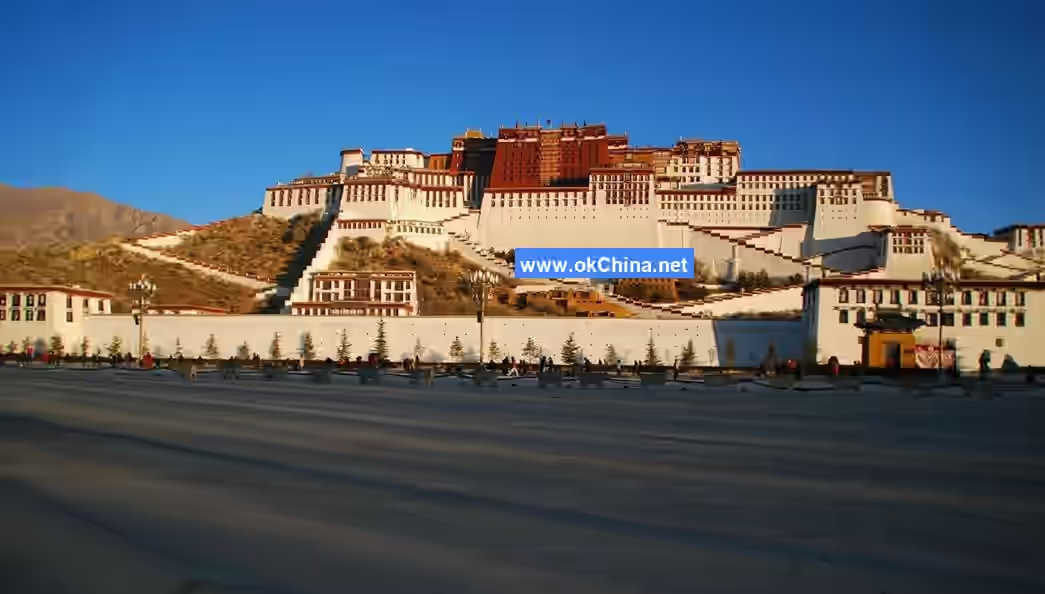
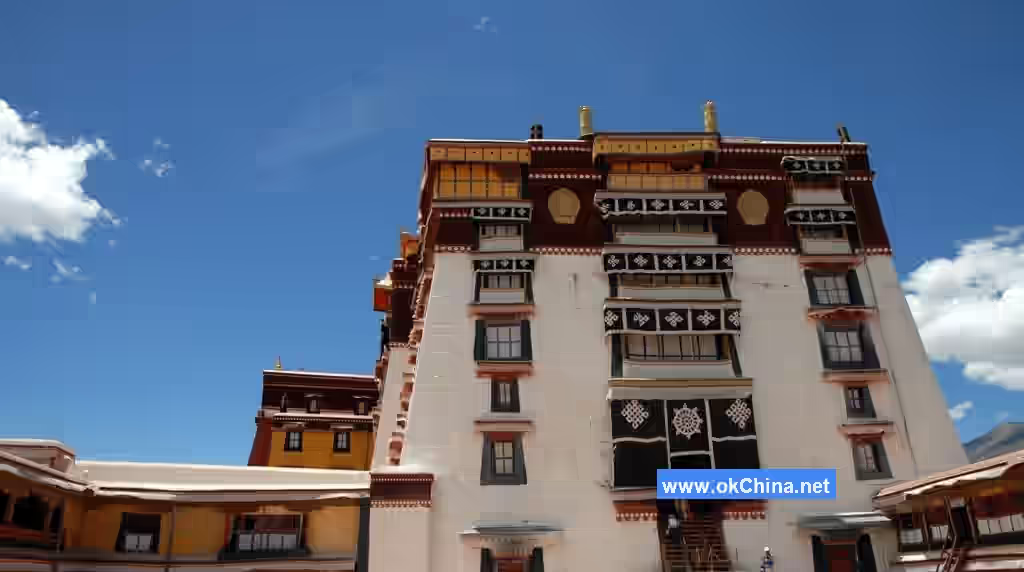
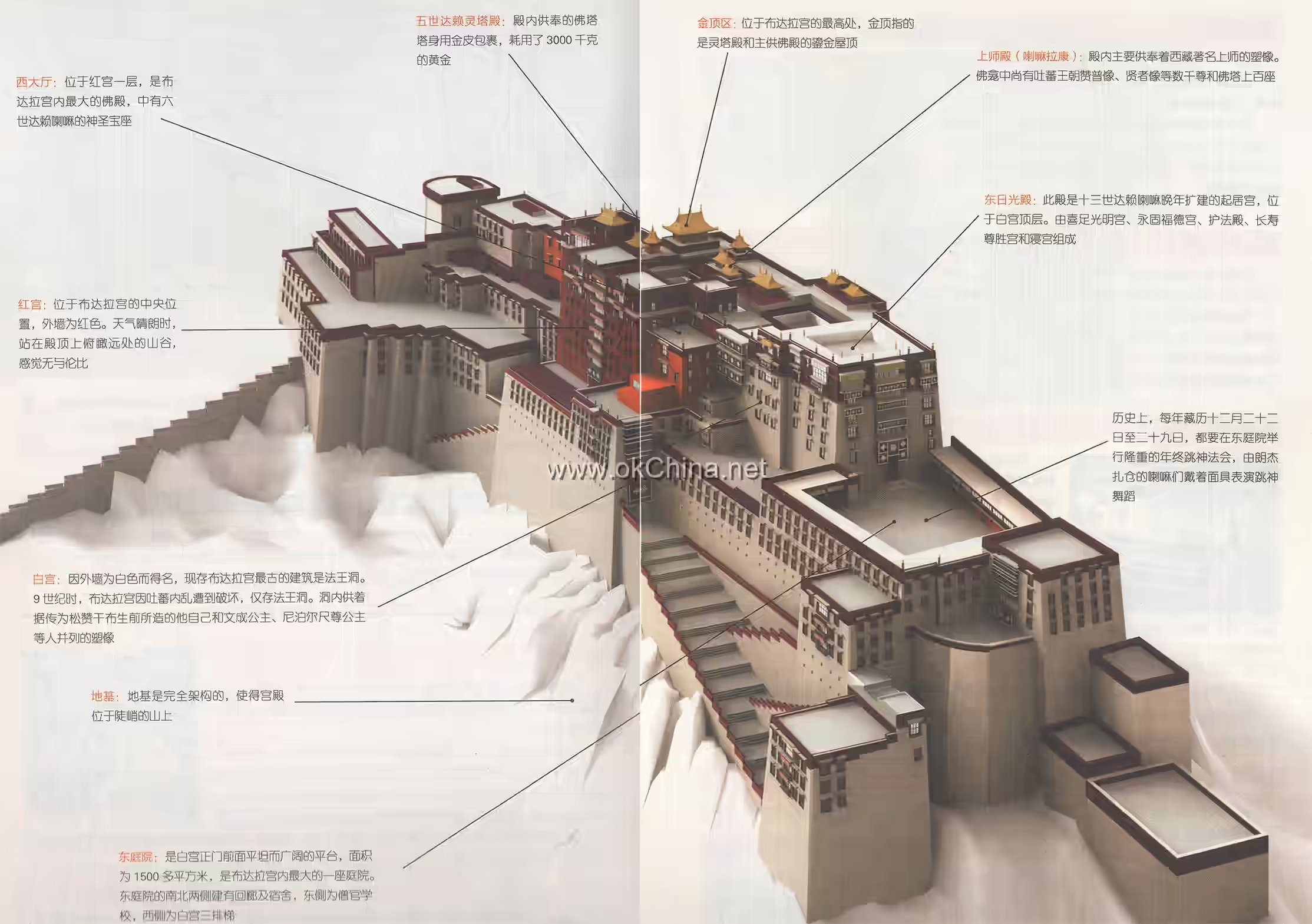
The Potala Palace appears to have 13 stories externally, standing 110 meters tall, rising from the foot of the hill to its summit. It consists of the eastern White Palace (the residence of the Dalai Lama) and the central Red Palace (Buddha halls and stupa-tomb halls of successive Dalai Lamas). In front of the Red Palace is a tall white wall serving as the Thangka Unveiling Platform, used to hang large thangka scrolls during Buddhist festivals.
The Potala Palace is primarily a stone and wood structure. The exterior palace walls are 2 to 5 meters thick, with foundations directly embedded into the bedrock. The walls are entirely constructed with granite, reaching tens of meters in height. At regular intervals, molten iron was poured into the middle for reinforcement, improving the walls' earthquake resistance, making them solid and stable.
The roofs and window eaves use wooden structures with overhanging eaves and upturned corners. The copper tiles are gilded, and the roof ridges are adorned with gilded prayer banners, treasure vases, makara fish, and garuda birds. The gleaming roofs feature hip-and-gable and pyramidal styles, exhibiting Han Chinese architectural influences. The walls beneath the eaves are decorated with gilded copper ornaments depicting Buddhist ritual implements and the Eight Auspicious Symbols, reflecting strong Tibetan Buddhist characteristics. The pillars and beams are covered with vibrant paintings and ornate carvings. Inside, corridors intertwine, halls are arranged in a complex manner, and the space is winding and labyrinthine.
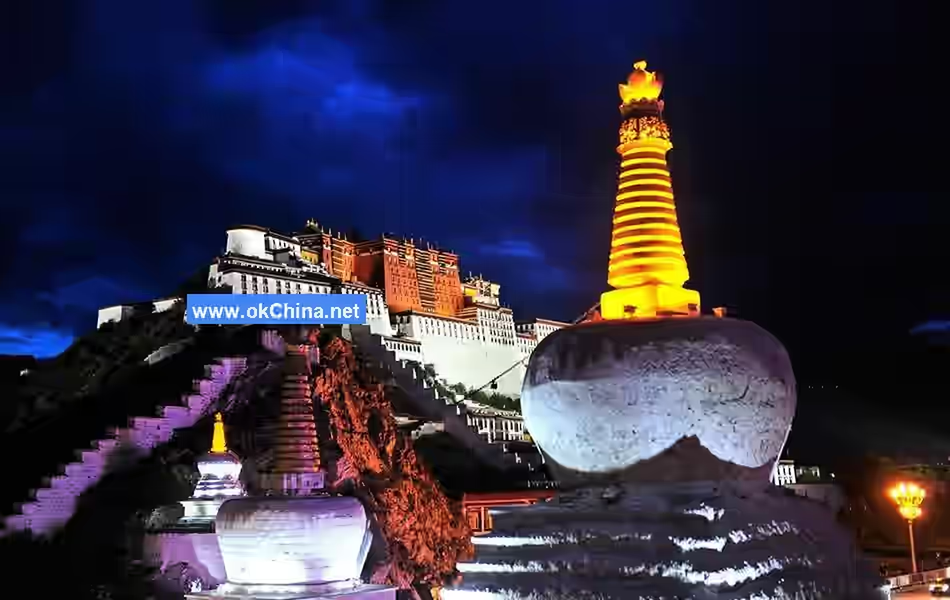
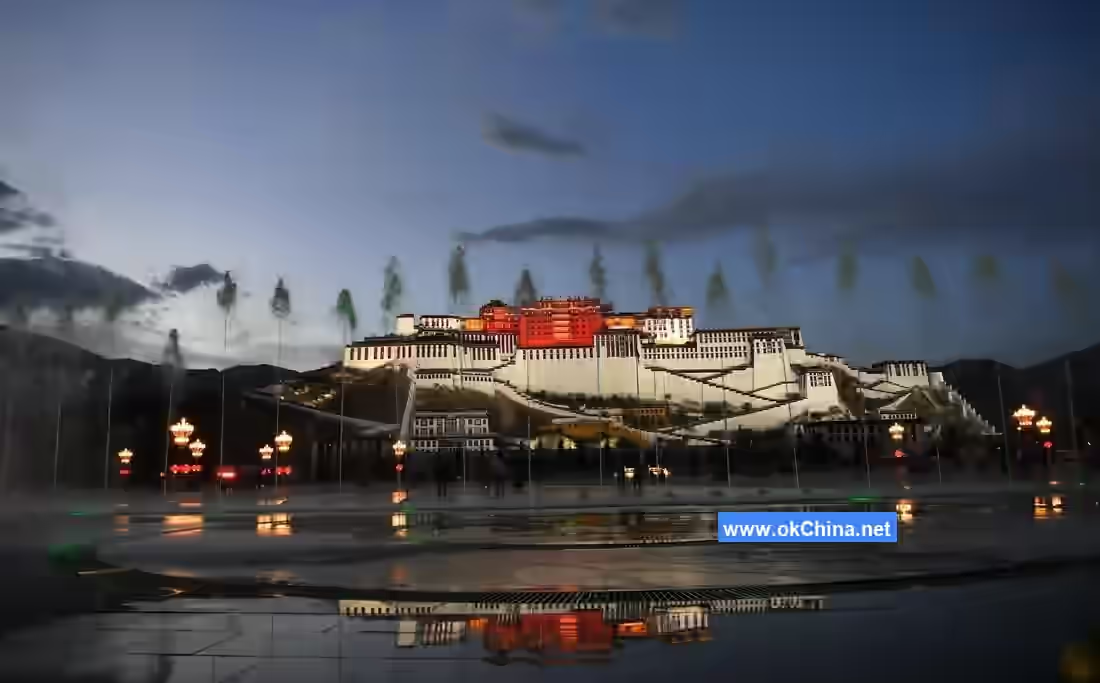
The Potala Palace is built up the mountainside with overlapping buildings and towering halls, creating a majestic and imposing atmosphere. The solid and thick granite walls, the flat and smooth white pema (a type of grass) wall coping, the resplendent golden roofs, the large gilded treasure vases, banners, and red prayer flags with strong decorative effects all complement each other. The striking contrast of red, white, and yellow colors, and the architectural form of combined sections and interlocking layers all embody the enchanting characteristics of ancient Tibetan architecture.
3.1.1 White Palace
The White Palace, the winter palace of the Dalai Lama, also served as the administrative center of the former Tibetan local government. It is seven stories high.
The White Palace gets its name from its white exterior walls. The oldest existing structure within the Potala Palace is the Dharma King Cave. In the 9th century, the Potala Palace was damaged during internal strife in the Tibetan Empire, leaving only the Dharma King Cave. The cave houses statues said to have been made during Songtsen Gampo's lifetime, depicting himself alongside Princess Wencheng, Princess Bhrikuti of Nepal, and others.
The top floor is the Dalai Lama's living quarters, the "Sunlight Hall." Part of the roof in this hall is open, allowing sunlight to enter; it is covered with cloth at night, hence the name. The Sunlight Hall is divided into eastern and western sections. The Western Sunlight Hall (Nyitso Lhakhang) is the original, and the Eastern Sunlight Hall (Ganden Langsel) is a later imitation. Both have similar layouts, serving as the living quarters and places for handling government affairs for the Thirteenth and Fourteenth Dalai Lamas respectively. Access was strictly hierarchical, permitted only to high-ranking monastic and secular officials. The hall includes an audience hall, scripture hall, study, and bedroom, all lavishly furnished.
The sixth and fifth floors of the White Palace contain living and office quarters.
The fourth floor houses the largest hall in the White Palace, the Eastern Great Hall (Tshomchen Shar). It is the largest hall in the White Palace, covering 717 square meters, 27.8 meters long and 25.8 meters wide. It contains the Dalai Lama's throne, above which hangs a plaque inscribed by the Tongzhi Emperor with the characters "振锡绥疆" (Pacifying the Frontiers). Major events of the Potala Palace, such as the Dalai Lama's enthronement and assumption of power ceremonies, were held here. Externally, the White Palace has a zigzagging uphill path. On the eastern mountainside is a broad square called Deyang Shar, where the Dalai Lama watched operas and held outdoor activities. Monastic official schools were built on the north and south sides of the square.The White Palace is connected to the Zha Xia below the Red Palace. Located to the west of the Red Palace, the Zha Xia served as the residence for the lamas serving the Potala Palace, housing up to more than 25,000 monks at its peak. Its exterior walls are all white, so it is often considered part of the White Palace.
3.1.2 Red Palace
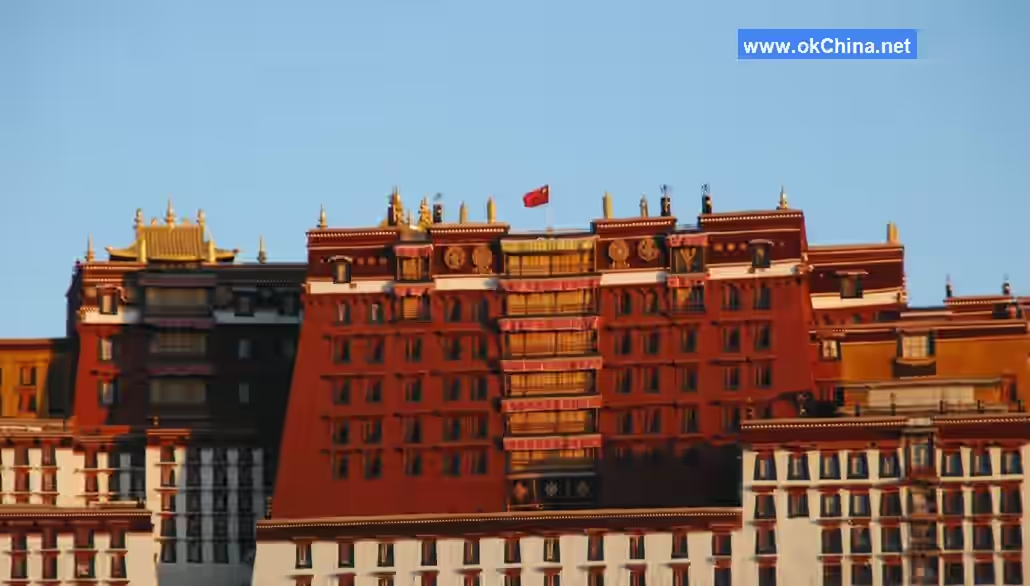
The Red Palace is situated in the central part of the Potala Palace, with red exterior walls. The palace adopts a mandala layout, with numerous sutra halls and Buddha halls built around the stupa halls of successive Dalai Lamas, thus connecting it with the White Palace.
The most important structures in the Red Palace are the stupa halls of successive Dalai Lamas, totaling five: those of the 5th, 7th, 8th, 9th, and 13th Dalai Lamas. Each hall shares the same architectural style but varies in scale. The largest among them is the Stupa Hall of the 5th Dalai Lama (Zangling Jingji), which is three stories high and supported by sixteen large square pillars. In the center rests the stupa of the 5th Dalai Lama, flanked by the stupas of the 10th and 12th Dalai Lamas. The main hall of the 5th Dalai Lama's stupa hall, the Western Great Hall (Cuoqin Lu, also known as Sixipingcuo), is the largest hall in the Red Palace, standing over 6 meters high and covering an area of 725.7 square meters. Inside the hall hangs a plaque inscribed by Emperor Qianlong with the words "Yong Lian Chu Di" (The First Land of Blooming Lotuses), beneath which is the Dalai Lama's throne. The entire hall features intricately carved beams and painted rafters, adorned with 698 murals, many of which depict the life of the 5th Dalai Lama. In the western part of the Red Palace is the Stupa Hall of the 13th Dalai Lama (Gelai Dunjue), built in 1936, making it the latest structure in the Potala Palace. Its scale rivals that of the 5th Dalai Lama's stupa hall. In addition to the stupa, the hall houses a silver statue of the 13th Dalai Lama and a ritual object called a "mandala" woven from 200,000 pearls and coral beads.
The Dharma King Hall (Qujie Zhebu) and the Saint Hall (Pabalakang) in the Red Palace are said to be structures dating back to the Tubo period. The Dharma King Hall is located precisely at the center of the Potala Palace, directly above the peak of Marpo Ri Mountain. It is said to have been the meditation retreat of Songtsen Gampo and now houses statues of Songtsen Gampo, Princess Bhrikuti, Princess Wencheng, and their ministers. The Saint Hall enshrines the principal deity of Songtsen Gampo—a naturally formed sandalwood statue of Avalokiteshvara. The rooftop platform of the Red Palace is covered with golden roofs of various stupa halls, all featuring single-eave gable-and-hip roofs supported by wooden brackets and covered with gilded copper tiles. At the top stand three pagodas, one large and two small, gleaming brilliantly. The parapet walls around the rooftop are built with a deep purplish-red shrub and adorned with various golden decorations. The top of the walls is lined with large gilded prayer flags and red sutra streamers, reflecting a strong Tibetan architectural style.
Other halls in the Red Palace are also significant. The Hall of the Flourishing Three Realms (Sasong Langjie) is the highest hall in the Red Palace, housing a vast collection of sutras and portraits of Qing emperors. The Mandala Hall (Luolakang) contains three large copper mandalas, dedicated to the three esoteric Buddhas. The Vidyadhara Hall (Renzeng Lakang) primarily enshrines the founder of the Nyingma school of Tibetan Buddhism, Padmasambhava, and his manifestations. The Lineage Hall (Zhongre Lakang) houses a gold statue of the 12-year-old Shakyamuni and a silver statue of the 5th Dalai Lama, with the stupa of the 10th Dalai Lama also located here.
3.2 Auxiliary Structures
The Potala Palace also includes several auxiliary structures, such as the Langjie Zhacang on the mountain, the monk official school, monk quarters, the eastern and western courtyards, as well as the Xuelao City at the foot of the mountain, the Tibetan local government's Majikang, Xueba Liekong, printing house, prison, stables, and the Dragon King Pond in the rear garden of the Potala Palace.
Eastern Courtyard (Deyang Xia): A flat, expansive platform in front of the main entrance of the White Palace. Covering an area of over 1,500 square meters, it is bordered by the main building of the White Palace to the west, the monk official school to the east, and residential quarters to the north and south.
White Palace Entrance Corridor: This corridor leads to the main entrance of the White Palace, with murals painted on all four walls. The north wall depicts Princess Wencheng's journey to Tibet; the south wall shows the 5th Dalai Lama's proclamation appointing Sangye Gyatso as the Desi (regent) in his later years; the east wall features the Wheel of Life, mandala diagrams, and folk customs.
Eastern Great Hall of Serenity and Perfection (Cuoqin Xia Sixipingcuo): The main hall of the White Palace and also its largest, covering an area of 717 square meters with 34 pillars. The north side features the Dalai Lama's throne, above which hangs a plaque inscribed by Emperor Tongzhi of the Qing Dynasty with the words "Zhen Xi Sui Jiang" (Pacifying the Frontiers). The walls are covered with murals depicting religious stories and historical figures. Important ceremonies such as the Dalai Lama's enthronement were originally held here.
Western Sunlight Hall: This hall served as the early living quarters of the Dalai Lama, located on the top floor of the White Palace. It consists of the Palace of Auspicious Rotation, the Palace of Gathering Desires, the Palace of Supreme Joy, the bedchamber, and the Protector Chapel.
Eastern Sunlight Hall: This hall was expanded in the later years of the 13th Dalai Lama as his living quarters, also located on the top floor of the White Palace. It includes the Palace of Joyful Light, the Palace of Eternal Fortune, the Protector Chapel, the Palace of Longevity and Victory, and the bedchamber.
Maitreya Chapel (Qiang Kang): Primarily enshrines a statue of Maitreya Buddha. Flanking it are the Three Longevity Deities and the fairy Dunzhu Zhuoma, among others. The hall also houses other Buddha statues and stupas, with the throne of the 8th Dalai Lama placed on the west side.
Golden Roof Area: Located at the highest point of the Potala Palace, the Golden Roof Area refers to the gilded roofs of the stupa halls and main Buddha halls, totaling seven structures. The golden roofs are adorned with numerous gilded decorations. Surrounding the area are prayer flags and sutra streamers.
Mandala Hall (Lulang Kang): At the center of the hall is the Sangwang Duiba Mandala, with the Deque Mandala to the east and the Jijie Mandala to the west. Sangwang Duiba (Dense), Deque (Victorious), and Jijie (Great Wrathful) are all esoteric deities. The walls are covered with murals depicting famous Buddhist figures, temples, and religious history.
Hall of the Supreme Three Realms (Sasong Langjie): Enshrines a plaque inscribed in Tibetan, Chinese, Manchu, and Mongolian with the words "Long Live the Emperor, Ten Thousand Years." Above the plaque hangs a portrait of Emperor Qianlong of the Qing Dynasty. Surrounding it are statues of Vajradhara, Tsongkhapa, and others. The hall also contains a silver statue of the 11-faced Avalokiteshvara cast by the 13th Dalai Lama using ten thousand taels of silver. This is an important Buddha hall in the Red Palace, where some significant activities are held.
Hall of Longevity and Joyful Gathering (Qimei Dedan Ji): This hall features the throne of the 6th Dalai Lama, Tsangyang Gyatso, and niches along the walls enshrining a thousand statues of Amitayus Buddha. The hall also houses over 2,000 Buddha statues, including the protector deity "Egezedi" and Tsongkhapa.
Stupa Hall of the 13th Dalai Lama: The stupa of the 13th Dalai Lama stands 12.97 meters tall, wrapped in high-quality gold and adorned with tens of thousands of jewels, making it a treasure trove of worldly gems. The hall is furnished with various ritual and ceremonial objects. In front of the seated statue of the 13th Dalai Lama, Thubten Gyatso, is a pearl mandala made from 200,000 pearls. The walls of the third floor are covered with murals depicting the life of the 13th Dalai Lama.
Guru Hall (Lama Lakang): Primarily enshrines statues of renowned Tibetan gurus. The niches also contain thousands of statues of Tibetan kings and sages from the Tubo Dynasty, as well as hundreds of stupas.
Stupa Hall of the 7th Dalai Lama: The stupa of the 7th Dalai Lama is enshrined in the center of the hall, which also houses a seated statue of the 7th Dalai Lama, Kelzang Gyatso, along with niches and sutra shelves.
Holy Avalokiteshvara Chapel (Pabalakang): Above the door hangs a plaque inscribed by Emperor Tongzhi of the Qing Dynasty with the words "Fu Tian Miao Guo" (Fruit of the Field of Merit). At the center of the hall is a sandalwood statue of Avalokiteshvara, the principal deity of Songtsen Gampo and a rare treasure of the Potala Palace. The hall also contains many precious Buddha statues and stupas, including an alloy statue of the six-faced Yama.
Stupa Hall of the 8th Dalai Lama: Primarily enshrines the seated statue and stupa of the 8th Dalai Lama, Jamphel Gyatso. In front of the stupa are offerings of the Eight Auspicious Symbols, the Eight Lucky Emblems, and the Seven Royal Treasures.
Stupa Hall of the 9th Dalai Lama: Mainly houses the stupa of the 9th Dalai Lama, a seated statue of the 9th Dalai Lama, Lungtok Gyatso, and Tsongkhapa, along with sutra shelves.
Kalachakra Hall (Duikuo Lakang): At the center of the hall is a copper-gilded Kalachakra mandala, surrounded by over 100 statues of Kalachakra deities and astrologers.
Shakyamuni Hall (Tuwang Lakang): Primarily enshrines a statue of Shakyamuni, the founder of Buddhism, flanked by statues of his eight great disciples. The hall also contains the throne of the 7th Dalai Lama and a collection of handwritten Kangyur scriptures.
Amitayus Hall (Cai Ba Lakang): The central altar enshrines nine statues of Amitayus Buddha, along with one statue each of White Tara and Green Tara. The walls are covered with murals.
Dharma King Cave (Quji Zhupu): A structure dating back to the 7th-century Tubo period, revered by Tibetan Buddhists as the meditation retreat of Songtsen Gampo, who is honored as the Dharma King. The hall contains statues of Songtsen Gampo, Princess Wencheng, Princess Bhrikuti, and Tubo ministers Gar Tongtsen (Lu Dongzan) and Thonmi Sambhota, the latter traditionally credited with creating the Tibetan script. The hall also features early precious murals.
Samantabhadra Following Hall (Gongsang Jizhu Kang): The central altar enshrines a copper-gilded seated statue of Shakyamuni Buddha, flanked by statues of Avalokiteshvara and the 5th Dalai Lama, among others.
Bronze Hall (Lima Lakang): This hall enshrines statues made of resonant bronze (alloy), including around 3,000 statues of Shakyamuni, Amitabha, and others. Among them are hundreds of statues made in mainland China during the Xuande and Yongle periods of the Ming Dynasty.
Second Corridor of the Red Palace: Known as the Gallery Corridor. The walls are covered with murals depicting the construction history of the Potala Palace, the completion ceremony of the Red Palace, and Buddhist activities.
Western Great Hall of Serenity and Perfection (Cuoqin Nu Sixipingcuo): The largest hall in the Potala Palace, covering an area of 725 square meters with 44 pillars. The west end features the Dalai Lama's throne, above which hangs a plaque inscribed by Emperor Qianlong of the Qing Dynasty with the words "Yong Lian Chu Di" (The First Land of Blooming Lotuses). The walls are covered with murals spanning 280 square meters, including a particularly valuable mural depicting the 5th Dalai Lama's visit to Beijing to meet Emperor Shunzhi of the Qing Dynasty, which is both an artistic treasure and a historical document. The wooden beams and rafters in the hall are carved with openwork Buddha statues, animals, and decorative patterns.
Stages of the Path to Enlightenment Hall (Langren Lakang): Primarily enshrines a seated statue of Tsongkhapa, the founder of Tibetan Buddhism. The hall also houses bronze statues of notable figures from the Gelug and Kadam schools.The Vidyadhara Hall (Rigdzin Lhakhang): Primarily enshrines a silver statue of Padmasambhava, the founder of the Nyingma school of Tibetan Buddhism. To its east are eight statues of Padmasambhava's lineage masters, and to its west are eight statues of Padmasambhava's manifestations. The hall also contains eight silver stupas of the Sugata, and the bookshelves hold the Kangyur scriptures meticulously engraved during the time of Desi Sangye Gyatso.
The Fifth Dalai Lama's Stupa Hall (Serdung Khang): The hall is three stories high with sixteen pillars. At its center is the stupa of the Fifth Dalai Lama, standing 12.6 meters tall. The stupa is covered in gold leaf, using 3,721 kilograms of gold, and is inlaid with tens of thousands of various jewels. The hall also contains the stupas of the Tenth and Twelfth Dalai Lamas, as well as eight silver stupas of the Sugata adorned with various gems.
The Hereditary Hall (Chongra Lhakhang): In the center of the hall stand side-by-side a gold statue of Shakyamuni Buddha and a silver statue of the Fifth Dalai Lama. To their right are statues of the First through Fourth Dalai Lamas. On the western side are statues of the Eight Medicine Buddhas. Adjacent to the west wall is the seated statue and stupa of the Eleventh Dalai Lama, Khedrup Gyatso. The bookshelves on the eastern and northern walls hold the Tibetan-language Tengyur scriptures.
4. Main Attractions
4.1 The Palace
The design and construction of the palace follow the patterns of sunlight exposure on the plateau. The walls have wide and sturdy foundations, beneath which there are extensive tunnels and ventilation ducts. The interior features pillars, bracket sets, corbels, beams, and rafters forming a supporting framework. The floors and roofs are made of a hard soil called "Alga." Major halls and bedrooms have skylights to facilitate lighting and air circulation. The pillars and beams inside the palace are adorned with various carvings, and the colored murals on the walls cover an area of over 2,500 square meters.
The palace also houses thangkas, unique to Tibet and painted on cotton cloth or silk, as well as cultural relics from successive dynasties. The Potala Palace was listed as a National Key Cultural Relics Protection Unit in 1961 and underwent comprehensive renovation in 1989.
The palace's stacked structures, winding corridors, and organic integration with the mountain give visitors the most direct impression. Its exterior has 13 stories, stretching from the foot of the mountain to its summit. The overall structure mainly consists of the eastern White Palace (the living quarters of the Dalai Lama), the central Red Palace (Buddhist halls and the stupa halls of successive Dalai Lamas), and the western white monk quarters (residences for the trusted lamas serving the Dalai Lama).
4.2 Murals
The interior of the Potala Palace is adorned with a vast number of murals, forming a grand gallery of painting art. Nearly two hundred people participated in painting the murals over more than ten years. The themes of the murals include the history of Tibetan Buddhism's development, the life of the Fifth Dalai Lama, Princess Wencheng's journey to Tibet, images of ancient Tibetan architecture, and numerous Buddha and Vajra statues, making it a precious historical painting collection. Each hall in the Potala Palace preserves a wealth of precious cultural relics and Buddhist artworks.
4.3 Stupas
The stupa of the Fifth Dalai Lama is located in the Stupa Hall. Standing 14.85 meters tall, it is the highest stupa in the palace. The stupa is covered in gold and inlaid with various precious gems and jades, using 110,000 taels of gold in its construction. Although the other stupas are not as tall as the Dalai Lama's stupa, their exteriors are similarly decorated with large amounts of gold and jewels, making them priceless. The Lha Khang Hall houses a large copper mandala. Mandalas are three-dimensional models of the world's structure in Buddhist doctrine and also serve as platforms where Buddhas reside and preach. They are uniquely shaped and ornately decorated. The Sasum Namgyal Hall enshrines longevity tablets of Emperor Kangxi and a portrait scroll of Emperor Qianlong, inscribed in Tibetan, Chinese, Manchu, and Mongolian scripts, illustrating the subordinate relationship of successive Dalai Lamas to the central government. Some halls also display plaques inscribed by Qing emperors. The Dalai Lama's living quarters are furnished with numerous luxurious decorations and garments.
4.4 Deyang Shar
Midway up the mountain, there is a platform of approximately 1,600 square meters. This is where successive Dalai Lamas and high-ranking officials enjoyed song and dance performances, known as "Deyang Shar." From here, ascending via a staircase through the Daisongge Corridor leads to the East Main Hall, the largest hall in the White Palace. Historical records indicate that since 1653, when the Qing Emperor Shunzhi conferred the title upon the Fifth Dalai Lama with a golden album and seal, the reincarnation of the Dalai Lama has required formal recognition by the central government. The Amban stationed in Tibet presided over ceremonies such as the enthronement and assumption of power. This hall is where successive Dalai Lamas conducted major religious and political activities, including enthronement and assumption of power ceremonies.
Comments
Post a Comment