Pingyao Ancient City
I. Introduction
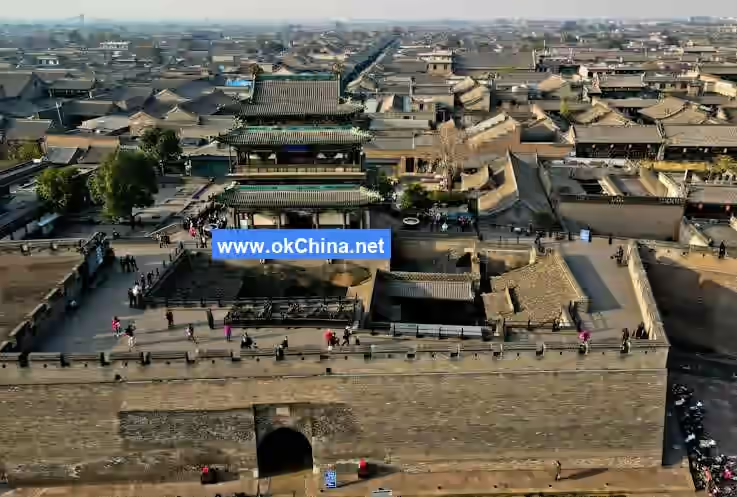
Pingyao Ancient City is located on Kangning Road, Pingyao County, Jinzhong City, Shanxi Province, in the central part of the province. It was initially built during the reign of King Xuan of the Western Zhou Dynasty (827–782 BC) and was reconstructed and expanded in the third year of the Hongwu era of the Ming Dynasty (1370 AD). It is the most completely preserved ancient county town in China today. The entire city resembles a turtle crawling southward, hence it is also known as the "Turtle City."
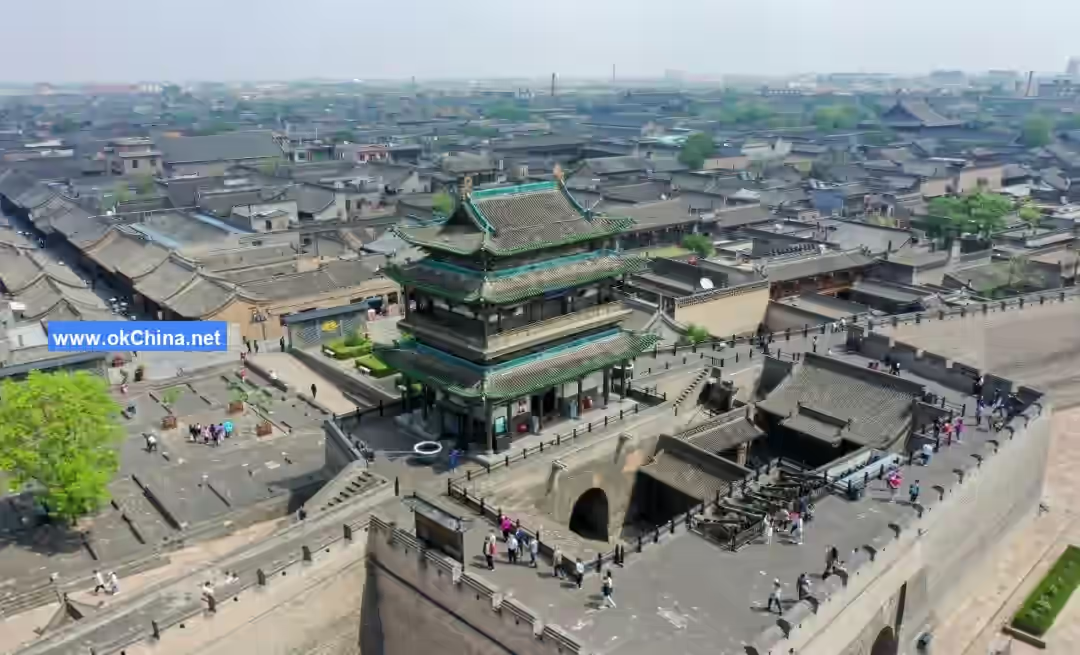
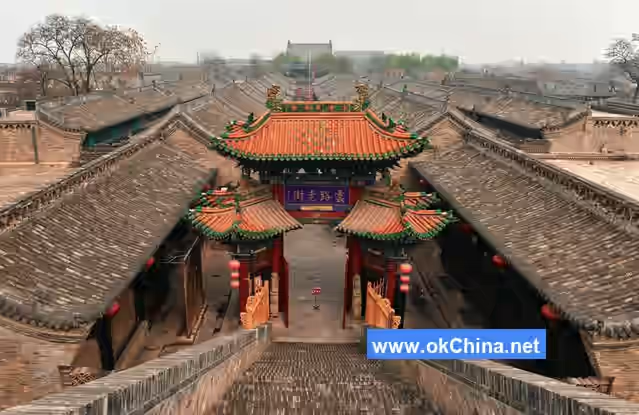
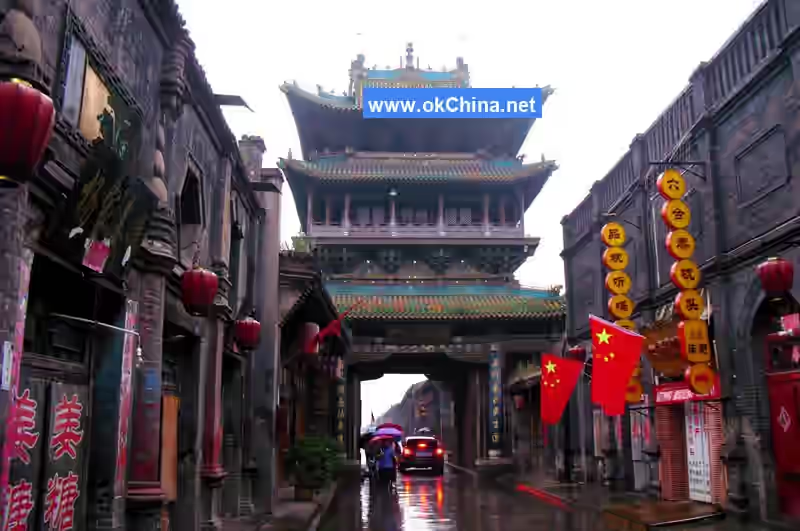
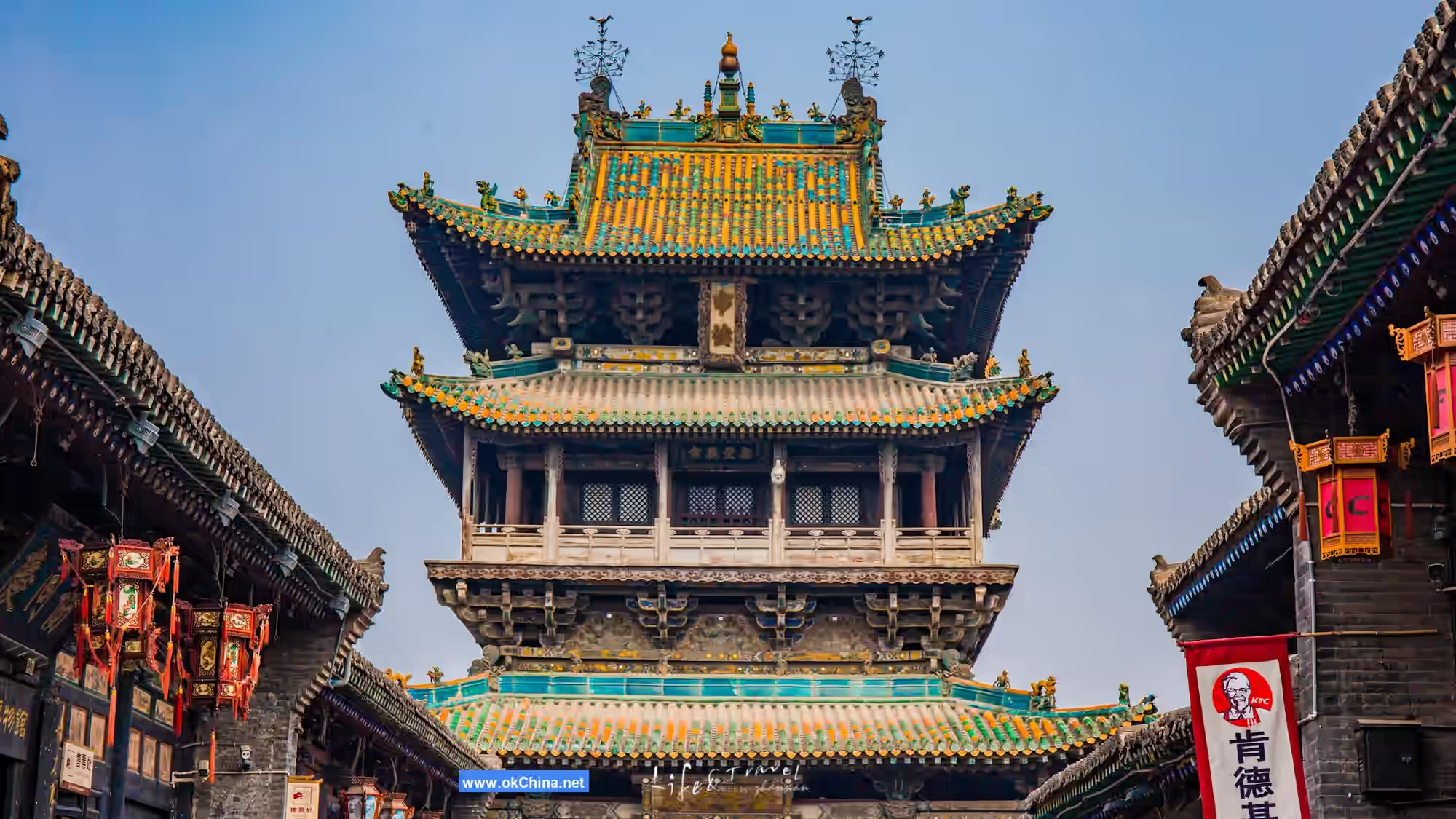
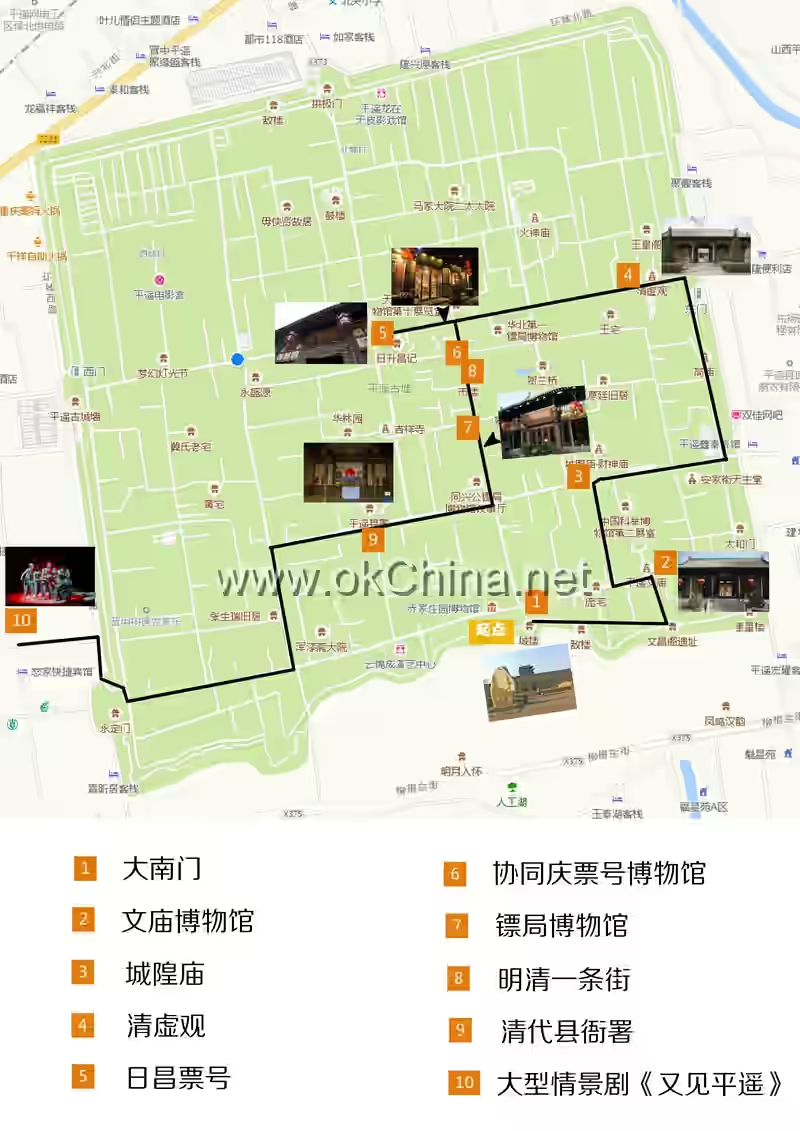
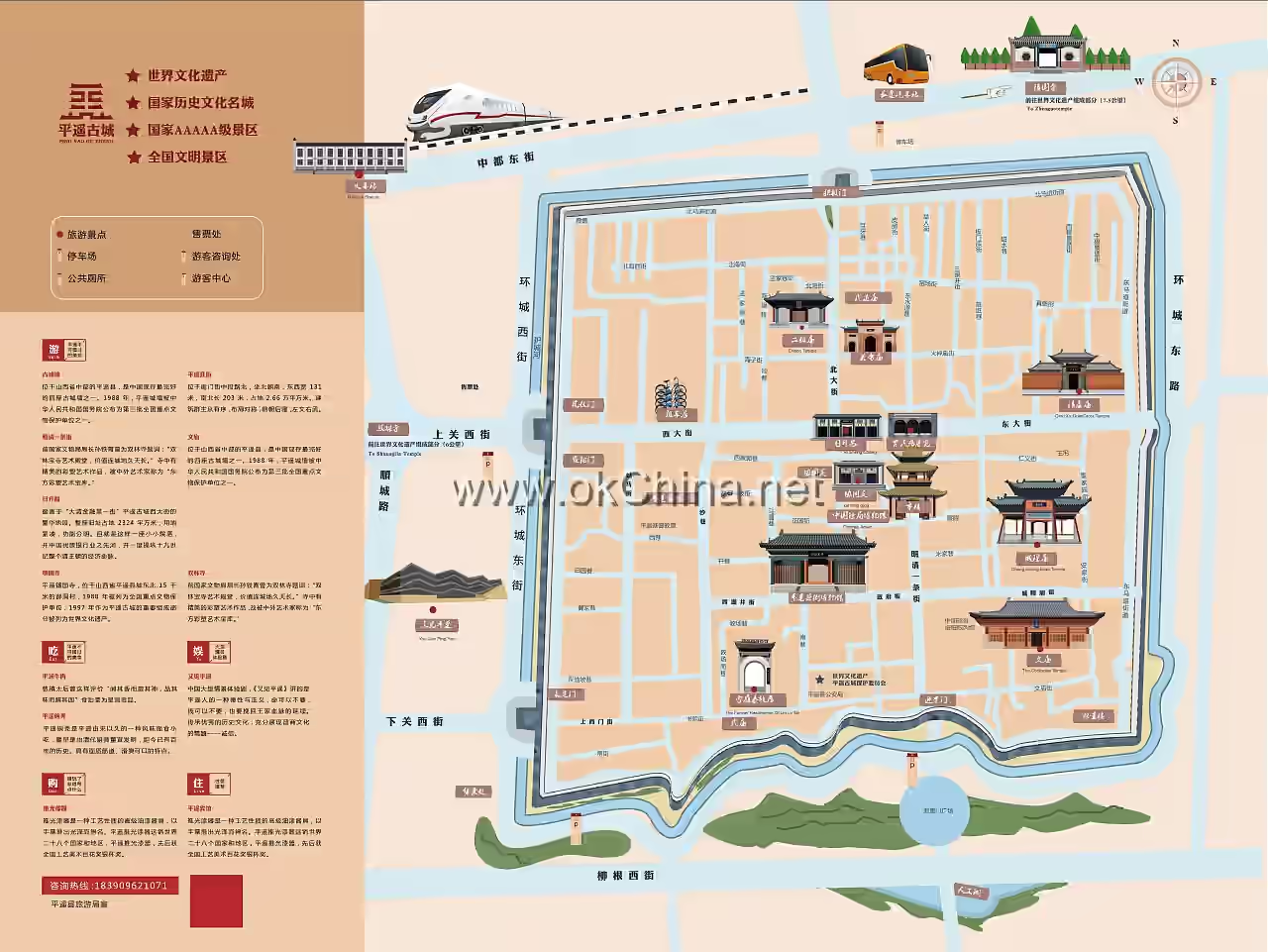
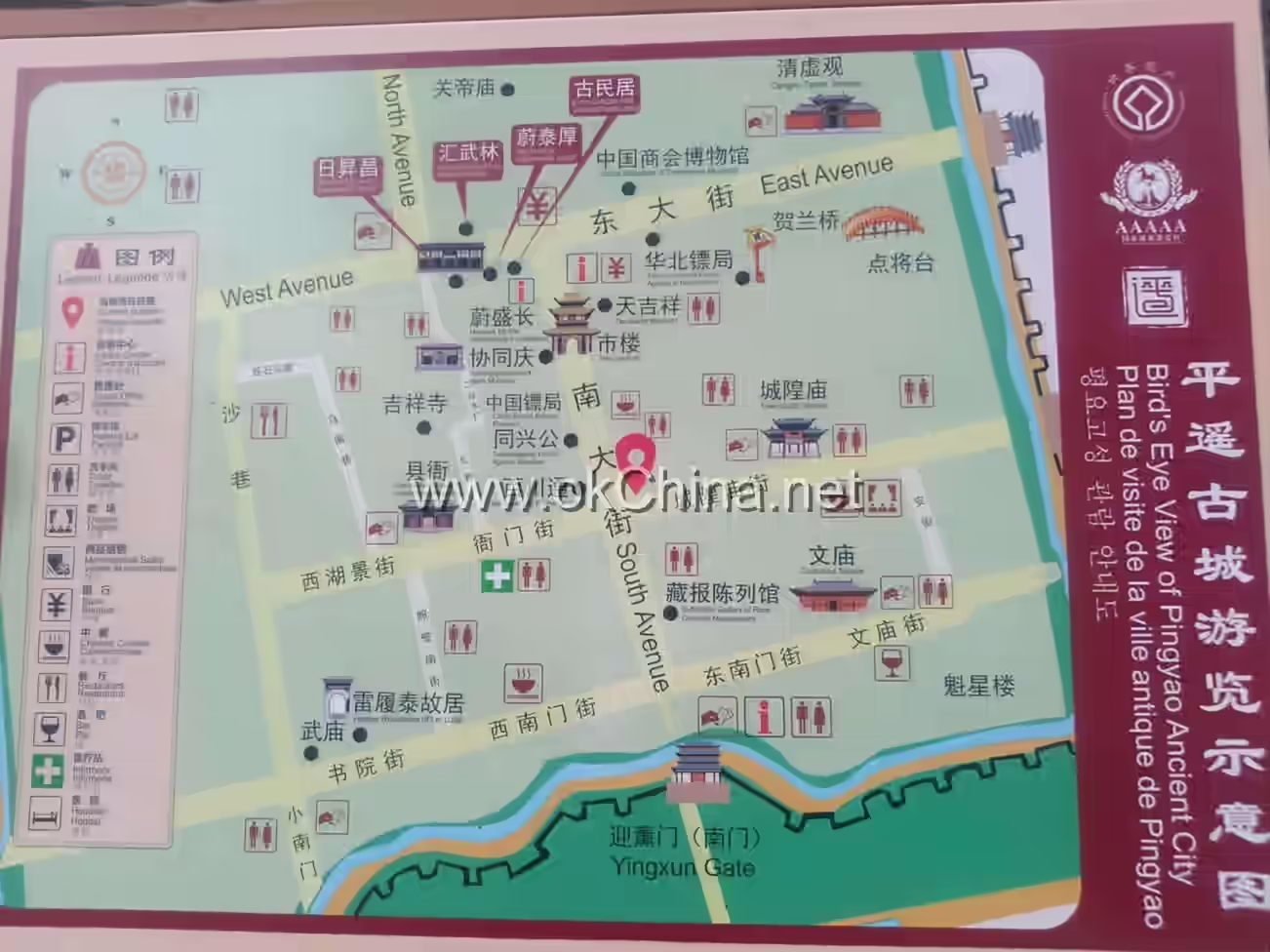
Pingyao Ancient City consists of a vast architectural complex including city walls, shops, streets, temples, and residential houses. The entire city is symmetrically laid out, with the Market Tower as the axis and South Street as the central axis. It follows the feudal ritualistic pattern of "left City God Temple, right government office; left Confucian Temple, right Martial Temple; east Taoist temple, west Buddhist temple." The total area covers 2.25 square kilometers. The street layout within the city is shaped like the Chinese character "土" (earth), adhering to the principles of the Eight Trigrams. It is composed of four main streets, eight small streets, and seventy-two winding lanes, forming an Eight Trigrams pattern. South Street, East Street, West Street, Yamen Street, and Chenghuang Temple Street form a "干"-shaped commercial street.
Pingyao Ancient City is an outstanding example of Han Chinese cities during the Ming and Qing dynasties. It preserves all its features and presents an extraordinary and complete picture of cultural, economic, social, and religious development in Chinese history. The streets and shops within Pingyao Ancient City reflect their historical appearance, with design and layout embodying the urban planning concepts and structural distribution of the Ming and Qing periods. It showcases the evolution of Chinese architectural styles and urban planning over five centuries and is regarded as a living sample for studying ancient Chinese cities. It holds rich and unique value in architecture, religion, commerce, folklore, and folk art.
On December 8, 1986, Pingyao Ancient City was designated by the State Council of the People's Republic of China as one of the second batch of National Historical and Cultural Cities. On December 3, 1997, Pingyao Ancient City, along with the nearby Shuanglin Temple and Zhenguo Temple, was designated as a UNESCO World Heritage Site and included in the World Heritage List. On July 20, 2015, Pingyao Ancient City was approved as a National AAAAA Tourist Attraction.
II. Geographical Environment
Location and Territory
Pingyao Ancient City is located in the central part of Shanxi Province, in the northwestern plain area of Pingyao County. It lies at the tail end of the alluvial fans of the Huiji River and Liugen River (formerly Zhongdu River), about 20 kilometers southeast of the Taiyue Mountains and adjacent to the Fen River Valley to the northwest. It lies between 112°9′56″E to 112°11′10″E longitude and 37°11′44″N to 37°12′43″N latitude, with an elevation of 754.80 to 762 meters. The ancient city area is flat and broad, sloping from southeast to northwest with an average gradient of 5‰.
Climate Characteristics
Pingyao Ancient City experiences a temperate continental semi-arid monsoon climate with four distinct seasons and a mild climate. The average annual temperature is 10.60°C, with the hottest month being July, averaging 24.50°C, and the coldest month being January, averaging -5°C. The average annual relative humidity is 58%, and the average annual precipitation is 415.90 millimeters, mainly concentrated from July to September. The average annual evaporation is 1785.70 millimeters. The prevailing wind direction is northwest in spring, autumn, and winter, and southeast in summer, with an average annual wind speed of 2.10 meters per second.
III. Historical Development
Pingyao Ancient City was initially built during the reign of King Xuan of the Zhou Dynasty (827–782 BC) when General Yin Jifu of the Western Zhou stationed his troops there.
During the Spring and Autumn period, it belonged to the State of Jin, and during the Warring States period, it was part of the State of Zhao. The Qin Dynasty established Pingtao County, and the Han Dynasty established Zhongdu County, which served as the capital of the Dai Prince. It was renamed Pingyao County during the Northern Wei Dynasty.
In the early Ming Dynasty, city walls were built to defend against southern invasions by foreign tribes.
In the third year of the Hongwu era (1370), the walls were rebuilt and expanded on the old foundations and fully bricked. Subsequent repairs and renovations were carried out ten times during the Jingtai, Zhengde, Jiajing, Longqing, and Wanli reigns, updating the gate towers and adding watchtowers.
In the forty-third year of the Kangxi era (1703), four large gate towers were built when the emperor passed through Pingyao on his western tour, making the city even more magnificent. The total circumference of the Pingyao city walls is 6,163 meters, with a height of about 12 meters, dividing the approximately 2.25-square-kilometer Pingyao county town into two worlds of contrasting styles.
On September 13, 2014, the first batch of century-old ancient residential renovation projects, initiated in 2012 by the Pingyao County Urban and Rural Planning Bureau of Shanxi, entered the final stage. The government invested six to seven million yuan to compensate for the renovation of the first batch of 48 private traditional residences, restoring the century-old houses to their traditional charm. In 2014, the planning bureau launched the second batch of renovation projects for 39 households, with repair work to begin officially once the plans were finalized.
In October 2022, after more than a year of restoration, the Pingyao Ancient City walls were nearing completion.
On November 4, 2022, the restoration of 61 sections of the Pingyao Ancient City walls damaged by continuous rainfall was completed.
IV. Main Scenic Areas
Architectural Layout
Pingyao Ancient City is located in the central part of Shanxi Province. The entire protected area includes "one city and two temples," namely Pingyao Ancient City and the Zhenguo Temple and Shuanglin Temple located in the suburbs. The area inside the Pingyao Ancient City walls is 2.25 square kilometers, containing 4 main streets, 8 small streets, and 72 lanes.
Pingyao has the most completely preserved layout of an ancient county town in China. The transportation network of Pingyao Ancient City is formed by the crisscrossing four main streets, eight small streets, and seventy-two winding lanes. The entire city is very regular, with streets intersecting horizontally and vertically, and lanes arranged in an orderly manner. The Market Tower is located in the center of the city, and Mingqing Street lies on the north-south central axis. The ancient city's architecture is divided into two parts: the City God Temple on the left and the county government office on the right; the Confucian Temple on the left and the Guan Yu Temple on the right. The Taoist Qingxu Temple is on the left, and Buddhist temples are on the right. Pingyao Ancient City is also called the "Turtle City," with the south gate as the head, the north gate as the tail, and the four gates on the east and west as the four legs. The four main streets, eight small streets, and seventy-two winding lanes inside the city resemble the patterns on a turtle's back, forming a large Eight Trigrams.
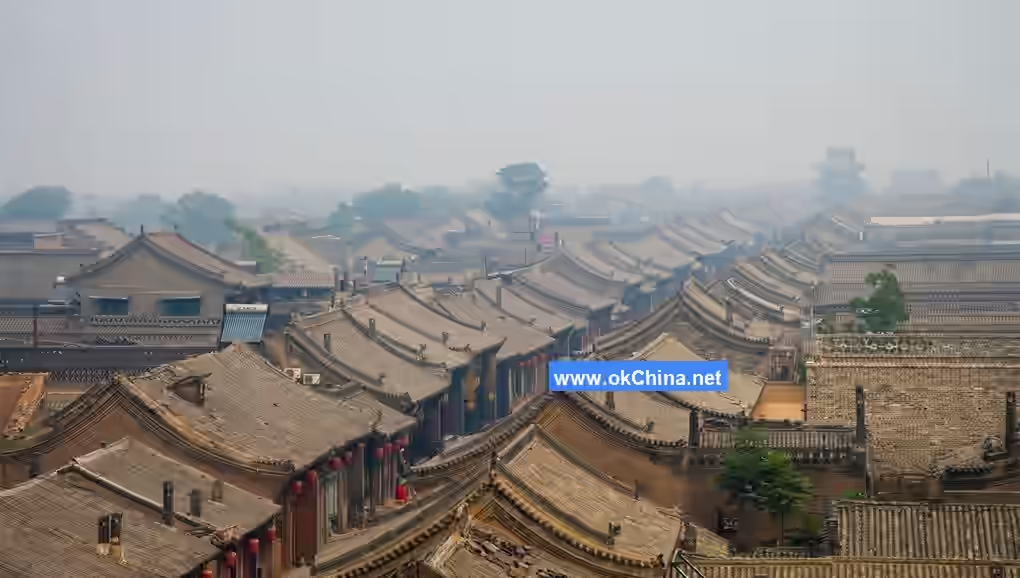
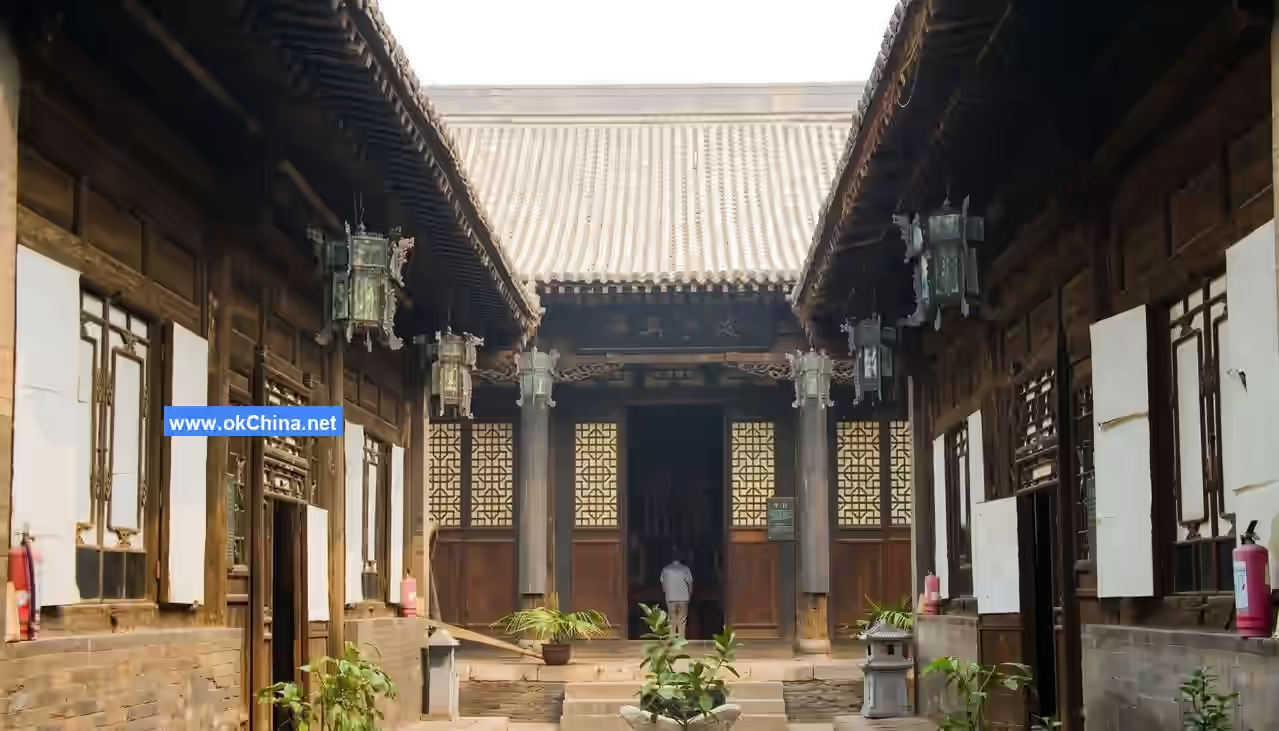
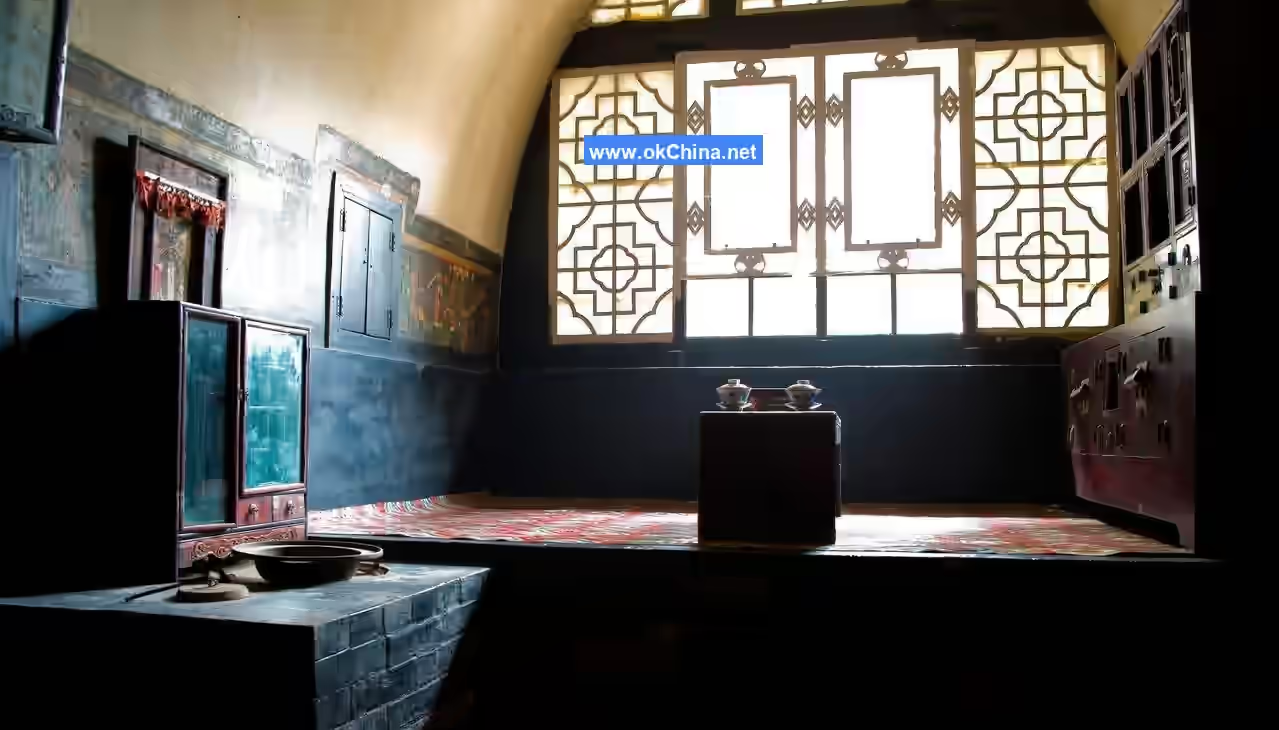
Since its reconstruction in the third year of the Hongwu era of the Ming Dynasty (1370 AD), Pingyao Ancient City has largely maintained its original layout. The key residential buildings in Pingyao were constructed between 1840 and 1911. The residential architecture features strict layouts, clear axes, left-right symmetry, distinct primary and secondary elements, undulating contours, and enclosed exteriors with deep courtyards. Exquisite wood carvings, brick carvings, and stone carvings, combined with richly rustic paper-cut window decorations, are vivid and lifelike, collectively reflecting the historical and cultural characteristics of the Han ethnic group from around the 14th to the 19th centuries. They hold significant reference value for studying the social structure, economic system, military defense, religious beliefs, traditional ideologies, ethical morals, and human settlement patterns of this period, making it the most completely preserved ancient residential community in Han ethnic regions to date.
Main Buildings
Pingyao County Government Office
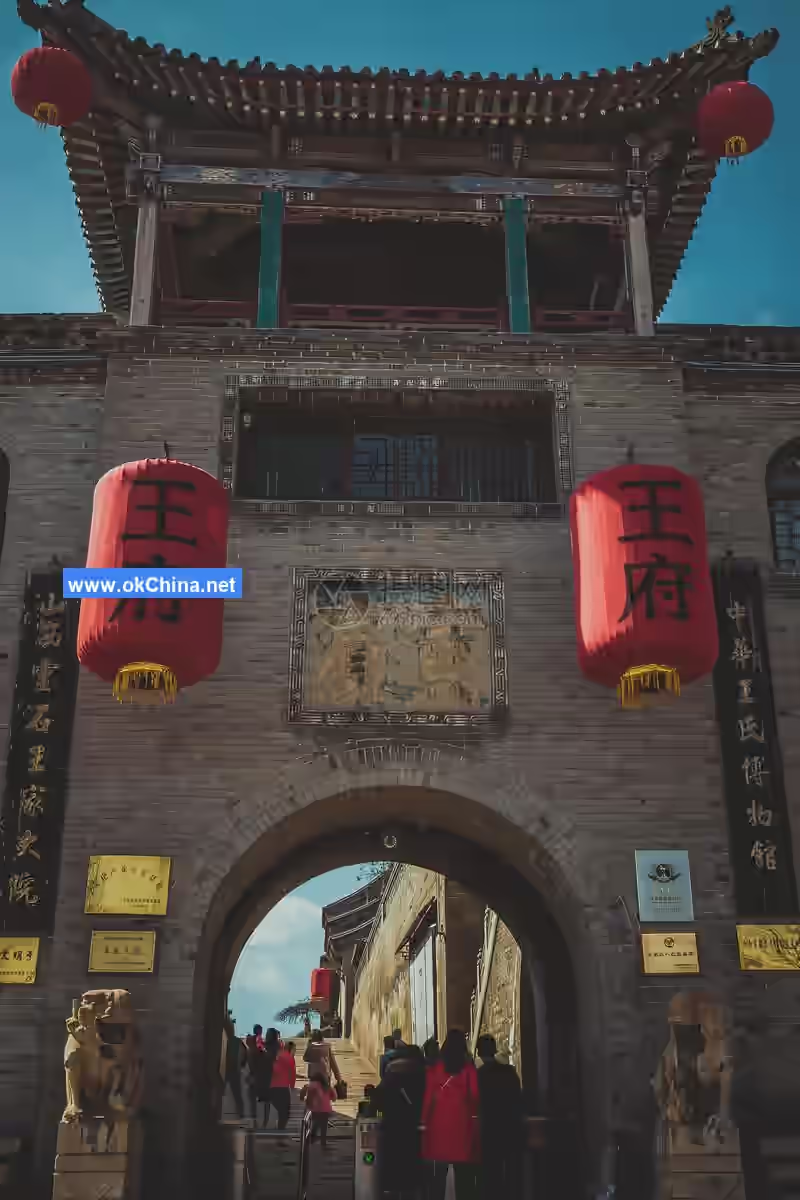
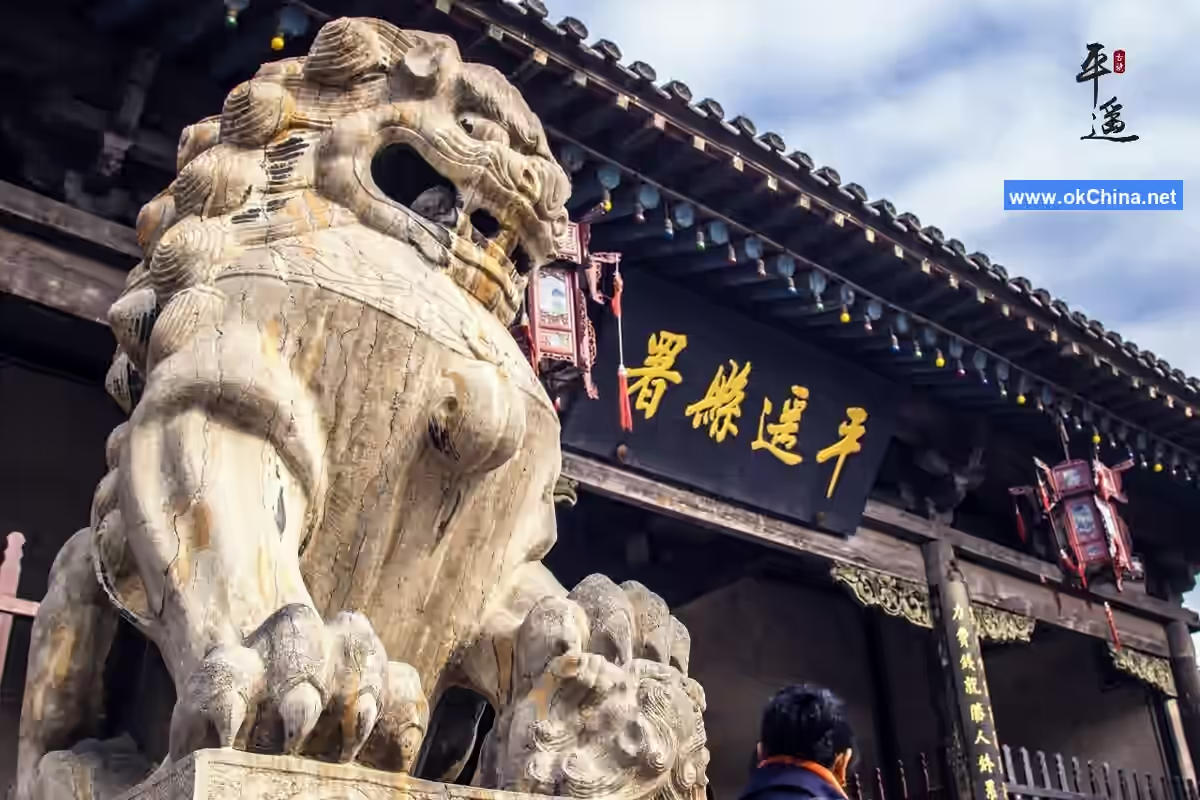
The Pingyao County Government Office is located in the center of Pingyao Ancient City. It was initially built during the Northern Wei Dynasty and took its final form during the Yuan, Ming, and Qing dynasties. The earliest preserved building dates back to the sixth year of the Zhizheng era of the Yuan Dynasty (1346 AD), over six hundred years ago. The entire government complex faces south and is symmetrically laid out along a north-south axis, extending over 200 meters in length and about 100 meters in width, covering an area of more than 26,000 square meters. As one of the four well-preserved ancient government offices in China, Pingyao County Government Office is also the largest existing county government office in the country. The entire architectural complex is orderly, well-proportioned, and structurally rational, forming an organic whole. On May 19, 2004, the 11th Panchen Lama visited the government office and gladly inscribed: "Pingyao County Government Office, the best of ancient government offices."
Rishengchang Exchange Shop
Rishengchang Exchange Shop was established in the third year of the Daoguang era of the Qing Dynasty (1823 AD), founded by the wealthy merchant Li Dajin from Xidapu Village, Pingyao County, Shanxi Province, together with general manager Lei Lütai. The main office was located on the south side of West Street in the bustling market area of Pingyao County town, covering an area of over 1,600 square meters. It was compactly laid out with clearly defined functions and pioneered China's national banking industry, once controlling the economic lifeline of the entire Qing Dynasty in the 19th century. Its branches spread across more than 30 cities nationwide and extended as far as Europe, America, and Southeast Asia, renowned for "connecting the world through remittance."
Confucian Temple
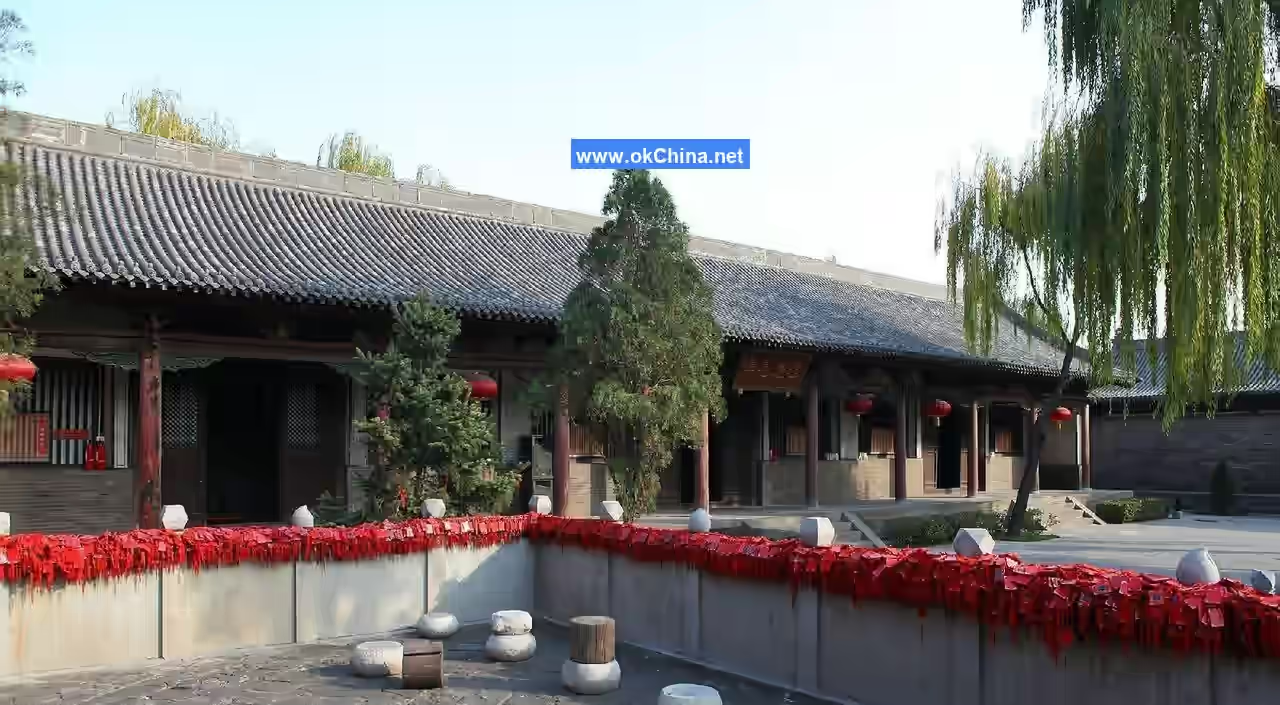
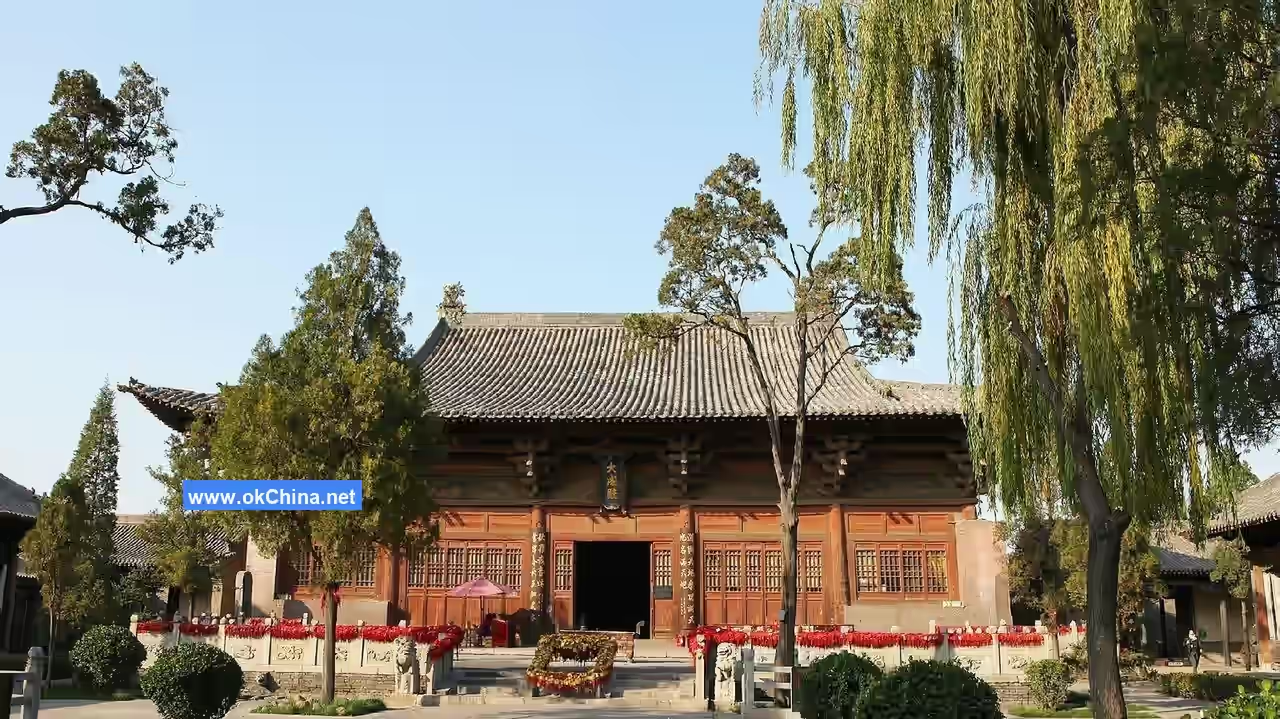
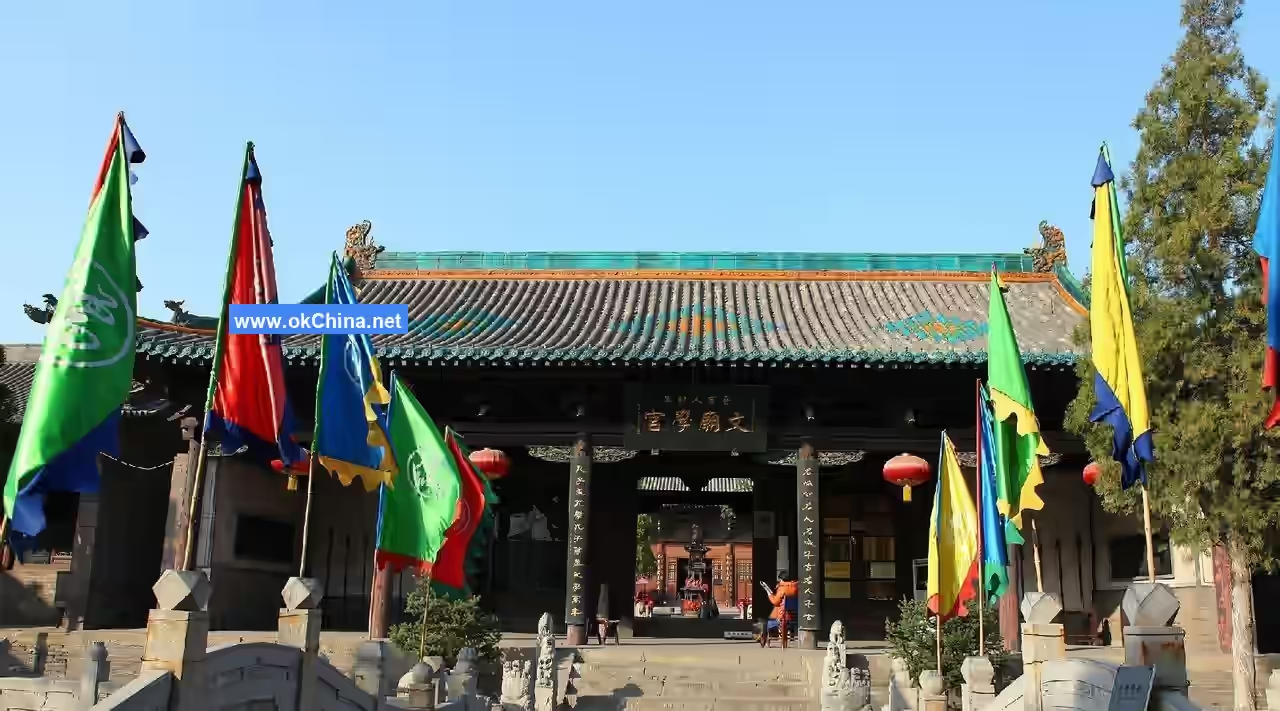
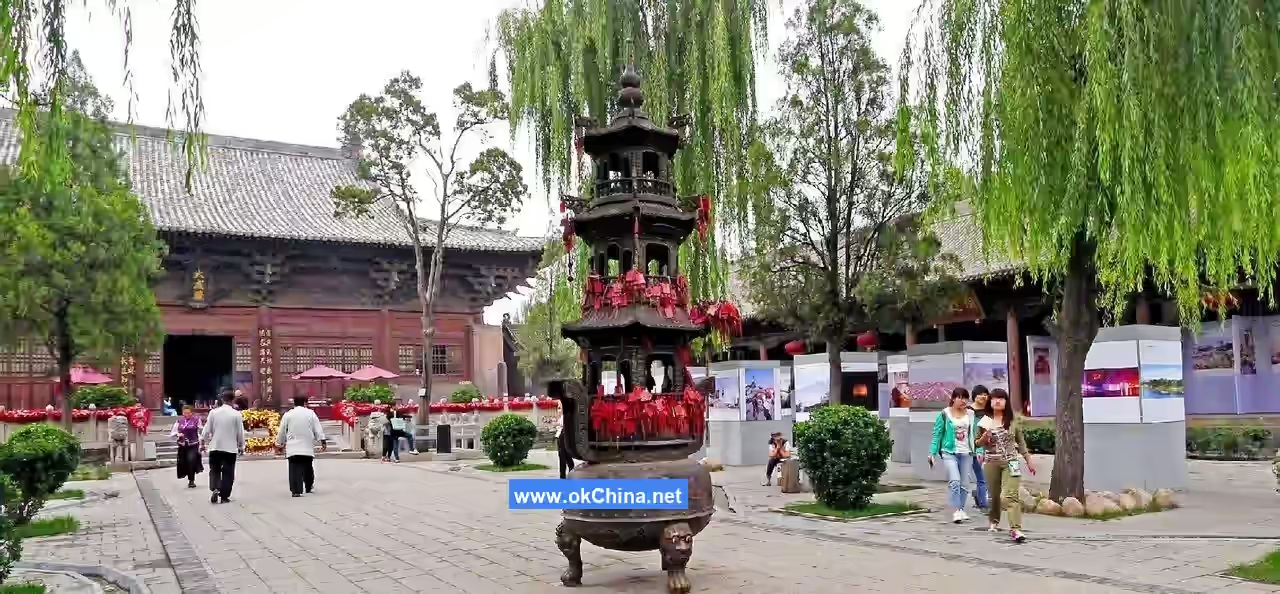
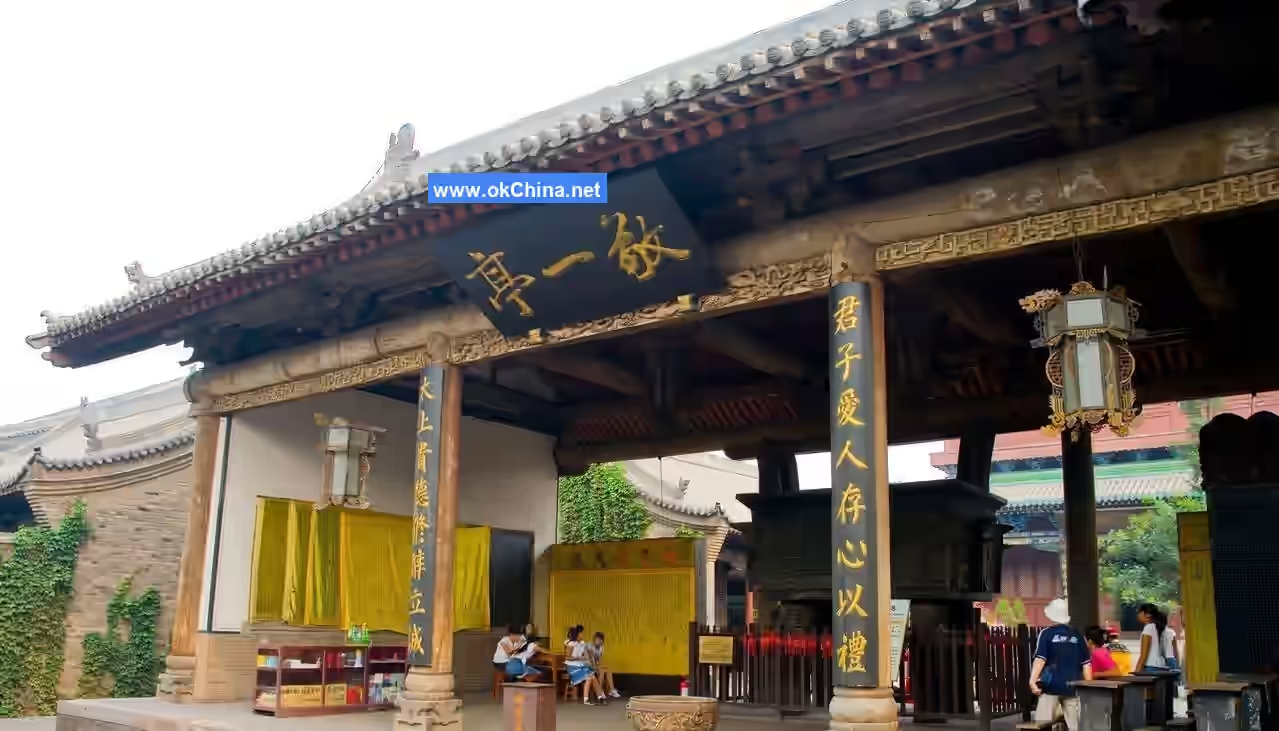
The Confucian Temple, or Temple of Confucius, is a place for worshipping Confucius. Pingyao Confucian Temple is located in the southeastern corner of Pingyao County town. It was initially built in the early years of the Zhenguan era of the Tang Dynasty, and its Dacheng Hall was rebuilt in the third year of the Dading era of the Jin Dynasty (1163 AD), retaining its original appearance to this day. It is the oldest hall among existing Confucian temples at various levels in China. Pingyao Confucian Temple faces south, is grand in scale, and complete in规制. It was officially opened to tourists in 2004 and has become one of the main cultural and tourist attractions in Pingyao Ancient City.
Qingxu Temple
Qingxu Temple is the largest Taoist temple within the ancient city. Following the traditional layout of Taoist east and Buddhist west, it is located on the north side of the eastern section of East Street. Qingxu Temple was initially built in the second year of the Xianqing era of the Tang Dynasty (657 AD), originally named Taiping Temple. It was renamed Qingxu Temple in the first year of the Zhiping era of the Song Dynasty (1064 AD). In the early Yuan Dynasty, it was renamed Taiping Xingguo Temple and later changed to "Taiping Chongsheng Palace." It was again called Qingxu Temple during the Qing Dynasty. Through historical changes and the passage of time, many Taoist statues here have been lost. In 1998, Qingxu Temple was converted into the Pingyao County Comprehensive Museum.
Pingyao City Walls
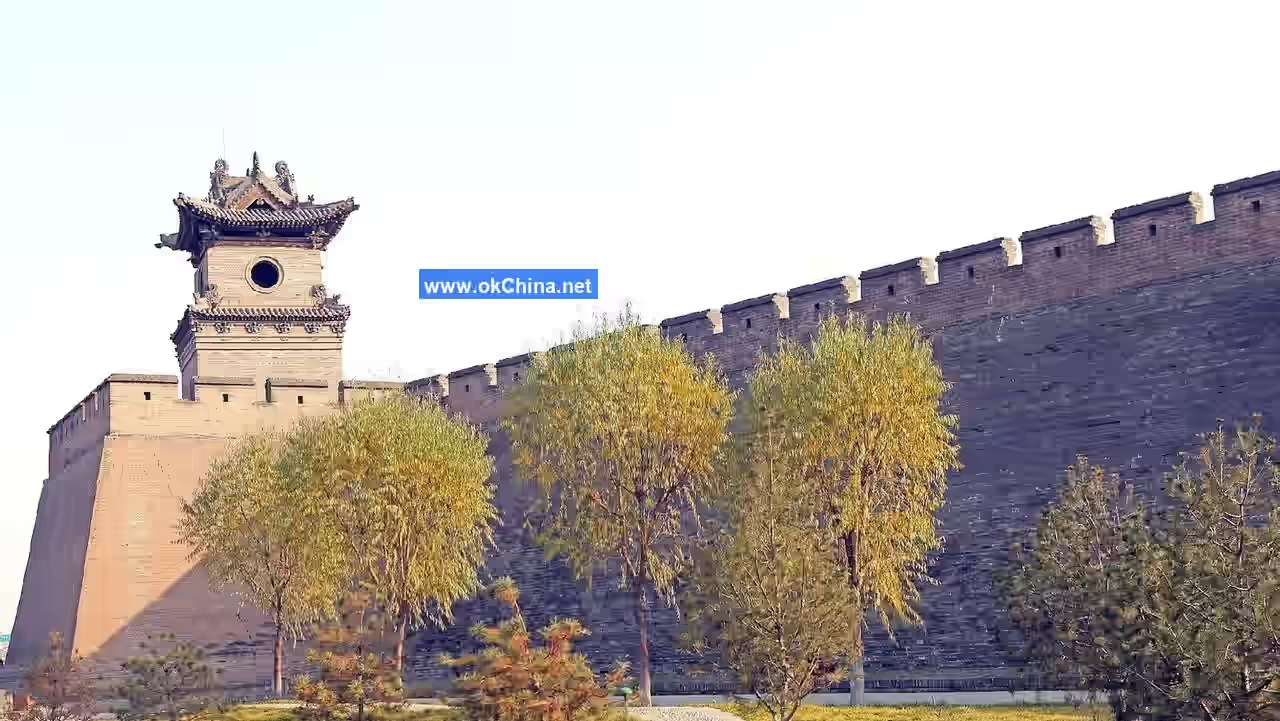
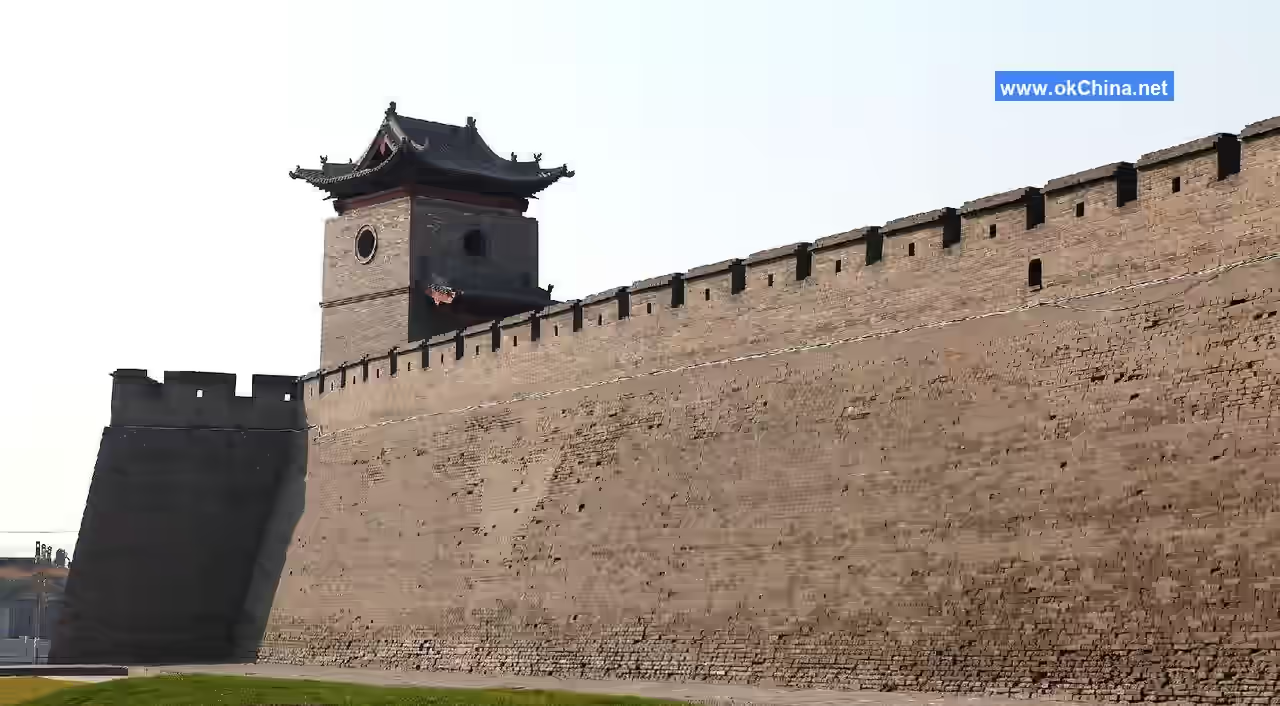
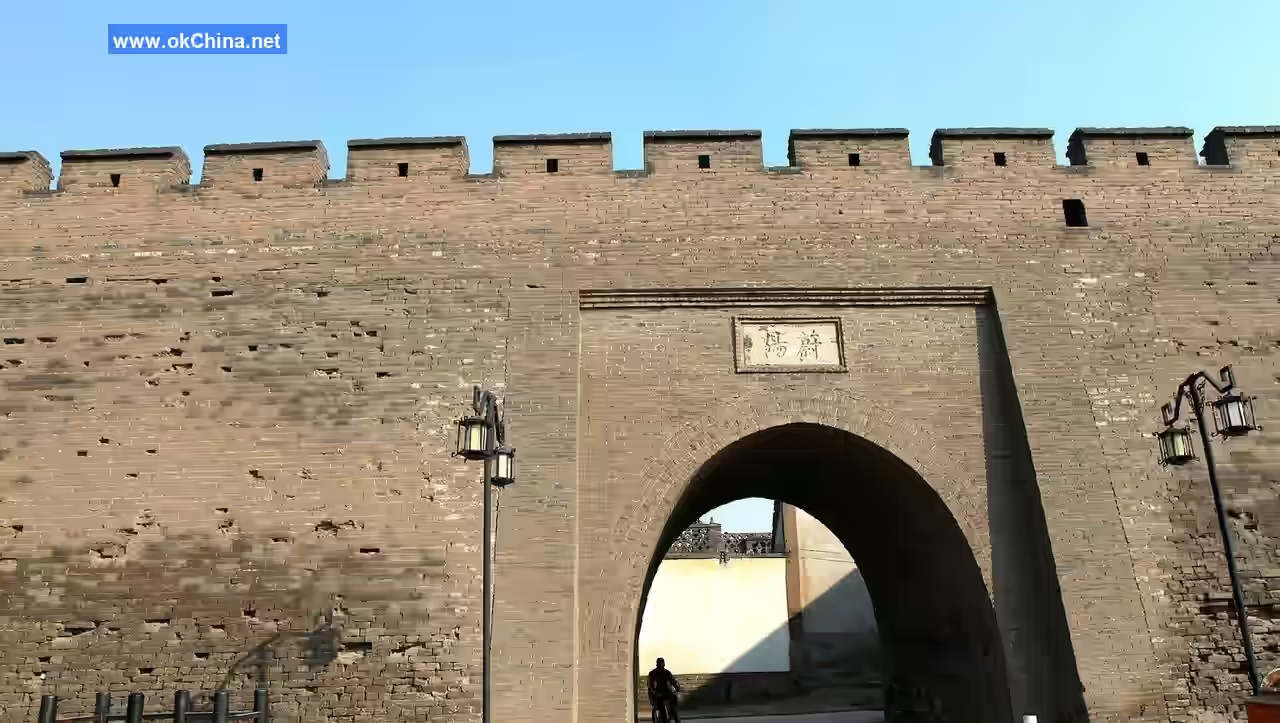
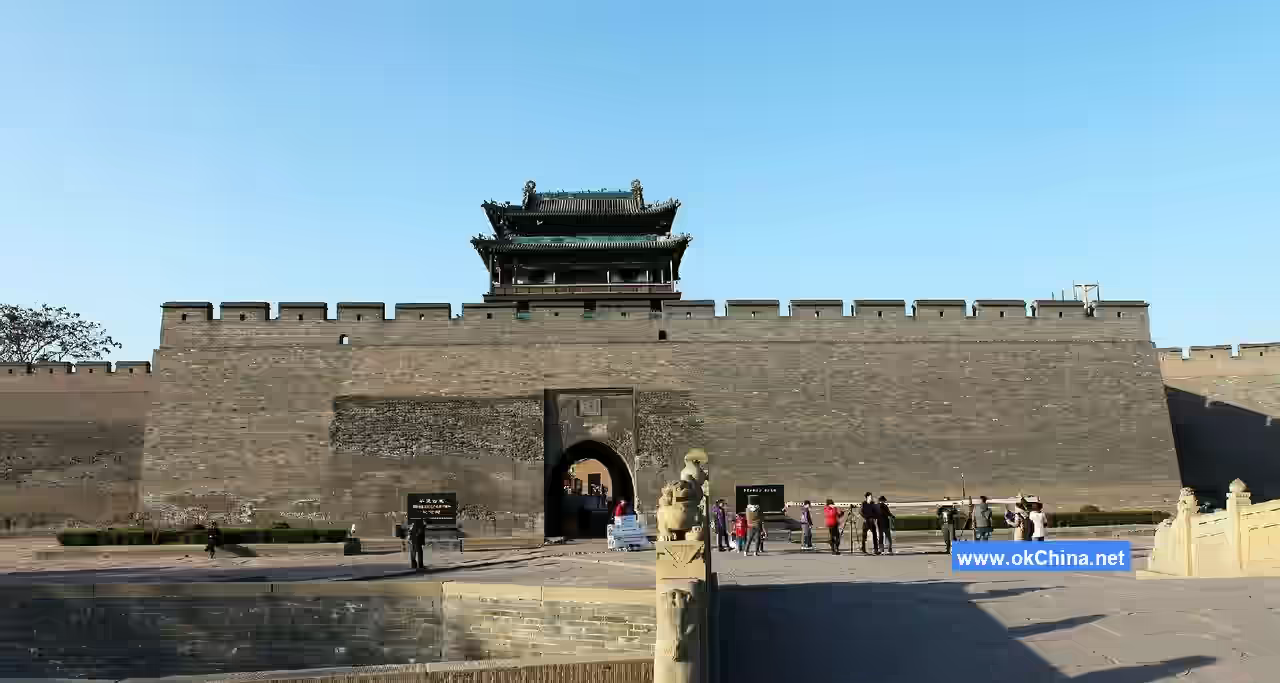
The Pingyao City Walls were initially built during the reign of King Xuan of the Western Zhou Dynasty (827–782 BC) as rammed earth fortifications. They were rebuilt in the third year of the Hongwu era of the Ming Dynasty (1370 AD), expanded from the original "nine li and eighteen bu" to "twelve li, eight fen, and four li" (6.4 kilometers), and transformed from rammed earth walls to brick and stone fortifications. During the Ming and Qing dynasties, the walls were repaired twenty-five times. The walls are square in plan, with a circumference of 6,162 meters.7 meters in height, 10 meters in width, with battlements 2 meters high and a top width of 3–5 meters. The wall body is compacted with plain earth, externally clad with blue bricks, and features 77 brick-built drainage channels on the inner wall. On the outer edge of the wall top, a 2-meter-high parapet wall (also known as the horse-blocking wall) is constructed, with the number of battlements and watchtowers set at 3,000 and 72 respectively, symbolizing the disciples and sages of Confucius. Inside the wall, a parapet is built. There are four corner towers at the four corners, a command platform on the eastern wall, and the Kuixing Tower and Wenchang Pavilion on the southeastern corner of the wall top.
Barbican
A barbican refers to a small outer city built outside the main city gate, also known as a moon city, designed to enhance the defensive capability of the city. In the ancient city of Pingyao, the orientation of the barbican gates and the main gates mostly forms a 90-degree angle (except for the South Gate and Lower East Gate). Even if enemy forces breach the barbican gate, the main gate remains as a line of defense. Due to the narrow space inside the barbican, it is difficult for large-scale troops to deploy, slowing down the enemy’s advance. Meanwhile, defenders atop the wall can shoot down from an elevated position, delivering a fatal blow to the enemy—truly a case of "shutting the door to beat the dog" or "catching a turtle in a jar."
Gate Tower
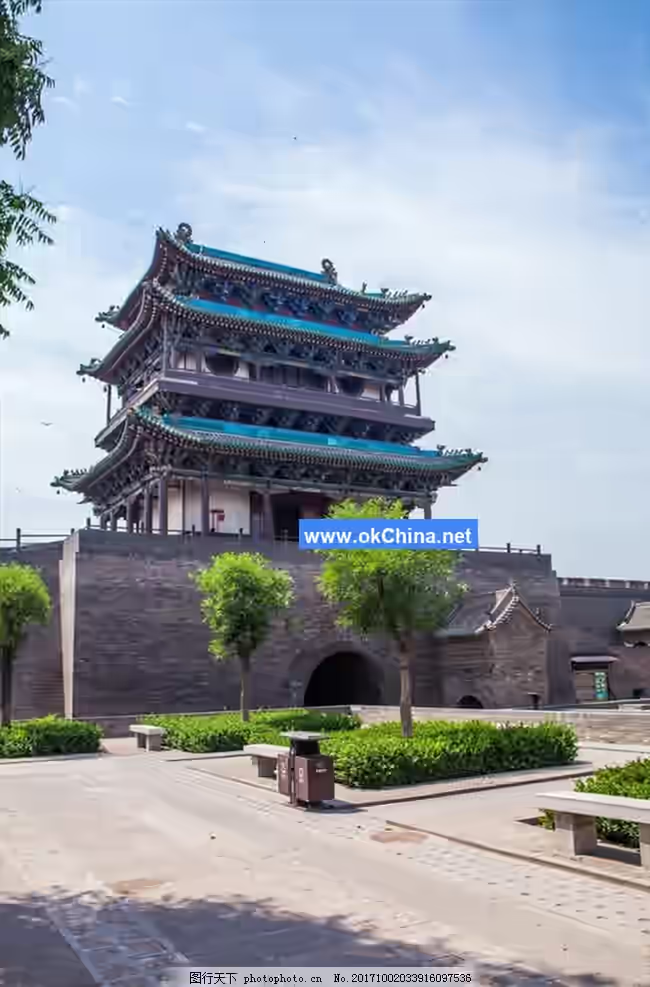
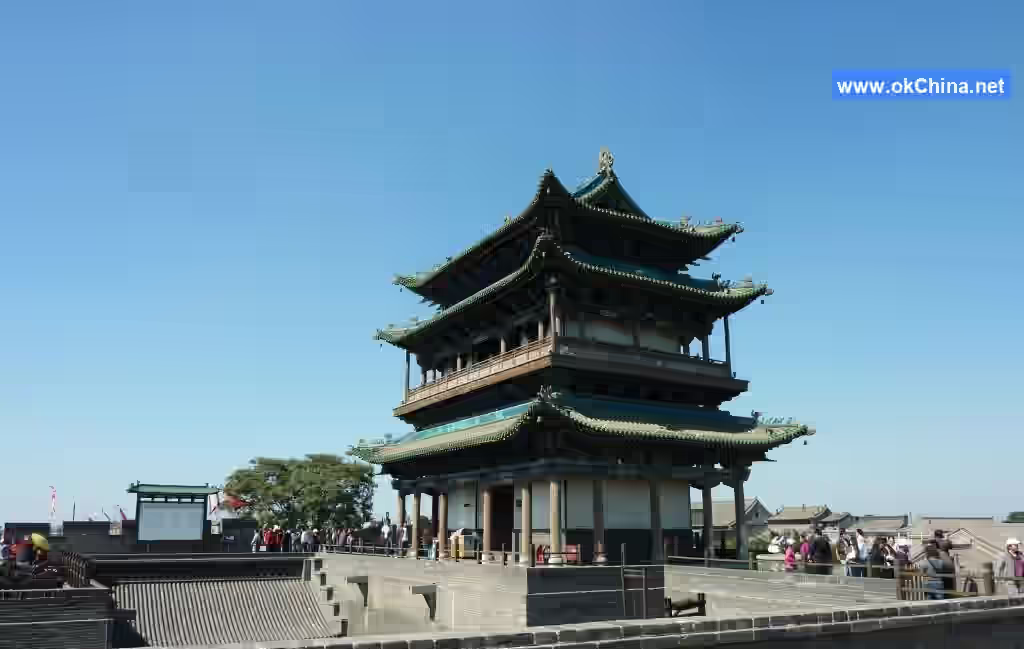
Built atop the city gates, gate towers were sometimes referred to as "watchtowers" in ancient times. The ancient city wall of Pingyao has six gate towers, originally constructed during the Ming Dynasty and repaired and rebuilt in the 42nd year of the Kangxi reign of the Qing Dynasty (1703). The gate towers are 16.14 meters high, 13.72 meters wide with five bays, and 10.04 meters deep with four bays. They feature a simple, elegant design and a dignified, stable structure. Gate towers are exquisite and aesthetically pleasing high-rise buildings atop the city walls, used for observation during peacetime and as command posts for generals during wartime, serving as important high-altitude defensive facilities for the city.
Corner Towers
Corner towers are built at the four corners of the city wall, primarily to compensate for defensive weaknesses at the corners, thereby enhancing the overall defensive capability of the wall. The corner towers include the "Xiadie" Tower at the northwest corner, the "Qiyue" Tower at the northeast corner, the "Rui’ai" Tower at the southwest corner, and the "Ningxiu" Tower at the southeast corner.
Command Platform
The command platform is located atop the city wall between the Upper East Gate and the Lower East Gate, now a brick-built high platform. Legend has it that after King Xuan of Zhou ascended the throne in 827 BCE, he sent General Yin Jifu to lead troops north to fight the Xianyun, achieving successive victories. Yin Jifu was later ordered to station troops in present-day Pingyao, where he expanded the city walls and trained soldiers, drilling and commanding troops here. During the mid-Ming Dynasty, to commemorate Yin Jifu’s achievements, the Gao Zhen Temple was built at the site where he once drilled and reviewed troops. During repairs to the city wall in the Ming and Qing dynasties, the Gao Zhen Temple was integrated into the wall, forming a broad platform atop the city. Climbing it to gaze into the distance brings a sense of openness and delight, as described in a poem: "Layered platforms a hundred feet high connect the county town, / Yin Jifu’s fame stands before the battlements. / The fortress grass long gone, the war mounds vanished, / The dragon flags timidly recall the chariot years."
"Horse-Face" Bastions
"Horse-face" bastions are protruding attached platforms on the city wall. Named for their elongated shape resembling a horse’s face, they serve to strengthen the wall’s sturdiness and eliminate blind spots in city defense. Once enemy troops approach the wall, defenders on adjacent horse-face bastions can form a crossfire network, leaving the attackers exposed on both sides and ensuring their defeat. On the Pingyao city wall, horse-face bastions are placed every 60 to 100 meters, each equipped with a watchtower for observing enemy movements, known as an "enemy tower."
Ancient City Gates
Pingyao has six ancient city gates, with two each on the east and west sides. Viewed from above, the ancient city of Pingyao resembles a turtle poised to move, with its "head" facing south and its "tail" facing north. The four gates on the east and west sides are likened to the turtle’s four legs, giving rise to the folk name "Turtle City." Outside the South Gate, the ancient Zhongdu River meandered past, inspiring ancient scholars to exclaim, "The turtle plays in the water ahead, the mountains face the sun; the city is built for this purpose." The turtle symbolizes auspiciousness and longevity, and the concept of the "Turtle City" stems from the ancient worship of the "Four Auspicious Animals," representing impregnable fortifications and enduring peace.
Zhenguo Temple
Zhenguo Temple is located in Haodong Village, 12 kilometers northeast of Pingyao County. Originally named Jingcheng Temple, it was renamed Zhenguo Temple in the 19th year of the Jiajing reign of the Ming Dynasty. It was first built during the Northern Han period of the Five Dynasties, only 1 kilometer from Hongshan Station on the Tongpu Railway. The temple is divided into front and rear sections, with the Heavenly King Hall, Ten Thousand Buddha Hall, and Three Buddha Tower arranged from south to north. The Ten Thousand Buddha Hall is the main structure in the front courtyard and one of the oldest surviving wooden structures in China. Though not large in scale, it is grand in form and extraordinary in presence. The hall contains 14 colored sculptures, with a statue of Sakyamuni at the center of the altar, flanked by his two great disciples, Kasyapa and Ananda. The Buddha statue is tall and dignified, reflecting the strong style of the mid-Tang Dynasty.
Shuanglin Temple
Shuanglin Temple was first built in the second year of the Wuping reign of the Northern Qi Dynasty (571 CE). Facing south, the temple complex covers an area of approximately 15,000 square meters and is divided into eastern and western sections. The western section is the temple courtyard, with three sequential courtyards along the central axis, consisting of ten halls. The front courtyard includes the Sakyamuni Hall, Arhat Hall, Martial Sage Hall, Earth God Hall, Yama Hall, and Heavenly King Hall; the middle courtyard houses the Mahavira Hall and the Thousand Buddha Hall and Bodhisattva Hall on either side; the rear courtyard contains the Goddess Hall and Zhenyi Shrine. The eastern section includes meditation halls and scripture rooms. The ten halls of the temple preserve over 2,000 colored sculptures from the Yuan to Ming dynasties (13th–17th centuries), earning it the reputation as a "treasure trove of colored sculpture art."
Streets
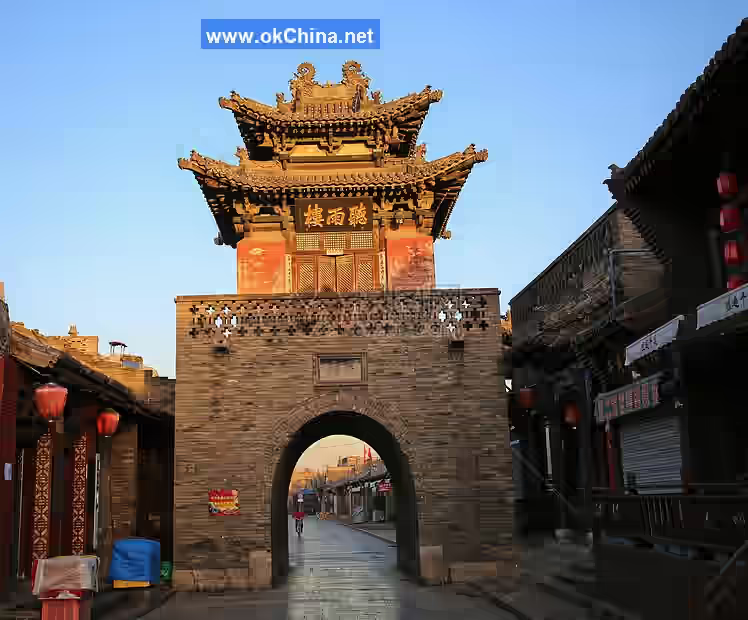
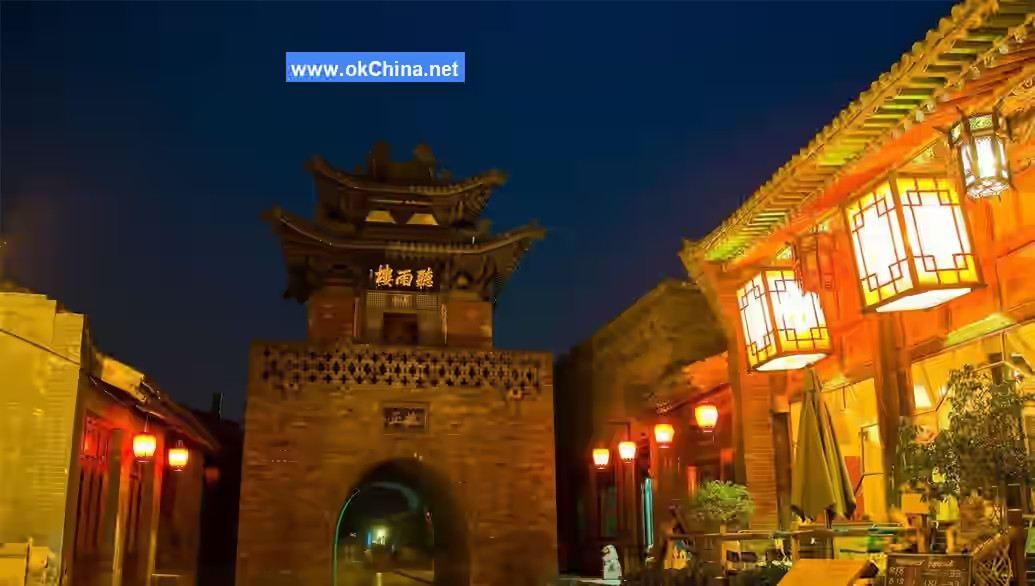
The transportation network of the ancient city of Pingyao is composed of four main streets, eight small streets, and seventy-two winding alleys. South Street serves as the central axis of the ancient city, stretching from the intersection of East and West Streets in the north to the Great South Gate (Yingxun Gate) in the south. Ancient market towers run north-south along the street, which is lined with time-honored shops and traditional stores, making it the most bustling traditional commercial street. During the Qing Dynasty, South Street controlled over 50% of the country’s financial institutions, earning it the nickname China’s "Wall Street." West Street runs from the Lower West Gate (Fengyi Gate) in the west to the northern end of South Street in the east, forming a straight thoroughfare with East Street. The famous Rishengchang, China’s first draft bank, was born on West Street in the ancient city, hailed as the "First Street of Qing Dynasty Finance." East Street runs from the Lower East Gate (Qinhan Gate) in the east to the northern end of South Street in the west, forming a straight thoroughfare with West Street. North Street runs from the North Gate (Gongji Gate) in the north to the middle of West Street in the south.
V. Cultural Activities
Folk Activities
Land Boat
Made by weaving bamboo strips, wooden strips, and colored silk into a decorated boat, surrounded by satin and covered with wooden strips and silk to form a canopy. Accompanied by wind and percussion music during performances, one person扮演 a woman riding the boat, with colored straps securing the boat to their shoulders,假脚盘坐 "in the boat," simulating the motion of rowing. Another person扮演 the boatman, rowing ahead with an oar.
Stilts
Made from two wooden poles, generally around 6 feet in length, with some as tall as 12 feet. A footrest is attached horizontally near the top of the poles. During performances, the performer’s calves are tied to the upper part of the poles, and they step on the footrests to perform various dance steps. Skilled performers can jump over obstacles like benches and tables or perform splits, "golden rooster stands," and backbends. Traditional performances include "Legend of the White Snake," "Qing Dingzhu," "Fox’s Injustice," and "Journey to the West." After the founding of New China, content reflecting real life was added, such as "Sending Sons to Join the Army," "Family Planning," "The Red Lantern," and "Taking Tiger Mountain by Strategy." Stilt performances are particularly famous in Beicheng Village and Gankeng Village in this county.
Carrying Pavilion
An iron rod is fixed to the top of a carrying pole, decorated with props such as lotuses and colorful clouds. Three or four children,扮演 various戏剧 characters and mythological figures, are secured to the iron rod and carried by成年男子, performing while moving. There are over 50 types of performances, including "Sun Wukong Thrice Beats the White Bone Demon," "Picture of Wealth and Honor," "Flaming Colt," "Broken Bridge," "Rainbow Pass," "Setting Off Under Guard," "Hundred Flowers Pavilion," "Stealing the Sacred Fungus," "Going East of the River," "Gathering Firewood," "Su Hu Sending Off His Daughter," "Double Mourning," "Yellow River Formation," "Auspicious Kylin Mirror," "Rebellion in Tangyi," "Fox’s Fate," "Phoenix Pavilion," and "Bloody Handprint."
Dragon Lantern
Made from bamboo, wood, cloth, and other materials, the exquisitely crafted dragon head is followed by several sections of dragon body formed from bamboo rings, covered with cloth and connected to form a dragon body and tail over 20 meters long, painted with dragon scales and claws. During performances, one person holds up the dragon head with a wooden pole, while over ten others hold sections of the dragon body and tail with wooden poles. A person ahead holds a colored pearl or fireball to lead and play with the dragon. Accompanied by wind and percussion music, the dragon head is舞动, and the dragon body follows its movements, rolling,起伏, and蜿蜒摆动. Performance forms include "Two Dragons Playing with a Pearl," "Adjusting the Four Corners," "Eight Adjustments," "Snake Shedding Its Skin," and "Encircling the Bright Pearl." Candles are placed inside the dragon head and body, allowing performances both day and night. During夜间 performances, the dragon is illuminated from within, creating a spectacular sight.
Bamboo Horse
Made from bamboo skin or strips, covered with silk gauze and painted. The bamboo horse is divided into front and back sections,固定 to the chest and waist of boys aged 12 or 13. Small铜铃 are attached to the body. A bamboo horse team typically consists of 14 children扮演, with 12 horses representing the twelve zodiac animals. The leader, called the horse head, directs with a horsetail whisk used in戏剧 performances, while the last is the horse tail. The other performers hold horse whips, simulating骑马奔跑, accompanied by the continuous ringing of bells, like a万马奔腾. At night, candles are placed inside the bamboo horses, making the performance尤其好看. Performance forms include "Snake Shedding Its Skin," "Turning Over," "Double Eight Adjustments," "Single Eight Adjustments," "Scissors Shape," "Eight Adjustments," "Paired Bamboo Horses," "Headless," and "Three Rings套耳."
Section by Section High
Superficially similar to carrying poles, but实际上表演难度更大.The performers are mostly children, boys and girls around seven years old, dressed up as various theatrical characters. They stand on the shoulders of adult performers without any binding, relying solely on the children's knees pressing against the back of the adults' heads and using force to stand, similar to acrobatic performances. The adults perform while moving to the rhythm of the music, while the children on their shoulders dance and perform various movements, creating a spectacular sight. The plays performed are mostly based on Journey to the West and Eight Immortals Crossing the Sea, which are deeply loved by the masses.
Ground Yangko
Ground Yangko involves both dance and singing, accompanied by instruments such as two waist drums, a pair of cymbals, two gongs, and four mouth organs. When conditions allow, the number of instruments can be increased, and the number of performers also increases accordingly. One performer, shaking a rattle drum, is quick-witted and eloquent, expressing emotions through the scenery and improvising auspicious and humorous "four-six sentences" in the Pingyao dialect. Between phrases, various instruments suddenly strike together, creating a lively and pleasant interlude with intense drumming and gong sounds. The waist drum player is the core of the band, striking a performance pose, dancing and moving around the team, full of energy. Other musicians both play instruments and perform, moving freely. Traditional pieces of Ground Yangko that are widely circulated include Observing the Five Capitals, Ten Lanterns, and Wang Xiang's Filial Piety to His Mother.
VI. Research Value
Pingyao Ancient City has long been known as the "treasury and collection of ancient Chinese architecture," with an exceptionally high number and quality of preserved cultural relics and historical sites, rare in China. Among them are:
- The ancient city wall, initially built during the Western Zhou Dynasty and expanded in the 3rd year of the Hongwu era of the Ming Dynasty (1370 AD), which is grand in scale and majestic, making it the most completely preserved ancient city wall in China.
- The Ten Thousand Buddha Hall of Zhenguo Temple, built in the 7th year of the Tianhui era of the Northern Han Dynasty (963 AD), ranked third in China and considered the most precious existing wooden structure. The colored sculptures from the Five Dynasties period inside the hall are treasures and serve as samples for studying early Chinese colored sculptures.
- Shuanglin Temple, built in the 2nd year of the Wuping era of the Northern Qi Dynasty (571 AD), hailed as the "treasury of ancient Chinese colored sculpture art," with 2,052 colored sculptures from the Song, Yuan, Ming, and Qing dynasties.
- The Dacheng Hall of the Confucian Temple, a rare physical relic of Confucian temples from the Song and Jin periods in China.
- The "Rishengchang" draft bank, the pioneer of Chinese finance, known as the "Number One Under Heaven" and "Connecting the World."
- Qingxu Temple, built in the 2nd year of the Xianqing era of the Tang Dynasty, featuring the rare "suspended beam and hanging pillar" structure in ancient Chinese architecture. The more than 20 wooden statues inside the temple are rare artifacts for studying ancient Chinese wooden sculpture art and the development of Taoism.
- Over 1,000 stone inscriptions scattered inside and outside the ancient city, as well as various glazed artifacts from different periods, diverse in form and vibrant in color.
At the same time, Pingyao Ancient City is one of the centers of ancient Chinese residential architecture. Among the 4,000 ancient and modern residential buildings preserved in the ancient city, over 400 typically represent the styles and characteristics of ancient and modern northern Chinese residential architecture.
Comments
Post a Comment