Peach Blossom Land Tourist Attraction
1. Introduction
The Peach Blossom Land Tourist Attraction is located at No. 232, Taohuayuan Road, Youyang Tujia and Miao Autonomous County, Chongqing. It borders Longshan County of Hunan Province to the east; Xiushan County, and Songtao and Yinjiang Counties of Guizhou Province to the south; Yanhe County of Guizhou Province across the river (Wujiang River) to the west; Pengshui County to the northwest; and Qianjiang District, as well as Xianfeng and Laifeng Counties of Hubei Province to the north.
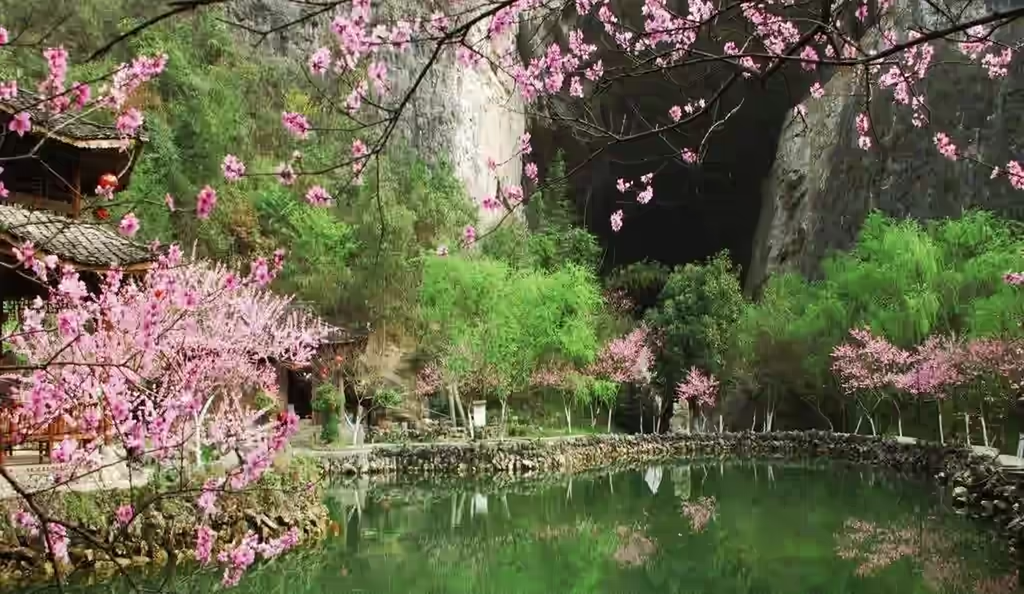
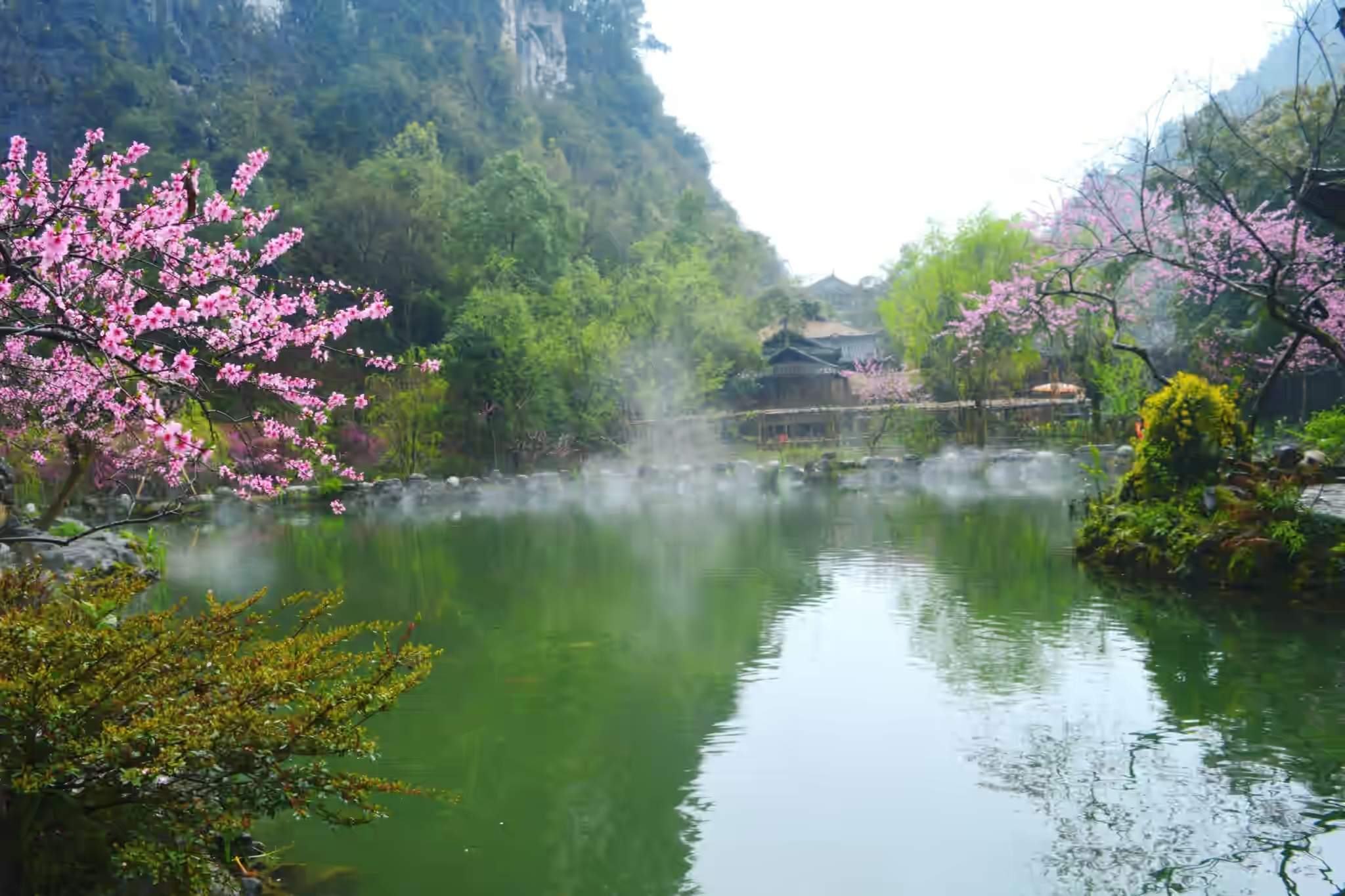
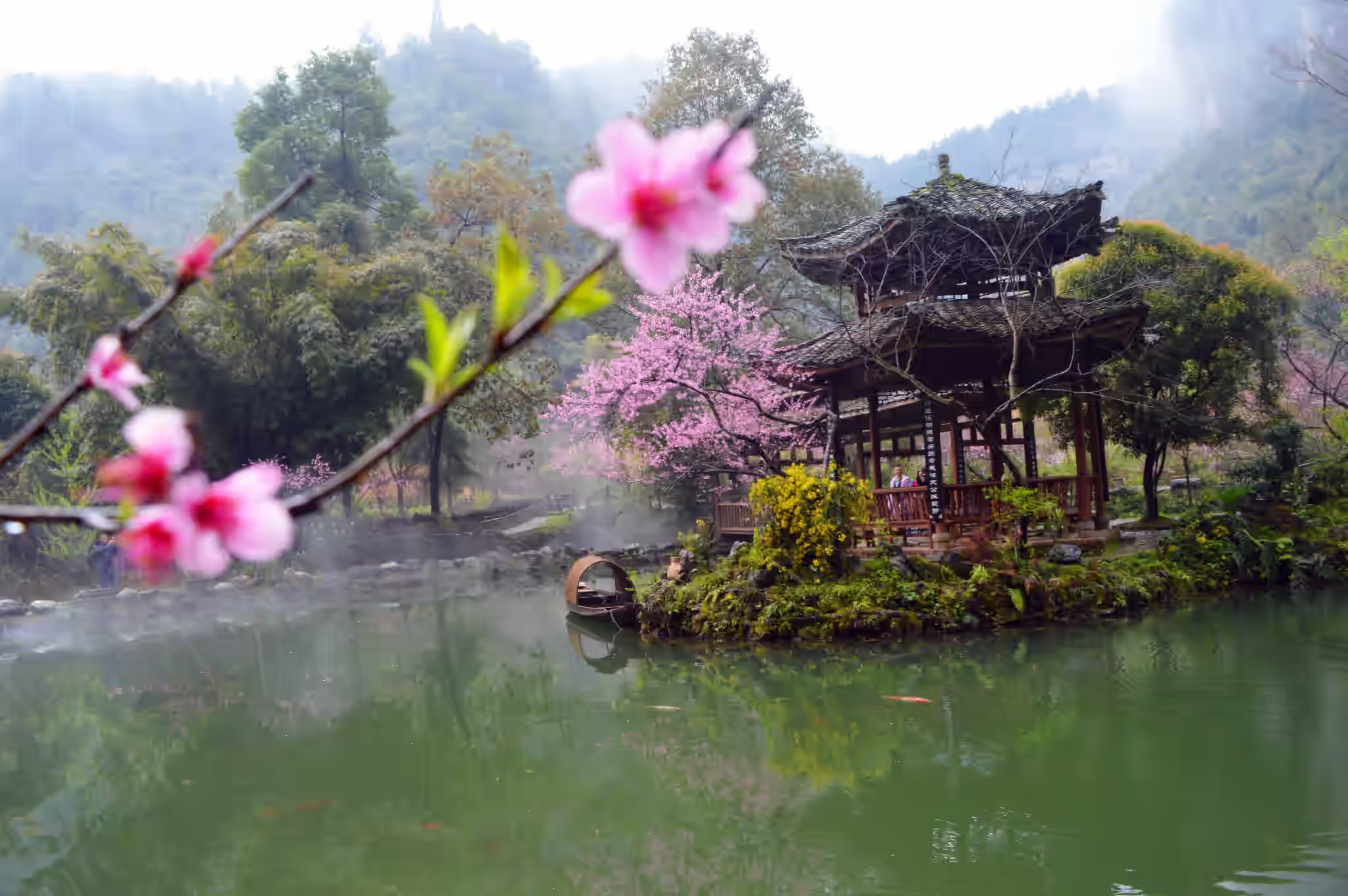
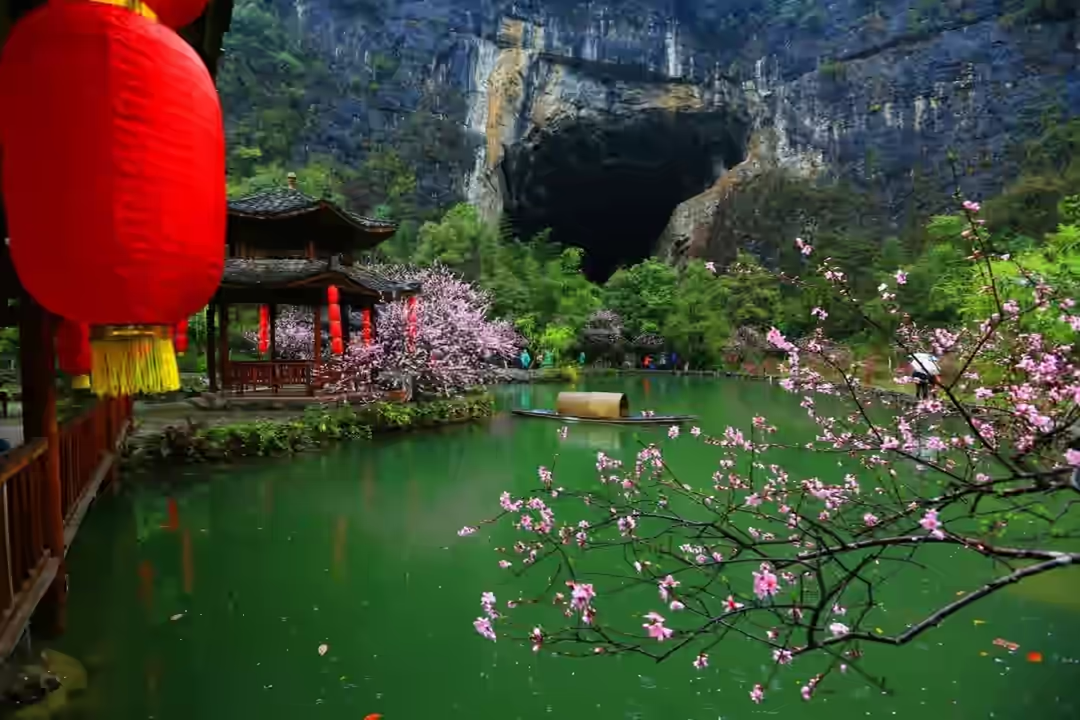
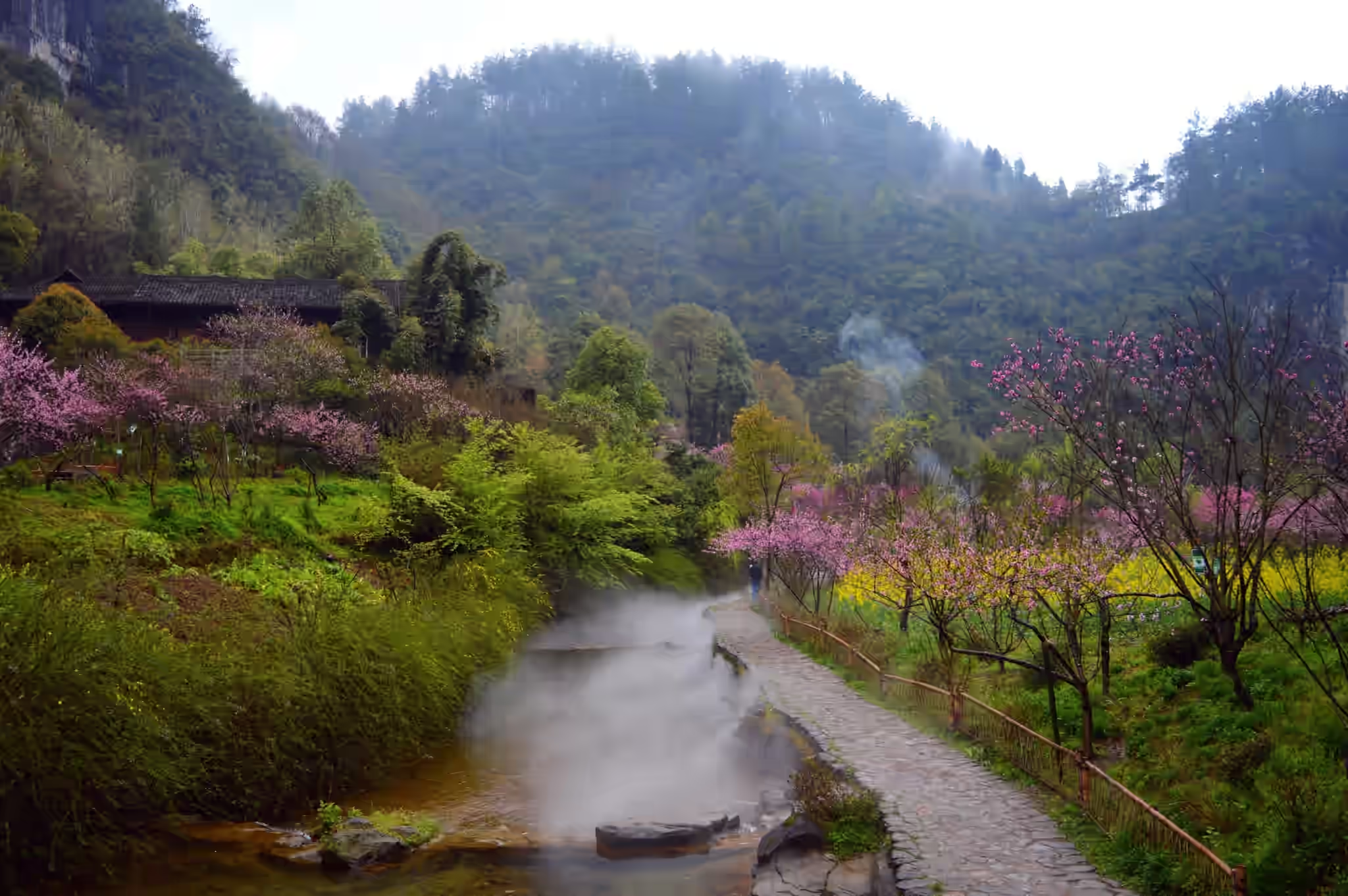
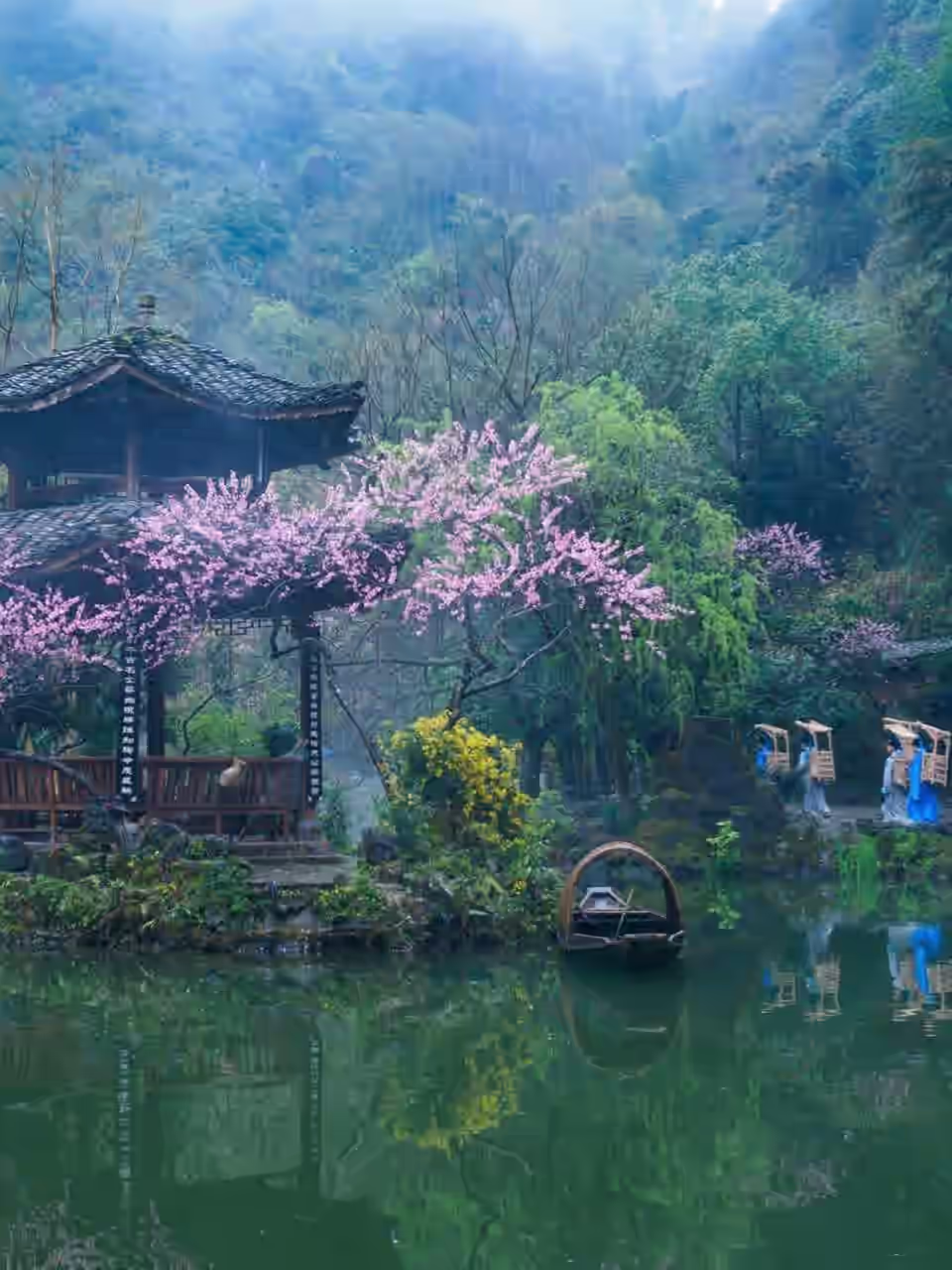
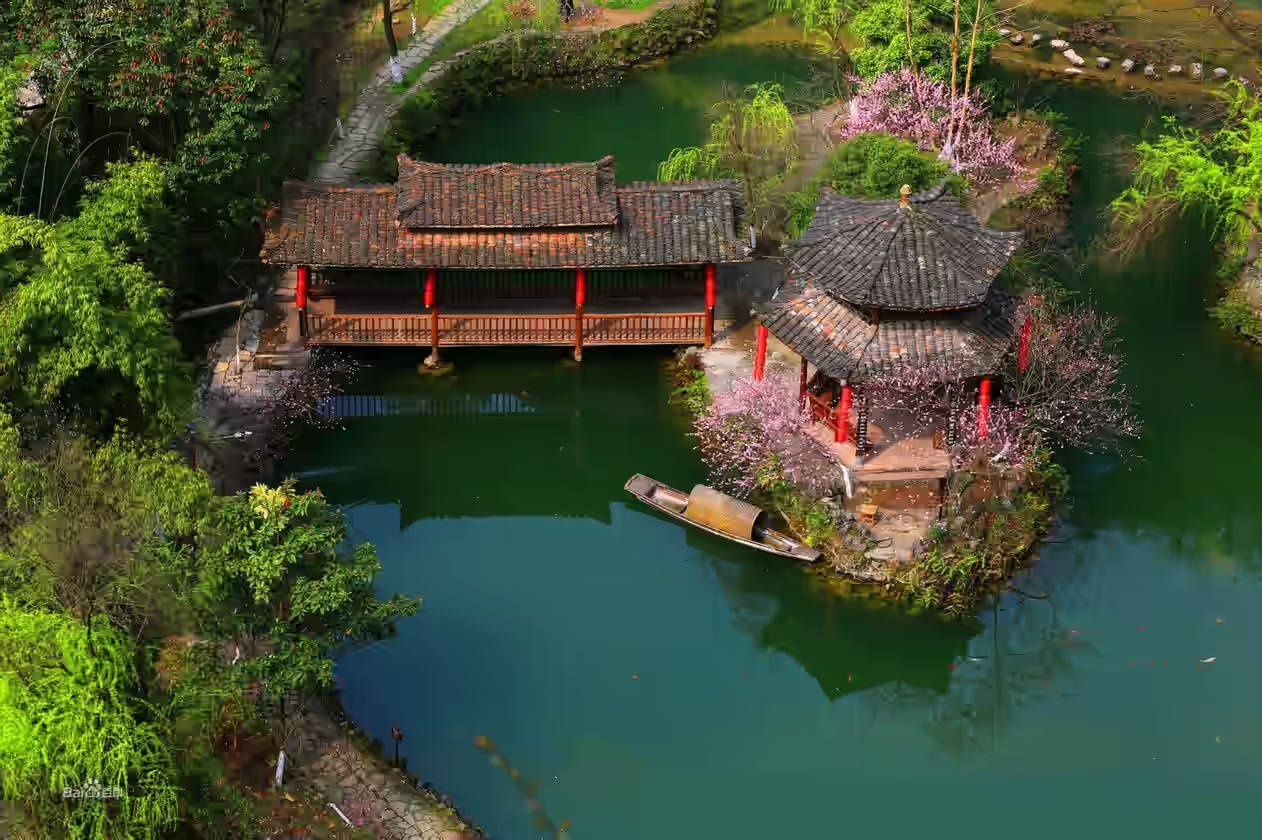
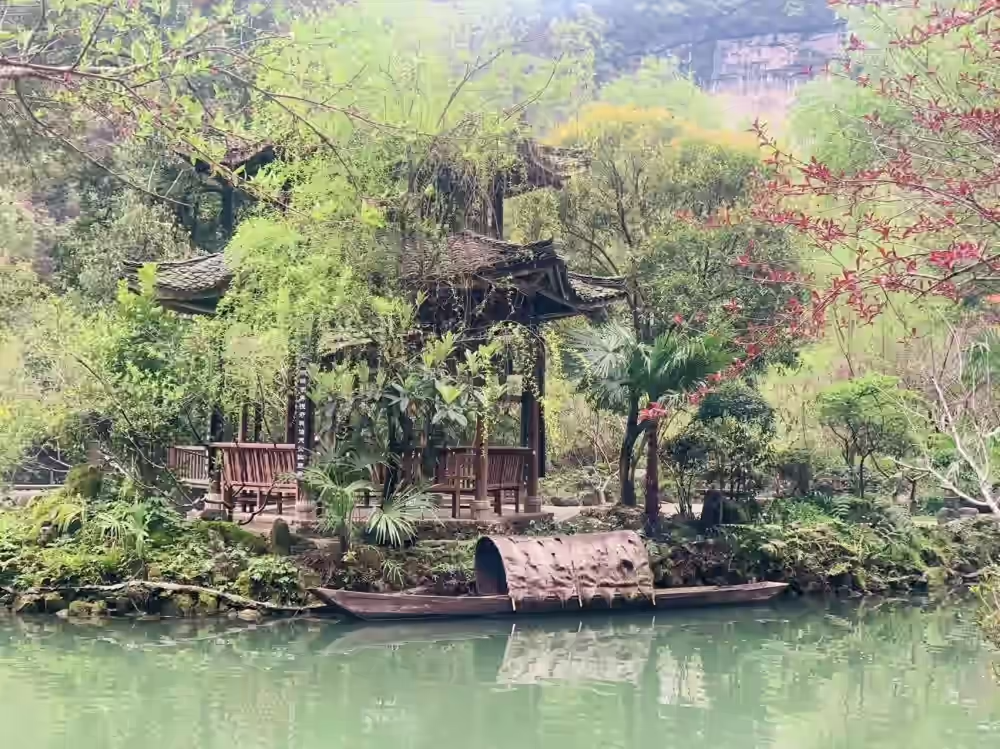
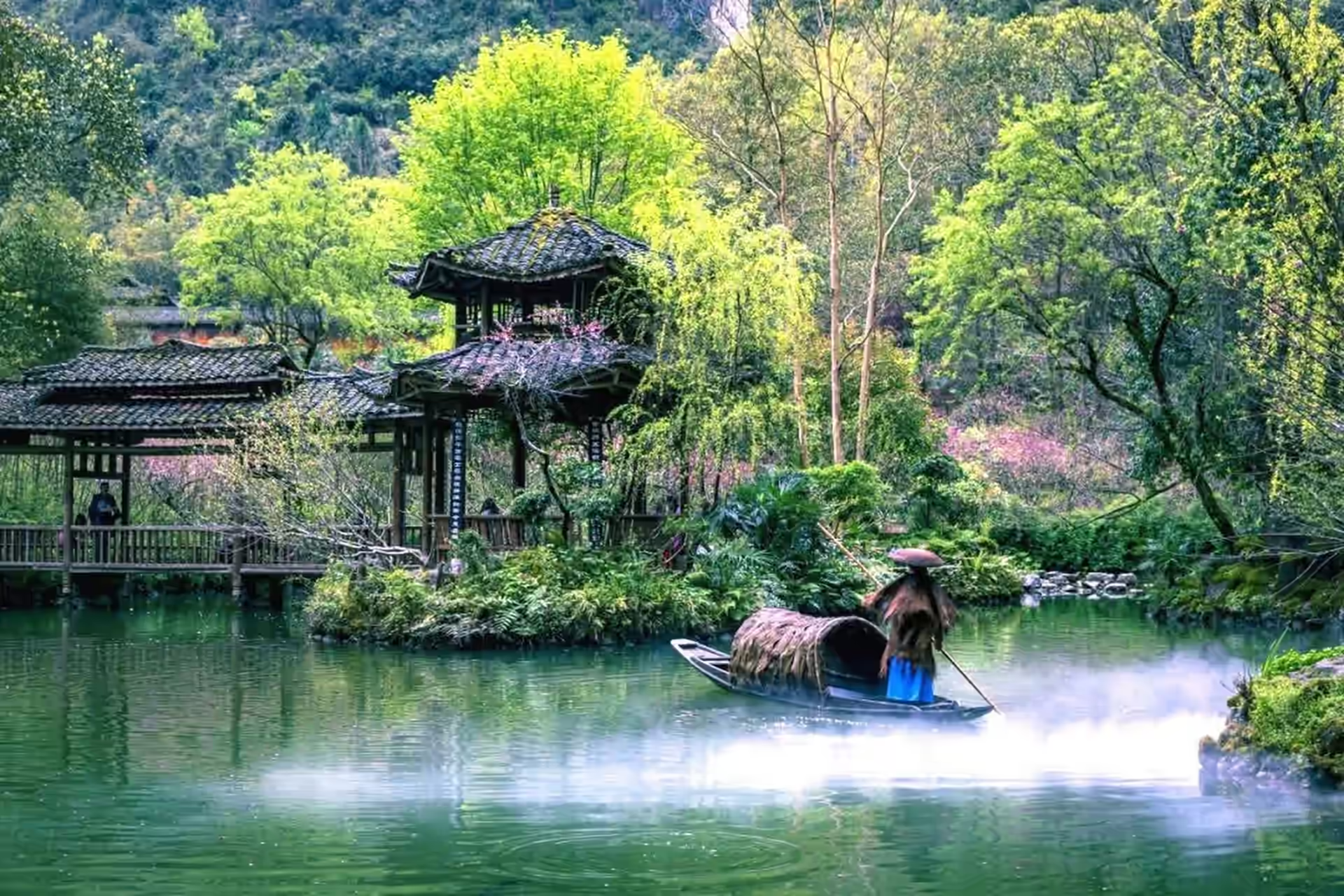
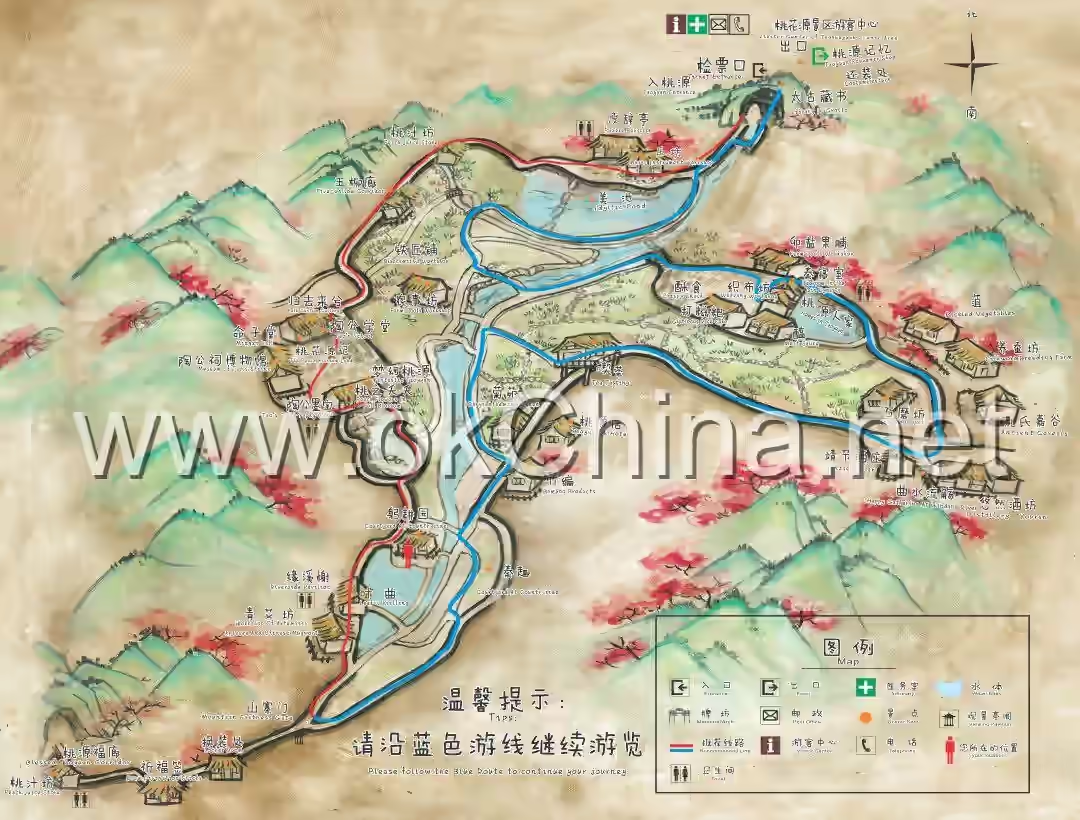
The Youyang Peach Blossom Land Scenic Area covers a total area of 50 square kilometers. It consists of eight parts: the Ancient Peach Blossom Land, Taigu Cave, Youzhou Ancient City, Peach Blossom Land Forest Park, Peach Blossom Land Square, Peach Blossom Land Folk Culture Town, Eryou Mountain Utopian Cultural Theme Park, and Peach Blossom Land Grand Stage. It integrates karst geological wonders, Qin and Jin farming culture, Tujia folk culture, and natural ecological culture. It epitomizes the most beautiful original ecological natural pastoral scenery of China's Wuling Mountain area and inherits the long history and splendid ethnic culture of the Tujia and Miao peoples.
2. Geographical Environment
2.1 Location and Territory
The Youyang Peach Blossom Land Scenic Area is located in the hinterland of the Wuling Mountain area at the junction of Chongqing, Hubei, Hunan, and Guizhou (north of Youyang County, Chongqing). Its geographical coordinates are 108°76′ east longitude and 28°86′ north latitude. It borders Longshan County of Hunan Province to the east; Xiushan County, and Songtao and Yinjiang Counties of Guizhou Province to the south; Yanhe County of Guizhou Province across the river (Wujiang River) to the west; Pengshui County to the northwest; and Qianjiang District, as well as Xianfeng and Laifeng Counties of Hubei Province to the north.
2.2 Geology and Landforms
The Youyang Peach Blossom Land Scenic Area is situated in the Sichuan-Guizhou-Hunan-Hubei fold belt of the third uplift zone of the Neocathaysian tectonic system. It features the Neocathaysian tectonic system dominated by roughly parallel folds in the north and northeast directions and associated longitudinal and transverse faults, forming tight anticlines and synclines. Faulting accompanied the folding process. The vast majority of the area consists of sedimentary rock strata, with local shallow intrusive rocks. The Cambrian system is the most developed stratum. Mainly composed of limestone and dolomite with a small amount of shale, it is mostly distributed in the axial zones of anticlines. This stratum often forms steep slopes and cliffs along riverbanks and exhibits karst development on the surface. The Ordovician strata, consisting of limestone and shale, are distributed on both wings of synclines, with complete development, wide distribution, and stable lithology. The Silurian system is one of the more developed strata, widely exposed as a set of marine clastic rocks, sandstone, and shale (with a small amount of limestone). It is distributed on both wings of anticlines, forming low, gentle hills and trough valleys. Influenced by neotectonic movements and river erosion, the scenic area features typical karst landforms. The elevation ranges from 600 to 1100 meters, mostly consisting of low mountainous areas and high-level karst trough valleys. The main rivers within the area are the Taohua Stream and underground rivers.
2.3 Climate Characteristics
The forest coverage rate of the Youyang Peach Blossom Land Scenic Area is 60%. It belongs to the subtropical humid monsoon climate zone, with abundant rainfall throughout the year. Annual precipitation generally ranges from 1000 to 1500 mm. The average annual temperature is 14 degrees Celsius, with summer highs not exceeding 32 degrees Celsius. It is warm in winter and cool in summer, with fresh air and pleasant weather year-round.
3. Main Attractions
3.1 Taigu Cave
The Taigu Cave is located within the Jinyinshan Forest Park on the west side of the Peach Blossom Land Scenic Area in Youyang County, at the junction of the Xianfeng Anticline and the Maotian Syncline. Formed during the Permian period, it has a history of approximately 300 million years and a total length of about 3000 meters. The cave is warm in winter and cool in summer, with temperatures between 14 and 17 degrees Celsius. The elevation of the exit floor is 740.04 meters, and the cave entrance has a clear height of 4.02 meters. The cave is massive in volume, featuring spacious halls, winding corridors, steep canyons, deep underground rivers, and colorful stalactites, earning it the reputation of an underground "Utopia."
The cave's plan resembles an inclined "L" shape. The cross-section is mostly "corridor-type," with local sections being "hall-type." The width of the "corridor-type" sections is mostly 10-25 meters, with heights of 20-60 meters. In some sections not widened by lateral erosion of underground rivers, the width is only 1.5-3 meters. The "hall-type" sections have widths of 70-130 meters and heights of 40-82 meters. The bedrock exposed within the cave belongs to sedimentary rock strata. Except for the missing Carboniferous, Jurassic, and Tertiary strata, strata from all other periods are present. The total length of the underground river within the cave is 1626 meters, with an average hydraulic gradient of 1.6%. The river frequently alternates between surface flow and subsurface flow, eventually emerging and joining the Wujiang River beneath the mountain skin in Tonggu Town outside the trough valley. The main types of groundwater in the cave are carbonate rock karst groundwater and loose rock pore water.
3.2 Utopia (Shiwai Taoyuan)
The Utopia covers an area of about 2 hectares and has a formation history of over 300 million years. It is a degraded tiankeng (heavenly pit) that integrates a sinkhole, karst cave, and underground river. Surrounded by mountains and isolated from the world, it is the only preserved ancient Qin Dynasty village to date.
3.3 Youzhou Ancient City
Located at the northern end of Youyang County, Youzhou Ancient City was reconstructed on the site of the original ancient city. It is a "museum" showcasing Tujia architecture, history, folklore, and culture. Construction began in 2010, and it opened for operation in October 2012. The ancient city is 1.3 kilometers long, with a total construction area of 30,000 square meters. Thirty-eight unique Tujia stilted buildings are built along the mountain slope. Tujia stilted buildings are the most ethnically distinctive architectural form of the Tujia people, mostly entirely wooden structures and typical examples of dry-pile mortise and tenon architecture. The ancient city is lined with various inns, taverns, and tourist shops. According to the "General Annals of Youyang Zhili Zhou," Youzhou Ancient City was initially built during the Hongwu reign of the Ming Dynasty. It was originally the Tusi (chieftain) office built by the 12th-generation Tusi Ran Xingbang. After renovations by over ten generations of Tusi, it once became the political, economic, and cultural center of the junction area of Chongqing, Hubei, Hunan, and Guizhou. In the 13th year of the Yongzheng reign of the Qing Dynasty (1735), the Qing government implemented the "Tusi Abolition and Bureaucratization" policy to weaken the power of Tusi, abolishing Tusi rule and replacing it with a system of Han bureaucrats. Since then, Youyang Ancient City lost its former status as a ruling center and gradually fell into decline.
3.4 Peach Blossom Land Square
The Peach Blossom Land Square was completed and put into use in 2001, covering an area of 28,000 square meters. The square was developed in multi-level terraces and is the largest and most fully functional comprehensive square in the Wuling Mountain area. It consists of a central square and an extension area. The ground is paved with local bluestone, serving as a place for citizens' leisure, fitness, and entertainment. The extension area broke ground on October 28, 2009, and was completed in 2011, adding 22,700 square meters of square area. The extension has two levels: the upper level is a public rest space for citizens, and the lower level is a supporting entertainment and leisure area. It is an important venue for Youyang County to host the "One Competition, One Festival" and various cultural and artistic display activities.
3.5 Peach Blossom Land Grand Stage
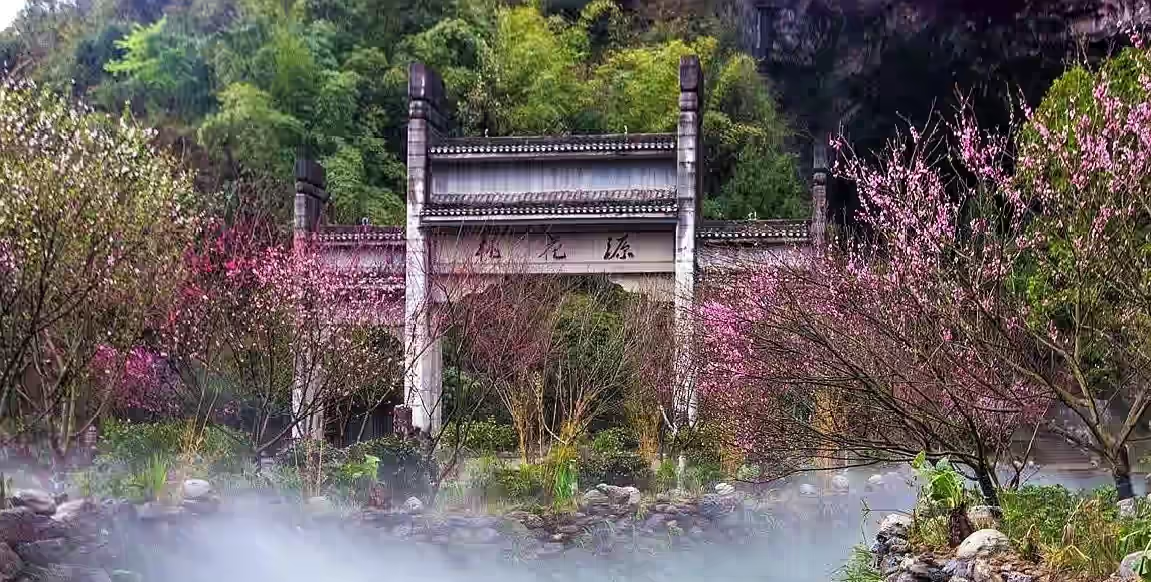
Located in Moon Bay north of Youyang County, the Peach Blossom Land Grand Stage is the performance venue for "Dreamlike Peach Blossom Land." It covers an area of 3.67 hectares with a total construction area of 18,000 square meters. Surrounded by buildings such as the Folk Culture Street, Land Resources Bureau, and Finance Bureau, it can accommodate 2,800 spectators simultaneously. Supporting facilities include ancient memorial archways, folk culture displays, landscape greening, office management buildings, leisure teahouses, and digital information systems. It is the largest landscape live-action performance theater in southeastern Chongqing.
3.6 Peach Blossom Land Forest Park
The Peach Blossom Land Forest Park is a national forest park with a total area of 2,734.33 hectares and a forest coverage rate of over 80%. The park is rich in biological resources, with surface water quality and soil quality meeting national first-class standards. The entire forest park retains the characteristics of natural original landforms and native vegetation, earning it the titles "Plant Kingdom" and "Natural Oxygen Bar." Main recreational areas include the Learning and Reflection Garden, Lovers' Garden, Green Corridor Small Park, Youth Development Center, Filial Piety and Integrity Garden, and Loyalty and Righteousness Garden.
3.7 Sunyan Grand Canyon
The Sunyan Grand Canyon is located within Jiangfeng Township and Hualian Village (formerly Sunyan Village) of Longtan Town in Youyang County. The canyon stretches over 10 kilometers, with its widest point being 8 to 10 meters and its narrowest only 2 to 3 meters. The vertical drop of the canyon exceeds 1000 meters. It uniquely integrates "ten thousand acres of azaleas, a thousand mountains of red leaves, a century-old ancient village, eight hundred strange peaks, and ten miles of serene gorge." The landscape includes waterfalls, terraced fields, karst caves, bamboo forests, stone forests, stalagmites, cinnabar mine ruins, and original ecological natural villages.
4. History and Culture
4.1 Historical Evolution
The land of Youyang was historically part of the border region between Liang and Jing Provinces as recorded in the "Tribute of Yu." During the Spring and Autumn period, it was at the border between the Ba and Chu states. In the Qin Dynasty, it belonged to Qianzhong Commandery. In the Han Dynasty, it was part of Youyang County. During the Three Kingdoms period, it was under Shu Han. In the Jin Dynasty, it was divided between Wuling Commandery and Fuling Commandery. In the Tang Dynasty, it belonged to Wuzhou and Sizhou. After the Five Dynasties period, it was occupied by local clans and called Youyang Stockade. In the Northern Song Dynasty, it belonged to Sizhou. In the Southern Song Dynasty, it was the territory of the Ran clan Tusi. In the Yuan Dynasty, it was the seat of Youyang Zhou, later elevated to Youyang Pacification Commission. In the Ming Dynasty, it was the seat of the Youyang Pacification Commission. In the Qing Dynasty, Youyang Zhili Zhou was established. In the 13th year of the Yongzheng reign (1735), with the implementation of the "Tusi Abolition and Bureaucratization" policy, Youyang was established as a Zhili Zhou, governing the four counties of You, Xiu, Qian, and Peng.
4.2 Legends and Anecdotes#### 4.2.1 The Cave Mouth Immortal Peach
From a distance, the Dayou Mountain resembles a peach. Peach trees have been cultivated in the Peach Blossom Spring since ancient times, and there is a magical legend about their origin. It is said that the Queen Mother of the West held a Peach Banquet every hundred years to entertain the immortals. He Xiangu, one of the Eight Immortals, was the Queen Mother's adopted daughter, and they had long addressed each other as mother and daughter. The Queen Mother specially invited He Xiangu to the banquet. The other seven immortals wanted to introduce the peaches to the mortal world, so they sent Lan Caihe to accompany He Xiangu. On the day of the banquet, He Xiangu brought Lan Caihe to the heavenly palace to pay respects to the Queen Mother. Seeing that Lan Caihe still had a childlike air and was exceptionally clever, the Queen Mother was very fond of him. She picked him up with one hand and casually gave him an immortal peach. Lan Caihe took the peach and, like a young child, wolfed it down, swallowing skin, flesh, and pit in a few bites. He choked until tears streamed down his face, which pained the Queen Mother greatly. After the banquet, He Xiangu took Lan Caihe to bid farewell to the Queen Mother and rejoined the other immortals. Lü Dongbin gave Lan Caihe a laxative, and Lan Caihe immediately expelled the peach pit, which fell onto the Dayou Mountain. The pit quickly sprouted, grew, and bore flowers and fruit that very year. Strangely, while this peach ripened only once every thousand years in heaven, after being transplanted to the Peach Blossom Spring, it ripened annually, with color, fragrance, and taste identical to the fresh fruit from the Peach Garden. Not only could the Eight Immortals taste it, but common people could also enjoy this delicacy. Unfortunately, later, the peach mountain was left unattended, and the immortal peach trees did not survive. Only the large "peach" shape of the Dayou Mountain remains, something to be admired from afar but not tasted.
4.2.2 The Release Pond
The Release Pond is located near the Taoyuan Temple in the Taohuayuan National Forest Park and is a natural pool. Legend has it that in ancient times, a woodcutter from Taoyuan came to the mountain to gather firewood and saw a red fish struggling desperately on the ground, on the verge of death. The woodcutter was moved by compassion, gently picked up the red fish, and placed it into the pool. The beautiful red fish nodded to him and swam into the depths of the pool. Later, this red fish transformed into a beautiful girl dressed in red and married the kind-hearted Taoyuan woodcutter. This pool thus came to be known as the Release Pond.
4.2.3 The Gold and Silver Springs
The Gold and Silver Springs refer collectively to two springs, the Gold Spring and the Silver Spring, located within the Taohuayuan National Forest Park. Legend tells of a young monk named Xiao Can from the Taoyuan Temple at the top of the Taigu Cave. One day, returning from alms collection, he passed by this spot and saw two hidden small holes. Greed arose in him, and he hid the alms he had collected there. A few days later, Xiao Can secretly returned to check, only to find that the two small holes had turned into two springheads, gurgling with flowing water. All the hidden goods had vanished without a trace, replaced only by a continuous flow of spring water. Xiao Can suddenly understood: a gentleman loves wealth, but acquires it through proper means; wealth that is not rightfully his must not be taken. Filled with shame and regret, he devoted himself to chanting Buddhist sutras from then on and eventually became a highly accomplished monk.
4.3 Folk Customs
4.3.1 Tujia Hand-Waving Dance
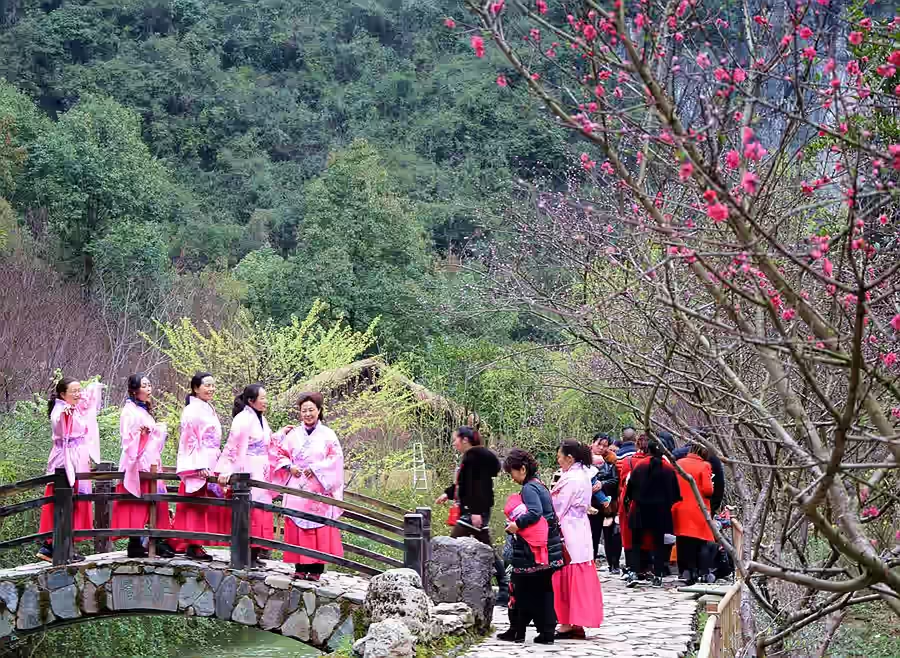
The Hand-Waving Dance is one of the most iconic cultural forms of the Tujia people. It is a ritual dance characterized by hand-waving movements, created by the Tujia ancestors during their practices of totem worship, ancestor worship, chieftain worship, and their prolonged production and daily life activities. In October 2001, Comrade Li Peng, former member of the Standing Committee of the Political Bureau and Chairman of the National People's Congress, visited Youyang to see the people of the old revolutionary base area. At the Taohuayuan Square, he joined the people of various ethnic groups in Youyang in dancing the Hand-Waving Dance and gladly inscribed the words, "Hometown of the Tujia Hand-Waving Dance in Youyang."
4.3.2 Tujia Stilted Buildings
Most Tujia people live on steep hillsides and slopes. Due to this terrain, their dwellings often take the form of stilted buildings. Four wooden pillars are erected at both ends of the house, and a wooden frame is built following the slope's contour. Beams are laid at a height level with the ground of the main room, covered with wooden planks. Three sides are enclosed with half-height paneled walls or wooden corridors, and the roof is thatched or covered with fir bark. The space under the floor is open on all sides and can be used for storing fertilizer or temporarily tethering livestock. The upper floor is typically where unmarried daughters make shoes, embroider, or enjoy the cool air.
4.3.3 Tujia Leaf Love Song
The Leaf Love Song is a type of music played by Tujia people using leaves, and it is a love song. The song expresses the sincerity and courageous pursuit of love by young men and women. It originates from a folk song in Youyang Tujia and Miao Autonomous County, Chongqing, and also serves as accompaniment for the Tujia Hand-Waving Dance. The Leaf Love Song conveys affection through song and has been a unique way for young Tujia men in Youyang to court the girls they admire for thousands of years. In the past, young men and women were mutually attracted but found it inconvenient to speak openly and disliked matchmakers stirring up trouble. Thus, they would pour out their full hearts onto leaves. The melodies played by Tujia youths on casually plucked leaves are gentle, crisp, and clear, with reed-like sounds lingering in the air, full of romantic poetic imagery. Over time, this gradually evolved into a unique folk skill in Youyang. Consequently, Youyang once had a流传 magical marriage custom known as "using leaves as matchmakers."
4.3.4 Nuo Opera
流传 (Note: This appears to be a copy-paste error from the original Chinese text. The translation should continue without this repetition.) Nuo Opera, also known as "Nuo Wish Opera" or "Nuo Hall Opera,"流传 in Youyang Tujia and Miao Autonomous County, Chongqing. It can be traced back to the Shang Dynasty, over 3,000 years ago, and is known as a living fossil of drama. Nuo Opera originated from Nuo rituals of primitive society's totem worship. It was a sacrificial ceremony performed by Tujia ancestors to exorcise ghosts and ward off epidemics. Its main characteristic is that all performers wear wooden masks, impersonating gods and ghosts while singing and dancing.
Comments
Post a Comment