Tengwang Pavilion
1. Introduction
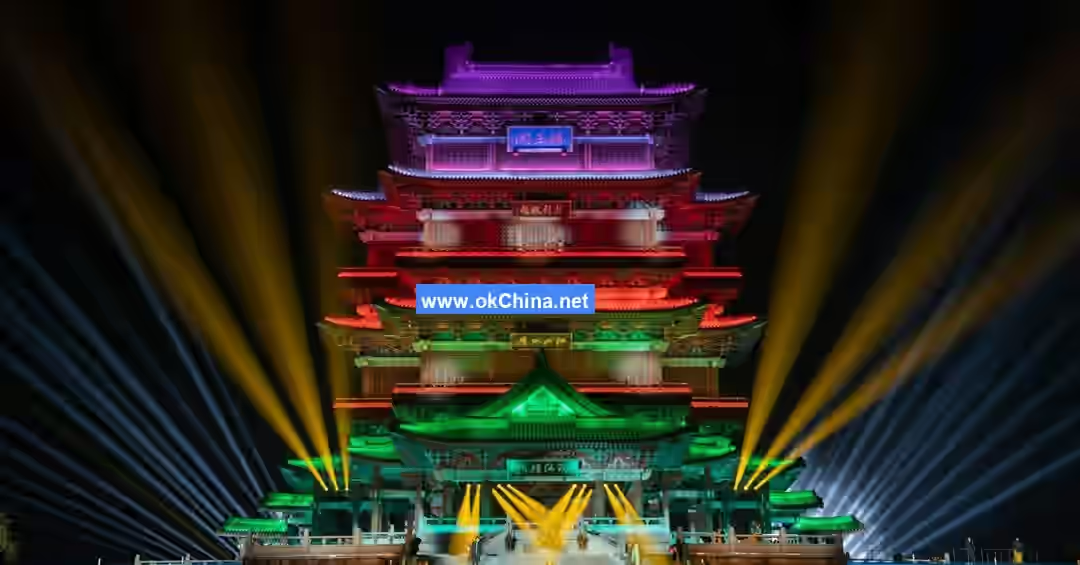
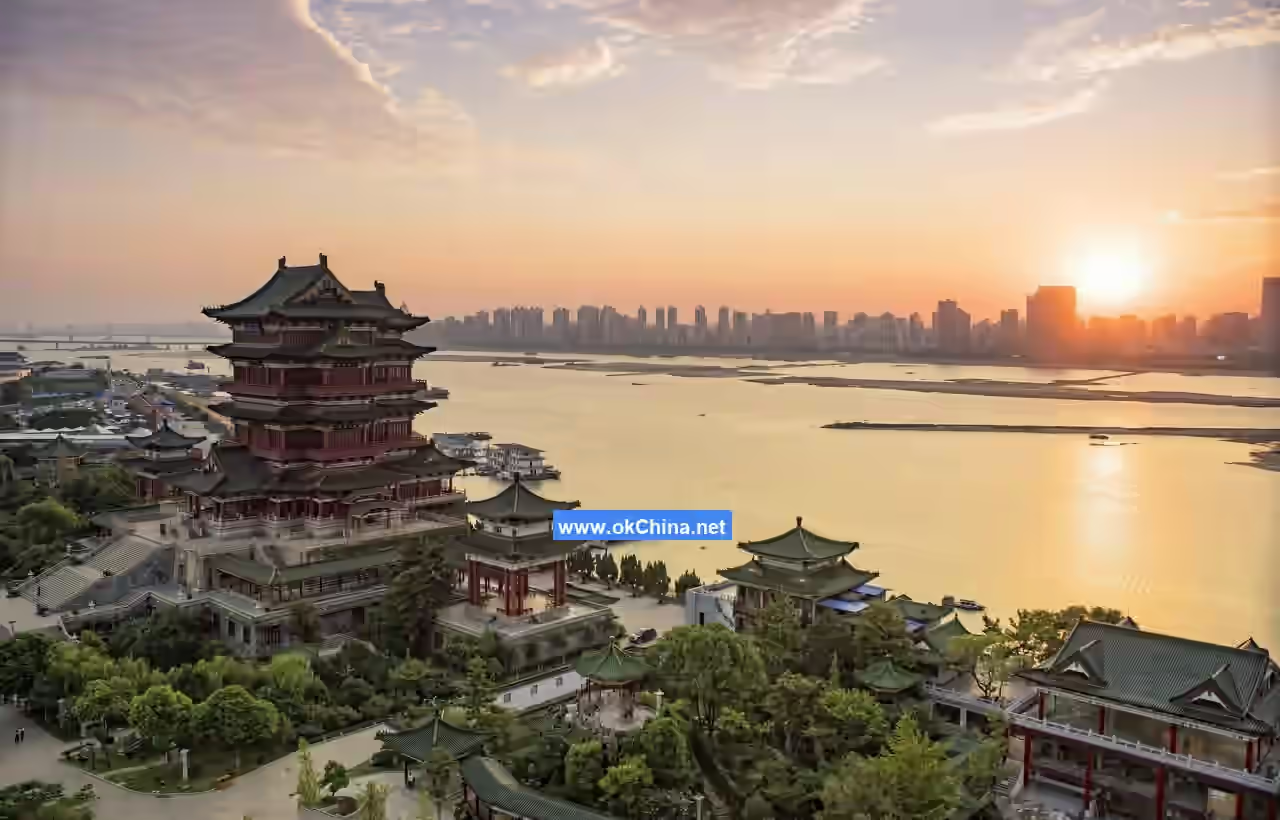
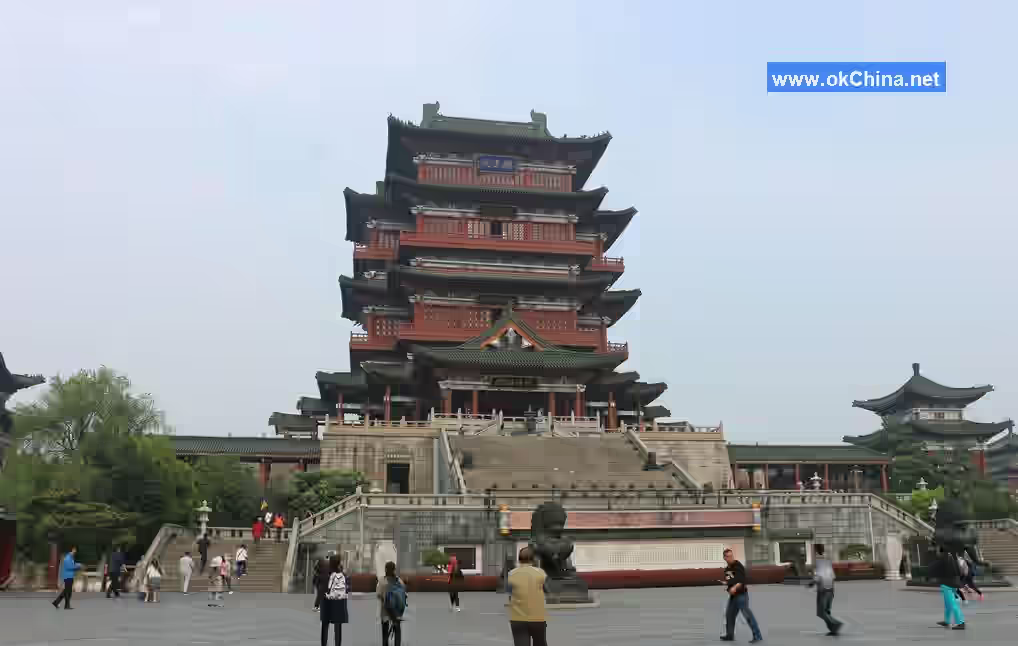
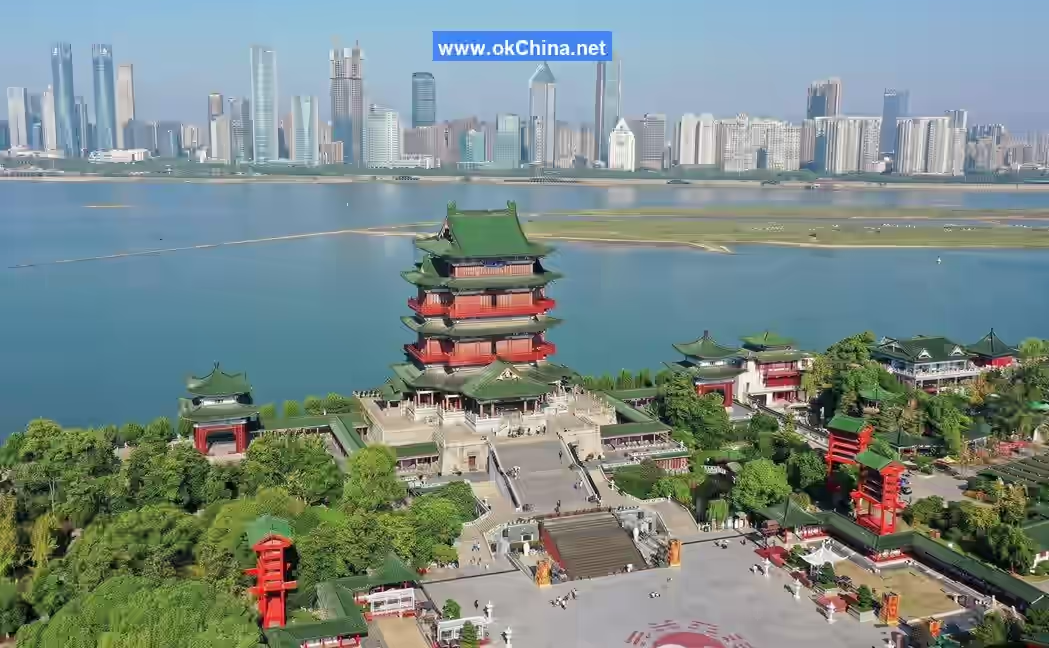
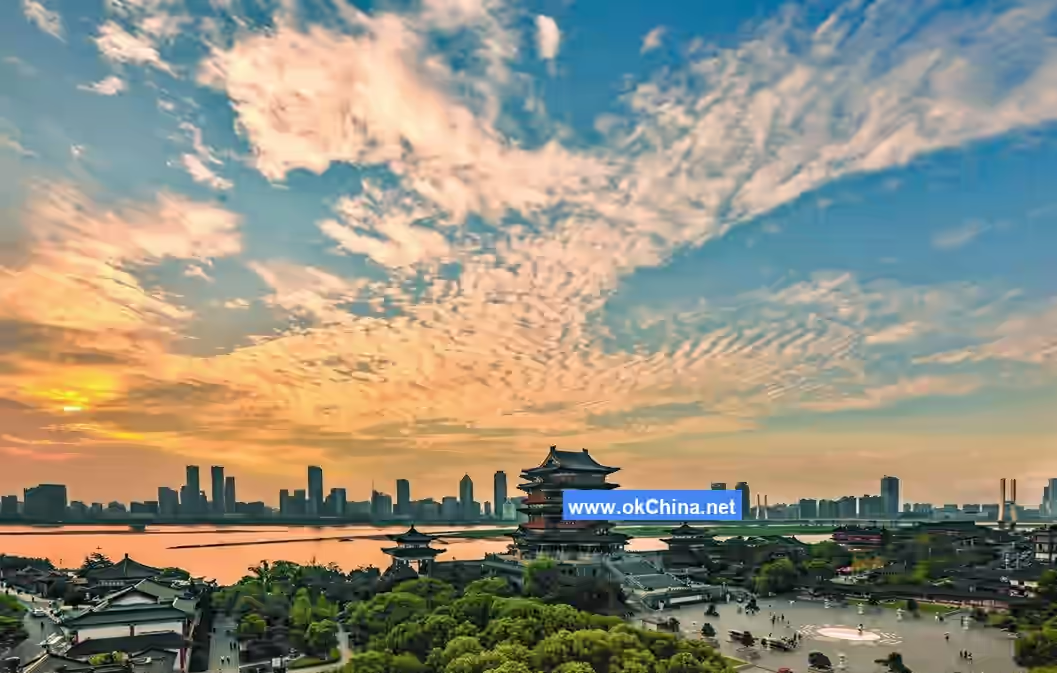
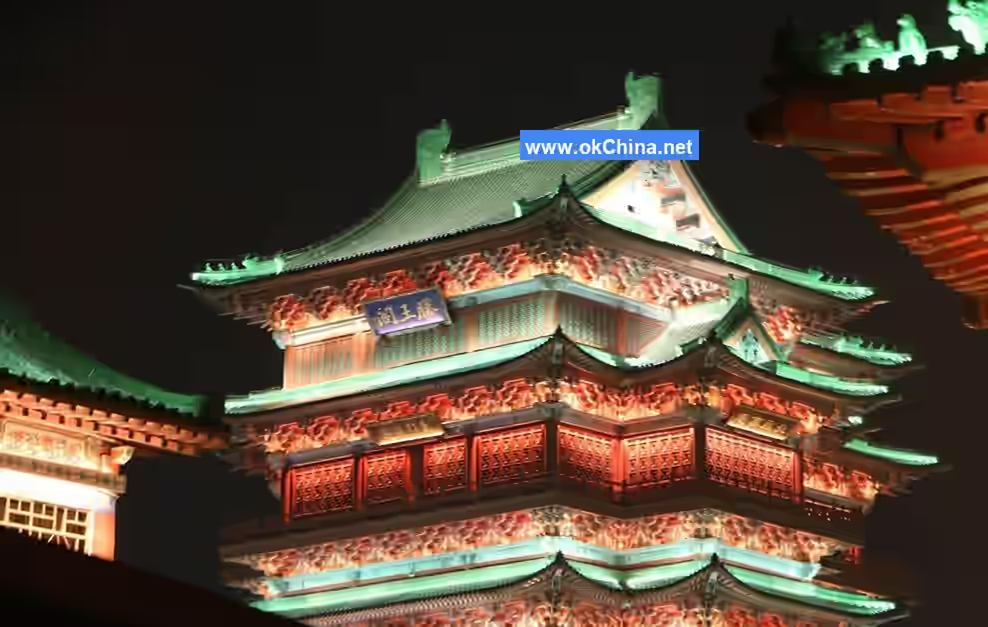
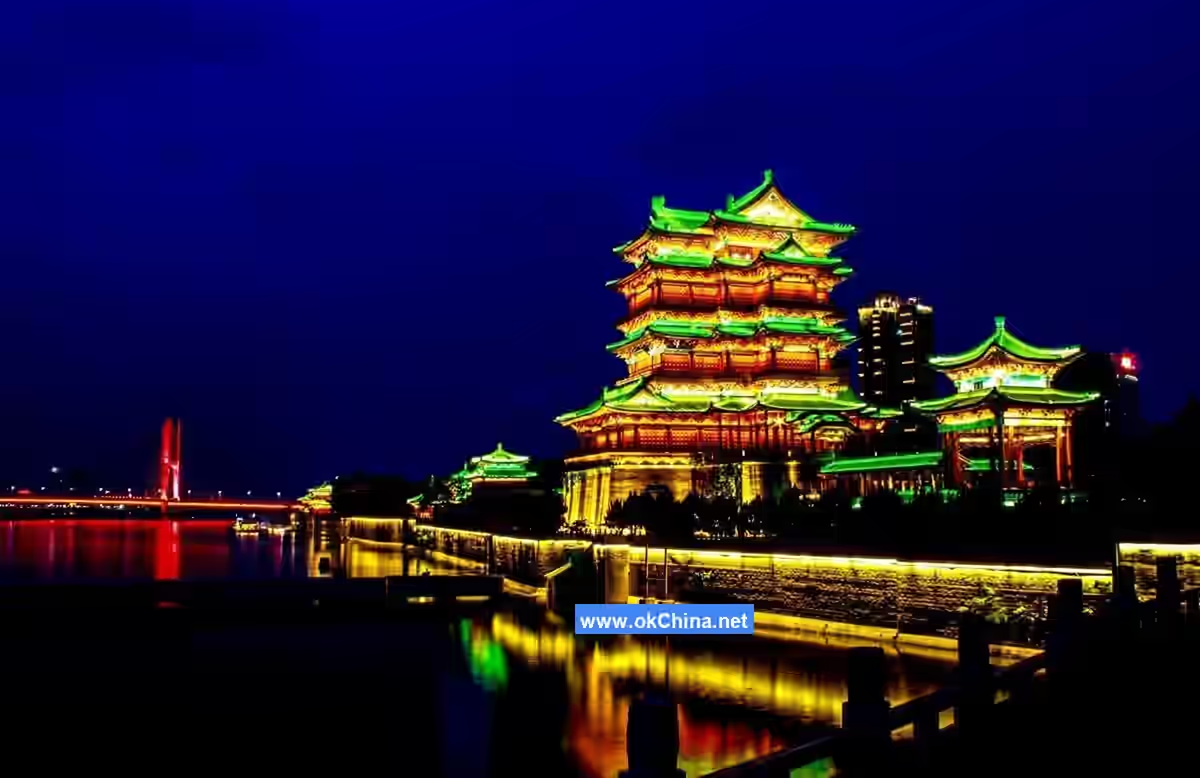
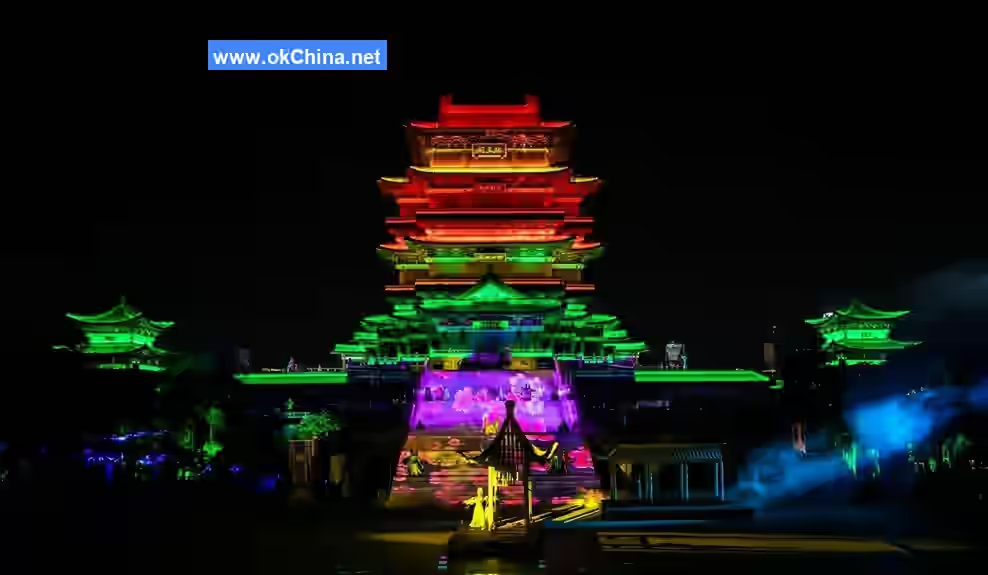
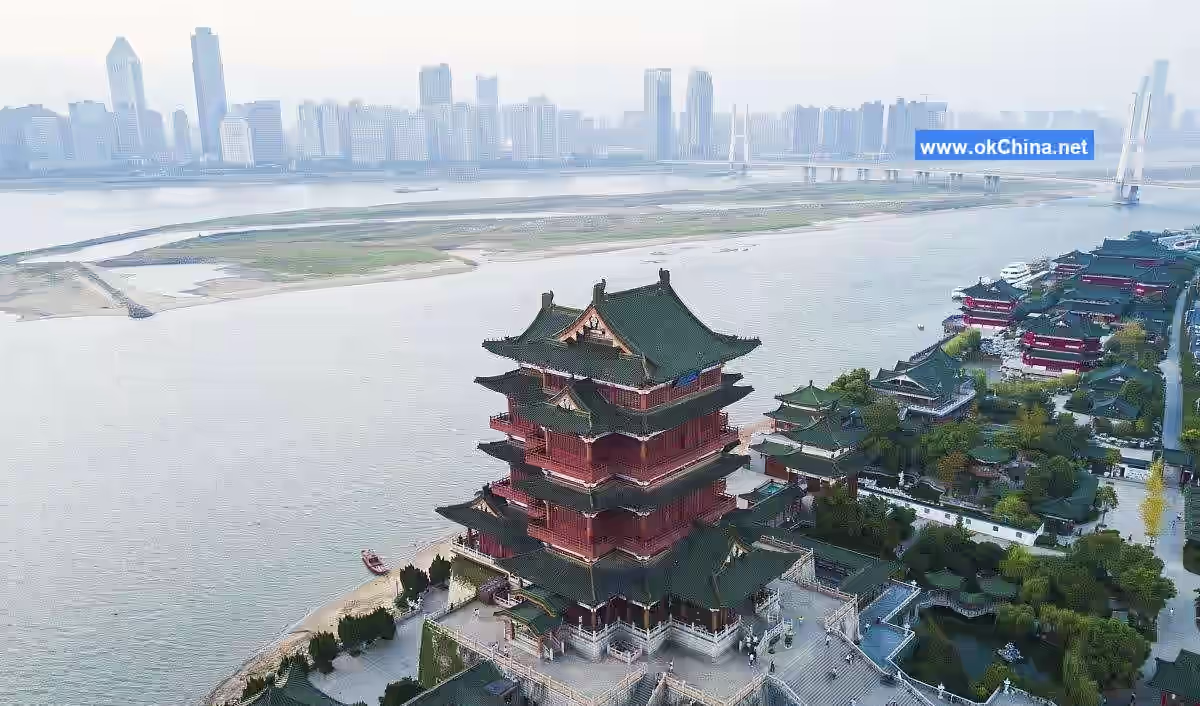
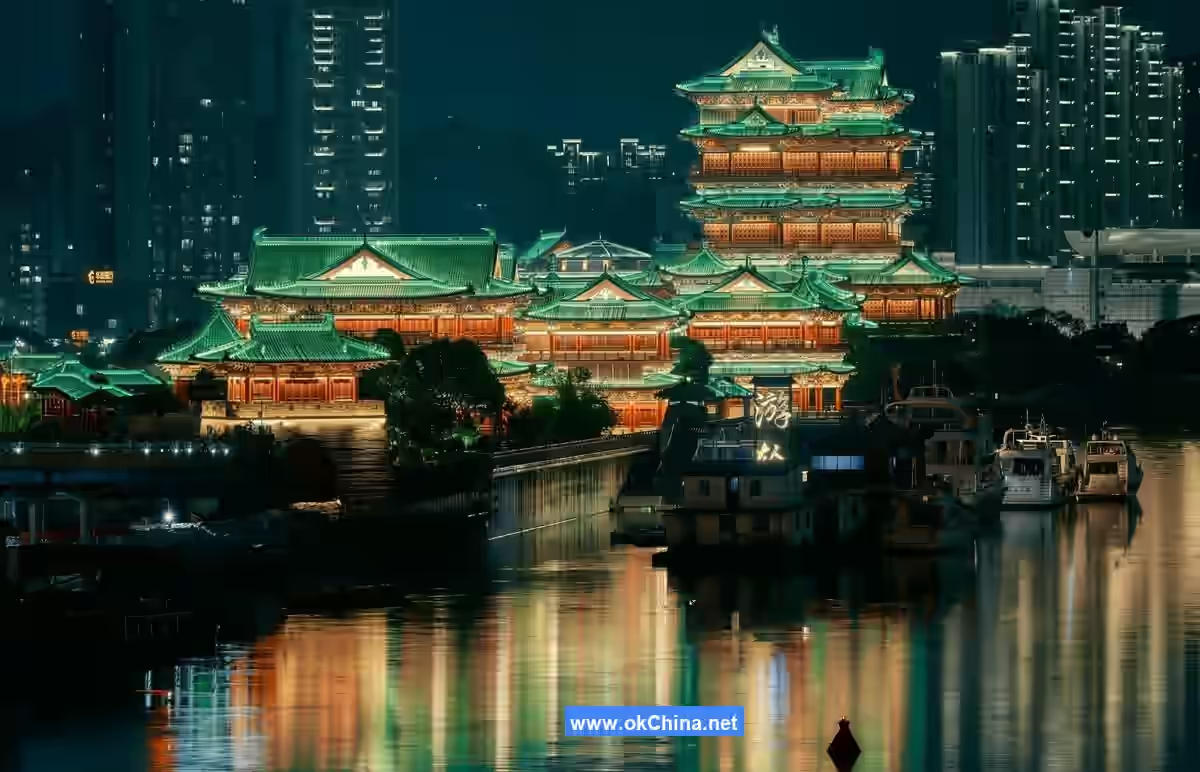
Tengwang Pavilion is located on Yanjiang Road in Donghu District, Nanchang City, Jiangxi Province, situated on the eastern bank of the Gan River at the confluence of the Gan River and the old course of the Fu River. It serves as a landmark building of Nanchang City and a symbol of the ancient Yuzhang civilization. Originally built in the fourth year of the Yonghui era of the Tang Dynasty (653 AD) by Li Yuanying, the Prince of Teng (younger brother of Emperor Taizong of Tang, Li Shimin), during his tenure as the military governor of Hongzhou in Jiangnan, the current structure is a reconstructed scenic site from 1985. It gained fame through the "Preface to Tengwang Pavilion" written by the early Tang poet Wang Bo. Alongside Yueyang Tower in Yueyang, Hunan, and Yellow Crane Tower in Wuhan, Hubei, it is known as one of the "Three Great Towers of Jiangnan," one of the "Four Great Towers of Ancient China," and one of the "Ten Great Historical and Cultural Towers of China." It is also acclaimed as the "First Tower of West River."
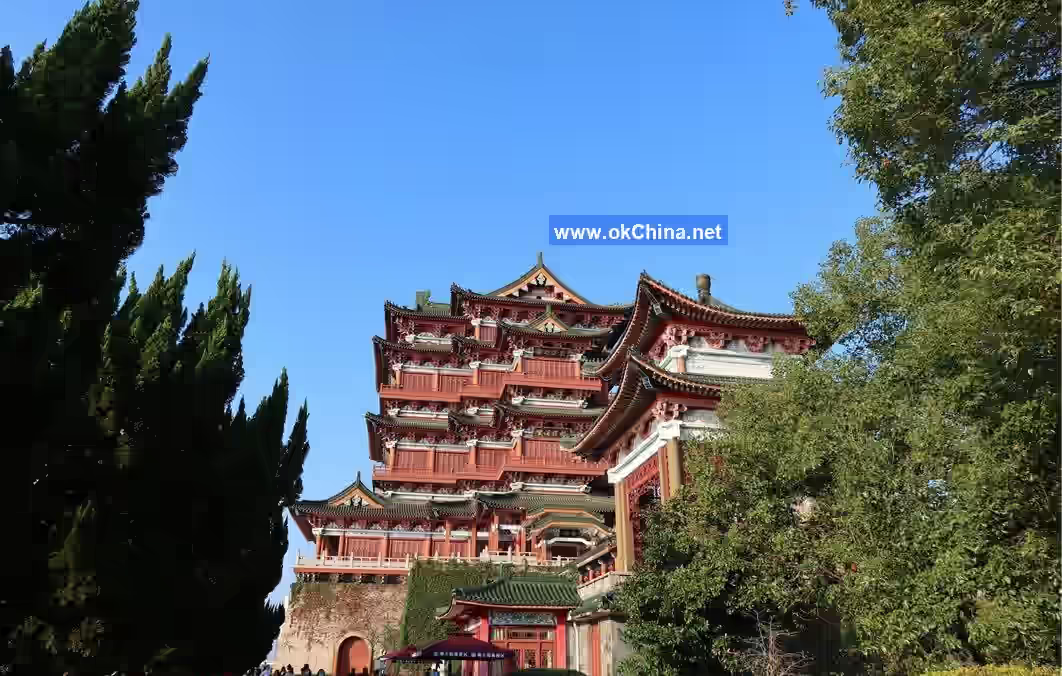
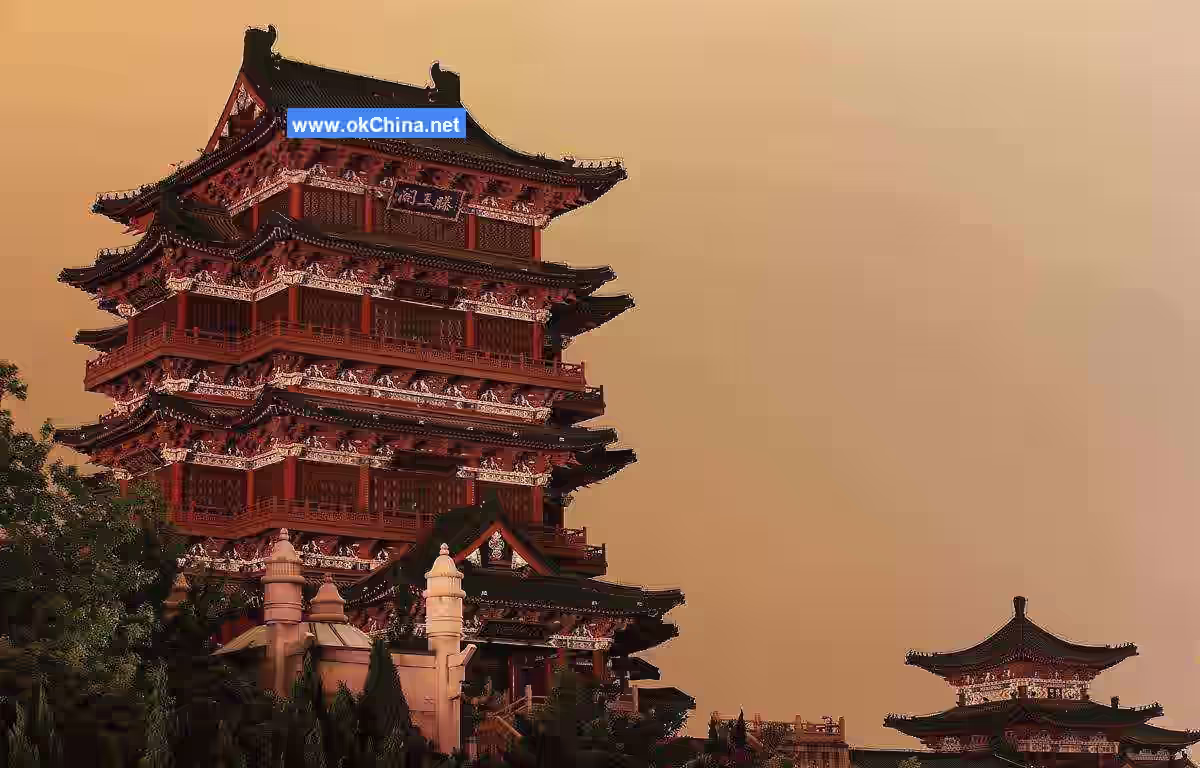
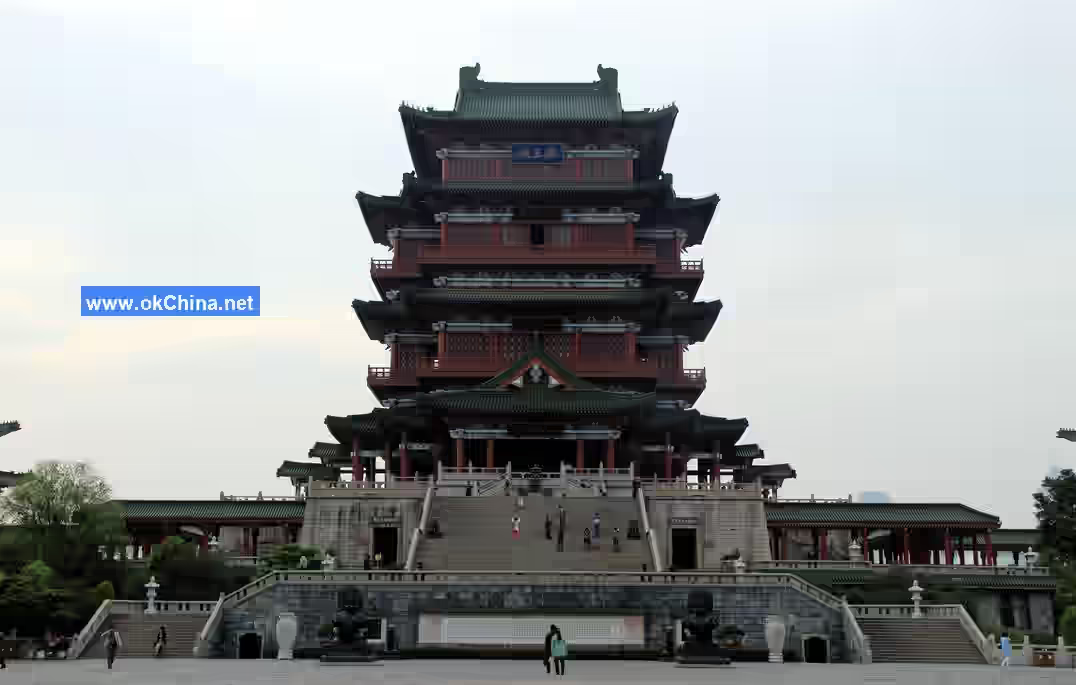
The main structure of Tengwang Pavilion stands 57.5 meters high with a floor area of 13,000 square meters. Its lower part consists of a 12-meter-high pedestal symbolizing an ancient city wall, divided into two levels. The main pavilion above the pedestal follows a "three visible, seven hidden" design, appearing as a three-story building with encircling corridors but actually containing seven interior levels: three visible floors, three hidden floors, and an attic. The ridge-end ornaments (chīwěn) are specially made in Song Dynasty style, standing 3.5 meters tall.
In 2004, the Tengwang Pavilion Scenic Area in Nanchang City, Jiangxi Province, which includes Tengwang Pavilion, was approved by the State Council and included in the fifth batch of National Key Scenic Areas. On October 29, 2018, the Tengwang Pavilion Scenic Area was officially approved as a National AAAAA Tourist Attraction by the National Tourism Attractions Quality Rating Committee.
2. Architectural Layout
2.1 Overall Exterior
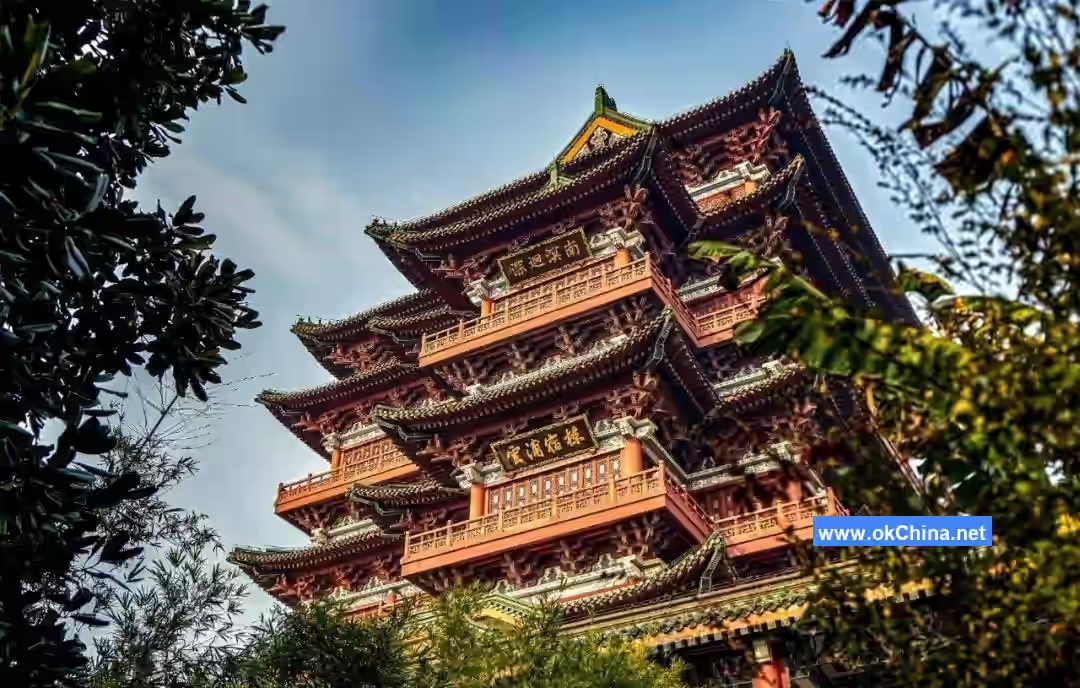
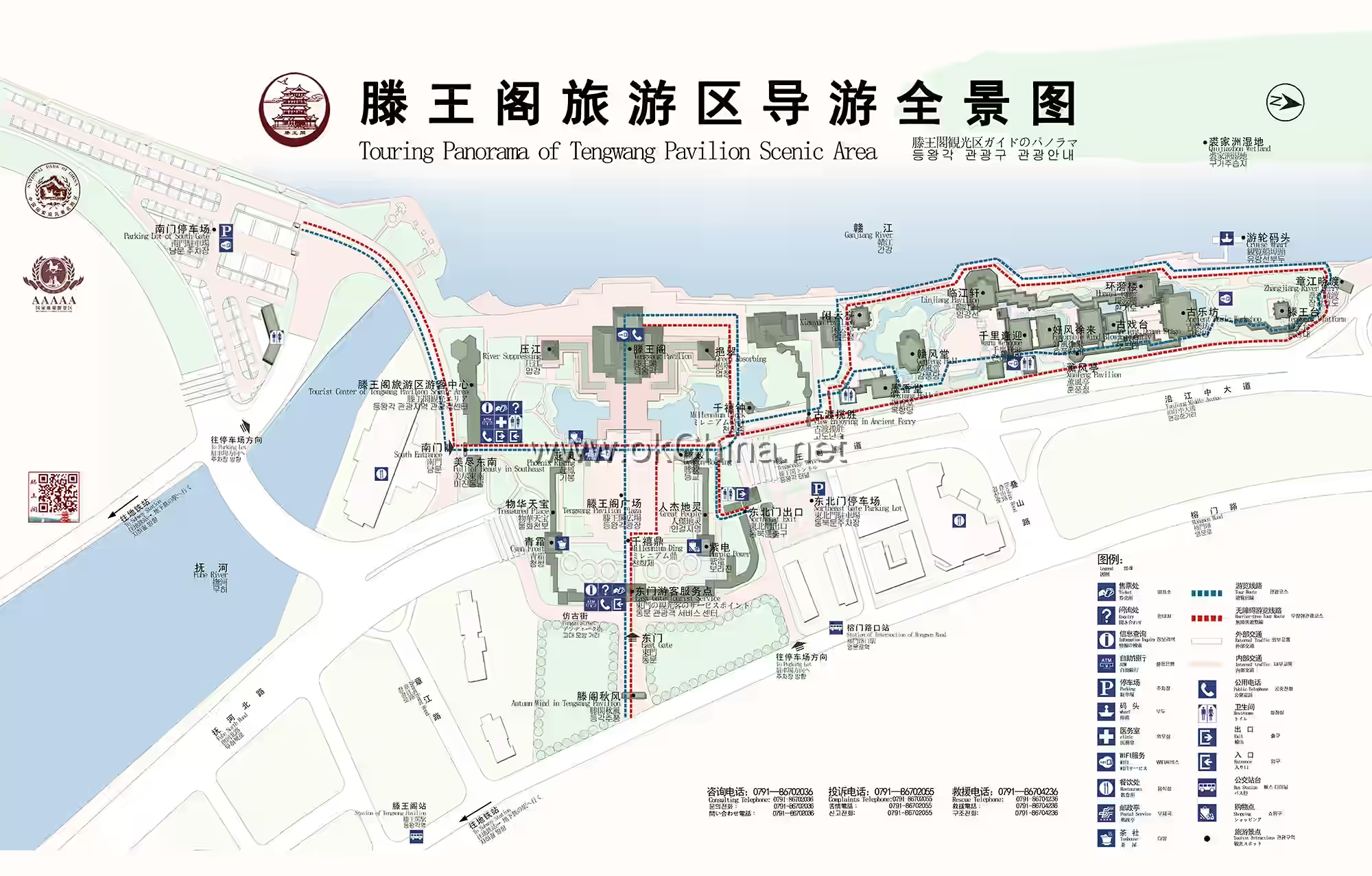
The main structure of Tengwang Pavilion is 57.5 meters high with a floor area of 13,000 square meters. Its lower part consists of a 12-meter-high pedestal symbolizing an ancient city wall, divided into two levels. The main pavilion above the pedestal follows a "three visible, seven hidden" design, appearing as a three-story building with encircling corridors in Song Dynasty style but actually containing seven interior levels: three visible floors, three hidden floors, and an attic. The ridge-end ornaments (chīwěn) are specially made in Song Dynasty style, standing 3.5 meters tall. The eaves tiles and drip tiles are specially made: the eaves tiles bear the characters "滕阁秋风" (Teng Pavilion Autumn Breeze), while the drip tiles feature a "孤鹜" (Lone Duck) pattern. Below the pedestal, there are two connected gourd-shaped artificial lakes, north and south, with a Nine-Bend Wind-and-Rain Bridge spanning the northern lake.
Above the first-level pedestal is the second-level pedestal (the city wall base). There are three entrances to ascend from the high pedestal into the pavilion: stone steps from the due east lead through a front hall (bàoshà) into the pavilion, while north and south entrances are accessed via high and low corridors. In front of the east-facing front hall stands a bronze-cast "Eight Monsters" precious tripod. The tripod base is made of white marble, and the tripod itself is about 2.5 meters tall. The lower part is a three-legged ancient tripod, and the upper part is a round pavilion-style pointed roof serving as the tripod lid.
2.2 Interior Structure
2.2.1 Main Pavilion
The color paintings on the beams and lintels of the main pavilion primarily use the "Jade Grinding Style" (niǎn yù zhuāng) from Song Dynasty color painting, supplemented by the "Multicolored Decoration Style" (wǔ cǎi biàn zhuāng) and the "Unraveling Green and Blooming Style" (jiě lǜ jié huá zhuāng). All beams and lintels, both inside and outside, use the "Jade Grinding Style" for the main bays and the "Multicolored Decoration Style" for the secondary bays.
2.2.2 First Floor
Under the eaves of Tengwang Pavilion's first floor hang four horizontal plaques. The east-facing plaque is the "Magnificent, Majestic, Peerless, Extraordinary" Nine-Dragon plaque, with text selected from Han Yu's "Record of the Newly Built Tengwang Pavilion." The west-facing plaque is a large plaque reading "Overlooking the Void." Under the eaves of the north and south high-and-low corridors are plaques reading "Embrace the River" and "Girdled by Lakes" respectively. Inside the first floor, there is a white marble relief titled "Favorable Winds Sent Tengwang Pavilion," created based on the story from the famous chapter "The God of Madang Sends Winds to Tengwang Pavilion" in Feng Menglong's Ming Dynasty work "Stories to Awaken the World." On the central beam of the west side hangs a golden plaque inscribed by Comrade Bai Dongcai with "First Tower of West River."
2.2.3 Second Floor
On the wall of the main hall on the second floor is a large acrylic mural titled "Portrait of Outstanding Figures," measuring 2.55 meters high and over 20 meters long.
2.2.4 Third Floor
The third floor is a visible level surrounded by corridors on all four sides and is also an important level within the pavilion. In the central hall's screen wall is an acrylic mural titled "Dream of Linchuan," based on the story of Tang Xianzu rehearsing "The Peony Pavilion" at Tengwang Pavilion.
2.2.5 Fourth Floor
The fourth floor primarily embodies the theme of "Earthly Spirit." On the wall of the main hall is an acrylic mural titled "Portrait of Earthly Spirit."
2.2.6 Fifth Floor
The fifth floor is a visible level surrounded by corridors on all four sides. Under the corridor eaves hang four golden plaques with text derived from the "Preface to Tengwang Pavilion."
2.2.7 Sixth Floor
The sixth floor is the highest visitor level of Tengwang Pavilion. Between the east and west double eaves hang two golden plaques inscribed by Su Dongpo with "Tengwang Pavilion."
3. Architectural Features
Tengwang Pavilion creatively solves a series of challenges related to sound, shadow, light, and color in organizing, arranging, and expanding space, thereby creating a unique artistic atmosphere. It fully embodies the aesthetic characteristics of Chinese classical architecture, blending virtual and real scenes into one, weaving a magnificent and ever-changing landscape painting.
Viewed from the horizontal plane, the Tengwang Pavilion architectural complex forms a sequence of pavilion, corridors, and pavilions. The artistic treatment of the building group varies according to its nature and scale. The main structure of Tengwang Pavilion is the pavilion itself. Together with the auxiliary pavilions—Yajiang Pavilion and Yicui Pavilion—and the connecting corridors, it creates a musical rhythm, offering visitors a sense of musical beauty.
4. Cultural History
4.1 Historical Evolution
In the fourth year of the Yonghui era of the Tang Dynasty (653 AD), Li Yuanying, the Prince of Teng, served as the military governor of Hongzhou in Jiangnan and built a pavilion in Hongzhou named "Tengwang Pavilion."
In the second year of the Shangyuan era of the Tang Dynasty (675 AD), Yan Boyu, the military governor of Hongzhou, renovated Tengwang Pavilion, and Wang Bo wrote the "Preface to the Farewell Banquet at Tengwang Pavilion of Hong Prefecture on an Autumn Day."
In the second year of the Dazhong era of the Tang Dynasty (848 AD), Tengwang Pavilion was destroyed by a great fire. The Jiangxi observation commissioner, Hegan, rebuilt it on the original site the next day, completing it in August of the same year.
In the second year of the Daguan era of the Song Dynasty (1108 AD), Fan Tan, the prefect of Hongzhou, Jiangxi, rebuilt Tengwang Pavilion.
In the early Yuan Dynasty, Tengwang Pavilion fell into disrepair after repeated wars and turmoil.
In the thirty-first year of the Zhiyuan era of the Yuan Dynasty (1294 AD), Tengwang Pavilion was renovated, standing five zhang and six chi high (approx. 18.5 meters).
In the fifth year of the Jiajing era of the Ming Dynasty (1526 AD), the censor-in-chief Chen Hongmo rebuilt Tengwang Pavilion. The pavilion had seven bays and was forty-two chi high (approx. 13.2 meters), exceeding the previous size.
In the forty-fourth year of the Wanli era of the Ming Dynasty (1616 AD), Tengwang Pavilion was destroyed by a great fire. Wang Zaijin, the Left Administration Commissioner of Jiangxi, and Wang Zuo, the Grand Censor, initiated fundraising for its reconstruction.
In the fifth year of the Shunzhi era of the Qing Dynasty (1648 AD), the Qing army besieged Nanchang, and Tengwang Pavilion was destroyed in the warfare.
In the eleventh year of the Shunzhi era of the Qing Dynasty (1654 AD), Cai Shiying, the governor of Jiangxi, rebuilt Tengwang Pavilion.
In the eighteenth year of the Kangxi era of the Qing Dynasty (1679 AD), Tengwang Pavilion was destroyed by a great fire and was rebuilt by An Shiding.
In the twenty-first year of the Kangxi era of the Qing Dynasty (1682 AD), Tengwang Pavilion was destroyed by a great fire and was rebuilt by An Shiding.
In the twenty-fourth year of the Kangxi era of the Qing Dynasty (1685 AD), Tengwang Pavilion was destroyed by a great fire and was rebuilt by Censor-in-Chief Song Luo.
In the forty-first year of the Kangxi era of the Qing Dynasty (1702 AD), Tengwang Pavilion was destroyed by a great fire and was rebuilt by Zhang Zhidong, the governor of Jiangxi.
In the forty-fifth year of the Kangxi era of the Qing Dynasty (1706 AD), Tengwang Pavilion was destroyed by a great fire, with only the "Imperial Stele Pavilion" surviving. It was rebuilt by Lang Tingji, the governor of Jiangxi.
In the ninth year of the Yongzheng era of the Qing Dynasty (1731 AD), Tengwang Pavilion was destroyed by a great fire.
In the first year of the Qianlong era of the Qing Dynasty (1736 AD), Zhao Hong'en, the governor-general of Jiangxi, and Yu Zhaoyue, the governor, rebuilt Tengwang Pavilion.
In the twenty-sixth year of the Daoguang era of the Qing Dynasty (1846 AD), Tengwang Pavilion was destroyed by a great fire and was later renovated.
In the twenty-eighth year of the Daoguang era of the Qing Dynasty (1848 AD), Tengwang Pavilion was destroyed by a great fire and was rebuilt by Fu Shengxun, the governor of Jiangxi.
In the third year of the Xianfeng era of the Qing Dynasty (1853 AD), in April, Shi Dakai, the Wing King of the Taiping Rebellion army, was ordered to march on Anqing. Lai Hanying and Hu Yihuang led troops to attack Nanchang, besieging the city for three months. Tengwang Pavilion was destroyed in the warfare and was later rebuilt.
In the final years of the Guangxu era of the Qing Dynasty (1908 AD), Tengwang Pavilion was destroyed by a great fire.
In the first year of the Xuantong era of the Qing Dynasty (1909 AD), Tengwang Pavilion was rebuilt on a reduced scale.
On October 1, 1983, the Tengwang Pavilion reconstruction project officially commenced with a foundation-laying ceremony.
On October 22, 1985, the Tengwang Pavilion reconstruction project officially began construction.
On October 8, 1989, the reconstructed Tengwang Pavilion was officially completed and opened to the public.
4.2 Historical Culture
4.2.1 Related Poems and Writings
Wang Bo's "Preface to Tengwang Pavilion" This was the old territory of Yuzhang, the new prefecture of Hongdu. The stars part at Yi and Zhen; the land connects Heng and Lu. Embracing three rivers and girdled by five lakes, it controls the wild Jing and leads to Ouyue. Treasures of nature, celestial gems—the dragon's light shoots to the Dipper's domain; outstanding people, spiritual land—Xu Ru descended to Chen Fan's couch. Grand prefectures spread like mist; talented men speed like stars. The city rests on the border of barbarian and Xia; host and guests possess all the beauty of the southeast. The esteemed Governor Yan, with his ceremonial halberds approaching from afar; the virtuous Prefect Yuwen, with his carriage curtains briefly halted. A hundred-day holiday, excellent friends like clouds; a thousand-mile gathering, noble guests filling the seats. Soaring dragons and rising phoenixes—the literary master, Scholar Meng; purple lightning and green frost—the military arsenal of General Wang. My father serves as magistrate, passing through this famous region; what does a youth like me know, to personally attend this splendid feast?
The season is the ninth month, the order belongs to late autumn. The floodwaters have receded, and the cold pool is clear; misty light congeals, and the evening mountains are purple. Driving my carriage along the high road, I seek scenery among lofty hills. Approaching the long isle of the Imperial Prince, I find the immortal's old lodge. Layer upon layer of peaks rise emerald, soaring above the highest heavens; flying pavilions flow with vermilion, overlooking the void below. Crane sandbars and duck islets exhaust the winding of islands; cassia halls and orchid palaces array the forms of ridges and hills. Pushing open the embroidered doors, looking down on carved roof ridges, the mountains and plains stretch vast to fill the view, the rivers and marshes wind and startle the gaze. Houses and gates cover the ground, homes of bell-ringing and tripod-feasting families; boats and warships crowd the ferry, prows of azure sparrows and yellow dragons. Clouds disperse, rain clears, colors penetrate the region bright. Sunset clouds and a lone duck fly together; autumn water and the long sky share one hue. Fishermen's songs at evening resound to the shores of Pengli; wild geese formations, startled by the cold, cry out to the banks of Hengyang.With my mind relaxed and happy, my fancy soared aloft. When the pipes and songs arose, a cool breeze sprang up; when their music died away, a light cloud was held back. The green bamboos of Sui Garden seemed to vie in freshness with the wine-cups of Peng Ze, and the brilliant red of Ye River seemed to outshine the brush of Linchuan. The four delights were present, and the two rarities were combined. We looked up to the sky in its immensity, we looked down at the earth teeming with life. We amused ourselves to our heart's content, enjoying the leisure of the day. The sky was high, the earth wide, and we felt the infinity of the universe. When joy was at its height, sorrow came; we realized that success and failure are predestined. We gazed at Chang'an in the setting sun, and at Wu in the clouds. The southern sea is deep, and the heavenly pillar high; the North Star is far away, and the passes of the mountains are hard to cross. Who would sympathize with a wanderer lost on the way? We met by chance like floating weeds drifting together. I think of the imperial court without being able to see it; in what year shall I be summoned to the palace?
Alas! My fate is ill-starred, and my way is hard. Feng Tang grew old easily, and Li Guang was rarely rewarded. Jia Yi was exiled to Changsha—not because there was no wise sovereign; Liang Hong hid himself by the sea—was that for lack of a good age? All that a gentleman can do is to seize the opportunity and adapt himself to circumstances. Old as I am, I should be all the more vigorous; I should not abandon my lofty aspirations even in white-haired old age. Though I drink from the fountain of avarice, my heart remains pure; though I am stranded like a fish in a dry rut, I can still be cheerful. The northern sea, though far away, could be reached by a cyclone; the morning has passed, but the evening may still bring achievement. Meng Chang was noble and pure, but he cherished in vain the ambition to serve his country; Ruan Ji was wild and unconventional—how could he imitate his lament at the end of the road?
I, Wang Bo, am a man of humble rank, a mere scholar. Though I have reached the age of joining the army, I have no way to volunteer; though I long to cast aside my pen, I envy Zong Que's lofty aspirations. I have given up official rank to journey ten thousand li to wait upon my father. I am not as talented as Xie Xuan, but I hope to have good neighbors like Meng's mother. Some day I shall go to my father and receive his instruction; today I humbly attend this feast and mount the dragon gate. If I do not meet Yang the recommender, I shall sigh over my literary talent; but having met Zhong the connoisseur, why should I be ashamed to play my humble tune?
Alas! Beautiful places are not often seen, and splendid feasts are rarely held. The Orchid Pavilion feast is a thing of the past, and the Golden Valley Garden has become a ruin. At this farewell feast I am honored to have your gracious company; and climbing to this height to write a poem is an expectation I have of all you gentlemen. I venture to show my humble feelings and respectfully present this short piece. I have asked all to write one poem each, and mine of four stanzas is done. Now let each of you pour out his literary talent like Pan Yue and Lu Ji:
The lofty tower by the river stands, Where rings no more the song, the dance, the lute. At dawn the painted beams bar the south clouds cold; At dusk the pearl screen rolls up western hills' rain. Free clouds cast shadows in the pool all day long; Stars move from place to place, autumn's come again. Where is the prince who once enjoyed this view? Beyond the rails the silent river rolls in vain.
4.2.2 Appreciation of the Poem and Prose
"Preface to the Pavilion of Prince Teng" is meticulously structured, closely adhering to its theme while exhibiting a free and unrestrained style. The entire text can be divided into four parts.
Part One
The first natural paragraph constitutes the first part, describing the majestic terrain of Hong Prefecture, its "natural treasures," "outstanding talents," "virtuous host," and "distinguished guests." "The old prefecture of Yuzhang, the new prefecture of Hongdu" pinpoints the location of the Pavilion of Prince Teng, followed by a detailed account of its astronomical alignment with the constellations Yi and Zhen. Geographically, it connects Mount Heng in Hunan and Mount Lu in Jiangxi, moving from the general to the specific, then expanding to describe the terrain of Nanchang: girdled by three rivers and belted by five lakes, it embraces the state of Chu and points to Wu and Yue. Although the preface is for the Pavilion of Prince Teng, the opening avoids mentioning the banquet and the pavilion, breaking from convention and establishing a lofty tone. From the line "natural treasures" to "the arsenal of General Wang," the text highlights Nanchang's abundant resources and talented individuals, praising the guests and host of the banquet as "the finest from the southeast," "distinguished guests filling the seats," and "noble friends like clouds." The final line briefly explains the author's reason for attending the banquet. The grandeur of the banquet is sketched with a few strokes, leading to the most important part of the essay.
Part Two
The second and third natural paragraphs form the second part. The author moves from the magnificent pavilion to the beautiful mountains and rivers, vividly depicting the autumn scenery of the Pavilion of Prince Teng with rich colors and a harmonious blend of reality and imagination, creating a picturesque autumn scene. "The water has receded, and the cold pool is clear; the misty light congeals, and the evening mountains are purple." These two lines capture the changes in light and color in stillness, imbuing the landscape with vitality. After the accumulated water has drained, the cold pool reveals its clarity; at dusk, faint clouds gather with heavy evening mist, presenting a soft purple glow between water and sky. This line depicts the late autumn scenery through variations in color intensity, with the word "cold" conveying the crisp autumn air. The "cold pool" and "evening mountains" create a layered landscape, and this line is praised as "capturing the essence of September." What follows is an imaginary journey, as the author takes the reader on a carriage ride along high mountain paths, exploring autumn scenery among towering peaks, arriving at the long isle where imperial descendants once lived, and finding palaces where immortals rested. Then, from among many scenic spots, the Pavilion of Prince Teng is highlighted—"layer upon layer of green peaks soar into the sky; the flying eaves, red as if flowing, overlook the boundless ground." With just sixteen characters, the author conveys the pavilion's towering grandeur and unique charm through shifts in perspective, creating a seamless whole. "Cranes and wild ducks sport on winding islets; palaces of cassia and orchid follow the contours of the hills." These lines describe the animals and plants around the pavilion: white cranes and wild ducks play on winding islets, and palaces fragrant with orchids and cassia nestle among undulating hills, making the Pavilion of Prince Teng stand out like the moon among stars, exuding majestic grandeur. The author writes of the panoramic view from the pavilion: opening the embroidered doors to look down on carved roof beams, the vast plains and distant mountains come into view, while the winding rivers below evoke wonder. The streets are filled with wealthy households; the ferry is crowded with gorgeously decorated boats. The beautiful mountains and rivers, bustling markets, and numerous vessels echo the first part's "natural treasures and outstanding talents," while also combining with the following "fishing boats singing at dusk" and "wild geese startled by the cold" to form a picture blending emotion with scenery, movement with stillness. Among this section, the line "A solitary wild duck flies together with the sunset clouds; the autumn water shares the same color with the vast sky" is most celebrated. This line offers a visual feast: the main elements are the red glow of the setting sun and the blue-green water merging with the sky, interspersed with white wild ducks. It embodies beauty in color, movement, imagination, and three-dimensional space, offering readers limitless imagination.
Part Three
The fourth and fifth natural paragraphs constitute the third part, describing the guests' elevated spirits at the banquet, which then give way to melancholy, leading to reflections on history and life's vicissitudes. With起伏跌宕的笔势, the author moves from "soaring spirits" to "melancholy after joy." The first two lines of the fourth paragraph, "With my mind relaxed and happy, my fancy soared aloft. When the pipes and songs arose, a cool breeze sprang up; when their music died away, a light cloud was held back," depict the joyful scene of music and dance at the banquet. The guests'豪情 in their cups and literary talent are compared to Tao Yuanming and Xie Lingyun. With fine weather and beautiful scenery, joy and pleasure are complete, and host and guests难得相聚, gazing into the distance and indulging in revelry. Up to this point, the text describes the joy of登临逸兴. The following line, "The sky was high, the earth wide, and we felt the infinity of the universe. When joy was at its height, sorrow came; we realized that success and failure are predestined," shifts from the infinity of the universe to the finiteness of rise and fall: looking back, Chang'an lies under the setting sun, while Wu seems lost in the clouds. The earth has its limits, but the southern sea is unfathomably deep; the heavenly pillar is high and unattainable, the North Star distant. The mountain passes are hard to cross—who will pity those who have lost their way? Meeting by chance like floating weeds, we are all strangers in a foreign land. With怀抱负 but unable to see the imperial palace, when will I receive the emperor's summons? The author refers to himself as a "wanderer lost on the way," lamenting his fate. Though full of passion and talent, Wang Bo was不被容于当时 society due to his pride and unconventional behavior. Unable to realize his ambitions, he reflects on the infinity of the宇宙 and the brevity of human life, expressing regret over the passage of time and unfulfilled achievements. He sighs that success and failure are predestined, revealing helplessness against fate, saddened that he can only wander by the southern sea, unable to serve the country in the capital, Chang'an. In the fifth paragraph, the author uses allusions to compare himself to Jia Yi, Liang Hong, Feng Tang, and Li Guang, describing his current困境. However, he does not dwell in sorrow for long,转而 using his乐观精神 to provide a better注解 for this lament. He states that he remains a man who understands fate: "Old as I am, I should be all the more vigorous; I should not abandon my lofty aspirations even in white-haired old age. Though I drink from the fountain of avarice, my heart remains pure; though I am stranded like a fish in a dry rut, I can still be cheerful." Despite adversity, he remains open-hearted and determined to serve his country. This paragraph uses many allusions, but they are合理恰当 without feeling堆砌. Wang Bo writes about his矛盾心理 of unrecognized talent and困境, yet resolves it with an optimistic outlook on life. This noble sentiment has resonated with countless literati and scholars over the centuries.
Part Four
The sixth and seventh paragraphs form the fourth part, briefly describing the author's journey and aspirations, expressing gratitude to the host and guests for their recognition, and feeling honored to attend the banquet and write this preface. This section echoes the beginning, once again紧扣主题.#### 4.2.3 Translation This was the city of Nanchang Commandery in the Han Dynasty, now the seat of the Hongzhou Governor's Office. In the celestial sphere, it lies under the division of the Yi and Zhen constellations; on earth, it connects the Heng and Lu mountains. With the Three Rivers as its lapels and the Five Lakes as its belt, it controls the Chu region and links Min and Yue. Here are gathered the essence of all things and the treasures of nature; the gleam of precious swords shoots up between the stars Ox and Dipper. Among men there are heroes, and the earth exudes spiritual energy; Chen Fan reserved a couch especially for Xu Ru. The majestic city of Hongzhou has houses arrayed like mist; its talented men are as active as stars. The city lies at the border between the Yi and Xia peoples; host and guests together gather the outstanding talents of the southeast. Governor Yan, enjoying high prestige, has come from afar to govern Hongzhou; Prefect Yuwen, a model of virtue, is stopping here on his way to assume office. Coinciding with a ten-day holiday, distinguished friends gather like clouds, and noble guests have come from thousands of miles away to join this assembly. The literary leader, Scholar Meng, possesses a literary talent like a soaring dragon and a dancing phoenix; in General Wang's armory are stored sharp swords like Purple Lightning and Blue Frost. My father serves as a county magistrate in Jiaozhi; I am passing by this treasured land on my way to visit him. Young and ignorant as I am, I have the honor to personally attend this grand banquet.
It is late autumn in the ninth month. The accumulated water has receded, and the pool is clear; mist and clouds condense in the evening haze, and the mountains appear a purplish hue. Driving a carriage along the high mountain road, I seek scenery among the lofty peaks and ridges, arriving at the Longzhou of the former imperial prince and finding the palace where immortals once dwelled. Here, mountains overlap, and peaks rise into the clouds. Towers soar into the sky; the red gallery paths seem to fly through the air. From the tower, one looks down upon the unfathomable depth, the islets where cranes and wild ducks rest, and the winding contours of the islands. The majestic palaces are built following the undulating mountains.
Opening the carved gate, I look down upon the ornate roof ridges. Mountains and plains are all in view; the twists and turns of lakes and rivers are astonishing. Houses are densely packed, with many wealthy families; boats fill the ferry crossings, all adorned with carvings of blue birds and yellow dragons. After the rain clears, the rainbow vanishes, and the sun shines brightly. Sunset clouds and a solitary wild goose fly together; the autumn water and the vast sky merge into one. In the evening, songs from fishing boats resound across the shores of Pengli Lake; flocks of wild geese cry from the cold, their calls ceasing only upon reaching the banks of Hengyang.
Gazing into the distance, my heart suddenly feels unburdened, and my spirits rise. The sound of the panpipes invites a gentle breeze; the soft singing intoxicates the white clouds. Like the gathering in the Suiyuan bamboo grove, the drinkers here surpass Tao Yuanming in capacity; like the praise of lotuses at Yewater, the literary talent of those present exceeds that of Xie Lingyun. The four fine things—beautiful season, lovely scene, delightful mood, and joyful event—are all present; such a worthy host and distinguished guests are rare indeed. Looking far into the sky, enjoying pleasure on this holiday, the height of heaven and the vastness of earth make one feel the infinity of the universe. Joy fades, sorrow arises; I think of the rise and fall of things, which are predetermined. Gazing toward Chang'an in the west and looking east to Wuhui, the land ends at the unfathomable sea; the Big Dipper is so distant, and Mount Tianzhu is insurmountably high. Mountain passes are numerous and hard to cross; who pities those who are unfulfilled? Meeting by chance like duckweed on water, we are all strangers in a foreign land. My heart yearns for the court, yet I am not summoned; when will I be able to serve the sovereign like Jia Yi?
Alas! Fate is unkind, and the road is treacherous. Feng Tang grew old easily; Li Guang found it hard to be enfeoffed. Exiling Jia Yi to Changsha was not for lack of a wise sovereign; Liang Hong going into seclusion by the sea—was that not in an era of enlightened governance? It is merely that the gentleman can perceive omens, and the wise man knows his own destiny. With age, one should have greater aspirations; how can one change one's ambitions when white-haired? In hardship, one should grow stronger, not abandon lofty ambitions. Thus, even after drinking from the Greedy Spring, one's heart remains pure; stranded in a dry rut, one can still be cheerful and open-minded. The North Sea may be distant, but riding the whirlwind, one can still reach it; though past time has slipped away, it is not too late to cherish the days to come. Mengchang was noble and pure, yet he had only empty aspirations to serve his country; Ruan Ji was wild and unrestrained—how can we emulate his weeping when he found no way forward?
I, humble and lowly, a mere scholar, though of the same age as Zhong Jun, lack his opportunity to serve the state; like Ban Chao, I have the fervor to cast aside the pen and join the army, and like Zong Que, the ambition to "ride the wind and cleave the waves." Now, abandoning lifelong fame and fortune, I go ten thousand miles to attend my father. I am no talent like Xie Xuan, yet I have the honor of meeting all you distinguished guests. In a few days, I will go to my father to receive his instruction; I shall surely be as respectful as Kong Li. Today, I am fortunate to attend this banquet, as if ascending the Dragon Gate. If Sima Xiangru had not had Yang Deyi's recommendation, his literary talent would have been sighed over alone. Since I have met a connoisseur like Zhong Ziqi, what shame is there in playing the tune of "High Mountains and Flowing Water"?
Alas! Famous sites cannot last forever; grand feasts are hard to come by. The grand gathering at the Orchid Pavilion is now a thing of the past; the splendid Golden Valley Garden has turned into ruins. I am fortunate to attend this grand feast, hence I write this short piece to commemorate it; as for composing a poem upon ascending the height, I rely on all you gentlemen present. Exerting my utmost effort, I respectfully write this preface; my short poem of four rhymes is also completed. I ask all of you, like Pan Yue and Lu Ji, to display literary talent as vast as rivers and seas.
The towering Tengwang Pavilion stands by the riverbank, But the feasting scenes of Prince Teng are no more seen. Morning clouds from Nanpu sweep past its painted beams, Evening rain from Western Hills rolls up its beaded screen. Leisurely clouds reflect on the pool, passing day by day, Scenes change, stars shift, counting the passage of years. Where is the prince who built this pavilion long ago? Beyond the railings, the endless Yangtze alone flows.
4.3 Related Figures
Wang Bo
Wang Bo (c. 650–c. 676), courtesy name Zi'an, was a native of Longmen County, Jiangzhou (present-day Hejin City, Shanxi Province). He was a literary figure of the Tang Dynasty, a Confucian scholar, and the grandson of Wang Tong (Wenzhongzi). Along with Yang Jiong, Lu Zhaolin, and Luo Binwang, he is known as one of the "Four Literary Eminences of the Early Tang."
Wang Bo was intelligent and studious, able to write fluently at the age of six and praised as a "child prodigy." At nine, after reading Yan Shigu's Annotations to the Book of Han, he wrote Ten Volumes of Pointing Out Flaws to correct its errors. At sixteen, he passed the imperial examination and was appointed Gentleman for Court Discussion and Literary Scholar in the household of Prince Pei (Li Xian). He excelled in five-character regulated verse and five-character quatrains, and his works include The Collected Works of Wang Zi'an, among others.
4.4 Anecdotes and Allusions
On the ninth day of the ninth lunar month (the Double Ninth Festival) in the second year of the Shangyuan era (675 CE), Governor Yan Boyu of Hongzhou held a grand banquet at this pavilion. Originally, he intended for his son-in-law to write a preface for the pavilion to show off his literary talent. Coincidentally, Wang Bo, traveling from afar to visit his father in Jiaozhi, passed through Hongzhou and also attended Yan Boyu's banquet. Yan Boyu pretended to courteously invite Wang Bo to write the preface, and this literary genius of the time did not decline, swiftly composing the piece. Initially, Governor Yan was displeased, leaving his seat with a sigh, but when someone reported the continuous emergence of excellent lines, his worry turned to joy. From the timeless line "Sunset clouds fly with a lonely duck; Autumn water shares the color of the vast sky," the literary brilliance astonished all present, and Yan Boyu was overjoyed. Thus, the emotionally rich "Preface to the Tengwang Pavilion" became a masterpiece passed down through the ages. At that time, the Tengwang Pavilion was nine zhang high, with three stories, measuring eight zhang and six chi from east to west and four zhang and five chi from north to south. It also had two pavilions: the southern one called "Yajiang" (Suppressing the River) and the northern one called "Yicui" (Embracing Green). Later, an "Ying'en Ting" (Welcome Grace Pavilion) was added as a place to receive imperial edicts and gifts. Inside the pavilion were poems, inscriptions, rubbings, paintings, and more. Wang Bo's "Preface to the Tengwang Pavilion" — "The lofty Tengwang Pavilion by the riverbank, / Where jade pendants and ringing phoenixes ceased their song and dance. / Morning clouds from Nanpu sweep past its painted beams, / Evening rain from Western Hills rolls up its beaded screen. / Leisurely clouds reflect on the pool, passing day by day; / Scenes change, stars shift, counting the passage of years. / Where is the prince who built this pavilion long ago? / Beyond the railings, the endless Yangtze alone flows." — was also hung inside the pavilion. Today, the scenery of Tengwang Pavilion far surpasses that of the past. From Nanpu Park to Tengwang Pavilion, there is a 1,800-meter-long riverside greenbelt. West of the pavilion lies Lusha Islet, which is the "riverbank" mentioned in the poem. Looking down at the Gan River, sparkling under the light, facing the Western Hills across the shore, in the twilight, one occasionally sees wild ducks flying among them — this is the scene described in the preface: "Sunset clouds fly with a lonely duck; Autumn water shares the color of the vast sky." The former "Eight Scenes of Hongzhou," such as "Nanpu Flying Clouds," "Zhang River Morning Ferry," and "Longsha Sunset," still exist today. If one ascends the pavilion and gazes into the distance during late spring and early summer, the Five Old Peaks of Mount Lu and Mount Dari can faintly be seen.
4.5 Customs and Culture
In ancient times, Tengwang Pavilion was regarded as an auspicious feng shui structure. An old ballad says: "When the vine breaks and the gourd is cut, / When the tower collapses, Yuzhang declines." "Vine" homophones with "Teng," referring to Tengwang Pavilion; "gourd" is a treasure container; "tower" refers to Shengjin Tower; "collapse" means to fall down; "Yuzhang" is another name for Nanchang. The meaning of this old ballad is that if Tengwang Pavilion and Shengjin Tower collapse, the talents and treasures of Yuzhang City will be lost, the city will decline, and it will no longer be prosperous.
In ancient Chinese customs, populated areas required feng shui structures, usually the tallest local landmarks, to gather the spiritual energy of heaven and earth and absorb the essence of the sun and moon, commonly called "literary brush peaks." Tengwang Pavilion, situated on the banks of the Gan River, was praised by the ancients as a "water brush." An ancient saying goes: "Seek wealth at Wanshou Palace, seek blessings at Tengwang Pavilion." This shows the sacred status Tengwang Pavilion held in people's minds, receiving attention and protection through every dynasty.
At the same time, Tengwang Pavilion was also a place for storing classical texts and historical records, serving in a sense as an ancient library. Moreover, feudal scholar-officials often preferred to welcome, send off, and entertain guests here. Even the Ming Dynasty's founding emperor, Zhu Yuanzhang, after his great victory over Chen Youliang at the Battle of Lake Poyang, held a banquet in the pavilion, ordering his ministers and literati to compose poems and lyrics while watching lanterns.
Comments
Post a Comment