Shenzhen OCT Tourism Resort
1. Introduction
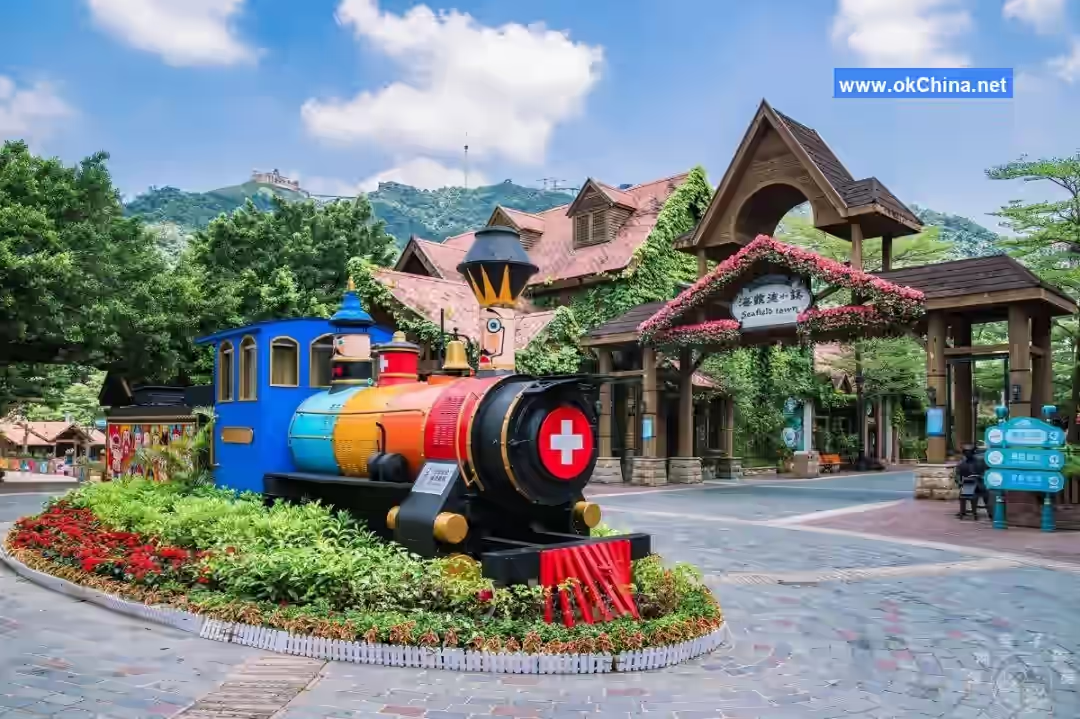
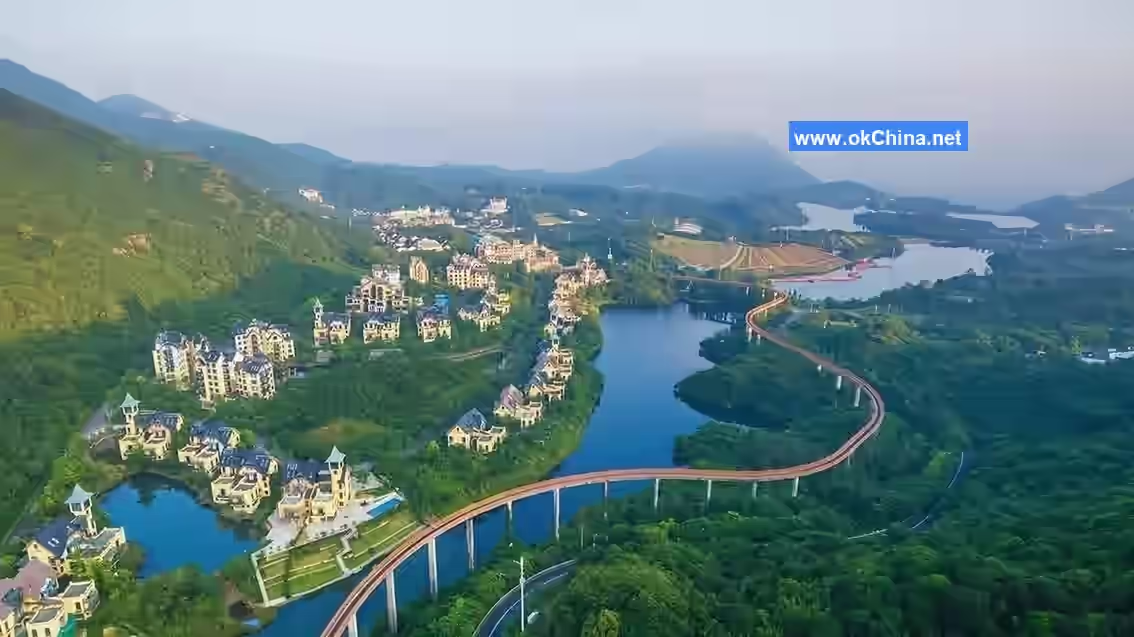
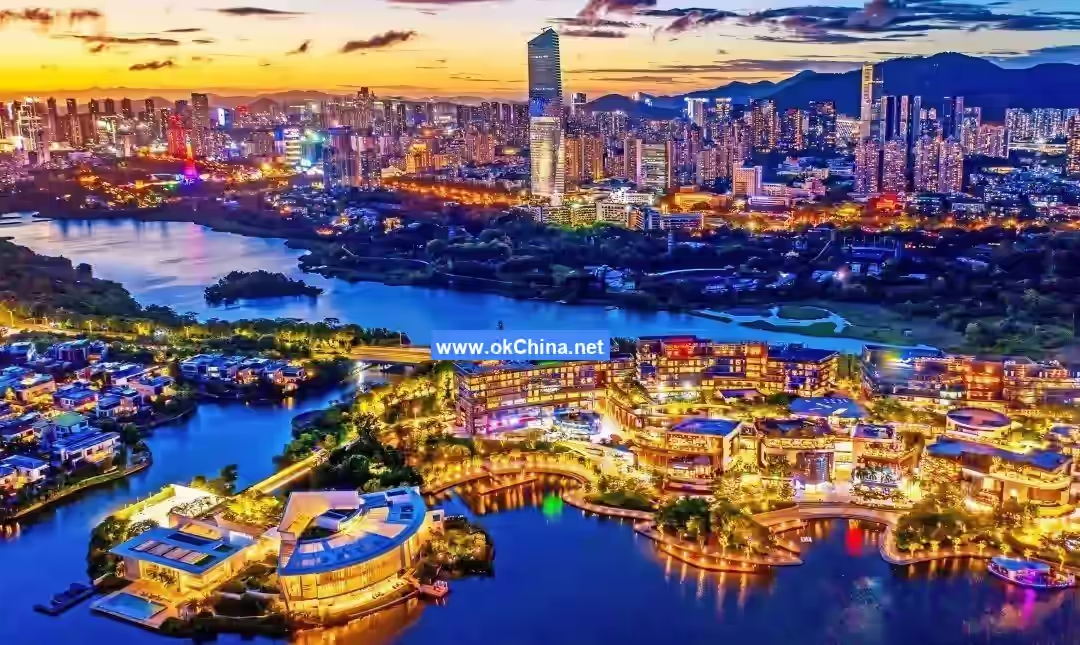
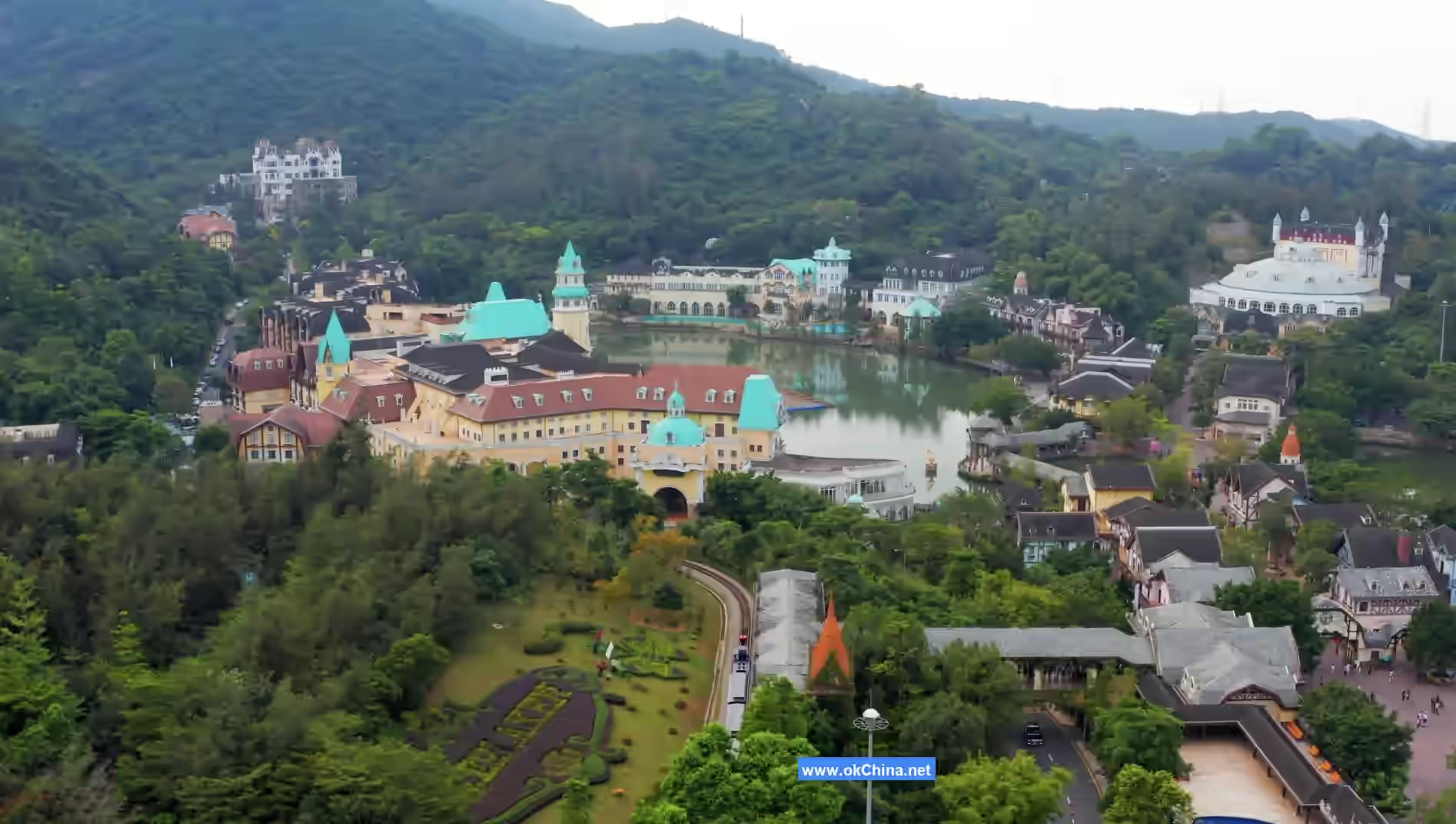
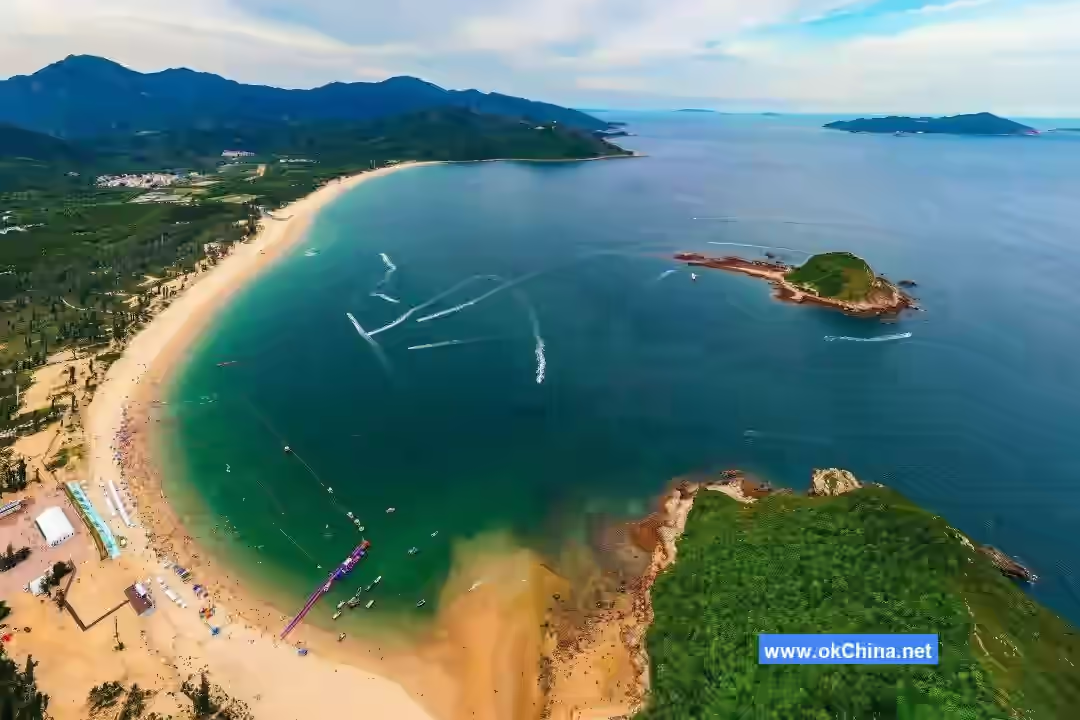
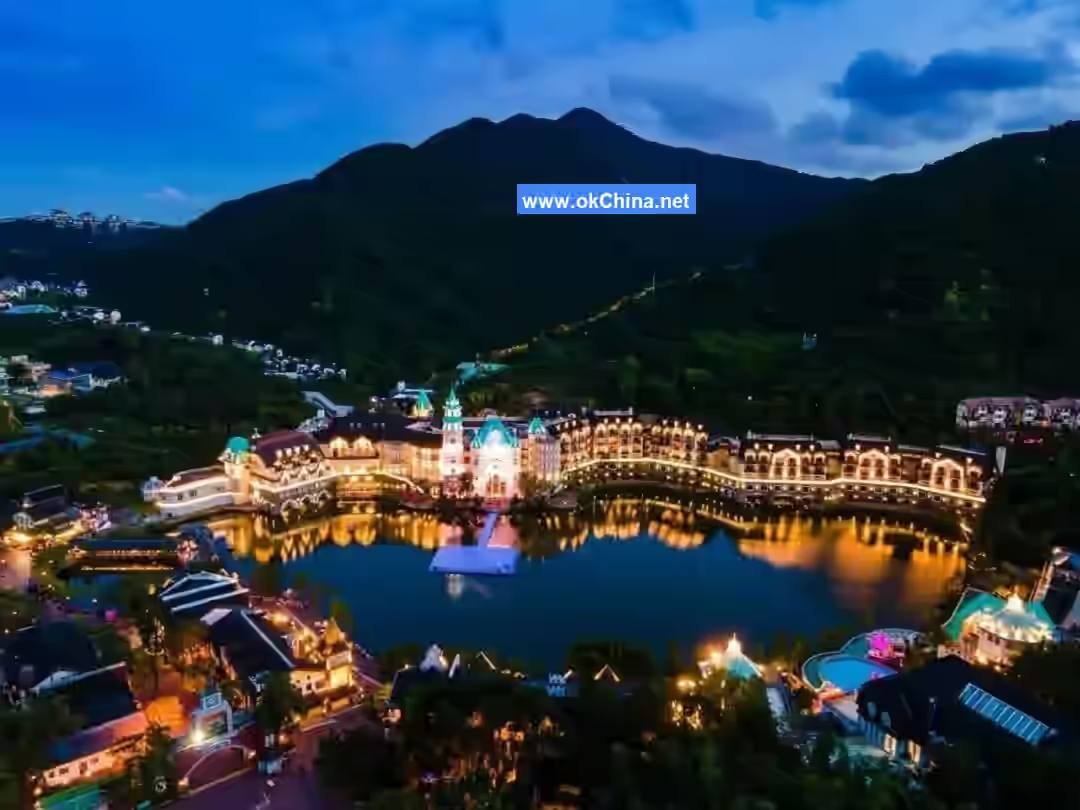
Shenzhen OCT Tourism Resort, abbreviated as OCT Tourism Resort, is located in Nanshan District, Shenzhen City, Guangdong Province, nestled along the picturesque Shenzhen Bay. It is a national demonstration site for civilized scenic tourist areas, covering an area of 4.8 square kilometers. The resort's core consists of four large cultural theme parks: Splendid China, China Folk Culture Villages, Window of the World, and Happy Valley, which collectively receive over 6 million visitors annually.
OCT Tourism Resort also features more than twenty cultural, entertainment, and tourism leisure supporting facilities, including art galleries, art centers, tourism colleges, public leisure parks, sports clubs, and large shopping plazas, as well as various levels of resort hotel facilities.
OCT Tourism Resort is perennially adorned with blooming flowers and lush greenery. It boasts China's most concentrated clusters of cultural theme parks, cultural theme hotels, and cultural and artistic facilities. It is among China's first batch of 5A-level tourist attractions, the first batch of national civilized scenic tourist areas, and a national-level cultural industry demonstration zone. It serves as a vibrant and dazzling city name card for "Wonderful Shenzhen, City of Joy."
2. Geographical Conditions
Shenzhen City is situated in the southern coastal area of Guangdong Province, approximately 160 kilometers from Guangzhou and 35 kilometers from Hong Kong and Kowloon. It borders Dapeng Bay to the east, connects to the Pearl River Estuary to the west, adjoins the New Territories of Hong Kong to the south, and neighbors Dongguan and Huizhou cities to the north. The city's total land area is 2,020 square kilometers. The Shenzhen Special Economic Zone, established in 1980, is located in the southern part of the city, stretching 49 kilometers from east to west with an average width of 7 kilometers from north to south, covering an area of 327.5 square kilometers.
Shenzhen has a subtropical climate with an average annual temperature of 22.4°C, a maximum temperature of 36.6°C, and a minimum temperature of 1.4°C. The average annual rainfall is 1,948.6 millimeters. The prevailing wind direction is southeasterly throughout the year, with an average annual sunshine duration of 2,120 hours and an annual solar radiation of 5,404.9 megajoules per square meter. Typhoons in summer and autumn are blocked by mountain ranges, resulting in direct hits on Shenzhen averaging less than once per year.
Shenzhen OCT is located at a relatively low latitude and belongs to the southern subtropical monsoon climate. The method of dividing seasons based on astronomical angles, commonly used in the Central Plains region—defining spring as March to May, summer as June to August, autumn as September to November, and winter as December to February of the following year—does not align with the characteristics of long summers and short winters in Shenzhen OCT. The climatological seasonal division method, based on specific temperature indicators, better reflects Shenzhen's climate conditions. According to climatological standards: winter ends and spring begins when the 5-day moving average temperature stabilizes at ≥10°C; spring ends and summer begins when it stabilizes at ≥22°C; summer ends and autumn begins when it drops to ≤22°C; and autumn ends and winter begins when it drops to ≤10°C. Based on these standards, Shenzhen experiences a brief winter in approximately 70% of the years. By analyzing years with winters for spring, autumn, and winter, and using 45 years of data for summer, the general seasonal conditions of Shenzhen OCT can be determined.
3. Representative Attractions
3.1 Splendid China • Folk Culture Village
The Splendid China Folk Culture Village miniature scenic area (referred to as "Splendid China") was completed and opened in the late 1980s. It is China's first large-scale cultural theme park and is hailed as the pioneering work of China's "man-made landscapes." Covering an area of 300,000 square meters, it is also one of the world's largest miniature scenic areas with real-life scenes, three times larger than Taiwan's "Window on China" in Taoyuan and twenty times larger than the "Madurodam" in the Netherlands and the "Mini Siam" in Pattaya, Thailand.
"Splendid China Folk Culture Village" is a collection and microcosm of China's 5,000 years of splendid culture and the vast 9.6 million square kilometers of beautiful landscapes. Its attractions can be divided into three categories: ancient architecture, landscapes, and folk dwellings and customs. The ancient architecture group includes palaces, temples, shrines, ancestral halls, towers, pagodas, and bridges. The landscape attractions encompass China's famous mountains, great rivers, and unique peaks and rocks. The folk dwellings and customs category reflects the diverse architectural styles and living habits of China's multi-ethnic nation.
Splendid China is a tourist area within Shenzhen OCT, located along the beautiful Shenzhen Bay. It is currently the world's largest and most content-rich miniature scenic area with real-life scenes, covering an area of 450 acres and divided into a main attraction area and a comprehensive service area. The 82 attractions are distributed according to their geographical positions on the Chinese map, mostly built at a scale of 1:15.
The attractions in "Splendid China" are arranged according to their positions on the Chinese map, with the entire park resembling a giant map of China. These attractions can be divided into three categories: ancient architecture, famous landscapes, and folk dwellings and customs. Over 50,000 ceramic figurines are placed throughout the various attractions.
Here, you can find the Great Wall and the Terracotta Army, both listed among the world's eight wonders, as well as numerous world records: the oldest stone arch bridge, astronomical observatory, and wooden pagoda (Zhaozhou Bridge, Ancient Observatory, Yingxian Wooden Pagoda); the largest palace (Forbidden City); the majestic Huangshan Mountain; one of the largest waterfalls (Huangguoshu Waterfall); solemn mausoleums such as the Mausoleum of the Yellow Emperor, Genghis Khan's Mausoleum, the Ming Tombs, and Sun Yat-sen Mausoleum; magnificent temples like the Confucius Temple and the Temple of Heaven; the majestic Mount Tai; the perilous and towering Three Gorges of the Yangtze River; the picturesque Li River landscape; scenic spots from southern China such as Hangzhou's West Lake and Suzhou's gardens; a variety of uniquely styled famous pagodas, temples, towers, and grottoes; and local dwellings with ethnic flavors. Additionally, scenes such as imperial heaven worship, Emperor Guangxu's wedding, Confucius Temple ceremonies, and folk wedding and funeral customs are vividly presented. In the Chime Bells Hall, you can enjoy ancient music performances by costumed bands playing the timeless Chu music on chime bells. You can experience 5,000 years of Chinese history and travel across the beautiful landscapes of the country in a single day.
China Folk Culture Village contains 24 villages representing 21 of China's ethnic minorities, built at a 1:1 scale, earning it the title "Chinese Folk Museum." The village showcases ethnic costumes, flavors, architecture, and folk art from various regions of China. During Labor Day (May 1st), National Day (October 1st), summer vacations, and the Spring Festival, both Splendid China and China Folk Culture Village host a series of large-scale festival activities. The Dai ethnic "Water-Splashing Festival" held between July and August has become a favorite participatory activity for domestic and international tourists. The diverse ethnic characteristics, lively and auspicious festival atmosphere, and rich cultural heritage form一道道亮丽的风景 (a series of beautiful landscapes) in the scenic area. The ethnic performances are uniquely charming, and the thrilling participatory projects are exciting. Large-scale performances such as "Legend of the Desert," "Oriental Splendor," and "Dragon and Phoenix Dance of China" are震撼之余 (awe-inspiring) and provide artistic enjoyment.
The Splendid China miniature scenic area and China Folk Culture Village are two shining pearls of Shenzhen. These two theme parks pioneered China's theme park industry and enjoy a reputation both domestically and internationally. They have welcomed over 60 million domestic and international visitors, including hundreds of heads of state, government leaders, and international celebrities from around the world.
3.2 Shenzhen Window of the World
Window of the World is located along Shenzhen Bay in Shenzhen City, Guangdong Province. It is a famous miniature scenic area in China, aiming to promote world culture. It is a man-made theme park that integrates world wonders, historical relics, ancient and modern landmarks, and folk song and dance performances. The various attractions in the park are built at different scales. The entire park is divided into eight themed areas: World Square, Asia, America, Africa, Oceania, Europe, Sculpture Garden, and International Street, showcasing over one hundred world-renowned cultural landscapes and architectural marvels such as the Eiffel Tower, Arc de Triomphe in Paris, Leaning Tower of Pisa, Taj Mahal, and Egyptian Pyramids.
3.2.1 World Square
World Square features 108 columns with profound meanings, a 1,680-square-meter relief wall symbolizing world civilization, six gates representing different cultures, and an embedded panoramic global stage. It is grand, solemn, and majestic. The long river of history is vast, inheriting solemnity and grandeur while embracing technology and fantasy.
3.2.2 International Street
International Street primarily features European, Asian, and Islamic residential architectural styles, integrating churches, markets, and streets into one area. It is an excellent place for visitors to rest and shop. Stepping into 'International Street,' visitors feel as if they are in the romantic lands of Europe, Asia, and the Islamic world, surrounded everywhere by an ancient and distant exotic atmosphere. Looking around, medieval European-style buildings stand nearby with unique shapes; walking along the street, the buildings are arranged in a picturesque disorder, each showcasing its own personality and thought-provoking charm. The graceful and名副其实的 (truly worthy of the name) European-style architectural district stands out unexpectedly before your eyes.
3.2.3 Asia Area
Asia, the beautiful and mysterious East, displays a splendid scroll within a compact space. The Japanese Imperial Palace—Katsura Imperial Villa演绎 (depicts) the luxury of royalty. Traditional tea ceremonies and ikebana展演 (demonstrate) the ancient charm of Japan. The golden Shwedagon Pagoda in Yangon, Myanmar,无不讲叙着 (all narrate) the prosperity of dynasties. India, a country steeped in stories: the Modhera Sun Temple让我们洗净灵魂的尘埃 (allows us to cleanse the dust of our souls); the Taj Mahal lets the world witness the绝唱 (swan song) of love, a wonder of the world. The Southeast Asian water village creates a strong Asian ambiance, allowing us to品尝丰收的成果 (taste the fruits of harvest) and聆听生命的歌唱 (listen to the song of life).#### 3.2.4 European Zone Looking across Europe, traces of the Renaissance are everywhere in sight. The monsoon winds of the Aegean Sea and the sunshine of the Mediterranean weave together the symphony of Europa; the Eiffel Tower stands tall, while the Arc de Triomphe bears witness to the vicissitudes of history; Italy has raised the sun in my heart, and St. Peter's Basilica repeats the prologue of Genesis; Vasily has witnessed the great changes in Red Square, and the bells on Mount Olympus testify for us: the flower of human civilization is nourished with blood! On this land carried by Noah's Ark, let us commemorate yesterday with Shakespeare's poetry and adorn today's home with Dutch windmills and tulips. Beside the palace gardens, classic buildings from various historical periods of Europe are gathered. The Printemps Haussmann, Roman Holiday Plaza, Fountain of Neptune Square, and Caesar's Palace together construct a continental European scene rich in humanistic atmosphere.
3.2.5 African Zone
Window of the World Landscape Egypt – an ancient civilization nurtured by the waters of the Nile. The pyramids, the crystallization of human wisdom; the Sphinx statue, solemnly guarding this magical land, leaving behind an eternal mystery; the Abu Simbel temples narrate the rise and fall of a dynasty, and the undulating camel humps make the vast African continent restless no more... Who halted the running of Kenya? And who can lift the veil of the bride on the hundred-zhang cliffs of Guinea?
3.2.6 American Zone
The sound of Niagara Falls' flowing water draws people to America, where modern civilization and ancient culture shine together. The warriors of Mexico are dignified and focused, while the holy souls atop Brazil's Christ the Redeemer keep watch over all beings day and night. The United States Capitol, the White House, and the Washington Monument allow you to touch the essence of America; the towering skyscrapers of Manhattan, New York, reflect the brilliance of modern civilization; the presidents on Mount Rushmore smile knowingly, and the Statue of Liberty smiles as well. Human wisdom has turned the unknown world into a magnificent home.
3.2.7 Oceania Zone
Window of the World's Sydney Opera House and Sydney Harbour Bridge Spanning the azure waters, what greets people is the magical Australian continent. Bathed under a hundred-meter fountain, the Sydney Opera House crouches by the shoreline.
Like a lotus emerging from water, its unique shell-like structure reminds one of the luster of pearls, complementing the soaring hundred-meter fountain and the elusive, color-changing Ayers Rock. The captivating scenery makes one linger forgetful of return; the rolling wildlands are alive with the figures of kangaroos; Ayers Rock shifts and shimmers mysteriously; the vigorous drumbeats sound the Maori people's ode to life, their powerful dance postures proclaiming a timeless yearning for freedom, which, even after millennia, still stirs the soul.
3.2.8 International Sculpture Garden
The sculpture garden is nestled amidst greenery, where lush lychee groves interplay with nearly a hundred famous sculptures from five continents, together creating an elegant artistic sanctuary. From Rodin's "Hand of God" to Michelangelo's "Bound Slave," from Napoleon's sister to the mysterious Sanxingdui bronze figures, they showcase the wisdom and aesthetic tastes of different peoples.
3.3 Shenzhen Happy Valley
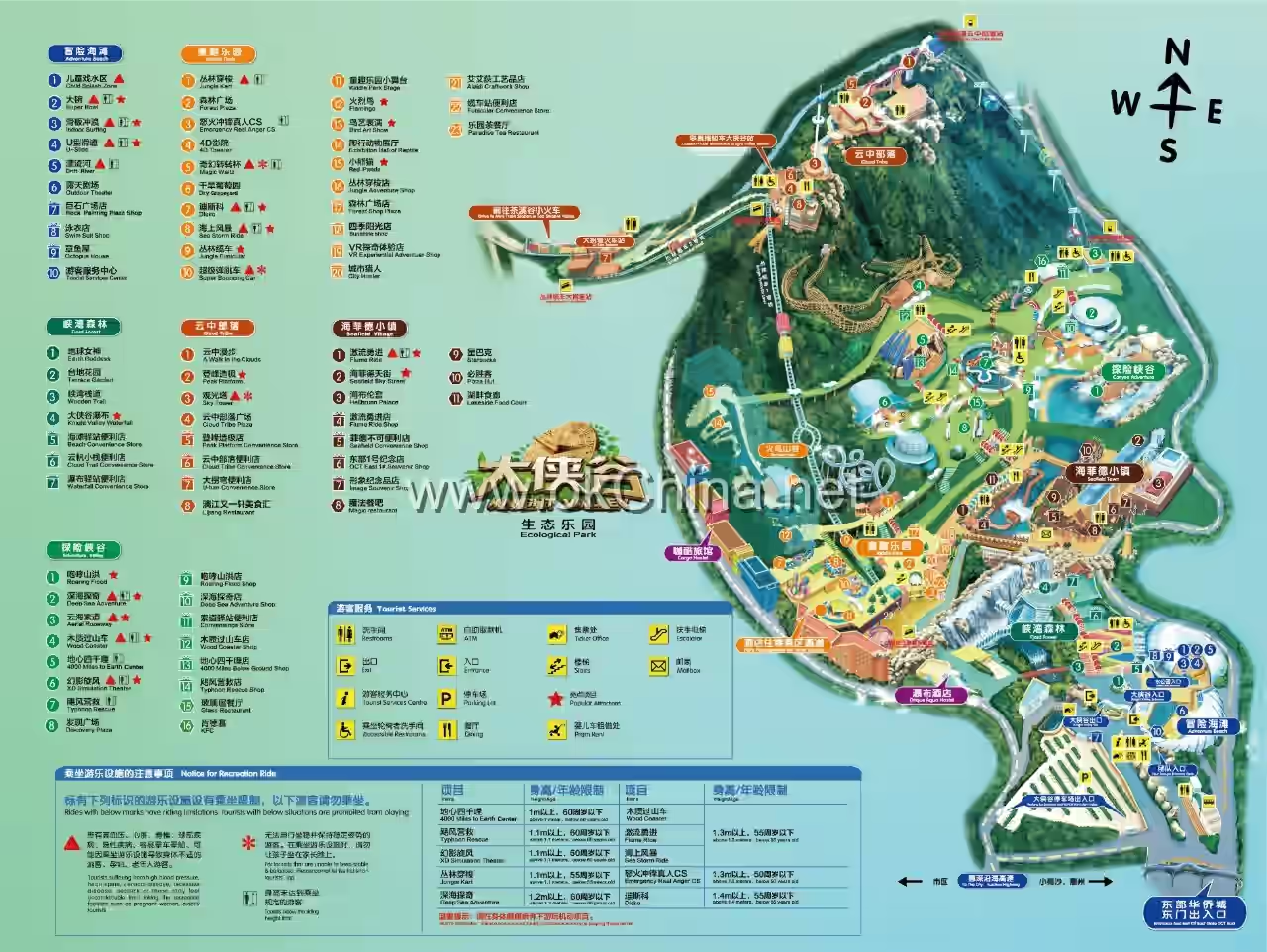
Shenzhen Happy Valley is a new-generation large-scale theme park under the OCT Group and one of the first batch of National AAAAA Tourist Attractions. Covering an area of 350,000 square meters with a total investment of 2 billion RMB, it is a modern Chinese theme park integrating participation,观赏性, entertainment, and趣味性. Since its opening in 1998, through five phases of rolling development, Shenzhen Happy Valley has become the modern theme park with the largest investment scale and most advanced facilities in China. Over its seventeen years of operation, it has received over 40 million domestic and international visitors, ranking first in China for eight consecutive years and being honored as one of the Asia-Pacific's Top Ten Theme Parks for four consecutive years. In 2014, the number of visitors reached 3.3 million, setting another historical record. In 2015, Shenzhen Happy Valley will invest 200 million RMB to undergo a series of upgrades in tourism culture, entertainment projects, and themed experiences. As a leader in China's theme park industry, Shenzhen Happy Valley will continue to advance with the times, vigorously develop cultural tourism industries, build an information-based smart scenic area, and set new benchmarks for the development of Chinese theme parks.
3.4 Happy Coast
Happy Coast is located at the core of the Shenzhen Bay business district, situated between the OCT Group's theme park cluster and Binhai Boulevard. It is the starting point of Shenzhen's "Tanglang Mountain – OCT – Shenzhen Bay" urban functional axis and the center of Shenzhen's efforts to create a high-quality cultural tourism and international creative lifestyle space.
3.5 Malu Town
Malu Town is a new-type children's career experience park under the OCT Group. It is a miniaturized children's city, featuring dozens of houses in different styles, bustling streets, and busy traffic. Here, children have their own ID cards and bank cards and can experience various role-playing activities—police officer, firefighter, flight attendant, doctor, journalist, pastry chef, photographer... over fifty different professions are available. After completing work, they can earn "Malu Dollars" to enjoy food, buy souvenirs, or enroll in vocational training within the park.
3.6 He Xiangning Art Museum
The He Xiangning Art Museum is China's first national-level art museum named after an individual and the second national modern museum after the National Art Museum of China. It primarily focuses on collecting, displaying, and researching He Xiangning's paintings and calligraphy works. It also pays attention to related artists, organizes and preserves art historical materials, and hosts high-quality art exhibitions and collections both domestically and internationally. Through academic research on modern art and the promotion of art education, it aims to promote traditional Chinese culture, advance the construction of socialist spiritual civilization in China, and foster cultural and artistic exchanges between the Chinese art community and overseas.
3.7 OCT-LOFT Creative Culture Park
The OCT-LOFT Creative Culture Park is located within the former eastern industrial zone of Shenzhen's OCT. It consists of creative industry studios converted from old factory buildings, introducing various types of creative industries such as design, photography, animation creation, education and training, and art, as well as related industries with creative characteristics like concept restaurants, lounges, retail, and cafes.
Comments
Post a Comment