Zhenbeibao Western Film Studio in Yinchuan, Ningxia
I. Introduction
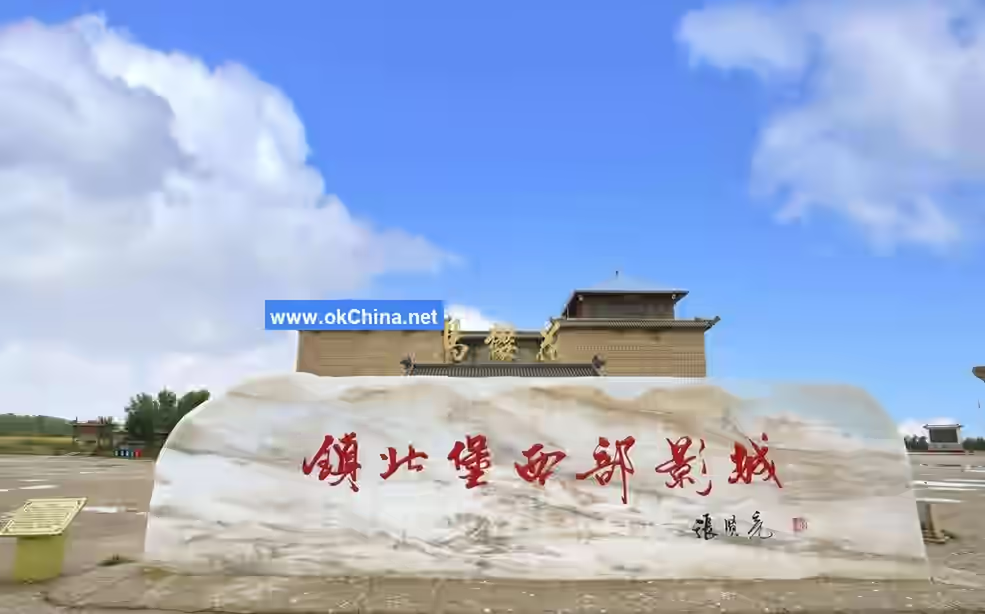
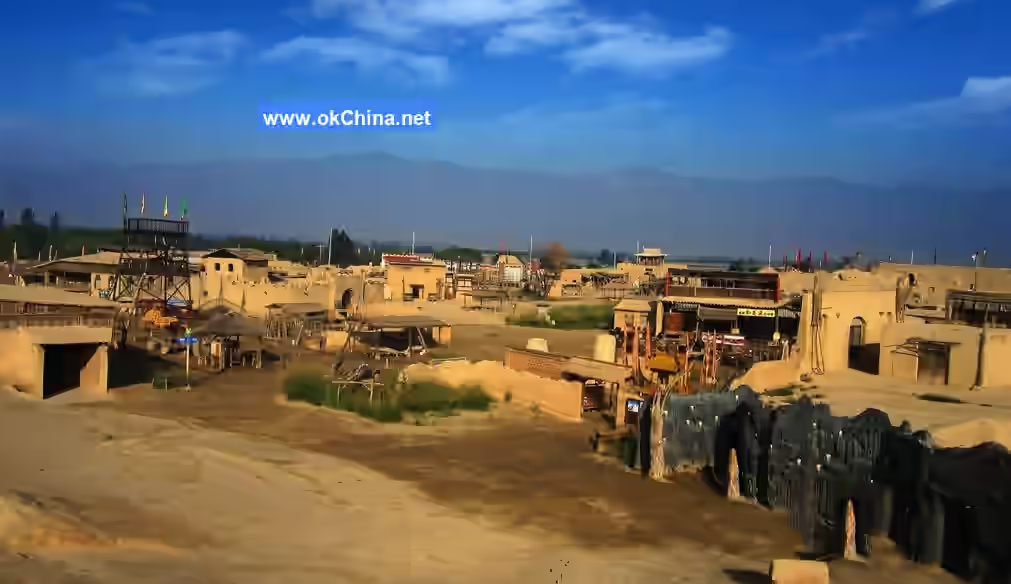
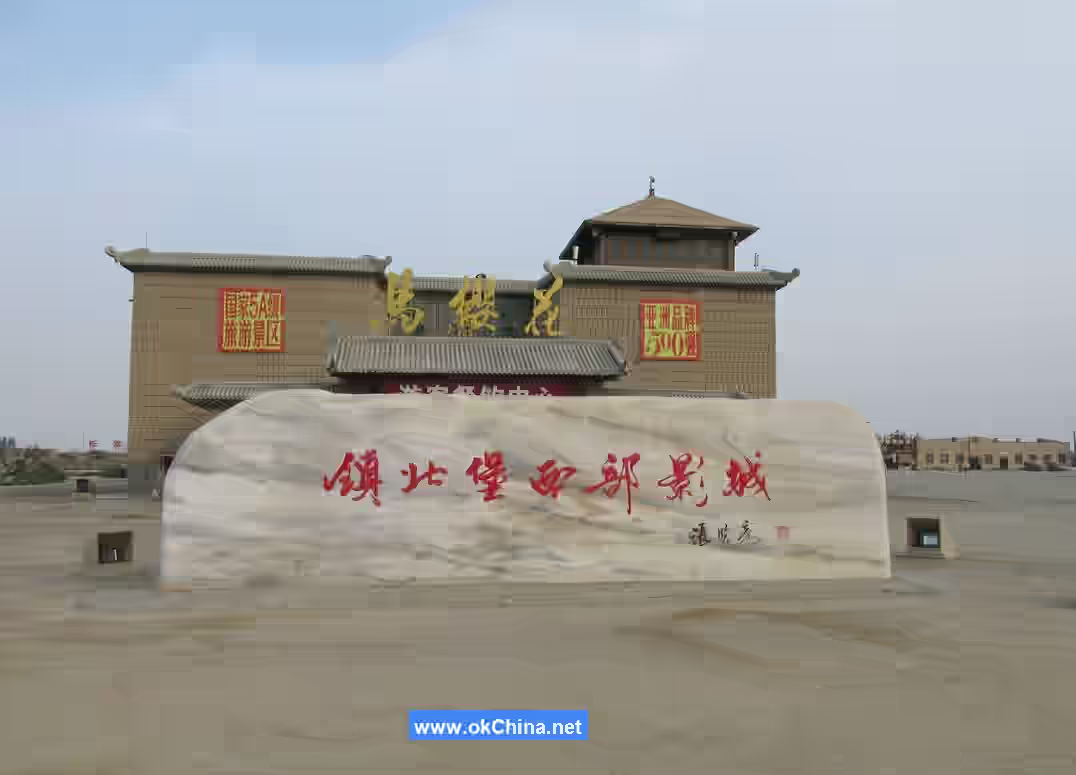
Zhenbeibao Western Film Studio, located in Yinchuan, Ningxia Hui Autonomous Region, is a national AAAAA-level tourist attraction that integrates sightseeing, entertainment, leisure, dining, and shopping. It was founded by writer Zhang Xianliang on September 21, 1993. The studio is known for its rustic, primitive, rugged, desolate, and folk-style characteristics. Its main attractions include over a dozen film and television shooting landscapes such as Ming City, Qing City, and Old Yinchuan Street.
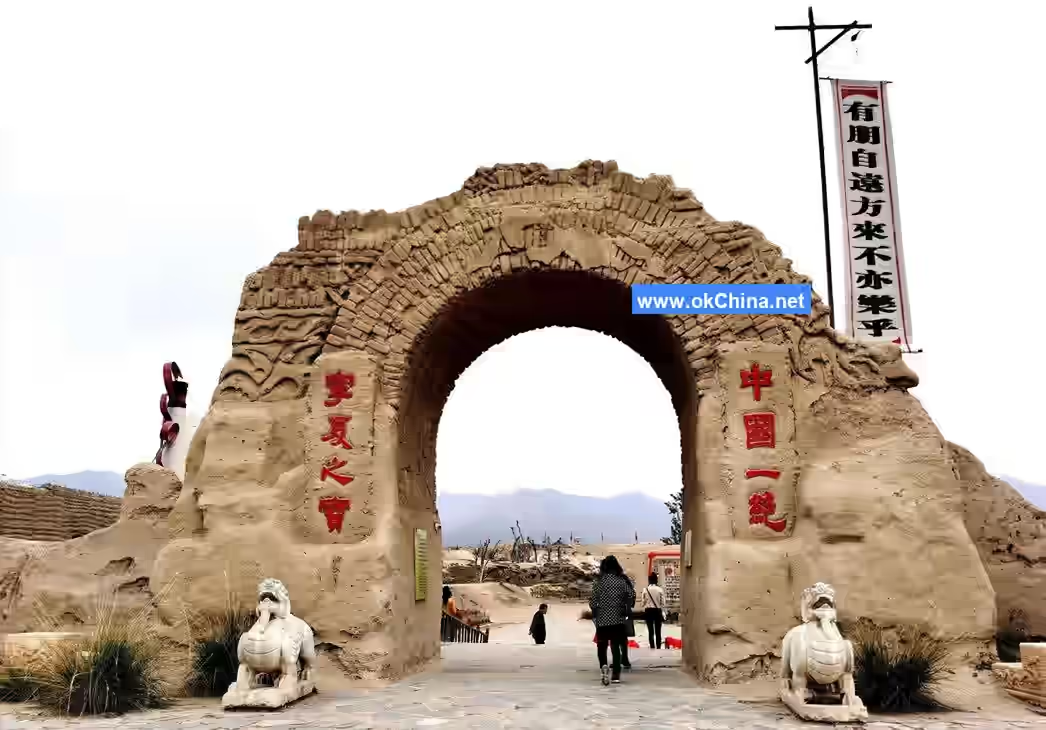
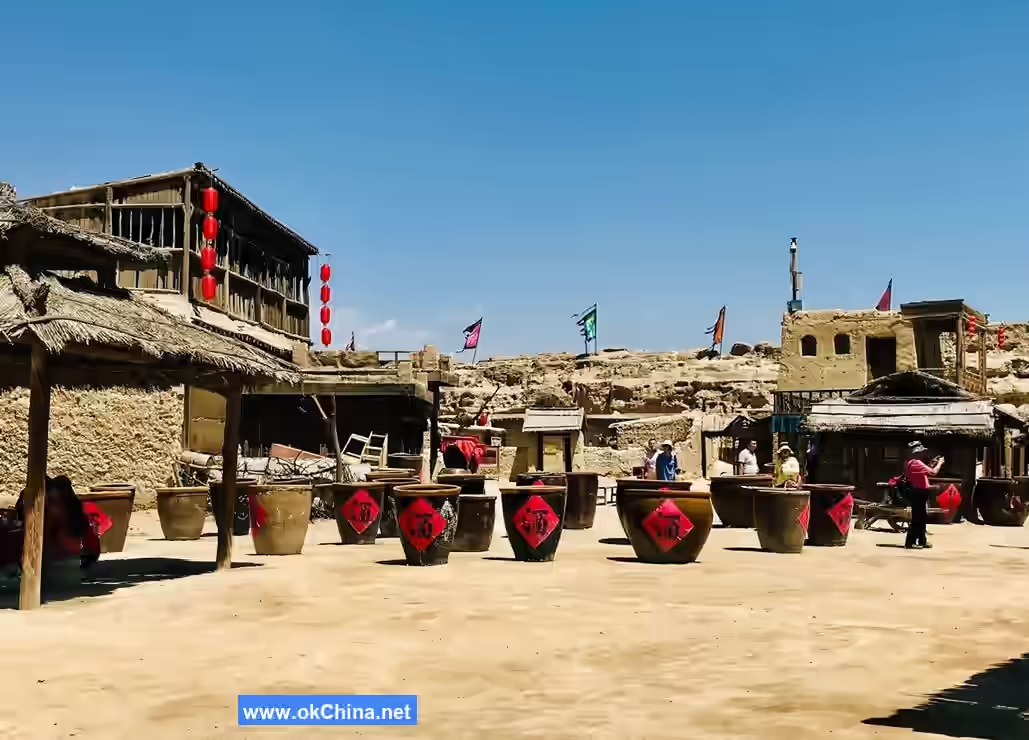
Zhenbeibao Western Film Studio is situated at the northern end of Xixia District, Yinchuan City, Ningxia Hui Autonomous Region. It covers an area of 0.7 square kilometers, with a building area of 500,000 square meters. The studio features two ancient fortresses, one to the north and one to the south, named Zhenbeibao and Zhennanbao, both facing east. The studio is characterized by its rustic, primitive, rugged, desolate, and folk-style atmosphere. It preserves and restores scenes and props from various films for visitors to appreciate. Exhibited scenes include the city gate tower and the cave of the Spider Spirits from A Chinese Odyssey, as well as the "earth-shattering" scene of Sun Wukong's battle with the Bull Demon King. Other notable scenes include the "Blacksmith Camp" from Ballad of the Yellow River, and the Moon Gate, winemaking workshop, Jiu'er's (played by Gong Li) bedroom, the sedan chair she rode in for her wedding, and the large wine jars and bowls from Red Sorghum. The studio also features film service facilities such as a movie archive screening hall.
II. Historical Development
During the Hongzhi period of the Ming Dynasty (around 1500 AD), Zhenbeibao Western Film Studio was initially built as a frontier fortress known as "Zhenbeibao" during the Ming and Qing dynasties.
In the fifth year of the Qianlong reign of the Qing Dynasty (1740 AD), a major earthquake struck Ningxia, destroying Zhenbeibao. A new fortress, "Zhennanbao," was constructed nearby.
In 1958, Zhenbeibao was converted into a steelmaking site.
In 1969, Zhang Xianliang, who was undergoing labor reform on a farm, discovered Zhenbeibao.
In 1980, Zhang Xianliang was transferred to work at the Ningxia Federation of Literary and Art Circles and introduced Zhenbeibao to the film crew of One and Eight. Subsequently, film and television crews began shooting here.
In 1982, the film The Herdsman, adapted from Zhang Xianliang's novel Soul and Flesh and directed by Xie Jin, was shot here. The film won an award at the Manila International Film Festival.
On September 21, 1993, Zhang Xianliang founded Zhenbeibao Western Film Studio.
In 1998, 22 herder households living within the studio were relocated and resettled.
In 2012, "Old Yinchuan Street" was constructed within the studio in just 97 days.
In 2014, the studio launched an online ticket sales channel.
Starting in July 2016, the studio introduced night tour projects.
III. Location and Layout
Location
Zhenbeibao Western Film Studio is located in Zhenbeibao Town, Xixia District, Yinchuan City, Ningxia Hui Autonomous Region. It is 35 kilometers from downtown Yinchuan, 25 kilometers from the train station, and 48 kilometers from Hedong Airport. National Highway 110 runs through the area, making transportation convenient.
Climate Characteristics
Xixia District, where the studio is located, is inland and far from the ocean, situated on the western edge of the national monsoon region. In winter, it is controlled by the Mongolian high-pressure system and is a key passage for cold air moving south. In summer, it is at the tail end of the southern monsoon, resulting in a typical continental climate. According to national climate zoning, Xixia District belongs to the mid-temperate arid climate zone. In Ningxia's agricultural climate zoning, it is part of the Yellow River irrigation area.
IV. Main Attractions
Qing City
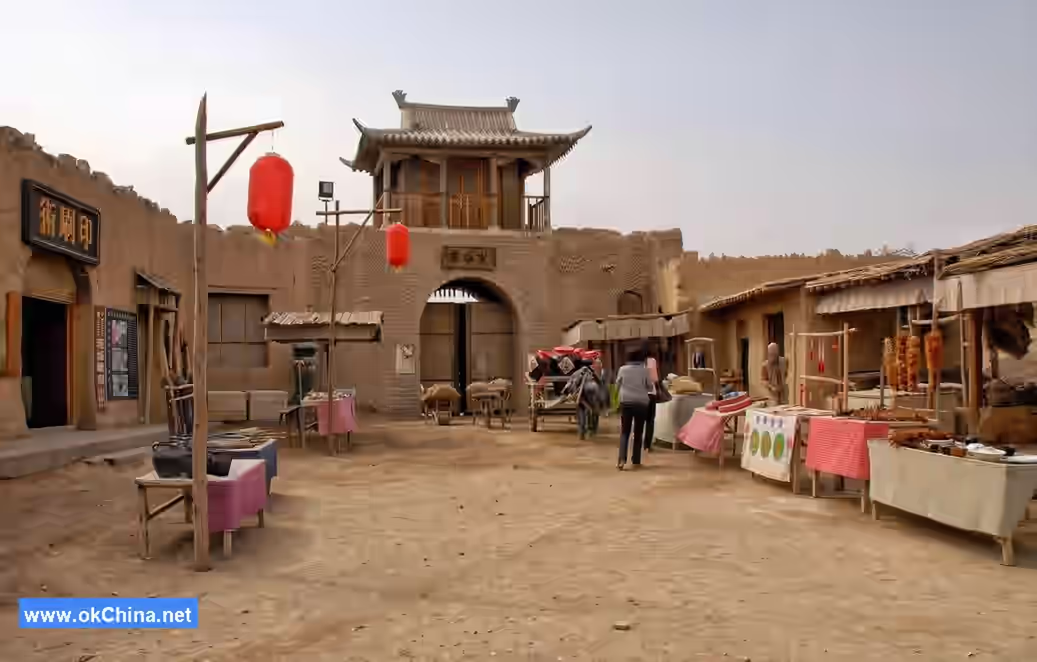
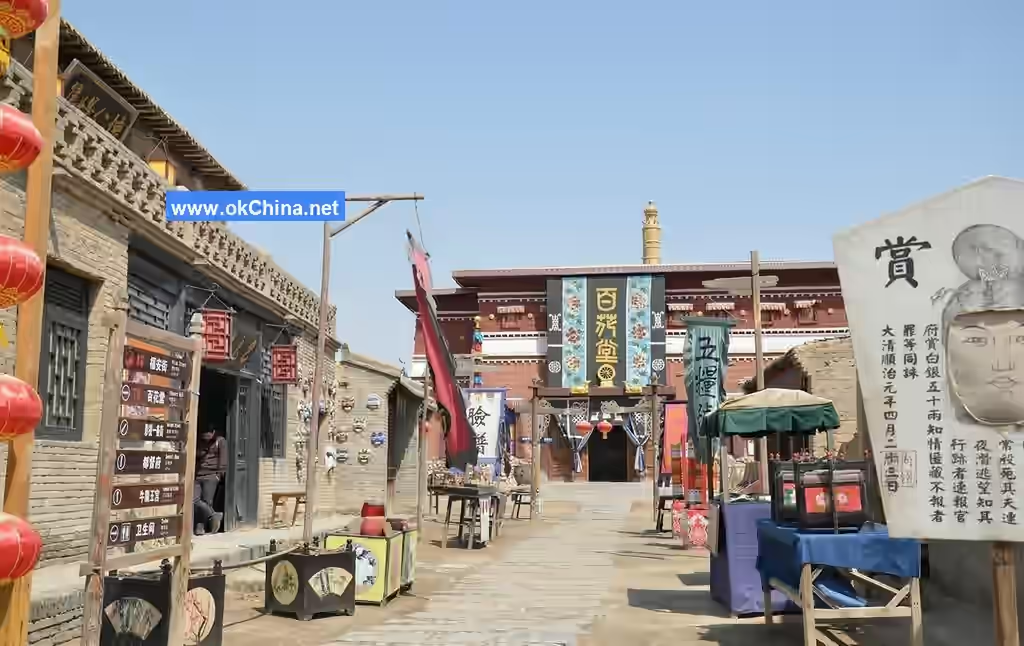
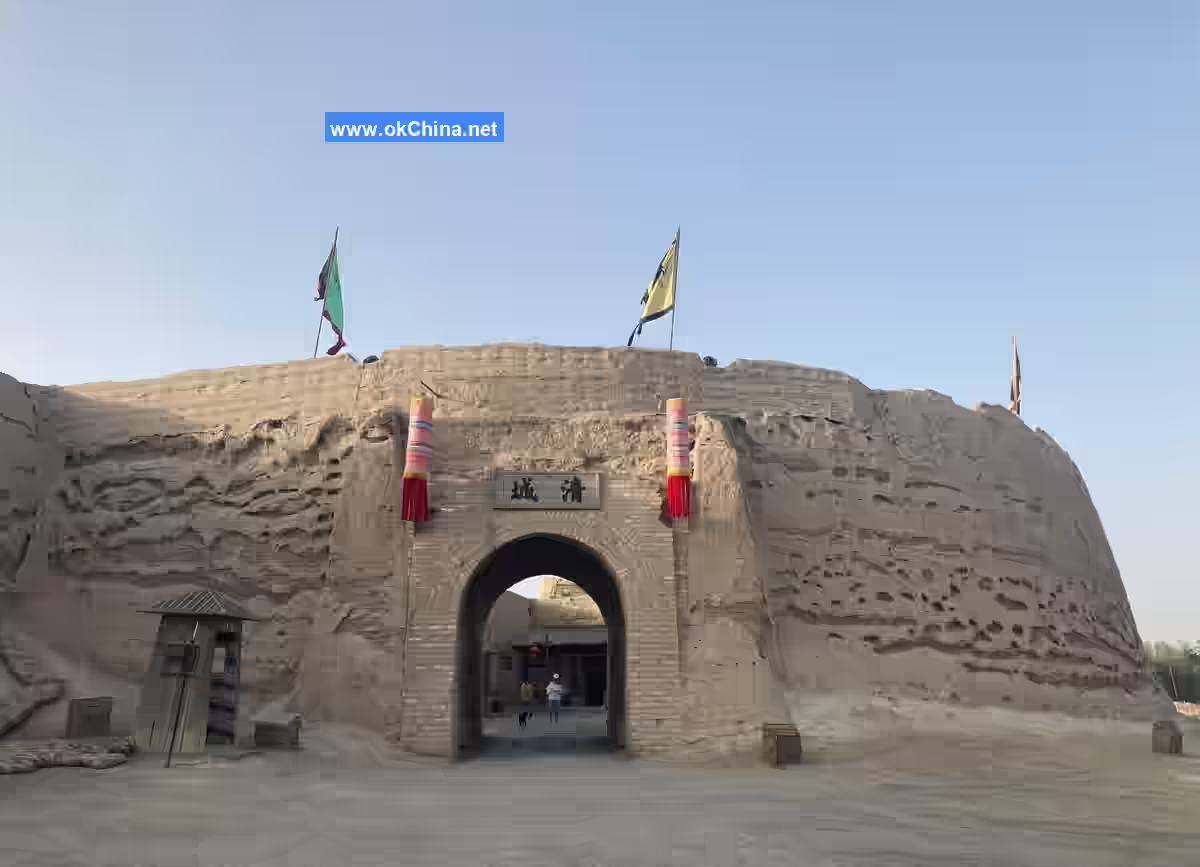
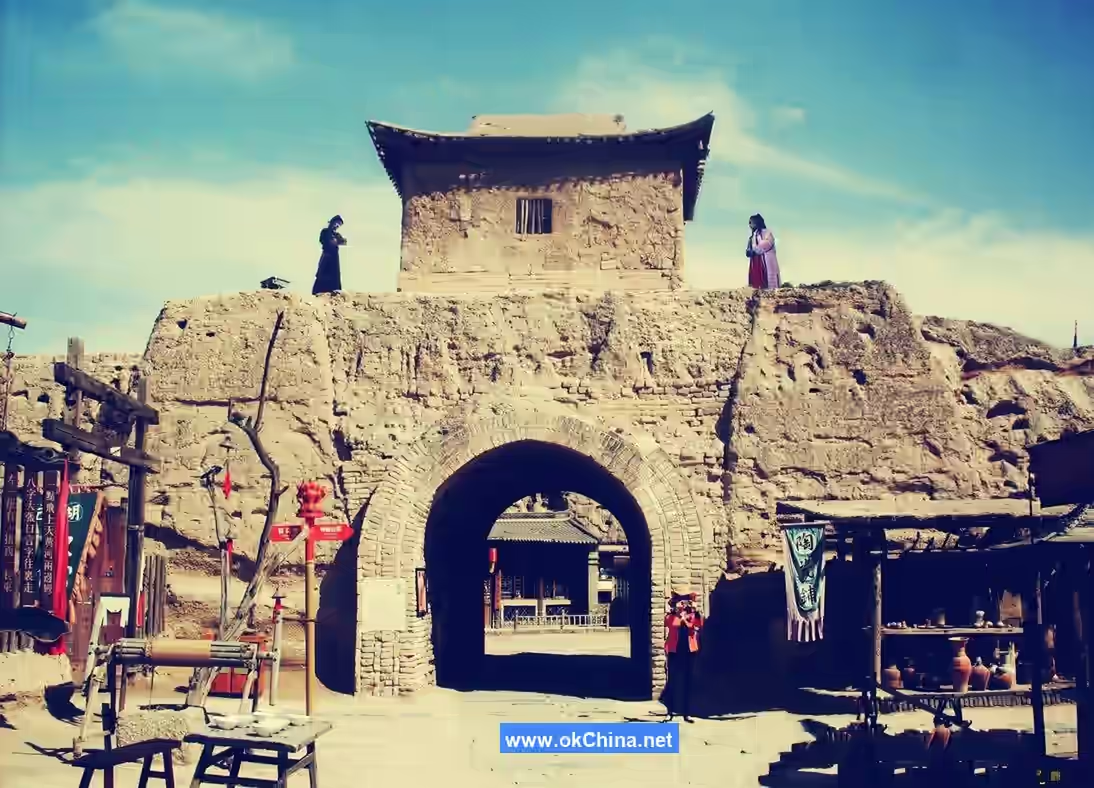
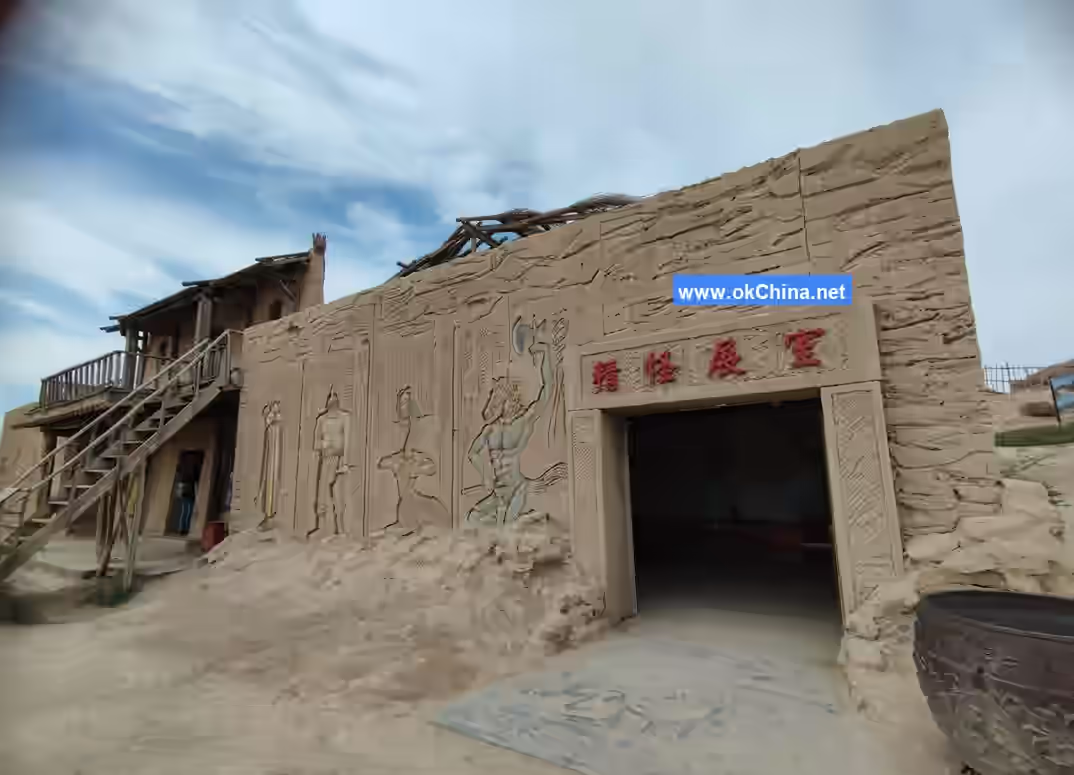
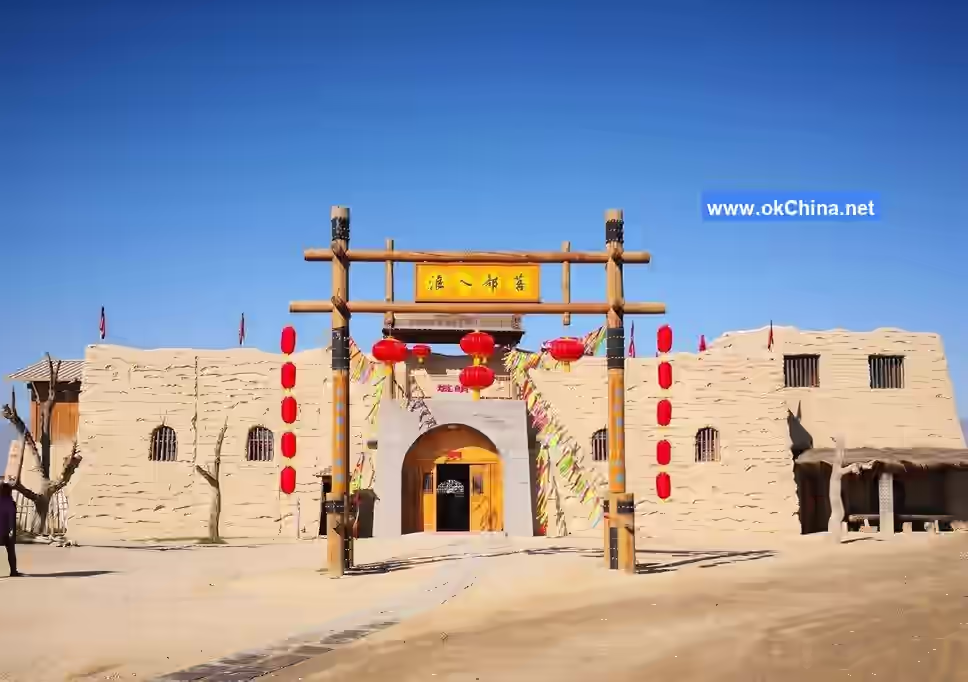
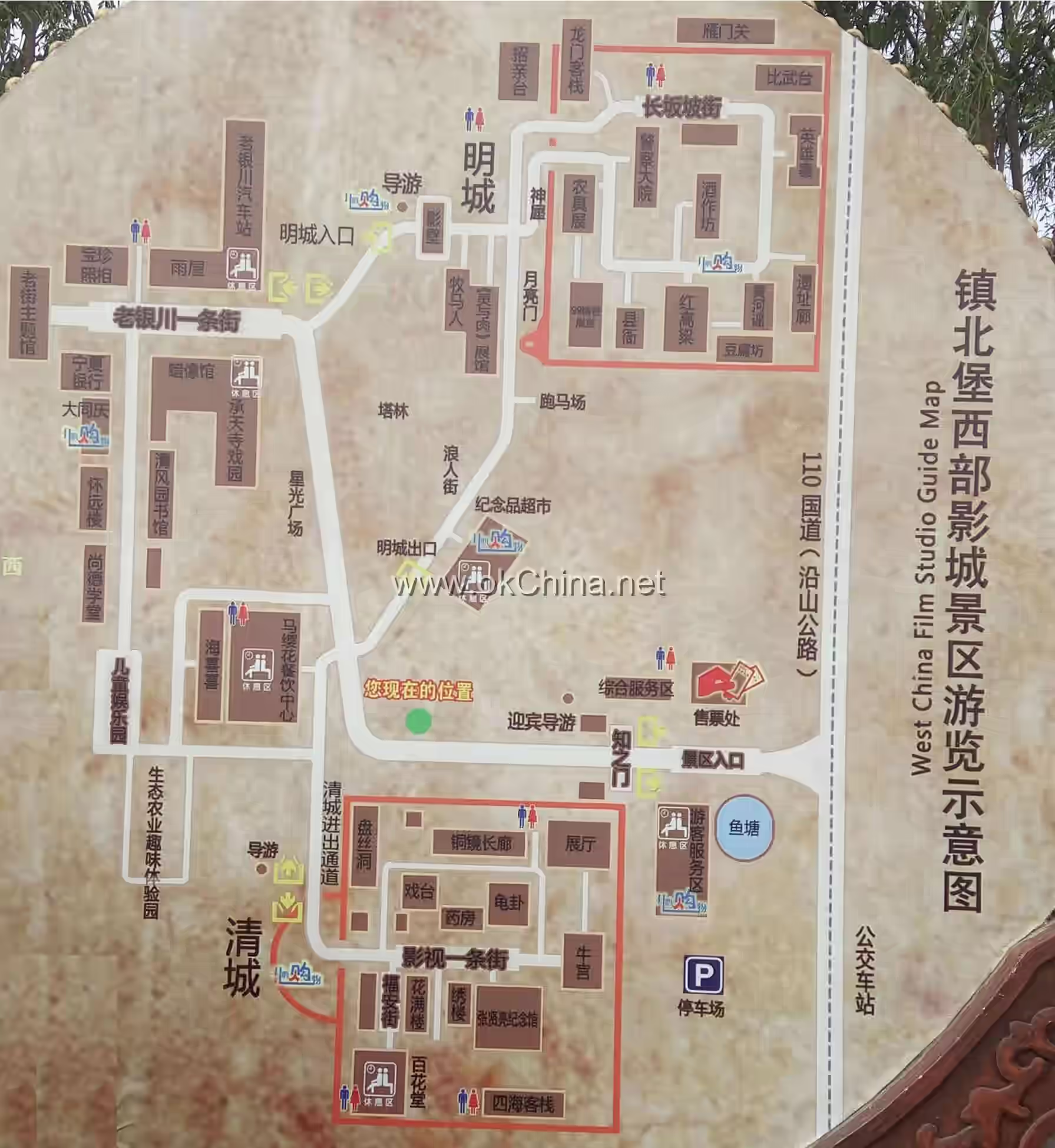
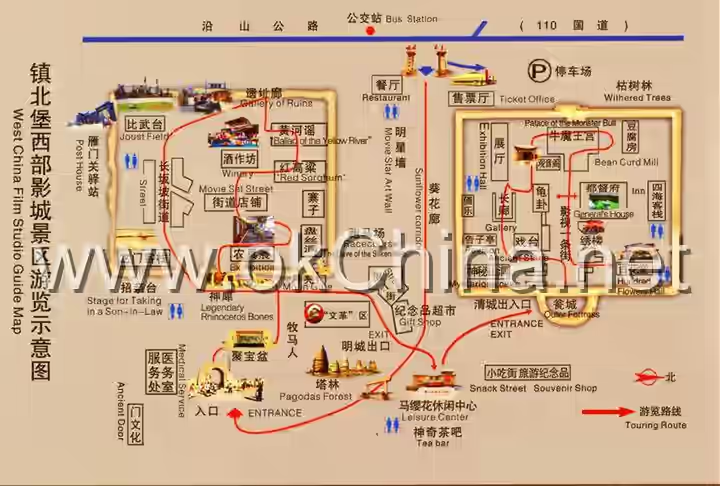
Qing City is located at the northern end of Zhenbeibao Western Film Studio (at the main entrance). It was built in the fifth year of the Qianlong reign of the Qing Dynasty (1740 AD) as another military barracks constructed by imperial decree after Ming City was destroyed by an earthquake, hence the name "Qing City." The proximity of the two barracks highlights the military value of the eastern foothills of the Helan Mountains. Qing City is shaped like a large turtle, symbolizing "the spiritual turtle descending the mountain, bringing good luck and prosperity." Inside Qing City, various folk and traditional craft performances are the main attractions. Key sites include the Wengcheng (barbican entrance), the Gate of Luck, the Mysterious Cave, Baihua Hall, Film and Television Street, Ancient Fort Turtle Divination, the Governor's Mansion, the Bull Demon King's Palace, Guanyin Pavilion, exhibition halls, the Star Dog Kennel, and the Gaozi Pavilion. The second gate of Qing City is known as the "Gate of Luck." It earned this name because it is located in the middle section of the Helan Mountains, resembling a crouching dragon holding a pearl. Films and TV series shot here, such as Zhu Yuanzhang, Aftershock, and A Chinese Odyssey, have achieved great success, leading the Chinese film and television industry to call this gate the "Gate of Luck."
Stepping into Qing City feels like traveling back to the bustling streets of the Qing Dynasty. The city gate tower is tall and majestic, the walls are solid and thick, and the battlements are neatly arranged, as if recounting stories of past defenses. The architectural style within the city is unique, with ancient-style residences scattered in an orderly fashion. Blue tiles, white walls, and flying eaves and brackets showcase the exquisite craftsmanship of traditional architecture. Inside these residences, furnishings and decorations retain the Qing Dynasty style, including carved beds, rustic tables and chairs, and delicate porcelain. Visitors can almost see the figures of those who once lived here and feel their joys and sorrows.
At the center of Qing City, there is a lively street lined with shops, including traditional handicraft workshops, teahouses, taverns, and pawnshops. Artisans in the workshops focus on creating exquisite crafts such as paper-cutting, wood carving, and embroidery. Visitors can watch, participate, and experience the charm of traditional handicrafts. In the teahouses, the aroma of tea fills the air, and waiters dressed in ancient costumes warmly greet guests. Sitting down for a pot of tea, listening to the laughter and chatter, and watching street performers, time seems to slow down. In the taverns, the rich aroma of wine permeates the air, and visitors can taste local specialty wines, experiencing the bold and unrestrained joy of ancient drinking customs.
Qing City is also the filming location for many classic films and TV series. Scenes from movies and TV shows shot here are everywhere, allowing visitors to find familiar corners and relive memorable plotlines. For example, a touching love story might have unfolded in a courtyard, or an intense fight scene might have taken place in an alley. These scenes blend with the reality of Qing City, giving visitors a magical feeling of stepping into a film or TV show.
Additionally, Qing City's nightscape has its own unique charm. As night falls, red lanterns light up one by one, casting a soft glow on the ancient buildings and draping Qing City in a hazy red veil. At this time, Qing City becomes more tranquil and mysterious. Strolling through its streets and alleys, visitors can almost hear the echoes of history and engage in a cross-temporal dialogue with the ancients. Whether visitors are interested in history and culture or fascinated by film and television art, Qing City offers an unforgettable travel experience, immersing them in this classical masterpiece and making them reluctant to leave.
Ming City
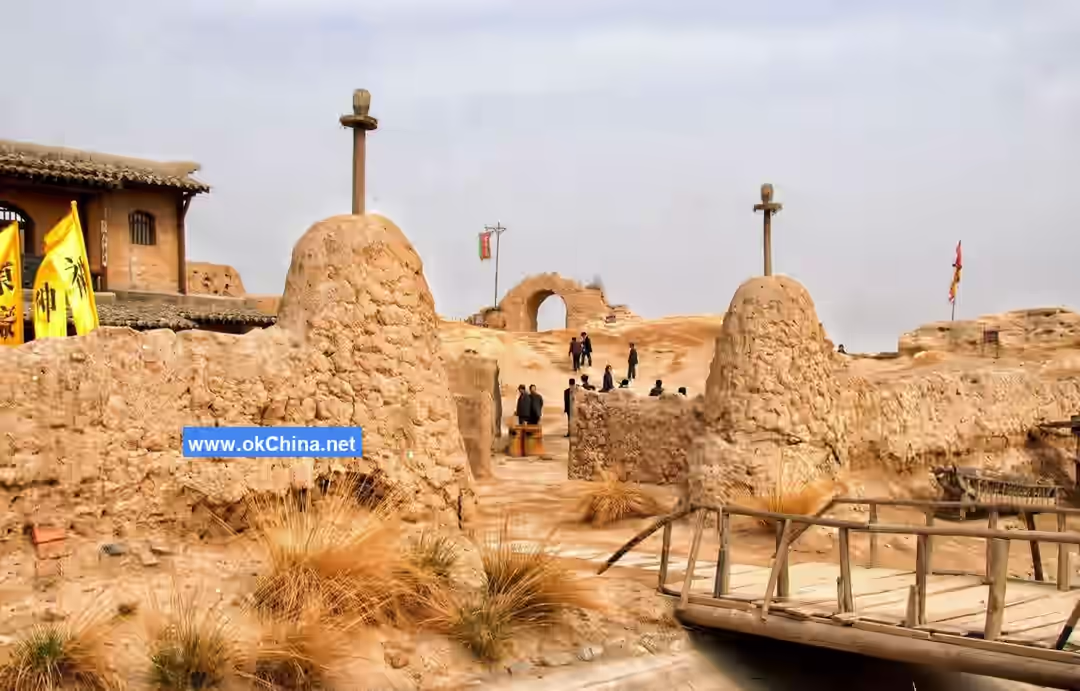
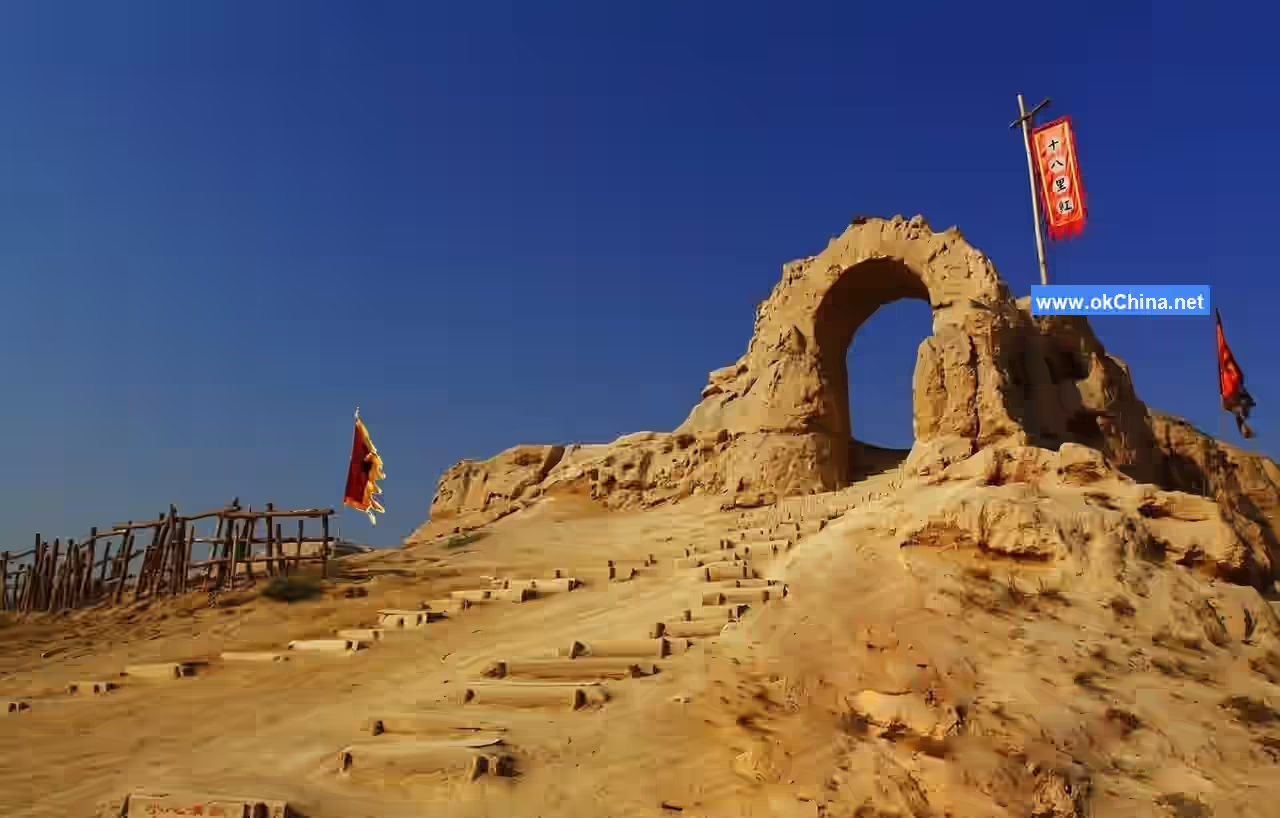
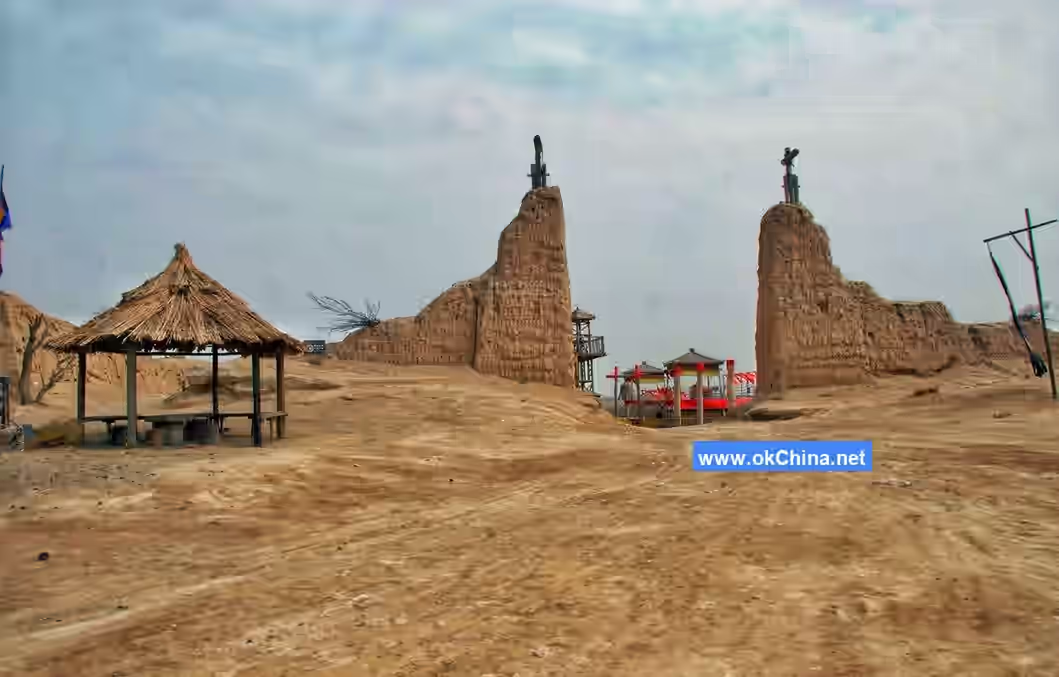
Ming City is located at the southwestern end of Zhenbeibao Western Film Studio (south of Qing City). It was built during the Hongzhi period of the Ming Dynasty (around 1500 AD) as one of the many military fortresses along the northwestern section of the Great Wall, named "Zhenbeibao." In the third year of the Qianlong reign of the Qing Dynasty (1738 AD), the Zhenbeibao barracks were destroyed by an earthquake. Ming City embodies the primitive, rugged, rustic, and desolate natural landscape and serves as the main filming location for the studio. Key attractions include the Treasure Basin, The Herdsman, the Cultural Revolution Compound, the Moon Gate, Guanzhong City Gate, the Hay Shop, the Cave of the Spider Spirits, the Dingzhou Governor's Mansion, the Wine Workshop, Jiu'er's Bedroom, the Blacksmith Camp, the Ruins Corridor, the Marriage Proposal Platform, and the Dragon Gate Inn. After the Zhenbeibao fortress built during the Ming Dynasty collapsed in the earthquake, the Qing government rebuilt the barracks. The presence of two barracks in Zhenbeibao is a unique phenomenon in China, forming a "Taiji diagram."
Despite weathering and erosion, the walls of Ming City still stand tall, with their mottled surfaces bearing deep imprints of history. These marks seem to silently recount the countless battles and hardships Ming City has endured. Entering Ming City, visitors are first greeted by an open area surrounded by buildings of various styles. There are majestic royal mansions with tall gate towers showcasing the former noble status of their owners. The courtyards within are deep, with winding corridors and carved beams and painted rafters. Though slightly worn, they still reflect the former luxury and grandeur. Adjacent to these are the humble homes of ordinary people, with low houses and simple furnishings, forming a stark contrast to the mansions and reflecting the significant social stratification of the time.
The most unique aspect of Ming City is its role as the birthplace of many famous films, with numerous classic scenes permanently captured here. In one corner, heroes might have galloped on horseback, seeking justice and revenge; among the ruins, a poignant love tragedy might have unfolded. Visitors can follow in the footsteps of these films, exploring the real locations behind unforgettable scenes. For example, at the filming site of Red Sorghum, the iconic Moon Gate still stands. Looking through the gate, the distant desert meets the sky, evoking images of the fiery red sorghum fields swaying in the wind and the passionate cries of Jiang Wen and Gong Li in the film.
The streets within Ming City wind and twist like a maze. Along the streets, various props are displayed, ranging from ancient weapons to farming tools. Visitors can pick up these props, take photos, and feel as if they have become characters in a film. Deep within Ming City, there are also cave-style dwellings, which are warm in winter and cool in summer, representing the traditional living style of local residents. Inside these caves, visitors can see earthen beds, stoves, and other living facilities, providing a more intuitive understanding of how people lived in the past.The atmosphere of Ming City is imbued with desolation and antiquity. As the sun sets, the afterglow bathes the city walls, dyeing the entire Ming City in a golden hue. At this moment, it resembles a forgotten ancient city lost to time. Visitors here can experience the perfect fusion of nature and history, sensing the relentless passage of time and the insignificance of life. Whether it’s film enthusiasts seeking to relive classic memories or history and culture explorers yearning to touch the weathered past, Ming City captivates with its unique charm, leaving people lingering and immersed in its endless legends.
Old Yinchuan Street
Old Yinchuan Street is located at the southeastern end of the Western Film Studio in Zhenbeibao (east of Ming City). In 2012, "Old Yinchuan Street" was constructed in just 97 days. This scenic area is centered around a replica of the original "Ningxia Provincial National Government" building (also known as "Ma Hongkui's Mansion") and modeled after the bustling "Willow Tree Alley" in pre-liberation Yinchuan. It recreates the old shops and streets of that era. The street is 120 meters long, with shops on both sides divided into six halls, each covering 400–500 square meters. These include the Yinchuan Historical Exhibition, Fire Safety Science Education Exhibition, a specialty market for small goods, snacks, and accessories from Taiwan, Hong Kong, Japan, and South Korea—Xinqite—and the Chengtian Temple Theater.
Upon entering Old Yinchuan Street, the first sight that greets visitors is the familiar scene of an old street. On both sides stand buildings styled after the Republican era and the 1950s–60s, faithfully restoring Yinchuan’s urban landscape of that time. There is an old-style Xinhua Bookstore, its signboard slightly weathered, with glass display cases showcasing once-popular books and magazines, evoking memories of an era of scarce knowledge yet fervent longing for books. Next to it is a traditional department store, its shelves stocked with various period-specific items, from enamel mugs and thermos flasks to cloth and grain ration coupons. These objects seem to transport people back to the planned economy era, allowing them to experience the lifestyle and consumption habits of that time.
The post office on Old Yinchuan Street is also a highlight. The green mailboxes, wooden counters, and old-style stamp-selling windows evoke a sense of the inconvenience and preciousness of communication in the past. Visitors can purchase a postcard here, stamp it with a postmark featuring old Yinchuan characteristics, and send it to distant friends or family, delivering a greeting and nostalgia from the past. Meanwhile, the street’s cinema screens classic old films, such as Tunnel Warfare and Mine Warfare. As familiar scenes and music play, many visitors instinctively pause, immersing themselves in those unforgettable historical memories.
Additionally, the street features traditional snack stalls selling Yinchuan specialties, such as lamb offal stew, Liangpizi (a type of cold noodle), and Youxiang (fried dough). The aroma of these delicacies fills the air, attracting visitors to sample them. Sitting at small tables by the street, enjoying delicious snacks while taking in the retro surroundings, it feels as if time has turned back, and one has become part of that era.
Old Yinchuan Street also hosts periodic events with period-specific characteristics, such as retro dance parties and traditional wedding performances. At retro dance parties, people dress in clothing from that era, dancing to ballroom and disco music, with cheerful tunes and laughter echoing through the street. Traditional wedding performances showcase the wedding customs of the Yinchuan region in the past, from the bridal procession to the wedding ceremony, allowing visitors to gain a deeper understanding of local traditional culture and customs. Whether for local residents with deep affection for old Yinchuan or curious out-of-town visitors intrigued by the past, Old Yinchuan Street offers an unforgettable nostalgic journey, allowing them to reminisce about the beautiful moments of the past and feel the passage of time and the sedimentation of history.
V. Cultural Value
Film and Television Culture
Since 1981, a total of 208 film and television productions have been shot here, including masterpieces of Chinese cinema such as The Herdsman, Red Sorghum, and A Chinese Odyssey. The film industry has hailed it as "the place where Chinese cinema goes global," contributing to the success of numerous renowned domestic and international directors and film stars. The Golden Rooster and Hundred Flowers Film Festival award citation eloquently noted: "Here, the glory and dreams of Chinese filmmakers are forever preserved, and a brilliant chapter in Chinese cinema has been written."
Major Events
On May 1, 2021, the "Land Sailing Boat"—the second Zhenbeibao Western Film Studio Installation Art Festival, hosted by the studio, officially commenced.
On May 19, 2024, the Ningxia main venue series of events for "5·19 China Tourism Day" and the Civilized Tourism Special Action were launched at the Zhenbeibao Western Film Studio.
Specialty Snacks
Specialty snacks include Lahuhu (spicy hot pot) and Imperial Beef Pancake. Traditional delicacies feature Hand-Grabbed Lamb, Lamb Noodle Soup, Stir-Fried Braised Meat, and Jigongbao Hot Pot.
Comments
Post a Comment