Nanxun Ancient Town
1. Introduction
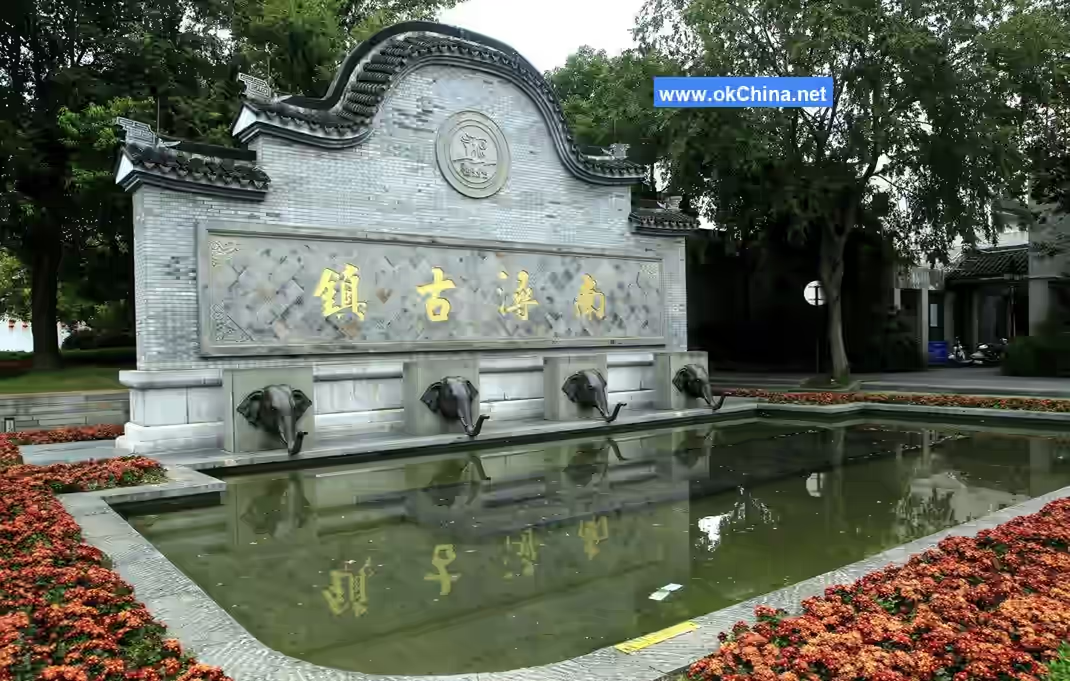
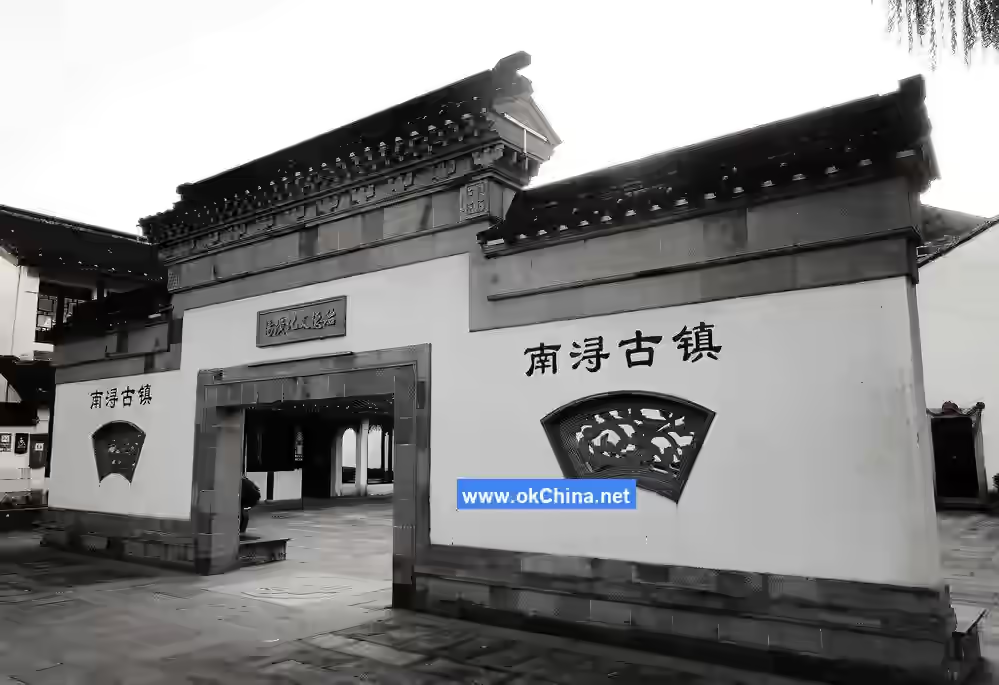
Nanxun Ancient Town is located in Nanxun District, Huzhou City, at the border of Jiangsu and Zhejiang provinces. During the Ming and Qing dynasties, it was a renowned town in the Jiangnan region for silk production. It is a Jiangnan ancient town rich in cultural resources and featuring a blend of Chinese and Western architecture.
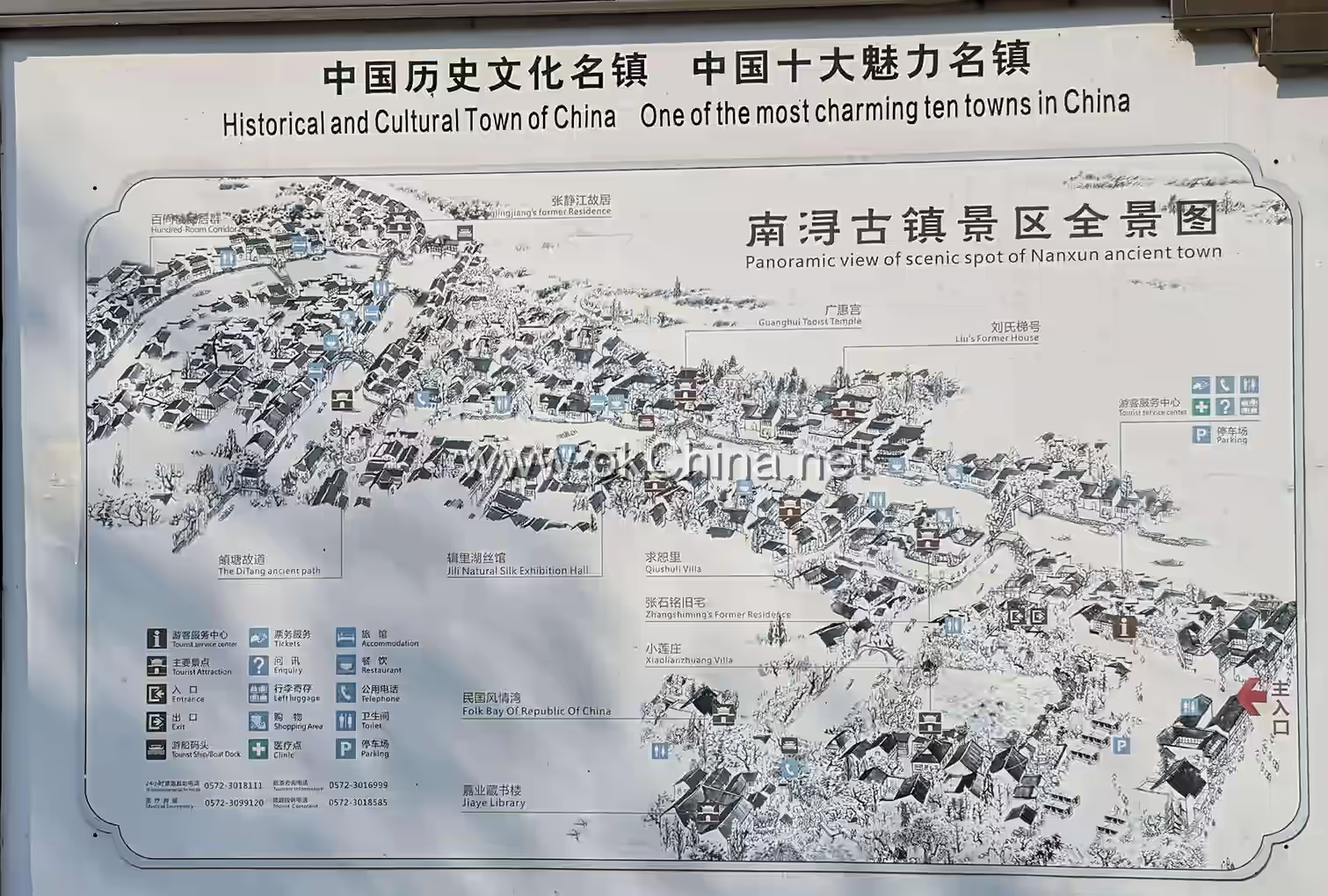
The Nanxun Ancient Town scenic area covers 34.27 square kilometers. The protected area of the ancient town extends from the east boundary at the eastern side of the Yiyuan ruins, the west boundary at Yong'an Street, the south boundary starting from the Jiaye Hall Library and Xiaolianzhuang, to the north boundary at Baijianlou, with a protected area of approximately 168 hectares, including 88 hectares of key protected zones. The tourist area is divided into three main sections. The first section is the area densely packed with Nanxun's tourist attractions, including sites like the Former Residence of Zhang Shiming and the Liu's Ladder House. The second section is the central scenic area composed of attractions such as Xiaolianzhuang, Jiaye Hall, and Wen Garden. The third section is the northeastern block, mainly featuring the Former Residence of Zhang Jingjiang and Baijianlou, located east of East Street.
Nanxun Ancient Town has long been known as the "Land of Culture" and "Home of Poetry and Literature," having produced many famous figures, such as the extraordinary personality of the Republic of China era, Zhang Jingjiang; one of the founders of the "Xiling Seal Society," Zhang Shiming; and the renowned poet and essayist Xu Chi.
In June 2001, the Zhang's Old Residence complex in Nanxun was listed as a National Key Cultural Relics Protection Unit in the fifth batch. In 2005, Nanxun Ancient Town was recognized as a second batch Chinese Historical and Cultural Town. In July 2015, it was awarded the honorary title of a National 5A-level Tourist Attraction, becoming the first national 5A-level tourist attraction in Huzhou City.
On January 18, 2023, the Nanxun District of Huzhou held a themed press conference on "Free Access to the Ancient Town and the Yangtze River Delta Parent-Child Paradise," officially announcing that from that day forward, the Nanxun Ancient Town scenic area would be permanently free for all tourists worldwide, opening up 2.18 square kilometers of the ancient town district free of charge.
2. Geographical Location
No. 51 Renrui Road, Nanxun Town, Huzhou City, Zhejiang Province
3. Scenic Spots
3.1 Ancient Town Layout
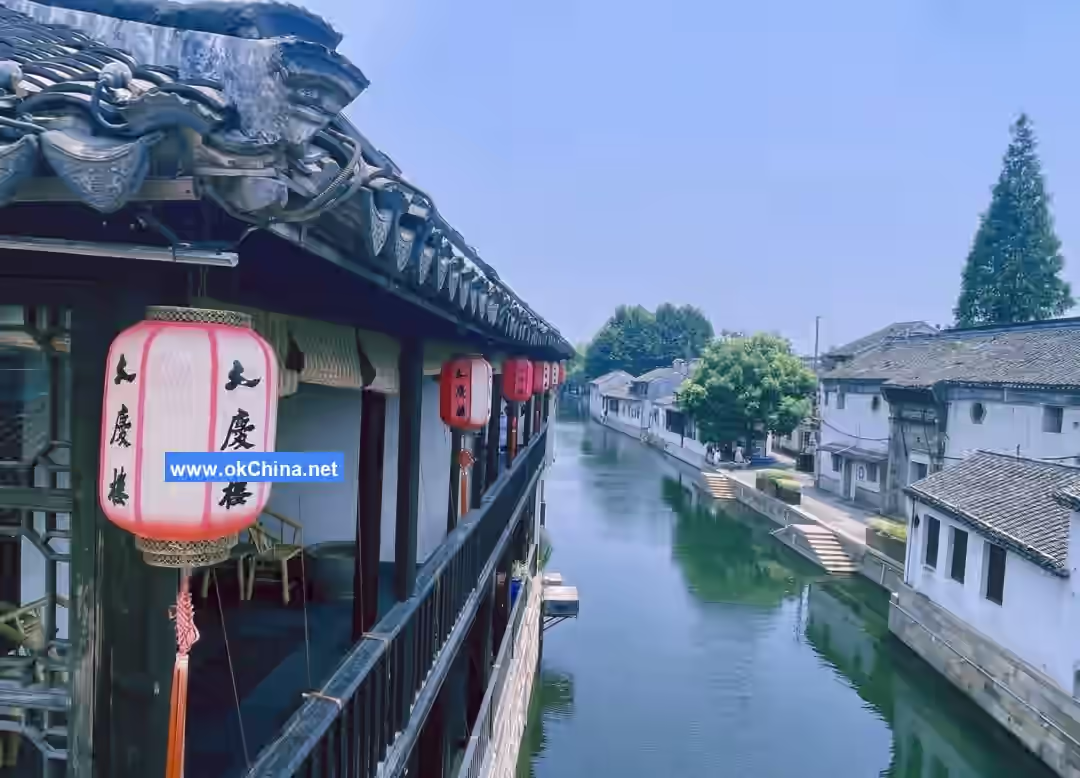
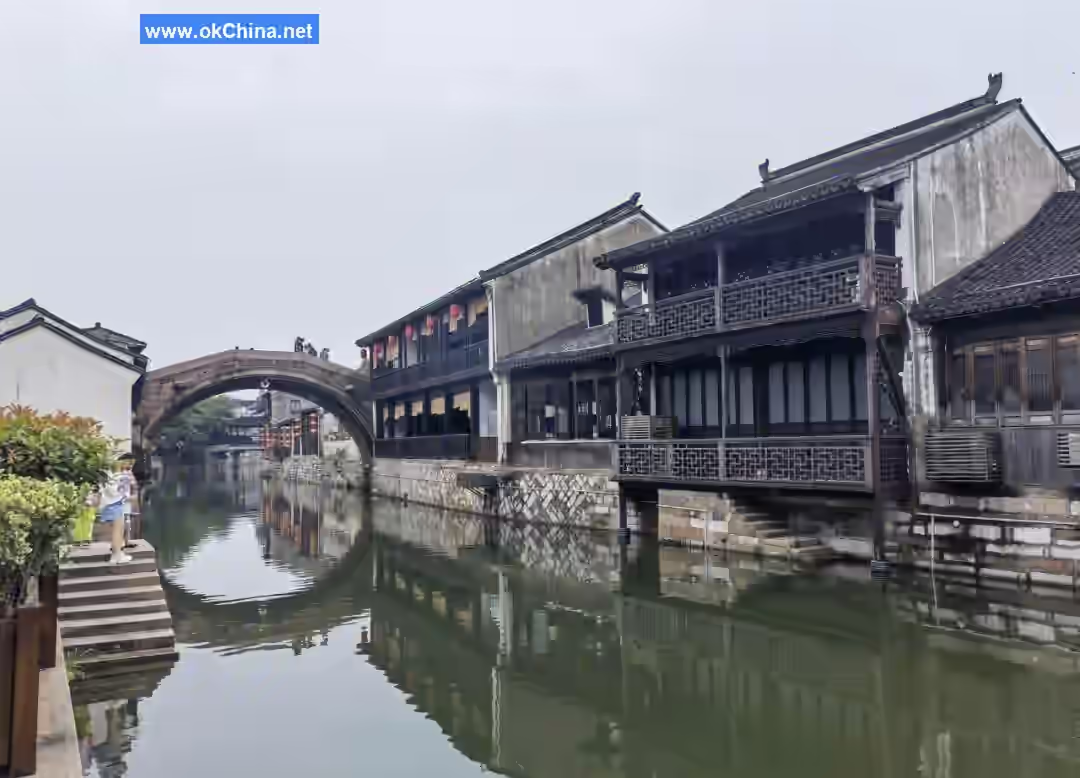
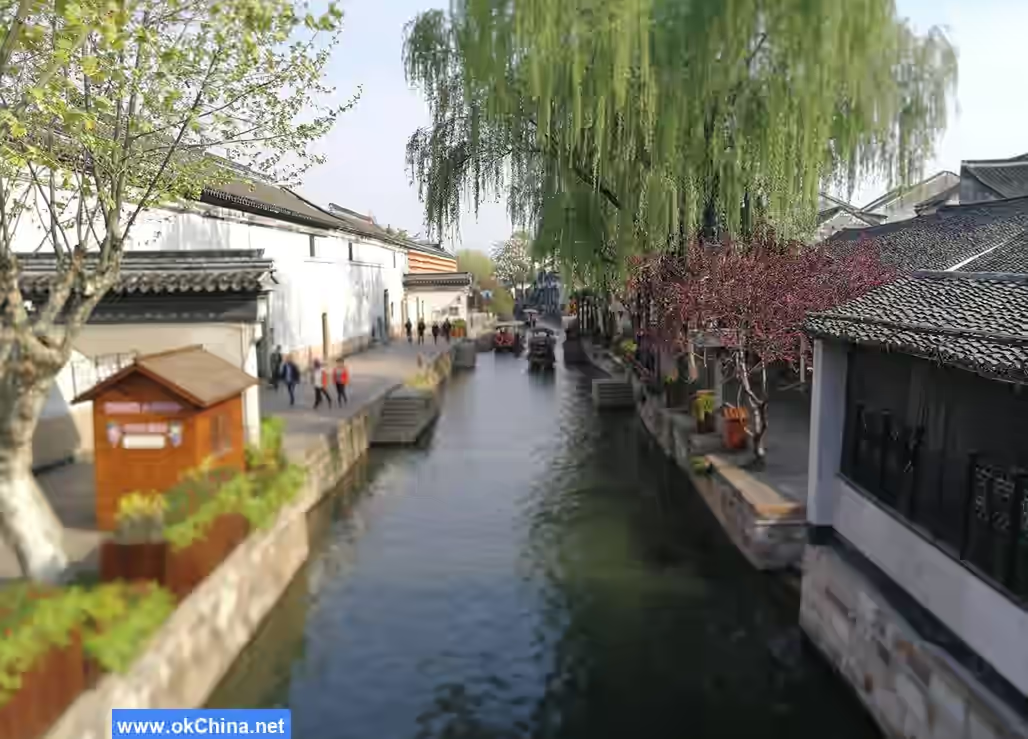
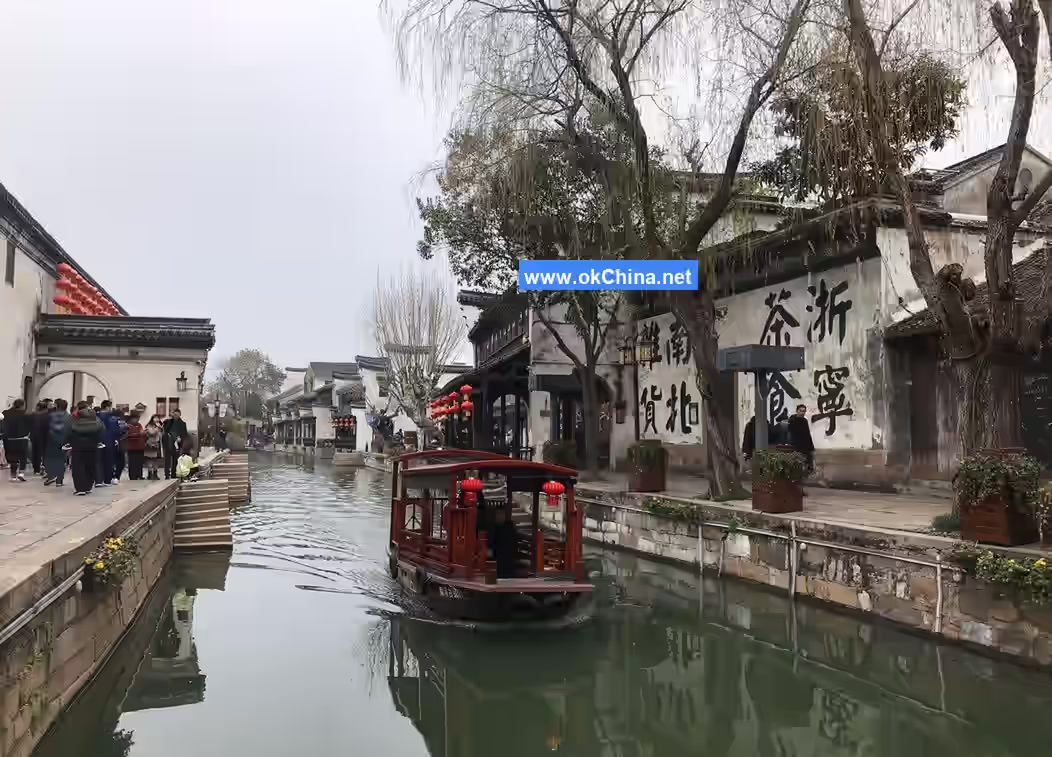
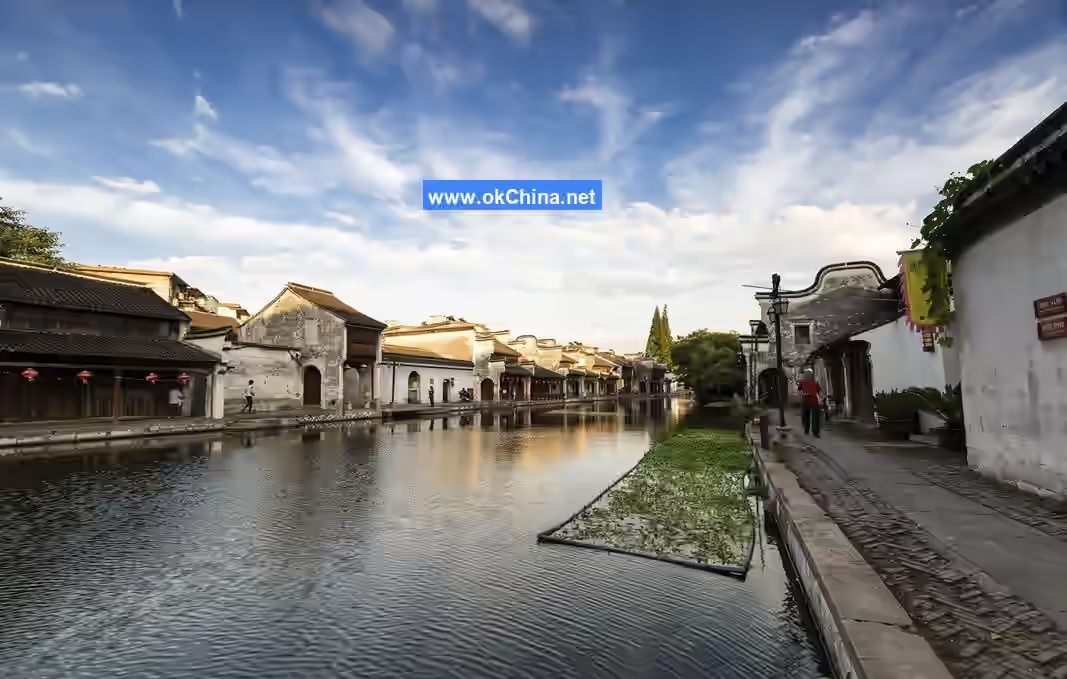
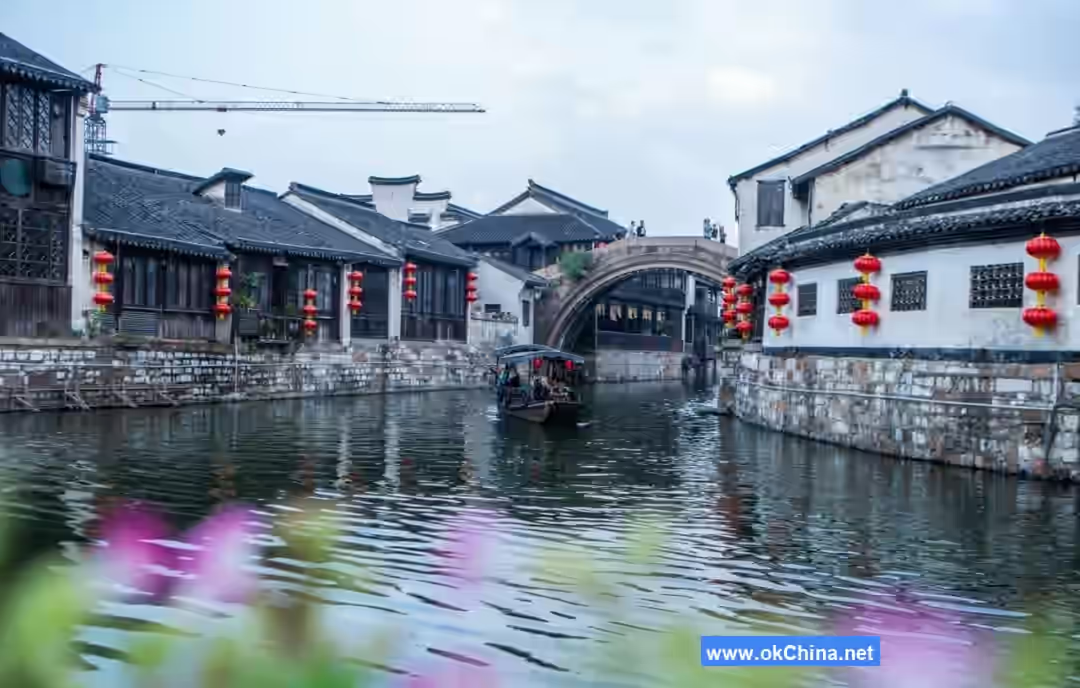
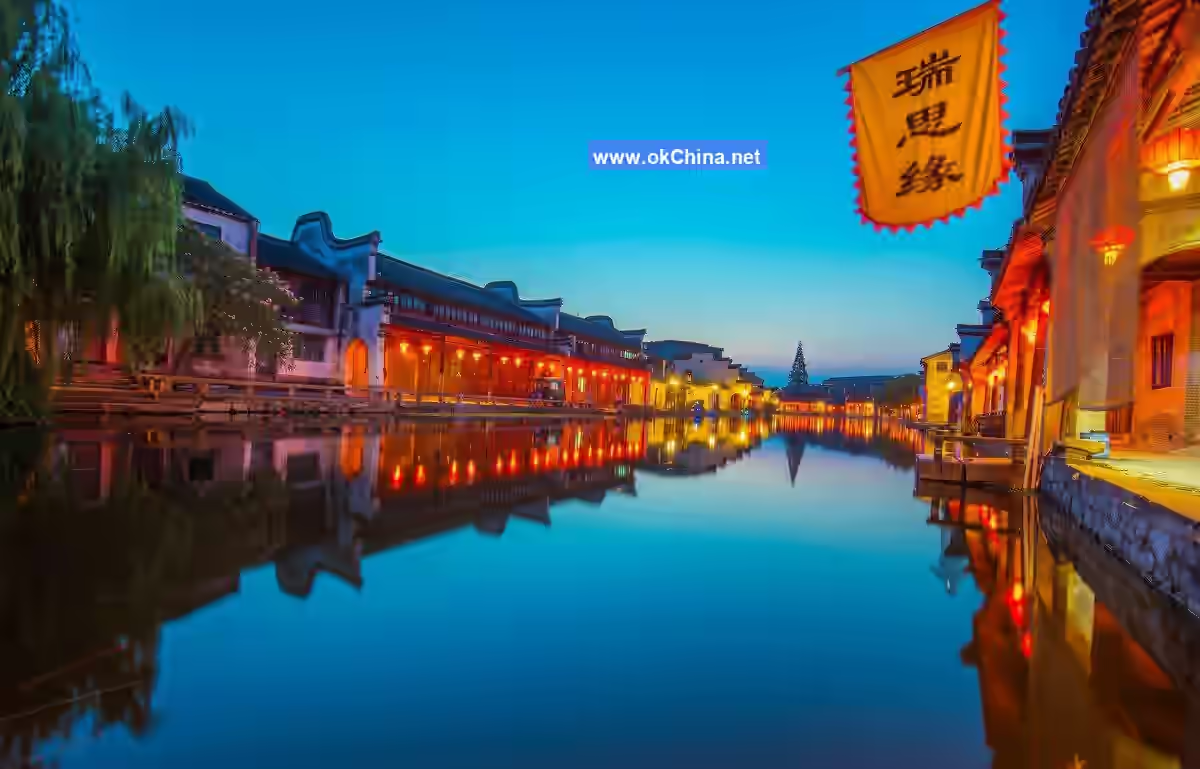
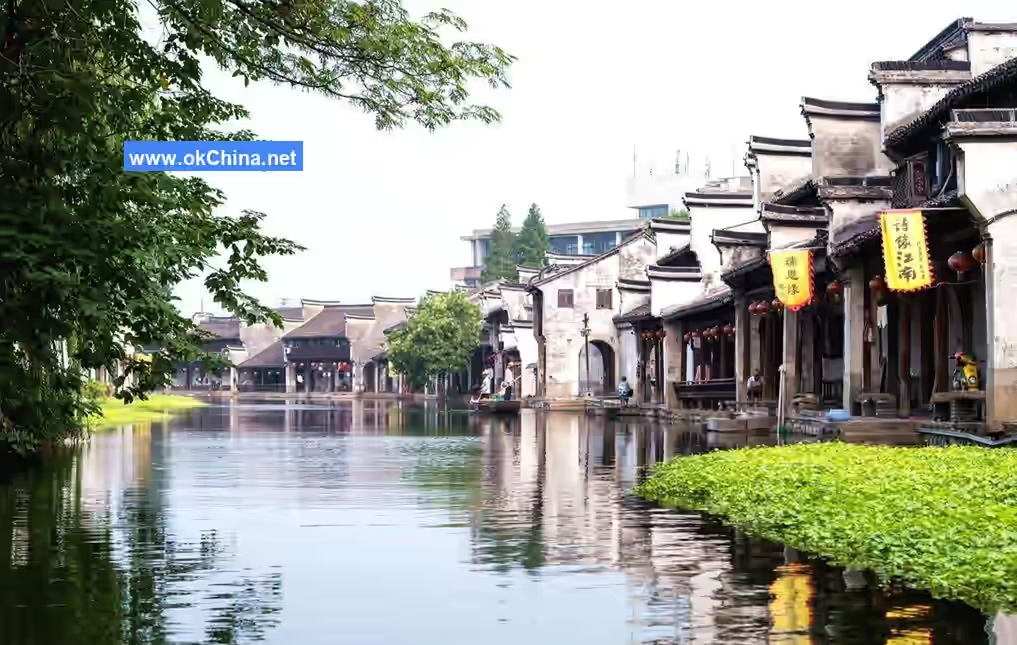
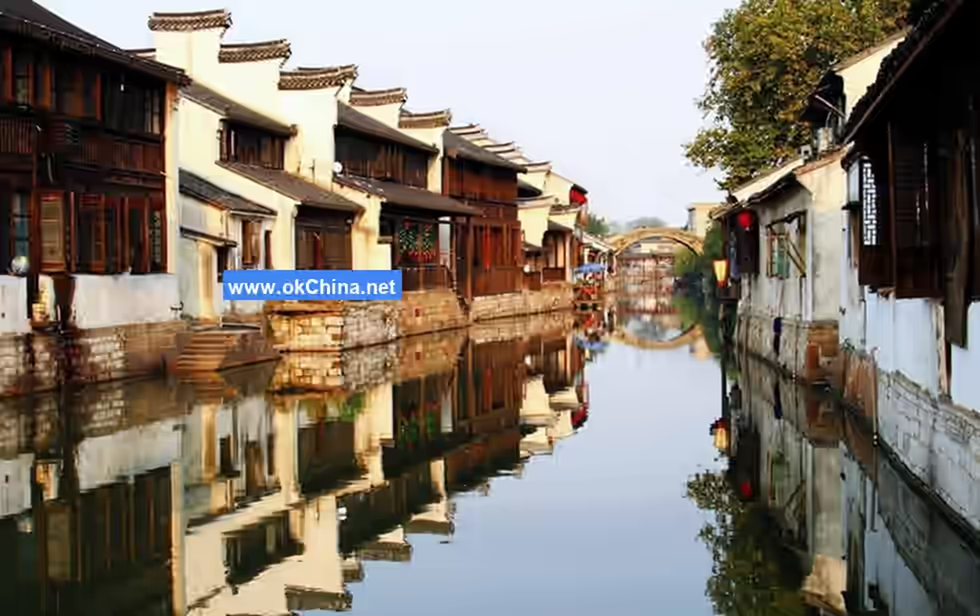
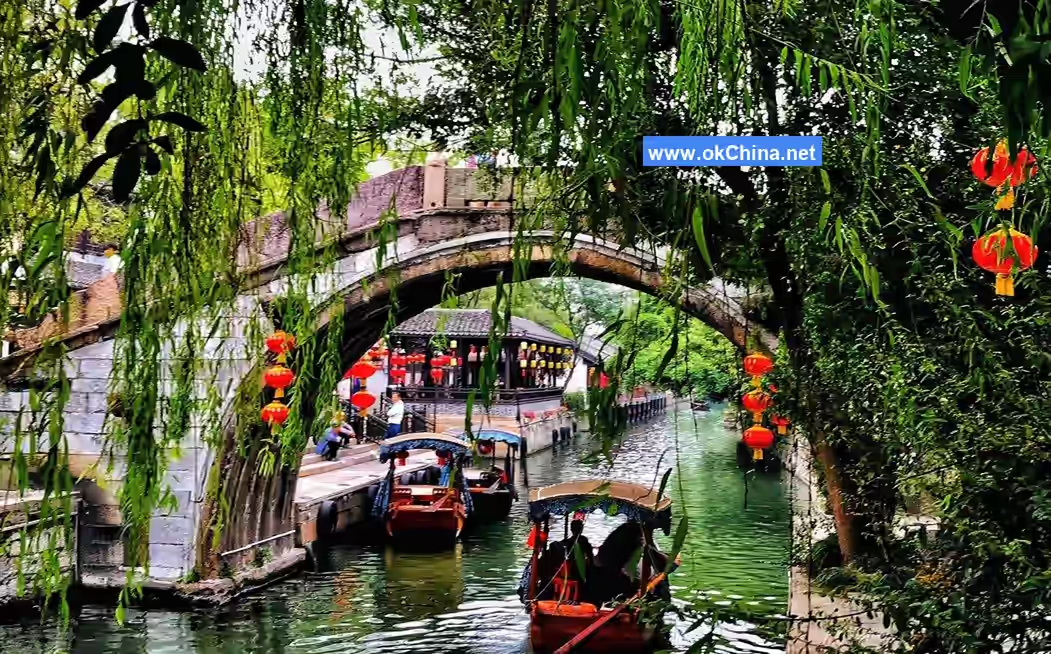
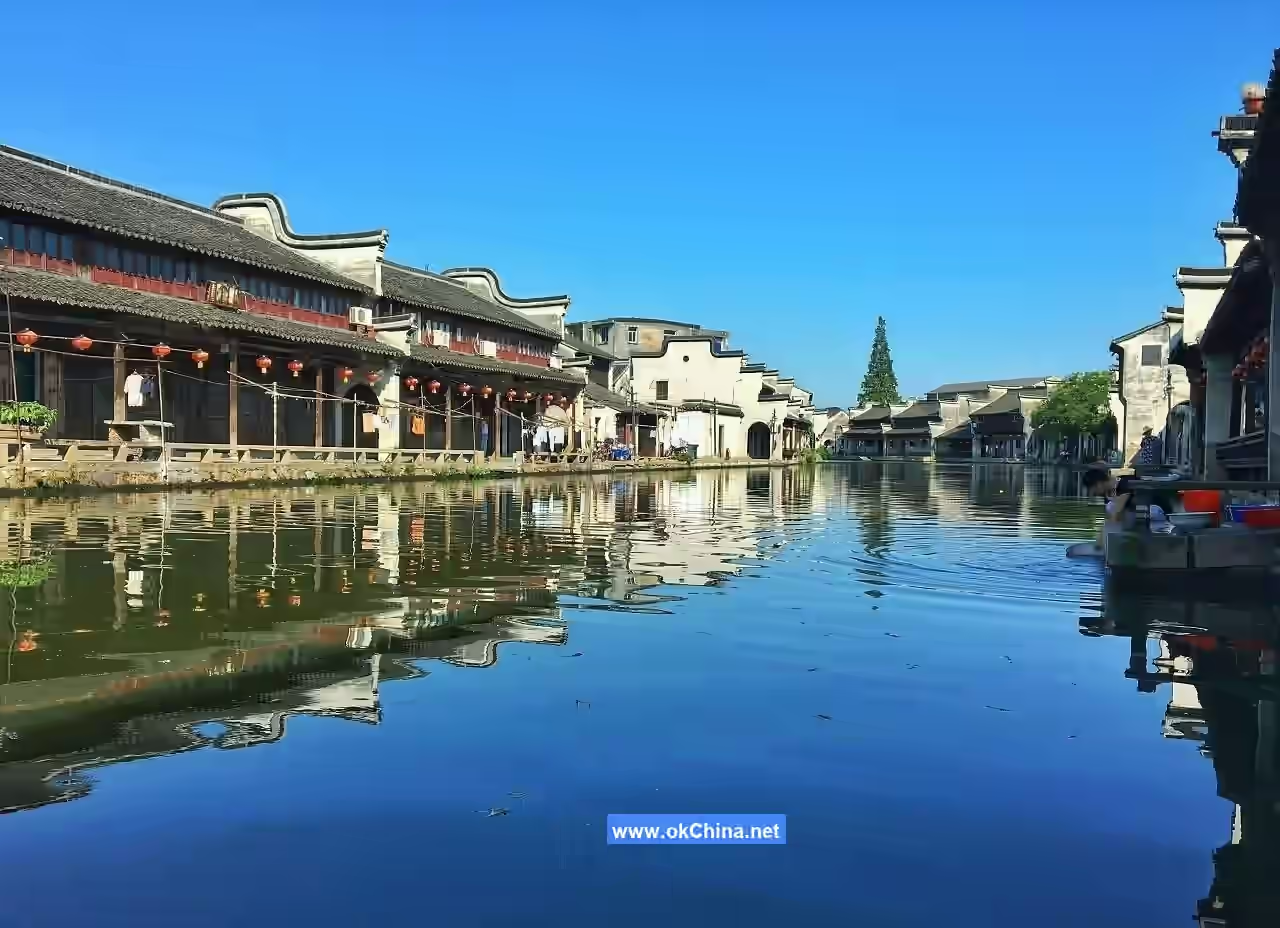
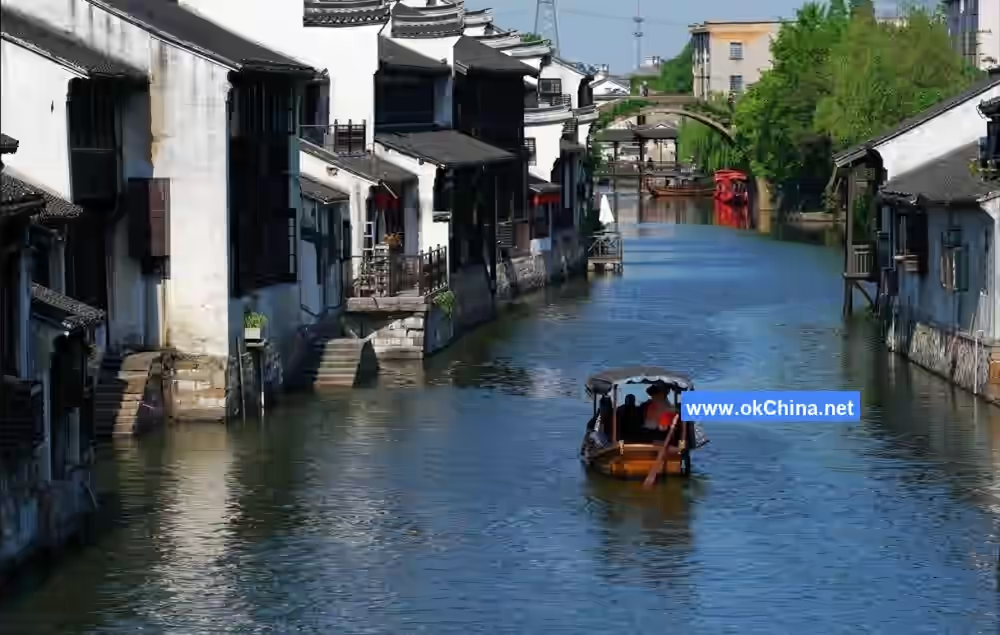
The Nanxun Ancient Town scenic area covers 34.27 square kilometers, with its east boundary at the eastern side of the Yiyuan ruins, west boundary at Yong'an Street, south boundary starting from the Jiaye Hall Library and Xiaolianzhuang, and north boundary at Baijianlou. The ancient town is structured around a cross-shaped river formed by Nanshi River, Dongshi River, Xishi River, and Baoshan River, with numerous other rivers crisscrossing the area. Streets and residences are distributed along the rivers, following their course, and are connected by Nandong Street and Nanxi Street, forming a cross-shaped pattern. The street network is complete, and the river system is largely preserved. Commercial streets line both banks of the cross-shaped river, showcasing the characteristic Jiangnan water town scenery of buildings by the water and streets along the river. Additionally, there are numerous high-quality private mansions and Jiangnan gardens, creating a distinctive neighborhood feature where small bridges, flowing water, and households intermingle with grand mansions and gardens.
3.2 Xiaolianzhuang
Xiaolianzhuang is located west of Wanggu Bridge in the southwest of Nanxun Town. It is a private garden built by Liu Yong, the wealthiest of the so-called "Four Elephants" in late Qing Nanxun. Construction began in the 11th year of the Guangxu reign (1885) of the Qing Dynasty, covering an area of 27 mu. Admiring the Lotus Manor built by the great calligrapher and painter Zhao Mengfu of the late Yuan Dynasty, who was from Huzhou, it was named Xiaolianzhuang (Small Lotus Manor). Xiaolianzhuang is adjacent to the Jiaye Library, with the Zhegu Creek flowing outside the garden.
3.3 Jiaye Hall Library
The Jiaye Hall Library is located by the Zhegu Creek in Nanxun Town, immediately east of the Liu family's private garden, Xiaolianzhuang. The Jiaye Hall Library features a Chinese-Western blended garden-style layout, with a courtyard-style hall building shaped like the character "口" (kou). All wooden windows are carved with the seal script characters "嘉业堂藏书楼" (Jiaye Hall Library). Outside the building are extensive gardens, ponds, and rockeries. After 1949, the Jiaye Hall Library became part of the Zhejiang Library.
3.4 Former Residence of Zhang Shiming
The Former Residence of Zhang Shiming, also known as Yide Hall, faces the ancient Xunxi River to the east. It covers an area of 6,500 square meters, with a building area of 7,000 square meters, comprising five rows and four sections, totaling 150 rooms in various Chinese and Western-style buildings. It is a classic example of Chinese-Western blended architectural complex.
3.5 Liu's Ladder House
The Liu's Ladder House is a Western-style building facing west, commonly known as the "Red House." Its owner was Liu An, also known as Tiqing. The main hall is named Chongde Hall, hence it is also called Liu's Ladder House.
3.6 Baijianlou
Baijianlou is located on both banks of the Baijianlou River in the east of Nanxun Ancient Town. The river stretches from Dongdiao Bridge in the east to Zhazhuang Bridge in the north. Baijianlou winds along the river for about 400 meters and was built during the Wanli period (1573–1620) of the Ming Dynasty by Dong Fen, a Nanxun native who served as Minister of Rites. It is called "Baijianlou" (Hundred Rooms Building) because about a hundred buildings were constructed along both banks of the river, connected by long stone slab bridges.
3.7 Former Residence of Zhang Jingjiang
The Former Residence of Zhang Jingjiang is located on East Street in Nanxun Town, also known as Zunde Hall. The residence maintains the traditional Qing Dynasty architectural style of three rows with five bays each. Each row consists of one hall and five rooms, with a courtyard between each row, and each successive hall is raised one level higher. Each row is connected by vertical fire lanes for fire prevention. The second and third halls display various photos, letters, appointment documents, and other materials related to Zhang Jingjiang's life, including many relics of famous figures.
3.8 Qiu Shu Li
Qiu Shu Li is a villa built in 1930 by Liu Chenggan, the owner of the Jiaye Hall Library. In 1920, Liu Chenggan built the Jiaye Hall Library. To accommodate the needs of library management, he expanded Qiu Shu Li as a place for him and his family to stay during visits to Nanxun and for library management purposes. Qiu Shu Li is a typical Chinese-Western blended structure, consisting of a gatehouse, a passageway, a Western-style gate tower, an arched gate, courtyards, and independent hall buildings.
3.9 Nanxun Wen Garden
Nanxun Wen Garden is located within the Nanxun scenic area, surrounded by rivers and featuring a lake in the middle. It is close to the Jiangnan Water Town Street to the north and near attractions like Xiaolianzhuang and the Jiaye Hall Library. The overall structure of Nanxun Wen Garden is divided into northern and southern parts, connected by a sky bridge. The southern garden is primarily a Jiangnan-style garden, surrounded by a children's playground, a large tree stump bonsai garden, a celebrity poetry corridor, etc. The northern garden centers around the Wenchang Pavilion on the lake, surrounded by attractions such as the celebrity poetry corridor, the Red Army Long March Memorial Hall, the Wu Shougu Art Gallery, the Xu Chi Memorial Hall, and Ming Dynasty stone lions.
3.10 Jili Husi Museum
The Nanxun Jili Husi Museum is a Chinese-Western blended building covering 950 square meters. Historically, it served as the Nanxun Chamber of Commerce, initiated in 1926 by Mei Jizhong, the president of the chamber, and others. After liberation, it was the location of the Nanxun Town Government until October 1998 when the government relocated, and it became the Nanxun History Museum. In the first half of 2010, it was renovated into the Nanxun Jili Husi Museum. The museum is divided into five exhibition halls and is a comprehensive exhibition space integrating historical records, cultural experiences, science education, product display, and sales.
3.11 Guanghui Palace
Guanghui Palace was initially built during the Zhiping era of the Northern Song Dynasty and is a historically significant Taoist sanctuary. Legend has it that Zhang Shicheng, the leader of a peasant uprising in the late Yuan Dynasty, once occupied Guanghui Palace as his temporary palace, hence it is also called Zhangwang Temple. It combines Buddhism and Taoism, worshiping both the Great Immortal Huang and Guanyin Bodhisattva.
4. Characteristics
Since ancient times, Nanxun has been an important economic and cultural town in Huzhou. Known for producing high-quality raw silk since the Song dynasties, it became a typical Jiangnan silk town during the Ming and Qing periods, with its Jili silk becoming the designated raw material for imperial weaving. In modern times, taking advantage of Shanghai's opening as a port, Nanxun was early influenced by European and American cultures. Silk merchants rapidly rose to prominence, giving rise to a number of important historical figures such as Liu Yong, Gu Qianlin, Pang Yuanji, Zhang Jingjiang, and Jin Cheng. Within Nanxun Ancient Town, there are five National Key Cultural Relics Protection Units: the Jiaye Hall Library and Xiaolianzhuang, the Zhang's Old Residence complex in Nanxun, Zunde Hall, and the Grand Canal (the Nanxun section of the Jiangnan Canal, the Nanxun Silk Guild Hall, and silk merchant buildings). There are also 11 municipal-level cultural relics protection units, including the Pang's Old Residence, the Nanxun Grain Station Main Granary, Tongjin Bridge, Hongji Bridge, Ying Garden, Shuyuan Kuaige, Dong's Shide Hall, Shoujun Hall, etc.; three municipal-level cultural relics protection sites: Xingfu Bridge, Tongli Bridge, and Xinmin Bridge; and 21 historical buildings, such as Shengji Rice Shop, the former site of Liu's Jingde Hall, and Zhou Qingyun's Old Residence. The traditional residences in the ancient town are elegant, delicate, and rich in connotation. The grand mansions and gardens boldly and skillfully incorporate Western architectural styles into traditional Chinese forms, creating a unique art of Jiangnan residential architecture that blends Chinese and Western elements.
5. Historical Development
Ancient cultural sites such as Hongcheng, Huacheng, and Shangshi discovered within Nanxun prove that as early as the Neolithic Age, primitive clan tribes thrived here.
According to legend, when Yu the Great controlled the floods and divided the world into nine provinces, the territory of Nanxun belonged to Yangzhou.
During the Spring and Autumn and Warring States periods, it successively belonged to the states of Wu, Yue, and Chu. In 333 BC, Chu established this area as the fief of Lord Chunshen, initially building Gucheng County, with Nanxun's territory belonging to Gucheng County.
In the third year of the Taikang era of the Western Jin Dynasty (282 AD), the eastern part of Wucheng County was separated to establish Dongqian County, with the county seat located in present-day Jiuguan.
During the Song period of the Southern Dynasties, in the fourth year of Yuanhui, Dongqian County was renamed Dong'an County, but reverted to Dongqian County the following year. In the ninth year of the Kaihuang era of the Sui Dynasty, Dongqian County was merged into Wucheng County.
In the seventh year of the Taiping Xingguo era of the Song Dynasty, 15 southeastern townships of Wucheng County were separated to establish Gui'an County.
In the first year of the Republic of China (1912), Wucheng and Gui'an were merged into Wuxing County, with present-day Nanxun's territory belonging to Wuxing County.
On May 2, 1949, Nanxun was liberated, and its present territory belonged to Wuxing County.
In September 1993, Huzhou City established three district working committees: the urban district, Nanxun District, and Linghu District. Nanxun Town belonged to Nanxun District.
On June 30, 2011, the Huzhou Nanxun Ancient Town Management Committee was officially established as a dispatched agency of the district government, leading companies in the protection, utilization, planning, construction, and management of the ancient town area.
The Nanxun Ancient Town scenic area was officially approved as a National AAAAA-level Tourist Attraction in July 2015.
Comments
Post a Comment